Poem of the day

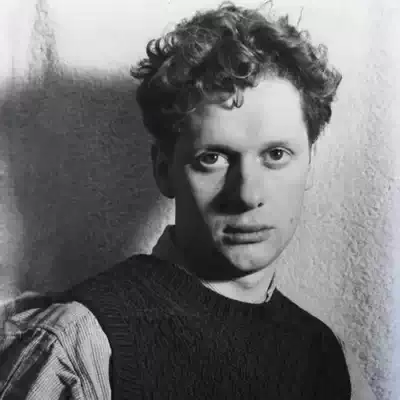
Do Not Go Gentle Into That Good Night

Dylan Thomas
Do not go gentle into that good night, 
Old age should burn and rave at close of day; 
Rage, rage against the dying of the light. 

Though wise men at their end know dark is right, 
Because their words had forked no lightning they 
Do not go gentle into that good night. 

Good men, the last wave by, crying how bright 
Their frail deeds might have danced in a green bay, 
Rage, rage against the dying of the light. 

Wild men who caught and sang the sun in flight, 
And learn, too late, they grieved it on its way, 
Do not go gentle into that good night. 

Grave men, near death, who see with blinding sight 
Blind eyes could blaze like meteors and be gay, 
Rage, rage against the dying of the light. 

And you, my father, there on that sad height, 
Curse, bless, me now with your fierce tears, I pray. 
Do not go gentle into that good night. 
Rage, rage against the dying of the light.
Read full poem

Born on this day

13
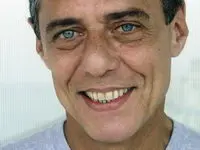
Chico Buarque

Chico Buarque de Hollanda is one of the most prominent Brazilian singers, composers, and writers. His musical work, marked by melodic sophistication and engaged poetry, has established him as an icon of MPB (Música Popular Brasileira). Parallel to his musical career, he developed a literary body of work that explores social and existential themes with profound sensitivity and mastery of language.

Celina Holanda

Celina Holanda is a poet whose work is characterized by an intense exploration of subjectivity and the feminine condition, deeply addressing themes such as identity, memory, the body, and complex human relationships. Her poetry is marked by a careful language and a confessional tone, inviting the reader to deep introspection and empathy. Her writing reveals a keen sensitivity to the nuances of feeling and existence, using metaphors and poetic images that resonate with strength and delicacy. Celina Holanda constructs a unique poetic universe, where fragility intertwines with strength, and the search for meaning is manifested through an authentic and striking voice, consolidating her place in contemporary literature.

Eurícledes Formiga

Eurícledes Formiga was a Brazilian poet known for his work exploring the human condition, melancholy, and the passage of time. His poetry is marked by careful language, deep lyricism, and a strong capacity for observing the inner and outer world. Formiga left a legacy of reflection on existence and the search for meaning in poetry that resonates with its sincerity and beauty.

Raphael Luiz Junqueira

Raphael Luiz Junqueira was a Brazilian poet whose work stood out for its sensitivity and lyrical depth. He explored universal themes such as love, longing, and the ephemerality of life, often with an introspective and melancholic approach. His poetry is characterized by careful language and a musical rhythm that invites contemplation. Throughout his career, Junqueira left a mark on Brazilian poetry, addressing the human condition with authenticity and emotion. His work continues to be valued for its aesthetic quality and the resonance of his reflections on existence.

Roberto de Mesquita

Roberto de Mesquita was a Portuguese jurist and poet, whose poetic work fits into a context of literary transition. Although his lyrical production is not as extensive as that of other contemporaries, it reveals a notable talent for expressing feelings and reflections on the human condition. His connection to law and academic life seems to have coexisted with his artistic vein, giving him a unique perspective in his writing.

José Guilherme Macedo Fernandes

José Guilherme Macedo Fernandes was a poet whose work was characterized by his deep connection to the land, nature, and traditions. His poetry, often imbued with tender lyricism and strong emotional charge, celebrates the identity and landscapes that shaped him. With an accessible and authentic style, he explored the beauty of everyday life and the resilience of the human spirit, leaving a valuable testimony of Portuguese culture and sensibility.

Jorge Hernández Campos

Jorge Hernández Campos is a Mexican writer, author of novels and short stories that explore the complexities of modern life and human relationships. His writing is known for its ability to portray realistic characters and everyday situations with depth and insight, addressing themes such as identity, society, and the search for meaning.

David Osborne Hamilton

David Osborne Hamilton is an author known for his writings that explore themes related to psychology and human behavior. His work seeks to demystify complex concepts, making them accessible to a wide audience. He stands out for his ability to communicate ideas clearly and engagingly, promoting a better understanding of ourselves and others.

Died on this day

9
Lobo da Costa

Lobo da Costa, whose full name was Aníbal Lobo da Costa, was a Portuguese poet and doctor, whose poetic works explore sensuality, beauty, melancholy, and the ephemerality of life. His poetry, often lyrical and evocative in tone, reflects a refined sensitivity to the nuances of human feeling and nature. With a body of work that fits into the literary context of his time, Lobo da Costa left a poetic record that, despite sometimes being associated with more classical tendencies, carries an originality in the expression of its themes and in the sonority of its verses.

Maria Isabel

Maria Isabel, a prominent writer, has her work marked by an engaging prose and a keen sensitivity to the nuances of human relationships and society. Her narratives, often set in complex family and social contexts, explore the psychology of the characters and the existential dilemmas they face. With fluid and accessible writing, the author captivates the reader, inviting them to reflect on universal themes such as love, identity, and the search for personal fulfillment.

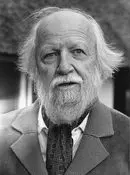
William Golding

Sir William Golding (1911-1993) was an English novelist, winner of the Nobel Prize in Literature in 1983. His most famous work is "Lord of the Flies" (1954), a dystopian novel that explores the nature of evil and the fragility of civilization. Golding wrote other novels that frequently deal with themes of morality, human nature, and the confrontation between order and chaos, often with historical or mythological settings.

Óscar Ribas

Óscar Ribas was a Portuguese ethnographer and writer, known for his profound research and dissemination of Angolan cultures. He dedicated a large part of his life to the study of Angolan traditions, legends, and popular tales, collecting and publishing an extensive body of work that became a reference in the field of ethnography and African oral literature. His work contributed significantly to the preservation and appreciation of Angola's cultural heritage, allowing new generations and the world to know the richness of its roots.

Mário Cabral

Mário Cabral was a poet who left his mark on Portuguese-language literature through a poetic work with strong lyrical and reflective roots. His writing is distinguished by its exploration of themes such as identity, memory, and the passage of time, approached with remarkable sensitivity and an elaborate language. His poetry, though sometimes dense and challenging, invites the reader to delve into profound existential questions, consolidating his place as a significant author in the literary landscape.

Laura Yasan

Laura Yasan is an Argentine writer whose work is dedicated to exploring the complexities of female identity, memory, and human relationships. With an engaging and sensitive prose, she moves between fiction and essay, addressing themes such as the body, time, and the marks left by life experiences. Her writing is recognized for its psychological depth and its ability to evoke intense emotions.

Diego de Torres y Villarroel

Diego de Torres y Villarroel was a Spanish writer, physician, and professor known for his literary work, which spanned from poetry to satirical and didactic prose. His life was marked by an eccentric personality and a sharp intellect that earned him fame and controversy in his time. He is remembered for his lively style and keen observation of society, reflected in works that showcase both his scientific knowledge and his more playful and critical literary side.

Ramón López Velarde

Ramón López Velarde was a Mexican poet, a towering figure of modernism and a precursor to a profound renewal of lyric poetry in his country. His work is characterized by a unique fusion of the provincial and the cosmopolitan, the erotic and the mystical, the national and the universal. His poetry, of great sensitivity and formal beauty, intensely explores human passions, Mexican identity, and the transience of time. Considered a national poet par excellence, López Velarde succeeded in giving voice to the complexities of the Mexican soul, becoming an indispensable reference in the literature of Mexico.