Poem of the day

Do Not Go Gentle Into That Good Night

Dylan Thomas
Do not go gentle into that good night, 
Old age should burn and rave at close of day; 
Rage, rage against the dying of the light. 

Though wise men at their end know dark is right, 
Because their words had forked no lightning they 
Do not go gentle into that good night. 

Good men, the last wave by, crying how bright 
Their frail deeds might have danced in a green bay, 
Rage, rage against the dying of the light. 

Wild men who caught and sang the sun in flight, 
And learn, too late, they grieved it on its way, 
Do not go gentle into that good night. 

Grave men, near death, who see with blinding sight 
Blind eyes could blaze like meteors and be gay, 
Rage, rage against the dying of the light. 

And you, my father, there on that sad height, 
Curse, bless, me now with your fierce tears, I pray. 
Do not go gentle into that good night. 
Rage, rage against the dying of the light.
Read full poem

Born on this day

13
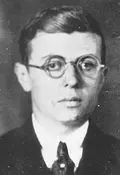
Jean-Paul Sartre

Jean-Paul Sartre was a French philosopher, writer, playwright, and literary critic, a central figure of atheistic existentialism. His vast and multifaceted work explores human freedom, individual responsibility, bad faith, and social commitment. Sartre rejected the Nobel Prize in Literature, advocating for a stance of refusal of bourgeois institutions. His thought profoundly influenced 20th-century philosophy, literature, and political debate, marking a generation with his emphasis on autonomy and the need for intervention in the world.

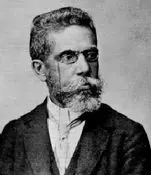
Machado de Assis

Joaquim Maria Machado de Assis is one of the greatest names in Brazilian and world literature, founder and first president of the Brazilian Academy of Letters. His work, which includes poetry, chronicles, short stories, novels, and plays, is notable for its psychological depth, subtle irony, and critical analysis of society. Machado de Assis bridged Romanticism and Realism, but transcended labels, developing a unique style marked by pessimism, skepticism, and metalanguage. His writing explores the complexities of the human soul and social hypocrisies with unparalleled mastery.

Domingos Carvalho da Silva

Domingos Carvalho da Silva was a Portuguese poet whose work is notable for its strong connection to the land, traditions, and the Portuguese popular soul, with a rural and expressive language. His poetry, rooted in the lyricism of everyday life and the exaltation of simple living, brings the sonority, customs, and feelings of the people to the literary universe, giving him a unique place in Portuguese poetry.

Heitor C. Gonçalves

Heitor C. Gonçalves is a poet whose work is distinguished by its ability to move between the intimate and the universal. His poetry is a mirror of human anxieties, exploring the fleetingness of time, ephemeral beauty, and the search for deeper meaning in existence. With expressive language and striking imagery, Gonçalves builds a poetic universe that resonates with the reader's sensitivity. His literary contribution lies in his ability to transform the everyday into poetic matter, offering unique perspectives on life and its complexities.

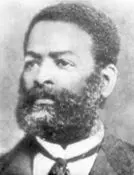
Luís Gama

Luís Gonzaga Pinto da Gama was a self-taught lawyer, journalist, writer, and Brazilian abolitionist. Born to a free African mother and a white father, he was illegally sold into slavery at the age of ten, but regained his freedom and became one of the most important intellectuals and activists for the abolitionist cause in Brazil. His literary work and legal activism were fundamental in the fight against slavery and for human dignity.

Madi

Madi is a prominent figure in contemporary poetry, known for her exploration of existential and social themes through lyrical and innovative language. Her work stands out for its ability to move between the personal and the universal, addressing the complexities of identity and the human condition. Her poetry is often characterized by deep introspection, combined with a keen observation of the world around her. Madi has established herself as an influential voice, engaging with poetic traditions while simultaneously proposing new forms of expression.

Helmut Heissenbüttel

Helmut Heissenbüttel was a German writer, a pioneer of concrete and experimental poetry in Germany. His work explored the potentialities of language and poetic form, challenging traditional literary conventions. Heissenbüttel is recognized for his avant-garde approach, which significantly influenced contemporary German-language poetry, opening new paths for linguistic and aesthetic experimentation.

João Ricardo Lopes

João Ricardo Lopes is a contemporary poet whose work is distinguished by the exploration of existential themes and formal experimentation. His writing navigates between introspection and observation of the world, with a language that seeks precision and sensitivity.

Anne Carson

Anne Carson is a Canadian poet, essayist, and novelist known for her scholarly and interdisciplinary approach to literature. Her works often blend genres, exploring themes such as classical mythology, philosophy, history, and literary criticism.

Ben Clark

Ben Clark is an Anglo-Spanish writer and poet, known for his work that spans novels, poetry, and short stories, often exploring urban themes, youth, and identity in a contemporary context. His writing is characterized by a direct and energetic style, with a sharp eye for the social and existential realities of his characters. Clark has established himself as a relevant voice in recent Spanish literature, in both prose and verse.

Adrian Blevins

Adrian Blevins is an American poet whose poems often explore rural life, family, and the complexities of human relationships with a mix of humor and seriousness. His writing is known for its authentic voice and for capturing the essence of lived experience, often with an insightful look at the contradictions and joys of everyday life. Blevins uses accessible yet profound language to address universal themes. His poetry offers a unique perspective on life in smaller communities and the forces that shape individual and collective identity, inviting reflection on what it means to belong and to grow.

Died on this day

8
Leonel Neves

Leonel Neves is a Brazilian poet known for his work that explores the human condition with sensitivity and depth. His poetry frequently addresses themes such as time, memory, and the search for meaning, using a language rich in imagery and symbolism. With a style marked by introspection and the musicality of verse, Neves has established himself as an important voice in contemporary Portuguese-language poetry.

Arruda Furtado

Arruda Furtado is a poet whose work is part of the context of modern Portuguese poetry. He explored themes such as the ephemerality of life, melancholy, and the search for meaning, using careful and imagistic language. His poetry is marked by a unique sensibility and a deep reflection on the human condition, dialoguing with the literary tradition while embracing the innovations of his time. His contribution to Portuguese-language poetry is recognized for its originality and lyrical depth.

Rose Marie Muraro

Rose Marie Muraro was a Brazilian writer and activist, known for her literary output and her engagement in social causes, especially the defense of women's rights. Her work frequently explored themes such as female identity, sexuality, and power relations in society. As an activist, Muraro dedicated herself to promoting debate on feminism in Brazil, participating in conferences, publishing articles, and encouraging reflection on the role of women in society. Her work contributed to the visibility of feminist issues and the discussion of gender equality.

Patrizia Cavalli

Patrizia Cavalli was a prominent Italian poet on the contemporary literary scene. Her work is marked by incisive language and an honest, sometimes provocative, exploration of feelings, human relationships, and the female condition. Known for her authenticity and for challenging conventions, Cavalli established herself as a powerful and influential voice, whose verses resonate with her ability to address universal themes with a unique and visceral perspective. Her poetry is a mirror of life in its most diverse and complex facets.

Leandro Fernández de Moratín

Leandro Fernández de Moratín was a Spanish playwright and prose writer, considered the most important figure of theatrical Enlightenment in Spain. His work is characterized by the application of Neoclassical rules, with a marked didactic purpose and social custom reform, especially regarding the condition of women and arranged marriages. A master of dialogue and characterization, his comedies are a critical reflection of the society of his time, as well as models of neoclassical theatrical precepts.

Joan Fuster

Joan Fuster was a highly relevant Spanish essayist, literary critic, and intellectual, fundamental to the understanding of contemporary Catalan culture. His work was characterized by a lucid, ironic, and often provocative prose, which addressed themes such as identity, history, literature, and the human condition from a critical and demystifying perspective. Known for his incisive style and intellectual acumen, Fuster became a central figure in thought and public debate in Catalonia, defending a secular, rationalist vision deeply rooted in its cultural reality. His legacy endures as one of the most influential intellectuals of the 20th century in the Catalan sphere.

Jorge Gaitán Durán

Jorge Gaitán Durán was a prominent Colombian poet and diplomat, whose work is part of the modernist and social poetry current. His writing is characterized by a deep social sensitivity, a commitment to the realities of his time, and a remarkable ability to capture the beauty of language. Recognized for his lyrical style and ethical commitment, Gaitán Durán left a poetic legacy that addresses both the intimacy of the self and the complexities of society. His figure is emblematic of a poet who managed to unite artistic vocation with public service.