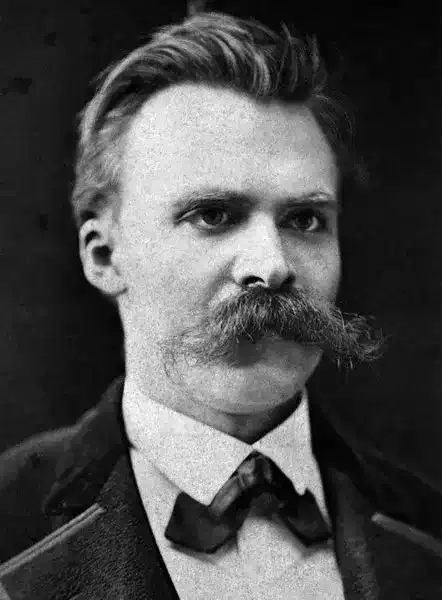
Charles Baudelaire
Author of the day

Charles Baudelaire

Charles Baudelaire was a pioneering French poet, critic, and translator, best known for his collection 'Les Fleurs du mal' (The Flowers of Madness). He is considered a key figure in Symbolism and Modernism, often described as the "father of modern poetry." His work explored themes of urban life, sensuality, and the darker aspects of human experience with unprecedented frankness and aesthetic innovation.

Poem of the day

Do Not Go Gentle Into That Good Night

Dylan Thomas
Do not go gentle into that good night, 
Old age should burn and rave at close of day; 
Rage, rage against the dying of the light. 

Though wise men at their end know dark is right, 
Because their words had forked no lightning they 
Do not go gentle into that good night. 

Good men, the last wave by, crying how bright 
Their frail deeds might have danced in a green bay, 
Rage, rage against the dying of the light. 

Wild men who caught and sang the sun in flight, 
And learn, too late, they grieved it on its way, 
Do not go gentle into that good night. 

Grave men, near death, who see with blinding sight 
Blind eyes could blaze like meteors and be gay, 
Rage, rage against the dying of the light. 

And you, my father, there on that sad height, 
Curse, bless, me now with your fierce tears, I pray. 
Do not go gentle into that good night. 
Rage, rage against the dying of the light.
Read full poem

Born on this day

11
Esmeralda Santos

Esmeralda Santos is a poetic voice that distinguishes itself by its delicacy and depth in exploring the female universe and the complexities of the soul. Her work is an invitation to introspection, addressing themes such as love, motherhood, identity, and resilience with a language rich in symbolism and emotion. Through verses that echo human strength and fragility, Santos constructs a poetic universe that resonates with the experiences of many women, offering a mirror to their struggles and triumphs. Her poetry is a hymn to life in its multiple manifestations.

Antônio de Godói

Antônio de Godói was a Brazilian historical figure, notably associated with the Empire of Brazil and the politics of the time. His relevance lies in his participation in important events and in his work as a diplomat and administrator. His trajectory is intertwined with periods of political transition and with the international relations of imperial Brazil, reflecting a period of formation of national identity and consolidation of the Brazilian State.

Guerra-Duval

Detailed biographical information about Guerra-Duval is not publicly available. Given the scarcity of data, it is presumed to be a lesser-known literary figure or a pseudonym whose real identity and work have not been widely documented in accessible records.

Theodor Körner

Theodor Körner was a German poet and soldier, known for his patriotic works and his involvement in the Napoleonic Wars. He is remembered for his war poems, which inspired German nationalism, and for his heroic death in battle.

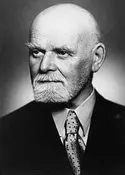
Jaroslav Seifert

Jaroslav Seifert was a prominent Czech poet, writer, and journalist, awarded the Nobel Prize in Literature in 1984. His work is recognized for its lyricism, humanism, and its ability to capture the essence of Czech life and culture, often in times of great political adversity. Seifert navigated the complexities of the 20th century, expressing love for his homeland, its traditions, and its ordinary people, in poetry that became a symbol of cultural resistance and hope. With a style that combined the everyday with the sublime, and the personal with the universal, Seifert left a lasting legacy as one of the most important European poets, whose voice resonates through its authenticity and its deep connection to national identity.

Aureliano Lima

Aureliano Lima is a poet whose work is distinguished by the deep exploration of the human condition, addressing themes such as the ephemerality of time, the search for meaning, and the complexity of interpersonal relationships. His writing is characterized by a careful language, which moves between lyricism and existential reflection, often with an underlying melancholy. His poetry invites the reader to introspection about life, memory, and the dilemmas of existence. Although less prominent in the literary landscape, Aureliano Lima's work offers an intimate and sincere perspective on the art of feeling and thinking about the world, positioning himself as an attentive observer of the nuances of the human soul and the inexorable passage of days.

Abel Botelho

Abel Botelho was a Portuguese novelist and short-story writer, known for his realist and naturalist work. He frequently explored social and psychological themes, depicting the society of his time with a critical and, at times, pessimistic eye. His narratives are distinguished by their deep analysis of human motivations and social conditioning, reflecting the concerns of a period of great transformations in Portugal.

Maurice Fombeure

Maurice Fombeure was a French poet, associated with the surrealist movement in its early stages, but who developed his own style throughout his career. His work is characterized by an often playful and surprising tone, exploring everyday life with a dreamlike gaze. He is remembered for his originality and the musicality of his verses, which combine the familiar with the unusual in a singular way.

Khaled Mattawa

Khaled Mattawa is a Libyan-born poet and translator, known for his works that explore themes of identity, exile, and the Middle Eastern experience. His poetry is often marked by a deep lyrical sensibility and an engagement with social and political issues.

Carlos Fernández Shaw

Carlos Fernández Shaw was a Spanish poet and playwright, a prominent figure of literary modernism in Spain. His work is characterized by refined language, the musicality of his verses, and themes that explore sensuality, exoticism, and melancholy. As a poet, he contributed to renewing the metrics and poetic themes of his time, influenced by French authors and modernist aesthetics. In theater, he wrote plays that reflect the taste of his time, with elaborate dialogues and plots that explore passionate and social conflicts. His influence extended to other writers and artists.

Died on this day

8
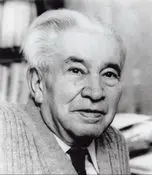
António Ramos Rosa

António Ramos Rosa was one of the most influential Portuguese poets of the 20th century, known for his dense, reflective poetry deeply connected to the human condition and language. His work is marked by a constant search for authentic expression, exploring themes such as existence, death, time, and poetry itself. His writing evolved over decades, maintaining thematic and stylistic coherence, but always open to new formal and lexical explorations. He is considered a pillar of contemporary Portuguese-language poetry.

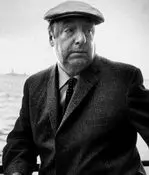
Pablo Neruda

Pablo Neruda was a Chilean poet, diplomat, and politician. He is widely regarded as one of the most influential poets of the 20th century, celebrated for his lyrical and evocative verse, which often explored themes of love, nature, politics, and everyday life. Neruda's prolific output and diverse thematic concerns earned him international acclaim, culminating in the Nobel Prize in Literature in 1971. His work is characterized by its passionate imagery, sensuous language, and profound connection to the landscapes and people of Latin America.

‘Carnal apple, Woman filled, burning moon,’
José Maria do Amaral

José Maria do Amaral was a poet and playwright whose literary work encompassed the exploration of profound themes of the human condition and society. With engaging and insightful writing, he left a legacy that reflects his concern with existential and social issues. His poetry is marked by a strong lyrical and reflective charge, while his theatrical production demonstrates a talent for constructing narratives and characters. Amaral contributed to literature with a distinct voice, capable of captivating and provoking thought.

Homero Exposito

Homero Exposito was a renowned Argentine poet and composer, known for his profound contribution to the music and literature of his country. His poetic work, marked by lyrical sensibility and mastery in image construction, transcended the boundaries of poetry to become an integral part of iconic tangos, sung by great performers. He explored universal themes such as love, longing, and the passage of time, using a rich and evocative language that resonated with the public.

Pe. Jerónimo Cardoso

Fr. Jerónimo Cardoso was an erudite figure of the Portuguese clergy, known for his vast production in areas such as theology, history, and literature. He stood out as a profound scholar and a prolific writer, whose works reflect a deep knowledge of the subjects he addressed. His activity as a priest and intellectual allowed him to combine faith with reason, exploring historical and cultural aspects of Portugal and the Church in detail. His work contributed to the preservation and dissemination of knowledge in various fields of learning, solidifying his position as an important humanist and historian.

Augusto Casimiro

Augusto Casimiro was a Portuguese poet and writer known for his lyrical and reflective work. His poetry frequently explores themes such as nature, time, identity, and the human condition, marked by careful language and intrinsic musicality. Throughout his career, he contributed significantly to Portuguese literature, leaving a legacy of verses that continue to be appreciated for their depth and aesthetic sensibility. His work reflects a constant dialogue between the lyrical self and the external world, seeking an authentic expression of emotions and thoughts.