Poem of the day

Do Not Go Gentle Into That Good Night

Dylan Thomas
Do not go gentle into that good night, 
Old age should burn and rave at close of day; 
Rage, rage against the dying of the light. 

Though wise men at their end know dark is right, 
Because their words had forked no lightning they 
Do not go gentle into that good night. 

Good men, the last wave by, crying how bright 
Their frail deeds might have danced in a green bay, 
Rage, rage against the dying of the light. 

Wild men who caught and sang the sun in flight, 
And learn, too late, they grieved it on its way, 
Do not go gentle into that good night. 

Grave men, near death, who see with blinding sight 
Blind eyes could blaze like meteors and be gay, 
Rage, rage against the dying of the light. 

And you, my father, there on that sad height, 
Curse, bless, me now with your fierce tears, I pray. 
Do not go gentle into that good night. 
Rage, rage against the dying of the light.
Read full poem

Born on this day

8
Humberto de Campos

Poet, short story writer, novelist, and columnist, Humberto de Campos was a multifaceted figure in Brazilian literature. Known for his fluid and lyrical prose, he explored themes such as love, nature, and spirituality, often with an approach that blended the earthly and the transcendent. His work, though diverse in genres, carries an unmistakable poetic signature, marked by musicality and acute sensitivity to the everyday and human feelings. His literary career established him as one of the significant names of his time.

Faramarz

Faramarz, whose full name is Faramarz Almasi, is a well-known Iranian musician and composer. Born in Sari, Iran, he stood out in his country's music scene.

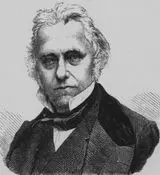
Thomas Macaulay

Thomas Babington Macaulay (1800-1859) was a British historian, politician, and essayist, best known for his monumental work "The History of England from the Accession of James II". His writing is celebrated for its vivid, narrative style, which brought history to life for a broad audience, and for its influence on British liberalism.

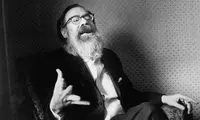
John Berryman

John Berryman was a renowned American poet, known for his lyrical intensity and exploration of themes such as pain, identity, madness, and mortality. His most celebrated work, "The Dream Songs," is a monumental piece that earned him the Pulitzer Prize and the National Book Award, establishing him as one of the most important voices in 20th-century American poetry. Berryman struggled with mental health issues throughout his life, and this personal anguish often shines through in his poetry, giving it a brutal honesty and remarkable emotional depth.

Jacinto de Brito Rebelo

Jacinto de Brito Rebelo was a Portuguese poet and pharmacist, whose poetic work stands out for its connection to the Azorean land and the exploration of themes such as nature, saudade, religiosity, and the daily life of the islands. With a sometimes regionalist language, his poems capture the essence of life in the Azores, combining detailed observation of the environment with a lyrical and reflective sensibility.

Javier Bello

Javier Bello is a Spanish writer and poet, known for his engaging prose and his poetry that explores the relationship between the individual and the urban space. His work frequently portrays city life, human interactions, and the search for meaning amidst modern hustle and bustle. He stands out for his keen observation of reality and his ability to translate the nuances of everyday life into narratives and poems that resonate with the reader. With a language that flows between the colloquial and the reflective, Bello constructs literary universes where melancholy intertwines with moments of unexpected beauty. His writing invites a pause to contemplate details that often go unnoticed, promoting a deeper connection with the environment and the people around. He is an important voice in contemporary literature, offering an original perspective on urban life and human experiences.

Harold Massingham

Harold Massingham was a prominent English poet, known for his work that frequently explored nature, rural life, and the passage of time. His poetry is characterized by careful lyricism and a deep connection to the natural world, reflecting an admiration for the landscape and its cycles.

Died on this day

7
Alfonsina Storni

Alfonsina Storni was an Argentine poet, journalist, and activist. A pioneer in literature written by women in Latin America, she stood out for her poetry that addresses themes such as love, motherhood, loneliness, the condition of women, and social criticism, often with a tone of revolt and defiance of the conventions of the time. Her life and work are marked by a strong social conscience and a tireless pursuit of freedom and gender equality, leaving an important legacy for feminism and contemporary literature.

Helga Holtz

Helga Holtz is a prominent figure in contemporary poetry, whose work is distinguished by its emotional intensity and exploration of profound existential themes. Her writing is marked by potent and imagistic language, capable of evoking complex inner landscapes and questioning the human condition. The author frequently addresses the fragility of relationships, the search for identity in a constantly changing world, and the tension between the self and the other. Helga Holtz's work invites reflection, offering the reader a mirror of their own anxieties and longings, consolidating her as a relevant and original voice in contemporary literature.

Moacyr Felix

Moacyr Felix was a Brazilian poet, playwright, and literary critic, associated with modernism. His work is marked by vigorous and colloquial language, exploring themes of everyday life, social criticism, and Brazilian popular culture. Felix also dedicated himself to theater and literary criticism, contributing to the dissemination and analysis of the literature of his time.

Raymond Queneau

Raymond Queneau was a French writer, poet, and playwright, a founding member of the literary group Oulipo. His work is characterized by linguistic experimentation, humor, wordplay, and the exploration of everyday life with an ironic and innovative perspective.

You talk, you talk, that’s all you know how to do.
Vesna Parun

Vesna Parun was one of the most important Croatian poetesses of the 20th century, known for her lyrical, innovative, and profoundly human poetry. Her work, which spanned various phases and styles, explored themes such as love, nature, the human condition, and freedom. With a prolific career marked by originality, Parun left a significant legacy for Croatian literature, being recognized for her contribution to the renewal of poetic language and the expressive force of her verses.

Adelino da Palma Carlos

Adelino da Palma Carlos was a prominent figure in Portuguese public life, standing out as a jurist, university professor, and politician. His trajectory was marked by involvement in crucial moments of contemporary Portuguese history, including the democratic transition after April 25, 1974. As a Law Professor, he dedicated a large part of his life to teaching and legal research, but he also held important positions in sovereign bodies, reflecting a civic commitment and a vision of public service. His political actions were guided by principles of justice and democracy, seeking to contribute to the consolidation of the Rule of Law in Portugal.