George Orwell
Author of the day

George Orwell

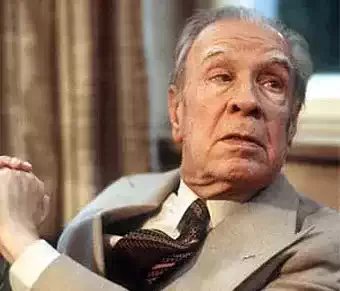
George Orwell, pseudonym of Eric Arthur Blair, was an English novelist, essayist, and journalist. He is widely known for his works of dystopian fiction, with strong social and political criticism. His most famous works, "Animal Farm" and "1984", explore themes of totalitarianism, surveillance, and the manipulation of truth, becoming references in world literature. Orwell also stood out for his investigative journalism and his engagement in social causes.

Poem of the day

Grass

Carl Sandburg
Pile the bodies high at Austerlitz and Waterloo.
Shovel them under and let me work
-I am the grass; I cover all.

And pile them high at Gettysburg
And pile them high at Ypres and Verdun.
Shovel them under and let me work.
Two years, ten years, and the passengers ask the conductor:

What place is this?
Where are we now?

I am the grass.
Let me work.
Read full poem

Born on this day

9
Marcolino Candeias

Marcolino Candeias is a poet whose work is distinguished by his deep connection to the land and cultural roots. His poetry celebrates simple life, nature, and traditions, expressed through an authentic and accessible language. Candeias builds a lyrical universe where memory and identity intertwine, offering a sensitive look at the human condition and the beauty of everyday life.

Rafael Días Icaza

Rafael Días Icaza was a poet whose work stood out for its exploration of existential themes and its ability to transfigure the everyday into poetic art. His writing is marked by deep sensitivity and a keen eye for the complexities of the human soul, reflecting on the ephemerality of life and the search for meaning. A poet of a generation seeking new forms of expression, Días Icaza contributed to the renewal of poetic language, combining tradition with a contemporary vision. His work, though sometimes discreet, resonates with its authenticity and the strength of its imagery, inviting reflection on the human condition.

Péricles Eugênio da Silva Ramos

Péricles Eugênio da Silva Ramos was a Brazilian poet, essayist, literary critic, and translator, a prominent figure of the Generation of 45. His poetic work is marked by a reflective and social tone, exploring themes such as national identity, Brazilian history, and the human condition. His writing is known for its erudition, formal rigor, and a restrained yet profound lyricism. In addition to his vast poetic production, Silva Ramos dedicated himself to literary criticism and translation, contributing significantly to the dissemination of Portuguese-language literature and the study of classical and modern authors. His cultural involvement was diverse and influential.

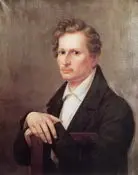
August Graf von Platen

August Graf von Platen (1796-1835) was a German poet and playwright, known for his sonnets and satires. His work is marked by a classical style and a strong critical sense, addressing themes such as society, politics, and the human condition with sharpness and elegance.

António José Maldonado

António José Maldonado was a Portuguese poet of the 18th century, whose work belongs to the Arcadian period. Known for his delicate lyricism and a strong inclination for occasional and more sentimental poetry, Maldonado reflected the aesthetic and thematic ideals of his time in his verses. He explored themes such as love, nature, and the transience of time, with a language that sought clarity and elegance, characteristic of the Arcadian movement. His poetic production contributes to the understanding of Portuguese lyrics from this period.

Delmira Agustini

Delmira Agustini was an Uruguayan poet, a prominent figure of literary modernism in Hispanic America. Her work is characterized by a profound exploration of sensuality, eroticism, and feminine subjectivity, often framed within a context of social and moral repression for women of her time. Agustini is recognized for her thematic audacity and innovative language, which challenged the literary and social conventions of the early 20th century. Despite her short life, her poetry left an indelible mark on the literature of her country and the continent, being considered a precursor to literary feminism.

Porfirio Barba Jacob

Porfirio Barba Jacob was a Colombian poet known for his profound and often melancholic lyrical work. His poetry is characterized by intense introspection, the exploration of themes such as solitude, unrequited love, and the transience of time. Despite a life marked by instability and difficulties, his pen managed to capture the beauty and pain of existence with exceptional sensitivity. His work, although not very extensive, left an indelible mark on 20th-century Hispanic American poetry. Barba Jacob is remembered as a poet with a deep connection to his emotions, whose voice resonates with heartbreaking authenticity, inviting reflection on the human condition and the search for meaning in an often adverse world.

Died on this day

8
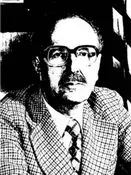
João Manuel Simões

João Manuel Simões is a contemporary poet whose work is notable for its exploration of language and reflection on existence. His poetic work addresses universal themes through an introspective and, at times, enigmatic perspective, inviting the reader to delve into the depths of the human condition.

Dolores Duran

Dolores Duran was a Brazilian singer and songwriter, known for her melancholic voice and her songs that addressed themes such as love, longing, and disillusionment. Her work is marked by a deep sensibility and poetic writing that made her one of the most important voices in Brazilian popular music in the mid-20th century. She left a legacy of songs that continue to be interpreted and admired for their authenticity and emotional strength, consolidating her place as an icon of Brazilian music and poetry.

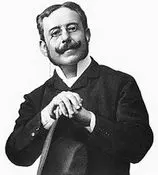
Amadeu Amaral

Amadeu Amaral was a Portuguese poet, playwright, and literary critic, a prominent figure of the Orpheu group and the modernist movement in Portugal. His poetic work is marked by formal innovation, the exploration of urban themes, and the search for a freer and more expressive language. As a critic and theorist, Amaral played a crucial role in defining and disseminating modernist aesthetics, advocating for the renewal of Portuguese literature in the face of previous traditions.

Ernesto Ennes

Ernesto Ennes was a Portuguese poet and journalist, whose work is situated in the context of the late 19th and early 20th centuries. His poetry, often linked to saudosismo and a strong national identity, reflects the social and cultural concerns of his time, with a style that oscillates between tradition and the first winds of literary modernity.

Francisco Luis Bernárdez

Francisco Luis Bernárdez was an Argentine poet whose work is characterized by a deep, spiritual, and reflective lyricism, often marked by the influence of philosophy and theology. His poetry explores themes such as faith, doubt, the mystery of existence, transcendence, and the search for God. With a refined style and language rich in symbolism, Bernárdez managed to create a poetic work of great spiritual depth. His figure is relevant within 20th-century Argentine poetry, standing out for his originality and his inquiry into the fundamental questions of the human being.

Carlos Bousoño

Carlos Bousoño was a distinguished Spanish poet and literary critic, a central figure in post-war Spanish poetry and one of the foremost experts on the work of Juan Ramón Jiménez. His poetic work, marked by a profound reflection on being, time, and reality, is characterized by its formal rigor, careful language, and constant search for truth and beauty. As a critic, his analysis of contemporary poetry and his erudition established him as an undisputed authority in the Spanish literary sphere.

Luis Rosales

Luis Rosales was a Spanish poet whose work is associated with the Generation of '27, although his style developed its own voice and a profound reflection on the human condition and beauty. His poetry is characterized by a refined lyricism, precise language, and a constant search for harmony and transcendence. Rosales explored themes such as love, death, time, nature, and memory, often with an existential and metaphysical perspective. He is recognized for his formal mastery, his balance between tradition and modernity, and his ability to evoke deep emotions through suggestive images and a musical rhythm. His work represents a valuable legacy in 20th-century Spanish poetry, marked by lyrical intensity and the nobility of his expression.