Poem of the day

Do Not Go Gentle Into That Good Night

Dylan Thomas
Do not go gentle into that good night, 
Old age should burn and rave at close of day; 
Rage, rage against the dying of the light. 

Though wise men at their end know dark is right, 
Because their words had forked no lightning they 
Do not go gentle into that good night. 

Good men, the last wave by, crying how bright 
Their frail deeds might have danced in a green bay, 
Rage, rage against the dying of the light. 

Wild men who caught and sang the sun in flight, 
And learn, too late, they grieved it on its way, 
Do not go gentle into that good night. 

Grave men, near death, who see with blinding sight 
Blind eyes could blaze like meteors and be gay, 
Rage, rage against the dying of the light. 

And you, my father, there on that sad height, 
Curse, bless, me now with your fierce tears, I pray. 
Do not go gentle into that good night. 
Rage, rage against the dying of the light.

Read full poem

Born on this day

7
Alberto Pimenta

Alberto Pimenta is a Portuguese poet, essayist, and art critic. His poetic work is characterized by linguistic experimentation, the exploration of themes such as identity, the body, sexuality, and the individual's relationship with society. He is known for an irreverent, often provocative writing that challenges literary and social conventions. His poetry dialogues with tradition, but projects it into a contemporary context, addressing philosophical and existential issues with a critical and innovative perspective. He is an unavoidable figure in contemporary Portuguese poetry, with a vast and multifaceted work that continues to challenge and captivate readers.

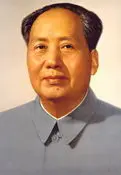
Mao Tsé-Tung

Mao Zedong was a Chinese communist revolutionary and the founding father of the People's Republic of China, which he ruled as the chairman of the Communist Party of China from its establishment in 1949 until his death in 1976. His political and military strategies, notably Maoism, led the Communist Party to victory in the Chinese Civil War and were instrumental in establishing the PRC. Mao's legacy is complex, characterized by his revolutionary achievements in unifying China and initiating significant social and economic reforms, alongside periods of intense political upheaval and widespread hardship, such as the Great Leap Forward and the Cultural Revolution. His thought and actions continue to shape political discourse and historical understanding of modern China.

Against the First Encirclement Campaign
Ed Roberson

Ed Roberson is an American poet whose work is known for its exploration of African-American history, racial identity, and the urban landscape, with an experimental and visually rich language. His poems often stand out for their innovative structure and the way they address profound social and cultural issues. Roberson's career is marked by a commitment to language as a form of resistance and affirmation, using techniques that challenge poetic conventions to create new perceptions of the Black experience in America. He is considered an important voice in contemporary poetry, known for his originality and impact.

Thomas Gray

Thomas Gray was an English poet, primarily recognized for his "Elegy Written in a Country Churchyard". His work, though scarce, is characterized by melancholy, reflection on mortality and the beauty of the ephemeral, and a profound landscape sensitivity. Despite a quiet life dedicated to study, his poetry explored universal themes with a formal mastery that significantly influenced early Romanticism.

Ye distant spires, ye antique towers, That crown t
Alejo Carpentier

Alejo Carpentier was a distinguished Cuban narrator, essayist, and musicologist, a key figure in 20th-century Latin American literature. His work is characterized by the fusion of the real and the marvelous, "marvellous realism," and by a profound exploration of the history, culture, and identity of the American continent. Considered one of the greatest exponents of the Latin American Boom, Carpentier developed a rich and complex narrative style, with exuberant language and profound erudition. His literary legacy is fundamental to understanding contemporary narrative in Spanish.

Died on this day

10
Quirino dos Santos

Quirino dos Santos was an Angolan poet, whose work stands out for its deep connection to the land and African identity. His poetry is a vehicle for the expression of the experiences, pains, and hopes of the Angolan people, addressing themes such as colonization, the struggle for freedom, and the valorization of ancestral culture. With a vigorous language charged with symbolism, Quirino dos Santos managed to capture the essence of the Angolan soul, becoming an important voice in Portuguese-language literature. His work is a testament to the resilience and strength of a people in search of self-determination and recognition, echoing the importance of preserving memory and traditions.

Vespasiano Ramos

Vespasiano Ramos was a Brazilian poet and writer, known for his participation in the modernist movement. His poetic work is marked by formal experimentation, the use of colloquial language, and the exploration of everyday themes and Brazilian identity. Throughout his career, Ramos innovated in his forms of expression, engaging with the artistic avant-gardes of his time. His poetry reflects a critical and, at times, ironic view of society, seeking to capture the essence of modern life and human feelings in concise and impactful verses. He is considered one of the important names in modernist poetry in Brazil.

James Stephens

James Stephens was a prominent Irish writer and poet, known for his work in the Irish literary revival movement. His fiction frequently interweaves Irish folklore and mysticism with social and psychological themes, resulting in rich and imaginative narratives. Stephens had a diverse career, including involvement with Sinn Féin and the Irish Academy.

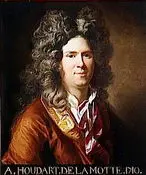
Antoine Houdar de la Motte

Antoine Houdar de la Motte was a 17th and 18th-century French playwright, poet, and writer. Known for his theatrical works and poems, he also stood out as an important literary theorist, advocating for new aesthetic approaches in opposition to rigid classical rules.

Claude-Adrien Helvétius

Claude-Adrien Helvétius was a French philosopher and writer of the Enlightenment. His most famous work, "De l'esprit" (On the Mind), caused great controversy and was condemned by the Church and Parliament, being publicly burned.

Faramarz

Faramarz, whose full name is Faramarz Almasi, is a well-known Iranian musician and composer. Born in Sari, Iran, he stood out in his country's music scene.

D. João de Almeida Portugal

D. João de Almeida Portugal is a historical figure associated with literary production in Portugal, with a work that fits into a context of literary transition and development. His writing, although perhaps not as widely known as that of other renowned authors, represents a testament to the intellectual and cultural activity of his time. His literary contribution, focused on themes relevant to his era, offers a valuable perspective on the thought and artistic expression of the period in which he lived.

António Mega Ferreira

António Mega Ferreira was a Portuguese writer, poet, and essayist whose work deeply explored identity, memory, and the human condition, in constant dialogue with history and culture. His poetry, marked by rigorous language and a strong reflective charge, explored themes such as time, the relationship between the individual and society, and the search for meaning in a constantly changing world. As an essayist and critic, Mega Ferreira contributed significantly to the analysis of Portuguese literature and culture, leaving a legacy of critical thought and an invaluable literary work.

John Heath-Stubbs

John Heath-Stubbs was an English poet whose work is known for its erudition, ironic humor, and deep connection to the literary tradition. He explored themes such as mythology, religion, and the search for meaning in a modern world, often using classical poetic forms with a contemporary touch. His poetry reflects a complex worldview, balancing skepticism with a longing for transcendence.