Poem of the day

Grass

Carl Sandburg
Pile the bodies high at Austerlitz and Waterloo.
Shovel them under and let me work
-I am the grass; I cover all.

And pile them high at Gettysburg
And pile them high at Ypres and Verdun.
Shovel them under and let me work.
Two years, ten years, and the passengers ask the conductor:

What place is this?
Where are we now?

I am the grass.
Let me work.
Read full poem

Born on this day

10
Ruy Ventura

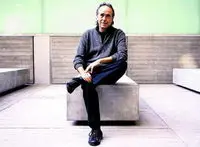
Ruy Ventura is a Portuguese poet and author, whose work is part of the context of contemporary poetry. With a writing that frequently explores intimacy, memory, and the complexity of human relationships, Ventura has been establishing himself in the literary scene through a lyrical and reflective voice. His poetry is marked by the search for precise and evocative language.

Saulo Mendonça

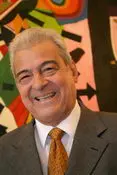
Saulo Mendonça is a contemporary poet whose work explores the depths of human experience through lyrical and introspective language. His poetry is distinguished by the sensitivity with which he addresses universal themes such as love, loss, and the search for meaning, often intertwining the personal with the collective. His writing is characterized by the intrinsic musicality of his verses and his ability to evoke vivid images and deep emotions in the reader. Mendonça has been consolidating his space in the literary scene, being recognized for the authenticity and expressive force of his poetic voice.

Joan Manuel Serrat

Joan Manuel Serrat is a Spanish singer, composer, and poet, a prominent figure of the Catalan Nova Cançó. His work, marked by lyrical and social poetry, addresses universal themes such as love, the passage of time, injustice, and cultural identity. With a career spanning decades, Serrat has become one of the most influential and respected artists in Spanish-language music, known for his unmistakable voice and the depth of his lyrics.

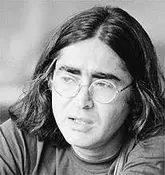
Antonio Cisneros

Antonio Cisneros was a prominent Peruvian poet, whose work stood out for its expressive force, irony, and reflection on social reality and the human condition. His poetry is marked by vibrant language and a critical look at his time, exploring themes such as identity, politics, and the complexities of daily life. Cisneros established himself as one of the most important voices in Latin American poetry of his generation.

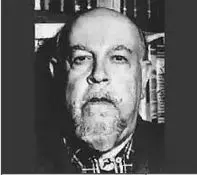
Charles Olson

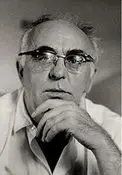
Charles Olson was an American poet, essayist, and academic, a central figure in post-World War II poetry. His work is marked by an intense exploration of individual experience and history, integrating philosophy and anthropology into verses that seek to capture the totality of being. Olson is often associated with Black Mountain College, where he taught and developed many of his theories on poetry, proposition, and perception. His legacy lies in redefining poetic practice, encouraging a more direct and visceral approach to language and reality, profoundly influencing generations of experimental poets.

Manuel Granjo de Matos

Manuel Granjo de Matos was a Portuguese poet whose work is distinguished by its lyrical depth and exploration of universal themes such as existence, time, and memory. With a style marked by expressive restraint and the search for the exact word, Matos built a poetry that resonates with its intellectual honesty and its ability to touch the reader on deeper levels. His literary contribution is valued for its consistency and the intrinsic quality of his verses.

Alexandra Monteiro

Alexandra Monteiro is a contemporary Portuguese poet whose work is distinguished by its exploration of identity, memory, and human relationships. Her poetry is marked by a lyrical sensibility and a language that moves between the everyday and the sublime, reflecting on the complexities of the female experience and the search for a place in the world. Her style, although sometimes colloquial, reveals a deep capacity for observation and a fertile imagination.

Mirza Ghalib

Mirza Ghalib was a preeminent Urdu and Persian poet of the 19th century, renowned for his profound ghazals and his sophisticated literary style. He is widely considered one of the greatest poets in the Hindustani language, whose work bridged classical traditions with emerging modern sensibilities. Ghalib's poetry is celebrated for its intellectual depth, philosophical insights, wit, and its exploration of complex human emotions, including love, loss, and the existential condition. His mastery of language and his unique perspective continue to resonate with readers and scholars alike, making him a towering figure in South Asian literature.

Died on this day

11
Ossip Mandelstam

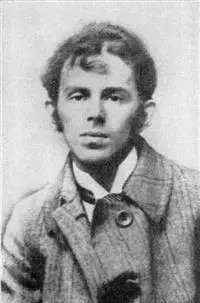
Ossip Mandelstam was an influential Russian poet, considered one of the greatest exponents of 20th-century poetry. His work is marked by intellectual depth, richness of imagery, and the ability to evoke time and memory. He faced political repression in the Soviet Union, which led to his arrest and death in tragic circumstances. His poetry, although often dark and marked by pain, is a testament to the resilience of the human spirit and the power of art in the face of adversity.

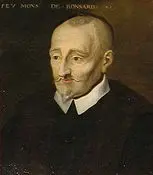
Pierre de Ronsard

Pierre de Ronsard was a French Renaissance poet, considered one of the greatest lyricists in the French language. His work is marked by profound classical erudition, the exploration of themes such as love, the passage of time, and ephemeral beauty, and a formal rigor that established him as a master of poetry. He is a central figure of the Pléiade, a group of poets who sought to elevate the French language to a literary level comparable to Latin and Greek, through the imitation and adaptation of classical and Italian models.

Germano Machado

Germano Machado was a Portuguese poet known for his poetry that deeply explores the human condition, time, and memory. His work is marked by careful language and philosophical reflection on existence, often with a melancholic and introspective tone. He explored the individual's relationship with the world and the transience of life, leaving a poetic legacy that continues to resonate for its depth and sensitivity.

José Maria Nascimento

José Maria Nascimento is a poet whose work stands out for his ability to capture the essence of human experience, intertwining lyricism and reflection. His poetry is an invitation to introspection, exploring themes such as memory, time, and the complexities of relationships, through a language that combines sensitivity and formal rigor.

Cacaso

Cacaso, pseudonym of Antônio de Pádua Danças, was a Brazilian poet and literary critic, a prominent figure in marginal poetry. His work is marked by irony, humor, and irreverence, addressing themes of urban daily life, social relations, and the human condition itself with a colloquial and accessible language. He stood out for his ability to blend the lyrical with the prosaic, the reflective with the fun, creating poetry that directly engaged the reader. His literary output, although concise, left a significant mark on contemporary Brazilian poetry, influencing later generations through its authenticity and the way it demystified poetic language, bringing it closer to life.

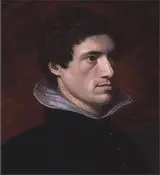
Charles Lamb

Charles Lamb was an English essayist, biographer, and writer. Born in London, he is best known for his work "Essays of Elia," which offers an intimate look into his life, observations, and feelings.

Alfonso Reyes

Alfonso Reyes Ochoa was a Mexican writer, poet, diplomat, and literary critic. He is considered one of the most important intellectuals in Mexico in the 20th century and a central figure in Hispanic-American literature. His work encompasses poetry, essays, and literary and philosophical criticism, always with an elegant and erudite style.

Luís da Silva Mousinho de Albuquerque

Luís da Silva Mousinho de Albuquerque was a Portuguese jurist, historian, and politician. He dedicated himself to the study of Law and History, especially the history of Portugal. He held relevant public positions in his time, having been a member of various academic and governmental institutions. His work reflects a deep interest in the analysis of Portuguese institutions and past, contributing to the country's historiography.

Lia Viegas

Lia Viegas is a prominent figure in Portuguese children's and youth literature, known for her vast and rich work that spans generations. With a career dedicated to writing, she explored various genres, from poetry to prose, always with a keen eye on the child's universe and its complexities. Her writing is characterized by inventiveness, subtle humor, and the sensitivity with which she addresses important themes for the development of children and young people. Lia Viegas has established herself as a benchmark author, with a lasting legacy in the Portuguese literary landscape.

Serafim Leite

Serafim Leite was a Portuguese Jesuit priest, historian, and ethnographer, known for his extensive work on the history of the Society of Jesus in Brazil. He dedicated a large part of his life to researching and documenting the Jesuit presence in the missions, collecting a valuable archive of information on indigenous cultures and Portuguese colonization. His work is fundamental for the study of Brazilian colonial history and missionary activities.