
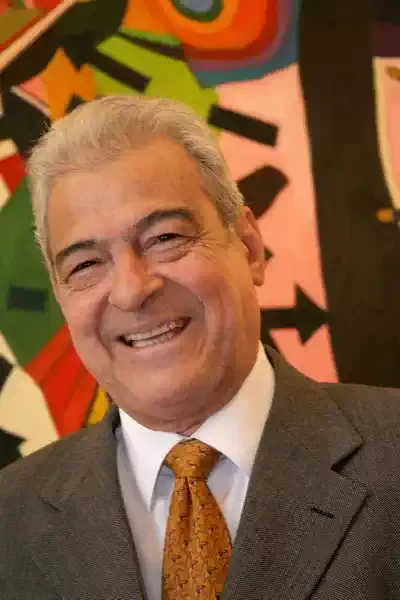
Antonio Cisneros
1942–2012
· lived 69 years
 PE
PE
PE
Antonio Cisneros was a prominent Peruvian poet, whose work stood out for its expressive force, irony, and reflection on social reality and the human condition. His poetry is marked by vibrant language and a critical look at his time, exploring themes such as identity, politics, and the complexities of daily life. Cisneros established himself as one of the most important voices in Latin American poetry of his generation.
n. 1942-12-27, Lima · m. 2012-10-06, Lima
70
Views
Bio
Identification and basic context
Antonio Cisneros was a Peruvian poet, widely recognized in the literary scene of Latin America. Born in Lima, Peru, on May 27, 1942, and passed away in the same city on September 12, 2012, Cisneros traversed different phases of his life and work, always with a strong connection to his homeland and its culture.Childhood and education
Cisneros grew up in Lima, in an environment that allowed him to develop a critical view of Peruvian society. His academic training and early readings were crucial in shaping his literary and political consciousness. He absorbed influences from various authors and movements, which would be reflected in his poetry.Literary career
The beginning of his poetic writing dates back to his youth, and his work evolved significantly over the decades. Cisneros published several books of poetry, which were received with critical and public acclaim. He actively participated in anthologies and literary magazines, consolidating his position as one of the great names in Peruvian and Latin American poetry. He also held diplomatic positions, which provided him with an international perspective.Work, style, and literary characteristics
Among his most notable works are "Destierro" (1961), "Compañero del descanso" (1964), "La jineteada" (1964), "Mariscal Sucre" (1970), "El libro de Dios y de los muertos" (1970), "Las مدن perdidas" (1975), "Canto ceremonial a la vida y a la muerte de Santiago" (1983), and "La experiencia del odio" (1992), among others. The dominant themes in his work include identity, memory, the history of Peru and Latin America, politics, love, death, and reflection on time. His style is marked by direct language, sometimes colloquial, but also laden with lyricism and irony. He uses poetic resources that create vivid images and his own rhythm, often reflecting orality. His poetic voice is strong, engaged, and profoundly human. Cisneros dialogues with literary tradition, but also introduces innovations, especially in how he addresses the social and political issues of his time.Cultural and historical context
Antonio Cisneros lived in a period of intense political and social upheaval in Peru and Latin America, which was profoundly reflected in his work. He belonged to a generation of poets who sought engaged poetry, which did not shy away from reality. His political and philosophical positions were clear, and his work is a testament to the tensions and debates of the time.Personal life
Cisneros's personal life, while not the main focus of his work, certainly influenced his worldview. His experiences, relationships, and convictions shaped the poet he became.Recognition and reception
Antonio Cisneros was widely recognized during his life and after his death. He received several awards and distinctions, and his work is studied and admired in academic and literary circles, both in Peru and internationally. He is considered one of the most important poets of his generation.Influences and legacy
Cisneros was influenced by various Latin American and universal poets. His legacy is immense, and his work continues to inspire new generations of poets who identify with his ability to capture the essence of the human experience and social reality.Interpretation and critical analysis
Cisneros's work has been the subject of numerous critical analyses, exploring its thematic and stylistic complexity. His reflections on history, politics, and the human condition offer a vast field for interpretation.Curiosities and lesser-known aspects
Cisneros, in addition to being a poet, was also a diplomat, having served in different countries. This international experience may have further enriched his perspective on the world and its people.Death and memory
Antonio Cisneros passed away in Lima at the age of 70, leaving a void in Peruvian and Latin American poetry. His memory endures through his work, which continues to be read, studied, and celebrated.Poems
0No poems found
Comments (0)
Log in
to post a comment.
No comments yet. Be the first to comment.