

Awards
Premio Iberoamericano de Poesía Pablo Neruda
Prémio Neruda de Poesia
Description
Origin and Purpose of the Award
The Pablo Neruda Ibero-American Poetry Award, established in Chile, is a distinction of great prestige in the Spanish and Portuguese literary scene. Its main objective is to honor the memory and legacy of one of the most influential poets of the 20th century, Pablo Neruda, and at the same time, promote and celebrate contemporary poetry produced in the vast Ibero-American region, which encompasses the countries of Latin America and the Iberian Peninsula (Spain and Portugal).
Selection Criteria
This award annually distinguishes a poet whose work has demonstrated exceptional literary value, a unique poetic voice, and a significant contribution to the renewal and enrichment of Spanish or Portuguese poetry. The selection criteria, although they may vary slightly with each edition depending on the jury and the organization, tend to value originality, thematic depth, formal mastery, the ability to evoke emotions, and to reflect on the human condition, society, and culture.
Symbolic Significance
Neruda's relevance as a literary and political figure, a Nobel laureate who became a symbol of identity and resistance for many peoples, gives the award a special aura and considerable symbolic weight.
Ceremony and Recognition
The selection of laureate poets often reflects a diverse panorama of Ibero-American poetry, including authors from different nationalities, generations, and styles. The award is not limited to a single author but may encompass a complete work or a specific book that stands out for its quality and impact. The award ceremony, usually held in Chile, Neruda's homeland, is an important cultural event, attracting the attention of critics, academics, writers, and literature lovers.
Impact and Legacy
Over the years, the Pablo Neruda Poetry Award has served as an important vehicle for the dissemination of poets who, at times, do not have the same international visibility as other literary genres. Its existence underscores the importance of poetry as a form of artistic expression and as a tool for knowledge and social transformation. Its connection to Pablo Neruda is not merely nominal; it is an acknowledgment of his lasting influence on how poetry is written and perceived in Latin America and in Spain and Portugal. The award helps keep alive the flame of Nerudian poetry, inspiring new generations of poets to explore the depths of language and human experience with the same passion and commitment that characterized the work of the Chilean poet. Its relevance extends beyond individual recognition, strengthening cultural and literary ties between Spanish and Portuguese-speaking countries, promoting a continuous and enriching poetic dialogue.
Winners

Rosabetty Muñoz

Rosabetty Muñoz is a Chilean poet whose work is recognized for its expressive power and exploration of themes such as memory, identity, and the relationship with nature. Her poetry stands out for its lyrical intensity and its ability to evoke powerful images. With a striking authorial voice, Muñoz constructs a particular universe in her poems, where personal experiences intertwine with broader reflections on being and the world. Her work is a significant contribution to contemporary Latin American poetry.

Olvido García Valdés

Olvido García Valdés is a Spanish poet whose work stands out for its exploration of language, memory, and identity, with a strong connection to the land and cultural roots. Her poetry is marked by intense sensitivity, a unique rhythm, and an ability to evoke mystery and the sacred in the everyday.

Gloria Gervitz

Gloria Gervitz is an Argentine poet known for her work that combines a strong lyrical charge with a deep reflection on existence, memory, and language. Her poetry is distinguished by its intensity and musicality, exploring the boundaries between the intimate and the universal. With a career marked by discretion and dedication to art, Gervitz has built a singular body of work that dialogues with the poetic tradition while maintaining an unmistakable voice. Her poems are invitations to unravel the complexities of being and the beauty contained in words.

Elvira Hernández

Joan Margarit

Raúl Zurita
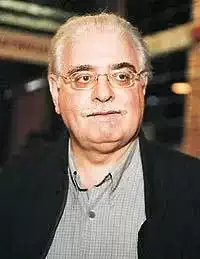
Augusto de Campos

Augusto de Campos is a Brazilian poet, translator, editor, and critic, a central figure of Concrete poetry. His work, marked by visual and sonic experimentation in poetic language, revolutionized Brazilian poetry from the 1950s onwards. Alongside Haroldo de Campos and Décio Pignatari, he founded the group Noigandres, fundamental to the dissemination of Concrete poetry in Brazil and worldwide. His vast production spans poetry, essays, translations, and criticism, consolidating him as one of the most important Brazilian poets of the 20th and 21st centuries.

Reina María Rodríguez

Reina María Rodríguez is a Cuban poet, essayist, and editor, a prominent figure in her country's literary scene. Her poetic work is known for its sensitivity, expressive force, and exploration of themes such as identity, femininity, the city, and the very condition of poetry.

José Kozer
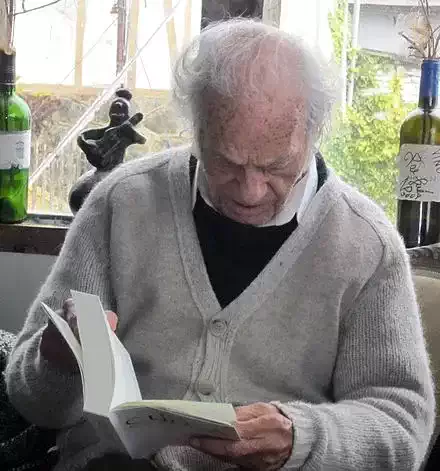
Nicanor Parra
Nicanor Parra was one of the most important Chilean poets of the 20th century, creator of "anti-poetry", a literary genre that rejects traditional poetic language in favor of a more direct, colloquial, and ironic expression. His work questions social and literary conventions, using humor, satire, and common sense to demystify reality and poetry itself. Parra is known for his originality, his biting social criticism, and his profound impact on Latin American literature, being considered a fundamental figure of Chilean Modernism and an unmistakable voice in universal poetry.

Óscar Hahn

Óscar Hahn is a Chilean poet, literary critic, and academic, recognized for his existentialist poetry and his exploration of the human condition, death, love, and identity. His work is characterized by deep philosophical reflection and formal mastery, often tinged with irony and a lucid tone. With a consolidated career, Hahn has been an influential voice in Chilean and Latin American poetry, exploring the tensions between life and death, transcendence and immanence, and the search for meaning in an often chaotic world. His poetry invites deep meditation on existence.
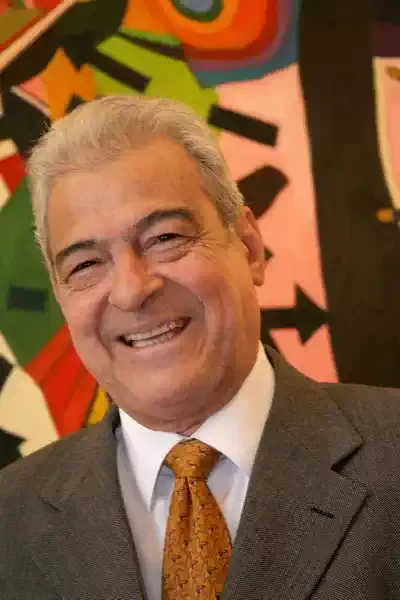
Antonio Cisneros

Antonio Cisneros was a prominent Peruvian poet, whose work stood out for its expressive force, irony, and reflection on social reality and the human condition. His poetry is marked by vibrant language and a critical look at his time, exploring themes such as identity, politics, and the complexities of daily life. Cisneros established himself as one of the most important voices in Latin American poetry of his generation.
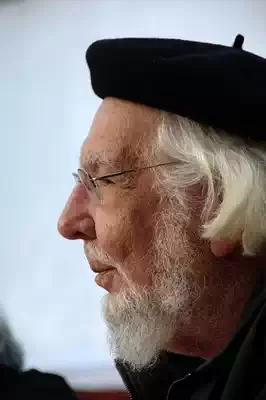
Ernesto Cardenal

Ernesto Cardenal was a Nicaraguan poet, priest, theologian, and politician, a prominent figure of Liberation Theology and one of the most important poets in Latin America. His poetic work is marked by deep spirituality, social and political engagement, and accessible language that dialogues with popular culture. Cardenal dedicated his life to the struggle for social justice and artistic expression, being a fervent defender of human rights and the sovereignty of his people. His poetry is a reflection of his faith, his political convictions, and his love for Nicaragua.

Carmen Berenguer
Carmen Berenguer was a Chilean poet, writer, and activist, known for her transgressive and experimental work that addresses themes such as the body, politics, identity, and the city. Her poetry is marked by formal daring and a strong social and feminist charge.

Fina García Marruz
Fina García Marruz was a Cuban poet, essayist, and researcher, considered one of the central figures of 20th-century Cuban poetry and one of the most relevant female voices in Spanish-language literature. Her work is marked by erudition, philosophical depth, and the exploration of identity, memory, and the human condition. With precise and evocative language, García Marruz wove a universe of reflection in her verses about love, death, faith, and the search for transcendence. Her poetry, both intimate and universal, invites contemplation and the discovery of new perspectives on existence.

Carlos Germán Belli
Peruvian poet, one of the most unique and enigmatic voices in 20th-century Spanish-language poetry. His work, marked by an elaborate language and a profound reflection on existence, time, and memory, is characterized by its formal rigor and its often dark and existential tone. Throughout his career, Belli has explored the depths of the human condition, the transience of life, and the persistence of memory, using a poetics that combines tradition with a contemporary and personal vision. He is recognized for the demands of his writing and the intensity of his verses.
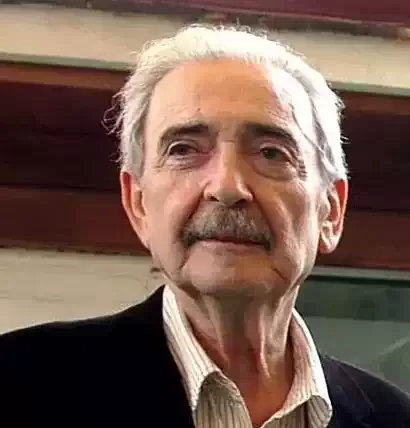
Juan Gelman
Juan Gelman was one of the most important Argentine poets of the 20th and 21st centuries, known for his dense, political, and profoundly human work. His poetry, marked by an incessant search for language and reflection on memory, loss, and justice, traversed different phases, from initial lyricism to a more engaged and philosophical expression. Gelman was also a journalist and translator, and his life was intrinsically linked to the political upheavals in Argentina and Latin America.

José Emilio Pacheco
Mexican poet, essayist, narrator, translator, and academic. Known for his introspective lyricism and his sharp reflection on time, memory, and identity. His work is characterized by deep melancholy, precise language, and a constant interconnection between the personal and the social. He reflected on history, popular culture, and the human condition in the modern world. He stood out for his ability to move between high culture and daily life, integrating diverse elements into a unique poetic worldview.