Poem of the day

Do Not Go Gentle Into That Good Night

Dylan Thomas
Do not go gentle into that good night, 
Old age should burn and rave at close of day; 
Rage, rage against the dying of the light. 

Though wise men at their end know dark is right, 
Because their words had forked no lightning they 
Do not go gentle into that good night. 

Good men, the last wave by, crying how bright 
Their frail deeds might have danced in a green bay, 
Rage, rage against the dying of the light. 

Wild men who caught and sang the sun in flight, 
And learn, too late, they grieved it on its way, 
Do not go gentle into that good night. 

Grave men, near death, who see with blinding sight 
Blind eyes could blaze like meteors and be gay, 
Rage, rage against the dying of the light. 

And you, my father, there on that sad height, 
Curse, bless, me now with your fierce tears, I pray. 
Do not go gentle into that good night. 
Rage, rage against the dying of the light.
Read full poem

Born on this day

9
Manoel Elias Filho

Manoel Elias Filho is a poet and writer whose work is part of the contemporary literary landscape. With a production that explores the depths of human experience, the author uses poetic language as a tool to investigate universal themes. His poetry is marked by keen sensitivity and an attentive eye to the nuances of life.

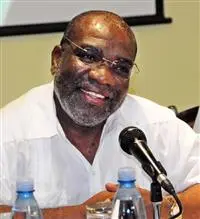
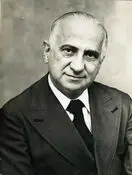
Armando Artur

Part of 'Generation Charrua' (geração Charrua), a group of writers named after the literary magazine Charrua.

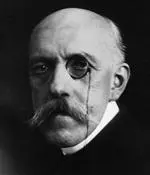
Henri de Régnier

Henri de Régnier was a French poet and novelist, a prominent figure of symbolism. His poetic work is characterized by musicality, the use of classical forms, and the exploration of themes such as love, nature, and melancholy.

Alba Flores Robla

Alba Flores Robla is a Spanish writer whose work is characterized by the exploration of engaging narratives and the psychological depth of her characters. Her stories often address the complexities of human relationships and the challenges of contemporary life.

Antonio Lucas

Antonio Lucas is a Spanish poet, journalist, and literary critic, known for his incisive poetry and his approach to social and existential themes. His work is marked by a direct style and critical reflection on contemporary reality. As a journalist and critic, Lucas has closely followed the cultural and literary scene, offering sharp analyses and actively participating in public debate. His writing is valued for its intelligence, conciseness, and the relevance of his observations.

José Luis Cano

José Luis Cano was a Spanish poet, literary critic, and translator. His poetic work is characterized by a deep and serene gaze upon reality, exploring themes such as memory, the passage of time, nature, and the human condition with precise and evocative language. As a critic, he dedicated himself to the study of contemporary Spanish poetry, standing out for his rigor and analytical sharpness. His work as a translator also enriched the Spanish literary landscape. He is considered a relevant figure in the poetry and criticism of his generation.

Died on this day

13
Olavo Bilac

Olavo Bilac was a Brazilian poet, journalist, and professor, widely considered one of the greatest names of Parnassianism in Brazil. His work is marked by formal perfection, metrical rigor, and themes focused on love, country, and classical ideals. Bilac is known for his exaggerated nationalism and his skill in versifying, having been one of the founders of the Brazilian Academy of Letters.

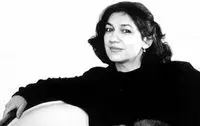
Tamara Baroni

Tamara Baroni is a contemporary Brazilian poet, whose work stands out for its expressive force and themes that range between the personal and the social. Her poetry is often marked by direct and impactful language, addressing issues of identity, body, feminism, and the complexities of human relationships. With a writing style that fears neither experimentation nor vulnerability, Baroni crafts verses that resonate with the urgency of modern experience. Her poetic voice emerges as a powerful force in the current literary scene, engaging with the anxieties of her time and provoking reflection in the reader.

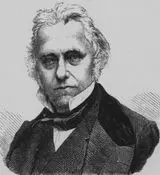
Thomas Macaulay

Thomas Babington Macaulay (1800-1859) was a British historian, politician, and essayist, best known for his monumental work "The History of England from the Accession of James II". His writing is celebrated for its vivid, narrative style, which brought history to life for a broad audience, and for its influence on British liberalism.

Otto Lara Resende

Otto Lara Resende was a prominent Brazilian journalist and writer. Although primarily known for his work in journalism, his literary output, while less extensive, reveals a sharp sensibility and a critical eye on society and the human condition. His writing is marked by elegant and reflective prose, exploring universal themes with depth.

Josée Lapeyrère

Josée Lapeyrère was a discreet figure in the literary landscape, known for her introspective poetry and exploration of existential themes. Her work, though not extensive, stands out for its lyrical depth and sensitivity in approaching the human condition, dealing with the transience of time and the search for meaning in a constantly changing world. Her writing is characterized by a refined language and an intrinsic musicality, inviting reflection and contemplation.

António Cobeira

Poet who stands out for his introspective lyricism and exploration of themes such as memory, identity, and the passage of time. His writing is marked by an apparent simplicity that hides a deep emotional and philosophical complexity. His verses invite serene contemplation on the human condition, the transience of moments, and the search for meaning in existence, leaving a mark of authenticity and sensibility.

Maria Teresa Andrade Santos

Maria Teresa Andrade Santos is a Portuguese writer whose work, although multifaceted, has poetry as one of its central pillars. Her writing is marked by a deep connection to the land, traditions, and the soul of the Portuguese people, expressed through accessible language yet loaded with emotion and meaning. She frequently explores themes such as memory, identity, the passage of time, and human resilience, with a sensitive and authentic gaze on the small big stories that make up life.

José Luis Alegre Cudós

José Luis Alegre Cudós is a Spanish writer and professor, known for his contribution to literature and education. His work frequently explores themes related to culture, history, and society, reflecting a deep connection with his roots and the context in which he lives. As an educator, Alegre Cudós has dedicated part of his career to teaching and disseminating knowledge, seeking to inspire and train new generations. His writing is marked by rich language and an analytical vision, making him a relevant figure in the contemporary Spanish literary scene.

Hervey Allen

Hervey Allen was a prominent American novelist and poet, known for his historical fiction works that portrayed life and events in the United States. His writing is characterized by deep research and a vivid style. Allen achieved international fame with his novel "Anthony Adverse", an epic work that established him as one of the great names in American literature of his time.

Vicente Gerbasi

Vicente Gerbasi was a Venezuelan poet and diplomat, a key figure in 20th-century Venezuelan poetry. His work is characterized by a profound reflection on Venezuelan identity, history, nature, and time. He explored themes such as the social reality of his country, the search for roots, and the human condition, employing a powerful and often epic language. He was also a prominent essayist and cultural promoter, leaving a significant legacy in his country's literature.