Poem of the day

Grass

Carl Sandburg
Pile the bodies high at Austerlitz and Waterloo.
Shovel them under and let me work
-I am the grass; I cover all.

And pile them high at Gettysburg
And pile them high at Ypres and Verdun.
Shovel them under and let me work.
Two years, ten years, and the passengers ask the conductor:

What place is this?
Where are we now?

I am the grass.
Let me work.
Read full poem

Born on this day

9
Helga Holtz

Helga Holtz is a prominent figure in contemporary poetry, whose work is distinguished by its emotional intensity and exploration of profound existential themes. Her writing is marked by potent and imagistic language, capable of evoking complex inner landscapes and questioning the human condition. The author frequently addresses the fragility of relationships, the search for identity in a constantly changing world, and the tension between the self and the other. Helga Holtz's work invites reflection, offering the reader a mirror of their own anxieties and longings, consolidating her as a relevant and original voice in contemporary literature.

Jáder de Carvalho

Jáder de Carvalho was a Brazilian poet known for his lyrical exploration of themes such as love, longing, and transcendence. His work stands out for its musicality and formal delicacy, often using free verse to express intense subjectivity. His poetry invites reflection on the human condition and the ephemerality of life, marked by a refined and imagistic language.

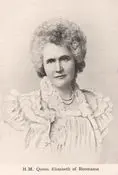
Isabel de Wied

Isabel de Wied was a princess of Wied, and later Queen of Romania. Born at Schloss Monrepos, she married Prince Carol I of Romania, becoming the royal consort in 1866. Isabel played a role in the cultural and social life of Romania, being known for her interest in arts and literature.

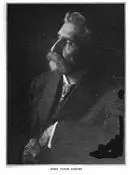
John Vance Cheney

John Vance Cheney was an American poet and librarian. His poetic work, although less known today, was appreciated in his time for its musicality and themes related to nature and spirituality. As a librarian, he contributed to the organization and dissemination of knowledge.

Sousa Viterbo

Sousa Viterbo was a notable Portuguese poet, physician, and historian, a prominent figure of the 19th century. His poetic work, although sometimes less prominent than his role as a researcher, reveals a careful lyricism and a deep connection to Portuguese history and culture. As a historian, he dedicated himself to the study of literature and the arts, leaving a valuable legacy of publications that contributed significantly to the knowledge of Portuguese cultural heritage.

Guilherme de Faria

Guilherme de Faria is a contemporary Portuguese poet, whose work stands out for its exploration of landscape, memory, and the human condition, with a lyrical and introspective style. His poetry is characterized by careful language and the ability to evoke deep sensations and reflections. With a writing that transitions between the personal and the universal, Guilherme de Faria addresses themes such as time, solitude, and the search for meaning, using words as a tool to unravel the complexities of existence and art.

Manuel Rodrigues

Manuel Rodrigues is a contemporary poet whose work is characterized by formal experimentation and the exploration of themes related to the human condition, memory, and the ephemerality of existence. His writing, often marked by imagistic density and innovative use of language, challenges the reader to a deep immersion in his reflections. Rodrigues contributes to contemporary Portuguese poetry with an authentic voice and a critical eye on the world and the self.

Francisco Gavidia

Salvadoran poet, novelist, and essayist, Francisco Gavidia is a central figure in the literature of his country. His work is characterized by a deep lyrical sensibility and a constant exploration of national identity and the human condition. He addressed universal themes such as love, death, and time, often imbued with a marked patriotism and a profound spiritual sense. His style, while rooted in tradition, showed an openness to the innovations of his time, always seeking formal perfection and expressiveness.

Luis Alberto de Cuenca

Spanish poet, literary critic, and translator, Luis Alberto de Cuenca is a prominent figure in the poetry of the second half of the 20th century and the early 21st century. His work is characterized by profound erudition, a conversational tone, and constant intertextuality with popular culture and literary tradition. Through poetry that is accessible yet rich in nuance, he explored universal themes such as love, death, and the passage of time, often with an undertone of melancholy and existential reflection.

Died on this day

7
Joaquim Namorado

Joaquim Namorado was a Portuguese poet, essayist, and professor, whose work is predominantly situated within the Neorealism and social poetry tradition. His writing is marked by a profound sense of civic engagement, the defense of democratic values, and the celebration of the Portuguese homeland and people. With a clear and direct language, yet imbued with lyricism, Namorado sang of the land, the sea, and the people of Portugal, denouncing social injustices and exalting the struggle for freedom. A high school teacher, his life was dedicated to education and poetry, reflecting an ethical and aesthetic commitment to the reality of his time. His vast and diverse work is a testament to his deep connection to Portugal and its history.

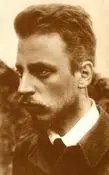
Rainer Maria Rilke

Rainer Maria Rilke was a German-language poet, widely considered one of the most important lyric poets in the German language. His work is marked by a profound exploration of existence, art, beauty, nature, and the human condition, with a highly imagistic and musical language. Rilke is known for his ability to capture the interiority and mystery of life, indelibly influencing modern poetry.

Christina Rossetti

Christina Rossetti was an English poet of Italian descent, renowned for her lyrical and devotional poetry, often exploring themes of love, death, faith, and the natural world. She is considered one of the most significant poets of the Victorian era. Her work is characterized by its musicality, vivid imagery, and deep spiritual intensity, often tinged with a melancholic beauty that resonates with readers to this day.

A Baby's Cradle With No Baby In It
Carl Spitteler

Carl Spitteler was a prominent German-speaking Swiss poet, awarded the Nobel Prize in Literature in 1919. His work is vast and complex, characterized by a deep interest in mythology, philosophy, and the human condition, exploring universal themes in an epic and symbolic manner. With a grand and often allegorical style, Spitteler created poetic worlds rich in imagination and depth. His best-known works, such as "Der Chung"

Sousa Viterbo

Sousa Viterbo was a notable Portuguese poet, physician, and historian, a prominent figure of the 19th century. His poetic work, although sometimes less prominent than his role as a researcher, reveals a careful lyricism and a deep connection to Portuguese history and culture. As a historian, he dedicated himself to the study of literature and the arts, leaving a valuable legacy of publications that contributed significantly to the knowledge of Portuguese cultural heritage.