Jean-Paul Sartre
Author of the day

Jean-Paul Sartre

Jean-Paul Sartre was a French philosopher, writer, playwright, and literary critic, a central figure of atheistic existentialism. His vast and multifaceted work explores human freedom, individual responsibility, bad faith, and social commitment. Sartre rejected the Nobel Prize in Literature, advocating for a stance of refusal of bourgeois institutions. His thought profoundly influenced 20th-century philosophy, literature, and political debate, marking a generation with his emphasis on autonomy a…

Poem of the day

Do Not Go Gentle Into That Good Night

Dylan Thomas
Do not go gentle into that good night, 
Old age should burn and rave at close of day; 
Rage, rage against the dying of the light. 

Though wise men at their end know dark is right, 
Because their words had forked no lightning they 
Do not go gentle into that good night. 

Good men, the last wave by, crying how bright 
Their frail deeds might have danced in a green bay, 
Rage, rage against the dying of the light. 

Wild men who caught and sang the sun in flight, 
And learn, too late, they grieved it on its way, 
Do not go gentle into that good night. 

Grave men, near death, who see with blinding sight 
Blind eyes could blaze like meteors and be gay, 
Rage, rage against the dying of the light. 

And you, my father, there on that sad height, 
Curse, bless, me now with your fierce tears, I pray. 
Do not go gentle into that good night. 
Rage, rage against the dying of the light.
Read full poem

Born on this day

7
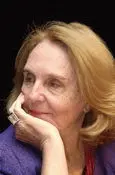
Teresa Tenório

Teresa Tenório is a Portuguese writer and poet, whose work is distinguished by its lyrical delicacy and exploration of themes such as nature, identity, and the small observations of everyday life. With a writing style that moves between contemplation and introspection, Tenório has been building a literary body marked by sensitivity and the pursuit of a language that captures the essence of her reflections.

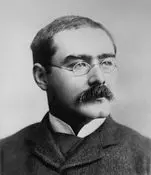
Rudyard Kipling

Rudyard Kipling was a prolific English writer and poet, best known for his works on British India and his children's stories. He championed the idea of the 'White Man's Burden' and his writings often reflected imperialist sentiments. Despite controversy surrounding his political views, his imaginative storytelling and mastery of language continue to be recognized, with works like 'The Jungle Book' and 'Kim' remaining popular.

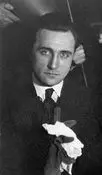
When your Daemon is in charge, do not try to think
Jacques Rigaut

Jacques-Bénigne Bossuet (1627-1704) was a prominent French orator, theologian, and bishop, known for his eloquent sermons and writings that defended the theory of the divine right of kings. He served as preceptor to the Dauphin, son of Louis XIV, and his works had considerable influence on the politics and religion of his time. Bossuet is considered one of the greatest masters of French rhetoric.

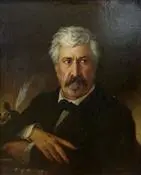
Francisco da Silva Júnior

Francisco da Silva Júnior was a Portuguese poet and playwright, a relevant figure in the literary landscape of the 19th century. His work, marked by intense lyricism and a strong connection to Romanticism, addressed themes such as love, saudade, and the human condition. In addition to poetry, he also stood out for his theatrical writing, contributing to the development of romantic drama in Portugal. His literary production reflects the historical and cultural context of the time, leaving an important legacy in Portuguese literature.

Alexandre Toursky

Alexandre Toursky was a French writer and translator, known for his contributions to literature and his translation work. His writing and translation work reflect a deep understanding of the languages and cultures with which he worked.

Miquel López Crespí

Miquel López Crespí is a Spanish poet, writer, and essayist, born in Mallorca. Known for his vast and diverse work, Crespí explores themes such as identity, memory, and culture, with a style that reflects his deep connection to his roots.

Died on this day

10
Lya Luft

Lya Luft was a Brazilian writer, translator, and lexicographer of German origin, known for her vast literary and essayistic work. Her writing, marked by intelligence, psychological depth, and engaging prose, addressed themes such as family relationships, the female condition, memory, and identity. As a translator, she played a fundamental role in disseminating German-language literature in Brazil. Her work, which includes novels, short stories, and essays, reflects a critical perspective and a deep sensitivity to the complexities of human life. She passed away in 2018, leaving a significant intellectual and literary legacy.

Pablo Simpson

Pablo Simpson is a poet whose work is often placed within the context of contemporary poetry, exploring language and form with a keen sensitivity to the nuances of daily life and human experience. His writing is characterized by an introspective and, at times, melancholic exploration, addressing themes such as the passage of time, memory, and the fragility of relationships. His poetry invites reflection on the human condition in a constantly changing world.

Manuel de Araújo Porto Alegre

Manuel de Araújo Porto Alegre was a Brazilian military man, politician, and poet, a multifaceted figure on the 19th-century scene. He stood out in the Farroupilha Revolution but also left a mark on literature as one of the precursors of Indianism in Brazil. His poetic work, though not extensive, is significant for its thematic treatment and language, anticipating elements that would flourish in Brazilian Romanticism.

Romain Rolland

Romain Rolland was a prominent French novelist, playwright, and musicologist, who was awarded the Nobel Prize in Literature in 1915. Born in Clamecy, France, in 1866, he is famous for his work "Jean-Christophe", a cycle of ten novels that narrates the life of a German composer. His work is marked by a profound humanism, pacifism, and an interest in music and spirituality.

Heiner Müller

Heiner Müller was a prominent German playwright, theater director, and writer, a central figure of post-war theater, known for his radical and experimental approach. His work is characterized by the deconstruction of language, the exploration of myths, and the confrontation with history and identity, especially in the context of divided and reunified Germany. Müller challenged theatrical conventions, creating fragmented and visual texts that provoke and question the spectator about the human condition, violence, and collective memory.

Manuel da Silva Mendes

Manuel da Silva Mendes is a poet whose work is characterized by lyrical depth and the exploration of themes such as nature, the passage of time, and human experience. His writing is distinguished by its musicality and its ability to evoke vivid imagery, reflecting a refined sensibility for the nuances of the natural and inner world. He is a recognized voice in contemporary Portuguese-language poetry.

Cláudia de Campos

Cláudia de Campos is a contemporary Portuguese poet, known for her lyrical and introspective writing. Her work frequently explores themes such as the ephemerality of time, memory, nature, and the search for meaning in existence. With careful and evocative language, the author constructs inner landscapes that invite reflection on the human condition. Her poetry is distinguished by its sensitivity in approaching universal feelings, establishing a deep connection with the reader.

Adília Lopes

Adília Lopes was a Portuguese poet whose work, marked by simplicity and existential depth, became a landmark in Lusophone contemporary poetry. Her writing, often melancholic and reflective, addresses themes such as memory, the passage of time, solitude, and the search for meaning, with accessible language, yet laden with subtext and emotion. Adília Lopes's poetry is an invitation to introspection, inviting the reader to contemplate the beauty and fragility of existence through verses that resonate with universal truth.

Joan Brossa

Joan Brossa was a Spanish poet, playwright, and visual artist, a key figure of surrealism and visual poetry in Catalonia. Known for his avant-garde spirit and his experimentation with language, Brossa explored the possibilities of the object poem, scenic poetry, and artistic intervention in public spaces. His work challenged literary and artistic conventions, inviting playful and critical reflection on reality.