
31 de December
Born on this day
8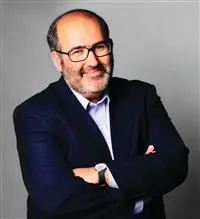
Portuguese priest, poet, and theologian. He is a professor and vice-rector at the Universidade Católica Portuguesa.
Luís José Junqueira Freire was a Brazilian poet. His lyrical work is divided into religious, romantic, philosophical, popular, and some social poetry, with a declamatory tone, as a precursor to Castro Alves. He participated in the second romantic generation.
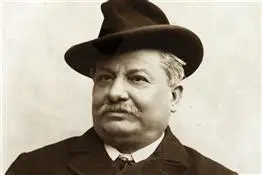
Giovanni Pascoli (December 31, 1855 – April 6, 1912) was an Italian poet. He is considered one of the greatest lyric poets in modern Italian literature. His poetry is characterized by an innovative style, with great attention to musicality and the use of a language rich in symbolism. Recurring themes in his work include childhood, nature, memory, and loss.
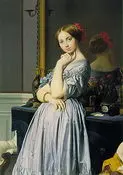
Marie d'Agoult, born Françoise-Aurélie d'Agoult, was a French writer, pianist, and journalist. She was a prominent figure in the literary and political circles of the 19th century, known for her intelligence and independence.

Poet, organist, and composer. A member of a Portuguese Hebrew family that gave Europe, notably Amsterdam, several exiles, he went to Spain as a child with his father, João Rodrigues, who had been the physician of King D.

Mariana Belmira de Andrade was a primary school teacher, Azorean poet of the Realist generation, fiction writer, republican activist with touches of socialism, and feminist.

Pedro Cardoso Martins Moreira is a Brazilian actor, editor, screenwriter, author, writer, and comedian. He has received several awards throughout his career, including a Grande Otelo, four Prêmios Qualidade Brasil, and a Prêmio Shell, in addition to receiving nominations for an International Emmy and three Prêmios Guarani. Cardoso is considered the founder of 'teatro besteirol', a significant movement in Rio de Janeiro theater in the 1980s.

Died on this day
11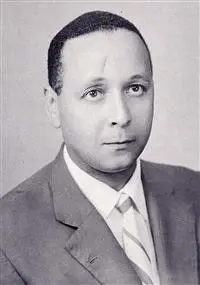
Francisco José Tenreiro was a São Toméan geographer and poet. He was a professor at the Instituto Superior de Ciências Sociais e Política Ultramarina, currently the Instituto Superior de Ciências Sociais e Politicas (ISCSP) of the University of Lisbon.<br />
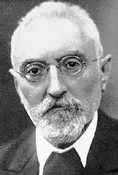
Miguel de Unamuno was a prominent Spanish writer, philosopher, and professor, a central figure of the Generation of '98. His work, marked by profound existential reflection and a vigorous style, explored themes such as faith, mortality, and the search for meaning in a changing world. Unamuno is known for his ability to blend the essayistic with the narrative and poetic, constantly questioning established truths and calling for an intense experience of life.

Alexandre de Gusmão was a diplomat of Portuguese nationality born in Colonial Brazil, who represented Portugal in various countries, notably in Rome, where he was even invited to the court of Pope Innocent XIII.
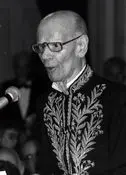
Abgar de Castro Araújo Renault was a Brazilian professor, educator, politician, poet, essayist, and translator. He occupied chair 12 of the Academia Brasileira de Letras and chair 3 of the Academia Brasileira de Filologia.
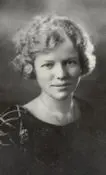
Lorine Niedecker was an American poet, the only woman associated with the <span class="mw-disambig">Objectivist</span> group of poets and considered by some authors to be that country's greatest female poet since Emily Dickinson.


Roberto de Mesquita, full name Roberto de Mesquita Henriques, was an Azorean Symbolist poet whom Vitorino Nemésio considered the best example of the diffuse and abulic profile of 'açoreanidade' (Azorean identity) and one of the exponents of Parnassianism and, above all, Lusophone Symbolism. Among Symbolists, he was considered by Jacinto do Prado Coelho as one of the highest exponents, second only to Camilo Pessanha, it is true, without the brilliance and virtuosity of Eugénio de Castro, a consummate artist, but, in contrast, more authentic, more literarily sincere. The same author believes that Roberto de Mesquita was perfectly integrated into the climate of coeval French Symbolism. Despite the universality of his poetry, he lived most of his life in Santa Cruz das Flores, where he was an employee of the Public Treasury. Outside the Azores, he is only known to have made a brief trip in 1904 to Lisbon, Coimbra, and Viseu, where he visited his brother, the professor, poet, and publicist Carlos de Mesquita. The insular quality, the 'açoreanidade,' in his work, which is partly Parnassian, contributes to marking its originality and making him one of the highest representatives of Symbolist poetry in the Portuguese language.

Llorenç Gomis was a Catalan sociologist, journalist, and writer, known for his work in the fields of communication and education. His career was dedicated to reflecting on society, culture, and the media, with a critical and innovative perspective. He addressed topics such as the influence of media in shaping public opinion, the importance of education for citizenship, and the social transformations brought about by technology. His writings and essays are marked by a deep analysis of social dynamics and the pursuit of a more critical understanding of contemporary reality.

Piero Chiara was a renowned Italian writer, known for his narratives that frequently portray the life and customs of Lombardy, his homeland. His work is marked by a lyrical style and a deep attention to detail, exploring human relationships with sensitivity and humor.
