John Keats
Author of the day

John Keats

John Keats was a leading figure of the second generation of English Romantic poets. Despite a short life, his prolific output of some of the most celebrated odes and sonnets in the English language profoundly impacted literature. His poetry is renowned for its sensory richness, exploration of beauty, and philosophical depth, often delving into themes of love, mortality, and the transient nature of existence. Keats's work, though not widely appreciated during his lifetime, is now considered a cor…

Poem of the day

Grass

Carl Sandburg
Pile the bodies high at Austerlitz and Waterloo.
Shovel them under and let me work
-I am the grass; I cover all.

And pile them high at Gettysburg
And pile them high at Ypres and Verdun.
Shovel them under and let me work.
Two years, ten years, and the passengers ask the conductor:

What place is this?
Where are we now?

I am the grass.
Let me work.
Read full poem

Born on this day

8
Alfonsina Storni

Alfonsina Storni was an Argentine poet, journalist, and activist. A pioneer in literature written by women in Latin America, she stood out for her poetry that addresses themes such as love, motherhood, loneliness, the condition of women, and social criticism, often with a tone of revolt and defiance of the conventions of the time. Her life and work are marked by a strong social conscience and a tireless pursuit of freedom and gender equality, leaving an important legacy for feminism and contemporary literature.

Luiz Alberto Machado

Luiz Alberto Machado was a Brazilian poet and essayist, whose work was distinguished by its lyrical depth and exploration of universal themes such as love, death, time, and the search for meaning. With a style marked by sensitivity and erudition, Machado left a poetic legacy that dialogues with tradition, but also points towards the modernity of expression. His writing is characterized by careful language and rich imagery, inviting the reader to an immersion in existential and aesthetic reflections.

Fernando Braga

Fernando Braga is a contemporary Portuguese poet, whose work is distinguished by the exploration of themes such as identity, memory, and the human condition, with careful language and a reflective gaze on the world. His poetry dialogues with the literary tradition, while also embracing formal and thematic experimentation.

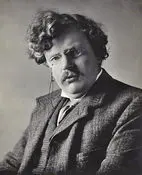
G. K. Chesterton

Gilbert Keith Chesterton was a prominent English writer, journalist, and Christian apologist. Known for his argumentative style and sharp wit, Chesterton addressed a wide range of topics in his work, including philosophy, theology, literary criticism, and social essays. He was an influential figure in the early 20th century.

I tell you naught for your comfort,
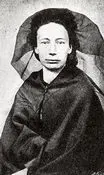
Louise Michel

Louise Michel was a prominent figure in the French anarchist movement, known for her courage, activism, and uncompromising defense of the oppressed. Born in Vroncourt-la-Côte, she dedicated her life to the struggle for social justice, freedom, and the rights of women and workers. Charismatic and combative, she actively participated in revolutions and social movements, which led to her exile. Despite persecution, she remained firm in her convictions, becoming a symbol of resistance and inspiration for generations of activists.

Armando Moreno

Armando Moreno was a Portuguese poet and writer, whose work is predominantly part of poetry. His poetic compositions often explore intimacy, landscape, and reflection on existence. With a style marked by clarity and emotiveness, Moreno left a mark on the contemporary literary scene, being recognized for his ability to translate the deepest sensations and thoughts into verse.

Antonio Barolini

Antonio Barolini was a prominent Italian writer, poet, and translator. His work is recognized for its stylistic sophistication and the depth with which he addressed the human experience, with a focus often turned to the complexities of life and art. Barolini stood out for his versatility, moving with mastery between prose and poetry. His writing is marked by sharp sensitivity and the ability to evoke deep emotions and reflections, consolidating him as an important figure in 20th-century Italian literature.

Pier Luigi Bacchini

Pier Luigi Bacchini was an Italian poet, novelist, essayist, and translator. His work is diverse, encompassing different literary genres, but maintaining a line of continuity in the exploration of the human condition and language. With a remarkable poetic vein, Bacchini also ventured into prose, where he developed narratives that explore philosophical and existential themes. His work as a translator enriched cultural exchange in Italy, and his essays reveal a thinker attentive to the nuances of literature and culture.

Died on this day

9
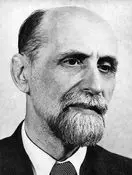
Juan Ramón Jiménez

Juan Ramón Jiménez was a Spanish poet, awarded the Nobel Prize in Literature in 1956. His work, profoundly marked by symbolism and the desire for "pure poetry," evolved towards an incessant search for beauty and transcendence. His poetry explores themes such as nature, spirituality, love, and the very essence of poetry, with a refined, musical, and visionary style. He is considered one of the great renovators of 20th-century Spanish poetry.

Frederico Valério

Frederico Valério was a Portuguese poet whose work stood out for exploring existential themes and the pursuit of a purified poetic language. His compositions, though sometimes concise, carry a profound reflection on the human condition, time, and the ephemerality of life. His writing is characterized by subtle musicality and an introspective tone, inviting the reader to immerse themselves in the poet's inner universe.

Walter Dimenstein

Walter Dimenstein is a poet distinguished by his ability to capture the essence of urban life and the complexities of the human being in contemporary times. His poetry, marked by direct and sometimes ironic language, reflects on daily life, social relationships, and the search for meaning in a rapidly changing world. Dimenstein explores poetry as a mirror of reality, with a keen eye for the details and emotions that shape individual experience.

Giselle del Pino

Giselle del Pino is a prominent figure in contemporary poetry, known for her introspective approach and deep exploration of universal themes. Her poetic work is distinguished by the intrinsic musicality of its verses and its ability to evoke vivid images through precise and emotive language.

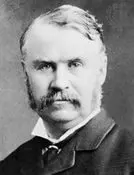
W. S. Gilbert

Sir William Schwenck Gilbert was an English writer, playwright, and poet, best known for his collaboration with composer Sir Arthur Sullivan. Together, they created a series of fourteen light comic operas, including famous works such as 'H.M.S. Pinafore', 'The Pirates of Penzance', and 'The Mikado'. Their librettos are celebrated for their witty humor, clever wordplay, and social satire.

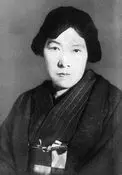
Akiko Yosano

Akiko Yosano was a prominent Japanese poet and activist, known for her bold and feminist poetry that challenged the social conventions of her time. She was a central figure in Japan's modern literary movement, using her writing to address themes of love, politics, and women's rights. Her work is celebrated for its emotional intensity and the strength with which she expressed the female perspective during a period of great social and political change in Japan. Yosano was not limited to poetry, dedicating herself to education and social activism, leaving a lasting legacy as one of Japan's most important literary voices.

Augusto de Santa-Rita

Augusto de Santa-Rita was a poet whose verses explored the inner landscape and reflection on existence, with a language often charged with symbolism and musicality. His work, although not as vast as that of other names of his generation, left a mark for its sensitivity and for the way it addressed melancholy and the fleetingness of time. A poet of contained but profound lyricism, Santa-Rita navigated between introspection and contemplation of the world around him, leaving a legacy of poems that continue to resonate for their emotional rawness and their search for beauty amidst imperfection.

Sérgio Frusoni

Sérgio Frusoni was an Angolan poet, journalist, literary critic, and translator. He stood out for his deep connection to Angolan culture and history, incorporating elements of African orality and musicality into his poetry. His work addresses themes such as identity, land, the struggle for freedom, and the human condition, with a language rich in imagery and symbolism. Frusoni was an important figure in the affirmation of Angolan cultural identity in the post-independence period, through his active participation in cultural and literary movements and his work as a journalist and promoter of literature.

José Miguel Santiago Castelo

José Miguel Santiago Castelo is a Spanish poet whose work fits into the line of poetry of experience and reflection on the everyday. His poetry is marked by clear and accessible language, but filled with depth and emotion. He explores themes such as the passage of time, memory, nature, and human relationships. Castelo is also known for his work as a literary critic and professor, which gives him a broad perspective on contemporary literature. His poetic work is an invitation to rediscover the beauty in simple things and find meaning in the most common experiences.