William Shakespeare
Author of the day

William Shakespeare

William Shakespeare is widely regarded as the greatest writer in the English language and the world's pre-eminent dramatist. His vast body of work, including tragedies, comedies, histories, and sonnets, explores the complexities of human nature with unparalleled depth and linguistic richness. His plays continue to be performed and studied globally, making him a timeless figure in literature and theatre.

Poem of the day

Do Not Go Gentle Into That Good Night

Dylan Thomas
Do not go gentle into that good night, 
Old age should burn and rave at close of day; 
Rage, rage against the dying of the light. 

Though wise men at their end know dark is right, 
Because their words had forked no lightning they 
Do not go gentle into that good night. 

Good men, the last wave by, crying how bright 
Their frail deeds might have danced in a green bay, 
Rage, rage against the dying of the light. 

Wild men who caught and sang the sun in flight, 
And learn, too late, they grieved it on its way, 
Do not go gentle into that good night. 

Grave men, near death, who see with blinding sight 
Blind eyes could blaze like meteors and be gay, 
Rage, rage against the dying of the light. 

And you, my father, there on that sad height, 
Curse, bless, me now with your fierce tears, I pray. 
Do not go gentle into that good night. 
Rage, rage against the dying of the light.
Read full poem

Born on this day

10
Wenceslau de Morais

Wenceslau de Morais was a Portuguese writer and poet known for his works that portray the life and culture of the East, especially Japan, where he lived for many years. His writing is marked by a deep admiration for Asian culture, an ethnographic perspective, and a rich and evocative language. He explored themes such as exoticism, Eastern mysticism, intercultural relations, and the search for an alternative spirituality. His work, which bridges fiction, essay, and poetry, is a unique testament to his life experience in the East, offering a unique perspective on the encounter between West and East. Wenceslau de Morais is an unparalleled figure in Portuguese literature, a pioneer in approaching Eastern themes with such depth and passion.

Amadeu Fontana

Amadeu Fontana was a poet whose work stands out for its exploration of existential themes and the intrinsic musicality of his verses. His writing is characterized by refined language and a profound sensitivity in approaching the human condition, addressing the fleeting nature of time and the search for meaning in a constantly transforming universe. His poetry, although at times melancholic, is permeated by a subtle hope and a serene contemplation of life.

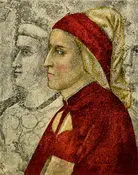
Dante Alighieri

Dante Alighieri was a Florentine poet of the Middle Ages, widely considered the greatest poet of the Italian language and the most important writer of the Western Middle Ages. His epic poem, the Divine Comedy, is regarded as one of the greatest works of world literature and has had a profound impact on religious, political, and literary thought. Dante's work is characterized by its theological depth, intricate symbolism, and vivid depictions of the afterlife. His synthesis of medieval Christian theology, classical philosophy, and contemporary politics solidified his place as a central figure in literary and intellectual history, shaping the development of Italian language and literature.

Love hath so long possessed me for his own And mad
Michael Thwaites

Michael Thwaites was an Australian poet, playwright, and writer. He was known for his poetic work that frequently explored themes of nature, mythology, and the human condition, with a lyrical and reflective style. His writing sought to capture the beauty and complexity of the world around him, often with a philosophical perspective. In addition to his poetry, Thwaites also ventured into theater and other literary genres, demonstrating versatility in his artistic expression. He is remembered for his contribution to Australian literature, offering a unique and distinct voice in his compositions.

Guadalupe Pita Amor

Guadalupe Pita Amor, known as Pita Amor, was a Mexican poet who stood out for her eccentric personality and bohemian lifestyle. Her poetic work, marked by direct language, often provocative and charged with eroticism, explored themes such as love, desire, rebellion, and social criticism. Despite her self-taught background and unconventional style, she carved out her own place in 20th-century Mexican poetry, remembered for her vitality, independence, and unique lyrical voice.

Antonio Gamoneda

Antonio Gamoneda is a Spanish poet whose work is characterized by a deep inquiry into the human condition, memory, and the passage of time. His poetry, often dense and of great formal rigor, draws on powerful imagery and a refined language that evokes the ancestral and the elemental. He has been recognized with numerous awards, including the Cervantes Prize, establishing himself as one of the most unique and influential voices in contemporary Spanish-language poetry. His writing is distinguished by a persistent reflection on existence, pain, beauty, and the enigma of being, with a sensitivity that connects the lyrical with the tragic and the mystical, inviting the reader on an introspective and existential journey.

Died on this day

9
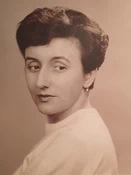
Salette Tavares

Salette Tavares was a Portuguese poet and essayist, whose work stands out for its originality and formal experimentation, situated within the context of concretism and visual poetry. With an innovative language and a critical eye on society, Tavares explored the potential of written and visual language, challenging the conventional boundaries of poetry. Her literary output, marked by intelligence and irreverence, left an important legacy for contemporary Portuguese-language poetry, being recognized for her contribution to the renewal of poetic language.

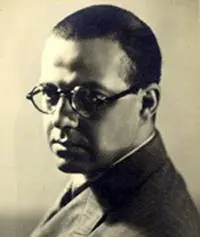
Ribeiro Couto

Ribeiro Couto was a Brazilian poet and diplomat, whose work is part of the modernist movement, with particular emphasis on his poetry that explores themes such as Brazil, its people, and national identity. His writing is characterized by formal experimentation, colloquial language, and the valorization of Brazilian culture, marked by a strong connection to regionalism and orality.

Júlia Lopes de Almeida

Júlia Lopes de Almeida was a prominent writer who stood out in Brazilian literature of the late 19th and early 20th centuries. With a diverse body of work that encompassed poetry, novels, and chronicles, she sensitively explored themes such as the condition of women, social relations, and family life. Her writing is characterized by a fluid style and a deep psychological observation of her characters, reflecting the complexities of the society of the time. She was one of the first women to establish herself professionally as a writer in Brazil, paving the way for future generations.

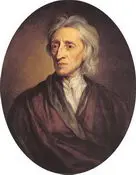
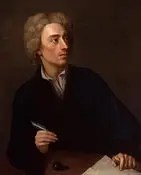
Alexander Pope

Alexander Pope was a towering figure of English Neoclassical literature, renowned for his sharp wit, satirical genius, and masterful command of the heroic couplet. A key figure of the Augustan age, his poetry often explored moral and philosophical themes with clarity, elegance, and precision. His translations of Homer and his original works remain cornerstones of English poetry, celebrated for their intellectual rigor and polished style.

Pride, the never-failing vice of fools.
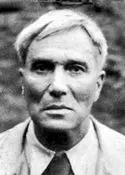
Boris Pasternak

Boris Pasternak was a highly acclaimed Russian poet, novelist, and translator, best known for his epic novel "Doctor Zhivago." His work often explores profound themes of love, nature, and the human condition, set against the backdrop of tumultuous historical events in Russia. Pasternak's lyrical and evocative poetry earned him international recognition, culminating in the Nobel Prize in Literature, though its acceptance led to significant personal and political turmoil. His literary contributions are marked by a deep engagement with Russian culture and a unique blend of modernist experimentation and traditional lyrical sensibility.

‘February. Take ink and weep,’
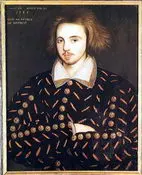
Christopher Marlowe

Christopher Marlowe (baptised 26 February 1564 – 30 May 1593) was an English playwright, poet and translator of the Elizabethan era. Marlowe is the foremost of the short-lived generation of playwrights who were Shakespeare's contemporaries. He was the greatest tragedian of his day and, along with William Shakespeare, was one of the few English playwrights of the period to gain a reputation for both great dramatic skill and literary merit.

Our swords shall play the orators for us.
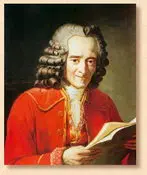
Voltaire

Voltaire was a prolific French writer, historian, and philosopher, a central figure of the Enlightenment. Known for his sharp intellect, sense of humor, and advocacy for freedom of speech, he vehemently criticized religious intolerance and the tyranny of the aristocracy and clergy of his time. His vast work spans poetry, essays, plays, correspondence, and philosophical texts, exerting a profound influence on Western thought.

The adjective is the enemy of the noun.
Mario Wirz

Mario Wirz is a poet and writer known for his work that explores the human condition, the ephemerality of time, and the search for meaning. His poetry is distinguished by introspection, careful language, and the ability to evoke deep emotions, reflecting on life, death, and love with a unique sensitivity. His works invite reflection on existence and the passage of time, marked by a melancholic and philosophical tone.