
31 de May
Born on this day
8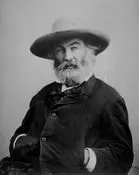
Walt Whitman was an American poet, essayist, journalist, and a deliberate humanist who became one of the most influential figures in American poetry. He is often called the "father of free verse." His seminal work, "Leaves of Grass," was a radical departure from the conventional poetry of its time, celebrating the individual, democracy, the body, and the spirit in expansive, cataloging lines. Whitman's poetry embraced a wide range of subjects, from the natural world and urban life to the experiences of laborers and soldiers. His work is characterized by its inclusive spirit, its celebration of the sensual and the spiritual, and its democratic vision. He sought to capture the diverse American experience in all its complexity and vitality, making him a truly unique voice in literature.
ARM’D year! year of the struggle!

Gunnar Olof Björling was a Swedish poet, born in 1887 and died in 1960. He is known for his lyrical and introspective poetry, often focused on nature and existential themes.
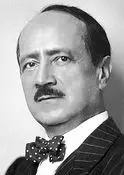
Alexis Leger, better known by the pseudonym Saint-John Perse, was a French poet, diplomat, and essayist. Born in Pointe-à-Pitre, Guadeloupe, on May 31, 1887, his poetic work is characterized by its epic scope, rich vocabulary, and universal themes. Perse served as a diplomat for many years, holding important positions in the League of Nations and the French Ministry of Foreign Affairs.

Poet and one of the representatives of our philological and erudite humanism. Bachelor in Canon Law, he was a professor of Humanities in Lisbon.


Luis Rosales was a Spanish poet whose work is associated with the Generation of '27, although his style developed its own voice and a profound reflection on the human condition and beauty. His poetry is characterized by a refined lyricism, precise language, and a constant search for harmony and transcendence. Rosales explored themes such as love, death, time, nature, and memory, often with an existential and metaphysical perspective. He is recognized for his formal mastery, his balance between tradition and modernity, and his ability to evoke deep emotions through suggestive images and a musical rhythm. His work represents a valuable legacy in 20th-century Spanish poetry, marked by lyrical intensity and the nobility of his expression.

Died on this day
7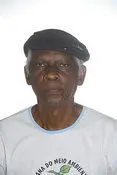
Benedito C. G. Lima is a Brazilian writer whose work stands out for exploring social and existential themes, with a language that moves between the poetic and the reflective. His writing invites introspection and questioning about the human condition and social dynamics, presenting a sensitive and critical view of the world.

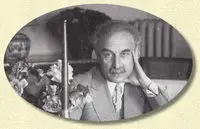
Abel Bonnard was a French poet, novelist, and essayist known for his lyrical work and, later, for his controversial political stances. Born at the end of the 19th century, Bonnard began his literary career with poems and novels that explored themes such as nature, beauty, and introspection. His early writing was praised for its elegance and aesthetic sensitivity. However, his trajectory took a different turn in the following decades, especially during and after World War II, when he adopted political positions aligned with the far-right and the Vichy regime, which significantly tarnished his reputation.
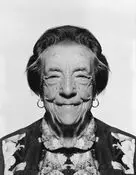
Louise Bourgeois was a French-American visual artist, best known for her sculpture <i>Maman</i>, a version of which is on display at MAM-SP, under the marquee of Parque Ibirapuera. Strongly influenced by surrealism, primitivism, and modernist sculptors such as Alberto Giacometti and Constantin Brancusi, her works tend to be abstract and highly symbolic, and are present in various exhibitions and permanent collections in museums or galleries around the world.

Eusebio Erkiaga was a distinguished Basque poet and bertsolari, whose work is framed within the defense and promotion of Basque culture and language. His poetry, written in Basque, is characterized by a deep rootedness in the land, tradition, and values of the Basque people. Erkiaga explored themes such as Basque identity, nature, religiosity, and the daily life of his community, using rich and evocative language. As a bertsolari, he demonstrated great skill in improvisation and oral poetic expression, becoming a relevant figure in the Basque cultural scene. His legacy endures as a testament to his commitment to the language and culture of his land.

