
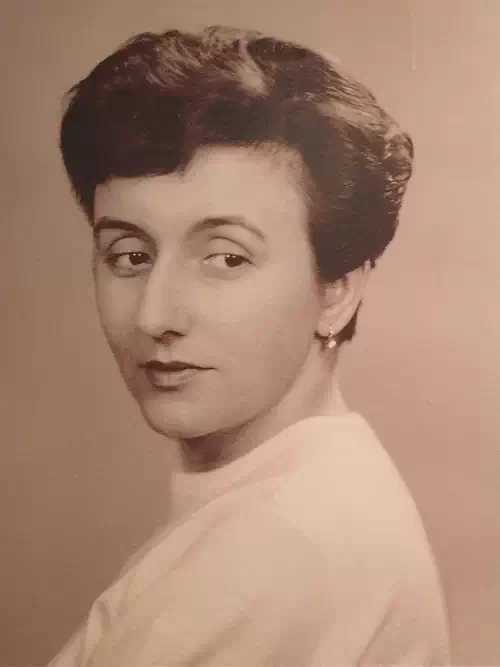
Salette Tavares
 MZ
MZ
Salette Tavares was a Portuguese poet and essayist, whose work stands out for its originality and formal experimentation, situated within the context of concretism and visual poetry. With an innovative language and a critical eye on society, Tavares explored the potential of written and visual language, challenging the conventional boundaries of poetry. Her literary output, marked by intelligence and irreverence, left an important legacy for contemporary Portuguese-language poetry, being recognized for her contribution to the renewal of poetic language.
n. 1922-03-31, Maputo · m. 1994-05-30, Lisboa
Bio
Identification and Basic Context
Salette Tavares, full name Salette Alves Tavares, was born in Porto, Portugal. Pseudonyms or heteronyms are not common in her work. She is one of the central figures of Portuguese experimental poetry, particularly associated with concretism and visual poetry. Her nationality is Portuguese, and her writing language is Portuguese. She lived and produced her work during a period of significant social and political transformations in Portugal, including the Estado Novo and the transition to democracy.Childhood and Education
Salette Tavares' childhood and education were marked by the cultural and intellectual effervescence of Porto. Although specific details of her formal education are scarce, her work reveals a vast culture and a sharp critical sense. Her early readings and artistic influences, though not explicitly documented, seem to have absorbed European artistic avant-gardes and literary currents that questioned traditional forms of expression.Literary Career
Salette Tavares' literary career is inseparable from her involvement with the concretist movement in Portugal. She began her poetic activity in the mid-1960s, collaborating with other poets and visual artists in avant-garde magazines and publications. Her work evolved towards greater experimentation, exploring the intersection between word, image, and object. She was also an essayist, literary critic, and actively participated in exhibitions and debates on experimental poetry.Work, Style, and Literary Characteristics
Salette Tavares' work is multifaceted, encompassing written poetry, visual poetry, poetic objects, and essays. Her main works include "Onde o tempo" (1962), "Segredos Agrícolas" (1970), and "A Sombra" (1977), as well as numerous visual poems and conceptual objects. Recurrent themes in her poetry are the human condition, social and political criticism, the ephemerality of time, and the relationship between language and reality. Her style is marked by conciseness, irony, wordplay, and the visual exploration of text. Tavares used free verse and metric experimentation, but her greatest innovation lies in the creation of object-poems and the fusion of poetry with plastic arts. Her language is simultaneously erudite and irreverent, challenging the reader's expectations and exploring the materiality of the word. She is a key figure of Portuguese concretism.Cultural and Historical Context
Salette Tavares was part of the cultural and artistic context of Porto and Lisbon in the 1960s and 1970s, engaging with the international concretist movement and artists from other fields. Her work reflects the social and political tensions of the Estado Novo, often through subtle and ironic criticism. Her critical stance towards society and established language marked her generation.Personal Life
Detailed information about Salette Tavares' personal life is relatively scarce. It is known that she maintained a strong connection with the Portuguese artistic and intellectual milieu, actively participating in gatherings and events. Her dedication to experimental poetry and cultural criticism shaped her life, and she was known for her sharp intelligence and nonconformist attitude.Recognition and Reception
Salette Tavares is widely recognized as one of the most important figures of 20th-century Portuguese experimental poetry. Her work, although sometimes considered niche due to its avant-garde nature, has increasingly been valued and studied. She received recognition for her originality and her contribution to the renewal of poetic language in Portugal.Influences and Legacy
Salette Tavares' work was influenced by international concretist poets and by thinkers who explored the relationship between language and meaning. Her legacy is fundamental to visual and experimental poetry in Portuguese. She influenced subsequent generations of artists and poets who explore the boundaries between different forms of art and expression. Her work continues to be a reference for the study of contemporary poetry.Interpretation and Critical Analysis
Salette Tavares' poetry offers fertile ground for critical analysis, especially regarding the deconstruction of language and social criticism. Her visual works and poetic objects invite reflection on perception, time, and the nature of art. Her critical and ironic stance is a central point of interpretation.Curiosities and Lesser-Known Aspects
A curiosity about Salette Tavares is her ability to move between poetry, criticism, and visual art, demonstrating remarkable versatility. Her challenging attitude and sharp intelligence are aspects that distinguished her. Her visual poems and poetic objects, often conceived with simple materials, reveal a unique creativity and an attentive eye for the details of everyday life.Death and Memory
Salette Tavares passed away in Lisbon, Portugal. Her memory is kept alive through her work, which continues to be promoted, studied, and exhibited in galleries and cultural institutions. Posthumous publications and reissues of her work consolidate her place in the history of Portuguese literature and art.Poems
0No poems found
Videos
50
Comments (0)
No comments yet. Be the first to comment.