Poem of the day

Grass

Carl Sandburg
Pile the bodies high at Austerlitz and Waterloo.
Shovel them under and let me work
-I am the grass; I cover all.

And pile them high at Gettysburg
And pile them high at Ypres and Verdun.
Shovel them under and let me work.
Two years, ten years, and the passengers ask the conductor:

What place is this?
Where are we now?

I am the grass.
Let me work.
Read full poem

Born on this day

15
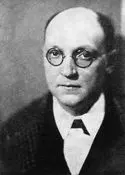
Joaquim Namorado

Joaquim Namorado was a Portuguese poet, essayist, and professor, whose work is predominantly situated within the Neorealism and social poetry tradition. His writing is marked by a profound sense of civic engagement, the defense of democratic values, and the celebration of the Portuguese homeland and people. With a clear and direct language, yet imbued with lyricism, Namorado sang of the land, the sea, and the people of Portugal, denouncing social injustices and exalting the struggle for freedom. A high school teacher, his life was dedicated to education and poetry, reflecting an ethical and aesthetic commitment to the reality of his time. His vast and diverse work is a testament to his deep connection to Portugal and its history.

Antônio de Oliveira

Antônio de Oliveira was a Portuguese poet, a prominent figure of the Arcadian period in Portugal. His work is characterized by clarity, harmony, and the pursuit of formal perfection, following the precepts of Arcadianism. He frequently addressed pastoral, bucolic themes and idealized love, using classical mythology as a reference. His poetry represents an important milestone in Portuguese literature for its elegance and aesthetic rigor.

Georges Duhamel

Georges Duhamel was a French novelist, poet, and surgeon. He is best known for his novel series "Chronique des Pasquier", which chronicles the life of a Parisian family over several decades. His work often addresses themes such as family, society, and the consequences of war.

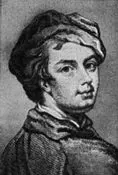
John Gay

John Gay (1685-1732) was an English poet and playwright. He is best known for his ballad opera, 'The Beggar's Opera', which became a landmark in British musical theatre. Gay was a member of London's literary circle, which included figures like Alexander Pope and Jonathan Swift. His work is often characterized by a satirical tone and keen observation of the society of his time.

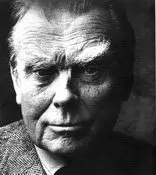
Czesław Miłosz

Czesław Miłosz was a Polish-Lithuanian poet, prose writer, translator, and diplomat, awarded the Nobel Prize in Literature in 1980. Born into a Polish family in Lithuania, then part of the Russian Empire, Miłosz spent most of his adult life in Poland and later in the United States, where he became a university professor.

The purpose of poetry is to remind us how difficul
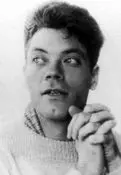
Miron Białoszewski

Miron Białoszewski was a Polish poet, writer, playwright, and actor, considered one of the most important figures in post-war Polish literature. He was one of the most original representatives of the so-called "new lyricism" and the "poetic prose movement," characterized by innovative language, a colloquial tone, and the exploration of everyday life. His work, often autobiographical and fragmented, addresses themes such as memory, identity, sexuality, and life in Warsaw during and after World War II.

Tatiana Faia

Tatiana Faia is a Portuguese poet and writer whose work stands out for its exploration of the human condition, memory, and identity. Her poetry is marked by careful language and deep sensitivity, addressing universal themes with a contemporary perspective. With a writing that moves between the lyrical and the reflective, Tatiana Faia constructs a unique poetic universe, inviting the reader to delve into the complexities of emotions and inner landscapes. Her work has been gaining significant space in current Portuguese poetry.

D. Francisco da Costa

D. Francisco da Costa was an ecclesiastical and literary figure of the 18th century, whose reflections and writings are part of the Portuguese Enlightenment context. His work, although not predominantly poetic, reflects erudite thought and a concern for moral and spiritual aspects, influenced by the religious fervor and intellectual currents of his time.

Hermenegilda de Lacerda

Hermenegilda de Lacerda was a singular figure in Portuguese literature, whose verses explored the depth of the female soul and the challenges of being a woman in a transforming society. Her work, though not extensive, is notable for its emotional honesty and the way she addressed themes such as love, saudade, and the search for identity, using a language rich in imagery and symbolism. Lacerda's poetry stands out for its musicality and its ability to evoke universal feelings through an intimate and deeply personal perspective, marking a space for reflection on the human condition and the female experience.

Philippe Jaccottet

Philippe Jaccottet was a French-language Swiss poet and essayist, widely recognized for his lyrical and reflective work. His poetry explores the relationship between man and nature, the passage of time, memory, and the search for a more attentive gaze upon the world. Jaccottet also distinguished himself as a translator and literary critic, leaving a significant intellectual legacy.

Daniel de la Vega

Daniel de la Vega is a contemporary Chilean writer, known for his contribution to fantastic and horror literature. His work explores dark and psychological themes, often delving into the macabre and the inexplicable. With an engaging prose and a unique ability to create disturbing atmospheres, de la Vega has stood out in the Spanish-language literary scene, winning over readers who appreciate narratives that challenge the limits of reality and explore the darkest corners of the human mind.

José Emilio Pacheco

Mexican poet, essayist, narrator, translator, and academic. Known for his introspective lyricism and his sharp reflection on time, memory, and identity. His work is characterized by deep melancholy, precise language, and a constant interconnection between the personal and the social. He reflected on history, popular culture, and the human condition in the modern world. He stood out for his ability to move between high culture and daily life, integrating diverse elements into a unique poetic worldview.

Died on this day

6
Reinaldo Ferreira

Reinaldo Ferreira was a Brazilian poet, considered one of the precursors of Modernism in Brazil. His work is marked by formal and thematic experimentation, exploring urban life and subjectivity in an innovative way for the time. He was also a journalist and literary critic, contributing significantly to the cultural debate of his time.

José Vasconcelos

José Vasconcelos was a Brazilian writer, politician, and educator, a central figure of Brazilian Modernism. His work spanned various fields, including philosophy, sociology, and literary criticism, but it is in poetry that his lyrical vein and the search for a national identity are most intensely manifested. Vasconcelos left a significant intellectual legacy, with a body of work that sought to fuse tradition with modernity and propose a renewed vision of Brazilian culture.

Condestável D. Pedro

The Constable D. Pedro was a prominent figure in Portuguese nobility, recognized not only for his military and political role but also for his interest and involvement in culture and literature. Although not primarily a poet in the strict sense, his influence and patronage in the arts, as well as his own reflections and possible contributions to writing, place him in the literary context of his time, especially concerning the preservation and dissemination of important texts.

Estêvão Rodrigues de Castro

Estêvão Rodrigues de Castro was a notable Portuguese poet and humanist of the Renaissance. He stood out for his lyrical and epic production, marked by erudition and mastery of classical forms. His work reflects the spirit of his time, with a strong humanist influence and an interest in classical history and mythology. He was an important figure in the intellectual circles of his era.

António Sousa Freitas

António Sousa Freitas was a Portuguese poet whose work is distinguished by its lyrical depth and exploration of themes such as nature, love, and saudade, with a strong influence of symbolism. His poetry is marked by unparalleled musicality and evocative language, transporting the reader to inner and outer landscapes of great beauty and melancholy. Sousa Freitas left a significant legacy in Portuguese poetry, recognized for his sensitivity and mastery of the art of verse.

Nicasio Álvarez de Cienfuegos

Nicasio Álvarez de Cienfuegos was a Spanish poet and politician, a prominent figure of Neoclassicism and a precursor of Romanticism in Spain. Known for his liberal spirit and his defense of freedom, his poetic work combines neoclassical formal elegance with a pre-Romantic sensibility that anticipates themes and tones of the following literary stage. His poetry, often reflective and melancholic, addresses love, nature, and social criticism.