Poem of the day

Do Not Go Gentle Into That Good Night

Dylan Thomas
Do not go gentle into that good night, 
Old age should burn and rave at close of day; 
Rage, rage against the dying of the light. 

Though wise men at their end know dark is right, 
Because their words had forked no lightning they 
Do not go gentle into that good night. 

Good men, the last wave by, crying how bright 
Their frail deeds might have danced in a green bay, 
Rage, rage against the dying of the light. 

Wild men who caught and sang the sun in flight, 
And learn, too late, they grieved it on its way, 
Do not go gentle into that good night. 

Grave men, near death, who see with blinding sight 
Blind eyes could blaze like meteors and be gay, 
Rage, rage against the dying of the light. 

And you, my father, there on that sad height, 
Curse, bless, me now with your fierce tears, I pray. 
Do not go gentle into that good night. 
Rage, rage against the dying of the light.
Read full poem

Born on this day

19
Fernando Guedes

Fernando Guedes is a Portuguese poet and writer, known for his work that oscillates between lyricism and reflection on the human condition. His poetry is marked by careful language and the exploration of themes such as time, memory, identity, and human relationships. Through introspective and often melancholic writing, Guedes invites the reader to delve into the complexities of existence and find beauty in the transience of life. His work, though sometimes understated in the mainstream literary scene, possesses a unique strength and an audience appreciative of his sensitivity and depth.

Marisa Monte

Marisa Monte is a renowned Brazilian singer, songwriter, and multi-instrumentalist, internationally recognized for her unique voice and the fusion of musical genres in her work. Her career is marked by an acclaimed discography and her ability to move between MPB, samba, pop, and elements of classical and regional music. Over decades, she has established herself as one of the greatest names in Brazilian music, admired for her originality, sophistication, and the artistic quality of her performances and recordings.

Vando Coutinho

Vando Coutinho is a Brazilian poet whose work is distinguished by the exploration of themes such as identity, memory, and the passage of time, often with an introspective and lyrical perspective. His poetic compositions reflect a deep sensitivity and a careful use of language, exploring the nuances of the human condition and the inner landscapes of the self. With a career that unfolds within the context of contemporary Brazilian poetry, Coutinho has been consolidating his voice through writing that seeks universality in the most personal experiences, connecting with readers through the power of his imagery and profound emotivity.

Caio Porfírio Carneiro

Caio Porfírio Carneiro was a Brazilian poet, short story writer, and novelist whose works explore the complexities of human existence and the social condition. His writing is marked by deep introspection and an accessible yet meaningful language. He stood out for his ability to portray daily life with sensitivity, addressing themes such as loneliness, interpersonal relationships, and the search for meaning.

Dora Ferreira da Silva

Dora Ferreira da Silva was a Brazilian poet, known for her lyrical and reflective work. Her poetry explores themes such as love, the ephemerality of time, and the search for meaning, often permeated by a gentle melancholy and profound sensitivity. With refined language and a style marked by musicality and lexical precision, the author left a legacy of poems that continue to resonate with their authenticity and emotional depth. Her contribution to Brazilian poetry is recognized for the originality and strength of her lyrical expression.

Sérgio Mattos

Sérgio Mattos is an Angolan poet and playwright known for his writing that explores the identity, culture, and complexities of African society. His work, marked by rich and imagery-filled language, often addresses themes such as the human condition, ancestry, and the search for meaning in a constantly changing world. Through a poetic voice that transitions between the lyrical and the reflective, Mattos constructs literary universes that invite introspection and dialogue with cultural roots.

Tomás Ribeiro

Tomás Ribeiro was a Portuguese poet and politician, a prominent figure in the poetry of the second half of the 19th century. His work, marked by late Arcadianism and the transition to Romanticism, explores themes such as love, nature, saudade, and patriotism, with a careful style and refined musicality. He stood out not only for his literary production but also for his political activity and dedication to public service. His poetry reflects a lyrical sensibility and a concern for form, consolidating him as an important name in Portuguese literature of his time.

Rogaciano Leite Filho

Rogaciano Leite Filho was a Brazilian poet whose work stands out for its lyrical depth and exploration of existential and social themes. His poetry, often marked by dense and imagistic language, invites reflection on the human condition, love, death, and the passage of time. With a style that bridges confessional lyricism and keen observation of the world, he left a legacy of verses that resonate for their sensitivity and ceaseless search for meaning.

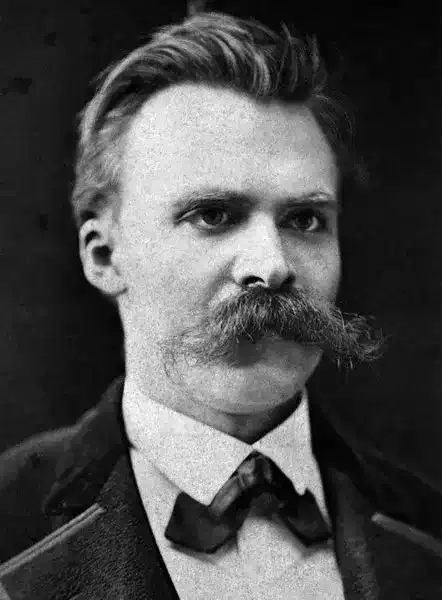
Walter Kaufmann

Walter Arnold Kaufmann was a German-American philosopher, psychologist, and literary critic. He is best known for his work on Nietzsche, which helped popularize the philosopher in the English-speaking academy. Kaufmann also contributed to existential philosophy and the psychology of religion.

Alberto Estima de Oliveira

Alberto Estima de Oliveira was a Portuguese poet, author of a work marked by introspection, melancholy, and a deep connection to the land and sea. His poetry reflects a refined sensitivity to the landscapes of Minho and a constant reflection on time, memory, and the human condition. He stands out for the musicality of his verses and for the way he managed to combine Portuguese lyrical tradition with a personal and contemporary language. He was part of the so-called "Geração de 50" or "Neo-realism", although his work transcends labels, maintaining its own identity and a distinctive tone that consecrates him as a singular voice in 20th-century Portuguese poetry.

Emília Pomar de Sousa Machado

Emília Pomar de Sousa Machado was a Portuguese writer, whose work encompassed poetry and prose. She stood out for her sensitivity and exploration of themes such as nature, love, and existential questions. Her writing reveals lyrical depth and attention to detail, placing her within the Portuguese literary landscape.

José Bação Leal

José Bação Leal was a Portuguese poet whose work stands out for its reflection on the human condition, memory, and the passage of time. His poetry explores intimacy and subjectivity, often with a melancholic and introspective tone. With careful language and subtle lyricism, Bação Leal left a legacy marked by the depth of his emotions and formal beauty.

Júlio de Sousa

Júlio de Sousa was a poet whose work is part of a specific literary context, marked by careful language and strong lyrical sensibility. His poetic production explores universal themes, addressing the human condition with depth and reflection. Through writing that combines musicality with imagistic density, the poet built a legacy that continues to resonate among readers and literary critics. His work is a testament to poetry's ability to express the most subtle nuances of human experience.

Harryette Mullen

Harryette Mullen is an American poet, essayist, and scholar known for her experimental poetry that addresses themes of race, gender, language, and Black culture. Her work challenges literary conventions and explores the complexities of identity within an American context.

Arantxa Urretabizkaia

Arantxa Urretabizkaia is a Basque writer and translator known for her work in the Basque language. She is an important figure in contemporary Basque literature, with a career spanning poetry, prose, and translation. Her work is often praised for its depth and its contribution to Basque culture.

S.A. Stepanek

S.A. Stepanek is an author whose works frequently explore the boundaries of imagination and reality, with narratives that combine elements of fantasy, science fiction, and magical realism. His writing is known for its originality and for creating immersive worlds.

Died on this day

8
Wenceslau de Morais

Wenceslau de Morais was a Portuguese writer and poet known for his works that portray the life and culture of the East, especially Japan, where he lived for many years. His writing is marked by a deep admiration for Asian culture, an ethnographic perspective, and a rich and evocative language. He explored themes such as exoticism, Eastern mysticism, intercultural relations, and the search for an alternative spirituality. His work, which bridges fiction, essay, and poetry, is a unique testament to his life experience in the East, offering a unique perspective on the encounter between West and East. Wenceslau de Morais is an unparalleled figure in Portuguese literature, a pioneer in approaching Eastern themes with such depth and passion.

Carlos de Oliveira

Carlos de Oliveira was a Portuguese poet, novelist, and short story writer, a central figure in 20th-century Portuguese literature. His poetic work, marked by dense language and profound reflection on the human condition, the land, and death, set a new standard in contemporary Portuguese poetry. As a novelist, he explored themes such as loneliness, incommunicability, and the search for identity in a changing society. Recognized for his originality and expressive power, Carlos de Oliveira left a multifaceted literary legacy, which spans lyrical poetry and introspective prose, with an unmistakable mark of stylistic rigor and thematic depth. His work continues to be studied and admired for its complexity and universality.

Paulo Mendes Campos

Paulo Mendes Campos was a Brazilian poet, columnist, and journalist, known for his lyrical and introspective poetry, which addresses themes such as love, longing, the ephemerality of time, and the small joys and sorrows of everyday life. His work stands out for its simplicity of language, the musicality of its verses, and its profound tenderness. With a style that captivates with its delicacy and ability to capture the essence of human emotions, Mendes Campos left an important legacy in Brazilian literature. His equally appreciated columns reveal an attentive eye on urban life and human relationships, consolidating him as a multifaceted and beloved author by the public.

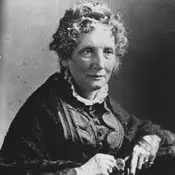
Harriet Beecher Stowe

Harriet Beecher Stowe was an American abolitionist and writer whose novel 'Uncle Tom's Cabin' had a profound impact on the anti-slavery movement in the United States. Her work brought a humanized perspective on slavery, influencing public opinion and the political debate of the time.

I s’pect I growed. Don’t think nobody never made m
Miguel de Castro

Miguel de Castro was a poet whose work stood out for its exploration of profound and universal themes, with a style marked by introspection and the musicality of verse. His poetry reflects a keen sensitivity to the complexities of human existence, addressing love, the passage of time, and the search for meaning. Although his figure and work are less celebrated in the general landscape, his poetic contribution is a testament to the capacity of language to evoke deep emotions and reflections.