Poem of the day

Grass

Carl Sandburg
Pile the bodies high at Austerlitz and Waterloo.
Shovel them under and let me work
-I am the grass; I cover all.

And pile them high at Gettysburg
And pile them high at Ypres and Verdun.
Shovel them under and let me work.
Two years, ten years, and the passengers ask the conductor:

What place is this?
Where are we now?

I am the grass.
Let me work.
Read full poem

Born on this day

16
José Fernandes Fafe

José Fernandes Fafe was a Portuguese poet known for his introspective lyricism and profound reflection on existence, time, and the human condition. His work, rooted in a careful and expressive language, explores the anxieties and beauties of life, often with a melancholic but also hopeful tone. Fafe established himself as an important voice in contemporary poetry, offering readers a mirror of their own deepest questions and longings.

Alberto Marsicano Rodrigues

Alberto Marsicano Rodrigues is an author whose poetic work is characterized by a deep exploration of the human condition, combining lyricism and existential reflection. His writing, often marked by rich language and intrinsic musicality, addresses themes such as the passage of time, memory, and the search for identity. With a refined sensitivity to the nuances of human experience, Marsicano Rodrigues constructs a poetic universe that resonates with the reader through its authenticity and its ability to evoke feelings and reflections. His work contributes to the diversity and depth of contemporary Portuguese-language poetry.

João das Neves

João das Neves was a Portuguese poet whose words explored the depths of the human soul and the complexity of the universe. His work, marked by rich and imaginative language, moved between lyricism and existential reflection, addressing universal themes such as love, death, and the ephemerality of time. The ability to capture the essence of human emotions and dilemmas in concise and powerful verses solidified his place in Portuguese-language poetry.

Martins Vieira

Martins Vieira is a poet whose work is distinguished by its lyrical intensity and exploration of universal themes such as love, longing, and the ephemerality of existence. Through evocative language and refined sensitivity, his poetic compositions create a space of deep emotional connection with the reader, inviting introspection and contemplation.

Sebastião Uchoa Leite

Sebastião Uchoa Leite was a Brazilian poet, literary critic, and translator, a prominent figure in contemporary poetry. His work, marked by intelligence, irony, and profound reflection on language and the human condition, oscillates between lyricism and essayism. He was also an important disseminator of foreign literature in Brazil, through his translations and reviews.

Theodor Gottlieb von Hippel

Theodor Gottlieb von Hippel was a Prussian jurist, writer, and civil servant. Known for his satirical works and writings on the condition of women, he was an influential intellectual figure of his time, promoting ideas on female education and women's rights.

Luís de Montalvor

Luís de Montalvor was a multifaceted figure in the Portuguese artistic and literary scene, with a notable connection to the Surrealist movement. His work, both in painting and poetry, reflects a quest for the exploration of the subconscious and the liberation of imagination. His influence extends to how Surrealism manifested in Portugal, leaving a legacy of experimentation and avant-garde.

Humberto de Bettencourt

Humberto de Bettencourt was a poet whose work fits into an introspective and melancholic lyricism, exploring the depths of the human soul and the ephemerality of existence. His writing, marked by careful language and subtle musicality, reflects a deep sensitivity to the themes of the passage of time, longing, and the search for transcendental meaning. His poetry invites contemplation and reflection on the mysteries of life and the universe.

Anita Patrício

Anita Patrício is a contemporary Portuguese poet, whose work is characterized by a lyrical and introspective voice, exploring the depths of human emotion and the complexities of existence. Her poetry stands out for its musicality, evocative imagery, and ability to address universal themes such as love, loss, memory, and the search for meaning. Through careful language and refined sensitivity, Patrício constructs a poetic universe where reflection on the self and interpersonal relationships intertwine, inviting the reader on a journey of self-knowledge and empathy.

Risto Vasilevski

Risto Vasilevski is a contemporary Macedonian writer and translator. His work spans poetry and prose, with a particular focus on exploring cultural identity and the complexities of modern life. He is also known for his significant work in literary translation, bringing important works from other languages into Macedonian.

José Luis Alegre Cudós

José Luis Alegre Cudós is a Spanish writer and professor, known for his contribution to literature and education. His work frequently explores themes related to culture, history, and society, reflecting a deep connection with his roots and the context in which he lives. As an educator, Alegre Cudós has dedicated part of his career to teaching and disseminating knowledge, seeking to inspire and train new generations. His writing is marked by rich language and an analytical vision, making him a relevant figure in the contemporary Spanish literary scene.

Marie Luise Kaschnitz

Marie Luise Kaschnitz was a prominent German writer, poet, and essayist, whose work is recognized for its lyrical depth and exploration of existential and social themes. Her poetry is marked by precise and evocative language, which moves between the personal and the universal, addressing nature, memory, the passage of time, and the human condition. Kaschnitz also stood out in prose, with short stories and novels that investigate female experiences, the consequences of war, and the search for identity in a changing world. Her writing, often imbued with subtle melancholy and sharp perception of reality, established her as one of the most important literary voices in 20th-century Germany.

Adolfo Cueto

Adolfo Cueto is a writer whose works fall within the realm of fiction, exploring narratives that often address the human condition and its complexities. His writing is marked by the ability to create rich fictional worlds and memorable characters, which challenge conventions and invite reflection. He is dedicated to the art of storytelling, using his creativity to weave engaging plots and provoke in the reader a sense of discovery and questioning about reality and imagination.

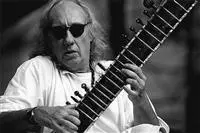
Atahualpa Yupanqui

Atahualpa Yupanqui was a legendary Argentine singer-songwriter, guitarist, and writer, considered one of the fundamental pillars of Latin American folk music. His work is characterized by a deep connection with the roots of the continent, the life of the farmer, and the landscape of the Pampas and the Andes. With poetry that intertwines simplicity and depth, Yupanqui portrayed the identity, struggles, and hopes of the indigenous peoples and rural workers. His style, marked by mastery of the guitar and an unmistakable voice, evoked nostalgia, resistance, and the beauty of the land, becoming a symbol of Latin American culture and identity.

Jorge Debravo

Jorge Debravo was a Uruguayan poet whose work is distinguished by a deep and reflective lyricism, marked by the influence of existentialism and a constant inquiry into the human condition. His poetry explores themes such as solitude, lack of communication, the passage of time, and the search for meaning in an often desolate world. His style is characterized by direct yet evocative language, often laden with melancholy and a particular sensitivity to the most intimate aspects of life experience. Despite his early death, Debravo left a significant mark on Uruguayan poetry, being considered an important voice of his generation.

Died on this day

5
Fernando Namora

Fernando Namora was a Portuguese doctor and writer, a prominent figure of the 1940s generation, also known as the "Geração de Orpheu." His literary work, in both prose and poetry, reflects a deep humanism, a keen eye on the human condition, and a strong social commitment. He addressed themes such as memory, identity, loneliness, and the search for meaning, often drawing inspiration from his experiences as a doctor. His writings are marked by precise and sensitive language, capable of capturing the nuances of human behavior and the complexity of interpersonal relationships. Namora left an important legacy in Portuguese literature, with works that continue to be studied and appreciated for their literary quality and thematic depth.

Luís Delfino

Luís Delfino was a poet and journalist known for his satirical poetry and social critique, with a style that combined biting irony with sharp observation of the customs of his time. His work reflects a penetrating look at societal contradictions, hypocrisies, and the excesses of public and private life, using often caustic humor and vigorous vocabulary to unmask human and institutional flaws. He was a prominent figure in the press and literary life of his era.

Márcio de Sousa Andrade

Márcio de Sousa Andrade is a poet whose writing is characterized by vigorous language and a critical perspective on contemporary society. His work addresses themes such as social injustice, urban alienation, and the search for meaning in a world often devoid of values. Andrade constructs a poetic universe that interweaves individual experience with collective problems, using an at times ironic and interventionist tone that challenges the reader to confront reality.

Sílvio Péllico

Silvio Pellico was an Italian writer, poet, patriot, and revolutionary, known for his work "Le mie prigioni" (My Prisons), an autobiographical account of his experiences as a political prisoner. His life was marked by political engagement for the unification of Italy and the consequences of his actions, which led him to years of captivity.

Leonardo Sinisgalli

Leonardo Sinisgalli was an Italian poet, writer, and advertiser, known for his poetry that stands between tradition and modernity, exploring themes of daily life, work, and the human condition with a clear and incisive language. His poetic work is marked by a lyrical realism, where banal objects and experiences gain deeper meaning. Sinisgalli also stood out in the field of advertising, where he applied his artistic sensitivity and mastery of language, leaving a multifaceted legacy in Italian culture.