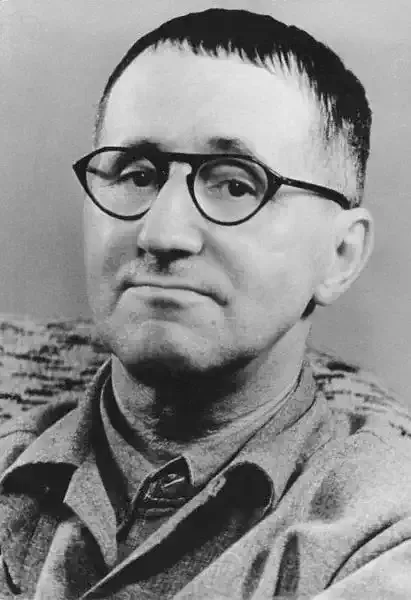
Jean-Paul Sartre
Author of the day

Jean-Paul Sartre

Jean-Paul Sartre was a French philosopher, writer, playwright, and literary critic, a central figure of atheistic existentialism. His vast and multifaceted work explores human freedom, individual responsibility, bad faith, and social commitment. Sartre rejected the Nobel Prize in Literature, advocating for a stance of refusal of bourgeois institutions. His thought profoundly influenced 20th-century philosophy, literature, and political debate, marking a generation with his emphasis on autonomy a…

Poem of the day

Do Not Go Gentle Into That Good Night

Dylan Thomas
Do not go gentle into that good night, 
Old age should burn and rave at close of day; 
Rage, rage against the dying of the light. 

Though wise men at their end know dark is right, 
Because their words had forked no lightning they 
Do not go gentle into that good night. 

Good men, the last wave by, crying how bright 
Their frail deeds might have danced in a green bay, 
Rage, rage against the dying of the light. 

Wild men who caught and sang the sun in flight, 
And learn, too late, they grieved it on its way, 
Do not go gentle into that good night. 

Grave men, near death, who see with blinding sight 
Blind eyes could blaze like meteors and be gay, 
Rage, rage against the dying of the light. 

And you, my father, there on that sad height, 
Curse, bless, me now with your fierce tears, I pray. 
Do not go gentle into that good night. 
Rage, rage against the dying of the light.
Read full poem

Born on this day

9
Daniel Filipe

Daniel Filipe is a Portuguese poet known for his work deeply marked by existential reflection and the exploration of the human condition. His poetry is characterized by careful language and subtle musicality, exploring themes such as time, memory, the ephemerality of life, and the search for meaning. With a body of work that develops discreetly but persistently, Filipe has built a singular poetic universe, where melancholy intertwines with a serene acceptance of reality.

Fernando Assis Pacheco

Fernando Assis Pacheco was a Portuguese poet, journalist, and literary critic, a prominent figure in contemporary poetry. His work, characterized by irony, melancholy, and deep reflection on time and the human condition, reveals a constant dialogue with literary tradition and an unmistakable originality. As a journalist and critic, he played an important role in promoting and debating Portuguese literature. His poetry is an invitation to introspection, exploring the complexities of feeling and thinking.

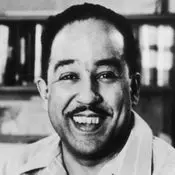
Langston Hughes

James Mercer Langston Hughes was an American poet, social activist, novelist, playwright, and columnist who was the central figure of the Harlem Renaissance. His powerful and accessible poetry often captured the experiences, joys, and struggles of Black Americans, using rhythms and language drawn from blues and jazz music. Hughes celebrated Black culture and identity, advocating for racial equality and social justice throughout his prolific career. His work remains deeply influential, continuing to resonate with readers for its authenticity, musicality, and enduring message of hope and resilience.

-50
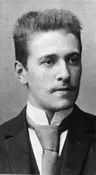
Hugo Von Hofmannsthal

Hugo von Hofmannsthal was a prominent Austrian poet, playwright, and novelist, and one of the most important representatives of literary modernism in Austria. His work is characterized by lyrical elegance, philosophical themes, and a deep interest in beauty and decay. He is particularly known for his collaborations with the composer Richard Strauss, for whom he wrote the librettos for several famous operas, such as "Der Rosenkavalier" and "Salome". Hofmannsthal was also one of the founders of the Salzburg Festival, a world-renowned cultural event.

Paul Fort

Paul Fort was a French poet, known for his vast work and for having created the "Ballade française" (French ballad), a new poetic genre. His poetry is characterized by musicality, apparent simplicity, and themes that often explore love, nature, and the medieval and fantastic universe. He was one of the most prolific poets of his generation.

Anselmo Braamcamp Freire

Anselmo Braamcamp Freire was a notable Portuguese poet, jurist, and politician, a prominent figure in Arcadian and Neoclassical poetry. His work is distinguished by its erudition, formal rigor, and evocation of themes from classical antiquity, mythology, and history. With a refined language and an elevated style, Braamcamp Freire dedicated himself to lyric, epic, and satirical poetry, leaving a significant legacy in 18th-century Portuguese literature, influencing later generations of writers with his classicism and formal mastery.

André Velter

André Velter is a French poet, novelist, and essayist, known for his work that frequently explores the relationship between the human being, nature, and the cosmos. His writing is marked by a rich and imagistic language, with a strong influence of surrealism and symbolism. He is dedicated to a poetic exploration that transcends the limits of the everyday. With a vast and multifaceted work, Velter addresses themes such as dreams, the unconscious, spirituality, and the search for transcendence. His contribution to literature lies in the way he manages to unite the real and the imaginary, creating literary universes that invite contemplation and discovery. He is an important figure in contemporary poetry and prose.

Günter Eich

Günter Eich was a German poet, playwright, and radio dramatist, a central figure in post-war German literature. His poetry is known for linguistic experimentation, dreamlike atmosphere, and reflection on language and the human condition in times of crisis. As a pioneer of radio drama in Germany, Eich innovated in form and content, exploring the sonic and narrative possibilities of the medium. His literary work, in both poetry and prose, is marked by a search for authenticity and a critical view of society.

Died on this day

8
Edmundo de Bettencourt

Edmundo de Bettencourt was a Portuguese poet and short-story writer, native to Madeira, whose work was characterized by a strong connection to his homeland and by the influences of Saudosismo and Symbolism. His writing, often marked by a lyrical and melancholic tone, explored themes such as nature, saudade (longing), love, and Madeiran identity. He was an important figure in promoting island culture through literature, contributing with his sensitivity and keen eye for the island's landscape and customs. His poetry evokes beauty and introspection, leaving a legacy of inestimable value to Madeiran and Portuguese literature.

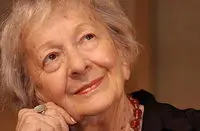
Wisława Szymborska

Wisława Szymborska was a Polish poet, essayist, and translator, awarded the Nobel Prize in Literature in 1996. Her poetry is known for its clarity, irony, and the ability to find the extraordinary in the everyday, exploring themes such as existence, nature, and the human condition with a philosophical and accessible perspective.

Carlos Simão José

Carlos Simão José is a poet whose poetic work is characterized by its exploration of the human condition, the passage of time, and the individual's relationship with their environment. His writing, often marked by deep sensitivity and evocative language, invites introspection and contemplation on the most essential aspects of life.

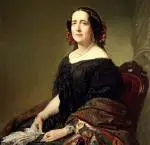
Gertrudis Gómez de Avellaneda

Gertrudis Gómez de Avellaneda was a prominent Cuban writer, recognized for her romantic poetry and theatrical work. Her writing is characterized by passion, emotional intensity, and the exploration of themes such as love, freedom, and justice. Despite facing the social limitations imposed on women of her time, she managed to publish and gain recognition in the literary circles of Spain and America. Her legacy endures as a symbol of the struggle for female artistic expression and a fundamental exponent of Hispanic American Romanticism.

Luis Herrero de Tejada

Spanish poet, Luis Herrero de Tejada was distinguished by his lyrical work that often explored introspection and melancholy. His poetry is characterized by its careful form and evocative language, reflecting the concerns of his time. Throughout his career, he contributed to the Spanish literary scene with poems that explored the transience of life and the search for meaning.

Teodoro Cuesta

Teodoro Cuesta was a Spanish poet, born in Asturias and strongly linked to the island of La Palma, in the Canary Islands. His poetic work is characterized by a deep connection with the land, the sea, and the lives of the men and women of the Canary Islands, exploring themes such as identity, memory, love, and nature with an accessible and emotive language.

Community birthdays

1