
Ethics and Morality

William Shakespeare
Sonnet 129: The expense of spirit in a waste of shame
The expense of spirit in a waste of shame
Is lust in action; and till action, lust
Is perjured, murderous, bloody, full of blame,
Savage, extreme, rude, cruel, not to trust,
Enjoy'd no sooner but despised straight,
Past reason hunted, and no sooner had
Past reason hated, as a swallow'd bait
On purpose laid to make the taker mad;
Mad in pursuit and in possession so;
Had, having, and in quest to have, extreme;
A bliss in proof, and proved, a very woe;
Before, a joy proposed; behind, a dream.
All this the world well knows; yet none knows well
To shun the heaven that leads men to this hell.
924

Kazi Nazrul Islam
Equality
I sing the song of equality.
I sing of the country
Where fresh joys blossom forth in, the hearts of men
And budding life shimmers in their faces.
Comrade, nobody is king- in this land and none a subject.
There is no man here poor and abject
Nor is there any, full of riches and money.
Here some do not. eat cast off rice-sweepings
And some all the cream and honey.
No one bows down here before the horses feet,
Or in front of the motor-cars wheels.
Hatred does not spring up here
In whitemen's breasts
Whenever they see blackmen close and near.
Comrade, this is a place where all are equal,
Where the black and the white have no separate
graveyards,
Where they have no separate rooms for offering
their prayers.
There are no sentries or peons here,
Nor is there any police-troops fear.
This is the Heaven where there are no distinctions,
Where leaving aside all 'quarrels
Men have clasped other's hands as brothers dear,
Religion does not create differences in this place
Nor do scriptures raise any futile clamour.
The priests and padres, the mollah and the
moulvis
Drink water here from the same container.
Here the house of prayer for the Creator
Lies in the body and the mind.
Here His throne of sorrows
Is amidst the miseries of mankind.
Here He responds to men's calls
By whatever name ,they may choose to appeal
Like the loving and fond mother
Ever ready and alert to respond
To the call of her child,
Whatever name he may call her by.
Here in this abode of equality
Different ways of apparel
Do not give rise to vicious quarrel.
Here clothed in dusty costume
Men are satisfied and happy,
Here in this land peace and equality.
[Original: Shammyo; Translation: Kabir Chowdhury]
900

Elizabeth Barrett Browning
Sonnet XI: And Therefore If to Love
And therefore if to love can be desert,
I am not all unworthy. Cheeks as pale
As these you see, and trembling knees that fail
To bear the burden of a heavy heart,--
This weary minstrel-life that once was girt
To climb Aornus, and can scarce avail
To pipe now 'gainst the valley nightingale
A melancholy music,--why advert
To these things? O Belovèd, it is plain
I am not of thy worth nor for thy place!
And yet, because I love thee, I obtain
From that same love this vindicating grace,
To live on still in love, and yet in vain,--
To bless thee, yet renounce thee to thy face.
896
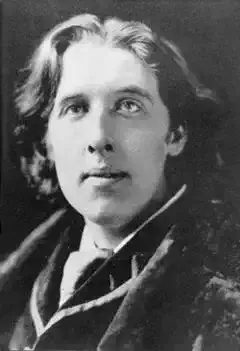
Oscar Wilde
Quantum Mutata
There was a time in Europe long ago
When no man died for freedom anywhere,
But England's lion leaping from its lair
Laid hands on the oppressor! it was so
While England could a great Republic show.
Witness the men of Piedmont, chiefest care
Of Cromwell, when with impotent despair
The Pontiff in his painted portico
Trembled before our stern ambassadors.
How comes it then that from such high estate
We have thus fallen, save that Luxury
With barren merchandise piles up the gate
Where noble thoughts and deeds should enter by:
Else might we still be Milton's heritors.
857
Kazi Nazrul Islam
Prostitute
Who calls you a prostitute, Mother?
Who spits at you?
Perhaps you were suckled by someone
as chaste as Seeta.
You may not be chaste,
yet you are one of the family
of all our mothers and sisters.
Your sons are like any of us sons,
as capable of achieving fame and honor
as any of us,
as capable of entering heaven.
The great hero Drona
was the son of Ghritachi,
a prostitute in heaven.
Krishna-Daipayan,
who was universally respected,
was the son of an unmarried girl.
Karna the Benevolent
Was born of a maiden.
Ganga, expelled from heaven,
was married to Shiva.
King Shantanu, too,
offered her his love.
Their son was the immortal Bheeshma,
to whom Krishna paid homage!
The Sage Satyakama
was the illegitimate son of Jabala.
The conception of the great lover of humanity, Jesus,
remains a mystery.
None is,stained with sin here,
none is an object of hatred.
Millions of beautiful lilies
blossom in the lake of lust!
Listen to this message of humanity:
After birth, all human beings
are free of all impurities.
Because I have once committed a sin,
have I no right to return to virtue?
Hundreds of sinful acts
did not take away the divineness of the gods.
If Ahalya was freed of sin,
if Mary was canonized,
truthfully, why shouldn't you, too,
be worthy of worship?
Who are the bigots
who condescendingly label your son
as an 'illegitimate' child?
To them I simply ask these questions.
How many of the 1,500 million children
of this world were born
purely out of the purpose of procreation,
and not out of lust?
How many are pure and chaste?
For whose sin do millions of sucklings
die in the cradle?
Purely from carnal urge
do men and women unite.
We are children born of that lust.
Yet how proud we are!
So, listen, religious leaders:
There's no difference between 'illegitimate'
and 'legitimate' children!
And if the son of an unchaste mother is 'illegitimate,'
so is the son of an unchaste father.
[Translation: Sajed Kamal]
895
Oscar Wilde
The New Remorse
The sin was mine; I did not understand.
So now is music prisoned in her cave,
Save where some ebbing desultory wave
Frets with its restless whirls this meagre strand.
And in the withered hollow of this land
Hath Summer dug herself so deep a grave,
That hardly can the leaden willow crave
One silver blossom from keen Winter's hand.
But who is this who cometh by the shore?
(Nay, love, look up and wonder!) Who is this
Who cometh in dyed garments from the South?
It is thy new-found Lord, and he shall kiss
The yet unravished roses of thy mouth,
And I shall weep and worship, as before.
896
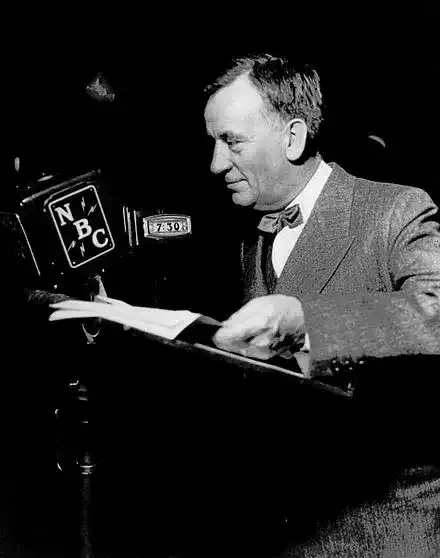
Edgar Albert Guest
Selfishness
Search history, my boy, and see
What petty selfishness has done.
Find if you can one victory
That little minds have ever won.
There is no record there to read
Of men who fought for self alone,
No instance of a single deed
Splendor they may proudly own.
Through all life's story you will find
The miser—with his hoarded gold—
A hermit, dreary and unkind,
An outcast from the human fold.
Men hold him up to view with scorn,
A creature by his wealth enslaved,
A spirit craven and forlorn,
Doomed by the money he has saved.
No man was ever truly great
Who sought to serve himself alone,
Who put himself above the state,
Above the friends about him thrown.
No man was ever truly glad
Who risked his joy on hoarded pelf,
And gave of nothing that he had
Through fear of needing it himself.
For selfishness is wintry cold,
And bitter are its joys at last,
The very charms it tries to hold,
With woes are quickly overcast.
And only he shall gladly live,
And bravely die when God shall call,
Who gathers but that he may give,
And with his fellows shares his all.
881

Muhammad Iqbal
Sympathy
Perched on the branch of a tree
Was a nightingale sad and lonely
'The night has drawn near', He was thinking
'I passed the day in flying around and feeding
How can I reach up to the nest
Darkness has enveloped everything'?
Hearing the nightingale wailing thus
A glow-worm lurking nearby spoke thus
'With my heart and soul ready to help I am
Though only an insignificant insect I am
Never mind if the night is dark
I shall shed light if the way is dark
God has bestowed a torch on me
He has given a shining lamp to me
The good in the world only those are
Ready to be useful to others who are
855

Alfred Lord Tennyson
Of Old Sat Freedom on the Heights
Of old sat Freedom on the heights,
The thunders breaking at her feet:
Above her shook the starry lights:
She heard the torrents meet.
There in her place she did rejoice,
Self-gather'd in her prophet-mind,
But fragments of her mighty voice
Came rolling on the wind.
Then stept she down thro' town and field
To mingle with the human race,
And part by part to men reveal'd
The fulness of her face-
Grave mother of majestic works,
From her isle-altar gazing down,
Who, God-like, grasps the triple forks,
And, King-like, wears the crown:
Her open eyes desire the truth.
The wisdom of a thousand years
Is in them. May perpetual youth
Keep dry their light from tears;
That her fair form may stand and shine,
Make bright our days and light our dreams,
Turning to scorn with lips divine
The falsehood of extremes!
856

Rudyard Kipling
The Winners
("The Story of the Gadsbys")
What the moral? Who rides may read.
When the night is thick and the tracks are blind
A friend at a pinch is a friend, indeed,
But a fool to wait for the laggard behind.
Down to Gehenna or up to the Throne,
He travels the fastest who travels alone.
White hands cling to the tightened rein,
Slipping the spur from the booted heel,
Tenderest voices cry " Turn again!"
Red lips tarnish the scabbarded steel,
High hopes faint on a warm hearth-stone--
He travels the fastest who travels alone.
One may fall but he falls by himself--
Falls by himself with himself to blame.
One may attain and to him is pelf--
Loot of the city in Gold or Fame.
Plunder of earth shall be all his own
Who travels the fastest and travels alone.
Wherefore the more ye be helpen-.en and stayed,
Stayed by a friend in the hour of toil,
Sing the heretical song I have made--
His be the labour and yours be the spoil.
Win by his aid and the aid disown--
He travels the fastest who travels alone!
855
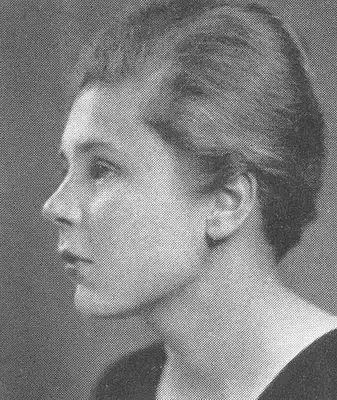
Elizabeth Bishop
One Art
The art of losing isn't hard to master;
so many things seem filled with the intent
to be lost that their loss is no disaster,
Lose something every day. Accept the fluster
of lost door keys, the hour badly spent.
The art of losing isn't hard to master.
Then practice losing farther, losing faster:
places, and names, and where it was you meant
to travel. None of these will bring disaster.
I lost my mother's watch. And look! my last, or
next-to-last, of three beloved houses went.
The art of losing isn't hard to master.
I lost two cities, lovely ones. And, vaster,
some realms I owned, two rivers, a continent.
I miss them, but it wasn't a disaster.
-Even losing you (the joking voice, a gesture
I love) I shan't have lied. It's evident
the art of losing's not too hard to master
though it may look like (Write it!) like a disaster.
851
Rudyard Kipling
The Thousandth Man
One man in a thousand, Solomon says,
Will stick more close than a brother.
And it's worth while seeking him half your days
If you find him before the other.
Nine nundred and ninety-nine depend
On what the world sees in you,
But the Thousandth man will stand your friend
With the whole round world agin you.
'Tis neither promise nor prayer nor show
Will settle the finding for 'ee.
Nine hundred and ninety-nine of 'em go
By your looks, or your acts, or your glory.
But if he finds you and you find him.
The rest of the world don't matter;
For the Thousandth Man will sink or swim
With you in any water.
You can use his purse with no more talk
Than he uses yours for his spendings,
And laugh and meet in your daily walk
As though there had been no lendings.
Nine hundred and ninety-nine of 'em call
For silver and gold in their dealings;
But the Thousandth Man h's worth 'em all,
Because you can show him your feelings.
His wrong's your wrong, and his right's your right,
In season or out of season.
Stand up and back it in all men's sight --
With that for your only reason!
Nine hundred and ninety-nine can't bide
The shame or mocking or laughter,
But the Thousandth Man will stand by your side
To the gallows-foot -- and after!
880
Oscar Wilde
On the Sale by Auction of Keat's Love-Letters
These are the letters which Endymion wrote
To one he loved in secret and apart,
And now the brawlers of the auction-mart
Bargain and bid for each poor blotted note,
Aye! for each separate pulse of passion quote
The merchant's price! I think they love not art
Who break the crystal of a poet's heart,
That small and sickly eyes may glare or gloat.
Is it not said, that many years ago,
In a far Eastern town some soldiers ran
With torches through the midnight, and began
To wrangle for mean raiment, and to throw
Dice for the garments of a wretched man,
Not knowing the God's wonder, or his woe?
888
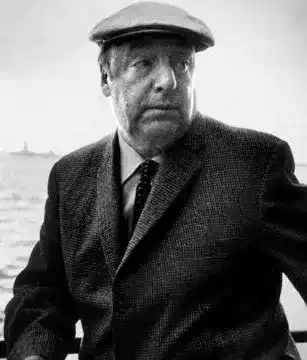
Pablo Neruda
The Dictators
An odor has remained among the sugarcane:
a mixture of blood and body, a penetrating
petal that brings nausea.
Between the coconut palms the graves are full
of ruined bones, of speechless death-rattles.
The delicate dictator is talking
with top hats, gold braid, and collars.
The tiny palace gleams like a watch
and the rapid laughs with gloves on
cross the corridors at times
and join the dead voices
and the blue mouths freshly buried.
The weeping cannot be seen, like a plant
whose seeds fall endlessly on the earth,
whose large blind leaves grow even without light.
Hatred has grown scale on scale,
blow on blow, in the ghastly water of the swamp,
with a snout full of ooze and silence
860

Robert Browning
The Patriot
AN OLD STORY.
I.
It was roses, roses, all the way,
With myrtle mixed in my path like mad:
The house-roofs seemed to heave and sway,
The church-spires flamed, such flags they had,
A year ago on this very day.
II.
The air broke into a mist with bells,
The old walls rocked with the crowd and cries.
Had I said, ``Good folk, mere noise repels---
But give me your sun from yonder skies!''
They had answered, ``And afterward, what else?''
III.
Alack, it was I who leaped at the sun
To give it my loving friends to keep!
Nought man could do, have I left undone:
And you see my harvest, what I reap
This very day, now a year is run.
IV.
There's nobody on the house-tops now---
Just a palsied few at the windows set;
For the best of the sight is, all allow,
At the Shambles' Gate---or, better yet,
By the very scaffold's foot, I trow.
V.
I go in the rain, and, more than needs,
A rope cuts both my wrists behind;
And I think, by the feel, my forehead bleeds,
For they fling, whoever has a mind,
Stones at me for my year's misdeeds.
VI.
Thus I entered, and thus I go!
In triumphs, people have dropped down dead.
``Paid by the world, what dost thou owe
``Me?''---God might question; now instead,
'Tis God shall repay: I am safer so.
815

Claude Mckay
The White House
Your door is shut against my tightened face,
And I am sharp as steel with discontent;
But I possess the courage and the grace
To bear my anger proudly and unbent.
The pavement slabs burn loose beneath my feet,
A chafing savage, down the decent street;
And passion rends my vitals as I pass,
Where boldly shines your shuttered door of glass.
Oh, I must search for wisdom every hour,
Deep in my wrathful bosom sore and raw,
And find in it the superhuman power
To hold me to the letter of your law!
Oh, I must keep my heart inviolate
Against the potent poison of your hate.
826

William Blake
The Lily
The modest Rose puts forth a thorn,
The humble sheep a threat'ning horn:
While the Lily white shall in love delight,
Nor a thorn nor a threat stain her beauty bright.
The humble sheep a threat'ning horn:
While the Lily white shall in love delight,
Nor a thorn nor a threat stain her beauty bright.
840

Rabindranath Tagore
Leave This
Leave this chanting and singing and telling of beads!
Whom dost thou worship in this lonely dark corner of a temple with doors all shut?
Open thine eyes and see thy God is not before thee!
He is there where the tiller is tilling the hard ground
and where the pathmaker is breaking stones.
He is with them in sun and in shower,
and his garment is covered with dust.
Put off thy holy mantle and even like him come down on the dusty soil!
Deliverance?
Where is this deliverance to be found?
Our master himself has joyfully taken upon him the bonds of creation;
he is bound with us all for ever.
Come out of thy meditations and leave aside thy flowers and incense!
What harm is there if thy clothes become tattered and stained?
Meet him and stand by him in toil and in sweat of thy brow.
824
Alfred Lord Tennyson
The Charge Of The Light Brigade
Half a league, half a league,
Half a league onward,
All in the valley of Death
Rode the six hundred.
'Forward, the Light Brigade!
Charge for the guns!' he said:
Into the valley of Death
Rode the six hundred.
'Forward, the Light Brigade!'
Was there a man dismay'd ?
Not tho' the soldier knew
Some one had blunder'd:
Their's not to make reply,
Their's not to reason why,
Their's but to do and die:
Into the valley of Death
Rode the six hundred.
Cannon to right of them,
Cannon to left of them,
Cannon in front of them
Volley'd and thunder'd;
Storm'd at with shot and shell,
Boldly they rode and well,
Into the jaws of Death,
Into the mouth of Hell
Rode the six hundred.
Flash'd all their sabres bare,
Flash'd as they turn'd in air
Sabring the gunners there,
Charging an army, while
All the world wonder'd:
Plunged in the battery-smoke
Right thro' the line they broke;
Cossack and Russian
Reel'd from the sabre-stroke
Shatter'd and sunder'd.
Then they rode back, but not
Not the six hundred.
Cannon to right of them,
Cannon to left of them,
Cannon behind them
Volley'd and thunder'd;
Storm'd at with shot and shell,
While horse and hero fell,
They that had fought so well
Came thro' the jaws of Death,
Back from the mouth of Hell,
All that was left of them,
Left of six hundred.
When can their glory fade ?
O the wild charge they made!
All the world wonder'd.
Honour the charge they made!
Honour the Light Brigade,
Noble six hundred!
840
Robert Browning
The Statue and the Bust
There's a palace in Florence, the world knows well,
And a statue watches it from the square,
And this story of both do our townsmen tell.
Ages ago, a lady there,
At the farthest window facing the East,
Asked, "Who rides by with the royal air?"
The bridesmaids' prattle around her ceased;
She leaned forth, one on either hand;
They saw how the blush of the bride increased --
They felt by its beats her heart expand --
As one at each ear and both in a breath
Whispered, "The Great-Duke Ferdinand."
That self-same instant, underneath,
The Duke rode past in his idle way,
Empty and fine like a swordless sheath.
Gay he rode, with a friend as gay,
Till he threw his head back -- "Who is she?"
-- "A bride the Riccardi brings home today."
Hair in heaps lay heavily
Over a pale brow spirit-pure --
Carved like the heart of the coal-black tree,
Crisped like a war-steed's encolure --
And vainly sought to dissemble her eyes
Of the blackest black our eyes endure.
And lo, a blade for a knight's emprise
Filled the fine empty sheath of a man, --
The Duke grew straightway brave and wise.
He looked at her, as a lover can;
She looked at him, as one who awakes:
The past was a sleep, and their life began.
Now, love so ordered for both their sakes,
A feast was held that selfsame night
In the pile which the mighty shadow makes.
(For Via Larga is three-parts light,
But the palace overshadows one,
Because of a crime which may God requite!
To Florence and God the wrong was done,
Through the first republic's murder there
By Cosimo and his cursèd son.)
The Duke (with the statue's face in the square)
Turned in the midst of his multitude
At the bright approach of the bridal pair.
Face to face the lovers stood
A single minute and no more,
While the bridegroom bent as a man subdued --
Bowed till his bonnet brushed the floor --
For the Duke on the lady a kiss conferred,
As the courtly custom was of yore.
In a minute can lovers exchange a word?
If a word did pass, which I do not think,
Only one out of the thousand heard.
That was the bridegroom. At day's brink
He and his bride were alone at last
In a bedchamber by a taper's blink.
Calmly he said that her lot was cast,
That the door she had passed was shut on her
Till the final catafalque repassed.
The world meanwhile, its noise and stir,
Through a certain window facing the East,
She could watch like a convent's chronicler.
Since passing the door might lead to a feast,
And a feast might lead to so much beside,
He, of many evils, chose the least.
"Freely I choose too," said the bride --
"Your window and its world suffice,"
Replied the tongue, while the heart replied --
"If I spend the night with that devil twice,
May his window serve as my loop of hell
Whence a damned soul looks on paradise!
"I fly to the Duke who loves me well,
Sit by his side and laugh at sorrow
Ere I count another ave-bell.
"'Tis only the coat of a page to borrow,
And tie my hair in a horse-boy's trim,
And I save my soul -- but not tomorrow" --
(She checked herself and her eye grew dim)
"My father tarries to bless my state:
I must keep it one day more for him.
"Is one day more so long to wait?
Moreover the Duke rides past, I know;
We shall see each other, sure as fate."
She turned on her side and slept. Just so!
So we resolve on a thing and sleep:
So did the lady, ages ago.
That night the Duke said, "Dear or cheap
As the cost of this cup of bliss may prove
To body or soul, I will drain it deep."
And on the morrow, bold with love,
He beckoned the bridegroom (close on call,
As his duty bade, by the Duke's alcove)
And smiled "'Twas a very funeral,
Your lady will think, this feast of ours, --
A shame to efface, whate'er befall!
"What if we break from the Arno bowers,
And try if Petraja, cool and green,
Cure last night's fault with this morning's flowers?"
The bridegroom, not a thought to be seen
On his steady brow and quiet mouth,
Said, "Too much favour for me so mean!
"But, alas! my lady leaves the South;
Each wind that comes from the Apennine
Is a menace to her tender youth:
"Nor a way exists, the wise opine,
If she quits her palace twice this year,
To avert the flower of life's decline."
Quoth the Duke, "A sage and a kindly fear.
Moreover Petraja is cold this spring:
Be our feast tonight as usual here!"
And then to himself -- "Which night shall bring
Thy bride to her lover's embraces, fool --
Or I am the fool, and thou art the king!
"Yet my passion must wait a night, nor cool --
For tonight the Envoy arrives from France
Whose heart I unlock with thyself, my tool.
"I need thee still and might miss perchance.
Today is not wholly lost, beside,
With its hope of my lady's countenance:
"For I ride -- what should I do but ride?
And passing her palace, if I list,
May glance at its window -- well betide!"
So said, so done: nor the lady missed
One ray that broke from the ardent brow,
Nor a curl of the lips where the spirit kissed.
Be sure that each renewed the vow,
No morrow's sun should arise and set
And leave them then as it left them now.
But next day passed, and next day yet,
With still fresh cause to wait one day more
Ere each leaped over the parapet.
And still, as love's brief morning wore,
With a gentle start, half smile, half sigh,
They found love not as it seemed before.
They thought it would work infallibly,
But not in despite of heaven and earth:
The rose would blow when the storm passed by.
Meantime they could profit in winter's dearth
By store of fruits that supplant the rose:
The world and its ways have a certain worth:
And to press a point while these oppose
Were simple policy; better wait:
We lose no friends and we gain no foes.
Meantime, worse fates than a lover's fate,
Who daily may ride and pass and look
Where his lady watches behind the grate!
And she -- she watched the square like a book
Holding one picture and only one,
Which daily to find she undertook:
When the picture was reached the book was done,
And she turned from the picture at night to scheme
Of tearing it out for herself next sun.
So weeks grew months, years; gleam by gleam
The glory dropped from their youth and love,
And both perceived they had dreamed a dream;
Which hovered as dreams do, still above:
But who can take a dream for a truth?
Oh, hide our eyes from the next remove!
One day as the lady saw her youth
Depart, and the silver thread that streaked
Her hair, and, worn by the serpent's tooth,
The brow so puckered, the chin so peaked, --
And wondered who the woman was,
Hollow-eyed and haggard-cheeked,
Fronting her silent in the glass --
"Summon here," she suddenly said,
"Before the rest of my old self pass,
"Him, the Carver, a hand to aid,
Who fashions the clay no love will change,
And fixes a beauty never to fade.
"Let Robbia's craft so apt and strange
Arrest the remains of young and fair,
And rivet them while the seasons range.
"Make me a face on the window there,
Waiting as ever, mute the while,
My love to pass below in the square!
"And let me think that it may beguile
Dreary days which the dead must spend
Down in their darkness under the aisle,
"To say, 'What matters it at the end?
I did no more while my heart was warm
Than does that image, my pale-faced friend.'
"Where is the use of the lip's red charm,
The heaven of hair, the pride of the brow,
And the blood that blues the inside arm --
"Unless we turn, as the soul knows how,
The earthly gift to an end divine?
A lady of clay is as good, I trow."
But long ere Robbia's cornice, fine,
With flowers and fruits which leaves enlace,
Was set where now is the empty shrine --
(And, leaning out of a bright blue space,
As a ghost might lean from a chink of sky,
The passionate pale lady's face --
Eyeing ever, with earnest eye
And quick-turned neck at its breathless stretch,
Some one who ever is passing by --)
The Duke had sighed like the simplest wretch
In Florence, "Youth -- my dream escapes!
Will its record stay?" And he bade them fetch
Some subtle moulder of brazen shapes --
"Can the soul, the will, die out of a man
Ere his body find the grave that gapes?
"John of Douay shall effect my plan,
Set me on horseback here aloft,
Alive, as the crafty sculptor can,
"In the very square I have crossed so oft:
That men may admire, when future suns
Shall touch the eyes to a purpose soft,
"While the mouth and the brow stay brave in bronze --
Admire and say, 'When he was alive
How he would take his pleasure once!'
"And it shall go hard but I contrive
To listen the while, and laugh in my tomb
At idleness which aspires to strive."
So! While these wait the trump of doom,
How do their spirits pass, I wonder,
Nights and days in the narrow room?
Still, I suppose, they sit and ponder
What a gift life was, ages ago,
Six steps out of the chapel yonder.
Only they see not God, I know,
Nor all that chivalry of his,
The soldier-saints who, row on row,
Burn upward each to his point of bliss --
Since, the end of life being manifest,
He had burned his way through the world to this.
I hear you reproach, "But delay was best,
For their end was a crime." -- Oh, a crime will do
As well, I reply, to serve for a test,
As a virtue golden through and through,
Sufficient to vindicate itself
And prove its worth at a moment's view!
Must a game be played for the sake of pelf?
Where a button goes, 'twere an epigram
To offer the stamp of the very Guelph.
The true has no value beyond the sham:
As well the counter as coin, I submit,
When your table's a hat, and your prize a dram.
Stake your counter as boldly every whit,
Venture as warily, use the same skill,
Do your best, whether winning or losing it,
If you choose to play! -- is my principle.
Let a man contend to the uttermost
For his life's set prize, be it what it will!
The counter our lovers staked was lost
As surely as if it were lawful coin:
And the sin I impute to each frustrate ghost
Is -- the unlit lamp and the ungirt loin,
Though the end in sight was a vice, I say.
You of the virtue (we issue join)
How strive you? De te, fabula.
819
Kazi Nazrul Islam
Eid Mobarak
After the lapse of a year
you have come, Eid,
having crossed many a desert
of hundreds of miles,
having caused many a tear to
be shed on many a sand-field.
You have brought from one of the seven
heavens a present to the door of the hungry,
the bliss of the flower-garden
to the forest of thorns.
And have asked the cup-bearer
to hurry up with the cup of wine.
The hawk-cuckoo sings on all sides,
the bride keeps awake without a
wink in the bridal chamber of midnight!
Flowers weep but where's the
flower vase?
There's no sleep for lover
in the distant land away from home.
He remembers only the smell, akin
to the dry land wetted by rain,
of the loose coiffure of his beloved,
the distracted braid of her hair
being at sixes and sevens!!
Tidings of joy came last evening at
signal from the second day of the moon,
the budding mind is boiling up
with happiness!
The shanai sings unto tune Ashabari.
The stone-hard mind has softened
in the smell of perfume,
minds are mortgaged to each other
today in debt without any document,
without any debt to bother about
Yazid, Hasan and Hussain are
bosom friends today.
Hell and heaven, flowers and fire
all fall for one another,
Shirin and Farhad are in each
other's embrace!
Leili has snake-like embroiled
Qayes in herself.
The lover in the arms of his
beloved closes his eyes in pleasure,
kisses around on cheeks,
the hell of revelry is ablaze,
Satan distributes cups of wine in heaven,
friends and enemies from the same assembly.
The field of Arafat is spread out
Today from village to village,
emperors and fakirs embrace
one another like brothers.
The two figures Lat-Manat hold on to
the Kaaba and dance.
The trumpet of Islam resounds today
through out the world,
there are no high and low - all men are equal,
nobody is another's king or subject.
Who are you, Oh noble man, a
Nawab or Badsha in the upper mansion?
You are a blot on all time; you
have been responsible for raising
doubts about Islam.
Says Islam, we are all for one another,
we are all brothers and shall
share joy and sorrow equally,
none of us has the right to hold.
Is it ordained for some people
to shed tears and for others to
light up the chandeliers!
And just two people to have princely
luck, millions to suffer from bad luck?
That is not the prescription of Islam.
So has Idul-Fitr ushered in the new dispensation,
you who are hoarding up, you should
give away all surplus,
you must have food to satisfy your hunger!
The cup of enjoyment boils over in your hands,
but those who are thirsty have a
share in the cup,
you must, a my hero, give them
and then enjoy profusely.
You must empty your heart and
make a gift of yourself;
you who are very calculating,
do not sit down to calculate!
Rather let your calculation
go wrong for once.
Today the wayward play the
teasing games in their hearts,
today even the ascetic is
reddened by kiss from Sayel and Laila!
Jamshed lives and demands
wine to drink.
Today I shall go about on the
streets crying: Eid-Mobarak,
a my friends, Assalam!
Today I shall distribute from
lip to lip the message of
flowers as sweetmeat for the day.
This is Eid, an occasion
for giving oneself away.
The Eidgah is red with the ardour of my gift!
Not the body but the
heart will give of itself to
everybody and make a martyr of itself.
[(Original: Eid mobarak; Translation: Basudha Chakravarty]
843
William Blake
A Poison Tree
I was angry with my friend:
I told my wrath, my wrath did end.
I was angry with my foe:
I told it not, my wrath did grow.
And I watered it in fears,
Night and morning with my tears;
And I sunned it with smiles,
And with soft deceitful wiles.
And it grew both day and night,
Till it bore an apple bright.
And my foe beheld it shine.
And he knew that it was mine,
And into my garden stole
When the night had veiled the pole;
In the morning glad I see
My foe outstretched beneath the tree.
838
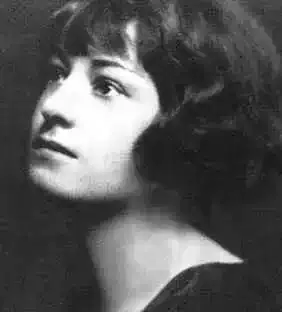
Dorothy Parker
Frustration
If I had a shiny gun,
I could have a world of fun
Speeding bullets through the brains
Of the folk who give me pains;
Or had I some poison gas,
I could make the moments pass
Bumping off a number of
People whom I do not love.
But I have no lethal weapon-
Thus does Fate our pleasure step on!
So they still are quick and well
Who should be, by rights, in hell.
811
Kazi Nazrul Islam
Day-Labourer
Your luxury cars are plying through the streets
And your big ships are cruising Over the Oceans.
The fast steam engines are running on railways,
The country is filled with plants and machinery:
Can you tell me whose contributions are all these?
With whose blood are your buildings
Painted red? Dismantle them and you'll find
On each piece of brick vividly written the names.
You may not know; but each and
Every grain of dust is aware of it,
The meaning of those roads, vessels, trains,
And of those decorative palaces.
The good days are coming soon:
Day after day your debts are being inflated
You must pay back those heavy debts.
Those who with hard labour broke the rugged hills
With hammer, shovel and pick-axe,
Their bones today are strewn 'on either side
Of those very roads. Those who, in order to render
You service, became day-labourers.
Those who covered their cherished body with dust
Only to carry you and your belongings,
They are indeed the real human beings,
they are the saints.
I sing their 'inner voice' through my songs.
Marching over their painful suffering breasts
The New Revolution will raise its new head.
You are reclining at ease
On the top of the third floor,
While we are rotting at the bottom;
Still you love to be
Addressed as 'My Lord'?
Absurd! That cannot be! !
The helm of this world must remain under
Those, whose mind and soul are soaked with
Sweet love for the motherland;
Those who journeyed with others through
The tiresome roads and covered their
Feet with dust; I shall pick up
That very dust from their feet and put it
on my head as a holy sacred offering.
Smeared with the blood of the pain stricken
Suffering humanity of the world
the new sun of the new Dawn is rising
above the horizon.
Break open today those ugly rusty doors
Of your narrow congested heart;
Take off those artificial garments of yours
Which look unnatural like coloured leather.
Look at the concentrated condensed air
Appearing deep blue in the sky,
Let them enter free in a frolicsome way
direct into your inner hearts -
Unlock all those obstructing clutches!
Let the entire blue Heaven fall down in our midst,
Let the moon, the sun and the stars shower on us.
Let all people of all times
and all climes come together
And stand up at the same confluence to listen to
The anthem of great unity under one flag-
If you torment here a single soul
The pain resounds in a crescendo
In the aggrieved hearts of all others.
Insult to a single person here means
Humiliating the whole of humanity
An insult to all of us.
Today is the day of upheaval
Against the heart-rending agony and pain
Of the great Human-beings of the world.
[Translation: Amir Hossain Chowdhury]
820