
Ethics and Morality

Rudyard Kipling
If
If you can keep your head when all about you
Are losing theirs and blaming it on you;
If you can trust yourself when all men doubt you,
But make allowance for their doubting too:
If you can wait and not be tired by waiting,
Or, being lied about, don't deal in lies,
Or being hated don't give way to hating,
And yet don't look too good, nor talk too wise;
If you can dream---and not make dreams your master;
If you can think---and not make thoughts your aim,
If you can meet with Triumph and Disaster
And treat those two impostors just the same:.
If you can bear to hear the truth you've spoken
Twisted by knaves to make a trap for fools,
Or watch the things you gave your life to, broken,
And stoop and build'em up with worn-out tools;
If you can make one heap of all your winnings
And risk it on one turn of pitch-and-toss,
And lose, and start again at your beginnings,
And never breathe a word about your loss:
If you can force your heart and nerve and sinew
To serve your turn long after they are gone,
And so hold on when there is nothing in you
Except the Will which says to them: "Hold on!"
If you can talk with crowds and keep your virtue,
Or walk with Kings---nor lose the common touch,
If neither foes nor loving friends can hurt you,
If all men count with you, but none too much:
If you can fill the unforgiving minute
With sixty seconds' worth of distance run,
Yours is the Earth and everything that's in it,
And---which is more---you'll be a Man, my son!
1,222

Kazi Nazrul Islam
Anwar
[A dark prison-house guarded by sentries at Constantinople. Thc mid-night of a new
moon with silence prevailing everywhere, except occasional footsieps of sentries
walking with heavy boots. A young soldier belonging to the National Army under the
command of Anwar is lying captive there. Although rebellious in appearance, he looks
older than his age. Today he has faced a Court Martial. Tomorrow he will be shot dead.
So this is the last night of the luckless warrior fastened by iron chains around his
limbs'. Suddenly he wakes up.
Shouting, but finds nobody nearby. Only cold wind
weeps for him, 'O the motherless'! ' The young rebel bites his left arm, loosing temper
as he remembers' the treachery of his countrymen. He remembers his commander,
who gave him the weapons to free his motherland. He shouts loudly calling his
commander, 'ANWAR'.]
Anwar. Anwar.
Valiant as you are,
Drive your sword hard,
Kill them all, and annihilate those beasts
Anwar, alas!
It's but an irony of fate that
the b1ood has no more that warmth and valour,
The shamsir is broken, its scabbard left-over.
Anwar! Anwar!
What makes you cry if everything goes undisturbed?
Look, muslims are pet animals in today's world.
No more, Anwar, no more!
Whose heart does not tremble?
The sword shines no more, Smarna is insignificant, as well.
Lool there tremble the gates of Madina.
No more Anwar, no more. Anwar! Anwar!
Tear the chest apart and bring out the liver,
Kill them all, kill all those coward beasts.
Anwar! are we pigs in chain?
The chain jingles on, and listen,
the fountain of flame is almost extinguished.
Our necks are in shackles, too.
Anwar! Anwar!
Why does the poor fox jump and brag?
Where is that mighty lion? - Anwar is full of wounds.
Anwar! it's really hard to wake up a narrow heart.
It is not least aware of the wild fire that comes all around.
My brother plays the part of a satan, he bribes me with his feast.
Anwar! we are, indeed, in a fix.
Anwar! Anwar!
We are all non-believers, having not even half the heart.
Where do you look for muslims? - they are all wild beasts.
Anwar! everything ends indeed,
Though the blood remains in the veins!
The occident has robbed you of your fake sword. I
t is now womanlike to surrender, weeping,
Anwar, although ends everything.
Anwar! Anwar!
It is useless to repent in this barren land.
Those, who are still living, are maddened animals.
Anwar! none is there. Weapon? - no, nowhere.
The sea is also dreadfully stagnant and dark, having no waves.
Even the beduin has put on shackles around his neck.
Anwar! none is left any more.
Anwar! Anwar!
He who calls him a muslim, drag him by his tongue.
The unfaithful knows only to save his own life.
Anwar, what a pity!
They have beggar's bags on their shoulders,
who learnt the lesson of liberty with the sword in hand.
The intrepid have turned disgusted today.
Anwar, what a pity!
Anwar! Anwar!
The world is now ruled by the killers,
Why then to abide by bloodred eyes! -
Devilry is today's tricks, indeed.
Anwar! hold your fists firm!
They persuade us in vain,
The suffering rebel heart dances in storms,
The blood-eater swords want the war,
Anwar, hold your fist firm.
Anwar! Anwar!
You are a Pasha, now turn a destroyer of muslim beasts,
The home is full of enemies, why do you hit the outsiders?
Come Anwar, O my brother,
I want today end of everything,
Islam, too, sets in; nowhere exists a liberated homeland!
So we have worn the guise of a beggar leaving aside the sword.
Come Anwar, a my brother.
(Suddenly a negro sentry shouted challengingly, 'Get alert, young man', The blood in
young man's vein boiled in agitation, He, too, shouted like a young lion.)
a Khuda! a Ali! Take my sword,
(Then the image of the chained mother-Turkey flashed before his eyes. Beside it the
image of his own mother appealed in the guise of a chained beggar-maid. Eye-corners
of both of them held drops of tears. Shocked as he was, the son turned his face aside
and cried out)
Who is it'? Deprived and deceived'?
No, mother, no,
It's no use afflicting a dead heart with a scar.
Anwar! Anwar!
(The coward sentry again tortured the young captive, who groaned in pain. I firmly
believe with my eyes full of tears, 'Days are near, good days'.)
[Original: Anwar; Translation: Mohammad Nurul Huda]
1,117
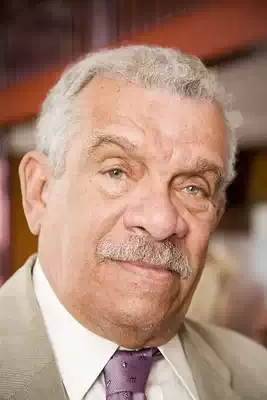
Derek Walcott
Blues
Those five or six young guys
lunched on the stoop
that oven-hot summer night
whistled me over. Nice
and friendly. So, I stop.
MacDougal or Christopher
Street in chains of light.
A summer festival. Or some
saint's. I wasn't too far from
home, but not too bright
for a nigger, and not too dark.
I figured we were all
one, wop, nigger, jew,
besides, this wasn't Central Park.
I'm coming on too strong? You figure
right! They beat this yellow nigger
black and blue.
Yeah. During all this, scared
on case one used a knife,
I hung my olive-green, just-bought
sports coat on a fire plug.
I did nothing. They fought
each other, really. Life
gives them a few kcks,
that's all. The spades, the spicks.
My face smashed in, my bloddy mug
pouring, my olive-branch jacket saved
from cuts and tears,
I crawled four flights upstairs.
Sprawled in the gutter, I
remember a few watchers waved
loudly, and one kid's mother shouting
like 'Jackie' or 'Terry,'
'now that's enough!'
It's nothing really.
They don't get enough love.
You know they wouldn't kill
you. Just playing rough,
like young Americans will.
Still it taught me somthing
about love. If it's so tough,
forget it.
1,112
Rudyard Kipling
Banquet Night
"Once in so often," King Solomon said,
Watching his quarrymen drill the stone,
"We will curb our garlic and wine and bread
And banquet together beneath my Throne,
And all Brethren shall come to that mess
As Fellow-Craftsmen-no more and no less."
"Send a swift shallop to Hiram of Tyre,
Felling and floating our beautiful trees,
Say that the Brethren and I desire
Talk with our Brethren who use the seas.
And we shall be happy to meet them at mess
As Fellow-Craftsmen-no more and no less."
"Carry this message to Hiram Abif-
Excellent master of forge and mine :-
I and the Brethren would like it if
He and the Brethren will come to dine
(Garments from Bozrah or morning-dress)
As Fellow-Craftsmen-no more and no less."
"God gave the Cedar their place-
Also the Bramble, the Fig and the Thorn-
But that is no reason to black a man's face
Because he is not what he hasn't been born.
And, as touching the Temple, I hold and profess
We are Fellow-Craftsmen-no more and no less."
So it was ordered and so it was done,
And the hewers of wood and the Masons of Mark,
With foc'sle hands of Sidon run
And Navy Lords from the ROYAL ARK,
Came and sat down and were merry at mess
As Fellow-Craftsmen-no more and no less.
The Quarries are hotter than Hiram's forge,
No one is safe from the dog-whip's reach.
It's mostly snowing up Lebanon gorge,
And it's always blowing off Joppa beach;
But once in so often, the messenger brings
Solomon's mandate : "Forget these things!
Brother to Beggars and Fellow to Kings,
Companion of Princes-forget these things!
Fellow-Craftsmen, forget these things!"
1,156
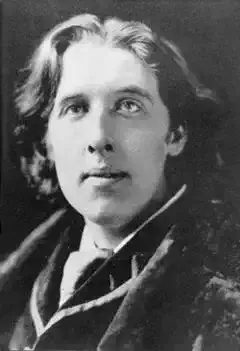
Oscar Wilde
Taedium Vitae
To stab my youth with desperate knives, to wear
This paltry age's gaudy livery,
To let each base hand filch my treasury,
To mesh my soul within a woman's hair,
And be mere Fortune's lackeyed groom, - I swear
I love it not! these things are less to me
Than the thin foam that frets upon the sea,
Less than the thistledown of summer air
Which hath no seed: better to stand aloof
Far from these slanderous fools who mock my life
Knowing me not, better the lowliest roof
Fit for the meanest hind to sojourn in,
Than to go back to that hoarse cave of strife
Where my white soul first kissed the mouth of sin.
1,151
Oscar Wilde
The Harlot's House
We caught the tread of dancing feet,
We loitered down the moonlit street,
And stopped beneath the harlot's house.
Inside, above the din and fray,
We heard the loud musicians play
The "Treues Liebes Herz" of Strauss.
Like strange mechanical grotesques,
Making fantastic arabesques,
The shadows raced across the blind.
We watched the ghostly dancers spin
To sound of horn and violin,
Like black leaves wheeling in the wind.
Like wire-pulled automatons,
Slim silhouetted skeletons
Went sidling through the slow quadrille.
They took each other by the hand,
And danced a stately saraband;
Their laughter echoed thin and shrill.
Sometimes a clockwork puppet pressed
A phantom lover to her breast,
Sometimes they seemed to try to sing.
Sometimes a horrible marionette
Came out, and smaoked its cigarette
Upon the steps like a live thing.
Then, turning to my love, I said,
"The dead are dancing with the dead,
The dust is whirling with the dust."
But she--she heard the violin,
And left my side, and entered in:
Love passed into the house of lust.
Then suddenly the tune went false,
The shadows wearied of the waltz,
The shadows ceased to wheel and whirl.
And down the long and silent street,
The dawn, with silver-sandalled feet,
Crept like a frightened girl.
1,061

Lord Byron
The Vision of Judgment
I
Saint Peter sat by the celestial gate:
His keys were rusty, and the lock was dull,
So little trouble had been given of late;
Not that the place by any means was full,
But since the Gallic era 'eighteight'
The devils had ta'en a longer, stronger pull,
And 'a pull altogether,' as they say
At sea — which drew most souls another way.
II
The angels all were singing out of tune,
And hoarse with having little else to do,
Excepting to wind up the sun and moon,
Or curb a runaway young star or two,
Or wild colt of a comet, which too soon
Broke out of bounds o'er th' ethereal blue,
Splitting some planet with its playful tail,
As boats are sometimes by a wanton whale.
III
The guardian seraphs had retired on high,
Finding their charges past all care below;
Terrestrial business fill'd nought in the sky
Save the recording angel's black bureau;
Who found, indeed, the facts to multiply
With such rapidity of vice and woe,
That he had stripp'd off both his wings in quills,
And yet was in arrear of human ills.
IV
His business so augmented of late years,
That he was forced, against his will no doubt,
(Just like those cherubs, earthly ministers,)
For some resource to turn himself about,
And claim the help of his celestial peers,
To aid him ere he should be quite worn out
By the increased demand for his remarks:
Six angels and twelve saints were named his clerks.
V
This was a handsome board — at least for heaven;
And yet they had even then enough to do,
So many conqueror's cars were daily driven,
So many kingdoms fitted up anew;
Each day too slew its thousands six or seven,
Till at the crowning carnage, Waterloo,
They threw their pens down in divine disgust —
The page was so besmear'd with blood and dust.
VI
This by the way: 'tis not mine to record
What angels shrink Wrom: ZAAFXISHJEXXIMQZUIVO
On this occasion his own work abhorr'd,
So surfeited with the infernal revel:
Though he himself had sharpen'd every sword,
It almost quench'd his innate thirst of evil.
(Here Satan's sole good work deserves insertion —
'Tis, that he has both generals in reveration.)
VII
Let's skip a few short years of hollow peace,
Which peopled earth no better, hell as wont,
And heaven none — they form the tyrant's lease,
With nothing but new names subscribed upon't;
'Twill one day finish: meantime they increase,
'With seven heads and ten horns,' and all in front,
Like Saint John's foretold beast; but ours are born
Less formidable in the head than horn.
VIII
In the first year of freedom's second dawn
Died George the Third; although no tyrant, one
Who shielded tyrants, till each sense withdrawn
Left him nor mental nor external sun:
A better farmer ne'er brush'd dew from lawn,
A worse king never left a realm undone!
He died — but left his subjects still behind,
One half as mad — and t'other no less blind.
IX
He died! his death made no great stir on earth:
His burial made some pomp; there was profusion
Of velvet, gilding, brass, and no great dearth
Of aught but tears — save those shed by collusion.
For these things may be bought at their true worth;
Of elegy there was the due infusion —
Bought also; and the torches, cloaks, and banners,
Heralds, and relics of old Gothic manners,
X
Form'd a sepulchral melodrame.
Of all
The fools who flack's to swell or see the show,
Who cared about the corpse? The funeral
Made the attraction, and the black the woe.
There throbbed not there a thought which pierced the pall;
And when the gorgeous coffin was laid low,
It seamed the mockery of hell to fold
The rottenness of eighty years in gold.
XI
So mix his body with the dust! It might
Return to what it must far sooner, were
The natural compound left alone to fight
Its way back into earth, and fire, and air;
But the unnatural balsams merely blight
What nature made him at his birth, as bare
As the mere million's base unmarried clay —
Yet all his spices but prolong decay.
XII
He's dead — and upper earth with him has done;
He's buried; save the undertaker's bill,
Or lapidary scrawl, the world is gone
For him, unless he left a German will:
But where's the proctor who will ask his son?
In whom his qualities are reigning still,
Except that household virtue, most uncommon,
Of constancy to a bad, ugly woman.
XIII
'God save the king!' It is a large economy
In God to save the like; but if he will
Be saving, all the better; for not one am I
Of those who think damnation better still:
I hardly know too if not quite alone am I
In this small hope of bettering future ill
By circumscribing, with some slight restriction,
The eternity of hell's hot jurisdiction.
XIV
I know this is unpopular; I know
'Tis blasphemous; I know one may be damned
For hoping no one else may ever be so;
I know my catechism; I know we're caromed
With the best doctrines till we quite o'erflow;
I know that all save England's church have shamm'd,
And that the other twice two hundred churches
And synagogues have made a damn'd bad purchase.
XV
God help us all! God help me too! I am,
God knows, as helpless as the devil can wish,
And not a whit more difficult to damn,
Than is to bring to land a latehook'd
fish,
Or to the butcher to purvey the lamb;
Not that I'm fit for such a noble dish,
As one day will be that immortal fry
Of almost everybody born to die.
XVI
Saint Peter sat by the celestial gate,
And nodded o'er his keys; when, lo! there came
A wondrous noise he had not heard of late —
A rushing sound of wind, and stream, and flame;
In short, a roar of things extremely great,
Which would have made aught save a saint exclaim;
But he, with first a start and then a wink,
Said, 'There's another star gone out, I think!'
XVII
But ere he could return to his repose,
A cherub flapp'd his right wing o'er his eyes —
At which St. Peter yawn'd, and rubb'd his hose:
'Saint porter,' said the angel, 'prithee rise!'
Waving a goodly wing, which glow'd, as glows
An earthly peacock's tail, with heavenly dyes;
To which the saint replied, 'Well, what's the matter?
'Is Lucifer come back with all this clatter?'
XVIII
'No,' quoth the cherub; 'George the Third is dead.'
'And who is George the Third?' replied the apostle;
'What George? what Third?' 'The king of England,' said
The angel. 'Well, he won't find kings to jostle
Him on his way; but does he wear his head?
Because the last we saw here had a tussle,
And ne'er would have got into heaven's good graces,
Had he not flung his head in all our faces.
XIX
'He was, if I remember, king of France;
That head of his, which could not keep a crown
On earth, yet ventured in my face to advance
A claim to those of martyrs — like my own:
If I had had my sword, as I had once
When I cut ears off, I had cut him down;
But having but my keys, and not my brand,
I only knock'd his head from out his hand.
XX
'And then he set up such a headless howl,
That all the saints came out and took him in;
And there he sits by St. Paul, cheek by jowl;
That fellow Paul— the parvenù! The skin
Of St. Bartholomew, which makes his cowl
In heaven, and upon earth redeem'd his sin,
So as to make a martyr, never sped
Better than did this weak and wooden head.
XXI
'But had it come up here upon its shoulders,
There would have been a different tale to tell;
The fellowfeeling
in the saint's beholders
Seems to have acted on them like a spell,
And so this very foolish head heaven solders
Back on its trunk: it may be very well,
And seems the custom here to overthrow
Whatever has been wisely done below.'
XXII
The angel answer'd, 'Peter! do not pout:
The king who comes has head and all entire,
And never knew much what it was about —
He did as doth the puppet — by its wire,
And will be judged like all the rest, no doubt:
My business and your own is not to inquire
Into such matters, but to mind our cue —
Which is to act as we are bid to do.'
XXIII
While thus they spake, the angelic caravan,
Arriving like a rush of mighty wind,
Cleaving the fields of space, as doth the swan
Some silver stream (say Ganges, Nile, or Inde,
Or Thames, or Tweed), and 'midst them an old man
With an old soul, and both extremely blind,
Halted before the gate, and in his shroud
Seated their fellow traveller on a cloud.
XXIV
But bringing up the rear of this bright host
A Spirit of a different aspect waves
His wings, like thunderclouds
above some coast
Whose barren beach with frequent wrecks is paved;
His brow was like the deep when tempesttoss'd;
Fierce and unfathomable thoughts engraved
Eternal wrath on his immortal face,
And where he gazed a gloom pervaded space.
XXV
As he drew near, he gazed upon the gate
Ne'er to be enter'd more by him or Sin,
With such a glance of supernatural hate,
As made Saint Peter wish himself within;
He potter'd with his keys at a great rate,
And sweated through his apostolic skin:
Of course his perspiration was but ichor,
Or some such other spiritual liquor.
XXIV
The very cherubs huddled all together,
Like birds when soars the falcon; and they felt
A tingling to the top of every feather,
And form'd a circle like Orion's belt
Around their poor old charge; who scarce knew whither
His guards had led him, though they gently dealt
With royal manes (for by many stories,
And true, we learn the angels all are Tories.)
XXVII
As things were in this posture, the gate flew
Asunder, and the flashing of its hinges
Flung over space an universal hue
Of manycolour'd
flame, until its tinges
Reach'd even our speck of earth, and made a new
Aurora borealis spread its fringes
O'er the North Pole; the same seen, when icebound,
By Captain Parry's crew, in 'Melville's Sound.'
XXVIII
And from the gate thrown open issued beaming
A beautiful and mighty Thing of Light,
Radiant with glory, like a banner streaming
Victorious from some worldo'erthrowing
fight:
My poor comparisons must needs be teeming
With earthly likenesses, for here the night
Of clay obscures our best conceptions, saving
Johanna Southcote, or Bob Southey raving.
XXIX
'Twas the archangel Michael; all men know
The make of angels and archangels, since
There's scarce a scribbler has not one to show,
From the fiends' leader to the angels' prince;
There also are some altarpieces,
though
I really can't say that they much evince
One's inner notions of immortal spirits;
But let the connoisseurs explain their merits.
XXX
Michael flew forth in glory and in good;
A goodly work of him from whom all glory
And good arise; the portal past — he stood;
Before him the young cherubs and saints hoary —
(I say young, begging to be understood
By looks, not years; and should be very sorry
To state, they were not older than St. Peter,
But merely that they seem'd a little sweeter.
XXXI
The cherubs and the saints bow'd down before
That archangelic
Hierarch, the first
Of essences angelical, who wore
The aspect of a god; but this ne'er nursed
Pride in his heavenly bosom, in whose core
No thought, save for his Master's service, durst
Intrude, however glorified and high;
He knew him but the viceroy of the sky.
XXXII
He and the sombre, silent Spirit met —
They knew each other both for good and ill;
Such was their power, that neither could forget
His former friend and future foe; but still
There was a high, immortal, proud regret
In either's eye, as if 'twere less their will
Than destiny to make the eternal years
Their date of war, and their 'champ clos' the spheres.
XXXIII
But here they were in neutral space: we know
From Job, that Satan hath the power to pay
A heavenly visit thrice a year or so;
And that the 'sons of God', like those of clay,
Must keep him company; and we might show
From the same book, in how polite a way
The dialogue is held between the Powers
Of Good and Evil — but 'twould take up hours.
XXXIV
And this is not a theologic tract,
To prove with Hebrew and with Arabic,
If Job be allegory or a fact,
But a true narrative; and thus I pick
From out the whole but such and such an act
As sets aside the slightest thought of trick.
'Tis every tittle true, beyond suspicion,
And accurate as any other vision.
XXXV
The spirits were in neutral space, before
The gates of heaven; like eastern thresholds is
The place where Death's grand cause is argued o'er,
And souls despatch'd to that world or to this;
And therefore Michael and the other wore
A civil aspect: though they did not kiss,
Yet still between his Darkness and his Brightness
There pass'd a mutual glance of great politeness.
XXXVI
The Archangel bow'd, not like a modern beau,
But with a graceful Oriental bend,
Pressing one radiant arm just where below
The heart in good men is supposed to tend;
He turn'd as to an equal, not too low,
But kindly; Satan met his ancient friend
With more hauteur, as might an old Castilian
Poor noble meet a mushroom rich civilian.
XXXVII
He merely bent his diabolic brow
An instant; and then raising it, he stood
In act to assert his right or wrong, and show
Cause why King George by no means could or should
Make out a case to be exempt from woe
Eternal, more than other kings, endued
With better sense and hearts, whom history mentions,
Who long have 'paved hell with their good intentions.'
XXXVIII
Michael began: 'What wouldst thou with this man,
Now dead, and brought before the Lord? What ill
Hath he wrought since his mortal race began,
That thou cans't claim him? Speak! and do thy will,
If it be just: if in this earthly span
He hath been greatly failing to fulfil
His duties as a king and mortal, say,
And he is thine; if not, let him have way.'
XXXIX
'Michael!' replied the Prince of Air, 'even here,
Before the Gate of him thou servest, must
I claim my subject: and will make appear
That as he was my worshipper in dust,
So shall he be in spirit, although dear
To thee and thine, because nor wine nor lust
Were of his weaknesses; yet on the throne
He reign'd o'er millions to serve me alone.
XL
'Look to our earth, or rather mine; it was,
Once, more thy master's: but I triumph not
In this poor planet's conquest; nor, alas!
Need he thou servest envy me my lot:
With all the myriads of bright worlds which pass
In worship round him, he may have forgot
Yon weak creation of such paltry things;
I think few worth damnation save their kings, —
XLI
'And these but as a kind of quitrent,
to
Assert my right as lord: and even had
I such an inclination, 'twere (as you
Well know) superfluous; they are grown so bad,
That hell has nothing better left to do
Than leave them to themselves: so much more mad
And evil by their own internal curse,
Heaven cannot make them better, nor I worse.
XLII
'Look to the earth, I said, and say again:
When this old, blind, mad, helpless, weak, poor worm
Began in youth's first bloom and flush to reign,
The world and he both wore a different form,
And must of earth and all the watery plain
Of ocean call'd him king: through many a storm
His isles had floated on the abyss of time;
For the rough virtues chose them for their clime.
XLIII
'He came to his sceptre young: he leaves it old:
Look to the state in which he found his realm,
And left it; and his annals too behold,
How to a minion first he gave the helm;
How grew upon his heart a thirst for gold,
The beggar's vice, which can but overwhelm
The meanest of hearts; and for the rest, but glance
Thine eye along America and France.
XLIV
'Tis true, he was a tool from first to last
(I have the workmen safe); but as a tool
So let him be consumed. From out the past
Of ages, since mankind have known the rule
Of monarchs — from the bloody rolls amass'd
Of sin and slaughter — from the Cæsar's school,
Take the worst pupil; and produce a reign
More drench'd with gore, more cumber'd with the slain.
XLV
'He ever warr'd with freedom and the free:
Nations as men, home subjects, foreign foes,
So that they utter'd the word "Liberty!"
Found George the Third their first opponent. Whose
History was ever stain'd as his will be
With national and individual woes?
I grant his household abstinence; I grant
His neutral virtues, which most monarchs want;
XLVI
'I know he was a constant consort; own
He was a decent sire, and middling lord.
All this is much, and most upon a throne;
As temperance, if at Apicius' board,
Is more than at an anchorite's supper shown.
I grant him all the kindest can accord;
And this was well for him, but not for those
Millions who found him what oppression chose.
XLVII
'The New World shook him off; the Old yet groans
Beneath what he and his prepared, if not
Completed: he leaves heirs on many thrones
To all his vices, without what begot
Compassion for him — his tame virtues; drones
Who sleep, or despots who have not forgot
A lesson which shall be retaught
them, wake
Upon the thrones of earth; but let them quake!
XLVIII
'Five millions of the primitive, who hold
The faith which makes ye great on earth, implored
A part of that vast all they held of old, —
Freedom to worship — not alone your Lord,
Michael, but you, and you, Saint Peter! Cold
Must be your souls, if you have not abhorr'd
The foe to Catholic participation
In all the license of a Christian nation.
XLIX
'True! he allow'd them to pray God; but as
A consequence of prayer, refused the law
Which would have placed them upon the same base
With those who did not hold the saints in awe.'
But here Saint Peter started from his place,
And cried, 'You may the prisoner withdraw:
Ere heaven shall ope her portals to this Guelph,
While I am guard, may I be damn'd myself!
L
'Sooner will I with Cerberus exchange
My office (and his no sinecure)
Than see this royal Bedlam bigot range
The azure fields of heaven, of that be sure!'
'Saint!' replied Satan, 'you do well to avenge
The wrongs he made your satellites endure;
And if to this exchange you should be given,
I'll try to coax our Cerberus up to heaven!'
LI
Here Michael interposed: 'Good saint! and devil!
Pray, not so fast; you both outrun discretion.
Saint Peter! you were wont to be more civil!
Satan! excuse this warmth of his expression,
And condescension to the vulgar's level:
Event saints sometimes forget themselves in session.
Have you got more to say?' — 'No.' — If you please
I'll trouble you to call your witnesses.'
LII
Then Satan turn'd and waved his swarthy hand,
Which stirr'd with its electric qualities
Clouds farther off than we can understand,
Although we find him sometimes in our skies;
Infernal thunder shook both sea and land
In all the planets, and hell's batteries
Let off the artillery, which Milton mentions
As one of Satan's most sublime inventions.
LIII
This was a signal unto such damn'd souls
As have the privilege of their damnation
Extended far beyond the mere controls
Of worlds past, present, or to come; no station
Is theirs particularly in the rolls
Of hell assign'd; but where their inclination
Or business carries them in search of game,
They may range freely — being damn'd the same.
LIV
They're proud of this — as very well they may,
It being a sort of knighthood, or gilt key
Stuck in their loins; or like to an 'entré'
Up the back stairs, or such freemasonry.
I borrow my comparisons from clay,
Being clay myself. Let not those spirits be
Offended with such base low likenesses;
We know their posts are nobler far than these.
LV
When the great signal ran from heaven to hell —
About ten million times the distance reckon'd
From our sun to its earth, as we can tell
How much time it takes up, even to a second,
For every ray that travels to dispel
The fogs of London, through which, dimly beacon'd,
The weathercocks are gilt some thrice a year,
If that the summer is not too severe;
LVI
I say that I can tell — 'twas half a minute;
I know the solar beams take up more time
Ere, pack'd up for their journey, they begin it;
But then their telegraph is less sublime,
And if they ran a race, they would not win it
'Gainst Satan's couriers bound for their own clime.
The sun takes up some years for every ray
To reach its goal — the devil not half a day.
LVII
Upon the verge of space, about the size
Of halfacrown,
a little speck appear'd
(I've seen a something like it in the skies
In the Ægean, ere a squall); it near'd,
And growing bigger, took another guise;
Like an aërial ship it tack'd, and steer'd,
Or was steer'd (I am doubtful of the grammar
Of the last phrase, which makes the stanza stammer; —
LVIII
But take your choice): and then it grew a cloud;
And so it was — a cloud of witnesses.
But such a cloud! No land e'er saw a crowd
Of locusts numerous as the heavens saw these;
They shadow'd with their myriads space; their loud
And varied cries were like those of wild geese
(If nations may be liken'd to a goose),
And realised the phrase of 'hell broke loose.'
LIX
Here crash'd a sturdy oath of stout John Bull,
Who damn'd away his eyes as heretofore:
There Paddy brogued, 'By Jasus!' — 'What's your wull?'
The temperate Scot exclaim'd: the French ghost swore
In certain terms I shan't translate in full,
As the first coachman will; and 'midst the roar,
The voice of Jonathan was heard to express,
'Our president is going to war, I guess.'
LX
Besides there were the Spaniard, Dutch, and Dane;
In short, an universal shoal of shades,
From Otaheite's isle to Salisbury Plain,
Of all climes and professions, years and trades,
Ready to swear against the good king's reign,
Bitter as clubs in cards are against spades:
All summon'd by this grand 'subpoena,' to
Try if kings mayn't be damn'd like me or you.
LXI
When Michael saw this host, he first grew pale,
As angels can; next, like Italian twilight,
He turn'd all colours — as a peacock's tail,
Or sunset streaming through a Gothic skylight
In some old abbey, or a trout not stale,
Or distant lightning on the horizon by night,
Or a fresh rainbow, or a grand review
Of thirty regiments in red, green, and blue.
LXII
Then he address'd himself to Satan: 'Why —
My good old friend, for such I deem you, though
Our different parties make us fight so shy,
I ne'er mistake you for a personal foe;
Our difference is political, and I
Trust that, whatever may occur below,
You know my great respect for you; and this
Makes me regret whate'er you do amiss —
LXIII
'Why, my dear Lucifer, would you abuse
My call for witnesses? I did not mean
That you should half of earth and hell produce;
'Tis even superfluous, since two honest, clean
True testimonies are enough: we lose
Our time, nay, our eternity, between
The accusation and defence: if we
Hear both, 'twill stretch our immortality.'
LXIV
Satan replied, 'To me the matter is
Indifferent, in a personal point of view;
I can have fifty better souls than this
With far less trouble than we have gone through
Already; and I merely argued his
Late majesty of Britain's case with you
Upon a point of form: you may dispose
Of him; I've kings enough below, God knows!'
LXV
Thus spoke the Demon (late call'd 'multifaced'
By multoscribbling
Southey). 'Then we'll call
One or two persons of the myriads placed
Around our congress, and dispense with all
The rest,' quoth Michael: 'Who may be so graced
As to speak first? there's choice enough — who shall
It be?' Then Satan answer'd, 'There are many;
But you may choose Jack Wilkes as well as any.'
LXVI
A merry, cockeyed,
curiouslooking
sprite
Upon the instant started from the throng,
Dress'd in a fashion now forgotten quite;
For all the fashions of the flesh stick long
By people in the next world; where unite
All the costumes since Adam's, right or wrong,
From Eve's figleaf
down to the petticoat,
Almost as scanty, of days less remote.
LXVII
The spirit look'd around upon the crowds
Assembled, and exclaim'd, 'My friends of all
The spheres, we shall catch cold amongst these clouds;
So let's to business: why this general call?
If those are freeholders I see in shrouds,
And 'tis for an election that they bawl,
Behold a candidate with unturn'd coat!
Saint Peter, may I count upon your vote?'
LXVIII
'Sir,' replied Michael, 'you mistake; these things
Are of a former life, and what we do
Above is more august; to judge of kings
Is the tribunal met: so now you know.'
'Then I presume those gentlemen with wings,'
Said Wilkes, 'are cherubs; and that soul below
Looks much like George the Third, but to my mind
A good deal older — Bless me! is he blind?'
LXIX
'He is what you behold him, and his doom
Depends upon his deeds,' the Angel said;
'If you have aught to arraign in him, the tomb
Give licence to the humblest beggar's head
To lift itself against the loftiest.' — 'Some,'
Said Wilkes, 'don't wait to see them laid in lead,
For such a liberty — and I, for one,
Have told them what I though beneath the sun.'
LXX
'Above the sun repeat, then, what thou hast
To urge against him,' said the Archangel. 'Why,'
Replied the spirit, 'since old scores are past,
Must I turn evidence? In faith, not I.
Besides, I beat him hollow at the last,
With all his Lords and Commons: in the sky
I don't like ripping up old stories, since
His conduct was but natural in a prince.
LXXI
'Foolish, no doubt, and wicked, to oppress
A poor unlucky devil without a shilling;
But then I blame the man himself much less
Than Bute and Grafton, and shall be unwilling
To see him punish'd here for their excess,
Since they were both damn'd long ago, and still in
Their place below: for me, I have forgiven,
And vote his "habeas corpus" into heaven.'
LXXII
'Wilkes,' said the Devil, 'I understand all this;
You turn'd to half a courtier ere you died,
And seem to think it would not be amiss
To grow a whole one on the other side
Of Charon's ferry; you forget that his
Reign is concluded; whatso'er betide,
He won't be sovereign more: you've lost your labor,
For at the best he will be but your neighbour.
LXXIII
'However, I knew what to think of it,
When I beheld you in your jesting way,
Flitting and whispering round about the spit
Where Belial, upon duty for the day,
With Fox's lard was basting William Pitt,
His pupil; I knew what to think, I say:
That fellow even in hell breeds farther ills;
I'll have him gagg'd — 'twas one of his own bills.
LXXIV
'Call Junius!' From the crowd a shadow stalk'd,
And at the same there was a general squeeze,
So that the very ghosts no longer walk'd
In comfort, at their own aërial ease,
But were all ramm'd, and jamm'd (but to be balk'd,
As we shall see), and jostled hands and knees,
Like wind compress'd and pent within a bladder,
Or like a human colic, which is sadder.
LXXV
The shadow came — a tall, thin, greyhair'd
figure,
That look'd as it had been a shade on earth;
Quick in it motions, with an air of vigour,
But nought to mar its breeding or its birth;
Now it wax'd little, then again grew bigger,
With now an air of gloom, or savage mirth;
But as you gazed upon its features, they
Changed every instant — to what, none could say.
LXXVI
The more intently the ghosts gazed, the less
Could they distinguish whose the features were;
The Devil himself seem'd puzzled even to guess;
They varied like a dream — now here, now there;
And several people swore from out the press
They knew him perfectly; and one could swear
He was his father: upon which another
Was sure he was his mother's cousin's brother:
LXXVII
Another, that he was a duke, or a knight,
An orator, a lawyer, or a priest,
A nabob, a manmidwife;
but the wight
Mysterious changed his countenance at least
As oft as they their minds; though in full sight
He stood, the puzzle only was increased;
The man was a phantasmagoria in
Himself — he was so volatile and thin.
LXXVIII
The moment that you had pronounce him one,
Presto! his face change'd and he was another;
And when that change was hardly well put on,
It varied, till I don't think his own mother
(If that he had a mother) would her son
Have known, he shifted so from one to t'other;
Till guessing from a pleasure grew a task,
At this epistolary 'Iron Mask.'
LXXIX
For sometimes he like Cerberus would seem —
'Three gentlemen at once' (as sagely says
Good Mrs. Malaprop); then you might deem
That he was not even one; now many rays
Were flashing round him; and now a thick steam
Hid him from sight — like fogs on London days:
Now Burke, now Tooke he grew to people's fancies,
And certes often like Sir Philip Francis.
LXXX
I've an hypothesis — 'tis quite my own;
I never let it out till now, for fear
Of doing people harm about the throne,
And injuring some minister or peer,
On whom the stigma might perhaps be blown;
It is — my gentle public, lend thine ear!
'Tis, that what Junius we are wont to call
Was really, truly, nobody at all.
LXXXI
I don't see wherefore letters should not be
Written without hands, since we daily view
Them written without heads; and books, we see,
Are fill'd as well without the latter too:
And really till we fix on somebody
For certain sure to claim them as his due,
Their author, like the Niger's mouth, will bother
The world to say if there be mouth or author.
LXXXII
'And who and what art thou?' the Archangel said.
'For that you may consult my titlepage,'
Replied this mighty shadow of a shade:
'If I have kept my secret half an age,
I scarce shall tell it now.' — 'Canst thou upbraid,'
Continued Michael, 'George Rex, or allege
Aught further?' Junius answer'd, 'You had better
First ask him for his answer to my letter:
LXXXIII
'My charges upon record will outlast
The brass of both his epitaph and tomb.'
'Repent'st thou not,' said Michael, 'of some past
Exaggeration? something which may doom
Thyself if false, as him if true? Thou wast
Too bitter — is it not so? — in thy gloom
Of passion?' — 'Passion!' cried the phantom dim,
'I loved my country, and I hated him.
LXXXIV
'What I have written, I have written: let
The rest be on his head or mine!' So spoke
Old 'Nominis Umbra'; and while speaking yet,
Away he melted in celestial smoke.
Then Satan said to Michael, 'Don't forget
To call George Washington, and John Horne Tooke,
And Franklin;' — but at this time was heard
A cry for room, though not a phantom stirr'd.
LXXXV
At length with jostling, elbowing, and the aid
Of cherubim appointed to that post,
The devil Asmodeus to the circle made
His way, and look'd as if his journey cost
Some trouble. When his burden down he laid,
'What's this?' cried Michael; 'why, 'tis not a ghost?'
'I know it,' quoth the incubus; 'but he
Shall be one, if you leave the affair to me.
LXXXVI
'Confound the renegado! I have sprain'd
My left wing, he's so heavy; one would think
Some of his works about his neck were chain'd.
But to the point; while hovering o'er the brink
Of Skiddaw (where as usual it still rain'd),
I saw a taper, far below me, wink,
And stooping, caught this fellow at a libel —
No less on history than the Holy Bible.
LXXXVII
'The former is the devil's scripture, and
The latter yours, good Michael: so the affair
Belongs to all of us, you understand.
I snatch'd him up just as you see him there,
And brought him off for sentence out of hand:
I've scarcely been ten minutes in the air —
At least a quarter it can hardly be:
I dare say that his wife is still at tea.'
LXXXVIII
Here Satan said, 'I know this man of old,
And have expected him for some time here;
A sillier fellow you will scarce behold,
Or more conceited in his petty sphere:
But surely it was not worth while to fold
Such trash below your wing, Asmodeus dear:
We had the poor wretch safe (without being bored
With carriage) coming of his own accord.
LXXXIX
'But since he's here, let's see what he has done.'
'Done!' cried Asmodeus, 'he anticipates
The very business you are now upon,
And scribbles as if head clerk to the Fates,
Who knows to what his ribaldry may run,
When such an ass as this, like Balaam's, prates?'
'Let's hear,' quoth Michael, 'what he has to say;
You know we're bound to that in every way.'
XC
Now the bard, glad to get an audience which
By no means oft was his case below,
Began to cough, and hawk, and hem, and pitch
His voice into that awful note of woe
To all unhappy hearers within reach
Of poets when the tide of rhyme's in flow;
But stuck fast with his first hexameter,
Not one of all whose gouty feet would stir.
XCI
But ere the spavin'd dactyls could be spurr'd
Into recitative, in great dismay
Both cherubim and seraphim were heard
To murmur loudly through their long array:
And Michael rose ere he could get a word
Of all his founder'd verses under way.
And cried, 'For God's sake stop, my friend! 'twere best —
Non Di, non homines —you
know the rest.'
XCII
A general bustle spread throughout the throng.
Which seem'd to hold all verse in detestation;
The angels had of course enough of song
When upon service; and the generation
Of ghosts had heard too much in life, not long
Before, to profit by a new occasion;
The monarch, mute till then, exclaim'd, 'What! What!
Pye come again? No more — no more of that!'
XCIII
The tumult grew; an universal cough
Convulsed the skies, as during a debate
When Castlereagh has been up long enough
(Before he was first minister of state,
I mean — the slaves hear now); some cried 'off, off!'
As at a farce; till, grown quite desperate,
The bard Saint Peter pray'd to interpose
(Himself an author) only for his prose.
XCIV
The varlet was not an illfavour'd
knave;
A good deal like a vulture in the face,
With a hook nose and a hawk'd eye, which gave
A smart and sharperlooking
sort of grace
To his whole aspect, which, though rather grave,
Was by no means so ugly as his case;
But that, indeed, was hopeless as can be,
Quite a poetic felony, 'de se.'
XCV
Then Michael blew his trump, and still'd the noise
With one still greater, as is yet the mode
On earth besides; except some grumbling voice,
Which now and then will make a slight inroad
Upon decorous silence, few will twice
Lift up their lungs when fairly overcrow'd;
And now the bard could plead his own bad cause,
With all the attitudes of selfapplause.
XCVI
He said — (I only give the heads) — he said,
He meant no harm in scribbling; 'twas his way
Upon all topics; 'twas, besides, his bread,
Of which he butter'd both sides; 'twould delay
Too long the assembly (he was pleased to dread),
And take up rather more time than a day,
To name his works — he would but cite a few —
'Wat Tyler' — 'Rhymes on Blenheim' — 'Waterloo.'
XCVII
He had written praises of a regicide:
He had written praises of all kings whatever;
He had written for republics far and wide;
And then against them bitterer than ever;
For pantisocracy he once had cried
Aloud, a scheme less moral than 'twas clever;
Then grew a hearty anti
Jacobin
—
Had turn'd his coat — and would have turn'd his skin.
XCVIII
He had sung against all battles, and again
In their high praise and glory; he had call'd
Reviewing (1)'the ungentle craft,' and then
Become as base a critic as e'er crawl'd —
Fed, paid, and pamper'd by the very men
By whom his muse and morals had been maul'd:
He had written much blank verse, and blanker prose,
And more of both than anybody knows.
XCIX
He had written Wesley's life: — here turning round
To Satan, 'Sir, I'm ready to write yours,
In two octavo volumes, nicely bound,
With notes and preface, all that most allures
The pious purchaser; and there's no ground
For fear, for I can choose my own reviews:
So let me have the proper documents,
That I may add you to my other saints.'
C
Satan bow'd, and was silent. 'Well, if you,
With amiable modesty, decline
My offer, what says Michael? There are few
Whose memoirs could be render'd more divine.
Mine is a pen of all work; not so new
As it once was, but I would make you shine
Like your own trumpet. By the way, my own
Has more of brass in it, and is as well blown.
CI
'But talking about trumpets, here's my Vision!
Now you shall judge, all people; yes, you shall
Judge with my judgment, and by my decision
Be guided who shall enter heaven or fall.
I settle all these things by intuition,
Times present, past, to come, heaven, hell, and all,
Like King Alfonso(2). When I thus see double,
I save the Deity some worlds of trouble.'
CII
He ceased, and drew forth an MS.; and no
Persuasion on the part of devils, saints,
Or angels, now could stop the torrent; so
He read the first three lines of the contents;
But at the fourth, the whole spiritual show
Had vanish'd, with variety of scents,
Ambrosial and sulphureous, as they sprang,
Like lightning, off from his 'melodious twang.' (3)
CIII
Those grand heroics acted as a spell:
The angels stopp'd their ears and plied their pinions;
The devils ran howling, deafen'd, down to hell;
The ghosts fled, gibbering, for their own dominions —
(For 'tis not yet decided where they dwell,
And I leave every man to his opinions);
Michael took refuge in his trump — but, lo!
His teeth were set on edge, he could not blow!
CIV
Saint Peter, who has hitherto been known
For an impetuous saint, upraised his keys,
And at the fifth line knock'd the poet down;
Who fell like Phaeton, but more at ease,
Into his lake, for there he did not drown;
A different web being by the Destinies
Woven for the Laureate's final wreath, whene'er
Reform shall happen either here or there.
CV
He first sank to the bottom like
his works,
But soon rose to the surface — like himself;
For all corrupted things are bouy'd like corks,(4)
By their own rottenness, light as an elf,
Or wisp that flits o'er a morass: he lurks,
It may be, still, like dull books on a shelf,
In his own den, to scrawl some 'Life' or 'Vision,'
As Welborn says — 'the devil turn'd precisian.'
CVI
As for the rest, to come to the conclusion
Of this true dream, the telescope is gone
Which kept my optics free from all delusion,
And show'd me what I in my turn have shown;
All I saw farther, in the last confusion,
Was, that King George slipp'd into heaven for one;
And when the tumult dwindled to a calm,
I left him practising the hundredth psalm.
1,065

Paul Laurence Dunbar
Frederick Douglass
A hush is over all the teeming lists,
And there is pause, a breath-space in the strife;
A spirit brave has passed beyond the mists
And vapors that obscure the sun of life.
And Ethiopia, with bosom torn,
Laments the passing of her noblest born.
She weeps for him a mother's burning tears--
She loved him with a mother's deepest love
He was her champion thro' direful years,
And held her weal all other ends above.
When Bondage held her bleeding in the dust,
He raised her up and whispered, 'Hope and Trust.'
For her his voice, a fearless clarion, rung
That broke in warning on the ears of men;
For her the strong bow of his pow'r he strung
And sent his arrows to the very den
Where grim Oppression held his bloody place
And gloated o'er the mis'ries of a race.
And he was no soft-tongued apologist;
He spoke straight-forward, fearlessly uncowed;
The sunlight of his truth dispelled the mist
And set in bold relief each dark-hued cloud;
To sin and crime he gave their proper hue,
And hurled at evil what was evil's due.
Thro' good and ill report he cleaved his way
Right onward, with his face set toward the heights,
Nor feared to face the foeman's dread array--
The lash of scorn, the sting of petty spites.
He dared the lightning in the lightning's track,
And answered thunder with his thunder back.
When men maligned him and their torrent wrath
In furious imprecations o'er him broke,
He kept his counsel as he kept his path;
'Twas for his race, not for himself, he spoke.
He knew the import of his Master's call
And felt himself too mighty to be small.
No miser in the good he held was he--
His kindness followed his horizon's rim.
His heart, his talents and his hands were free
To all who truly needed aught of him.
Where poverty and ignorance were rife,
He gave his bounty as he gave his life.
The place and cause that first aroused his might
Still proved its pow'r until his latest day.
In Freedom's lists and for the aid of Right
Still in the foremost rank he waged the fray;
Wrong lived; His occupation was not gone.
He died in action with his armor on!
We weep for him, but we have touched his hand,
And felt the magic of his presence nigh,
The current that he sent thro' out the land,
The kindling spirit of his battle-cry
O'er all that holds us we shall triumph yet
And place our banner where his hopes were set!
Oh, Douglass, thou hast passed beyond the shore,
But still thy voice is ringing o'er the gale!
Thou 'st taught thy race how high her hopes may soar
And bade her seek the heights, nor faint, nor fail.
She will not fail, she heeds thy stirring cry,
She knows thy guardian spirit will be nigh,
And rising from beneath the chast'ning rod,
She stretches out her bleeding hands to God!
1,126
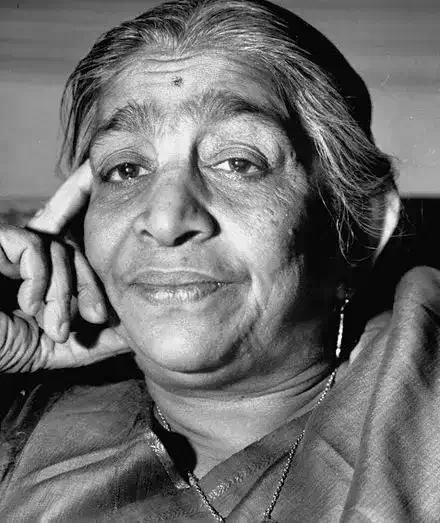
Sarojini Naidu
An Indian Love Song
He
Lift up the veils that darken the delicate moon
of thy glory and grace,
Withhold not, O love, from the night
of my longing the joy of thy luminous face,
Give me a spear of the scented keora
guarding thy pinioned curls,
Or a silken thread from the fringes
that trouble the dream of thy glimmering pearls;
Faint grows my soul with thy tresses' perfume
and the song of thy anklets' caprice,
Revive me, I pray, with the magical nectar
that dwells in the flower of thy kiss.
She
How shall I yield to the voice of thy pleading,
how shall I grant thy prayer,
Or give thee a rose-red silken tassel,
a scented leaf from my hair?
Or fling in the flame of thy heart's desire the veils that cover my face,
Profane the law of my father's creed for a foe
of my father's race?
Thy kinsmen have broken our sacred altars and slaughtered our sacred kine,
The feud of old faiths and the blood of old battles sever thy people and mine.
He
What are the sins of my race, Beloved,
what are my people to thee?
And what are thy shrines, and kine and kindred,
what are thy gods to me?
Love recks not of feuds and bitter follies,
of stranger, comrade or kin,
Alike in his ear sound the temple bells
and the cry of the muezzin.
For Love shall cancel the ancient wrong
and conquer the ancient rage,
Redeem with his tears the memoried sorrow
that sullied a bygone age.
1,009

William Shakespeare
Sonnet 94: They that have power to hurt and will do none
They that have power to hurt and will do none,
That do not do the thing, they most do show,
Who, moving others, are themselves as stone,
Unmovèd, cold, and to temptation slow,
They rightly do inherit heaven's graces,
And husband nature's riches from expense;
They are the lords and owners of their faces,
Others, but stewards of their excellence.
The summer's flower is to the summer sweet,
Though to itself, it only live and die,
But if that flower with base infection meet,
The basest weed outbraves his dignity.
For sweetest things turn sourest by their deeds;
Lilies that fester smell far worse than weeds.
985
Oscar Wilde
At Verona
HOW steep the stairs within Kings' houses are
For exile-wearied feet as mine to tread,
And O how salt and bitter is the bread
Which falls from this Hound's table,--better far
That I had died in the red ways of war,
Or that the gate of Florence bare my head,
Than to live thus, by all things comraded
Which seek the essence of my soul to mar.
'Curse God and die: what better hope than this?
He hath forgotten thee in all the bliss
Of his gold city, and eternal day'--
Nay peace: behind my prison's blinded bars
I do possess what none can take away,
My love, and all the glory of the stars.
974

Alfred Lord Tennyson
In Memoriam 131: O Living Will That Shalt Endure
O living will that shalt endure
When all that seems shall suffer shock,
Rise in the spiritual rock,
Flow thro' our deeds and make them pure,
That we may lift from out of dust
A voice as unto him that hears,
A cry above the conquer'd years
To one that with us works, and trust,
With faith that comes of self-control,
The truths that never can be proved
Until we close with all we loved,
And all we flow from, soul in soul.
O true and tried, so well and long,
Demand not thou a marriage lay;
In that it is thy marriage day
Is music more than any song.
Nor have I felt so much of bliss
Since first he told me that he loved
A daughter of our house; nor proved
Since that dark day a day like this;
Tho' I since then have number'd o'er
Some thrice three years: they went and came,
Remade the blood and changed the frame,
And yet is love not less, but more;
No longer caring to embalm
In dying songs a dead regret,
But like a statue solid-set,
And moulded in colossal calm.
Regret is dead, but love is more
Than in the summers that are flown,
For I myself with these have grown
To something greater than before;
Which makes appear the songs I made
As echoes out of weaker times,
As half but idle brawling rhymes,
The sport of random sun and shade.
But where is she, the bridal flower,
That must be made a wife ere noon?
She enters, glowing like the moon
Of Eden on its bridal bower:
On me she bends her blissful eyes
And then on thee; they meet thy look
And brighten like the star that shook
Betwixt the palms of paradise.
O when her life was yet in bud,
He too foretold the perfect rose.
For thee she grew, for thee she grows
For ever, and as fair as good.
And thou art worthy; full of power;
As gentle; liberal-minded, great,
Consistent; wearing all that weight
Of learning lightly like a flower.
But now set out: the noon is near,
And I must give away the bride;
She fears not, or with thee beside
And me behind her, will not fear.
For I that danced her on my knee,
That watch'd her on her nurse's arm,
That shielded all her life from harm
At last must part with her to thee;
Now waiting to be made a wife,
Her feet, my darling, on the dead;
Their pensive tablets round her head,
And the most living words of life
Breathed in her ear. The ring is on,
The "wilt thou" answer'd, and again
The "wilt thou" ask'd, till out of twain
Her sweet "I will" has made you one.
Now sign your names, which shall be read,
Mute symbols of a joyful morn,
By village eyes as yet unborn;
The names are sign'd, and overhead
Begins the clash and clang that tells
The joy to every wandering breeze;
The blind wall rocks, and on the trees
The dead leaf trembles to the bells.
O happy hour, and happier hours
Await them. Many a merry face
Salutes them--maidens of the place,
That pelt us in the porch with flowers.
O happy hour, behold the bride
With him to whom her hand I gave.
They leave the porch, they pass the grave
That has to-day its sunny side.
To-day the grave is bright for me,
For them the light of life increased,
Who stay to share the morning feast,
Who rest to-night beside the sea.
Let all my genial spirits advance
To meet and greet a whiter sun;
My drooping memory will not shun
The foaming grape of eastern France.
It circles round, and fancy plays,
And hearts are warm'd and faces bloom,
As drinking health to bride and groom
We wish them store of happy days.
Nor count me all to blame if I
Conjecture of a stiller guest,
Perchance, perchance, among the rest,
And, tho' in silence, wishing joy.
But they must go, the time draws on,
And those white-favour'd horses wait;
They rise, but linger; it is late;
Farewell, we kiss, and they are gone.
A shade falls on us like the dark
From little cloudlets on the grass,
But sweeps away as out we pass
To range the woods, to roam the park,
Discussing how their courtship grew,
And talk of others that are wed,
And how she look'd, and what he said,
And back we come at fall of dew.
Again the feast, the speech, the glee,
The shade of passing thought, the wealth
Of words and wit, the double health,
The crowning cup, the three-times-three,
And last the dance,--till I retire:
Dumb is that tower which spake so loud,
And high in heaven the streaming cloud,
And on the downs a rising fire:
And rise, O moon, from yonder down,
Till over down and over dale
All night the shining vapour sail
And pass the silent-lighted town,
The white-faced halls, the glancing rills,
And catch at every mountain head,
And o'er the friths that branch and spread
Their sleeping silver thro' the hills;
And touch with shade the bridal doors,
With tender gloom the roof, the wall;
And breaking let the splendour fall
To spangle all the happy shores
By which they rest, and ocean sounds,
And, star and system rolling past,
A soul shall draw from out the vast
And strike his being into bounds,
And, moved thro' life of lower phase,
Result in man, be born and think,
And act and love, a closer link
Betwixt us and the crowning race
Of those that, eye to eye, shall look
On knowledge; under whose command
Is Earth and Earth's, and in their hand
Is Nature like an open book;
No longer half-akin to brute,
For all we thought and loved and did,
And hoped, and suffer'd, is but seed
Of what in them is flower and fruit;
Whereof the man, that with me trod
This planet, was a noble type
Appearing ere the times were ripe,
That friend of mine who lives in God,
That God, which ever lives and loves,
One God, one law, one element,
And one far-off divine event,
To which the whole creation moves.
1,027
Rudyard Kipling
By the Hoof of the Wild Goat
By the Hoof of the Wild Goat uptossed
From the cliff where she lay in the Sun
Fell the Stone
To the Tarn where the daylight is lost,
So she fell from the light of the Sun
And alone!
Now the fall was ordained from the first
With the Goat and the Cliff and the Tarn,
But the Stone
Knows only her life is accursed
As she sinks from the light of the Sun
And alone!
Oh Thou Who hast builded the World,
Oh Thou Who hast lighted the Sun,
Oh Thou Who hast darkened the Tarn,
Judge Thou
The sin of the Stone that was hurled
By the goat from the light of the Sun,
As she sinks in the mire of the Tarn,
Even now--even now--even now!
975

William Blake
The Grey Monk
'I die, I die!' the Mother said,
'My children die for lack of bread.
What more has the merciless Tyrant said?'
The Monk sat down on the stony bed.
The blood red ran from the Grey Monk's side,
His hands and feet were wounded wide,
His body bent, his arms and knees
Like to the roots of ancient trees.
His eye was dry; no tear could flow:
A hollow groan first spoke his woe.
He trembled and shudder'd upon the bed;
At length with a feeble cry he said:
'When God commanded this hand to write
In the studious hours of deep midnight,
He told me the writing I wrote should prove
The bane of all that on Earth I lov'd.
My Brother starv'd between two walls,
His Children's cry my soul appalls;
I mock'd at the rack and griding chain,
My bent body mocks their torturing pain.
Thy father drew his sword in the North,
With his thousands strong he marched forth;
Thy Brother has arm'd himself in steel
To avenge the wrongs thy Children feel.
But vain the Sword and vain the Bow,
They never can work War's overthrow.
The Hermit's prayer and the Widow's tear
Alone can free the World from fear.
For a Tear is an intellectual thing,
And a Sigh is the sword of an Angel King,
And the bitter groan of the Martyr's woe
Is an arrow from the Almighty's bow.
The hand of Vengeance found the bed
To which the Purple Tyrant fled;
The iron hand crush'd the Tyrant's head
And became a Tyrant in his stead.'
1,014
Rudyard Kipling
Cleared
(In Memory of a Commission)
Help for a patriot distressed, a spotless spirit hurt,
Help for an honourable clan sore trampled in the dirt!
From Queenstown Bay to Donegal, O listen to my song,
The honourable gentlemen have suffered grievous wrong.
Their noble names were mentioned -- O the burning black disgrace! --
By a brutal Saxon paper in an Irish shooting-case;
They sat upon it for a year, then steeled their heart to brave it,
And "coruscating innocence" the learned Judges gave it.
Bear witness, Heaven, of that grim crime beneath the surgeon's knife,
The honourable gentlemen deplored the loss of life!
Bear witness of those chanting choirs that burk and shirk and snigger,
No man laid hand upon the knife or finger to the trigger!
Cleared in the face of all mankind beneath the winking skies,
Like ph]oenixes from Ph]oenix Park (and what lay there) they rise!
Go shout it to the emerald seas -- give word to Erin now,
Her honourable gentlemen are cleared -- and this is how: --
They only paid the Moonlighter his cattle-hocking price,
They only helped the murderer with counsel's best advice,
But -- sure it keeps their honour white -- the learned Court believes
They never gave a piece of plate to murderers and thieves.
They never told the ramping crowd to card a woman's hide,
They never marked a man for death -- what fault of theirs he died? --
They only said "intimidate", and talked and went away --
By God, the boys that did the work were braver men than they!
Their sin it was that fed the fire -- small blame to them that heard --
The "bhoys" get drunk on rhetoric, and madden at a word --
They knew whom they were talking at, if they were Irish too,
The gentlemen that lied in Court, they knew, and well they knew.
They only took the Judas-gold from Fenians out of jail,
They only fawned for dollars on the blood-dyed Clanna-Gael.
If black is black or white is white, in black and white it's down,
They're only traitors to the Queen and rebels to the Crown.
"Cleared", honourable gentlemen! Be thankful it's no more: --
The widow's curse is on your house, the dead are at your door.
On you the shame of open shame, on you from North to South
The hand of every honest man flat-heeled across your mouth.
"Less black than we were painted"? -- Faith, no word of black was said;
The lightest touch was human blood, and that, you know, runs red.
It's sticking to your fist to-day for all your sneer and scoff,
And by the Judge's well-weighed word you cannot wipe it off.
Hold up those hands of innocence -- go, scare your sheep together,
The blundering, tripping tups that bleat behind the old bell-wether;
And if they snuff the taint and break to find another pen,
Tell them it's tar that glistens so, and daub them yours again!
"The charge is old"? -- As old as Cain -- as fresh as yesterday;
Old as the Ten Commandments -- have ye talked those laws away?
If words are words, or death is death, or powder sends the ball,
You spoke the words that sped the shot -- the curse be on you all.
"Our friends believe"? -- Of course they do -- as sheltered women may;
But have they seen the shrieking soul ripped from the quivering clay?
They! -- If their own front door is shut,
they'll swear the whole world's warm;
What do they know of dread of death or hanging fear of harm?
The secret half a county keeps, the whisper in the lane,
The shriek that tells the shot went home behind the broken pane,
The dry blood crisping in the sun that scares the honest bees,
And shows the "bhoys" have heard your talk -- what do they know of these?
But you -- you know -- ay, ten times more; the secrets of the dead,
Black terror on the country-side by word and whisper bred,
The mangled stallion's scream at night, the tail-cropped heifer's low.
Who set the whisper going first? You know, and well you know!
My soul! I'd sooner lie in jail for murder plain and straight,
Pure crime I'd done with my own hand for money, lust, or hate,
Than take a seat in Parliament by fellow-felons cheered,
While one of those "not provens" proved me cleared as you are cleared.
Cleared -- you that "lost" the League accounts -- go, guard our honour still,
Go, help to make our country's laws that broke God's law at will --
One hand stuck out behind the back, to signal "strike again";
The other on your dress-shirt-front to show your heart is clane.
If black is black or white is white, in black and white it's down,
You're only traitors to the Queen and rebels to the Crown.
If print is print or words are words, the learned Court perpends: --
We are not ruled by murderers, but only -- by their friends.
985

Elizabeth Barrett Browning
Sonnet IX
Can it be right to give what I can give ?
To let thee sit beneath the fall of tears
As salt as mine, and hear the sighing years
Re-sighing on my lips renunciative
Through those infrequent smiles which fail to live
For all thy adjurations ? O my fears,
That this can scarce be right ! We are not peers,
So to be lovers; and I own, and grieve,
That givers of such gifts as mine are, must
Be counted with the ungenerous. Out, alas !
I will not soil thy purple with my dust,
Nor breathe my poison on thy Venice-glass,
Nor give thee any love--which were unjust.
Beloved, I only love thee ! let it pass.
925
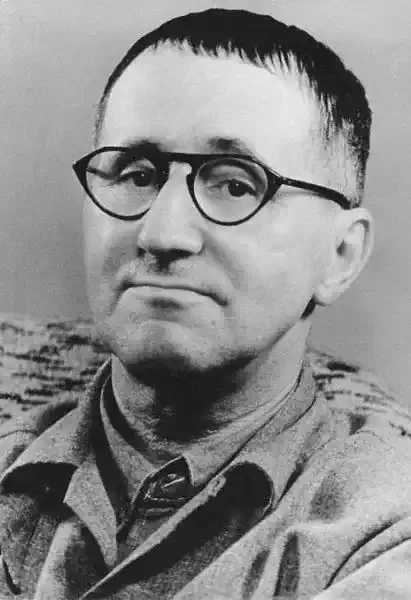
Bertolt Brecht
Solidarity Song
Peoples of the world, together
Join to serve the common cause!
So it feeds us all for ever
See to it that it's now yours.
Forward, without forgetting
Where our strength can be seen now to be!
When starving or when eating
Forward, not forgetting
Our solidarity!
Black or white or brown or yellow
Leave your old disputes behind.
Once start talking with your fellow
Men, you'll soon be of one mind.
Forward, without forgetting
Where our strength can be seen now to be!
When starving or when eating
Forward, not forgetting
Our solidarity!
If we want to make this certain
We'll need you and your support.
It's yourselves you'll be deserting
if you rat your own sort.
Forward, without forgetting
Where our strength can be seen now to be!
When starving or when eating
Forward, not forgetting
Our solidarity!
All the gang of those who rule us
Hope our quarrels never stop
Helping them to split and fool us
So they can remain on top.
Forward, without forgetting
Where our strength can be seen now to be!
When starving or when eating
Forward, not forgetting
Our solidarity!
Workers of the world, uniting
Thats the way to lose your chains.
Mighty regiments now are fighting
That no tyrrany remains!
Forward, without forgetting
Till the concrete question is hurled
When starving or when eating:
Whose tomorrow is tomorrow?
And whose world is the world?
911
Rudyard Kipling
A Servant When He Reigneth
Three things make earth unquiet
And four she cannot brook
The godly Agur counted them
And put them in a book --
Those Four Tremendous Curses
With which mankind is cursed;
But a Servant when He Reigneth
Old Agur entered first.
An Handmaid that is Mistress
We need not call upon.
A Fool when he is full of Meat
Will fall asleep anon.
An Odious Woman Married
May bear a babe and mend;
But a Servant when He Reigneth
Is Confusion to the end.
His feet are swift to tumult,
His hands are slow to toil,
His ears are deaf to reason,
His lips are loud in broil.
He knows no use for power
Except to show his might.
He gives no heed to judgment
Unless it prove him right.
Because he served a master
Before his Kingship came,
And hid in all disaster
Behind his master's name,
So, when his Folly opens
The unnecessary hells,
A Servant when He Reigneth
Throws the blame on some one else.
His vows are lightly spoken,
His faith is hard to bind,
His trust is easy boken,
He fears his fellow-kind.
The nearest mob will move him
To break the pledge he gave --
Oh, a Servant when he Reigneth
Is more than ever slave!
939
Oscar Wilde
The Dole Of The King's Daughter (Breton)
Seven stars in the still water,
And seven in the sky;
Seven sins on the King's daughter,
Deep in her soul to lie.
Red roses are at her feet,
(Roses are red in her red-gold hair)
And O where her bosom and girdle meet
Red roses are hidden there.
Fair is the knight who lieth slain
Amid the rush and reed,
See the lean fishes that are fain
Upon dead men to feed.
Sweet is the page that lieth there,
(Cloth of gold is goodly prey,)
See the black ravens in the air,
Black, O black as the night are they.
What do they there so stark and dead?
(There is blood upon her hand)
Why are the lilies flecked with red?
(There is blood on the river sand.)
There are two that ride from the south and east,
And two from the north and west,
For the black raven a goodly feast,
For the King's daughter rest.
There is one man who loves her true,
(Red, O red, is the stain of gore!)
He hath duggen a grave by the darksome yew,
(One grave will do for four.)
No moon in the still heaven,
In the black water none,
The sins on her soul are seven,
The sin upon his is one.
905
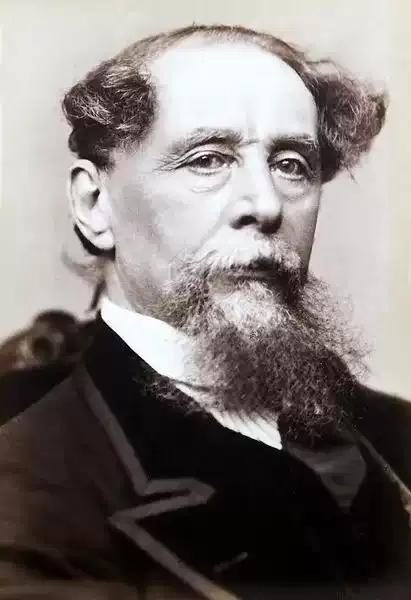
Charles Dickens
A fine Old English Gentleman
I'll sing you a new ballad, and I'll warrant it first-rate,
Of the days of that old gentleman who had that old estate;
When they spent the public money at a bountiful old rate
On ev'ry mistress, pimp, and scamp, at ev'ry noble gate,
In the fine old English Tory times;
Soon may they come again!
The good old laws were garnished well with gibbets, whips, and chains,
With fine old English penalties, and fine old English pains,
With rebel heads, and seas of blood once hot in rebel veins;
For all these things were requisite to guard the rich old gains
Of the fine old English Tory times;
Soon may they come again!
This brave old code, like Argus, had a hundred watchful eyes,
And ev'ry English peasant had his good old English spies,
To tempt his starving discontent with fine old English lies,
Then call the good old Yeomanry to stop his peevish cries,
In the fine old English Tory times;
Soon may they come again!
The good old times for cutting throats that cried out in their need,
The good old times for hunting men who held their fathers' creed,
The good old times when William Pitt, as all good men agreed,
Came down direct from Paradise at more than railroad speed. . . .
Oh the fine old English Tory times;
When will they come again!
In those rare days, the press was seldom known to snarl or bark,
But sweetly sang of men in pow'r, like any tuneful lark;
Grave judges, too, to all their evil deeds were in the dark;
And not a man in twenty score knew how to make his mark.
Oh the fine old English Tory times;
Soon may they come again!
Those were the days for taxes, and for war's infernal din;
For scarcity of bread, that fine old dowagers might win;
For shutting men of letters up, through iron bars to grin,
Because they didn't think the Prince was altogether thin,
In the fine old English Tory times;
Soon may they come again!
But Tolerance, though slow in flight, is strong-wing'd in the main;
That night must come on these fine days, in course of time was plain;
The pure old spirit struggled, but Its struggles were in vain;
A nation's grip was on it, and it died in choking pain,
With the fine old English Tory days,
All of the olden time.
The bright old day now dawns again; the cry runs through the land,
In England there shall be dear bread -- in Ireland, sword and brand;
And poverty, and ignorance, shall swell the rich and grand,
So, rally round the rulers with the gentle iron hand,
Of the fine old English Tory days; Hail to the coming time!
924

Robert Browning
The Lost Leader
I.
Just for a handful of silver he left us,
Just for a riband to stick in his coat---
Found the one gift of which fortune bereft us,
Lost all the others she lets us devote;
They, with the gold to give, doled him out silver,
So much was theirs who so little allowed:
How all our copper had gone for his service!
Rags---were they purple, his heart had been proud!
We that had loved him so, followed him, honoured him,
Lived in his mild and magnificent eye,
Learned his great language, caught his clear accents,
Made him our pattern to live and to die!
Shakespeare was of us, Milton was for us,
Burns, Shelley, were with us,---they watch from their graves!
He alone breaks from the van and the free-men,
---He alone sinks to the rear and the slaves!
II.
We shall march prospering,---not thro' his presence;
Songs may inspirit us,---not from his lyre;
Deeds will be done,---while he boasts his quiescence,
Still bidding crouch whom the rest bade aspire:
Blot out his name, then, record one lost soul more,
One task more declined, one more foot-path untrod,
One more devils'-triumph and sorrow for angels,
One wrong more to man, one more insult to God!
Life's night begins: let him never come back to us!
There would be doubt, hesitation and pain,
Forced praise on our part---the glimmer of twilight,
Never glad confident morning again!
Best fight on well, for we taught him---strike gallantly,
Menace our heart ere we master his own;
Then let him receive the new knowledge and wait us,
Pardoned in heaven, the first by the throne!
925
Oscar Wilde
Sonnet To Liberty
NOT that I love thy children, whose dull eyes
See nothing save their own unlovely woe,
Whose minds know nothing, nothing care to know,--
But that the roar of thy Democracies,
Thy reigns of Terror, thy great Anarchies,
Mirror my wildest passions like the sea,--
And give my rage a brother----! Liberty!
For this sake only do thy dissonant cries
Delight my discreet soul, else might all kings
By bloody knout or treacherous cannonades
Rob nations of their rights inviolate
And I remain unmoved--and yet, and yet,
These Christs that die upon the barricades,
God knows it I am with them, in some things.
903
Oscar Wilde
Louis Napoleon
Eagle of Austerlitz! where were thy wings
When far away upon a barbarous strand,
In fight unequal, by an obscure hand,
Fell the last scion of thy brood of Kings!
Poor boy! thou shalt not flaunt thy cloak of red,
Or ride in state through Paris in the van
Of thy returning legions, but instead
Thy mother France, free and republican,
Shall on thy dead and crownless forehead place
The better laurels of a soldier's crown,
That not dishonoured should thy soul go down
To tell the mighty Sire of thy race
That France hath kissed the mouth of Liberty,
And found it sweeter than his honied bees,
And that the giant wave Democracy
Breaks on the shores where Kings lay couched at ease.
912
William Blake
The Little Vagabond
Dear mother, dear mother, the church is cold,
But the ale-house is healthy and pleasant and warm;
Besides I can tell where I am used well,
Such usage in Heaven will never do well.
But if at the church they would give us some ale,
And a pleasant fire our souls to regale,
We'd sing and we'd pray all the live-long day,
Nor ever once wish from the church to stray.
Then the parson might preach, and drink, and sing,
And we'd be as happy as birds in the spring;
And modest Dame Lurch, who is always at church,
Would not have bandy children, nor fasting, nor birch.
And God, like a father rejoicing to see
His children as pleasant and happy as he,
Would have no more quarrel with the Devil or the barrel,
But kiss him, and give him both drink and apparel.
917