
Ethics and Morality
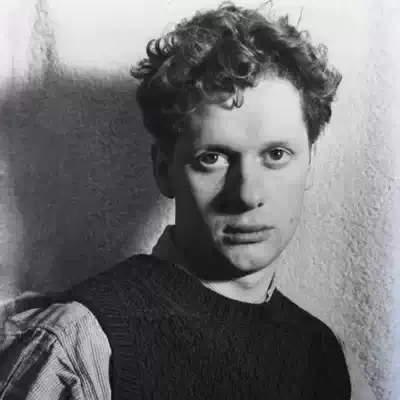
Dylan Thomas
Do Not Go Gentle Into That Good Night
Old age should burn and rave at close of day;
Rage, rage against the dying of the light.
Though wise men at their end know dark is right,
Because their words had forked no lightning they
Do not go gentle into that good night.
Good men, the last wave by, crying how bright
Their frail deeds might have danced in a green bay,
Rage, rage against the dying of the light.
Wild men who caught and sang the sun in flight,
And learn, too late, they grieved it on its way,
Do not go gentle into that good night.
Grave men, near death, who see with blinding sight
Blind eyes could blaze like meteors and be gay,
Rage, rage against the dying of the light.
And you, my father, there on that sad height,
Curse, bless, me now with your fierce tears, I pray.
Do not go gentle into that good night.
Rage, rage against the dying of the light.

Kazi Nazrul Islam
Don't be afraid, O human soul!
The power thrones of today represent devil's affair,
the power-hungry monsters are busy playing there.
Don't be afraid, O human soul! Don't break down in tear!
The drunkard of the underworld won't prevail much longer here.
With injustice and wrongs black-stained is his throne,
his sword is rusted with curse of those under oppression.
Painting the sky dark yellow approaches the monsoon storm in full power,
the greedy ones are beguiled thinking, this is beautiful twilight hour.
The fire they have spread around the world, now in its flame in turn,
like blazing fire, everywhere, these wretcheds will burn.
The traveler of the path of truth! Don't be afraid, don't fear!
Those who seek peace, defeat is not for them, my dear!
Sometimes the enemies of peace win in their disguise,
at the end only in humiliation and shame comes their inevitable demise.
Dusts of the road rise off the ground as wind blows strong,
if you think, they are on the rise, won't that be wrong?
Those who want to ascend above, these trash stand in their way;
they can make the road slippery, but the mud doesn't win the day.
In tranquility, win or defeat, we will treat the same,
if we win, we will dedicate it to His glory and name.
If we lose, we will be greeted by Him in the hereafter,
if we are battle-wounded, we will be His beloved, forever.
Sometimes they will win, but never shall we retreat!
Our Lord tests us - we will take it as His treat.
Does hatred ever bring back those who are lost?
To win their heart, with love first our heart must defrost.
Those who knowingly practice oppression and take away others' right,
it is against them, the sword of God is always ready and upright.
Don't be hard on those who, in ignorance, go astray!
They might return to the truth, if you show love, and pray!
In His one name, invite people of all nation;
Hold sword in hand, while offer your heart with love and affection.
The whole world would be in your favor, if at you His grace flashes;
all the enemies of the truth, you will see, will burn into ashes.
Those whose hearts among us are stained with temptation,
they also deserve discipline, before facing God's condemnation.
March forward, O the new warriors, indomitable!
Prevent our journey and progress? No one would be able!
Let faith and patience be the lasting friends - yours and mine.
On our path, the light of such and of moon will always shine.
Don't be afraid! Have no fear!
Falsehood will definitely disappear!
Truth will triumph, O my dear!
Those who treat the meek with bloody eyes, finished is their share!
This world belongs to people, not to any throne; declare!
Those who disgrace the blessed power from their power-bed,
at the command of the King of kings, they lose their head.
The rule of the ship-owners is ending; it won't be very long,
to the real king of the universe, all the countries will belong.
O blood-eyed vultures, monsters! Beware, beware!
To beguile others and make forget God's command, how do you dare?
We fear one God only; no one else do we fear!
Our guide is the Omnipotent, our Lord so dear!
Sky, earth, moon, planets, and stars are witnesses, I say,
as to who are the followers of truth, and who go astray.
Don't be afraid; have no fear!
Falsehood will surely disappear!
Truth will be triumphant, my dear!
[Original: Bhoy Koriyo Na, He Manobata; Translation: Mohammad Omar Farooq]

Lord Byron
On Jordan's Banks
On Jordan's banks the Arab's camels stray,
On Sion's hill the False One's votaries pray,
The Baaladorer
bows on Sinai's steep Yet
there even
there Oh
God! thy thunders sleep:
There where
thy finger scorch'd the tablet stone!
There where
thy shadow to thy people shone!
Thy glory shrouded in its garb of fire:
Thyself none
living see and not expire!
Oh! in the lightning let thy glance appear;
Sweep from his shiver'd hand the oppressor's spear!
How long by tyrants shall thy land be trod?
How long thy temple worshipless, Oh God?

Ella Wheeler Wilcox
Custer: Book Second
I
Oh, for the power to call to aid, of mine
Own humble Muse, the famed and sacred nine.
Then might she fitly sing, and only then,
Of those intrepid and unflinching men
Who knew no homes save ever moving tents,
And who 'twixt fierce unfriendly elements
And wild barbarians warred. Yet unfraid,
Since love impels thy strains, sing, sing, my modest maid.
II
Relate how Custer in midwinter sought
Far Washita's cold shores; tell why he fought
With savage nomads fortressed in deep snows.
Woman, thou source of half the sad world's woes
And all its joys, what sanguinary strife
Has vexed the earth and made contention rife
Because of thee! For, hidden in man's heart,
Ay, in his very soul, of his true self a part,
III
The natural impulse and the wish belongs
To win thy favor and redress thy wrongs.
Alas! for woman, and for man, alas!
If that dread hour should ever come to pass,
When, through her new-born passion for control,
She drives that beauteous impulse from his soul.
What were her vaunted independence worth
If to obtain she sells her sweetest rights of birth?
IV
God formed fair woman for her true estateMan's
tender comrade, and his equal mate,
Not his competitor in toil and trade.
While coarser man, with greater strength was made
To fight her battles and her rights protect.
Ay! to protect the rights of earth's elect
(The virgin maiden and the spotless wife)
From immemorial time has man laid down his life.
V
And now brave Custer's valiant army pressed
Across the dangerous desert of the West,
To rescue fair white captives from the hands
Of brutal Cheyenne and Comanche bands,
On Washita's bleak banks. Nine hundred strong
It moved its slow determined way along,
Past frontier homes left dark and desolate
By the wild Indians' fierce and unrelenting hate;
VI
Past forts where ranchmen, strong of heart and bold,
Wept now like orphaned children as they told,
With quivering muscles and with anguished breath,
Of captured wives, whose fate was worse than death;
Past naked bodies whose disfiguring wounds
Spoke of the hellish hate of human hounds;
Past bleaching skeleton and rifled grave,
On pressed th' avenging host, to rescue and to save.
VII
Uncertain Nature, like a fickle friend,
(Worse than the foe on whom we may depend)
Turned on these dauntless souls a brow of wrath
And hurled her icy jav'lins in their path.
With treacherous quicksands, and with storms that blight,
Entrapped their footsteps and confused their sight.
'Yet on,' urged Custer, 'on at any cost,
No hour is there to waste, no moment to be lost.'
VIII
Determined, silent, on they rode, and on,
Like fabled Centaurs, men and steeds seemed one.
No bugle echoed and no voice spoke near,
Lest on some lurking Indian's list'ning ear
The sound might fall. Through swift descending snow
The stealthy guides crept, tracing out the foe;
No fire was lighted, and no halt was made
From haggard gray-lipped dawn till night lent friendly shade.
IX
Then, by the shelt'ring river's bank at last,
The weary warriors paused for their repast.
A couch of ice and falling shows for spread
Made many a suffering soldier's chilling bed.
They slept to dream of glory and delight,
While the pale fingers of the pitying night
Wove ghostly winding sheets for that doomed score
Who, ere another eve, should sleep to wake no more.
X
But those who slept not, saw with startled eyes
Far off, athwart dim unprotecting skies,
Ascending slowly with majestic grace,
A lustrous rocket, rising out of space.
'Behold the signal of the foe,' cried one,
The field is lost before the strife's begun.
Yet no! for see! yon rays spread near and far;
It is the day's first smile, the radiant morning star.
XI
The long hours counting till the daylight broke,
In whispered words the restless warriors spoke.
They talked of battles, but they thought of home
(For hearts are faithful though the feet may roam).
Brave Hamilton, all eager for the strife,
Mused o'er that two-fold mystery-death and life;
'And when I die,' quoth he, 'mine be the part
To fall upon the field, a bullet in my heart.'
XII
At break of dawn the scouts crept in to say
The foe was camped a rifle shot away.
The baying of a dog, an infant's cry
Pierced through the air; sleep fled from every eye.
To horse! to arms! the dead demand the dead!
Let the grand charge upon the lodge be led!
Let the Mosaic law, life for a life
Pay the long standing debt of blood. War to the knife!
XIII
So spake each heart in that unholy rage
Which fires the brain, when war the thoughts engage.
War, hideous war, appealing to the worst
In complex man, and waking that wild thirst
For human blood which blood alone can slake.
Yet for their country's safety, and the sake
Of tortured captives moaning in alarm
The Indian must be made to fear the law's strong arm.
XIV
A noble vengeance burned in Custer's breast,
But, as he led his army to the crest,
Above the wigwams, ready for the charge
He felt the heart within him, swelling large
With human pity, as an infant's wail
Shrilled once again above the wintry gale.
Then hosts of murdered children seemed to rise;
And shame his halting thought with sad accusing eyes,
XV
And urge him on to action. Stern of brow
The just avenger, and the General now,
He gives the silent signal to the band
Which, all impatient, waits for his command.
Cold lips to colder metal press; the air
Echoes those merry strains which mean despair
For sleeping chieftain and for toiling squaw,
But joy to those stern hearts which glory in the law
XVI
Of murder paying murder's awful debt.
And now four squadrons in one charge are met.
From east and west, from north and south they come,
At call of bugle and at roll of drum.
Their rifles rain hot hail upon the foe,
Who flee from danger in death's jaws to go.
The Indians fight like maddened bulls at bay,
And dying shriek and groan, wound the young ear of day.
XVII
A pallid captive and a white-browed boy
Add to the tumult piercing cries of joy,
As forth they fly, with high hope animate.
A hideous squaw pursues them with her hate;
Her knife descends with sickening force and sound;
Their bloody entrails stain the snow-clad ground.
She shouts with glee, then yells with rage and falls
Dead by her victims' side, pierced by avenging balls.
XVIII
Now war runs riot, carnage reigns supreme.
All thoughts of mercy fade from Custer's scheme.
Inhuman methods for inhuman foes,
Who feed on horrors and exult in woes.
To conquer and subdue alone remains
In dealing with the red man on the plains.
The breast that knows no conscience yields to fear,
Strike! let the Indian meet his master now and here.
XIX
With thoughts like these was Custer's mind engaged.
The gentlest are the sternest when enraged.
All felt the swift contagion of his ire,
For he was one who could arouse and fire
The coldest heart, so ardent was his own.
His fearless eye, his calm intrepid tone,
Bespoke the leader, strong with conscious power,
Whom following friends will bless, while foes will curse and cower.
XX
Again they charge! and now among the killed
Lies Hamilton, his wish so soon fulfilled,
Brave Elliott pursues across the field
The flying foe, his own young life to yield.
But like the leaves in some autumnal gale
The red men fall in Washita's wild vale.
Each painted face and black befeathered head
Still more repulsive seems with death's grim pallor wed.
XXI
New forces gather on surrounding knolls,
And fierce and fiercer war's red river rolls.
With bright-hued pennants flying from each lance
The gayly costumed Kiowas advance.
And bold Comanches (Bedouins of the land)
Infuse fresh spirit in the Cheyenne band.
While from the ambush of some dark ravine
Flash arrows aimed by hands, unerring and unseen.
XXIII
The hours advance; the storm clouds roll away;
Still furious and more furious grows the fray.
The yellow sun makes ghastlier still the sight
Of painted corpses, staring in its light.
No longer slaves, but comrades of their griefs,
The squaws augment the forces of their chiefs.
They chant weird dirges in a minor key,
While from the narrow door of wigwam and tepee
XXIII
Cold glittering eyes above cold glittering steel
Their deadly purpose and their hate reveal.
The click of pistols and the crack of guns
Proclaim war's daughters dangerous as her sons.
She who would wield the soldier's sword and lance
Must be prepared to take the soldier's chance.
She who would shoot must serve as target, too;
The battle-frenzied men, infuriate now pursue.
XXIV
And blood of warrior, woman and papoose,
Flow free as waters when some dam breaks loose;
Consuming fire, the wanton friend of war
(Whom allies worship and whom foes abhor)
Now trails her crimson garments through the street,
And ruin marks the passing of her feet.
Full three-score lodges smoke upon the plain,
And all the vale is strewn with bodies of the slain.
XXV
And those who are not numbered with the dead
Before all-conquering Custer now are led.
To soothe their woes, and calm their fears he seeks;
An Osage guide interprets while he speaks.
The vanquished captives, humbled, cowed and spent
Read in the victor's eye his kind intent.
The modern victor is as kind as brave;
His captive is his guest, not his insulted slave.
XXVI
Mahwissa, sister of the slaughtered chief
Of all the Cheyennes, listens; and her grief
Yields now to hope; and o'er her withered face
There flits the stealthy cunning of her race.
Then forth she steps, and thus begins to speak:
'To aid the fallen and support the weak
Is man's true province; and to ease the pain
Of those o'er whom it is his purpose now to reign.
XXVII
'Let the strong chief unite with theirs his life,
And take this black-eyed maiden for a wife.'
Then, moving with an air of proud command,
She leads a dusky damsel by the hand,
And places her at wondering Custer's side,
Invoking choicest blessings on the bride
And all unwilling groom, who thus replies.
'Fair is the Indian maid, with bright bewildering eyes,
XXVIII
'But fairer still is one who, year on year,
Has borne man's burdens, conquered woman's fear;
And at my side rode mile on weary mile,
And faced all deaths, all dangers, with a smile,
Wise as Minerva, as Diana brave,
Is she whom generous gods in kindness gave
To share the hardships of my wandering life,
Companion, comrade, friend, my loved and loyal wife.
XXIX
'The white chief weds but one. Take back thy maid.'
He ceased, and o'er Mahwissa's face a shade
Of mingled scorn and pity and surprise
Sweeps as she slow retreats, and thus replies:
'Rich is the pale-faced chief in battle fame,
But poor is he who but one wife may claim.
Wives are the red-skinned heroes' rightful spoil;
In war they prove his strength, in times of peace they toil.'
XXX
But hark! The bugle echoes o'er the plains
And sounds again those merry Celtic strains
Which oft have called light feet to lilting dance,
But now they mean the order to advance.
Along the river's bank, beyond the hill
Two thousand foemen lodge, unconquered still.
Ere falls night's curtain on this bloody play,
The army must proceed, with feint of further fray.
XXXI
The weary warriors mount their foam-flecked steeds,
With flags unfurled the dauntless host proceeds.
What though the foe outnumbers two to one?
Boldness achieves what strength oft leaves undone;
A daring mein will cause brute force to cower,
And courage is the secret source of power.
As Custer's column wheels upon their sight
The frightened red men yield the untried field by flight.
XXXII
Yet when these conquering heroes sink to rest,
Dissatisfaction gnaws the leader's breast,
For far away across vast seas of snows
Held prisoners still by hostile Arapahoes
And Cheyennes unsubdued, two captives wait.
On God and Custer hangs their future fate.
May the Great Spirit nerve the mortal's arm
To rescue suffering souls from worse than death's alarm.
XXXIII
But ere they seek to rescue the oppressed,
The valiant dead, in state, are laid to rest.
Mourned Hamilton, the faithful and the brave,
Nine hundred comrades follow to the grave;
And close behind the banner-hidden corse
All draped in black, walks mournfully his horse;
While tears of sound drip through the sunlit day.
A soldier may not weep, but drums and bugles may.
XXXIV
Now, Muse, recount, how after long delays
And dangerous marches through untrodden ways,
Where cold and hunger on each hour attend,
At last the army gains the journey's end.
An Indian village bursts upon the eye;
Two hundred lodges, sleep-encompassed lie,
There captives moan their anguished prayers through tears,
While in the silent dawn the armied answer nears.
XXXV
To snatch two fragile victims from the foe
Nine hundred men have traversed leagues of snow.
Each woe they suffered in a hostile land
The flame of vengeance in their bosoms fanned.
They thirst for slaughter, and the signal wait
To wrest the captives from their horrid fate.
Each warrior's hand upon his rifle falls,
Each savage soldier's heart for awful bloodshed calls.
XXXVI
And one, in years a youth, in woe a man,
Sad Brewster, scarred by sorrow's blighting ban,
Looks, panting, where his captive sister sleeps,
And o'er his face the shade of murder creeps.
His nostrils quiver like a hungry beast
Who scents anear the bloody carnal feast.
He longs to leap down in that slumbering vale
And leave no foe alive to tell the awful tale.
XXXVII
Not so, calm Custer. Sick of gory strife,
He hopes for rescue with no loss of life;
And plans that bloodless battle of the plains
Where reasoning mind outwits mere savage brains.
The sullen soldiers follow where he leads;
No gun is emptied, and no foeman bleeds.
Fierce for the fight and eager for the fray
They look upon their Chief in undisguised dismay.
XXXVIII
He hears the murmur of their discontent,
But sneers can never change a strong mind's bent.
He knows his purpose and he does not swerve.
And with a quiet mien and steady nerve
He meets dark looks where'er his steps may go,
And silence that is bruising as a blow,
Where late were smiles and words of ardent praise.
So pass the lagging weeks of wearying delays.
XXXIX
Inaction is not always what it seems,
And Custer's mind with plan and project teems.
Fixed in his peaceful purpose he abides
With none takes counsel and in none confides;
But slowly weaves about the foe a net
Which leaves them wholly at his mercy, yet
He strikes no fateful blow; he takes no life,
And holds in check his men, who pant for bloody strife.
XL
Intrepid warrior and skilled diplomate,
In his strong hands he holds the red man's fate.
The craftiest plot he checks with counterplot,
Till tribe by tribe the tricky foe is brought
To fear his vengeance and to know his power.
As man's fixed gaze will make a wild beast cower,
So these crude souls feel that unflinching will
Which draws them by its force, yet does not deign to kill.
XLI
And one by one the hostile Indians send
Their chiefs to seek a peaceful treaty's end.
Great councils follow; skill with cunning copes
And conquers it; and Custer sees his hopes
So long delayed, like stars storm hidden, rise
To radiate with splendor all his skies.
The stubborn Cheyennes, cowed at last by fear,
Leading the captive pair, o'er spring-touched hills appear.
XLII
With breath suspended, now the whole command
Waits the approach of that equestrian band.
Nearer it comes, still nearer, then a cry,
Half sob, half shriek, goes piercing God's blue sky,
And Brewster, like a nimble-footed doe,
Or like an arrow hurrying from a bow,
Shoots swiftly through the intervening space
And that lost sister clasps, in sorrowing love's embrace.
XLIII
And men who leaned o'er Hamilton's rude bier
And saw his dead dear face without a tear,
Strong souls who early learned the manly art
Of keeping from the eye what's in the heart,
Soldiers who look unmoved on death's pale brow,
Avert their eyes, to hide their moisture now.
The briny flood forced back from shores of woe,
Needs but to touch the strands of joy to overflow.
XLIV
About the captives welcoming warriors crowd,
All eyes are wet, and Brewster sobs aloud.
Alas, the ravage wrought by toil and woe
On faces that were fair twelve moons ago.
Bronzed by exposure to the heat and cold,
Still young in years, yet prematurely old,
By insults humbled and by labor worn,
They stand in youth's bright hour, of all youth's graces shorn.
XLV
A scanty garment rudely made of sacks
Hangs from their loins; bright blankets drape their backs;
About their necks are twisted tangled strings
Of gaudy beads, while tinkling wire and rings
Of yellow brass on wrists and fingers glow.
Thus, to assuage the anger of the foe
The cunning Indians decked the captive pair
Who in one year have known a lifetime of despair.
XLVI
But love can resurrect from sorrow's tomb
The vanished beauty and the faded bloom,
As sunlight lifts the bruised flower from the sod,
Can lift crushed hearts to hope, for love is God.
Already now in freedom's glad release
The hunted look of fear gives place to peace,
And in their eyes at thought of home appears
That rainbow light of joy which brightest shines through tears.
XLVII
About the leader thick the warriors crowd;
Late loud in censure, now in praises loud,
They laud the tactics, and the skill extol
Which gained a bloodless yet a glorious goal.
Alone and lonely in the path of right
Full many a brave soul walks. When gods requite
And crown his actions as their worth demands,
Among admiring throngs the hero always stands.
XLVIII
Back to the East the valorous squadrons sweep;
The earth, arousing from her long, cold sleep,
Throws from her breast the coverlet of snow,
Revealing Spring's soft charms which lie below.
Suppressed emotions in each heart arise,
The wooer wakens and the warrior dies.
The bird of prey is vanquished by the dove,
And thoughts of bloody strife give place to thoughts of love.
XLIX
The mighty plains, devoid of whispering trees,
Guard well the secrets of departed seas.
Where once great tides swept by with ebb and flow
The scorching sun looks down in tearless woe.
And fierce tornadoes in ungoverned pain
Mourn still the loss of that mysterious main.
Across this ocean bed the soldiers fly-
Home is the gleaming goal that lures each eager eye.
L
Like some elixir which the gods prepare,
They drink the viewless tonic of the air,
Sweet with the breath of startled antelopes
Which speed before them over swelling slopes.
Now like a serpent writhing o'er the moor,
The column curves and makes a slight detour,
As Custer leads a thousand men away
To save a ground bird's nest which in the footpath lay.
LI
Mile following mile, against the leaning skies
Far off they see a dull dark cloud arise.
The hunter's instinct in each heart is stirred,
Beholding there in one stupendous herd
A hundred thousand buffaloes. Oh great
Unwieldy proof of Nature's cruder state,
Rough remnant of a prehistoric day,
Thou, with the red man, too, must shortly pass away.
LII
Upon those spreading plains is there not room
For man and bison, that he seals its doom?
What pleasure lies and what seductive charm
In slaying with no purpose but to harm?
Alas, that man, unable to create,
Should thirst forever to exterminate,
And in destruction find his fiercest joy.
The gods alone create, gods only should destroy.
LIII
The flying hosts a straggling bull pursue;
Unerring aim, the skillful Custer drew.
The wounded beast turns madly in despair
And man and horse are lifted high in air.
The conscious steed needs not the guiding rein;
Back with a bound and one quick cry of pain
He springs, and halts, well knowing where must fall
In that protected frame, the sure death dealing ball.
LIV
With minds intent upon the morrow's feast,
The men surround the carcass of the beast.
Rolled on his back, he lies with lolling tongue,
Soon to the saddle savory steaks are hung.
And from his mighty head, great tufts of hair
Are cut as trophies for some lady fair.
To vultures then they leave the torn remains
Of what an hour ago was monarch of the plains.
LV
Far off, two bulls in jealous war engage,
Their blood-shot eye balls roll in furious rage;
With maddened hoofs they mutilate the ground
And loud their angry bellowings resound;
With shaggy heads bent low they plunge and roar,
Till both broad bellies drip with purple gore.
Meanwhile, the heifer, whom the twain desire,
Stands browsing near the pair, indifferent to their ire.
LVI
At last she lifts her lazy head and heeds
The clattering hoofs of swift advancing steeds.
Off to the herd with cumb'rous gait she runs
And leaves the bulls to face the threatening guns.
No more for them the free life of the plains,
Its mating pleasures and its warring pains.
Their quivering flesh shall feed unnumbered foes,
Their tufted tails adorn the soldiers' saddle bows.
LVII
Now into camp the conquering hosts advance;
On burnished arms the brilliant sunbeams glance.
Brave Custer leads, blonde as the gods of old;
Back from his brow blow clustering locks of gold,
And, like a jewel in a brook, there lies,
Far in the depths of his blue guarded eyes,
The thought of one whose smiling lips upcurled,
Mean more of joy to him than plaudits of the world.
LVIII
The troops in columns of platoons appear
Close to the leader following. Ah, here
The poetry of war is fully seen,
Its prose forgotten; as against the green
Of Mother Nature, uniformed in blue,
The soldiers pass for Sheridan's review.
The motion-music of the moving throng,
Is like a silent tune, set to a wordless song.
LIX
The guides and trailers, weird in war's array,
Precede the troops along the grassy way.
They chant wild songs, and with loud noise and stress,
In savage manner savage joy express.
The Indian captives, blanketed in red,
On ponies mounted, by the scouts are led.
Like sumach bushes, etched on evening skies,
Against the blue-clad troops, this patch of color lies.
LX
High o'er the scene vast music billows bound,
And all the air is liquid with the sound
Of those invisible compelling waves.
Perchance they reach the low and lonely graves
Where sleep brave Elliott and Hamilton,
And whisper there the tale of victory won;
Or do the souls of soldiers tried and true
Come at the bugle call, and march in grand review?
LXI
The pleased Commander watches in surprise
This splendid pageant surge before his eyes.
Not in those mighty battle days of old
Did scenes like this upon his sight unfold.
But now it passes. Drums and bugles cease
To dash war billows on the shores of Peace.
The victors smile on fair broad bosomed Sleep
While in her soothing arms, the vanquished cease to weep
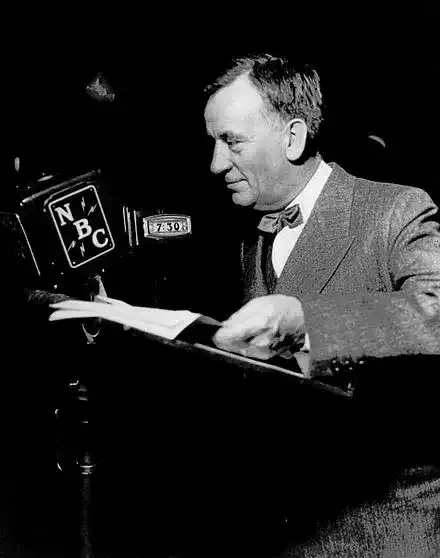
Edgar Albert Guest
A Father's Prayer
Lord, make me tolerant and wise;
Incline my ears to hear him through;
Let him not stand with downcast eyes,
Fearing to trust me and be true.
Instruct me so that I may know
The way my son and I should go.
When he shall err, as once did I,
Or boyhood folly bids him stray,
Let me not into anger fly
And drive the good in him away.
Teach me to win his trust, that he
Shall keep no secret hid from me.
Lord, strengthen me that I may be .
A fit example for my son.
Grant he may never hear or see
A shameful deed that I have done.
However sorely I am tried,
Let me not undermine his pride.
In spite of years and temples gray,
Still let my spirit beat with joy;
Teach me to share in all his play
And be a comrade with my boy.
Wherever we may chance to be,
Let him find happiness with me.
Lord, as his father, now I pray
For manhood's strength and counsel wise;
Let me deal justly, day by day,
In all that fatherhood implies.
To be his father, keep me fit;
Let me not play the hypocrite!

John Greenleaf Whittier
Derne
NIGHT on the city of the Moor!
On mosque and tomb, and white-walled shore,
On sea-waves, to whose ceaseless knock
The narrow harbor gates unlock,
On corsair's galley, carack tall,
And plundered Christian caraval!
The sounds of Moslem life are still;
No mule-bell tinkles down the hill;
Stretched in the broad court of the khan,
The dusty Bornou caravan
Lies heaped in slumber, beast and man;
The Sheik is dreaming in his tent,
His noisy Arab tongue o'erspent;
The kiosk's glimmering lights are gone,
The merchant with his wares withdrawn;
Rough pillowed on some pirate breast,
The dancing-girl has sunk to rest;
And, save where measured footsteps fall
Along the Bashaw's guarded wall,
Or where, like some bad dream, the Jew
Creeps stealthily his quarter through,
Or counts with fear his golden heaps,
The City of the Corsair sleeps!
But where yon prison long and low
Stands black against the pale star-glow,
Chafed by the ceaseless wash of waves,
There watch and pine the Christian slaves;
Rough-bearded men, whose far-off wives
Wear out with grief their lonely lives;
And youth, still flashing from his eyes
The clear blue of New England skies,
A treasured lock of whose soft hair
Now wakes some sorrowing mother's prayer;
Or, worn upon some maiden breast,
Stirs with the loving heart's unrest!
A bitter cup each life must drain,
The groaning earth is cursed with pain,
And, like the scroll the angel bore
The shuddering Hebrew seer before,
O'erwrit alike, without, within,
With all the woes which follow sin;
But, bitterest of the ills beneath
Whose load man totters down to death,
Is that which plucks the regal crown
Of Freedom from his forehead down,
And snatches from his powerless hand
The sceptred sign of self-command,
Effacing with the chain and rod
The image and the seal of God;
Till from his nature, day by day,
The manly virtues fall away,
And leave him naked, blind and mute,
The godlike merging in the brute!
Why mourn the quiet ones who die
Beneath affection's tender eye,
Unto their household and their kin
Like ripened corn-sheaves gathered in?
O weeper, from that tranquil sod,
That holy harvest-home of God,
Turn to the quick and suffering, shed
Thy tears upon the living dead!
Thank God above thy dear ones' graves,
They sleep with Him, they are not slaves.
What dark mass, down the mountain-sides
Swift-pouring, like a stream divides?
A long, loose, straggling caravan,
Camel and horse and armëd man.
The moon's low crescent, glimmering o'er
Its grave of waters to the shore,
Lights up that mountain cavalcade,
And gleams from gun and spear and blade
Near and more near! now o'er them falls
The shadow of the city walls.
Hark to the sentry's challenge, drowned
In the fierce trumpet's charging sound!
The rush of men, the musket's peal,
The short, sharp clang of meeting steel!
Vain, Moslem, vain thy lifeblood poured
So freely on thy foeman's sword!
Not to the swift nor to the strong
The battles of the right belong;
For he who strikes for Freedom wears
The armor of the captive's prayers,
And Nature proffers to his cause
The strength of her eternal laws;
While he whose arm essays to bind
And herd with common brutes his kind
Strives evermore at fearful odds
With Nature and the jealous gods,
And dares the dread recoil which late
Or soon their right shall vindicate.
'T is done, the hornëd crescent falls!
The star-flag flouts the broken walls!
Joy to the captive husband! joy
To thy sick heart, O brown-locked boy!
In sullen wrath the conquered Moor
Wide open flings your dungeon-door,
And leaves ye free from cell and chain,
The owners of yourselves again.
Dark as his allies desert-born,
Soiled with the battle's stain, and worn
With the long marches of his band
Through hottest wastes of rock and sand,
Scorched by the sun and furnace-breath
Of the red desert's wind of death,
With welcome words and grasping hands,
The victor and deliverer stands!
The tale is one of distant skies;
The dust of half a century lies
Upon it; yet its hero's name
Still lingers on the lips of Fame.
Men speak the praise of him who gave
Deliverance to the Moorman's slave,
Yet dare to brand with shame and crime
The heroes of our land and time, —
The self-forgetful ones, who stake
Home, name, and life for Freedom's sake.
God mend his heart who cannot feel
The impulse of a holy zeal,
And sees not, with his sordid eyes,
The beauty of self-sacrifice!
Though in the sacred place he stands,
Uplifting consecrated hands,
Unworthy are his lips to tell
Of Jesus' martyr-miracle,
Or name aright that dread embrace
Of suffering for a fallen race!
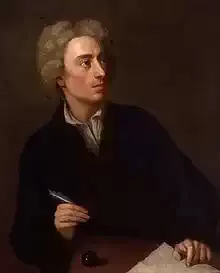
Alexander Pope
With sweeter notes each rising temple rung;
A Raphael painted and a Vida sung;
Immortal Vida! on whose honour'd brow
The poet's bays and critics ivy grow:
Cremona now shall ever boast they name,
As next in place to Mantua, next in fame!
But soon by impious arms from Latium chased,
Their ancient bounds the banish'd Muses pass'd;
Thence arts o'er all the northern world advance,
But critic learning flourish'd most in France;
The rules a nation born to serve obeys,
And Boileau still in right of Horace sways.
But we, brave Britons, foreign laws despised,
And kept unconquer'd and uncivilized;
Fierce for the liberties of wit, and bold,
We still defied the Romans, as of old.
Yet some there were, among the sounder few
Of those who less presumed and better knew,
Who durst assert the juster ancient cause,
And here restor'd WIt's fundamental laws.
Such was the Muse whose rules and practice tell
``Nature's chief masterpiece is writing well.''
Such was Roscommon, not more learn'd than good,
With manners gen'rous as his noble blood;
To him the wit of Greece and Rome was known,
And every author's merit but his own.
Such late was Walsh--the Muse's judge and friend,
Who justly knew to blame or to commend;
To failings mild but zealous for desert,
The clearest head, and the sincerest heart.
This humble praise, lamented Shade! receive;
This praise at least a grateful Muse may give:
The Muse whose early voice you taught to sing,
Prescribed her heights, and pruned her tender wing,
(Her guide now lost), no more attempts to rise,
But in low numbers short excursions tries;
Content if hence th'unlearn'd their wants may view,
The learn'd reflect on what before they knew;
Careless of censure, nor too fond of fame;
Still pleas'd to praise, yet not afraid to blame;
Averse alike to flatter or offend;
Not free from faults, nor yet too vain to mend.

Carl Sandburg
Woman With A Past
There was a woman tore off a red velvet gown
And slashed the white skin of her right shoulder
And a crimson zigzag wrote a finger nail hurry.
There was a woman spoke six short words
And quit a life that was old to her
For a life that was new.
There was a woman swore an oath
And gave hoarse whisper to a prayer
And it was all over.
She was a thief and a whore and a kept woman,
She was a thing to be used and played with.
She wore an ancient scarlet sash.
The story is thin and wavering,
White as a face in the first apple blossoms,
White as a birch in the snow of a winter moon.
The story is never told.
There are white lips whisper alone.
There are red lips whisper alone.
In the cool of the old walls,
In the white of the old walls,
The red song is over.
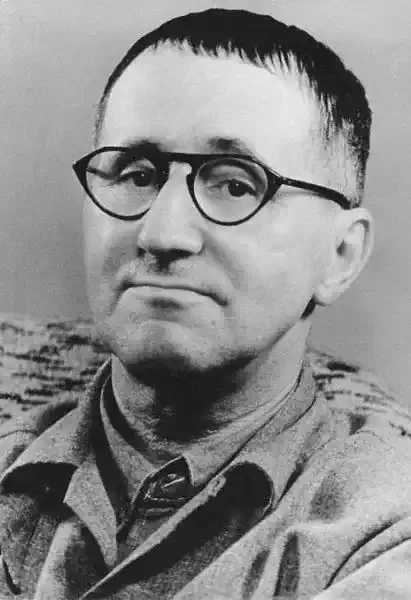
Bertolt Brecht
A Worker Reads History
Who built the seven gates of Thebes?
The books are filled with names of kings.
Was it the kings who hauled the craggy blocks of stone?
And Babylon, so many times destroyed.
Who built the city up each time? In which of Lima's houses,
That city glittering with gold, lived those who built it?
In the evening when the Chinese wall was finished
Where did the masons go? Imperial Rome
Is full of arcs of triumph. Who reared them up? Over whom
Did the Caesars triumph? Byzantium lives in song.
Were all her dwellings palaces? And even in Atlantis of the legend
The night the seas rushed in,
The drowning men still bellowed for their slaves.
Young Alexander conquered India.
He alone?
Caesar beat the Gauls.
Was there not even a cook in his army?
Phillip of Spain wept as his fleet
was sunk and destroyed. Were there no other tears?
Frederick the Greek triumphed in the Seven Years War.
Who triumphed with him?
Each page a victory
At whose expense the victory ball?
Every ten years a great man,
Who paid the piper?
So many particulars.
So many questions.
Kazi Nazrul Islam
Beware My Captain
You have to cross the darkness of the night
A desert vast and a hill of great height,
And an ocean, fathomless and dark.
Travellers, beware and look sharp.
The boat is trembling,
The water is swelling,
The sail is torn asunder,
And the boatman is losing his way,
Who will sit at the helm at this hour?
Who has the courage and the power?
The future calls your,
Come forward, all who are bold and true.
The night is dark, the storm is great,
You must look sharp, there is no time to hesitate.
You must make haste or it would be too late
To ferry the boat across the other side.
The night is dark, Be your own guard.
your, soldiers of the country,
Age old grievances have declared a fight,
The deprived heart is demanding its right.
You must take them along, the poor and the weak,
You must make them strong, no longer mild and meek
You must lead them to victory.
O Captain, my captain,
The helpless nation is going under water,
It does not know how to swim.
I shall watch tonight
Your determination, grim yet bright,
To free the country from slavery.
'Are they Hindus or Muslims? '
Who ask this question, I say.
Tell him, my Captain,
The children of the motherland are drowning today.
Doubts assail the mind of the travelers still,
There is thunder in the sky and danger over the hill.
Captain, will you lose the way
And leave us in the lurch?
You must not waver or sway,
You must carry on the march.
Those who sang the victory of life
With the nose of the gallows round their neck
Come and gather round quietly today.
What price do you pay for that, friends,
What sacrifice do you make?
It is a test, dear Captain,
Do you save the country or the cast at this hour?
The boat is trembling,
The water is swelling,
Beware, my Captain, beware.
[Translation: Kabir Chowdhury]
Kazi Nazrul Islam
Human Being
I sing of equality.
There's nothing greater than a human being,
nothing nobler!
Caste, creed, religion-there's no difference.
Throughout all ages, all places,
we're all a manifestation
of our common humanity.
'O Priest, please open the door!
A hungry god is at your doorstep
it's time for worship.'
Awakened by this dream
the priest rushes to open the temple door
with eager anticipation: His day might have
finally arrive! ! to get rich as a king
from the blessings that this god may bestow upon him.
Instead, there's this traveler-clad in rags, thin,
with a feeble voice, saying: 'Please,
open the door, Father-1 haven't eaten anything
for seven days! '
The priest slams the door on his face!
Turning around to continue on his journey
through the dark night
the hungry traveler says: 'This temple
belongs to the priest, 0 God, not to you! '
At the mosque, the mollah is overjoyed,
by the huge amount of leftovers of,meat and bread
from yesterday's offerings.
Just then a sickly traveler arrives at the door,
saying: 'Father, I have been hungry
for the last seven days! '
The mollah reacts: 'What a botheration!
You're starving? -Just go and dropp dead
in some cattle graveyard!
Besides-do you say your prayers? '
'No, Father,' replied the hungry man.
'That does it-out! ' shouts the mollah
shutting the door on his face,
holding on to the meat and bread.
The hungry man continues on his journey,
saying: 'I have lived for eighty years
without saying a prayer, yet you've never
deprived me of my food. But the mosques
and temples, O Lord-human beings have
no claim on them. Mollahs and priests
have locked all their doors! '
Where are you Chengis, Ghazni Mahmood, Kalapahar?
Smash the locked doors of these houses of worship!
Who dares shutting\the doors of the house of God,
who dares to put locks on them?
Open those doors-strike with your hammers & crowbars!
Oh, the house of worship-selfish, hypocrites
occupy their towers! -
Who are they-hating human beings
yet kissing the Quran, the Vedas, the Bible?
Snatch away those books from them.
The hypocrites pretend worshipping those books
by killing the human beings who have, in fact,
brought those books into existence.
Listen, you ignorants: Human beings
have brought the books,
the books never brought human beings!
Adam, David, Isiah, Moses, Abraham, Mohammad,
Krishna, Buddha, Nanak, Kabir-the treasures
of the world-they are our ancestors.
It's their blood that runs through our veins.
We're their children, kin-we're of the same body.
Who can tell? -Someone among us
may turn out to be like one of them.
Don't laugh, my friend-the self within us
is fathomless and infinite.
Do I-does anyone-know what greatness
may lie within that self?
Perhaps in me lies the Kalki,
and in you, Mehdi or Isiah.
Who knows what is one's limit or the origin!
Who finds what path to follow?
Whom do you hate, brother, whom do you kick?
Perhaps within his heart
resides the ever-awakened God!
Or pernaps he's nobody that important,
great, or of high esteem-but just someone
who's covered with filth, badly wounded and battered,
and burning with sorrow.
Yet, all the holy scriptures and houses of worship
are not as sacred as that one tiny human body!
Perhaps he'll father-in his house will be born
someone yet unmatched in the history of the world,
who'll deliver a message never heard before,
whose great power the world has yet to witness!
Who's he? An untouchable?
Why do you startle? He's not to be despised!
He may turn out to be Harishchandra or Lord Shiva.
Today an untouchable-tomorrow he may become
a supremely revered yogi-emperor.
You'll come to him with offerings, sing his eulogy.
Why do you look down upon a shepherd?
Perhaps he's Krishna in shepherd's disguise!
Don't hate him for being a peasant
he maybe Lord Balaram!
They're all bearers of eternal messages.
Everyday begging men and women
are turned away from the door.
How would I recognize
if Lord Bholanath and Girijaya were among them?
Just to avoid sharing a little of your sumptuous meal
with a beggar, you resort to your doorman-beating up
and chasing away a god!
But all that gets recorded-who knows if you're
ever forgiven by the humiliated goddess.
Friend, you're full of greed
with a blinder of selfishness over your eyes.
Otherwise you'd recognize the god
serving you as a coolie.
You, beast! To appease your hunger, do you want
to go on plundering the god within the human heart,
the nectar churned out of human pain?
Your evil gorge knows what appeases your hunger,
where in your palace is concealed your death-arrow.
Through the ages, your own desires
have dragged you into your death-holes.
[Translation: Sajed Kamal]
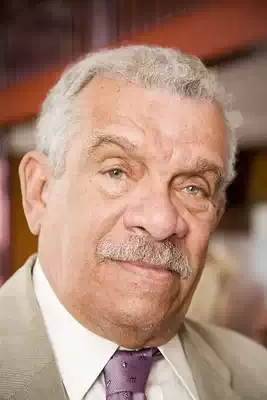
Derek Walcott
A Far Cry From Africa
A wind is ruffling the tawny pelt
Of Africa, Kikuyu, quick as flies,
Batten upon the bloodstreams of the veldt.
Corpses are scattered through a paradise.
Only the worm, colonel of carrion, cries:
'Waste no compassion on these separate dead!'
Statistics justify and scholars seize
The salients of colonial policy.
What is that to the white child hacked in bed?
To savages, expendable as Jews?
Threshed out by beaters, the long rushes break
In a white dust of ibises whose cries
Have wheeled since civilizations dawn
>From the parched river or beast-teeming plain.
The violence of beast on beast is read
As natural law, but upright man
Seeks his divinity by inflicting pain.
Delirious as these worried beasts, his wars
Dance to the tightened carcass of a drum,
While he calls courage still that native dread
Of the white peace contracted by the dead.
Again brutish necessity wipes its hands
Upon the napkin of a dirty cause, again
A waste of our compassion, as with Spain,
The gorilla wrestles with the superman.
I who am poisoned with the blood of both,
Where shall I turn, divided to the vein?
I who have cursed
The drunken officer of British rule, how choose
Between this Africa and the English tongue I love?
Betray them both, or give back what they give?
How can I face such slaughter and be cool?
How can I turn from Africa and live?
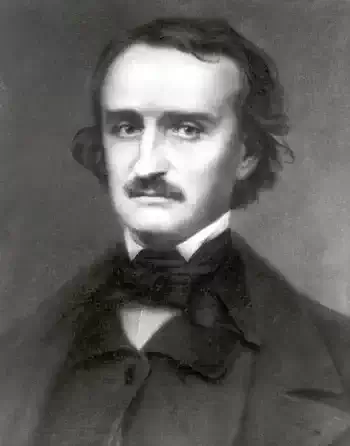
Edgar Allan Poe
Enigma
The hand that traced inexorable rage;
A pleasing moralist whose page refined,
Displays the deepest knowledge of the mind;
A tender poet of a foreign tongue,
(Indited in the language that he sung.)
A bard of brilliant but unlicensed page
At once the shame and glory of our age,
The prince of harmony and stirling sense,
The ancient dramatist of eminence,
The bard that paints imagination's powers,
And him whose song revives departed hours,
Once more an ancient tragic bard recall,
In boldness of design surpassing all.
These names when rightly read, a name [make] known
Which gathers all their glories in its own.
1833
Edgar Albert Guest
The Proof Of Worth
Defeat is the proof of your grit;
A weakling can smile in his days of success,
But at trouble's first sign he will quit.
So the test of the heart and the test of your pluck
Isn't skies that are sunny and fair,
But how do you stand to the blow that is struck
And how do you battle despair?
A fool can seem wise when the pathway is clear
And it's easy to see the way out,
But the test of man's judgment is something to fear,
And what does he do when in doubt?
And the proof of his faith is the courage he shows
When sorrows lie deep in his breast;
It's the way that he suffers the griefs that he knows
That brings out his worst or his best.
The test of a man is how much he will bear
For a cause which he knows to be right,
How long will he stand in the depths of despair,
How much will he suffer and fight?
There are many to serve when the victory's near
And few are the hurts to be borne,
But it calls for a leader of courage to cheer
The men in a battle forlorn.
It's the way you hold out against odds that are great
That proves what your courage is worth,
It's the way that you stand to the bruises of fate
That shows up your stature and girth.
And victory's nothing but proof of your skill,
Veneered with a glory that's thin,
Unless it is proof of unfaltering will,
And unless you have suffered to win.
Kazi Nazrul Islam
Anwar
[A dark prison-house guarded by sentries at Constantinople. Thc mid-night of a new
moon with silence prevailing everywhere, except occasional footsieps of sentries
walking with heavy boots. A young soldier belonging to the National Army under the
command of Anwar is lying captive there. Although rebellious in appearance, he looks
older than his age. Today he has faced a Court Martial. Tomorrow he will be shot dead.
So this is the last night of the luckless warrior fastened by iron chains around his
limbs'. Suddenly he wakes up.Shouting, but finds nobody nearby. Only cold wind
weeps for him, 'O the motherless'! ' The young rebel bites his left arm, loosing temper
as he remembers' the treachery of his countrymen. He remembers his commander,
who gave him the weapons to free his motherland. He shouts loudly calling his
commander, 'ANWAR'.]
Anwar. Anwar.
Valiant as you are,
Drive your sword hard,
Kill them all, and annihilate those beasts
Anwar, alas!
It's but an irony of fate that
the b1ood has no more that warmth and valour,
The shamsir is broken, its scabbard left-over.
Anwar! Anwar!
What makes you cry if everything goes undisturbed?
Look, muslims are pet animals in today's world.
No more, Anwar, no more!
Whose heart does not tremble?
The sword shines no more, Smarna is insignificant, as well.
Lool there tremble the gates of Madina.
No more Anwar, no more. Anwar! Anwar!
Tear the chest apart and bring out the liver,
Kill them all, kill all those coward beasts.
Anwar! are we pigs in chain?
The chain jingles on, and listen,
the fountain of flame is almost extinguished.
Our necks are in shackles, too.
Anwar! Anwar!
Why does the poor fox jump and brag?
Where is that mighty lion? - Anwar is full of wounds.
Anwar! it's really hard to wake up a narrow heart.
It is not least aware of the wild fire that comes all around.
My brother plays the part of a satan, he bribes me with his feast.
Anwar! we are, indeed, in a fix.
Anwar! Anwar!
We are all non-believers, having not even half the heart.
Where do you look for muslims? - they are all wild beasts.
Anwar! everything ends indeed,
Though the blood remains in the veins!
The occident has robbed you of your fake sword. I
t is now womanlike to surrender, weeping,
Anwar, although ends everything.
Anwar! Anwar!
It is useless to repent in this barren land.
Those, who are still living, are maddened animals.
Anwar! none is there. Weapon? - no, nowhere.
The sea is also dreadfully stagnant and dark, having no waves.
Even the beduin has put on shackles around his neck.
Anwar! none is left any more.
Anwar! Anwar!
He who calls him a muslim, drag him by his tongue.
The unfaithful knows only to save his own life.
Anwar, what a pity!
They have beggar's bags on their shoulders,
who learnt the lesson of liberty with the sword in hand.
The intrepid have turned disgusted today.
Anwar, what a pity!
Anwar! Anwar!
The world is now ruled by the killers,
Why then to abide by bloodred eyes! -
Devilry is today's tricks, indeed.
Anwar! hold your fists firm!
They persuade us in vain,
The suffering rebel heart dances in storms,
The blood-eater swords want the war,
Anwar, hold your fist firm.
Anwar! Anwar!
You are a Pasha, now turn a destroyer of muslim beasts,
The home is full of enemies, why do you hit the outsiders?
Come Anwar, O my brother,
I want today end of everything,
Islam, too, sets in; nowhere exists a liberated homeland!
So we have worn the guise of a beggar leaving aside the sword.
Come Anwar, a my brother.
(Suddenly a negro sentry shouted challengingly, 'Get alert, young man', The blood in
young man's vein boiled in agitation, He, too, shouted like a young lion.)
a Khuda! a Ali! Take my sword,
(Then the image of the chained mother-Turkey flashed before his eyes. Beside it the
image of his own mother appealed in the guise of a chained beggar-maid. Eye-corners
of both of them held drops of tears. Shocked as he was, the son turned his face aside
and cried out)
Who is it'? Deprived and deceived'?
No, mother, no,
It's no use afflicting a dead heart with a scar.
Anwar! Anwar!
(The coward sentry again tortured the young captive, who groaned in pain. I firmly
believe with my eyes full of tears, 'Days are near, good days'.)
[Original: Anwar; Translation: Mohammad Nurul Huda]
Kazi Nazrul Islam
Bless us Oh Lord
Bless us Oh Lord, bless us all.
Let other love us and let us love others.
Let there be no hatred or malice or physical pain or mental agony.
Let the earth be another paradise Oh Lord.
Give us the light of knowledge, give us Herculean strength Oh Lord.
We will explore you in the light of knowledge you have
given, you strength will aid our work.
If righteousness by our companion, al fear and sorrow will end.
But if we fail in any danger save us from it Oh Lord.
[Translation: Abu Rushd]
Edgar Albert Guest
On Quitting
How much grit do you think you've got?
Can you quit a thing that you like a lot?
You may talk of pluck; it's an easy word,
And where'er you go it is often heard;
But can you tell to a jot or guess
Just how much courage you now possess?
You may stand to trouble and keep your grin,
But have you tackled self-discipline?
Have you ever issued commands to you
To quit the things that you like to do,
And then, when tempted and sorely swayed,
Those rigid orders have you obeyed?
Don't boast of your grit till you've tried it out,
Nor prate to men of your courage stout,
For it's easy enough to retain a grin
In the face of a fight there's a chance to win,
But the sort of grit that is good to own
Is the stuff you need when you're all alone.
How much grit do you think you've got?
Can you turn from joys that you like a lot?
Have you ever tested yourself to know
How far with yourself your will can go?
If you want to know if you have grit,
Just pick out a joy that you like, and quit.
It's bully sport and it's open fight;
It will keep you busy both day and night;
For the toughest kind of a game you'll find
Is to make your body obey your mind.
And you never will know what is meant by grit
Unless there's something you've tried to quit.
Derek Walcott
A City's Death By Fire
After that hot gospeller has levelled all but the churched sky,
I wrote the tale by tallow of a city's death by fire;
Under a candle's eye, that smoked in tears, I
Wanted to tell, in more than wax, of faiths that were snapped like wire.
All day I walked abroad among the rubbled tales,
Shocked at each wall that stood on the street like a liar;
Loud was the bird-rocked sky, and all the clouds were bales
Torn open by looting, and white, in spite of the fire.
By the smoking sea, where Christ walked, I asked, why
Should a man wax tears, when his wooden world fails?
In town, leaves were paper, but the hills were a flock of faiths;
To a boy who walked all day, each leaf was a green breath
Rebuilding a love I thought was dead as nails,
Blessing the death and the baptism by fire.
Derek Walcott
Blues
Those five or six young guys
lunched on the stoop
that oven-hot summer night
whistled me over. Nice
and friendly. So, I stop.
MacDougal or Christopher
Street in chains of light.
A summer festival. Or some
saint's. I wasn't too far from
home, but not too bright
for a nigger, and not too dark.
I figured we were all
one, wop, nigger, jew,
besides, this wasn't Central Park.
I'm coming on too strong? You figure
right! They beat this yellow nigger
black and blue.
Yeah. During all this, scared
on case one used a knife,
I hung my olive-green, just-bought
sports coat on a fire plug.
I did nothing. They fought
each other, really. Life
gives them a few kcks,
that's all. The spades, the spicks.
My face smashed in, my bloddy mug
pouring, my olive-branch jacket saved
from cuts and tears,
I crawled four flights upstairs.
Sprawled in the gutter, I
remember a few watchers waved
loudly, and one kid's mother shouting
like 'Jackie' or 'Terry,'
'now that's enough!'
It's nothing really.
They don't get enough love.
You know they wouldn't kill
you. Just playing rough,
like young Americans will.
Still it taught me somthing
about love. If it's so tough,
forget it.

Paul Laurence Dunbar
Frederick Douglass
A hush is over all the teeming lists,
And there is pause, a breath-space in the strife;
A spirit brave has passed beyond the mists
And vapors that obscure the sun of life.
And Ethiopia, with bosom torn,
Laments the passing of her noblest born.
She weeps for him a mother's burning tears--
She loved him with a mother's deepest love
He was her champion thro' direful years,
And held her weal all other ends above.
When Bondage held her bleeding in the dust,
He raised her up and whispered, 'Hope and Trust.'
For her his voice, a fearless clarion, rung
That broke in warning on the ears of men;
For her the strong bow of his pow'r he strung
And sent his arrows to the very den
Where grim Oppression held his bloody place
And gloated o'er the mis'ries of a race.
And he was no soft-tongued apologist;
He spoke straight-forward, fearlessly uncowed;
The sunlight of his truth dispelled the mist
And set in bold relief each dark-hued cloud;
To sin and crime he gave their proper hue,
And hurled at evil what was evil's due.
Thro' good and ill report he cleaved his way
Right onward, with his face set toward the heights,
Nor feared to face the foeman's dread array--
The lash of scorn, the sting of petty spites.
He dared the lightning in the lightning's track,
And answered thunder with his thunder back.
When men maligned him and their torrent wrath
In furious imprecations o'er him broke,
He kept his counsel as he kept his path;
'Twas for his race, not for himself, he spoke.
He knew the import of his Master's call
And felt himself too mighty to be small.
No miser in the good he held was he--
His kindness followed his horizon's rim.
His heart, his talents and his hands were free
To all who truly needed aught of him.
Where poverty and ignorance were rife,
He gave his bounty as he gave his life.
The place and cause that first aroused his might
Still proved its pow'r until his latest day.
In Freedom's lists and for the aid of Right
Still in the foremost rank he waged the fray;
Wrong lived; His occupation was not gone.
He died in action with his armor on!
We weep for him, but we have touched his hand,
And felt the magic of his presence nigh,
The current that he sent thro' out the land,
The kindling spirit of his battle-cry
O'er all that holds us we shall triumph yet
And place our banner where his hopes were set!
Oh, Douglass, thou hast passed beyond the shore,
But still thy voice is ringing o'er the gale!
Thou 'st taught thy race how high her hopes may soar
And bade her seek the heights, nor faint, nor fail.
She will not fail, she heeds thy stirring cry,
She knows thy guardian spirit will be nigh,
And rising from beneath the chast'ning rod,
She stretches out her bleeding hands to God!
Lord Byron
The Vision of Judgment
I
Saint Peter sat by the celestial gate:
His keys were rusty, and the lock was dull,
So little trouble had been given of late;
Not that the place by any means was full,
But since the Gallic era 'eighteight'
The devils had ta'en a longer, stronger pull,
And 'a pull altogether,' as they say
At sea — which drew most souls another way.
II
The angels all were singing out of tune,
And hoarse with having little else to do,
Excepting to wind up the sun and moon,
Or curb a runaway young star or two,
Or wild colt of a comet, which too soon
Broke out of bounds o'er th' ethereal blue,
Splitting some planet with its playful tail,
As boats are sometimes by a wanton whale.
III
The guardian seraphs had retired on high,
Finding their charges past all care below;
Terrestrial business fill'd nought in the sky
Save the recording angel's black bureau;
Who found, indeed, the facts to multiply
With such rapidity of vice and woe,
That he had stripp'd off both his wings in quills,
And yet was in arrear of human ills.
IV
His business so augmented of late years,
That he was forced, against his will no doubt,
(Just like those cherubs, earthly ministers,)
For some resource to turn himself about,
And claim the help of his celestial peers,
To aid him ere he should be quite worn out
By the increased demand for his remarks:
Six angels and twelve saints were named his clerks.
V
This was a handsome board — at least for heaven;
And yet they had even then enough to do,
So many conqueror's cars were daily driven,
So many kingdoms fitted up anew;
Each day too slew its thousands six or seven,
Till at the crowning carnage, Waterloo,
They threw their pens down in divine disgust —
The page was so besmear'd with blood and dust.
VI
This by the way: 'tis not mine to record
What angels shrink Wrom: ZAAFXISHJEXXIMQZUIVO
On this occasion his own work abhorr'd,
So surfeited with the infernal revel:
Though he himself had sharpen'd every sword,
It almost quench'd his innate thirst of evil.
(Here Satan's sole good work deserves insertion —
'Tis, that he has both generals in reveration.)
VII
Let's skip a few short years of hollow peace,
Which peopled earth no better, hell as wont,
And heaven none — they form the tyrant's lease,
With nothing but new names subscribed upon't;
'Twill one day finish: meantime they increase,
'With seven heads and ten horns,' and all in front,
Like Saint John's foretold beast; but ours are born
Less formidable in the head than horn.
VIII
In the first year of freedom's second dawn
Died George the Third; although no tyrant, one
Who shielded tyrants, till each sense withdrawn
Left him nor mental nor external sun:
A better farmer ne'er brush'd dew from lawn,
A worse king never left a realm undone!
He died — but left his subjects still behind,
One half as mad — and t'other no less blind.
IX
He died! his death made no great stir on earth:
His burial made some pomp; there was profusion
Of velvet, gilding, brass, and no great dearth
Of aught but tears — save those shed by collusion.
For these things may be bought at their true worth;
Of elegy there was the due infusion —
Bought also; and the torches, cloaks, and banners,
Heralds, and relics of old Gothic manners,
X
Form'd a sepulchral melodrame.
Of all
The fools who flack's to swell or see the show,
Who cared about the corpse? The funeral
Made the attraction, and the black the woe.
There throbbed not there a thought which pierced the pall;
And when the gorgeous coffin was laid low,
It seamed the mockery of hell to fold
The rottenness of eighty years in gold.
XI
So mix his body with the dust! It might
Return to what it must far sooner, were
The natural compound left alone to fight
Its way back into earth, and fire, and air;
But the unnatural balsams merely blight
What nature made him at his birth, as bare
As the mere million's base unmarried clay —
Yet all his spices but prolong decay.
XII
He's dead — and upper earth with him has done;
He's buried; save the undertaker's bill,
Or lapidary scrawl, the world is gone
For him, unless he left a German will:
But where's the proctor who will ask his son?
In whom his qualities are reigning still,
Except that household virtue, most uncommon,
Of constancy to a bad, ugly woman.
XIII
'God save the king!' It is a large economy
In God to save the like; but if he will
Be saving, all the better; for not one am I
Of those who think damnation better still:
I hardly know too if not quite alone am I
In this small hope of bettering future ill
By circumscribing, with some slight restriction,
The eternity of hell's hot jurisdiction.
XIV
I know this is unpopular; I know
'Tis blasphemous; I know one may be damned
For hoping no one else may ever be so;
I know my catechism; I know we're caromed
With the best doctrines till we quite o'erflow;
I know that all save England's church have shamm'd,
And that the other twice two hundred churches
And synagogues have made a damn'd bad purchase.
XV
God help us all! God help me too! I am,
God knows, as helpless as the devil can wish,
And not a whit more difficult to damn,
Than is to bring to land a latehook'd
fish,
Or to the butcher to purvey the lamb;
Not that I'm fit for such a noble dish,
As one day will be that immortal fry
Of almost everybody born to die.
XVI
Saint Peter sat by the celestial gate,
And nodded o'er his keys; when, lo! there came
A wondrous noise he had not heard of late —
A rushing sound of wind, and stream, and flame;
In short, a roar of things extremely great,
Which would have made aught save a saint exclaim;
But he, with first a start and then a wink,
Said, 'There's another star gone out, I think!'
XVII
But ere he could return to his repose,
A cherub flapp'd his right wing o'er his eyes —
At which St. Peter yawn'd, and rubb'd his hose:
'Saint porter,' said the angel, 'prithee rise!'
Waving a goodly wing, which glow'd, as glows
An earthly peacock's tail, with heavenly dyes;
To which the saint replied, 'Well, what's the matter?
'Is Lucifer come back with all this clatter?'
XVIII
'No,' quoth the cherub; 'George the Third is dead.'
'And who is George the Third?' replied the apostle;
'What George? what Third?' 'The king of England,' said
The angel. 'Well, he won't find kings to jostle
Him on his way; but does he wear his head?
Because the last we saw here had a tussle,
And ne'er would have got into heaven's good graces,
Had he not flung his head in all our faces.
XIX
'He was, if I remember, king of France;
That head of his, which could not keep a crown
On earth, yet ventured in my face to advance
A claim to those of martyrs — like my own:
If I had had my sword, as I had once
When I cut ears off, I had cut him down;
But having but my keys, and not my brand,
I only knock'd his head from out his hand.
XX
'And then he set up such a headless howl,
That all the saints came out and took him in;
And there he sits by St. Paul, cheek by jowl;
That fellow Paul— the parvenù! The skin
Of St. Bartholomew, which makes his cowl
In heaven, and upon earth redeem'd his sin,
So as to make a martyr, never sped
Better than did this weak and wooden head.
XXI
'But had it come up here upon its shoulders,
There would have been a different tale to tell;
The fellowfeeling
in the saint's beholders
Seems to have acted on them like a spell,
And so this very foolish head heaven solders
Back on its trunk: it may be very well,
And seems the custom here to overthrow
Whatever has been wisely done below.'
XXII
The angel answer'd, 'Peter! do not pout:
The king who comes has head and all entire,
And never knew much what it was about —
He did as doth the puppet — by its wire,
And will be judged like all the rest, no doubt:
My business and your own is not to inquire
Into such matters, but to mind our cue —
Which is to act as we are bid to do.'
XXIII
While thus they spake, the angelic caravan,
Arriving like a rush of mighty wind,
Cleaving the fields of space, as doth the swan
Some silver stream (say Ganges, Nile, or Inde,
Or Thames, or Tweed), and 'midst them an old man
With an old soul, and both extremely blind,
Halted before the gate, and in his shroud
Seated their fellow traveller on a cloud.
XXIV
But bringing up the rear of this bright host
A Spirit of a different aspect waves
His wings, like thunderclouds
above some coast
Whose barren beach with frequent wrecks is paved;
His brow was like the deep when tempesttoss'd;
Fierce and unfathomable thoughts engraved
Eternal wrath on his immortal face,
And where he gazed a gloom pervaded space.
XXV
As he drew near, he gazed upon the gate
Ne'er to be enter'd more by him or Sin,
With such a glance of supernatural hate,
As made Saint Peter wish himself within;
He potter'd with his keys at a great rate,
And sweated through his apostolic skin:
Of course his perspiration was but ichor,
Or some such other spiritual liquor.
XXIV
The very cherubs huddled all together,
Like birds when soars the falcon; and they felt
A tingling to the top of every feather,
And form'd a circle like Orion's belt
Around their poor old charge; who scarce knew whither
His guards had led him, though they gently dealt
With royal manes (for by many stories,
And true, we learn the angels all are Tories.)
XXVII
As things were in this posture, the gate flew
Asunder, and the flashing of its hinges
Flung over space an universal hue
Of manycolour'd
flame, until its tinges
Reach'd even our speck of earth, and made a new
Aurora borealis spread its fringes
O'er the North Pole; the same seen, when icebound,
By Captain Parry's crew, in 'Melville's Sound.'
XXVIII
And from the gate thrown open issued beaming
A beautiful and mighty Thing of Light,
Radiant with glory, like a banner streaming
Victorious from some worldo'erthrowing
fight:
My poor comparisons must needs be teeming
With earthly likenesses, for here the night
Of clay obscures our best conceptions, saving
Johanna Southcote, or Bob Southey raving.
XXIX
'Twas the archangel Michael; all men know
The make of angels and archangels, since
There's scarce a scribbler has not one to show,
From the fiends' leader to the angels' prince;
There also are some altarpieces,
though
I really can't say that they much evince
One's inner notions of immortal spirits;
But let the connoisseurs explain their merits.
XXX
Michael flew forth in glory and in good;
A goodly work of him from whom all glory
And good arise; the portal past — he stood;
Before him the young cherubs and saints hoary —
(I say young, begging to be understood
By looks, not years; and should be very sorry
To state, they were not older than St. Peter,
But merely that they seem'd a little sweeter.
XXXI
The cherubs and the saints bow'd down before
That archangelic
Hierarch, the first
Of essences angelical, who wore
The aspect of a god; but this ne'er nursed
Pride in his heavenly bosom, in whose core
No thought, save for his Master's service, durst
Intrude, however glorified and high;
He knew him but the viceroy of the sky.
XXXII
He and the sombre, silent Spirit met —
They knew each other both for good and ill;
Such was their power, that neither could forget
His former friend and future foe; but still
There was a high, immortal, proud regret
In either's eye, as if 'twere less their will
Than destiny to make the eternal years
Their date of war, and their 'champ clos' the spheres.
XXXIII
But here they were in neutral space: we know
From Job, that Satan hath the power to pay
A heavenly visit thrice a year or so;
And that the 'sons of God', like those of clay,
Must keep him company; and we might show
From the same book, in how polite a way
The dialogue is held between the Powers
Of Good and Evil — but 'twould take up hours.
XXXIV
And this is not a theologic tract,
To prove with Hebrew and with Arabic,
If Job be allegory or a fact,
But a true narrative; and thus I pick
From out the whole but such and such an act
As sets aside the slightest thought of trick.
'Tis every tittle true, beyond suspicion,
And accurate as any other vision.
XXXV
The spirits were in neutral space, before
The gates of heaven; like eastern thresholds is
The place where Death's grand cause is argued o'er,
And souls despatch'd to that world or to this;
And therefore Michael and the other wore
A civil aspect: though they did not kiss,
Yet still between his Darkness and his Brightness
There pass'd a mutual glance of great politeness.
XXXVI
The Archangel bow'd, not like a modern beau,
But with a graceful Oriental bend,
Pressing one radiant arm just where below
The heart in good men is supposed to tend;
He turn'd as to an equal, not too low,
But kindly; Satan met his ancient friend
With more hauteur, as might an old Castilian
Poor noble meet a mushroom rich civilian.
XXXVII
He merely bent his diabolic brow
An instant; and then raising it, he stood
In act to assert his right or wrong, and show
Cause why King George by no means could or should
Make out a case to be exempt from woe
Eternal, more than other kings, endued
With better sense and hearts, whom history mentions,
Who long have 'paved hell with their good intentions.'
XXXVIII
Michael began: 'What wouldst thou with this man,
Now dead, and brought before the Lord? What ill
Hath he wrought since his mortal race began,
That thou cans't claim him? Speak! and do thy will,
If it be just: if in this earthly span
He hath been greatly failing to fulfil
His duties as a king and mortal, say,
And he is thine; if not, let him have way.'
XXXIX
'Michael!' replied the Prince of Air, 'even here,
Before the Gate of him thou servest, must
I claim my subject: and will make appear
That as he was my worshipper in dust,
So shall he be in spirit, although dear
To thee and thine, because nor wine nor lust
Were of his weaknesses; yet on the throne
He reign'd o'er millions to serve me alone.
XL
'Look to our earth, or rather mine; it was,
Once, more thy master's: but I triumph not
In this poor planet's conquest; nor, alas!
Need he thou servest envy me my lot:
With all the myriads of bright worlds which pass
In worship round him, he may have forgot
Yon weak creation of such paltry things;
I think few worth damnation save their kings, —
XLI
'And these but as a kind of quitrent,
to
Assert my right as lord: and even had
I such an inclination, 'twere (as you
Well know) superfluous; they are grown so bad,
That hell has nothing better left to do
Than leave them to themselves: so much more mad
And evil by their own internal curse,
Heaven cannot make them better, nor I worse.
XLII
'Look to the earth, I said, and say again:
When this old, blind, mad, helpless, weak, poor worm
Began in youth's first bloom and flush to reign,
The world and he both wore a different form,
And must of earth and all the watery plain
Of ocean call'd him king: through many a storm
His isles had floated on the abyss of time;
For the rough virtues chose them for their clime.
XLIII
'He came to his sceptre young: he leaves it old:
Look to the state in which he found his realm,
And left it; and his annals too behold,
How to a minion first he gave the helm;
How grew upon his heart a thirst for gold,
The beggar's vice, which can but overwhelm
The meanest of hearts; and for the rest, but glance
Thine eye along America and France.
XLIV
'Tis true, he was a tool from first to last
(I have the workmen safe); but as a tool
So let him be consumed. From out the past
Of ages, since mankind have known the rule
Of monarchs — from the bloody rolls amass'd
Of sin and slaughter — from the Cæsar's school,
Take the worst pupil; and produce a reign
More drench'd with gore, more cumber'd with the slain.
XLV
'He ever warr'd with freedom and the free:
Nations as men, home subjects, foreign foes,
So that they utter'd the word "Liberty!"
Found George the Third their first opponent. Whose
History was ever stain'd as his will be
With national and individual woes?
I grant his household abstinence; I grant
His neutral virtues, which most monarchs want;
XLVI
'I know he was a constant consort; own
He was a decent sire, and middling lord.
All this is much, and most upon a throne;
As temperance, if at Apicius' board,
Is more than at an anchorite's supper shown.
I grant him all the kindest can accord;
And this was well for him, but not for those
Millions who found him what oppression chose.
XLVII
'The New World shook him off; the Old yet groans
Beneath what he and his prepared, if not
Completed: he leaves heirs on many thrones
To all his vices, without what begot
Compassion for him — his tame virtues; drones
Who sleep, or despots who have not forgot
A lesson which shall be retaught
them, wake
Upon the thrones of earth; but let them quake!
XLVIII
'Five millions of the primitive, who hold
The faith which makes ye great on earth, implored
A part of that vast all they held of old, —
Freedom to worship — not alone your Lord,
Michael, but you, and you, Saint Peter! Cold
Must be your souls, if you have not abhorr'd
The foe to Catholic participation
In all the license of a Christian nation.
XLIX
'True! he allow'd them to pray God; but as
A consequence of prayer, refused the law
Which would have placed them upon the same base
With those who did not hold the saints in awe.'
But here Saint Peter started from his place,
And cried, 'You may the prisoner withdraw:
Ere heaven shall ope her portals to this Guelph,
While I am guard, may I be damn'd myself!
L
'Sooner will I with Cerberus exchange
My office (and his no sinecure)
Than see this royal Bedlam bigot range
The azure fields of heaven, of that be sure!'
'Saint!' replied Satan, 'you do well to avenge
The wrongs he made your satellites endure;
And if to this exchange you should be given,
I'll try to coax our Cerberus up to heaven!'
LI
Here Michael interposed: 'Good saint! and devil!
Pray, not so fast; you both outrun discretion.
Saint Peter! you were wont to be more civil!
Satan! excuse this warmth of his expression,
And condescension to the vulgar's level:
Event saints sometimes forget themselves in session.
Have you got more to say?' — 'No.' — If you please
I'll trouble you to call your witnesses.'
LII
Then Satan turn'd and waved his swarthy hand,
Which stirr'd with its electric qualities
Clouds farther off than we can understand,
Although we find him sometimes in our skies;
Infernal thunder shook both sea and land
In all the planets, and hell's batteries
Let off the artillery, which Milton mentions
As one of Satan's most sublime inventions.
LIII
This was a signal unto such damn'd souls
As have the privilege of their damnation
Extended far beyond the mere controls
Of worlds past, present, or to come; no station
Is theirs particularly in the rolls
Of hell assign'd; but where their inclination
Or business carries them in search of game,
They may range freely — being damn'd the same.
LIV
They're proud of this — as very well they may,
It being a sort of knighthood, or gilt key
Stuck in their loins; or like to an 'entré'
Up the back stairs, or such freemasonry.
I borrow my comparisons from clay,
Being clay myself. Let not those spirits be
Offended with such base low likenesses;
We know their posts are nobler far than these.
LV
When the great signal ran from heaven to hell —
About ten million times the distance reckon'd
From our sun to its earth, as we can tell
How much time it takes up, even to a second,
For every ray that travels to dispel
The fogs of London, through which, dimly beacon'd,
The weathercocks are gilt some thrice a year,
If that the summer is not too severe;
LVI
I say that I can tell — 'twas half a minute;
I know the solar beams take up more time
Ere, pack'd up for their journey, they begin it;
But then their telegraph is less sublime,
And if they ran a race, they would not win it
'Gainst Satan's couriers bound for their own clime.
The sun takes up some years for every ray
To reach its goal — the devil not half a day.
LVII
Upon the verge of space, about the size
Of halfacrown,
a little speck appear'd
(I've seen a something like it in the skies
In the Ægean, ere a squall); it near'd,
And growing bigger, took another guise;
Like an aërial ship it tack'd, and steer'd,
Or was steer'd (I am doubtful of the grammar
Of the last phrase, which makes the stanza stammer; —
LVIII
But take your choice): and then it grew a cloud;
And so it was — a cloud of witnesses.
But such a cloud! No land e'er saw a crowd
Of locusts numerous as the heavens saw these;
They shadow'd with their myriads space; their loud
And varied cries were like those of wild geese
(If nations may be liken'd to a goose),
And realised the phrase of 'hell broke loose.'
LIX
Here crash'd a sturdy oath of stout John Bull,
Who damn'd away his eyes as heretofore:
There Paddy brogued, 'By Jasus!' — 'What's your wull?'
The temperate Scot exclaim'd: the French ghost swore
In certain terms I shan't translate in full,
As the first coachman will; and 'midst the roar,
The voice of Jonathan was heard to express,
'Our president is going to war, I guess.'
LX
Besides there were the Spaniard, Dutch, and Dane;
In short, an universal shoal of shades,
From Otaheite's isle to Salisbury Plain,
Of all climes and professions, years and trades,
Ready to swear against the good king's reign,
Bitter as clubs in cards are against spades:
All summon'd by this grand 'subpoena,' to
Try if kings mayn't be damn'd like me or you.
LXI
When Michael saw this host, he first grew pale,
As angels can; next, like Italian twilight,
He turn'd all colours — as a peacock's tail,
Or sunset streaming through a Gothic skylight
In some old abbey, or a trout not stale,
Or distant lightning on the horizon by night,
Or a fresh rainbow, or a grand review
Of thirty regiments in red, green, and blue.
LXII
Then he address'd himself to Satan: 'Why —
My good old friend, for such I deem you, though
Our different parties make us fight so shy,
I ne'er mistake you for a personal foe;
Our difference is political, and I
Trust that, whatever may occur below,
You know my great respect for you; and this
Makes me regret whate'er you do amiss —
LXIII
'Why, my dear Lucifer, would you abuse
My call for witnesses? I did not mean
That you should half of earth and hell produce;
'Tis even superfluous, since two honest, clean
True testimonies are enough: we lose
Our time, nay, our eternity, between
The accusation and defence: if we
Hear both, 'twill stretch our immortality.'
LXIV
Satan replied, 'To me the matter is
Indifferent, in a personal point of view;
I can have fifty better souls than this
With far less trouble than we have gone through
Already; and I merely argued his
Late majesty of Britain's case with you
Upon a point of form: you may dispose
Of him; I've kings enough below, God knows!'
LXV
Thus spoke the Demon (late call'd 'multifaced'
By multoscribbling
Southey). 'Then we'll call
One or two persons of the myriads placed
Around our congress, and dispense with all
The rest,' quoth Michael: 'Who may be so graced
As to speak first? there's choice enough — who shall
It be?' Then Satan answer'd, 'There are many;
But you may choose Jack Wilkes as well as any.'
LXVI
A merry, cockeyed,
curiouslooking
sprite
Upon the instant started from the throng,
Dress'd in a fashion now forgotten quite;
For all the fashions of the flesh stick long
By people in the next world; where unite
All the costumes since Adam's, right or wrong,
From Eve's figleaf
down to the petticoat,
Almost as scanty, of days less remote.
LXVII
The spirit look'd around upon the crowds
Assembled, and exclaim'd, 'My friends of all
The spheres, we shall catch cold amongst these clouds;
So let's to business: why this general call?
If those are freeholders I see in shrouds,
And 'tis for an election that they bawl,
Behold a candidate with unturn'd coat!
Saint Peter, may I count upon your vote?'
LXVIII
'Sir,' replied Michael, 'you mistake; these things
Are of a former life, and what we do
Above is more august; to judge of kings
Is the tribunal met: so now you know.'
'Then I presume those gentlemen with wings,'
Said Wilkes, 'are cherubs; and that soul below
Looks much like George the Third, but to my mind
A good deal older — Bless me! is he blind?'
LXIX
'He is what you behold him, and his doom
Depends upon his deeds,' the Angel said;
'If you have aught to arraign in him, the tomb
Give licence to the humblest beggar's head
To lift itself against the loftiest.' — 'Some,'
Said Wilkes, 'don't wait to see them laid in lead,
For such a liberty — and I, for one,
Have told them what I though beneath the sun.'
LXX
'Above the sun repeat, then, what thou hast
To urge against him,' said the Archangel. 'Why,'
Replied the spirit, 'since old scores are past,
Must I turn evidence? In faith, not I.
Besides, I beat him hollow at the last,
With all his Lords and Commons: in the sky
I don't like ripping up old stories, since
His conduct was but natural in a prince.
LXXI
'Foolish, no doubt, and wicked, to oppress
A poor unlucky devil without a shilling;
But then I blame the man himself much less
Than Bute and Grafton, and shall be unwilling
To see him punish'd here for their excess,
Since they were both damn'd long ago, and still in
Their place below: for me, I have forgiven,
And vote his "habeas corpus" into heaven.'
LXXII
'Wilkes,' said the Devil, 'I understand all this;
You turn'd to half a courtier ere you died,
And seem to think it would not be amiss
To grow a whole one on the other side
Of Charon's ferry; you forget that his
Reign is concluded; whatso'er betide,
He won't be sovereign more: you've lost your labor,
For at the best he will be but your neighbour.
LXXIII
'However, I knew what to think of it,
When I beheld you in your jesting way,
Flitting and whispering round about the spit
Where Belial, upon duty for the day,
With Fox's lard was basting William Pitt,
His pupil; I knew what to think, I say:
That fellow even in hell breeds farther ills;
I'll have him gagg'd — 'twas one of his own bills.
LXXIV
'Call Junius!' From the crowd a shadow stalk'd,
And at the same there was a general squeeze,
So that the very ghosts no longer walk'd
In comfort, at their own aërial ease,
But were all ramm'd, and jamm'd (but to be balk'd,
As we shall see), and jostled hands and knees,
Like wind compress'd and pent within a bladder,
Or like a human colic, which is sadder.
LXXV
The shadow came — a tall, thin, greyhair'd
figure,
That look'd as it had been a shade on earth;
Quick in it motions, with an air of vigour,
But nought to mar its breeding or its birth;
Now it wax'd little, then again grew bigger,
With now an air of gloom, or savage mirth;
But as you gazed upon its features, they
Changed every instant — to what, none could say.
LXXVI
The more intently the ghosts gazed, the less
Could they distinguish whose the features were;
The Devil himself seem'd puzzled even to guess;
They varied like a dream — now here, now there;
And several people swore from out the press
They knew him perfectly; and one could swear
He was his father: upon which another
Was sure he was his mother's cousin's brother:
LXXVII
Another, that he was a duke, or a knight,
An orator, a lawyer, or a priest,
A nabob, a manmidwife;
but the wight
Mysterious changed his countenance at least
As oft as they their minds; though in full sight
He stood, the puzzle only was increased;
The man was a phantasmagoria in
Himself — he was so volatile and thin.
LXXVIII
The moment that you had pronounce him one,
Presto! his face change'd and he was another;
And when that change was hardly well put on,
It varied, till I don't think his own mother
(If that he had a mother) would her son
Have known, he shifted so from one to t'other;
Till guessing from a pleasure grew a task,
At this epistolary 'Iron Mask.'
LXXIX
For sometimes he like Cerberus would seem —
'Three gentlemen at once' (as sagely says
Good Mrs. Malaprop); then you might deem
That he was not even one; now many rays
Were flashing round him; and now a thick steam
Hid him from sight — like fogs on London days:
Now Burke, now Tooke he grew to people's fancies,
And certes often like Sir Philip Francis.
LXXX
I've an hypothesis — 'tis quite my own;
I never let it out till now, for fear
Of doing people harm about the throne,
And injuring some minister or peer,
On whom the stigma might perhaps be blown;
It is — my gentle public, lend thine ear!
'Tis, that what Junius we are wont to call
Was really, truly, nobody at all.
LXXXI
I don't see wherefore letters should not be
Written without hands, since we daily view
Them written without heads; and books, we see,
Are fill'd as well without the latter too:
And really till we fix on somebody
For certain sure to claim them as his due,
Their author, like the Niger's mouth, will bother
The world to say if there be mouth or author.
LXXXII
'And who and what art thou?' the Archangel said.
'For that you may consult my titlepage,'
Replied this mighty shadow of a shade:
'If I have kept my secret half an age,
I scarce shall tell it now.' — 'Canst thou upbraid,'
Continued Michael, 'George Rex, or allege
Aught further?' Junius answer'd, 'You had better
First ask him for his answer to my letter:
LXXXIII
'My charges upon record will outlast
The brass of both his epitaph and tomb.'
'Repent'st thou not,' said Michael, 'of some past
Exaggeration? something which may doom
Thyself if false, as him if true? Thou wast
Too bitter — is it not so? — in thy gloom
Of passion?' — 'Passion!' cried the phantom dim,
'I loved my country, and I hated him.
LXXXIV
'What I have written, I have written: let
The rest be on his head or mine!' So spoke
Old 'Nominis Umbra'; and while speaking yet,
Away he melted in celestial smoke.
Then Satan said to Michael, 'Don't forget
To call George Washington, and John Horne Tooke,
And Franklin;' — but at this time was heard
A cry for room, though not a phantom stirr'd.
LXXXV
At length with jostling, elbowing, and the aid
Of cherubim appointed to that post,
The devil Asmodeus to the circle made
His way, and look'd as if his journey cost
Some trouble. When his burden down he laid,
'What's this?' cried Michael; 'why, 'tis not a ghost?'
'I know it,' quoth the incubus; 'but he
Shall be one, if you leave the affair to me.
LXXXVI
'Confound the renegado! I have sprain'd
My left wing, he's so heavy; one would think
Some of his works about his neck were chain'd.
But to the point; while hovering o'er the brink
Of Skiddaw (where as usual it still rain'd),
I saw a taper, far below me, wink,
And stooping, caught this fellow at a libel —
No less on history than the Holy Bible.
LXXXVII
'The former is the devil's scripture, and
The latter yours, good Michael: so the affair
Belongs to all of us, you understand.
I snatch'd him up just as you see him there,
And brought him off for sentence out of hand:
I've scarcely been ten minutes in the air —
At least a quarter it can hardly be:
I dare say that his wife is still at tea.'
LXXXVIII
Here Satan said, 'I know this man of old,
And have expected him for some time here;
A sillier fellow you will scarce behold,
Or more conceited in his petty sphere:
But surely it was not worth while to fold
Such trash below your wing, Asmodeus dear:
We had the poor wretch safe (without being bored
With carriage) coming of his own accord.
LXXXIX
'But since he's here, let's see what he has done.'
'Done!' cried Asmodeus, 'he anticipates
The very business you are now upon,
And scribbles as if head clerk to the Fates,
Who knows to what his ribaldry may run,
When such an ass as this, like Balaam's, prates?'
'Let's hear,' quoth Michael, 'what he has to say;
You know we're bound to that in every way.'
XC
Now the bard, glad to get an audience which
By no means oft was his case below,
Began to cough, and hawk, and hem, and pitch
His voice into that awful note of woe
To all unhappy hearers within reach
Of poets when the tide of rhyme's in flow;
But stuck fast with his first hexameter,
Not one of all whose gouty feet would stir.
XCI
But ere the spavin'd dactyls could be spurr'd
Into recitative, in great dismay
Both cherubim and seraphim were heard
To murmur loudly through their long array:
And Michael rose ere he could get a word
Of all his founder'd verses under way.
And cried, 'For God's sake stop, my friend! 'twere best —
Non Di, non homines —you
know the rest.'
XCII
A general bustle spread throughout the throng.
Which seem'd to hold all verse in detestation;
The angels had of course enough of song
When upon service; and the generation
Of ghosts had heard too much in life, not long
Before, to profit by a new occasion;
The monarch, mute till then, exclaim'd, 'What! What!
Pye come again? No more — no more of that!'
XCIII
The tumult grew; an universal cough
Convulsed the skies, as during a debate
When Castlereagh has been up long enough
(Before he was first minister of state,
I mean — the slaves hear now); some cried 'off, off!'
As at a farce; till, grown quite desperate,
The bard Saint Peter pray'd to interpose
(Himself an author) only for his prose.
XCIV
The varlet was not an illfavour'd
knave;
A good deal like a vulture in the face,
With a hook nose and a hawk'd eye, which gave
A smart and sharperlooking
sort of grace
To his whole aspect, which, though rather grave,
Was by no means so ugly as his case;
But that, indeed, was hopeless as can be,
Quite a poetic felony, 'de se.'
XCV
Then Michael blew his trump, and still'd the noise
With one still greater, as is yet the mode
On earth besides; except some grumbling voice,
Which now and then will make a slight inroad
Upon decorous silence, few will twice
Lift up their lungs when fairly overcrow'd;
And now the bard could plead his own bad cause,
With all the attitudes of selfapplause.
XCVI
He said — (I only give the heads) — he said,
He meant no harm in scribbling; 'twas his way
Upon all topics; 'twas, besides, his bread,
Of which he butter'd both sides; 'twould delay
Too long the assembly (he was pleased to dread),
And take up rather more time than a day,
To name his works — he would but cite a few —
'Wat Tyler' — 'Rhymes on Blenheim' — 'Waterloo.'
XCVII
He had written praises of a regicide:
He had written praises of all kings whatever;
He had written for republics far and wide;
And then against them bitterer than ever;
For pantisocracy he once had cried
Aloud, a scheme less moral than 'twas clever;
Then grew a hearty antiJacobin
—
Had turn'd his coat — and would have turn'd his skin.
XCVIII
He had sung against all battles, and again
In their high praise and glory; he had call'd
Reviewing (1)'the ungentle craft,' and then
Become as base a critic as e'er crawl'd —
Fed, paid, and pamper'd by the very men
By whom his muse and morals had been maul'd:
He had written much blank verse, and blanker prose,
And more of both than anybody knows.
XCIX
He had written Wesley's life: — here turning round
To Satan, 'Sir, I'm ready to write yours,
In two octavo volumes, nicely bound,
With notes and preface, all that most allures
The pious purchaser; and there's no ground
For fear, for I can choose my own reviews:
So let me have the proper documents,
That I may add you to my other saints.'
C
Satan bow'd, and was silent. 'Well, if you,
With amiable modesty, decline
My offer, what says Michael? There are few
Whose memoirs could be render'd more divine.
Mine is a pen of all work; not so new
As it once was, but I would make you shine
Like your own trumpet. By the way, my own
Has more of brass in it, and is as well blown.
CI
'But talking about trumpets, here's my Vision!
Now you shall judge, all people; yes, you shall
Judge with my judgment, and by my decision
Be guided who shall enter heaven or fall.
I settle all these things by intuition,
Times present, past, to come, heaven, hell, and all,
Like King Alfonso(2). When I thus see double,
I save the Deity some worlds of trouble.'
CII
He ceased, and drew forth an MS.; and no
Persuasion on the part of devils, saints,
Or angels, now could stop the torrent; so
He read the first three lines of the contents;
But at the fourth, the whole spiritual show
Had vanish'd, with variety of scents,
Ambrosial and sulphureous, as they sprang,
Like lightning, off from his 'melodious twang.' (3)
CIII
Those grand heroics acted as a spell:
The angels stopp'd their ears and plied their pinions;
The devils ran howling, deafen'd, down to hell;
The ghosts fled, gibbering, for their own dominions —
(For 'tis not yet decided where they dwell,
And I leave every man to his opinions);
Michael took refuge in his trump — but, lo!
His teeth were set on edge, he could not blow!
CIV
Saint Peter, who has hitherto been known
For an impetuous saint, upraised his keys,
And at the fifth line knock'd the poet down;
Who fell like Phaeton, but more at ease,
Into his lake, for there he did not drown;
A different web being by the Destinies
Woven for the Laureate's final wreath, whene'er
Reform shall happen either here or there.
CV
He first sank to the bottom like
his works,
But soon rose to the surface — like himself;
For all corrupted things are bouy'd like corks,(4)
By their own rottenness, light as an elf,
Or wisp that flits o'er a morass: he lurks,
It may be, still, like dull books on a shelf,
In his own den, to scrawl some 'Life' or 'Vision,'
As Welborn says — 'the devil turn'd precisian.'
CVI
As for the rest, to come to the conclusion
Of this true dream, the telescope is gone
Which kept my optics free from all delusion,
And show'd me what I in my turn have shown;
All I saw farther, in the last confusion,
Was, that King George slipp'd into heaven for one;
And when the tumult dwindled to a calm,
I left him practising the hundredth psalm.
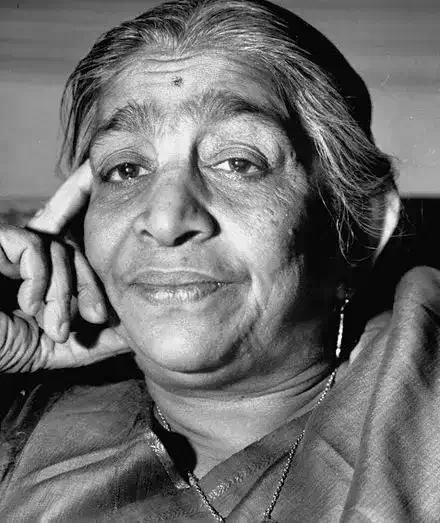
Sarojini Naidu
An Indian Love Song
He
Lift up the veils that darken the delicate moon
of thy glory and grace,
Withhold not, O love, from the night
of my longing the joy of thy luminous face,
Give me a spear of the scented keora
guarding thy pinioned curls,
Or a silken thread from the fringes
that trouble the dream of thy glimmering pearls;
Faint grows my soul with thy tresses' perfume
and the song of thy anklets' caprice,
Revive me, I pray, with the magical nectar
that dwells in the flower of thy kiss.
She
How shall I yield to the voice of thy pleading,
how shall I grant thy prayer,
Or give thee a rose-red silken tassel,
a scented leaf from my hair?
Or fling in the flame of thy heart's desire the veils that cover my face,
Profane the law of my father's creed for a foe
of my father's race?
Thy kinsmen have broken our sacred altars and slaughtered our sacred kine,
The feud of old faiths and the blood of old battles sever thy people and mine.
He
What are the sins of my race, Beloved,
what are my people to thee?
And what are thy shrines, and kine and kindred,
what are thy gods to me?
Love recks not of feuds and bitter follies,
of stranger, comrade or kin,
Alike in his ear sound the temple bells
and the cry of the muezzin.
For Love shall cancel the ancient wrong
and conquer the ancient rage,
Redeem with his tears the memoried sorrow
that sullied a bygone age.
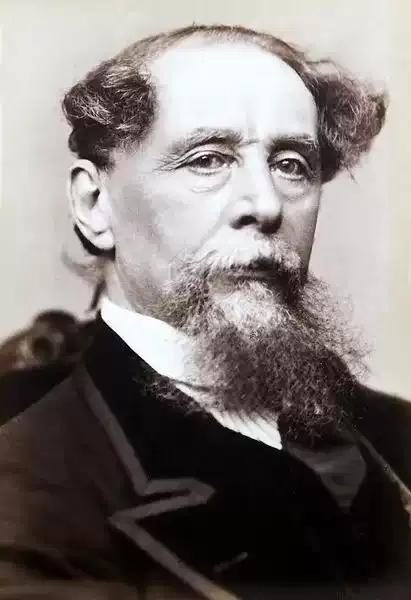
Charles Dickens
A fine Old English Gentleman
I'll sing you a new ballad, and I'll warrant it first-rate,
Of the days of that old gentleman who had that old estate;
When they spent the public money at a bountiful old rate
On ev'ry mistress, pimp, and scamp, at ev'ry noble gate,
In the fine old English Tory times;
Soon may they come again!
The good old laws were garnished well with gibbets, whips, and chains,
With fine old English penalties, and fine old English pains,
With rebel heads, and seas of blood once hot in rebel veins;
For all these things were requisite to guard the rich old gains
Of the fine old English Tory times;
Soon may they come again!
This brave old code, like Argus, had a hundred watchful eyes,
And ev'ry English peasant had his good old English spies,
To tempt his starving discontent with fine old English lies,
Then call the good old Yeomanry to stop his peevish cries,
In the fine old English Tory times;
Soon may they come again!
The good old times for cutting throats that cried out in their need,
The good old times for hunting men who held their fathers' creed,
The good old times when William Pitt, as all good men agreed,
Came down direct from Paradise at more than railroad speed. . . .
Oh the fine old English Tory times;
When will they come again!
In those rare days, the press was seldom known to snarl or bark,
But sweetly sang of men in pow'r, like any tuneful lark;
Grave judges, too, to all their evil deeds were in the dark;
And not a man in twenty score knew how to make his mark.
Oh the fine old English Tory times;
Soon may they come again!
Those were the days for taxes, and for war's infernal din;
For scarcity of bread, that fine old dowagers might win;
For shutting men of letters up, through iron bars to grin,
Because they didn't think the Prince was altogether thin,
In the fine old English Tory times;
Soon may they come again!
But Tolerance, though slow in flight, is strong-wing'd in the main;
That night must come on these fine days, in course of time was plain;
The pure old spirit struggled, but Its struggles were in vain;
A nation's grip was on it, and it died in choking pain,
With the fine old English Tory days,
All of the olden time.
The bright old day now dawns again; the cry runs through the land,
In England there shall be dear bread -- in Ireland, sword and brand;
And poverty, and ignorance, shall swell the rich and grand,
So, rally round the rulers with the gentle iron hand,
Of the fine old English Tory days; Hail to the coming time!
Kazi Nazrul Islam
Eid Mobarak
After the lapse of a year
you have come, Eid,
having crossed many a desert
of hundreds of miles,
having caused many a tear to
be shed on many a sand-field.
You have brought from one of the seven
heavens a present to the door of the hungry,
the bliss of the flower-garden
to the forest of thorns.
And have asked the cup-bearer
to hurry up with the cup of wine.
The hawk-cuckoo sings on all sides,
the bride keeps awake without a
wink in the bridal chamber of midnight!
Flowers weep but where's the
flower vase?
There's no sleep for lover
in the distant land away from home.
He remembers only the smell, akin
to the dry land wetted by rain,
of the loose coiffure of his beloved,
the distracted braid of her hair
being at sixes and sevens!!
Tidings of joy came last evening at
signal from the second day of the moon,
the budding mind is boiling up
with happiness!
The shanai sings unto tune Ashabari.
The stone-hard mind has softened
in the smell of perfume,
minds are mortgaged to each other
today in debt without any document,
without any debt to bother about
Yazid, Hasan and Hussain are
bosom friends today.
Hell and heaven, flowers and fire
all fall for one another,
Shirin and Farhad are in each
other's embrace!
Leili has snake-like embroiled
Qayes in herself.
The lover in the arms of his
beloved closes his eyes in pleasure,
kisses around on cheeks,
the hell of revelry is ablaze,
Satan distributes cups of wine in heaven,
friends and enemies from the same assembly.
The field of Arafat is spread out
Today from village to village,
emperors and fakirs embrace
one another like brothers.
The two figures Lat-Manat hold on to
the Kaaba and dance.
The trumpet of Islam resounds today
through out the world,
there are no high and low - all men are equal,
nobody is another's king or subject.
Who are you, Oh noble man, a
Nawab or Badsha in the upper mansion?
You are a blot on all time; you
have been responsible for raising
doubts about Islam.
Says Islam, we are all for one another,
we are all brothers and shall
share joy and sorrow equally,
none of us has the right to hold.
Is it ordained for some people
to shed tears and for others to
light up the chandeliers!
And just two people to have princely
luck, millions to suffer from bad luck?
That is not the prescription of Islam.
So has Idul-Fitr ushered in the new dispensation,
you who are hoarding up, you should
give away all surplus,
you must have food to satisfy your hunger!
The cup of enjoyment boils over in your hands,
but those who are thirsty have a
share in the cup,
you must, a my hero, give them
and then enjoy profusely.
You must empty your heart and
make a gift of yourself;
you who are very calculating,
do not sit down to calculate!
Rather let your calculation
go wrong for once.
Today the wayward play the
teasing games in their hearts,
today even the ascetic is
reddened by kiss from Sayel and Laila!
Jamshed lives and demands
wine to drink.
Today I shall go about on the
streets crying: Eid-Mobarak,
a my friends, Assalam!
Today I shall distribute from
lip to lip the message of
flowers as sweetmeat for the day.
This is Eid, an occasion
for giving oneself away.
The Eidgah is red with the ardour of my gift!
Not the body but the
heart will give of itself to
everybody and make a martyr of itself.
[(Original: Eid mobarak; Translation: Basudha Chakravarty]