
Ethics and Morality

William Shakespeare
Sonnet 14: Not from the stars do I my judgment pluck
Not from the stars do I my judgment pluck,
And yet methinks I have astronomy;
But not to tell of good or evil luck,
Of plagues, of dearths, or seasons' quality;
Nor can I fortune to brief minutes tell,
Pointing to each his thunder, rain, and wind,
Or say with princes if it shall go well
By oft predict that I in heaven find.
But from thine eyes my knowledge I derive,
And, constant stars, in them I read such art
As truth and beauty shall together thrive
If from thyself to store thou wouldst convert:
Or else of thee this I prognosticate,
Thy end is truth's and beauty's doom and date.
667

John Milton
Paradise Lost: Book 10
Mean while the heinous and despiteful act
Of Satan, done in Paradise; and how
He, in the serpent, had perverted Eve,
Her husband she, to taste the fatal fruit,
Was known in Heaven; for what can 'scape the eye
Of God all-seeing, or deceive his heart
Omniscient? who, in all things wise and just,
Hindered not Satan to attempt the mind
Of Man, with strength entire and free will armed,
Complete to have discovered and repulsed
Whatever wiles of foe or seeming friend.
For still they knew, and ought to have still remembered,
The high injunction, not to taste that fruit,
Whoever tempted; which they not obeying,
(Incurred what could they less?) the penalty;
And, manifold in sin, deserved to fall.
Up into Heaven from Paradise in haste
The angelick guards ascended, mute, and sad,
For Man; for of his state by this they knew,
Much wondering how the subtle Fiend had stolen
Entrance unseen. Soon as the unwelcome news
From Earth arrived at Heaven-gate, displeased
All were who heard; dim sadness did not spare
That time celestial visages, yet, mixed
With pity, violated not their bliss.
About the new-arrived, in multitudes
The ethereal people ran, to hear and know
How all befel: They towards the throne supreme,
Accountable, made haste, to make appear,
With righteous plea, their utmost vigilance
And easily approved; when the Most High
Eternal Father, from his secret cloud,
Amidst in thunder uttered thus his voice.
Assembled Angels, and ye Powers returned
From unsuccessful charge; be not dismayed,
Nor troubled at these tidings from the earth,
Which your sincerest care could not prevent;
Foretold so lately what would come to pass,
When first this tempter crossed the gulf from Hell.
I told ye then he should prevail, and speed
On his bad errand; Man should be seduced,
And flattered out of all, believing lies
Against his Maker; no decree of mine
Concurring to necessitate his fall,
Or touch with lightest moment of impulse
His free will, to her own inclining left
In even scale. But fallen he is; and now
What rests, but that the mortal sentence pass
On his transgression,--death denounced that day?
Which he presumes already vain and void,
Because not yet inflicted, as he feared,
By some immediate stroke; but soon shall find
Forbearance no acquittance, ere day end.
Justice shall not return as bounty scorned.
But whom send I to judge them? whom but thee,
Vicegerent Son? To thee I have transferred
All judgement, whether in Heaven, or Earth, or Hell.
Easy it may be seen that I intend
Mercy colleague with justice, sending thee
Man's friend, his Mediator, his designed
Both ransom and Redeemer voluntary,
And destined Man himself to judge Man fallen.
So spake the Father; and, unfolding bright
Toward the right hand his glory, on the Son
Blazed forth unclouded Deity: He full
Resplendent all his Father manifest
Expressed, and thus divinely answered mild.
Father Eternal, thine is to decree;
Mine, both in Heaven and Earth, to do thy will
Supreme; that thou in me, thy Son beloved,
Mayest ever rest well pleased. I go to judge
On earth these thy transgressours; but thou knowest,
Whoever judged, the worst on me must light,
When time shall be; for so I undertook
Before thee; and, not repenting, this obtain
Of right, that I may mitigate their doom
On me derived; yet I shall temper so
Justice with mercy, as may illustrate most
Them fully satisfied, and thee appease.
Attendance none shall need, nor train, where none
Are to behold the judgement, but the judged,
Those two; the third best absent is condemned,
Convict by flight, and rebel to all law:
Conviction to the serpent none belongs.
Thus saying, from his radiant seat he rose
Of high collateral glory: Him Thrones, and Powers,
Princedoms, and Dominations ministrant,
Accompanied to Heaven-gate; from whence
Eden, and all the coast, in prospect lay.
Down he descended straight; the speed of Gods
Time counts not, though with swiftest minutes winged.
Now was the sun in western cadence low
From noon, and gentle airs, due at their hour,
To fan the earth now waked, and usher in
The evening cool; when he, from wrath more cool,
Came the mild Judge, and Intercessour both,
To sentence Man: The voice of God they heard
Now walking in the garden, by soft winds
Brought to their ears, while day declined; they heard,
And from his presence hid themselves among
The thickest trees, both man and wife; till God,
Approaching, thus to Adam called aloud.
Where art thou, Adam, wont with joy to meet
My coming seen far off? I miss thee here,
Not pleased, thus entertained with solitude,
Where obvious duty ere while appeared unsought:
Or come I less conspicuous, or what change
Absents thee, or what chance detains?--Come forth!
He came; and with him Eve, more loth, though first
To offend; discountenanced both, and discomposed;
Love was not in their looks, either to God,
Or to each other; but apparent guilt,
And shame, and perturbation, and despair,
Anger, and obstinacy, and hate, and guile.
Whence Adam, faltering long, thus answered brief.
I heard thee in the garden, and of thy voice
Afraid, being naked, hid myself. To whom
The gracious Judge without revile replied.
My voice thou oft hast heard, and hast not feared,
But still rejoiced; how is it now become
So dreadful to thee? That thou art naked, who
Hath told thee? Hast thou eaten of the tree,
Whereof I gave thee charge thou shouldst not eat?
To whom thus Adam sore beset replied.
O Heaven! in evil strait this day I stand
Before my Judge; either to undergo
Myself the total crime, or to accuse
My other self, the partner of my life;
Whose failing, while her faith to me remains,
I should conceal, and not expose to blame
By my complaint: but strict necessity
Subdues me, and calamitous constraint;
Lest on my head both sin and punishment,
However insupportable, be all
Devolved; though should I hold my peace, yet thou
Wouldst easily detect what I conceal.--
This Woman, whom thou madest to be my help,
And gavest me as thy perfect gift, so good,
So fit, so acceptable, so divine,
That from her hand I could suspect no ill,
And what she did, whatever in itself,
Her doing seemed to justify the deed;
She gave me of the tree, and I did eat.
To whom the Sovran Presence thus replied.
Was she thy God, that her thou didst obey
Before his voice? or was she made thy guide,
Superiour, or but equal, that to her
Thou didst resign thy manhood, and the place
Wherein God set thee above her made of thee,
And for thee, whose perfection far excelled
Hers in all real dignity? Adorned
She was indeed, and lovely, to attract
Thy love, not thy subjection; and her gifts
Were such, as under government well seemed;
Unseemly to bear rule; which was thy part
And person, hadst thou known thyself aright.
So having said, he thus to Eve in few.
Say, Woman, what is this which thou hast done?
To whom sad Eve, with shame nigh overwhelmed,
Confessing soon, yet not before her Judge
Bold or loquacious, thus abashed replied.
The Serpent me beguiled, and I did eat.
Which when the Lord God heard, without delay
To judgement he proceeded on the accused
Serpent, though brute; unable to transfer
The guilt on him, who made him instrument
Of mischief, and polluted from the end
Of his creation; justly then accursed,
As vitiated in nature: More to know
Concerned not Man, (since he no further knew)
Nor altered his offence; yet God at last
To Satan first in sin his doom applied,
Though in mysterious terms, judged as then best:
And on the Serpent thus his curse let fall.
Because thou hast done this, thou art accursed
Above all cattle, each beast of the field;
Upon thy belly groveling thou shalt go,
And dust shalt eat all the days of thy life.
Between thee and the woman I will put
Enmity, and between thine and her seed;
Her seed shall bruise thy head, thou bruise his heel.
So spake this oracle, then verified
When Jesus, Son of Mary, second Eve,
Saw Satan fall, like lightning, down from Heaven,
Prince of the air; then, rising from his grave
Spoiled Principalities and Powers, triumphed
In open show; and, with ascension bright,
Captivity led captive through the air,
The realm itself of Satan, long usurped;
Whom he shall tread at last under our feet;
Even he, who now foretold his fatal bruise;
And to the Woman thus his sentence turned.
Thy sorrow I will greatly multiply
By thy conception; children thou shalt bring
In sorrow forth; and to thy husband's will
Thine shall submit; he over thee shall rule.
On Adam last thus judgement he pronounced.
Because thou hast hearkened to the voice of thy wife,
And eaten of the tree, concerning which
I charged thee, saying, Thou shalt not eat thereof:
Cursed is the ground for thy sake; thou in sorrow
Shalt eat thereof, all the days of thy life;
Thorns also and thistles it shall bring thee forth
Unbid; and thou shalt eat the herb of the field;
In the sweat of thy face shalt thou eat bread,
Till thou return unto the ground; for thou
Out of the ground wast taken, know thy birth,
For dust thou art, and shalt to dust return.
So judged he Man, both Judge and Saviour sent;
And the instant stroke of death, denounced that day,
Removed far off; then, pitying how they stood
Before him naked to the air, that now
Must suffer change, disdained not to begin
Thenceforth the form of servant to assume;
As when he washed his servants feet; so now,
As father of his family, he clad
Their nakedness with skins of beasts, or slain,
Or as the snake with youthful coat repaid;
And thought not much to clothe his enemies;
Nor he their outward only with the skins
Of beasts, but inward nakedness, much more.
Opprobrious, with his robe of righteousness,
Arraying, covered from his Father's sight.
To him with swift ascent he up returned,
Into his blissful bosom reassumed
In glory, as of old; to him appeased
All, though all-knowing, what had passed with Man
Recounted, mixing intercession sweet.
Mean while, ere thus was sinned and judged on Earth,
Within the gates of Hell sat Sin and Death,
In counterview within the gates, that now
Stood open wide, belching outrageous flame
Far into Chaos, since the Fiend passed through,
Sin opening; who thus now to Death began.
O Son, why sit we here each other viewing
Idly, while Satan, our great author, thrives
In other worlds, and happier seat provides
For us, his offspring dear? It cannot be
But that success attends him; if mishap,
Ere this he had returned, with fury driven
By his avengers; since no place like this
Can fit his punishment, or their revenge.
Methinks I feel new strength within me rise,
Wings growing, and dominion given me large
Beyond this deep; whatever draws me on,
Or sympathy, or some connatural force,
Powerful at greatest distance to unite,
With secret amity, things of like kind,
By secretest conveyance. Thou, my shade
Inseparable, must with me along;
For Death from Sin no power can separate.
But, lest the difficulty of passing back
Stay his return perhaps over this gulf
Impassable, impervious; let us try
Adventurous work, yet to thy power and mine
Not unagreeable, to found a path
Over this main from Hell to that new world,
Where Satan now prevails; a monument
Of merit high to all the infernal host,
Easing their passage hence, for intercourse,
Or transmigration, as their lot shall lead.
Nor can I miss the way, so strongly drawn
By this new-felt attraction and instinct.
Whom thus the meager Shadow answered soon.
Go, whither Fate, and inclination strong,
Leads thee; I shall not lag behind, nor err
The way, thou leading; such a scent I draw
Of carnage, prey innumerable, and taste
The savour of death from all things there that live:
Nor shall I to the work thou enterprisest
Be wanting, but afford thee equal aid.
So saying, with delight he snuffed the smell
Of mortal change on earth. As when a flock
Of ravenous fowl, though many a league remote,
Against the day of battle, to a field,
Where armies lie encamped, come flying, lured
With scent of living carcasses designed
For death, the following day, in bloody fight:
So scented the grim Feature, and upturned
His nostril wide into the murky air;
Sagacious of his quarry from so far.
Then both from out Hell-gates, into the waste
Wide anarchy of Chaos, damp and dark,
Flew diverse; and with power (their power was great)
Hovering upon the waters, what they met
Solid or slimy, as in raging sea
Tost up and down, together crouded drove,
From each side shoaling towards the mouth of Hell;
As when two polar winds, blowing adverse
Upon the Cronian sea, together drive
Mountains of ice, that stop the imagined way
Beyond Petsora eastward, to the rich
Cathaian coast. The aggregated soil
Death with his mace petrifick, cold and dry,
As with a trident, smote; and fixed as firm
As Delos, floating once; the rest his look
Bound with Gorgonian rigour not to move;
And with Asphaltick slime, broad as the gate,
Deep to the roots of Hell the gathered beach
They fastened, and the mole immense wrought on
Over the foaming deep high-arched, a bridge
Of length prodigious, joining to the wall
Immoveable of this now fenceless world,
Forfeit to Death; from hence a passage broad,
Smooth, easy, inoffensive, down to Hell.
So, if great things to small may be compared,
Xerxes, the liberty of Greece to yoke,
From Susa, his Memnonian palace high,
Came to the sea: and, over Hellespont
Bridging his way, Europe with Asia joined,
And scourged with many a stroke the indignant waves.
Now had they brought the work by wonderous art
Pontifical, a ridge of pendant rock,
Over the vexed abyss, following the track
Of Satan to the self-same place where he
First lighted from his wing, and landed safe
From out of Chaos, to the outside bare
Of this round world: With pins of adamant
And chains they made all fast, too fast they made
And durable! And now in little space
The confines met of empyrean Heaven,
And of this World; and, on the left hand, Hell
With long reach interposed; three several ways
In sight, to each of these three places led.
And now their way to Earth they had descried,
To Paradise first tending; when, behold!
Satan, in likeness of an Angel bright,
Betwixt the Centaur and the Scorpion steering
His zenith, while the sun in Aries rose:
Disguised he came; but those his children dear
Their parent soon discerned, though in disguise.
He, after Eve seduced, unminded slunk
Into the wood fast by; and, changing shape,
To observe the sequel, saw his guileful act
By Eve, though all unweeting, seconded
Upon her husband; saw their shame that sought
Vain covertures; but when he saw descend
The Son of God to judge them, terrified
He fled; not hoping to escape, but shun
The present; fearing, guilty, what his wrath
Might suddenly inflict; that past, returned
By night, and listening where the hapless pair
Sat in their sad discourse, and various plaint,
Thence gathered his own doom; which understood
Not instant, but of future time, with joy
And tidings fraught, to Hell he now returned;
And at the brink of Chaos, near the foot
Of this new wonderous pontifice, unhoped
Met, who to meet him came, his offspring dear.
Great joy was at their meeting, and at sight
Of that stupendious bridge his joy encreased.
Long he admiring stood, till Sin, his fair
Enchanting daughter, thus the silence broke.
O Parent, these are thy magnifick deeds,
Thy trophies! which thou viewest as not thine own;
Thou art their author, and prime architect:
For I no sooner in my heart divined,
My heart, which by a secret harmony
Still moves with thine, joined in connexion sweet,
That thou on earth hadst prospered, which thy looks
Now also evidence, but straight I felt,
Though distant from thee worlds between, yet felt,
That I must after thee, with this thy son;
Such fatal consequence unites us three!
Hell could no longer hold us in our bounds,
Nor this unvoyageable gulf obscure
Detain from following thy illustrious track.
Thou hast achieved our liberty, confined
Within Hell-gates till now; thou us impowered
To fortify thus far, and overlay,
With this portentous bridge, the dark abyss.
Thine now is all this world; thy virtue hath won
What thy hands builded not; thy wisdom gained
With odds what war hath lost, and fully avenged
Our foil in Heaven; here thou shalt monarch reign,
There didst not; there let him still victor sway,
As battle hath adjudged; from this new world
Retiring, by his own doom alienated;
And henceforth monarchy with thee divide
Of all things, parted by the empyreal bounds,
His quadrature, from thy orbicular world;
Or try thee now more dangerous to his throne.
Whom thus the Prince of darkness answered glad.
Fair Daughter, and thou Son and Grandchild both;
High proof ye now have given to be the race
Of Satan (for I glory in the name,
Antagonist of Heaven's Almighty King,)
Amply have merited of me, of all
The infernal empire, that so near Heaven's door
Triumphal with triumphal act have met,
Mine, with this glorious work; and made one realm,
Hell and this world, one realm, one continent
Of easy thorough-fare. Therefore, while I
Descend through darkness, on your road with ease,
To my associate Powers, them to acquaint
With these successes, and with them rejoice;
You two this way, among these numerous orbs,
All yours, right down to Paradise descend;
There dwell, and reign in bliss; thence on the earth
Dominion exercise and in the air,
Chiefly on Man, sole lord of all declared;
Him first make sure your thrall, and lastly kill.
My substitutes I send ye, and create
Plenipotent on earth, of matchless might
Issuing from me: on your joint vigour now
My hold of this new kingdom all depends,
Through Sin to Death exposed by my exploit.
If your joint power prevail, the affairs of Hell
No detriment need fear; go, and be strong!
So saying he dismissed them; they with speed
Their course through thickest constellations held,
Spreading their bane; the blasted stars looked wan,
And planets, planet-struck, real eclipse
Then suffered. The other way Satan went down
The causey to Hell-gate: On either side
Disparted Chaos overbuilt exclaimed,
And with rebounding surge the bars assailed,
That scorned his indignation: Through the gate,
Wide open and unguarded, Satan passed,
And all about found desolate; for those,
Appointed to sit there, had left their charge,
Flown to the upper world; the rest were all
Far to the inland retired, about the walls
Of Pandemonium; city and proud seat
Of Lucifer, so by allusion called
Of that bright star to Satan paragoned;
There kept their watch the legions, while the Grand
In council sat, solicitous what chance
Might intercept their emperour sent; so he
Departing gave command, and they observed.
As when the Tartar from his Russian foe,
By Astracan, over the snowy plains,
Retires; or Bactrin Sophi, from the horns
Of Turkish crescent, leaves all waste beyond
The realm of Aladule, in his retreat
To Tauris or Casbeen: So these, the late
Heaven-banished host, left desart utmost Hell
Many a dark league, reduced in careful watch
Round their metropolis; and now expecting
Each hour their great adventurer, from the search
Of foreign worlds: He through the midst unmarked,
In show plebeian Angel militant
Of lowest order, passed; and from the door
Of that Plutonian hall, invisible
Ascended his high throne; which, under state
Of richest texture spread, at the upper end
Was placed in regal lustre. Down a while
He sat, and round about him saw unseen:
At last, as from a cloud, his fulgent head
And shape star-bright appeared, or brighter; clad
With what permissive glory since his fall
Was left him, or false glitter: All amazed
At that so sudden blaze the Stygian throng
Bent their aspect, and whom they wished beheld,
Their mighty Chief returned: loud was the acclaim:
Forth rushed in haste the great consulting peers,
Raised from their dark Divan, and with like joy
Congratulant approached him; who with hand
Silence, and with these words attention, won.
Thrones, Dominations, Princedoms, Virtues, Powers;
For in possession such, not only of right,
I call ye, and declare ye now; returned
Successful beyond hope, to lead ye forth
Triumphant out of this infernal pit
Abominable, accursed, the house of woe,
And dungeon of our tyrant: Now possess,
As Lords, a spacious world, to our native Heaven
Little inferiour, by my adventure hard
With peril great achieved. Long were to tell
What I have done; what suffered;with what pain
Voyaged th' unreal, vast, unbounded deep
Of horrible confusion; over which
By Sin and Death a broad way now is paved,
To expedite your glorious march; but I
Toiled out my uncouth passage, forced to ride
The untractable abyss, plunged in the womb
Of unoriginal Night and Chaos wild;
That, jealous of their secrets, fiercely opposed
My journey strange, with clamorous uproar
Protesting Fate supreme; thence how I found
The new created world, which fame in Heaven
Long had foretold, a fabrick wonderful
Of absolute perfection! therein Man
Placed in a Paradise, by our exile
Made happy: Him by fraud I have seduced
From his Creator; and, the more to encrease
Your wonder, with an apple; he, thereat
Offended, worth your laughter! hath given up
Both his beloved Man, and all his world,
To Sin and Death a prey, and so to us,
Without our hazard, labour, or alarm;
To range in, and to dwell, and over Man
To rule, as over all he should have ruled.
True is, me also he hath judged, or rather
Me not, but the brute serpent in whose shape
Man I deceived: that which to me belongs,
Is enmity which he will put between
Me and mankind; I am to bruise his heel;
His seed, when is not set, shall bruise my head:
A world who would not purchase with a bruise,
Or much more grievous pain?--Ye have the account
Of my performance: What remains, ye Gods,
But up, and enter now into full bliss?
So having said, a while he stood, expecting
Their universal shout, and high applause,
To fill his ear; when, contrary, he hears
On all sides, from innumerable tongues,
A dismal universal hiss, the sound
Of publick scorn; he wondered, but not long
Had leisure, wondering at himself now more,
His visage drawn he felt to sharp and spare;
His arms clung to his ribs; his legs entwining
Each other, till supplanted down he fell
A monstrous serpent on his belly prone,
Reluctant, but in vain; a greater power
Now ruled him, punished in the shape he sinned,
According to his doom: he would have spoke,
But hiss for hiss returned with forked tongue
To forked tongue; for now were all transformed
Alike, to serpents all, as accessories
To his bold riot: Dreadful was the din
Of hissing through the hall, thick swarming now
With complicated monsters head and tail,
Scorpion, and Asp, and Amphisbaena dire,
Cerastes horned, Hydrus, and Elops drear,
And Dipsas; (not so thick swarmed once the soil
Bedropt with blood of Gorgon, or the isle
Ophiusa,) but still greatest he the midst,
Now Dragon grown, larger than whom the sun
Ingendered in the Pythian vale or slime,
Huge Python, and his power no less he seemed
Above the rest still to retain; they all
Him followed, issuing forth to the open field,
Where all yet left of that revolted rout,
Heaven-fallen, in station stood or just array;
Sublime with expectation when to see
In triumph issuing forth their glorious Chief;
They saw, but other sight instead! a croud
Of ugly serpents; horrour on them fell,
And horrid sympathy; for, what they saw,
They felt themselves, now changing; down their arms,
Down fell both spear and shield; down they as fast;
And the dire hiss renewed, and the dire form
Catched, by contagion; like in punishment,
As in their crime. Thus was the applause they meant,
Turned to exploding hiss, triumph to shame
Cast on themselves from their own mouths. There stood
A grove hard by, sprung up with this their change,
His will who reigns above, to aggravate
Their penance, laden with fair fruit, like that
Which grew in Paradise, the bait of Eve
Used by the Tempter: on that prospect strange
Their earnest eyes they fixed, imagining
For one forbidden tree a multitude
Now risen, to work them further woe or shame;
Yet, parched with scalding thirst and hunger fierce,
Though to delude them sent, could not abstain;
But on they rolled in heaps, and, up the trees
Climbing, sat thicker than the snaky locks
That curled Megaera: greedily they plucked
The fruitage fair to sight, like that which grew
Near that bituminous lake where Sodom flamed;
This more delusive, not the touch, but taste
Deceived; they, fondly thinking to allay
Their appetite with gust, instead of fruit
Chewed bitter ashes, which the offended taste
With spattering noise rejected: oft they assayed,
Hunger and thirst constraining; drugged as oft,
With hatefullest disrelish writhed their jaws,
With soot and cinders filled; so oft they fell
Into the same illusion, not as Man
Whom they triumphed once lapsed. Thus were they plagued
And worn with famine, long and ceaseless hiss,
Till their lost shape, permitted, they resumed;
Yearly enjoined, some say, to undergo,
This annual humbling certain numbered days,
To dash their pride, and joy, for Man seduced.
However, some tradition they dispersed
Among the Heathen, of their purchase got,
And fabled how the Serpent, whom they called
Ophion, with Eurynome, the wide--
Encroaching Eve perhaps, had first the rule
Of high Olympus; thence by Saturn driven
And Ops, ere yet Dictaean Jove was born.
Mean while in Paradise the hellish pair
Too soon arrived; Sin, there in power before,
Once actual; now in body, and to dwell
Habitual habitant; behind her Death,
Close following pace for pace, not mounted yet
On his pale horse: to whom Sin thus began.
Second of Satan sprung, all-conquering Death!
What thinkest thou of our empire now, though earned
With travel difficult, not better far
Than still at Hell's dark threshold to have sat watch,
Unnamed, undreaded, and thyself half starved?
Whom thus the Sin-born monster answered soon.
To me, who with eternal famine pine,
Alike is Hell, or Paradise, or Heaven;
There best, where most with ravine I may meet;
Which here, though plenteous, all too little seems
To stuff this maw, this vast unhide-bound corps.
To whom the incestuous mother thus replied.
Thou therefore on these herbs, and fruits, and flowers,
Feed first; on each beast next, and fish, and fowl;
No homely morsels! and, whatever thing
The sithe of Time mows down, devour unspared;
Till I, in Man residing, through the race,
His thoughts, his looks, words, actions, all infect;
And season him thy last and sweetest prey.
This said, they both betook them several ways,
Both to destroy, or unimmortal make
All kinds, and for destruction to mature
Sooner or later; which the Almighty seeing,
From his transcendent seat the Saints among,
To those bright Orders uttered thus his voice.
See, with what heat these dogs of Hell advance
To waste and havock yonder world, which I
So fair and good created; and had still
Kept in that state, had not the folly of Man
Let in these wasteful furies, who impute
Folly to me; so doth the Prince of Hell
And his adherents, that with so much ease
I suffer them to enter and possess
A place so heavenly; and, conniving, seem
To gratify my scornful enemies,
That laugh, as if, transported with some fit
Of passion, I to them had quitted all,
At random yielded up to their misrule;
And know not that I called, and drew them thither,
My Hell-hounds, to lick up the draff and filth
Which Man's polluting sin with taint hath shed
On what was pure; til, crammed and gorged, nigh burst
With sucked and glutted offal, at one sling
Of thy victorious arm, well-pleasing Son,
Both Sin, and Death, and yawning Grave, at last,
Through Chaos hurled, obstruct the mouth of Hell
For ever, and seal up his ravenous jaws.
Then Heaven and Earth renewed shall be made pure
To sanctity, that shall receive no stain:
Till then, the curse pronounced on both precedes.
He ended, and the heavenly audience loud
Sung Halleluiah, as the sound of seas,
Through multitude that sung: Just are thy ways,
Righteous are thy decrees on all thy works;
Who can extenuate thee? Next, to the Son,
Destined Restorer of mankind, by whom
New Heaven and Earth shall to the ages rise,
Or down from Heaven descend.--Such was their song;
While the Creator, calling forth by name
His mighty Angels, gave them several charge,
As sorted best with present things. The sun
Had first his precept so to move, so shine,
As might affect the earth with cold and heat
Scarce tolerable; and from the north to call
Decrepit winter; from the south to bring
Solstitial summer's heat. To the blanc moon
Her office they prescribed; to the other five
Their planetary motions, and aspects,
In sextile, square, and trine, and opposite,
Of noxious efficacy, and when to join
In synod unbenign; and taught the fixed
Their influence malignant when to shower,
Which of them rising with the sun, or falling,
Should prove tempestuous: To the winds they set
Their corners, when with bluster to confound
Sea, air, and shore; the thunder when to roll
With terrour through the dark aereal hall.
Some say, he bid his Angels turn ascanse
The poles of earth, twice ten degrees and more,
From the sun's axle; they with labour pushed
Oblique the centrick globe: Some say, the sun
Was bid turn reins from the equinoctial road
Like distant breadth to Taurus with the seven
Atlantick Sisters, and the Spartan Twins,
Up to the Tropick Crab: thence down amain
By Leo, and the Virgin, and the Scales,
As deep as Capricorn; to bring in change
Of seasons to each clime; else had the spring
Perpetual smiled on earth with vernant flowers,
Equal in days and nights, except to those
Beyond the polar circles; to them day
Had unbenighted shone, while the low sun,
To recompense his distance, in their sight
Had rounded still the horizon, and not known
Or east or west; which had forbid the snow
From cold Estotiland, and south as far
Beneath Magellan. At that tasted fruit
The sun, as from Thyestean banquet, turned
His course intended; else, how had the world
Inhabited, though sinless, more than now,
Avoided pinching cold and scorching heat?
These changes in the Heavens, though slow, produced
Like change on sea and land; sideral blast,
Vapour, and mist, and exhalation hot,
Corrupt and pestilent: Now from the north
Of Norumbega, and the Samoed shore,
Bursting their brazen dungeon, armed with ice,
And snow, and hail, and stormy gust and flaw,
Boreas, and Caecias, and Argestes loud,
And Thrascias, rend the woods, and seas upturn;
With adverse blast upturns them from the south
Notus, and Afer black with thunderous clouds
From Serraliona; thwart of these, as fierce,
Forth rush the Levant and the Ponent winds,
Eurus and Zephyr, with their lateral noise,
Sirocco and Libecchio. Thus began
Outrage from lifeless things; but Discord first,
Daughter of Sin, among the irrational
Death introduced, through fierce antipathy:
Beast now with beast 'gan war, and fowl with fowl,
And fish with fish; to graze the herb all leaving,
Devoured each other; nor stood much in awe
Of Man, but fled him; or, with countenance grim,
Glared on him passing. These were from without
The growing miseries, which Adam saw
Already in part, though hid in gloomiest shade,
To sorrow abandoned, but worse felt within;
And, in a troubled sea of passion tost,
Thus to disburden sought with sad complaint.
O miserable of happy! Is this the end
Of this new glorious world, and me so late
The glory of that glory, who now become
Accursed, of blessed? hide me from the face
Of God, whom to behold was then my highth
Of happiness!--Yet well, if here would end
The misery; I deserved it, and would bear
My own deservings; but this will not serve:
All that I eat or drink, or shall beget,
Is propagated curse. O voice, once heard
Delightfully, Encrease and multiply;
Now death to hear! for what can I encrease,
Or multiply, but curses on my head?
Who of all ages to succeed, but, feeling
The evil on him brought by me, will curse
My head? Ill fare our ancestor impure,
For this we may thank Adam! but his thanks
Shall be the execration: so, besides
Mine own that bide upon me, all from me
Shall with a fierce reflux on me rebound;
On me, as on their natural center, light
Heavy, though in their place. O fleeting joys
Of Paradise, dear bought with lasting woes!
Did I request thee, Maker, from my clay
To mould me Man? did I solicit thee
From darkness to promote me, or here place
In this delicious garden? As my will
Concurred not to my being, it were but right
And equal to reduce me to my dust;
Desirous to resign and render back
All I received; unable to perform
Thy terms too hard, by which I was to hold
The good I sought not. To the loss of that,
Sufficient penalty, why hast thou added
The sense of endless woes? Inexplicable
Why am I mocked with death, and lengthened out
To deathless pain? How gladly would I meet
Mortality my sentence, and be earth
Insensible! How glad would lay me down
As in my mother's lap! There I should rest,
And sleep secure; his dreadful voice no more
Would thunder in my ears; no fear of worse
To me, and to my offspring, would torment me
With cruel expectation. Yet one doubt
Pursues me still, lest all I cannot die;
Lest that pure breath of life, the spirit of Man
Which God inspired, cannot together perish
With this corporeal clod; then, in the grave,
Or in some other dismal place, who knows
But I shall die a living death? O thought
Horrid, if true! Yet why? It was but breath
Of life that sinned; what dies but what had life
And sin? The body properly had neither,
All of me then shall die: let this appease
The doubt, since human reach no further knows.
For though the Lord of all be infinite,
Is his wrath also? Be it, Man is not so,
But mortal doomed. How can he exercise
Wrath without end on Man, whom death must end?
Can he make deathless death? That were to make
Strange contradiction, which to God himself
Impossible is held; as argument
Of weakness, not of power. Will he draw out,
For anger's sake, finite to infinite,
In punished Man, to satisfy his rigour,
Satisfied never? That were to extend
His sentence beyond dust and Nature's law;
By which all causes else, according still
To the reception of their matter, act;
Not to the extent of their own sphere. But say
That death be not one stroke, as I supposed,
Bereaving sense, but endless misery
From this day onward; which I feel begun
Both in me, and without me; and so last
To perpetuity;--Ay me!that fear
Comes thundering back with dreadful revolution
On my defenceless head; both Death and I
Am found eternal, and incorporate both;
Nor I on my part single; in me all
Posterity stands cursed: Fair patrimony
That I must leave ye, Sons! O, were I able
To waste it all myself, and leave ye none!
So disinherited, how would you bless
Me, now your curse! Ah, why should all mankind,
For one man's fault, thus guiltless be condemned,
It guiltless? But from me what can proceed,
But all corrupt; both mind and will depraved
Not to do only, but to will the same
With me? How can they then acquitted stand
In sight of God? Him, after all disputes,
Forced I absolve: all my evasions vain,
And reasonings, though through mazes, lead me still
But to my own conviction: first and last
On me, me only, as the source and spring
Of all corruption, all the blame lights due;
So might the wrath! Fond wish!couldst thou support
That burden, heavier than the earth to bear;
Than all the world much heavier, though divided
With that bad Woman? Thus, what thou desirest,
And what thou fearest, alike destroys all hope
Of refuge, and concludes thee miserable
Beyond all past example and future;
To Satan only like both crime and doom.
O Conscience! into what abyss of fears
And horrours hast thou driven me; out of which
I find no way, from deep to deeper plunged!
Thus Adam to himself lamented loud,
Through the still night; not now, as ere Man fell,
Wholesome, and cool, and mild, but with black air
Accompanied; with damps, and dreadful gloom;
Which to his evil conscience represented
All things with double terrour: On the ground
Outstretched he lay, on the cold ground; and oft
Cursed his creation; Death as oft accused
Of tardy execution, since denounced
The day of his offence. Why comes not Death,
Said he, with one thrice-acceptable stroke
To end me? Shall Truth fail to keep her word,
Justice Divine not hasten to be just?
But Death comes not at call; Justice Divine
Mends not her slowest pace for prayers or cries,
O woods, O fountains, hillocks, dales, and bowers!
With other echo late I taught your shades
To answer, and resound far other song.--
Whom thus afflicted when sad Eve beheld,
Desolate where she sat, approaching nigh,
Soft words to his fierce passion she assayed:
But her with stern regard he thus repelled.
Out of my sight, thou Serpent! That name best
Befits thee with him leagued, thyself as false
And hateful; nothing wants, but that thy shape,
Like his, and colour serpentine, may show
Thy inward fraud; to warn all creatures from thee
Henceforth; lest that too heavenly form, pretended
To hellish falshood, snare them! But for thee
I had persisted happy; had not thy pride
And wandering vanity, when least was safe,
Rejected my forewarning, and disdained
Not to be trusted; longing to be seen,
Though by the Devil himself; him overweening
To over-reach; but, with the serpent meeting,
Fooled and beguiled; by him thou, I by thee
To trust thee from my side; imagined wise,
Constant, mature, proof against all assaults;
And understood not all was but a show,
Rather than solid virtue; all but a rib
Crooked by nature, bent, as now appears,
More to the part sinister, from me drawn;
Well if thrown out, as supernumerary
To my just number found. O! why did God,
Creator wise, that peopled highest Heaven
With Spirits masculine, create at last
This novelty on earth, this fair defect
Of nature, and not fill the world at once
With Men, as Angels, without feminine;
Or find some other way to generate
Mankind? This mischief had not been befallen,
And more that shall befall; innumerable
Disturbances on earth through female snares,
And strait conjunction with this sex: for either
He never shall find out fit mate, but such
As some misfortune brings him, or mistake;
Or whom he wishes most shall seldom gain
Through her perverseness, but shall see her gained
By a far worse; or, if she love, withheld
By parents; or his happiest choice too late
Shall meet, already linked and wedlock-bound
To a fell adversary, his hate or shame:
Which infinite calamity shall cause
To human life, and houshold peace confound.
He added not, and from her turned; but Eve,
Not so repulsed, with tears that ceased not flowing
And tresses all disordered, at his feet
Fell humble; and, embracing them, besought
His peace, and thus proceeded in her plaint.
Forsake me not thus, Adam! witness Heaven
What love sincere, and reverence in my heart
I bear thee, and unweeting have offended,
Unhappily deceived! Thy suppliant
I beg, and clasp thy knees; bereave me not,
Whereon I live, thy gentle looks, thy aid,
Thy counsel, in this uttermost distress,
My only strength and stay: Forlorn of thee,
Whither shall I betake me, where subsist?
While yet we live, scarce one short hour perhaps,
Between us two let there be peace; both joining,
As joined in injuries, one enmity
Against a foe by doom express assigned us,
That cruel Serpent: On me exercise not
Thy hatred for this misery befallen;
On me already lost, me than thyself
More miserable! Both have sinned;but thou
Against God only; I against God and thee;
And to the place of judgement will return,
There with my cries importune Heaven; that all
The sentence, from thy head removed, may light
On me, sole cause to thee of all this woe;
Me, me only, just object of his ire!
She ended weeping; and her lowly plight,
Immoveable, till peace obtained from fault
Acknowledged and deplored, in Adam wrought
Commiseration: Soon his heart relented
Towards her, his life so late, and sole delight,
Now at his feet submissive in distress;
Creature so fair his reconcilement seeking,
His counsel, whom she had displeased, his aid:
As one disarmed, his anger all he lost,
And thus with peaceful words upraised her soon.
Unwary, and too desirous, as before,
So now of what thou knowest not, who desirest
The punishment all on thyself; alas!
Bear thine own first, ill able to sustain
His full wrath, whose thou feelest as yet least part,
And my displeasure bearest so ill. If prayers
Could alter high decrees, I to that place
Would speed before thee, and be louder heard,
That on my head all might be visited;
Thy frailty and infirmer sex forgiven,
To me committed, and by me exposed.
But rise;--let us no more contend, nor blame
Each other, blamed enough elsewhere; but strive
In offices of love, how we may lighten
Each other's burden, in our share of woe;
Since this day's death denounced, if aught I see,
Will prove no sudden, but a slow-paced evil;
A long day's dying, to augment our pain;
And to our seed (O hapless seed!) derived.
To whom thus Eve, recovering heart, replied.
Adam, by sad experiment I know
How little weight my words with thee can find,
Found so erroneous; thence by just event
Found so unfortunate: Nevertheless,
Restored by thee, vile as I am, to place
Of new acceptance, hopeful to regain
Thy love, the sole contentment of my heart
Living or dying, from thee I will not hide
What thoughts in my unquiet breast are risen,
Tending to some relief of our extremes,
Or end; though sharp and sad, yet tolerable,
As in our evils, and of easier choice.
If care of our descent perplex us most,
Which must be born to certain woe, devoured
By Death at last; and miserable it is
To be to others cause of misery,
Our own begotten, and of our loins to bring
Into this cursed world a woeful race,
That after wretched life must be at last
Food for so foul a monster; in thy power
It lies, yet ere conception to prevent
The race unblest, to being yet unbegot.
Childless thou art, childless remain: so Death
Shall be deceived his glut, and with us two
Be forced to satisfy his ravenous maw.
But if thou judge it hard and difficult,
Conversing, looking, loving, to abstain
From love's due rights, nuptial embraces sweet;
And with desire to languish without hope,
Before the present object languishing
With like desire; which would be misery
And torment less than none of what we dread;
Then, both ourselves and seed at once to free
From what we fear for both, let us make short, --
Let us seek Death; -- or, he not found, supply
With our own hands his office on ourselves:
Why stand we longer shivering under fears,
That show no end but death, and have the power,
Of many ways to die the shortest choosing,
Destruction with destruction to destroy? --
She ended here, or vehement despair
Broke off the rest: so much of death her thoughts
Had entertained, as dyed her cheeks with pale.
But Adam, with such counsel nothing swayed,
To better hopes his more attentive mind
Labouring had raised; and thus to Eve replied.
Eve, thy contempt of life and pleasure seems
To argue in thee something more sublime
And excellent, than what thy mind contemns;
But self-destruction therefore sought, refutes
That excellence thought in thee; and implies,
Not thy contempt, but anguish and regret
For loss of life and pleasure overloved.
Or if thou covet death, as utmost end
Of misery, so thinking to evade
The penalty pronounced; doubt not but God
Hath wiselier armed his vengeful ire, than so
To be forestalled; much more I fear lest death,
So snatched, will not exempt us from the pain
We are by doom to pay; rather, such acts
Of contumacy will provoke the Highest
To make death in us live: Then let us seek
Some safer resolution, which methinks
I have in view, calling to mind with heed
Part of our sentence, that thy seed shall bruise
The Serpent's head; piteous amends! unless
Be meant, whom I conjecture, our grand foe,
Satan; who, in the serpent, hath contrived
Against us this deceit: To crush his head
Would be revenge indeed! which will be lost
By death brought on ourselves, or childless days
Resolved, as thou proposest; so our foe
Shal 'scape his punishment ordained, and we
Instead shall double ours upon our heads.
No more be mentioned then of violence
Against ourselves; and wilful barrenness,
That cuts us off from hope; and savours only
Rancour and pride, impatience and despite,
Reluctance against God and his just yoke
Laid on our necks. Remember with what mild
And gracious temper he both heard, and judged,
Without wrath or reviling; we expected
Immediate dissolution, which we thought
Was meant by death that day; when lo!to thee
Pains only in child-bearing were foretold,
And bringing forth; soon recompensed with joy,
Fruit of thy womb: On me the curse aslope
Glanced on the ground; with labour I must earn
My bread; what harm? Idleness had been worse;
My labour will sustain me; and, lest cold
Or heat should injure us, his timely care
Hath, unbesought, provided; and his hands
Clothed us unworthy, pitying while he judged;
How much more, if we pray him, will his ear
Be open, and his heart to pity incline,
And teach us further by what means to shun
The inclement seasons, rain, ice, hail, and snow!
Which now the sky, with various face, begins
To show us in this mountain; while the winds
Blow moist and keen, shattering the graceful locks
Of these fair spreading trees; which bids us seek
Some better shroud, some better warmth to cherish
Our limbs benummed, ere this diurnal star
Leave cold the night, how we his gathered beams
Reflected may with matter sere foment;
Or, by collision of two bodies, grind
The air attrite to fire; as late the clouds
Justling, or pushed with winds, rude in their shock,
Tine the slant lightning; whose thwart flame, driven down
Kindles the gummy bark of fir or pine;
And sends a comfortable heat from far,
Which might supply the sun: Such fire to use,
And what may else be remedy or cure
To evils which our own misdeeds have wrought,
He will instruct us praying, and of grace
Beseeching him; so as we need not fear
To pass commodiously this life, sustained
By him with many comforts, till we end
In dust, our final rest and native home.
What better can we do, than, to the place
Repairing where he judged us, prostrate fall
Before him reverent; and there confess
Humbly our faults, and pardon beg; with tears
Watering the ground, and with our sighs the air
Frequenting, sent from hearts contrite, in sign
Of sorrow unfeigned, and humiliation meek.
655
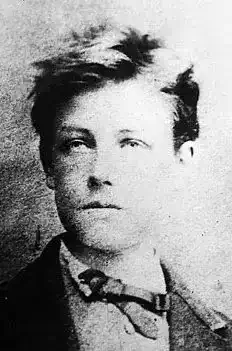
Arthur Rimbaud
Shame
So long as the blade has not
Cut off that brain,
That white, green and fatty parcel,
Whose steam is never fresh,
Ah ! He, should cut off his
Nose, his lips, his ears,
His belly ! And abandon
But no, truly, I believe that so long as
The blade to his head,
And the stone to his side,
And the flame to his guts
Have not done execution, the tiresome
Child, the so stupid animal,
Must never for an instant cease
To cheat and betray
And like a Rocky Mountain cat ;
To make all places stink !
But still when he dies,
O my God !
May there rise up some prayer !
662
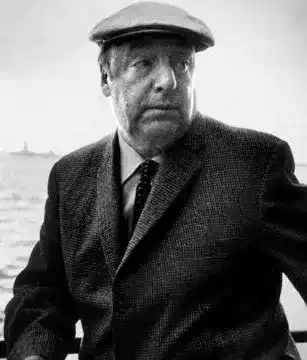
Pablo Neruda
Canto XII from The Heights of Macchu Picchu
Arise to birth with me, my brother.
Give me your hand out of the depths
sown by your sorrows.
You will not return from these stone fastnesses.
You will not emerge from subterranean time.
Your rasping voice will not come back,
nor your pierced eyes rise from their sockets.
Look at me from the depths of the earth,
tiller of fields, weaver, reticent shepherd,
groom of totemic guanacos,
mason high on your treacherous scaffolding,
iceman of Andean tears,
jeweler with crushed fingers,
farmer anxious among his seedlings,
potter wasted among his clays-bring
to the cup of this new life
your ancient buried sorrows.
Show me your blood and your furrow;
say to me: here I was scourged
because a gem was dull or because the earth
failed to give up in time its tithe of corn or stone.
Point out to me the rock on which you stumbled,
the wood they used to crucify your body.
Strike the old flints
to kindle ancient lamps, light up the whips
glued to your wounds throughout the centuries
and light the axes gleaming with your blood.
I come to speak for your dead mouths.
Throughout the earth
let dead lips congregate,
out of the depths spin this long night to me
as if I rode at anchor here with you.
And tell me everything, tell chain by chain,
and link by link, and step by step;
sharpen the knives you kept hidden away,
thrust them into my breast, into my hands,
like a torrent of sunbursts,
an Amazon of buried jaguars,
and leave me cry: hours, days and years,
blind ages, stellar centuries.
And give me silence, give me water, hope.
Give me the struggle, the iron, the volcanoes.
Let bodies cling like magnets to my body.
Come quickly to my veins and to my mouth.
Speak through my speech, and through my blood.
661

Rabindranath Tagore
When Day Is Done
If the day is done,
if birds sing no more,
if the wind has flagged tired,
then draw the veil of darkness thick upon me,
even as thou hast wrapt the earth with the coverlet of sleep
and tenderly closed the petals of the drooping lotus at dusk.
From the traveler,
whose sack of provisions is empty before the voyage is ended,
whose garment is torn and dust-laden,
whose strength is exhausted,
remove shame and poverty,
and renew his life like a flower under the cover of thy kindly night.
655

Robert Burns
The Auld Farmer's New-Year-Morning Salutation to His Auld Mare , Maggie
A Guide New-year I wish thee, Maggie!
Hae, there's a ripp to thy auld baggie:
Tho' thou's howe-backit now, an' knaggie,
I've seen the day
There could hae gaen like ony staggie,
Out-owre the lay.
Tho' now thou's dowie, stiff an' crazy,
An' thy auld hide as white's a daisie,
I've seen the dappl't, sleek an' glaizie,
A bonie gray:
He should been tight that daur't to raize thee,
Ance in a day.
Thou ance was i' the foremost rank,
A filly buirdly, steeve an' swank;
An' set weel down a shapely shank,
As e'er tread yird;
An' could hae flown out-owre a stank,
Like ony bird.
It's now some nine-an'-twenty year,
Sin' thou was my guid-father's mear;
He gied me thee, o' tocher clear,
An' fifty mark;
Tho' it was sma', 'twas weel-won gear,
An' thou was stark.
When first I gaed to woo my Jenny,
Ye then was trotting wi' your minnie:
Tho' ye was trickie, slee, an funnie,
Ye ne'er was donsie;
But hamely, tawie, quiet, an' cannie,
An' unco sonsie.
That day, ye pranc'd wi' muckle pride,
When ye bure hame my bonie bride:
An' sweet an' gracefu' she did ride,
Wi' maiden air!
Kyle-Stewart I could bragged wide
For sic a pair.
Tho' now ye dow but hoyte and hobble,
An' wintle like a saumont coble,
That day, ye was a jinker noble,
For heels an' win'!
An' ran them till they a' did wauble,
Far, far, behin'!
When thou an' I were young an' skeigh
An' stable-meals at fairs were dreigh,
How thou wad prance, and snore, an' skreigh
An' tak the road!
Town's-bodies ran, an' stood abeigh,
An' ca't thee mad.
When thou was corn't, an' I was mellow,
We took the road aye like a swallow:
At brooses thou had ne'er a fellow,
For pith an' speed;
But ev'ry tail thou pay't them hollow,
Whare'er thou gaed.
The sma', droop-rumpl't, hunter cattle
Might aiblins waurt thee for a brattle;
But sax Scotch mile, thou try't their mettle,
An' gar't them whaizle:
Nae whip nor spur, but just a wattle
O' saugh or hazel.
Thou was a noble fittie-lan',
As e'er in tug or tow was drawn!
Aft thee an' I, in aught hours' gaun,
In guid March-weather,
Hae turn'd sax rood beside our han',
For days thegither.
Thou never braing't, an' fetch't, an' fliskit;
But thy auld tail thou wad hae whiskit,
An' spread abreed thy weel-fill'd brisket,
Wi' pith an' power;
Till sprittie knowes wad rair't an' riskit
An' slypet owre.
When frosts lay lang, an' snaws were deep,
An' threaten'd labour back to keep,
I gied thy cog a wee bit heap
Aboon the timmer:
I ken'd my Maggie wad na sleep,
For that, or simmer.
In cart or car thou never reestit;
The steyest brae thou wad hae fac't it;
Thou never lap, an' sten't, and breastit,
Then stood to blaw;
But just thy step a wee thing hastit,
Thou snoov't awa.
My pleugh is now thy bairn-time a',
Four gallant brutes as e'er did draw;
Forbye sax mae I've sell't awa,
That thou hast nurst:
They drew me thretteen pund an' twa,
The vera warst.
Mony a sair daurk we twa hae wrought,
An' wi' the weary warl' fought!
An' mony an anxious day, I thought
We wad be beat!
Yet here to crazy age we're brought,
Wi' something yet.
An' think na', my auld trusty servan',
That now perhaps thou's less deservin,
An' thy auld days may end in starvin;
For my last fow,
A heapit stimpart, I'll reserve ane
Laid by for you.
We've worn to crazy years thegither;
We'll toyte about wi' ane anither;
Wi' tentie care I'll flit thy tether
To some hain'd rig,
Whare ye may nobly rax your leather,
Wi' sma' fatigue.
656

William Blake
The Song of Los
AFRICA
I will sing you a song of Los. the Eternal Prophet:
He sung it to four harps at the tables of Eternity.
In heart-formed Africa.
Urizen faded! Ariston shudderd!
And thus the Song began
Adam stood in the garden of Eden:
And Noah on the mountains of Ararat;
They saw Urizen give his Laws to the Nations
By the hands of the children of Los.
Adam shudderd! Noah faded! black grew the sunny African
When Rintrah gave Abstract Philosophy to Brama in the East:
(Night spoke to the Cloud!
Lo these Human form'd spirits in smiling hipocrisy. War
Against one another; so let them War on; slaves to the eternal Elements)
Noah shrunk, beneath the waters;
Abram fled in fires from Chaldea;
Moses beheld upon Mount Sinai forms of dark delusion:
To Trismegistus. Palamabron gave an abstract Law:
To Pythagoras Socrates & Plato.
Times rolled on o'er all the sons of Har, time after time
Orc on Mount Atlas howld, chain'd down with the Chain of Jealousy
Then Oothoon hoverd over Judah & Jerusalem
And Jesus heard her voice (a man of sorrows) he recievd
A Gospel from wretched Theotormon.
The human race began to wither, for the healthy built
Secluded places, fearing the joys of Love
And the disease'd only propagated:
So Antamon call'd up Leutha from her valleys of delight:
And to Mahomet a loose Bible gave.
But in the North, to Odin, Sotha gave a Code of War,
Because of Diralada thinking to reclaim his joy.
These were the Churches: Hospitals: Castles: Palaces:
Like nets & gins & traps to catch the joys of Eternity
And all the rest a desart;
Till like a dream Eternity was obliterated & erased.
Since that dread day when Har and Heva fled.
Because their brethren & sisters liv'd in War & Lust;
And as they fled they shrunk
Into two narrow doleful forms:
Creeping in reptile flesh upon
The bosom of the ground:
And all the vast of Nature shrunk
Before their shrunken eyes.
Thus the terrible race of Los & Enitharmon gave
Laws & Religions to the sons of Har binding them more
And more to Earth: closing and restraining:
Till a Philosophy of Five Senses was complete
Urizen wept & gave it into the hands of Newton & Locke
Clouds roll heavy upon the Alps round Rousseau & Voltaire:
And on the mountains of Lebanon round the deceased Gods
Of Asia; & on the deserts of Africa round the Fallen Angels
The Guardian Prince of Albion burns in his nightly tent
ASIA
The Kings of Asia heard
The howl rise up from Europe!
And each ran out from his Web;
From his ancient woven Den;
For the darkness of Asia was startled
At the thick-flaming, thought-creating fires of Orc.
And the Kings of Asia stood
And cried in bitterness of soul.
Shall not the King call for Famine from the heath?
Nor the Priest, for Pestilence from the fen?
To restrain! to dismay! to thin!
The inhabitants of mountain and plain;
In the day, of full-feeding prosperity;
And the night of delicious songs.
Shall not the Councellor throw his curb
Of Poverty on the laborious?
To fix the price of labour;
To invent allegoric riches:
And the privy admonishers of men
Call for fires in the City
For heaps of smoking ruins,
In the night of prosperity & wantonness
To turn man from his path,
To restrain the child from the womb,
To cut off the bread from the city,
That the remnant may learn to obey.
That the pride of the heart may fail;
That the lust of the eyes may be quench'd:
That the delicate ear in its infancy
May be dull'd; and the nostrils clos'd up;
To teach mortal worms the path
That leads from the gates of the Grave.
Urizen heard them cry!
And his shudd'ring waving wings
Went enormous above the red flames
Drawing clouds of despair thro' the heavens
Of Europe as he went:
And his Books of brass iron & gold
Melted over the land as he flew,
Heavy-waving, howling, weeping.
And he stood over Judea:
And stay'd in his ancient place:
And stretch'd his clouds over Jerusalem;
For Adam, a mouldering skeleton
Lay bleach'd on the garden of Eden;
And Noah as white as snow
On the mountains of Ararat.
Then the thunders of Urizen bellow'd aloud
From his woven darkness above.
Orc raging in European darkness
Arose like a pillar of fire above the Alps
Like a serpent of fiery flame!
The sullen Earth
Shrunk!
Forth from the dead dust rattling bones to bones
Join: shaking convuls'd the shivring clay breathes
And all flesh naked stands: Fathers and Friends;
Mothers & Infants; Kings & Warriors:
The Grave shrieks with delight, & shakes
Her hollow womb, & clasps the solid stem:
Her bosom swells with wild desire:
And milk & blood & glandous wine.
643

Muhammad Iqbal
A Mountain and A Squirrel
A mountain was saying this to a squirrel
'Commit suicide if you have self-respect
You are insignificant, still so arrogant, how strange!
You are neither wise, nor intelligent! not even shrewd!
It is strange when the insignificant pose as important!
When the stupid ones like you pose as intelligent!
You are no match in comparison with my splendor
Even the earth is low compared with my splendor
The grandeur of mine does not fall to your lot
The poor animal cannot equal the great mountain! '
On hearing this the squirrel said, 'Hold your tongue!
These are immature thoughts, expel them from your heart!
I do not care if I am not large like you!
You are not a pretty little thing like me
Everything shows the Omni-potence of God
Some large, some small, is the wisdom of God
He has created you large in the world
And He has taught me climbing large trees
You are unable to walk a single step
Only large size! What other greatness have you?
If you are large show me some of the skills I have
Show me how you break this beetle nut as I can
Nothing is useless in this world
Nothing is bad in God's creation
646

Walt Whitman
I Sit And Look Out
I SIT and look out upon all the sorrows of the world, and upon all
oppression and shame;
I hear secret convulsive sobs from young men, at anguish with
themselves, remorseful after deeds done;
I see, in low life, the mother misused by her children, dying,
neglected, gaunt, desperate;
I see the wife misused by her husband--I see the treacherous seducer
of young women;
I mark the ranklings of jealousy and unrequited love, attempted to be
hid--I see these sights on the earth;
I see the workings of battle, pestilence, tyranny--I see martyrs and
prisoners;
I observe a famine at sea--I observe the sailors casting lots who
shall be kill'd, to preserve the lives of the rest;
I observe the slights and degradations cast by arrogant persons upon
laborers, the poor, and upon negroes, and the like;
All these--All the meanness and agony without end, I sitting, look
out upon,
See, hear, and am silent.
643

William Butler Yeats
A Prayer For My Son
BID a strong ghost stand at the head
That my Michael may sleep sound,
Nor cry, nor turn in the bed
Till his morning meal come round;
And may departing twilight keep
All dread afar till morning's back.
That his mother may not lack
Her fill of sleep.
Bid the ghost have sword in fist:
Some there are, for I avow
Such devilish things exist,
Who have planned his murder, for they know
Of some most haughty deed or thought
That waits upon his future days,
And would through hatred of the bays
Bring that to nought.
Though You can fashion everything
From nothing every day, and teach
The morning stats to sing,
You have lacked articulate speech
To tell Your simplest want, and known,
Wailing upon a woman's knee,
All of that worst ignominy
Of flesh and bone;
And when through all the town there ran
The servants of Your enemy,
A woman and a man,
Unless the Holy Writings lie,
Hurried through the smooth and rough
And through the fertile and waste,
protecting, till the danger past,
With human love.
646


Rudyard Kipling
The Female of the Species
When the Himalayan peasant meets the he-bear in his pride,
He shouts to scare the monster who will often turn aside.
But the she-bear thus accosted rends the peasant tooth and nail,
For the female of the species is more deadly than the male.
When Nag, the wayside cobra, hears the careless foot of man,
He will sometimes wriggle sideways and avoid it if he can,
But his mate makes no such motion where she camps beside the trail -
For the female of the species is more deadly than the male.
When the early Jesuit fathers preached to Hurons and Choctaws,
They prayed to be delivered from the vengeance of the squaws -
'Twas the women, not the warriors, turned those stark enthusiasts pale -
For the female of the species is more deadly than the male.
Man's timid heart is bursting with the things he must not say,
For the Woman that God gave him isn't his to give away;
But when hunter meets with husband, each confirms the others tale -
The female of the species is more deadly than the male.
Man, a bear in most relations, worm and savage otherwise,
Man propounds negotiations, Man accepts the compromise;
Very rarely will he squarely push the logic of a fact
To its ultimate conclusion in unmitigated act.
Fear, or foolishness, impels him, ere he lay the wicked low,
To concede some form of trial even to his fiercest foe.
Mirth obscene diverts his anger; Doubt and Pity oft perplex
Him in dealing with an issue - to the scandal of the Sex!
But the Woman that God gave him, every fibre of her frame
Proves her launched for one sole issue, armed and engined for the same,
And to serve that single issue, lest the generations fail,
The female of the species must be deadlier than the male.
She who faces Death by torture for each life beneath her breast
May not deal in doubt or pity - must not swerve for fact or jest.
These be purely male diversions - not in these her honor dwells -
She, the Other Law we live by, is that Law and nothing else!
She can bring no more to living than the powers that make her great
As the Mother of the Infant and the Mistress of the Mate;
And when Babe and Man are lacking and she strides unclaimed to claim
Her right as femme (and baron), her equipment is the same.
She is wedded to convictions - in default of grosser ties;
Her contentions are her children, Heaven help him, who denies!
He will meet no cool discussion, but the instant, white-hot wild
Wakened female of the species warring as for spouse and child.
Unprovoked and awful charges - even so the she-bear fights;
Speech that drips, corrodes and poisons - even so the cobra bites;
Scientific vivisection of one nerve till it is raw,
And the victim writhes with anguish - like the Jesuit with the squaw!
So it comes that Man, the coward, when he gathers to confer
With his fellow-braves in council, dare not leave a place for her
Where, at war with Life and Conscience, he uplifts his erring hands
To some God of abstract justice - which no woman understands.
And Man knows it! Knows, moreover, that the Woman that God gave him
Must command but may not govern; shall enthrall but not enslave him.
And She knows, because She warns him and Her instincts never fail,
That the female of Her species is more deadly than the male!
647

Kazi Nazrul Islam
Pain of the Poor
These children-suffering
from a lack of mother's care,
in rags, their bodies covered with dirt,
faces dried up from starving all day, scornful,
their bodies feverish, skin chapped all over.
They can't even get a meager meal
from laboring all day.
Ignoring them-O Rich, O Ruler,
how can you stand the taste of monda, mithai, khaja?
Starving, when they see you-eating,
they beg silently with their pathetic eyes.
Shame on you!-How do you still go on gorging?
All that rice you store in your binsjust
a portion of it could save them.
You have such a wide variety of clothing;
these children do not have even as much
as the rag you polish your shoes with.
You've trunk loads of clothing,
while these children freeze to death all night long
with their mothers lying in corridors and lanes.
You feel so happy from hugs and kisses
from your children,
their mothers weep holding them in their bosoms.
Your children have no dearth of toys,
their toys are what's been thrown outan
embarrassment for their mothers.
Their unkempt hair, turning brownish and matted,
their skin blackened from roaming about in the sun,
for no reason they get beaten and scolded by people.
Your children cry 'bloody murder' for minor incidents,
whereas they have at most a sombre face
even when their hearts break from sadness.
The mothers of these unfortunate childrenstanding
aloof-who understands how much pain there is
in their tearful eyes?
If there's a slight touch of fever
in your children, ten doctors come rushing to check them.
But for these children-even when they have a high temperature,
there's none to offer them even a sip of water;
reduced to skeletons, they die in their mothers' arms.
They don't eat pomegranates or grapes when they are sick;
they think they have the world
by getting just a piece of sugar candy.
Your children go to sleep in rocking cradles,
these children sleep under the tamarind tree;
even the most stone-hearted aught to be moved to see this.
Nobody understands their misery,
everybody despises them
and thinks, 'Why do they litter the streets?'
So take heed, a burning stomach needs to complain;
I don't wish that even on my enemies. .
Even in such misery,
God will supposedly grant them welfare-that's
the only consolation for the poor.
[Original: Goriber baytha; Translation: Sajed Kamal]
654
William Butler Yeats
Easter, 1916
I have met them at close of day
Coming with vivid faces
From counter or desk among grey
Eighteenth-century houses.
I have passed with a nod of the head
Or polite meaningless words,
Or have lingered awhile and said
Polite meaningless words,
And thought before I had done
Of a mocking tale or a gibe
To please a companion
Around the fire at the club,
Being certain that they and I
But lived where motley is worn:
All changed, changed utterly:
A terrible beauty is born.
That woman's days were spent
In ignorant good-will,
Her nights in argument
Until her voice grew shrill.
What voice more sweet than hers
When, young and beautiful,
She rode to harriers?
This man had kept a school
And rode our winged horse;
This other his helper and friend
Was coming into his force;
He might have won fame in the end,
So sensitive his nature seemed,
So daring and sweet his thought.
This other man I had dreamed
A drunken, vainglorious lout.
He had done most bitter wrong
To some who are near my heart,
Yet I number him in the song;
He, too, has resigned his part
In the casual comedy;
He, too, has been changed in his turn,
Transformed utterly:
A terrible beauty is born.
Hearts with one purpose alone
Through summer and winter seem
Enchanted to a stone
To trouble the living stream.
The horse that comes from the road.
The rider, the birds that range
From cloud to tumbling cloud,
Minute by minute they change;
A shadow of cloud on the stream
Changes minute by minute;
A horse-hoof slides on the brim,
And a horse plashes within it;
The long-legged moor-hens dive,
And hens to moor-cocks call;
Minute by minute they live:
The stone's in the midst of all.
Too long a sacrifice
Can make a stone of the heart.
O when may it suffice?
That is Heaven's part, our part
To murmur name upon name,
As a mother names her child
When sleep at last has come
On limbs that had run wild.
What is it but nightfall?
No, no, not night but death;
Was it needless death after all?
For England may keep faith
For all that is done and said.
We know their dream; enough
To know they dreamed and are dead;
And what if excess of love
Bewildered them till they died?
I write it out in a verse -
MacDonagh and MacBride
And Connolly and pearse
Now and in time to be,
Wherever green is worn,
Are changed, changed utterly:
A terrible beauty is born.
641
Rudyard Kipling
The Floods
The rain it rains without a stay
In the hills above us, in the hills;
And presently the floods break way
Whose strength is in the hills.
The trees they suck from every cloud,
The valley brooks they roar aloud--
Bank-high for the lowlands, lowlands,
Lowlands under the hills!
The first wood down is sere and small,
From the hills--the brishings off the hills;
And then come by the bats and all
We cut last year in the hills;
And then the roots we tried to cleave
But found too tough and had to leave--
Polting through the lowlands, lowlands,
Lowlands under the hills!
The eye shall look, the ear shall hark
To the hills, the doings in the hills,
And rivers mating in the dark
With tokens from the hills.
Now what is weak will! surely go,
And what is strong must prove it so--
Stand Fast in the lowlands, lowlands,
Lowlands under the hills!
The floods they shall not be afraid--
Nor the hills above 'em, nor the hills--
Of any fence which man has made
Betwixt him and the hills.
The waters shall not reckon twice
For any work of man's device,
But bid it down to the lowlands, lowlands,
Lowlands under the hills!
The floods shall sweep corruption clean--
By the hills, the blessing of the hills--
That more the meadows may be green
New-mended from the hills.
The crops and cattle shall increase,
Nor little children shall not cease.
Go--plough the lowlands, lowlands,
Lowlands under the hills!
649
Hilaire Belloc
Epitah on the Politician Himself
Here richly, with ridiculous display,
The Politician's corpse was laid away.
While all of his acquaintance sneered and slanged
I wept: for I had longed to see him hanged.
Another on the Same
This, the last ornament among the peers,
Bribed, bullied, swindled and blackmailed for years:
But Death's what even Politicians fail
To bribe or swindle, bully or blackmail.
On Another Politician
The Politician, dead and turned to clay,
Will make a clout to keep the wind away.
I am not fond of draughts, and yet I doubt
If I could get myself to touch that clout.
On Yet Another
Fame to her darling Shifter glory gives;
And Shifter is immortal while he lives.
Epitah Upon Himself
Lauda tu Ilarion audacem et splendidum,
Who was always beginning things and never ended 'em.
647
Kazi Nazrul Islam
In Salutation of One God
Let them spread jealousy, prejudice and defamation,
We will offer justice, peace and one God's proclamation.
Let them seek narrowness, pigeon-hole and mud from pond,
We will seek open space, shining light and love's bond.
Let them seek slave's life, we seek martyr's honor,
They fear death; while we search - it's hiding in which corner?
They won't die; if battle starts, they will hide behind a bush,
Nail-less, toothless - still boisterous, busy in giving each other a push.
They are lifeless, yet move by vile selfishness and greed,
They are jinns, ghosts, or mummies, from base desires can't be freed.
We are the new youth of Bengal; to wrestle with death we enjoy,
Due to grace we spare them, thinking them as ant or toy.
They are ever-skeptical about everything, also about human progress in future,
These disbelievers are disciples of Satan; pessimism and wrong vision they nurture.
They say, people will all be atheist, and anarchy is what they will bring,
We say, they will be believers, so that the song of heavenly bond they will sing.
Let them seek unhappiness, we will seek His forgiveness and love,
Let the ghosts seek graveyards, we will cherish the Garden from above.
People can see west's world wars, as punishment inflicted from Him,
And then turn away from more selfishness, singing peace and justice's hymn.
Let the owls stay in their hole, expecting no more sunrise,
Crows won't attack them again, let it be their claw-and-beak's demise.
Believers never say such things, they seek ray of hope and light,
Standing up against oppression and suffering, the believers delight.
The believers say, if we all turned toward Him in unison,
Shower of His mercy will bring on this earth like daily Eid celebration.
From seven heavens these believers want to bring colorful rainbow,
God never withholds His bounties; When does He ever say 'No? '
Those who seek mischief and unhappiness, exactly that they will get,
Let them choose as they wish; on the path of our choice our foot will set.
They seek the kingdom of monsters, we want God's kingdom,
This world then would experience peace, joy and freedom.
Our Lord's treasure is ever full, we won't lack anything anymore,
They want to fight over corpses like vultures or wild boar.
May God save us all, so that we don't tread that path of doom,
One God is our Lord, His everlasting beauty you always see abloom.
All the vices in this world, let it disappear, let it go away,
This world's darkness and hatred, may the ray of His love keep at bay.
From all the narrowness and prejudice may mankind's heart be free,
Let His light shine from every home under every blooming tree.
Those foster riot to loot, they are greedy monsters or gangsters,
Path of goodness and virtue they won't see, they will bring only disasters.
They are ever after vice, they are ever after conflict,
Their life is devoid of rhythm, they are spoiled, corpse-addict.
By God's soldiers, they will surely be overcome, in future that is near
These pirates - plunderer of crops and harvests - are ever so familiar.
They are spiders, creatures of darkness; stay away from their home and den,
In abandoned corners lie their web, they haven't seen life's vibrant garden.
Believe in God, in one and only God, in day as well as night
Heavenly ride will be with you, with God's sword in hand to fight.
Those who want to pass their life in sleep and laziness' fashion,
They don't want moon or sun, they are living dead, bound for humiliation.
Whose dream is everlasting youth, come, come that new generation,
Your sacrifice and work brought progress that are worthy of celebration.
Let them enjoy mud-slinging, their weapons are malice and vilification,
We will throw bouquet at them, and trumpet to one God our salutation.
[Translation: Mohammad Omar Farooq]
638

Ella Wheeler Wilcox
Life's Scars
They say the world is round, and yet
I often think it square,
So many little hurts we get
From corners here and there.
But one great truth in life I've found,
While journeying to the West-
The only folks who really wound
Are those we love the best.
The man you thoroughly despise
Can rouse your wrath, 'tis true;
Annoyance in your heart will rise
At things mere strangers do;
But those are only passing ills;
This rule all lives will prove;
The rankling wound which aches and thrills
Is dealt by hands we love.
The choicest garb, the sweetest grace,
Are oft to strangers shown;
The careless mien, the frowning face,
Are given to our own.
We flatter those we scarcely know,
We please the fleeting guest,
And deal full many a thoughtless blow
To those who love us best.
Love does not grow on every tree,
Nor true hearts yearly bloom.
Alas for those who only see
This cut across a tomb!
But, soon or late, the fact grows plain
To all through sorrow's test:
The only folks who give us pain
Are those we love the best.
638
John Milton
Psalm CXXXVI
Let us with a gladsome mind
Praise the Lord for he is kind;
For his mercies aye endure,
Ever faithful, ever sure.
Let us blaze his Name abroad,
For of gods he is the God;
For his, &c.
O let us his praises tell,
That doth the wrathful tyrants quell;
For his, &c.
That with his miracles doth make
Amazèd Heaven and Earth to shake;
For his, &c.
That by his wisdom did create
The painted heavens so full of state;
For his, &c.
That did the solid Earth ordain
To rise above the watery plain;
For his, &c.
That by his all-commanding might,
Did fill the new-made world with light;
For his, &c.
And caused the golden-tressèd Sun
All the day long his course to run;
For his, &c.
The hornèd Moon to shine by night
Amongst her spangled sisters bright;
For his, &c.
He, with his thunder-clasping hand,
Smote the first-born of Egypt land;
For his, &c.
And, in despite of Pharao fell,
He brought from thence his Israel;
For his, &c.
The ruddy waves he cleft in twain
Of the Erythræan main;
For his, &c.
The floods stood still, like walls of glass,
While the Hebrew bands did pass;
For his, &c.
But full soon they did devour
The tawny King with all his power;
For his, &c.
His chosen people he did bless
In the wasteful Wilderness;
For his, &c.
In bloody battail he brought down
Kings of prowess and renown;
For his, &c.
He foiled bold Seon and his host,
That ruled the Amorrean coast;
For his, &c.
And large-limbed Og he did subdue,
With all his over-hardy crew;
For his, &c.
And to his servant Israel
He gave their land, therein to dwell;
For his, &c.
He hath, with a piteous eye,
Beheld us in our misery;
For his, &c.
And freed us from the slavery
Of the invading enemy;
For his, &c.
All living creatures he doth feed,
And with full hand supplies their need;
For his, &c.
Let us, therefore, warble forth
His mighty majesty and worth;
For his, &c.
That his mansion hath on high,
Above the reach of mortal eye;
For his, &c.
627
Kazi Nazrul Islam
Come Hither
Come hither, the 'fallen', the 'impure', the 'outcastes'!
Let us all worship The Holy Mother together!
Only when all castes and all nations
Assemble at Her feet, side by side without fear;
Only where we are not bound by temple, priest or scriptures
Can we properly worship the Goddess
Only when brothers sit side by side, worshiping together
Will she embrace those who call Her by name
Descending from Her throne in the heavens,
Sitting amongst us on the dusty earthly ground.
The Goddess' altar will become sacred only when
Her holy water is blessed by the touch of us all.
Because we have ignored Her true message,
Brother has turned against brother
Today, upon seeing the Goddess in Her full splendor,
You will realize that we are all children of the same Mother
And heaven, earth and the entire universe will erupt in awe,
Awoken by our invocation to the Holy Mother
Fearlessly chanted by all in unison.
[Translated by: Udayan Chattopadhyay]
632
Arthur Rimbaud
People In Church
Penned between oaken pews,
in corners of the church which their breath stinkingly warms,
all their eyes on the chancel dripping with gold,
and the choir with its twenty pairs of jaws bawling pious hymns;
Sniffing the odour of wax if it were the odour of bread,
happy, ad humbled like beaten dogs,
the Poor offer up to God, the Lord and Master,
their ridiculous stubborn oremuses.
For the women it is very pleasant to wear the benches smooth;
after the six black days on which God has made them suffer.
They nurse, swaddled in strange-looking shawls,
creatures like children who weep as if they would die.
Their unwashed breasts hanging out, these eaters of soup,
with a prayer in their eyes, but never praying,
watch a group of hoydens wickedly
showing off with hats all out of shape.
Outside is the cold, and hunger - and a man on the booze.
All right. There's another hour to go; afterwards, nameless ills! -
Meanwhile all around an assortment of old
dewlapped women whimpers, snuffles, and whispers:
These are distracted persons and the epileptics from whom,
yesterday, you turned away at street crossings;
there too are the blind who are led by a dog into courtyards,
poring their noses into old-fashioned missals. -
And all of them, dribbling a stupid groveling faith,
recite their unending complaint to Jesus who is dreaming up there,
yellow from the livid stained glass window,
far above thin rascals and wicked potbellies,
far from the smell of meat and mouldy fabric,
and the exhausted somber farce of repulsive gestures and
as the prayer flowers in choice expressions,
and the mysteries take on more emphatic tones, from the aisles,
where the sun is dying, trite folds of silk and green smiles,
the ladies of the better quarters of the town - oh Jesus! the
sufferers from complaints of the liver,
make their long yellow fingers kiss the holy water in the stoups.
629
William Shakespeare
Sonnet 81: Or I shall live your epitaph to make
Or I shall live your epitaph to make,
Or you survive when I in earth am rotten,
From hence your memory death cannot take,
Although in me each part will be forgotten.
Your name from hence immortal life shall have,
Though I, once gone, to all the world must die;
The earth can yield me but a common grave,
When you entombèd in men's eyes shall lie.
Your monument shall be my gentle verse,
Which eyes not yet created shall o'er-read,
And tongues to be your being shall rehearse
When all the breathers of this world are dead.
You still shall live—such virtue hath my pen—
Where breath most breathes, even in the mouths of men.
636
Kazi Nazrul Islam
My Explanation
I am a poet of today, not a prophet of a future day,
Poet or worthless, call me whatever, I put up with anything you say.
Some say, to the future you belong,
Your place, as a poet, tomorrow will come along.
How come you lack message enduring like that emanates from Rabi's hand?
I am blamed, but I wont' quit playing rising sun's music band.
My fellow poets are disappointed, they read my works and sigh,
Saying: the good one is becoming no good, as he can't say to politics good-bye.
Does not read a book - finished is this chap!
Some say: His wife has brought, indeed, all this mishap!
Some say: The fat one is spoiled, playing cards - non-stop - in the jail,
Others say: You were better there; toward jail again you should sail!
Mentor says: You're no good, except shaving using a sword!
Every Saturday my lover's letter conveys me, 'Nothing useful in you is stored.'
I say: Honey, shall I reveal the secret?
Letters stop in a hurry; not one more I get.
Sacrificing everything, I got married: Hindus say, 'Get lost'!
Am I Muslim or a heathen? Where is my pigtail or beard, or the hem of loin-cloth?
All the goody-searching priests or Mollahs wave their hands and pronounce:
This one invokes names of deities; this rogue one we must denounce!
Hear the Fatwa: Kafir is this Kazi; nothing else,
Even though he wants martyrdom, or so he tells!
Some scripture we know, and we still earn our livelihood!
Hindus detest my use of Persian words saying: from us, this guy deserves no good!
No one is happy with me; the disciples of non-violence? of course, not!
I am blamed I play the violin of violence; I get the revolutionaries' hot heads even
more hot.
The revolutionaries say: This one is non-violent,
My songs deal with spinning wheels: they resent.
Top Brahmins find me atheist, lesser ones regard me as one of the Confucians;
Independence lovers don't accept me; their opponents prefer me to be with those
Europeans!
Men think I am a feminist; women, however, think otherwise,
I never went to England; I am worthless in my expatriate friends' eyes!
My admirers see me as Rabi of new age,
If not of new age, at least a poet of these trendy days!
I hear all these, bemused; exercise for a stronger heart,
Lie down with eyeglasses on; sleeping through the day is my life's part.
I don't know what I write; Do I even understand anything of my own?
I couldn't raise my hand in protest, so I write with my head down.
Dear friends, I did not find appreciation in you,
but my name shines in government's list in lieu.
Honoring my works as invaluable, without value people take it.
Have you heard anything else? Be careful, may not be far a government spy's pit!
Friends, you have seen me engrossed in my own mind's temple,
I rebuke and admonish my mind, but bringing it under control I wish were so simple!
Every time I chain itself, somehow it escapes free
I beat it, and the same I repeat, to complete my victory,
I wish this mad mind would listen to me, but even to Rabi or Gandhi, it did not listen,
Abruptly it wakes up and then wanders in the jungle's darkness in search of roaring
tigers that glisten.
I say, O this insane one, you are doing so great in the community,
You are already a half-leader; but if you lose this opportunity,
would you ever be a full leader,
and weep with the crowd as a speaker?
Pick up the fish in the net now, O fool, before it slips away, I bet!
Take this break to get your leaky house fixed, otherwise soon you will regret.
Who understands that this minstrel's mind roams around singing and reciting!
This name hardly rings any bell; Days are passed chewing Betel leaves, ah, a taste so
inviting!
May be some day there won't be any more of epidemic of malaria,
Especially, since the autonomy is coming in its full pomp and euphoria.
Yes, we want moon, but those hapless ones cherish a meal, as teardrops of their little
ones dribble,
The agonized mother shouts: Hush, you miserables! See, independence is coming - no
more quibble!
But those hungry kids can't care less about autonomy; their desire: a little salt and
some rice,
Ah! the hour is late; nothing they have nibbled yet; the flame of hunger seeks no
advice.
When I hear that cry, my insane mind charges in a rush,
My intoxication for autonomy seeks shelter merely in my dream's brush!
I say, bemoaning: O God, are you still there? Why are they not, then,
Humiliated or destroyed, those who suck the blood of these children?
We all know, to bring independence, those lofty slogans we have devised,
And, at the same time, how burning hunger of so many million children, we have
compromised!
So much money was raised, but independence still remained a dream,
as the hungry people can't pay enough, they are so weak even to scream!
When a baby is snatched away from the mother's bosom, we plead, O royal tiger,
please eat grass!
The mother keeps begging from door to door, while in her shack hiding the baby's
carcass.
My friends, I can't say any more; my mind feels so much agony and pain,
I have gone mad; now, I utter whatever my mouth throws out in disdain.
My own blood won't make much difference,
With blood-ink I keep writing, hence,
My head can't forbear robust ideas or big thought any more; so agonized is this mortal,
All those who are in peace and happiness, it's your privilege to write epics immortal.
I don't care any more, if I live or don't, when gone is this trendy sensation,
Rabi is shining above our head, and then there are you, the golden generation.
Those who usurp the morsel of three hundred thirty million people: let our prayer keep
brewin',
In my blood-ink writing, may it be engraved and sealed their utter ruin.
[Original: Bengali, Translator: Dr. Mohammad Omar Farooq ]
628

Robert Browning
The Laboratory-Ancien Régime
I.
Now that I, tying thy glass mask tightly,
May gaze thro' these faint smokes curling whitely,
As thou pliest thy trade in this devil's-smithy---
Which is the poison to poison her, prithee?
II.
He is with her, and they know that I know
Where they are, what they do: they believe my tears flow
While they laugh, laugh at me, at me fled to the drear
Empty church, to pray God in, for them!---I am here.
III
Grind away, moisten and mash up thy paste,
Pound at thy powder,---I am not in haste!
Better sit thus, and observe thy strange things,
Than go where men wait me and dance at the King's.
IV
That in the mortar---you call it a gum?
Ah, the brave tree whence such gold oozings come!
And yonder soft phial, the exquisite blue,
Sure to taste sweetly,---is that poison too?
V
Had I but all of them, thee and thy treasures,
What a wild crowd of invisible pleasures!
To carry pure death in an earring, a casket,
A signet, a fan-mount, a filigree basket!
VI
Soon, at the King's, a mere lozenge to give,
And Pauline should have just thirty minutes to live!
But to light a pastile, and Elise, with her head
And her breast and her arms and her hands, should drop dead!
VII
Quick---is it finished? The colour's too grim!
Why not soft like the phial's, enticing and dim?
Let it brighten her drink, let her turn it and stir,
And try it and taste, ere she fix and prefer!
VIII
What a drop! She's not little, no minion like me!
That's why she ensnared him: this never will free
The soul from those masculine eyes,---Say, ``no!''
To that pulse's magnificent come-and-go.
IX
For only last night, as they whispered, I brought
My own eyes to bear on her so, that I thought
Could I keep them one half minute fixed, she would fall
Shrivelled; she fell not; yet this does it all!
X
Not that I bid you spare her the pain;
Let death be felt and the proof remain:
Brand, burn up, bite into its grace---
He is sure to remember her dying face!
XI
Is it done? Take my mask off! Nay, be not morose;
It kills her, and this prevents seeing it close;
The delicate droplet, my whole fortune's fee!
If it hurts her, beside, can it ever hurt me?
XII
Now, take all my jewels, gorge gold to your fill,
You may kiss me, old man, on my mouth if you will!
But brush this dust off me, lest horror it brings
Ere I know it---next moment I dance at the King's!
631