
Ethics and Morality

William Shakespeare
Sonnet 36: Let me confess that we two must be twain
Let me confess that we two must be twain,
Although our undivided loves are one;
So shall those blots that do with me remain,
Without thy help, by me be borne alone.
In our two loves there is but one respect,
Though in our lives a separable spite,
Which, though it alter not love's sole effect,
Yet doth it steal sweet hours from love's delight.
I may not evermore acknowledge thee,
Lest my bewailèd guilt should do thee shame,
Nor thou with public kindness honour me
Unless thou take that honour from thy name.
But do not so; I love thee in such sort
As, thou being mine, mine is thy good report.
696
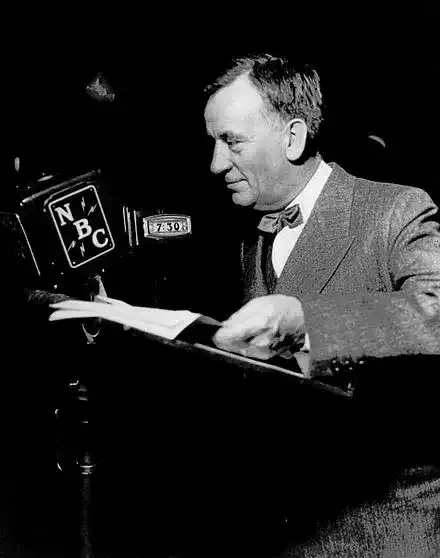
Edgar Albert Guest
Life's Slacker
The saddest sort of death to die
Would be to quit the game called life
And know, beneath the gentle sky,
You'd lived a slacker in the strife.
That nothing men on earth would find
To mark the spot that you had filled;
That you must go and leave behind
No patch of soil your hands had tilled.
I know no greater shame than this:
To feel that yours were empty years;
That after death no man would miss
Your presence in this vale of tears;
That you had breathed the fragrant air
And sat by kindly fires that burn,
And in earth's riches had a share
But gave no labor in return.
Yet some men die this way, nor care:
They enter and they leave life's door
And at the end, their record's bare—
The world's no better than before.
A few false tears are shed, and then,
In busy service, they're forgot.
We have no time to mourn for men
Who lived on earth but served it not.
A man in perfect peace to die
Must leave some mark of toil behind,
Some building towering to the sky,
Some symbol that his heart was kind,
Some roadway where strange feet may tread
That out of gratitude he made;
He cannot bravely look ahead
Unless his debt to life is paid.
693
Edgar Albert Guest
Compensation
I'd like to think when life is done
That I had filled a needed post.
That here and there I'd paid my fare
With more than idle talk and boast;
That I had taken gifts divine.
The breath of life and manhood fine,
And tried to use them now and then
In service for my fellow men.
I'd hate to think when life is through
That I had lived my round of years
A useless kind, that leaves behind
No record in this vale of tears;
That I had wasted all my days
By treading only selfish ways,
And that this world would be the same
If it had never known my name.
I'd like to think that here and there,
When I am gone, there shall remain
A happier spot that might have not
Existed had I toiled for gain;
That someone's cheery voice and smile
Shall prove that I had been worth while;
That I had paid with something fine
My debt to God for life divine.
688
Edgar Albert Guest
Reflection
You have given me riches and ease,
You have given me joys through the years,
I have sat in the shade of your trees,
With the song of your birds in my ears.
I have drunk of your bountiful wine
And done as I've chosen to do,
But, oh wonderful country of mine,
'How little have I done for you!
You have given me safe harbor from harm,
Untroubled I've slept through the nights
And have waked to the new morning's charm
And claimed as my own its delights.
I have taken the finest of fine
From your orchards and fields where it grew,
But, oh wonderful country of mine,
How little I've given to you!
You have given me a home and a place
Where in safety my babies may play;
Health blooms on each bright dimpled face
And laughter is theirs every day.
You have guarded from danger the shrine
Where I worship when toiling is through,
But, oh wonderful country of mine,
How little have I done for you!
I have taken your gifts without thought,
I have revelled in joys that you gave,
That I see now with blood had been bought,
The blood of your earlier braves.
I have lived without making one sign
That the source of my riches I knew,
Now, oh wonderful country of mine,
I'm here to do something for you!
690
William Shakespeare
Sonnet 88: When thou shalt be disposed to set me light
When thou shalt be disposed to set me light
And place my merit in the eye of scorn,
Upon thy side, against myself I'll fight,
And prove thee virtuous, though thou art forsworn.
With mine own weakness being best acquainted,
Upon thy part I can set down a story
Of faults concealed, wherein I am attainted,
That thou in losing me shalt win much glory.
And I by this will be a gainer too;
For bending all my loving thoughts on thee,
The injuries that to myself I do,
Doing thee vantage, double-vantage me.
Such is my love, to thee I so belong,
That for thy right, myself will bear all wrong.
702
William Shakespeare
Sonnet 66: Tired with all these, for restful death I cry
Tired with all these, for restful death I cry,
As to behold desert a beggar born,
And needy nothing trimmed in jollity,
And purest faith unhappily forsworn,
And gilded honour shamefully misplaced,
And maiden virtue rudely strumpeted,
And right perfection wrongfully disgraced,
And strength by limping sway disablèd
And art made tongue-tied by authority,
And folly doctor-like controlling skill,
And simple truth miscalled simplicity,
And captive good attending captain ill.
Tired with all these, from these would I be gone,
Save that to die, I leave my love alone.
695

Rudyard Kipling
The English Flag
Above the portico a flag-staff, bearing the Union Jack,
remained fluttering in the flames for some time, but ultimately
when it fell the crowds rent the air with shouts,
and seemed to see significance in the incident. -- DAILY PAPERS.
Winds of the World, give answer! They are whimpering to and fro --
And what should they know of England who only England know? --
The poor little street-bred people that vapour and fume and brag,
They are lifting their heads in the stillness to yelp at the English Flag!
Must we borrow a clout from the Boer -- to plaster anew with dirt?
An Irish liar's bandage, or an English coward's shirt?
We may not speak of England; her Flag's to sell or share.
What is the Flag of England? Winds of the World, declare!
The North Wind blew: -- "From Bergen my steel-shod vanguards go;
I chase your lazy whalers home from the Disko floe;
By the great North Lights above me I work the will of God,
And the liner splits on the ice-field or the Dogger fills with cod.
"I barred my gates with iron, I shuttered my doors with flame,
Because to force my ramparts your nutshell navies came;
I took the sun from their presence, I cut them down with my blast,
And they died, but the Flag of England blew free ere the spirit passed.
"The lean white bear hath seen it in the long, long Arctic night,
The musk-ox knows the standard that flouts the Northern Light:
What is the Flag of England? Ye have but my bergs to dare,
Ye have but my drifts to conquer. Go forth, for it is there!"
The South Wind sighed: -- "From the Virgins my mid-sea course was ta'en
Over a thousand islands lost in an idle main,
Where the sea-egg flames on the coral and the long-backed breakers croon
Their endless ocean legends to the lazy, locked lagoon.
"Strayed amid lonely islets, mazed amid outer keys,
I waked the palms to laughter -- I tossed the scud in the breeze --
Never was isle so little, never was sea so lone,
But over the scud and the palm-trees an English flag was flown.
"I have wrenched it free from the halliard to hang for a wisp on the Horn;
I have chased it north to the Lizard -- ribboned and rolled and torn;
I have spread its fold o'er the dying, adrift in a hopeless sea;
I have hurled it swift on the slaver, and seen the slave set free.
"My basking sunfish know it, and wheeling albatross,
Where the lone wave fills with fire beneath the Southern Cross.
What is the Flag of England? Ye have but my reefs to dare,
Ye have but my seas to furrow. Go forth, for it is there!"
The East Wind roared: -- "From the Kuriles, the Bitter Seas, I come,
And me men call the Home-Wind, for I bring the English home.
Look -- look well to your shipping! By the breath of my mad typhoon
I swept your close-packed Praya and beached your best at Kowloon!
"The reeling junks behind me and the racing seas before,
I raped your richest roadstead -- I plundered Singapore!
I set my hand on the Hoogli; as a hooded snake she rose,
And I flung your stoutest steamers to roost with the startled crows.
"Never the lotus closes, never the wild-fowl wake,
But a soul goes out on the East Wind that died for England's sake --
Man or woman or suckling, mother or bride or maid --
Because on the bones of the English the English Flag is stayed.
"The desert-dust hath dimmed it, the flying wild-ass knows,
The scared white leopard winds it across the taintless snows.
What is the Flag of England? Ye have but my sun to dare,
Ye have but my sands to travel. Go forth, for it is there!"
The West Wind called: -- "In squadrons the thoughtless galleons fly
That bear the wheat and cattle lest street-bred people die.
They make my might their porter, they make my house their path,
Till I loose my neck from their rudder and whelm them all in my wrath.
"I draw the gliding fog-bank as a snake is drawn from the hole,
They bellow one to the other, the frighted ship-bells toll,
For day is a drifting terror till I raise the shroud with my breath,
And they see strange bows above them and the two go locked to death.
"But whether in calm or wrack-wreath, whether by dark or day,
I heave them whole to the conger or rip their plates away,
First of the scattered legions, under a shrieking sky,
Dipping between the rollers, the English Flag goes by.
"The dead dumb fog hath wrapped it -- the frozen dews have kissed --
The naked stars have seen it, a fellow-star in the mist.
What is the Flag of England? Ye have but my breath to dare,
Ye have but my waves to conquer. Go forth, for it is there!"
685

Henry Wadsworth Longfellow
Earlier Poems : Hymn Of The Moravian Nuns Of Bethlehem
At The Consecration Of Pulaski's Banner.
When the dying flame of day
Through the chancel shot its ray,
Far the glimmering tapers shed
Faint light on the cowléd head;
And the censer burning swung,
Where, before the altar, hung
The crimson banner, that with prayer
Had been consecrated there.
And the nuns' sweet hymn was heard the while,
Sung low, in the dim, mysterious aisle.
'Take thy banner! May it wave
Proudly o'er the good and brave;
When the battle's distant wail
Breaks the sabbath of our vale.
When the clarion's music thrills
To the hearts of these lone hills,
When the spear in conflict shakes,
And the strong lance shivering breaks.
'Take thy banner! and, beneath
The battle-cloud's encircling wreath,
Guard it, till our homes are free!
Guard it! God will prosper thee!
In the dark and trying hour,
In the breaking forth of power,
In the rush of steeds and men,
His right hand will shield thee then.
'Take thy banner! But when night
Closes round the ghastly fight,
If the vanquished warrior bow,
Spare him! By our holy vow,
By our prayers and many tears,
By the mercy that endears,
Spare him! he our love hath shared!
Spare him! as thou wouldst be spared!
'Take thy banner! and if e'er
Thou shouldst press the soldier's bier,
And the muffled drum should beat
To the tread of mournful feet,
Then this crimson flag shall be
Martial cloak and shroud for thee.'
The warrior took that banner proud,
And it was his martial cloak and shroud!
704
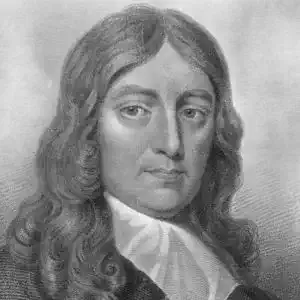
John Milton
Paradise Lost: Book 12
As one who in his journey bates at noon,
Though bent on speed; so here the Arch-Angel paused
Betwixt the world destroyed and world restored,
If Adam aught perhaps might interpose;
Then, with transition sweet, new speech resumes.
Thus thou hast seen one world begin, and end;
And Man, as from a second stock, proceed.
Much thou hast yet to see; but I perceive
Thy mortal sight to fail; objects divine
Must needs impair and weary human sense:
Henceforth what is to come I will relate;
Thou therefore give due audience, and attend.
This second source of Men, while yet but few,
And while the dread of judgement past remains
Fresh in their minds, fearing the Deity,
With some regard to what is just and right
Shall lead their lives, and multiply apace;
Labouring the soil, and reaping plenteous crop,
Corn, wine, and oil; and, from the herd or flock,
Oft sacrificing bullock, lamb, or kid,
With large wine-offerings poured, and sacred feast,
Shall spend their days in joy unblamed; and dwell
Long time in peace, by families and tribes,
Under paternal rule: till one shall rise
Of proud ambitious heart; who, not content
With fair equality, fraternal state,
Will arrogate dominion undeserved
Over his brethren, and quite dispossess
Concord and law of nature from the earth;
Hunting (and men not beasts shall be his game)
With war, and hostile snare, such as refuse
Subjection to his empire tyrannous:
A mighty hunter thence he shall be styled
Before the Lord; as in despite of Heaven,
Or from Heaven, claiming second sovranty;
And from rebellion shall derive his name,
Though of rebellion others he accuse.
He with a crew, whom like ambition joins
With him or under him to tyrannize,
Marching from Eden towards the west, shall find
The plain, wherein a black bituminous gurge
Boils out from under ground, the mouth of Hell:
Of brick, and of that stuff, they cast to build
A city and tower, whose top may reach to Heaven;
And get themselves a name; lest, far dispersed
In foreign lands, their memory be lost;
Regardless whether good or evil fame.
But God, who oft descends to visit men
Unseen, and through their habitations walks
To mark their doings, them beholding soon,
Comes down to see their city, ere the tower
Obstruct Heaven-towers, and in derision sets
Upon their tongues a various spirit, to rase
Quite out their native language; and, instead,
To sow a jangling noise of words unknown:
Forthwith a hideous gabble rises loud,
Among the builders; each to other calls
Not understood; till hoarse, and all in rage,
As mocked they storm: great laughter was in Heaven,
And looking down, to see the hubbub strange,
And hear the din: Thus was the building left
Ridiculous, and the work Confusion named.
Whereto thus Adam, fatherly displeased.
O execrable son! so to aspire
Above his brethren; to himself assuming
Authority usurped, from God not given:
He gave us only over beast, fish, fowl,
Dominion absolute; that right we hold
By his donation; but man over men
He made not lord; such title to himself
Reserving, human left from human free.
But this usurper his encroachment proud
Stays not on Man; to God his tower intends
Siege and defiance: Wretched man!what food
Will he convey up thither, to sustain
Himself and his rash army; where thin air
Above the clouds will pine his entrails gross,
And famish him of breath, if not of bread?
To whom thus Michael. Justly thou abhorrest
That son, who on the quiet state of men
Such trouble brought, affecting to subdue
Rational liberty; yet know withal,
Since thy original lapse, true liberty
Is lost, which always with right reason dwells
Twinned, and from her hath no dividual being:
Reason in man obscured, or not obeyed,
Immediately inordinate desires,
And upstart passions, catch the government
From reason; and to servitude reduce
Man, till then free. Therefore, since he permits
Within himself unworthy powers to reign
Over free reason, God, in judgement just,
Subjects him from without to violent lords;
Who oft as undeservedly enthrall
His outward freedom: Tyranny must be;
Though to the tyrant thereby no excuse.
Yet sometimes nations will decline so low
From virtue, which is reason, that no wrong,
But justice, and some fatal curse annexed,
Deprives them of their outward liberty;
Their inward lost: Witness the irreverent son
Of him who built the ark; who, for the shame
Done to his father, heard this heavy curse,
Servant of servants, on his vicious race.
Thus will this latter, as the former world,
Still tend from bad to worse; till God at last,
Wearied with their iniquities, withdraw
His presence from among them, and avert
His holy eyes; resolving from thenceforth
To leave them to their own polluted ways;
And one peculiar nation to select
From all the rest, of whom to be invoked,
A nation from one faithful man to spring:
Him on this side Euphrates yet residing,
Bred up in idol-worship: O, that men
(Canst thou believe?) should be so stupid grown,
While yet the patriarch lived, who 'scaped the flood,
As to forsake the living God, and fall
To worship their own work in wood and stone
For Gods! Yet him God the Most High vouchsafes
To call by vision, from his father's house,
His kindred, and false Gods, into a land
Which he will show him; and from him will raise
A mighty nation; and upon him shower
His benediction so, that in his seed
All nations shall be blest: he straight obeys;
Not knowing to what land, yet firm believes:
I see him, but thou canst not, with what faith
He leaves his Gods, his friends, and native soil,
Ur of Chaldaea, passing now the ford
To Haran; after him a cumbrous train
Of herds and flocks, and numerous servitude;
Not wandering poor, but trusting all his wealth
With God, who called him, in a land unknown.
Canaan he now attains; I see his tents
Pitched about Sechem, and the neighbouring plain
Of Moreh; there by promise he receives
Gift to his progeny of all that land,
From Hameth northward to the Desart south;
(Things by their names I call, though yet unnamed;)
From Hermon east to the great western Sea;
Mount Hermon, yonder sea; each place behold
In prospect, as I point them; on the shore
Mount Carmel; here, the double-founted stream,
Jordan, true limit eastward; but his sons
Shall dwell to Senir, that long ridge of hills.
This ponder, that all nations of the earth
Shall in his seed be blessed: By that seed
Is meant thy great Deliverer, who shall bruise
The Serpent's head; whereof to thee anon
Plainlier shall be revealed. This patriarch blest,
Whom faithful Abraham due time shall call,
A son, and of his son a grand-child, leaves;
Like him in faith, in wisdom, and renown:
The grandchild, with twelve sons increased, departs
From Canaan to a land hereafter called
Egypt, divided by the river Nile
See where it flows, disgorging at seven mouths
Into the sea. To sojourn in that land
He comes, invited by a younger son
In time of dearth, a son whose worthy deeds
Raise him to be the second in that realm
Of Pharaoh. There he dies, and leaves his race
Growing into a nation, and now grown
Suspected to a sequent king, who seeks
To stop their overgrowth, as inmate guests
Too numerous; whence of guests he makes them slaves
Inhospitably, and kills their infant males:
Till by two brethren (these two brethren call
Moses and Aaron) sent from God to claim
His people from enthralment, they return,
With glory and spoil, back to their promised land.
But first, the lawless tyrant, who denies
To know their God, or message to regard,
Must be compelled by signs and judgements dire;
To blood unshed the rivers must be turned;
Frogs, lice, and flies, must all his palace fill
With loathed intrusion, and fill all the land;
His cattle must of rot and murren die;
Botches and blains must all his flesh emboss,
And all his people; thunder mixed with hail,
Hail mixed with fire, must rend the Egyptians sky,
And wheel on the earth, devouring where it rolls;
What it devours not, herb, or fruit, or grain,
A darksome cloud of locusts swarming down
Must eat, and on the ground leave nothing green;
Darkness must overshadow all his bounds,
Palpable darkness, and blot out three days;
Last, with one midnight stroke, all the first-born
Of Egypt must lie dead. Thus with ten wounds
The river-dragon tamed at length submits
To let his sojourners depart, and oft
Humbles his stubborn heart; but still, as ice
More hardened after thaw; till, in his rage
Pursuing whom he late dismissed, the sea
Swallows him with his host; but them lets pass,
As on dry land, between two crystal walls;
Awed by the rod of Moses so to stand
Divided, till his rescued gain their shore:
Such wondrous power God to his saint will lend,
Though present in his Angel; who shall go
Before them in a cloud, and pillar of fire;
By day a cloud, by night a pillar of fire;
To guide them in their journey, and remove
Behind them, while the obdurate king pursues:
All night he will pursue; but his approach
Darkness defends between till morning watch;
Then through the fiery pillar, and the cloud,
God looking forth will trouble all his host,
And craze their chariot-wheels: when by command
Moses once more his potent rod extends
Over the sea; the sea his rod obeys;
On their embattled ranks the waves return,
And overwhelm their war: The race elect
Safe toward Canaan from the shore advance
Through the wild Desart, not the readiest way;
Lest, entering on the Canaanite alarmed,
War terrify them inexpert, and fear
Return them back to Egypt, choosing rather
Inglorious life with servitude; for life
To noble and ignoble is more sweet
Untrained in arms, where rashness leads not on.
This also shall they gain by their delay
In the wide wilderness; there they shall found
Their government, and their great senate choose
Through the twelve tribes, to rule by laws ordained:
God from the mount of Sinai, whose gray top
Shall tremble, he descending, will himself
In thunder, lightning, and loud trumpets' sound,
Ordain them laws; part, such as appertain
To civil justice; part, religious rites
Of sacrifice; informing them, by types
And shadows, of that destined Seed to bruise
The Serpent, by what means he shall achieve
Mankind's deliverance. But the voice of God
To mortal ear is dreadful: They beseech
That Moses might report to them his will,
And terrour cease; he grants what they besought,
Instructed that to God is no access
Without Mediator, whose high office now
Moses in figure bears; to introduce
One greater, of whose day he shall foretel,
And all the Prophets in their age the times
Of great Messiah shall sing. Thus, laws and rites
Established, such delight hath God in Men
Obedient to his will, that he vouchsafes
Among them to set up his tabernacle;
The Holy One with mortal Men to dwell:
By his prescript a sanctuary is framed
Of cedar, overlaid with gold; therein
An ark, and in the ark his testimony,
The records of his covenant; over these
A mercy-seat of gold, between the wings
Of two bright Cherubim; before him burn
Seven lamps as in a zodiack representing
The heavenly fires; over the tent a cloud
Shall rest by day, a fiery gleam by night;
Save when they journey, and at length they come,
Conducted by his Angel, to the land
Promised to Abraham and his seed:--The rest
Were long to tell; how many battles fought
How many kings destroyed; and kingdoms won;
Or how the sun shall in mid Heaven stand still
A day entire, and night's due course adjourn,
Man's voice commanding, 'Sun, in Gibeon stand,
'And thou moon in the vale of Aialon,
'Till Israel overcome! so call the third
From Abraham, son of Isaac; and from him
His whole descent, who thus shall Canaan win.
Here Adam interposed. O sent from Heaven,
Enlightener of my darkness, gracious things
Thou hast revealed; those chiefly, which concern
Just Abraham and his seed: now first I find
Mine eyes true-opening, and my heart much eased;
Erewhile perplexed with thoughts, what would become
Of me and all mankind: But now I see
His day, in whom all nations shall be blest;
Favour unmerited by me, who sought
Forbidden knowledge by forbidden means.
This yet I apprehend not, why to those
Among whom God will deign to dwell on earth
So many and so various laws are given;
So many laws argue so many sins
Among them; how can God with such reside?
To whom thus Michael. Doubt not but that sin
Will reign among them, as of thee begot;
And therefore was law given them, to evince
Their natural pravity, by stirring up
Sin against law to fight: that when they see
Law can discover sin, but not remove,
Save by those shadowy expiations weak,
The blood of bulls and goats, they may conclude
Some blood more precious must be paid for Man;
Just for unjust; that, in such righteousness
To them by faith imputed, they may find
Justification towards God, and peace
Of conscience; which the law by ceremonies
Cannot appease; nor Man the mortal part
Perform; and, not performing, cannot live.
So law appears imperfect; and but given
With purpose to resign them, in full time,
Up to a better covenant; disciplined
From shadowy types to truth; from flesh to spirit;
From imposition of strict laws to free
Acceptance of large grace; from servile fear
To filial; works of law to works of faith.
And therefore shall not Moses, though of God
Highly beloved, being but the minister
Of law, his people into Canaan lead;
But Joshua, whom the Gentiles Jesus call,
His name and office bearing, who shall quell
The adversary-Serpent, and bring back
Through the world's wilderness long-wandered Man
Safe to eternal Paradise of rest.
Mean while they, in their earthly Canaan placed,
Long time shall dwell and prosper, but when sins
National interrupt their publick peace,
Provoking God to raise them enemies;
From whom as oft he saves them penitent
By Judges first, then under Kings; of whom
The second, both for piety renowned
And puissant deeds, a promise shall receive
Irrevocable, that his regal throne
For ever shall endure; the like shall sing
All Prophecy, that of the royal stock
Of David (so I name this king) shall rise
A Son, the Woman's seed to thee foretold,
Foretold to Abraham, as in whom shall trust
All nations; and to kings foretold, of kings
The last; for of his reign shall be no end.
But first, a long succession must ensue;
And his next son, for wealth and wisdom famed,
The clouded ark of God, till then in tents
Wandering, shall in a glorious temple enshrine.
Such follow him, as shall be registered
Part good, part bad; of bad the longer scroll;
Whose foul idolatries, and other faults
Heaped to the popular sum, will so incense
God, as to leave them, and expose their land,
Their city, his temple, and his holy ark,
With all his sacred things, a scorn and prey
To that proud city, whose high walls thou sawest
Left in confusion; Babylon thence called.
There in captivity he lets them dwell
The space of seventy years; then brings them back,
Remembering mercy, and his covenant sworn
To David, stablished as the days of Heaven.
Returned from Babylon by leave of kings
Their lords, whom God disposed, the house of God
They first re-edify; and for a while
In mean estate live moderate; till, grown
In wealth and multitude, factious they grow;
But first among the priests dissention springs,
Men who attend the altar, and should most
Endeavour peace: their strife pollution brings
Upon the temple itself: at last they seise
The scepter, and regard not David's sons;
Then lose it to a stranger, that the true
Anointed King Messiah might be born
Barred of his right; yet at his birth a star,
Unseen before in Heaven, proclaims him come;
And guides the eastern sages, who inquire
His place, to offer incense, myrrh, and gold:
His place of birth a solemn Angel tells
To simple shepherds, keeping watch by night;
They gladly thither haste, and by a quire
Of squadroned Angels hear his carol sung.
A virgin is his mother, but his sire
The power of the Most High: He shall ascend
The throne hereditary, and bound his reign
With Earth's wide bounds, his glory with the Heavens.
He ceased, discerning Adam with such joy
Surcharged, as had like grief been dewed in tears,
Without the vent of words; which these he breathed.
O prophet of glad tidings, finisher
Of utmost hope! now clear I understand
What oft my steadiest thoughts have searched in vain;
Why our great Expectation should be called
The seed of Woman: Virgin Mother, hail,
High in the love of Heaven; yet from my loins
Thou shalt proceed, and from thy womb the Son
Of God Most High: so God with Man unites!
Needs must the Serpent now his capital bruise
Expect with mortal pain: Say where and when
Their fight, what stroke shall bruise the victor's heel.
To whom thus Michael. Dream not of their fight,
As of a duel, or the local wounds
Of head or heel: Not therefore joins the Son
Manhood to Godhead, with more strength to foil
Thy enemy; nor so is overcome
Satan, whose fall from Heaven, a deadlier bruise,
Disabled, not to give thee thy death's wound:
Which he, who comes thy Saviour, shall recure,
Not by destroying Satan, but his works
In thee, and in thy seed: Nor can this be,
But by fulfilling that which thou didst want,
Obedience to the law of God, imposed
On penalty of death, and suffering death;
The penalty to thy transgression due,
And due to theirs which out of thine will grow:
So only can high Justice rest appaid.
The law of God exact he shall fulfil
Both by obedience and by love, though love
Alone fulfil the law; thy punishment
He shall endure, by coming in the flesh
To a reproachful life, and cursed death;
Proclaiming life to all who shall believe
In his redemption; and that his obedience,
Imputed, becomes theirs by faith; his merits
To save them, not their own, though legal, works.
For this he shall live hated, be blasphemed,
Seised on by force, judged, and to death condemned
A shameful and accursed, nailed to the cross
By his own nation; slain for bringing life:
But to the cross he nails thy enemies,
The law that is against thee, and the sins
Of all mankind, with him there crucified,
Never to hurt them more who rightly trust
In this his satisfaction; so he dies,
But soon revives; Death over him no power
Shall long usurp; ere the third dawning light
Return, the stars of morn shall see him rise
Out of his grave, fresh as the dawning light,
Thy ransom paid, which Man from death redeems,
His death for Man, as many as offered life
Neglect not, and the benefit embrace
By faith not void of works: This God-like act
Annuls thy doom, the death thou shouldest have died,
In sin for ever lost from life; this act
Shall bruise the head of Satan, crush his strength,
Defeating Sin and Death, his two main arms;
And fix far deeper in his head their stings
Than temporal death shall bruise the victor's heel,
Or theirs whom he redeems; a death, like sleep,
A gentle wafting to immortal life.
Nor after resurrection shall he stay
Longer on earth, than certain times to appear
To his disciples, men who in his life
Still followed him; to them shall leave in charge
To teach all nations what of him they learned
And his salvation; them who shall believe
Baptizing in the profluent stream, the sign
Of washing them from guilt of sin to life
Pure, and in mind prepared, if so befall,
For death, like that which the Redeemer died.
All nations they shall teach; for, from that day,
Not only to the sons of Abraham's loins
Salvation shall be preached, but to the sons
Of Abraham's faith wherever through the world;
So in his seed all nations shall be blest.
Then to the Heaven of Heavens he shall ascend
With victory, triumphing through the air
Over his foes and thine; there shall surprise
The Serpent, prince of air, and drag in chains
Through all his realm, and there confounded leave;
Then enter into glory, and resume
His seat at God's right hand, exalted high
Above all names in Heaven; and thence shall come,
When this world's dissolution shall be ripe,
With glory and power to judge both quick and dead;
To judge the unfaithful dead, but to reward
His faithful, and receive them into bliss,
Whether in Heaven or Earth; for then the Earth
Shall all be Paradise, far happier place
Than this of Eden, and far happier days.
So spake the Arch-Angel Michael; then paused,
As at the world's great period; and our sire,
Replete with joy and wonder, thus replied.
O Goodness infinite, Goodness immense!
That all this good of evil shall produce,
And evil turn to good; more wonderful
Than that which by creation first brought forth
Light out of darkness! Full of doubt I stand,
Whether I should repent me now of sin
By me done, and occasioned; or rejoice
Much more, that much more good thereof shall spring;
To God more glory, more good-will to Men
From God, and over wrath grace shall abound.
But say, if our Deliverer up to Heaven
Must re-ascend, what will betide the few
His faithful, left among the unfaithful herd,
The enemies of truth? Who then shall guide
His people, who defend? Will they not deal
Worse with his followers than with him they dealt?
Be sure they will, said the Angel; but from Heaven
He to his own a Comforter will send,
The promise of the Father, who shall dwell
His Spirit within them; and the law of faith,
Working through love, upon their hearts shall write,
To guide them in all truth; and also arm
With spiritual armour, able to resist
Satan's assaults, and quench his fiery darts;
What man can do against them, not afraid,
Though to the death; against such cruelties
With inward consolations recompensed,
And oft supported so as shall amaze
Their proudest persecutors: For the Spirit,
Poured first on his Apostles, whom he sends
To evangelize the nations, then on all
Baptized, shall them with wonderous gifts endue
To speak all tongues, and do all miracles,
As did their Lord before them. Thus they win
Great numbers of each nation to receive
With joy the tidings brought from Heaven: At length
Their ministry performed, and race well run,
Their doctrine and their story written left,
They die; but in their room, as they forewarn,
Wolves shall succeed for teachers, grievous wolves,
Who all the sacred mysteries of Heaven
To their own vile advantages shall turn
Of lucre and ambition; and the truth
With superstitions and traditions taint,
Left only in those written records pure,
Though not but by the Spirit understood.
Then shall they seek to avail themselves of names,
Places, and titles, and with these to join
Secular power; though feigning still to act
By spiritual, to themselves appropriating
The Spirit of God, promised alike and given
To all believers; and, from that pretence,
Spiritual laws by carnal power shall force
On every conscience; laws which none shall find
Left them inrolled, or what the Spirit within
Shall on the heart engrave. What will they then
But force the Spirit of Grace itself, and bind
His consort Liberty? what, but unbuild
His living temples, built by faith to stand,
Their own faith, not another's? for, on earth,
Who against faith and conscience can be heard
Infallible? yet many will presume:
Whence heavy persecution shall arise
On all, who in the worship persevere
Of spirit and truth; the rest, far greater part,
Will deem in outward rites and specious forms
Religion satisfied; Truth shall retire
Bestuck with slanderous darts, and works of faith
Rarely be found: So shall the world go on,
To good malignant, to bad men benign;
Under her own weight groaning; till the day
Appear of respiration to the just,
And vengeance to the wicked, at return
Of him so lately promised to thy aid,
The Woman's Seed; obscurely then foretold,
Now ampler known thy Saviour and thy Lord;
Last, in the clouds, from Heaven to be revealed
In glory of the Father, to dissolve
Satan with his perverted world; then raise
From the conflagrant mass, purged and refined,
New Heavens, new Earth, ages of endless date,
Founded in righteousness, and peace, and love;
To bring forth fruits, joy and eternal bliss.
He ended; and thus Adam last replied.
How soon hath thy prediction, Seer blest,
Measured this transient world, the race of time,
Till time stand fixed! Beyond is all abyss,
Eternity, whose end no eye can reach.
Greatly-instructed I shall hence depart;
Greatly in peace of thought; and have my fill
Of knowledge, what this vessel can contain;
Beyond which was my folly to aspire.
Henceforth I learn, that to obey is best,
And love with fear the only God; to walk
As in his presence; ever to observe
His providence; and on him sole depend,
Merciful over all his works, with good
Still overcoming evil, and by small
Accomplishing great things, by things deemed weak
Subverting worldly strong, and worldly wise
By simply meek: that suffering for truth's sake
Is fortitude to highest victory,
And, to the faithful, death the gate of life;
Taught this by his example, whom I now
Acknowledge my Redeemer ever blest.
To whom thus also the Angel last replied.
This having learned, thou hast attained the sum
Of wisdom; hope no higher, though all the stars
Thou knewest by name, and all the ethereal powers,
All secrets of the deep, all Nature's works,
Or works of God in Heaven, air, earth, or sea,
And all the riches of this world enjoyedst,
And all the rule, one empire; only add
Deeds to thy knowledge answerable; add faith,
Add virtue, patience, temperance; add love,
By name to come called charity, the soul
Of all the rest: then wilt thou not be loth
To leave this Paradise, but shalt possess
A Paradise within thee, happier far.--
Let us descend now therefore from this top
Of speculation; for the hour precise
Exacts our parting hence; and see!the guards,
By me encamped on yonder hill, expect
Their motion; at whose front a flaming sword,
In signal of remove, waves fiercely round:
We may no longer stay: go, waken Eve;
Her also I with gentle dreams have calmed
Portending good, and all her spirits composed
To meek submission: thou, at season fit,
Let her with thee partake what thou hast heard;
Chiefly what may concern her faith to know,
The great deliverance by her seed to come
(For by the Woman's seed) on all mankind:
That ye may live, which will be many days,
Both in one faith unanimous, though sad,
With cause, for evils past; yet much more cheered
With meditation on the happy end.
He ended, and they both descend the hill;
Descended, Adam to the bower, where Eve
Lay sleeping, ran before; but found her waked;
And thus with words not sad she him received.
Whence thou returnest, and whither wentest, I know;
For God is also in sleep; and dreams advise,
Which he hath sent propitious, some great good
Presaging, since with sorrow and heart's distress
Wearied I fell asleep: But now lead on;
In me is no delay; with thee to go,
Is to stay here; without thee here to stay,
Is to go hence unwilling; thou to me
Art all things under $Heaven, all places thou,
Who for my wilful crime art banished hence.
This further consolation yet secure
I carry hence; though all by me is lost,
Such favour I unworthy am vouchsafed,
By me the Promised Seed shall all restore.
So spake our mother Eve; and Adam heard
Well pleased, but answered not: For now, too nigh
The Arch-Angel stood; and, from the other hill
To their fixed station, all in bright array
The Cherubim descended; on the ground
Gliding meteorous, as evening-mist
Risen from a river o'er the marish glides,
And gathers ground fast at the labourer's heel
Homeward returning. High in front advanced,
The brandished sword of God before them blazed,
Fierce as a comet; which with torrid heat,
And vapour as the Libyan air adust,
Began to parch that temperate clime; whereat
In either hand the hastening Angel caught
Our lingering parents, and to the eastern gate
Led them direct, and down the cliff as fast
To the subjected plain; then disappeared.
They, looking back, all the eastern side beheld
Of Paradise, so late their happy seat,
Waved over by that flaming brand; the gate
With dreadful faces thronged, and fiery arms:
Some natural tears they dropt, but wiped them soon;
The world was all before them, where to choose
Their place of rest, and Providence their guide:
They, hand in hand, with wandering steps and slow,
Through Eden took their solitary way.
686
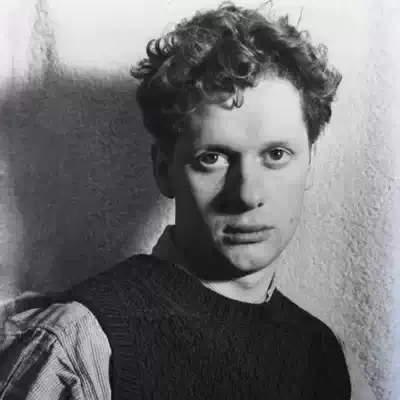
Dylan Thomas
Limerick
There was an old bugger called God,
who got a young virgin in pod.
This disgraceful behaviour
begot Christ our Saviour,
who was nailed to a cross, poor old sod.
who got a young virgin in pod.
This disgraceful behaviour
begot Christ our Saviour,
who was nailed to a cross, poor old sod.
691
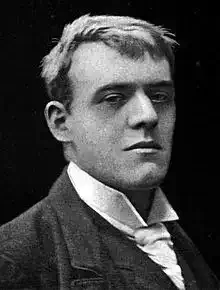
Hilaire Belloc
Matilda Who told Lies, and was Burned to Death
Matilda told such Dreadful Lies,
It made one Gasp and Stretch one's Eyes;
Her Aunt, who, from her Earliest Youth,
Had kept a Strict Regard for Truth,
Attempted to Believe Matilda:
The effort very nearly killed her,
And would have done so, had not She
Discovered this Infirmity.
For once, towards the Close of Day,
Matilda, growing tired of play,
And finding she was left alone,
Went tiptoe to the Telephone
And summoned the Immediate Aid
Of London's Noble Fire-Brigade.
Within an hour the Gallant Band
Were pouring in on every hand,
From Putney, Hackney Downs, and Bow.
With Courage high and Hearts a-glow,
They galloped, roaring through the Town,
'Matilda's House is Burning Down!'
Inspired by British Cheers and Loud
Proceeding from the Frenzied Crowd,
They ran their ladders through a score
Of windows on the Ball Room Floor;
And took Peculiar Pains to Souse
The Pictures up and down the House,
Until Matilda's Aunt succeeded
In showing them they were not needed;
And even then she had to pay
To get the Men to go away,
It happened that a few Weeks later
Her Aunt was off to the Theatre
To see that Interesting Play
The Second Mrs. Tanqueray.
She had refused to take her Niece
To hear this Entertaining Piece:
A Deprivation Just and Wise
To Punish her for Telling Lies.
That Night a Fire did break out--
You should have heard Matilda Shout!
You should have heard her Scream and Bawl,
And throw the window up and call
To People passing in the Street-(
The rapidly increasing Heat
Encouraging her to obtain
Their confidnce) -- but all in vain!
For every time she shouted 'Fire!'
They only answered 'Little Liar!'
And therefore when her Aunt returned,
Matilda, and the House, were Burned.
669
William Shakespeare
Sonnet 131: Thou art as tyrannous, so as thou art
Thou art as tyrannous, so as thou art,
As those whose beauties proudly make them cruel;
For well thou know'st to my dear doting heart
Thou art the fairest and most precious jewel.
Yet, in good faith, some say that thee behold
Thy face hath not the power to make love groan;
To say they err I dare not be so bold,
Although I swear it to myself alone.
And to be sure that is not false I swear,
A thousand groans but thinking on thy face,
One on another's neck do witness bear
Thy black is fairest in my judgment's place.
In nothing art thou black save in thy deeds,
And thence this slander, as I think, proceeds.
673
Edgar Albert Guest
A Christmas Greeting
Here's to you, little mother,
With your boy so far away;
May the joy of service smother
All your grief this Christmas day;
May the magic of his splendor
Thrill your spirit through and through
And may all that's fine and tender
Make a smiling day for you.
May you never know the sadness
That from day to day you dread;
May you never find but gladness
In the Flag that's overhead;
May the good God watch above him
As he stands to duty stern,
And at last to all who love him
May he have a safe return.
Little mother, take the blessing
Of a grateful nation's heart;
May the news that is distressing
Never cause your tears to start;
May there be no fears to haunt you,
And no lonely hours and sad;
May your trials never daunt you,
But may every day be glad.
Little Mother, could I do it,
This my Christmas gift would be:
That he'd safely battle through it,
This to you I'd guarantee.
And I'd pledge to you this morning
Joys to banish all your cares,
Gifts of gold and silver scorning,
I would answer all your prayers.
671
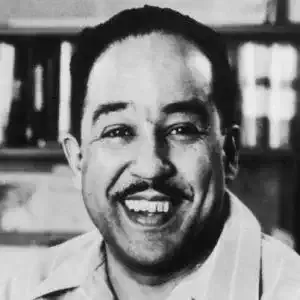
Langston Hughes
I Dream A World
I dream a world where man
No other man will scorn,
Where love will bless the earth
And peace its paths adorn
I dream a world where all
Will know sweet freedom's way,
Where greed no longer saps the soul
Nor avarice blights our day.
A world I dream where black or white,
Whatever race you be,
Will share the bounties of the earth
And every man is free,
Where wretchedness will hang its head
And joy, like a pearl,
Attends the needs of all mankind-
Of such I dream, my world!
675
Edgar Albert Guest
The Lamb Skin
It is not ornamental, the cost is not great,
There are other things far more useful, yet truly I state,
Though of all my possesions, there's none can compare,
With that white leather apron, which all Masons wear.
As a young lad I wondered just what it all meant,
When Dad hustled around, and so much time was spent
On shaving and dressing and looking just right,
Until Mother would say: 'It's the Masons tonight.'
And some winter nights she said: 'What makes you go,
Way up there tonight thru the sleet and the snow?
You see the same things every month of the year.'
Then Dad would reply: 'Yes, I know it, my dear.'
'Forty years I have seen the same things, it is true.
And though they are old, they always seem new,
For the hands that I clasp, and the friends that I greet,
Seem a little bit closer each time that we meet.'
Years later I stood at that very same door,
With good men and true who had entered before,
I knelt at the alter, and there I was taught
That virtue and honor can never be bought.
That the spotless white lambskin all Masons revere,
If worthily worn grows more precious each year,
That service to others brings blessings untold,
That man may be poor tho surrounded by gold.
I learned that true brotherhood flourishes there,
That enmities fade 'neath the compass and square,
That wealth and position are all thrust aside,
As there on the level men meet and abide.
So, honor the lambskin, may it always remain
Forever unblemished, and free from all stain,
And when we are called to the Great Father's love,
May we all take our place in that Lodge up above.
668
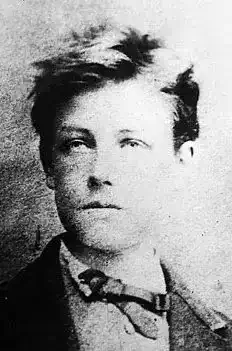
Arthur Rimbaud
Tartufe's Punishment
Raking, raking, his amorous thoughts
underneath his chaste robe of black,
happy, his hand gloved,
one day as he went along, fearsomely sweet,
yellow, dribbling piety from his toothless mouth,
One day as he went along,
'Let us Pray', - a Wicked One seized him
roughly by his saintly ear and
snapped frightful words at him,
tearing off the chaste robe of black
wrapped about his moist skin.
Punishment! - His clothes were unbuttoned;
and, the long chaplet of pardoned
sins being told in his heart,
St Tartufe was so pale!..
So he confessed and prayed, with a death rattle!
The man contented himself with carrying off
his clerical bands… - Faugh!
Tartufe was naked from his top to his toe!
673

Elizabeth Barrett Browning
The Runaway Slave at Pilgrim's Point
I.
I stand on the mark beside the shore
Of the first white pilgrim's bended knee,
Where exile turned to ancestor,
And God was thanked for liberty.
I have run through the night, my skin is as dark,
I bend my knee down on this mark . . .
I look on the sky and the sea.
II.
O pilgrim-souls, I speak to you!
I see you come out proud and slow
From the land of the spirits pale as dew. . .
And round me and round me ye go!
O pilgrims, I have gasped and run
All night long from the whips of one
Who in your names works sin and woe.
III.
And thus I thought that I would come
And kneel here where I knelt before,
And feel your souls around me hum
In undertone to the ocean's roar;
And lift my black face, my black hand,
Here, in your names, to curse this land
Ye blessed in freedom's evermore.
IV.
I am black, I am black;
And yet God made me, they say.
But if He did so, smiling back
He must have cast His work away
Under the feet of His white creatures,
With a look of scorn,--that the dusky features
Might be trodden again to clay.
V.
And yet He has made dark things
To be glad and merry as light.
There's a little dark bird sits and sings;
There's a dark stream ripples out of sight;
And the dark frogs chant in the safe morass,
And the sweetest stars are made to pass
O'er the face of the darkest night.
VI.
But we who are dark, we are dark!
Ah, God, we have no stars!
About our souls in care and cark
Our blackness shuts like prison bars:
The poor souls crouch so far behind,
That never a comfort can they find
By reaching through the prison-bars.
VII.
Indeed, we live beneath the sky, . . .
That great smooth Hand of God, stretched out
On all His children fatherly,
To bless them from the fear and doubt,
Which would be, if, from this low place,
All opened straight up to His face
Into the grand eternity.
VIII.
And still God's sunshine and His frost,
They make us hot, they make us cold,
As if we were not black and lost:
And the beasts and birds, in wood and fold,
Do fear and take us for very men!
Could the weep-poor-will or the cat of the glen
Look into my eyes and be bold?
IX.
I am black, I am black!--
But, once, I laughed in girlish glee;
For one of my colour stood in the track
Where the drivers drove, and looked at me--
And tender and full was the look he gave:
Could a slave look so at another slave?--
I look at the sky and the sea.
X.
And from that hour our spirits grew
As free as if unsold, unbought:
Oh, strong enough, since we were two
To conquer the world, we thought!
The drivers drove us day by day;
We did not mind, we went one way,
And no better a liberty sought.
XI.
In the sunny ground between the canes,
He said 'I love you' as he passed:
When the shingle-roof rang sharp with the rains,
I heard how he vowed it fast:
While others shook, he smiled in the hut
As he carved me a bowl of the cocoa-nut,
Through the roar of the hurricanes.
XII.
I sang his name instead of a song;
Over and over I sang his name--
Upward and downward I drew it along
My various notes; the same, the same!
I sang it low, that the slave-girls near
Might never guess from aught they could hear,
It was only a name.
XIII.
I look on the sky and the sea--
We were two to love, and two to pray,--
Yes, two, O God, who cried to Thee,
Though nothing didst Thou say.
Coldly Thou sat'st behind the sun!
And now I cry who am but one,
How wilt Thou speak to-day?--
XIV.
We were black, we were black!
We had no claim to love and bliss:
What marvel, if each turned to lack?
They wrung my cold hands out of his,--
They dragged him . . . where ? . . . I crawled to touch
His blood's mark in the dust! . . . not much,
Ye pilgrim-souls, . . . though plain as this!
XV.
Wrong, followed by a deeper wrong!
Mere grief's too good for such as I.
So the white men brought the shame ere long
To strangle the sob of my agony.
They would not leave me for my dull
Wet eyes!--it was too merciful
To let me weep pure tears and die.
XVI.
I am black, I am black!--
I wore a child upon my breast
An amulet that hung too slack,
And, in my unrest, could not rest:
Thus we went moaning, child and mother,
One to another, one to another,
Until all ended for the best:
XVII.
For hark ! I will tell you low . . . Iow . . .
I am black, you see,--
And the babe who lay on my bosom so,
Was far too white . . . too white for me;
As white as the ladies who scorned to pray
Beside me at church but yesterday;
Though my tears had washed a place for my knee.
XVIII.
My own, own child! I could not bear
To look in his face, it was so white.
I covered him up with a kerchief there;
I covered his face in close and tight:
And he moaned and struggled, as well might be,
For the white child wanted his liberty--
Ha, ha! he wanted his master right.
XIX.
He moaned and beat with his head and feet,
His little feet that never grew--
He struck them out, as it was meet,
Against my heart to break it through.
I might have sung and made him mild--
But I dared not sing to the white-faced child
The only song I knew.
XX.
I pulled the kerchief very close:
He could not see the sun, I swear,
More, then, alive, than now he does
From between the roots of the mango . . . where
. . . I know where. Close! a child and mother
Do wrong to look at one another,
When one is black and one is fair.
XXI.
Why, in that single glance I had
Of my child's face, . . . I tell you all,
I saw a look that made me mad . . .
The master's look, that used to fall
On my soul like his lash . . . or worse!
And so, to save it from my curse,
I twisted it round in my shawl.
XXII.
And he moaned and trembled from foot to head,
He shivered from head to foot;
Till, after a time, he lay instead
Too suddenly still and mute.
I felt, beside, a stiffening cold, . . .
I dared to lift up just a fold . . .
As in lifting a leaf of the mango-fruit.
XXIII.
But my fruit . . . ha, ha!--there, had been
(I laugh to think on't at this hour! . . .)
Your fine white angels, who have seen
Nearest the secret of God's power, . . .
And plucked my fruit to make them wine,
And sucked the soul of that child of mine,
As the humming-bird sucks the soul of the flower.
XXIV.
Ha, ha, for the trick of the angels white!
They freed the white child's spirit so.
I said not a word, but, day and night,
I carried the body to and fro;
And it lay on my heart like a stone . . . as chill.
--The sun may shine out as much as he will:
I am cold, though it happened a month ago.
XXV.
From the white man's house, and the black man's hut,
I carried the little body on,
The forest's arms did round us shut,
And silence through the trees did run:
They asked no question as I went,--
They stood too high for astonishment,--
They could see God sit on His throne.
XXVI.
My little body, kerchiefed fast,
I bore it on through the forest . . . on:
And when I felt it was tired at last,
I scooped a hole beneath the moon.
Through the forest-tops the angels far,
With a white sharp finger from every star,
Did point and mock at what was done.
XXVII.
Yet when it was all done aright, . . .
Earth, 'twixt me and my baby, strewed,
All, changed to black earth, . . . nothing white, . . .
A dark child in the dark,--ensued
Some comfort, and my heart grew young:
I sate down smiling there and sung
The song I learnt in my maidenhood.
XXVIII.
And thus we two were reconciled,
The white child and black mother, thus:
For, as I sang it, soft and wild
The same song, more melodious,
Rose from the grave whereon I sate!
It was the dead child singing that,
To join the souls of both of us.
XXIX.
I look on the sea and the sky!
Where the pilgrims' ships first anchored lay,
The free sun rideth gloriously;
But the pilgrim-ghosts have slid away
Through the earliest streaks of the morn.
My face is black, but it glares with a scorn
Which they dare not meet by day.
XXX.
Ah!--in their 'stead, their hunter sons!
Ah, ah! they are on me--they hunt in a ring--
Keep off! I brave you all at once--
I throw off your eyes like snakes that sting!
You have killed the black eagle at nest, I think:
Did you never stand still in your triumph, and shrink
From the stroke of her wounded wing?
XXXI.
(Man, drop that stone you dared to lift!--)
I wish you, who stand there five a-breast,
Each, for his own wife's joy and gift,
A little corpse as safely at rest
As mine in the mangos!--Yes, but she
May keep live babies on her knee,
And sing the song she liketh best.
XXXll.
I am not mad: I am black.
I see you staring in my face--
I know you, staring, shrinking back--
Ye are born of the Washington-race:
And this land is the free America:
And this mark on my wrist . . . (I prove what I say)
Ropes tied me up here to the flogging-place.
XXXIII.
You think I shrieked then? Not a sound!
I hung, as a gourd hangs in the sun.
I only cursed them all around,
As softly as I might have done
My very own child!--From these sands
Up to the mountains, lift your hands,
O slaves, and end what I begun!
XXXIV.
Whips, curses; these must answer those!
For in this UNION, you have set
Two kinds of men in adverse rows,
Each loathing each: and all forget
The seven wounds in Christ's body fair;
While HE sees gaping everywhere
Our countless wounds that pay no debt.
XXXV.
Our wounds are different. Your white men
Are, after all, not gods indeed,
Nor able to make Christs again
Do good with bleeding. We who bleed . . .
(Stand off!) we help not in our loss!
We are too heavy for our cross,
And fall and crush you and your seed.
XXXVI.
I fall, I swoon! I look at the sky:
The clouds are breaking on my brain;
I am floated along, as if I should die
Of liberty's exquisite pain--
In the name of the white child, waiting for me
In the death-dark where we may kiss and agree,
White men, I leave you all curse-free
In my broken heart's disdain!
680
John Milton
Paradise Lost: Book 02
High on a throne of royal state, which far
Outshone the wealth or Ormus and of Ind,
Or where the gorgeous East with richest hand
Showers on her kings barbaric pearl and gold,
Satan exalted sat, by merit raised
To that bad eminence; and, from despair
Thus high uplifted beyond hope, aspires
Beyond thus high, insatiate to pursue
Vain war with Heaven; and, by success untaught,
His proud imaginations thus displayed:-
"Powers and Dominions, Deities of Heaven!--
For, since no deep within her gulf can hold
Immortal vigour, though oppressed and fallen,
I give not Heaven for lost: from this descent
Celestial Virtues rising will appear
More glorious and more dread than from no fall,
And trust themselves to fear no second fate!--
Me though just right, and the fixed laws of Heaven,
Did first create your leader--next, free choice
With what besides in council or in fight
Hath been achieved of merit--yet this loss,
Thus far at least recovered, hath much more
Established in a safe, unenvied throne,
Yielded with full consent. The happier state
In Heaven, which follows dignity, might draw
Envy from each inferior; but who here
Will envy whom the highest place exposes
Foremost to stand against the Thunderer's aim
Your bulwark, and condemns to greatest share
Of endless pain? Where there is, then, no good
For which to strive, no strife can grow up there
From faction: for none sure will claim in Hell
Precedence; none whose portion is so small
Of present pain that with ambitious mind
Will covet more! With this advantage, then,
To union, and firm faith, and firm accord,
More than can be in Heaven, we now return
To claim our just inheritance of old,
Surer to prosper than prosperity
Could have assured us; and by what best way,
Whether of open war or covert guile,
We now debate. Who can advise may speak."
He ceased; and next him Moloch, sceptred king,
Stood up--the strongest and the fiercest Spirit
That fought in Heaven, now fiercer by despair.
His trust was with th' Eternal to be deemed
Equal in strength, and rather than be less
Cared not to be at all; with that care lost
Went all his fear: of God, or Hell, or worse,
He recked not, and these words thereafter spake:-
"My sentence is for open war. Of wiles,
More unexpert, I boast not: them let those
Contrive who need, or when they need; not now.
For, while they sit contriving, shall the rest--
Millions that stand in arms, and longing wait
The signal to ascend--sit lingering here,
Heaven's fugitives, and for their dwelling-place
Accept this dark opprobrious den of shame,
The prison of his ryranny who reigns
By our delay? No! let us rather choose,
Armed with Hell-flames and fury, all at once
O'er Heaven's high towers to force resistless way,
Turning our tortures into horrid arms
Against the Torturer; when, to meet the noise
Of his almighty engine, he shall hear
Infernal thunder, and, for lightning, see
Black fire and horror shot with equal rage
Among his Angels, and his throne itself
Mixed with Tartarean sulphur and strange fire,
His own invented torments. But perhaps
The way seems difficult, and steep to scale
With upright wing against a higher foe!
Let such bethink them, if the sleepy drench
Of that forgetful lake benumb not still,
That in our porper motion we ascend
Up to our native seat; descent and fall
To us is adverse. Who but felt of late,
When the fierce foe hung on our broken rear
Insulting, and pursued us through the Deep,
With what compulsion and laborious flight
We sunk thus low? Th' ascent is easy, then;
Th' event is feared! Should we again provoke
Our stronger, some worse way his wrath may find
To our destruction, if there be in Hell
Fear to be worse destroyed! What can be worse
Than to dwell here, driven out from bliss, condemned
In this abhorred deep to utter woe!
Where pain of unextinguishable fire
Must exercise us without hope of end
The vassals of his anger, when the scourge
Inexorably, and the torturing hour,
Calls us to penance? More destroyed than thus,
We should be quite abolished, and expire.
What fear we then? what doubt we to incense
His utmost ire? which, to the height enraged,
Will either quite consume us, and reduce
To nothing this essential--happier far
Than miserable to have eternal being!--
Or, if our substance be indeed divine,
And cannot cease to be, we are at worst
On this side nothing; and by proof we feel
Our power sufficient to disturb his Heaven,
And with perpetual inroads to alarm,
Though inaccessible, his fatal throne:
Which, if not victory, is yet revenge."
He ended frowning, and his look denounced
Desperate revenge, and battle dangerous
To less than gods. On th' other side up rose
Belial, in act more graceful and humane.
A fairer person lost not Heaven; he seemed
For dignity composed, and high exploit.
But all was false and hollow; though his tongue
Dropped manna, and could make the worse appear
The better reason, to perplex and dash
Maturest counsels: for his thoughts were low-To
vice industrious, but to nobler deeds
Timorous and slothful. Yet he pleased the ear,
And with persuasive accent thus began:-"
I should be much for open war, O Peers,
As not behind in hate, if what was urged
Main reason to persuade immediate war
Did not dissuade me most, and seem to cast
Ominous conjecture on the whole success;
When he who most excels in fact of arms,
In what he counsels and in what excels
Mistrustful, grounds his courage on despair
And utter dissolution, as the scope
Of all his aim, after some dire revenge.
First, what revenge? The towers of Heaven are filled
With armed watch, that render all access
Impregnable: oft on the bodering Deep
Encamp their legions, or with obscure wing
Scout far and wide into the realm of Night,
Scorning surprise. Or, could we break our way
By force, and at our heels all Hell should rise
With blackest insurrection to confound
Heaven's purest light, yet our great Enemy,
All incorruptible, would on his throne
Sit unpolluted, and th' ethereal mould,
Incapable of stain, would soon expel
Her mischief, and purge off the baser fire,
Victorious. Thus repulsed, our final hope
Is flat despair: we must exasperate
Th' Almighty Victor to spend all his rage;
And that must end us; that must be our cure--
To be no more. Sad cure! for who would lose,
Though full of pain, this intellectual being,
Those thoughts that wander through eternity,
To perish rather, swallowed up and lost
In the wide womb of uncreated Night,
Devoid of sense and motion? And who knows,
Let this be good, whether our angry Foe
Can give it, or will ever? How he can
Is doubtful; that he never will is sure.
Will he, so wise, let loose at once his ire,
Belike through impotence or unaware,
To give his enemies their wish, and end
Them in his anger whom his anger saves
To punish endless? 'Wherefore cease we, then?'
Say they who counsel war; 'we are decreed,
Reserved, and destined to eternal woe;
Whatever doing, what can we suffer more,
What can we suffer worse?' Is this, then, worst--
Thus sitting, thus consulting, thus in arms?
What when we fled amain, pursued and struck
With Heaven's afflicting thunder, and besought
The Deep to shelter us? This Hell then seemed
A refuge from those wounds. Or when we lay
Chained on the burning lake? That sure was worse.
What if the breath that kindled those grim fires,
Awaked, should blow them into sevenfold rage,
And plunge us in the flames; or from above
Should intermitted vengeance arm again
His red right hand to plague us? What if all
Her stores were opened, and this firmament
Of Hell should spout her cataracts of fire,
Impendent horrors, threatening hideous fall
One day upon our heads; while we perhaps,
Designing or exhorting glorious war,
Caught in a fiery tempest, shall be hurled,
Each on his rock transfixed, the sport and prey
Or racking whirlwinds, or for ever sunk
Under yon boiling ocean, wrapt in chains,
There to converse with everlasting groans,
Unrespited, unpitied, unreprieved,
Ages of hopeless end? This would be worse.
War, therefore, open or concealed, alike
My voice dissuades; for what can force or guile
With him, or who deceive his mind, whose eye
Views all things at one view? He from Heaven's height
All these our motions vain sees and derides,
Not more almighty to resist our might
Than wise to frustrate all our plots and wiles.
Shall we, then, live thus vile--the race of Heaven
Thus trampled, thus expelled, to suffer here
Chains and these torments? Better these than worse,
By my advice; since fate inevitable
Subdues us, and omnipotent decree,
The Victor's will. To suffer, as to do,
Our strength is equal; nor the law unjust
That so ordains. This was at first resolved,
If we were wise, against so great a foe
Contending, and so doubtful what might fall.
I laugh when those who at the spear are bold
And venturous, if that fail them, shrink, and fear
What yet they know must follow--to endure
Exile, or igominy, or bonds, or pain,
The sentence of their Conqueror. This is now
Our doom; which if we can sustain and bear,
Our Supreme Foe in time may much remit
His anger, and perhaps, thus far removed,
Not mind us not offending, satisfied
With what is punished; whence these raging fires
Will slacken, if his breath stir not their flames.
Our purer essence then will overcome
Their noxious vapour; or, inured, not feel;
Or, changed at length, and to the place conformed
In temper and in nature, will receive
Familiar the fierce heat; and, void of pain,
This horror will grow mild, this darkness light;
Besides what hope the never-ending flight
Of future days may bring, what chance, what change
Worth waiting--since our present lot appears
For happy though but ill, for ill not worst,
If we procure not to ourselves more woe."
Thus Belial, with words clothed in reason's garb,
Counselled ignoble ease and peaceful sloth,
Not peace; and after him thus Mammon spake:-"
Either to disenthrone the King of Heaven
We war, if war be best, or to regain
Our own right lost. Him to unthrone we then
May hope, when everlasting Fate shall yield
To fickle Chance, and Chaos judge the strife.
The former, vain to hope, argues as vain
The latter; for what place can be for us
Within Heaven's bound, unless Heaven's Lord supreme
We overpower? Suppose he should relent
And publish grace to all, on promise made
Of new subjection; with what eyes could we
Stand in his presence humble, and receive
Strict laws imposed, to celebrate his throne
With warbled hyms, and to his Godhead sing
Forced hallelujahs, while he lordly sits
Our envied sovereign, and his altar breathes
Ambrosial odours and ambrosial flowers,
Our servile offerings? This must be our task
In Heaven, this our delight. How wearisome
Eternity so spent in worship paid
To whom we hate! Let us not then pursue,
By force impossible, by leave obtained
Unacceptable, though in Heaven, our state
Of splendid vassalage; but rather seek
Our own good from ourselves, and from our own
Live to ourselves, though in this vast recess,
Free and to none accountable, preferring
Hard liberty before the easy yoke
Of servile pomp. Our greatness will appear
Then most conspicuous when great things of small,
Useful of hurtful, prosperous of adverse,
We can create, and in what place soe'er
Thrive under evil, and work ease out of pain
Through labour and endurance. This deep world
Of darkness do we dread? How oft amidst
Thick clouds and dark doth Heaven's all-ruling Sire
Choose to reside, his glory unobscured,
And with the majesty of darkness round
Covers his throne, from whence deep thunders roar.
Mustering their rage, and Heaven resembles Hell!
As he our darkness, cannot we his light
Imitate when we please? This desert soil
Wants not her hidden lustre, gems and gold;
Nor want we skill or art from whence to raise
Magnificence; and what can Heaven show more?
Our torments also may, in length of time,
Become our elements, these piercing fires
As soft as now severe, our temper changed
Into their temper; which must needs remove
The sensible of pain. All things invite
To peaceful counsels, and the settled state
Of order, how in safety best we may
Compose our present evils, with regard
Of what we are and where, dismissing quite
All thoughts of war. Ye have what I advise."
He scarce had finished, when such murmur filled
Th' assembly as when hollow rocks retain
The sound of blustering winds, which all night long
Had roused the sea, now with hoarse cadence lull
Seafaring men o'erwatched, whose bark by chance
Or pinnace, anchors in a craggy bay
After the tempest. Such applause was heard
As Mammon ended, and his sentence pleased,
Advising peace: for such another field
They dreaded worse than Hell; so much the fear
Of thunder and the sword of Michael
Wrought still within them; and no less desire
To found this nether empire, which might rise,
By policy and long process of time,
In emulation opposite to Heaven.
Which when Beelzebub perceived--than whom,
Satan except, none higher sat--with grave
Aspect he rose, and in his rising seemed
A pillar of state. Deep on his front engraven
Deliberation sat, and public care;
And princely counsel in his face yet shone,
Majestic, though in ruin. Sage he stood
With Atlantean shoulders, fit to bear
The weight of mightiest monarchies; his look
Drew audience and attention still as night
Or summer's noontide air, while thus he spake:-
"Thrones and Imperial Powers, Offspring of Heaven,
Ethereal Virtues! or these titles now
Must we renounce, and, changing style, be called
Princes of Hell? for so the popular vote
Inclines--here to continue, and build up here
A growing empire; doubtless! while we dream,
And know not that the King of Heaven hath doomed
This place our dungeon, not our safe retreat
Beyond his potent arm, to live exempt
From Heaven's high jurisdiction, in new league
Banded against his throne, but to remain
In strictest bondage, though thus far removed,
Under th' inevitable curb, reserved
His captive multitude. For he, to be sure,
In height or depth, still first and last will reign
Sole king, and of his kingdom lose no part
By our revolt, but over Hell extend
His empire, and with iron sceptre rule
Us here, as with his golden those in Heaven.
What sit we then projecting peace and war?
War hath determined us and foiled with loss
Irreparable; terms of peace yet none
Vouchsafed or sought; for what peace will be given
To us enslaved, but custody severe,
And stripes and arbitrary punishment
Inflicted? and what peace can we return,
But, to our power, hostility and hate,
Untamed reluctance, and revenge, though slow,
Yet ever plotting how the Conqueror least
May reap his conquest, and may least rejoice
In doing what we most in suffering feel?
Nor will occasion want, nor shall we need
With dangerous expedition to invade
Heaven, whose high walls fear no assault or siege,
Or ambush from the Deep. What if we find
Some easier enterprise? There is a place
(If ancient and prophetic fame in Heaven
Err not)--another World, the happy seat
Of some new race, called Man, about this time
To be created like to us, though less
In power and excellence, but favoured more
Of him who rules above; so was his will
Pronounced among the Gods, and by an oath
That shook Heaven's whole circumference confirmed.
Thither let us bend all our thoughts, to learn
What creatures there inhabit, of what mould
Or substance, how endued, and what their power
And where their weakness: how attempted best,
By force of subtlety. Though Heaven be shut,
And Heaven's high Arbitrator sit secure
In his own strength, this place may lie exposed,
The utmost border of his kingdom, left
To their defence who hold it: here, perhaps,
Some advantageous act may be achieved
By sudden onset--either with Hell-fire
To waste his whole creation, or possess
All as our own, and drive, as we were driven,
The puny habitants; or, if not drive,
Seduce them to our party, that their God
May prove their foe, and with repenting hand
Abolish his own works. This would surpass
Common revenge, and interrupt his joy
In our confusion, and our joy upraise
In his disturbance; when his darling sons,
Hurled headlong to partake with us, shall curse
Their frail original, and faded bliss--
Faded so soon! Advise if this be worth
Attempting, or to sit in darkness here
Hatching vain empires." Thus beelzebub
Pleaded his devilish counsel--first devised
By Satan, and in part proposed: for whence,
But from the author of all ill, could spring
So deep a malice, to confound the race
Of mankind in one root, and Earth with Hell
To mingle and involve, done all to spite
The great Creator? But their spite still serves
His glory to augment. The bold design
Pleased highly those infernal States, and joy
Sparkled in all their eyes: with full assent
They vote: whereat his speech he thus renews:-"
Well have ye judged, well ended long debate,
Synod of Gods, and, like to what ye are,
Great things resolved, which from the lowest deep
Will once more lift us up, in spite of fate,
Nearer our ancient seat--perhaps in view
Of those bright confines, whence, with neighbouring arms,
And opportune excursion, we may chance
Re-enter Heaven; or else in some mild zone
Dwell, not unvisited of Heaven's fair light,
Secure, and at the brightening orient beam
Purge off this gloom: the soft delicious air,
To heal the scar of these corrosive fires,
Shall breathe her balm. But, first, whom shall we send
In search of this new World? whom shall we find
Sufficient? who shall tempt with wandering feet
The dark, unbottomed, infinite Abyss,
And through the palpable obscure find out
His uncouth way, or spread his airy flight,
Upborne with indefatigable wings
Over the vast abrupt, ere he arrive
The happy Isle? What strength, what art, can then
Suffice, or what evasion bear him safe,
Through the strict senteries and stations thick
Of Angels watching round? Here he had need
All circumspection: and we now no less
Choice in our suffrage; for on whom we send
The weight of all, and our last hope, relies."
This said, he sat; and expectation held
His look suspense, awaiting who appeared
To second, or oppose, or undertake
The perilous attempt. But all sat mute,
Pondering the danger with deep thoughts; and each
In other's countenance read his own dismay,
Astonished. None among the choice and prime
Of those Heaven-warring champions could be found
So hardy as to proffer or accept,
Alone, the dreadful voyage; till, at last,
Satan, whom now transcendent glory raised
Above his fellows, with monarchal pride
Conscious of highest worth, unmoved thus spake:-"
O Progeny of Heaven! Empyreal Thrones!
With reason hath deep silence and demur
Seized us, though undismayed. Long is the way
And hard, that out of Hell leads up to light.
Our prison strong, this huge convex of fire,
Outrageous to devour, immures us round
Ninefold; and gates of burning adamant,
Barred over us, prohibit all egress.
These passed, if any pass, the void profound
Of unessential Night receives him next,
Wide-gaping, and with utter loss of being
Threatens him, plunged in that abortive gulf.
If thence he scape, into whatever world,
Or unknown region, what remains him less
Than unknown dangers, and as hard escape?
But I should ill become this throne, O Peers,
And this imperial sovereignty, adorned
With splendour, armed with power, if aught proposed
And judged of public moment in the shape
Of difficulty or danger, could deter
Me from attempting. Wherefore do I assume
These royalties, and not refuse to reign,
Refusing to accept as great a share
Of hazard as of honour, due alike
To him who reigns, and so much to him due
Of hazard more as he above the rest
High honoured sits? Go, therefore, mighty Powers,
Terror of Heaven, though fallen; intend at home,
While here shall be our home, what best may ease
The present misery, and render Hell
More tolerable; if there be cure or charm
To respite, or deceive, or slack the pain
Of this ill mansion: intermit no watch
Against a wakeful foe, while I abroad
Through all the coasts of dark destruction seek
Deliverance for us all. This enterprise
None shall partake with me." Thus saying, rose
The Monarch, and prevented all reply;
Prudent lest, from his resolution raised,
Others among the chief might offer now,
Certain to be refused, what erst they feared,
And, so refused, might in opinion stand
His rivals, winning cheap the high repute
Which he through hazard huge must earn. But they
Dreaded not more th' adventure than his voice
Forbidding; and at once with him they rose.
Their rising all at once was as the sound
Of thunder heard remote. Towards him they bend
With awful reverence prone, and as a God
Extol him equal to the Highest in Heaven.
Nor failed they to express how much they praised
That for the general safety he despised
His own: for neither do the Spirits damned
Lose all their virtue; lest bad men should boast
Their specious deeds on earth, which glory excites,
Or close ambition varnished o'er with zeal.
Thus they their doubtful consultations dark
Ended, rejoicing in their matchless Chief:
As, when from mountain-tops the dusky clouds
Ascending, while the north wind sleeps, o'erspread
Heaven's cheerful face, the louring element
Scowls o'er the darkened landscape snow or shower,
If chance the radiant sun, with farewell sweet,
Extend his evening beam, the fields revive,
The birds their notes renew, and bleating herds
Attest their joy, that hill and valley rings.
O shame to men! Devil with devil damned
Firm concord holds; men only disagree
Of creatures rational, though under hope
Of heavenly grace, and, God proclaiming peace,
Yet live in hatred, enmity, and strife
Among themselves, and levy cruel wars
Wasting the earth, each other to destroy:
As if (which might induce us to accord)
Man had not hellish foes enow besides,
That day and night for his destruction wait!
The Stygian council thus dissolved; and forth
In order came the grand infernal Peers:
Midst came their mighty Paramount, and seemed
Alone th' antagonist of Heaven, nor less
Than Hell's dread Emperor, with pomp supreme,
And god-like imitated state: him round
A globe of fiery Seraphim enclosed
With bright emblazonry, and horrent arms.
Then of their session ended they bid cry
With trumpet's regal sound the great result:
Toward the four winds four speedy Cherubim
Put to their mouths the sounding alchemy,
By herald's voice explained; the hollow Abyss
Heard far adn wide, and all the host of Hell
With deafening shout returned them loud acclaim.
Thence more at ease their minds, and somewhat raised
By false presumptuous hope, the ranged Powers
Disband; and, wandering, each his several way
Pursues, as inclination or sad choice
Leads him perplexed, where he may likeliest find
Truce to his restless thoughts, and entertain
The irksome hours, till his great Chief return.
Part on the plain, or in the air sublime,
Upon the wing or in swift race contend,
As at th' Olympian games or Pythian fields;
Part curb their fiery steeds, or shun the goal
With rapid wheels, or fronted brigades form:
As when, to warn proud cities, war appears
Waged in the troubled sky, and armies rush
To battle in the clouds; before each van
Prick forth the airy knights, and couch their spears,
Till thickest legions close; with feats of arms
From either end of heaven the welkin burns.
Others, with vast Typhoean rage, more fell,
Rend up both rocks and hills, and ride the air
In whirlwind; Hell scarce holds the wild uproar:--
As when Alcides, from Oechalia crowned
With conquest, felt th' envenomed robe, and tore
Through pain up by the roots Thessalian pines,
And Lichas from the top of Oeta threw
Into th' Euboic sea. Others, more mild,
Retreated in a silent valley, sing
With notes angelical to many a harp
Their own heroic deeds, and hapless fall
By doom of battle, and complain that Fate
Free Virtue should enthrall to Force or Chance.
Their song was partial; but the harmony
(What could it less when Spirits immortal sing?)
Suspended Hell, and took with ravishment
The thronging audience. In discourse more sweet
(For Eloquence the Soul, Song charms the Sense)
Others apart sat on a hill retired,
In thoughts more elevate, and reasoned high
Of Providence, Foreknowledge, Will, and Fate--
Fixed fate, free will, foreknowledge absolute,
And found no end, in wandering mazes lost.
Of good and evil much they argued then,
Of happiness and final misery,
Passion and apathy, and glory and shame:
Vain wisdom all, and false philosophy!--
Yet, with a pleasing sorcery, could charm
Pain for a while or anguish, and excite
Fallacious hope, or arm th' obdured breast
With stubborn patience as with triple steel.
Another part, in squadrons and gross bands,
On bold adventure to discover wide
That dismal world, if any clime perhaps
Might yield them easier habitation, bend
Four ways their flying march, along the banks
Of four infernal rivers, that disgorge
Into the burning lake their baleful streams--
Abhorred Styx, the flood of deadly hate;
Sad Acheron of sorrow, black and deep;
Cocytus, named of lamentation loud
Heard on the rueful stream; fierce Phlegeton,
Whose waves of torrent fire inflame with rage.
Far off from these, a slow and silent stream,
Lethe, the river of oblivion, rolls
Her watery labyrinth, whereof who drinks
Forthwith his former state and being forgets--
Forgets both joy and grief, pleasure and pain.
Beyond this flood a frozen continent
Lies dark and wild, beat with perpetual storms
Of whirlwind and dire hail, which on firm land
Thaws not, but gathers heap, and ruin seems
Of ancient pile; all else deep snow and ice,
A gulf profound as that Serbonian bog
Betwixt Damiata and Mount Casius old,
Where armies whole have sunk: the parching air
Burns frore, and cold performs th' effect of fire.
Thither, by harpy-footed Furies haled,
At certain revolutions all the damned
Are brought; and feel by turns the bitter change
Of fierce extremes, extremes by change more fierce,
From beds of raging fire to starve in ice
Their soft ethereal warmth, and there to pine
Immovable, infixed, and frozen round
Periods of time,--thence hurried back to fire.
They ferry over this Lethean sound
Both to and fro, their sorrow to augment,
And wish and struggle, as they pass, to reach
The tempting stream, with one small drop to lose
In sweet forgetfulness all pain and woe,
All in one moment, and so near the brink;
But Fate withstands, and, to oppose th' attempt,
Medusa with Gorgonian terror guards
The ford, and of itself the water flies
All taste of living wight, as once it fled
The lip of Tantalus. Thus roving on
In confused march forlorn, th' adventurous bands,
With shuddering horror pale, and eyes aghast,
Viewed first their lamentable lot, and found
No rest. Through many a dark and dreary vale
They passed, and many a region dolorous,
O'er many a frozen, many a fiery alp,
Rocks, caves, lakes, fens, bogs, dens, and shades of death--
A universe of death, which God by curse
Created evil, for evil only good;
Where all life dies, death lives, and Nature breeds,
Perverse, all monstrous, all prodigious things,
Obominable, inutterable, and worse
Than fables yet have feigned or fear conceived,
Gorgons, and Hydras, and Chimeras dire.
Meanwhile the Adversary of God and Man,
Satan, with thoughts inflamed of highest design,
Puts on swift wings, and toward the gates of Hell
Explores his solitary flight: sometimes
He scours the right hand coast, sometimes the left;
Now shaves with level wing the deep, then soars
Up to the fiery concave towering high.
As when far off at sea a fleet descried
Hangs in the clouds, by equinoctial winds
Close sailing from Bengala, or the isles
Of Ternate and Tidore, whence merchants bring
Their spicy drugs; they on the trading flood,
Through the wide Ethiopian to the Cape,
Ply stemming nightly toward the pole: so seemed
Far off the flying Fiend. At last appear
Hell-bounds, high reaching to the horrid roof,
And thrice threefold the gates; three folds were brass,
Three iron, three of adamantine rock,
Impenetrable, impaled with circling fire,
Yet unconsumed. Before the gates there sat
On either side a formidable Shape.
The one seemed woman to the waist, and fair,
But ended foul in many a scaly fold,
Voluminous and vast--a serpent armed
With mortal sting. About her middle round
A cry of Hell-hounds never-ceasing barked
With wide Cerberean mouths full loud, and rung
A hideous peal; yet, when they list, would creep,
If aught disturbed their noise, into her womb,
And kennel there; yet there still barked and howled
Within unseen. Far less abhorred than these
Vexed Scylla, bathing in the sea that parts
Calabria from the hoarse Trinacrian shore;
Nor uglier follow the night-hag, when, called
In secret, riding through the air she comes,
Lured with the smell of infant blood, to dance
With Lapland witches, while the labouring moon
Eclipses at their charms. The other Shape--
If shape it might be called that shape had none
Distinguishable in member, joint, or limb;
Or substance might be called that shadow seemed,
For each seemed either--black it stood as Night,
Fierce as ten Furies, terrible as Hell,
And shook a dreadful dart: what seemed his head
The likeness of a kingly crown had on.
Satan was now at hand, and from his seat
The monster moving onward came as fast
With horrid strides; Hell trembled as he strode.
Th' undaunted Fiend what this might be admired--
Admired, not feared (God and his Son except,
Created thing naught valued he nor shunned),
And with disdainful look thus first began:-
"Whence and what art thou, execrable Shape,
That dar'st, though grim and terrible, advance
Thy miscreated front athwart my way
To yonder gates? Through them I mean to pass,
That be assured, without leave asked of thee.
Retire; or taste thy folly, and learn by proof,
Hell-born, not to contend with Spirits of Heaven."
To whom the Goblin, full of wrath, replied:-"
Art thou that traitor Angel? art thou he,
Who first broke peace in Heaven and faith, till then
Unbroken, and in proud rebellious arms
Drew after him the third part of Heaven's sons,
Conjured against the Highest--for which both thou
And they, outcast from God, are here condemned
To waste eternal days in woe and pain?
And reckon'st thou thyself with Spirits of Heaven
Hell-doomed, and breath'st defiance here and scorn,
Where I reign king, and, to enrage thee more,
Thy king and lord? Back to thy punishment,
False fugitive; and to thy speed add wings,
Lest with a whip of scorpions I pursue
Thy lingering, or with one stroke of this dart
Strange horror seize thee, and pangs unfelt before."
So spake the grisly Terror, and in shape,
So speaking and so threatening, grew tenfold,
More dreadful and deform. On th' other side,
Incensed with indignation, Satan stood
Unterrified, and like a comet burned,
That fires the length of Ophiuchus huge
In th' arctic sky, and from his horrid hair
Shakes pestilence and war. Each at the head
Levelled his deadly aim; their fatal hands
No second stroke intend; and such a frown
Each cast at th' other as when two black clouds,
With heaven's artillery fraught, came rattling on
Over the Caspian,--then stand front to front
Hovering a space, till winds the signal blow
To join their dark encounter in mid-air.
So frowned the mighty combatants that Hell
Grew darker at their frown; so matched they stood;
For never but once more was wither like
To meet so great a foe. And now great deeds
Had been achieved, whereof all Hell had rung,
Had not the snaky Sorceress, that sat
Fast by Hell-gate and kept the fatal key,
Risen, and with hideous outcry rushed between.
"O father, what intends thy hand," she cried,
"Against thy only son? What fury, O son,
Possesses thee to bend that mortal dart
Against thy father's head? And know'st for whom?
For him who sits above, and laughs the while
At thee, ordained his drudge to execute
Whate'er his wrath, which he calls justice, bids--
His wrath, which one day will destroy ye both!"
She spake, and at her words the hellish Pest
Forbore: then these to her Satan returned:-
"So strange thy outcry, and thy words so strange
Thou interposest, that my sudden hand,
Prevented, spares to tell thee yet by deeds
What it intends, till first I know of thee
What thing thou art, thus double-formed, and why,
In this infernal vale first met, thou call'st
Me father, and that phantasm call'st my son.
I know thee not, nor ever saw till now
Sight more detestable than him and thee."
T' whom thus the Portress of Hell-gate replied:-"
Hast thou forgot me, then; and do I seem
Now in thine eye so foul?--once deemed so fair
In Heaven, when at th' assembly, and in sight
Of all the Seraphim with thee combined
In bold conspiracy against Heaven's King,
All on a sudden miserable pain
Surprised thee, dim thine eyes and dizzy swum
In darkness, while thy head flames thick and fast
Threw forth, till on the left side opening wide,
Likest to thee in shape and countenance bright,
Then shining heavenly fair, a goddess armed,
Out of thy head I sprung. Amazement seized
All th' host of Heaven; back they recoiled afraid
At first, and called me Sin, and for a sign
Portentous held me; but, familiar grown,
I pleased, and with attractive graces won
The most averse--thee chiefly, who, full oft
Thyself in me thy perfect image viewing,
Becam'st enamoured; and such joy thou took'st
With me in secret that my womb conceived
A growing burden. Meanwhile war arose,
And fields were fought in Heaven: wherein remained
(For what could else?) to our Almighty Foe
Clear victory; to our part loss and rout
Through all the Empyrean. Down they fell,
Driven headlong from the pitch of Heaven, down
Into this Deep; and in the general fall
I also: at which time this powerful key
Into my hands was given, with charge to keep
These gates for ever shut, which none can pass
Without my opening. Pensive here I sat
Alone; but long I sat not, till my womb,
Pregnant by thee, and now excessive grown,
Prodigious motion felt and rueful throes.
At last this odious offspring whom thou seest,
Thine own begotten, breaking violent way,
Tore through my entrails, that, with fear and pain
Distorted, all my nether shape thus grew
Transformed: but he my inbred enemy
Forth issued, brandishing his fatal dart,
Made to destroy. I fled, and cried out Death!
Hell trembled at the hideous name, and sighed
From all her caves, and back resounded Death!
I fled; but he pursued (though more, it seems,
Inflamed with lust than rage), and, swifter far,
Me overtook, his mother, all dismayed,
And, in embraces forcible and foul
Engendering with me, of that rape begot
These yelling monsters, that with ceaseless cry
Surround me, as thou saw'st--hourly conceived
And hourly born, with sorrow infinite
To me; for, when they list, into the womb
That bred them they return, and howl, and gnaw
My bowels, their repast; then, bursting forth
Afresh, with conscious terrors vex me round,
That rest or intermission none I find.
Before mine eyes in opposition sits
Grim Death, my son and foe, who set them on,
And me, his parent, would full soon devour
For want of other prey, but that he knows
His end with mine involved, and knows that I
Should prove a bitter morsel, and his bane,
Whenever that shall be: so Fate pronounced.
But thou, O father, I forewarn thee, shun
His deadly arrow; neither vainly hope
To be invulnerable in those bright arms,
Through tempered heavenly; for that mortal dint,
Save he who reigns above, none can resist."
She finished; and the subtle Fiend his lore
Soon learned, now milder, and thus answered smooth:-
"Dear daughter--since thou claim'st me for thy sire,
And my fair son here show'st me, the dear pledge
Of dalliance had with thee in Heaven, and joys
Then sweet, now sad to mention, through dire change
Befallen us unforeseen, unthought-of--know,
I come no enemy, but to set free
From out this dark and dismal house of pain
Both him and thee, and all the heavenly host
Of Spirits that, in our just pretences armed,
Fell with us from on high. From them I go
This uncouth errand sole, and one for all
Myself expose, with lonely steps to tread
Th' unfounded Deep, and through the void immense
To search, with wandering quest, a place foretold
Should be--and, by concurring signs, ere now
Created vast and round--a place of bliss
In the purlieus of Heaven; and therein placed
A race of upstart creatures, to supply
Perhaps our vacant room, though more removed,
Lest Heaven, surcharged with potent multitude,
Might hap to move new broils. Be this, or aught
Than this more secret, now designed, I haste
To know; and, this once known, shall soon return,
And bring ye to the place where thou and Death
Shall dwell at ease, and up and down unseen
Wing silently the buxom air, embalmed
With odours. There ye shall be fed and filled
Immeasurably; all things shall be your prey."
He ceased; for both seemed highly pleased, and Death
Grinned horrible a ghastly smile, to hear
His famine should be filled, and blessed his maw
Destined to that good hour. No less rejoiced
His mother bad, and thus bespake her sire:-
"The key of this infernal Pit, by due
And by command of Heaven's all-powerful King,
I keep, by him forbidden to unlock
These adamantine gates; against all force
Death ready stands to interpose his dart,
Fearless to be o'ermatched by living might.
But what owe I to his commands above,
Who hates me, and hath hither thrust me down
Into this gloom of Tartarus profound,
To sit in hateful office here confined,
Inhabitant of Heaven and heavenly born--
Here in perpetual agony and pain,
With terrors and with clamours compassed round
Of mine own brood, that on my bowels feed?
Thou art my father, thou my author, thou
My being gav'st me; whom should I obey
But thee? whom follow? Thou wilt bring me soon
To that new world of light and bliss, among
The gods who live at ease, where I shall reign
At thy right hand voluptuous, as beseems
Thy daughter and thy darling, without end."
Thus saying, from her side the fatal key,
Sad instrument of all our woe, she took;
And, towards the gate rolling her bestial train,
Forthwith the huge portcullis high up-drew,
Which, but herself, not all the Stygian Powers
Could once have moved; then in the key-hole turns
Th' intricate wards, and every bolt and bar
Of massy iron or solid rock with ease
Unfastens. On a sudden open fly,
With impetuous recoil and jarring sound,
Th' infernal doors, and on their hinges grate
Harsh thunder, that the lowest bottom shook
Of Erebus. She opened; but to shut
Excelled her power: the gates wide open stood,
That with extended wings a bannered host,
Under spread ensigns marching, mibht pass through
With horse and chariots ranked in loose array;
So wide they stood, and like a furnace-mouth
Cast forth redounding smoke and ruddy flame.
Before their eyes in sudden view appear
The secrets of the hoary Deep--a dark
Illimitable ocean, without bound,
Without dimension; where length, breadth, and height,
And time, and place, are lost; where eldest Night
And Chaos, ancestors of Nature, hold
Eternal anarchy, amidst the noise
Of endless wars, and by confusion stand.
For Hot, Cold, Moist, and Dry, four champions fierce,
Strive here for mastery, and to battle bring
Their embryon atoms: they around the flag
Of each his faction, in their several clans,
Light-armed or heavy, sharp, smooth, swift, or slow,
Swarm populous, unnumbered as the sands
Of Barca or Cyrene's torrid soil,
Levied to side with warring winds, and poise
Their lighter wings. To whom these most adhere
He rules a moment: Chaos umpire sits,
And by decision more embroils the fray
By which he reigns: next him, high arbiter,
Chance governs all. Into this wild Abyss,
The womb of Nature, and perhaps her grave,
Of neither sea, nor shore, nor air, nor fire,
But all these in their pregnant causes mixed
Confusedly, and which thus must ever fight,
Unless th' Almighty Maker them ordain
His dark materials to create more worlds--
Into this wild Abyss the wary Fiend
Stood on the brink of Hell and looked a while,
Pondering his voyage; for no narrow frith
He had to cross. Nor was his ear less pealed
With noises loud and ruinous (to compare
Great things with small) than when Bellona storms
With all her battering engines, bent to rase
Some capital city; or less than if this frame
Of Heaven were falling, and these elements
In mutiny had from her axle torn
The steadfast Earth. At last his sail-broad vans
He spread for flight, and, in the surging smoke
Uplifted, spurns the ground; thence many a league,
As in a cloudy chair, ascending rides
Audacious; but, that seat soon failing, meets
A vast vacuity. All unawares,
Fluttering his pennons vain, plumb-down he drops
Ten thousand fathom deep, and to this hour
Down had been falling, had not, by ill chance,
The strong rebuff of some tumultuous cloud,
Instinct with fire and nitre, hurried him
As many miles aloft. That fury stayed--
Quenched in a boggy Syrtis, neither sea,
Nor good dry land--nigh foundered, on he fares,
Treading the crude consistence, half on foot,
Half flying; behoves him now both oar and sail.
As when a gryphon through the wilderness
With winged course, o'er hill or moory dale,
Pursues the Arimaspian, who by stealth
Had from his wakeful custody purloined
The guarded gold; so eagerly the Fiend
O'er bog or steep, through strait, rough, dense, or rare,
With head, hands, wings, or feet, pursues his way,
And swims, or sinks, or wades, or creeps, or flies.
At length a universal hubbub wild
Of stunning sounds, and voices all confused,
Borne through the hollow dark, assaults his ear
With loudest vehemence. Thither he plies
Undaunted, to meet there whatever Power
Or Spirit of the nethermost Abyss
Might in that noise reside, of whom to ask
Which way the nearest coast of darkness lies
Bordering on light; when straight behold the throne
Of Chaos, and his dark pavilion spread
Wide on the wasteful Deep! With him enthroned
Sat sable-vested Night, eldest of things,
The consort of his reign; and by them stood
Orcus and Ades, and the dreaded name
Of Demogorgon; Rumour next, and Chance,
And Tumult, and Confusion, all embroiled,
And Discord with a thousand various mouths.
T' whom Satan, turning boldly, thus:--"Ye Powers
And Spirtis of this nethermost Abyss,
Chaos and ancient Night, I come no spy
With purpose to explore or to disturb
The secrets of your realm; but, by constraint
Wandering this darksome desert, as my way
Lies through your spacious empire up to light,
Alone and without guide, half lost, I seek,
What readiest path leads where your gloomy bounds
Confine with Heaven; or, if some other place,
From your dominion won, th' Ethereal King
Possesses lately, thither to arrive
I travel this profound. Direct my course:
Directed, no mean recompense it brings
To your behoof, if I that region lost,
All usurpation thence expelled, reduce
To her original darkness and your sway
(Which is my present journey), and once more
Erect the standard there of ancient Night.
Yours be th' advantage all, mine the revenge!"
Thus Satan; and him thus the Anarch old,
With faltering speech and visage incomposed,
Answered: "I know thee, stranger, who thou art--***
That mighty leading Angel, who of late
Made head against Heaven's King, though overthrown.
I saw and heard; for such a numerous host
Fled not in silence through the frighted Deep,
With ruin upon ruin, rout on rout,
Confusion worse confounded; and Heaven-gates
Poured out by millions her victorious bands,
Pursuing. I upon my frontiers here
Keep residence; if all I can will serve
That little which is left so to defend,
Encroached on still through our intestine broils
Weakening the sceptre of old Night: first, Hell,
Your dungeon, stretching far and wide beneath;
Now lately Heaven and Earth, another world
Hung o'er my realm, linked in a golden chain
To that side Heaven from whence your legions fell!
If that way be your walk, you have not far;
So much the nearer danger. Go, and speed;
Havoc, and spoil, and ruin, are my gain."
He ceased; and Satan stayed not to reply,
But, glad that now his sea should find a shore,
With fresh alacrity and force renewed
Springs upward, like a pyramid of fire,
Into the wild expanse, and through the shock
Of fighting elements, on all sides round
Environed, wins his way; harder beset
And more endangered than when Argo passed
Through Bosporus betwixt the justling rocks,
Or when Ulysses on the larboard shunned
Charybdis, and by th' other whirlpool steered.
So he with difficulty and labour hard
Moved on, with difficulty and labour he;
But, he once passed, soon after, when Man fell,
Strange alteration! Sin and Death amain,
Following his track (such was the will of Heaven)
Paved after him a broad and beaten way
Over the dark Abyss, whose boiling gulf
Tamely endured a bridge of wondrous length,
From Hell continued, reaching th' utmost orb
Of this frail World; by which the Spirits perverse
With easy intercourse pass to and fro
To tempt or punish mortals, except whom
God and good Angels guard by special grace.
But now at last the sacred influence
Of light appears, and from the walls of Heaven
Shoots far into the bosom of dim Night
A glimmering dawn. Here Nature first begins
Her farthest verge, and Chaos to retire,
As from her outmost works, a broken foe,
With tumult less and with less hostile din;
That Satan with less toil, and now with ease,
Wafts on the calmer wave by dubious light,
And, like a weather-beaten vessel, holds
Gladly the port, though shrouds and tackle torn;
Or in the emptier waste, resembling air,
Weighs his spread wings, at leisure to behold
Far off th' empyreal Heaven, extended wide
In circuit, undetermined square or round,
With opal towers and battlements adorned
Of living sapphire, once his native seat;
And, fast by, hanging in a golden chain,
This pendent World, in bigness as a star
Of smallest magnitude close by the moon.
Thither, full fraught with mischievous revenge,
Accursed, and in a cursed hour, he hies.
661

Walt Whitman
The Wound Dresser
AN old man bending, I come, among new faces,
Years looking backward, resuming, in answer to children,
Come tell us, old man, as from young men and maidens that love me;
(Arous'd and angry, I'd thought to beat the alarum, and urge relentless war,
but soon my fingers fail'd me, my face droop'd and I resign'd myself,
To sit by the wounded and soothe them, or silently watch the dead
Years hence of these scenes, of these furious passions, these chances,
Of unsurpass’d heroes, (was one side so brave? the other was equally brave
Now be witness again—paint the mightiest armies of earth;
Of those armies so rapid, so wondrous, what saw you to tell us?
What stays with you latest and deepest? of curious panics,
Of hard-fought engagements, or sieges tremendous, what deepest remains?
2
O maidens and young men I love, and that love me,
What you ask of my days, those the strangest and sudden your talking recalls;
Soldier alert I arrive, after a long march, cover’d with sweat and dust;
In the nick of time I come, plunge in the fight, loudly shout in the rush of successful
charge;
Enter the captur’d works.... yet lo! like a swift-running river, they fade;
Pass and are gone, they fade—I dwell not on soldiers’ perils or soldiers’ joys;
(Both I remember well—many the hardships, few the joys, yet I was content.)
But in silence, in dreams’ projections,
While the world of gain and appearance and mirth goes on,
So soon what is over forgotten, and waves wash the imprints off the sand,
With hinged knees returning, I enter the doors—(while for you up there,
Whoever you are, follow me without noise, and be of strong heart.)
3
Bearing the bandages, water and sponge,
Straight and swift to my wounded I go,
Where they lie on the ground, after the battle brought in;
Where their priceless blood reddens the grass, the ground;
Or to the rows of the hospital tent, or under the roof’d hospital;
To the long rows of cots, up and down, each side, I return;
To each and all, one after another, I draw near—not one do I miss;
An attendant follows, holding a tray—he carries a refuse pail,
Soon to be fill’d with clotted rags and blood, emptied and fill’d again.
I onward go, I stop,
With hinged knees and steady hand, to dress wounds;
I am firm with each—the pangs are sharp, yet unavoidable;
One turns to me his appealing eyes—(poor boy! I never knew you,
Yet I think I could not refuse this moment to die for you, if that would save you.)
On, on I go!—(open doors of time! open hospital doors!)
The crush’d head I dress, (poor crazed hand, tear not the bandage away
The neck of the cavalry-man, with the bullet through and through, I examine;
Hard the breathing rattles, quite glazed already the eye, yet life struggles hard;
(Come, sweet death! be persuaded, O beautiful death!
In mercy come quickly.)
From the stump of the arm, the amputated hand,
I undo the clotted lint, remove the slough, wash off the matter and blood;
Back on his pillow the soldier bends, with curv’d neck, and side-falling head;
His eyes are closed, his face is pale, he dares not look on the bloody stump,
And has not yet look’d on it.
I dress a wound in the side, deep, deep;
But a day or two more—for see, the frame all wasted already, and sinking,
And the yellow-blue countenance see.
I dress the perforated shoulder, the foot with the bullet wound,
Cleanse the one with a gnawing and putrid gangrene, so sickening, so offensive,
While the attendant stands behind aside me, holding the tray and pail.
I am faithful, I do not give out;
The fractur’d thigh, the knee, the wound in the abdomen,
These and more I dress with impassive hand, (yet deep in my breast a fire, a burning
flame.)
4
Thus in silence, in dreams’ projections,
Returning, resuming, I thread my way through the hospitals;
The hurt and wounded I pacify with soothing hand,
I sit by the restless all the dark night—some are so young;
Some suffer so much—I recall the experience sweet and sad;
(Many a soldier’s loving arms about this neck have cross’d and rested,
Many a soldier’s kiss dwells on these bearded lips.)
663
Rudyard Kipling
The Decline of the West
Now it is not good for the Christian's health to hustle the Aryan
brown,
For the Christian riles, and the Aryan smiles, and he weareth the
Christian down;
And the end of the fight is a tombstone white with the name of
the late deceased,
And the epitaph drear: "A Fool lies here who tried to hustle the
East."
brown,
For the Christian riles, and the Aryan smiles, and he weareth the
Christian down;
And the end of the fight is a tombstone white with the name of
the late deceased,
And the epitaph drear: "A Fool lies here who tried to hustle the
East."
664
Arthur Rimbaud
Le Forgeron (The Blacksmith)
Le bras sur un marteau gigantesque, effrayant
D'ivresse et de grandeur, le front large, riant
Comme un clairon d'airain, avec toute sa bouche,
Et prenant ce gros-là dans son regard farouche,
Le Forgeron parlait à Louis Seize, un jour
Que le Peuple était là, se tordant tout autour,
Et sur les lambris d'or traînait sa veste sale.
Or le bon roi, debout sur son ventre, était pâle
Pâle comme un vaincu qu'on prend pour le gibet,
Et, soumis comme un chien, jamais ne regimbait,
Car ce maraud de forge aux énormes épaules
Lui disait de vieux mots et des choses si drôles,
Que cela l'empoignait au front, comme cela !
'Donc, Sire, tu sais bien, nous chantions tra la la
Et nous piquions les boeufs vers les sillons des autres :
Le Chanoine au soleil disait ses patenôtres
Sur des chapelets clairs grenés de pièces d'or.
Le Seigneur, à cheval, passait, sonnant du cor,
Et l'un avec la hart, l'autre avec la cravache,
Nous fouaillaient ; Hébétés comme des yeux de vache,
Nos yeux ne pleuraient pas : nous allions ! nous allions !
Et quand nous avions mis le pays en sillons,
Quand nous avions laissé dans cette terre noire
Un peu de notre chair... nous avions un pourboire :
-Nous venions voir flamber nos taudis dans la nuit ;
Nos enfants y faisaient un gâteau fort bien cuit !...
'Oh ! je ne me plains pas. Je te dis mes bêtises :
-C'est entre nous. J'admets que tu me contredises...
Or, n'est-ce pas joyeux de voir, au mois de juin
Dans les granges entrer des voitures de foin
Enormes ? De sentir l'odeur de ce qui pousse,
Des vergers quand il pleut un peu, de l'herbe rousse ?
De voir les champs de blé, les épis pleins de grain,
De penser que cela prépare bien du pain ?...
-Oui, l'on pourrait, plus fort, au fourneau qui s'allume,
Chanter joyeusement en martelant l'enclume,
Si l'on était certain qu'on pourrait prendre un peu,
Étant homme, à la fin !, de ce que donne Dieu !...
-Mais voilà, c'est toujours la même vieille histoire !
'... Oh ! je sais, maintenant ! Moi, je ne peux plus croire,
Quand j'ai deux bonnes mains, mon front et mon marteau,
Qu'un homme vienne là, dague sous le manteau
Et me dise : Maraud, ensemence ma terre ;
Que l'on arrive encor, quand ce serait la guerre,
Me prendre mon garçon comme cela, chez moi !...
-Moi, je serais un homme, et toi tu serais roi,
Tu me dirais : Je veux ! - Tu vois bien, c'est stupide !...
Tu crois que j'aime à voir ta baraque splendide,
Tes officiers dorés, tes mille chenapans,
Tes palsembleu bâtards tournant comme des paons ?
Ils ont rempli ton nid de l'odeur de nos filles,
Et de petits billets pour nous mettre aux Bastilles,
Et nous dirions : C'est bien : les pauvres à genoux !...
Nous dorerions ton Louvre en donnant nos gros sous,
Et tu te soûlerais, tu ferais belle fête,
Et tes Messieurs riraient, les reins sur notre tête !...
'Non ! Ces saletés-là datent de nos papas !
Oh ! Le Peuple n'est plus une putain ! Trois pas,
Et, tous, nous avons mis ta Bastille en poussière !
Cette bête suait du sang à chaque pierre...
Et c'était dégoûtant, la Bastille debout
Avec ses murs lépreux qui nous rappelaient tout
Et, toujours, nous tenaient enfermés dans leur ombre !
-Citoyen ! citoyen ! c'était le passé sombre
Qui croulait, qui râlait, quand nous prîmes la tour !
Nous avions quelque chose au coeur comme l'amour :
Nous avions embrassé nos fils sur nos poitrines,
Et, comme des chevaux, en soufflant des narines,
Nous marchions, nous chantions, et ça nous battait là,
Nous allions au soleil, front haut, comme cela,
Dans Paris accourant devant nos vestes sales !...
Enfin ! Nous nous sentions hommes ! Nous étions pâles,
Sire ; nous étions soûls de terribles espoirs,
Et quand nous fûmes là, devant les donjons noirs,
Agitant nos clairons et nos feuilles de chêne,
Les piques à la main ; nous n'eûmes pas de haine :
-Nous nous sentions si forts ! nous voulions être doux !
'Et depuis ce jour-là, nous sommes comme fous...
Le flot des ouvriers a monté dans la rue
Et ces maudits s'en vont, foule toujours accrue,
Comme des revenants, aux portes des richards !...
Moi, je cours avec eux assommer les mouchards,
Et je vais dans Paris le marteau sur l'épaule,
Farouche, à chaque coin balayant quelque drôle,
Et, si tu me riais au nez, je te tuerais !...
-Puis, tu dois y compter, tu te feras des frais
Avec tes avocats, qui prennent nos requêtes
Pour se les renvoyer comme sur des raquettes,
Et, tout bas, les malins ! Nous traitant de gros sots !
Pour mitonner des lois, ranger des de petits pots
Pleins de menus décrets, de méchantes droguailles,
S'amuser à couper proprement quelques tailles,
Puis se boucher le nez quand nous passons près d'eux,
- Ces chers avocassiers qui nous trouvent crasseux ! -
Pour débiter là-bas des milliers de sornettes
Et ne rien redouter sinon les baïonnettes,
Nous en avons assez, de tous ces cerveaux plats !
Ils embêtent le peuple !... Ah ! ce sont là les plats
Que tu nous sers, bourgeois, quand nous sommes féroces,
Quand nous cassons déjà les sceptres et les crosses !...'
Puis il le prend au bras, arrache le velours
Des rideaux, et lui montre, en bas, les larges cours
Où fourmille, où fourmille, où se lève la foule,
La foule épouvantable avec des bruits de houle,
Hurlant comme une chienne, hurlant comme une mer,
Avec ses bâtons forts et ses piques de fer,
Ses clameurs, ses grands cris de halles et de bouges,
Tas sombre de haillons taché de bonnets rouges !
L'Homme, par la fenêtre ouverte, montre tout
Au Roi pâle, suant qui chancelle debout,
Malade à regarder cela !...
spacespacespacespacespacespacespacespace'C'est la Crapule,
Sire ! ça bave aux murs, ça roule, ça pullule...
-Puisqu'ils ne mangent pas, Sire, ce sont les gueux !
-Je suis un forgeron : ma femme est avec eux :
Folle ! Elle vient chercher du pain aux Tuileries :
-On ne veut pas de nous dans les boulangeries !...
J'ai trois petits ; -Je suis crapule ! - Je connais
Des vieilles qui s'en vont pleurant sous leurs bonnets,
Parce qu'on leur a pris leur garçon ou leur fille :
-C'est la crapule. - Un homme était à la bastille,
D'autres étaient forçats ; c'étaient des citoyens
Honnêtes ; Libérés, ils sont comme des chiens ;
On les insulte ! Alors, ils ont là quelque chose
Qui leur fait mal, allez ! C'est terrible, et c'est cause
Que, se sentant brisés, que, se sentant damnés,
Ils viennent maintenant hurler sous votre nez !...
-Crapules : - Là-dedans sont des filles, infâmes
Parce que -, sachant bien que c'est faible, les femmes,
Messeigneurs de la cour, que ça veut toujours bien, -
Vous leur avez sali leur âme, comme rien !
Vos belles, aujourd'hui, sont là : - C'est la Crapule...
'Oh ! tous les Malheureux, tout ceux dont le dos brûle
Sous le soleil féroce, et qui vont, et qui vont,
Et dans ce travail-là sentent crever leur front,
Chapeau bas, mes bourgeois ! Oh ! ceux-là sont les hommes !
-Nous sommes Ouvriers ! Sire, Ouvriers ! - nous sommes
Pour les grands temps nouveaux où l'on voudra savoir,
Où l'homme forgera du matin jusqu'au soir,
Où, lentement vainqueur, il chassera les choses
Poursuivant les grands buts, cherchant les grandes causes,
Et montera sur Tout comme sur un cheval !
Oh ! nous sommes contents, nous aurons bien du mal !
-Tout ce qu'on ne sait pas, c'est peut-être terrible.
Nous pendrons nos marteaux, nous passerons au crible
Tout ce que nous savons, puis, Frères, en avant !...
-Nous faisons quelquefois ce grand rêve émouvant
De vivre simplement, ardemment, sans rien dire
De mauvais, travaillant sous l'auguste sourire
D'une femme qu'on aime avec un noble amour !
Et l'on travaillerait fièrement tout le jour,
Ecoutant le devoir comme un clairon qui sonne :
Et l'on se trouverait fort heureux, et personne,
Oh ! personne ! surtout, ne vous ferait plier !...
On aurait un fusil au-dessus du foyer....
'Oh ! mais ! l'air est tout plein d'une odeur de bataille !
Que te disais-je donc ? Je suis de la canaille !'
Translation by A. S. Kline
His hand on a gigantic hammer, terrifying
In size and drunkenness, vast-browed, laughing
Like a bronze trumpet, his whole mouth displayed,
Devouring the fat man, now, with his wild gaze,
The Blacksmith spoke with Louis, with the king,
The People there, all around him, cavorting,
Trailing their dirty coats down gilded panels.
But the dear king, belly upright, was pallid,
Pale as the victim led to the guillotine,
Submissive like a dog, cowed by the scene,
Since that wide-shouldered forge-black soul
Spoke of things past and other things so droll,
He had him by the short hairs, just like that!
‘Now, Sir, you know how we’d sing tra-la-la,
And drive the ox down other people’s furrows:
The Canon spun paternosters in the shadows
On rosaries bright with golden coins adorned,
Some Lord, astride, passed blowing on his horn,
One with the noose, another with whip-blows
Lashed us on. – Dazed like the eyes of cows,
Our eyes no longer wept; on and on we went,
And when we’d ploughed a whole continent,
When we had left behind in that black soil
A little of our own flesh…to reward our toil:
They’d set alight our hovels in the night;
Our little ones made burnt cakes alright.
…Oh, I’m not complaining! All my follies,
They’re between us. I’ll let you contradict.
But, isn’t it fine to see, in the month of June,
The enormous hay-wains entering the barns?
To smell the odour of burgeoning things,
The orchards in fine rain, the oats reddening?
To see wheat, wheat, ears filled with grain,
To think it promises us good bread again?...
Oh! You’d go to the forge, be more cheerful,
Sing and hammer joyfully at the anvil,
If you were sure to gain a little in the end –
Being, in fact, a man – of what God intends!
– But there it is, always the same old story!...
But now I know! I don’t credit it any more,
Owning two strong hands, a head, a hammer,
That a man in a cloak, wearing a dagger
Can say: go and sow my land, there, fellow;
Or that another, if maybe war should follow,
Can take my son like that, from where I’m living!
– Suppose I were a man, and you a king,
You’d say: I will it!... – What stupidity.
You think your splendid barn pleases me,
Your gilded servants, your thousand rogues,
Your fancy bastards, peacocks in a row:
Filling your nest with our daughters’ odour,
Warrants to the Bastille for us, moreover
That we should say: fine: make the poor poorer!
We’ll give you our last sous to gild the Louvre!
While you get drunk and enjoy the feast,
– And they all laugh, riding our backs beneath!
No. Those puerilities were our fathers!
The People is no one’s whore now, three steps further
And then, we razed your Bastille to the ground.
That monster sweated blood from every mound,
Was an abomination, that Bastille standing,
With leprous walls its every story yielding,
And, we forever held fast in its shadow!
– Citizen! That was the past, its sorrow,
That broke, and died, when we stormed the tower!
We had something in our hearts like true ardour.
We had clutched our children to our breast.
And like chargers, snorting at the contest,
We went, proud and strong, beating here inside…
We marched in the sun – like this – heads high
Into Paris! They greeted us in our ragged clothes.
At last! We felt ourselves Men! We were sallow,
Sire, drunk, and pallid with terrifying hopes:
And there, in front of those black prison slopes,
Waving our bugles and our sprigs of oak,
Pikes in our fists; did we feel hatred, no!
– We felt such strength we wanted to be gentle! ...
And since that day, we have proved elementals!
A mass of workers sprang up in the street,
And, cursed, are gone, a swelling crowd replete
With ghostly shades, to haunt the rich man’s gate.
I, I run with them, and set informers straight:
I scour Paris, dark-faced, wild, hammer on shoulder,
Sweeping something droll out of every corner,
And, if you smile at me, then I’ll do for you!
– Well, count on it: all this is going to cost you
And your men in black, culling our requests
To bat them about on their racquets all in jest,
And whisper, the rascals, softly: “Oh, what sots!”
To cook up laws, and stick up little pots,
Filled with cute pink decrees, and sugar pills,
Cutting us down to size, to amuse themselves,
Then they hold their noses when we pass by,
– Our kind representatives who hate the sty! –
Fearful of nothing, nothing, but bayonets….
That’s fine. Enough of snuff and lorgnettes!
We’ve had our fill, here, of those dull heads
And bellies of gods. Ah! That’s the bread
You serve us, bourgeoisie, while we rage here,
While we shatter the sceptre and the crozier!...’
He takes his arm, tears back the velvet curtain
And shows the vast courtyards beneath them,
Where the mob swarms, and seethes, where rise,
Out of the frightful mob those storm-filled cries,
Howling as bitches howl, or like the sea,
With their knotted stakes, their pikes of steel,
With the clamour of their market-halls and slums,
A ragged mass of blood-stained caps, and drums:
The Man, through the open window, shows all
To the pale sweating king, reeling, about to fall,
Sick at the sight of it!
‘Those are the Scum, Sire.
Licking the walls, seething, rising higher:
– But then they’ve not eaten, Sire, these beggars!
I’m a blacksmith: my wife, madwoman, is there!
She thinks she’ll get bread at the Tuileries!
– They’ll have none of us in the bakeries.
I’ve three youngsters. I’m scum, too – I know
Old women weeping under their bonnets so
Because they’ve taken a daughter or a son:
One man was in the Bastille – oh, they’re scum –
Another the galleys: both honest citizens.
Freed, they’re treated like dogs, these men:
Insulted! Then, they have something here
That hurts them, see! It’s terrible, it’s clear
They feel broken, feel themselves damned,
There, screaming beneath you where you stand!
Scum. – Down there girls, infamous, shriek,
Because – well, you knew girls were weak –
Gentlemen of the court – gave all you sought –
You’d spit on their souls, as if they were naught!
Now, your pretty ones are there. They’re scum.
Oh, all the Wretched, whose backs, in the fierce sun
Burn, and yet they still work on and on,
Feeling their heads burst with their exertion,
Hats off, you bourgeoisie! Those are Men.
We are the Workers, Sire! Workers! And then
We’re for the great new age, of knowledge, light,
When Man will forge from morning to night,
Pursuing great effects, chasing great causes,
When he will tame things, slowly victorious,
And like a horse, mount the mighty All!
Oh! Splendour of the forges! And no more
Evil, then! – What’s unknown, its terror maybe
We’ll know! – Hammer in hand, let’s sieve freely
All that we know: then, Brothers, we’ll go on!
Sometimes we dream that dream’s vast emotion
Of the simple ardent life, where you revile
All evil, working beneath the august smile,
Of a woman you love with love’s nobility:
And all day long you labour on proudly,
Hearing the clarion call of duty sounding!
And you feel so happy; and nothing, nothing,
Oh, above all, no-one makes you kneel!
Over the fireplace, there, you’d have a rifle…
Oh! But the air is filled with the scent of battle.
What did I say? I too am one of the rascals!
And there are still sharks and informers.
But we are free! With our moments of terror
When we feel we are great, so great! Just now
I was talking of peaceful work, of how…
Look at that sky! – Too small for us, you see,
If we feared the heat, we’d live on our knees!
Look at that sky! – I’ll return to the crowd,
To the vast fearful mob who cry aloud
And roll your cannon through the cobbles’ sty;
– Oh! We will wash them clean when we die!
– And if, against our cries and our vengeance,
The claws of old gilded kings, all over France,
Urge on their regiments in full battle-dress,
Well then, you lot? Shit to those dogs, no less!’
– He shoulders his hammer once more.
The crowd
Feels soul-drunk close to that man, and now
Through the great courtyard, all those rooms,
Where Paris pants and the voices boom,
A shudder shakes the immense populace.
Then, with his broad hand, its grimy grace
Gilded, while the pot-bellied king sweats,
The Blacksmith set his red cap on that head!
655
William Shakespeare
Sonnet 13: O, that you were your self! But, love, you are
O, that you were your self! But, love, you are
No longer yours than you yourself here live.
Against this coming end you should prepare,
And your sweet semblance to some other give.
So should that beauty which you hold in lease
Find no determination; then you were
Yourself again after yourself's decease,
When your sweet issue your sweet form should bear.
Who lets so fair a house fall to decay,
Which husbandry in honour might uphold
Against the stormy gusts of winter's day
And barren rage of death's eternal cold?
O, none but unthrifts! Dear my love, you know,
You had a father; let your son say so.
656

Ezra Pound
Salutation The Second
You were praised, my books,
because I had just come from the country;
I was twenty years behind the times
so you found an audience ready.
I do not disown you,
do not you disown your progeny.
Here they stand without quaint devices,
Here they are with nothing archaic about them.
Observe the irritation in general:
‘Is this’ they say, 'the nonsense
that we expect of poets?’
'Where is the Picturesque ?'
‘Where is the vertigo of emotion?'
‘No! his first work was the best.’
'Poor Dear! he has lost his illusions.’
Go, little naked and impudent songs,
Go with a light foot!
(Or with two light feet, if it please you!)
Go and dance shamelessly!
Go with an impertinent frolic!
Greet the grave and the stodgy,
Salute them with your thumbs at your noses.
Here are your bells and confetti.
Go! rejuvenate things!
Rejuvenate even 'The Spectator.’
Go! and make cat calls!
Dance and make people blush,
Dance the dance of the phallus
and tell anecdotes of Cybele!
Speak of the indecorous conduct of the Gods!
(Tell it to Mr. Strachey)
Ruffle the skirts of prudes,
speak of their knees and ankles.
But, above all, go to practical people
go! jangle their door-bells!
Say that you do no work
and that you will live forever.
659
William Shakespeare
Sonnet 69: Those parts of thee that the world's eye doth view
Those parts of thee that the world's eye doth view
Want nothing that the thought of hearts can mend;
All tongues, the voice of souls, give thee that due,
Utt'ring bare truth, even so as foes commend.
Thy outward thus with outward praise is crowned,
But those same tongues that give thee so thine own
In other accents do this praise confound
By seeing farther than the eye hath shown.
They look into the beauty of thy mind,
And that, in guess, they measure by thy deeds;
Then churls their thoughts, although their eyes were kind,
To thy fair flower add the rank smell of weeds.
But why thy odour matcheth not thy show,
The soil is this, that thou dost common grow.
657