
Ethics and Morality
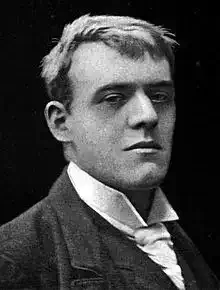
Hilaire Belloc
The Catholic Sun
Wherever the Catholic sun doth shine,
There’s always laughter and good red wine.
At least I’ve always found it so.
Benedicamus Domino!
There’s always laughter and good red wine.
At least I’ve always found it so.
Benedicamus Domino!
727

Lord Byron
Translation From Horace
[Justum et tenacem propositi virum, &c.]
The man of firm and noble soul
No factious clamours can control;
No threat'ning tyrant's darkling brow
Can swerve him from his just intent:
Gales the warring waves which plough,
By Auster on the billows spent,
To curb the Adriatic main,
Would awe his fix'd, determined mind in vain.
Ay, and the red right arm of Jove,
Hurtling his lightnings from above,
With all his terrors, there unfurl'd,
He would unmoved, unawed, behold.
The flames of an expiring world,
Again in crashing chaos roll'd,
In vast promiscuous ruin hurl'd,
Might light his glorious funeral pile:
Still dauntless 'midst the wreck of earth he'd smile
733

William Blake
Earth's Answer
Earth raised up her head
From the darkness dread and drear,
Her light fled,
Stony, dread,
And her locks covered with grey despair.
'Prisoned on watery shore,
Starry jealousy does keep my den
Cold and hoar;
Weeping o're,
I hear the father of the ancient men.
'Selfish father of men!
Cruel, jealous, selfish fear!
Can delight,
Chained in night,
The virgins of youth and morning bear?
'Does spring hide its joy,
When buds and blossoms grow?
Does the sower
Sow by night,
Or the plowman in darkness plough?
'Break this heavy chain,
That does freeze my bones around!
Selfish, vain,
Eternal bane,
That free love with bondage bound.'
735
William Blake
The Clod & The Pebble
Love seeketh not Itself to please.
Nor for itself hath any care;
But for another gives its ease.
And builds a Heaven in Hells despair.
So sung a little Clod of Clay,
Trodden with the cattle's feet;
But a Pebble of the brook.
Warbled out these metres meet.
Love seeketh only Self to please,
To bind another to Its delight;
Joys in anothers loss of ease.
And builds a Hell in Heavens despite.
718

William Shakespeare
Sonnet 86: Was it the proud full sail of his great verse
Was it the proud full sail of his great verse,
Bound for the prize of all-too-precious you,
That did my ripe thoughts in my brain inhearse,
Making their tomb the womb wherein they grew?
Was it his spirit, by spirits taught to write
Above a mortal pitch, that struck me dead?
No, neither he, nor his compeers by night
Giving him aid, my verse astonishèd.
He nor that affable familiar ghost
Which nightly gulls him with intelligence,
As victors of my silence cannot boast;
I was not sick of any fear from thence.
But when your countenance filled up his line,
Then lacked I matter, that enfeebled mine.
724

Ezra Pound
Homage To Sextus Propertius - XII
Who, who will be the next man to entrust his girl to a friend?
Love interferes with fidelities;
The gods have brought shame on their relatives;
Each man wants the pomegranate for himself;
Amiable and harmonious people are pushed incontinent into duels,
A Trojan and adulterous person came to Menelaus under the rites of hospitium,
And there was a case in Colchis, Jason and that woman in Colchis;
And besides, Lynceus,
you were drunk.
Could you endure such promiscuity?
She was not renowned for fidelity;
But to jab a knife in my vitals, to have passed on a swig of poison,
Preferable, my dear boy, my dear Lynceus,
Comrade, comrade of my life, of my purse, of my person;
But in one bed, in one bed alone, my dear Lynceus
I deprecate your attendance;
I would ask a like boon of Jove.
And you write of Achelous, who contended with Hercules,
You write of Adrastus' horses and the funeral rites of Achenor,
And you will not leave off imitating Aeschylus.
Though you make a hash of Antimachus,
You think you are going to do Homer.
And still a girl scorns the gods,
Of all these young women
not one has enquired the cause of the world,
Nor the modus of lunar eclipses
Nor whether there be any patch left of us
After we cross the infernal ripples,
nor if the thunder fall from predestination;
Nor anything else of importance.
Upon the Actian marshes Virgil is Phoebus' chief of police,
He can tabulate Caesar's great ships.
He thrills to Ilian arms,
He shakes the Trojan weapons of Aeneas,
And casts stores on Lavinian beaches.
Make way, ye Roman authors,
clear the street, ye Greeks,
For a much larger Iliad is on the course of construction
(and to Imperial order)
Clear the streets, O ye Greeks!
And you also follow him 'neath Phrygian pine shade:
Thyrsis and Daphnis upon whittled reeds,
And how ten sins can corrupt young maidens;
Kids for a bribe and pressed udders,
Happy selling poor loves for cheap apples.
Tityrus might have sung the same vixen;
Corydon tempted Alexis,
Head farmers do likewise, and lying weary amid their oats
They get praise from tolerant Hamadryads.'
Go on, to Ascraeus' prescription, the ancient, respected, Wordsworthian:
‘A flat field for rushes, grapes grow on the slope.'
And behold me, small fortune left in my house.
Me, who had no general for a grandfather!
I shall triumph among young ladies of indeterminate character,
My talent acclaimed in their banquets,
I shall be honoured with yesterday's wreaths.
And the god strikes to the marrow.
Like a trained and performing tortoise,
I would make verse in your fashion, if she should command it,
With her husband asking a remission of sentence,
And even this infamy would not attract numerous readers
Were there an erudite or violent passion,
For the nobleness of the populace brooks nothing below its own altitude.
One must have resonance, resonance and sonority . . .
like a goose.
Varro sang Jason's expedition,
Varro, of his great passion Leucadia,
There is song in the parchment; Catullus the highly indecorous,
Of Lesbia, known above Helen;
And in the dyed pages of Calvus,
Calvus mourning Quintilia,
And but now Gallus had sung of Lycoris.
Fair, fairest Lycoris
The waters of Styx poured over the wound:
And now Propertius of Cynthia, taking his stand among these.
715

Kazi Nazrul Islam
Be Ever Stronger!
Inside and outside, equally always
be stronger, ever!
The more bad times approach,
be firm and don't yield. Never!
The more you fear defeat,
just be that much more brave!
Let your sword-grip not loosen
at the thought of dark grave.
Continue your struggle against the monsters
for the truth's sake;
Death at the battle field? Your name
the world, forever, will take.
This is the command of God:
Be strong on this earth. Always!
It is the braves who have turned impossible
into possible in every age.
The unbelievers and the cowards to
Allah, they are not lovable;
The 'Tiger of Allah' is he,
who attains faith unshakable.
Anyone who loses patience and faith
can't be a Muslim under the sun;
God Himself is whose Lord in this world,
he fears absolutely none!
The believer hears only the echo of Takbir
in all the hatred and prejudice;
rebukes and criticism do not distract him,
at adversity he throws kiss.
God is the ultimate truth;
fear belongs to the domain of falsehood;
All these noise and hulabaloo,
for believers, become nutrition-food.
Have you forgotten
those fearless valiants from Arabia,
who dethroned
the emperors of Rome and Persia?
How many were they in number?
What weapon did their hands hold?
With their complete faith in God,
were they not wonderfully bold?
Oblivious to win or defeat,
they fought valiantly without precedence;
Every corner of the world shook
and trembled at their exemplary confidence.
They ruled the world
while lived like a destitute;
Loss of a battle did not ruin their spirit,
this was their attitude.
They died with a laugh;
retreating was not their mood;
To them Islam was
a perennial struggle against falsehood.
They were the warriors of God in this world,
this is what they knew;
They fought for and achieved freedom;
begging for it was not their view.
Success greets him who desires
to engrave his own death stone;
He can't be a general,
at sighting adversaries, who tremble to his bone.
The more enemies he sees,
his battle-thirst does grow!
Like a blazing fire in veins and bones,
his spirit burns aglow.
His swords become even sharper
as he is hurt more;
As his supplies diminish,
he strikes harder at enemies' door.
Don't despair! All the fatalist
and victims of hopelessness in my sight!
You are already wounded or dead
even without any fight!
The head that you lowered
in God's worship,
do not lower that to anyone,
or to any hardship.
The head that bent before God,
who can further make it bend?
If a sword severs that head,
to pick it up, angels God does send.
He who turns a weak person
into a power house,
he is the Imam to me,
love on him this soul bestows.
Whose words and deeds give strength and courage
to those without determination,
I am decorating his crown;
for him is my mobilization.
He who fasts so that
Eid will knock at poor's door,
I believe he is a beloved of God,
and yes, he is even more.
Against the ambassadors of miseries
or enemies of people,
the braves who will fight them
and make them cripple.
At the command of Allah,
I invite them to the congregation,
those who were asleep,
even they are joining in jubilation.
My Takbir call is only for those
who live like a dead,
the soldiers of the Truth
will come forward, off their comfy bed.
I blow the trumpet
of the rising sun of the coming age,
I have no fear of death,
or of a prison's cage.
I cry and summon all,
standing alone at the new age's minaret,
If a duck does not come forward,
a bird will come with its wing spread.
In this path fear of roaming hawks
and cruel hunters unavoidably lies,
the light-seeking birds are still coming forward
with chirps of sunrise.
Death-scared now are
the men and women of Bengal, to me so dear!
I have taken up the sword
to remove their stubborn fear.
We have heard
the scared souls' sad supplication,
we must rescue and free them,
this is what Allah wants from us as a nation.
We are His servants,
and we have received the mandate;
To save life of those scared people,
we would never hesitate.
I play the trumpet and wave the flag,
as the cloud gathers up above;
our souls will be awaken
with the strike of thunder and rain of love.
Politics paves the way
for our forward march,
victory will visit us again
on this same noble path.
In whose heart there is desire
and effort to become strong again,
I am close to them,
and at their door I knock in pain.
They are being mobilized
in Bengal's motherly lap,
I have seen full moon
shining above like a victory-cap.
[Original: Nitto Prabal Hou! (bengali)
Translation: Mohammad Omar Farooq]
707
William Blake
The Chimney-Sweeper
When my mother died I was very young,
And my father sold me while yet my tongue
Could scarcely cry 'Weep! weep! weep! weep!'
So your chimneys I sweep, and in soot I sleep.
There's little Tom Dacre, who cried when his head,
That curled like a lamb's back, was shaved; so I said,
'Hush, Tom! never mind it, for, when your head's bare,
You know that the soot cannot spoil your white hair.'
And so he was quiet, and that very night,
As Tom was a-sleeping, he had such a sight! --
That thousands of sweepers, Dick, Joe, Ned, and Jack,
Were all of them locked up in coffins of black.
And by came an angel, who had a bright key,
And he opened the coffins, and let them all free;
Then down a green plain, leaping, laughing, they run,
And wash in a river, and shine in the sun.
Then naked and white, all their bags left behind,
They rise upon clouds, and sport in the wind;
And the Angel told Tom, if he'd be a good boy,
He'd have God for his father, and never want joy.
And so Tom awoke, and we rose in the dark,
And got with our bags and our brushes to work.
Though the morning was cold, Tom was happy and warm:
So, if all do their duty, they need not fear harm.
714
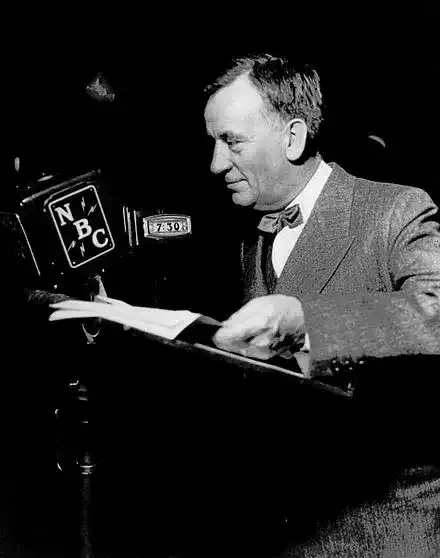
Edgar Albert Guest
He Who Serves
He has not served who gathers gold,
Nor has he served, whose life is told
In selfish battles he has won,
Or deeds of skill that he has done;
But he has served who now and then
Has helped along his fellow men.
The world needs many men today;
Red-blooded men along life's way,
With cheerful smiles and helping hands,
And with the faith that understands
The beauty of the simple deed
Which serves another's hour of need.
Strong men to stand beside the weak,
Kind men to hear what others speak;
True men to keep our country's laws
And guard its honor and its cause;
Men who will bravely play life's game
Nor ask rewards of gold and fame.
Teach me to do the best I can
To help and cheer our fellow man;
Teach me to lose my selfish need
And glory in the larger deed
Which smoothes the road, and lights the day
For all who chance to come my way.
714
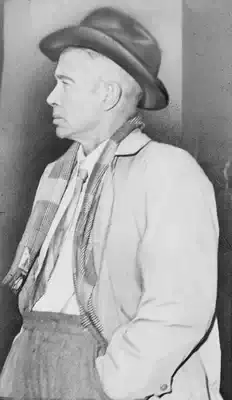
E. E. Cummings
i sing of Olaf glad and big
i sing of Olaf glad and big
whose warmest heart recoiled at war:
a conscientious object-or
his wellbelovéd colonel (trig
westpointer most succinctly bred)
took erring Olaf soon in hand;
but-though an host of overjoyed
noncoms (first knocking on the head
him) do through icy waters roll
that helplessness which others stroke
with brushes recently employed
anent this muddy toiletbowl,
while kindred intellects evoke
allegiance per blunt instruments-
Olaf (being to all intents
a corpse and wanting any rag
upon what God unto him gave)
responds, without getting annoyed
"I will not kiss your fucking flag"
straightaway the silver bird looked grave
(departing hurriedly to shave)
but-though all kinds of officers
(a yearning nation's blueeyed pride)
their passive prey did kick and curse
until for wear their clarion
voices and boots were much the worse,
and egged the firstclassprivates on
his rectum wickedly to tease
by means of skillfully applied
bayonets roasted hot with heat-
Olaf (upon what were once knees)
does almost ceaselessly repeat
"there is some shit I will not eat"
our president,being of which
assertions duly notified
threw the yellowsonofabitch
into a dungeon,where he died
Christ (of His mercy infinite)
i pray to see;and Olaf,too
preponderatingly because
unless statistics lie he was
more brave than me:more blond than you
709
William Shakespeare
Sonnet 71: No longer mourn for me when I am dead
No longer mourn for me when I am dead
Than you shall hear the surly sullen bell
Give warning to the world that I am fled
From this vile world with vilest worms to dwell.
Nay if you read this line, remember not
The hand that writ it, for I love you so
That I in your sweet thoughts would be forgot
If thinking on me then should make you woe.
O, if, I say, you look upon this verse,
When I perhaps compounded am with clay,
Do not so much as my poor name rehearse,
But let your love even with my life decay,
Lest the wise world should look into your moan
And mock you with me after I am gone.
709
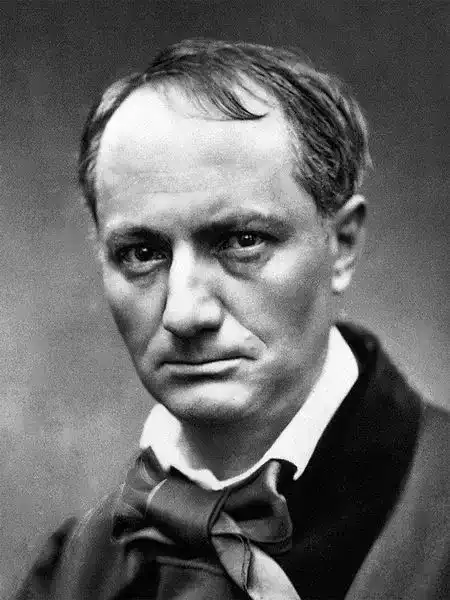
Charles Baudelaire
Voyage to Cythera
Free as a bird and joyfully my heart
Soared up among the rigging, in and out;
Under a cloudless sky the ship rolled on
Like an angel drunk with brilliant sun.
"That dark, grim island there--which would that be?"
"Cythera," we're told, "the legendary isle
Old bachelors tell stories of and smile.
There's really not much to it, you can see."
O place of many a mystic sacrament!
Archaic Aphrodite's splendid shade
Lingers above your waters like a scent
Infusing spirits with an amorous mood.
Worshipped from of old by every nation,
Myrtle-green isle, where each new bud discloses
Sighs of souls in loving adoration
Breathing like incense from a bank of roses
Or like a dove roo-cooing endlessly . . .
No; Cythera was a poor infertile rock,
A stony desert harrowed by the shriek
Of gulls. And yet there was something to see:
This was no temple deep in flowers and trees
With a young priestess moving to and fro,
Her body heated by a secret glow,
Her robe half-opening to every breeze;
But coasting nearer, close enough to land
To scatter flocks of birds as we passed by,
We saw a tall cypress-shaped thing at hand--
A triple gibbet black against the sky.
Ferocious birds, each perched on its own meal,
Were madly tearing at the thing that hung
And ripened; each, its filthy beak a drill,
Made little bleeding holes to root among.
The eyes were hollowed. Heavy guts cascading
Flowed like water halfway down the thighs;
The torturers, though gorged on these vile joys,
Had also put their beaks to use castrating
The corpse. A pack of dogs beneath its feet,
Their muzzles lifted, whirled and snapped and gnawed;
One bigger beast amidst this jealous lot
Looked like an executioner with his guard.
O Cytherean, child of this fair clime,
Silently you suffered these attacks,
Paying the penalty for whatever acts
Of infamy had kept you from a tomb.
Grotesquely dangling, somehow you brought on--
Violent as vomit rising from the chest,
Strong as a river bilious to taste--
A flow of sufferings I'd thought long gone.
Confronted with such dear remembered freight,
Poor devil, now it was my turn to feel
A panther's slavering jaws, a beak's cruel drill--
Once it was my flesh they loved to eat.
The sky was lovely, and the sea divine,
but something thick and binding like a shroud
Wrapped my heart in layers of black and blood;
Henceforth this allegory would be mine.
O Venus! On your isle what did I see
But my own image on the gallows tree?
O God, give me the strength to contemplate
My own heart, my own body without hate!
711
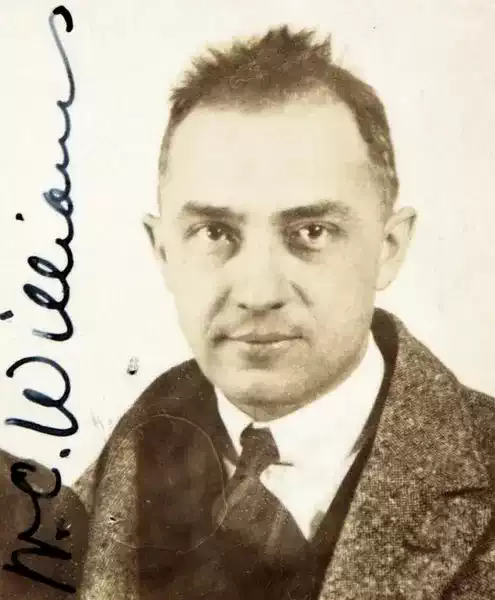
William Carlos Williams
The Last Words of My English Grandmother
There were some dirty plates
and a glass of milk
beside her on a small table
near the rank, disheveled bed--
Wrinkled and nearly blind
she lay and snored
rousing with anger in her tones
to cry for food,
Gimme something to eat--
They're starving me--
I'm all right--I won't go
to the hospital.
No, no, no
Give me something to eat!
Let me take you
to the hospital, I said
and after you are well
you can do as you please.
She smiled, Yes
you do what you please first
then I can do what I please--
Oh, oh, oh! she cried
as the ambulance men lifted
her to the stretcher--
Is this what you call
making me comfortable?
By now her mind was clear--
Oh you think you're smart
you young people,
she said, but I'll tell you
you don't know anything.
Then we started.
On the way
we passed a long row
of elms. She looked at them
awhile out of
the ambulance window and said,
What are all those
fuzzy looking things out there?
Trees?Well, I'm tired
of them and rolled her head away.
723

Alfred Lord Tennyson
Ring Out , Wild Bells
Ring out, wild bells, to the wild sky,
The flying cloud, the frosty light;
The year is dying in the night;
Ring out, wild bells, and let him die.
Ring out the old, ring in the new,
Ring, happy bells, across the snow:
The year is going, let him go;
Ring out the false, ring in the true.
Ring out the grief that saps the mind,
For those that here we see no more,
Ring out the feud of rich and poor,
Ring in redress to all mankind.
Ring out a slowly dying cause,
And ancient forms of party strife;
Ring in the nobler modes of life,
With sweeter manners, purer laws.
Ring out the want, the care the sin,
The faithless coldness of the times;
Ring out, ring out my mournful rhymes,
But ring the fuller minstrel in.
Ring out false pride in place and blood,
The civic slander and the spite;
Ring in the love of truth and right,
Ring in the common love of good.
Ring out old shapes of foul disease,
Ring out the narrowing lust of gold;
Ring out the thousand wars of old,
Ring in the thousand years of peace.
Ring in the valiant man and free,
The larger heart, the kindlier hand;
Ring out the darkness of the land,
Ring in the Christ that is to be.
725
Alfred Lord Tennyson
Sir Galahad
MY good blade carves the casques of men,
My tough lance thrusteth sure,
My strength is as the strength of ten,
Because my heart is pure.
The shattering trumpet shrilleth high,
The hard brands shiver on the steel,
The splinter'd spear-shafts crack and fly,
The horse and rider reel:
They reel, they roll in clanging lists,
And when the tide of combat stands,
Perfume and flowers fall in showers,
That lightly rain from ladies' hands.
How sweet are looks that ladies bend
On whom their favours fall !
For them I battle till the end,
To save from shame and thrall:
But all my heart is drawn above,
My knees are bow'd in crypt and shrine:
I never felt the kiss of love,
Nor maiden's hand in mine.
More bounteous aspects on me beam,
Me mightier transports move and thrill;
So keep I fair thro' faith and prayer
A virgin heart in work and will.
When down the stormy crescent goes,
A light before me swims,
Between dark stems the forest glows,
I hear a noise of hymns:
Then by some secret shrine I ride;
I hear a voice but none are there;
The stalls are void, the doors are wide,
The tapers burning fair.
Fair gleams the snowy altar-cloth,
The silver vessels sparkle clean,
The shrill bell rings, the censer swings,
And solemn chaunts resound between.
Sometimes on lonely mountain-meres
I find a magic bark;
I leap on board: no helmsman steers:
I float till all is dark.
A gentle sound, an awful light !
Three arngels bear the holy Grail:
With folded feet, in stoles of white,
On sleeping wings they sail.
Ah, blessed vision! blood of God!
My spirit beats her mortal bars,
As down dark tides the glory slides,
And star-like mingles with the stars.
When on my goodly charger borne
Thro' dreaming towns I go,
The cock crows ere the Christmas morn,
The streets are dumb with snow.
The tempest crackles on the leads,
And, ringing, springs from brand and mail;
But o'er the dark a glory spreads,
And gilds the driving hail.
I leave the plain, I climb the height;
No branchy thicket shelter yields;
But blessed forms in whistling storms
Fly o'er waste fens and windy fields.
A maiden knight--to me is given
Such hope, I know not fear;
I yearn to breathe the airs of heaven
That often meet me here.
I muse on joy that will not cease,
Pure spaces clothed in living beams,
Pure lilies of eternal peace,
Whose odours haunt my dreams;
And, stricken by an angel's hand,
This mortal armour that I wear,
This weight and size, this heart and eyes,
Are touch'd, are turn'd to finest air.
The clouds are broken in the sky,
And thro' the mountain-walls
A rolling organ-harmony
Swells up, and shakes and falls.
Then move the trees, the copses nod,
Wings flutter, voices hover clear:
'O just and faithful knight of God!
Ride on ! the prize is near.'
So pass I hostel, hall, and grange;
By bridge and ford, by park and pale,
All-arm'd I ride, whate'er betide,
Until I find the holy Grail.
707
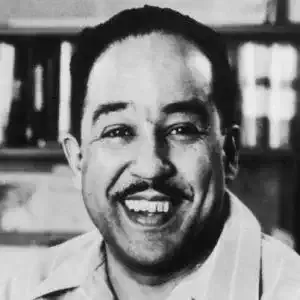
Langston Hughes
Let America be America Again
Let America be America again.
Let it be the dream it used to be.
Let it be the pioneer on the plain
Seeking a home where he himself is free.
(America never was America to me.)
Let America be the dream the dreamers dreamed--
Let it be that great strong land of love
Where never kings connive nor tyrants scheme
That any man be crushed by one above.
(It never was America to me.)
O, let my land be a land where Liberty
Is crowned with no false patriotic wreath,
But opportunity is real, and life is free,
Equality is in the air we breathe.
(There's never been equality for me,
Nor freedom in this "homeland of the free.")
Say, who are you that mumbles in the dark?
And who are you that draws your veil across the stars?
I am the poor white, fooled and pushed apart,
I am the Negro bearing slavery's scars.
I am the red man driven from the land,
I am the immigrant clutching the hope I seek--
And finding only the same old stupid plan
Of dog eat dog, of mighty crush the weak.
I am the young man, full of strength and hope,
Tangled in that ancient endless chain
Of profit, power, gain, of grab the land!
Of grab the gold! Of grab the ways of satisfying need!
Of work the men! Of take the pay!
Of owning everything for one's own greed!
I am the farmer, bondsman to the soil.
I am the worker sold to the machine.
I am the Negro, servant to you all.
I am the people, humble, hungry, mean--
Hungry yet today despite the dream.
Beaten yet today--O, Pioneers!
I am the man who never got ahead,
The poorest worker bartered through the years.
Yet I'm the one who dreamt our basic dream
In the Old World while still a serf of kings,
Who dreamt a dream so strong, so brave, so true,
That even yet its mighty daring sings
In every brick and stone, in every furrow turned
That's made America the land it has become.
O, I'm the man who sailed those early seas
In search of what I meant to be my home--
For I'm the one who left dark Ireland's shore,
And Poland's plain, and England's grassy lea,
And torn from Black Africa's strand I came
To build a "homeland of the free."
The free?
Who said the free? Not me?
Surely not me? The millions on relief today?
The millions shot down when we strike?
The millions who have nothing for our pay?
For all the dreams we've dreamed
And all the songs we've sung
And all the hopes we've held
And all the flags we've hung,
The millions who have nothing for our pay--
Except the dream that's almost dead today.
O, let America be America again--
The land that never has been yet--
And yet must be--the land where every man is free.
The land that's mine--the poor man's, Indian's, Negro's, ME--
Who made America,
Whose sweat and blood, whose faith and pain,
Whose hand at the foundry, whose plow in the rain,
Must bring back our mighty dream again.
Sure, call me any ugly name you choose--
The steel of freedom does not stain.
From those who live like leeches on the people's lives,
We must take back our land again,
America!
O, yes,
I say it plain,
America never was America to me,
And yet I swear this oath--
America will be!
Out of the rack and ruin of our gangster death,
The rape and rot of graft, and stealth, and lies,
We, the people, must redeem
The land, the mines, the plants, the rivers.
The mountains and the endless plain--
All, all the stretch of these great green states--
And make America again!
709

Henry Wadsworth Longfellow
The Song Of Hiawatha XV: Hiawatha's Lamentation
In those days the Evil Spirits,
All the Manitos of mischief,
Fearing Hiawatha's wisdom,
And his love for Chibiabos,
Jealous of their faithful friendship,
And their noble words and actions,
Made at length a league against them,
To molest them and destroy them.
Hiawatha, wise and wary,
Often said to Chibiabos,
'O my brother! do not leave me,
Lest the Evil Spirits harm you!'
Chibiabos, young and heedless,
Laughing shook his coal-black tresses,
Answered ever sweet and childlike,
'Do not fear for me, O brother!
Harm and evil come not near me!'
Once when Peboan, the Winter,
Roofed with ice the Big-Sea-Water,
When the snow-flakes, whirling downward,
Hissed among the withered oak-leaves,
Changed the pine-trees into wigwams,
Covered all the earth with silence,
Armed with arrows, shod with snow-shoes,
Heeding not his brother's warning,
Fearing not the Evil Spirits,
Forth to hunt the deer with antlers
All alone went Chibiabos.
Right across the Big-Sea-Water
Sprang with speed the deer before him.
With the wind and snow he followed,
O'er the treacherous ice he followed,
Wild with all the fierce commotion
And the rapture of the hunting.
But beneath, the Evil Spirits
Lay in ambush, waiting for him,
Broke the treacherous ice beneath him,
Dragged him downward to the bottom,
Buried in the sand his body.
Unktahee, the god of water,
He the god of the Dacotahs,
Drowned him in the deep abysses
Of the lake of Gitche Gumee.
From the headlands Hiawatha
Sent forth such a wail of anguish,
Such a fearful lamentation,
That the bison paused to listen,
And the wolves howled from the prairies,
And the thunder in the distance
Starting answered 'Baim-wawa!'
Then his face with black he painted,
With his robe his head he covered,
In his wigwam sat lamenting,
Seven long weeks he sat lamenting,
Uttering still this moan of sorrow:
'He is dead, the sweet musician!
He the sweetest of all singers!
He has gone from us forever,
He has moved a little nearer
To the Master of all music,
To the Master of all singing!
O my brother, Chibiabos!'
And the melancholy fir-trees
Waved their dark green fans above him,
Waved their purple cones above him,
Sighing with him to console him,
Mingling with his lamentation
Their complaining, their lamenting.
Came the Spring, and all the forest
Looked in vain for Chibiabos;
Sighed the rivulet, Sebowisha,
Sighed the rushes in the meadow.
From the tree-tops sang the bluebird,
Sang the bluebird, the Owaissa,
'Chibiabos! Chibiabos!
He is dead, the sweet musician!'
From the wigwam sang the robin,
Sang the robin, the Opechee,
'Chibiabos! Chibiabos!
He is dead, the sweetest singer!'
And at night through all the forest
Went the whippoorwill complaining,
Wailing went the Wawonaissa,
'Chibiabos! Chibiabos!
He is dead, the sweet musician!
He the sweetest of all singers!'
Then the Medicine-men, the Medas,
The magicians, the Wabenos,
And the Jossakeeds, the Prophets,
Came to visit Hiawatha;
Built a Sacred Lodge beside him,
To appease him, to console him,
Walked in silent, grave procession,
Bearing each a pouch of healing,
Skin of beaver, lynx, or otter,
Filled with magic roots and simples,
Filled with very potent medicines.
When he heard their steps approaching,
Hiawatha ceased lamenting,
Called no more on Chibiabos;
Naught he questioned, naught he answered,
But his mournful head uncovered,
From his face the mourning colors
Washed he slowly and in silence,
Slowly and in silence followed
Onward to the Sacred Wigwam.
There a magic drink they gave him,
Made of Nahma-wusk, the spearmint,
And Wabeno-wusk, the yarrow,
Roots of power, and herbs of healing;
Beat their drums, and shook their rattles;
Chanted singly and in chorus,
Mystic songs like these, they chanted.
'I myself, myself! behold me!
`T Is the great Gray Eagle talking;
Come, ye white crows, come and hear him!
The loud-speaking thunder helps me;
All the unseen spirits help me;
I can hear their voices calling,
All around the sky I hear them!
I can blow you strong, my brother,
I can heal you, Hiawatha!'
'Hi-au-ha!' replied the chorus,
'Wayha-way!' the mystic chorus.
Friends of mine are all the serpents!
Hear me shake my skin of hen-hawk!
Mahng, the white loon, I can kill him;
I can shoot your heart and kill it!
I can blow you strong, my brother,
I can heal you, Hiawatha !'
'Hi-au-ha!' replied the chorus,
'Wayhaway!' the mystic chorus.
'I myself, myself! the prophet!
When I speak the wigwam trembles,
Shakes the Sacred Lodge with terror,
Hands unseen begin to shake it!
When I walk, the sky I tread on
Bends and makes a noise beneath me!
I can blow you strong, my brother!
Rise and speak, O Hiawatha!'
'Hi-au-ha!' replied the chorus,
'Way-ha-way!' the mystic chorus.
Then they shook their medicine-pouches
O'er the head of Hiawatha,
Danced their medicine-dance around him;
And upstarting wild and haggard,
Like a man from dreams awakened,
He was healed of all his madness.
As the clouds are swept from heaven,
Straightway from his brain departed
All his moody melancholy;
As the ice is swept from rivers,
Straightway from his heart departed
All his sorrow and affliction.
Then they summoned Chibiabos
From his grave beneath the waters,
From the sands of Gitche Gumee
Summoned Hiawatha's brother.
And so mighty was the magic
Of that cry and invocation,
That he heard it as he lay there
Underneath the Big-Sea-Water;
From the sand he rose and listened,
Heard the music and the singing,
Came, obedient to the summons,
To the doorway of the wigwam,
But to enter they forbade him.
Through a chink a coal they gave him,
Through the door a burning fire-brand;
Ruler in the Land of Spirits,
Ruler o'er the dead, they made him,
Telling him a fire to kindle
For all those that died thereafter,
Camp-fires for their night encampments
On their solitary journey
To the kingdom of Ponemah,
To the land of the Hereafter.
From the village of his childhood,
From the homes of those who knew him,
Passing silent through the forest,
Like a smoke-wreath wafted sideways,
Slowly vanished Chibiabos!
Where he passed, the branches moved not,
Where he trod, the grasses bent not,
And the fallen leaves of last year
Made no sound beneath his footstep.
Four whole days he journeyed onward
Down the pathway of the dead men;
On the dead-man's strawberry feasted,
Crossed the melancholy river,
On the swinging log he crossed it,
Came unto the Lake of Silver,
In the Stone Canoe was carried
To the Islands of the Blessed,
To the land of ghosts and shadows.
On that journey, moving slowly,
Many weary spirits saw he,
Panting under heavy burdens,
Laden with war-clubs, bows and arrows,
Robes of fur, and pots and kettles,
And with food that friends had given
For that solitary journey.
'Ay! why do the living,' said they,
'Lay such heavy burdens on us!
Better were it to go naked,
Better were it to go fasting,
Than to bear such heavy burdens
On our long and weary journey!'
Forth then issued Hiawatha,
Wandered eastward, wandered westward,
Teaching men the use of simples
And the antidotes for poisons,
And the cure of all diseases.
Thus was first made known to mortals
All the mystery of Medamin,
All the sacred art of healing.
719

Wilfred Owen
The Parable of the Old Man and the Young
So Abram rose, and clave the wood, and went,
And took the fire with him, and a knife.
And as they sojourned both of them together,
Isaac the first-born spake and said, My Father,
Behold the preparations, fire and iron,
But where the lamb for this burnt-offering?
Then Abram bound the youth with belts and strops,
And builded parapets and trenches there,
And stretched forth the knife to slay his son.
When lo! an angel called him out of heaven,
Saying, Lay not thy hand upon the lad,
Neither do anything to him. Behold,
A ram, caught in a thicket by its horns;
Offer the Ram of Pride instead of him.
But the old man would not so, but slew his son,
And half the seed of Europe, one by one.
693
Kazi Nazrul Islam
Song of the Student
We are the power, we are the strength,
We the band of students.
The stormy wind makes obeisance tonus
And clouds and airships bow
Before us, the students class.
We can move in the darkness of the night
Needing no guiding light.
We walk with bare feet
Ever ready to dangers meet.
We move like a terrific flood
Making the stony earth scarlet with our blood.
Throughout the ages
Our blood has wet this soil.
We are not afraid of work or toil,
We the student class.
We hold the reins of the horse
Of the great King Deat.
Our lifeless corpse
Will write the history of our fights.
In the country of laughter, whenever needed,
We bring tears, bitter and cold.
We the students, mighty bold.
When everybody gives wise counsel
We are the people who err.
When the cautious one builds embankments
We sit still and do not stir.
We are the dare-devil youth
Who care for none,
We make our path slippery with blood,
We the student class.
The light of knowledge shines in our eyes,
And in our hearts burn boble ideas.
On our lips dwell no lies,
Which only proclaim
Effortlessly and with ease
The call of all times,
That has survived through war and peace,
And we have made the white lilies
Purple with our blood,
We the students; who move like a mighty flood.
In these terrible days of revolution
We are eager to march ahead and fight,
So that light may burst out
Ending the eternal darkness of the night.
In us seeks the twentieth century
Her emancipation.
With our tears of glory
The mother-earth clothes herself
In resignation.
There is no fear of death for us,
The mighty student class.
We dream of a joyous future, gay and bright,
Built on hope and love,
The milky-way in the sky
Shows us our path, straight and wide.
Let the dream of millions come true and right,
Let them see the splendid sight
Through the eyes of us.
The student class.
Translation: Kabir Chowdhury
694
Henry Wadsworth Longfellow
The Challenge of Thor
I am the God Thor,
I am the War God,
I am the Thunderer!
Here in my Northland,
My fastness and fortress,
Reign I forever!
Here amid icebergs
Rule I the nations;
This is my hammer,
Miölner the mighty;
Giants and sorcerers
Cannot withstand it!
These are the gauntlets
Wherewith I wield it,
And hurl it afar off;
This is my girdle;
Whenever I brace it,
Strength is redoubled!
The light thou beholdest
Stream through the heavens,
In flashes of crimson,
Is but my red beard
Blown by the night-wind,
Affrighting the nations!
Jove is my brother;
Mine eyes are the lightning;
The wheels of my chariot
Roll in the thunder,
The blows of my hammer
Ring in the earthquake!
Force rules the world still,
Has ruled it, shall rule it;
Meekness is weakness,
Strength is triumphant,
Over the whole earth
Still is it Thor's Day!
Thou art a God too,
O Galilean!
And thus singled-handed
Unto the combat,
Gauntlet or Gospel,
Here I defy thee!
687
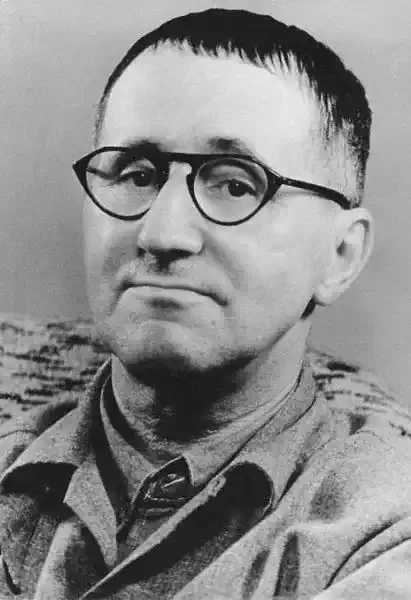
Bertolt Brecht
To the Students of the Workers' and Peasants' Faculty
So there you sit. And how much blood was shed
That you might sit there. Do such stories bore you?
Well, don't forget that others sat before you
who later sat on people. Keep your head!
Your science will be valueless, you'll find
And learning will be sterile, if inviting
Unless you pledge your intellect to fighting
Against all enemies of all mankind.
Never forget that men like you got hurt
That you might sit here, not the other lot.
And now don't shut your eyes, and don't desert
But learn to learn, and try to learn for what.
704
Kazi Nazrul Islam
Coming of Anondomoyee
How much longer will you
stay hidden behind a clay statue?
Heaven today is subjugated by merciless tyrants.
God's children are getting whipped, heroic youth-hanged.
India today is a butchery-when will you arrive, O Destroyer?
God's soldiers are serving terms of hard labor exiled to desolate islands.
Who will come to the battlefield
unless you come with your sword in your hand?
[Translation: Sajed Kamal]
690

John Milton
Paradise Lost: Book 04
O, for that warning voice, which he, who saw
The Apocalypse, heard cry in Heaven aloud,
Then when the Dragon, put to second rout,
Came furious down to be revenged on men,
Woe to the inhabitants on earth! that now,
While time was, our first parents had been warned
The coming of their secret foe, and 'scaped,
Haply so 'scaped his mortal snare: For now
Satan, now first inflamed with rage, came down,
The tempter ere the accuser of mankind,
To wreak on innocent frail Man his loss
Of that first battle, and his flight to Hell:
Yet, not rejoicing in his speed, though bold
Far off and fearless, nor with cause to boast,
Begins his dire attempt; which nigh the birth
Now rolling boils in his tumultuous breast,
And like a devilish engine back recoils
Upon himself; horrour and doubt distract
His troubled thoughts, and from the bottom stir
The Hell within him; for within him Hell
He brings, and round about him, nor from Hell
One step, no more than from himself, can fly
By change of place: Now conscience wakes despair,
That slumbered; wakes the bitter memory
Of what he was, what is, and what must be
Worse; of worse deeds worse sufferings must ensue.
Sometimes towards Eden, which now in his view
Lay pleasant, his grieved look he fixes sad;
Sometimes towards Heaven, and the full-blazing sun,
Which now sat high in his meridian tower:
Then, much revolving, thus in sighs began.
O thou, that, with surpassing glory crowned,
Lookest from thy sole dominion like the God
Of this new world; at whose sight all the stars
Hide their diminished heads; to thee I call,
But with no friendly voice, and add thy name,
Of Sun! to tell thee how I hate thy beams,
That bring to my remembrance from what state
I fell, how glorious once above thy sphere;
Till pride and worse ambition threw me down
Warring in Heaven against Heaven's matchless King:
Ah, wherefore! he deserved no such return
From me, whom he created what I was
In that bright eminence, and with his good
Upbraided none; nor was his service hard.
What could be less than to afford him praise,
The easiest recompence, and pay him thanks,
How due! yet all his good proved ill in me,
And wrought but malice; lifted up so high
I sdeined subjection, and thought one step higher
Would set me highest, and in a moment quit
The debt immense of endless gratitude,
So burdensome still paying, still to owe,
Forgetful what from him I still received,
And understood not that a grateful mind
By owing owes not, but still pays, at once
Indebted and discharged; what burden then
O, had his powerful destiny ordained
Me some inferiour Angel, I had stood
Then happy; no unbounded hope had raised
Ambition! Yet why not some other Power
As great might have aspired, and me, though mean,
Drawn to his part; but other Powers as great
Fell not, but stand unshaken, from within
Or from without, to all temptations armed.
Hadst thou the same free will and power to stand?
Thou hadst: whom hast thou then or what to accuse,
But Heaven's free love dealt equally to all?
Be then his love accursed, since love or hate,
To me alike, it deals eternal woe.
Nay, cursed be thou; since against his thy will
Chose freely what it now so justly rues.
Me miserable! which way shall I fly
Infinite wrath, and infinite despair?
Which way I fly is Hell; myself am Hell;
And, in the lowest deep, a lower deep
Still threatening to devour me opens wide,
To which the Hell I suffer seems a Heaven.
O, then, at last relent: Is there no place
Left for repentance, none for pardon left?
None left but by submission; and that word
Disdain forbids me, and my dread of shame
Among the Spirits beneath, whom I seduced
With other promises and other vaunts
Than to submit, boasting I could subdue
The Omnipotent. Ay me! they little know
How dearly I abide that boast so vain,
Under what torments inwardly I groan,
While they adore me on the throne of Hell.
With diadem and scepter high advanced,
The lower still I fall, only supreme
In misery: Such joy ambition finds.
But say I could repent, and could obtain,
By act of grace, my former state; how soon
Would highth recall high thoughts, how soon unsay
What feigned submission swore? Ease would recant
Vows made in pain, as violent and void.
For never can true reconcilement grow,
Where wounds of deadly hate have pierced so deep:
Which would but lead me to a worse relapse
And heavier fall: so should I purchase dear
Short intermission bought with double smart.
This knows my Punisher; therefore as far
From granting he, as I from begging, peace;
All hope excluded thus, behold, in stead
Mankind created, and for him this world.
So farewell, hope; and with hope farewell, fear;
Farewell, remorse! all good to me is lost;
Evil, be thou my good; by thee at least
Divided empire with Heaven's King I hold,
By thee, and more than half perhaps will reign;
As Man ere long, and this new world, shall know.
Thus while he spake, each passion dimmed his face
Thrice changed with pale, ire, envy, and despair;
Which marred his borrowed visage, and betrayed
Him counterfeit, if any eye beheld.
For heavenly minds from such distempers foul
Are ever clear. Whereof he soon aware,
Each perturbation smoothed with outward calm,
Artificer of fraud; and was the first
That practised falsehood under saintly show,
Deep malice to conceal, couched with revenge:
Yet not enough had practised to deceive
Uriel once warned; whose eye pursued him down
The way he went, and on the Assyrian mount
Saw him disfigured, more than could befall
Spirit of happy sort; his gestures fierce
He marked and mad demeanour, then alone,
As he supposed, all unobserved, unseen.
So on he fares, and to the border comes
Of Eden, where delicious Paradise,
Now nearer, crowns with her enclosure green,
As with a rural mound, the champaign head
Of a steep wilderness, whose hairy sides
Access denied; and overhead upgrew
Insuperable height of loftiest shade,
Cedar, and pine, and fir, and branching palm,
A sylvan scene, and, as the ranks ascend,
Shade above shade, a woody theatre
Of stateliest view. Yet higher than their tops
The verdurous wall of Paradise upsprung;
Which to our general sire gave prospect large
Into his nether empire neighbouring round.
And higher than that wall a circling row
Of goodliest trees, loaden with fairest fruit,
Blossoms and fruits at once of golden hue,
Appeared, with gay enamelled colours mixed:
On which the sun more glad impressed his beams
Than in fair evening cloud, or humid bow,
When God hath showered the earth; so lovely seemed
That landskip: And of pure now purer air
Meets his approach, and to the heart inspires
Vernal delight and joy, able to drive
All sadness but despair: Now gentle gales,
Fanning their odoriferous wings, dispense
Native perfumes, and whisper whence they stole
Those balmy spoils. As when to them who fail
Beyond the Cape of Hope, and now are past
Mozambick, off at sea north-east winds blow
Sabean odours from the spicy shore
Of Araby the blest; with such delay
Well pleased they slack their course, and many a league
Cheered with the grateful smell old Ocean smiles:
So entertained those odorous sweets the Fiend,
Who came their bane; though with them better pleased
Than Asmodeus with the fishy fume
That drove him, though enamoured, from the spouse
Of Tobit's son, and with a vengeance sent
From Media post to Egypt, there fast bound.
Now to the ascent of that steep savage hill
Satan had journeyed on, pensive and slow;
But further way found none, so thick entwined,
As one continued brake, the undergrowth
Of shrubs and tangling bushes had perplexed
All path of man or beast that passed that way.
One gate there only was, and that looked east
On the other side: which when the arch-felon saw,
Due entrance he disdained; and, in contempt,
At one flight bound high over-leaped all bound
Of hill or highest wall, and sheer within
Lights on his feet. As when a prowling wolf,
Whom hunger drives to seek new haunt for prey,
Watching where shepherds pen their flocks at eve
In hurdled cotes amid the field secure,
Leaps o'er the fence with ease into the fold:
Or as a thief, bent to unhoard the cash
Of some rich burgher, whose substantial doors,
Cross-barred and bolted fast, fear no assault,
In at the window climbs, or o'er the tiles:
So clomb this first grand thief into God's fold;
So since into his church lewd hirelings climb.
Thence up he flew, and on the tree of life,
The middle tree and highest there that grew,
Sat like a cormorant; yet not true life
Thereby regained, but sat devising death
To them who lived; nor on the virtue thought
Of that life-giving plant, but only used
For prospect, what well used had been the pledge
Of immortality. So little knows
Any, but God alone, to value right
The good before him, but perverts best things
To worst abuse, or to their meanest use.
Beneath him with new wonder now he views,
To all delight of human sense exposed,
In narrow room, Nature's whole wealth, yea more,
A Heaven on Earth: For blissful Paradise
Of God the garden was, by him in the east
Of Eden planted; Eden stretched her line
From Auran eastward to the royal towers
Of great Seleucia, built by Grecian kings,
Of where the sons of Eden long before
Dwelt in Telassar: In this pleasant soil
His far more pleasant garden God ordained;
Out of the fertile ground he caused to grow
All trees of noblest kind for sight, smell, taste;
And all amid them stood the tree of life,
High eminent, blooming ambrosial fruit
Of vegetable gold; and next to life,
Our death, the tree of knowledge, grew fast by,
Knowledge of good bought dear by knowing ill.
Southward through Eden went a river large,
Nor changed his course, but through the shaggy hill
Passed underneath ingulfed; for God had thrown
That mountain as his garden-mould high raised
Upon the rapid current, which, through veins
Of porous earth with kindly thirst up-drawn,
Rose a fresh fountain, and with many a rill
Watered the garden; thence united fell
Down the steep glade, and met the nether flood,
Which from his darksome passage now appears,
And now, divided into four main streams,
Runs diverse, wandering many a famous realm
And country, whereof here needs no account;
But rather to tell how, if Art could tell,
How from that sapphire fount the crisped brooks,
Rolling on orient pearl and sands of gold,
With mazy errour under pendant shades
Ran nectar, visiting each plant, and fed
Flowers worthy of Paradise, which not nice Art
In beds and curious knots, but Nature boon
Poured forth profuse on hill, and dale, and plain,
Both where the morning sun first warmly smote
The open field, and where the unpierced shade
Imbrowned the noontide bowers: Thus was this place
A happy rural seat of various view;
Groves whose rich trees wept odorous gums and balm,
Others whose fruit, burnished with golden rind,
Hung amiable, Hesperian fables true,
If true, here only, and of delicious taste:
Betwixt them lawns, or level downs, and flocks
Grazing the tender herb, were interposed,
Or palmy hillock; or the flowery lap
Of some irriguous valley spread her store,
Flowers of all hue, and without thorn the rose:
Another side, umbrageous grots and caves
Of cool recess, o'er which the mantling vine
Lays forth her purple grape, and gently creeps
Luxuriant; mean while murmuring waters fall
Down the slope hills, dispersed, or in a lake,
That to the fringed bank with myrtle crowned
Her crystal mirrour holds, unite their streams.
The birds their quire apply; airs, vernal airs,
Breathing the smell of field and grove, attune
The trembling leaves, while universal Pan,
Knit with the Graces and the Hours in dance,
Led on the eternal Spring. Not that fair field
Of Enna, where Proserpine gathering flowers,
Herself a fairer flower by gloomy Dis
Was gathered, which cost Ceres all that pain
To seek her through the world; nor that sweet grove
Of Daphne by Orontes, and the inspired
Castalian spring, might with this Paradise
Of Eden strive; nor that Nyseian isle
Girt with the river Triton, where old Cham,
Whom Gentiles Ammon call and Libyan Jove,
Hid Amalthea, and her florid son
Young Bacchus, from his stepdame Rhea's eye;
Nor where Abassin kings their issue guard,
Mount Amara, though this by some supposed
True Paradise under the Ethiop line
By Nilus' head, enclosed with shining rock,
A whole day's journey high, but wide remote
From this Assyrian garden, where the Fiend
Saw, undelighted, all delight, all kind
Of living creatures, new to sight, and strange
Two of far nobler shape, erect and tall,
Godlike erect, with native honour clad
In naked majesty seemed lords of all:
And worthy seemed; for in their looks divine
The image of their glorious Maker shone,
Truth, wisdom, sanctitude severe and pure,
(Severe, but in true filial freedom placed,)
Whence true authority in men; though both
Not equal, as their sex not equal seemed;
For contemplation he and valour formed;
For softness she and sweet attractive grace;
He for God only, she for God in him:
His fair large front and eye sublime declared
Absolute rule; and hyacinthine locks
Round from his parted forelock manly hung
Clustering, but not beneath his shoulders broad:
She, as a veil, down to the slender waist
Her unadorned golden tresses wore
Dishevelled, but in wanton ringlets waved
As the vine curls her tendrils, which implied
Subjection, but required with gentle sway,
And by her yielded, by him best received,
Yielded with coy submission, modest pride,
And sweet, reluctant, amorous delay.
Nor those mysterious parts were then concealed;
Then was not guilty shame, dishonest shame
Of nature's works, honour dishonourable,
Sin-bred, how have ye troubled all mankind
With shows instead, mere shows of seeming pure,
And banished from man's life his happiest life,
Simplicity and spotless innocence!
So passed they naked on, nor shunned the sight
Of God or Angel; for they thought no ill:
So hand in hand they passed, the loveliest pair,
That ever since in love's embraces met;
Adam the goodliest man of men since born
His sons, the fairest of her daughters Eve.
Under a tuft of shade that on a green
Stood whispering soft, by a fresh fountain side
They sat them down; and, after no more toil
Of their sweet gardening labour than sufficed
To recommend cool Zephyr, and made ease
More easy, wholesome thirst and appetite
More grateful, to their supper-fruits they fell,
Nectarine fruits which the compliant boughs
Yielded them, side-long as they sat recline
On the soft downy bank damasked with flowers:
The savoury pulp they chew, and in the rind,
Still as they thirsted, scoop the brimming stream;
Nor gentle purpose, nor endearing smiles
Wanted, nor youthful dalliance, as beseems
Fair couple, linked in happy nuptial league,
Alone as they. About them frisking played
All beasts of the earth, since wild, and of all chase
In wood or wilderness, forest or den;
Sporting the lion ramped, and in his paw
Dandled the kid; bears, tigers, ounces, pards,
Gambolled before them; the unwieldy elephant,
To make them mirth, used all his might, and wreathed
His?kithetmroboscis; close the serpent sly,
Insinuating, wove with Gordian twine
His braided train, and of his fatal guile
Gave proof unheeded; others on the grass
Couched, and now filled with pasture gazing sat,
Or bedward ruminating; for the sun,
Declined, was hasting now with prone career
To the ocean isles, and in the ascending scale
Of Heaven the stars that usher evening rose:
When Satan still in gaze, as first he stood,
Scarce thus at length failed speech recovered sad.
O Hell! what do mine eyes with grief behold!
Into our room of bliss thus high advanced
Creatures of other mould, earth-born perhaps,
Not Spirits, yet to heavenly Spirits bright
Little inferiour; whom my thoughts pursue
With wonder, and could love, so lively shines
In them divine resemblance, and such grace
The hand that formed them on their shape hath poured.
Ah! gentle pair, ye little think how nigh
Your change approaches, when all these delights
Will vanish, and deliver ye to woe;
More woe, the more your taste is now of joy;
Happy, but for so happy ill secured
Long to continue, and this high seat your Heaven
Ill fenced for Heaven to keep out such a foe
As now is entered; yet no purposed foe
To you, whom I could pity thus forlorn,
Though I unpitied: League with you I seek,
And mutual amity, so strait, so close,
That I with you must dwell, or you with me
Henceforth; my dwelling haply may not please,
Like this fair Paradise, your sense; yet such
Accept your Maker's work; he gave it me,
Which I as freely give: Hell shall unfold,
To entertain you two, her widest gates,
And send forth all her kings; there will be room,
Not like these narrow limits, to receive
Your numerous offspring; if no better place,
Thank him who puts me loth to this revenge
On you who wrong me not for him who wronged.
And should I at your harmless innocence
Melt, as I do, yet publick reason just,
Honour and empire with revenge enlarged,
By conquering this new world, compels me now
To do what else, though damned, I should abhor.
So spake the Fiend, and with necessity,
The tyrant's plea, excused his devilish deeds.
Then from his lofty stand on that high tree
Down he alights among the sportful herd
Of those four-footed kinds, himself now one,
Now other, as their shape served best his end
Nearer to view his prey, and, unespied,
To mark what of their state he more might learn,
By word or action marked. About them round
A lion now he stalks with fiery glare;
Then as a tiger, who by chance hath spied
In some purlieu two gentle fawns at play,
Straight couches close, then, rising, changes oft
His couchant watch, as one who chose his ground,
Whence rushing, he might surest seize them both,
Griped in each paw: when, Adam first of men
To first of women Eve thus moving speech,
Turned him, all ear to hear new utterance flow.
Sole partner, and sole part, of all these joys,
Dearer thyself than all; needs must the Power
That made us, and for us this ample world,
Be infinitely good, and of his good
As liberal and free as infinite;
That raised us from the dust, and placed us here
In all this happiness, who at his hand
Have nothing merited, nor can perform
Aught whereof he hath need; he who requires
From us no other service than to keep
This one, this easy charge, of all the trees
In Paradise that bear delicious fruit
So various, not to taste that only tree
Of knowledge, planted by the tree of life;
So near grows death to life, whate'er death is,
Some dreadful thing no doubt; for well thou knowest
God hath pronounced it death to taste that tree,
The only sign of our obedience left,
Among so many signs of power and rule
Conferred upon us, and dominion given
Over all other creatures that possess
Earth, air, and sea. Then let us not think hard
One easy prohibition, who enjoy
Free leave so large to all things else, and choice
Unlimited of manifold delights:
But let us ever praise him, and extol
His bounty, following our delightful task,
To prune these growing plants, and tend these flowers,
Which were it toilsome, yet with thee were sweet.
To whom thus Eve replied. O thou for whom
And from whom I was formed, flesh of thy flesh,
And without whom am to no end, my guide
And head! what thou hast said is just and right.
For we to him indeed all praises owe,
And daily thanks; I chiefly, who enjoy
So far the happier lot, enjoying thee
Pre-eminent by so much odds, while thou
Like consort to thyself canst no where find.
That day I oft remember, when from sleep
I first awaked, and found myself reposed
Under a shade on flowers, much wondering where
And what I was, whence thither brought, and how.
Not distant far from thence a murmuring sound
Of waters issued from a cave, and spread
Into a liquid plain, then stood unmoved
Pure as the expanse of Heaven; I thither went
With unexperienced thought, and laid me down
On the green bank, to look into the clear
Smooth lake, that to me seemed another sky.
As I bent down to look, just opposite
A shape within the watery gleam appeared,
Bending to look on me: I started back,
It started back; but pleased I soon returned,
Pleased it returned as soon with answering looks
Of sympathy and love: There I had fixed
Mine eyes till now, and pined with vain desire,
Had not a voice thus warned me; 'What thou seest,
'What there thou seest, fair Creature, is thyself;
'With thee it came and goes: but follow me,
'And I will bring thee where no shadow stays
'Thy coming, and thy soft embraces, he
'Whose image thou art; him thou shalt enjoy
'Inseparably thine, to him shalt bear
'Multitudes like thyself, and thence be called
'Mother of human race.' What could I do,
But follow straight, invisibly thus led?
Till I espied thee, fair indeed and tall,
Under a platane; yet methought less fair,
Less winning soft, less amiably mild,
Than that smooth watery image: Back I turned;
Thou following cryedst aloud, 'Return, fair Eve;
'Whom flyest thou? whom thou flyest, of him thou art,
'His flesh, his bone; to give thee being I lent
'Out of my side to thee, nearest my heart,
'Substantial life, to have thee by my side
'Henceforth an individual solace dear;
'Part of my soul I seek thee, and thee claim
'My other half:' With that thy gentle hand
Seised mine: I yielded;and from that time see
How beauty is excelled by manly grace,
And wisdom, which alone is truly fair.
So spake our general mother, and with eyes
Of conjugal attraction unreproved,
And meek surrender, half-embracing leaned
On our first father; half her swelling breast
Naked met his, under the flowing gold
Of her loose tresses hid: he in delight
Both of her beauty, and submissive charms,
Smiled with superiour love, as Jupiter
On Juno smiles, when he impregns the clouds
That shed Mayflowers; and pressed her matron lip
With kisses pure: Aside the Devil turned
For envy; yet with jealous leer malign
Eyed them askance, and to himself thus plained.
Sight hateful, sight tormenting! thus these two,
Imparadised in one another's arms,
The happier Eden, shall enjoy their fill
Of bliss on bliss; while I to Hell am thrust,
Where neither joy nor love, but fierce desire,
Among our other torments not the least,
Still unfulfilled with pain of longing pines.
Yet let me not forget what I have gained
From their own mouths: All is not theirs, it seems;
One fatal tree there stands, of knowledge called,
Forbidden them to taste: Knowledge forbidden
Suspicious, reasonless. Why should their Lord
Envy them that? Can it be sin to know?
Can it be death? And do they only stand
By ignorance? Is that their happy state,
The proof of their obedience and their faith?
O fair foundation laid whereon to build
Their ruin! hence I will excite their minds
With more desire to know, and to reject
Envious commands, invented with design
To keep them low, whom knowledge might exalt
Equal with Gods: aspiring to be such,
They taste and die: What likelier can ensue
But first with narrow search I must walk round
This garden, and no corner leave unspied;
A chance but chance may lead where I may meet
Some wandering Spirit of Heaven by fountain side,
Or in thick shade retired, from him to draw
What further would be learned. Live while ye may,
Yet happy pair; enjoy, till I return,
Short pleasures, for long woes are to succeed!
So saying, his proud step he scornful turned,
But with sly circumspection, and began
Through wood, through waste, o'er hill, o'er dale, his roam
Mean while in utmost longitude, where Heaven
With earth and ocean meets, the setting sun
Slowly descended, and with right aspect
Against the eastern gate of Paradise
Levelled his evening rays: It was a rock
Of alabaster, piled up to the clouds,
Conspicuous far, winding with one ascent
Accessible from earth, one entrance high;
The rest was craggy cliff, that overhung
Still as it rose, impossible to climb.
Betwixt these rocky pillars Gabriel sat,
Chief of the angelick guards, awaiting night;
About him exercised heroick games
The unarmed youth of Heaven, but nigh at hand
Celestial armoury, shields, helms, and spears,
Hung high with diamond flaming, and with gold.
Thither came Uriel, gliding through the even
On a sun-beam, swift as a shooting star
In autumn thwarts the night, when vapours fired
Impress the air, and shows the mariner
From what point of his compass to beware
Impetuous winds: He thus began in haste.
Gabriel, to thee thy course by lot hath given
Charge and strict watch, that to this happy place
No evil thing approach or enter in.
This day at highth of noon came to my sphere
A Spirit, zealous, as he seemed, to know
More of the Almighty's works, and chiefly Man,
God's latest image: I described his way
Bent all on speed, and marked his aery gait;
But in the mount that lies from Eden north,
Where he first lighted, soon discerned his looks
Alien from Heaven, with passions foul obscured:
Mine eye pursued him still, but under shade
Lost sight of him: One of the banished crew,
I fear, hath ventured from the deep, to raise
New troubles; him thy care must be to find.
To whom the winged warriour thus returned.
Uriel, no wonder if thy perfect sight,
Amid the sun's bright circle where thou sitst,
See far and wide: In at this gate none pass
The vigilance here placed, but such as come
Well known from Heaven; and since meridian hour
No creature thence: If Spirit of other sort,
So minded, have o'er-leaped these earthly bounds
On purpose, hard thou knowest it to exclude
Spiritual substance with corporeal bar.
But if within the circuit of these walks,
In whatsoever shape he lurk, of whom
Thou tellest, by morrow dawning I shall know.
So promised he; and Uriel to his charge
Returned on that bright beam, whose point now raised
Bore him slope downward to the sun now fallen
Beneath the Azores; whether the prime orb,
Incredible how swift, had thither rolled
Diurnal, or this less volubil earth,
By shorter flight to the east, had left him there
Arraying with reflected purple and gold
The clouds that on his western throne attend.
Now came still Evening on, and Twilight gray
Had in her sober livery all things clad;
Silence accompanied; for beast and bird,
They to their grassy couch, these to their nests
Were slunk, all but the wakeful nightingale;
She all night long her amorous descant sung;
Silence was pleased: Now glowed the firmament
With living sapphires: Hesperus, that led
The starry host, rode brightest, till the moon,
Rising in clouded majesty, at length
Apparent queen unveiled her peerless light,
And o'er the dark her silver mantle threw.
When Adam thus to Eve. Fair Consort, the hour
Of night, and all things now retired to rest,
Mind us of like repose; since God hath set
Labour and rest, as day and night, to men
Successive; and the timely dew of sleep,
Now falling with soft slumbrous weight, inclines
Our eye-lids: Other creatures all day long
Rove idle, unemployed, and less need rest;
Man hath his daily work of body or mind
Appointed, which declares his dignity,
And the regard of Heaven on all his ways;
While other animals unactive range,
And of their doings God takes no account.
To-morrow, ere fresh morning streak the east
With first approach of light, we must be risen,
And at our pleasant labour, to reform
Yon flowery arbours, yonder alleys green,
Our walk at noon, with branches overgrown,
That mock our scant manuring, and require
More hands than ours to lop their wanton growth:
Those blossoms also, and those dropping gums,
That lie bestrown, unsightly and unsmooth,
Ask riddance, if we mean to tread with ease;
Mean while, as Nature wills, night bids us rest.
To whom thus Eve, with perfect beauty adorned
My Author and Disposer, what thou bidst
Unargued I obey: So God ordains;
God is thy law, thou mine: To know no more
Is woman's happiest knowledge, and her praise.
With thee conversing I forget all time;
All seasons, and their change, all please alike.
Sweet is the breath of Morn, her rising sweet,
With charm of earliest birds: pleasant the sun,
When first on this delightful land he spreads
His orient beams, on herb, tree, fruit, and flower,
Glistering with dew; fragrant the fertile earth
After soft showers; and sweet the coming on
Of grateful Evening mild; then silent Night,
With this her solemn bird, and this fair moon,
And these the gems of Heaven, her starry train:
But neither breath of Morn, when she ascends
With charm of earliest birds; nor rising sun
On this delightful land; nor herb, fruit, flower,
Glistering with dew; nor fragrance after showers;
Nor grateful Evening mild; nor silent Night,
With this her solemn bird, nor walk by moon,
Or glittering star-light, without thee is sweet.
But wherefore all night long shine these? for whom
This glorious sight, when sleep hath shut all eyes?
To whom our general ancestor replied.
Daughter of God and Man, accomplished Eve,
These have their course to finish round the earth,
By morrow evening, and from land to land
In order, though to nations yet unborn,
Ministring light prepared, they set and rise;
Lest total Darkness should by night regain
Her old possession, and extinguish life
In Nature and all things; which these soft fires
Not only enlighten, but with kindly heat
Of various influence foment and warm,
Temper or nourish, or in part shed down
Their stellar virtue on all kinds that grow
On earth, made hereby apter to receive
Perfection from the sun's more potent ray.
These then, though unbeheld in deep of night,
Shine not in vain; nor think, though men were none,
That Heaven would want spectators, God want praise:
Millions of spiritual creatures walk the earth
Unseen, both when we wake, and when we sleep:
All these with ceaseless praise his works behold
Both day and night: How often from the steep
Of echoing hill or thicket have we heard
Celestial voices to the midnight air,
Sole, or responsive each to others note,
Singing their great Creator? oft in bands
While they keep watch, or nightly rounding walk,
With heavenly touch of instrumental sounds
In full harmonick number joined, their songs
Divide the night, and lift our thoughts to Heaven.
Thus talking, hand in hand alone they passed
On to their blissful bower: it was a place
Chosen by the sovran Planter, when he framed
All things to Man's delightful use; the roof
Of thickest covert was inwoven shade
Laurel and myrtle, and what higher grew
Of firm and fragrant leaf; on either side
Acanthus, and each odorous bushy shrub,
Fenced up the verdant wall; each beauteous flower,
Iris all hues, roses, and jessamin,
Reared high their flourished heads between, and wrought
Mosaick; underfoot the violet,
Crocus, and hyacinth, with rich inlay
Broidered the ground, more coloured than with stone
Of costliest emblem: Other creature here,
Bird, beast, insect, or worm, durst enter none,
Such was their awe of Man. In shadier bower
More sacred and sequestered, though but feigned,
Pan or Sylvanus never slept, nor Nymph
Nor Faunus haunted. Here, in close recess,
With flowers, garlands, and sweet-smelling herbs,
Espoused Eve decked first her nuptial bed;
And heavenly quires the hymenaean sung,
What day the genial Angel to our sire
Brought her in naked beauty more adorned,
More lovely, than Pandora, whom the Gods
Endowed with all their gifts, and O! too like
In sad event, when to the unwiser son
Of Japhet brought by Hermes, she ensnared
Mankind with her fair looks, to be avenged
On him who had stole Jove's authentick fire.
Thus, at their shady lodge arrived, both stood,
Both turned, and under open sky adored
The God that made both sky, air, earth, and heaven,
Which they beheld, the moon's resplendent globe,
And starry pole: Thou also madest the night,
Maker Omnipotent, and thou the day,
Which we, in our appointed work employed,
Have finished, happy in our mutual help
And mutual love, the crown of all our bliss
Ordained by thee; and this delicious place
For us too large, where thy abundance wants
Partakers, and uncropt falls to the ground.
But thou hast promised from us two a race
To fill the earth, who shall with us extol
Thy goodness infinite, both when we wake,
And when we seek, as now, thy gift of sleep.
This said unanimous, and other rites
Observing none, but adoration pure
Which God likes best, into their inmost bower
Handed they went; and, eased the putting off
These troublesome disguises which we wear,
Straight side by side were laid; nor turned, I ween,
Adam from his fair spouse, nor Eve the rites
Mysterious of connubial love refused:
Whatever hypocrites austerely talk
Of purity, and place, and innocence,
Defaming as impure what God declares
Pure, and commands to some, leaves free to all.
Our Maker bids encrease; who bids abstain
But our Destroyer, foe to God and Man?
Hail, wedded Love, mysterious law, true source
Of human offspring, sole propriety
In Paradise of all things common else!
By thee adulterous Lust was driven from men
Among the bestial herds to range; by thee
Founded in reason, loyal, just, and pure,
Relations dear, and all the charities
Of father, son, and brother, first were known.
Far be it, that I should write thee sin or blame,
Or think thee unbefitting holiest place,
Perpetual fountain of domestick sweets,
Whose bed is undefiled and chaste pronounced,
Present, or past, as saints and patriarchs used.
Here Love his golden shafts employs, here lights
His constant lamp, and waves his purple wings,
Reigns here and revels; not in the bought smile
Of harlots, loveless, joyless, unendeared,
Casual fruition; nor in court-amours,
Mixed dance, or wanton mask, or midnight ball,
Or serenate, which the starved lover sings
To his proud fair, best quitted with disdain.
These, lulled by nightingales, embracing slept,
And on their naked limbs the flowery roof
Showered roses, which the morn repaired. Sleep on,
Blest pair; and O!yet happiest, if ye seek
No happier state, and know to know no more.
Now had night measured with her shadowy cone
Half way up hill this vast sublunar vault,
And from their ivory port the Cherubim,
Forth issuing at the accustomed hour, stood armed
To their night watches in warlike parade;
When Gabriel to his next in power thus spake.
Uzziel, half these draw off, and coast the south
With strictest watch; these other wheel the north;
Our circuit meets full west. As flame they part,
Half wheeling to the shield, half to the spear.
From these, two strong and subtle Spirits he called
That near him stood, and gave them thus in charge.
Ithuriel and Zephon, with winged speed
Search through this garden, leave unsearched no nook;
But chiefly where those two fair creatures lodge,
Now laid perhaps asleep, secure of harm.
This evening from the sun's decline arrived,
Who tells of some infernal Spirit seen
Hitherward bent (who could have thought?) escaped
The bars of Hell, on errand bad no doubt:
Such, where ye find, seise fast, and hither bring.
So saying, on he led his radiant files,
Dazzling the moon; these to the bower direct
In search of whom they sought: Him there they found
Squat like a toad, close at the ear of Eve,
Assaying by his devilish art to reach
The organs of her fancy, and with them forge
Illusions, as he list, phantasms and dreams;
Or if, inspiring venom, he might taint
The animal spirits, that from pure blood arise
Like gentle breaths from rivers pure, thence raise
At least distempered, discontented thoughts,
Vain hopes, vain aims, inordinate desires,
Blown up with high conceits ingendering pride.
Him thus intent Ithuriel with his spear
Touched lightly; for no falshood can endure
Touch of celestial temper, but returns
Of force to its own likeness: Up he starts
Discovered and surprised. As when a spark
Lights on a heap of nitrous powder, laid
Fit for the tun some magazine to store
Against a rumoured war, the smutty grain,
With sudden blaze diffused, inflames the air;
So started up in his own shape the Fiend.
Back stept those two fair Angels, half amazed
So sudden to behold the grisly king;
Yet thus, unmoved with fear, accost him soon.
Which of those rebel Spirits adjudged to Hell
Comest thou, escaped thy prison? and, transformed,
Why sat'st thou like an enemy in wait,
Here watching at the head of these that sleep?
Know ye not then said Satan, filled with scorn,
Know ye not me? ye knew me once no mate
For you, there sitting where ye durst not soar:
Not to know me argues yourselves unknown,
The lowest of your throng; or, if ye know,
Why ask ye, and superfluous begin
Your message, like to end as much in vain?
To whom thus Zephon, answering scorn with scorn.
Think not, revolted Spirit, thy shape the same,
Or undiminished brightness to be known,
As when thou stoodest in Heaven upright and pure;
That glory then, when thou no more wast good,
Departed from thee; and thou resemblest now
Thy sin and place of doom obscure and foul.
But come, for thou, be sure, shalt give account
To him who sent us, whose charge is to keep
This place inviolable, and these from harm.
So spake the Cherub; and his grave rebuke,
Severe in youthful beauty, added grace
Invincible: Abashed the Devil stood,
And felt how awful goodness is, and saw
Virtue in her shape how lovely; saw, and pined
His loss; but chiefly to find here observed
His lustre visibly impaired; yet seemed
Undaunted. If I must contend, said he,
Best with the best, the sender, not the sent,
Or all at once; more glory will be won,
Or less be lost. Thy fear, said Zephon bold,
Will save us trial what the least can do
Single against thee wicked, and thence weak.
The Fiend replied not, overcome with rage;
But, like a proud steed reined, went haughty on,
Champing his iron curb: To strive or fly
He held it vain; awe from above had quelled
His heart, not else dismayed. Now drew they nigh
The western point, where those half-rounding guards
Just met, and closing stood in squadron joined,
A waiting next command. To whom their Chief,
Gabriel, from the front thus called aloud.
O friends! I hear the tread of nimble feet
Hasting this way, and now by glimpse discern
Ithuriel and Zephon through the shade;
And with them comes a third of regal port,
But faded splendour wan; who by his gait
And fierce demeanour seems the Prince of Hell,
Not likely to part hence without contest;
Stand firm, for in his look defiance lours.
He scarce had ended, when those two approached,
And brief related whom they brought, where found,
How busied, in what form and posture couched.
To whom with stern regard thus Gabriel spake.
Why hast thou, Satan, broke the bounds prescribed
To thy transgressions, and disturbed the charge
Of others, who approve not to transgress
By thy example, but have power and right
To question thy bold entrance on this place;
Employed, it seems, to violate sleep, and those
Whose dwelling God hath planted here in bliss!
To whom thus Satan with contemptuous brow.
Gabriel? thou hadst in Heaven the esteem of wise,
And such I held thee; but this question asked
Puts me in doubt. Lives there who loves his pain!
Who would not, finding way, break loose from Hell,
Though thither doomed! Thou wouldst thyself, no doubt
And boldly venture to whatever place
Farthest from pain, where thou mightst hope to change
Torment with ease, and soonest recompense
Dole with delight, which in this place I sought;
To thee no reason, who knowest only good,
But evil hast not tried: and wilt object
His will who bounds us! Let him surer bar
His iron gates, if he intends our stay
In that dark durance: Thus much what was asked.
The rest is true, they found me where they say;
But that implies not violence or harm.
Thus he in scorn. The warlike Angel moved,
Disdainfully half smiling, thus replied.
O loss of one in Heaven to judge of wise
Since Satan fell, whom folly overthrew,
And now returns him from his prison 'scaped,
Gravely in doubt whether to hold them wise
Or not, who ask what boldness brought him hither
Unlicensed from his bounds in Hell prescribed;
So wise he judges it to fly from pain
However, and to 'scape his punishment!
So judge thou still, presumptuous! till the wrath,
Which thou incurrest by flying, meet thy flight
Sevenfold, and scourge that wisdom back to Hell,
Which taught thee yet no better, that no pain
Can equal anger infinite provoked.
But wherefore thou alone? wherefore with thee
Came not all hell broke loose? or thou than they
Less hardy to endure? Courageous Chief!
The first in flight from pain! hadst thou alleged
To thy deserted host this cause of flight,
Thou surely hadst not come sole fugitive.
To which the Fiend thus answered, frowning stern.
Not that I less endure, or shrink from pain,
Insulting Angel! well thou knowest I stood
Thy fiercest, when in battle to thy aid
The blasting vollied thunder made all speed,
And seconded thy else not dreaded spear.
But still thy words at random, as before,
Argue thy inexperience what behoves
From hard assays and ill successes past
A faithful leader, not to hazard all
Through ways of danger by himself untried:
I, therefore, I alone first undertook
To wing the desolate abyss, and spy
This new created world, whereof in Hell
Fame is not silent, here in hope to find
Better abode, and my afflicted Powers
To settle here on earth, or in mid air;
Though for possession put to try once more
What thou and thy gay legions dare against;
Whose easier business were to serve their Lord
High up in Heaven, with songs to hymn his throne,
And practised distances to cringe, not fight,
To whom the warriour Angel soon replied.
To say and straight unsay, pretending first
Wise to fly pain, professing next the spy,
Argues no leader but a liear traced,
Satan, and couldst thou faithful add? O name,
O sacred name of faithfulness profaned!
Faithful to whom? to thy rebellious crew?
Army of Fiends, fit body to fit head.
Was this your discipline and faith engaged,
Your military obedience, to dissolve
Allegiance to the acknowledged Power supreme?
And thou, sly hypocrite, who now wouldst seem
Patron of liberty, who more than thou
Once fawned, and cringed, and servily adored
Heaven's awful Monarch? wherefore, but in hope
To dispossess him, and thyself to reign?
But mark what I arreed thee now, Avant;
Fly neither whence thou fledst! If from this hour
Within these hallowed limits thou appear,
Back to the infernal pit I drag thee chained,
And seal thee so, as henceforth not to scorn
The facile gates of Hell too slightly barred.
So threatened he; but Satan to no threats
Gave heed, but waxing more in rage replied.
Then when I am thy captive talk of chains,
Proud limitary Cherub! but ere then
Far heavier load thyself expect to feel
From my prevailing arm, though Heaven's King
Ride on thy wings, and thou with thy compeers,
Us'd to the yoke, drawest his triumphant wheels
In progress through the road of Heaven star-paved.
While thus he spake, the angelick squadron bright
Turned fiery red, sharpening in mooned horns
Their phalanx, and began to hem him round
With ported spears, as thick as when a field
Of Ceres ripe for harvest waving bends
Her bearded grove of ears, which way the wind
Sways them; the careful plowman doubting stands,
Left on the threshing floor his hopeless sheaves
Prove chaff. On the other side, Satan, alarmed,
Collecting all his might, dilated stood,
Like Teneriff or Atlas, unremoved:
His stature reached the sky, and on his crest
Sat Horrour plumed; nor wanted in his grasp
What seemed both spear and shield: Now dreadful deeds
Might have ensued, nor only Paradise
In this commotion, but the starry cope
Of Heaven perhaps, or all the elements
At least had gone to wrack, disturbed and torn
With violence of this conflict, had not soon
The Eternal, to prevent such horrid fray,
Hung forth in Heaven his golden scales, yet seen
Betwixt Astrea and the Scorpion sign,
Wherein all things created first he weighed,
The pendulous round earth with balanced air
In counterpoise, now ponders all events,
Battles and realms: In these he put two weights,
The sequel each of parting and of fight:
The latter quick up flew, and kicked the beam,
Which Gabriel spying, thus bespake the Fiend.
Satan, I know thy strength, and thou knowest mine;
Neither our own, but given: What folly then
To boast what arms can do? since thine no more
Than Heaven permits, nor mine, though doubled now
To trample thee as mire: For proof look up,
And read thy lot in yon celestial sign;
Where thou art weighed, and shown how light, how weak,
If thou resist. The Fiend looked up, and knew
His mounted scale aloft: Nor more;but fled
Murmuring, and with him fled the shades of night.
702
Ezra Pound
The Seafarer
(From the early Anglo-Saxon text)
May I for my own self song's truth reckon,
Journey's jargon, how I in harsh days
Hardship endured oft.
Bitter breast-cares have I abided,
Known on my keel many a care's hold,
And dire sea-surge, and there I oft spent
Narrow nightwatch nigh the ship's head
While she tossed close to cliffs. Coldly afflicted,
My feet were by frost benumbed.
Chill its chains are; chafing sighs
Hew my heart round and hunger begot
Mere-weary mood. Lest man know not
That he on dry land loveliest liveth,
List how I, care-wretched, on ice-cold sea,
Weathered the winter, wretched outcast
Deprived of my kinsmen;
Hung with hard ice-flakes, where hail-scur flew,
There I heard naught save the harsh sea
And ice-cold wave, at whiles the swan cries,
Did for my games the gannet's clamour,
Sea-fowls, loudness was for me laughter,
The mews' singing all my mead-drink.
Storms, on the stone-cliffs beaten, fell on the stern
In icy feathers; full oft the eagle screamed
With spray on his pinion.
Not any protector
May make merry man faring needy.
This he little believes, who aye in winsome life
Abides 'mid burghers some heavy business,
Wealthy and wine-flushed, how I weary oft
Must bide above brine.
Neareth nightshade, snoweth from north,
Frost froze the land, hail fell on earth then
Corn of the coldest. Nathless there knocketh now
The heart's thought that I on high streams
The salt-wavy tumult traverse alone.
Moaneth alway my mind's lust
That I fare forth, that I afar hence
Seek out a foreign fastness.
For this there's no mood-lofty man over earth's midst,
Not though he be given his good, but will have in his youth greed;
Nor his deed to the daring, nor his king to the faithful
But shall have his sorrow for sea-fare
Whatever his lord will.
He hath not heart for harping, nor in ring-having
Nor winsomeness to wife, nor world's delight
Nor any whit else save the wave's slash,
Yet longing comes upon him to fare forth on the water.
Bosque taketh blossom, cometh beauty of berries,
Fields to fairness, land fares brisker,
All this admonisheth man eager of mood,
The heart turns to travel so that he then thinks
On flood-ways to be far departing.
Cuckoo calleth with gloomy crying,
He singeth summerward, bodeth sorrow,
The bitter heart's blood. Burgher knows not --
He the prosperous man -- what some perform
Where wandering them widest draweth.
So that but now my heart burst from my breast-lock,
My mood 'mid the mere-flood,
Over the whale's acre, would wander wide.
On earth's shelter cometh oft to me,
Eager and ready, the crying lone-flyer,
Whets for the whale-path the heart irresistibly,
O'er tracks of ocean; seeing that anyhow
My lord deems to me this dead life
On loan and on land, I believe not
That any earth-weal eternal standeth
Save there be somewhat calamitous
That, ere a man's tide go, turn it to twain.
Disease or oldness or sword-hate
Beats out the breath from doom-gripped body.
And for this, every earl whatever, for those speaking after --
Laud of the living, boasteth some last word,
That he will work ere he pass onward,
Frame on the fair earth 'gainst foes his malice,
Daring ado, ...
So that all men shall honour him after
And his laud beyond them remain 'mid the English,
Aye, for ever, a lasting life's-blast,
Delight mid the doughty.
Days little durable,
And all arrogance of earthen riches,
There come now no kings nor Cæsars
Nor gold-giving lords like those gone.
Howe'er in mirth most magnified,
Whoe'er lived in life most lordliest,
Drear all this excellence, delights undurable!
Waneth the watch, but the world holdeth.
Tomb hideth trouble. The blade is layed low.
Earthly glory ageth and seareth.
No man at all going the earth's gait,
But age fares against him, his face paleth,
Grey-haired he groaneth, knows gone companions,
Lordly men are to earth o'ergiven,
Nor may he then the flesh-cover, whose life ceaseth,
Nor eat the sweet nor feel the sorry,
Nor stir hand nor think in mid heart,
And though he strew the grave with gold,
His born brothers, their buried bodies
Be an unlikely treasure hoard.
684