
Ethics and Morality

Lord Byron
Ode (From The French)
I.
We do not curse thee, Waterloo!
Though Freedom's blood thy plain bedew;
There 'twas shed, but is not sunk
Rising
from each gory trunk,
Like the waterspout
from ocean,
With a strong and growing motion
It
soars, and mingles in the air,
With that of lost LabedoyèreWith
that of him whose honour'd grave
Contains the 'bravest of the brave.
A crimson cloud it spreads and glows,
But shall return to whence it rose;
When 'tis full 'twill burst asunder
Never
yet was heard such thunder
As then shall shake the world with wonder
Never yet was seen such lightning
As o'er heaven shall then be bright'ning!
Like the Wormwood Star foretold
By the sainted Seer of old,
Show'ring down a fiery flood,
Turning rivers into blood.
II.
The Chief has fallen, but not by you,
Vanquishers of Waterloo!
When the soldier citizen
Sway'd not o'er his fellowmen
Save
in deeds that led them on
Where Glory smiled on Freedom's son
Who,
of all the despots banded,
With that youthful chief competed?
Who could boast o'er France defeated,
Till lone Tyranny commanded?
Till, goaded by ambition's sting,
The Hero sunk into the King?
Then he fell:so
perish all,
Who would men by man enthral!
III.
And thou, too, of the snowwhite
plume!
Whose realm refused thee ev'n a tomb;
Better hadst thou still been leading
France o'er hosts of hirelings bleeding,
Than sold thyself to death and shame
For a meanly royal name;
Such as he of Naples wears,
Who thy bloodbought
title bears.
Little didst thou deem, when dashing
On thy warhorse
through the ranks,
Like a stream which burst its banks,
While helmets cleft, and sabres clashing,
Shone and shiver'd fast around thee
Of
the fate at last which found thee:
Was that haughty plume laid low
By a slave's dishonest blow?
Once as
the moon sways o'er the tide;
It roll'd in air, the warrior's guide;
Through the smokecreated
night
Of the black and sulphurous fight,
The soldier raised his seeking eye
To catch that crest's ascendancy,
And,
as it onward rolling rose
So moved his heart upon our foes.
There, where death's brief pang was quickest,
And the battle's wreck lay thickest,
Strew 'd beneath the advancing banner
Of the eagles burning crest(
There thunderclouds
to fan her,
Who could then her wing arrest
Victory
beaming from her breast?)
While the broken line enlarging
Fell, or fled along the plain;
There be sure was Murat charging!
There he ne'er shall charge again!
IV.
O'er glories gone the invaders march,
Weeps Triumph o'er each levell'd arch
But
let Freedom rejoice,
With her heart in her voice
But, her hand on her sword,
Doubly shall she be adored
France hath twice too well been taught
The 'moral lesson' dearly bought
Her
safety sits not on a throne,
With Capet or Napoleon!
But in equal rights and laws,
Hearts and hands in one great cause
Freedom,
such as God hath given
Unto all beneath his heaven,
With their breath, and from their birth,
Though guilt would sweep it from the earth;
With a fierce and lavish hand
Scattering nations' wealth like sand;
Pouring nations' blood like water,
In imperial seas of slaughter!
V.
But the heart and the mind,
And the voice of mankind,
Shall arise in communion
And
who shall resist that proud union?
The time is past when swords subdued
Man may die the
soul's renew'd:
Even in this low world of care
Freedom ne'er shall want an heir;
Millions breathe but to inherit
Her for ever bounding spirit
When
once more her hosts assemble,
Tyrants shall believe and tremble
Smile
they at this idle threat?
Crimson tears will follow yet.
633
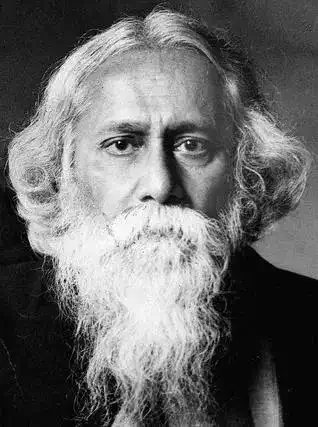
Rabindranath Tagore
Stray Birds 71 - 80
THE woodcutter's axe begged for its handle from the tree.
The tree gave it.
72
IN my solitude of heart
I feel the sigh of this widowed evening
veiled with mist and rain.
73
CHASTITY
is a wealth that comes from
abundance of love.
74
THE mist,
like love,
plays upon the heart of the hills
and brings out surprises of beauty.
75
WE read the world wrong
and say that it deceives us.
76
THE poet wind is out over the sea
and the forest to seek his own voice.
77
EVERY child
comes with the message
that God is not yet discouraged
of man.
78
THE grass seeks her crowd in the earth.
The tree seeks his solitude of the sky.
79
MAN barricades against himself.
80
YOUR voice, my friend,
wanders in my heart,
like the muffled sound of the sea
among these listening pines.
638

Kazi Nazrul Islam
Kings and Subjects
I am the bard of equality.
At the crossroads I sing,
Where pity and sympathy
Have made us all comrades and brother
It is a simple question,
We are all children of this earth,
But can you tell me
Why are some kings, rolling in luxury
And some subjects, starving in gutters?
But it is a queer philosophy,
If I state this simple truth
I am charged with sedition.
The subject can turn a traitor as simply as that.
But whom shall I ask
Why a king should not be condemned
As a traitor to the people
For his thousand crimes and follies
It is the people who create kings
And not the kings the people
Is that the reason
Why the king tortures the people?
Is that the way
They express their gratitude?
How can you smile, friend?
We are only coolies and servants
In our own home and land.
We have given up our manliness,
Our strength, and power.
And what have we got?
Rendered eunuchs we are guarding today
The lascivious harem of the tyrant king.
Whom shall I relate to
This sad and tragic tale?
In our Own land we are the ruled and the oppressed.
Those who make up the very country
Have no right in it
While the rulers enjoy,
The people remain starved and hungry.
Whom shall I complain to
Of this grievous injustice?
All around we hear the sycophants crying
'God save the king, Glory to him',
We the people are always judged.
Is there no Hall of Justice for the kings and the
monarchs?
The war-drums sound deafeningly
And the country's youth rush
To the battle-field to die with smiles on their lips.
But the tender and loving hearts, losing their dear
ones,
Weep bitter tears at home.
And the ravens fly over their roofs.
The royal road is ready..
The victorious chariot will soon pass by
Rejoice, O Citizens!
Have not your sons come back?
Did not your brothers return? Are your husbands dead?
Why weep for them? They sleep in the lap
Of the Goddess of victory.
A dark shadow of gloom and grief
Envelopes the country today,
God save the King, glory to him?
Rejoice, O Citizens,
For the king has come out of his fort today
After so many days.
The King's chariot is flying fast,
Trampling under the wheels
The returned heroes,
Trampling underneath
The brave crippled soldiers and the glorious dead.
O the one-armed and the one-legged
Soldiers of the King,
Keep off the roads and move away
If you want to save your lives today.
Well, friend,
That is exactly what happens,
The people fight and win the battles
And sing the King's praises,
The people provide their rulers
With food and apparel.
The people serve the king with devotion and humility
Only to be rewarded like this.
Isn't that a queer justice, friend?
We have to bow down and make obeisance
To the servants who are paid from our money.
Come, O you all, and have a look
At those glorious Public Servants of our land.
The wheels of Time revolve,
And yet here in our country
Over millions of men
Rule a hundred thieves.
It is no wishful thinking,
Nor is the day very far
When all the kings of the world
Will, in unison, sing
The People's Victory.
[Original: Raja-Proja; Translation: Kabir Chowdhury]
638
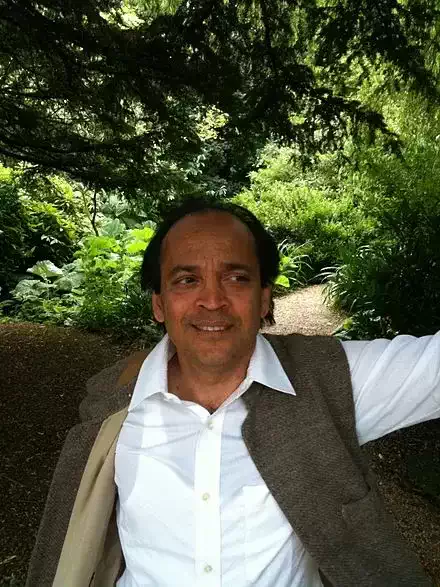
Vikram Seth
Protocols
What can I say to you? How can I retract
All that that fool my voice has spoken -
Now that the facts are plain, the placid surface cracked,
The protocols of friendship broken?
I cannot walk by day as now I walk at dawn
Past the still house where you lie sleeping.
May the sun burn these footprints on the lawn
And hold you in its warmth and keeping.
628
Rabindranath Tagore
Vocation
When the gong sounds ten in the morning and I walk to school by our
lane.
Every day I meet the hawker crying, "Bangles, crystal
bangles!"
There is nothing to hurry him on, there is no road he must
take, no place he must go to, no time when he must come home.
I wish I were a hawker, spending my day in the road, crying,
"Bangles, crystal bangles!"
When at four in the afternoon I come back from the school,
I can see through the gate of that house the gardener digging
the ground.
He does what he likes with his spade, he soils his clothes
with dust, nobody takes him to task if he gets baked in the sun or
gets wet.
I wish I were a gardener digging away at the garden with
nobody to stop me from digging.
Just as it gets dark in the evening and my mother sends me to
bed,
I can see through my open window the watchman walking up and
down.
The lane is dark and lonely, and the street-lamp stands like
a giant with one red eye in its head.
The watchman swings his lantern and walks with his shadow at
his side, and never once goes to bed in his life.
I wish I were a watchman walking the streets all night,
chasing the shadows with my lantern.
630

Robert Browning
A Grammarian's Funeral
SHORTLY AFTER THE REVIVAL OF
LEARNING IN EUROPE.
Let us begin and carry up this corpse,
Singing together.
Leave we the common crofts, the vulgar thorpes
Each in its tether
Sleeping safe on the bosom of the plain,
Cared-for till cock-crow:
Look out if yonder be not day again
Rimming the rock-row!
That's the appropriate country; there, man's thought,
Rarer, intenser,
Self-gathered for an outbreak, as it ought,
Chafes in the censer.
Leave we the unlettered plain its herd and crop;
Seek we sepulture
On a tall mountain, citied to the top,
Crowded with culture!
All the peaks soar, but one the rest excels;
Clouds overcome it;
No! yonder sparkle is the citadel's
Circling its summit.
Thither our path lies; wind we up the heights:
Wait ye the warning?
Our low life was the level's and the night's;
He's for the morning.
Step to a tune, square chests, erect each head,
'Ware the beholders!
This is our master, famous calm and dead,
Borne on our shoulders.
Sleep, crop and herd! sleep, darkling thorpe and croft,
Safe from the weather!
He, whom we convoy to his grave aloft,
Singing together,
He was a man born with thy face and throat,
Lyric Apollo!
Long he lived nameless: how should spring take note
Winter would follow?
Till lo, the little touch, and youth was gone!
Cramped and diminished,
Moaned he, ``New measures, other feet anon!
``My dance is finished?''
No, that's the world's way: (keep the mountain-side,
Make for the city!)
He knew the signal, and stepped on with pride
Over men's pity;
Left play for work, and grappled with the world
Bent on escaping:
``What's in the scroll,'' quoth he, ``thou keepest furled?
``Show me their shaping,
``Theirs who most studied man, the bard and sage,---
``Give!''---So, he gowned him,
Straight got by heart that hook to its last page:
Learned, we found him.
Yea, but we found him bald too, eyes like lead,
Accents uncertain:
``Time to taste life,'' another would have said,
``Up with the curtain!''
This man said rather, ``Actual life comes next?
``Patience a moment!
``Grant I have mastered learning's crabbed text,
``Still there's the comment.
``Let me know all! Prate not of most or least,
``Painful or easy!
``Even to the crumbs I'd fain eat up the feast,
``Ay, nor feel queasy.''
Oh, such a life as he resolved to live,
When he had learned it,
When he had gathered all books had to give!
Sooner, he spurned it.
Image the whole, then execute the parts---
Fancy the fabric
Quite, ere you build, ere steel strike fire from quartz,
Ere mortar dab brick!
(Here's the town-gate reached: there's the market-place
Gaping before us.)
Yea, this in him was the peculiar grace
(Hearten our chorus!)
That before living he'd learn how to live---
No end to learning:
Earn the means first---God surely will contrive
Use for our earning.
Others mistrust and say, ``But time escapes:
``Live now or never!''
He said, ``What's time? Leave Now for dogs and apes!
``Man has Forever.''
Back to his book then: deeper drooped his head
_Calculus_ racked him:
Leaden before, his eyes grew dross of lead:
_Tussis_ attacked him.
``Now, master, take a little rest!''---not he!
(Caution redoubled,
Step two abreast, the way winds narrowly!)
Not a whit troubled
Back to his studies, fresher than at first,
Fierce as a dragon
He (soul-hydroptic with a sacred thirst)
Sucked at the flagon.
Oh, if we draw a circle premature,
Heedless of far gain,
Greedy for quick returns of profit, sure
Bad is our bargain!
Was it not great? did not he throw on God,
(He loves the burthen)---
God's task to make the heavenly period
Perfect the earthen?
Did not he magnify the mind, show clear
Just what it all meant?
He would not discount life, as fools do here,
Paid by instalment.
He ventured neck or nothing---heaven's success
Found, or earth's failure:
``Wilt thou trust death or not?'' He answered ``Yes:
``Hence with life's pale lure!''
That low man seeks a little thing to do,
Sees it and does it:
This high man, with a great thing to pursue,
Dies ere he knows it.
That low man goes on adding nine to one,
His hundred's soon hit:
This high man, aiming at a million,
Misses an unit.
That, has the world here---should he need the next,
Let the world mind him!
This, throws himself on God, and unperplexed
Seeking shall find him.
So, with the throttling hands of death at strife,
Ground he at grammar;
Still, thro' the rattle, parts of speech were rife:
While he could stammer
He settled _Hoti's_ business---let it be!---
Properly based _Oun_---
Gave us the doctrine of the enclitic _De_,
Dead from the waist down.
Well, here's the platform, here's the proper place:
Hail to your purlieus,
All ye highfliers of the feathered race,
Swallows and curlews!
Here's the top-peak; the multitude below
Live, for they can, there:
This man decided not to Live but Know---
Bury this man there?
Here---here's his place, where meteors shoot, clouds form,
Lightnings are loosened,
Stars come and go! Let joy break with the storm,
Peace let the dew send!
Lofty designs must close in like effects
Loftily lying,
Leave him---still loftier than the world suspects,
Living and dying.
629
Langston Hughes
The Negro Mother
Children, I come back today
To tell you a story of the long dark way
That I had to climb, that I had to know
In order that the race might live and grow.
Look at my face -- dark as the night --
Yet shining like the sun with love's true light.
I am the dark girl who crossed the red sea
Carrying in my body the seed of the free.
I am the woman who worked in the field
Bringing the cotton and the corn to yield.
I am the one who labored as a slave,
Beaten and mistreated for the work that I gave --
Children sold away from me, I'm husband sold, too.
No safety , no love, no respect was I due.
Three hundred years in the deepest South:
But God put a song and a prayer in my mouth .
God put a dream like steel in my soul.
Now, through my children, I'm reaching the goal.
Now, through my children, young and free,
I realized the blessing deed to me.
I couldn't read then. I couldn't write.
I had nothing, back there in the night.
Sometimes, the valley was filled with tears,
But I kept trudging on through the lonely years.
Sometimes, the road was hot with the sun,
But I had to keep on till my work was done:
I had to keep on! No stopping for me --
I was the seed of the coming Free.
I nourished the dream that nothing could smother
Deep in my breast -- the Negro mother.
I had only hope then , but now through you,
Dark ones of today, my dreams must come true:
All you dark children in the world out there,
Remember my sweat, my pain, my despair.
Remember my years, heavy with sorrow --
And make of those years a torch for tomorrow.
Make of my pass a road to the light
Out of the darkness, the ignorance, the night.
Lift high my banner out of the dust.
Stand like free men supporting my trust.
Believe in the right, let none push you back.
Remember the whip and the slaver's track.
Remember how the strong in struggle and strife
Still bar you the way, and deny you life --
But march ever forward, breaking down bars.
Look ever upward at the sun and the stars.
Oh, my dark children, may my dreams and my prayers
Impel you forever up the great stairs --
For I will be with you till no white brother
Dares keep down the children of the Negro Mother.
629

Henry Wadsworth Longfellow
The Song Of Hiawatha XIV: Picture-Writing
In those days said Hiawatha,
'Lo! how all things fade and perish!
From the memory of the old men
Pass away the great traditions,
The achievements of the warriors,
The adventures of the hunters,
All the wisdom of the Medas,
All the craft of the Wabenos,
All the marvellous dreams and visions
Of the Jossakeeds, the Prophets!
'Great men die and are forgotten,
Wise men speak; their words of wisdom
Perish in the ears that hear them,
Do not reach the generations
That, as yet unborn, are waiting
In the great, mysterious darkness
Of the speechless days that shall be!
'On the grave-posts of our fathers
Are no signs, no figures painted;
Who are in those graves we know not,
Only know they are our fathers.
Of what kith they are and kindred,
From what old, ancestral Totem,
Be it Eagle, Bear, or Beaver,
They descended, this we know not,
Only know they are our fathers.
'Face to face we speak together,
But we cannot speak when absent,
Cannot send our voices from us
To the friends that dwell afar off;
Cannot send a secret message,
But the bearer learns our secret,
May pervert it, may betray it,
May reveal it unto others.'
Thus said Hiawatha, walking
In the solitary forest,
Pondering, musing in the forest,
On the welfare of his people.
From his pouch he took his colors,
Took his paints of different colors,
On the smooth bark of a birch-tree
Painted many shapes and figures,
Wonderful and mystic figures,
And each figure had a meaning,
Each some word or thought suggested.
Gitche Manito the Mighty,
He, the Master of Life, was painted
As an egg, with points projecting
To the four winds of the heavens.
Everywhere is the Great Spirit,
Was the meaning of this symbol.
Gitche Manito the Mighty,
He the dreadful Spirit of Evil,
As a serpent was depicted,
As Kenabeek, the great serpent.
Very crafty, very cunning,
Is the creeping Spirit of Evil,
Was the meaning of this symbol.
Life and Death he drew as circles,
Life was white, but Death was darkened;
Sun and moon and stars he painted,
Man and beast, and fish and reptile,
Forests, mountains, lakes, and rivers.
For the earth he drew a straight line,
For the sky a bow above it;
White the space between for daytime,
Filled with little stars for night-time;
On the left a point for sunrise,
On the right a point for sunset,
On the top a point for noontide,
And for rain and cloudy weather
Waving lines descending from it.
Footprints pointing towards a wigwam
Were a sign of invitation,
Were a sign of guests assembling;
Bloody hands with palms uplifted
Were a symbol of destruction,
Were a hostile sign and symbol.
All these things did Hiawatha
Show unto his wondering people,
And interpreted their meaning,
And he said: 'Behold, your grave-posts
Have no mark, no sign, nor symbol,
Go and paint them all with figures;
Each one with its household symbol,
With its own ancestral Totem;
So that those who follow after
May distinguish them and know them.'
And they painted on the grave-posts
On the graves yet unforgotten,
Each his own ancestral Totem,
Each the symbol of his household;
Figures of the Bear and Reindeer,
Of the Turtle, Crane, and Beaver,
Each inverted as a token
That the owner was departed,
That the chief who bore the symbol
Lay beneath in dust and ashes.
And the Jossakeeds, the Prophets,
The Wabenos, the Magicians,
And the Medicine-men, the Medas,
Painted upon bark and deer-skin
Figures for the songs they chanted,
For each song a separate symbol,
Figures mystical and awful,
Figures strange and brightly colored;
And each figure had its meaning,
Each some magic song suggested.
The Great Spirit, the Creator,
Flashing light through all the heaven;
The Great Serpent, the Kenabeek,
With his bloody crest erected,
Creeping, looking into heaven;
In the sky the sun, that listens,
And the moon eclipsed and dying;
Owl and eagle, crane and hen-hawk,
And the cormorant, bird of magic;
Headless men, that walk the heavens,
Bodies lying pierced with arrows,
Bloody hands of death uplifted,
Flags on graves, and great war-captains
Grasping both the earth and heaven!
Such as these the shapes they painted
On the birch-bark and the deer-skin;
Songs of war and songs of hunting,
Songs of medicine and of magic,
All were written in these figures,
For each figure had its meaning,
Each its separate song recorded.
Nor forgotten was the Love-Song,
The most subtle of all medicines,
The most potent spell of magic,
Dangerous more than war or hunting!
Thus the Love-Song was recorded,
Symbol and interpretation.
First a human figure standing,
Painted in the brightest scarlet;
`T Is the lover, the musician,
And the meaning is, 'My painting
Makes me powerful over others.'
Then the figure seated, singing,
Playing on a drum of magic,
And the interpretation, 'Listen!
`T Is my voice you hear, my singing!'
Then the same red figure seated
In the shelter of a wigwam,
And the meaning of the symbol,
'I will come and sit beside you
In the mystery of my passion!'
Then two figures, man and woman,
Standing hand in hand together
With their hands so clasped together
That they seemed in one united,
And the words thus represented
Are, 'I see your heart within you,
And your cheeks are red with blushes!'
Next the maiden on an island,
In the centre of an Island;
And the song this shape suggested
Was, 'Though you were at a distance,
Were upon some far-off island,
Such the spell I cast upon you,
Such the magic power of passion,
I could straightway draw you to me!'
Then the figure of the maiden
Sleeping, and the lover near her,
Whispering to her in her slumbers,
Saying, 'Though you were far from me
In the land of Sleep and Silence,
Still the voice of love would reach you!'
And the last of all the figures
Was a heart within a circle,
Drawn within a magic circle;
And the image had this meaning:
'Naked lies your heart before me,
To your naked heart I whisper!'
Thus it was that Hiawatha,
In his wisdom, taught the people
All the mysteries of painting,
All the art of Picture-Writing,
On the smooth bark of the birch-tree,
On the white skin of the reindeer,
On the grave-posts of the village.
634
Kazi Nazrul Islam
I Sing of Heroes
I sing of Heroes -
The youth, the revolutionary,
Who armed with a sharp Excalibur
Today go forth in all directions
With valiant steps and steady
Upon a campaign for the impossible,
The Egyptian Pyramids of Antiquity,
Stand as a chronicle of such campaign,
Heroes whose mere breath
doth drive away into oblivion
The dead leaves of moth-eaten scriptures
Who hew down the haunts and
temples of false gods. .
And the time-honoured ale-house
Of the grand hypocrite
In the person of a reputed Moralist;
Whose mighty streams of. ideal reform
Swept away the long-standing nuisance
The awful and heavy stocks and stones of customs,
The old fossils of dead scriptures.
Those who came fearlessly
To the temple of the unreal
Armed with the stout relentless club,
To break the bondage of 'Maya'
And did with undaunted courage
Strike, by means of mighty hammer
The Chinese walls of superstition.
Those who ploughed the Burial Ground
And pushed away the dead bones
To layout a garden of blooming flowers,
Who now crowd the sea shore of life,
As 'Cynosure of neighbouring eyes'
I sing of Heroes.
Who today march forward
Upon the path of life in tune, with the world
-At dead of night the other day
A passenger who, all alone,
launched his boat
On the dangerous Deep,
Did not return to the shore next morning.
In memory of that fearless adventurer
I shed my tears and write an Elegy
Even today in the stil
Iness of Night
Even today I keep sleepless night
And sing a song of welcome to him
He who did not return on the morrow
Did indeed take an aerial journey over night,
As a traveller of infinite space
In search of a far-off New World.
The eternal Sentinel at the gate of Death
Trembles in fear of him,
And keeps ever-wakeful vigils.
Those who under the mighty impulse of life
Pursue Death ceaselessly
In the depths of the ocean,
In the boundless sky,
And all over the surface of the Globe,
Those who go down into the Hades
And despoil the palace of Yakshas
of its rare gems,
Who disregarding the nite of the
terrible cobra
Steal the jewel from its head,
Who have controlled the thunder of Bajrapani,
And made the proud lightning,
Daughter of the clouds,
A captive and a maid -
I have come to salute and sing
Of those who are attended by the wind
As an obedient servant
Refreshing them with its balmy breath -
My wailings and lamentations ill all the air for those
Who mount the Scaffold
And the Scaffold itself is tired now
Of hanging them.
And in whose prison,
Behold, the fair Dawn held in fetters
Doth wake up and smile
A flowery smile!
[Ami gai tari gaan; Translation: Abdul Hakim]
623
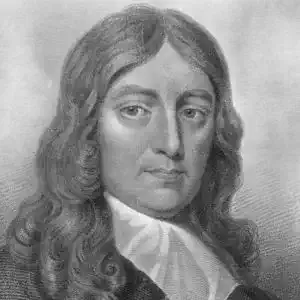
John Milton
The Passion
I
Erewhile of music, and ethereal mirth,
Wherewith the stage of Air and Earth did ring,
And joyous news of heavenly Infant’s birth,
My muse with Angels did divide to sing;
But headlong joy is ever on the wing,
In wintry solstice like the shortened light
Soon swallowed up in dark and long outliving night.
II
For now to sorrow must I tune my song,
And set my Harp to notes of saddest woe,
Which on our dearest Lord did seize ere long,
Dangers, and snares, and wrongs, and worse than so,
Which he for us did freely undergo:
Most perfect Hero, tried in heaviest plight
Of labours huge and hard, too hard for human wight!
III
He, sovran Priest, stooping his regal head,
That dropt with odorous oil down his fair eyes,
Poor fleshly Tabernacle enterèd,
His starry front low-roofed beneath the skies:
Oh, what a mask was there, what a disguise!
Yet more: the stroke of death he must abide;
Then lies him meekly down fast by his Brethren’s side.
IV
These latest scenes confine my roving verse;
To this horizon is my Phoebus bound.
His godlike acts, and his temptations fierce,
And former sufferings, otherwhere are found;
Loud o’er the rest Cremona’s trump doth sound:
Me softer airs befit, and softer strings
Of lute, or viol still, more apt for mournful things.
V
Befriend me, Night, best Patroness of grief!
Over the pole thy thickest mantle throw,
And work my flattered fancy to belief
That Heaven and Earth are coloured with my woe;
My sorrows are too dark for day to know:
The leaves should all be black whereon I write,
And letters, where my tears have washed, a wannish white.
VI
See, see the chariot, and those rushing wheels,
That whirled the prophet up at Chebar flood;
My spirit some transporting Cherub feels
To bear me where the Towers of Salem stood,
Once glorious towers, now sunk in guiltless blood.
There doth my soul in holy vision sit,
In pensive trance, and anguish, and ecstatic fit.
VII
Mine eye hath found that sad sepulchral rock
That was the casket of Heaven’s richest store,
And here, though grief my feeble hands up-lock,
Yet on the softened quarry would I score
My plaining verse as lively as before;
For sure so well instructed are my tears
That they would fitly fall in ordered characters.
VIII
Or, should I thence, hurried on viewless wing,
Take up a weeping on the mountains wild,
The gentle neighbourhood of grove and spring
Would soon unbosom all their Echoes mild;
And I (for grief is easily beguiled)
Might think the infection of my sorrows loud
Had got a race of mourners on some pregnant cloud.
This Subject the Author finding to be above the years he had when he wrote it, and
nothing satisfied with what was begun, left it unfinished.
620

Ezra Pound
Homage To Sextus Propertius - V
Now if ever it is time to cleanse Helicon;
to lead Emathian horses afield,
And to name over the census of my chiefs in the Roman camp.
If I have not the faculty, 'The bare attempt would be praise-worthy.'
'In the things of similar magnitude
the mere will to act is sufficient.'
The primitive ages sang Venus,
the last sings of a tumult,
And I also will sing war when this matter of a girl is exhausted.
I with my beak hauled ashore would proceed in a more stately manner,
My Muse is eager to instruct me in a new gamut, or gambetto,
Up, up my soul, from your lowly cantilation,
put on a timely vigour.
Oh august Pierides! Now for a large-mouthed product.
Thus:
'The Euphrates denies its protection to the Parthian and
apologizes for Crassus,'
And 'It is, I think, India which now gives necks to your triumph,'
And so forth, Augustus. 'Virgin Arabia shakes in her inmost dwelling.'
If any land shrink into a distant seacoast,
it is a mere postponement of your domination.
And I shall follow the camp, I shall be duly celebrated
for singing the affairs of your cavalry.
May the fates watch over my day.
2
Yet you ask on what account I write so many love-lyrics
And whence this soft book comes into my mouth.
Neither Calliope nor Apollo sung these things into my ear,
My genius is no more than a girl.
If she with ivory fingers drive a tune through the lyre,
We look at the process.
How easy the moving fingers; if hair is mussed on her forehead,
If she goes in a gleam of Cos, in a slither of dyed stuff,
There is a volume in the matter; if her eyelids sink into sleep,
There are new jobs for the author;
And if she plays with me with her shirt off,
We shall construct many Iliads.
And whatever she does or says
We shall spin long yarns out of nothing.
Thus much the fates have allotted me, and if, Maecenas,
I were able to lead heroes into armour, I would not,
Neither would I warble of Titans, nor of Ossa
spiked onto Olympus,
Nor of causeways over Pelion,
Nor of Thebes in its ancient respectability,
nor of Homer's reputation in Pergamus,
Nor of Xerxes' two-barreled kingdom, nor of Remus and his royal family,
Nor of dignified Carthaginian characters,
Nor of Welsh mines and the profit Marus had out of them,
I should remember Caesar's affairs . . .
for a background,
Although Callimachus did without them,
and without Theseus,
Without an inferno, without Achilles attended of gods,
Without Ixion, and without the sons of Menoetius and
the Argo and without Jove's grave and the Titans.
And my ventricles do not palpitate to Caesarial ore rotundas,
Nor to the tune of the Phrygian fathers.
Sailor, of winds; a plowman, concerning his oxen;
Soldier, the enumeration of wounds; the sheep-feeder, of ewes;
We, in our narrow bed, turning aside from battles:
Each man where he can, wearing out the day in his manner.
3
It is noble to die of love, and honourable to remain
uncuckolded for a season.
And she speaks ill of light women,
and will not praise Homer
Because Helen's conduct is 'unsuitable'.
615
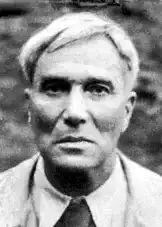
Boris Pasternak
Change
I used to glorify the poor,
Not simply lofty views expressing:
Their lives alone, I felt, were true,
Devoid of pomp and window-dressing.
No stranger to the manor house,
Its finery and lordly tenor,
I was a friend of down-and-outs,
And shunned the idly sponging manner.
For choosing friendship in the ranks
Of working people, though no rebel,
I had the honour to be stamped
As also one among the rabble.
The state of basements, unadorned,
Of attics with no frills or curtains
Was tangible without pretence
And full of substance, weighty, certain.
And I went bad when rot defaced
Our time, and life became infested,
When grief was censured as disgrace
And all played optimists and yes-men.
My faith in those who seemed my friends
Was broken and our ties were sundered.
I, too, lost Man, the Human, since
He had been lost by all and sundry.
621

Rudyard Kipling
The Broken Men
For things we never mention,
For Art misunderstood --
For excellent intention
That did not turn to good;
From ancient tales' renewing,
From clouds we would not clear --
Beyond the Law's pursuing
We fled, and settled here.
We took no tearful leaving,
We bade no long good-byes;
Men talked of crime and thieving,
Men wrote of fraud and lies.
To save our injured feelings
'T was time and time to go --
Behind was dock and Dartmoor,
Ahead lay Callao!
The widow and the orphan
That pray for ten per cent,
They clapped their trailers on us
To spy the road we went.
They watched the foreign sailings
(They scan the shipping still),
And that's your Christian people
Returning good for ill!
God bless the thoughtfull islands
Where never warrants come;
God bless the just Republics
That give a man a home,
That ask no foolish questions,
But set him on his feet;
And save his wife and daughters
From the workhouse and the street!
On church and square and market
The noonday silence falls;
You'll hear the drowsy mutter
Of the fountain in our halls.
Asleep amid the yuccas
The city takes her ease --
Till twilight brings the land-wind
To the clicking jalousies.
Day long the diamond weather,
The high, unaltered blue --
The smell of goats and incense
And the mule-bells tinkling through.
Day long the warder ocean
That keeps us from our kin,
And once a month our levee
When the English mail comes in.
You'll find us up and waiting
To treat you at the bar;
You'll find us less exclusive
Than the average English are.
We'll meet you with a carriage,
Too glad to show you round,
But -- we do not lunch on steamers,
For they are English ground.
We sail o' nights to England
And join our smiling Boards --
Our wives go in with Viscounts
And our daughters dance with Lords,
But behind our princely doings,
And behind each coup we make,
We feel there's Something Waiting,
And -- we meet It when we wake.
Ah God! One sniff of England --
To greet our flesh and blood --
To hear the traffic slurring
Once more through London mud!
Our towns of wasted honour --
Our streets of lost delight!
How stands the old Lord Warden?
Are Dover's cliffs still white?
626
Kazi Nazrul Islam
The Resurgence (Islamic Lyric)
There sounds the drum!
There on the ruined tower, dark and blank,
Flutters the once-mighty flag.
Raise your head, mussalmans,
Gird your loins and advance
The call of the New Age has come.
With the Kalma on your lips
And the sabre swinging against your hips,
With the fiery enthusiasm of Islam ill your
Shake off your lethargy and start.
With the love of Allah in your soul
Answer the call and take up your role.
There is nothing for you to dread.
You have that glorious amulet,
The Holy Quran, tied round your neck.
A pity that you overslept
And missed the Fazr prayer.
Neither did you awaken
When the Zohr did beckon.
And the Asr prayer you whiled away
In idleness and play.
The call for the Mughrib has also sounded.
You must hurry now to the Esha prayer.
Some room is still available there,
We are not really
Creatures of pomp and luxury.
Our Calipha once ru.led over half the universe
Dressed in clothes no better than beggers.
Once we only desired death
In the cause of our faith,
But now such a people as our's
Are numbed in a drunken stupor
While outside there rages a violent storm.
We had nothing but a dry piece of bread,
But we had a mighty faith and none did we dread,
A noble spirit of sacrifice we possessed.
And we moved from place to place without sleep or rest,
Always as victors great.
Let us bring back to our life
That faith and spirit of sacrifice:
Let the cry of Allah-o-Akbar
Resound in the lips of all.
Let the world tremble again
At the sound of that clarion call.
[Translation: Kabir Chowdhury]
616

Alexander Pope
Eloisa to Abelard
In these deep solitudes and awful cells,
Where heav'nly-pensive contemplation dwells,
And ever-musing melancholy reigns;
What means this tumult in a vestal's veins?
Why rove my thoughts beyond this last retreat?
Why feels my heart its long-forgotten heat?
Yet, yet I love!--From Abelard it came,
And Eloisa yet must kiss the name.
Dear fatal name! rest ever unreveal'd,
Nor pass these lips in holy silence seal'd.
Hide it, my heart, within that close disguise,
Where mix'd with God's, his lov'd idea lies:
O write it not, my hand--the name appears
Already written--wash it out, my tears!
In vain lost Eloisa weeps and prays,
Her heart still dictates, and her hand obeys.
Relentless walls! whose darksome round contains
Repentant sighs, and voluntary pains:
Ye rugged rocks! which holy knees have worn;
Ye grots and caverns shagg'd with horrid thorn!
Shrines! where their vigils pale-ey'd virgins keep,
And pitying saints, whose statues learn to weep!
Though cold like you, unmov'd, and silent grown,
I have not yet forgot myself to stone.
All is not Heav'n's while Abelard has part,
Still rebel nature holds out half my heart;
Nor pray'rs nor fasts its stubborn pulse restrain,
Nor tears, for ages, taught to flow in vain.
Soon as thy letters trembling I unclose,
That well-known name awakens all my woes.
Oh name for ever sad! for ever dear!
Still breath'd in sighs, still usher'd with a tear.
I tremble too, where'er my own I find,
Some dire misfortune follows close behind.
Line after line my gushing eyes o'erflow,
Led through a sad variety of woe:
Now warm in love, now with'ring in thy bloom,
Lost in a convent's solitary gloom!
There stern religion quench'd th' unwilling flame,
There died the best of passions, love and fame.
Yet write, oh write me all, that I may join
Griefs to thy griefs, and echo sighs to thine.
Nor foes nor fortune take this pow'r away;
And is my Abelard less kind than they?
Tears still are mine, and those I need not spare,
Love but demands what else were shed in pray'r;
No happier task these faded eyes pursue;
To read and weep is all they now can do.
Then share thy pain, allow that sad relief;
Ah, more than share it! give me all thy grief.
Heav'n first taught letters for some wretch's aid,
Some banish'd lover, or some captive maid;
They live, they speak, they breathe what love inspires,
Warm from the soul, and faithful to its fires,
The virgin's wish without her fears impart,
Excuse the blush, and pour out all the heart,
Speed the soft intercourse from soul to soul,
And waft a sigh from Indus to the Pole.
Thou know'st how guiltless first I met thy flame,
When Love approach'd me under Friendship's name;
My fancy form'd thee of angelic kind,
Some emanation of th' all-beauteous Mind.
Those smiling eyes, attemp'ring ev'ry day,
Shone sweetly lambent with celestial day.
Guiltless I gaz'd; heav'n listen'd while you sung;
And truths divine came mended from that tongue.
From lips like those what precept fail'd to move?
Too soon they taught me 'twas no sin to love.
Back through the paths of pleasing sense I ran,
Nor wish'd an Angel whom I lov'd a Man.
Dim and remote the joys of saints I see;
Nor envy them, that heav'n I lose for thee.
How oft, when press'd to marriage, have I said,
Curse on all laws but those which love has made!
Love, free as air, at sight of human ties,
Spreads his light wings, and in a moment flies,
Let wealth, let honour, wait the wedded dame,
August her deed, and sacred be her fame;
Before true passion all those views remove,
Fame, wealth, and honour! what are you to Love?
The jealous God, when we profane his fires,
Those restless passions in revenge inspires;
And bids them make mistaken mortals groan,
Who seek in love for aught but love alone.
Should at my feet the world's great master fall,
Himself, his throne, his world, I'd scorn 'em all:
Not Caesar's empress would I deign to prove;
No, make me mistress to the man I love;
If there be yet another name more free,
More fond than mistress, make me that to thee!
Oh happy state! when souls each other draw,
When love is liberty, and nature, law:
All then is full, possessing, and possess'd,
No craving void left aching in the breast:
Ev'n thought meets thought, ere from the lips it part,
And each warm wish springs mutual from the heart.
This sure is bliss (if bliss on earth there be)
And once the lot of Abelard and me.
Alas, how chang'd! what sudden horrors rise!
A naked lover bound and bleeding lies!
Where, where was Eloise? her voice, her hand,
Her poniard, had oppos'd the dire command.
Barbarian, stay! that bloody stroke restrain;
The crime was common, common be the pain.
I can no more; by shame, by rage suppress'd,
Let tears, and burning blushes speak the rest.
Canst thou forget that sad, that solemn day,
When victims at yon altar's foot we lay?
Canst thou forget what tears that moment fell,
When, warm in youth, I bade the world farewell?
As with cold lips I kiss'd the sacred veil,
The shrines all trembl'd, and the lamps grew pale:
Heav'n scarce believ'd the conquest it survey'd,
And saints with wonder heard the vows I made.
Yet then, to those dread altars as I drew,
Not on the Cross my eyes were fix'd, but you:
Not grace, or zeal, love only was my call,
And if I lose thy love, I lose my all.
Come! with thy looks, thy words, relieve my woe;
Those still at least are left thee to bestow.
Still on that breast enamour'd let me lie,
Still drink delicious poison from thy eye,
Pant on thy lip, and to thy heart be press'd;
Give all thou canst--and let me dream the rest.
Ah no! instruct me other joys to prize,
With other beauties charm my partial eyes,
Full in my view set all the bright abode,
And make my soul quit Abelard for God.
Ah, think at least thy flock deserves thy care,
Plants of thy hand, and children of thy pray'r.
From the false world in early youth they fled,
By thee to mountains, wilds, and deserts led.
You rais'd these hallow'd walls; the desert smil'd,
And Paradise was open'd in the wild.
No weeping orphan saw his father's stores
Our shrines irradiate, or emblaze the floors;
No silver saints, by dying misers giv'n,
Here brib'd the rage of ill-requited heav'n:
But such plain roofs as piety could raise,
And only vocal with the Maker's praise.
In these lone walls (their days eternal bound)
These moss-grown domes with spiry turrets crown'd,
Where awful arches make a noonday night,
And the dim windows shed a solemn light;
Thy eyes diffus'd a reconciling ray,
And gleams of glory brighten'd all the day.
But now no face divine contentment wears,
'Tis all blank sadness, or continual tears.
See how the force of others' pray'rs I try,
(O pious fraud of am'rous charity!)
But why should I on others' pray'rs depend?
Come thou, my father, brother, husband, friend!
Ah let thy handmaid, sister, daughter move,
And all those tender names in one, thy love!
The darksome pines that o'er yon rocks reclin'd
Wave high, and murmur to the hollow wind,
The wand'ring streams that shine between the hills,
The grots that echo to the tinkling rills,
The dying gales that pant upon the trees,
The lakes that quiver to the curling breeze;
No more these scenes my meditation aid,
Or lull to rest the visionary maid.
But o'er the twilight groves and dusky caves,
Long-sounding aisles, and intermingled graves,
Black Melancholy sits, and round her throws
A death-like silence, and a dread repose:
Her gloomy presence saddens all the scene,
Shades ev'ry flow'r, and darkens ev'ry green,
Deepens the murmur of the falling floods,
And breathes a browner horror on the woods.
Yet here for ever, ever must I stay;
Sad proof how well a lover can obey!
Death, only death, can break the lasting chain;
And here, ev'n then, shall my cold dust remain,
Here all its frailties, all its flames resign,
And wait till 'tis no sin to mix with thine.
Ah wretch! believ'd the spouse of God in vain,
Confess'd within the slave of love and man.
Assist me, Heav'n! but whence arose that pray'r?
Sprung it from piety, or from despair?
Ev'n here, where frozen chastity retires,
Love finds an altar for forbidden fires.
I ought to grieve, but cannot what I ought;
I mourn the lover, not lament the fault;
I view my crime, but kindle at the view,
Repent old pleasures, and solicit new;
Now turn'd to Heav'n, I weep my past offence,
Now think of thee, and curse my innocence.
Of all affliction taught a lover yet,
'Tis sure the hardest science to forget!
How shall I lose the sin, yet keep the sense,
And love th' offender, yet detest th' offence?
How the dear object from the crime remove,
Or how distinguish penitence from love?
Unequal task! a passion to resign,
For hearts so touch'd, so pierc'd, so lost as mine.
Ere such a soul regains its peaceful state,
How often must it love, how often hate!
How often hope, despair, resent, regret,
Conceal, disdain--do all things but forget.
But let Heav'n seize it, all at once 'tis fir'd;
Not touch'd, but rapt; not waken'd, but inspir'd!
Oh come! oh teach me nature to subdue,
Renounce my love, my life, myself--and you.
Fill my fond heart with God alone, for he
Alone can rival, can succeed to thee.
How happy is the blameless vestal's lot!
The world forgetting, by the world forgot.
Eternal sunshine of the spotless mind!
Each pray'r accepted, and each wish resign'd;
Labour and rest, that equal periods keep;
"Obedient slumbers that can wake and weep;"
Desires compos'd, affections ever ev'n,
Tears that delight, and sighs that waft to Heav'n.
Grace shines around her with serenest beams,
And whisp'ring angels prompt her golden dreams.
For her th' unfading rose of Eden blooms,
And wings of seraphs shed divine perfumes,
For her the Spouse prepares the bridal ring,
For her white virgins hymeneals sing,
To sounds of heav'nly harps she dies away,
And melts in visions of eternal day.
Far other dreams my erring soul employ,
Far other raptures, of unholy joy:
When at the close of each sad, sorrowing day,
Fancy restores what vengeance snatch'd away,
Then conscience sleeps, and leaving nature free,
All my loose soul unbounded springs to thee.
Oh curs'd, dear horrors of all-conscious night!
How glowing guilt exalts the keen delight!
Provoking Daemons all restraint remove,
And stir within me every source of love.
I hear thee, view thee, gaze o'er all thy charms,
And round thy phantom glue my clasping arms.
I wake--no more I hear, no more I view,
The phantom flies me, as unkind as you.
I call aloud; it hears not what I say;
I stretch my empty arms; it glides away.
To dream once more I close my willing eyes;
Ye soft illusions, dear deceits, arise!
Alas, no more--methinks we wand'ring go
Through dreary wastes, and weep each other's woe,
Where round some mould'ring tower pale ivy creeps,
And low-brow'd rocks hang nodding o'er the deeps.
Sudden you mount, you beckon from the skies;
Clouds interpose, waves roar, and winds arise.
I shriek, start up, the same sad prospect find,
And wake to all the griefs I left behind.
For thee the fates, severely kind, ordain
A cool suspense from pleasure and from pain;
Thy life a long, dead calm of fix'd repose;
No pulse that riots, and no blood that glows.
Still as the sea, ere winds were taught to blow,
Or moving spirit bade the waters flow;
Soft as the slumbers of a saint forgiv'n,
And mild as opening gleams of promis'd heav'n.
Come, Abelard! for what hast thou to dread?
The torch of Venus burns not for the dead.
Nature stands check'd; Religion disapproves;
Ev'n thou art cold--yet Eloisa loves.
Ah hopeless, lasting flames! like those that burn
To light the dead, and warm th' unfruitful urn.
What scenes appear where'er I turn my view?
The dear ideas, where I fly, pursue,
Rise in the grove, before the altar rise,
Stain all my soul, and wanton in my eyes.
I waste the matin lamp in sighs for thee,
Thy image steals between my God and me,
Thy voice I seem in ev'ry hymn to hear,
With ev'ry bead I drop too soft a tear.
When from the censer clouds of fragrance roll,
And swelling organs lift the rising soul,
One thought of thee puts all the pomp to flight,
Priests, tapers, temples, swim before my sight:
In seas of flame my plunging soul is drown'd,
While altars blaze, and angels tremble round.
While prostrate here in humble grief I lie,
Kind, virtuous drops just gath'ring in my eye,
While praying, trembling, in the dust I roll,
And dawning grace is op'ning on my soul:
Come, if thou dar'st, all charming as thou art!
Oppose thyself to Heav'n; dispute my heart;
Come, with one glance of those deluding eyes
Blot out each bright idea of the skies;
Take back that grace, those sorrows, and those tears;
Take back my fruitless penitence and pray'rs;
Snatch me, just mounting, from the blest abode;
Assist the fiends, and tear me from my God!
No, fly me, fly me, far as pole from pole;
Rise Alps between us! and whole oceans roll!
Ah, come not, write not, think not once of me,
Nor share one pang of all I felt for thee.
Thy oaths I quit, thy memory resign;
Forget, renounce me, hate whate'er was mine.
Fair eyes, and tempting looks (which yet I view!)
Long lov'd, ador'd ideas, all adieu!
Oh Grace serene! oh virtue heav'nly fair!
Divine oblivion of low-thoughted care!
Fresh blooming hope, gay daughter of the sky!
And faith, our early immortality!
Enter, each mild, each amicable guest;
Receive, and wrap me in eternal rest!
See in her cell sad Eloisa spread,
Propp'd on some tomb, a neighbour of the dead.
In each low wind methinks a spirit calls,
And more than echoes talk along the walls.
Here, as I watch'd the dying lamps around,
From yonder shrine I heard a hollow sound.
"Come, sister, come!" (it said, or seem'd to say)
"Thy place is here, sad sister, come away!
Once like thyself, I trembled, wept, and pray'd,
Love's victim then, though now a sainted maid:
But all is calm in this eternal sleep;
Here grief forgets to groan, and love to weep,
Ev'n superstition loses ev'ry fear:
For God, not man, absolves our frailties here."
I come, I come! prepare your roseate bow'rs,
Celestial palms, and ever-blooming flow'rs.
Thither, where sinners may have rest, I go,
Where flames refin'd in breasts seraphic glow:
Thou, Abelard! the last sad office pay,
And smooth my passage to the realms of day;
See my lips tremble, and my eye-balls roll,
Suck my last breath, and catch my flying soul!
Ah no--in sacred vestments may'st thou stand,
The hallow'd taper trembling in thy hand,
Present the cross before my lifted eye,
Teach me at once, and learn of me to die.
Ah then, thy once-lov'd Eloisa see!
It will be then no crime to gaze on me.
See from my cheek the transient roses fly!
See the last sparkle languish in my eye!
Till ev'ry motion, pulse, and breath be o'er;
And ev'n my Abelard be lov'd no more.
O Death all-eloquent! you only prove
What dust we dote on, when 'tis man we love.
Then too, when fate shall thy fair frame destroy,
(That cause of all my guilt, and all my joy)
In trance ecstatic may thy pangs be drown'd,
Bright clouds descend, and angels watch thee round,
From op'ning skies may streaming glories shine,
And saints embrace thee with a love like mine.
May one kind grave unite each hapless name,
And graft my love immortal on thy fame!
Then, ages hence, when all my woes are o'er,
When this rebellious heart shall beat no more;
If ever chance two wand'ring lovers brings
To Paraclete's white walls and silver springs,
O'er the pale marble shall they join their heads,
And drink the falling tears each other sheds;
Then sadly say, with mutual pity mov'd,
"Oh may we never love as these have lov'd!"
From the full choir when loud Hosannas rise,
And swell the pomp of dreadful sacrifice,
Amid that scene if some relenting eye
Glance on the stone where our cold relics lie,
Devotion's self shall steal a thought from Heav'n,
One human tear shall drop and be forgiv'n.
And sure, if fate some future bard shall join
In sad similitude of griefs to mine,
Condemn'd whole years in absence to deplore,
And image charms he must behold no more;
Such if there be, who loves so long, so well;
Let him our sad, our tender story tell;
The well-sung woes will soothe my pensive ghost;
He best can paint 'em, who shall feel 'em most.
615
John Milton
Paradise Lost: Book 06
All night the dreadless Angel, unpursued,
Through Heaven's wide champain held his way; till Morn,
Waked by the circling Hours, with rosy hand
Unbarred the gates of light. There is a cave
Within the mount of God, fast by his throne,
Where light and darkness in perpetual round
Lodge and dislodge by turns, which makes through Heaven
Grateful vicissitude, like day and night;
Light issues forth, and at the other door
Obsequious darkness enters, till her hour
To veil the Heaven, though darkness there might well
Seem twilight here: And now went forth the Morn
Such as in highest Heaven arrayed in gold
Empyreal; from before her vanished Night,
Shot through with orient beams; when all the plain
Covered with thick embattled squadrons bright,
Chariots, and flaming arms, and fiery steeds,
Reflecting blaze on blaze, first met his view:
War he perceived, war in procinct; and found
Already known what he for news had thought
To have reported: Gladly then he mixed
Among those friendly Powers, who him received
With joy and acclamations loud, that one,
That of so many myriads fallen, yet one
Returned not lost. On to the sacred hill
They led him high applauded, and present
Before the seat supreme; from whence a voice,
From midst a golden cloud, thus mild was heard.
Servant of God. Well done; well hast thou fought
The better fight, who single hast maintained
Against revolted multitudes the cause
Of truth, in word mightier than they in arms;
And for the testimony of truth hast borne
Universal reproach, far worse to bear
Than violence; for this was all thy care
To stand approved in sight of God, though worlds
Judged thee perverse: The easier conquest now
Remains thee, aided by this host of friends,
Back on thy foes more glorious to return,
Than scorned thou didst depart; and to subdue
By force, who reason for their law refuse,
Right reason for their law, and for their King
Messiah, who by right of merit reigns.
Go, Michael, of celestial armies prince,
And thou, in military prowess next,
Gabriel, lead forth to battle these my sons
Invincible; lead forth my armed Saints,
By thousands and by millions, ranged for fight,
Equal in number to that Godless crew
Rebellious: Them with fire and hostile arms
Fearless assault; and, to the brow of Heaven
Pursuing, drive them out from God and bliss,
Into their place of punishment, the gulf
Of Tartarus, which ready opens wide
His fiery Chaos to receive their fall.
So spake the Sovran Voice, and clouds began
To darken all the hill, and smoke to roll
In dusky wreaths, reluctant flames, the sign
Of wrath awaked; nor with less dread the loud
Ethereal trumpet from on high 'gan blow:
At which command the Powers militant,
That stood for Heaven, in mighty quadrate joined
Of union irresistible, moved on
In silence their bright legions, to the sound
Of instrumental harmony, that breathed
Heroick ardour to adventurous deeds
Under their God-like leaders, in the cause
Of God and his Messiah. On they move
Indissolubly firm; nor obvious hill,
Nor straitening vale, nor wood, nor stream, divides
Their perfect ranks; for high above the ground
Their march was, and the passive air upbore
Their nimble tread; as when the total kind
Of birds, in orderly array on wing,
Came summoned over Eden to receive
Their names of thee; so over many a tract
Of Heaven they marched, and many a province wide,
Tenfold the length of this terrene: At last,
Far in the horizon to the north appeared
From skirt to skirt a fiery region, stretched
In battailous aspect, and nearer view
Bristled with upright beams innumerable
Of rigid spears, and helmets thronged, and shields
Various, with boastful argument portrayed,
The banded Powers of Satan hasting on
With furious expedition; for they weened
That self-same day, by fight or by surprise,
To win the mount of God, and on his throne
To set the Envier of his state, the proud
Aspirer; but their thoughts proved fond and vain
In the mid way: Though strange to us it seemed
At first, that Angel should with Angel war,
And in fierce hosting meet, who wont to meet
So oft in festivals of joy and love
Unanimous, as sons of one great Sire,
Hymning the Eternal Father: But the shout
Of battle now began, and rushing sound
Of onset ended soon each milder thought.
High in the midst, exalted as a God,
The Apostate in his sun-bright chariot sat,
Idol of majesty divine, enclosed
With flaming Cherubim, and golden shields;
Then lighted from his gorgeous throne, for now
"twixt host and host but narrow space was left,
A dreadful interval, and front to front
Presented stood in terrible array
Of hideous length: Before the cloudy van,
On the rough edge of battle ere it joined,
Satan, with vast and haughty strides advanced,
Came towering, armed in adamant and gold;
Abdiel that sight endured not, where he stood
Among the mightiest, bent on highest deeds,
And thus his own undaunted heart explores.
O Heaven! that such resemblance of the Highest
Should yet remain, where faith and realty
Remain not: Wherefore should not strength and might
There fail where virtue fails, or weakest prove
Where boldest, though to fight unconquerable?
His puissance, trusting in the Almighty's aid,
I mean to try, whose reason I have tried
Unsound and false; nor is it aught but just,
That he, who in debate of truth hath won,
Should win in arms, in both disputes alike
Victor; though brutish that contest and foul,
When reason hath to deal with force, yet so
Most reason is that reason overcome.
So pondering, and from his armed peers
Forth stepping opposite, half-way he met
His daring foe, at this prevention more
Incensed, and thus securely him defied.
Proud, art thou met? thy hope was to have reached
The highth of thy aspiring unopposed,
The throne of God unguarded, and his side
Abandoned, at the terrour of thy power
Or potent tongue: Fool!not to think how vain
Against the Omnipotent to rise in arms;
Who out of smallest things could, without end,
Have raised incessant armies to defeat
Thy folly; or with solitary hand
Reaching beyond all limit, at one blow,
Unaided, could have finished thee, and whelmed
Thy legions under darkness: But thou seest
All are not of thy train; there be, who faith
Prefer, and piety to God, though then
To thee not visible, when I alone
Seemed in thy world erroneous to dissent
From all: My sect thou seest;now learn too late
How few sometimes may know, when thousands err.
Whom the grand foe, with scornful eye askance,
Thus answered. Ill for thee, but in wished hour
Of my revenge, first sought for, thou returnest
From flight, seditious Angel! to receive
Thy merited reward, the first assay
Of this right hand provoked, since first that tongue,
Inspired with contradiction, durst oppose
A third part of the Gods, in synod met
Their deities to assert; who, while they feel
Vigour divine within them, can allow
Omnipotence to none. But well thou comest
Before thy fellows, ambitious to win
From me some plume, that thy success may show
Destruction to the rest: This pause between,
(Unanswered lest thou boast) to let thee know,
At first I thought that Liberty and Heaven
To heavenly souls had been all one; but now
I see that most through sloth had rather serve,
Ministring Spirits, trained up in feast and song!
Such hast thou armed, the minstrelsy of Heaven,
Servility with freedom to contend,
As both their deeds compared this day shall prove.
To whom in brief thus Abdiel stern replied.
Apostate! still thou errest, nor end wilt find
Of erring, from the path of truth remote:
Unjustly thou depravest it with the name
Of servitude, to serve whom God ordains,
Or Nature: God and Nature bid the same,
When he who rules is worthiest, and excels
Them whom he governs. This is servitude,
To serve the unwise, or him who hath rebelled
Against his worthier, as thine now serve thee,
Thyself not free, but to thyself enthralled;
Yet lewdly darest our ministring upbraid.
Reign thou in Hell, thy kingdom; let me serve
In Heaven God ever blest, and his divine
Behests obey, worthiest to be obeyed;
Yet chains in Hell, not realms, expect: Mean while
From me returned, as erst thou saidst, from flight,
This greeting on thy impious crest receive.
So saying, a noble stroke he lifted high,
Which hung not, but so swift with tempest fell
On the proud crest of Satan, that no sight,
Nor motion of swift thought, less could his shield,
Such ruin intercept: Ten paces huge
He back recoiled; the tenth on bended knee
His massy spear upstaid; as if on earth
Winds under ground, or waters forcing way,
Sidelong had pushed a mountain from his seat,
Half sunk with all his pines. Amazement seised
The rebel Thrones, but greater rage, to see
Thus foiled their mightiest; ours joy filled, and shout,
Presage of victory, and fierce desire
Of battle: Whereat Michael bid sound
The Arch-Angel trumpet; through the vast of Heaven
It sounded, and the faithful armies rung
Hosanna to the Highest: Nor stood at gaze
The adverse legions, nor less hideous joined
The horrid shock. Now storming fury rose,
And clamour such as heard in Heaven till now
Was never; arms on armour clashing brayed
Horrible discord, and the madding wheels
Of brazen chariots raged; dire was the noise
Of conflict; over head the dismal hiss
Of fiery darts in flaming vollies flew,
And flying vaulted either host with fire.
So under fiery cope together rushed
Both battles main, with ruinous assault
And inextinguishable rage. All Heaven
Resounded; and had Earth been then, all Earth
Had to her center shook. What wonder? when
Millions of fierce encountering Angels fought
On either side, the least of whom could wield
These elements, and arm him with the force
Of all their regions: How much more of power
Army against army numberless to raise
Dreadful combustion warring, and disturb,
Though not destroy, their happy native seat;
Had not the Eternal King Omnipotent,
From his strong hold of Heaven, high over-ruled
And limited their might; though numbered such
As each divided legion might have seemed
A numerous host; in strength each armed hand
A legion; led in fight, yet leader seemed
Each warriour single as in chief, expert
When to advance, or stand, or turn the sway
Of battle, open when, and when to close
The ridges of grim war: No thought of flight,
None of retreat, no unbecoming deed
That argued fear; each on himself relied,
As only in his arm the moment lay
Of victory: Deeds of eternal fame
Were done, but infinite; for wide was spread
That war and various; sometimes on firm ground
A standing fight, then, soaring on main wing,
Tormented all the air; all air seemed then
Conflicting fire. Long time in even scale
The battle hung; till Satan, who that day
Prodigious power had shown, and met in arms
No equal, ranging through the dire attack
Of fighting Seraphim confused, at length
Saw where the sword of Michael smote, and felled
Squadrons at once; with huge two-handed sway
Brandished aloft, the horrid edge came down
Wide-wasting; such destruction to withstand
He hasted, and opposed the rocky orb
Of tenfold adamant, his ample shield,
A vast circumference. At his approach
The great Arch-Angel from his warlike toil
Surceased, and glad, as hoping here to end
Intestine war in Heaven, the arch-foe subdued
Or captive dragged in chains, with hostile frown
And visage all inflamed first thus began.
Author of evil, unknown till thy revolt,
Unnamed in Heaven, now plenteous as thou seest
These acts of hateful strife, hateful to all,
Though heaviest by just measure on thyself,
And thy adherents: How hast thou disturbed
Heaven's blessed peace, and into nature brought
Misery, uncreated till the crime
Of thy rebellion! how hast thou instilled
Thy malice into thousands, once upright
And faithful, now proved false! But think not here
To trouble holy rest; Heaven casts thee out
From all her confines. Heaven, the seat of bliss,
Brooks not the works of violence and war.
Hence then, and evil go with thee along,
Thy offspring, to the place of evil, Hell;
Thou and thy wicked crew! there mingle broils,
Ere this avenging sword begin thy doom,
Or some more sudden vengeance, winged from God,
Precipitate thee with augmented pain.
So spake the Prince of Angels; to whom thus
The Adversary. Nor think thou with wind
Of aery threats to awe whom yet with deeds
Thou canst not. Hast thou turned the least of these
To flight, or if to fall, but that they rise
Unvanquished, easier to transact with me
That thou shouldst hope, imperious, and with threats
To chase me hence? err not, that so shall end
The strife which thou callest evil, but we style
The strife of glory; which we mean to win,
Or turn this Heaven itself into the Hell
Thou fablest; here however to dwell free,
If not to reign: Mean while thy utmost force,
And join him named Almighty to thy aid,
I fly not, but have sought thee far and nigh.
They ended parle, and both addressed for fight
Unspeakable; for who, though with the tongue
Of Angels, can relate, or to what things
Liken on earth conspicuous, that may lift
Human imagination to such highth
Of Godlike power? for likest Gods they seemed,
Stood they or moved, in stature, motion, arms,
Fit to decide the empire of great Heaven.
Now waved their fiery swords, and in the air
Made horrid circles; two broad suns their shields
Blazed opposite, while Expectation stood
In horrour: From each hand with speed retired,
Where erst was thickest fight, the angelick throng,
And left large field, unsafe within the wind
Of such commotion; such as, to set forth
Great things by small, if, nature's concord broke,
Among the constellations war were sprung,
Two planets, rushing from aspect malign
Of fiercest opposition, in mid sky
Should combat, and their jarring spheres confound.
Together both with next to almighty arm
Up-lifted imminent, one stroke they aimed
That might determine, and not need repeat,
As not of power at once; nor odds appeared
In might or swift prevention: But the sword
Of Michael from the armoury of God
Was given him tempered so, that neither keen
Nor solid might resist that edge: it met
The sword of Satan, with steep force to smite
Descending, and in half cut sheer; nor staid,
But with swift wheel reverse, deep entering, shared
All his right side: Then Satan first knew pain,
And writhed him to and fro convolved; so sore
The griding sword with discontinuous wound
Passed through him: But the ethereal substance closed,
Not long divisible; and from the gash
A stream of necturous humour issuing flowed
Sanguine, such as celestial Spirits may bleed,
And all his armour stained, ere while so bright.
Forthwith on all sides to his aid was run
By Angels many and strong, who interposed
Defence, while others bore him on their shields
Back to his chariot, where it stood retired
From off the files of war: There they him laid
Gnashing for anguish, and despite, and shame,
To find himself not matchless, and his pride
Humbled by such rebuke, so far beneath
His confidence to equal God in power.
Yet soon he healed; for Spirits that live throughout
Vital in every part, not as frail man
In entrails, heart of head, liver or reins,
Cannot but by annihilating die;
Nor in their liquid texture mortal wound
Receive, no more than can the fluid air:
All heart they live, all head, all eye, all ear,
All intellect, all sense; and, as they please,
They limb themselves, and colour, shape, or size
Assume, as?kikes them best, condense or rare.
Mean while in other parts like deeds deserved
Memorial, where the might of Gabriel fought,
And with fierce ensigns pierced the deep array
Of Moloch, furious king; who him defied,
And at his chariot-wheels to drag him bound
Threatened, nor from the Holy One of Heaven
Refrained his tongue blasphemous; but anon
Down cloven to the waist, with shattered arms
And uncouth pain fled bellowing. On each wing
Uriel, and Raphael, his vaunting foe,
Though huge, and in a rock of diamond armed,
Vanquished Adramelech, and Asmadai,
Two potent Thrones, that to be less than Gods
Disdained, but meaner thoughts learned in their flight,
Mangled with ghastly wounds through plate and mail.
Nor stood unmindful Abdiel to annoy
The atheist crew, but with redoubled blow
Ariel, and Arioch, and the violence
Of Ramiel scorched and blasted, overthrew.
I might relate of thousands, and their names
Eternize here on earth; but those elect
Angels, contented with their fame in Heaven,
Seek not the praise of men: The other sort,
In might though wonderous and in acts of war,
Nor of renown less eager, yet by doom
Cancelled from Heaven and sacred memory,
Nameless in dark oblivion let them dwell.
For strength from truth divided, and from just,
Illaudable, nought merits but dispraise
And ignominy; yet to glory aspires
Vain-glorious, and through infamy seeks fame:
Therefore eternal silence be their doom.
And now, their mightiest quelled, the battle swerved,
With many an inroad gored; deformed rout
Entered, and foul disorder; all the ground
With shivered armour strown, and on a heap
Chariot and charioteer lay overturned,
And fiery-foaming steeds; what stood, recoiled
O'er-wearied, through the faint Satanick host
Defensive scarce, or with pale fear surprised,
Then first with fear surprised, and sense of pain,
Fled ignominious, to such evil brought
By sin of disobedience; till that hour
Not liable to fear, or flight, or pain.
Far otherwise the inviolable Saints,
In cubick phalanx firm, advanced entire,
Invulnerable, impenetrably armed;
Such high advantages their innocence
Gave them above their foes; not to have sinned,
Not to have disobeyed; in fight they stood
Unwearied, unobnoxious to be pained
By wound, though from their place by violence moved,
Now Night her course began, and, over Heaven
Inducing darkness, grateful truce imposed,
And silence on the odious din of war:
Under her cloudy covert both retired,
Victor and vanquished: On the foughten field
Michael and his Angels prevalent
Encamping, placed in guard their watches round,
Cherubick waving fires: On the other part,
Satan with his rebellious disappeared,
Far in the dark dislodged; and, void of rest,
His potentates to council called by night;
And in the midst thus undismayed began.
O now in danger tried, now known in arms
Not to be overpowered, Companions dear,
Found worthy not of liberty alone,
Too mean pretence! but what we more affect,
Honour, dominion, glory, and renown;
Who have sustained one day in doubtful fight,
(And if one day, why not eternal days?)
What Heaven's Lord had powerfullest to send
Against us from about his throne, and judged
Sufficient to subdue us to his will,
But proves not so: Then fallible, it seems,
Of future we may deem him, though till now
Omniscient thought. True is, less firmly armed,
Some disadvantage we endured and pain,
Till now not known, but, known, as soon contemned;
Since now we find this our empyreal form
Incapable of mortal injury,
Imperishable, and, though pierced with wound,
Soon closing, and by native vigour healed.
Of evil then so small as easy think
The remedy; perhaps more valid arms,
Weapons more violent, when next we meet,
May serve to better us, and worse our foes,
Or equal what between us made the odds,
In nature none: If other hidden cause
Left them superiour, while we can preserve
Unhurt our minds, and understanding sound,
Due search and consultation will disclose.
He sat; and in the assembly next upstood
Nisroch, of Principalities the prime;
As one he stood escaped from cruel fight,
Sore toiled, his riven arms to havock hewn,
And cloudy in aspect thus answering spake.
Deliverer from new Lords, leader to free
Enjoyment of our right as Gods; yet hard
For Gods, and too unequal work we find,
Against unequal arms to fight in pain,
Against unpained, impassive; from which evil
Ruin must needs ensue; for what avails
Valour or strength, though matchless, quelled with pain
Which all subdues, and makes remiss the hands
Of mightiest? Sense of pleasure we may well
Spare out of life perhaps, and not repine,
But live content, which is the calmest life:
But pain is perfect misery, the worst
Of evils, and, excessive, overturns
All patience. He, who therefore can invent
With what more forcible we may offend
Our yet unwounded enemies, or arm
Ourselves with like defence, to me deserves
No less than for deliverance what we owe.
Whereto with look composed Satan replied.
Not uninvented that, which thou aright
Believest so main to our success, I bring.
Which of us who beholds the bright surface
Of this ethereous mould whereon we stand,
This continent of spacious Heaven, adorned
With plant, fruit, flower ambrosial, gems, and gold;
Whose eye so superficially surveys
These things, as not to mind from whence they grow
Deep under ground, materials dark and crude,
Of spiritous and fiery spume, till touched
With Heaven's ray, and tempered, they shoot forth
So beauteous, opening to the ambient light?
These in their dark nativity the deep
Shall yield us, pregnant with infernal flame;
Which, into hollow engines, long and round,
Thick rammed, at the other bore with touch of fire
Dilated and infuriate, shall send forth
From far, with thundering noise, among our foes
Such implements of mischief, as shall dash
To pieces, and o'erwhelm whatever stands
Adverse, that they shall fear we have disarmed
The Thunderer of his only dreaded bolt.
Nor long shall be our labour; yet ere dawn,
Effect shall end our wish. Mean while revive;
Abandon fear; to strength and counsel joined
Think nothing hard, much less to be despaired.
He ended, and his words their drooping cheer
Enlightened, and their languished hope revived.
The invention all admired, and each, how he
To be the inventer missed; so easy it seemed
Once found, which yet unfound most would have thought
Impossible: Yet, haply, of thy race
In future days, if malice should abound,
Some one intent on mischief, or inspired
With devilish machination, might devise
Like instrument to plague the sons of men
For sin, on war and mutual slaughter bent.
Forthwith from council to the work they flew;
None arguing stood; innumerable hands
Were ready; in a moment up they turned
Wide the celestial soil, and saw beneath
The originals of nature in their crude
Conception; sulphurous and nitrous foam
They found, they mingled, and, with subtle art,
Concocted and adusted they reduced
To blackest grain, and into store conveyed:
Part hidden veins digged up (nor hath this earth
Entrails unlike) of mineral and stone,
Whereof to found their engines and their balls
Of missive ruin; part incentive reed
Provide, pernicious with one touch to fire.
So all ere day-spring, under conscious night,
Secret they finished, and in order set,
With silent circumspection, unespied.
Now when fair morn orient in Heaven appeared,
Up rose the victor-Angels, and to arms
The matin trumpet sung: In arms they stood
Of golden panoply, refulgent host,
Soon banded; others from the dawning hills
Look round, and scouts each coast light-armed scour,
Each quarter to descry the distant foe,
Where lodged, or whither fled, or if for fight,
In motion or in halt: Him soon they met
Under spread ensigns moving nigh, in slow
But firm battalion; back with speediest sail
Zophiel, of Cherubim the swiftest wing,
Came flying, and in mid air aloud thus cried.
Arm, Warriours, arm for fight; the foe at hand,
Whom fled we thought, will save us long pursuit
This day; fear not his flight;so thick a cloud
He comes, and settled in his face I see
Sad resolution, and secure: Let each
His adamantine coat gird well, and each
Fit well his helm, gripe fast his orbed shield,
Borne even or high; for this day will pour down,
If I conjecture aught, no drizzling shower,
But rattling storm of arrows barbed with fire.
So warned he them, aware themselves, and soon
In order, quit of all impediment;
Instant without disturb they took alarm,
And onward moved embattled: When behold!
Not distant far with heavy pace the foe
Approaching gross and huge, in hollow cube
Training his devilish enginery, impaled
On every side with shadowing squadrons deep,
To hide the fraud. At interview both stood
A while; but suddenly at head appeared
Satan, and thus was heard commanding loud.
Vanguard, to right and left the front unfold;
That all may see who hate us, how we seek
Peace and composure, and with open breast
Stand ready to receive them, if they like
Our overture; and turn not back perverse:
But that I doubt; however witness, Heaven!
Heaven, witness thou anon! while we discharge
Freely our part: ye, who appointed stand
Do as you have in charge, and briefly touch
What we propound, and loud that all may hear!
So scoffing in ambiguous words, he scarce
Had ended; when to right and left the front
Divided, and to either flank retired:
Which to our eyes discovered, new and strange,
A triple mounted row of pillars laid
On wheels (for like to pillars most they seemed,
Or hollowed bodies made of oak or fir,
With branches lopt, in wood or mountain felled,)
Brass, iron, stony mould, had not their mouths
With hideous orifice gaped on us wide,
Portending hollow truce: At each behind
A Seraph stood, and in his hand a reed
Stood waving tipt with fire; while we, suspense,
Collected stood within our thoughts amused,
Not long; for sudden all at once their reeds
Put forth, and to a narrow vent applied
With nicest touch. Immediate in a flame,
But soon obscured with smoke, all Heaven appeared,
From those deep-throated engines belched, whose roar
Embowelled with outrageous noise the air,
And all her entrails tore, disgorging foul
Their devilish glut, chained thunderbolts and hail
Of iron globes; which, on the victor host
Levelled, with such impetuous fury smote,
That, whom they hit, none on their feet might stand,
Though standing else as rocks, but down they fell
By thousands, Angel on Arch-Angel rolled;
The sooner for their arms; unarmed, they might
Have easily, as Spirits, evaded swift
By quick contraction or remove; but now
Foul dissipation followed, and forced rout;
Nor served it to relax their serried files.
What should they do? if on they rushed, repulse
Repeated, and indecent overthrow
Doubled, would render them yet more despised,
And to their foes a laughter; for in view
Stood ranked of Seraphim another row,
In posture to displode their second tire
Of thunder: Back defeated to return
They worse abhorred. Satan beheld their plight,
And to his mates thus in derision called.
O Friends! why come not on these victors proud
Ere while they fierce were coming; and when we,
To entertain them fair with open front
And breast, (what could we more?) propounded terms
Of composition, straight they changed their minds,
Flew off, and into strange vagaries fell,
As they would dance; yet for a dance they seemed
Somewhat extravagant and wild; perhaps
For joy of offered peace: But I suppose,
If our proposals once again were heard,
We should compel them to a quick result.
To whom thus Belial, in like gamesome mood.
Leader! the terms we sent were terms of weight,
Of hard contents, and full of force urged home;
Such as we might perceive amused them all,
And stumbled many: Who receives them right,
Had need from head to foot well understand;
Not understood, this gift they have besides,
They show us when our foes walk not upright.
So they among themselves in pleasant vein
Stood scoffing, hightened in their thoughts beyond
All doubt of victory: Eternal Might
To match with their inventions they presumed
So easy, and of his thunder made a scorn,
And all his host derided, while they stood
A while in trouble: But they stood not long;
Rage prompted them at length, and found them arms
Against such hellish mischief fit to oppose.
Forthwith (behold the excellence, the power,
Which God hath in his mighty Angels placed!)
Their arms away they threw, and to the hills
(For Earth hath this variety from Heaven
Of pleasure situate in hill and dale,)
Light as the lightning glimpse they ran, they flew;
From their foundations loosening to and fro,
They plucked the seated hills, with all their load,
Rocks, waters, woods, and by the shaggy tops
Up-lifting bore them in their hands: Amaze,
Be sure, and terrour, seized the rebel host,
When coming towards them so dread they saw
The bottom of the mountains upward turned;
Till on those cursed engines' triple-row
They saw them whelmed, and all their confidence
Under the weight of mountains buried deep;
Themselves invaded next, and on their heads
Main promontories flung, which in the air
Came shadowing, and oppressed whole legions armed;
Their armour helped their harm, crushed in and bruised
Into their substance pent, which wrought them pain
Implacable, and many a dolorous groan;
Long struggling underneath, ere they could wind
Out of such prison, though Spirits of purest light,
Purest at first, now gross by sinning grown.
The rest, in imitation, to like arms
Betook them, and the neighbouring hills uptore:
So hills amid the air encountered hills,
Hurled to and fro with jaculation dire;
That under ground they fought in dismal shade;
Infernal noise! war seemed a civil game
To this uproar; horrid confusion heaped
Upon confusion rose: And now all Heaven
Had gone to wrack, with ruin overspread;
Had not the Almighty Father, where he sits
Shrined in his sanctuary of Heaven secure,
Consulting on the sum of things, foreseen
This tumult, and permitted all, advised:
That his great purpose he might so fulfil,
To honour his anointed Son avenged
Upon his enemies, and to declare
All power on him transferred: Whence to his Son,
The Assessour of his throne, he thus began.
Effulgence of my glory, Son beloved,
Son, in whose face invisible is beheld
Visibly, what by Deity I am;
And in whose hand what by decree I do,
Second Omnipotence! two days are past,
Two days, as we compute the days of Heaven,
Since Michael and his Powers went forth to tame
These disobedient: Sore hath been their fight,
As likeliest was, when two such foes met armed;
For to themselves I left them; and thou knowest,
Equal in their creation they were formed,
Save what sin hath impaired; which yet hath wrought
Insensibly, for I suspend their doom;
Whence in perpetual fight they needs must last
Endless, and no solution will be found:
War wearied hath performed what war can do,
And to disordered rage let loose the reins
With mountains, as with weapons, armed; which makes
Wild work in Heaven, and dangerous to the main.
Two days are therefore past, the third is thine;
For thee I have ordained it; and thus far
Have suffered, that the glory may be thine
Of ending this great war, since none but Thou
Can end it. Into thee such virtue and grace
Immense I have transfused, that all may know
In Heaven and Hell thy power above compare;
And, this perverse commotion governed thus,
To manifest thee worthiest to be Heir
Of all things; to be Heir, and to be King
By sacred unction, thy deserved right.
Go then, Thou Mightiest, in thy Father's might;
Ascend my chariot, guide the rapid wheels
That shake Heaven's basis, bring forth all my war,
My bow and thunder, my almighty arms
Gird on, and sword upon thy puissant thigh;
Pursue these sons of darkness, drive them out
From all Heaven's bounds into the utter deep:
There let them learn, as likes them, to despise
God, and Messiah his anointed King.
He said, and on his Son with rays direct
Shone full; he all his Father full expressed
Ineffably into his face received;
And thus the Filial Godhead answering spake.
O Father, O Supreme of heavenly Thrones,
First, Highest, Holiest, Best; thou always seek'st
To glorify thy Son, I always thee,
As is most just: This I my glory account,
My exaltation, and my whole delight,
That thou, in me well pleased, declarest thy will
Fulfilled, which to fulfil is all my bliss.
Scepter and power, thy giving, I assume,
And gladlier shall resign, when in the end
Thou shalt be all in all, and I in thee
For ever; and in me all whom thou lovest:
But whom thou hatest, I hate, and can put on
Thy terrours, as I put thy mildness on,
Image of thee in all things; and shall soon,
Armed with thy might, rid Heaven of these rebelled;
To their prepared ill mansion driven down,
To chains of darkness, and the undying worm;
That from thy just obedience could revolt,
Whom to obey is happiness entire.
Then shall thy Saints unmixed, and from the impure
Far separate, circling thy holy mount,
Unfeigned Halleluiahs to thee sing,
Hymns of high praise, and I among them Chief.
So said, he, o'er his scepter bowing, rose
From the right hand of Glory where he sat;
And the third sacred morn began to shine,
Dawning through Heaven. Forth rushed with whirlwind sound
The chariot of Paternal Deity,
Flashing thick flames, wheel within wheel undrawn,
Itself instinct with Spirit, but convoyed
By four Cherubick shapes; four faces each
Had wonderous; as with stars, their bodies all
And wings were set with eyes; with eyes the wheels
Of beryl, and careering fires between;
Over their heads a crystal firmament,
Whereon a sapphire throne, inlaid with pure
Amber, and colours of the showery arch.
He, in celestial panoply all armed
Of radiant Urim, work divinely wrought,
Ascended; at his right hand Victory
Sat eagle-winged; beside him hung his bow
And quiver with three-bolted thunder stored;
And from about him fierce effusion rolled
Of smoke, and bickering flame, and sparkles dire:
Attended with ten thousand thousand Saints,
He onward came; far off his coming shone;
And twenty thousand (I their number heard)
Chariots of God, half on each hand, were seen;
He on the wings of Cherub rode sublime
On the crystalline sky, in sapphire throned,
Illustrious far and wide; but by his own
First seen: Them unexpected joy surprised,
When the great ensign of Messiah blazed
Aloft by Angels borne, his sign in Heaven;
Under whose conduct Michael soon reduced
His army, circumfused on either wing,
Under their Head imbodied all in one.
Before him Power Divine his way prepared;
At his command the uprooted hills retired
Each to his place; they heard his voice, and went
Obsequious; Heaven his wonted face renewed,
And with fresh flowerets hill and valley smiled.
This saw his hapless foes, but stood obdured,
And to rebellious fight rallied their Powers,
Insensate, hope conceiving from despair.
In heavenly Spirits could such perverseness dwell?
But to convince the proud what signs avail,
Or wonders move the obdurate to relent?
They, hardened more by what might most reclaim,
Grieving to see his glory, at the sight
Took envy; and, aspiring to his highth,
Stood re-embattled fierce, by force or fraud
Weening to prosper, and at length prevail
Against God and Messiah, or to fall
In universal ruin last; and now
To final battle drew, disdaining flight,
Or faint retreat; when the great Son of God
To all his host on either hand thus spake.
Stand still in bright array, ye Saints; here stand,
Ye Angels armed; this day from battle rest:
Faithful hath been your warfare, and of God
Accepted, fearless in his righteous cause;
And as ye have received, so have ye done,
Invincibly: But of this cursed crew
The punishment to other hand belongs;
Vengeance is his, or whose he sole appoints:
Number to this day's work is not ordained,
Nor multitude; stand only, and behold
God's indignation on these godless poured
By me; not you, but me, they have despised,
Yet envied; against me is all their rage,
Because the Father, to whom in Heaven s'preme
Kingdom, and power, and glory appertains,
Hath honoured me, according to his will.
Therefore to me their doom he hath assigned;
That they may have their wish, to try with me
In battle which the stronger proves; they all,
Or I alone against them; since by strength
They measure all, of other excellence
Not emulous, nor care who them excels;
Nor other strife with them do I vouchsafe.
So spake the Son, and into terrour changed
His countenance too severe to be beheld,
And full of wrath bent on his enemies.
At once the Four spread out their starry wings
With dreadful shade contiguous, and the orbs
Of his fierce chariot rolled, as with the sound
Of torrent floods, or of a numerous host.
He on his impious foes right onward drove,
Gloomy as night; under his burning wheels
The stedfast empyrean shook throughout,
All but the throne itself of God. Full soon
Among them he arrived; in his right hand
Grasping ten thousand thunders, which he sent
Before him, such as in their souls infixed
Plagues: They, astonished, all resistance lost,
All courage; down their idle weapons dropt:
O'er shields, and helms, and helmed heads he rode
Of Thrones and mighty Seraphim prostrate,
That wished the mountains now might be again
Thrown on them, as a shelter from his ire.
Nor less on either side tempestuous fell
His arrows, from the fourfold-visaged Four
Distinct with eyes, and from the living wheels
Distinct alike with multitude of eyes;
One Spirit in them ruled; and every eye
Glared lightning, and shot forth pernicious fire
Among the accursed, that withered all their strength,
And of their wonted vigour left them drained,
Exhausted, spiritless, afflicted, fallen.
Yet half his strength he put not forth, but checked
His thunder in mid volley; for he meant
Not to destroy, but root them out of Heaven:
The overthrown he raised, and as a herd
Of goats or timorous flock together thronged
Drove them before him thunder-struck, pursued
With terrours, and with furies, to the bounds
And crystal wall of Heaven; which, opening wide,
Rolled inward, and a spacious gap disclosed
Into the wasteful deep: The monstrous sight
Struck them with horrour backward, but far worse
Urged them behind: Headlong themselves they threw
Down from the verge of Heaven; eternal wrath
Burnt after them to the bottomless pit.
Hell heard the unsufferable noise, Hell saw
Heaven ruining from Heaven, and would have fled
Affrighted; but strict Fate had cast too deep
Her dark foundations, and too fast had bound.
Nine days they fell: Confounded Chaos roared,
And felt tenfold confusion in their fall
Through his wild anarchy, so huge a rout
Incumbered him with ruin: Hell at last
Yawning received them whole, and on them closed;
Hell, their fit habitation, fraught with fire
Unquenchable, the house of woe and pain.
Disburdened Heaven rejoiced, and soon repaired
Her mural breach, returning whence it rolled.
Sole victor, from the expulsion of his foes,
Messiah his triumphal chariot turned:
To meet him all his Saints, who silent stood
Eye-witnesses of his almighty acts,
With jubilee advanced; and, as they went,
Shaded with branching palm, each Order bright,
Sung triumph, and him sung victorious King,
Son, Heir, and Lord, to him dominion given,
Worthiest to reign: He, celebrated, rode
Triumphant through mid Heaven, into the courts
And temple of his Mighty Father throned
On high; who into glory him received,
Where now he sits at the right hand of bliss.
Thus, measuring things in Heaven by things on Earth,
At thy request, and that thou mayest beware
By what is past, to thee I have revealed
What might have else to human race been hid;
The discord which befel, and war in Heaven
Among the angelick Powers, and the deep fall
Of those too high aspiring, who rebelled
With Satan; he who envies now thy state,
Who now is plotting how he may seduce
Thee also from obedience, that, with him
Bereaved of happiness, thou mayest partake
His punishment, eternal misery;
Which would be all his solace and revenge,
As a despite done against the Most High,
Thee once to gain companion of his woe.
But listen not to his temptations, warn
Thy weaker; let it profit thee to have heard,
By terrible example, the reward
Of disobedience; firm they might have stood,
Yet fell; remember, and fear to transgress.
621
John Milton
When the Assault Was Intended to the City
Captain, or colonel, or knight in arms,
Whose chance on these defenceless doors may seize,
If deed of honour did thee ever please,
Guard them, and him within protect from harms.
He can requite thee, for he knows the charms
That call fame on such gentle acts as these,
And he can spread thy name o’er lands and seas,
Whatever clime the sun’s bright circle warms.
Lift not thy spear against the Muse’s bower;
The great Emathian conqueror bid spare
The house of Pindarus, when temple and tower
Went to the ground; and the repeated air
Of sad Electra’s Poet had the power
To save the Athenian walls from ruin bare.
618
Kazi Nazrul Islam
Robbers and Dacoits
Who calls you a dacoit, friend,
Who calls you a robber?
All around dacoits reign today,
And thieves prosper.
Who is judging the robbers and the dacoits?
Who is the lord of justice?
Ask him, friend, who is not a dacoit today,
Who is not a robber chief.
My lord, raise your mace of justice and punish
Those wealthy and the rich who thrived
Robbing the humble poor and the deprive.
Today the greater the robber, the bigger the thief
and the cleverer the cheat
The more honourable, the more distinguished
and the more dignified his seat
In the assembly of nations.
All around
Bricks red with the blood of the subjects
Go to raise the king's palaces
And the factories of the gangster-rich flourish
Rendering thousands homeless.
The cunning devils start mills
Where men are ground to pieces,
Where from hungry millions emerge,
Sucked dry like sugarcane,
Bereft of their juices.
Squeezing out the life blood of millions of men
The mill owners amass vast wealth in their hidden den.
The money lenders grow rich
Robbing the helpless,
And the Zamindars on joy rides go
Rendering the weak homeless.
The greedy merchants in this earth
Have built a house of prostitution of wealth
There the vice Saki dances and drinks
The gold demon's health.
Losing health, food, life, hope, language and all
Bankrupt man is heading to a terrible fall.
There is no way of escape
The gold-hungry monsters have dug
Deep invincible moats all around,
The world today is a prison sound
With cruel gangsters working as sentinel.
Thieves are friends here
Cheats are comrades dear.
Who calls you a dacoit, dear friend?
Who calls you a robber?
You may have stolen money or goods,
But you have not dug a dagger
In some one's tender-heart.
You may be thieves all right
But not inhuman like the so-called great
You can turn Valmikis yet
When true men you meet
You who are the Ratnakars.
[Original: Chor-Dakaat; Translation: Kabir Chowdhury]
Who calls you a robber?
All around dacoits reign today,
And thieves prosper.
Who is judging the robbers and the dacoits?
Who is the lord of justice?
Ask him, friend, who is not a dacoit today,
Who is not a robber chief.
My lord, raise your mace of justice and punish
Those wealthy and the rich who thrived
Robbing the humble poor and the deprive.
Today the greater the robber, the bigger the thief
and the cleverer the cheat
The more honourable, the more distinguished
and the more dignified his seat
In the assembly of nations.
All around
Bricks red with the blood of the subjects
Go to raise the king's palaces
And the factories of the gangster-rich flourish
Rendering thousands homeless.
The cunning devils start mills
Where men are ground to pieces,
Where from hungry millions emerge,
Sucked dry like sugarcane,
Bereft of their juices.
Squeezing out the life blood of millions of men
The mill owners amass vast wealth in their hidden den.
The money lenders grow rich
Robbing the helpless,
And the Zamindars on joy rides go
Rendering the weak homeless.
The greedy merchants in this earth
Have built a house of prostitution of wealth
There the vice Saki dances and drinks
The gold demon's health.
Losing health, food, life, hope, language and all
Bankrupt man is heading to a terrible fall.
There is no way of escape
The gold-hungry monsters have dug
Deep invincible moats all around,
The world today is a prison sound
With cruel gangsters working as sentinel.
Thieves are friends here
Cheats are comrades dear.
Who calls you a dacoit, dear friend?
Who calls you a robber?
You may have stolen money or goods,
But you have not dug a dagger
In some one's tender-heart.
You may be thieves all right
But not inhuman like the so-called great
You can turn Valmikis yet
When true men you meet
You who are the Ratnakars.
[Original: Chor-Dakaat; Translation: Kabir Chowdhury]
610
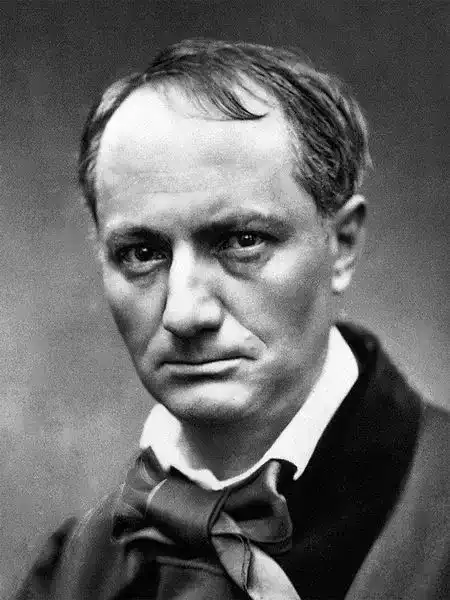
Charles Baudelaire
The Albatross
Often to pass the time on board, the crew
will catch an albatross, one of those big birds
which nonchalently chaperone a ship
across the bitter fathoms of the sea.
Tied to the deck, this sovereign of space,
as if embarrassed by its clumsiness,
pitiably lets its great white wings
drag at its sides like a pair of unshipped oars.
How weak and awkward, even comical
this traveller but lately so adoit -
one deckhand sticks a pipestem in its beak,
another mocks the cripple that once flew!
The Poet is like this monarch of the clouds
riding the storm above the marksman's range;
exiled on the ground, hooted and jeered,
he cannot walk because of his great wings.
601
Rudyard Kipling
The 'Eathen
The 'eathen in 'is blindness bows down to wood an' stone;
'E don't obey no orders unless they is 'is own;
'E keeps 'is side-arms awful: 'e leaves 'em all about,
An' then comes up the regiment an' pokes the 'eathen out.
All along o' dirtiness, all along o' mess,
All along o' doin' things rather-more-or-less,
All along of abby-nay, kul, an' hazar-ho, *
Mind you keep your rifle an' yourself jus' so!
* abby-nay: Not now. kul: To-morrow. hazar-ho: Wait a bit.
The young recruit is 'aughty -- 'e draf's from Gawd knows where;
They bid 'im show 'is stockin's an' lay 'is mattress square;
'E calls it bloomin' nonsense -- 'e doesn't know no more --
An' then up comes 'is Company an' kicks 'im round the floor!
The young recruit is 'ammered -- 'e takes it very 'ard;
'E 'angs 'is 'ead an' mutters -- 'e sulks about the yard;
'E talks o' "cruel tyrants" 'e'll swing for by-an'-by,
An' the others 'ears an' mocks 'im, an' the boy goes orf to cry.
The young recruit is silly -- 'e thinks o' suicide;
'E's lost 'is gutter-devil; 'e 'asn't got 'is pride;
But day by day they kicks 'im, which 'elps 'im on a bit,
Till 'e finds 'isself one mornin' with a full an' proper kit.
Gettin' clear o' dirtiness, gettin' done with mess,
Gettin' shut o' doin' things rather-more-or-less;
Not so fond of abby-nay, kul, nor hazar-ho,
Learns to keep 'is rifle an' 'isself jus' so!
The young recruit is 'appy -- 'e throws a chest to suit;
You see 'im grow mustaches; you 'ear 'im slap 'is boot;
'E learns to drop the "bloodies" from every word 'e slings,
An' 'e shows an 'ealthy brisket when 'e strips for bars an' rings.
The cruel-tyrant-sergeants they watch 'im 'arf a year;
They watch 'im with 'is comrades, they watch 'im with 'is beer;
They watch 'im with the women at the regimental dance,
And the cruel-tyrant-sergeants send 'is name along for "Lance".
An' now 'e's 'arf o' nothin', an' all a private yet,
'Is room they up an' rags 'im to see what they will get;
They rags 'im low an' cunnin', each dirty trick they can,
But 'e learns to sweat 'is temper an' 'e learns to sweat 'is man.
An', last, a Colour-Sergeant, as such to be obeyed,
'E schools 'is men at cricket, 'e tells 'em on parade;
They sees 'em quick an' 'andy, uncommon set an' smart,
An' so 'e talks to orficers which 'ave the Core at 'eart.
'E learns to do 'is watchin' without it showin' plain;
'E learns to save a dummy, an' shove 'im straight again;
'E learns to check a ranker that's buyin' leave to shirk;
An' 'e learns to make men like 'im so they'll learn to like their work.
An' when it comes to marchin' he'll see their socks are right,
An' when it comes to action 'e shows 'em 'ow to sight;
'E knows their ways of thinkin' and just what's in their mind;
'E knows when they are takin' on an' when they've fell be'ind.
'E knows each talkin' corpril that leads a squad astray;
'E feels 'is innards 'eavin', 'is bowels givin' way;
'E sees the blue-white faces all tryin' 'ard to grin,
An' 'e stands an' waits an' suffers till it's time to cap 'em in.
An' now the hugly bullets come peckin' through the dust,
An' no one wants to face 'em, but every beggar must;
So, like a man in irons which isn't glad to go,
They moves 'em off by companies uncommon stiff an' slow.
Of all 'is five years' schoolin' they don't remember much
Excep' the not retreatin', the step an' keepin' touch.
It looks like teachin' wasted when they duck an' spread an' 'op,
But if 'e 'adn't learned 'em they'd be all about the shop!
An' now it's "'Oo goes backward?" an' now it's "'Oo comes on?"
And now it's "Get the doolies," an' now the captain's gone;
An' now it's bloody murder, but all the while they 'ear
'Is voice, the same as barrick drill, a-shepherdin' the rear.
'E's just as sick as they are, 'is 'eart is like to split,
But 'e works 'em, works 'em, works 'em till he feels 'em take the bit;
The rest is 'oldin' steady till the watchful bugles play,
An' 'e lifts 'em, lifts 'em, lifts 'em through the charge that wins the day!
The 'eathen in 'is blindness bows down to wood an' stone;
'E don't obey no orders unless they is 'is own;
The 'eathen in 'is blindness must end where 'e began,
But the backbone of the Army is the non-commissioned man!
Keep away from dirtiness -- keep away from mess.
Don't get into doin' things rather-more-or-less!
Let's ha' done with abby-nay, kul, an' hazar-ho;
Mind you keep your rifle an' yourself jus' so!
'E don't obey no orders unless they is 'is own;
'E keeps 'is side-arms awful: 'e leaves 'em all about,
An' then comes up the regiment an' pokes the 'eathen out.
All along o' dirtiness, all along o' mess,
All along o' doin' things rather-more-or-less,
All along of abby-nay, kul, an' hazar-ho, *
Mind you keep your rifle an' yourself jus' so!
* abby-nay: Not now. kul: To-morrow. hazar-ho: Wait a bit.
The young recruit is 'aughty -- 'e draf's from Gawd knows where;
They bid 'im show 'is stockin's an' lay 'is mattress square;
'E calls it bloomin' nonsense -- 'e doesn't know no more --
An' then up comes 'is Company an' kicks 'im round the floor!
The young recruit is 'ammered -- 'e takes it very 'ard;
'E 'angs 'is 'ead an' mutters -- 'e sulks about the yard;
'E talks o' "cruel tyrants" 'e'll swing for by-an'-by,
An' the others 'ears an' mocks 'im, an' the boy goes orf to cry.
The young recruit is silly -- 'e thinks o' suicide;
'E's lost 'is gutter-devil; 'e 'asn't got 'is pride;
But day by day they kicks 'im, which 'elps 'im on a bit,
Till 'e finds 'isself one mornin' with a full an' proper kit.
Gettin' clear o' dirtiness, gettin' done with mess,
Gettin' shut o' doin' things rather-more-or-less;
Not so fond of abby-nay, kul, nor hazar-ho,
Learns to keep 'is rifle an' 'isself jus' so!
The young recruit is 'appy -- 'e throws a chest to suit;
You see 'im grow mustaches; you 'ear 'im slap 'is boot;
'E learns to drop the "bloodies" from every word 'e slings,
An' 'e shows an 'ealthy brisket when 'e strips for bars an' rings.
The cruel-tyrant-sergeants they watch 'im 'arf a year;
They watch 'im with 'is comrades, they watch 'im with 'is beer;
They watch 'im with the women at the regimental dance,
And the cruel-tyrant-sergeants send 'is name along for "Lance".
An' now 'e's 'arf o' nothin', an' all a private yet,
'Is room they up an' rags 'im to see what they will get;
They rags 'im low an' cunnin', each dirty trick they can,
But 'e learns to sweat 'is temper an' 'e learns to sweat 'is man.
An', last, a Colour-Sergeant, as such to be obeyed,
'E schools 'is men at cricket, 'e tells 'em on parade;
They sees 'em quick an' 'andy, uncommon set an' smart,
An' so 'e talks to orficers which 'ave the Core at 'eart.
'E learns to do 'is watchin' without it showin' plain;
'E learns to save a dummy, an' shove 'im straight again;
'E learns to check a ranker that's buyin' leave to shirk;
An' 'e learns to make men like 'im so they'll learn to like their work.
An' when it comes to marchin' he'll see their socks are right,
An' when it comes to action 'e shows 'em 'ow to sight;
'E knows their ways of thinkin' and just what's in their mind;
'E knows when they are takin' on an' when they've fell be'ind.
'E knows each talkin' corpril that leads a squad astray;
'E feels 'is innards 'eavin', 'is bowels givin' way;
'E sees the blue-white faces all tryin' 'ard to grin,
An' 'e stands an' waits an' suffers till it's time to cap 'em in.
An' now the hugly bullets come peckin' through the dust,
An' no one wants to face 'em, but every beggar must;
So, like a man in irons which isn't glad to go,
They moves 'em off by companies uncommon stiff an' slow.
Of all 'is five years' schoolin' they don't remember much
Excep' the not retreatin', the step an' keepin' touch.
It looks like teachin' wasted when they duck an' spread an' 'op,
But if 'e 'adn't learned 'em they'd be all about the shop!
An' now it's "'Oo goes backward?" an' now it's "'Oo comes on?"
And now it's "Get the doolies," an' now the captain's gone;
An' now it's bloody murder, but all the while they 'ear
'Is voice, the same as barrick drill, a-shepherdin' the rear.
'E's just as sick as they are, 'is 'eart is like to split,
But 'e works 'em, works 'em, works 'em till he feels 'em take the bit;
The rest is 'oldin' steady till the watchful bugles play,
An' 'e lifts 'em, lifts 'em, lifts 'em through the charge that wins the day!
The 'eathen in 'is blindness bows down to wood an' stone;
'E don't obey no orders unless they is 'is own;
The 'eathen in 'is blindness must end where 'e began,
But the backbone of the Army is the non-commissioned man!
Keep away from dirtiness -- keep away from mess.
Don't get into doin' things rather-more-or-less!
Let's ha' done with abby-nay, kul, an' hazar-ho;
Mind you keep your rifle an' yourself jus' so!
607
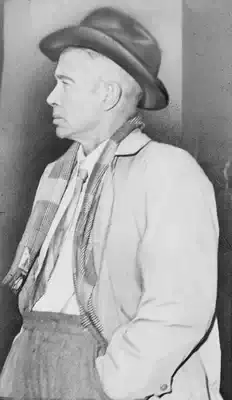
E. E. Cummings
when serpents bargain
when serpents bargain for the right to squirm
and the sun strikes to gain a living wage when
thorns regard their roses with alarm
and rainbows are insured against old age
when every thrush may sing no new moon in
if all screech-owls have not okayed his voice
-and any wave signs on the dotted line
or else an ocean is compelled to close
when the oak begs permission of the birch
to make an acorn - valleys accuse their
mountains of having altitude - and march
denounces april as a saboteur
then we'll believe in that incredible
unanimal mankind (and not until)
610
Rudyard Kipling
Recessional
June ,
God of our fathers, known of old—
Lord of our far-flung battle-line—
Beneath whose awful Hand we hold
Dominion over palm and pine—
Lord God of Hosts, be with us yet,
Lest we forget, lest we forget!
The tumult and the shouting dies—
The captains and the kings depart—
Still stands Thine ancient sacrifice,
An humble and a contrite heart.
Lord God of Hosts, be with us yet,
Lest we forget, lest we forget!
Far-call’d our navies melt away—
On dune and headland sinks the fire—
Lo, all our pomp of yesterday
Is one with Nineveh and Tyre!
Judge of the Nations, spare us yet,
Lest we forget, lest we forget!
If, drunk with sight of power, we loose
Wild tongues that have not Thee in awe—
Such boasting as the Gentiles use
Or lesser breeds without the Law—
Lord God of Hosts, be with us yet,
Lest we forget, lest we forget!
For heathen heart that puts her trust
In reeking tube and iron shard—
All valiant dust that builds on dust,
And guarding calls not Thee to guard—
For frantic boast and foolish word,
Thy Mercy on Thy People, Lord!
606
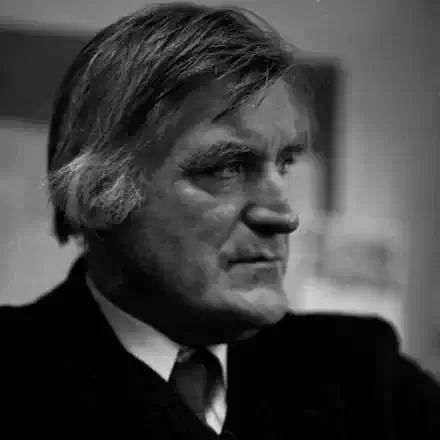
Ted Hughes
Hawk Roosting
I sit in the top of the wood, my eyes closed.
Inaction, no falsifying dream
Between my hooked head and hooked feet:
Or in sleep rehearse perfect kills and eat.
The convenience of the high trees!
The air's buoyancy and the sun's ray
Are of advantage to me;
And the earth's face upward for my inspection.
My feet are locked upon the rough bark.
It took the whole of Creation
To produce my foot, my each feather:
Now I hold Creation in my foot
Or fly up, and revolve it all slowly -
I kill where I please because it is all mine.
There is no sophistry in my body:
My manners are tearing off heads -
The allotment of death.
For the one path of my flight is direct
Through the bones of the living.
No arguments assert my right:
The sun is behind me.
Nothing has changed since I began.
My eye has permitted no change.
I am going to keep things like this.
608
Rudyard Kipling
With Scindia To Delhi
More than a hundred years ago, in a great battle fought near Delhi,
an Indian Prince rode fifty miles after the day was lost
with a beggar-girl, who had loved him and followed him in all his camps,
on his saddle-bow. He lost the girl when almost within sight of safety.
A Maratta trooper tells the story: --
The wreath of banquet overnight lay withered on the neck,
Our hands and scarfs were saffron-dyed for signal of despair,
When we went forth to Paniput to battle with the Mlech, --
Ere we came back from Paniput and left a kingdom there.
Thrice thirty thousand men were we to force the Jumna fords --
The hawk-winged horse of Damajee, mailed squadrons of the Bhao,
Stark levies of the southern hills, the Deccan's sharpest swords,
And he the harlot's traitor son the goatherd Mulhar Rao!
Thrice thirty thousand men were we before the mists had cleared,
The low white mists of morning heard the war-conch scream and bray;
We called upon Bhowani and we gripped them by the beard,
We rolled upon them like a flood and washed their ranks away.
The children of the hills of Khost before our lances ran,
We drove the black Rohillas back as cattle to the pen;
'Twas then we needed Mulhar Rao to end what we began,
A thousand men had saved the charge; he fled the field with ten!
There was no room to clear a sword -- no power to strike a blow,
For foot to foot, ay, breast to breast, the battle held us fast --
Save where the naked hill-men ran, and stabbing from below
Brought down the horse and rider and we trampled them and passed.
To left the roar of musketry rang like a falling flood --
To right the sunshine rippled red from redder lance and blade --
Above the dark Upsaras* flew, beneath us plashed the blood,
And, bellying black against the dust, the Bhagwa Jhanda swayed.
* The Choosers of the Slain.
I saw it fall in smoke and fire, the banner of the Bhao;
I heard a voice across the press of one who called in vain: --
"Ho! Anand Rao Nimbalkhur, ride! Get aid of Mulhar Rao!
Go shame his squadrons into fight -- the Bhao -- the Bhao is slain!"
Thereat, as when a sand-bar breaks in clotted spume and spray --
When rain of later autumn sweeps the Jumna water-head,
Before their charge from flank to flank our riven ranks gave way;
But of the waters of that flood the Jumna fords ran red.
I held by Scindia, my lord, as close as man might hold;
A Soobah of the Deccan asks no aid to guard his life;
But Holkar's Horse were flying, and our chiefest chiefs were cold,
And like a flame among us leapt the long lean Northern knife.
I held by Scindia -- my lance from butt to tuft was dyed,
The froth of battle bossed the shield and roped the bridle-chain --
What time beneath our horses' feet a maiden rose and cried,
And clung to Scindia, and I turned a sword-cut from the twain.
(He set a spell upon the maid in woodlands long ago,
A hunter by the Tapti banks she gave him water there:
He turned her heart to water, and she followed to her woe.
What need had he of Lalun who had twenty maids as fair?)
Now in that hour strength left my lord; he wrenched his mare aside;
He bound the girl behind him and we slashed and struggled free.
Across the reeling wreck of strife we rode as shadows ride
From Paniput to Delhi town, but not alone were we.
'Twas Lutuf-Ullah Populzai laid horse upon our track,
A swine-fed reiver of the North that lusted for the maid;
I might have barred his path awhile, but Scindia called me back,
And I -- O woe for Scindia! -- I listened and obeyed.
League after league the formless scrub took shape and glided by --
League after league the white road swirled behind the white mare's feet --
League after league, when leagues were done, we heard the Populzai,
Where sure as Time and swift as Death the tireless footfall beat.
Noon's eye beheld that shame of flight, the shadows fell, we fled
Where steadfast as the wheeling kite he followed in our train;
The black wolf warred where we had warred, the jackal mocked our dead,
And terror born of twilight-tide made mad the labouring brain.
I gasped: -- "A kingdom waits my lord; her love is but her own.
A day shall mar, a day shall cure for her, but what for thee?
Cut loose the girl: he follows fast. Cut loose and ride alone!"
Then Scindia 'twixt his blistered lips: -- "My Queens' Queen shall she be!
"Of all who ate my bread last night 'twas she alone that came
To seek her love between the spears and find her crown therein!
One shame is mine to-day, what need the weight of double shame?
If once we reach the Delhi gate, though all be lost, I win!"
We rode -- the white mare failed -- her trot a staggering stumble grew, --
The cooking-smoke of even rose and weltered and hung low;
And still we heard the Populzai and still we strained anew,
And Delhi town was very near, but nearer was the foe.
Yea, Delhi town was very near when Lalun whispered: -- "Slay!
Lord of my life, the mare sinks fast -- stab deep and let me die!"
But Scindia would not, and the maid tore free and flung away,
And turning as she fell we heard the clattering Populzai.
Then Scindia checked the gasping mare that rocked and groaned for breath,
And wheeled to charge and plunged the knife a hand's-breadth in her side --
The hunter and the hunted know how that last pause is death --
The blood had chilled about her heart, she reared and fell and died.
Our Gods were kind. Before he heard the maiden's piteous scream
A log upon the Delhi road, beneath the mare he lay --
Lost mistress and lost battle passed before him like a dream;
The darkness closed about his eyes -- I bore my King away.
607