
Ethics and Morality

Kazi Nazrul Islam
Irrepressible Youth
O restless and impetuous youth!
Who hid thy face with the mask of wisdom
And clothed thee with the apparel of patience?
All the morality-mongers advise restraint
For the arrogant power of youth
Only to hide their own inner fears.
O thou impetuous! Who fettered thy flying wings?
Fearless youth! Thou, who from the crowd
Of begging weaklings, used to snatch light
Out of the womb of darkness, dost rest today
In thy nest,
How couldst thou check
Thy terrific onrush of life at the bidding
Of those whose spine is broken by
The cold touch of the polar wind and
Whose life is made powerless by the shadow of
hardened frost.
How strange to see the lion of the desert
Meekly enter the cage and submit to punishment!
Those who to want create to and yet are afraid to destroy
Are themselves victims of destruction first.
What fool says that thou canst kindle the fire
Without burning firewood? How
Canst thou get the shade of the forest
If the seed does not supply the life?
The swift flowing river as it rushes madly on
Impelled by its richness of life erodes the
two banks
And yet, at the same time, makes the flowers blossom.
She is thirsty for the sea and knows not
Who is her friend or foe. She cares
Not how many boats she sinks. All she
Wants is ever to be on the move, for that is
Her religion, Who ever heard that the breakers
Of the sea quietly slept lest two merchant ships sank?
Will not the elephant walk on the roads
Lest it tramples an ant under its feet?
Will not the mighty fire burn lest
It destroys healths and homes?
Will the sight of gaping, tattered roofs
Make the rains cease its heavy downpour?
Will the summer storms fail to come
Lest the trees in the woods tumble arid break?
Will there be no eagle because the timid
Baby-Lamb might take fright at his sight ?
O uncalculating youth,
Thou dost never waste thy time making out
The balance sheet of loss and gain !
O tempestuous youth, wake up!
Come like a tornado, trampling everything that falls
In front of thee, in causeless glee.
Bring generous life, wide as the horizons,
And a mighty current of motion strong enough
To wash tile debris off the banks
In a wild rush.
Embrace sorrow with a stout heart
And laugh loudly with frankness and joy.
Freedom will come later, but sing now
Of the fresh and the young. Untimely and
Ugly sickness has attacked the kingdom of youth.
This nation is inert as the dead
Long before its real decease. Open the iron door
And let joy unbounded flow
Like the smooth easy flight of the pigeons
In the blue firmament. Rush into the ocean
For no reason and climb the peak
Of that distant hill! If thou meetest
Death round the corner, embrace him as thy comrade.
Get rid of all the prejudices that reside
Inside thy heart and outside of thee, All the swords
Of Ali are rusted today and gone to seed!
[Original: Durbar joubon; Translation: Kabir Chowdhury]
611

William Blake
Four Zoas, The (excerpt)
. "What is the price of Experience? do men buy it for a song?
. Or wisdom for a dance in the street? No, it is bought with the price
. Of all that a man hath, his house, his wife, his children.
. Wisdom is sold in the desolate market where none come to buy,
. And in the wither'd field where the farmer plows for bread in vain.
. It is an easy thing to triumph in the summer's sun
. And in the vintage and to sing on the waggon loaded with corn.
. It is an easy thing to talk of patience to the afflicted,
. To speak the laws of prudence to the houseless wanderer,
. To listen to the hungry raven's cry in wintry season
. When the red blood is fill'd with wine and with the marrow of lambs.
. It is an easy thing to laugh at wrathful elements,
. To hear the dog howl at the wintry door, the ox in the slaughter house moan;
. To see a god on every wind and a blessing on every blast;
. To hear sounds of love in the thunder storm that destroys our enemies' house;
. To rejoice in the blight that covers his field, and the sickness that cuts off his
children,
. While our olive and vine sing and laugh round our door, and our children bring
fruits and flowers.
. Then the groan and the dolor are quite forgotten, and the slave grinding at the
mill,
. And the captive in chains, and the poor in the prison, and the soldier in the field
. When the shatter'd bone hath laid him groaning among the happier dead.
. It is an easy thing to rejoice in the tents of prosperity:
. Thus could I sing and thus rejoice: but it is not so with me."
. "Compel the poor to live upon a crust of bread, by soft mild arts.
. Smile when they frown, frown when they smile; and when a man looks pale
. With labour and abstinence, say he looks healthy and happy;
. And when his children sicken, let them die; there are enough
. Born, even too many, and our earth will be overrun
. Without these arts. If you would make the poor live with temper,
. With pomp give every crust of bread you give; with gracious cunning
. Magnify small gifts; reduce the man to want a gift, and then give with pomp.
. Say he smiles if you hear him sigh. If pale, say he is ruddy.
. Preach temperance: say he is overgorg'd and drowns his wit
. In strong drink, though you know that bread and water are all
. He can afford. Flatter his wife, pity his children, till we can
. Reduce all to our will, as spaniels are taught with art."
. The sun has left his blackness and has found a fresher morning,
. And the mild moon rejoices in the clear and cloudless night,
. And Man walks forth from midst of the fires: the evil is all consum'd.
. His eyes behold the Angelic spheres arising night and day;
. The stars consum'd like a lamp blown out, and in their stead, behold
. The expanding eyes of Man behold the depths of wondrous worlds!
. One Earth, one sea beneath; nor erring globes wander, but stars
. Of fire rise up nightly from the ocean; and one sun
. Each morning, like a new born man, issues with songs and joy
. Calling the Plowman to his labour and the Shepherd to his rest.
. He walks upon the Eternal Mountains, raising his heavenly voice,
. Conversing with the animal forms of wisdom night and day,
. That, risen from the sea of fire, renew'd walk o'er the Earth;
. For Tharmas brought his flocks upon the hills, and in the vales
. Around the Eternal Man's bright tent, the little children play
. Among the woolly flocks. The hammer of Urthona sounds
. In the deep caves beneath; his limbs renew'd, his Lions roar
. Around the Furnaces and in evening sport upon the plains.
. They raise their faces from the earth, conversing with the Man:
. "How is it we have walk'd through fires and yet are not consum'd?
. How is it that all things are chang'd, even as in ancient times?"
604

Rabindranath Tagore
Prisoner
`Prisoner, tell me, who was it that bound you?'
`It was my master,' said the prisoner.
`I thought I could outdo everybody in the world in wealth and power,
and I amassed in my own treasure-house the money due to my king.
When sleep overcame me I lay upon the bed that was for my lord,
and on waking up I found I was a prisoner in my own treasure-house.'
`Prisoner, tell me, who was it that wrought this unbreakable chain?'
`It was I,' said the prisoner, `who forged this chain very carefully.
I thought my invincible power would hold the world captive
leaving me in a freedom undisturbed.
Thus night and day I worked at the chain
with huge fires and cruel hard strokes.
When at last the work was done
and the links were complete and unbreakable,
I found that it held me in its grip.'
608
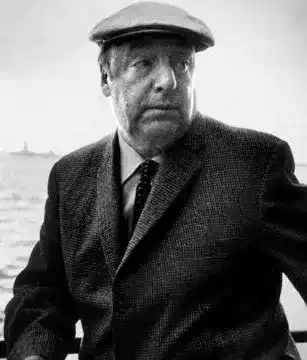
Pablo Neruda
From The Heights Of Maccho Picchu
Rise up to be born with me, brother.
Give me your hand from the deep
Zone seeded by your sorrow.
You won’t return from under the rocks.
You won’t return from your subterranean time.
Your hardened voice won’t return.
Your gouged-out eyes won’t return.
Look at me from the depth of the earth,
laborer, weaver, silent shepherd:
tamer of wild llamas like spirit images:
construction worker on a daring scaffold:
waterer of the tears of the Andes:
jeweler with broken fingers:
farmer trembling as you sow:
potter, poured out into your clay:
bring to the cup of this new life
your old buried sorrows.
Show me your blood and your furrow,
Tell me, “Here I was punished,
Because the jewel didn’t shine or the earth
Didn’t yield grain or stones on time.”
Show me the stone you fell over
And the wood on which they crucified you,
Make a spark from the old flints for me,
For the old lamps to show the whips still stuck
After centuries in the old wounds
And the axes shining with blood.
I come to speak for your dead mouth.
Across the earth come together all
The silent worn-out lips
And from the depth speak to me all this long night
Like I was pinned down there with you.
Tell me all, chain by chain,
Link by link and step by step,
Sharpen the knives which you hid,
Put them in my breast and in my hand,
Like a river of yellow lighting
Like a river of buried jaguars
And let me weep, hours, days, years,
For blind ages, cycles of stars.
Give me silence, water, hope.
Give me struggle, iron, volcanoes.
Stick bodies to me like magnets.
Draw near to my veins and my mouth.
Speak through my words and my blood.
590

Lord Byron
Don Juan: Canto The Fifth
When amatory poets sing their loves
In liquid lines mellifluously bland,
And pair their rhymes as Venus yokes her doves,
They little think what mischief is in hand;
The greater their success the worse it proves,
As Ovid's verse may give to understand;
Even Petrarch's self, if judged with due severity,
Is the Platonic pimp of all posterity.
I therefore do denounce all amorous writing,
Except in such a way as not to attract;
Plainsimpleshort,
and by no means inviting,
But with a moral to each error tack'd,
Form'd rather for instructing than delighting,
And with all passions in their turn attack'd;
Now, if my Pegasus should not be shod ill,
This poem will become a moral model.
The European with the Asian shore
Sprinkled with palaces; the ocean stream
Here and there studded with a seventyfour;
Sophia's cupola with golden gleam;
The cypress groves; Olympus high and hoar;
The twelve isles, and the more than I could dream,
Far less describe, present the very view
Which charm'd the charming Mary Montagu.
I have a passion for the name of 'Mary,'
For once it was a magic sound to me;
And still it half calls up the realms of fairy,
Where I beheld what never was to be;
All feelings changed, but this was last to vary,
A spell from which even yet I am not quite free:
But I grow sadand
let a tale grow cold,
Which must not be pathetically told.
The wind swept down the Euxine, and the wave
Broke foaming o'er the blue Symplegades;
'T is a grand sight from off 'the Giant's Grave
To watch the progress of those rolling seas
Between the Bosphorus, as they lash and lave
Europe and Asia, you being quite at ease;
There 's not a sea the passenger e'er pukes in,
Turns up more dangerous breakers than the Euxine.
'T was a raw day of Autumn's bleak beginning,
When nights are equal, but not so the days;
The Parcae then cut short the further spinning
Of seamen's fates, and the loud tempests raise
The waters, and repentance for past sinning
In all, who o'er the great deep take their ways:
They vow to amend their lives, and yet they don't;
Because if drown'd, they can'tif
spared, they won't.
A crowd of shivering slaves of every nation,
And age, and sex, were in the market ranged;
Each bevy with the merchant in his station:
Poor creatures! their good looks were sadly changed.
All save the blacks seem'd jaded with vexation,
From friends, and home, and freedom far estranged;
The negroes more philosophy display'd,Used
to it, no doubt, as eels are to be flay'd.
Juan was juvenile, and thus was full,
As most at his age are, of hope and health;
Yet I must own he looked a little dull,
And now and then a tear stole down by stealth;
Perhaps his recent loss of blood might pull
His spirit down; and then the loss of wealth,
A mistress, and such comfortable quarters,
To be put up for auction amongst Tartars,
Were things to shake a stoic; ne'ertheless,
Upon the whole his carriage was serene:
His figure, and the splendour of his dress,
Of which some gilded remnants still were seen,
Drew all eyes on him, giving them to guess
He was above the vulgar by his mien;
And then, though pale, he was so very handsome;
And thenthey
calculated on his ransom.
Like a backgammon board the place was dotted
With whites and blacks, in groups on show for sale,
Though rather more irregularly spotted:
Some bought the jet, while others chose the pale.
It chanced amongst the other people lotted,
A man of thirty rather stout and hale,
With resolution in his dark grey eye,
Next Juan stood, till some might choose to buy.
He had an English look; that is, was square
In make, of a complexion white and ruddy,
Good teeth, with curling rather dark brown hair,
And, it might be from thought or toil or study,
An open brow a little mark'd with care:
One arm had on a bandage rather bloody;
And there he stood with such sangfroid,
that greater
Could scarce be shown even by a mere spectator.
But seeing at his elbow a mere lad,
Of a high spirit evidently, though
At present weigh'd down by a doom which had
O'erthrown even men, he soon began to show
A kind of blunt compassion for the sad
Lot of so young a partner in the woe,
Which for himself he seem'd to deem no worse
Than any other scrape, a thing of course.
'My boy!' said he, 'amidst this motley crew
Of Georgians, Russians, Nubians, and what not,
All ragamuffins differing but in hue,
With whom it is our luck to cast our lot,
The only gentlemen seem I and you;
So let us be acquainted, as we ought:
If I could yield you any consolation,
'T would give me pleasure.
Pray,
what is your nation?'
When Juan answer'd'
Spanish!' he replied,
'I thought, in fact, you could not be a Greek;
Those servile dogs are not so proudly eyed:
Fortune has play'd you here a pretty freak,
But that 's her way with all men, till they 're tried;
But never mind,she
'll turn, perhaps, next week;
She has served me also much the same as you,
Except that I have found it nothing new.'
'Pray, sir,' said Juan, 'if I may presume,
What brought you here?''
Oh! nothing very rare
Six
Tartars and a dragchain.'
'
To this doom
But what conducted, if the question's fair,
Is that which I would learn.''
I served for some
Months with the Russian army here and there,
And taking lately, by Suwarrow's bidding,
A town, was ta'en myself instead of Widdin.'
'Have you no friends?''
I hadbut,
by God's blessing,
Have not been troubled with them lately. Now
I have answer'd all your questions without pressing,
And you an equal courtesy should show.'
'Alas!' said Juan, ''t were a tale distressing,
And long besides.''
Oh! if 't is really so,
You 're right on both accounts to hold your tongue;
A sad tale saddens doubly, when 't is long.
'But droop not: Fortune at your time of life,
Although a female moderately fickle,
Will hardly leave you (as she 's not your wife)
For any length of days in such a pickle.
To strive, too, with our fate were such a strife
As if the cornsheaf
should oppose the sickle:
Men are the sport of circumstances, when
The circumstances seem the sport of men.'
''T is not,' said Juan, 'for my present doom
I mourn, but for the past;
I
loved a maid:'He
paused, and his dark eye grew full of gloom;
A single tear upon his eyelash staid
A moment, and then dropp'd; 'but to resume,
'T is not my present lot, as I have said,
Which I deplore so much; for I have borne
Hardships which have the hardiest overworn,
'On the rough deep. But this last blow'
and here
He stopp'd again, and turn'd away his face.
'Ay,' quoth his friend, 'I thought it would appear
That there had been a lady in the case;
And these are things which ask a tender tear,
Such as I, too, would shed if in your place:
I cried upon my first wife's dying day,
And also when my second ran away:
'My third'
'
Your third!' quoth Juan, turning round;
'You scarcely can be thirty: have you three?'
'Noonly
two at present above ground:
Surely 't is nothing wonderful to see
One person thrice in holy wedlock bound!'
'Well, then, your third,' said Juan; 'what did she?
She did not run away, too,did
she, sir?'
'No, faith.''
What then?''
I ran away from her.'
'You take things coolly, sir,' said Juan. 'Why,'
Replied the other, 'what can a man do?
There still are many rainbows in your sky,
But mine have vanish'd. All, when life is new,
Commence with feelings warm, and prospects high;
But time strips our illusions of their hue,
And one by one in turn, some grand mistake
Casts off its bright skin yearly like the snake.
''T is true, it gets another bright and fresh,
Or fresher, brighter; but the year gone through,
This skin must go the way, too, of all flesh,
Or sometimes only wear a week or two;
Love
's the first net which spreads its deadly mesh;
Ambition, Avarice, Vengeance, Glory, glue
The glittering limetwigs
of our latter days,
Where still we flutter on for pence or praise.'
'All this is very fine, and may be true,'
Said Juan; 'but I really don't see how
It betters present times with me or you.'
'No?' quoth the other; 'yet you will allow
By setting things in their right point of view,
Knowledge, at least, is gain'd; for instance, now,
We know what slavery is, and our disasters
May teach us better to behave when masters.'
'Would we were masters now, if but to try
Their present lessons on our Pagan friends here,'
Said Juan,swallowing
a heartburning
sigh:
'Heaven help the scholar whom his fortune sends here!'
'Perhaps we shall be one day, by and by,'
Rejoin'd the other, when our bad luck mends here;
Meantime (yon old black eunuch seems to eye us)
'But after all, what is our present state?
'T is bad, and may be betterall
men's lot:
Most men are slaves, none more so than the great,
To their own whims and passions, and what not;
Society itself, which should create
Kindness, destroys what little we had got:
To feel for none is the true social art
Of the world's stoicsmen
without a heart.'
Just now a black old neutral personage
Of the third sex stept up, and peering over
The captives, seem'd to mark their looks and age,
And capabilities, as to discover
If they were fitted for the purposed cage:
No lady e'er is ogled by a lover,
Horse by a blackleg, broadcloth by a tailor,
Fee by a counsel, felon by a jailor,
As is a slave by his intended bidder.
'T is pleasant purchasing our fellowcreatures;
And all are to be sold, if you consider
Their passions, and are dext'rous; some by features
Are bought up, others by a warlike leader,
Some by a placeas
tend their years or natures;
The most by ready cashbut
all have prices,
From crowns to kicks, according to their vices.
The eunuch, having eyed them o'er with care,
Turn'd to the merchant, and begun to bid
First but for one, and after for the pair;
They haggled, wrangled, swore, tooso
they did!
As though they were in a mere Christian fair
Cheapening an ox, an ass, a lamb, or kid;
So that their bargain sounded like a battle
For this superior yoke of human cattle.
At last they settled into simple grumbling,
And pulling out reluctant purses, and
Turning each piece of silver o'er, and tumbling
Some down, and weighing others in their hand,
And by mistake sequins with paras jumbling,
Until the sum was accurately scann'd,
And then the merchant giving change, and signing
Receipts in full, began to think of dining.
I wonder if his appetite was good?
Or, if it were, if also his digestion?
Methinks at meals some odd thoughts might intrude,
And conscience ask a curious sort of question,
About the right divine how far we should
Sell flesh and blood. When dinner has opprest one,
I think it is perhaps the gloomiest hour
Which turns up out of the sad twentyfour.
Voltaire says 'No:' he tells you that Candide
Found life most tolerable after meals;
He 's wrongunless
man were a pig, indeed,
Repletion rather adds to what he feels,
Unless he 's drunk, and then no doubt he 's freed
From his own brain's oppression while it reels.
Of food I think with Philip's son, or rather
Ammon's (ill pleased with one world and one father);
I think with Alexander, that the act
Of eating, with another act or two,
Makes us feel our mortality in fact
Redoubled; when a roast and a ragout,
And fish, and soup, by some side dishes back'd,
Can give us either pain or pleasure, who
Would pique himself on intellects, whose use
Depends so much upon the gastric juice?
The other evening ('t was on Friday last)This
is a fact and no poetic fable
Just
as my great coat was about me cast,
My hat and gloves still lying on the table,
I heard a shot'
t was eight o'clock scarce past
And,
running out as fast as I was able,
I found the military commandant
Stretch'd in the street, and able scarce to pant.
Poor fellow! for some reason, surely bad,
They had slain him with five slugs; and left him there
To perish on the pavement: so I had
Him borne into the house and up the stair,
And stripp'd and look'd to
But
why should I ad
More circumstances? vain was every care;
The man was gone: in some Italian quarrel
Kill'd by five bullets from an old gunbarrel.
I gazed upon him, for I knew him well;
And though I have seen many corpses, never
Saw one, whom such an accident befell,
So calm; though pierced through stomach, heart, and liver,
He seem'd to sleep,for
you could scarcely tell
(As he bled inwardly, no hideous river
Of gore divulged the cause) that he was dead:
So as I gazed on him, I thought or said
'Can this be death? then what is life or death?
Speak!' but he spoke not: 'Wake!' but still he slept:'
But yesterday and who had mightier breath?
A thousand warriors by his word were kept
In awe: he said, as the centurion saith,
'Go,' and he goeth; 'come,' and forth he stepp'd.
The trump and bugle till he spake were dumb
And
now nought left him but the muffled drum.'
And they who waited once and worshipp'dthey
With their rough faces throng'd about the bed
To gaze once more on the commanding clay
Which for the last, though not the first, time bled:
And such an end! that he who many a day
Had faced Napoleon's foes until they fled,
The
foremost in the charge or in the sally,
Should now be butcher'd in a civic alley.
The scars of his old wounds were near his new,
Those honourable scars which brought him fame;
And horrid was the contrast to the view
But
let me quit the theme; as such things claim
Perhaps even more attention than is due
From me: I gazed (as oft I have gazed the same)
To try if I could wrench aught out of death
Which should confirm, or shake, or make a faith;
But it was all a mystery. Here we are,
And there we go:but
where? five bits of lead,
Or three, or two, or one, send very far!
And is this blood, then, form'd but to be shed?
Can every element our elements mar?
And airearthwaterfire
liveand
we dead?
We whose minds comprehend all things? No more;
But let us to the story as before.
The purchaser of Juan and acquaintance
Bore off his bargains to a gilded boat,
Embark'd himself and them, and off they went thence
As fast as oars could pull and water float;
They look'd like persons being led to sentence,
Wondering what next, till the caique was brought
Up in a little creek below a wall
O'ertopp'd with cypresses, darkgreen
and tall.
Here their conductor tapping at the wicket
Of a small iron door, 't was open'd, and
He led them onward, first through a low thicket
Flank'd by large groves, which tower'd on either hand:
They almost lost their way, and had to pick it
For night was dosing ere they came to land.
The eunuch made a sign to those on board,
Who row'd off, leaving them without a word.
As they were plodding on their winding way
Through orange bowers, and jasmine, and so forth
(Of which I might have a good deal to say,
There being no such profusion in the North
Of oriental plants, 'et cetera,'
But that of late your scribblers think it worth
Their while to rear whole hotbeds in their works
Because one poet travell'd 'mongst the Turks)
As they were threading on their way, there came
Into Don Juan's head a thought, which he
Whisper'd to his companion:'
t was the same
Which might have then occurr'd to you or me.
'Methinks,' said he, 'it would be no great shame
If we should strike a stroke to set us free;
Let 's knock that old black fellow on the head,
And march away'
t were easier done than said.'
'Yes,' said the other, 'and when done, what then?
How get out? how the devil got we in?
And when we once were fairly out, and when
From Saint Bartholomew we have saved our skin,
Tomorrow
'd see us in some other den,
And worse off than we hitherto have been;
Besides, I 'm hungry, and just now would take,
Like Esau, for my birthright a beefsteak.
'We must be near some place of man's abode;
For
the old negro's confidence in creeping,
With his two captives, by so queer a road,
Shows that he thinks his friends have not been sleeping;
A single cry would bring them all abroad:
'T is therefore better looking before leaping
And
there, you see, this turn has brought us through,
By Jove, a noble palace!lighted
too.'
It was indeed a wide extensive building
Which open'd on their view, and o'er the front
There seem'd to be besprent a deal of gilding
And various hues, as is the Turkish wont,
A
gaudy taste; for they are little skill'd in
The arts of which these lands were once the font:
Each villa on the Bosphorus looks a screen
New painted, or a pretty operascene.
And nearer as they came, a genial savour
Of certain stews, and roastmeats,
and pilaus,
Things which in hungry mortals' eyes find favour,
Made Juan in his harsh intentions pause,
And put himself upon his good behaviour:
His friend, too, adding a new saving clause,
Said, 'In Heaven's name let's get some supper now,
And then I 'm with you, if you 're for a row.'
Some talk of an appeal unto some passion,
Some to men's feelings, others to their reason;
The last of these was never much the fashion,
For reason thinks all reasoning out of season.
Some speakers whine, and others lay the lash on,
But more or less continue still to tease on,
With arguments according to their 'forte;'
But no one dreams of ever being short.
But I digress: of all appeals,although
I grant the power of pathos, and of gold,
Of beauty, flattery, threats, a shilling,no
Method 's more sure at moments to take hold
Of the best feelings of mankind, which grow
More tender, as we every day behold,
Than that allsoftening,
overpowering knell,
The tocsin of the soulthe
dinnerbell.
Turkey contains no bells, and yet men dine;
And Juan and his friend, albeit they heard
No Christian knoll to table, saw no line
Of lackeys usher to the feast prepared,
Yet smelt roastmeat,
beheld a huge fire shine,
And cooks in motion with their clean arms bared,
And gazed around them to the left and right
With the prophetic eye of appetite.
And giving up all notions of resistance,
They follow'd close behind their sable guide,
Who little thought that his own crack'd existence
Was on the point of being set aside:
He motion'd them to stop at some small distance,
And knocking at the gate, 't was open'd wide,
And a magnificent large hall display'd
The Asian pomp of Ottoman parade.
I won't describe; description is my forte,
But every fool describes in these bright days
His wondrous journey to some foreign court,
And spawns his quarto, and demands your praise
Death
to his publisher, to him 't is sport;
While Nature, tortured twenty thousand ways,
Resigns herself with exemplary patience
To guidebooks,
rhymes, tours, sketches, illustrations.
Along this hall, and up and down, some, squatted
Upon their hams, were occupied at chess;
Others in monosyllable talk chatted,
And some seem'd much in love with their own dress.
And divers smoked superb pipes decorated
With amber mouths of greater price or less;
And several strutted, others slept, and some
Prepared for supper with a glass of rum.
As the black eunuch enter'd with his brace
Of purchased Infidels, some raised their eyes
A moment without slackening from their pace;
But those who sate ne'er stirr'd in anywise:
One or two stared the captives in the face,
Just as one views a horse to guess his price;
Some nodded to the negro from their station,
But no one troubled him with conversation.
He leads them through the hall, and, without stopping,
On through a farther range of goodly rooms,
Splendid but silent, save in one, where, dropping,
A marble fountain echoes through the glooms
Of night which robe the chamber, or where popping
Some female head most curiously presumes
To thrust its black eyes through the door or lattice,
As wondering what the devil a noise that is.
Some faint lamps gleaming from the lofty walls
Gave light enough to hint their farther way,
But not enough to show the imperial halls,
In all the flashing of their full array;
Perhaps there 's nothing
I
'll not say appals,
But saddens more by night as well as day,
Than an enormous room without a soul
To break the lifeless splendour of the whole.
Two or three seem so little, one seems nothing:
In deserts, forests, crowds, or by the shore,
There solitude, we know, has her full growth in
The spots which were her realms for evermore;
But in a mighty hall or gallery, both in
More modern buildings and those built of yore,
A kind of death comes o'er us all alone,
Seeing what 's meant for many with but one.
A neat, snug study on a winter's night,
A book, friend, single lady, or a glass
Of claret, sandwich, and an appetite,
Are things which make an English evening pass;
Though certes by no means so grand a sight
As is a theatre lit up by gas.
I pass my evenings in long galleries solely,
And that 's the reason I 'm so melancholy.
Alas! man makes that great which makes him little:
I grant you in a church 't is very well:
What speaks of Heaven should by no means be brittle,
But strong and lasting, till no tongue can tell
Their names who rear'd it; but huge houses fit ill
And
huge tombs worsemankind,
since Adam fell:
Methinks the story of the tower of Babel
Might teach them this much better than I 'm able.
Babel was Nimrod's huntingbox,
and then
A town of gardens, walls, and wealth amazing,
Where Nabuchadonosor, king of men,
Reign'd, till one summer's day he took to grazing,
And Daniel tamed the lions in their den,
The people's awe and admiration raising;
'T was famous, too, for Thisbe and for Pyramus,
And the calumniated queen Semiramis.
That injured Queen by chroniclers so coarse
Has been accused (I doubt not by conspiracy)
Of an improper friendship for her horse
(Love, like religion, sometimes runs to heresy):
This monstrous tale had probably its source
(For such exaggerations here and there I see)
In writing 'Courser' by mistake for 'Courier:'
I wish the case could come before a jury here.
But to resume,should
there be (what may not
Be in these days?) some infidels, who don't,
Because they can't find out the very spot
Of that same Babel, or because they won't
(Though Claudius Rich, Esquire, some bricks has got,
And written lately two memoirs upon't),
Believe the Jews, those unbelievers, who
Must be believed, though they believe not you,
Yet let them think that Horace has exprest
Shortly and sweetly the masonic folly
Of those, forgetting the great place of rest,
Who give themselves to architecture wholly;
We know where things and men must end at best:
A moral (like all morals) melancholy,
And 'Et sepulchri immemor struis domos'
Shows that we build when we should but entomb us.
At last they reach'd a quarter most retired,
Where echo woke as if from a long slumber;
Though full of all things which could be desired,
One wonder'd what to do with such a number
Of articles which nobody required;
Here wealth had done its utmost to encumber
With furniture an exquisite apartment,
Which puzzled Nature much to know what Art meant.
It seem'd, however, but to open on
A range or suite of further chambers, which
Might lead to heaven knows where; but in this one
The movables were prodigally rich:
Sofas 't was half a sin to sit upon,
So costly were they; carpets every stitch
Of workmanship so rare, they made you wish
You could glide o'er them like a golden fish.
The black, however, without hardly deigning
A glance at that which wrapt the slaves in wonder,
Trampled what they scarce trod for fear of staining,
As if the milky way their feet was under
With all its stars; and with a stretch attaining
A certain press or cupboard niched in yonder
In
that remote recess which you may see
Or
if you don't the fault is not in me,
I wish to be perspicuous; and the black,
I say, unlocking the recess, pull'd forth
A quantity of clothes fit for the back
Of any Mussulman, whate'er his worth;
And of variety there was no lack
And
yet, though I have said there was no dearth,
He chose himself to point out what he thought
Most proper for the Christians he had bought.
The suit he thought most suitable to each
Was, for the elder and the stouter, first
A Candiote cloak, which to the knee might reach,
And trousers not so tight that they would burst,
But such as fit an Asiatic breech;
A shawl, whose folds in Cashmire had been nurst,
Slippers of saffron, dagger rich and handy;
In short, all things which form a Turkish Dandy.
While he was dressing, Baba, their black friend,
Hinted the vast advantages which they
Might probably attain both in the end,
If they would but pursue the proper way
Which fortune plainly seem'd to recommend;
And then he added, that he needs must say,
''T would greatly tend to better their condition,
If they would condescend to circumcision.
'For his own part, he really should rejoice
To see them true believers, but no less
Would leave his proposition to their choice.'
The other, thanking him for this excess
Of goodness, in thus leaving them a voice
In such a trifle, scarcely could express
'Sufficiently' (he said) 'his approbation
Of all the customs of this polish'd nation.
'For his own sharehe
saw but small objection
To so respectable an ancient rite;
And, after swallowing down a slight refection,
For which he own'd a present appetite,
He doubted not a few hours of reflection
Would reconcile him to the business quite.'
'Will it?' said Juan, sharply: 'Strike me dead,
But they as soon shall circumcise my head!
'Cut off a thousand heads, before'
'
Now, pray,'
Replied the other, 'do not interrupt:
You put me out in what I had to say.
Sir!as
I said, as soon as I have supt,
I shall perpend if your proposal may
Be such as I can properly accept;
Provided always your great goodness still
Remits the matter to our own freewill.'
Baba eyed Juan, and said, 'Be so good
As dress yourself'
and pointed out a suit
In which a Princess with great pleasure would
Array her limbs; but Juan standing mute,
As not being in a masquerading mood,
Gave it a slight kick with his Christian foot;
And when the old negro told him to 'Get ready,'
Replied, 'Old gentleman, I 'm not a lady.'
'What you may be, I neither know nor care,'
Said Baba; 'but pray do as I desire:
I have no more time nor many words to spare.'
'At least,' said Juan, 'sure I may enquire
The cause of this odd travesty?''
Forbear,'
Said Baba, 'to be curious; 't will transpire,
No doubt, in proper place, and time, and season:
I have no authority to tell the reason.'
'Then if I do,' said Juan, 'I 'll be'
'
Hold!'
Rejoin'd the negro, 'pray be not provoking;
This spirit 's well, but it may wax too bold,
And you will find us not top fond of joking.'
'What, sir!' said Juan, 'shall it e'er be told
That I unsex'd my dress?' But Baba, stroking
The things down, said, 'Incense me, and I call
Those who will leave you of no sex at all.
'I offer you a handsome suit of clothes:
A woman's, true; but then there is a cause
Why you should wear them.''
What, though my soul loathes
The effeminate garb?'thus,
after a short pause,
Sigh'd Juan, muttering also some slight oaths,
'What the devil shall I do with all this gauze?'
Thus he profanely term'd the finest lace
Which e'er set off a marriagemorning
face.
And then he swore; and, sighing, on he slipp'd
A pair of trousers of fleshcolour'd
silk;
Next with a virgin zone he was equipp'd,
Which girt a slight chemise as white as milk;
But tugging on his petticoat, he tripp'd,
Whichas
we sayor,
as the Scotch say, whilk
(The rhyme obliges me to this; sometimes
Monarchs are less imperative than rhymes)
Whilk, which (or what you please), was owing to
His garment's novelty, and his being awkward:
And yet at last he managed to get through
His toilet, though no doubt a little backward:
The negro Baba help'd a little too,
When some untoward part of raiment stuck hard;
And, wrestling both his arms into a gown,
He paused, and took a survey up and down.
One difficulty still remain'dhis
hair
Was hardly long enough; but Baba found
So many false long tresses all to spare,
That soon his head was most completely crown'd,
After the manner then in fashion there;
And this addition with such gems was bound
As suited the ensemble of his toilet,
While Baba made him comb his head and oil it.
And now being femininely all array'd,
With some small aid from scissors, paint, and tweezers,
He look'd in almost all respects a maid,
And Baba smilingly exclaim'd, 'You see, sirs,
A perfect transformation here display'd;
And now, then, you must come along with me, sirs,
That isthe
Lady:' clapping his hands twice,
Four blacks were at his elbow in a trice.
'You, sir,' said Baba, nodding to the one,
'Will please to accompany those gentlemen
To supper; but you, worthy Christian nun,
Will follow me: no trifling, sir; for when
I say a thing, it must at once be done.
What fear you? think you this a lion's den?
Why, 't is a palace; where the truly wise
Anticipate the Prophet's paradise.
'You fool! I tell you no one means you harm.'
'So much the better,' Juan said, 'for them;
Else they shall feel the weight of this my arm,
Which is not quite so light as you may deem.
I yield thus far; but soon will break the charm
If any take me for that which I seem:
So that I trust for everybody's sake,
That this disguise may lead to no mistake.'
'Blockhead! come on, and see,' quoth Baba; while
Don Juan, turning to his comrade, who
Though somewhat grieved, could scarce forbear a smile
Upon the metamorphosis in view,'
Farewell!' they mutually exclaim'd: 'this soil
Seems fertile in adventures strange and new;
One 's turn'd half Mussulman, and one a maid,
By this old black enchanter's unsought aid.'
'Farewell!' said Juan: 'should we meet no more,
I wish you a good appetite.''
Farewell!'
Replied the other; 'though it grieves me sore;
When we next meet we 'll have a tale to tell:
We needs must follow when Fate puts from shore.
Keep your good name; though Eve herself once fell.'
'Nay,' quoth the maid, 'the Sultan's self shan't carry me,
Unless his highness promises to marry me.
And thus they parted, each by separate doors;
Baba led Juan onward room by room
Through glittering galleries and o'er marble floors,
Till a gigantic portal through the gloom,
Haughty and huge, along the distance lowers;
And wafted far arose a rich perfume:
It seem'd as though they came upon a shrine,
For all was vast, still, fragrant, and divine.
The giant door was broad, and bright, and high,
Of gilded bronze, and carved in curious guise;
Warriors thereon were battling furiously;
Here stalks the victor, there the vanquish'd lies;
There captives led in triumph droop the eye,
And in perspective many a squadron flies:
It seems the work of times before the line
Of Rome transplanted fell with Constantine.
This massy portal stood at the wide close
Of a huge hall, and on its either side
Two little dwarfs, the least you could suppose,
Were sate, like ugly imps, as if allied
In mockery to the enormous gate which rose
O'er them in almost pyramidic pride:
The gate so splendid was in all its features,
You never thought about those little creatures,
Until you nearly trod on them, and then
You started back in horror to survey
The wondrous hideousness of those small men,
Whose colour was not black, nor white, nor grey,
But an extraneous mixture, which no pen
Can trace, although perhaps the pencil may;
They were misshapen
pigmies, deaf and dumb
Monsters,
who cost a no less monstrous sum.
Their duty wasfor
they were strong, and though
They look'd so little, did strong things at times
To
ope this door, which they could really do,
The hinges being as smooth as Rogers' rhymes;
And now and then, with tough strings of the bow,
As is the custom of those Eastern climes,
To give some rebel Pacha a cravat;
For mutes are generally used for that.
They spoke by signsthat
is, not spoke at all;
And looking like two incubi, they glared
As Baba with his fingers made them fall
To heaving back the portal folds: it scared
Juan a moment, as this pair so small
With shrinking serpent optics on him stared;
It was as if their little looks could poison
Or fascinate whome'er they fix'd their eyes on.
Before they enter'd, Baba paused to hint
To Juan some slight lessons as his guide:
'If you could just contrive,' he said, 'to stint
That somewhat manly majesty of stride,
'T would be as well, and (though there 's not much in 't)
To swing a little less from side to side,
Which has at times an aspect of the oddest;
And
also could you look a little modest,
''T would be convenient; for these mutes have eyes
Like needles, which may pierce those petticoats;
And if they should discover your disguise,
You know how near us the deep Bosphorus floats;
And you and I may chance, ere morning rise,
To find our way to Marmora without boats,
Stitch'd up in sacksa
mode of navigation
A good deal practised here upon occasion.'
With this encouragement, he led the way
Into a room still nobler than the last;
A rich confusion form'd a disarray
In such sort, that the eye along it cast
Could hardly carry anything away,
Object on object flash'd so bright and fast;
A dazzling mass of gems, and gold, and glitter,
Magnificently mingled in a litter.
Wealth had done wonderstaste
not much; such things
Occur in Orient palaces, and even
In the more chasten'd domes of Western kings
(Of which I have also seen some six or seven),
Where I can't say or gold or diamond flings
Great lustre, there is much to be forgiven;
Groups of bad statues, tables, chairs, and pictures,
On which I cannot pause to make my strictures.
In this imperial hall, at distance lay
Under a canopy, and there reclined
Quite in a confidential queenly way,
A lady; Baba stopp'd, and kneeling sign'd
To Juan, who though not much used to pray,
Knelt down by instinct, wondering in his mind,
What all this meant: while Baba bow'd and bended
His head, until the ceremony ended.
The lady rising up with such an air
As Venus rose with from the wave, on them
Bent like an antelope a Paphian pair
Of eyes, which put out each surrounding gem;
And raising up an arm as moonlight fair,
She sign'd to Baba, who first kiss'd the hem
Of her deep purple robe, and speaking low,
Pointed to Juan who remain'd below.
Her presence was as lofty as her state;
Her beauty of that overpowering kind,
Whose force description only would abate:
I 'd rather leave it much to your own mind,
Than lessen it by what I could relate
Of forms and features; it would strike you blind
Could I do justice to the full detail;
So, luckily for both, my phrases fail.
Thus much however I may add,her
years
Were ripe, they might make sixandtwenty
springs;
But there are forms which Time to touch forbears,
And turns aside his scythe to vulgar things,
Such as was Mary's Queen of Scots; truetears
And love destroy; and sapping sorrow wrings
Charms from the charmer, yet some never grow
Ugly; for instance
Ninon
de l'Enclos.
She spake some words to her attendants, who
Composed a choir of girls, ten or a dozen,
And were all clad alike; like Juan, too,
Who wore their uniform, by Baba chosen;
They form'd a very nymphlike
looking crew,
Which might have call'd Diana's chorus 'cousin,'
As far as outward show may correspond;
I won't be bail for anything beyond.
They bow'd obeisance and withdrew, retiring,
But not by the same door through which came in
Baba and Juan, which last stood admiring,
At some small distance, all he saw within
This strange saloon, much fitted for inspiring
Marvel and praise; for both or none things win;
And I must say, I ne'er could see the very
Great happiness of the 'Nil Admirari.'
'Not to admire is all the art I know
(Plain truth, dear Murray, needs few flowers of speech)
To make men happy, or to keep them so'
(So take it in the very words of Creech)Thus
Horace wrote we all know long ago;
And thus Pope quotes the precept to reteach
From his translation; but had none admired,
Would Pope have sung, or Horace been inspired?
Baba, when all the damsels were withdrawn,
Motion'd to Juan to approach, and then
A second time desired him to kneel down,
And kiss the lady's foot; which maxim when
He heard repeated, Juan with a frown
Drew himself up to his full height again,
And said, 'It grieved him, but he could not stoop
To any shoe, unless it shod the Pope.'
Baba, indignant at this illtimed
pride,
Made fierce remonstrances, and then a threat
He mutter'd (but the last was given aside)
About a bowstringquite
in vain; not yet
Would Juan bend, though 't were to Mahomet's bride:
There 's nothing in the world like etiquette
In kingly chambers or imperial halls,
As also at the race and county balls.
He stood like Atlas, with a world of words
About his ears, and nathless would not bend:
The blood of all his line 's Castilian lords
Boil'd in his veins, and rather than descend
To stain his pedigree a thousand swords
A thousand times of him had made an end;
At length perceiving the 'foot' could not stand,
Baba proposed that he should kiss the hand.
Here was an honourable compromise,
A halfway
house of diplomatic rest,
Where they might meet in much more peaceful guise;
And Juan now his willingness exprest
To use all fit and proper courtesies,
Adding, that this was commonest and best,
For through the South the custom still commands
The gentleman to kiss the lady's hands.
And he advanced, though with but a bad grace,
Though on more thoroughbred
or fairer fingers
No lips e'er left their transitory trace;
On such as these the lip too fondly lingers,
And for one kiss would fain imprint a brace,
As you will see, if she you love shall bring hers
In contact; and sometimes even a fair stranger's
An almost twelvemonth's constancy endangers.
The lady eyed him o'er and o'er, and bade
Baba retire, which he obey'd in style,
As if well used to the retreating trade;
And taking hints in good part all the while,
He whisper'd Juan not to be afraid,
And looking on him with a sort of smile,
Took leave, with such a face of satisfaction
As good men wear who have done a virtuous action.
When he was gone, there was a sudden change:
I know not what might be the lady's thought,
But o'er her bright brow flash'd a tumult strange,
And into her dear cheek the blood was brought,
Bloodred
as sunset summer clouds which range
The verge of Heaven; and in her large eyes wrought,
A mixture of sensations might be scann'd,
Of half voluptuousness and half command.
Her form had all the softness of her sex,
Her features all the sweetness of the devil,
When he put on the cherub to perplex
Eve, and paved (God knows how) the road to evil;
The sun himself was scarce more free from specks
Than she from aught at which the eye could cavil;
Yet, somehow, there was something somewhere wanting,
As if she rather order'd than was granting.
Something imperial, or imperious, threw
A chain o'er all she did; that is, a chain
Was thrown as 't were about the neck of you,
And
rapture's self will seem almost a pain
With aught which looks like despotism in view:
Our souls at least are free, and 't is in vain
We would against them make the flesh obey
The
spirit in the end will have its way.
Her very smile was haughty, though so sweet;
Her very nod was not an inclination;
There was a selfwill
even in her small feet,
As though they were quite conscious of her station
They
trod as upon necks; and to complete
Her state (it is the custom of her nation),
A poniard deck'd her girdle, as the sign
She was a sultan's bride (thank Heaven, not mine!).
'To hear and to obey' had been from birth
The law of all around her; to fulfill
All phantasies which yielded joy or mirth,
Had been her slaves' chief pleasure, as her will;
Her blood was high, her beauty scarce of earth:
Judge, then, if her caprices e'er stood still;
Had she but been a Christian, I 've a notion
We should have found out the 'perpetual motion.'
Whate'er she saw and coveted was brought;
Whate'er she did not see, if she supposed
It might be seen, with diligence was sought,
And when 't was found straightway the bargain closed;
There was no end unto the things she bought,
Nor to the trouble which her fancies caused;
Yet even her tyranny had such a grace,
The women pardon'd all except her face.
Juan, the latest of her whims, had caught
Her eye in passing on his way to sale;
She order'd him directly to be bought,
And Baba, who had ne'er been known to fail
In any kind of mischief to be wrought,
At all such auctions knew how to prevail:
She had no prudence, but he had; and this
Explains the garb which Juan took amiss.
His youth and features favour'd the disguise,
And, should you ask how she, a sultan's bride,
Could risk or compass such strange phantasies,
This I must leave sultanas to decide:
Emperors are only husbands in wives' eyes,
And kings and consorts oft are mystified,
As we may ascertain with due precision,
Some by experience, others by tradition.
But to the main point, where we have been tending:
She
now conceived all difficulties past,
And deem'd herself extremely condescending
When, being made her property at last,
Without more preface, in her blue eyes blending
Passion and power, a glance on him she cast,
And merely saying, 'Christian, canst thou love?'
Conceived that phrase was quite enough to move
And so it was, in proper time and place;
But Juan, who had still his mind o'erflowing
With Haidee's isle and soft Ionian face,
Felt the warm blood, which in his face was glowing,
Rush back upon his heart, which fill'd apace,
And left his cheeks as pale as snowdrops blowing;
These words went through his soul like Arabspears,
So that he spoke not, but burst into tears.
She was a good deal shock'd; not shock'd at tears,
For women shed and use them at their liking;
But there is something when man's eye appears
Wet, still more disagreeable and striking;
A woman's teardrop
melts, a man's half sears,
Like molten lead, as if you thrust a pike in
His heart to force it out, for (to be shorter)
To them 't is a relief, to us a torture.
And she would have consoled, but knew not how:
Having no equals, nothing which had e'er
Infected her with sympathy till now,
And never having dreamt what 't was to bear
Aught of a serious, sorrowing kind, although
There might arise some pouting petty care
To cross her brow, she wonder'd how so near
Her eyes another's eye could shed a tear.
But nature teaches more than power can spoil,
And, when a strong although a strange sensation
Movesfemale
hearts are such a genial soil
For kinder feelings, whatsoe'er their nation,
They naturally pour the 'wine and oil,'
Samaritans in every situation;
And thus Gulbeyaz, though she knew not why,
Felt an odd glistening moisture in her eye.
But tears must stop like all things else; and soon
Juan, who for an instant had been moved
To such a sorrow by the intrusive tone
Of one who dared to ask if 'he had loved,'
Call'd back the stoic to his eyes, which shone
Bright with the very weakness he reproved;
And although sensitive to beauty, he
Felt most indignant still at not being free.
Gulbeyaz, for the first time in her days,
Was much embarrass'd, never having met
In all her life with aught save prayers and praise;
And as she also risk'd her life to get
Him whom she meant to tutor in love's ways
Into a comfortable teteatete,
To lose the hour would make her quite a martyr,
And they had wasted now almost a quarter.
I also would suggest the fitting time
To gentlemen in any such like case,
That is to say in a meridian clime
With
us there is more law given to the chase,
But here a small delay forms a great crime:
So recollect that the extremest grace
Is just two minutes for your declaration
A
moment more would hurt your reputation.
Juan's was good; and might have been still better,
But he had got Haidee into his head:
However strange, he could not yet forget her,
Which made him seem exceedingly illbred.
Gulbeyaz, who look'd on him as her debtor
For having had him to her palace led,
Began to blush up to the eyes, and then
Grow deadly pale, and then blush back again.
At length, in an imperial way, she laid
Her hand on his, and bending on him eyes
Which needed not an empire to persuade,
Look'd into his for love, where none replies:
Her brow grew black, but she would not upbraid,
That being the last thing a proud woman tries;
She rose, and pausing one chaste moment, threw
Herself upon his breast, and there she grew.
This was an awkward test, as Juan found,
But he was steel'd by sorrow, wrath, and pride:
With gentle force her white arms he unwound,
And seated her all drooping by his side,
Then rising haughtily he glanced around,
And looking coldly in her face, he cried,
'The prison'd eagle will not pair, nor
Serve a Sultana's sensual phantasy.
'Thou ask'st if I can love? be this the proof
How much I have lovedthat
I love not thee!
In this vile garb, the distaff, web, and woof,
Were fitter for me: Love is for the free!
I am not dazzled by this splendid roof,
Whate'er thy power, and great it seems to be;
Heads bow, knees bend, eyes watch around a throne,
And hands obeyour
hearts are still our own.'
This was a truth to us extremely trite;
Not so to her, who ne'er had heard such things:
She deem'd her least command must yield delight,
Earth being only made for queens and kings.
If hearts lay on the left side or the right
She hardly knew, to such perfection brings
Legitimacy its born votaries, when
Aware of their due royal rights o'er men.
Besides, as has been said, she was so fair
As even in a much humbler lot had made
A kingdom or confusion anywhere,
And also, as may be presumed, she laid
Some stress on charms, which seldom are, if e'er,
By their possessors thrown into the shade:
She thought hers gave a double 'right divine;'
And half of that opinion 's also mine.
Remember, or (if you can not) imagine,
Ye, who have kept your chastity when young,
While some more desperate dowager has been waging
Love with you, and been in the dogdays
stung
By your refusal, recollect her raging!
Or recollect all that was said or sung
On such a subject; then suppose the face
Of a young downright beauty in this case.
Suppose,but
you already have supposed,
The spouse of Potiphar, the Lady Booby,
Phaedra, and all which story has disclosed
Of good examples; pity that so few by
Poets and private tutors are exposed,
To educateye
youth of Europeyou
by!
But when you have supposed the few we know,
You can't suppose Gulbeyaz' angry brow.
A tigress robb'd of young, a lioness,
Or any interesting beast of prey,
Are similes at hand for the distress
Of ladies who can not have their own way;
But though my turn will not be served with less,
These don't express one half what I should say:
For what is stealing young ones, few or many,
To cutting short their hopes of having any?
The love of offspring 's nature's general law,
From tigresses and cubs to ducks and ducklings;
There 's nothing whets the beak, or arms the claw
Like an invasion of their babes and sucklings;
And all who have seen a human nursery, saw
How mothers love their children's squalls and chucklings;
This strong extreme effect (to tire no longer
Your patience) shows the cause must still be stronger.
If I said fire flash'd from Gulbeyaz' eyes,
'T were nothingfor
her eyes flash'd always fire;
Or said her cheeks assumed the deepest dyes,
I should but bring disgrace upon the dyer,
So supernatural was her passion's rise;
For ne'er till now she knew a check'd desire:
Even ye who know what a check'd woman is
(Enough, God knows!) would much fall short of this.
Her rage was but a minute's, and 't was well
A
moment's more had slain her; but the while
It lasted 't was like a short glimpse of hell:
Nought 's more sublime than energetic bile,
Though horrible to see yet grand to tell,
Like ocean warring 'gainst a rocky isle;
And the deep passions flashing through her form
Made her a beautiful embodied storm.
A vulgar tempest 't were to a typhoon
To match a common fury with her rage,
And yet she did not want to reach the moon,
Like moderate Hotspur on the immortal page;
Her anger pitch'd into a lower tune,
Perhaps the fault of her soft sex and age
Her
wish was but to 'kill, kill, kill,' like Lear's,
And then her thirst of blood was quench'd in tears.
A storm it raged, and like the storm it pass'd,
Pass'd without wordsin
fact she could not speak;
And then her sex's shame broke in at last,
A sentiment till then in her but weak,
But now it flow'd in natural and fast,
As water through an unexpected leak;
For she felt humbledand
humiliation
Is sometimes good for people in her station
It teaches them that they are flesh and blood,
It also gently hints to them that others,
Although of clay, are yet not quite of mud;
That urns and pipkins are but fragile brothers,
And works of the same pottery, bad or good,
Though not all born of the same sires and mothers:
It teaches
Heaven
knows only what it teaches,
But sometimes it may mend, and often reaches.
Her first thought was to cut off Juan's head;
Her second, to cut only hisacquaintance;
Her third, to ask him where he had been bred;
Her fourth, to rally him into repentance;
Her fifth, to call her maids and go to bed;
Her sixth, to stab herself; her seventh, to sentence
The lash to Baba:but
her grand resource
Was to sit down again, and cry of course.
She thought to stab herself, but then she had
The dagger close at hand, which made it awkward;
For Eastern stays are little made to pad,
So that a poniard pierces if 't is stuck hard:
She thought of killing Juanbut,
poor lad!
Though he deserved it well for being so backward,
The cutting off his head was not the art
Most likely to attain her aimhis
heart.
Juan was moved; he had made up his mind
To be impaled, or quarter'd as a dish
For dogs, or to be slain with pangs refined,
Or thrown to lions, or made baits for fish,
And thus heroically stood resign'd,
Rather than sinexcept
to his own wish:
But all his great preparatives for dying
Dissolved like snow before a woman crying.
As through his palms Bob Acres' valour oozed,
So Juan's virtue ebb'd, I know not how;
And first he wonder'd why he had refused;
And then, if matters could be made up now;
And next his savage virtue he accused,
Just as a friar may accuse his vow,
Or as a dame repents her of her oath,
Which mostly ends in some small breach of both.
So he began to stammer some excuses;
But words are not enough in such a matter,
Although you borrow'd all that e'er the muses
Have sung, or even a Dandy's dandiest chatter,
Or all the figures Castlereagh abuses;
Just as a languid smile began to flatter
His peace was making, but before he ventured
Further, old Baba rather briskly enter'd.
'Bride of the Sun! and Sister of the Moon!'
('T was thus he spake) 'and Empress of the Earth!
Whose frown would put the spheres all out of tune,
Whose smile makes all the planets dance with mirth,
Your slave brings tidingshe
hopes not too soon
Which
your sublime attention may be worth:
The Sun himself has sent me like a ray,
To hint that he is coming up this way.'
'Is it,' exclaim'd Gulbeyaz, 'as you say?
I wish to heaven he would not shine till morning!
But bid my women form the milky way.
Hence, my old comet! give the stars due warning
And,
Christian! mingle with them as you may,
And as you 'd have me pardon your past scorning'
Here they were interrupted by a humming
Sound, and then by a cry, 'The Sultan 's coming!'
First came her damsels, a decorous file,
And then his Highness' eunuchs, black and white;
The train might reach a quarter of a mile:
His majesty was always so polite
As to announce his visits a long while
Before he came, especially at night;
For being the last wife of the Emperour,
She was of course the favorite of the four.
His Highness was a man of solemn port,
Shawl'd to the nose, and bearded to the eyes,
Snatch'd from a prison to preside at court,
His lately bowstrung brother caused his rise;
He was as good a sovereign of the sort
As any mention'd in the histories
Of Cantemir, or Knolles, where few shine
Save Solyman, the glory of their line.
He went to mosque in state, and said his prayers
With more than 'Oriental scrupulosity;'
He left to his vizier all state affairs,
And show'd but little royal curiosity:
I know not if he had domestic cares
No
process proved connubial animosity;
Four wives and twice five hundred maids, unseen,
Were ruled as calmly as a Christian queen.
If now and then there happen'd a slight slip,
Little was heard of criminal or crime;
The story scarcely pass'd a single lip
The
sack and sea had settled all in time,
From which the secret nobody could rip:
The Public knew no more than does this rhyme;
No scandals made the daily press a curse
Morals
were better, and the fish no worse.
He saw with his own eyes the moon was round,
Was also certain that the earth was square,
Because he had journey'd fifty miles, and found
No sign that it was circular anywhere;
His empire also was without a bound:
'T is true, a little troubled here and there,
By rebel pachas, and encroaching giaours,
But then they never came to 'the Seven Towers;'
Except in shape of envoys, who were sent
To lodge there when a war broke out, according
To the true law of nations, which ne'er meant
Those scoundrels, who have never had a sword in
Their dirty diplomatic hands, to vent
Their spleen in making strife, and safely wording
Their lies, yclep'd despatches, without risk or
The singeing of a single inky whisker.
He had fifty daughters and four dozen sons,
Of whom all such as came of age were stow'd,
The former in a palace, where like nuns
They lived till some Bashaw was sent abroad,
When she, whose turn it was, was wed at once,
Sometimes at six years oldthough
it seems odd,
'T is true; the reason is, that the Bashaw
Must make a present to his sire in law.
His sons were kept in prison, till they grew
Of years to fill a bowstring or the throne,
One or the other, but which of the two
Could yet be known unto the fates alone;
Meantime the education they went through
Was princely, as the proofs have always shown:
So that the heir apparent still was found
No less deserving to be hang'd than crown'd.
His majesty saluted his fourth spouse
With all the ceremonies of his rank,
Who clear'd her sparkling eyes and smooth'd her brows,
As suits a matron who has play'd a prank;
These must seem doubly mindful of their vows,
To save the credit of their breaking bank:
To no men are such cordial greetings given
As those whose wives have made them fit for heaven.
His Highness cast around his great black eyes,
And looking, as he always look'd, perceived
Juan amongst the damsels in disguise,
At which he seem'd no whit surprised nor grieved,
But just remark'd with air sedate and wise,
While still a fluttering sigh Gulbeyaz heaved,
'I see you 've bought another girl; 't is pity
That a mere Christian should be half so pretty.'
This compliment, which drew all eyes upon
The newbought
virgin, made her blush and shake.
Her comrades, also, thought themselves undone:
Oh! Mahomet! that his majesty should take
Such notice of a giaour, while scarce to one
Of them his lips imperial ever spake!
There was a general whisper, toss, and wriggle,
But etiquette forbade them all to giggle.
The Turks do well to shutat
least, sometimes
The women up, because, in sad reality,
Their chastity in these unhappy climes
Is not a thing of that astringent quality
Which in the North prevents precocious crimes,
And makes our snow less pure than our morality;
The sun, which yearly melts the polar ice,
Has quite the contrary effect on vice.
Thus in the East they are extremely strict,
And Wedlock and a Padlock mean the same;
Excepting only when the former 's pick'd
It ne'er can be replaced in proper frame;
Spoilt, as a pipe of claret is when prick'd:
But then their own Polygamy 's to blame;
Why don't they knead two virtuous souls for life
Into that moral centaur, man and wife?
Thus far our chronicle; and now we pause,
Though not for want of matter; but 't is time
According to the ancient epic laws,
To slacken sail, and anchor with our rhyme.
Let this fifth canto meet with due applause,
The sixth shall have a touch of the sublime;
Meanwhile, as Homer sometimes sleeps, perhaps
You 'll pardon to my muse a few short naps.
594

Boris Pasternak
Fairy Tale
Once, in times forgotten,
In a fairy place,
Through the steppe, a rider
Made his way apace.
While he sped to battle,
Nearing from the dim
Distance, a dark forest
Rose ahead of him.
Something kept repeating,
Seemed his heart to graze:
Tighten up the saddle,
Fear the watering-place.
But he did not listen.
Heeding but his will,
At full speed he bounded
Up the wooded hill;
Rode into a valley,
Turning from the mound,
Galloped through a meadow,
Skirted higher ground;
Reached a gloomy hollow,
Found a trail to trace
Down the woodland pathway
To the watering-place.
Deaf to voice of warning,
And without remorse,
Down the slope, the rider
Led his thirsty horse.
Where the stream grew shallow,
Winding through the glen,
Eerie flames lit up the
Entrance to a den.
Through thick clouds of crimson
Smoke above the spring,
An uncanny calling
Made the forest ring.
And the rider started,
And with peering eye
Urged his horse in answer
To the haunting cry.
Then he saw the dragon,
And he gripped his lance;
And his horse stood breathless
Fearing to advance.
Thrice around a maiden
Was the serpent wound;
Fire-breathing nostrils
Cast a glare around.
And the dragon's body
Moved his scaly neck,
At her shoulder snaking
Whiplike forth and back.
By that country's custom
Was a young and fair
Captive brought as ransom
To the dragon's lair.
This then was the tribute
That the people owed
To the worm-protection
For a poor abode.
Now the dragon hugged his
Victim in alarm,
And the coils grew tighter
Round her throat and arm.
Skyward looked the horseman
With imploring glance,
And for the impending
Fight he couched his lance.
Tightly closing eyelids.
Heights and cloudy spheres.
Rivers. Waters. Boulders.
Centuries and years.
Helmetless, the wounded
Lies, his life at stake.
With his hooves the charger
Tramples down the snake.
On the sand, together-
Dragon, steed, and lance;
In a swoon the rider,
The maiden-in a trance.
Blue the sky; soft breezes
Tender noon caress.
Who is she? A lady?
Peasant girl? Princess?
Now in joyous wonder
Cannot cease to weep;
Now again abandoned
To unending sleep.
Now, his strength returning,
Opens up his eyes;
Now anew the wounded
Limp and listless lies.
But their hearts are beating.
Waves surge up, die down;
Carry them, and waken,
And in slumber drown.
Tightly closing eyelids.
Heights and cloudy spheres.
Rivers. Waters. Boulders.
Centuries and years.
593
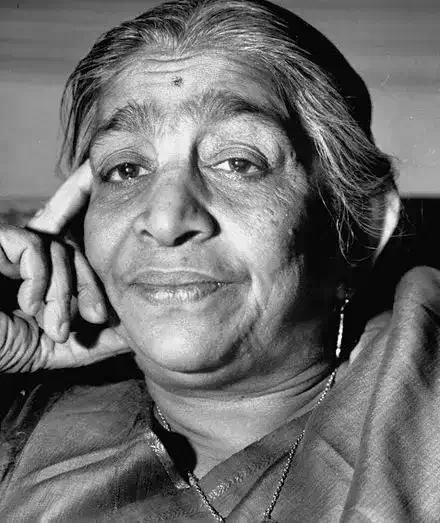
Sarojini Naidu
Ode to H.H. The Nizam Of Hyderabad
DEIGN, Prince, my tribute to receive,
This lyric offering to your name,
Who round your jewelled scepter bind
The lilies of a poet's fame;
Beneath whose sway concordant dwell
The peoples whom your laws embrace,
In brotherhood of diverse creeds,
And harmony of diverse race:
The votaries of the Prophet's faith,
Of whom you are the crown and chief
And they, who bear on Vedic brows
Their mystic symbols of belief;
And they, who worshipping the sun,
Fled o'er the old Iranian sea;
And they, who bow to Him who trod
The midnight waves of Galilee.
Sweet, sumptuous fables of Baghdad
The splendours of your court recall,
The torches of a Thousand Nights
Blaze through a single festival;
And Saki-singers down the streets,
Pour for us, in a stream divine,
From goblets of your love-ghazals
The rapture of your Sufi wine.
Prince, where your radiant cities smile,
Grim hills their sombre vigils keep,
Your ancient forests hoard and hold
The legends of their centuried sleep;
Your birds of peace white-pinioned float
O'er ruined fort and storied plain,
Your faithful stewards sleepless guard
The harvests of your gold and grain.
God give you joy, God give you grace
To shield the truth and smite the wrong,
To honour Virtue, Valour, Worth.
To cherish faith and foster song.
So may the lustre of your days
Outshine the deeds Firdusi sung,
Your name within a nation's prayer,
Your music on a nation's tongue.
597
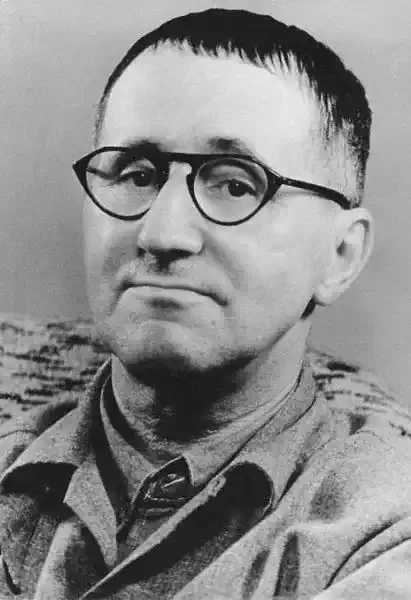
Bertolt Brecht
Not What Was Meant
When the Academy of Arts demanded freedom
Of artistic expression from narrow-minded bureaucrats
There was a howl and a clamour in its immediate vicinity
But roaring above everything
Came a deafening thunder of applause
From beyond the Sector boundary.
Freedom! it roared. Freedom for the artists!
Freedom all round! Freedom for all!
Freedom for the exploiters! Freedom for the warmongers!
Freedom for the Ruhr cartels! Freedom for Hitler's generals!
Softly, my dear fellows...
The Judas kiss for the artists follows
Hard on the Judas kiss for the workers.
The arsonist with his bottle of petrol
Sneaks up grinning to
The Academy of Arts.
But it was not to embrace him, just
To knock the bottle out of his dirty hand that
We asked for elbow room.
Even the narrowest minds
In which peace is harboured
Are more welcome to the arts than the art lover
Who is also a lover of the art of war.
594
Rabindranath Tagore
The Gardener XLII: O Mad, Superbly Drunk
O mad, superbly drunk;
If you kick open your doors and
play the fool in public;
If you empty your bag in a night,
and snap your fingers at prudence;
If you walk in curious paths and
play with useless things;
Reck not rhyme or reason;
If unfurling your sails before the
storm you snap the rudder in two,
Then I will follow you, comrade,
and be drunken and go to the dogs.
I have wasted my days and nights
in the company of steady wise neighbours.
Much knowing has turned my hair
grey, and much watching has made
my sight dim.
For years I have gathered and
heaped up scraps and fragments of
things:
Crush them and dance upon them,
and scatter them all to the winds.
For I know 'tis the height of wisdom
to be drunken and go the dogs.
Let all crooked scruples vanish,
let me hopelessly lose my way.
Let a gust of wild giddiness come
and sweep me away from my anchors.
The world is peopled with worthies,
and workers, useful and clever.
There are men who are easily first,
and men who come decently after.
Let them be happy and prosper,
and let me be foolishly futile.
For I know 'tis the end of all works
to be drunken and go to the dogs.
I swear to surrender this moment
all claims to the ranks of the decent.
I let go my pride of learning and
judgment of right and of wrong.
I'll shatter memory's vessel, scattering
the last drop of tears.
With the foam of the berry-red
wine I will bathe and brighten my
laughter.
The badge of the civil and staid
I'll tear into shreds for the nonce.
I'll take the holy vow to be worthless,
to be drunken and go to the dogs.
589
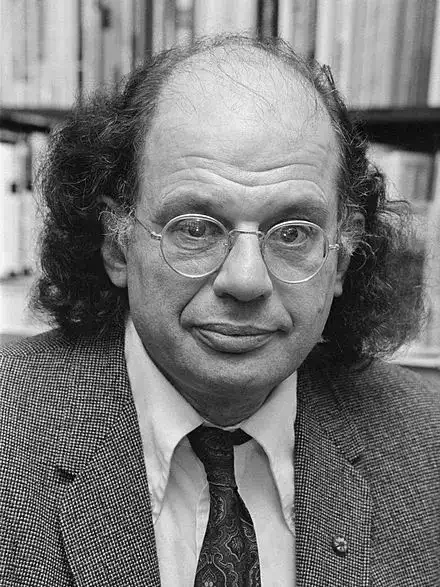
Allen Ginsberg
The Terms In Which I Think Of Reality
Reality is a question
of realizing how real
the world is already.
Time is Eternity,
ultimate and immovable;
everyone's an angel.
It's Heaven's mystery
of changing perfection :
absolute Eternity
changes! Cars are always
going down the street,
lamps go off and on.
It's a great flat plain;
we can see everything
on top of a table.
Clams open on the table,
lambs are eaten by worms
on the plain. The motion
of change is beautiful,
as well as form called
in and out of being.
Next : to distinguish process
in its particularity with
an eye to the initiation
of gratifying new changes
desired in the real world.
Here we're overwhelmed
with such unpleasant detail
we dream again of Heaven.
For the world is a mountain
of shit : if it's going to
be moved at all, it's got
to be taken by handfuls.
Man lives like the unhappy
whore on River Street who
in her Eternity gets only
a couple of bucks and a lot
of snide remarks in return
for seeking physical love
the best way she knows how,
never really heard of a glad
job or joyous marriage or
a difference in the heart :
or thinks it isn't for her,
which is her worst misery.
593

Thomas Hardy
Lines On The Loss Of The Titanic
In a solitude of the sea
Deep from human vanity,
And the Pride of Life that planned her, stilly couches she.
Steel chambers, late the pyres
Of her salamandrine fires,
Cold currents thrid, and turn to rhythmic tidal lyres.
Over the mirrors meant
To glass the opulent
The sea-worm crawls -- grotesque, slimed, dumb, indifferent.
Jewels in joy designed
To ravish the sensuous mind
Lie lightless, all their sparkles bleared and black and blind.
Dim moon-eyed fishes near
Gaze at the gilded gear
And query: "What does this vaingloriousness down here?" ...
Well: while was fashioning
This creature of cleaving wing,
The Immanent Will that stirs and urges everything
Prepared a sinister mate
For her -- so gaily great --
A Shape of Ice, for the time far and dissociate.
And as the smart ship grew
In stature, grace, and hue,
In shadowy silent distance grew the Iceberg too.
Alien they seemed to be;
No mortal eye could see
The intimate welding of their later history,
Or sign that they were bent
By paths coincident
On being anon twin halves of one august event,
Till the Spinner of the Years
Said "Now!" And each one hears,
And consummation comes, and jars two hemispheres.
591

Henry Wadsworth Longfellow
In The Harbour: Sundown
The summer sun is sinking low;
Only the tree-tops redden and glow:
Only the weathercock on the spire
Of the neighboring church is a flame of fire;
All is in shadow below.
O beautiful, awful summer day,
What hast thou given, what taken away?
Life and death, and love and hate,
Homes made happy or desolate,
Hearts made sad or gay!
On the road of life one mile-stone more!
In the book of life one leaf turned o'er!
Like a red seal is the setting sun
On the good and the evil men have done,--
Naught can to-day restore!
597

John Milton
Paradise Regained
THE FIRST BOOK
I, WHO erewhile the happy Garden sung
By one man's disobedience lost, now sing
Recovered Paradise to all mankind,
By one man's firm obedience fully tried
Through all temptation, and the Tempter foiled
In all his wiles, defeated and repulsed,
And Eden raised in the waste Wilderness.
Thou Spirit, who led'st this glorious Eremite
Into the desert, his victorious field
Against the spiritual foe, and brought'st him thence
By proof the undoubted Son of God, inspire,
As thou art wont, my prompted song, else mute,
And bear through highth or depth of Nature's bounds,
With prosperous wing full summed, to tell of deeds
Above heroic, though in secret done,
And unrecorded left through many an age:
Worthy to have not remained so long unsung.
Now had the great Proclaimer, with a voice
More awful than the sound of trumpet, cried
Repentance, and Heaven's kingdom nigh at hand
To all baptized. To his great baptism flocked
With awe the regions round, and with them came
From Nazareth the son of Joseph deemed
To the flood Jordan--came as then obscure,
Unmarked, unknown. But him the Baptist soon
Descried, divinely warned, and witness bore
As to his worthier, and would have resigned
To him his heavenly office. Nor was long
His witness unconfirmed: on him baptized
Heaven opened, and in likeness of a Dove
The Spirit descended, while the Father's voice
From Heaven pronounced him his beloved Son.
That heard the Adversary, who, roving still
About the world, at that assembly famed
Would not be last, and, with the voice divine
Nigh thunder-struck, the exalted man to whom
Such high attest was given a while surveyed
With wonder; then, with envy fraught and rage,
Flies to his place, nor rests, but in mid air
To council summons all his mighty Peers,
Within thick clouds and dark tenfold involved,
A gloomy consistory; and them amidst,
With looks aghast and sad, he thus bespake:-"
O ancient Powers of Air and this wide World
(For much more willingly I mention Air,
This our old conquest, than remember Hell,
Our hated habitation), well ye know
How many ages, as the years of men,
This Universe we have possessed, and ruled
In manner at our will the affairs of Earth,
Since Adam and his facile consort Eve
Lost Paradise, deceived by me, though since
With dread attending when that fatal wound
Shall be inflicted by the seed of Eve
Upon my head. Long the decrees of Heaven
Delay, for longest time to Him is short;
And now, too soon for us, the circling hours
This dreaded time have compassed, wherein we
Must bide the stroke of that long-threatened wound
(At least, if so we can, and by the head
Broken be not intended all our power
To be infringed, our freedom and our being
In this fair empire won of Earth and Air)--
For this ill news I bring: The Woman's Seed,
Destined to this, is late of woman born.
His birth to our just fear gave no small cause;
But his growth now to youth's full flower, displaying
All virtue, grace and wisdom to achieve
Things highest, greatest, multiplies my fear.
Before him a great Prophet, to proclaim
His coming, is sent harbinger, who all
Invites, and in the consecrated stream
Pretends to wash off sin, and fit them so
Purified to receive him pure, or rather
To do him honour as their King. All come,
And he himself among them was baptized--
Not thence to be more pure, but to receive
The testimony of Heaven, that who he is
Thenceforth the nations may not doubt. I saw
The Prophet do him reverence; on him, rising
Out of the water, Heaven above the clouds
Unfold her crystal doors; thence on his head
A perfet Dove descend (whate'er it meant);
And out of Heaven the sovraign voice I heard,
'This is my Son beloved,--in him am pleased.'
His mother, than, is mortal, but his Sire
He who obtains the monarchy of Heaven;
And what will He not do to advance his Son?
His first-begot we know, and sore have felt,
When his fierce thunder drove us to the Deep;
Who this is we must learn, for Man he seems
In all his lineaments, though in his face
The glimpses of his Father's glory shine.
Ye see our danger on the utmost edge
Of hazard, which admits no long debate,
But must with something sudden be opposed
(Not force, but well-couched fraud, well-woven snares),
Ere in the head of nations he appear,
Their king, their leader, and supreme on Earth.
I, when no other durst, sole undertook
The dismal expedition to find out
And ruin Adam, and the exploit performed
Successfully: a calmer voyage now
Will waft me; and the way found prosperous once
Induces best to hope of like success."
He ended, and his words impression left
Of much amazement to the infernal crew,
Distracted and surprised with deep dismay
At these sad tidings. But no time was then
For long indulgence to their fears or grief:
Unanimous they all commit the care
And management of this man enterprise
To him, their great Dictator, whose attempt
At first against mankind so well had thrived
In Adam's overthrow, and led their march
From Hell's deep-vaulted den to dwell in light,
Regents, and potentates, and kings, yea gods,
Of many a pleasant realm and province wide.
So to the coast of Jordan he directs
His easy steps, girded with snaky wiles,
Where he might likeliest find this new-declared,
This man of men, attested Son of God,
Temptation and all guile on him to try--
So to subvert whom he suspected raised
To end his reign on Earth so long enjoyed:
But, contrary, unweeting he fulfilled
The purposed counsel, pre-ordained and fixed,
Of the Most High, who, in full frequence bright
Of Angels, thus to Gabriel smiling spake:-"
Gabriel, this day, by proof, thou shalt behold,
Thou and all Angels conversant on Earth
With Man or men's affairs, how I begin
To verify that solemn message late,
On which I sent thee to the Virgin pure
In Galilee, that she should bear a son,
Great in renown, and called the Son of God.
Then told'st her, doubting how these things could be
To her a virgin, that on her should come
The Holy Ghost, and the power of the Highest
O'ershadow her. This Man, born and now upgrown,
To shew him worthy of his birth divine
And high prediction, henceforth I expose
To Satan; let him tempt, and now assay
His utmost subtlety, because he boasts
And vaunts of his great cunning to the throng
Of his Apostasy. He might have learnt
Less overweening, since he failed in Job,
Whose constant perseverance overcame
Whate'er his cruel malice could invent.
He now shall know I can produce a man,
Of female seed, far abler to resist
All his solicitations, and at length
All his vast force, and drive him back to Hell--
Winning by conquest what the first man lost
By fallacy surprised. But first I mean
To exercise him in the Wilderness;
There he shall first lay down the rudiments
Of his great warfare, ere I send him forth
To conquer Sin and Death, the two grand foes.
By humiliation and strong sufferance
His weakness shall o'ercome Satanic strength,
And all the world, and mass of sinful flesh;
That all the Angels and aethereal Powers--
They now, and men hereafter--may discern
From what consummate virtue I have chose
This perfet man, by merit called my Son,
To earn salvation for the sons of men."
So spake the Eternal Father, and all Heaven
Admiring stood a space; then into hymns
Burst forth, and in celestial measures moved,
Circling the throne and singing, while the hand
Sung with the voice, and this the argument:-
"Victory and triumph to the Son of God,
Now entering his great duel, not of arms,
But to vanquish by wisdom hellish wiles!
The Father knows the Son; therefore secure
Ventures his filial virtue, though untried,
Against whate'er may tempt, whate'er seduce,
Allure, or terrify, or undermine.
Be frustrate, all ye stratagems of Hell,
And, devilish machinations, come to nought!"
So they in Heaven their odes and vigils tuned.
Meanwhile the Son of God, who yet some days
Lodged in Bethabara, where John baptized,
Musing and much revolving in his breast
How best the mighty work he might begin
Of Saviour to mankind, and which way first
Publish his godlike office now mature,
One day forth walked alone, the Spirit leading
And his deep thoughts, the better to converse
With solitude, till, far from track of men,
Thought following thought, and step by step led on,
He entered now the bordering Desert wild,
And, with dark shades and rocks environed round,
His holy meditations thus pursued:-
"O what a multitude of thoughts at once
Awakened in me swarm, while I consider
What from within I feel myself, and hear
What from without comes often to my ears,
Ill sorting with my present state compared!
When I was yet a child, no childish play
To me was pleasing; all my mind was set
Serious to learn and know, and thence to do,
What might be public good; myself I thought
Born to that end, born to promote all truth,
All righteous things. Therefore, above my years,
160
170
180
190
200
The Law of God I read, and found it sweet;
Made it my whole delight, and in it grew
To such perfection that, ere yet my age
Had measured twice six years, at our great Feast
I went into the Temple, there to hear
The teachers of our Law, and to propose
What might improve my knowledge or their own,
And was admired by all. Yet this not all
To which my spirit aspired. Victorious deeds
Flamed in my heart, heroic acts--one while
To rescue Israel from the Roman yoke;
Then to subdue and quell, o'er all the earth,
Brute violence and proud tyrannic power,
Till truth were freed, and equity restored:
Yet held it more humane, more heavenly, first
By winning words to conquer willing hearts,
And make persuasion do the work of fear;
At least to try, and teach the erring soul,
Not wilfully misdoing, but unware
Misled; the stubborn only to subdue.
These growing thoughts my mother soon perceiving,
By words at times cast forth, inly rejoiced,
And said to me apart, 'High are thy thoughts,
O Son! but nourish them, and let them soar
To what highth sacred virtue and true worth
Can raise them, though above example high;
By matchless deeds express thy matchless Sire.
For know, thou art no son of mortal man;
Though men esteem thee low of parentage,
Thy Father is the Eternal King who rules
All Heaven and Earth, Angels and sons of men.
A messenger from God foretold thy birth
Conceived in me a virgin; he foretold
Thou shouldst be great, and sit on David's throne,
And of thy kingdom there should be no end.
At thy nativity a glorious quire
Of Angels, in the fields of Bethlehem, sung
To shepherds, watching at their folds by night,
And told them the Messiah now was born,
Where they might see him; and to thee they came,
Directed to the manger where thou lay'st;
For in the inn was left no better room.
A Star, not seen before, in heaven appearing,
Guided the Wise Men thither from the East,
To honour thee with incense, myrrh, and gold;
By whose bright course led on they found the place,
Affirming it thy star, new-graven in heaven,
By which they knew thee King of Israel born.
Just Simeon and prophetic Anna, warned
By vision, found thee in the Temple, and spake,
Before the altar and the vested priest,
Like things of thee to all that present stood.'
210
220
230
240
250
This having heart, straight I again revolved
The Law and Prophets, searching what was writ
Concerning the Messiah, to our scribes
Known partly, and soon found of whom they spake
I am--this chiefly, that my way must lie
Through many a hard assay, even to the death,
Ere I the promised kingdom can attain,
Or work redemption for mankind, whose sins'
Full weight must be transferred upon my head.
Yet, neither thus disheartened or dismayed,
The time prefixed I waited; when behold
The Baptist (of whose birth I oft had heard,
Not knew by sight) now come, who was to come
Before Messiah, and his way prepare!
I, as all others, to his baptism came,
Which I believed was from above; but he
Straight knew me, and with loudest voice proclaimed
Me him (for it was shewn him so from Heaven)--
Me him whose harbinger he was; and first
Refused on me his baptism to confer,
As much his greater, and was hardly won.
But, as I rose out of the laving stream,
Heaven opened her eternal doors, from whence
The Spirit descended on me like a Dove;
And last, the sum of all, my Father's voice,
Audibly heard from Heaven, pronounced me his,
Me his beloved Son, in whom alone
He was well pleased: by which I knew the time
Now full, that I no more should live obscure,
But openly begin, as best becomes
The authority which I derived from Heaven.
And now by some strong motion I am led
Into this wilderness; to what intent
I learn not yet. Perhaps I need not know;
For what concerns my knowledge God reveals."
So spake our Morning Star, then in his rise,
And, looking round, on every side beheld
A pathless desert, dusk with horrid shades.
The way he came, not having marked return,
Was difficult, by human steps untrod;
And he still on was led, but with such thoughts
Accompanied of things past and to come
Lodged in his breast as well might recommend
Such solitude before choicest society.
Full forty days he passed--whether on hill
Sometimes, anon in shady vale, each night
Under the covert of some ancient oak
Or cedar to defend him from the dew,
Or harboured in one cave, is not revealed;
Nor tasted human food, nor hunger felt,
Till those days ended; hungered then at last
Among wild beasts. They at his sight grew mild,
Nor sleeping him nor waking harmed; his walk
The fiery serpent fled and noxious worm;
The lion and fierce tiger glared aloof.
But now an aged man in rural weeds,
Following, as seemed, the quest of some stray eye,
Or withered sticks to gather, which might serve
Against a winter's day, when winds blow keen,
To warm him wet returned from field at eve,
He saw approach; who first with curious eye
Perused him, then with words thus uttered spake:--320
"Sir, what ill chance hath brought thee to this place,
So far from path or road of men, who pass
In troop or caravan? for single none
Durst ever, who returned, and dropt not here
His carcass, pined with hunger and with droughth.
I ask the rather, and the more admire,
For that to me thou seem'st the man whom late
Our new baptizing Prophet at the ford
Of Jordan honoured so, and called thee Son
Of God. I saw and heard, for we sometimes
Who dwell this wild, constrained by want, come forth
To town or village nigh (nighest is far),
Where aught we hear, and curious are to hear,
What happens new; fame also finds us out."
To whom the Son of God:--"Who brought me hither
Will bring me hence; no other guide I seek."
"By miracle he may," replied the swain;
"What other way I see not; for we here
Live on tough roots and stubs, to thirst inured
More than the camel, and to drink go far--340
Men to much misery and hardship born.
But, if thou be the Son of God, command
That out of these hard stones be made thee bread;
So shalt thou save thyself, and us relieve
With food, whereof we wretched seldom taste."
He ended, and the Son of God replied:-
"Think'st thou such force in bread? Is it not written
(For I discern thee other than thou seem'st),
Man lives not by bread only, but each word
Proceeding from the mouth of God, who fed
Our fathers here with manna? In the Mount
Moses was forty days, nor eat nor drank;
And forty days Eliah without food
Wandered this barren waste; the same I now.
Why dost thou, then, suggest to me distrust
Knowing who I am, as I know who thou art?"
Whom thus answered the Arch-Fiend, now undisguised:-
"'Tis true, I am that Spirit unfortunate
Who, leagued with millions more in rash revolt,
Kept not my happy station, but was driven
With them from bliss to the bottomless Deep--
Yet to that hideous place not so confined
By rigour unconniving but that oft,
Leaving my dolorous prison, I enjoy
Large liberty to round this globe of Earth,
Or range in the Air; nor from the Heaven of Heavens
Hath he excluded my resort sometimes.
I came, among the Sons of God, when he
Gave up into my hands Uzzean Job,
To prove him, and illustrate his high worth;
And, when to all his Angels he proposed
To draw the proud king Ahab into fraud,
That he might fall in Ramoth, they demurring,
I undertook that office, and the tongues
Of all his flattering prophets glibbed with lies
To his destruction, as I had in charge:
For what he bids I do. Though I have lost
Much lustre of my native brightness, lost
To be beloved of God, I have not lost
To love, at least contemplate and admire,
What I see excellent in good, or fair,
Or virtuous; I should so have lost all sense.
What can be then less in me than desire
To see thee and approach thee, whom I know
Declared the Son of God, to hear attent
Thy wisdom, and behold thy godlike deeds?
Men generally think me much a foe
To all mankind. Why should I? they to me
Never did wrong or violence. By them
I lost not what I lost; rather by them
I gained what I have gained, and with them dwell
Copartner in these regions of the World,
If not disposer--lend them oft my aid,
Oft my advice by presages and signs,
And answers, oracles, portents, and dreams,
Whereby they may direct their future life.
Envy, they say, excites me, thus to gain
Companions of my misery and woe!
At first it may be; but, long since with woe
Nearer acquainted, now I feel by proof
That fellowship in pain divides not smart,
Nor lightens aught each man's peculiar load;
Small consolation, then, were Man adjoined.
This wounds me most (what can it less?) that Man,
Man fallen, shall be restored, I never more."
To whom our Saviour sternly thus replied:-
"Deservedly thou griev'st, composed of lies
From the beginning, and in lies wilt end,
Who boast'st release from Hell, and leave to come
Into the Heaven of Heavens. Thou com'st, indeed,
As a poor miserable captive thrall
Comes to the place where he before had sat
Among the prime in splendour, now deposed,
Ejected, emptied, gazed, unpitied, shunned,
A spectacle of ruin, or of scorn,
To all the host of Heaven. The happy place
Imparts to thee no happiness, no joy--
Rather inflames thy torment, representing
Lost bliss, to thee no more communicable;
So never more in Hell than when in Heaven.
But thou art serviceable to Heaven's King!
Wilt thou impute to obedience what thy fear
Extorts, or pleasure to do ill excites?
What but thy malice moved thee to misdeem
Of righteous Job, then cruelly to afflict him
With all inflictions? but his patience won.
The other service was thy chosen task,
To be a liar in four hundred mouths;
For lying is thy sustenance, thy food.
Yet thou pretend'st to truth! all oracles
By thee are given, and what confessed more true
Among the nations? That hath been thy craft,
By mixing somewhat true to vent more lies.
But what have been thy answers? what but dark,
Ambiguous, and with double sense deluding,
Which they who asked have seldom understood,
And, not well understood, as good not known?
Who ever, by consulting at thy shrine,
Returned the wiser, or the more instruct
To fly or follow what concerned him most,
And run not sooner to his fatal snare?
For God hath justly given the nations up
To thy delusions; justly, since they fell
Idolatrous. But, when his purpose is
Among them to declare his providence,
To thee not known, whence hast thou then thy truth,
But from him, or his Angels president
In every province, who, themselves disdaining
To approach thy temples, give thee in command
What, to the smallest tittle, thou shalt say
To thy adorers? Thou, with trembling fear,
Or like a fawning parasite, obey'st;
Then to thyself ascrib'st the truth foretold.
But this thy glory shall be soon retrenched;
No more shalt thou by oracling abuse
The Gentiles; henceforth oracles are ceased,
And thou no more with pomp and sacrifice
Shalt be enquired at Delphos or elsewhere--
At least in vain, for they shall find thee mute.
God hath now sent his living Oracle
Into the world to teach his final will,
And sends his Spirit of Truth henceforth to dwell
In pious hearts, an inward oracle
To all truth requisite for men to know."
So spake our Saviour; but the subtle Fiend,
Though inly stung with anger and disdain,
Dissembled, and this answer smooth returned:-"
Sharply thou hast insisted on rebuke,
And urged me hard with doings which not will,
But misery, hath wrested from me. Where
Easily canst thou find one miserable,
And not inforced oft-times to part from truth,
If it may stand him more in stead to lie,
Say and unsay, feign, flatter, or abjure?
But thou art placed above me; thou art Lord;
From thee I can, and must, submiss, endure
Cheek or reproof, and glad to scape so quit.
Hard are the ways of truth, and rough to walk,
Smooth on the tongue discoursed, pleasing to the ear,
And tunable as sylvan pipe or song;
What wonder, then, if I delight to hear
Her dictates from thy mouth? most men admire
Virtue who follow not her lore. Permit me
To hear thee when I come (since no man comes),
And talk at least, though I despair to attain.
Thy Father, who is holy, wise, and pure,
Suffers the hypocrite or atheous priest
To tread his sacred courts, and minister
About his altar, handling holy things,
Praying or vowing, and voutsafed his voice
To Balaam reprobate, a prophet yet
Inspired: disdain not such access to me."
To whom our Saviour, with unaltered brow:-
"Thy coming hither, though I know thy scope,
I bid not, or forbid. Do as thou find'st
Permission from above; thou canst not more."
He added not; and Satan, bowling low
His gray dissimulation, disappeared,
Into thin air diffused: for now began
Night with her sullen wing to double-shade
The desert; fowls in their clay nests were couched;
And now wild beasts came forth the woods to roam.
THE SECOND BOOK
MEANWHILE the new-baptized, who yet remained
At Jordan with the Baptist, and had seen
Him whom they heard so late expressly called
Jesus Messiah, Son of God, declared,
And on that high authority had believed,
And with him talked, and with him lodged--I mean
Andrew and Simon, famous after known,
With others, though in Holy Writ not named--
Now missing him, their joy so lately found,
So lately found and so abruptly gone,
Began to doubt, and doubted many days,
And, as the days increased, increased their doubt.
Sometimes they thought he might be only shewn,
And for a time caught up to God, as once
Moses was in the Mount and missing long,
And the great Thisbite, who on fiery wheels
Rode up to Heaven, yet once again to come.
Therefore, as those young prophets then with care
Sought lost Eliah, so in each place these
Nigh to Bethabara--in Jericho
The city of palms, AEnon, and Salem old,
Machaerus, and each town or city walled
On this side the broad lake Genezaret,
Or in Peraea--but returned in vain.
Then on the bank of Jordan, by a creek,
Where winds with reeds and osiers whispering play,
Plain fishermen (no greater men them call),
Close in a cottage low together got,
Their unexpected loss and plaints outbreathed:-
"Alas, from what high hope to what relapse
Unlooked for are we fallen! Our eyes beheld
Messiah certainly now come, so long
Expected of our fathers; we have heard
His words, his wisdom full of grace and truth.
'Now, now, for sure, deliverance is at hand;
The kingdom shall to Israel be restored:'
Thus we rejoiced, but soon our joy is turned
Into perplexity and new amaze.
For whither is he gone? what accident
Hath rapt him from us? will he now retire
After appearance, and again prolong
Our expectation? God of Israel,
Send thy Messiah forth; the time is come.
Behold the kings of the earth, how they oppress
Thy Chosen, to what highth their power unjust
They have exalted, and behind them cast
All fear of Thee; arise, and vindicate
Thy glory; free thy people from their yoke!
But let us wait; thus far He hath performed--
Sent his Anointed, and to us revealed him
By his great Prophet pointed at and shown
In public, and with him we have conversed.
Let us be glad of this, and all our fears
Lay on his providence; He will not fail,
Nor will withdraw him now, nor will recall--
Mock us with his blest sight, then snatch him hence:
Soon we shall see our hope, our joy, return."
Thus they out of their plaints new hope resume
To find whom at the first they found unsought.
But to his mother Mary, when she saw
Others returned from baptism, not her Son,
Nor left at Jordan tidings of him none,
Within her breast though calm, her breast though pure,
Motherly cares and fears got head, and raised
Some troubled thoughts, which she in sighs thus clad:-"
Oh, what avails me now that honour high,
To have conceived of God, or that salute,
'Hail, highly favoured, among women blest!'
While I to sorrows am no less advanced,
And fears as eminent above the lot
Of other women, by the birth I bore:
In such a season born, when scarce a shed
Could be obtained to shelter him or me
From the bleak air? A stable was our warmth,
A manger his; yet soon enforced to fly
Thence into Egypt, till the murderous king
Were dead, who sought his life, and, missing, filled
With infant blood the streets of Bethlehem.
From Egypt home returned, in Nazareth
Hath been our dwelling many years; his life
Private, unactive, calm, contemplative,
Little suspicious to any king. But now,
Full grown to man, acknowledged, as I hear,
By John the Baptist, and in public shewn,
Son owned from Heaven by his Father's voice,
I looked for some great change. To honour? no;
But trouble, as old Simeon plain foretold,
That to the fall and rising he should be
Of many in Israel, and to a sign
Spoken against--that through my very soul
A sword shall pierce. This is my favoured lot,
My exaltation to afflictions high!
Afflicted I may be, it seems, and blest!
I will not argue that, nor will repine.
But where delays he now? Some great intent
Conceals him. When twelve years he scarce had seen,
I lost him, but so found as well I saw
He could not lose himself, but went about
His Father's business. What he meant I mused--
Since understand; much more his absence now
Thus long to some great purpose he obscures.
But I to wait with patience am inured;
My heart hath been a storehouse long of things
And sayings laid up, pretending strange events."
Thus Mary, pondering oft, and oft to mind
Recalling what remarkably had passed
Since first her Salutation heard, with thoughts
Meekly composed awaited the fulfilling:
The while her Son, tracing the desert wild,
Sole, but with holiest meditations fed,
Into himself descended, and at once
All his great work to come before him set--
How to begin, how to accomplish best
His end of being on Earth, and mission high.
For Satan, with sly preface to return,
Had left him vacant, and with speed was gone
Up to the middle region of thick air,
Where all his Potentates in council sate.
There, without sign of boast, or sign of joy,
Solicitous and blank, he thus began:--120
"Princes, Heaven's ancient Sons, AEthereal Thrones--
Daemonian Spirits now, from the element
Each of his reign allotted, rightlier called
Powers of Fire, Air, Water, and Earth beneath
(So may we hold our place and these mild seats
Without new trouble!)--such an enemy
Is risen to invade us, who no less
Threatens than our expulsion down to Hell.
I, as I undertook, and with the vote
Consenting in full frequence was impowered,
Have found him, viewed him, tasted him; but find
Far other labour to be undergone
Than when I dealt with Adam, first of men,
Though Adam by his wife's allurement fell,
However to this Man inferior far--
If he be Man by mother's side, at least
With more than human gifts from Heaven adorned,
Perfections absolute, graces divine,
And amplitude of mind to greatest deeds.
Therefore I am returned, lest confidence
Of my success with Eve in Paradise
Deceive ye to persuasion over-sure
Of like succeeding here. I summon all
Rather to be in readiness with hand
Or counsel to assist, lest I, who erst
Thought none my equal, now be overmatched."
So spake the old Serpent, doubting, and from all
With clamour was assured their utmost aid
At his command; when from amidst them rose
Belial, the dissolutest Spirit that fell,
The sensualest, and, after Asmodai,
The fleshliest Incubus, and thus advised:-"
Set women in his eye and in his walk,
Among daughters of men the fairest found.
Many are in each region passing fair
As the noon sky, more like to goddesses
Than mortal creatures, graceful and discreet,
Expert in amorous arts, enchanting tongues
Persuasive, virgin majesty with mild
And sweet allayed, yet terrible to approach,
Skilled to retire, and in retiring draw
Hearts after them tangled in amorous nets.
Such object hath the power to soften and tame
Severest temper, smooth the rugged'st brow,
Enerve, and with voluptuous hope dissolve,
Draw out with credulous desire, and lead
At will the manliest, resolutest breast,
As the magnetic hardest iron draws.
Women, when nothing else, beguiled the heart
Of wisest Solomon, and made him build,
And made him bow, to the gods of his wives."
To whom quick answer Satan thus returned:-"
Belial, in much uneven scale thou weigh'st
All others by thyself. Because of old
Thou thyself doat'st on womankind, admiring
Their shape, their colour, and attractive grace,
None are, thou think'st, but taken with such toys.
Before the Flood, thou, with thy lusty crew,
False titled Sons of God, roaming the Earth,
Cast wanton eyes on the daughters of men,
And coupled with them, and begot a race.
Have we not seen, or by relation heard,
In courts and regal chambers how thou lurk'st,
In wood or grove, by mossy fountain-side,
In valley or green meadow, to waylay
Some beauty rare, Calisto, Clymene,
Daphne, or Semele, Antiopa,
Or Amymone, Syrinx, many more
Too long--then lay'st thy scapes on names adored,
Apollo, Neptune, Jupiter, or Pan,
Satyr, or Faun, or Silvan? But these haunts
Delight not all. Among the sons of men
How many have with a smile made small account
Of beauty and her lures, easily scorned
All her assaults, on worthier things intent!
Remember that Pellean conqueror,
A youth, how all the beauties of the East
He slightly viewed, and slightly overpassed;
How he surnamed of Africa dismissed,
In his prime youth, the fair Iberian maid.
For Solomon, he lived at ease, and, full
Of honour, wealth, high fare, aimed not beyond
Higher design than to enjoy his state;
Thence to the bait of women lay exposed.
But he whom we attempt is wiser far
Than Solomon, of more exalted mind,
Made and set wholly on the accomplishment
Of greatest things. What woman will you find,
Though of this age the wonder and the fame,
On whom his leisure will voutsafe an eye
Of fond desire? Or should she, confident,
As sitting queen adored on Beauty's throne,
Descend with all her winning charms begirt
To enamour, as the zone of Venus once
Wrought that effect on Jove (so fables tell),
How would one look from his majestic brow,
Seated as on the top of Virtue's hill,
Discountenance her despised, and put to rout
All her array, her female pride deject,
Or turn to reverent awe! For Beauty stands
170
180
190
200
210
220
In the admiration only of weak minds
Led captive; cease to admire, and all her plumes
Fall flat, and shrink into a trivial toy,
At every sudden slighting quite abashed.
Therefore with manlier objects we must try
His constancy--with such as have more shew
Of worth, of honour, glory, and popular praise
(Rocks whereon greatest men have oftest wrecked);
Or that which only seems to satisfy
Lawful desires of nature, not beyond.
And now I know he hungers, where no food
Is to be found, in the wide Wilderness:
The rest commit to me; I shall let pass
No advantage, and his strength as oft assay."
He ceased, and heard their grant in loud acclaim;
Then forthwith to him takes a chosen band
Of Spirits likest to himself in guile,
To be at hand and at his beck appear,
If cause were to unfold some active scene
Of various persons, each to know his part;
Then to the desert takes with these his flight,
Where still, from shade to shade, the Son of God,
After forty days' fasting, had remained,
Now hungering first, and to himself thus said:-"
Where will this end? Four times ten days I have passed
Wandering this woody maze, and human food
Nor tasted, nor had appetite. That fast
To virtue I impute not, or count part
Of what I suffer here. If nature need not,
Or God support nature without repast,
Though needing, what praise is it to endure?
But now I feel I hunger; which declares
Nature hath need of what she asks. Yet God
Can satisfy that need some other way,
Though hunger still remain. So it remain
Without this body's wasting, I content me,
And from the sting of famine fear no harm;
Nor mind it, fed with better thoughts, that feed
Me hungering more to do my Father's will."
It was the hour of night, when thus the Son
Communed in silent walk, then laid him down
Under the hospitable covert nigh
Of trees thick interwoven. There he slept,
And dreamed, as appetite is wont to dream,
Of meats and drinks, nature's refreshment sweet.
Him thought he by the brook of Cherith stood,
And saw the ravens with their horny beaks
Food to Elijah bringing even and morn--
Though ravenous, taught to abstain from what they brought;
He saw the Prophet also, how he fled
Into the desert, and how there he slept
Under a juniper--then how, awaked,
He found his supper on the coals prepared,
And by the Angel was bid rise and eat,
And eat the second time after repose,
The strength whereof sufficed him forty days:
Sometimes that with Elijah he partook,
Or as a guest with Daniel at his pulse.
Thus wore out night; and now the harald Lark
Left his ground-nest, high towering to descry
The Morn's approach, and greet her with his song.
As lightly from his grassy couch up rose
Our Saviour, and found all was but a dream;
Fasting he went to sleep, and fasting waked.
Up to a hill anon his steps he reared,
From whose high top to ken the prospect round,
If cottage were in view, sheep-cote, or herd;
But cottage, herd, or sheep-cote, none he saw--
Only in a bottom saw a pleasant grove,
With chaunt of tuneful birds resounding loud.
Thither he bent his way, determined there
To rest at noon, and entered soon the shade
High-roofed, and walks beneath, and alleys brown,
That opened in the midst a woody scene;
Nature's own work it seemed (Nature taught Art),
And, to a superstitious eye, the haunt
Of wood-gods and wood-nymphs. He viewed it round;
When suddenly a man before him stood,
Not rustic as before, but seemlier clad,
As one in city or court or palace bred,
And with fair speech these words to him addressed:-"
With granted leave officious I return,
But much more wonder that the Son of God
In this wild solitude so long should bide,
Of all things destitute, and, well I know,
Not without hunger. Others of some note,
As story tells, have trod this wilderness:
The fugitive Bond-woman, with her son,
Outcast Nebaioth, yet found here relief
By a providing Angel; all the race
Of Israel here had famished, had not God
Rained from heaven manna; and that Prophet bold,
Native of Thebez, wandering here, was fed
Twice by a voice inviting him to eat.
Of thee those forty days none hath regard,
Forty and more deserted here indeed."
To whom thus Jesus:--"What conclud'st thou hence?
They all had need; I, as thou seest, have none."
"How hast thou hunger then?" Satan replied.
"Tell me, if food were now before thee set,
Wouldst thou not eat?" "Thereafter as I like
the giver," answered Jesus. "Why should that
Cause thy refusal?" said the subtle Fiend.
"Hast thou not right to all created things?
Owe not all creatures, by just right, to thee
Duty and service, nor to stay till bid,
But tender all their power? Nor mention I
Meats by the law unclean, or offered first
To idols--those young Daniel could refuse;
Nor proffered by an enemy--though who
Would scruple that, with want oppressed? Behold,
Nature ashamed, or, better to express,
Troubled, that thou shouldst hunger, hath purveyed
From all the elements her choicest store,
To treat thee as beseems, and as her Lord
With honour. Only deign to sit and eat."
He spake no dream; for, as his words had end,
Our Saviour, lifting up his eyes, beheld,
In ample space under the broadest shade,
A table richly spread in regal mode,
With dishes piled and meats of noblest sort
And savour--beasts of chase, or fowl of game,
In pastry built, or from the spit, or boiled,
Grisamber-steamed; all fish, from sea or shore,
Freshet or purling brook, of shell or fin,
And exquisitest name, for which was drained
Pontus, and Lucrine bay, and Afric coast.
Alas! how simple, to these cates compared,
Was that crude Apple that diverted Eve!
And at a stately sideboard, by the wine,
That fragrant smell diffused, in order stood
Tall stripling youths rich-clad, of fairer hue
Than Ganymed or Hylas; distant more,
Under the trees now tripped, now solemn stood,
Nymphs of Diana's train, and Naiades
With fruits and flowers from Amalthea's horn,
And ladies of the Hesperides, that seemed
Fairer than feigned of old, or fabled since
Of faery damsels met in forest wide
By knights of Logres, or of Lyones,
Lancelot, or Pelleas, or Pellenore.
And all the while harmonious airs were heard
Of chiming strings or charming pipes; and winds
Of gentlest gale Arabian odours fanned
From their soft wings, and Flora's earliest smells.
Such was the splendour; and the Tempter now
His invitation earnestly renewed:-
"What doubts the Son of God to sit and eat?
These are not fruits forbidden; no interdict
Defends the touching of these viands pure;
Their taste no knowledge works, at least of evil,
But life preserves, destroys life's enemy,
Hunger, with sweet restorative delight.
All these are Spirits of air, and woods, and springs,
Thy gentle ministers, who come to pay
Thee homage, and acknowledge thee their Lord.
330
340
350
360
370
What doubt'st thou, Son of God? Sit down and eat."
To whom thus Jesus temperately replied:-
"Said'st thou not that to all things I had right?
And who withholds my power that right to use?
Shall I receive by gift what of my own,
When and where likes me best, I can command?
I can at will, doubt not, as soon as thou,
Command a table in this wilderness,
And call swift flights of Angels ministrant,
Arrayed in glory, on my cup to attend:
Why shouldst thou, then, obtrude this diligence
In vain, where no acceptance it can find?
And with my hunger what hast thou to do?
Thy pompous delicacies I contemn,
And count thy specious gifts no gifts, but guiles."
To whom thus answered Satan, male-content:-
"That I have also power to give thou seest;
If of that power I bring thee voluntary
What I might have bestowed on whom I pleased,
And rather opportunely in this place
Chose to impart to thy apparent need,
Why shouldst thou not accept it? But I see
What I can do or offer is suspect.
Of these things others quickly will dispose,
Whose pains have earned the far-fet spoil." With that
Both table and provision vanished quite,
With sound of harpies' wings and talons heard;
Only the importune Tempter still remained,
And with these words his temptation pursued:-"
By hunger, that each other creature tames,
Thou art not to be harmed, therefore not moved;
Thy temperance, invincible besides,
For no allurement yields to appetite;
And all thy heart is set on high designs,
High actions. But wherewith to be achieved?
Great acts require great means of enterprise;
Thou art unknown, unfriended, low of birth,
A carpenter thy father known, thyself
Bred up in poverty and straits at home,
Lost in a desert here and hunger-bit.
Which way, or from what hope, dost thou aspire
To greatness? whence authority deriv'st?
What followers, what retinue canst thou gain,
Or at thy heels the dizzy multitude,
Longer than thou canst feed them on thy cost?
Money brings honour, friends, conquest, and realms.
What raised Antipater the Edomite,
And his son Herod placed on Juda's throne,
Thy throne, but gold, that got him puissant friends?
Therefore, if at great things thou wouldst arrive,
Get riches first, get wealth, and treasure heap--
Not difficult, if thou hearken to me.
Riches are mine, fortune is in my hand;
They whom I favour thrive in wealth amain,
While virtue, valour, wisdom, sit in want."
To whom thus Jesus patiently replied:-
"Yet wealth without these three is impotent
To gain dominion, or to keep it gained--
Witness those ancient empires of the earth,
In highth of all their flowing wealth dissolved;
But men endued with these have oft attained,
In lowest poverty, to highest deeds--
Gideon, and Jephtha, and the shepherd lad
Whose offspring on the throne of Juda sate
So many ages, and shall yet regain
That seat, and reign in Israel without end.
Among the Heathen (for throughout the world
To me is not unknown what hath been done
Worthy of memorial) canst thou not remember
Quintius, Fabricius, Curius, Regulus?
For I esteem those names of men so poor,
Who could do mighty things, and could contemn
Riches, though offered from the hand of kings.
And what in me seems wanting but that I
May also in this poverty as soon
Accomplish what they did, perhaps and more?
Extol not riches, then, the toil of fools,
The wise man's cumbrance, if not snare; more apt
To slacken virtue and abate her edge
Than prompt her to do aught may merit praise.
What if with like aversion I reject
Riches and realms! Yet not for that a crown,
Golden in shew, is but a wreath of thorns,
Brings dangers, troubles, cares, and sleepless nights,
To him who wears the regal diadem,
When on his shoulders each man's burden lies;
For therein stands the office of a king,
His honour, virtue, merit, and chief praise,
That for the public all this weight he bears.
Yet he who reigns within himself, and rules
Passions, desires, and fears, is more a king--
Which every wise and virtuous man attains;
And who attains not, ill aspires to rule
Cities of men, or headstrong multitudes,
Subject himself to anarchy within,
Or lawless passions in him, which he serves.
But to guide nations in the way of truth
By saving doctrine, and from error lead
To know, and, knowing, worship God aright,
Is yet more kingly. This attracts the soul,
Governs the inner man, the nobler part;
That other o'er the body only reigns,
And oft by force--which to a generous mind
So reigning can be no sincere delight.
Besides, to give a kingdom hath been thought
Greater and nobler done, and to lay down
Far more magnanimous, than to assume.
Riches are needless, then, both for themselves,
And for thy reason why they should be sought--
To gain a sceptre, oftest better missed."
THE THIRD BOOK
SO spake the Son of God; and Satan stood
A while as mute, confounded what to say,
What to reply, confuted and convinced
Of his weak arguing and fallacious drift;
At length, collecting all his serpent wiles,
With soothing words renewed, him thus accosts:-
"I see thou know'st what is of use to know,
What best to say canst say, to do canst do;
Thy actions to thy words accord; thy words
To thy large heart give utterance due; thy heart
Contains of good, wise, just, the perfet shape.
Should kings and nations from thy mouth consult,
Thy counsel would be as the oracle
Urim and Thummim, those oraculous gems
On Aaron's breast, or tongue of Seers old
Infallible; or, wert thou sought to deeds
That might require the array of war, thy skill
Of conduct would be such that all the world
Could not sustain thy prowess, or subsist
In battle, though against thy few in arms.
These godlike virtues wherefore dost thou hide?
Affecting private life, or more obscure
In savage wilderness, wherefore deprive
All Earth her wonder at thy acts, thyself
The fame and glory--glory, the reward
That sole excites to high attempts the flame
Of most erected spirits, most tempered pure
AEthereal, who all pleasures else despise,
All treasures and all gain esteem as dross,
And dignities and powers, all but the highest?
Thy years are ripe, and over-ripe. The son
Of Macedonian Philip had ere these
Won Asia, and the throne of Cyrus held
At his dispose; young Scipio had brought down
The Carthaginian pride; young Pompey quelled
The Pontic king, and in triumph had rode.
Yet years, and to ripe years judgment mature,
Quench not the thirst of glory, but augment.
Great Julius, whom now all the world admires,
The more he grew in years, the more inflamed
With glory, wept that he had lived so long
Ingloroious. But thou yet art not too late."
10
20
30
40
To whom our Saviour calmly thus replied:-
"Thou neither dost persuade me to seek wealth
For empire's sake, nor empire to affect
For glory's sake, by all thy argument.
For what is glory but the blaze of fame,
The people's praise, if always praise unmixed?
And what the people but a herd confused,
A miscellaneous rabble, who extol
Things vulgar, and, well weighed, scarce worth the praise?
They praise and they admire they know not what,
And know not whom, but as one leads the other;
And what delight to be by such extolled,
To live upon their tongues, and be their talk?
Of whom to be dispraised were no small praise--
His lot who dares be singularly good.
The intelligent among them and the wise
Are few, and glory scarce of few is raised.
This is true glory and renown--when God,
Looking on the Earth, with approbation marks
The just man, and divulges him through Heaven
To all his Angels, who with true applause
Recount his praises. Thus he did to Job,
When, to extend his fame through Heaven and Earth,
As thou to thy reproach may'st well remember,
He asked thee, 'Hast thou seen my servant Job?'
Famous he was in Heaven; on Earth less known,
Where glory is false glory, attributed
To things not glorious, men not worthy of fame.
They err who count it glorious to subdue
By conquest far and wide, to overrun
Large countries, and in field great battles win,
Great cities by assault. What do these worthies
But rob and spoil, burn, slaughter, and enslave
Peaceable nations, neighbouring or remote,
Made captive, yet deserving freedom more
Than those their conquerors, who leave behind
Nothing but ruin wheresoe'er they rove,
And all the flourishing works of peace destroy;
Then swell with pride, and must be titled Gods,
Great benefactors of mankind, Deliverers,
Worshipped with temple, priest, and sacrifice?
One is the son of Jove, of Mars the other;
Till conqueror Death discover them scarce men,
Rowling in brutish vices, and deformed,
Violent or shameful death their due reward.
But, if there be in glory aught of good;
It may be means far different be attained,
Without ambition, war, or violence--90
By deeds of peace, by wisdom eminent,
By patience, temperance. I mention still
Him whom thy wrongs, with saintly patience borne,
Made famous in a land and times obscure;
Who names not now with honour patient Job?
Poor Socrates, (who next more memorable?)
By what he taught and suffered for so doing,
For truth's sake suffering death unjust, lives now
Equal in fame to proudest conquerors.
Yet, if for fame and glory aught be done,
Aught suffered--if young African for fame
His wasted country freed from Punic rage--
The deed becomes unpraised, the man at least,
And loses, though but verbal, his reward.
Shall I seek glory, then, as vain men seek,
Oft not deserved? I seek not mine, but His
Who sent me, and thereby witness whence I am."
To whom the Tempter, murmuring, thus replied:-"
Think not so slight of glory, therein least
Resembling thy great Father. He seeks glory,
And for his glory all things made, all things
Orders and governs; nor content in Heaven,
By all his Angels glorified, requires
Glory from men, from all men, good or bad,
Wise or unwise, no difference, no exemption.
Above all sacrifice, or hallowed gift,
Glory he requires, and glory he receives,
Promiscuous from all nations, Jew, or Greek,
Or Barbarous, nor exception hath declared;
From us, his foes pronounced, glory he exacts."
To whom our Saviour fervently replied:
"And reason; since his Word all things produced,
Though chiefly not for glory as prime end,
But to shew forth his goodness, and impart
His good communicable to every soul
Freely; of whom what could He less expect
Than glory and benediction--that is, thanks--
The slightest, easiest, readiest recompense
From them who could return him nothing else,
And, not returning that, would likeliest render
Contempt instead, dishonour, obloquy?
Hard recompense, unsuitable return
For so much good, so much beneficience!
But why should man seek glory, who of his own
Hath nothing, and to whom nothing belongs
But condemnation, ignominy, and shame--
Who, for so many benefits received,
Turned recreant to God, ingrate and false,
And so of all true good himself despoiled;
Yet, sacrilegious, to himself would take
That which to God alone of right belongs?
Yet so much bounty is in God, such grace,
That who advances his glory, not their own,
Them he himself to glory will advance."
So spake the Son of God; and here again
Satan had not to answer, but stood struck
100
110
120
130
140
With guilt of his own sin--for he himself,
Insatiable of glory, had lost all;
Yet of another plea bethought him soon:-"
Of glory, as thou wilt," said he, "so deem;
Worth or not worth the seeking, let it pass.
But to a Kingdom thou art born--ordained
To sit upon thy father David's throne,
By mother's side thy father, though thy right
Be now in powerful hands, that will not part
Easily from possession won with arms.
Judaea now and all the Promised Land,
Reduced a province under Roman yoke,
Obeys Tiberius, nor is always ruled
With temperate sway: oft have they violated
The Temple, oft the Law, with foul affronts,
Abominations rather, as did once
Antiochus. And think'st thou to regain
Thy right by sitting still, or thus retiring?
So did not Machabeus. He indeed
Retired unto the Desert, but with arms;
And o'er a mighty king so oft prevailed
That by strong hand his family obtained,
Though priests, the crown, and David's throne usurped,
With Modin and her suburbs once content.
If kingdom move thee not, let move thee zeal
And duty--zeal and duty are not slow,
But on Occasion's forelock watchful wait:
They themselves rather are occasion best--
Zeal of thy Father's house, duty to free
Thy country from her heathen servitude.
So shalt thou best fulfil, best verify,
The Prophets old, who sung thy endless reign--
The happier reign the sooner it begins.
Rein then; what canst thou better do the while?"
To whom our Saviour answer thus returned:-
"All things are best fulfilled in their due time;
And time there is for all things, Truth hath said.
If of my reign Prophetic Writ hath told
That it shall never end, so, when begin
The Father in his purpose hath decreed--
He in whose hand all times and seasons rowl.
What if he hath decreed that I shall first
Be tried in humble state, and things adverse,
By tribulations, injuries, insults,
Contempts, and scorns, and snares, and violence,
Suffering, abstaining, quietly expecting
Without distrust or doubt, that He may know
What I can suffer, how obey? Who best
Can suffer best can do, best reign who first
Well hath obeyed--just trial ere I merit
My exaltation without change or end.
But what concerns it thee when I begin
My everlasting Kingdom? Why art thou
Solicitous? What moves thy inquisition?
Know'st thou not that my rising is thy fall,
And my promotion will be thy destruction?"
To whom the Tempter, inly racked, replied:-
"Let that come when it comes. All hope is lost
Of my reception into grace; what worse?
For where no hope is left is left no fear.
If there be worse, the expectation more
Of worse torments me than the feeling can.
I would be at the worst; worst is my port,
My harbour, and my ultimate repose,
The end I would attain, my final good.
My error was my error, and my crime
My crime; whatever, for itself condemned,
And will alike be punished, whether thou
Reign or reign not--though to that gentle brow
Willingly I could fly, and hope thy reign,
From that placid aspect and meek regard,
Rather than aggravate my evil state,
Would stand between me and thy Father's ire
(Whose ire I dread more than the fire of Hell)
A shelter and a kind of shading cool
Interposition, as a summer's cloud.
If I, then, to the worst that can be haste,
Why move thy feet so slow to what is best?
Happiest, both to thyself and all the world,
That thou, who worthiest art, shouldst be their King!
Perhaps thou linger'st in deep thoughts detained
Of the enterprise so hazardous and high!
No wonder; for, though in thee be united
What of perfection can in Man be found,
Or human nature can receive, consider
Thy life hath yet been private, most part spent
At home, scarce viewed the Galilean towns,
And once a year Jerusalem, few days'
Short sojourn; and what thence couldst thou observe?
The world thou hast not seen, much less her glory,
Empires, and monarchs, and their radiant courts--
Best school of best experience, quickest in sight
In all things that to greatest actions lead.
The wisest, unexperienced, will be ever
Timorous, and loth, with novice modesty
(As he who, seeking asses, found a kingdom)
Irresolute, unhardy, unadventrous.
But I will bring thee where thou soon shalt quit
Those rudiments, and see before thine eyes
The monarchies of the Earth, their pomp and state--
Sufficient introduction to inform
Thee, of thyself so apt, in regal arts,
And regal mysteries; that thou may'st know
How best their opposition to withstand."
With that (such power was given him then), he took
The Son of God up to a mountain high.
It was a mountain at whose verdant feet
A spacious plain outstretched in circuit wide
Lay pleasant; from his side two rivers flowed,
The one winding, the other straight, and left between
Fair champaign, with less rivers interveined,
Then meeting joined their tribute to the sea.
Fertil of corn the glebe, of oil, and wine;
With herds the pasture thronged, with flocks the hills;
Huge cities and high-towered, that well might seem
The seats of mightiest monarchs; and so large
The prospect was that here and there was room
For barren desert, fountainless and dry.
To this high mountain-top the Tempter brought
Our Saviour, and new train of words began:-"
Well have we speeded, and o'er hill and dale,
Forest, and field, and flood, temples and towers,
Cut shorter many a league. Here thou behold'st
Assyria, and her empire's ancient bounds,
Araxes and the Caspian lake; thence on
As far as Indus east, Euphrates west,
And oft beyond; to south the Persian bay,
And, inaccessible, the Arabian drouth:
Here, Nineveh, of length within her wall
Several days' journey, built by Ninus old,
Of that first golden monarchy the seat,
And seat of Salmanassar, whose success
Israel in long captivity still mourns;
There Babylon, the wonder of all tongues,
As ancient, but rebuilt by him who twice
Judah and all thy father David's house
Led captive, and Jerusalem laid waste,
Till Cyrus set them free; Persepolis,
His city, there thou seest, and Bactra there;
Ecbatana her structure vast there shews,
And Hecatompylos her hunderd gates;
There Susa by Choaspes, amber stream,
The drink of none but kings; of later fame,
Built by Emathian or by Parthian hands,
The great Seleucia, Nisibis, and there
Artaxata, Teredon, Ctesiphon,
Turning with easy eye, thou may'st behold.
All these the Parthian (now some ages past
By great Arsaces led, who founded first
That empire) under his dominion holds,
From the luxurious kings of Antioch won.
And just in time thou com'st to have a view
Of his great power; for now the Parthian king
In Ctesiphon hath gathered all his host
Against the Scythian, whose incursions wild
Have wasted Sogdiana; to her aid
He marches now in haste. See, though from far,
His thousands, in what martial equipage
They issue forth, steel bows and shafts their arms,
Of equal dread in flight or in pursuit--
All horsemen, in which fight they most excel;
See how in warlike muster they appear,
In rhombs, and wedges, and half-moons, and wings."
He looked, and saw what numbers numberless
The city gates outpoured, light-armed troops
In coats of mail and military pride.
In mail their horses clad, yet fleet and strong,
Prauncing their riders bore, the flower and choice
Of many provinces from bound to bound--
From Arachosia, from Candaor east,
And Margiana, to the Hyrcanian cliffs
Of Caucasus, and dark Iberian dales;
From Atropatia, and the neighbouring plains
Of Adiabene, Media, and the south
Of Susiana, to Balsara's haven.
He saw them in their forms of battle ranged,
How quick they wheeled, and flying behind them shot
Sharp sleet of arrowy showers against the face
Of their pursuers, and overcame by flight;
The field all iron cast a gleaming brown.
Nor wanted clouds of foot, nor, on each horn,
Cuirassiers all in steel for standing fight,
Chariots, or elephants indorsed with towers
Of archers; nor of labouring pioners
A multitude, with spades and axes armed,
To lay hills plain, fell woods, or valleys fill,
Or where plain was raise hill, or overlay
With bridges rivers proud, as with a yoke:
Mules after these, camels and dromedaries,
And waggons fraught with utensils of war.
Such forces met not, nor so wide a camp,
When Agrican, with all his northern powers,
Besieged Albracea, as romances tell,
The city of Gallaphrone, from thence to win
The fairest of her sex, Angelica,
His daughter, sought by many prowest knights,
Both Paynim and the peers of Charlemane.
Such and so numerous was their chivalry;
At sight whereof the Fiend yet more presumed,
And to our Saviour thus his words renewed:-"
That thou may'st know I seek not to engage
Thy virtue, and not every way secure
On no slight grounds thy safety, hear and mark
To what end I have brought thee hither, and shew
All this fair sight. Thy kingdom, though foretold
By Prophet or by Angel, unless thou
Endeavour, as thy father David did,
Thou never shalt obtain: prediction still
In all things, and all men, supposes means;
Without means used, what it predicts revokes.
But say thou wert possessed of David's throne
By free consent of all, none opposite,
Samaritan or Jew; how couldst thou hope
Long to enjoy it quiet and secure
Between two such enclosing enemies,
Roman and Parthian? Therefore one of these
Thou must make sure thy own: the Parthian first,
By my advice, as nearer, and of late
Found able by invasion to annoy
Thy country, and captive lead away her kings,
Antigonus and old Hyrcanus, bound,
Maugre the Roman. It shall be my task
To render thee the Parthian at dispose,
Choose which thou wilt, by conquest or by league.
By him thou shalt regain, without him not,
That which alone can truly reinstall thee
In David's royal seat, his true successor--
Deliverance of thy brethren, those Ten Tribes
Whose offspring in his territory yet serve
In Habor, and among the Medes dispersed:
The sons of Jacob, two of Joseph, lost
Thus long from Israel, serving, as of old
Their fathers in the land of Egypt served,
This offer sets before thee to deliver.
These if from servitude thou shalt restore
To their inheritance, then, nor till then,
Thou on the throne of David in full glory,
From Egypt to Euphrates and beyond,
Shalt reign, and Rome or Caesar not need fear."
To whom our Saviour answered thus, unmoved:-
"Much ostentation vain of fleshly arm
And fragile arms, much instrument of war,
Long in preparing, soon to nothing brought,
Before mine eyes thou hast set, and in my ear
Vented much policy, and projects deep
Of enemies, of aids, battles, and leagues,
Plausible to the world, to me worth naught.
Means I must use, thou say'st; prediction else
Will unpredict, and fail me of the throne!
My time, I told thee (and that time for thee
Were better farthest off), is not yet come.
When that comes, think not thou to find me slack
On my part aught endeavouring, or to need
Thy politic maxims, or that cumbersome
Luggage of war there shewn me--argument
Of human weakness rather than of strength.
My brethren, as thou call'st them, those Ten Tribes,
I must deliver, if I mean to reign
David's true heir, and his full sceptre sway
To just extent over all Israel's sons!
But whence to thee this zeal? Where was it then
For Israel, or for David, or his throne,
When thou stood'st up his tempter to the pride
Of numbering Israel--which cost the lives
of threescore and ten thousand Israelites
By three days' pestilence? Such was thy zeal
To Israel then, the same that now to me.
As for those captive tribes, themselves were they
Who wrought their own captivity, fell off
From God to worship calves, the deities
Of Egypt, Baal next and Ashtaroth,
And all the idolatries of heathen round,
Besides their other worse than heathenish crimes;
Nor in the land of their captivity
Humbled themselves, or penitent besought
The God of their forefathers, but so died
Impenitent, and left a race behind
Like to themselves, distinguishable scarce
From Gentiles, but by circumcision vain,
And God with idols in their worship joined.
Should I of these the liberty regard,
Who, freed, as to their ancient patrimony,
Unhumbled, unrepentant, unreformed,
Headlong would follow, and to their gods perhaps
Of Bethel and of Dan? No; let them serve
Their enemies who serve idols with God.
Yet He at length, time to himself best known,
Remembering Abraham, by some wondrous call
May bring them back, repentant and sincere,
And at their passing cleave the Assyrian flood,
While to their native land with joy they haste,
As the Red Sea and Jordan once he cleft,
When to the Promised Land their fathers passed.
To his due time and providence I leave them."
So spake Israel's true King, and to the Fiend
Made answer meet, that made void all his wiles.
So fares it when with truth falsehood contends.
THE FOURTH BOOK
Perplexed and troubled at his bad success
The Tempter stood, nor had what to reply,
Discovered in his fraud, thrown from his hope
So oft, and the persuasive rhetoric
That sleeked his tongue, and won so much on Eve,
So little here, nay lost. But Eve was Eve;
This far his over-match, who, self-deceived
And rash, beforehand had no better weighed
The strength he was to cope with, or his own.
But--as a man who had been matchless held
In cunning, over-reached where least he thought,
410
430
440
10
To salve his credit, and for very spite,
Still will be tempting him who foils him still,
And never cease, though to his shame the more;
Or as a swarm of flies in vintage-time,
About the wine-press where sweet must is poured,
Beat off, returns as oft with humming sound;
Or surging waves against a solid rock,
Though all to shivers dashed, the assault renew,
(Vain battery!) and in froth or bubbles end--20
So Satan, whom repulse upon repulse
Met ever, and to shameful silence brought,
Yet gives not o'er, though desperate of success,
And his vain importunity pursues.
He brought our Saviour to the western side
Of that high mountain, whence he might behold
Another plain, long, but in breadth not wide,
Washed by the southern sea, and on the north
To equal length backed with a ridge of hills
That screened the fruits of the earth and seats of men
From cold Septentrion blasts; thence in the midst
Divided by a river, off whose banks
On each side an Imperial City stood,
With towers and temples proudly elevate
On seven small hills, with palaces adorned,
Porches and theatres, baths, aqueducts,
Statues and trophies, and triumphal arcs,
Gardens and groves, presented to his eyes
Above the highth of mountains interposed--
By what strange parallax, or optic skill
Of vision, multiplied through air, or glass
Of telescope, were curious to enquire.
And now the Tempter thus his silence broke:-"
The city which thou seest no other deem
Than great and glorious Rome, Queen of the Earth
So far renowned, and with the spoils enriched
Of nations. There the Capitol thou seest,
Above the rest lifting his stately head
On the Tarpeian rock, her citadel
Impregnable; and there Mount Palatine,
The imperial palace, compass huge, and high
The structure, skill of noblest architects,
With gilded battlements, conspicuous far,
Turrets, and terraces, and glittering spires.
Many a fair edifice besides, more like
Houses of gods--so well I have disposed
My aerie microscope--thou may'st behold,
Outside and inside both, pillars and roofs
Carved work, the hand of famed artificers
In cedar, marble, ivory, or gold.
Thence to the gates cast round thine eye, and see
What conflux issuing forth, or entering in:
Praetors, proconsuls to their provinces
Hasting, or on return, in robes of state;
Lictors and rods, the ensigns of their power;
Legions and cohorts, turms of horse and wings;
Or embassies from regions far remote,
In various habits, on the Appian road,
Or on the AEmilian--some from farthest south,
Syene, and where the shadow both way falls,
Meroe, Nilotic isle, and, more to west,
The realm of Bocchus to the Blackmoor sea;
From the Asian kings (and Parthian among these),
From India and the Golden Chersoness,
And utmost Indian isle Taprobane,
Dusk faces with white silken turbants wreathed;
From Gallia, Gades, and the British west;
Germans, and Scythians, and Sarmatians north
Beyond Danubius to the Tauric pool.
All nations now to Rome obedience pay--
To Rome's great Emperor, whose wide domain,
In ample territory, wealth and power,
Civility of manners, arts and arms,
And long renown, thou justly may'st prefer
Before the Parthian. These two thrones except,
The rest are barbarous, and scarce worth the sight,
Shared among petty kings too far removed;
These having shewn thee, I have shewn thee all
The kingdoms of the world, and all their glory.
This Emperor hath no son, and now is old,
Old and lascivious, and from Rome retired
To Capreae, an island small but strong
On the Campanian shore, with purpose there
His horrid lusts in private to enjoy;
Committing to a wicked favourite
All public cares, and yet of him suspicious;
Hated of all, and hating. With what ease,
Endued with regal virtues as thou art,
Appearing, and beginning noble deeds,
Might'st thou expel this monster from his throne,
Now made a sty, and, in his place ascending,
A victor-people free from servile yoke!
And with my help thou may'st; to me the power
Is given, and by that right I give it thee.
Aim, therefore, at no less than all the world;
Aim at the highest; without the highest attained,
Will be for thee no sitting, or not long,
On David's throne, be prophesied what will."
To whom the Son of God, unmoved, replied:-"
Nor doth this grandeur and majestic shew
Of luxury, though called magnificence,
More than of arms before, allure mine eye,
Much less my mind; though thou should'st add to tell
Their sumptuous gluttonies, and gorgeous feasts
On citron tables or Atlantic stone
70
80
90
100
110
(For I have also heard, perhaps have read),
Their wines of Setia, Cales, and Falerne,
Chios and Crete, and how they quaff in gold,
Crystal, and myrrhine cups, imbossed with gems
And studs of pearl--to me should'st tell, who thirst
And hunger still. Then embassies thou shew'st
From nations far and nigh! What honour that,
But tedious waste of time, to sit and hear
So many hollow compliments and lies,
Outlandish flatteries? Then proceed'st to talk
Of the Emperor, how easily subdued,
How gloriously. I shall, thou say'st, expel
A brutish monster: what if I withal
Expel a Devil who first made him such?
Let his tormentor, Conscience, find him out;
For him I was not sent, nor yet to free
That people, victor once, now vile and base,
Deservedly made vassal--who, once just,
Frugal, and mild, and temperate, conquered well,
But govern ill the nations under yoke,
Peeling their provinces, exhausted all
By lust and rapine; first ambitious grown
Of triumph, that insulting vanity;
Then cruel, by their sports to blood inured
Of fighting beasts, and men to beasts exposed;
Luxurious by their wealth, and greedier still,
And from the daily Scene effeminate.
What wise and valiant man would seek to free
These, thus degenerate, by themselves enslaved,
Or could of inward slaves make outward free?
Know, therefore, when my season comes to sit
On David's throne, it shall be like a tree
Spreading and overshadowing all the earth,
Or as a stone that shall to pieces dash
All monarchies besides throughout the world;
And of my Kingdom there shall be no end.
Means there shall be to this; but what the means
Is not for thee to know, nor me to tell."
To whom the Tempter, impudent, replied:-"
I see all offers made by me how slight
Thou valuest, because offered, and reject'st.
Nothing will please the difficult and nice,
Or nothing more than still to contradict.
On the other side know also thou that I
On what I offer set as high esteem,
Nor what I part with mean to give for naught,
All these, which in a moment thou behold'st,
The kingdoms of the world, to thee I give
(For, given to me, I give to whom I please),
No trifle; yet with this reserve, not else--
On this condition, if thou wilt fall down,
And worship me as thy superior Lord
120
130
140
150
160
(Easily done), and hold them all of me;
For what can less so great a gift deserve?"
Whom thus our Saviour answered with disdain:--
"I never liked thy talk, thy offers less;
Now both abhor, since thou hast dared to utter
The abominable terms, impious condition.
But I endure the time, till which expired
Thou hast permission on me. It is written,
The first of all commandments, 'Thou shalt worship
The Lord thy God, and only Him shalt serve.'
And dar'st thou to the Son of God propound
To worship thee, accursed? now more accursed
For this attempt, bolder than that on Eve,
And more blasphemous; which expect to rue.
The kingdoms of the world to thee were given!
Permitted rather, and by thee usurped;
Other donation none thou canst produce.
If given, by whom but by the King of kings,
God over all supreme? If given to thee,
By thee how fairly is the Giver now
Repaid! But gratitude in thee is lost
Long since. Wert thou so void of fear or shame
As offer them to me, the Son of God--
To me my own, on such abhorred pact,
That I fall down and worship thee as God?
Get thee behind me! Plain thou now appear'st
That Evil One, Satan for ever damned."
To whom the Fiend, with fear abashed, replied:-"
Be not so sore offended, Son of God--
Though Sons of God both Angels are and Men--
If I, to try whether in higher sort
Than these thou bear'st that title, have proposed
What both from Men and Angels I receive,
Tetrarchs of Fire, Air, Flood, and on the Earth
Nations besides from all the quartered winds--
God of this World invoked, and World beneath.
Who then thou art, whose coming is foretold
To me most fatal, me it most concerns.
The trial hath indamaged thee no way,
Rather more honour left and more esteem;
Me naught advantaged, missing what I aimed.
Therefore let pass, as they are transitory,
The kingdoms of this world; I shall no more
Advise thee; gain them as thou canst, or not.
And thou thyself seem'st otherwise inclined
Than to a worldly crown, addicted more
To contemplation and profound dispute;
As by that early action may be judged,
When, slipping from thy mother's eye, thou went'st
Alone into the Temple, there wast found
Among the gravest Rabbies, disputant
On points and questions fitting Moses' chair,
170
180
190
200
210
Teaching, not taught. The childhood shews the man,
As morning shews the day. Be famous, then,
By wisdom; as thy empire must extend,
So let extend thy mind o'er all the world
In knowledge; all things in it comprehend.
All knowledge is not couched in Moses' law,
The Pentateuch, or what the Prophets wrote;
The Gentiles also know, and write, and teach
To admiration, led by Nature's light;
And with the Gentiles much thou must converse,
Ruling them by persuasion, as thou mean'st.
Without their learning, how wilt thou with them,
Or they with thee, hold conversation meet?
How wilt thou reason with them, how refute
Their idolisms, traditions, paradoxes?
Error by his own arms is best evinced.
Look once more, ere we leave this specular mount,
Westward, much nearer by south-west; behold
Where on the AEgean shore a city stands,
Built nobly, pure the air and light the soil--
Athens, the eye of Greece, mother of arts
And Eloquence, native to famous wits
Or hospitable, in her sweet recess,
City or suburban, studious walks and shades.
See there the olive-grove of Academe,
Plato's retirement, where the Attic bird
Trills her thick-warbled notes the summer long;
There, flowery hill, Hymettus, with the sound
Of bees' industrious murmur, oft invites
To studious musing; there Ilissus rowls
His whispering stream. Within the walls then view
The schools of ancient sages--his who bred
Great Alexander to subdue the world,
Lyceum there; and painted Stoa next.
There thou shalt hear and learn the secret power
Of harmony, in tones and numbers hit
By voice or hand, and various-measured verse,
AEolian charms and Dorian lyric odes,
And his who gave them breath, but higher sung,
Blind Melesigenes, thence Homer called,
Whose poem Phoebus challenged for his own.
Thence what the lofty grave Tragedians taught
In chorus or iambic, teachers best
Of moral prudence, with delight received
In brief sententious precepts, while they treat
Of fate, and chance, and change in human life,
High actions and high passions best describing.
Thence to the famous Orators repair,
Those ancient whose resistless eloquence
Wielded at will that fierce democraty,
Shook the Arsenal, and fulmined over Greece
To Macedon and Artaxerxes' throne.
220
230
240
250
260
270
To sage Philosophy next lend thine ear,
From heaven descended to the low-roofed house
Of Socrates--see there his tenement--
Whom, well inspired, the Oracle pronounced
Wisest of men; from whose mouth issued forth
Mellifluous streams, that watered all the schools
Of Academics old and new, with those
Surnamed Peripatetics, and the sect
Epicurean, and the Stoic severe.
These here revolve, or, as thou likest, at home,
Till time mature thee to a kingdom's weight;
These rules will render thee a king complete
Within thyself, much more with empire joined."
To whom our Saviour sagely thus replied:-
"Think not but that I know these things; or, think
I know them not, not therefore am I short
Of knowing what I ought. He who receives
Light from above, from the Fountain of Light,
No other doctrine needs, though granted true;
But these are false, or little else but dreams,
Conjectures, fancies, built on nothing firm.
The first and wisest of them all professed
To know this only, that he nothing knew;
The next to fabling fell and smooth conceits;
A third sort doubted all things, though plain sense;
Others in virtue placed felicity,
But virtue joined with riches and long life;
In corporal pleasure he, and careless ease;
The Stoic last in philosophic pride,
By him called virtue, and his virtuous man,
Wise, perfect in himself, and all possessing,
Equal to God, oft shames not to prefer,
As fearing God nor man, contemning all
Wealth, pleasure, pain or torment, death and life--
Which, when he lists, he leaves, or boasts he can;
For all his tedious talk is but vain boast,
Or subtle shifts conviction to evade.
Alas! what can they teach, and not mislead,
Ignorant of themselves, of God much more,
And how the World began, and how Man fell,
Degraded by himself, on grace depending?
Much of the Soul they talk, but all awry;
And in themselves seek virtue; and to themselves
All glory arrogate, to God give none;
Rather accuse him under usual names,
Fortune and Fate, as one regardless quite
Of mortal things. Who, therefore, seeks in these
True wisdom finds her not, or, by delusion
Far worse, her false resemblance only meets,
An empty cloud. However, many books,
Wise men have said, are wearisome; who reads
Incessantly, and to his reading brings not
A spirit and judgment equal or superior,
(And what he brings what needs he elsewhere seek?)
Uncertain and unsettled still remains,
Deep-versed in books and shallow in himself,
Crude or intoxicate, collecting toys
And trifles for choice matters, worth a sponge,
As children gathering pebbles on the shore.
Or, if I would delight my private hours
With music or with poem, where so soon
As in our native language can I find
That solace? All our Law and Story strewed
With hymns, our Psalms with artful terms inscribed,
Our Hebrew songs and harps, in Babylon
That pleased so well our victor's ear, declare
That rather Greece from us these arts derived--
Ill imitated while they loudest sing
The vices of their deities, and their own,
In fable, hymn, or song, so personating
Their gods ridiculous, and themselves past shame.
Remove their swelling epithetes, thick-laid
As varnish on a harlot's cheek, the rest,
Thin-sown with aught of profit or delight,
Will far be found unworthy to compare
With Sion's songs, to all true tastes excelling,
Where God is praised aright and godlike men,
The Holiest of Holies and his Saints
(Such are from God inspired, not such from thee);
Unless where moral virtue is expressed
By light of Nature, not in all quite lost.
Their orators thou then extoll'st as those
The top of eloquence--statists indeed,
And lovers of their country, as may seem;
But herein to our Prophets far beneath,
As men divinely taught, and better teaching
The solid rules of civil government,
In their majestic, unaffected style,
Than all the oratory of Greece and Rome.
In them is plainest taught, and easiest learnt,
What makes a nation happy, and keeps it so,
What ruins kingdoms, and lays cities flat;
These only, with our Law, best form a king."
So spake the Son of God; but Satan, now
Quite at a loss (for all his darts were spent),
Thus to our Saviour, with stern brow, replied:-"
Since neither wealth nor honour, arms nor arts,
Kingdom nor empire, pleases thee, nor aught
By me proposed in life contemplative
Or active, tended on by glory or fame,
What dost thou in this world? The Wilderness
For thee is fittest place: I found thee there,
And thither will return thee. Yet remember
What I foretell thee; soon thou shalt have cause
To wish thou never hadst rejected, thus
Nicely or cautiously, my offered aid,
Which would have set thee in short time with ease
On David's throne, or throne of all the world,
Now at full age, fulness of time, thy season,
When prophecies of thee are best fulfilled.
Now, contrary--if I read aught in heaven,
Or heaven write aught of fate--by what the stars
Voluminous, or single characters
In their conjunction met, give me to spell,
Sorrows and labours, opposition, hate,
Attends thee; scorns, reproaches, injuries,
Violence and stripes, and, lastly, cruel death.
A kingdom they portend thee, but what kingdom,
Real or allegoric, I discern not;
Nor when: eternal sure--as without end,
Without beginning; for no date prefixed
Directs me in the starry rubric set."
So saying, he took (for still he knew his power
Not yet expired), and to the Wilderness
Brought back, the Son of God, and left him there,
Feigning to disappear. Darkness now rose,
As daylight sunk, and brought in louring Night,
Her shadowy offspring, unsubstantial both,
Privation mere of light and absent day.
Our Saviour, meek, and with untroubled mind
After hisaerie jaunt, though hurried sore,
Hungry and cold, betook him to his rest,
Wherever, under some concourse of shades,
Whose branching arms thick intertwined might shield
From dews and damps of night his sheltered head;
But, sheltered, slept in vain; for at his head
The Tempter watched, and soon with ugly dreams
Disturbed his sleep. And either tropic now
'Gan thunder, and both ends of heaven; the clouds
From many a horrid rift abortive poured
Fierce rain with lightning mixed, water with fire,
In ruin reconciled; nor slept the winds
Within their stony caves, but rushed abroad
From the four hinges of the world, and fell
On the vexed wilderness, whose tallest pines,
Though rooted deep as high, and sturdiest oaks,
Bowed their stiff necks, loaden with stormy blasts,
Or torn up sheer. Ill wast thou shrouded then,
O patient Son of God, yet only stood'st
Unshaken! Nor yet staid the terror there:
Infernal ghosts and hellish furies round
Environed thee; some howled, some yelled, some shrieked,
Some bent at thee their fiery darts, while thou
Sat'st unappalled in calm and sinless peace.
Thus passed the night so foul, till Morning fair
Came forth with pilgrim steps, in amice grey,
Who with her radiant finger stilled the roar
Of thunder, chased the clouds, and laid the winds,
And griesly spectres, which the Fiend had raised
To tempt the Son of God with terrors dire.
And now the sun with more effectual beams
Had cheered the face of earth, and dried the wet
From drooping plant, or dropping tree; the birds,
Who all things now behold more fresh and green,
After a night of storm so ruinous,
Cleared up their choicest notes in bush and spray,
To gratulate the sweet return of morn.
Nor yet, amidst this joy and brightest morn,
Was absent, after all his mischief done,
The Prince of Darkness; glad would also seem
Of this fair change, and to our Saviour came;
Yet with no new device (they all were spent),
Rather by this his last affront resolved,
Desperate of better course, to vent his rage
And mad despite to be so oft repelled.
Him walking on a sunny hill he found,
Backed on the north and west by a thick wood;
Out of the wood he starts in wonted shape,
And in a careless mood thus to him said:--450
"Fair morning yet betides thee, Son of God,
After a dismal night. I heard the wrack,
As earth and sky would mingle; but myself
Was distant; and these flaws, though mortals fear them,
As dangerous to the pillared frame of Heaven,
Or to the Earth's dark basis underneath,
Are to the main as inconsiderable
And harmless, if not wholesome, as a sneeze
To man's less universe, and soon are gone.
Yet, as being ofttimes noxious where they light
On man, beast, plant, wasteful and turbulent,
Like turbulencies in the affairs of men,
Over whose heads they roar, and seem to point,
They oft fore-signify and threaten ill.
This tempest at this desert most was bent;
Of men at thee, for only thou here dwell'st.
Did I not tell thee, if thou didst reject
The perfect season offered with my aid
To win thy destined seat, but wilt prolong
All to the push of fate, pursue thy way
Of gaining David's throne no man knows when
(For both the when and how is nowhere told),
Thou shalt be what thou art ordained, no doubt;
For Angels have proclaimed it, but concealing
The time and means? Each act is rightliest done
Not when it must, but when it may be best.
If thou observe not this, be sure to find
What I foretold thee--many a hard assay
Of dangers, and adversities, and pains,
Ere thou of Israel's sceptre get fast hold;
Whereof this ominous night that closed thee round,
So many terrors, voices, prodigies,
May warn thee, as a sure foregoing sign."
So talked he, while the Son of God went on,
And staid not, but in brief him answered thus:-
"Me worse than wet thou find'st not; other harm
Those terrors which thou speak'st of did me none.
I never feared they could, though noising loud
And threatening nigh: what they can do as signs
Betokening or ill-boding I contemn
As false portents, not sent from God, but thee;
Who, knowing I shall reign past thy preventing,
Obtrud'st thy offered aid, that I, accepting,
At least might seem to hold all power of thee,
Ambitious Spirit! and would'st be thought my God;
And storm'st, refused, thinking to terrify
Me to thy will! Desist (thou art discerned,
And toil'st in vain), nor me in vain molest."
To whom the Fiend, now swoln with rage, replied:-"
Then hear, O Son of David, virgin-born!
For Son of God to me is yet in doubt.
Of the Messiah I have heard foretold
By all the Prophets; of thy birth, at length
Announced by Gabriel, with the first I knew,
And of the angelic song in Bethlehem field,
On thy birth-night, that sung thee Saviour born.
From that time seldom have I ceased to eye
Thy infancy, thy childhood, and thy youth,
Thy manhood last, though yet in private bred;
Till, at the ford of Jordan, whither all
Flocked to the Baptist, I among the rest
(Though not to be baptized), by voice from Heaven
Heard thee pronounced the Son of God beloved.
Thenceforth I thought thee worth my nearer view
And narrower scrutiny, that I might learn
In what degree or meaning thou art called
The Son of God, which bears no single sense.
The Son of God I also am, or was;
And, if I was, I am; relation stands:
All men are Sons of God; yet thee I thought
In some respect far higher so declared.
Therefore I watched thy footsteps from that hour,
And followed thee still on to this waste wild,
Where, by all best conjectures, I collect
Thou art to be my fatal enemy.
Good reason, then, if I beforehand seek
To understand my adversary, who
And what he is; his wisdom, power, intent;
By parle or composition, truce or league,
To win him, or win from him what I can.
And opportunity I here have had
To try thee, sift thee, and confess have found thee
Proof against all temptation, as a rock
Of adamant and as a centre, firm
To the utmost of mere man both wise and good,
Not more; for honours, riches, kingdoms, glory,
Have been before contemned, and may again.
Therefore, to know what more thou art than man,
Worth naming the Son of God by voice from Heaven,
Another method I must now begin."
So saying, he caught him up, and, without wing
Of hippogrif, bore through the air sublime,
Over the wilderness and o'er the plain,
Till underneath them fair Jerusalem,
The Holy City, lifted high her towers,
And higher yet the glorious Temple reared
Her pile, far off appearing like a mount
Of alablaster, topt with golden spires:
There, on the highest pinnacle, he set
The Son of God, and added thus in scorn:--550
"There stand, if thou wilt stand; to stand upright
Will ask thee skill. I to thy Father's house
Have brought thee, and highest placed: highest is best.
Now shew thy progeny; if not to stand,
Cast thyself down. Safely, if Son of God;
For it is written, 'He will give command
Concerning thee to his Angels; in their hands
They shall uplift thee, lest at any time
Thou chance to dash thy foot against a stone.'"
To whom thus Jesus: "Also it is written,
'Tempt not the Lord thy God.'" He said, and stood;
But Satan, smitten with amazement, fell.
As when Earth's son, Antaeus (to compare
Small things with greatest), in Irassa strove
With Jove's Alcides, and, oft foiled, still rose,
Receiving from his mother Earth new strength,
Fresh from his fall, and fiercer grapple joined,
Throttled at length in the air expired and fell,
So, after many a foil, the Tempter proud,
Renewing fresh assaults, amidst his pride
Fell whence he stood to see his victor fall;
And, as that Theban monster that proposed
Her riddle, and him who solved it not devoured,
That once found out and solved, for grief and spite
Cast herself headlong from the Ismenian steep,
So, strook with dread and anguish, fell the Fiend,
And to his crew, that sat consulting, brought
Joyless triumphals of his hoped success,
Ruin, and desperation, and dismay,
Who durst so proudly tempt the Son of God.
So Satan fell; and straight a fiery globe
Of Angels on full sail of wing flew nigh,
Who on their plumy vans received Him soft
From his uneasy station, and upbore,
As on a floating couch, through the blithe air;
Then, in a flowery valley, set him down
On a green bank, and set before him spread
A table of celestial food, divine
Ambrosial fruits fetched from the Tree of Life,
And from the Fount of Life ambrosial drink,
That soon refreshed him wearied, and repaired
What hunger, if aught hunger, had impaired,
Or thirst; and, as he fed, Angelic quires
Sung heavenly anthems of his victory
Over temptation and the Tempter proud:-"
True Image of the Father, whether throned
In the bosom of bliss, and light of light
Conceiving, or, remote from Heaven, enshrined
In fleshly tabernacle and human form,
Wandering the wilderness--whatever place,
Habit, or state, or motion, still expressing
The Son of God, with Godlike force endued
Against the attempter of thy Father's throne
And thief of Paradise! Him long of old
Thou didst debel, and down from Heaven cast
With all his army; now thou hast avenged
Supplanted Adam, and, by vanquishing
Temptation, hast regained lost Paradise,
And frustrated the conquest fraudulent.
He never more henceforth will dare set foot
In paradise to tempt; his snares are broke.
For, though that seat of earthly bliss be failed,
A fairer Paradise is founded now
For Adam and his chosen sons, whom thou,
A Saviour, art come down to reinstall;
Where they shall dwell secure, when time shall be,
Of tempter and temptation without fear.
But thou, Infernal Serpent! shalt not long
Rule in the clouds. Like an autumnal star,
Or lightning, thou shalt fall from Heaven, trod down
Under his feet. For proof, ere this thou feel'st
Thy wound (yet not thy last and deadliest wound)
By this repulse received, and hold'st in Hell
No triumph; in all her gates Abaddon rues
Thy bold attempt. Hereafter learn with awe
To dread the Son of God. He, all unarmed,
Shall chase thee, with the terror of his voice,
From thy demoniac holds, possession foul--
Thee and thy legions; yelling they shall fly,
And beg to hide them in a herd of swine,
Lest he command them down into the Deep,
Bound, and to torment sent before their time.
Hail, Son of the Most High, heir of both Worlds,
Queller of Satan! On thy glorious work
Now enter, and begin to save Mankind."
590
600
610
620
630
Thus they the Son of God, our Saviour meek,
Sung victor, and, from heavenly feast refreshed,
Brought on his way with joy. He, unobserved,
Home to his mother's house private returned.
594

William Shakespeare
Sonnet 11: As fast as thou shalt wane, so fast thou grow'st
As fast as thou shalt wane, so fast thou grow'st
In one of thine, from that which thou departest,
And that fresh blood which youngly thou bestow'st,
Thou mayst call thine when thou from youth convertest.
Herein lives wisdom, beauty, and increase;
Without this folly, age, and cold decay,
If all were minded so, the times should cease,
And threescore year would make the world away.
Let those whom Nature hath not made for store,
Harsh, featureless, and rude, barrenly perish;
Look whom she best endowed, she gave the more,
Which bounteous gift thou shouldst in bounty cherish.
She carved thee for her seal, and meant thereby,
Thou shouldst print more, not let that copy die.
595

Roger Mcgough
Cake
i wanted one life
you wanted another
we couldn't have our cake
so we ate eachother.
you wanted another
we couldn't have our cake
so we ate eachother.
593
Pablo Neruda
The House of Odes
Writing
these
odes
in this
year nineteen
hundred and
fifty-five,
readying and tuning
my demanding, murmuring lyre,
I know who I am
and where my song is going.
I understand
that the shopper for myths
and mysteries
may enter
my wood
and adobe
house of odes,
may despise
the utensils,
the portraits
of father and mother and country
on the walls,
the simplicity
of the bread
and the saltcellar. But
that's how it is in my house of odes.
I deposed the dark monarchy,
the useless flowing hair of dreams,
I trod on the tail
of the cerebral reptile,
and set things
-- water and fire in
harmony with man and earth.
I want everything
to have
a handle,
I want everything to be
a cup or a tool,
I want people to enter a hardware
store through the door of my odes.
I work at
cutting
newly hewn boards,
storing casks
of honey,
arranging
horseshoes, harness,
forks:
I want everyone to enter here,
let them ask questions,
ask for anything they want.
I am from the South, a Chilean,
a sailor
returned
from the seas.
I did not stay in the islands,
a king.
I did not stay ensconced
in the land of dreams.
I returned to labor simply
beside others,
for everyone.
So that everyone
may live here,
I build my house
with transparent
odes.
598
Elizabeth Bishop
Chemin De Fer
Alone on the railroad track
I walked with pounding heart.
The ties were too close together
or maybe too far apart.
The scenery was impoverished:
scrub-pine and oak; beyond
its mingled gray-green foliage
I saw the little pond
where the dirty old hermit lives,
lie like an old tear
holding onto its injuries
lucidly year after year.
The hermit shot off his shot-gun
and the tree by his cabin shook.
Over the pond went a ripple
The pet hen went chook-chook.
"Love should be put into action!"
screamed the old hermit.
Across the pond an echo
tried and tried to confirm it.
594

Rudyard Kipling
Tomlinson
Now Tomlinson gave up the ghost in his house in Berkeley Square,
And a Spirit came to his bedside and gripped him by the hair --
A Spirit gripped him by the hair and carried him far away,
Till he heard as the roar of a rain-fed ford the roar of the Milky Way:
Till he heard the roar of the Milky Way die down and drone and cease,
And they came to the Gate within the Wall where Peter holds the keys.
"Stand up, stand up now, Tomlinson, and answer loud and high
The good that ye did for the sake of men or ever ye came to die --
The good that ye did for the sake of men in little earth so lone!"
And the naked soul of Tomlinson grew white as a rain-washed bone.
"O I have a friend on earth," he said, "that was my priest and guide,
And well would he answer all for me if he were by my side."
-- "For that ye strove in neighbour-love it shall be written fair,
But now ye wait at Heaven's Gate and not in Berkeley Square:
Though we called your friend from his bed this night,
he could not speak for you,
For the race is run by one and one and never by two and two."
Then Tomlinson looked up and down, and little gain was there,
For the naked stars grinned overhead, and he saw that his soul was bare:
The Wind that blows between the worlds, it cut him like a knife,
And Tomlinson took up his tale and spoke of his good in life.
"This I have read in a book," he said, "and that was told to me,
And this I have thought that another man thought of a Prince in Muscovy."
The good souls flocked like homing doves and bade him clear the path,
And Peter twirled the jangling keys in weariness and wrath.
"Ye have read, ye have heard, ye have thought," he said,
"and the tale is yet to run:
By the worth of the body that once ye had, give answer -- what ha' ye done?"
Then Tomlinson looked back and forth, and little good it bore,
For the Darkness stayed at his shoulder-blade and Heaven's Gate before: --
"O this I have felt, and this I have guessed, and this I have heard men say,
And this they wrote that another man wrote of a carl in Norroway."
-- "Ye have read, ye have felt, ye have guessed, good lack!
Ye have hampered Heaven's Gate;
There's little room between the stars in idleness to prate!
O none may reach by hired speech of neighbour, priest, and kin
Through borrowed deed to God's good meed that lies so fair within;
Get hence, get hence to the Lord of Wrong, for doom has yet to run,
And. . .the faith that ye share with Berkeley Square uphold you, Tomlinson!"
. . . . .
The Spirit gripped him by the hair, and sun by sun they fell
Till they came to the belt of Naughty Stars that rim the mouth of Hell:
The first are red with pride and wrath, the next are white with pain,
But the third are black with clinkered sin that cannot burn again:
They may hold their path, they may leave their path,
with never a soul to mark,
They may burn or freeze, but they must not cease
in the Scorn of the Outer Dark.
The Wind that blows between the worlds, it nipped him to the bone,
And he yearned to the flare of Hell-Gate
there as the light of his own hearth-stone.
The Devil he sat behind the bars, where the desperate legions drew,
But he caught the hasting Tomlinson and would not let him through.
"Wot ye the price of good pit-coal that I must pay?" said he,
"That ye rank yoursel' so fit for Hell and ask no leave of me?
I am all o'er-sib to Adam's breed that ye should give me scorn,
For I strove with God for your First Father the day that he was born.
Sit down, sit down upon the slag, and answer loud and high
The harm that ye did to the Sons of Men or ever you came to die."
And Tomlinson looked up and up, and saw against the night
The belly of a tortured star blood-red in Hell-Mouth light;
And Tomlinson looked down and down, and saw beneath his feet
The frontlet of a tortured star milk-white in Hell-Mouth heat.
"O I had a love on earth," said he, "that kissed me to my fall,
And if ye would call my love to me I know she would answer all."
-- "All that ye did in love forbid it shall be written fair,
But now ye wait at Hell-Mouth Gate and not in Berkeley Square:
Though we whistled your love from her bed to-night, I trow she would not run,
For the sin ye do by two and two ye must pay for one by one!"
The Wind that blows between the worlds, it cut him like a knife,
And Tomlinson took up the tale and spoke of his sin in life: --
"Once I ha' laughed at the power of Love and twice at the grip of the Grave,
And thrice I ha' patted my God on the head that men might call me brave."
The Devil he blew on a brandered soul and set it aside to cool: --
"Do ye think I would waste my good pit-coal on the hide of a brain-sick fool?
I see no worth in the hobnailed mirth or the jolthead jest ye did
That I should waken my gentlemen that are sleeping three on a grid."
Then Tomlinson looked back and forth, and there was little grace,
For Hell-Gate filled the houseless Soul with the Fear of Naked Space.
"Nay, this I ha' heard," quo' Tomlinson, "and this was noised abroad,
And this I ha' got from a Belgian book on the word of a dead French lord."
-- "Ye ha' heard, ye ha' read, ye ha' got, good lack!
and the tale begins afresh --
Have ye sinned one sin for the pride o' the eye
or the sinful lust of the flesh?"
Then Tomlinson he gripped the bars and yammered, "Let me in --
For I mind that I borrowed my neighbour's wife to sin the deadly sin."
The Devil he grinned behind the bars, and banked the fires high:
"Did ye read of that sin in a book?" said he; and Tomlinson said, "Ay!"
The Devil he blew upon his nails, and the little devils ran,
And he said: "Go husk this whimpering thief that comes in the guise of a man:
Winnow him out 'twixt star and star, and sieve his proper worth:
There's sore decline in Adam's line if this be spawn of earth."
Empusa's crew, so naked-new they may not face the fire,
But weep that they bin too small to sin to the height of their desire,
Over the coal they chased the Soul, and racked it all abroad,
As children rifle a caddis-case or the raven's foolish hoard.
And back they came with the tattered Thing, as children after play,
And they said: "The soul that he got from God he has bartered clean away.
We have threshed a stook of print and book, and winnowed a chattering wind
And many a soul wherefrom he stole, but his we cannot find:
We have handled him, we have dandled him, we have seared him to the bone,
And sure if tooth and nail show truth he has no soul of his own."
The Devil he bowed his head on his breast and rumbled deep and low: --
"I'm all o'er-sib to Adam's breed that I should bid him go.
Yet close we lie, and deep we lie, and if I gave him place,
My gentlemen that are so proud would flout me to my face;
They'd call my house a common stews and me a careless host,
And -- I would not anger my gentlemen for the sake of a shiftless ghost."
The Devil he looked at the mangled Soul that prayed to feel the flame,
And he thought of Holy Charity, but he thought of his own good name: --
"Now ye could haste my coal to waste, and sit ye down to fry:
Did ye think of that theft for yourself?" said he; and Tomlinson said, "Ay!"
The Devil he blew an outward breath, for his heart was free from care: --
"Ye have scarce the soul of a louse," he said,
"but the roots of sin are there,
And for that sin should ye come in were I the lord alone.
But sinful pride has rule inside -- and mightier than my own.
Honour and Wit, fore-damned they sit, to each his priest and whore:
Nay, scarce I dare myself go there, and you they'd torture sore.
Ye are neither spirit nor spirk," he said; "ye are neither book nor brute --
Go, get ye back to the flesh again for the sake of Man's repute.
I'm all o'er-sib to Adam's breed that I should mock your pain,
But look that ye win to worthier sin ere ye come back again.
Get hence, the hearse is at your door -- the grim black stallions wait --
They bear your clay to place to-day. Speed, lest ye come too late!
Go back to Earth with a lip unsealed -- go back with an open eye,
And carry my word to the Sons of Men or ever ye come to die:
That the sin they do by two and two they must pay for one by one --
And. . .the God that you took from a printed book be with you, Tomlinson!"
594
Lord Byron
The Prayer Of Nature
Father of Light! great God of Heaven!
Hear'st thou the accents of despair?
Can guilt like man's be e'er forgiven?
Can vice atone for crimes by prayer?
Father of Light, on thee I call!
Thou seest my soul is dark within;
Thou who canst'mark the sparrow's fall,
Avert from me the death of sin.
No shrine I seek, to sects unknown;
Oh, point to me the path of truth!
Thy dread omnipotence I own;
Spare, yet amend, the faults of youth.
Let bigots rear a gloomy fane,
Let superstitition hail the pile,
Let priests, to spread their sable reign,
With tales of mystic rites beguile.
Shall man confine his Maker's sway
To Gothic domes of mouldering stone?
Thy temple is the face of the day;
Earth, ocean, heaven, thy boundless throne.
Shall man condemn his race to hell,
Unless they bend in pompous form?
Tell us that all, of one who fell,
Must perish in the mingling storm?
Shall each pretend to reach the skies,
Yet doom his brother to expire,
Whose soul a different hope supplies,
Or doctrines less severe inspire?
Shall these, by creeds they can't expound,
Prepare a fancied bliss or woe?
Shall reptiles, grovelling on the ground,
Their great Creator's purpose know?
Shall those, who live for self alone,
Whose years float on in a daily crime Shall
they by Faith for guilt atone,
And live beyond the bounds of Time?
Father! no prophet's laws I seek,
Thy
laws in Nature's works appear;
I
own myself corrupt and weak,
Yet will I pray, for thou wilt hear!
Thou, who canst guide the wandering star
Through trackness realms of other's space;
Who calm'st the elemental war,
Whose hand from pole to pole I trace.
Thou, who in wisdom placed me here,
Who, when thou wilt, canst take me hence,
Ah! whilst I tread this earthly sphere,
Extend to me thy wide defence.
To Thee, my God, to thee I call!
Whatever weal or woe betide,
By thy command I rise or fall,
In thy protection I confide.
If, when this dust to dust's restored,
My soul shall float on airy wing,
How shall thy glorious name adored
Inspire her feedle voice to sing!
But, if this fleeting spirit share
With clay the gaves eternal bed,
While life yet throbs I raise my prayer,
Though doom'd no more to quit the dead.
To Thee I breathe my humble strain;
Grateful for all thy mercies past,
And hope, my God, to thee again
This erring life may fly at last.
December 29, 1806
596
John Milton
Paradise Regained: The Fourth Book
Perplexed and troubled at his bad success
The Tempter stood, nor had what to reply,
Discovered in his fraud, thrown from his hope
So oft, and the persuasive rhetoric
That sleeked his tongue, and won so much on Eve,
So little here, nay lost. But Eve was Eve;
This far his over-match, who, self-deceived
And rash, beforehand had no better weighed
The strength he was to cope with, or his own.
But-as a man who had been matchless held
In cunning, over-reached where least he thought,
To salve his credit, and for very spite,
Still will be tempting him who foils him still,
And never cease, though to his shame the more;
Or as a swarm of flies in vintage-time,
About the wine-press where sweet must is poured,
Beat off, returns as oft with humming sound;
Or surging waves against a solid rock,
Though all to shivers dashed, the assault renew,
(Vain battery!) and in froth or bubbles end-
So Satan, whom repulse upon repulse
Met ever, and to shameful silence brought,
Yet gives not o'er, though desperate of success,
And his vain importunity pursues.
He brought our Saviour to the western side
Of that high mountain, whence he might behold
Another plain, long, but in breadth not wide,
Washed by the southern sea, and on the north
To equal length backed with a ridge of hills
That screened the fruits of the earth and seats of men
From cold Septentrion blasts; thence in the midst
Divided by a river, off whose banks
On each side an Imperial City stood,
With towers and temples proudly elevate
On seven small hills, with palaces adorned,
Porches and theatres, baths, aqueducts,
Statues and trophies, and triumphal arcs,
Gardens and groves, presented to his eyes
Above the highth of mountains interposed-
By what strange parallax, or optic skill
Of vision, multiplied through air, or glass
Of telescope, were curious to enquire.
And now the Tempter thus his silence broke:"
The city which thou seest no other deem
Than great and glorious Rome, Queen of the Earth
So far renowned, and with the spoils enriched
Of nations. There the Capitol thou seest,
Above the rest lifting his stately head
On the Tarpeian rock, her citadel
Impregnable; and there Mount Palatine,
The imperial palace, compass huge, and high
The structure, skill of noblest architects,
With gilded battlements, conspicuous far,
Turrets, and terraces, and glittering spires.
Many a fair edifice besides, more like
Houses of gods-so well I have disposed
My aerie microscope-thou may'st behold,
Outside and inside both, pillars and roofs
Carved work, the hand of famed artificers
In cedar, marble, ivory, or gold.
Thence to the gates cast round thine eye, and see
What conflux issuing forth, or entering in:
Praetors, proconsuls to their provinces
Hasting, or on return, in robes of state;
Lictors and rods, the ensigns of their power;
Legions and cohorts, turms of horse and wings;
Or embassies from regions far remote,
In various habits, on the Appian road,
Or on the AEmilian-some from farthest south,
Syene, and where the shadow both way falls,
Meroe, Nilotic isle, and, more to west,
The realm of Bocchus to the Blackmoor sea;
From the Asian kings (and Parthian among these),
From India and the Golden Chersoness,
And utmost Indian isle Taprobane,
Dusk faces with white silken turbants wreathed;
From Gallia, Gades, and the British west;
Germans, and Scythians, and Sarmatians north
Beyond Danubius to the Tauric pool.
All nations now to Rome obedience pay-
To Rome's great Emperor, whose wide domain,
In ample territory, wealth and power,
Civility of manners, arts and arms,
And long renown, thou justly may'st prefer
Before the Parthian. These two thrones except,
The rest are barbarous, and scarce worth the sight,
Shared among petty kings too far removed;
These having shewn thee, I have shewn thee all
The kingdoms of the world, and all their glory.
This Emperor hath no son, and now is old,
Old and lascivious, and from Rome retired
To Capreae, an island small but strong
On the Campanian shore, with purpose there
His horrid lusts in private to enjoy;
Committing to a wicked favourite
All public cares, and yet of him suspicious;
Hated of all, and hating. With what ease,
Endued with regal virtues as thou art,
Appearing, and beginning noble deeds,
Might'st thou expel this monster from his throne,
Now made a sty, and, in his place ascending,
A victor-people free from servile yoke!
And with my help thou may'st; to me the power
Is given, and by that right I give it thee.
Aim, therefore, at no less than all the world;
Aim at the highest; without the highest attained,
Will be for thee no sitting, or not long,
On David's throne, be prophesied what will."
To whom the Son of God, unmoved, replied:
"Nor doth this grandeur and majestic shew
Of luxury, though called magnificence,
More than of arms before, allure mine eye,
Much less my mind; though thou should'st add to tell
Their sumptuous gluttonies, and gorgeous feasts
On citron tables or Atlantic stone
(For I have also heard, perhaps have read),
Their wines of Setia, Cales, and Falerne,
Chios and Crete, and how they quaff in gold,
Crystal, and myrrhine cups, imbossed with gems
And studs of pearl-to me should'st tell, who thirst
And hunger still. Then embassies thou shew'st
From nations far and nigh! What honour that,
But tedious waste of time, to sit and hear
So many hollow compliments and lies,
Outlandish flatteries? Then proceed'st to talk
Of the Emperor, how easily subdued,
How gloriously. I shall, thou say'st, expel
A brutish monster: what if I withal
Expel a Devil who first made him such?
Let his tormentor, Conscience, find him out;
For him I was not sent, nor yet to free
That people, victor once, now vile and base,
Deservedly made vassal-who, once just,
Frugal, and mild, and temperate, conquered well,
But govern ill the nations under yoke,
Peeling their provinces, exhausted all
By lust and rapine; first ambitious grown
Of triumph, that insulting vanity;
Then cruel, by their sports to blood inured
Of fighting beasts, and men to beasts exposed;
Luxurious by their wealth, and greedier still,
And from the daily Scene effeminate.
What wise and valiant man would seek to free
These, thus degenerate, by themselves enslaved,
Or could of inward slaves make outward free?
Know, therefore, when my season comes to sit
On David's throne, it shall be like a tree
Spreading and overshadowing all the earth,
Or as a stone that shall to pieces dash
All monarchies besides throughout the world;
And of my Kingdom there shall be no end.
Means there shall be to this; but what the means
Is not for thee to know, nor me to tell."
To whom the Tempter, impudent, replied:
"I see all offers made by me how slight
Thou valuest, because offered, and reject'st.
Nothing will please the difficult and nice,
Or nothing more than still to contradict.
On the other side know also thou that I
On what I offer set as high esteem,
Nor what I part with mean to give for naught,
All these, which in a moment thou behold'st,
The kingdoms of the world, to thee I give
(For, given to me, I give to whom I please),
No trifle; yet with this reserve, not else-
On this condition, if thou wilt fall down,
And worship me as thy superior Lord
(Easily done), and hold them all of me;
For what can less so great a gift deserve?"
Whom thus our Saviour answered with disdain:"
I never liked thy talk, thy offers less;
Now both abhor, since thou hast dared to utter
The abominable terms, impious condition.
But I endure the time, till which expired
Thou hast permission on me. It is written,
The first of all commandments, 'Thou shalt worship
The Lord thy God, and only Him shalt serve.'
And dar'st thou to the Son of God propound
To worship thee, accursed? now more accursed
For this attempt, bolder than that on Eve,
And more blasphemous; which expect to rue.
The kingdoms of the world to thee were given!
Permitted rather, and by thee usurped;
Other donation none thou canst produce.
If given, by whom but by the King of kings,
God over all supreme? If given to thee,
By thee how fairly is the Giver now
Repaid! But gratitude in thee is lost
Long since. Wert thou so void of fear or shame
As offer them to me, the Son of God-
To me my own, on such abhorred pact,
That I fall down and worship thee as God?
Get thee behind me! Plain thou now appear'st
That Evil One, Satan for ever damned."
To whom the Fiend, with fear abashed, replied:"
Be not so sore offended, Son of God-
Though Sons of God both Angels are and Men-
If I, to try whether in higher sort
Than these thou bear'st that title, have proposed
What both from Men and Angels I receive,
Tetrarchs of Fire, Air, Flood, and on the Earth
Nations besides from all the quartered winds-
God of this World invoked, and World beneath.
Who then thou art, whose coming is foretold
To me most fatal, me it most concerns.
The trial hath indamaged thee no way,
Rather more honour left and more esteem;
Me naught advantaged, missing what I aimed.
Therefore let pass, as they are transitory,
The kingdoms of this world; I shall no more
Advise thee; gain them as thou canst, or not.
And thou thyself seem'st otherwise inclined
Than to a worldly crown, addicted more
To contemplation and profound dispute;
As by that early action may be judged,
When, slipping from thy mother's eye, thou went'st
Alone into the Temple, there wast found
Among the gravest Rabbies, disputant
On points and questions fitting Moses' chair,
Teaching, not taught. The childhood shews the man,
As morning shews the day. Be famous, then,
By wisdom; as thy empire must extend,
So let extend thy mind o'er all the world
In knowledge; all things in it comprehend.
All knowledge is not couched in Moses' law,
The Pentateuch, or what the Prophets wrote;
The Gentiles also know, and write, and teach
To admiration, led by Nature's light;
And with the Gentiles much thou must converse,
Ruling them by persuasion, as thou mean'st.
Without their learning, how wilt thou with them,
Or they with thee, hold conversation meet?
How wilt thou reason with them, how refute
Their idolisms, traditions, paradoxes?
Error by his own arms is best evinced.
Look once more, ere we leave this specular mount,
Westward, much nearer by south-west; behold
Where on the AEgean shore a city stands,
Built nobly, pure the air and light the soil-
Athens, the eye of Greece, mother of arts
And Eloquence, native to famous wits
Or hospitable, in her sweet recess,
City or suburban, studious walks and shades.
See there the olive-grove of Academe,
Plato's retirement, where the Attic bird
Trills her thick-warbled notes the summer long;
There, flowery hill, Hymettus, with the sound
Of bees' industrious murmur, oft invites
To studious musing; there Ilissus rowls
His whispering stream. Within the walls then view
The schools of ancient sages-his who bred
Great Alexander to subdue the world,
Lyceum there; and painted Stoa next.
There thou shalt hear and learn the secret power
Of harmony, in tones and numbers hit
By voice or hand, and various-measured verse,
AEolian charms and Dorian lyric odes,
And his who gave them breath, but higher sung,
Blind Melesigenes, thence Homer called,
Whose poem Phoebus challenged for his own.
Thence what the lofty grave Tragedians taught
In chorus or iambic, teachers best
Of moral prudence, with delight received
In brief sententious precepts, while they treat
Of fate, and chance, and change in human life,
High actions and high passions best describing.
Thence to the famous Orators repair,
Those ancient whose resistless eloquence
Wielded at will that fierce democraty,
Shook the Arsenal, and fulmined over Greece
To Macedon and Artaxerxes' throne.
To sage Philosophy next lend thine ear,
From heaven descended to the low-roofed house
Of Socrates-see there his tenement-
Whom, well inspired, the Oracle pronounced
Wisest of men; from whose mouth issued forth
Mellifluous streams, that watered all the schools
Of Academics old and new, with those
Surnamed Peripatetics, and the sect
Epicurean, and the Stoic severe.
These here revolve, or, as thou likest, at home,
Till time mature thee to a kingdom's weight;
These rules will render thee a king complete
Within thyself, much more with empire joined."
To whom our Saviour sagely thus replied:"
Think not but that I know these things; or, think
I know them not, not therefore am I short
Of knowing what I ought. He who receives
Light from above, from the Fountain of Light,
No other doctrine needs, though granted true;
But these are false, or little else but dreams,
Conjectures, fancies, built on nothing firm.
The first and wisest of them all professed
To know this only, that he nothing knew;
The next to fabling fell and smooth conceits;
A third sort doubted all things, though plain sense;
Others in virtue placed felicity,
But virtue joined with riches and long life;
In corporal pleasure he, and careless ease;
The Stoic last in philosophic pride,
By him called virtue, and his virtuous man,
Wise, perfect in himself, and all possessing,
Equal to God, oft shames not to prefer,
As fearing God nor man, contemning all
Wealth, pleasure, pain or torment, death and life-
Which, when he lists, he leaves, or boasts he can;
For all his tedious talk is but vain boast,
Or subtle shifts conviction to evade.
Alas! what can they teach, and not mislead,
Ignorant of themselves, of God much more,
And how the World began, and how Man fell,
Degraded by himself, on grace depending?
Much of the Soul they talk, but all awry;
And in themselves seek virtue; and to themselves
All glory arrogate, to God give none;
Rather accuse him under usual names,
Fortune and Fate, as one regardless quite
Of mortal things. Who, therefore, seeks in these
True wisdom finds her not, or, by delusion
Far worse, her false resemblance only meets,
An empty cloud. However, many books,
Wise men have said, are wearisome; who reads
Incessantly, and to his reading brings not
A spirit and judgment equal or superior,
(And what he brings what needs he elsewhere seek?)
Uncertain and unsettled still remains,
Deep-versed in books and shallow in himself,
Crude or intoxicate, collecting toys
And trifles for choice matters, worth a sponge,
As children gathering pebbles on the shore.
Or, if I would delight my private hours
With music or with poem, where so soon
As in our native language can I find
That solace? All our Law and Story strewed
With hymns, our Psalms with artful terms inscribed,
Our Hebrew songs and harps, in Babylon
That pleased so well our victor's ear, declare
That rather Greece from us these arts derived-
Ill imitated while they loudest sing
The vices of their deities, and their own,
In fable, hymn, or song, so personating
Their gods ridiculous, and themselves past shame.
Remove their swelling epithetes, thick-laid
As varnish on a harlot's cheek, the rest,
Thin-sown with aught of profit or delight,
Will far be found unworthy to compare
With Sion's songs, to all true tastes excelling,
Where God is praised aright and godlike men,
The Holiest of Holies and his Saints
(Such are from God inspired, not such from thee);
Unless where moral virtue is expressed
By light of Nature, not in all quite lost.
Their orators thou then extoll'st as those
The top of eloquence-statists indeed,
And lovers of their country, as may seem;
But herein to our Prophets far beneath,
As men divinely taught, and better teaching
The solid rules of civil government,
In their majestic, unaffected style,
Than all the oratory of Greece and Rome.
In them is plainest taught, and easiest learnt,
What makes a nation happy, and keeps it so,
What ruins kingdoms, and lays cities flat;
These only, with our Law, best form a king."
So spake the Son of God; but Satan, now
Quite at a loss (for all his darts were spent),
Thus to our Saviour, with stern brow, replied:
"Since neither wealth nor honour, arms nor arts,
Kingdom nor empire, pleases thee, nor aught
By me proposed in life contemplative
Or active, tended on by glory or fame,
What dost thou in this world? The Wilderness
For thee is fittest place: I found thee there,
And thither will return thee. Yet remember
What I foretell thee; soon thou shalt have cause
To wish thou never hadst rejected, thus
Nicely or cautiously, my offered aid,
Which would have set thee in short time with ease
On David's throne, or throne of all the world,
Now at full age, fulness of time, thy season,
When prophecies of thee are best fulfilled.
Now, contrary-if I read aught in heaven,
Or heaven write aught of fate-by what the stars
Voluminous, or single characters
In their conjunction met, give me to spell,
Sorrows and labours, opposition, hate,
Attends thee; scorns, reproaches, injuries,
Violence and stripes, and, lastly, cruel death.
A kingdom they portend thee, but what kingdom,
Real or allegoric, I discern not;
Nor when: eternal sure-as without end,
Without beginning; for no date prefixed
Directs me in the starry rubric set."
So saying, he took (for still he knew his power
Not yet expired), and to the Wilderness
Brought back, the Son of God, and left him there,
Feigning to disappear. Darkness now rose,
As daylight sunk, and brought in louring Night,
Her shadowy offspring, unsubstantial both,
Privation mere of light and absent day.
Our Saviour, meek, and with untroubled mind
After hisaerie jaunt, though hurried sore,
Hungry and cold, betook him to his rest,
Wherever, under some concourse of shades,
Whose branching arms thick intertwined might shield
From dews and damps of night his sheltered head;
But, sheltered, slept in vain; for at his head
The Tempter watched, and soon with ugly dreams
Disturbed his sleep. And either tropic now
'Gan thunder, and both ends of heaven; the clouds
From many a horrid rift abortive poured
Fierce rain with lightning mixed, water with fire,
In ruin reconciled; nor slept the winds
Within their stony caves, but rushed abroad
From the four hinges of the world, and fell
On the vexed wilderness, whose tallest pines,
Though rooted deep as high, and sturdiest oaks,
Bowed their stiff necks, loaden with stormy blasts,
Or torn up sheer. Ill wast thou shrouded then,
O patient Son of God, yet only stood'st
Unshaken! Nor yet staid the terror there:
Infernal ghosts and hellish furies round
Environed thee; some howled, some yelled, some shrieked,
Some bent at thee their fiery darts, while thou
Sat'st unappalled in calm and sinless peace.
Thus passed the night so foul, till Morning fair
Came forth with pilgrim steps, in amice grey,
Who with her radiant finger stilled the roar
Of thunder, chased the clouds, and laid the winds,
And griesly spectres, which the Fiend had raised
To tempt the Son of God with terrors dire.
And now the sun with more effectual beams
Had cheered the face of earth, and dried the wet
From drooping plant, or dropping tree; the birds,
Who all things now behold more fresh and green,
After a night of storm so ruinous,
Cleared up their choicest notes in bush and spray,
To gratulate the sweet return of morn.
Nor yet, amidst this joy and brightest morn,
Was absent, after all his mischief done,
The Prince of Darkness; glad would also seem
Of this fair change, and to our Saviour came;
Yet with no new device (they all were spent),
Rather by this his last affront resolved,
Desperate of better course, to vent his rage
And mad despite to be so oft repelled.
Him walking on a sunny hill he found,
Backed on the north and west by a thick wood;
Out of the wood he starts in wonted shape,
And in a careless mood thus to him said:"
Fair morning yet betides thee, Son of God,
After a dismal night. I heard the wrack,
As earth and sky would mingle; but myself
Was distant; and these flaws, though mortals fear them,
As dangerous to the pillared frame of Heaven,
Or to the Earth's dark basis underneath,
Are to the main as inconsiderable
And harmless, if not wholesome, as a sneeze
To man's less universe, and soon are gone.
Yet, as being ofttimes noxious where they light
On man, beast, plant, wasteful and turbulent,
Like turbulencies in the affairs of men,
Over whose heads they roar, and seem to point,
They oft fore-signify and threaten ill.
This tempest at this desert most was bent;
Of men at thee, for only thou here dwell'st.
Did I not tell thee, if thou didst reject
The perfect season offered with my aid
To win thy destined seat, but wilt prolong
All to the push of fate, pursue thy way
Of gaining David's throne no man knows when
(For both the when and how is nowhere told),
Thou shalt be what thou art ordained, no doubt;
For Angels have proclaimed it, but concealing
The time and means? Each act is rightliest done
Not when it must, but when it may be best.
If thou observe not this, be sure to find
What I foretold thee-many a hard assay
Of dangers, and adversities, and pains,
Ere thou of Israel's sceptre get fast hold;
Whereof this ominous night that closed thee round,
So many terrors, voices, prodigies,
May warn thee, as a sure foregoing sign."
So talked he, while the Son of God went on,
And staid not, but in brief him answered thus:
"Me worse than wet thou find'st not; other harm
Those terrors which thou speak'st of did me none.
I never feared they could, though noising loud
And threatening nigh: what they can do as signs
Betokening or ill-boding I contemn
As false portents, not sent from God, but thee;
Who, knowing I shall reign past thy preventing,
Obtrud'st thy offered aid, that I, accepting,
At least might seem to hold all power of thee,
Ambitious Spirit! and would'st be thought my God;
And storm'st, refused, thinking to terrify
Me to thy will! Desist (thou art discerned,
And toil'st in vain), nor me in vain molest."
To whom the Fiend, now swoln with rage, replied:"
Then hear, O Son of David, virgin-born!
For Son of God to me is yet in doubt.
Of the Messiah I have heard foretold
By all the Prophets; of thy birth, at length
Announced by Gabriel, with the first I knew,
And of the angelic song in Bethlehem field,
On thy birth-night, that sung thee Saviour born.
From that time seldom have I ceased to eye
Thy infancy, thy childhood, and thy youth,
Thy manhood last, though yet in private bred;
Till, at the ford of Jordan, whither all
Flocked to the Baptist, I among the rest
(Though not to be baptized), by voice from Heaven
Heard thee pronounced the Son of God beloved.
Thenceforth I thought thee worth my nearer view
And narrower scrutiny, that I might learn
In what degree or meaning thou art called
The Son of God, which bears no single sense.
The Son of God I also am, or was;
And, if I was, I am; relation stands:
All men are Sons of God; yet thee I thought
In some respect far higher so declared.
Therefore I watched thy footsteps from that hour,
And followed thee still on to this waste wild,
Where, by all best conjectures, I collect
Thou art to be my fatal enemy.
Good reason, then, if I beforehand seek
To understand my adversary, who
And what he is; his wisdom, power, intent;
By parle or composition, truce or league,
To win him, or win from him what I can.
And opportunity I here have had
To try thee, sift thee, and confess have found thee
Proof against all temptation, as a rock
Of adamant and as a centre, firm
To the utmost of mere man both wise and good,
Not more; for honours, riches, kingdoms, glory,
Have been before contemned, and may again.
Therefore, to know what more thou art than man,
Worth naming the Son of God by voice from Heaven,
Another method I must now begin."
So saying, he caught him up, and, without wing
Of hippogrif, bore through the air sublime,
Over the wilderness and o'er the plain,
Till underneath them fair Jerusalem,
The Holy City, lifted high her towers,
And higher yet the glorious Temple reared
Her pile, far off appearing like a mount
Of alablaster, topt with golden spires:
There, on the highest pinnacle, he set
The Son of God, and added thus in scorn:
"There stand, if thou wilt stand; to stand upright
Will ask thee skill. I to thy Father's house
Have brought thee, and highest placed: highest is best.
Now shew thy progeny; if not to stand,
Cast thyself down. Safely, if Son of God;
For it is written, 'He will give command
Concerning thee to his Angels; in their hands
They shall uplift thee, lest at any time
Thou chance to dash thy foot against a stone.'"
To whom thus Jesus: "Also it is written,
'Tempt not the Lord thy God.'" He said, and stood;
But Satan, smitten with amazement, fell.
As when Earth's son, Antaeus (to compare
Small things with greatest), in Irassa strove
With Jove's Alcides, and, oft foiled, still rose,
Receiving from his mother Earth new strength,
Fresh from his fall, and fiercer grapple joined,
Throttled at length in the air expired and fell,
So, after many a foil, the Tempter proud,
Renewing fresh assaults, amidst his pride
Fell whence he stood to see his victor fall;
And, as that Theban monster that proposed
Her riddle, and him who solved it not devoured,
That once found out and solved, for grief and spite
Cast herself headlong from the Ismenian steep,
So, strook with dread and anguish, fell the Fiend,
And to his crew, that sat consulting, brought
Joyless triumphals of his hoped success,
Ruin, and desperation, and dismay,
Who durst so proudly tempt the Son of God.
So Satan fell; and straight a fiery globe
Of Angels on full sail of wing flew nigh,
Who on their plumy vans received Him soft
From his uneasy station, and upbore,
As on a floating couch, through the blithe air;
Then, in a flowery valley, set him down
On a green bank, and set before him spread
A table of celestial food, divine
Ambrosial fruits fetched from the Tree of Life,
And from the Fount of Life ambrosial drink,
That soon refreshed him wearied, and repaired
What hunger, if aught hunger, had impaired,
Or thirst; and, as he fed, Angelic quires
Sung heavenly anthems of his victory
Over temptation and the Tempter proud:
"True Image of the Father, whether throned
In the bosom of bliss, and light of light
Conceiving, or, remote from Heaven, enshrined
In fleshly tabernacle and human form,
Wandering the wilderness-whatever place,
Habit, or state, or motion, still expressing
The Son of God, with Godlike force endued
Against the attempter of thy Father's throne
And thief of Paradise! Him long of old
Thou didst debel, and down from Heaven cast
With all his army; now thou hast avenged
Supplanted Adam, and, by vanquishing
Temptation, hast regained lost Paradise,
And frustrated the conquest fraudulent.
He never more henceforth will dare set foot
In paradise to tempt; his snares are broke.
For, though that seat of earthly bliss be failed,
A fairer Paradise is founded now
For Adam and his chosen sons, whom thou,
A Saviour, art come down to reinstall;
Where they shall dwell secure, when time shall be,
Of tempter and temptation without fear.
But thou, Infernal Serpent! shalt not long
Rule in the clouds. Like an autumnal star,
Or lightning, thou shalt fall from Heaven, trod down
Under his feet. For proof, ere this thou feel'st
Thy wound (yet not thy last and deadliest wound)
By this repulse received, and hold'st in Hell
No triumph; in all her gates Abaddon rues
Thy bold attempt. Hereafter learn with awe
To dread the Son of God. He, all unarmed,
Shall chase thee, with the terror of his voice,
From thy demoniac holds, possession foul-
Thee and thy legions; yelling they shall fly,
And beg to hide them in a herd of swine,
Lest he command them down into the Deep,
Bound, and to torment sent before their time.
Hail, Son of the Most High, heir of both Worlds,
Queller of Satan! On thy glorious work
Now enter, and begin to save Mankind."
Thus they the Son of God, our Saviour meek,
Sung victor, and, from heavenly feast refreshed,
Brought on his way with joy. He, unobserved,
Home to his mother's house private returned.
599
John Milton
Upon the Circumcision
Ye flaming Powers, and wingèd Warriors bright,
That erst with music, and triumphant song,
First heard by happy watchful Shepherds’ ear,
So sweetly sung your joy the clouds along,
Through the soft silence of the listening night,—
Now mourn; and if sad share with us to bear
Your fiery essence can distill no tear,
Burn in your sighs, and borrow
Seas wept from our deep sorrow,
He who with all Heaven’s heraldry whilere
Entered the world, now bleeds to give us ease.
Alas! how soon our sin
Sore doth begin
His infancy to seize!
O more exceeding Love, or Law more just?
Just Law indeed, but more exceeding Love!
For we, by rightful doom remediless,
Were lost in death, till He, that dwelt above
High-throned in secret bliss, for us frail dust
Emptied his glory, even to nakedness;
And that great Covenant which we still transgress
Intirely satisfied,
And the full wrath beside
Of vengeful Justice bore for our excess,
And seals obedience first with wounding smart
This day; but oh! ere long,
Huge pangs and strong
Will pierce more near his heart.
592

Robert Browning
The Pied Piper Of Hamelin
A CHILD'S STORY.
(_Written for, and inscribed to, W. M. the Younger._)
I.
Hamelin Town's in Brunswick,
By famous Hanover city;
The river Weser, deep and wide,
Washes its wall on the southern side;
A pleasanter spot you never spied;
But, when begins my ditty,
Almost five hundred years ago,
To see the townsfolk suffer so
From vermin, was a pity.
II.
Rats!
They fought the dogs and killed the cats,
And bit the babies in the cradles,
And ate the cheeses out of the vats,
And licked the soup from the cooks' own ladles,
Split open the kegs of salted sprats,
Made nests inside men's Sunday hats,
And even spoiled the women's chats
By drowning their speaking
With shrieking and squeaking
In fifty different sharps and flats.
III.
At last the people in a body
To the Town Hall came flocking:
``'Tis clear,'' cried they, ``our Mayor's a noddy;
``And as for our Corporation---shocking.
``To think we buy gowns lined with ermine
``For dolts that can't or won't determine
``What's best to rid us of our vermin!
``You hope, because you're old and obese,
``To find in the furry civic robe ease?
``Rouse up, sirs! Give your brains a racking
``To find the remedy we're lacking,
``Or, sure as fate, we'll send you packing!''
At this the Mayor and Corporation
Quaked with a mighty consternation.
IV.
An hour they sat in council,
At length the Mayor broke silence:
``For a guilder I'd my ermine gown sell,
``I wish I were a mile hence!
``It's easy to bid one rack one's brain---
``I'm sure my poor head aches again,
``I've scratched it so, and all in vain.
``Oh for a trap, a trap, a trap!''
Just as he said this, what should hap
At the chamber door but a gentle tap?
``Bless us,'' cried the Mayor, ``what's that?''
(With the Corporation as he sat,
Looking little though wondrous fat;
Nor brighter was his eye, nor moister
Than a too-long-opened oyster,
Save when at noon his paunch grew mutinous
For a plate of turtle green and glutinous)
``Only a scraping of shoes on the mat?
``Anything like the sound of a rat
``Makes my heart go pit-a-pat!''
V.
``Come in!''---the Mayor cried, looking bigger:
And in did come the strangest figure!
His queer long coat from heel to head
Was half of yellow and half of red,
And he himself was tall and thin,
With sharp blue eyes, each like a pin,
And light loose hair, yet swarthy skin,
No tuft on cheek nor beard on chin,
But lips where smiles went out and in;
There was no guessing his kith and kin:
And nobody could enough admire
The tall man and his quaint attire.
Quoth one: ``It's as my great-grandsire,
``Starting up at the Trump of Doom's tone,
``Had walked this way from his painted tombstone!''
VI.
He advanced to the council-table
And, ``Please your honours,'' said he, ``I'm able,
``By means of a secret charm, to draw
``All creatures living beneath the sun,
``That creep or swim or fly or run,
``After me so as you never saw!
``And I chiefly use my charm
``On creatures that do people harm,
``The mole and toad and newt and viper;
``And people call me the Pied Piper.''
(And here they noticed round his neck
A scarf of red and yellow stripe,
To match with his coat of the self-same cheque;
And at the scarf's end hung a pipe;
And his fingers, they noticed, were ever straying
As if impatient to be playing
Upon this pipe, as low it dangled
Over his vesture so old-fangled.)
``Yet,'' said he, ``poor piper as I am,
``In Tartary I freed the Cham,
``Last June, from his huge swarms of gnats;
``I eased in Asia the Nizam
``Of a monstrous brood of vampyre-bats:
``And as for what your brain bewilders,
``If I can rid your town of rats
``Will you give me a thousand guilders?''
``One? fifty thousand!''---was the exclamation
Of the astonished Mayor and Corporation.
VII.
Into the street the Piper stept,
Smiling first a little smile,
As if he knew what magic slept
In his quiet pipe the while;
Then, like a musical adept,
To blow the pipe his lips he wrinkled,
And green and blue his sharp eyes twinkled,
Like a candle-flame where salt is sprinkled;
And ere three shrill notes the pipe uttered,
You heard as if an army muttered;
And the muttering grew to a grumbling;
And the grumbling grew to a mighty rumbling;
And out of the houses the rats came tumbling.
Great rats, small rats, lean rats, brawny rats,
Brown rats, black rats, grey rats, tawny rats,
Grave old plodders, gay young friskers,
Fathers, mothers, uncles, cousins,
Cocking tails and pricking whiskers,
Families by tens and dozens,
Brothers, sisters, husbands, wives---
Followed the Piper for their lives.
From street to street he piped advancing,
And step for step they followed dancing,
Until they came to the river Weser,
Wherein all plunged and perished!
---Save one who, stout as Julius Csar,
Swam across and lived to carry
(As he, the manuscript he cherished)
To Rat-land home his commentary:
Which was, ``At the first shrill notes of the pipe,
``I heard a sound as of scraping tripe,
``And putting apples, wondrous ripe,
``Into a cider-press's gripe:
``And a moving away of pickle-tub-boards,
``And a leaving ajar of conserve-cupboards,
``And a drawing the corks of train-oil-flasks,
``And a breaking the hoops of butter-casks:
``And it seemed as if a voice
``(Sweeter far than b harp or b psaltery
``Is breathed) called out, `Oh rats, rejoice!
`` `The world is grown to one vast drysaltery!
`` `So munch on, crunch on, take your nuncheon,
`` `Breakfast, supper, dinner, luncheon!'
``And just as a bulky sugar-puncheon,
``All ready staved, like a great sun shone
``Glorious scarce an inch before me,
``Just as methought it said, `Come, bore me!'
``---I found the Weser rolling o'er me.''
VIII.
You should have heard the Hamelin people
ringing the bells till they rocked the steeple.
``Go,'' cried the Mayor, ``and get long poles,
``Poke out the nests and block up the holes!
``Consult with carpenters and builders,
``And leave in our town not even a trace
``Of the rats!''---when suddenly, up the face
Of the Piper perked in the market-place,
With a, ``First, if you please, my thousand guilders!''
IX.
A thousand guilders! The Mayor looked blue;
So did the Corporation too.
For council dinners made rare havoc
With Claret, Moselle, Vin-de-Grave, Hock;
And half the money would replenish
Their cellar's biggest butt with Rhenish.
To pay this sum to a wandering fellow
With a gipsy coat of red and yellow!
``Beside,'' quoth the Mayor with a knowing wink,
``Our business was done at the river's brink;
``We saw with our eyes the vermin sink,
``And what's dead can't come to life, I think.
``So, friend, we're not the folks to shrink
``From the duty of giving you something for drink,
``And a matter of money to put in your poke;
``But as for the guilders, what we spoke
``Of them, as you very well know, was in joke.
``Beside, our losses have made us thrifty.
``A thousand guilders! Come, take fifty!''
X.
The Piper's face fell, and he cried
``No trifling! I can't wait, beside!
``I've promised to visit by dinnertime
``Bagdat, and accept the prime
``Of the Head-Cook's pottage, all he's rich in,
``For having left, in the Caliph's kitchen,
``Of a nest of scorpions no survivor:
``With him I proved no bargain-driver,
``With you, don't think I'll bate a stiver!
``And folks who put me in a passion
``May find me pipe after another fashion.''
XI.
``How?'' cried the Mayor, ``d'ye think I brook
``Being worse treated than a Cook?
``Insulted by a lazy ribald
``With idle pipe and vesture piebald?
``You threaten us, fellow? Do your worst,
``Blow your pipe there till you burst!''
XII.
Once more he stept into the street
And to his lips again
Laid his long pipe of smooth straight cane;
And ere he blew three notes (such sweet
Soft notes as yet musician's cunning
Never gave the enraptured air)
There was a rustling that seemed like a bustling
Of merry crowds justling at pitching and hustling,
Small feet were pattering, wooden shoes clattering,
Little hands clapping and little tongues chattering,
And, like fowls in a farm-yard when barley is scattering,
Out came the children running.
All the little boys and girls,
With rosy cheeks and flaxen curls,
And sparkling eyes and teeth like pearls,
Tripping and skipping, ran merrily after
The wonderful music with shouting and laughter.
XIII.
The Mayor was dumb, and the Council stood
As if they were changed into blocks of wood,
Unable to move a step, or cry
To the children merrily skipping by,
---Could only follow with the eye
That joyous crowd at the Piper's back.
But how the Mayor was on the rack,
And the wretched Council's bosoms beat,
As the Piper turned from the High Street
To where the Weser rolled its waters
Right in the way of their sons and daughters!
However be turned from South to West,
And to Koppelberg Hill his steps addressed,
And after him the children pressed;
Great was the joy in every breast.
``He never can cross that mighty top!
``He's forced to let the piping drop,
``And we shall see our children stop!''
When, lo, as they reached the mountain-side,
A wondrous portal opened wide,
As if a cavern was suddenly hollowed;
And the Piper advanced and the children followed,
And when all were in to the very last,
The door in the mountain-side shut fast.
Did I say, all? No! One was lame,
And could not dance the whole of the way;
And in after years, if you would blame
His sadness, he was used to say,---
``It's dull in our town since my playmates left!
``I can't forget that I'm bereft
``Of all the pleasant sights they see,
``Which the Piper also promised me.
``For he led us, he said, to a joyous land,
``Joining the town and just at hand,
``Where waters gushed and fruit-trees grew
``And flowers put forth a fairer hue,
``And everything was strange and new;
``The sparrows were brighter than peacocks here,
``And their dogs outran our fallow deer,
``And honey-bees had lost their stings,
``And horses were born with eagles' wings:
``And just as I became assured
``My lame foot would be speedily cured,
``The music stopped and I stood still,
``And found myself outside the hill,
``Left alone against my will,
``To go now limping as before,
``And never hear of that country more!''
XIV.
Alas, alas for Hamelin!
There came into many a burgher's pate
A text which says that heaven's gate
Opes to the rich at as easy rate
As the needle's eye takes a camel in!
The mayor sent East, West, North and South,
To offer the Piper, by word of mouth,
Wherever it was men's lot to find him,
Silver and gold to his heart's content,
If he'd only return the way he went,
And bring the children behind him.
But when they saw 'twas a lost endeavour,
And Piper and dancers were gone for ever,
They made a decree that lawyers never
Should think their records dated duly
If, after the day of the month and year,
These words did not as well appear,
``And so long after what happened here
``On the Twenty-second of July,
``Thirteen hundred and seventy-six:''
And the better in memory to fix
The place of the children's last retreat,
They called it, the Pied Piper's Street---
Where any one playing on pipe or tabor
Was sure for the future to lose his labour.
Nor suffered they hostelry or tavern
To shock with mirth a street so solemn;
But opposite the place of the cavern
They wrote the story on a column,
And on the great church-window painted
The same, to make the world acquainted
How their children were stolen away,
And there it stands to this very day.
And I must not omit to say
That in Transylvania there's a tribe
Of alien people who ascribe
The outlandish ways and dress
On which their neighbours lay such stress,
To their fathers and mothers having risen
Out of some subterraneous prison
Into which they were trepanned
Long time ago in a mighty band
Out of Hamelin town in Brunswick land,
But how or why, they don't understand.
XV.
So, Willy, let me and you be wipers
Of scores out with all men---especially pipers!
And, whether they pipe us free frm rats or frm mice,
If we've promised them aught, let us keep our promise!
(_Written for, and inscribed to, W. M. the Younger._)
I.
Hamelin Town's in Brunswick,
By famous Hanover city;
The river Weser, deep and wide,
Washes its wall on the southern side;
A pleasanter spot you never spied;
But, when begins my ditty,
Almost five hundred years ago,
To see the townsfolk suffer so
From vermin, was a pity.
II.
Rats!
They fought the dogs and killed the cats,
And bit the babies in the cradles,
And ate the cheeses out of the vats,
And licked the soup from the cooks' own ladles,
Split open the kegs of salted sprats,
Made nests inside men's Sunday hats,
And even spoiled the women's chats
By drowning their speaking
With shrieking and squeaking
In fifty different sharps and flats.
III.
At last the people in a body
To the Town Hall came flocking:
``'Tis clear,'' cried they, ``our Mayor's a noddy;
``And as for our Corporation---shocking.
``To think we buy gowns lined with ermine
``For dolts that can't or won't determine
``What's best to rid us of our vermin!
``You hope, because you're old and obese,
``To find in the furry civic robe ease?
``Rouse up, sirs! Give your brains a racking
``To find the remedy we're lacking,
``Or, sure as fate, we'll send you packing!''
At this the Mayor and Corporation
Quaked with a mighty consternation.
IV.
An hour they sat in council,
At length the Mayor broke silence:
``For a guilder I'd my ermine gown sell,
``I wish I were a mile hence!
``It's easy to bid one rack one's brain---
``I'm sure my poor head aches again,
``I've scratched it so, and all in vain.
``Oh for a trap, a trap, a trap!''
Just as he said this, what should hap
At the chamber door but a gentle tap?
``Bless us,'' cried the Mayor, ``what's that?''
(With the Corporation as he sat,
Looking little though wondrous fat;
Nor brighter was his eye, nor moister
Than a too-long-opened oyster,
Save when at noon his paunch grew mutinous
For a plate of turtle green and glutinous)
``Only a scraping of shoes on the mat?
``Anything like the sound of a rat
``Makes my heart go pit-a-pat!''
V.
``Come in!''---the Mayor cried, looking bigger:
And in did come the strangest figure!
His queer long coat from heel to head
Was half of yellow and half of red,
And he himself was tall and thin,
With sharp blue eyes, each like a pin,
And light loose hair, yet swarthy skin,
No tuft on cheek nor beard on chin,
But lips where smiles went out and in;
There was no guessing his kith and kin:
And nobody could enough admire
The tall man and his quaint attire.
Quoth one: ``It's as my great-grandsire,
``Starting up at the Trump of Doom's tone,
``Had walked this way from his painted tombstone!''
VI.
He advanced to the council-table
And, ``Please your honours,'' said he, ``I'm able,
``By means of a secret charm, to draw
``All creatures living beneath the sun,
``That creep or swim or fly or run,
``After me so as you never saw!
``And I chiefly use my charm
``On creatures that do people harm,
``The mole and toad and newt and viper;
``And people call me the Pied Piper.''
(And here they noticed round his neck
A scarf of red and yellow stripe,
To match with his coat of the self-same cheque;
And at the scarf's end hung a pipe;
And his fingers, they noticed, were ever straying
As if impatient to be playing
Upon this pipe, as low it dangled
Over his vesture so old-fangled.)
``Yet,'' said he, ``poor piper as I am,
``In Tartary I freed the Cham,
``Last June, from his huge swarms of gnats;
``I eased in Asia the Nizam
``Of a monstrous brood of vampyre-bats:
``And as for what your brain bewilders,
``If I can rid your town of rats
``Will you give me a thousand guilders?''
``One? fifty thousand!''---was the exclamation
Of the astonished Mayor and Corporation.
VII.
Into the street the Piper stept,
Smiling first a little smile,
As if he knew what magic slept
In his quiet pipe the while;
Then, like a musical adept,
To blow the pipe his lips he wrinkled,
And green and blue his sharp eyes twinkled,
Like a candle-flame where salt is sprinkled;
And ere three shrill notes the pipe uttered,
You heard as if an army muttered;
And the muttering grew to a grumbling;
And the grumbling grew to a mighty rumbling;
And out of the houses the rats came tumbling.
Great rats, small rats, lean rats, brawny rats,
Brown rats, black rats, grey rats, tawny rats,
Grave old plodders, gay young friskers,
Fathers, mothers, uncles, cousins,
Cocking tails and pricking whiskers,
Families by tens and dozens,
Brothers, sisters, husbands, wives---
Followed the Piper for their lives.
From street to street he piped advancing,
And step for step they followed dancing,
Until they came to the river Weser,
Wherein all plunged and perished!
---Save one who, stout as Julius C
Swam across and lived to carry
(As he, the manuscript he cherished)
To Rat-land home his commentary:
Which was, ``At the first shrill notes of the pipe,
``I heard a sound as of scraping tripe,
``And putting apples, wondrous ripe,
``Into a cider-press's gripe:
``And a moving away of pickle-tub-boards,
``And a leaving ajar of conserve-cupboards,
``And a drawing the corks of train-oil-flasks,
``And a breaking the hoops of butter-casks:
``And it seemed as if a voice
``(Sweeter far than b
``Is breathed) called out, `Oh rats, rejoice!
`` `The world is grown to one vast drysaltery!
`` `So munch on, crunch on, take your nuncheon,
`` `Breakfast, supper, dinner, luncheon!'
``And just as a bulky sugar-puncheon,
``All ready staved, like a great sun shone
``Glorious scarce an inch before me,
``Just as methought it said, `Come, bore me!'
``---I found the Weser rolling o'er me.''
VIII.
You should have heard the Hamelin people
ringing the bells till they rocked the steeple.
``Go,'' cried the Mayor, ``and get long poles,
``Poke out the nests and block up the holes!
``Consult with carpenters and builders,
``And leave in our town not even a trace
``Of the rats!''---when suddenly, up the face
Of the Piper perked in the market-place,
With a, ``First, if you please, my thousand guilders!''
IX.
A thousand guilders! The Mayor looked blue;
So did the Corporation too.
For council dinners made rare havoc
With Claret, Moselle, Vin-de-Grave, Hock;
And half the money would replenish
Their cellar's biggest butt with Rhenish.
To pay this sum to a wandering fellow
With a gipsy coat of red and yellow!
``Beside,'' quoth the Mayor with a knowing wink,
``Our business was done at the river's brink;
``We saw with our eyes the vermin sink,
``And what's dead can't come to life, I think.
``So, friend, we're not the folks to shrink
``From the duty of giving you something for drink,
``And a matter of money to put in your poke;
``But as for the guilders, what we spoke
``Of them, as you very well know, was in joke.
``Beside, our losses have made us thrifty.
``A thousand guilders! Come, take fifty!''
X.
The Piper's face fell, and he cried
``No trifling! I can't wait, beside!
``I've promised to visit by dinnertime
``Bagdat, and accept the prime
``Of the Head-Cook's pottage, all he's rich in,
``For having left, in the Caliph's kitchen,
``Of a nest of scorpions no survivor:
``With him I proved no bargain-driver,
``With you, don't think I'll bate a stiver!
``And folks who put me in a passion
``May find me pipe after another fashion.''
XI.
``How?'' cried the Mayor, ``d'ye think I brook
``Being worse treated than a Cook?
``Insulted by a lazy ribald
``With idle pipe and vesture piebald?
``You threaten us, fellow? Do your worst,
``Blow your pipe there till you burst!''
XII.
Once more he stept into the street
And to his lips again
Laid his long pipe of smooth straight cane;
And ere he blew three notes (such sweet
Soft notes as yet musician's cunning
Never gave the enraptured air)
There was a rustling that seemed like a bustling
Of merry crowds justling at pitching and hustling,
Small feet were pattering, wooden shoes clattering,
Little hands clapping and little tongues chattering,
And, like fowls in a farm-yard when barley is scattering,
Out came the children running.
All the little boys and girls,
With rosy cheeks and flaxen curls,
And sparkling eyes and teeth like pearls,
Tripping and skipping, ran merrily after
The wonderful music with shouting and laughter.
XIII.
The Mayor was dumb, and the Council stood
As if they were changed into blocks of wood,
Unable to move a step, or cry
To the children merrily skipping by,
---Could only follow with the eye
That joyous crowd at the Piper's back.
But how the Mayor was on the rack,
And the wretched Council's bosoms beat,
As the Piper turned from the High Street
To where the Weser rolled its waters
Right in the way of their sons and daughters!
However be turned from South to West,
And to Koppelberg Hill his steps addressed,
And after him the children pressed;
Great was the joy in every breast.
``He never can cross that mighty top!
``He's forced to let the piping drop,
``And we shall see our children stop!''
When, lo, as they reached the mountain-side,
A wondrous portal opened wide,
As if a cavern was suddenly hollowed;
And the Piper advanced and the children followed,
And when all were in to the very last,
The door in the mountain-side shut fast.
Did I say, all? No! One was lame,
And could not dance the whole of the way;
And in after years, if you would blame
His sadness, he was used to say,---
``It's dull in our town since my playmates left!
``I can't forget that I'm bereft
``Of all the pleasant sights they see,
``Which the Piper also promised me.
``For he led us, he said, to a joyous land,
``Joining the town and just at hand,
``Where waters gushed and fruit-trees grew
``And flowers put forth a fairer hue,
``And everything was strange and new;
``The sparrows were brighter than peacocks here,
``And their dogs outran our fallow deer,
``And honey-bees had lost their stings,
``And horses were born with eagles' wings:
``And just as I became assured
``My lame foot would be speedily cured,
``The music stopped and I stood still,
``And found myself outside the hill,
``Left alone against my will,
``To go now limping as before,
``And never hear of that country more!''
XIV.
Alas, alas for Hamelin!
There came into many a burgher's pate
A text which says that heaven's gate
Opes to the rich at as easy rate
As the needle's eye takes a camel in!
The mayor sent East, West, North and South,
To offer the Piper, by word of mouth,
Wherever it was men's lot to find him,
Silver and gold to his heart's content,
If he'd only return the way he went,
And bring the children behind him.
But when they saw 'twas a lost endeavour,
And Piper and dancers were gone for ever,
They made a decree that lawyers never
Should think their records dated duly
If, after the day of the month and year,
These words did not as well appear,
``And so long after what happened here
``On the Twenty-second of July,
``Thirteen hundred and seventy-six:''
And the better in memory to fix
The place of the children's last retreat,
They called it, the Pied Piper's Street---
Where any one playing on pipe or tabor
Was sure for the future to lose his labour.
Nor suffered they hostelry or tavern
To shock with mirth a street so solemn;
But opposite the place of the cavern
They wrote the story on a column,
And on the great church-window painted
The same, to make the world acquainted
How their children were stolen away,
And there it stands to this very day.
And I must not omit to say
That in Transylvania there's a tribe
Of alien people who ascribe
The outlandish ways and dress
On which their neighbours lay such stress,
To their fathers and mothers having risen
Out of some subterraneous prison
Into which they were trepanned
Long time ago in a mighty band
Out of Hamelin town in Brunswick land,
But how or why, they don't understand.
XV.
So, Willy, let me and you be wipers
Of scores out with all men---especially pipers!
And, whether they pipe us free fr
If we've promised them aught, let us keep our promise!
596
John Milton
To the Lady Margaret Ley
Daughter to that good Earl, one President
Of England’s Council and her Treasury,
Who lived in both unstained with gold or fee,
And left them both, more in himself content,
Till the sad breaking of that Parliament
Broke him, as that dishonest victory
At Chæronea, fatal to liberty,
Killed with report that old man eloquent,
Though later born than to have known the days
Wherein your father flourished, yet by you,
Madam, methinks I see him living yet:
So well your words his noble virtues praise
That all both judge you to relate them true
And to possess them, honoured Margaret.
589
Rudyard Kipling
Evarra And His Gods
Read here:
This is the story of Evarra -- man --
Maker of Gods in lands beyond the sea.
Because the city gave him of her gold,
Because the caravans brought turquoises,
Because his life was sheltered by the King,
So that no man should maim him, none should steal,
Or break his rest with babble in the streets
When he was weary after toil, he made
An image of his God in gold and pearl,
With turquoise diadem and human eyes,
A wonder in the sunshine, known afar,
And worshipped by the King; but, drunk with pride,
Because the city bowed to him for God,
He wrote above the shrine: "Thus Gods are made,
And whoso makes them otherwise shall die."
And all the city praised him. . . . Then he died.
Read here the story of Evarra -- man --
Maker of Gods in lands beyond the sea.
Because the city had no wealth to give,
Because the caravans were spoiled afar,
Because his life was threatened by the King,
So that all men despised him in the streets,
He hewed the living rock, with sweat and tears,
And reared a God against the morning-gold,
A terror in the sunshine, seen afar,
And worshipped by the King; but, drunk with pride,
Because the city fawned to bring him back,
He carved upon the plinth: "Thus Gods are made,
And whoso makes them otherwise shall die."
And all the people praised him. . . . Then he died.
Read here the story of Evarra -- man --
Maker of Gods in lands beyond the sea.
Because he lived among a simple folk,
Because his village was between the hills,
Because he smeared his cheeks with blood of ewes,
He cut an idol from a fallen pine,
Smeared blood upon its cheeks, and wedged a shell
Above its brows for eyes, and gave it hair
Of trailing moss, and plaited straw for crown.
And all the village praised him for this craft,
And brought him butter, honey, milk, and curds.
Wherefore, because the shoutings drove him mad,
He scratched upon that log: "Thus Gods are made,
And whoso makes them otherwise shall die."
And all the people praised him. . . . Then he died.
Read here the story of Evarra -- man --
Maker of Gods in lands beyond the sea.
Because his God decreed one clot of blood
Should swerve one hair's-breadth from the pulse's path,
And chafe his brain, Evarra mowed alone,
Rag-wrapped, among the cattle in the fields,
Counting his fingers, jesting with the trees,
And mocking at the mist, until his God
Drove him to labour. Out of dung and horns
Dropped in the mire he made a monstrous God,
Abhorrent, shapeless, crowned with plantain tufts,
And when the cattle lowed at twilight-time,
He dreamed it was the clamour of lost crowds,
And howled among the beasts: "Thus Gods are made,
And whoso makes them otherwise shall die."
Thereat the cattle bellowed. . . . Then he died.
Yet at the last he came to Paradise,
And found his own four Gods, and that he wrote;
And marvelled, being very near to God,
What oaf on earth had made his toil God's law,
Till God said mocking: "Mock not. These be thine."
Then cried Evarra: "I have sinned!" -- "Not so.
If thou hadst written otherwise, thy Gods
Had rested in the mountain and the mine,
And I were poorer by four wondrous Gods,
And thy more wondrous law, Evarra. Thine,
Servant of shouting crowds and lowing kine."
Thereat, with laughing mouth, but tear-wet eyes,
Evarra cast his Gods from Paradise.
This is the story of Evarra -- man --
Maker of Gods in lands beyond the sea.
This is the story of Evarra -- man --
Maker of Gods in lands beyond the sea.
Because the city gave him of her gold,
Because the caravans brought turquoises,
Because his life was sheltered by the King,
So that no man should maim him, none should steal,
Or break his rest with babble in the streets
When he was weary after toil, he made
An image of his God in gold and pearl,
With turquoise diadem and human eyes,
A wonder in the sunshine, known afar,
And worshipped by the King; but, drunk with pride,
Because the city bowed to him for God,
He wrote above the shrine: "Thus Gods are made,
And whoso makes them otherwise shall die."
And all the city praised him. . . . Then he died.
Read here the story of Evarra -- man --
Maker of Gods in lands beyond the sea.
Because the city had no wealth to give,
Because the caravans were spoiled afar,
Because his life was threatened by the King,
So that all men despised him in the streets,
He hewed the living rock, with sweat and tears,
And reared a God against the morning-gold,
A terror in the sunshine, seen afar,
And worshipped by the King; but, drunk with pride,
Because the city fawned to bring him back,
He carved upon the plinth: "Thus Gods are made,
And whoso makes them otherwise shall die."
And all the people praised him. . . . Then he died.
Read here the story of Evarra -- man --
Maker of Gods in lands beyond the sea.
Because he lived among a simple folk,
Because his village was between the hills,
Because he smeared his cheeks with blood of ewes,
He cut an idol from a fallen pine,
Smeared blood upon its cheeks, and wedged a shell
Above its brows for eyes, and gave it hair
Of trailing moss, and plaited straw for crown.
And all the village praised him for this craft,
And brought him butter, honey, milk, and curds.
Wherefore, because the shoutings drove him mad,
He scratched upon that log: "Thus Gods are made,
And whoso makes them otherwise shall die."
And all the people praised him. . . . Then he died.
Read here the story of Evarra -- man --
Maker of Gods in lands beyond the sea.
Because his God decreed one clot of blood
Should swerve one hair's-breadth from the pulse's path,
And chafe his brain, Evarra mowed alone,
Rag-wrapped, among the cattle in the fields,
Counting his fingers, jesting with the trees,
And mocking at the mist, until his God
Drove him to labour. Out of dung and horns
Dropped in the mire he made a monstrous God,
Abhorrent, shapeless, crowned with plantain tufts,
And when the cattle lowed at twilight-time,
He dreamed it was the clamour of lost crowds,
And howled among the beasts: "Thus Gods are made,
And whoso makes them otherwise shall die."
Thereat the cattle bellowed. . . . Then he died.
Yet at the last he came to Paradise,
And found his own four Gods, and that he wrote;
And marvelled, being very near to God,
What oaf on earth had made his toil God's law,
Till God said mocking: "Mock not. These be thine."
Then cried Evarra: "I have sinned!" -- "Not so.
If thou hadst written otherwise, thy Gods
Had rested in the mountain and the mine,
And I were poorer by four wondrous Gods,
And thy more wondrous law, Evarra. Thine,
Servant of shouting crowds and lowing kine."
Thereat, with laughing mouth, but tear-wet eyes,
Evarra cast his Gods from Paradise.
This is the story of Evarra -- man --
Maker of Gods in lands beyond the sea.
586