
Art

John Greenleaf Whittier
Dedication - Songs of Labor
I WOULD the gift I offer here
Might graces from thy favor take,
And, seen through Friendship's atmosphere,
On softened lines and coloring, wear
The unaccustomed light of beauty, for thy sake.
Few leaves of Fancy's spring remain:
But what I have I give to thee,
The o'er-sunned bloom of summer's plain,
And paler flowers, the latter rain
Calls from the westering slope of life's autumnal lea.
Above the fallen groves of green,
Where youth's enchanted forest stood,
Dry root and mossëd trunk between,
A sober after-growth is seen,
As springs the pine where falls the gay-leafed maple wood!
Yet birds will sing, and breezes play
Their leaf-harps in the sombre tree;
And through the bleak and wintry day
It keeps its steady green alway, —
So, even my after-thoughts may have a charm for thee.
Art's perfect forms no moral need,
And beauty is its own excuse;
But for the dull and flowerless weed
Some healing virtue still must plead,
And the rough ore must find its honors in its use.
So haply these, my simple lays
Of homely toil, may serve to show
The orchard bloom and tasselled maize
That skirt and gladden duty's ways,
The unsung beauty hid life's common things below.
Haply from them the toiler, bent
Above his forge or plough, may gain,
A manlier spirit of content,
And feel that life is wisest spent
Where the strong working hand makes strong the working brain.
The doom which to the guilty pair
Without the walls of Eden came,
Transforming sinless ease to care
And rugged toil, no more shall bear
The burden of old crime, or mark of primal shame.
A blessing now, a curse no more;
Since He, whose name we breathe with awe,
The coarse mechanic vesture wore,
A poor man toiling with the poor,
In labor, as in prayer, fulfilling the same law.
266

James Whitcomb Riley
The Wife-Blessed
I.
In youth he wrought, with eyes ablur,
Lorn-faced and long of hair--
In youth--in youth he painted her
A sister of the air--
Could clasp her not, but felt the stir
Of pinions everywhere.
II.
She lured his gaze, in braver days,
And tranced him sirenwise;
And he did paint her, through a haze
Of sullen paradise,
With scars of kisses on her face
And embers in her eyes.
III.
And now--nor dream nor wild conceit--
Though faltering, as before--
Through tears he paints her, as is meet,
Tracing the dear face o'er
With lilied patience meek and sweet
As Mother Mary wore.
265
Henry Van Dyke
Keats
The melancholy gift Aurora gained
From Jove, that her sad lover should not see
The face of death, no goddess asked for thee,
My Keats! But when the crimson blood-drop stained
Thy pillow, thou didst read the fate ordained, --
Brief life, wild love, a flight of poesy!
And then, -- a shadow fell on Italy:
Thy star went down before its brightness waned,
Yet thou hast won the gift Tithonus missed:
Never to feel the pain of growing old,
Nor lose the blissful sight of beauty's truth,
But with the ardent lips that music kissed
To breathe thy song, and, ere thy heart grew cold,
Become the Poet of Immortal Youth.
261
Phillis Wheatley
To S.M. a Young African Painter
To show the lab'ring bosom's deep intent,
And thought in living characters to paint,
When first thy pencil did those beauties give,
And breathing figures learnt from thee to live,
How did those prospects give my soul delight,
A new creation rushing on my sight?
Still, wond'rous youth! each noble path pursue,
On deathless glories fix thine ardent view:
Still may the painter's and the poet's fire
To aid thy pencil, and thy verse conspire!
And may the charms of each seraphic theme
Conduct thy footsteps to immortal fame!
High to the blissful wonders of the skies
Elate thy soul, and raise thy wishful eyes.
Thrice happy, when exalted to survey
That splendid city, crown'd with endless day,
Whose twice six gates on radiant hinges ring:
Celestial Salem blooms in endless spring.
Calm and serene thy moments glide along,
And may the muse inspire each future song!
Still, with the sweets of contemplation bless'd,
May peace with balmy wings your soul invest!
But when these shades of time are chas'd away,
And darkness ends in everlasting day,
On what seraphic pinions shall we move,
And view the landscapes in the realms above?
There shall thy tongue in heav'nly murmurs flow,
And there my muse with heav'nly transport glow:
No more to tell of Damon's tender sighs,
Or rising radiance of Aurora's eyes,
For nobler themes demand a nobler strain,
And purer language on th' ethereal plain.
Cease, gentle muse! the solemn gloom of night
Now seals the fair creation from my sight.
259
Lewis Carroll
Four Riddles
I
There was an ancient City, stricken down
With a strange frenzy, and for many a day
They paced from morn to eve the crowded town,
And danced the night away.
I asked the cause: the aged man grew sad:
They pointed to a building gray and tall,
And hoarsely answered "Step inside, my lad,
And then you'll see it all."
Yet what are all such gaieties to me
Whose thoughts are full of indices and surds?
x*x + 7x + 53 = 11/3
But something whispered "It will soon be done:
Bands cannot always play, nor ladies smile:
Endure with patience the distasteful fun
For just a little while!"
A change came o'er my Vision it
was night:
We clove a pathway through a frantic throng:
The steeds, wildplunging,
filled us with affright:
The chariots whirled along.
Within a marble hall a river ran A
living tide, half muslin and half cloth:
And here one mourned a broken wreath or fan,
Yet swallowed down her wrath;
And here one offered to a thirsty fair
(His words halfdrowned
amid those thunders tuneful)
Some frozen viand (there were many there),
A toothache
in each spoonful.
There comes a happy pause, for human strength
Will not endure to dance without cessation;
And every one must reach the point at length
Of absolute prostration.
At such a moment ladies learn to give,
To partners who would urge them overmuch,
A flat and yet decided negative Photographers
love such.
There comes a welcome summons hope
revives,
And fading eyes grow bright, and pulses quicken:
Incessant pop the corks, and busy knives
Dispense the tongue and chicken.
Flushed with new life, the crowd flows back again:
And all is tangled talk and mazy motion Much
like a waving field of golden grain,
Or a tempestuous ocean.
And thus they give the time, that Nature meant
For peaceful sleep and meditative snores,
To ceaseless din and mindless merriment
And waste of shoes and floors.
And One (we name him not) that flies the flowers,
That dreads the dances, and that shuns the salads,
They doom to pass in solitude the hours,
Writing acrosticballads.
How late it grows! The hour is surely past
That should have warned us with its double knock?
The twilight wanes, and morning comes at last "
Oh, Uncle, what's o'clock?"
The Uncle gravely nods, and wisely winks.
It MAY mean much, but how is one to know?
He opens his mouth yet
out of it, methinks,
No words of wisdom flow.
II
Empress of Art, for thee I twine
This wreath with all too slender skill.
Forgive my Muse each halting line,
And for the deed accept the will!
O day of tears! Whence comes this spectre grim,
Parting, like Death's cold river, souls that love?
Is not he bound to thee, as thou to him,
By vows, unwhispered here, yet heard above?
And still it lives, that keen and heavenward flame,
Lives in his eye, and trembles in his tone:
And these wild words of fury but proclaim
A heart that beats for thee, for thee alone!
But all is lost: that mighty mind o'erthrown,
Like sweet bells jangled, piteous sight to see!
"Doubt that the stars are fire," so runs his moan,
"Doubt Truth herself, but not my love for thee!"
A sadder vision yet: thine aged sire
Shaming his hoary locks with treacherous wile!
And dost thou now doubt Truth to be a liar?
And wilt thou die, that hast forgot to smile?
Nay, get thee hence! Leave all thy winsome ways
And the faint fragrance of thy scattered flowers:
In holy silence wait the appointed days,
And weep away the leadenfooted
hours.
III.
The air is bright with hues of light
And rich with laughter and with singing:
Young hearts beat high in ecstasy,
And banners wave, and bells are ringing:
But silence falls with fading day,
And there's an end to mirth and play.
Ah, welladay
Rest your old bones, ye wrinkled crones!
The kettle sings, the firelight dances.
Deep be it quaffed, the magic draught
That fills the soul with golden fancies!
For Youth and Pleasance will not stay,
And ye are withered, worn, and gray.
Ah, welladay!
O fair cold face! O form of grace,
For human passion madly yearning!
O weary air of dumb despair,
From marble won, to marble turning!
"Leave us not thus!" we fondly pray.
"We cannot let thee pass away!"
Ah, welladay!
IV.
My First is singular at best:
More plural is my Second:
My Third is far the pluralest So
pluralplural,
I protest
It scarcely can be reckoned!
My First is followed by a bird:
My Second by believers
In magic art: my simple Third
Follows, too often, hopes absurd
And plausible deceivers.
My First to get at wisdom tries A
failure melancholy!
My Second men revered as wise:
My Third from heights of wisdom flies
To depths of frantic folly.
My First is ageing day by day:
My Second's age is ended:
My Third enjoys an age, they say,
That never seems to fade away,
Through centuries extended.
My Whole? I need a poet's pen
To paint her myriad phases:
The monarch, and the slave, of men A
mountainsummit,
and a den
Of dark and deadly mazes
A flashing light a
fleeting shade Beginning,
end, and middle
Of all that human art hath made
Or wit devised! Go, seek HER aid,
If you would read my riddle!
259
Horácio
BkIII:XXX Aere Perennius
I’ve raised a monument, more durable than bronze,
one higher than the Pyramids’ royal towers,
that no devouring rain, or fierce northerly gale,
has power to destroy: nor the immeasurable
succession of years, and the swift passage of time.
I’ll not utterly die, but a rich part of me,
will escape Persephone: and fresh with the praise
of posterity, I’ll rise, beyond. While the High
Priest, and the silent Virgin, climb the Capitol,
I’ll be famous, I, born of humble origin,
(from where wild Aufidus roars, and where Daunus once,
lacking in streams, ruled over a rural people)
as the first to re-create Aeolian song
in Italian verse. Melpomene, take pride,
in what has been earned by your merit, and, Muse,
willingly, crown my hair, with the Delphic laurel.
258

Henry Lawson
The Song of the Waste-Paper Basket
O BARD of fortune, you deem me nought
But a mark for your careless scorn.
For I am the echo-less grave of thought
That is strangled before it’s born.
You think perchance that I am a doom
Which only a dunce should dread—
Nor dream I’ve been the dishonoured tomb
Of the noblest and brightest dead.
The brightest fancies that e’er can fly
From the labouring minds of men
Are often written in lines awry,
And marred by a blundering pen;
And thus it comes that I gain a part
Of what to the world is loss—
Of genius lost for the want of art,
Of pearls that are set in dross.
And though I am of a lowly birth
My fame has been cheaply bought,
A power am I, for I rob the earth
Of the brightest gems of thought;
The Press gains much of my lawful share,
I am wronged without redress—
But I have revenge, for I think it fair
That I should plunder the Press.
You’d pause in wonder to read behind
The lines of some songs I see;
The soul of the singer I often find
In songs that are thrown to me.
But the song of the singer I bury deep
With the scrawl of the dunce and clown,
And both from the eyes of the world I keep,
And the hopes of both I drown.
254
Horácio
BkII:XX Poetic Immortality
A poet of dual form, I won’t be carried
through the flowing air on weak or mundane wings,
nor will I linger down here on earth,
for any length of time: beyond envy,
I’ll leave the cities behind. It’s not I, born
of poor parents, it’s not I, who hear your voice,
beloved Maecenas, I who’ll die,
or be encircled by Stygian waters.
Even now the rough skin is settling around
my ankles, and now above them I’ve become
a snow-white swan, and soft feathers are
emerging over my arms and shoulders.
Soon, a melodious bird, and more famous
than Icarus, Daedalus’ son, I’ll visit
Bosphorus’ loud shores, Gaetulian
Syrtes, and the Hyperborean plains.
Colchis will know me, so will the Scythians,
who pretend to show no fear of Italian
troops, and the Geloni: Spain will learn
from me, the expert, and those who drink Rhone.
No dirges at my insubstantial funeral,
no elegies, and no unseemly grieving:
suppress all the clamour, not for me
the superfluous honour of a tomb.
253

Robert W. Service
My Picture
I made a picture; all my heart
I put in it, and all I knew
Of canvas-cunning and of Art,
Of tenderness and passion true.
A worshipped Master came to see;
Oh he was kind and gentle, too.
He studied it with sympathy,
And sensed what I had sought to do.
Said he: "Your paint is fresh and fair,
And I can praise it without cease;
And yet a touch just here and there
Would make of it a masterpiece."
He took the brush from out my hand;
He touched it here, he touched it there.
So well he seemed to understand,
And momently it grew more fair.
Oh there was nothing I could say,
And there was nothing I could do.
I thanked him, and he went his way,
And then - I slashed my picture through.
For though his brush with soft caress
Had made my daub a thing divine,
Oh God! I wept with bitterness,
. . . It wasn't mine, it wasn't mine.
254
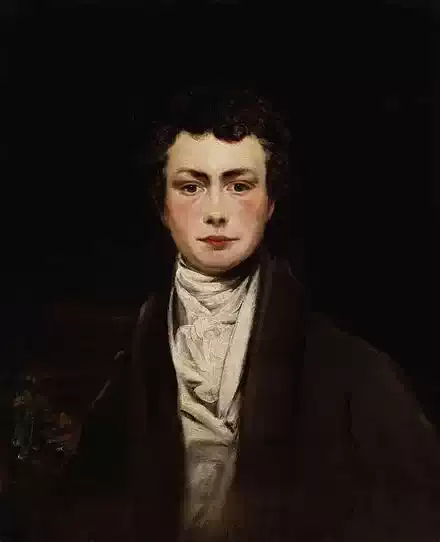
Thomas Moore
An Incantation
Come with me, and we will blow
Lots of bubbles, as we go;
Bubbles bright as ever Hope
Drew from fancy -- or from soap;
Bright as e'er the South Sea sent
from its frothy element!
Come with me, and we will blow
Lots of bubbles, as we go.
Mix the lather, Johnny W--lks,
Thou, who rhym'st so well to bilks;
Mix the lather - who can be
Fitter for such task than thee,
Great M.P. for Sudsbury!
For the frothy charm is ripe,
Puffing Peter bring thy pipe, --
Thou, whom ancient Coventry,
Once so dearly lov'd, that she
Knew not which to her was sweeter,
Peeping Tom or Puffing Peter; --
Puff the bubbles high in air,
Puff thy best to keep them there.
Bravo, bravo, Peter M--re!
Now the rainbow humbugs soar,
Glitt'ring all with golden hues,
Such as haunt the dreams of Jews; --
Some reflecting mines that lie
Under Chili's glowing sky,
Some, those virgin pearls that sleep
Cloister'd in the southern deep;
Others, as if lent a ray
Form the streaming Milky Way,
Glist'ning o'er with curds and whey
From the cows of Alderney.
Now's the moment -- who shall first
Catch the buble, ere they burst?
Run, ye Squires, ye Viscounts, run,
Br-gd-n, T-ynh-m, P-lm-t-n; --
John W--lks junior runs beside ye!
Take the good the knaves provide ye!
See, with upturn'd eyes and hands,
Where the Shareman, Bri-gd-n, stands,
Gaping for the froth to fall
Down his gullet - lye and all.
See!---But hark my time is out --
Now, like some great water-spout,
Scaterr'd by the cannon's thunder,
Burst, ye bubbles, burst asunder!
251
Robert W. Service
Apollo Belvedere
A-sitttin' on a cracker box an' spittin' in the stove,
I took a sudden notion that I'd kindo' like to rove;
An' so I bought a ticket, jest as easy as could be,
From Pumpkinville in Idaho to Rome in Italy;
An' found myself in seven days of mostly atmosphere
A-starin' at a statoo called Appoller Belvydeer.
Now I'm a rum-soaked sinner, an' religion ain't my plan,
Yet, I was flabbergasted by that gol-darned Vattyican;
An' when I seed Saint Peter's dome, all I could do was swear,
The which I reckon after all may be a form o' prayer;
Abut as I sought amid them sights bewildered to steer,
The king-pin was the one they called Appoller Belvydeer.
Say, I ain't got no culture an' I don't know any art,
But that there statoo got me, standin' in its room apart,
In an alcove draped wi' velvet, lookin' everlastin' bright,
Like the vision o' a poet, full o' beauty, grace an' light;
An' though I know them kind o' words sound sissy in the ear,
It's jest how I was struck by that Appoller Belvydeer.
I've gazed at them depictions in the glossy magazines,
Uv modern Art an' darned if I can make out what it means:
Will any jerk to-day outstand a thousand years of test?
Why, them old Pagans make us look like pikers at the best.
An' maybe, too, their minds was jest as luminous and clear
As that immortal statoo o' Appoller Belvydeer.
An' all yer march o' progress an' machinery as' such,
I wonder if, when all is said, they add up to so much?
An' were not these old fellers in their sweet an' simple way
Serener souled an' happier than we poor mugs to-day?
They have us licked, I thought, an' stood wi' mingled gloom an' cheer
Before that starry statoo o' Appoller Belvydeer.
So I'll go back to Pumpkinville an' to my humble home,
An' dream o' all the sights I saw in everlastin' Rome;
But I will never speak a word o' that enchanted land
That taks you bang into the Past - folks wouldn't understand;
An' midmost in my memories I'll cherish close an' dear
That bit o' frozen music, that Appoller Belvydeer.
249
Robert W. Service
L'Escargot D'Or
O Tavern of the Golden Snail!
Ten sous have I, so I'll regale;
Ten sous your amber brew to sip
(Eight for the bock and two the tip),
And so I'll sit the evening long,
And smoke my pipe and watch the throng,
The giddy crowd that drains and drinks,
I'll watch it quiet as a sphinx;
And who among them all shall buy
For ten poor sous such joy as I?
As I who, snugly tucked away,
Look on it all as on a play,
A frolic scene of love and fun,
To please an audience of One.
O Tavern of the Golden Snail!
You've stuff indeed for many a tale.
All eyes, all ears, I nothing miss:
Two lovers lean to clasp and kiss;
The merry students sing and shout,
The nimble garcons dart about;
Lo! here come Mimi and Musette
With: "S'il vous plait, une cigarette?"
Marcel and Rudolf, Shaunard too,
Behold the old rapscallion crew,
With flowing tie and shaggy head . . .
Who says Bohemia is dead?
Oh shades of Murger! prank and clown,
And I will watch and write it down.
O Tavern of the Golden Snail!
What crackling throats have gulped your ale!
What sons of Fame from far and near
Have glowed and mellowed in your cheer!
Within this corner where I sit
Banville and Coppée clashed their wit;
And hither too, to dream and drain,
And drown despair, came poor Verlaine.
Here Wilde would talk and Synge would muse,
Maybe like me with just ten sous.
Ah! one is lucky, is one not?
With ghosts so rare to drain a pot!
So may your custom never fail,
O Tavern of the Golden Snail!
245
Phillis Wheatley
To Maecenas
MAECENAS, you, beneath the myrtle shade,
Read o'er what poets sung, and shepherds play'd.
What felt those poets but you feel the same?
Does not your soul possess the sacred flame?
Their noble strains your equal genius shares
In softer language, and diviner airs.
While Homer paints, lo! circumfus'd in air,
Celestial Gods in mortal forms appear;
Swift as they move hear each recess rebound,
Heav'n quakes, earth trembles, and the shores resound.
Great Sire of verse, before my mortal eyes,
The lightnings blaze across the vaulted skies,
And, as the thunder shakes the heav'nly plains,
A deep felt horror thrills through all my veins.
When gentler strains demand thy graceful song,
The length'ning line moves languishing along.
When great Patroclus courts Achilles' aid,
The grateful tribute of my tears is paid;
Prone on the shore he feels the pangs of love,
And stern Pelides tend'rest passions move.
Great Maro's strain in heav'nly numbers flows,
The Nine inspire, and all the bosom glows.
O could I rival thine and Virgil's page,
Or claim the Muses with the Mantuan Sage;
Soon the same beauties should my mind adorn,
And the same ardors in my soul should burn:
Then should my song in bolder notes arise,
And all my numbers pleasingly surprise;
But here I sit, and mourn a grov'ling mind,
That fain would mount, and ride upon the wind.
Not you, my friend, these plaintive strains become,
Not you, whose bosom is the Muses home;
When they from tow'ring Helicon retire,
They fan in you the bright immortal fire,
But I less happy, cannot raise the song,
The fault'ring music dies upon my tongue.
The happier Terence* all the choir inspir'd,
His soul replenish'd, and his bosom fir'd;
But say, ye Muses, why this partial grace,
To one alone of Afric's sable race;
From age to age transmitting thus his name
With the finest glory in the rolls of fame?
Thy virtues, great Maecenas! shall be sung
In praise of him, from whom those virtues sprung:
While blooming wreaths around thy temples spread,
I'll snatch a laurel from thine honour'd head,
While you indulgent smile upon the deed.
*He was an African by birth.
As long as Thames in streams majestic flows,
Or Naiads in their oozy beds repose
While Phoebus reigns above the starry train
While bright Aurora purples o'er the main,
So long, great Sir, the muse thy praise shall sing,
So long thy praise shal' make Parnassus ring:
Then grant, Maecenas, thy paternal rays,
Hear me propitious, and defend my lays.
242
James Whitcomb Riley
Orlie Wilde
A goddess, with a siren's grace,--
A sun-haired girl on a craggy place
Above a bay where fish-boats lay
Drifting about like birds of prey.
Wrought was she of a painter's dream,--
Wise only as are artists wise,
My artist-friend, Rolf Herschkelhiem,
With deep sad eyes of oversize,
And face of melancholy guise.
I pressed him that he tell to me
This masterpiece's history.
He turned--REturned--and thus beguiled
Me with the tale of Orlie Wilde:-
"We artists live ideally:
We breed our firmest facts of air;
We make our own reality--
We dream a thing and it is so.
The fairest scenes we ever see
Are mirages of memory;
The sweetest thoughts we ever know
We plagiarize from Long Ago:
And as the girl on canvas there
Is marvelously rare and fair,
'Tis only inasmuch as she
Is dumb and may not speak to me!"
He tapped me with his mahlstick--then
The picture,--and went on again:
"Orlie Wilde, the fisher's child--
I see her yet, as fair and mild
As ever nursling summer day
Dreamed on the bosom of the bay:
For I was twenty then, and went
Alone and long-haired--all content
With promises of sounding name
And fantasies of future fame,
And thoughts that now my mind discards
As editor a fledgling bard's.
"At evening once I chanced to go,
With pencil and portfolio,
Adown the street of silver sand
That winds beneath this craggy land,
To make a sketch of some old scurf
Of driftage, nosing through the surf
A splintered mast, with knarl and strand
Of rigging-rope and tattered threads
Of flag and streamer and of sail
That fluttered idly in the gale
Or whipped themselves to sadder shreds.
The while I wrought, half listlessly,
On my dismantled subject, came
A sea-bird, settling on the same
With plaintive moan, as though that he
Had lost his mate upon the sea;
And--with my melancholy trend--
It brought dim dreams half understood--
It wrought upon my morbid mood,--
I thought of my own voyagings
That had no end--that have no end.--
And, like the sea-bird, I made moan
That I was loveless and alone.
And when at last with weary wings
It went upon its wanderings,
With upturned face I watched its flight
Until this picture met my sight:
A goddess, with a siren's grace,--
A sun-haired girl on a craggy place
Above a bay where fish-boats lay
Drifting about like birds of prey.
"In airy poise she, gazing, stood
A machless form of womanhood,
That brought a thought that if for me
Such eyes had sought across the sea,
I could have swum the widest tide
That ever mariner defied,
And, at the shore, could on have gone
To that high crag she stood upon,
To there entreat and say, 'My Sweet,
Behold thy servant at thy feet.'
And to my soul I said: 'Above,
There stands the idol of thy love!'
"In this rapt, awed, ecstatic state
I gazed--till lo! I was aware
A fisherman had joined her there--
A weary man, with halting gait,
Who toiled beneath a basket's weight:
Her father, as I guessed, for she
Had run to meet him gleefully
And ta'en his burden to herself,
That perched upon her shoulder's shelf
So lightly that she, tripping, neared
A jutting crag and disappeared;
But she left the echo of a song
That thrills me yet, and will as long
As I have being! . . .
. . . "Evenings came
And went,--but each the same--the same:
She watched above, and even so
I stood there watching from below;
Till, grown so bold at last, I sung,-(
What matter now the theme thereof!)--
It brought an answer from her tongue--
Faint as the murmur of a dove,
Yet all the more the song of love. . . .
"I turned and looked upon the bay,
With palm to forehead--eyes a-blur
In the sea's smile--meant but for her!--
I saw the fish-boats far away
In misty distance, lightly drawn
In chalk-dots on the horizon--
Looked back at her, long, wistfully;--
And, pushing off an empty skiff,
I beckoned her to quit the cliff
And yield me her rare company
Upon a little pleasure-cruise.--
She stood, as loathful to refuse,
To muse for full a moment's time,--
Then answered back in pantomime
'She feared some danger from the sea
Were she discovered thus with me.'
I motioned then to ask her if
I might not join her on the cliff
And back again, with graceful wave
Of lifted arm, she anwer gave
'She feared some danger from the sea.'
"Impatient, piqued, impetuous, I
Sprang in the boat, and flung 'Good-by'
From pouted mouth with angry hand,
And madly pulled away from land
With lusty stroke, despite that she
Held out her hands entreatingly:
And when far out, with covert eye
I shoreward glanced, I saw her fly
In reckless haste adown the crag,
Her hair a-flutter like a flag
Of gold that danced across the strand
In little mists of silver sand.
All curious I, pausing, tried
To fancy what it all implied,--
When suddenly I found my feet
Were wet; and, underneath the seat
On which I sat, I heard the sound
Of gurgling waters, and I found
The boat aleak alarmingly. . . .
I turned and looked upon the sea,
Whose every wave seemed mocking me;
I saw the fishers' sails once more--
In dimmer distance than before;
I saw the sea-bird wheeling by,
With foolish wish that _I_ could fly:
I thought of firm earth, home and friends--
I thought of everything that tends
To drive a man to frenzy and
To wholly lose his own command;
I thought of all my waywardness--
Thought of a mother's deep distress;
Of youthful follies yet unpurged--
Sins, as the seas, about me surged--
Thought of the printer's ready pen
To-morrow drowning me again;--
A million things without a name--
I thought of everything but--Fame. . . .
"A memory yet is in my mind,
So keenly clear and sharp-defined,
I picture every phase and line
Of life and death, and neither mine,--
While some fair seraph, golden-haired,
Bends over me,--with white arms bared,
That strongly plait themselves about
My drowning weight and lift me out--
With joy too great for words to state
Or tongue to dare articulate!
"And this seraphic ocean-child
And heroine was Orlie Wilde:
And thus it was I came to hear
Her voice's music in my ear--
Ay, thus it was Fate paved the way
That I walk desolate to-day!" . . .
The artist paused and bowed his face
Within his palms a little space,
While reverently on his form
I bent my gaze and marked a storm
That shook his frame as wrathfully
As some typhoon of agony,
And fraught with sobs--the more profound
For that peculiar laughing sound
We hear when strong men weep. . . . I leant
With warmest sympathy--I bent
To stroke with soothing hand his brow,
He murmuring--"Tis over now!--
And shall I tie the silken thread
Of my frail romance?" "Yes," I said.--
He faintly smiled; and then, with brow
In kneading palm, as one in dread-
His tasseled cap pushed from his head
" 'Her voice's music,' I repeat,"
He said,--" 'twas sweet--O passing sweet!--
Though she herself, in uttering
Its melody, proved not the thing
Of loveliness my dreams made meet
For me--there, yearning, at her feet--
Prone at her feet--a worshiper,--
For lo! she spake a tongue," moaned he,
"Unknown to me;--unknown to me
As mine to her--as mine to her."
A sun-haired girl on a craggy place
Above a bay where fish-boats lay
Drifting about like birds of prey.
Wrought was she of a painter's dream,--
Wise only as are artists wise,
My artist-friend, Rolf Herschkelhiem,
With deep sad eyes of oversize,
And face of melancholy guise.
I pressed him that he tell to me
This masterpiece's history.
He turned--REturned--and thus beguiled
Me with the tale of Orlie Wilde:-
"We artists live ideally:
We breed our firmest facts of air;
We make our own reality--
We dream a thing and it is so.
The fairest scenes we ever see
Are mirages of memory;
The sweetest thoughts we ever know
We plagiarize from Long Ago:
And as the girl on canvas there
Is marvelously rare and fair,
'Tis only inasmuch as she
Is dumb and may not speak to me!"
He tapped me with his mahlstick--then
The picture,--and went on again:
"Orlie Wilde, the fisher's child--
I see her yet, as fair and mild
As ever nursling summer day
Dreamed on the bosom of the bay:
For I was twenty then, and went
Alone and long-haired--all content
With promises of sounding name
And fantasies of future fame,
And thoughts that now my mind discards
As editor a fledgling bard's.
"At evening once I chanced to go,
With pencil and portfolio,
Adown the street of silver sand
That winds beneath this craggy land,
To make a sketch of some old scurf
Of driftage, nosing through the surf
A splintered mast, with knarl and strand
Of rigging-rope and tattered threads
Of flag and streamer and of sail
That fluttered idly in the gale
Or whipped themselves to sadder shreds.
The while I wrought, half listlessly,
On my dismantled subject, came
A sea-bird, settling on the same
With plaintive moan, as though that he
Had lost his mate upon the sea;
And--with my melancholy trend--
It brought dim dreams half understood--
It wrought upon my morbid mood,--
I thought of my own voyagings
That had no end--that have no end.--
And, like the sea-bird, I made moan
That I was loveless and alone.
And when at last with weary wings
It went upon its wanderings,
With upturned face I watched its flight
Until this picture met my sight:
A goddess, with a siren's grace,--
A sun-haired girl on a craggy place
Above a bay where fish-boats lay
Drifting about like birds of prey.
"In airy poise she, gazing, stood
A machless form of womanhood,
That brought a thought that if for me
Such eyes had sought across the sea,
I could have swum the widest tide
That ever mariner defied,
And, at the shore, could on have gone
To that high crag she stood upon,
To there entreat and say, 'My Sweet,
Behold thy servant at thy feet.'
And to my soul I said: 'Above,
There stands the idol of thy love!'
"In this rapt, awed, ecstatic state
I gazed--till lo! I was aware
A fisherman had joined her there--
A weary man, with halting gait,
Who toiled beneath a basket's weight:
Her father, as I guessed, for she
Had run to meet him gleefully
And ta'en his burden to herself,
That perched upon her shoulder's shelf
So lightly that she, tripping, neared
A jutting crag and disappeared;
But she left the echo of a song
That thrills me yet, and will as long
As I have being! . . .
. . . "Evenings came
And went,--but each the same--the same:
She watched above, and even so
I stood there watching from below;
Till, grown so bold at last, I sung,-(
What matter now the theme thereof!)--
It brought an answer from her tongue--
Faint as the murmur of a dove,
Yet all the more the song of love. . . .
"I turned and looked upon the bay,
With palm to forehead--eyes a-blur
In the sea's smile--meant but for her!--
I saw the fish-boats far away
In misty distance, lightly drawn
In chalk-dots on the horizon--
Looked back at her, long, wistfully;--
And, pushing off an empty skiff,
I beckoned her to quit the cliff
And yield me her rare company
Upon a little pleasure-cruise.--
She stood, as loathful to refuse,
To muse for full a moment's time,--
Then answered back in pantomime
'She feared some danger from the sea
Were she discovered thus with me.'
I motioned then to ask her if
I might not join her on the cliff
And back again, with graceful wave
Of lifted arm, she anwer gave
'She feared some danger from the sea.'
"Impatient, piqued, impetuous, I
Sprang in the boat, and flung 'Good-by'
From pouted mouth with angry hand,
And madly pulled away from land
With lusty stroke, despite that she
Held out her hands entreatingly:
And when far out, with covert eye
I shoreward glanced, I saw her fly
In reckless haste adown the crag,
Her hair a-flutter like a flag
Of gold that danced across the strand
In little mists of silver sand.
All curious I, pausing, tried
To fancy what it all implied,--
When suddenly I found my feet
Were wet; and, underneath the seat
On which I sat, I heard the sound
Of gurgling waters, and I found
The boat aleak alarmingly. . . .
I turned and looked upon the sea,
Whose every wave seemed mocking me;
I saw the fishers' sails once more--
In dimmer distance than before;
I saw the sea-bird wheeling by,
With foolish wish that _I_ could fly:
I thought of firm earth, home and friends--
I thought of everything that tends
To drive a man to frenzy and
To wholly lose his own command;
I thought of all my waywardness--
Thought of a mother's deep distress;
Of youthful follies yet unpurged--
Sins, as the seas, about me surged--
Thought of the printer's ready pen
To-morrow drowning me again;--
A million things without a name--
I thought of everything but--Fame. . . .
"A memory yet is in my mind,
So keenly clear and sharp-defined,
I picture every phase and line
Of life and death, and neither mine,--
While some fair seraph, golden-haired,
Bends over me,--with white arms bared,
That strongly plait themselves about
My drowning weight and lift me out--
With joy too great for words to state
Or tongue to dare articulate!
"And this seraphic ocean-child
And heroine was Orlie Wilde:
And thus it was I came to hear
Her voice's music in my ear--
Ay, thus it was Fate paved the way
That I walk desolate to-day!" . . .
The artist paused and bowed his face
Within his palms a little space,
While reverently on his form
I bent my gaze and marked a storm
That shook his frame as wrathfully
As some typhoon of agony,
And fraught with sobs--the more profound
For that peculiar laughing sound
We hear when strong men weep. . . . I leant
With warmest sympathy--I bent
To stroke with soothing hand his brow,
He murmuring--"Tis over now!--
And shall I tie the silken thread
Of my frail romance?" "Yes," I said.--
He faintly smiled; and then, with brow
In kneading palm, as one in dread-
His tasseled cap pushed from his head
" 'Her voice's music,' I repeat,"
He said,--" 'twas sweet--O passing sweet!--
Though she herself, in uttering
Its melody, proved not the thing
Of loveliness my dreams made meet
For me--there, yearning, at her feet--
Prone at her feet--a worshiper,--
For lo! she spake a tongue," moaned he,
"Unknown to me;--unknown to me
As mine to her--as mine to her."
242
Robert W. Service
Artist
He gave a picture exhibition,
Hiring a little empty shop.
Above its window: FREE ADMISSION
Cajoled the passers-by to stop;
Just to admire - no need to purchase,
Although his price might have been low:
But no proud artist ever urges
Potential buyers at his show.
Of course he badly needed money,
But more he needed moral aid.
Some people thought his pictures funny,
Too ultra-modern, I'm afraid.
His painting was experimental,
Which no poor artist can afford-
That is, if he would pay the rental
And guarantee his roof and board.
And so some came and saw and sniggered,
And some a puzzled brow would crease;
And some objected: "Well, I'm jiggered!"
What price Picasso and Matisse?
The artist sensitively quivered,
And stifled many a bitter sigh,
But day by day his hopes were shivered
For no one ever sought to buy.
And then he had a brilliant notion:
Half of his daubs he labeled: SOLD.
And lo! he viewed with queer emotion
A public keen and far from cold.
Then (strange it is beyond the telling),
He saw the people round him press:
His paintings went - they still are selling...
Well, nothing succeeds like success.
239
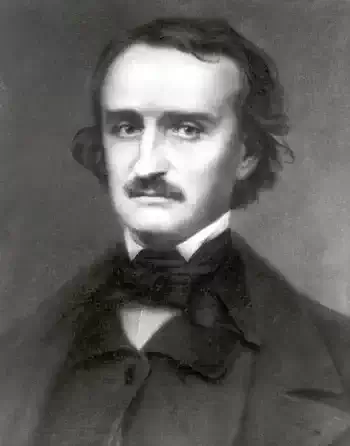
Edgar Allan Poe
To The River --
Fair river! in thy bright, clear flow
Of crystal, wandering water,
Thou art an emblem of the glow
Of beauty- the unhidden heart
The
playful maziness of art
In old Alberto's daughter;
But when within thy wave she looks
Which
glistens then, and trembles
Why,
then, the prettiest of brooks
Her worshipper resembles;
For in his heart, as in thy stream,
Her image deeply lies
His
heart which trembles at the beam
Of her soul-searching eyes.
238
Robert W. Service
My Chapel
In idle dream with pipe in hand
I looked across the Square,
And saw the little chapel stand
In eloquent despair.
A ruin of the War it was,
A dreary, dingy mess:
It worried me a lot because
My hobby's happiness.
The shabby Priest said: 'You are kind.
Time leaves us on the lurch,
And there are very few who mind
Their duty to the Church.
But with this precious sum you give,
I'll make it like a gem;
Poor folks will come, our altar live
To comfort them.'
So now my chapel of despair
Is full of joy and song;
I watch the humble go to prayer
Although I don't belong.
An artist and agnostic I
Possess but little pelf;
But oh what blessings it can buy
Them--and myself!
236

Ogden Nash
The Clean Plater
Some singers sing of ladies' eyes,
And some of ladies lips,
Refined ones praise their ladylike ways,
And course ones hymn their hips.
The Oxford Book of English Verse
Is lush with lyrics tender;
A poet, I guess, is more or less
Preoccupied with gender.
Yet I, though custom call me crude,
Prefer to sing in praise of food.
Food,
Yes, food,
Just any old kind of food.
Pheasant is pleasant, of course,
And terrapin, too, is tasty,
Lobster I freely endorse,
In pate or patty or pasty.
But there's nothing the matter with butter,
And nothing the matter with jam,
And the warmest greetings I utter
To the ham and the yam and the clam.
For they're food,
All food,
And I think very fondly of food.
Through I'm broody at times
When bothered by rhymes,
I brood
On food.
Some painters paint the sapphire sea,
And some the gathering storm.
Others portray young lambs at play,
But most, the female form.
“Twas trite in that primeval dawn
When painting got its start,
That a lady with her garments on
Is Life, but is she Art?
By undraped nymphs
I am not wooed;
I'd rather painters painted food.
Food,
Just food,
Just any old kind of food.
Go purloin a sirloin, my pet,
If you'd win a devotion incredible;
And asparagus tips vinaigrette,
Or anything else that is edible.
Bring salad or sausage or scrapple,
A berry or even a beet.
Bring an oyster, an egg, or an apple,
As long as it's something to eat.
If it's food,
It's food;
Never mind what kind of food.
When I ponder my mind
I consistently find
It is glued
On food.
234
Henry Lawson
Australian Bards And Bush Reviewers
While you use your best endeavour to immortalise in verse
The gambling and the drink which are your country's greatest curse,
While you glorify the bully and take the spieler's part -You're
a clever southern writer, scarce inferior to Bret Harte.
If you sing of waving grasses when the plains are dry as bricks,
And discover shining rivers where there's only mud and sticks;
If you picture `mighty forests' where the mulga spoils the view -You're
superior to Kendall, and ahead of Gordon too.
If you swear there's not a country like the land that gave you birth,
And its sons are just the noblest and most glorious chaps on earth;
If in every girl a Venus your poetic eye discerns,
You are gracefully referred to as the `young Australian Burns'.
But if you should find that bushmen -- spite of all the poets say --
Are just common brother-sinners, and you're quite as good as they -You're
a drunkard, and a liar, and a cynic, and a sneak,
Your grammar's simply awful and your intellect is weak.
233
John Greenleaf Whittier
Raphael
I shall not soon forget that sight
The glow of Autumn's westering day,
A hazy warmth, a dreamy light,
On Raphael's picture lay.
It was a simple print I saw,
The fair face of a musing boy;
Yet, while I gazed, a sense of awe
Seemed blending with my joy.
A simple print,--the graceful flow
Of boyhood's soft and wavy hair,
And fresh young lip and cheek, and brow
Unmarked and clear, were there.
Yet through its sweet and calm repose
I saw the inward spirit shine;
It was as if before me rose
The white veil of a shrine.
As if, as Gothland's sage has told,
The hidden life, the man within,
Dissevered from its frame and mould,
By mortal eye were seen.
Was it the lifting of that eye,
The waving of that pictured hand?
Loose as a cloud-wreath on the sky,
I saw the walls expand.
The narrow room had vanished,--space,
Broad, luminous, remained alone,
Through which all hues and shapes of grace
And beauty looked or shone.
Around the mighty master came
The marvels which his pencil wrought,
Those miracles of power whose fame
Is wide as human thought.
There drooped thy more than mortal face,
O Mother, beautiful and mild
Enfolding in one dear embrace
Thy Saviour and thy Child!
The rapt brow of the Desert John;
The awful glory of that day
When all the Father's brightness shone
Through manhood's veil of clay.
And, midst gray prophet forms, and wild
Dark visions of the days of old,
How sweetly woman's beauty smiled
Through locks of brown and gold!
There Fornarina's fair young face
Once more upon her lover shone,
Whose model of an angel's grace
He borrowed from her own.
Slow passed that vision from my view,
But not the lesson which it taught;
The soft, calm shadows which it threw
Still rested on my thought:
The truth, that painter, bard, and sage,
Even in Earth's cold and changeful clime,
Plant for their deathless heritage
The fruits and flowers of time.
We shape ourselves the joy or fear
Of which the coming life is made,
And fill our Future's atmosphere
With sunshine or with shade.
The tissue of the Life to be
We weave with colors all our own,
And in the field of Destiny
We reap as we have sown.
Still shall the soul around it call
The shadows which it gathered here,
And, painted on the eternal wall,
The Past shall reappear.
Think ye the notes of holy song
On Milton's tuneful ear have died?
Think ye that Raphael's angel throng
Has vanished from his side?
Oh no!--We live our life again;
Or warmly touched, or coldly dim,
The pictures of the Past remain,--Man's
works shall follow him!
232
Robert W. Service
Toilet Seats
While I am emulating Keats
My brother fabrics toilet seats,
The which, they say, are works of art,
Aesthetic features of the mart;
So exquisitely are they made
With plastic of a pastel shade,
Of topaz, ivory or rose,
Inviting to serene repose.
Rajahs I'm told have seats of gold,-(
They must, I fear, be very cold).
But Tom's have thermostatic heat,
With sympathy your grace to greet.
Like silver they are neon lit,
Making a halo as you sit:
Then lo! they play with dulset tone
A melody by Mendelssohn.
Oh were I lyrical as Yeats
I would not sing of toilet seats,
But rather serenade a star,--
Yet I must take things as they are.
For even kings must coyly own
Them as essential as a throne:
So as I tug the Muse's teats
I envy Tom his toilet seats.
232
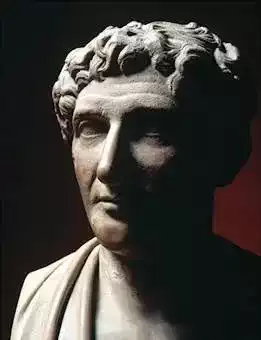
Ovídio
Metamorphoses: Book The Sixth
PALLAS, attending to the Muse's song,
Approv'd the just resentment of their wrong;
And thus reflects: While tamely I commend
Those who their injur'd deities defend,
My own divinity affronted stands,
And calls aloud for justice at my hands;
Then takes the hint, asham'd to lag behind,
And on Arachne' bends her vengeful mind;
One at the loom so excellently skill'd,
That to the Goddess she refus'd to yield.
The Low was her birth, and small her native town,
Transformation She from her art alone obtain'd renown.
of Arachne Idmon, her father, made it his employ,
into a Spider To give the spungy fleece a purple dye:
Of vulgar strain her mother, lately dead,
With her own rank had been content to wed;
Yet she their daughter, tho' her time was spent
In a small hamlet, and of mean descent,
Thro' the great towns of Lydia gain'd a name,
And fill'd the neighb'ring countries with her fame.
Oft, to admire the niceness of her skill,
The Nymphs would quit their fountain, shade, or
hill:
Thither, from green Tymolus, they repair,
And leave the vineyards, their peculiar care;
Thither, from fam'd Pactolus' golden stream,
Drawn by her art, the curious Naiads came.
Nor would the work, when finish'd, please so much,
As, while she wrought, to view each graceful touch;
Whether the shapeless wool in balls she wound,
Or with quick motion turn'd the spindle round,
Or with her pencil drew the neat design,
Pallas her mistress shone in every line.
This the proud maid with scornful air denies,
And ev'n the Goddess at her work defies;
Disowns her heav'nly mistress ev'ry hour,
Nor asks her aid, nor deprecates her pow'r.
Let us, she cries, but to a tryal come,
And, if she conquers, let her fix my doom.
The Goddess then a beldame's form put on,
With silver hairs her hoary temples shone;
Prop'd by a staff, she hobbles in her walk,
And tott'ring thus begins her old wives' talk.
Young maid attend, nor stubbornly despise
The admonitions of the old, and wise;
For age, tho' scorn'd, a ripe experience bears,
That golden fruit, unknown to blooming years:
Still may remotest fame your labours crown,
And mortals your superior genius own;
But to the Goddess yield, and humbly meek
A pardon for your bold presumption seek;
The Goddess will forgive. At this the maid,
With passion fir'd, her gliding shuttle stay'd;
And, darting vengeance with an angry look,
To Pallas in disguise thus fiercely spoke.
Thou doating thing, whose idle babling tongue
But too well shews the plague of living long;
Hence, and reprove, with this your sage advice,
Your giddy daughter, or your aukward neice;
Know, I despise your counsel, and am still
A woman, ever wedded to my will;
And, if your skilful Goddess better knows,
Let her accept the tryal I propose.
She does, impatient Pallas strait replies,
And, cloath'd with heavenly light, sprung from her
odd disguise.
The Nymphs, and virgins of the plain adore
The awful Goddess, and confess her pow'r;
The maid alone stood unappall'd; yet show'd
A transient blush, that for a moment glow'd,
Then disappear'd; as purple streaks adorn
The opening beauties of the rosy morn;
Till Phoebus rising prevalently bright,
Allays the tincture with his silver light.
Yet she persists, and obstinately great,
In hopes of conquest hurries on her fate.
The Goddess now the challenge waves no more,
Nor, kindly good, advises as before.
Strait to their posts appointed both repair,
And fix their threaded looms with equal care:
Around the solid beam the web is ty'd,
While hollow canes the parting warp divide;
Thro' which with nimble flight the shuttles play,
And for the woof prepare a ready way;
The woof and warp unite, press'd by the toothy
slay.
Thus both, their mantles button'd to their
breast,
Their skilful fingers ply with willing haste,
And work with pleasure; while they chear the eye
With glowing purple of the Tyrian dye:
Or, justly intermixing shades with light,
Their colourings insensibly unite.
As when a show'r transpierc'd with sunny rays,
Its mighty arch along the heav'n displays;
From whence a thousand diff'rent colours rise,
Whose fine transition cheats the clearest eyes;
So like the intermingled shading seems,
And only differs in the last extreams.
Then threads of gold both artfully dispose,
And, as each part in just proportion rose,
Some antique fable in their work disclose.
Pallas in figures wrought the heav'nly Pow'rs,
And Mars's hill among th' Athenian tow'rs.
On lofty thrones twice six celestials sate,
Jove in the midst, and held their warm debate;
The subject weighty, and well-known to fame,
From whom the city shou'd receive its name.
Each God by proper features was exprest,
Jove with majestick mein excell'd the rest.
His three-fork'd mace the dewy sea-God shook,
And, looking sternly, smote the ragged rock;
When from the stone leapt forth a spritely steed,
And Neptune claims the city for the deed.
Herself she blazons, with a glitt'ring spear,
And crested helm that veil'd her braided hair,
With shield, and scaly breast-plate, implements of
war.
Struck with her pointed launce, the teeming Earth
Seem'd to produce a new surprizing birth;
When, from the glebe, the pledge of conquest
sprung,
A tree pale-green with fairest olives hung.
And then, to let her giddy rival learn
What just rewards such boldness was to earn,
Four tryals at each corner had their part,
Design'd in miniature, and touch'd with art.
Haemus in one, and Rodope of Thrace
Transform'd to mountains, fill'd the foremost
place;
Who claim'd the titles of the Gods above,
And vainly us'd the epithets of Jove.
Another shew'd, where the Pigmaean dame,
Profaning Juno's venerable name,
Turn'd to an airy crane, descends from far,
And with her Pigmy subjects wages war.
In a third part, the rage of Heav'n's great queen,
Display'd on proud Antigone, was seen:
Who with presumptuous boldness dar'd to vye,
For beauty with the empress of the sky.
Ah! what avails her ancient princely race,
Her sire a king, and Troy her native place:
Now, to a noisy stork transform'd, she flies,
And with her whiten'd pinions cleaves the skies.
And in the last remaining part was drawn
Poor Cinyras that seem'd to weep in stone;
Clasping the temple steps, he sadly mourn'd
His lovely daughters, now to marble turn'd.
With her own tree the finish'd piece is crown'd,
And wreaths of peaceful olive all the work
surround.
Arachne drew the fam'd intrigues of Jove,
Chang'd to a bull to gratify his love;
How thro' the briny tide all foaming hoar,
Lovely Europa on his back he bore.
The sea seem'd waving, and the trembling maid
Shrunk up her tender feet, as if afraid;
And, looking back on the forsaken strand,
To her companions wafts her distant hand.
Next she design'd Asteria's fabled rape,
When Jove assum'd a soaring eagle's shape:
And shew'd how Leda lay supinely press'd,
Whilst the soft snowy swan sate hov'ring o'er her
breast,
How in a satyr's form the God beguil'd,
When fair Antiope with twins he fill'd.
Then, like Amphytrion, but a real Jove,
In fair Alcmena's arms he cool'd his love.
In fluid gold to Danae's heart he came,
Aegina felt him in a lambent flame.
He took Mnemosyne in shepherd's make,
And for Deois was a speckled snake.
She made thee, Neptune, like a wanton steer,
Pacing the meads for love of Arne dear;
Next like a stream, thy burning flame to slake,
And like a ram, for fair Bisaltis' sake.
Then Ceres in a steed your vigour try'd,
Nor cou'd the mare the yellow Goddess hide.
Next, to a fowl transform'd, you won by force
The snake-hair'd mother of the winged horse;
And, in a dolphin's fishy form, subdu'd
Melantho sweet beneath the oozy flood.
All these the maid with lively features drew,
And open'd proper landskips to the view.
There Phoebus, roving like a country swain,
Attunes his jolly pipe along the plain;
For lovely Isse's sake in shepherd's weeds,
O'er pastures green his bleating flock he feeds,
There Bacchus, imag'd like the clust'ring grape,
Melting bedrops Erigone's fair lap;
And there old Saturn, stung with youthful heat,
Form'd like a stallion, rushes to the feat.
Fresh flow'rs, which twists of ivy intertwine,
Mingling a running foliage, close the neat design.
This the bright Goddess passionately mov'd,
With envy saw, yet inwardly approv'd.
The scene of heav'nly guilt with haste she tore,
Nor longer the affront with patience bore;
A boxen shuttle in her hand she took,
And more than once Arachne's forehead struck.
Th' unhappy maid, impatient of the wrong,
Down from a beam her injur'd person hung;
When Pallas, pitying her wretched state,
At once prevented, and pronounc'd her fate:
Live; but depend, vile wretch, the Goddess cry'd,
Doom'd in suspence for ever to be ty'd;
That all your race, to utmost date of time,
May feel the vengeance, and detest the crime.
Then, going off, she sprinkled her with juice,
Which leaves of baneful aconite produce.
Touch'd with the pois'nous drug, her flowing hair
Fell to the ground, and left her temples bare;
Her usual features vanish'd from their place,
Her body lessen'd all, but most her face.
Her slender fingers, hanging on each side
With many joynts, the use of legs supply'd:
A spider's bag the rest, from which she gives
A thread, and still by constant weaving lives.
The Story of Swift thro' the Phrygian towns the rumour flies,
Niobe And the strange news each female tongue employs:
Niobe, who before she married knew
The famous nymph, now found the story true;
Yet, unreclaim'd by poor Arachne's fate,
Vainly above the Gods assum'd a state.
Her husband's fame, their family's descent,
Their pow'r, and rich dominion's wide extent,
Might well have justify'd a decent pride;
But not on these alone the dame rely'd.
Her lovely progeny, that far excell'd,
The mother's heart with vain ambition swell'd:
The happiest mother not unjustly styl'd,
Had no conceited thoughts her tow'ring fancy
fill'd.
For once a prophetess with zeal inspir'd,
Their slow neglect to warm devotion fir'd;
Thro' ev'ry street of Thebes who ran possess'd,
And thus in accents wild her charge express'd:
Haste, haste, ye Theban matrons, and adore,
With hallow'd rites, Latona's mighty pow'r;
And, to the heav'nly twins that from her spring,
With laurel crown'd, your smoaking incense bring.
Strait the great summons ev'ry dame obey'd,
And due submission to the Goddess paid:
Graceful, with laurel chaplets dress'd, they came,
And offer'd incense in the sacred flame.
Mean-while, surrounded with a courtly guard,
The royal Niobe in state appear'd;
Attir'd in robes embroider'd o'er with gold,
And mad with rage, yet lovely to behold:
Her comely tresses, trembling as she stood,
Down her fine neck with easy motion flow'd;
Then, darting round a proud disdainful look,
In haughty tone her hasty passion broke,
And thus began: What madness this, to court
A Goddess, founded meerly on report?
Dare ye a poor pretended Pow'r invoke,
While yet no altars to my godhead smoke?
Mine, whose immediate lineage stands confess'd
From Tantalus, the only mortal guest
That e'er the Gods admitted to their feast.
A sister of the Pleiads gave me birth;
And Atlas, mightiest mountain upon Earth,
Who bears the globe of all the stars above,
My grandsire was, and Atlas sprung from Jove.
The Theban towns my majesty adore,
And neighb'ring Phrygia trembles at my pow'r:
Rais'd by my husband's lute, with turrets crown'd,
Our lofty city stands secur'd around.
Within my court, where-e'er I turn my eyes,
Unbounded treasures to my prospect rise:
With these my face I modestly may name,
As not unworthy of so high a claim;
Seven are my daughters, of a form divine,
With seven fair sons, an indefective line.
Go, fools! consider this; and ask the cause
From which my pride its strong presumption draws;
Consider this; and then prefer to me
Caeus the Titan's vagrant progeny;
To whom, in travel, the whole spacious Earth
No room afforded for her spurious birth.
Not the least part in Earth, in Heav'n, or seas,
Would grant your out-law'd Goddess any ease:
'Till pitying hers, from his own wand'ring case,
Delos, the floating island, gave a place.
There she a mother was, of two at most;
Only the seventh part of what I boast.
My joys all are beyond suspicion fix'd;
With no pollutions of misfortune mix'd;
Safe on the Basis of my pow'r I stand,
Above the reach of Fortune's fickle hand.
Lessen she may my inexhausted store,
And much destroy, yet still must leave me more.
Suppose it possible that some may dye
Of this my num'rous lovely progeny;
Still with Latona I might safely vye.
Who, by her scanty breed, scarce fit to name,
But just escapes the childless woman's shame.
Go then, with speed your laurel'd heads uncrown,
And leave the silly farce you have begun.
The tim'rous throng their sacred rites forbore,
And from their heads the verdant laurel tore;
Their haughty queen they with regret obey'd,
And still in gentle murmurs softly pray'd.
High, on the top of Cynthus' shady mount,
With grief the Goddess saw the base affront;
And, the abuse revolving in her breast,
The mother her twin-offspring thus addrest.
Lo I, my children, who with comfort knew
Your God-like birth, and thence my glory drew;
And thence have claim'd precedency of place
From all but Juno of the heav'nly race,
Must now despair, and languish in disgrace.
My godhead question'd, and all rites divine,
Unless you succour, banish'd from my shrine.
Nay more, the imp of Tantalus has flung
Reflections with her vile paternal tongue;
Has dar'd prefer her mortal breed to mine,
And call'd me childless; which, just fate, may she
repine!
When to urge more the Goddess was prepar'd,
Phoebus in haste replies, Too much we've heard,
And ev'ry moment's lost, while vengeance is
defer'd.
Diana spoke the same. Then both enshroud
Their heav'nly bodies in a sable cloud;
And to the Theban tow'rs descending light,
Thro' the soft yielding air direct their flight.
Without the wall there lies a champian ground
With even surface, far extending round,
Beaten and level'd, while it daily feels
The trampling horse, and chariot's grinding wheels.
Part of proud Niobe's young rival breed,
Practising there to ride the manag'd steed,
Their bridles boss'd with gold, were mounted high
On stately furniture of Tyrian dye.
Of these, Ismenos, who by birth had been
The first fair issue of the fruitful queen,
Just as he drew the rein to guide his horse,
Around the compass of the circling course,
Sigh'd deeply, and the pangs of smart express'd,
While the shaft stuck, engor'd within his breast:
And, the reins dropping from his dying hand,
He sunk quite down, and tumbled on the sand.
Sipylus next the rattling quiver heard,
And with full speed for his escape prepar'd;
As when the pilot from the black'ning skies
A gath'ring storm of wintry rain descries,
His sails unfurl'd, and crowded all with wind,
He strives to leave the threat'ning cloud behind:
So fled the youth; but an unerring dart
O'ertook him, quick discharg'd, and sped with art;
Fix'd in his neck behind, it trembling stood,
And at his throat display'd the point besmear'd
with blood
Prone, as his posture was, he tumbled o'er,
And bath'd his courser's mane with steaming gore.
Next at young Phaedimus they took their aim,
And Tantalus who bore his grandsire's name:
These, when their other exercise was done,
To try the wrestler's oily sport begun;
And, straining ev'ry nerve, their skill express'd
In closest grapple, joining breast to breast:
When from the bending bow an arrow sent,
Joyn'd as they were, thro' both their bodies went:
Both groan'd, and writhing both their limbs with
pain,
They fell together bleeding on the plain;
Then both their languid eye-balls faintly roul,
And thus together breathe away their soul.
With grief Alphenor saw their doleful plight,
And smote his breast, and sicken'd at the sight;
Then to their succour ran with eager haste,
And, fondly griev'd, their stiff'ning limbs
embrac'd;
But in the action falls: a thrilling dart,
By Phoebus guided, pierc'd him to the heart.
This, as they drew it forth, his midriff tore,
Its barbed point the fleshy fragments bore,
And let the soul gush out in streams of purple
gore.
But Damasichthon, by a double wound,
Beardless, and young, lay gasping on the ground.
Fix'd in his sinewy ham, the steely point
Stuck thro' his knee, and pierc'd the nervous
joint:
And, as he stoop'd to tug the painful dart,
Another struck him in a vital part;
Shot thro' his wezon, by the wing it hung.
The life-blood forc'd it out, and darting upward
sprung,
Ilioneus, the last, with terror stands,
Lifting in pray'r his unavailing hands;
And, ignorant from whom his griefs arise,
Spare me, o all ye heav'nly Pow'rs, he cries:
Phoebus was touch'd too late, the sounding bow
Had sent the shaft, and struck the fatal blow;
Which yet but gently gor'd his tender side,
So by a slight and easy wound he dy'd.
Swift to the mother's ears the rumour came,
And doleful sighs the heavy news proclaim;
With anger and surprize inflam'd by turns,
In furious rage her haughty stomach burns:
First she disputes th' effects of heav'nly pow'r,
Then at their daring boldness wonders more;
For poor Amphion with sore grief distrest,
Hoping to sooth his cares by endless rest,
Had sheath'd a dagger in his wretched breast.
And she, who toss'd her high disdainful head,
When thro' the streets in solemn pomp she led
The throng that from Latona's altar fled,
Assuming state beyond the proudest queen;
Was now the miserablest object seen.
Prostrate among the clay-cold dead she fell,
And kiss'd an undistinguish'd last farewel.
Then her pale arms advancing to the skies,
Cruel Latona! triumph now, she cries.
My grieving soul in bitter anguish drench,
And with my woes your thirsty passion quench;
Feast your black malice at a price thus dear,
While the sore pangs of sev'n such deaths I bear.
Triumph, too cruel rival, and display
Your conqu'ring standard; for you've won the day.
Yet I'll excel; for yet, tho' sev'n are slain,
Superior still in number I remain.
Scarce had she spoke; the bow-string's twanging
sound
Was heard, and dealt fresh terrors all around;
Which all, but Niobe alone, confound.
Stunn'd, and obdurate by her load of grief,
Insensible she sits, nor hopes relief.
Before the fun'ral biers, all weeping sad,
Her daughters stood, in vests of sable clad,
When one, surpriz'd, and stung with sudden smart,
In vain attempts to draw the sticking dart:
But to grim death her blooming youth resigns,
And o'er her brother's corpse her dying head
reclines.
This, to asswage her mother's anguish tries,
And, silenc'd in the pious action, dies;
Shot by a secret arrow, wing'd with death,
Her fault'ring lips but only gasp'd for breath.
One, on her dying sister, breathes her last;
Vainly in flight another's hopes are plac'd:
This hiding, from her fate a shelter seeks;
That trembling stands, and fills the air with
shrieks.
And all in vain; for now all six had found
Their way to death, each by a diff'rent wound.
The last, with eager care the mother veil'd,
Behind her spreading mantle close conceal'd,
And with her body guarded, as a shield.
Only for this, this youngest, I implore,
Grant me this one request, I ask no more;
O grant me this! she passionately cries:
But while she speaks, the destin'd virgin dies.
The Widow'd, and childless, lamentable state!
Transformation A doleful sight, among the dead she sate;
of Niobe Harden'd with woes, a statue of despair,
To ev'ry breath of wind unmov'd her hair;
Her cheek still red'ning, but its colour dead,
Faded her eyes, and set within her head.
No more her pliant tongue its motion keeps,
But stands congeal'd within her frozen lips.
Stagnate, and dull, within her purple veins,
Its current stop'd, the lifeless blood remains.
Her feet their usual offices refuse,
Her arms, and neck their graceful gestures lose:
Action, and life from ev'ry part are gone,
And ev'n her entrails turn to solid stone;
Yet still she weeps, and whirl'd by stormy winds,
Born thro' the air, her native country finds;
There fix'd, she stands upon a bleaky hill,
There yet her marble cheeks eternal tears distil.
The Peasants Then all, reclaim'd by this example, show'd
of Lycia A due regard for each peculiar God:
transform'd to Both men, and women their devoirs express'd,
Frogs And great Latona's awful pow'r confess'd.
Then, tracing instances of older time,
To suit the nature of the present crime,
Thus one begins his tale.- Where Lycia yields
A golden harvest from its fertile fields,
Some churlish peasants, in the days of yore,
Provok'd the Goddess to exert her pow'r.
The thing indeed the meanness of the place
Has made obscure, surprizing as it was;
But I my self once happen'd to behold
This famous lake of which the story's told.
My father then, worn out by length of days,
Nor able to sustain the tedious ways,
Me with a guide had sent the plains to roam,
And drive his well-fed stragling heifers home.
Here, as we saunter'd thro' the verdant meads,
We spy'd a lake o'er-grown with trembling reeds,
Whose wavy tops an op'ning scene disclose,
From which an antique smoaky altar rose.
I, as my susperstitious guide had done,
Stop'd short, and bless'd my self, and then went
on;
Yet I enquir'd to whom the altar stood,
Faunus, the Naids, or some native God?
No silvan deity, my friend replies,
Enshrin'd within this hallow'd altar lies.
For this, o youth, to that fam'd Goddess stands,
Whom, at th' imperial Juno's rough commands,
Of ev'ry quarter of the Earth bereav'd,
Delos, the floating isle, at length receiv'd.
Who there, in spite of enemies, brought forth,
Beneath an olive's shade, her great twin-birth.
Hence too she fled the furious stepdame's pow'r,
And in her arms a double godhead bore;
And now the borders of fair Lycia gain'd,
Just when the summer solstice parch'd the land.
With thirst the Goddess languishing, no more
Her empty'd breast would yield its milky store;
When, from below, the smiling valley show'd
A silver lake that in its bottom flow'd:
A sort of clowns were reaping, near the bank,
The bending osier, and the bullrush dank;
The cresse, and water-lilly, fragrant weed,
Whose juicy stalk the liquid fountains feed.
The Goddess came, and kneeling on the brink,
Stoop'd at the fresh repast, prepar'd to drink.
Then thus, being hinder'd by the rabble race,
In accents mild expostulates the case.
Water I only ask, and sure 'tis hard
From Nature's common rights to be debar'd:
This, as the genial sun, and vital air,
Should flow alike to ev'ry creature's share.
Yet still I ask, and as a favour crave,
That which, a publick bounty, Nature gave.
Nor do I seek my weary limbs to drench;
Only, with one cool draught, my thirst I'd quench.
Now from my throat the usual moisture dries,
And ev'n my voice in broken accents dies:
One draught as dear as life I should esteem,
And water, now I thirst, would nectar seem.
Oh! let my little babes your pity move,
And melt your hearts to charitable love;
They (as by chance they did) extend to you
Their little hands, and my request pursue.
Whom would these soft perswasions not subdue,
Tho' the most rustick, and unmanner'd crew?
Yet they the Goddess's request refuse,
And with rude words reproachfully abuse:
Nay more, with spiteful feet the villains trod
O'er the soft bottom of the marshy flood,
And blacken'd all the lake with clouds of rising
mud.
Her thirst by indignation was suppress'd;
Bent on revenge, the Goddess stood confess'd.
Her suppliant hands uplifting to the skies,
For a redress, to Heav'n she now applies.
And, May you live, she passionately cry'd,
Doom'd in that pool for ever to abide.
The Goddess has her wish; for now they chuse
To plunge, and dive among the watry ooze;
Sometimes they shew their head above the brim,
And on the glassy surface spread to swim;
Often upon the bank their station take,
Then spring, and leap into the cooly lake.
Still, void of shame, they lead a clam'rous life,
And, croaking, still scold on in endless strife;
Compell'd to live beneath the liquid stream,
Where still they quarrel, and attempt to skream.
Now, from their bloated throat, their voice puts on
Imperfect murmurs in a hoarser tone;
Their noisy jaws, with bawling now grown wide,
An ugly sight! extend on either side:
Their motly back, streak'd with a list of green,
Joyn'd to their head, without a neck is seen;
And, with a belly broad and white, they look
Meer frogs, and still frequent the muddy brook.
The Fate of Scarce had the man this famous story told,
Marsyas Of vengeance on the Lycians shown of old,
When strait another pictures to their view
The Satyr's fate, whom angry Phoebus slew;
Who, rais'd with high conceit, and puff'd with
pride,
At his own pipe the skilful God defy'd.
Why do you tear me from my self, he cries?
Ah cruel! must my skin be made the prize?
This for a silly pipe? he roaring said,
Mean-while the skin from off his limbs was flay'd.
All bare, and raw, one large continu'd wound,
With streams of blood his body bath'd the ground.
The blueish veins their trembling pulse disclos'd,
The stringy nerves lay naked, and expos'd;
His guts appear'd, distinctly each express'd,
With ev'ry shining fibre of his breast.
The Fauns, and Silvans, with the Nymphs that rove
Among the Satyrs in the shady grove;
Olympus, known of old, and ev'ry swain
That fed, or flock, or herd upon the plain,
Bewail'd the loss; and with their tears that
flow'd,
A kindly moisture on the earth bestow'd;
That soon, conjoyn'd, and in a body rang'd,
Sprung from the ground, to limpid water chang'd;
Which, down thro' Phrygia's rocks, a mighty stream,
Comes tumbling to the sea, and Marsya is its name.
The Story of From these relations strait the people turn
Pelops To present truths, and lost Amphion mourn:
The mother most was blam'd, yet some relate
That Pelops pity'd, and bewail'd her fate,
And stript his cloaths, and laid his shoulder bare,
And made the iv'ry miracle appear.
This shoulder, from the first, was form'd of flesh,
As lively as the other, and as fresh;
But, when the youth was by his father slain,
The Gods restor'd his mangled limbs again;
Only that place which joins the neck and arm,
The rest untouch'd, was found to suffer harm:
The loss of which an iv'ry piece sustain'd;
And thus the youth his limbs, and life regain'd.
The Story of To Thebes the neighb'ring princes all repair,
Tereus, Procne, And with condolance the misfortune share.
and Philomela Each bord'ring state in solemn form address'd,
And each betimes a friendly grief express'd.
Argos, with Sparta's, and Mycenae's towns,
And Calydon, yet free from fierce Diana's frowns.
Corinth for finest brass well fam'd of old,
Orthomenos for men of courage bold:
Cleonae lying in the lowly dale,
And rich Messene with its fertile vale:
Pylos, for Nestor's City after fam'd,
And Troezen, not as yet from Pittheus nam'd.
And those fair cities, which are hem'd around
By double seas within the Isthmian ground;
And those, which farther from the sea-coast stand,
Lodg'd in the bosom of the spacious land.
Who can believe it? Athens was the last:
Tho' for politeness fam'd for ages past.
For a strait siege, which then their walls
enclos'd,
Such acts of kind humanity oppos'd:
And thick with ships, from foreign nations bound,
Sea-ward their city lay invested round.
These, with auxiliar forces led from far,
Tereus of Thrace, brave, and inur'd to war,
Had quite defeated, and obtain'd a name,
The warrior's due, among the sons of Fame.
This, with his wealth, and pow'r, and ancient line,
From Mars deriv'd, Pandions's thoughts incline
His daughter Procne with the prince to joyn.
Nor Hymen, nor the Graces here preside,
Nor Juno to befriend the blooming bride;
But Fiends with fun'ral brands the process led,
And Furies waited at the Genial bed:
And all night long the scrieching owl aloof,
With baleful notes, sate brooding o'er the roof.
With such ill Omens was the match begun,
That made them parents of a hopeful son.
Now Thrace congratulates their seeming joy,
And they, in thankful rites, their minds employ.
If the fair queen's espousals pleas'd before,
Itys, the new-born prince, now pleases more;
And each bright day, the birth, and bridal feast,
Were kept with hallow'd pomp above the rest.
So far true happiness may lye conceal'd,
When, by false lights, we fancy 'tis reveal'd!
Now, since their nuptials, had the golden sun
Five courses round his ample zodiac run;
When gentle Procne thus her lord address'd,
And spoke the secret wishes of her breast:
If I, she said, have ever favour found,
Let my petition with success be crown'd:
Let me at Athens my dear sister see,
Or let her come to Thrace, and visit me.
And, lest my father should her absence mourn,
Promise that she shall make a quick return.
With thanks I'd own the obligation due
Only, o Tereus, to the Gods, and you.
Now, ply'd with oar, and sail at his command,
The nimble gallies reach'd th' Athenian land,
And anchor'd in the fam'd Piraean bay,
While Tereus to the palace takes his way;
The king salutes, and ceremonies past,
Begins the fatal embassy at last;
The occasion of his voyage he declares,
And, with his own, his wife's request prefers:
Asks leave that, only for a little space,
Their lovely sister might embark for Thrace.
Thus while he spoke, appear'd the royal maid,
Bright Philomela, splendidly array'd;
But most attractive in her charming face,
And comely person, turn'd with ev'ry grace:
Like those fair Nymphs, that are describ'd to rove
Across the glades, and op'nings of the grove;
Only that these are dress'd for silvan sports,
And less become the finery of courts.
Tereus beheld the virgin, and admir'd,
And with the coals of burning lust was fir'd:
Like crackling stubble, or the summer hay,
When forked lightnings o'er the meadows play.
Such charms in any breast might kindle love,
But him the heats of inbred lewdness move;
To which, tho' Thrace is naturally prone,
Yet his is still superior, and his own.
Strait her attendants he designs to buy,
And with large bribes her governess would try:
Herself with ample gifts resolves to bend,
And his whole kingdom in th' attempt expend:
Or, snatch'd away by force of arms, to bear,
And justify the rape with open war.
The boundless passion boils within his breast,
And his projecting soul admits no rest.
And now, impatient of the least delay,
By pleading Procne's cause, he speeds his way:
The eloquence of love his tongue inspires,
And, in his wife's, he speaks his own desires;
Hence all his importunities arise,
And tears unmanly trickle from his eyes.
Ye Gods! what thick involving darkness blinds
The stupid faculties of mortal minds!
Tereus the credit of good-nature gains
From these his crimes; so well the villain feigns.
And, unsuspecting of his base designs,
In the request fair Philomela joyns;
Her snowy arms her aged sire embrace,
And clasp his neck with an endearing grace:
Only to see her sister she entreats,
A seeming blessing, which a curse compleats.
Tereus surveys her with a luscious eye,
And in his mind forestalls the blissful joy:
Her circling arms a scene of lust inspire,
And ev'ry kiss foments the raging fire.
Fondly he wishes for the father's place,
To feel, and to return the warm embrace;
Since not the nearest ties of filial blood
Would damp his flame, and force him to be good.
At length, for both their sakes, the king agrees;
And Philomela, on her bended knees,
Thanks him for what her fancy calls success,
When cruel fate intends her nothing less.
Now Phoebus, hastning to ambrosial rest,
His fiery steeds drove sloping down the west:
The sculptur'd gold with sparkling wines was
fill'd,
And, with rich meats, each chearful table smil'd.
Plenty, and mirth the royal banquet close,
Then all retire to sleep, and sweet repose.
But the lewd monarch, tho' withdrawn apart,
Still feels love's poison rankling in his heart:
Her face divine is stamp'd within his breast,
Fancy imagines, and improves the rest:
And thus, kept waking by intense desire,
He nourishes his own prevailing fire.
Next day the good old king for Tereus sends,
And to his charge the virgin recommends;
His hand with tears th' indulgent father press'd,
Then spoke, and thus with tenderness address'd.
Since the kind instances of pious love,
Do all pretence of obstacle remove;
Since Procne's, and her own, with your request,
O'er-rule the fears of a paternal breast;
With you, dear son, my daughter I entrust,
And by the Gods adjure you to be just;
By truth, and ev'ry consanguineal tye,
To watch, and guard her with a father's eye.
And, since the least delay will tedious prove,
In keeping from my sight the child I love,
With speed return her, kindly to asswage
The tedious troubles of my lingring age.
And you, my Philomel, let it suffice,
To know your sister's banish'd from my eyes;
If any sense of duty sways your mind,
Let me from you the shortest absence find.
He wept; then kiss'd his child; and while he
speaks,
The tears fall gently down his aged cheeks.
Next, as a pledge of fealty, he demands,
And, with a solemn charge, conjoyns their hands;
Then to his daughter, and his grandson sends,
And by their mouth a blessing recommends;
While, in a voice with dire forebodings broke,
Sobbing, and faint, the last farewel was spoke.
Now Philomela, scarce receiv'd on board,
And in the royal gilded bark secur'd,
Beheld the dashes of the bending oar,
The ruffled sea, and the receding shore;
When strait (his joy impatient of disguise)
We've gain'd our point, the rough Barbarian cries;
Now I possess the dear, the blissful hour,
And ev'ry wish subjected to my pow'r.
Transports of lust his vicious thoughts employ,
And he forbears, with pain, th' expected joy.
His gloting eyes incessantly survey'd
The virgin beauties of the lovely maid:
As when the bold rapacious bird of Jove,
With crooked talons stooping from above,
Has snatcht, and carry'd to his lofty nest
A captive hare, with cruel gripes opprest;
Secure, with fix'd, and unrelenting eyes,
He sits, and views the helpless, trembling prize.
Their vessels now had made th' intended land,
And all with joy descend upon the strand;
When the false tyrant seiz'd the princely maid,
And to a lodge in distant woods convey'd;
Pale, sinking, and distress'd with jealous fears,
And asking for her sister all in tears.
The letcher, for enjoyment fully bent,
No longer now conceal'd his base intent;
But with rude haste the bloomy girl deflow'r'd,
Tender, defenceless, and with ease o'erpower'd.
Her piercing accents to her sire complain,
And to her absent sister, but in vain:
In vain she importunes, with doleful cries,
Each unattentive godhead of the skies.
She pants and trembles, like the bleating prey,
From some close-hunted wolf just snatch'd away;
That still, with fearful horror, looks around,
And on its flank regards the bleeding wound.
Or, as the tim'rous dove, the danger o'er,
Beholds her shining plumes besmear'd with gore,
And, tho' deliver'd from the faulcon's claw,
Yet shivers, and retains a secret awe.
But when her mind a calm reflection shar'd,
And all her scatter'd spirits were repair'd:
Torn, and disorder'd while her tresses hung,
Her livid hands, like one that mourn'd, she wrung;
Then thus, with grief o'erwhelm'd her languid eyes,
Savage, inhumane, cruel wretch! she cries;
Whom not a parent's strict commands could move,
Tho' charg'd, and utter'd with the tears of love;
Nor virgin innocence, nor all that's due
To the strong contract of the nuptial vow:
Virtue, by this, in wild confusion's laid,
And I compell'd to wrong my sister's bed;
Whilst you, regardless of your marriage oath,
With stains of incest have defil'd us both.
Tho' I deserv'd some punishment to find,
This was, ye Gods! too cruel, and unkind.
Yet, villain, to compleat your horrid guilt,
Stab here, and let my tainted blood be spilt.
Oh happy! had it come, before I knew
The curs'd embrace of vile perfidious you;
Then my pale ghost, pure from incestuous love,
Had wander'd spotless thro' th' Elysian grove.
But, if the Gods above have pow'r to know,
And judge those actions that are done below;
Unless the dreaded thunders of the sky,
Like me, subdu'd, and violated lye;
Still my revenge shall take its proper time,
And suit the baseness of your hellish crime.
My self, abandon'd, and devoid of shame,
Thro' the wide world your actions will proclaim;
Or tho' I'm prison'd in this lonely den,
Obscur'd, and bury'd from the sight of men,
My mournful voice the pitying rocks shall move,
And my complainings eccho thro' the grove.
Hear me, o Heav'n! and, if a God be there,
Let him regard me, and accept my pray'r.
Struck with these words, the tyrant's guilty
breast
With fear, and anger, was, by turns, possest;
Now, with remorse his conscience deeply stung,
He drew the faulchion that beside her hung,
And first her tender arms behind her bound,
Then drag'd her by the hair along the ground.
The princess willingly her throat reclin'd,
And view'd the steel with a contented mind;
But soon her tongue the girding pinchers strain,
With anguish, soon she feels the piercing pain:
Oh father! father! would fain have spoke,
But the sharp torture her intention broke;
In vain she tries, for now the blade has cut
Her tongue sheer off, close to the trembling root.
The mangled part still quiver'd on the ground,
Murmuring with a faint imperfect sound:
And, as a serpent writhes his wounded train,
Uneasy, panting, and possess'd with pain;
The piece, while life remain'd, still trembled
fast,
And to its mistress pointed to the last.
Yet, after this so damn'd, and black a deed,
Fame (which I scarce can credit) has agreed,
That on her rifled charms, still void of shame,
He frequently indulg'd his lustful flame,
At last he ventures to his Procne's sight,
Loaded with guilt, and cloy'd with long delight;
There, with feign'd grief, and false, dissembled
sighs,
Begins a formal narrative of lies;
Her sister's death he artfully declares,
Then weeps, and raises credit from his tears.
Her vest, with flow'rs of gold embroider'd o'er,
With grief distress'd, the mournful matron tore,
And a beseeming suit of gloomy sable wore.
With cost, an honorary tomb she rais'd,
And thus th' imaginary ghost appeas'd.
Deluded queen! the fate of her you love,
Nor grief, nor pity, but revenge should move.
Thro' the twelve signs had pass'd the circling
sun,
And round the compass of the Zodiac run;
What must unhappy Philomela do,
For ever subject to her keeper's view?
Huge walls of massy stone the lodge surround,
From her own mouth no way of speaking's found.
But all our wants by wit may be supply'd,
And art makes up, what fortune has deny'd:
With skill exact a Phrygian web she strung,
Fix'd to a loom that in her chamber hung,
Where in-wrought letters, upon white display'd,
In purple notes, her wretched case betray'd:
The piece, when finish'd, secretly she gave
Into the charge of one poor menial slave;
And then, with gestures, made him understand,
It must be safe convey'd to Procne's hand.
The slave, with speed, the queen's apartment
sought,
And render'd up his charge, unknowing what he
brought.
But when the cyphers, figur'd in each fold,
Her sister's melancholy story told
(Strange that she could!) with silence, she
survey'd
The tragick piece, and without weeping read:
In such tumultuous haste her passions sprung,
They choak'd her voice, and quite disarm'd her
tongue.
No room for female tears; the Furies rise,
Darting vindictive glances from her eyes;
And, stung with rage, she bounds from place to
place,
While stern revenge sits low'ring in her face.
Now the triennial celebration came,
Observ'd to Bacchus by each Thracian dame;
When, in the privacies of night retir'd,
They act his rites, with sacred rapture fir'd:
By night, the tinkling cymbals ring around,
While the shrill notes from Rhodope resound;
By night, the queen, disguis'd, forsakes the court,
To mingle in the festival resort.
Leaves of the curling vine her temples shade,
And, with a circling wreath, adorn her head:
Adown her back the stag's rough spoils appear,
Light on her shoulder leans a cornel spear.
Thus, in the fury of the God conceal'd,
Procne her own mad headstrong passion veil'd;
Now, with her gang, to the thick wood she flies,
And with religious yellings fills the skies;
The fatal lodge, as 'twere by chance, she seeks,
And, thro' the bolted doors, an entrance breaks;
From thence, her sister snatching by the hand,
Mask'd like the ranting Bacchanalian band,
Within the limits of the court she drew,
Shading, with ivy green, her outward hue.
But Philomela, conscious of the place,
Felt new reviving pangs of her disgrace;
A shiv'ring cold prevail'd in ev'ry part,
And the chill'd blood ran trembling to her heart.
Soon as the queen a fit retirement found,
Stript of the garlands that her temples crown'd,
She strait unveil'd her blushing sister's face,
And fondly clasp'd her with a close embrace:
But, in confusion lost, th' unhappy maid,
With shame dejected, hung her drooping head,
As guilty of a crime that stain'd her sister's bed.
That speech, that should her injur'd virtue clear,
And make her spotless innocence appear,
Is now no more; only her hands, and eyes
Appeal, in signals, to the conscious skies.
In Procne's breast the rising passions boil,
And burst in anger with a mad recoil;
Her sister's ill-tim'd grief, with scorn, she
blames,
Then, in these furious words her rage proclaims.
Tears, unavailing, but defer our time,
The stabbing sword must expiate the crime;
Or worse, if wit, on bloody vengeance bent,
A weapon more tormenting can invent.
O sister! I've prepar'd my stubborn heart,
To act some hellish, and unheard-of part;
Either the palace to surround with fire,
And see the villain in the flames expire;
Or, with a knife, dig out his cursed eyes,
Or, his false tongue with racking engines seize;
Or, cut away the part that injur'd you,
And, thro' a thousand wounds, his guilty soul
pursue.
Tortures enough my passion has design'd,
But the variety distracts my mind.
A-while, thus wav'ring, stood the furious dame,
When Itys fondling to his mother came;
From him the cruel fatal hint she took,
She view'd him with a stern remorseless look:
Ah! but too like thy wicked sire, she said,
Forming the direful purpose in her head.
At this a sullen grief her voice supprest,
While silent passions struggle in her breast.
Now, at her lap arriv'd, the flatt'ring boy
Salutes his parent with a smiling joy:
About her neck his little arms are thrown,
And he accosts her in a pratling tone.
Then her tempestuous anger was allay'd,
And in its full career her vengeance stay'd;
While tender thoughts, in spite of passion, rise,
And melting tears disarm her threat'ning eyes.
But when she found the mother's easy heart,
Too fondly swerving from th' intended part;
Her injur'd sister's face again she view'd:
And, as by turns surveying both she stood,
While this fond boy (she said) can thus express
The moving accents of his fond address;
Why stands my sister of her tongue bereft,
Forlorn, and sad, in speechless silence left?
O Procne, see the fortune of your house!
Such is your fate, when match'd to such a spouse!
Conjugal duty, if observ'd to him,
Would change from virtue, and become a crime;
For all respect to Tereus must debase
The noble blood of great Pandion's race.
Strait at these words, with big resentment
fill'd,
Furious her look, she flew, and seiz'd her child;
Like a fell tigress of the savage kind,
That drags the tender suckling of the hind
Thro' India's gloomy groves, where Ganges laves
The shady scene, and rouls his streamy waves.
Now to a close apartment they were come,
Far off retir'd within the spacious dome;
When Procne, on revengeful mischief bent,
Home to his heart a piercing ponyard sent.
Itys, with rueful cries, but all too late,
Holds out his hands, and deprecates his fate;
Still at his mother's neck he fondly aims,
And strives to melt her with endearing names;
Yet still the cruel mother perseveres,
Nor with concern his bitter anguish hears.
This might suffice; but Philomela too
Across his throat a shining curtlass drew.
Then both, with knives, dissect each quiv'ring
part,
And carve the butcher'd limbs with cruel art;
Which, whelm'd in boiling cauldrons o'er the fire,
Or turn'd on spits, in steamy smoak aspire:
While the long entries, with their slipp'ry floor,
Run down in purple streams of clotted gore.
Ask'd by his wife to this inhuman feast,
Tereus unknowingly is made a guest:
Whilst she her plot the better to disguise,
Styles it some unknown mystick sacrifice;
And such the nature of the hallow'd rite,
The wife her husband only could invite,
The slaves must all withdraw, and be debarr'd the
sight.
Tereus, upon a throne of antique state,
Loftily rais'd, before the banquet sate;
And glutton like, luxuriously pleas'd,
With his own flesh his hungry maw appeas'd.
Nay, such a blindness o'er his senses falls,
That he for Itys to the table calls.
When Procne, now impatient to disclose
The joy that from her full revenge arose,
Cries out, in transports of a cruel mind,
Within your self your Itys you may find.
Still, at this puzzling answer, with surprise,
Around the room he sends his curious eyes;
And, as he still inquir'd, and call'd aloud,
Fierce Philomela, all besmear'd with blood,
Her hands with murder stain'd, her spreading hair
Hanging dishevel'd with a ghastly air,
Stept forth, and flung full in the tyrant's face
The head of Itys, goary as it was:
Nor ever so much to use her tongue,
And with a just reproach to vindicate her wrong.
The Thracian monarch from the table flings,
While with his cries the vaulted parlour rings;
His imprecations eccho down to Hell,
And rouze the snaky Furies from their Stygian cell.
One while he labours to disgorge his breast,
And free his stomach from the cursed feast;
Then, weeping o'er his lamentable doom,
He styles himself his son's sepulchral tomb.
Now, with drawn sabre, and impetuous speed,
In close pursuit he drives Pandion's breed;
Whose nimble feet spring with so swift a force
Across the fields, they seem to wing their course.
And now, on real wings themselves they raise,
And steer their airy flight by diff'rent ways;
One to the woodland's shady covert hies,
Around the smoaky roof the other flies;
Whose feathers yet the marks of murder stain,
Where stampt upon her breast, the crimson spots
remain.
Tereus, through grief, and haste to be reveng'd,
Shares the like fate, and to a bird is chang'd:
Fix'd on his head, the crested plumes appear,
Long is his beak, and sharpen'd like a spear;
Thus arm'd, his looks his inward mind display,
And, to a lapwing turn'd, he fans his way.
Exceeding trouble, for his children's fate,
Shorten'd Pandion's days, and chang'd his date;
Down to the shades below, with sorrow spent,
An earlier, unexpected ghost he went.
Boreas in Love Erechtheus next th' Athenian sceptre sway'd,
Whose rule the state with joynt consent obey'd;
So mix'd his justice with his valour flow'd,
His reign one scene of princely goodness shew'd.
Four hopeful youths, as many females bright,
Sprung from his loyns, and sooth'd him with
delight.
Two of these sisters, of a lovelier air,
Excell'd the rest, tho' all the rest were fair.
Procris, to Cephalus in wedlock ty'd,
Bless'd the young silvan with a blooming bride:
For Orithyia Boreas suffer'd pain,
For the coy maid sued long, but sued in vain;
Tereus his neighbour, and his Thracian blood,
Against the match a main objection stood;
Which made his vows, and all his suppliant love,
Empty as air and ineffectual prove.
But when he found his soothing flatt'ries fail,
Nor saw his soft addresses cou'd avail;
Blust'ring with ire, he quickly has recourse
To rougher arts, and his own native force.
'Tis well, he said; such usage is my due,
When thus disguis'd by foreign ways I sue;
When my stern airs, and fierceness I disclaim,
And sigh for love, ridiculously tame;
When soft addresses foolishly I try,
Nor my own stronger remedies apply.
By force and violence I chiefly live,
By them the lowring stormy tempests drive;
In foaming billows raise the hoary deep,
Writhe knotted oaks, and sandy desarts sweep;
Congeal the falling flakes of fleecy snow,
And bruise, with ratling hall, the plains below.
I, and my brother-winds, when joyn'd above,
Thro' the waste champian of the skies we rove,
With such a boist'rous full career engage,
That Heav'n's whole concave thunders at our rage.
While, struck from nitrous clouds, fierce
lightnings play,
Dart thro' the storm, and gild the gloomy day.
Or when, in subterraneous caverns pent,
My breath, against the hollow Earth, is bent,
The quaking world above, and ghosts below,
My mighty pow'r, by dear experience, know,
Tremble with fear, and dread the fatal blow.
This is the only cure to be apply'd,
Thus to Erechtheus I should be ally'd;
And thus the scornful virgin should be woo'd,
Not by intreaty, but by force subdu'd.
Boreas, in passion, spoke these huffing things,
And, as he spoke, he shook his dreadful wings;
At which, afar the shiv'ring sea was fan'd,
And the wide surface of the distant land:
His dusty mantle o'er the hills he drew,
And swept the lowly vallies, as he flew;
Then, with his yellow wings, embrac'd the maid,
And, wrapt in dusky clouds, far off convey'd.
The sparkling blaze of Love's prevailing fire
Shone brighter as he flew, and flam'd the higher.
And now the God, possess'd of his delight,
To northern Thrace pursu'd his airy flight,
Where the young ravish'd nymph became his bride,
And soon the luscious sweets of wedlock try'd.
Two lovely twins, th' effect of this embrace,
Crown their soft labours, and their nuptials grace;
Who, like their mother, beautiful, and fair,
Their father's strength, and feather'd pinions
share:
Yet these, at first, were wanting, as 'tis said,
And after, as they grew, their shoulders spread.
Zethes and Calais, the pretty twins,
Remain'd unfledg'd, while smooth their beardless
chins;
But when, in time, the budding silver down
Shaded their face, and on their cheeks was grown,
Two sprouting wings upon their shoulders sprung,
Like those in birds, that veil the callow young.
Then as their age advanc'd, and they began
From greener youth to ripen into man,
With Jason's Argonauts they cross'd the seas,
Embark'd in quest of the fam'd golden fleece;
There, with the rest, the first frail vessel try'd,
And boldly ventur'd on the swelling tide.
The End of the Sixth Book.
Translated into English verse under the direction of
Sir Samuel Garth by John Dryden, Alexander Pope, Joseph Addison,
William Congreve and other eminent hands
231

Robert Louis Stevenson
Thou Strainest Through The Mountain Fern
THOU strainest through the mountain fern,
A most exiguously thin Burn.
For all thy foam, for all thy din,
Thee shall the pallid lake inurn,
With well-a-day for Mr. Swin-Burne!
Take then this quarto in thy fin
And, O thou stoker huge and stern,
The whole affair, outside and in,
Burn!
But save the true poetic kin,
The works of Mr. Robert Burn'
And William Wordsworth upon Tin-Tern!
231
Lewis Carroll
Fit the Second ( Hunting of the Snark )
The Bellman's Speech
The Bellman himself they all praised to the skies
Such
a carriage, such ease and such grace!
Such solemnity, too! One could see he was wise,
The moment one looked in his face!
He had bought a large map representing the sea,
Without the least vestige of land:
And the crew were much pleased when they found it to be
A map they could all understand.
"What's the good of Mercator's North Poles and Equators,
Tropics, Zones, and Meridian Lines?"
So the Bellman would cry: and the crew would reply
"They are merely conventional signs!
"Other maps are such shapes, with their islands and capes!
But we've got our brave Captain to thank"
(So the crew would protest) "that he's bought us the best
A
perfect and absolute blank!"
This was charming, no doubt: but they shortly found out
That the Captain they trusted so well
Had only one notion for crossing the ocean
And that was to tingle his bell.
He was thoughtful and gravebut
the orders he gave
Were enough to bewilder a crew.
When he cried "Steer to starboard, but keep her head larboard!"
What on earth was the helmsman to do?
Then the bowsprit got mixed with the rudder sometimes:
A thing, as the Bellman remarked,
That frequently happens in tropical climes,
When a vessel is, so to speak, "snarked".
But the principal failing occurred in the sailing,
And the Bellman, perplexed and distressed,
Said he had hoped, at least, when the wind blew due East,
That the ship would not travel due West!
But the danger was pastthey
had landed at last,
With their boxes, portmanteaus, and bags:
Yet at first sight the crew were not pleased with the view
Which consisted of chasms and crags.
The Bellman perceived that their spirits were low,
And repeated in musical tone
Some jokes he had kept for a season of woe
But
the crew would do nothing but groan.
He served out some grog with a liberal hand,
And bade them sit down on the beach:
And they could not but own that their Captain looked grand,
As he stood and delivered his speech.
"Friends, Romans, and countrymen, lend me your ears!"
(They were all of them fond of quotations:
So they drank to his health, and they gave him three cheers,
While he served out additional rations).
"We have sailed many months, we have sailed many weeks,
(Four weeks to the month you may mark),
But never as yet ('tis your Captain who speaks)
Have we caught the least glimpse of a Snark!
"We have sailed many weeks, we have sailed many days,
(Seven days to the week I allow),
But a Snark, on the which we might lovingly gaze,
We have never beheld till now!
"Come, listen, my men, while I tell you again
The five unmistakable marks
By which you may know, wheresoever you go,
The warranted genuine Snarks.
"Let us take them in order. The first is the taste,
Which is meagre and hollow, but crisp:
Like a coat that is rather too tight in the waist,
With a flavour of Willo'
the
Wisp.
"Its habit of getting up late you'll agree
That it carries too far, when I say
That it frequently breakfasts at fiveo'clock
tea,
And dines on the following day.
"The third is its slowness in taking a jest.
Should you happen to venture on one,
It will sigh like a thing that is deeply distressed:
And it always looks grave at a pun.
"The fourth is its fondness for bathingmachines,
Which it constantly carries about,
And believes that they add to the beauty of scenes
A
sentiment open to doubt.
"The fifth is ambition. It next will be right
To describe each particular batch:
Distinguishing those that have feathers, and bite,
From those that have whiskers, and scratch.
"For, although common Snarks do no manner of harm,
Yet I feel it my duty to say
Some are Boojums"
The Bellman broke off in alarm,
For the Baker had fainted away.
231