
Beauty

John Keats
Sonnet XVII. Happy Is England
Happy is England! I could be content
To see no other verdure than its own;
To feel no other breezes than are blown
Through its tall woods with high romances blent:
Yet do I sometimes feel a languishment
For skies Italian, and an inward groan
To sit upon an Alp as on a throne,
And half forget what world or worldling meant.
Happy is England, sweet her artless daughters;
Enough their simple loveliness for me,
Enough their whitest arms in silence clinging:
Yet do I often warmly burn to see
Beauties of deeper glance, and hear their singing,
And float with them about the summer waters.
863
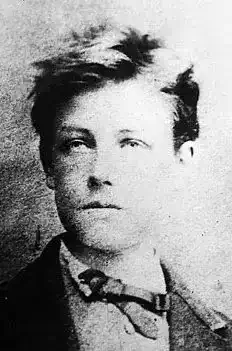
Arthur Rimbaud
Being Beauteous
Against a fall of snow, a Being Beauiful, and very tall.
Whistlings of death and circles of faint music
Make this adored body, swelling and trembling
Like a specter, rise...
Black and scarlet gashes burst in the gleaming flesh.
The true colors of life grow dark,
Shimmering and sperate
In the scaffolding, around the Vision.
Shiverings mutter and rise,
And the furious taste of these effects is charged
With deadly whistlings and the raucous music
That the world, far behind us, hurls at our mother of beauty...
She retreats, she rises up...
Oh! Our bones have put on new flesh, for love.
Oh ash-white face
Oh tousled hair
O crystal arms!
On this cannot I mean to destroy myself
In a swirling of trees and soft air!
893

Robert Frost
In White: Frost's Early Version Of Design
A dented spider like a snow drop white
On a white Heal-all, holding up a moth
Like a white piece of lifeless satin cloth -
Saw ever curious eye so strange a sight? -
Portent in little, assorted death and blight
Like the ingredients of a witches' broth? -
The beady spider, the flower like a froth,
And the moth carried like a paper kite.
What had that flower to do with being white,
The blue prunella every child's delight.
What brought the kindred spider to that height?
(Make we no thesis of the miller's plight.)
What but design of darkness and of night?
Design, design! Do I use the word aright?
Anonymous submission.
892
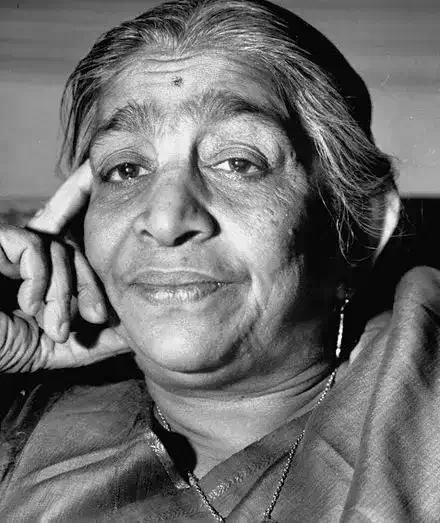
Sarojini Naidu
The Royal Tombs Of Golconda
I MUSE among these silent fanes
Whose spacious darkness guards your dust;
Around me sleep the hoary plains
That hold your ancient wars in trust.
I pause, my dreaming spirit hears,
Across the wind's unquiet tides,
The glimmering music of your spears,
The laughter of your royal brides.
In vain, O Kings, doth time aspire
To make your names oblivion's sport,
While yonder hill wears like a tier
The ruined grandeur of your fort.
Though centuries falter and decline,
Your proven strongholds shall remain
Embodied memories of your line,
Incarnate legends of your reign.
O Queens, in vain old Fate decreed
Your flower-like bodies to the tomb;
Death is in truth the vital seed
Of your imperishable bloom
Each new-born year the bulbuls sing
Their songs of your renascent loves;
Your beauty wakens with the spring
To kindle these pomegranate groves.
852

Elizabeth Barrett Browning
Sonnet XIX: The Soul's Rialto
The soul's Rialto hath its merchandise;
I barter curl for curl upon that mart,
And from my poet's forehead to my heart
Receive this lock which outweighs argosies,--
As purply black, as erst to Pindar's eyes
The dim purpureal tresses gloomed athwart
The nine white Muse-brows. For this counterpart,...
The bay-crown's shade, Belovèd, I surmise,
Still lingers on thy curl, it so black!
Thus, with a fillet of smooth-kissing breath,
I tie the shadows safe from gliding back,
And lay the gift where nothing hindereth;
Here on my heart, as on thy brow, to lack
No natural heat till mine grows cold in death.
895
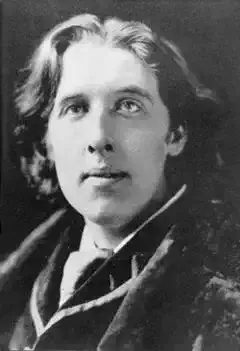
Oscar Wilde
Magdalen Walks
THE little white clouds are racing over the sky,
And the fields are strewn with the gold of the flower of March,
The daffodil breaks under foot, and the tasselled larch
Sways and swings as the thrush goes hurrying by.
A delicate odour is borne on the wings of the morning breeze,
The odour of leaves, and of grass, and of newly up-turned earth,
The birds are singing for joy of the Spring's glad birth,
Hopping from branch to branch on the rocking trees.
And all the woods are alive with the murmur and sound of Spring,
And the rosebud breaks into pink on the climbing briar,
And the crocus-bed is a quivering moon of fire
Girdled round with the belt of an amethyst ring.
And the plane to the pine-tree is whispering some tale of love
Till it rustles with laughter and tosses its mantle of green,
And the gloom of the wych-elm's hollow is lit with the iris sheen
Of the burnished rainbow throat and the silver breast of a dove.
See! the lark starts up from his bed in the meadow there,
Breaking the gossamer threads and the nets of dew,
And flashing a-down the river, a flame of blue!
The kingfisher flies like an arrow, and wounds the air.
882

Ezra Pound
The Garden
En robe de parade. Samain
Like a skein of loose silk blown against a wall
She walks by the railing of a path in Kensington Gardens,
And she is dying piece-meal
Tof a sort of emotional anaemia.
And round about there is a rabble
Of the filthy, sturdy, unkillable infants of the very poor.
They shall inherit the earth.
In her is the end of breeding.
Her boredom is exquisite and excessive.
She would like some one to speak to her,
And is almost afraid that I
Twill commit that indiscretion.
869

Kazi Nazrul Islam
You Are So Handsome
You are so handsome that I can't take my eye off you,
is that my crime?
The bird that cries beholding the moon doesn't bother the moon.
I watch the flower's gradual unfolding, but the flower
doesn't mind
Nor does the cloud when the admiring bird circles round it.
The sun-flower knows it will never get the sun, and yet
undismay'd
It watches its sovereign, it is content just watching
I've got the gift of vision so that I may see you,
you beautiful being
Let this wish of mine be realized, my dearest one.
[Original: Tumi shundor tai cheye thaki; Translation: Abu Rushd]
859
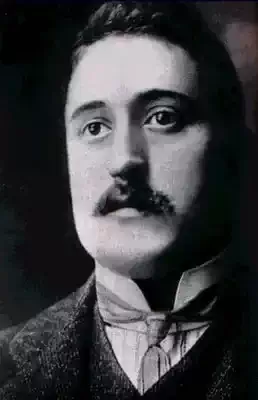
Guillaume Apollinaire
Moonlight
Mellifluent moon on the lips of the maddened
The orchards and towns are greedy tonight
The stars appear like the image of bees
Of this luminous honey that offends the vines
For now all sweet in their fall from the sky
Each ray of moonlight’s a ray of honey
Now hid I conceive the sweetest adventure
I fear stings of fire from this Polar bee
that sets these deceptive rays in my hands
And takes its moon-honey to the rose of the winds
884

William Blake
The Lily
The modest Rose puts forth a thorn,
The humble sheep a threat'ning horn:
While the Lily white shall in love delight,
Nor a thorn nor a threat stain her beauty bright.
The humble sheep a threat'ning horn:
While the Lily white shall in love delight,
Nor a thorn nor a threat stain her beauty bright.
840
Robert Frost
Mowing
There was never a sound beside the wood but one,
And that was my long scythe whispering to the ground.
What was it it whispered? I knew not well myself;
Perhaps it was something about the heat of the sun,
Something, perhaps, about the lack of sound--
And that was why it whispered and did not speak.
It was no dream of the gift of idle hours,
Or easy gold at the hand of fay or elf:
Anything more than the truth would have seemed too weak
To the earnest love that laid the swale in rows,
Not without feeble-pointed spikes of flowers
(Pale orchises), and scared a bright green snake.
The fact is the sweetest dream that labour knows.
My long scythe whispered and left the hay to make.
827

William Wordsworth
She Dwelt Among Untrodden Ways
She dwelt among the untrodden ways
Beside the springs of Dove,
Maid whom there were none to praise
And very few to love:
A violet by a mosy tone
Half hidden from the eye!
---Fair as a star, when only one
Is shining in the sky.
She lived unknown, and few could know
When Lucy ceased to be;
But she is in her grave, and, oh,
The difference to me!
815

Alfred Lord Tennyson
The Lady of Shalott (1842)
PART I
On either side the river lie
Long fields of barley and of rye,
That clothe the wold and meet the sky;
And thro' the field the road runs by
To many-tower'd Camelot;
And up and down the people go,
Gazing where the lilies blow
Round an island there below,
The island of Shalott.
Willows whiten, aspens quiver,
Little breezes dusk and shiver
Thro' the wave that runs for ever
By the island in the river
Flowing down to Camelot.
Four gray walls, and four gray towers,
Overlook a space of flowers,
And the silent isle imbowers
The Lady of Shalott.
By the margin, willow veil'd,
Slide the heavy barges trail'd
By slow horses; and unhail'd
The shallop flitteth silken-sail'd
Skimming down to Camelot:
But who hath seen her wave her hand?
Or at the casement seen her stand?
Or is she known in all the land,
The Lady of Shalott?
Only reapers, reaping early
In among the bearded barley,
Hear a song that echoes cheerly
From the river winding clearly,
Down to tower'd Camelot:
And by the moon the reaper weary,
Piling sheaves in uplands airy,
Listening, whispers " 'Tis the fairy
Lady of Shalott."PART II
There she weaves by night and day
A magic web with colours gay.
She has heard a whisper say,
A curse is on her if she stay
To look down to Camelot.
She knows not what the curse may be,
And so she weaveth steadily,
And little other care hath she,
The Lady of Shalott.
And moving thro' a mirror clear
That hangs before her all the year,
Shadows of the world appear.
There she sees the highway near
Winding down to Camelot:
There the river eddy whirls,
And there the surly village-churls,
And the red cloaks of market girls,
Pass onward from Shalott.
Sometimes a troop of damsels glad,
An abbot on an ambling pad,
Sometimes a curly shepherd-lad,
Or long-hair'd page in crimson clad,
Goes by to tower'd Camelot;
And sometimes thro' the mirror blue
The knights come riding two and two:
She hath no loyal knight and true,
The Lady of Shalott.
But in her web she still delights
To weave the mirror's magic sights,
For often thro' the silent nights
A funeral, with plumes and lights
And music, went to Camelot:
Or when the moon was overhead,
Came two young lovers lately wed:
"I am half sick of shadows," said
The Lady of Shalott.PART III
A bow-shot from her bower-eaves,
He rode between the barley-sheaves,
The sun came dazzling thro' the leaves,
And flamed upon the brazen greaves
Of bold Sir Lancelot.
A red-cross knight for ever kneel'd
To a lady in his shield,
That sparkled on the yellow field,
Beside remote Shalott.
The gemmy bridle glitter'd free,
Like to some branch of stars we see
Hung in the golden Galaxy.
The bridle bells rang merrily
As he rode down to Camelot:
And from his blazon'd baldric slung
A mighty silver bugle hung,
And as he rode his armour rung,
Beside remote Shalott.
All in the blue unclouded weather
Thick-jewell'd shone the saddle-leather,
The helmet and the helmet-feather
Burn'd like one burning flame together,
As he rode down to Camelot.
As often thro' the purple night,
Below the starry clusters bright,
Some bearded meteor, trailing light,
Moves over still Shalott.
His broad clear brow in sunlight glow'd;
On burnish'd hooves his war-horse trode;
From underneath his helmet flow'd
His coal-black curls as on he rode,
As he rode down to Camelot.
From the bank and from the river
He flash'd into the crystal mirror,
"Tirra lirra," by the river
Sang Sir Lancelot.
She left the web, she left the loom,
She made three paces thro' the room,
She saw the water-lily bloom,
She saw the helmet and the plume,
She look'd down to Camelot.
Out flew the web and floated wide;
The mirror crack'd from side to side;
"The curse is come upon me," cried
The Lady of Shalott.PART IV
In the stormy east-wind straining,
The pale yellow woods were waning,
The broad stream in his banks complaining,
Heavily the low sky raining
Over tower'd Camelot;
Down she came and found a boat
Beneath a willow left afloat,
And round about the prow she wrote
The Lady of Shalott.
And down the river's dim expanse
Like some bold seër in a trance,
Seeing all his own mischance-With
a glassy countenance
Did she look to Camelot.
And at the closing of the day
She loosed the chain, and down she lay;
The broad stream bore her far away,
The Lady of Shalott.
Lying, robed in snowy white
That loosely flew to left and right-The
leaves upon her falling light-Thro'
the noises of the night
She floated down to Camelot:
And as the boat-head wound along
The willowy hills and fields among,
They heard her singing her last song,
The Lady of Shalott.
Heard a carol, mournful, holy,
Chanted loudly, chanted lowly,
Till her blood was frozen slowly,
And her eyes were darken'd wholly,
Turn'd to tower'd Camelot.
For ere she reach'd upon the tide
The first house by the water-side,
Singing in her song she died,
The Lady of Shalott.
Under tower and balcony,
By garden-wall and gallery,
A gleaming shape she floated by,
Dead-pale between the houses high,
Silent into Camelot.
Out upon the wharfs they came,
Knight and burgher, lord and dame,
And round the prow they read her name,
The Lady of Shalott.
Who is this? and what is here?
And in the lighted palace near
Died the sound of royal cheer;
And they cross'd themselves for fear,
All the knights at Camelot:
But Lancelot mused a little space;
He said, "She has a lovely face;
God in his mercy lend her grace,
The Lady of Shalott."
833

Lord Byron
On The Bust Of Helen By Canova
In this beloved marble view,
Above the works and thoughts of man,
What Nature could, but would not, do,
And Beauty and Canova can!
Beyond imagination's power,
Beyond the Bard's defeated art,
With immortality her dower,
Behold the Helen of the heart!
Above the works and thoughts of man,
What Nature could, but would not, do,
And Beauty and Canova can!
Beyond imagination's power,
Beyond the Bard's defeated art,
With immortality her dower,
Behold the Helen of the heart!
819

Federico García Lorca
Ode to Walt Whitman
By the East River and the Bronx
boys were singing, exposing their waists
with the wheel, with oil, leather, and the hammer.
Ninety thousand miners taking silver from the rocks
and children drawing stairs and perspectives.
But none of them could sleep,
none of them wanted to be the river,
none of them loved the huge leaves
or the shoreline's blue tongue.
By the East River and the Queensboro
boys were battling with industry
and the Jews sold to the river faun
the rose of circumcision,
and over bridges and rooftops, the mouth of the sky emptied
herds of bison driven by the wind.
But none of them paused,
none of them wanted to be a cloud,
none of them looked for ferns
or the yellow wheel of a tambourine.
As soon as the moon rises
the pulleys will spin to alter the sky;
a border of needles will besiege memory
and the coffins will bear away those who don't work.
New York, mire,
New York, mire and death.
What angel is hidden in your cheek?
Whose perfect voice will sing the truths of wheat?
Who, the terrible dream of your stained anemones?
Not for a moment, Walt Whitman, lovely old man,
have I failed to see your beard full of butterflies,
nor your corduroy shoulders frayed by the moon,
nor your thighs pure as Apollo's,
nor your voice like a column of ash,
old man, beautiful as the mist,
you moaned like a bird
with its sex pierced by a needle.
Enemy of the satyr,
enemy of the vine,
and lover of bodies beneath rough cloth...
Not for a moment, virile beauty,
who among mountains of coal, billboards, and railroads,
dreamed of becoming a river and sleeping like a river
with that comrade who would place in your breast
the small ache of an ignorant leopard.
Not for a moment, Adam of blood, Macho,
man alone at sea, Walt Whitman, lovely old man,
because on penthouse roofs,
gathered at bars,
emerging in bunches from the sewers,
trembling between the legs of chauffeurs,
or spinning on dance floors wet with absinthe,
the faggots, Walt Whitman, point you out.
He's one, too! That's right! And they land
on your luminous chaste beard,
blonds from the north, blacks from the sands,
crowds of howls and gestures,
like cats or like snakes,
the faggots, Walt Whitman, the faggots,
clouded with tears, flesh for the whip,
the boot, or the teeth of the lion tamers.
He's one, too! That's right! Stained fingers
point to the shore of your dream
when a friend eats your apple
with a slight taste of gasoline
and the sun sings in the navels
of boys who play under bridges.
But you didn't look for scratched eyes,
nor the darkest swamp where someone submerges children,
nor frozen saliva,
nor the curves slit open like a toad's belly
that the faggots wear in cars and on terraces
while the moon lashes them on the street corners of terror.
You looked for a naked body like a river.
Bull and dream who would join wheel with seaweed,
father of your agony, camellia of your death,
who would groan in the blaze of your hidden equator.
Because it's all right if a man doesn't look for his delight
in tomorrow morning's jungle of blood.
The sky has shores where life is avoided
and there are bodies that shouldn't repeat themselves in the dawn.
Agony, agony, dream, ferment, and dream.
This is the world, my friend, agony, agony.
Bodies decompose beneath the city clocks,
war passes by in tears, followed by a million gray rats,
the rich give their mistresses
small illuminated dying things,
and life is neither noble, nor good, nor sacred.
Man is able, if he wishes, to guide his desire
through a vein of coral or a heavenly naked body.
Tomorrow, loves will become stones, and Time
a breeze that drowses in the branches.
That's why I don't raise my voice, old Walt Whitman,
against the little boy who writes
the name of a girl on his pillow,
nor against the boy who dresses as a bride
in the darkness of the wardrobe,
nor against the solitary men in casinos
who drink prostitution's water with revulsion,
nor against the men with that green look in their eyes
who love other men and burn their lips in silence.
But yes against you, urban faggots,
tumescent flesh and unclean thoughts.
Mothers of mud. Harpies. Sleepless enemies
of the love that bestows crowns of joy.
Always against you, who give boys
drops of foul death with bitter poison.
Always against you,
Fairies of North America,
Pájaros of Havana,
Jotos of Mexico,
Sarasas of Cádiz,
Apios of Seville,
Cancos of Madrid,
Floras of Alicante,
Adelaidas of Portugal.
Faggots of the world, murderers of doves!
Slaves of women. Their bedroom bitches.
Opening in public squares like feverish fans
or ambushed in rigid hemlock landscapes.
No quarter given! Death
spills from your eyes
and gathers gray flowers at the mire's edge.
No quarter given! Attention!
Let the confused, the pure,
the classical, the celebrated, the supplicants
close the doors of the bacchanal to you.
And you, lovely Walt Whitman, stay asleep on the Hudson's banks
with your beard toward the pole, openhanded.
Soft clay or snow, your tongue calls for
comrades to keep watch over your unbodied gazelle.
Sleep on, nothing remains.
Dancing walls stir the prairies
and America drowns itself in machinery and lament.
I want the powerful air from the deepest night
to blow away flowers and inscriptions from the arch where you sleep,
and a black child to inform the gold-craving whites
that the kingdom of grain has arrived.
778

William Shakespeare
Sonnet 78: So oft have I invoked thee for my Muse
So oft have I invoked thee for my Muse,
And found such fair assistance in my verse
As every alien pen hath got my use,
And under thee their poesy disperse.
Thine eyes, that taught the dumb on high to sing,
And heavy ignorance aloft to fly,
Have added feathers to the learnèd's wing
And given grace a double majesty.
Yet be most proud of that which I compile,
Whose influence is thine, and born of thee.
In others' works thou dost but mend the style,
And arts with thy sweet graces gracèd be.
But thou art all my art, and dost advance
As high as learning my rude ignorance.
790
John Keats
Ode On A Grecian Urn
Thou still unravish'd bride of quietness,
Thou foster-child of silence and slow time,
Sylvan historian, who canst thus express
A flowery tale more sweetly than our rhyme:
What leaf-fring'd legend haunts about thy shape
Of deities or mortals, or of both,
In Tempe or the dales of Arcady?
What men or gods are these? What maidens loth?
What mad pursuit? What struggle to escape?
What pipes and timbrels? What wild ecstasy?
Heard melodies are sweet, but those unheard
Are sweeter; therefore, ye soft pipes, play on;
Not to the sensual ear, but, more endear'd,
Pipe to the spirit ditties of no tone:
Fair youth, beneath the trees, thou canst not leave
Thy song, nor ever can those trees be bare;
Bold Lover, never, never canst thou kiss,
Though winning near the goal yet, do not grieve;
She cannot fade, though thou hast not thy bliss,
For ever wilt thou love, and she be fair!
Ah, happy, happy boughs! that cannot shed
Your leaves, nor ever bid the Spring adieu;
And, happy melodist, unwearied,
For ever piping songs for ever new;
More happy love! more happy, happy love!
For ever warm and still to be enjoy'd,
For ever panting, and for ever young;
All breathing human passion far above,
That leaves a heart high-sorrowful and cloy'd,
A burning forehead, and a parching tongue.
Who are these coming to the sacrifice?
To what green altar, O mysterious priest,
Lead'st thou that heifer lowing at the skies,
And all her silken flanks with garlands drest?
What little town by river or sea shore,
Or mountain-built with peaceful citadel,
Is emptied of this folk, this pious morn?
And, little town, thy streets for evermore
Will silent be; and not a soul to tell
Why thou art desolate, can e'er return.
O Attic shape! Fair attitude! with brede
Of marble men and maidens overwrought,
With forest branches and the trodden weed;
Thou, silent form, dost tease us out of thought
As doth eternity: Cold Pastoral!
When old age shall this generation waste,
Thou shalt remain, in midst of other woe
Than ours, a friend to man, to whom thou say'st,
"Beauty is truth, truth beauty,--that is all
Ye know on earth, and all ye need to know."
793
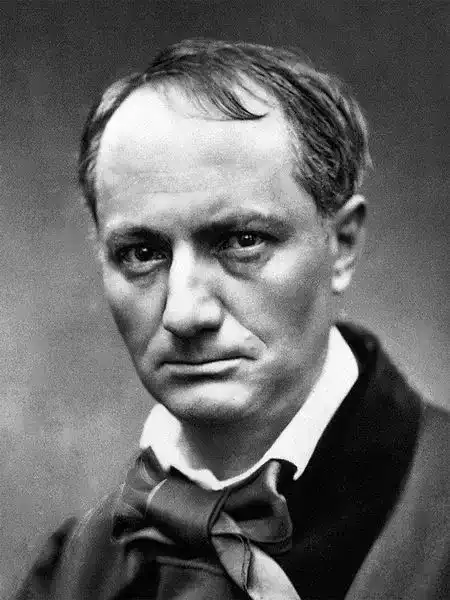
Charles Baudelaire
Her Hair
O fleece, that down the neck waves to the nape!
O curls! O perfume nonchalant and rare!
O ecstasy! To fill this alcove shape
With memories that in these tresses sleep,
I would shake them like penions in the air!
Languorous Asia, burning Africa,
And a far world, defunct almost, absent,
Within your aromatic forest stay!
As other souls on music drift away,
Mine, O my love! still floats upon your scent.
I shall go there where, full of sap, both tree
And man swoon in the heat of the southern climates;
Strong tresses be the swell that carries me!
I dream upon your sea of amber
Of dazzling sails, of oarsmen, masts, and flames:
A sun-drenched and reverberating port,
Where I imbibe colour and sound and scent;
Where vessels, gliding through the gold and moiré,
Open their vast arms as they leave the shore
To clasp the pure and shimmering firmament.
I'll plunge my head, enamored of its pleasure,
In this black ocean where the other hides;
My subtle spirit then will know a measure
Of fertile idleness and fragrant leisure,
Lulled by the infinite rhythm of its tides!
Pavilion, of autumn-shadowed tresses spun,
You give me back the azure from afar;
And where the twisted locks are fringed with down
Lurk mingled odors I grow drunk upon
Of oil of coconut, of musk, and tar.
A long time! always! my hand in your hair
Will sow the stars of sapphire, pearl, ruby,
That you be never deaf to my desire,
My oasis and my gourd whence I aspire
To drink deep of the wine of memory.
765

John Greenleaf Whittier
The Library
'Let there be light!' God spake of old,
And over chaos dark and cold,
And through the dead and formless frame
Of nature, life and order came.
Faint was the light at first that shone
On giant fern and mastodon,
On half-formed plant and beast of prey,
And man as rude and wild as they.
Age after age, like waves, o'erran
The earth, uplifting brute and man;
And mind, at length, in symbols dark
Its meanings traced on stone and bark.
On leaf of palm, on sedge-wrought roll,
On plastic clay and leathern scroll,
Man wrote his thoughts; the ages passed,
And to! the Press was found at last!
Then dead souls woke; the thoughts of men
Whose bones were dust revived again;
The cloister's silence found a tongue,
Old prophets spake, old poets sung.
And here, to-day, the dead look down,
The kings of mind again we crown;
We hear the voices lost so long,
The sage's word, the sibyl's song.
Here Greek and Roman find themselves
Alive along these crowded shelves;
And Shakespeare treads again his stage,
And Chaucer paints anew his age.
As if some Pantheon's marbles broke
Their stony trance, and lived and spoke,
Life thrills along the alcoved hall,
The lords of thought await our call!
790
Sarojini Naidu
The Pardah Nashin
HER life is a revolving dream
Of languid and sequestered ease;
Her girdles and her fillets gleam
Like changing fires on sunset seas;
Her raiment is like morning mist,
Shot opal, gold and amethyst.
From thieving light of eyes impure,
From coveting sun or wind's caress,
Her days are guarded and secure
Behind her carven lattices,
Like jewels in a turbaned crest,
Like secrets in a lover's breast.
But though no hand unsanctioned dares
Unveil the mysteries of her grace,
Time lifts the curtain unawares,
And Sorrow looks into her face . . .
Who shall prevent the subtle years,
Or shield a woman's eyes from tears?
736

Emily Dickinson
Why do I love You, Sir?
"Why do I love" You, Sir?
Because-
The Wind does not require the Grass
To answer-Wherefore when He pass
She cannot keep Her place.
Because He knows-and
Do not You-
And We know not-
Enough for Us
The Wisdom it be so-
The Lightning-never asked an Eye
Wherefore it shut-when He was by-
Because He knows it cannot speak-
And reasons not contained-
Of Talk-
There be-preferred by Daintier Folk-
The Sunrise-Sire-compelleth Me-
Because He's Sunrise-and I see
Therefore-
Then-
I love Thee-
732
Oscar Wilde
Pan - Double Villanelle
I.
O goat-foot God of Arcady!
This modern world is grey and old,
And what remains to us of thee?
No more the shepherd lads in glee
Throw apples at thy wattled fold,
O goat-foot God of Arcady!
Nor through the laurels can one see
Thy soft brown limbs, thy beard of gold
And what remains to us of thee?
And dull and dead our Thames would be,
For here the winds are chill and cold,
O goat-loot God of Arcady!
Then keep the tomb of Helice,
Thine olive-woods, thy vine-clad wold,
And what remains to us of thee?
Though many an unsung elegy
Sleeps in the reeds our rivers hold,
O goat-foot God of Arcady!
Ah, what remains to us of thee?
II.
Ah, leave the hills of Arcady,
Thy satyrs and their wanton play,
This modern world hath need of thee.
No nymph or Faun indeed have we,
For Faun and nymph are old and grey,
Ah, leave the hills of Arcady!
This is the land where liberty
Lit grave-browed Milton on his way,
This modern world hath need of thee!
A land of ancient chivalry
Where gentle Sidney saw the day,
Ah, leave the hills of Arcady!
This fierce sea-lion of the sea,
This England lacks some stronger lay,
This modern world hath need of thee!
Then blow some trumpet loud and free,
And give thine oaten pipe away,
Ah, leave the hills of Arcady!
This modern world hath need of thee!
O goat-foot God of Arcady!
This modern world is grey and old,
And what remains to us of thee?
No more the shepherd lads in glee
Throw apples at thy wattled fold,
O goat-foot God of Arcady!
Nor through the laurels can one see
Thy soft brown limbs, thy beard of gold
And what remains to us of thee?
And dull and dead our Thames would be,
For here the winds are chill and cold,
O goat-loot God of Arcady!
Then keep the tomb of Helice,
Thine olive-woods, thy vine-clad wold,
And what remains to us of thee?
Though many an unsung elegy
Sleeps in the reeds our rivers hold,
O goat-foot God of Arcady!
Ah, what remains to us of thee?
II.
Ah, leave the hills of Arcady,
Thy satyrs and their wanton play,
This modern world hath need of thee.
No nymph or Faun indeed have we,
For Faun and nymph are old and grey,
Ah, leave the hills of Arcady!
This is the land where liberty
Lit grave-browed Milton on his way,
This modern world hath need of thee!
A land of ancient chivalry
Where gentle Sidney saw the day,
Ah, leave the hills of Arcady!
This fierce sea-lion of the sea,
This England lacks some stronger lay,
This modern world hath need of thee!
Then blow some trumpet loud and free,
And give thine oaten pipe away,
Ah, leave the hills of Arcady!
This modern world hath need of thee!
754
Oscar Wilde
Under The Balcony
O beautiful star with the crimson mouth!
O moon with the brows of gold!
Rise up, rise up, from the odorous south!
And light for my love her way,
Lest her little feet should stray
On the windy hill and the wold!
O beautiful star with the crimson mouth!
O moon with the brows of gold!
O ship that shakes on the desolate sea!
O ship with the wet, white sail!
Put in, put in, to the port to me!
For my love and I would go
To the land where the daffodils blow
In the heart of a violet dale!
O ship that shakes on the desolate sea!
O ship with the wet, white sail!
O rapturous bird with the low, sweet note!
O bird that sits on the spray!
Sing on, sing on, from your soft brown throat!
And my love in her little bed
Will listen, and lift her head
From the pillow, and come my way!
O rapturous bird with the low, sweet note!
O bird that sits on the spray!
O blossom that hangs in the tremulous air!
O blossom with lips of snow!
Come down, come down, for my love to wear!
You will die on her head in a crown,
You will die in a fold of her gown,
To her little light heart you will go!
O blossom that hangs in the tremulous air!
O blossom with lips of snow!
O moon with the brows of gold!
Rise up, rise up, from the odorous south!
And light for my love her way,
Lest her little feet should stray
On the windy hill and the wold!
O beautiful star with the crimson mouth!
O moon with the brows of gold!
O ship that shakes on the desolate sea!
O ship with the wet, white sail!
Put in, put in, to the port to me!
For my love and I would go
To the land where the daffodils blow
In the heart of a violet dale!
O ship that shakes on the desolate sea!
O ship with the wet, white sail!
O rapturous bird with the low, sweet note!
O bird that sits on the spray!
Sing on, sing on, from your soft brown throat!
And my love in her little bed
Will listen, and lift her head
From the pillow, and come my way!
O rapturous bird with the low, sweet note!
O bird that sits on the spray!
O blossom that hangs in the tremulous air!
O blossom with lips of snow!
Come down, come down, for my love to wear!
You will die on her head in a crown,
You will die in a fold of her gown,
To her little light heart you will go!
O blossom that hangs in the tremulous air!
O blossom with lips of snow!
742
Arthur Rimbaud
Genie
He is love and the present because he has opened our house
to winter's foam and to the sound of summer,
He who purified all that we drink and tea;
He is the charm of passing places,
the incarnate delight of all things that abide.
He is affection and the future,
the strength and love that we,
standing surrounded by anger and weariness,
See passing in the storm-filled sky and in banners of ecstasy.
He is love, perfect and rediscovered measure,
Reason, marvelous and unforeseen,
Eternity: beloved prime mover of the elements, of destinies.
We all know the terror of his yielding, and of ours:
Oh delight of our well-being, brilliance of our faculties,
selfish affection and passion for him, who loves us forever...
And we remember him, and he goes on his way...
And if Adoration departs, then it sounds, his promise sounds:
'Away with these ages and superstitions,
These couplings, these bodies of old!
All our age has submerged.' He will not go away,
will not come down again from some heave.
He will not fulfill the redemption of women's fury
nor the gaiety of men nor the rest of this sin:
For he is and he is loved, and so it is already done.
Oh, his breathing, the turn of his head when he runs:
Terrible speed of perfection in action and form!
Fecundity of spirit and vastness of the universe! His body!
Release so long desired, The splintering of grace before a new violence!
Oh, the sight, the sight of him!
All ancient genuflections, all sorrows are lifted as he passes.
The light of his day! All moving and sonorous
suffering dissolves in more intense music.
In his step there are vaster migrations than the old invasions were.
Oh, He and we! a pride more benevolent than charities lost.
Oh, world! and the shining song of new sorrows.
He has known us all and has loved us.
Let us discover how, this winter night, to hail him from cape to cape,
from the unquiet pole to the château,
from crowded cities to the empty coast,
from glance to glance, with our strength and our feelings exhausted,
To see him, and to send him once again away...
And beneath the tides and over high deserts of snow
To follow his image, his breathing, his body, the light of his day.
740