
Beauty

Walt Whitman
Miracles
WHY! who makes much of a miracle?
As to me, I know of nothing else but miracles,
Whether I walk the streets of Manhattan,
Or dart my sight over the roofs of houses toward the sky,
Or wade with naked feet along the beach, just in the edge of the
water,
Or stand under trees in the woods,
Or talk by day with any one I love--or sleep in the bed at night with
any one I love,
Or sit at table at dinner with my mother,
Or look at strangers opposite me riding in the car,
Or watch honey-bees busy around the hive, of a summer forenoon,
Or animals feeding in the fields,
Or birds--or the wonderfulness of insects in the air,
Or the wonderfulness of the sun-down--or of stars shining so quiet
and bright,
Or the exquisite, delicate, thin curve of the new moon in spring;
Or whether I go among those I like best, and that like me best-
mechanics, boatmen, farmers,
Or among the savans--or to the soiree--or to the opera,
Or stand a long while looking at the movements of machinery,
Or behold children at their sports,
Or the admirable sight of the perfect old man, or the perfect old
woman,
Or the sick in hospitals, or the dead carried to burial,
Or my own eyes and figure in the glass;
These, with the rest, one and all, are to me miracles,
The whole referring--yet each distinct, and in its place.
To me, every hour of the light and dark is a miracle,
Every cubic inch of space is a miracle,
Every square yard of the surface of the earth is spread with the
same,
Every foot of the interior swarms with the same;
Every spear of grass--the frames, limbs, organs, of men and women,
and all that concerns them,
All these to me are unspeakably perfect miracles.
To me the sea is a continual miracle;
The fishes that swim--the rocks--the motion of the waves--the ships,
with men in them,
What stranger miracles are there?
741
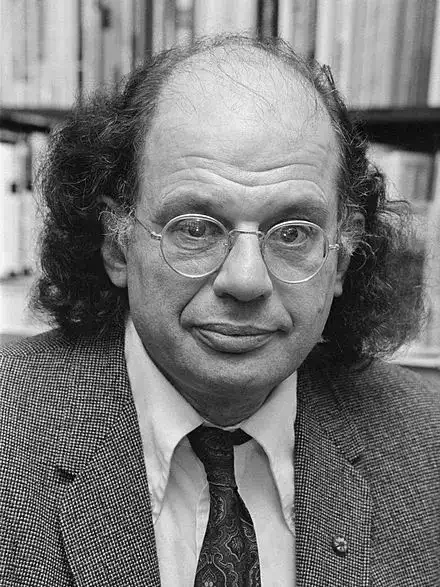
Allen Ginsberg
Wales Visitation
White fog lifting & falling on mountain-brow
Trees moving in rivers of wind
The clouds arise
as on a wave, gigantic eddy lifting mist
above teeming ferns exquisitely swayed
along a green crag
glimpsed thru mullioned glass in valley raine—
Bardic, O Self, Visitacione, tell naught
but what seen by one man in a vale in Albion,
of the folk, whose physical sciences end in Ecology,
the wisdom of earthly relations,
of mouths & eyes interknit ten centuries visible
orchards of mind language manifest human,
of the satanic thistle that raises its horned symmetry
flowering above sister grass-daisies’ pink tiny
bloomlets angelic as lightbulbs—
Remember 160 miles from London’s symmetrical thorned tower
& network of TV pictures flashing bearded your Self
the lambs on the tree-nooked hillside this day bleating
heard in Blake’s old ear, & the silent thought of Wordsworth in eld Stillness
clouds passing through skeleton arches of Tintern Abbey—
Bard Nameless as the Vast, babble to Vastness!
All the Valley quivered, one extended motion, wind
undulating on mossy hills
a giant wash that sank white fog delicately down red runnels
on the mountainside
whose leaf-branch tendrils moved asway
in granitic undertow down—
and lifted the floating Nebulous upward, and lifted the arms of the trees
and lifted the grasses an instant in balance
and lifted the lambs to hold still
and lifted the green of the hill, in one solemn wave
A solid mass of Heaven, mist-infused, ebbs thru the vale,
a wavelet of Immensity, lapping gigantic through Llanthony Valley,
the length of all England, valley upon valley under Heaven’s ocean
tonned with cloud-hang,
—Heaven balanced on a grassblade.
Roar of the mountain wind slow, sigh of the body,
One Being on the mountainside stirring gently
Exquisite scales trembling everywhere in balance,
one motion thru the cloudy sky-floor shifting on the million feet of daisies,
one Majesty the motion that stirred wet grass quivering
to the farthest tendril of white fog poured down
through shivering flowers on the mountain’s head—
No imperfection in the budded mountain,
Valleys breathe, heaven and earth move together,
daisies push inches of yellow air, vegetables tremble,
grass shimmers green
sheep speckle the mountainside, revolving their jaws with empty eyes,
horses dance in the warm rain,
tree-lined canals network live farmland,
blueberries fringe stone walls on hawthorn’d hills,
pheasants croak on meadows haired with fern—
Out, out on the hillside, into the ocean sound, into delicate gusts of wet air,
Fall on the ground, O great Wetness, O Mother, No harm on your body!
Stare close, no imperfection in the grass,
each flower Buddha-eye, repeating the story,
myriad-formed—
Kneel before the foxglove raising green buds, mauve bells dropped
doubled down the stem trembling antennae,
& look in the eyes of the branded lambs that stare
breathing stockstill under dripping hawthorn—
I lay down mixing my beard with the wet hair of the mountainside,
smelling the brown vagina-moist ground, harmless,
tasting the violet thistle-hair, sweetness—
One being so balanced, so vast, that its softest breath
moves every floweret in the stillness on the valley floor,
trembles lamb-hair hung gossamer rain-beaded in the grass,
lifts trees on their roots, birds in the great draught
hiding their strength in the rain, bearing same weight,
Groan thru breast and neck, a great Oh! to earth heart
Calling our Presence together
The great secret is no secret
Senses fit the winds,
Visible is visible,
rain-mist curtains wave through the bearded vale,
gray atoms wet the wind’s kabbala
Crosslegged on a rock in dusk rain,
rubber booted in soft grass, mind moveless,
breath trembles in white daisies by the roadside,
Heaven breath and my own symmetric
Airs wavering thru antlered green fern
drawn in my navel, same breath as breathes thru Capel-Y-Ffn,
Sounds of Aleph and Aum
through forests of gristle,
my skull and Lord Hereford’s Knob equal,
All Albion one.
What did I notice? Particulars! The
vision of the great One is myriad—
smoke curls upward from ashtray,
house fire burned low,
The night, still wet & moody black heaven
starless
upward in motion with wet wind.
757

William Wordsworth
Ode, On Intimations Of Immortality
I
There was a time when meadow, grove, and stream,
The earth, and every common sight,
To me did seem
Apparelled in celestial light,
The glory and the freshness of a dream.
It is not now as it hath been of yore;--
Turn wheresoe'er I may,
By night or day,
The things which I have seen I now can see no more.
II
The Rainbow comes and goes,
And lovely is the Rose,
The Moon doth with delight
Look round her when the heavens are bare,
Waters on a starry night
Are beautiful and fair;
The sunshine is a glorious birth;
But yet I know, where'er I go,
That there hath past away a glory from the earth.
III
Now, while the birds thus sing a joyous song,
And while the young lambs bound
As to the tabor's sound,
To me alone there came a thought of grief:
A timely utterance gave that thought relief,
And I again am strong:
The cataracts blow their trumpets from the steep;
No more shall grief of mine the season wrong;
I hear the Echoes through the mountains throng,
The Winds come to me from the fields of sleep,
And all the earth is gay;
Land and sea
Give themselves up to jollity,
And with the heart of May
Doth every Beast keep holiday;--
Thou Child of Joy,
Shout round me, let me hear thy shouts, thou happy
Shepherd-boy!
IV
Ye blessed Creatures, I have heard the call
Ye to each other make; I see
The heavens laugh with you in your jubilee;
My heart is at your festival,
My head hath its coronal,
The fulness of your bliss, I feel--I feel it all.
Oh evil day! if I were sullen
While Earth herself is adorning,
This sweet May-morning,
And the Children are culling
On every side,
In a thousand valleys far and wide,
Fresh flowers; while the sun shines warm,
And the Babe leaps up on his Mother's arm:--
I hear, I hear, with joy I hear!
--But there's a Tree, of many, one,
A single Field which I have looked upon,
Both of them speak of something that is gone:
The Pansy at my feet
Doth the same tale repeat:
Whither is fled the visionary gleam?
Where is it now, the glory and the dream?
V
Our birth is but a sleep and a forgetting:
The Soul that rises with us, our life's Star,
Hath had elsewhere its setting,
And cometh from afar:
Not in entire forgetfulness,
And not in utter nakedness,
But trailing clouds of glory do we come
From God, who is our home:
Heaven lies about us in our infancy!
Shades of the prison-house begin to close
Upon the growing Boy,
But He beholds the light, and whence it flows,
He sees it in his joy;
The Youth, who daily farther from the east
Must travel, still is Nature's Priest,
And by the vision splendid
Is on his way attended;
At length the Man perceives it die away,
And fade into the light of common day.
VI
Earth fills her lap with pleasures of her own;
Yearnings she hath in her own natural kind,
And, even with something of a Mother's mind,
And no unworthy aim,
The homely Nurse doth all she can
To make her Foster-child, her Inmate Man,
Forget the glories he hath known,
And that imperial palace whence he came.
VII
Behold the Child among his new-born blisses,
A six years' Darling of a pigmy size!
See, where 'mid work of his own hand he lies,
Fretted by sallies of his mother's kisses,
With light upon him from his father's eyes!
See, at his feet, some little plan or chart,
Some fragment from his dream of human life,
Shaped by himself with newly-learned art;
A wedding or a festival,
A mourning or a funeral;
And this hath now his heart,
And unto this he frames his song:
Then will he fit his tongue
To dialogues of business, love, or strife;
But it will not be long
Ere this be thrown aside,
And with new joy and pride
The little Actor cons another part;
Filling from time to time his "humorous stage"
With all the Persons, down to palsied Age,
That Life brings with her in her equipage;
As if his whole vocation
Were endless imitation.
VIII
Thou, whose exterior semblance doth belie
Thy Soul's immensity;
Thou best Philosopher, who yet dost keep
Thy heritage, thou Eye among the blind,
That, deaf and silent, read'st the eternal deep,
Haunted for ever by the eternal mind,--
Mighty Prophet! Seer blest!
On whom those truths do rest,
Which we are toiling all our lives to find,
In darkness lost, the darkness of the grave;
Thou, over whom thy Immortality
Broods like the Day, a Master o'er a Slave,
A Presence which is not to be put by;
Thou little Child, yet glorious in the might
Of heaven-born freedom on thy being's height,
Why with such earnest pains dost thou provoke
The years to bring the inevitable yoke,
Thus blindly with thy blessedness at strife?
Full soon thy Soul shall have her earthly freight,
And custom lie upon thee with a weight
Heavy as frost, and deep almost as life!
IX
O joy! that in our embers
Is something that doth live,
That nature yet remembers
What was so fugitive!
The thought of our past years in me doth breed
Perpetual benediction: not indeed
For that which is most worthy to be blest--
Delight and liberty, the simple creed
Of Childhood, whether busy or at rest,
With new-fledged hope still fluttering in his breast:--
Not for these I raise
The song of thanks and praise;
But for those obstinate questionings
Of sense and outward things,
Fallings from us, vanishings;
Blank misgivings of a Creature
Moving about in worlds not realised,
High instincts before which our mortal Nature
Did tremble like a guilty Thing surprised:
But for those first affections,
Those shadowy recollections,
Which, be they what they may,
Are yet the fountain light of all our day,
Are yet a master light of all our seeing;
Uphold us, cherish, and have power to make
Our noisy years seem moments in the being
Of the eternal Silence: truths that wake,
To perish never;
Which neither listlessness, nor mad endeavour,
Nor Man nor Boy,
Nor all that is at enmity with joy,
Can utterly abolish or destroy!
Hence in a season of calm weather
Though inland far we be,
Our Souls have sight of that immortal sea
Which brought us hither,
Can in a moment travel thither,
And see the Children sport upon the shore,
And hear the mighty waters rolling evermore.
X
Then sing, ye Birds, sing, sing a joyous song!
And let the young Lambs bound
As to the tabor's sound!
We in thought will join your throng,
Ye that pipe and ye that play,
Ye that through your hearts to-day
Feel the gladness of the May!
What though the radiance which was once so bright
Be now for ever taken from my sight,
Though nothing can bring back the hour
Of splendour in the grass, of glory in the flower;
We will grieve not, rather find
Strength in what remains behind;
In the primal sympathy
Which having been must ever be;
In the soothing thoughts that spring
Out of human suffering;
In the faith that looks through death,
In years that bring the philosophic mind.
XI
And O, ye Fountains, Meadows, Hills, and Groves,
Forebode not any severing of our loves!
Yet in my heart of hearts I feel your might;
I only have relinquished one delight
To live beneath your more habitual sway.
I love the Brooks which down their channels fret,
Even more than when I tripped lightly as they;
The innocent brightness of a new-born Day
Is lovely yet;
The Clouds that gather round the setting sun
Do take a sober colouring from an eye
That hath kept watch o'er man's mortality;
Another race hath been, and other palms are won.
Thanks to the human heart by which we live,
Thanks to its tenderness, its joys, and fears,
To me the meanest flower that blows can give
Thoughts that do often lie too deep for tears.
732
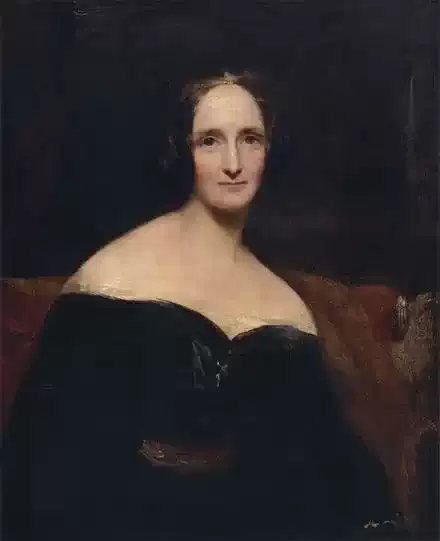
Percy Bysshe Shelley
To A Skylark
Hail to thee, blithe Spirit!
Bird thou never wert,
That from Heaven, or near it,
Pourest thy full heart
In profuse strains of unpremeditated art.
Higher still and higher
From the earth thou springest
Like a cloud of fire;
The blue deep thou wingest,
And singing still dost soar, and soaring ever singest.
In the golden lightning
Of the sunken sun
O'er which clouds are bright'ning,
Thou dost float and run,
Like an unbodied joy whose race is just begun.
The pale purple even
Melts around thy flight;
Like a star of Heaven
In the broad daylight
Thou art unseen, but yet I hear thy shrill delight:
Keen as are the arrows
Of that silver sphere,
Whose intense lamp narrows
In the white dawn clear
Until we hardly see--we feel that it is there.
All the earth and air
With thy voice is loud.
As, when night is bare,
From one lonely cloud
The moon rains out her beams, and heaven is overflowed.
What thou art we know not;
What is most like thee?
From rainbow clouds there flow not
Drops so bright to see
As from thy presence showers a rain of melody.
Like a poet hidden
In the light of thought,
Singing hymns unbidden,
Till the world is wrought
To sympathy with hopes and fears it heeded not:
Like a high-born maiden
In a palace tower,
Soothing her love-laden
Soul in secret hour
With music sweet as love, which overflows her bower:
Like a glow-worm golden
In a dell of dew,
Scattering unbeholden
Its aerial hue
Among the flowers and grass, which screen it from the view:
Like a rose embowered
In its own green leaves,
By warm winds deflowered,
Till the scent it gives
Makes faint with too much sweet these heavy-winged thieves.
Sound of vernal showers
On the twinkling grass,
Rain-awakened flowers,
All that ever was
Joyous, and clear, and fresh, thy music doth surpass.
Teach us, sprite or bird,
What sweet thoughts are thine:
I have never heard
Praise of love or wine
That panted forth a flood of rapture so divine.
Chorus hymeneal
Or triumphal chaunt
Matched with thine, would be all
But an empty vaunt--
A thing wherein we feel there is some hidden want.
What objects are the fountains
Of thy happy strain?
What fields, or waves, or mountains?
What shapes of sky or plain?
What love of thine own kind? what ignorance of pain?
With thy clear keen joyance
Languor cannot be:
Shadow of annoyance
Never came near thee:
Thou lovest, but ne'er knew love's sad satiety.
Waking or asleep,
Thou of death must deem
Things more true and deep
Than we mortals dream,
Or how could thy notes flow in such a crystal stream?
We look before and after,
And pine for what is not:
Our sincerest laughter
With some pain is fraught;
Our sweetest songs are those that tell of saddest thought.
Yet if we could scorn
Hate, and pride, and fear;
If we were things born
Not to shed a tear,
I know not how thy joy we ever should come near.
Better than all measures
Of delightful sound,
Better than all treasures
That in books are found,
Thy skill to poet were, thou scorner of the ground!
Teach me half the gladness
That thy brain must know,
Such harmonious madness
From my lips would flow
The world should listen then, as I am listening now!
732

Lord Byron
The Giaour
A Fragment of a Turkish Tale
The tale which these disjointed fragments present, is founded upon circumstances now
less common in the East than formerly; either because the ladies are more circumspect
than in the 'olden time', or because the Christians have better fortune, or less
enterprise. The story, when entire, contained the adventures of a female slave, who
was thrown, in the Mussulman manner, into the sea for infidelity, and avenged by a
young Venetian, her lover, at the time the Seven Islands were possessed by the
Republic of Venice, and soon after the Arnauts were beaten back from the Morea,
which they had ravaged for some time subsequent to the Russian invasion. The
desertion of the Mainotes on being refused the plunder of Misitra, led to the
abandonment of that enterprise, and to the desolation of the Morea,during which the
cruelty exercised on all sides was unparalleled even in the annals of the faithful.
No breath of air to break the wave
That rolls below the Athenian's grave,
That tomb which, gleaming o'er the cliff
First greets the homewardveering
skiff
High o'er the land he saved in vain;
When shall such Hero live again?
Fair clime! where every season smiles
Benignant o'er those blesséd isles,
Which, seen from far Colonna's height,
Make glad the heart that hails the sight,
And lend to lonliness delight.
There mildly dimpling, Ocean's cheek
Reflects the tints of many a peak
Caught by the laughing tides that lave
These Edens of the Eastern wave:
And if at times a transient breeze
Break the blue crystal of the seas,
Or sweep one blossom from the trees,
How welcome is each gentle air
That waves and wafts the odours there!
For there the Rose, o'er crag or vale,
Sultana of the Nightingale,
The maid for whom his melody,
His thousand songs are heard on high,
Blooms blushing to her lover's tale:
His queen, the garden queen, his Rose,
Unbent by winds, unchilled by snows,
Far from winters of the west,
By every breeze and season blest,
Returns the sweets by Nature given
In soft incense back to Heaven;
And gratefu yields that smiling sky
Her fairest hue and fragrant sigh.
And many a summer flower is there,
And many a shade that Love might share,
And many a grotto, meant by rest,
That holds the pirate for a guest;
Whose bark in sheltering cove below
Lurks for the pasiing peaceful prow,
Till the gay mariner's guitar
Is heard, and seen the Evening Star;
Then stealing with the muffled oar,
Far shaded by the rocky shore,
Rush the nightprowlers
on the prey,
And turns to groan his roudelay.
Strandethat
where Nature loved to trace,
As if for Gods, a dwelling place,
And every charm and grace hath mixed
Within the Paradise she fixed,
There man, enarmoured of distress,
Shoul mar it into wilderness,
And trample, brutelike,
o'er each flower
That tasks not one labourious hour;
Nor claims the culture of his hand
To blood along the fairy land,
But springs as to preclude his care,
And sweetly woos himbut
to spare!
Strangethat
where all is Peace beside,
There Passion riots in her pride,
And Lust and Rapine wildly reign
To darken o'er the fair domain.
It is as though the Fiends prevailed
Against the Seraphs they assailed,
And, fixed on heavenly thrones, should dwell
The freed inheritors of Hell;
So soft the scene, so formed for joy,
So curst the tyrants that destroy!
He who hath bent him o'er the dead
Ere the first day of Death is fled,
The first dark day of Nothingness,
The last of Danger and Distress,
(Before Decay's effacing fingers
Have swept the lines where Beauty lingers,)
And marked the mild angelic air,
The rapture of Repose that's there,
The fixed yet tender thraits that streak
The languor of the placid cheek,
Andbut
for that sad shrouded eye,
That fires not, wins not, weeps not, now,
And but for that chill, changeless brow,
Where cold Obstruction's apathy
Appals the gazing mourner's heart,
As if to him it could impart
The doom he dreads, yet dwells upon;
Yes, but for these and these alone,
Some moments, aye, one treacherous hour,
He still might doubt the Tyrant's power;
So fair, so calm, so softly sealed,
The first, last look by Death revealed!
Such is the aspect of his shore;
'T is Greece, but living Greece no more!
So coldly sweet, so deadly fair,
We start, for Soul is wanting there.
Hers is the loveliness in death,
That parts not quite with parting breath;
But beauty with that fearful bloom,
That hue which haunts it to the tomb,
Expression's last receding ray,
A gilded Halo hovering round decay,
The farewell beam of Feeling past away!
Spark of that flame, perchance of heavenly birth,
Which gleams, but warms no more its cherished earth!
Clime of the unforgotten brave!
Whose land from plain to mountaincave
Was Freedom;s home or Glory's grave!
Shrine of the mighty! can it be,
That this is all remains of thee?
Approach, thou craven crouching slave:
Say, is this not Thermopylæ?
These waters blue that round you lave,
Of servile offspring of the free
Pronounce
what sea, what shore is this?
The gulf, the rock of Salamis!
These scenes, their story yet unknown;
Arise, and make again your own;
Snatch from the ashes of your Sires
The embers of their former fires;
And he who in the strife expires
Will add to theirs a name of fear
That Tyranny shall quake to hear,
And leave his sons a hope, a fame,
They too will rather die than shame:
For Freedom's battle once begun,
Bequeathed by bleeding Sire to Son,
Though baffled oft is ever won.
Bear witness, Greece, thy living page!
Attest it many a deathless age!
While Kings, in dusty darkness hid,
Have left a namesless pyramid,
Thy Heroes, though the general doom
Hath swept the column from their tomb,
A mightier monument command,
The mountains of thy native land!
There points thy Muse to stranger's eye
The graves of those that cannot die!
'T were long to tell, and sad to trace,
Each step from Spledour to Disgrace;
Enoughno
foreign foe could quell
Thy soul, till from itself it fell;
Yet! Selfabasement
paved the way
To villainbonds
and despot sway.
What can he tell who tread thy shore?
No legend of thine olden time,
No theme on which the Muse might soar
High as thine own days of yore,
When man was worthy of thy clime.
The hearts within thy valleys bred,
The fiery souls that might have led
Thy sons to deeds sublime,
Now crawl from cradle to the Grave,
Slavesnay,
the bondsmen of a Slave,
And callous, save to crime.
Stained with each evil that pollutes
Mankind, where least above the brutes;
Without even savage virtue blest,
Without one free or valiant breast,
Still to the neighbouring ports tey waft
Proverbial wiles, and ancient craft;
In this subtle Greek is found,
For this, and this alown, renowned.
In vain might Liberty invoke
The spirit to its bondage broke
Or raise the neck that courts the yoke:
No more her sorrows I bewail,
Yet this will be a mournful tale,
And they who listen may believe,
Who heard it first had cause to grieve.
Far, dark, along the blue sea glancing,
The shadows of the rocks advancing
Start on the fisher's eye like boat
Of islandpirate
or Mainote;
And fearful for his light caïque,
He shuns the near but doubtful creek:
Though worn and weary with his toil,
And cumbered with his scaly spoil,
Slowly, yet strongly, plies the oar,
Till Port Leone's safer shore
Receives him by the lovely light
That best becomes an Eastern night.
... Who thundering comes on blackest steed,
With slackened bit and hoof of speed?
Beneath the clattering iron's sound
The caverned echoes wake around
In lash for lash, and bound for bound;
The foam that streaks the courser's side
Seems gathered from the oceantide:
Though weary waves are sunk to rest,
There's none within his rider's breast;
And though tomorrow's tempest lower,
'Tis calmer than thy heart, young Giaour!
I know thee not, I loathe thy race,
But in thy lineaments I trace
What time shall strengthen, not efface:
Though young and pale, that sallow front
Is scathed by fiery passion's brunt;
Though bent on earth thine evil eye,
As meteorlike
thou glidest by,
Right well I view thee and deem thee one
Whom Othman's sons should slay or shun.
On on
he hastened, and he drew
My gaze of wonder as he flew:
Though like a demon of the night
He passed, and vanished from my sight,
His aspect and his air impressed
A troubled memory on my breast,
And long upon my startled ear
Rung his dark courser's hoofs of fear.
He spurs his steed; he nears the steep,
That, jutting, shadows o'er the deep;
He winds around; he hurries by;
The rock relieves him from mine eye;
For, well I ween, unwelcome he
Whose glance is fixed on those that flee;
And not a start that shines too bright
On him who takes such timeless flight.
He wound along; but ere he passed
One glance he snatched, as if his last,
A moment checked his wheeling steed,
A moment breathed him from his speed,
A moment on his stirrup stood
Why looks he o'er the olive wood?
The crescent glimmers on the hill,
The mosque's high lamps are quivering still
Though too remote for sound to wake
In echoes of far tophaike,
The flashes of each joyous peal
Are seen to prove the Moslem's zeal,
Tonight, set Rhamazani's sun;
Tonight the Bairam feast's begun;
Tonight but
who and what art thou
Of foreign garb and fearful brow?
That thou should'st either pause or flee?
He stood some
dread was on his face,
Soon hatred settled in its place:
It rose not with the reddening flush
Of transient anger's hasty blush,
But pale as marble o'er the tomb,
Whose ghastly whiteness aids its gloom.
His brow was bent, his eye was glazed;
He raised his arm, and fiercely raised,
And sternly shook his hand on high,
As doubting to return or fly;
Impatient of his flight delayed,
Here loud his raven charger neighed
Down glanced that hand and, and grasped his blade;
That sound had burst his waking dream,
As slumber starts at owlet's scream.
The spur hath lanced his courser's sides;
Away, away, for life he rides:
Swift as the hurled on high jerreed
Springs to the touch his startled steed;
The rock is doubled, and the shore
Shakes with the clattering tramp no more;
The crag is won, no more is seen
His Christian crest and haughty mien.
'Twas but an instant he restrained
That fiery barb so sternly reined;
'Twas but a moment that he stood,
Then sped as if by death pursued;
But in that instant 0'er his soul
Winters of memory seemed to roll,
And gather in that drop of time
A life of pain, an age of crime.
O'er him who loves, or hates, or fears,
Such moment pours the grief of years:
What felt he then, at once opprest
By all that most distracts the breast?
That pause, which pondered o'er his fate,
Oh, who its dreary length shall date!
Though in time's record nearly nought,
It was eternity to thought!
For infinite as boundless space
The thought that conscience must embrace,
Which in itself can comprehend
Woe without name, or hope, or end.
The hour is past, the Giaour is gone;
And did he fly or fall alone?
Woe to that hour he came or went!
The curse for Hassan’s sin was sent
To turn a palace to a tomb:
He came, he went, like the Simoom,
That harbinger of fate and gloom,
Beneath whose widely wasting
breath
The very cypress droops to death Dark
tree, still sad when others’ grief is fled,
The only constant mourner o’er the dead!
The steed is vanished from the stall;
No serf is seen in Hassan’s hall;
The lonely spider’s thin grey pall
Waves slowly widening o’er the wall;
The bat builds in his harem bower,
And in the fortress of his power
The owl usurps the beacontower;
The wilddog
howls o’er the fountain’s brim,
With baffled thirst and famine, grim;
For the stream has shrunk from its marble bed,
Where the weeds and the desolate dust are spread.
‘Twas sweet of yore to see it play
And chase the sultriness of day,
As springing high the silver dew
In whirls fantastically flew,
And flung luxurious coolness round
The air, and verdure o’er the ground.
‘Twas sweet, when cloudless stars were bright,
To view the wave of watery light,
And hear its melody by night.
And oft had Hassan’s childhood played
Around the verge of that cascade;
And oft upon his mother’s breast
That sound had harmonized his rest;
And oft had Hassan’s youth along
Its bank been soothed by beauty’s song;
And softer seem’d each melting tone
Of music mingled with its own.
But ne’er shall Hassan’s age repose
Along the brink at twilight’s close:
The stream that filled that font is fled
The blood that warmed his heart is shed!
And here no more shall human voice
Be heard to rage, regret, rejoice.
The last sad note that swelled the gale
Was woman’s wildest funeral wall:
That quenched in silence all is still,
But the lattice that flaps when the wind is shrill:
Though raves the gust, and floods the rain,
No hand shall clasp its clasp again.
On desert sands ‘twere joy to scan
The rudest steps of fellow man,
So here the very voice of grief
Might wake an echo like relief
At least ‘twould say, ‘All are not gone;
There lingers life, though but in one’
For many a gilded chamber’s there,
Which solitude might well forbear;
Within that dome as yet decay
Hath slowly worked her cankering way But
gloom is gathered o’er the gate,
Nor there the fakir’s self will wait;
Nor there will wandering dervise stay,
For bounty cheers not his delay;
Nor there will weary stranger halt
To bless the sacred ‘bread and salt’.
Alike must wealth and poverty
Pass heedless and unheeded by,
For courtesy and pity died
With Hassan on the mountain side.
His roof, that refuge unto men,
Is desolation’s hungry den.
The guest flies the hall, and the vassal from labour,
Since his turban was cleft by the infidel’s sabre!
I hear the sound of coming feet,
But not a voice mine ear to greet;
More near each
turban I can scan,
And silversheathed
ataghan;
The foremost of the band is seen
An emir by his garb of green:
‘Ho! Who art thou?’ ‘
This low salam
Replies of Moslem faith I am.’
‘The burden ye so gently bear,
Seems one that claims your utmost care,
And, doubtless, holds some precious freight,
My humble bark would gladly wait.’
‘Thou speakest sooth; they skiff unmoor,
And waft us from the silent shore;
Nay, leave the sail still furled, and ply
The nearest oar that’s scattered by,
And midway to those rocks where sleep
The channeled waters dark and deep.
Rest from your task so
bravely
done,
Of course had been right swiftly run;
Yet ‘tis the longest voyage, I trow,
That one of
Sullen it plunged, and slowly sank,
The calm wave rippled to the bank;
I watched it as it sank, methought
Some motion from the current caught
Bestirred it more, ‘
twas but the beam
That checkered o’er the living stream:
I gazed, till vanishing from view,
Like lessening pebble it withdrew;
Still less and less, a speck of white
That gemmed the tide, then mocked the sight;
And all its hidden secrets sleep,
Known but to Genii of the deep,
Which, trembling in their coral caves,
They dare not whisper to the waves.
As rising on its purple wing
The insectqueen
of eastern spring,
O’er emerald meadows of Kashmeer
Invites the young pursuer near,
And leads him on from flower to flower
A weary chase and wasted hour,
Then leaves him, as it soars on high,
With panting heart and tearful eye:
So beauty lures the fullgrown
child,
With hue as bright, and wing as wild:
A chase of idle hopes and fears,
Begun in folly, closed in tears.
If won, to equal ills betrayed,
Woe waits the insect and the maid;
A life of pain, the loss of peace,
From infant’s play and man’s caprice:
The lovely toy so fiercely sought
Hath lost its charm by being caught,
For every touch that wooed its stay
Hath brushed its brightest hues away,
Till charm, and hue, and beauty gone,
‘Tis left to fly or fall alone.
With wounded wing, or bleeding breast,
Ah! Where shall either victim rest?
Can this with faded pinion soar
From rose to tulip as before?
Or beauty, blighted in an hour,
Find joy within her broken bower?
No: gayer insects fluttering by
Ne’er droop the wing o’er those that die,
And lovelier things have mercy shown
To every failing but their own,
And every woe a tear can claim
Except an erring sister’s shame.
The mind that broods o’er guilty woes,
Is like the scorpion girt by fire;
In circle narrowing as it glows,
The flames around their captive close,
Till inly searched by thousand throes,
And maddening in her ire,
One sad and sole relief she knows,
The sting she nourished for her foes,
Whose venom never yet was vain,
Gives but one pang, and cures all pain,
So do the dark in soul expire,
Or live like scorpion girt by fire;
So writhes the mind remorse hath riven,
Unfit for earth, undoomed for heaven,
Darkness above, despair beneath,
Around it flame, within it death!
Black Hassan from the harem flies,
Nor bends on woman’s form his eyes;
The unwonted chase each hour employs,
Yet shares he not the hunter’s joys.
Not thus was Hassan wont to fly
When Leila dwelt in his Serai.
Doth Leila there no longer dwell?
That tale can only Hassan tell:
Strange rumours in our city say
Upon that eve she fled away
When Rhamazan’s last sun was set,
And flashing from each minaret
Millions of lamps proclaimed the feast
Of Bairam through the boundless East.
‘Twas then she went as to the bath,
Which Hassan vainly searched in wrath;
For she was flown her master’s rage
In likeness of a Georgian page,
And far beyond the Moslem’s power
Had wronged him with the faithless Giaour.
Somewhat of this had Hassan deemed;
But still so fond, so fair she seemed,
Too well he trusted to the slave
Whose treachery deserved a grave:
And on that eve had gone to mosque,
And thence to feast in his kiosk.
Such is the tale his Nubians tell,
Who did not watch their charge too well;
But others say, that on that night,
By pale Phingari’s trembling light,
The Giaour upon his jetblack
steed
Was seen, but seen alone to speed
With bloody spur along the shore,
Nor maid nor page behind him bore.
Her eye’s dark charm ‘twere vain to tell,
But gaze on that of the gazelle,
It will assist thy fancy well;
As large, as languishingly dark,
But soul beamed forth in every spark
That darted from beneath the lid,
Bright as the jewel of Giamschild.
Yea, Soul, and should our prophet say
That form was nought but breathing clay,
By Allah! I would answer nay;
Though on AlSirat’s
arch I stood,
Which totters o’er the fiery flood,
With Paradise within my view,
And all his Houris beckoning through.
Oh! Who young Leila’s glance could read
And keep that portion of his creed,
Which saith that woman is but dust,
A soulless toy for tyrant’s lust?
On her might Muftis might gaze, and own
That through her eye the Immortal shone;
On her fair cheek’s unfading hue
The young pomegranate’s blossoms strew
Their bloom in blushes ever new;
Her hair in hyacinthine flow,
When left to roll its folds below,
As midst her handmaids in the hall
She stood superior to them all,
Hath swept the marble where her feet
Gleamed whiter than the mountain sleet
Ere from the cloud that gave it birth
It fell, and caught one stain of earth.
The cygnet nobly walks the water;
So moved on earth Circassia’s daughter,
The loveliest bird of Franguestan!
As rears her crest the ruffled swan,
And spurns the wave with wings of pride,
When pass the steps of stranger man
Along the banks that bound her tide;
Thus rose fair Leila’s whiter neck:
Thus
armed with beauty would she check
Intrusion’s glance, till folly’s gaze
Shrunk from the charms it meant to praise:
Thus high and graceful as her gait;
Her heart as tender to her mate;
Her mate stern
Hassan, who was he?
Alas! That name was not for thee!
Stern Hassan hath a journey ta'en
With twenty vassals in his train,
Each armed, as best becomes a man,
With arquebuss and ataghan;
The chief before, as decked for war,
Bears in his belt the scimitar
Stain'd with the best of Amaut blood
When in the pass the rebels stood,
And few returned to tell the tale
Of what befell in Parne's vale.
The pistols which his girdle bore
Were those that once a pasha wore,
Which still, though gemmed and bossed with gold,
Even robbers tremble to behold.
'Tis said he goes to woo a bride
More true than her who left his side;
The faithless slave that broke her bower,
And worse
than faithless for
a Giaour!
The sun's last rays are on the hill,
And sparkle in the fountain rill,
Whose welcome waters, cool and clear,
Draw blessings from the mountaineer:
Here may the loitering merchant Greek
Find that repose 'twere vain to seek
In cities lodged too near his lord,
And trembling for his secret hoard Here
may he rest where none can see,
In crowds a slave, in deserts free;
And with forbidden wine may stain
The bowl a Moslem must not drain.
The foremost Tartar's in the gap,
Conspicuous by his yellow cap;
The rest in lengthening line the while
Wind slowly through the long defile:
Above, the mountain rears a peak,
Where vultures whet the thirsty beak,
And theirs may be a feast tonight,
Shall tempt them down ere morrow's light;
Beneath, a river's wintry stream
Has shrunk before the summer beam,
And left a channel bleak and bare,
Save shrubs that spring to perish there:
Each side the midway path there lay
Small broken crags of granite grey
By time, or mountain lightning, riven
From summits clad in mists of heaven;
For where is he that hath beheld
The peak of Liakura unveiled?
They reach the grove of pine at last:
'Bismillah! now the peril's past;
For yonder view the opening plain,
And there we'll prick our steeds amain.'
The Chiaus spake, and as he said,
A bullet whistled o'er his head;
The foremost Tartar bites the ground!
Scarce had they time to check the rein,
Swift from their steeds the riders bound;
But three shall never mount again:
Unseen the foes that gave the wound,
The dying ask revenge in vain.
With steel unsheathed, and carbine bent,
Some o'er their courser's harness leant,
Half sheltered by the steed;
Some fly behind the nearest rock,
And there await the coming shock,
Nor tamely stand to bleed
Beneath the shaft of foes unseen,
Who dare not quit their craggy screen.
Stern Hassan only from his horse
Disdains to light, and keeps his course,
Till fiery flashes in the van
Proclaim too sure the robberclan
Have well secured the only way
Could now avail the promised prey;
Then curled his very beard with ire,
And glared his eye with fiercer fire:
‘Though far and near the bullets hiss,
I've 'scaped a bloodier hour than this.'
And now the foe their covert quit,
And call his vassals to submit;
But Hassan's frown and furious word
Are dreaded more than hostile sword,
Nor of his little band a man
Resigned carbine or ataghan,
Nor raised the craven cry, Amaun!
In fuller sight, more near and near,
The lately ambushed foes appear,
And, issuing from the grove, advance
Some who on battlecharger
prance.
Who leads them on with foreign brand,
Far flashing in his red right hand?
"Tis he! 'tis he! I know him now;
I know him by his pallid brow;
I know him by the evil eye
That aids his envious treachery;
I know him by his jetblack
barb:
Though now arrayed in Arnaut garb
Apostate from his own vile faith,
It shall not save him from the death:
'Tis he! well met in any hour,
Lost Leila's love, accursed Giaour!
As rolls the river into ocean,
In sable torrent wildly streaming;
As the seatide's
opposing motion,
In azure column Proudly gleaming
Beats back the current many a rood,
In curling foam and mingling flood,
While eddying whirl, and breaking wave,
Roused by the blast of winter, rave;
Through sparkling spray, in thundering clash,
The lightnings of the waters flash
In awful whiteness o'er the shore,
That shines and shakes beneath the roar;
Thus as
the stream, and Ocean greet,
With waves that madden as they meet Thus
join the bands, whom mutual wrong,
And fate, and fury, drive along.
The bickering sabres’ shivering jar;
And pealing wide or ringing near
Its echoes on the throbbing ear,
The deathshot hissing from afar;
The shock, the shout, the groan of war,
Reverberate along that vale
More suited to the shepherds tale:
Though few the numbers theirs
the strife
That neither spares nor speaks for life!
Ah! fondly youthful hearts can press,
To seize and share the dear caress;
But love itself could never pant
For all that beauty sighs to grant
With half the fervour hate bestows
Upon the last embrace of foes,
When grappling in the fight they fold
Those arms that ne'er shall lose their hold:
Friends meet to part; love laughs at faith;
True foes, once met, are joined till death!
With sabre shivered to the hilt,
Yet dripping with the blood he spilt;
Yet strained within the severed hand
Which quivers round that faithless brand;
His turban far behind him rolled,
And cleft in twain its firmest fold;
His flowing robe by falchion torn,
And crimson as those clouds of morn
That, streaked with dusky red, portend
The day shall have a stormy end;
A stain on every bush that bore
A fragment of his palampore
His breast with wounds unnumbered riven,
His back to earth, his face to heaven,
Fallen Hassan lies his
unclosed eye
Yet lowering on his enemy,
As if the hour that sealed his fate
Surviving left his quenchless hate;
And o'er him bends that foe with brow
As dark as his that bled below.
'Yes, Leila sleeps beneath the wave,
But his shall be a redder grave;
Her spirit pointed well the steel
Which taught that felon heart to feel.
He called the Prophet, but his power
Was vain against the vengeful Giaour:
He called on Allah but
the word.
Arose unheeded or unheard.
Thou Paynim fool! could Leila's prayer
Be passed, and thine accorded there?
I watched my time, I leagued with these,
The traitor in his turn to seize;
My wrath is wreaked, the deed is done,
And now I go but
go alone.'
The browsing camels' bells are tinkling:
His mother looked from her lattice high She
saw the dews of eve besprinkling
The pasture green beneath her eye,
She saw the planets faintly twinkling:
''Tis twilight sure
his train is nigh.'
She could not rest in the gardenbower,
But gazed through the grate of his steepest tower:
'Why comes he not? his steeds are fleet,
Nor shrink they from the summer heat;
Why sends not the bridegroom his promised gift?
Is his heart more cold, or his barb less swift?
Oh, false reproach! yon Tartar now
Has gained our nearest mountain's brow,
And warily the steep descends,
And now within the valley bends;
And he bears the gift at his saddle bow
How could I deem his courser slow?
Right well my largess shall repay
His welcome speed, and weary way.'
The Tartar lighted at the gate,
But scarce upheld his fainting weight!
His swarthy visage spake distress,
But this might be from weariness;
His garb with sanguine spots was dyed,
But these might be from his courser's side;
He drew the token from his vest
Angel of Death! 'tis Hassan's cloven crest!
His calpac rent his
caftan red
'Lady, a fearful bride thy son hath wed:
Me, not from mercy, did they spare,
But this empurpled pledge to bear.
Peace to the brave! whose blood is spilt:
Woe to the Giaour! for his the guilt.'
A turban carved in coarsest stone,
A pillar with rank weeds o'ergrown,
Whereon can now be scarcely read
The Koran verse that mourns the dead,
Point out the spot where Hassan fell
A victim in that lonely dell.
There sleeps as true an Osmanlie
As e'er at Mecca bent the knee;
As ever scorned forbidden wine,
Or prayed with face towards the shrine,
In orisons resumed anew
At solemn sound of 'Allah Hu!'
Yet died he by a stranger's hand,
And stranger in his native land;
Yet died he as in arms he stood,
And unavenged, at least in blood.
But him the maids of Paradise
Impatient to their halls invite,
And the dark Heaven of Houris' eyes
On him shall glance for ever bright;
They come their
kerchiefs green they wave,
And welcome with a kiss the brave!
Who falls in battle 'gainst a Giaour
Is worthiest an immortal bower.
But thou, false Infidel! shalt writhe
Beneath avenging Monkir's scythe;
And from its torment 'scape alone
To wander round lost Eblis' throne;
And fire unquenched, unquenchable,
Around, within, thy heart shall dwell;
Nor ear can hear nor tongue can tell
The tortures of that inward hell!
But first, on earth as vampire sent,
Thy corse shall from its tomb be rent:
Then ghastly haunt thy native place,
And suck the blood of all thy race;
There from thy daughter, sister, wife,
At midnight drain the stream of life;
Yet loathe the banquet which perforce
Must feed thy livid living corse:
Thy victims ere they yet expire
Shall know the demon for their sire,
As cursing thee, thou cursing them,
Thy flowers are withered on the stem.
But one that for thy crime must fall,
The youngest, most beloved of all,
Shall bless thee with a father's name That
word shall wrap thy heart in flame!
Yet must thou end thy task, and mark
Her cheek's last tinge, her eye's last spark,
And the last glassy glance must view
Which freezes o'er its lifeless blue;
Then with unhallowed hand shalt tear
The tresses of her yellow hair,
Of which in life a lock when shorn
Affection's fondest pledge was worn,
But now is borne away by thee,
Memorial of thine agony!
Wet with thine own best blood shall drip
Thy gnashing tooth and haggard lip;
Then stalking to thy sullen grave,
Go and
with Gouls and Afrits rave;
Till these in horror shrink away
From spectre more accursed than they!
'How name ye yon lone Caloyer?
His features I have scanned before
In mine own land: 'tis many a year,
Since, dashing by the lonely shore,
I saw him urge as fleet a steed
As ever served a horseman's need.
But once I saw that face, yet then
It was so marked with inward pain,
I could not pass it by again;
It breathes the same dark spirit now,
As death were stamped upon his brow.
''Tis twice three years at summer tide
Since first among our freres he came;
And here it soothes him to abide
For some dark deed he will not name.
But never at our vesper prayer,
Nor e'er before confession chair
Kneels he, nor recks he when arise
Incense or anthem to the skies,
But broods within his cell alone,
His faith and race alike unknown.
The sea from Paynim land he crost,
And here ascended from the coast;
Yet seems he not of Othman race,
But only Christian in his face:
I'd judge him some stray renegade,
Repentant of the change he made,
Save that he shuns our holy shrine,
Nor tastes the sacred bread and wine.
Great largess to these walls he brought,
And thus our abbot's favour bought;
But were I prior, not a day
Should brook such stranger's further stay,
Or pent within our penance cell
Should doom him there for aye to dwell.
Much in his visions mutters he
Of maiden whelmed beneath the sea;
Of sabres clashing, foemen flying,
Wrongs avenged, and Moslem dying.
On cliff he hath been known to stand,
And rave as to some bloody hand
Fresh severed from its parent limb,
Invisible to all but him,
Which beckons onward to his grave,
And lures to leap into the wave.'
Dark and unearthly is the scowl
That glares beneath his dusky cowl:
The flash of that dilating eye
Reveals too much of times gone by;
Though varying, indistinct its hue,
Oft will his glance the gazer rue,
For in it lurks that nameless spell,
Which speaks, itself unspeakable,
A spirit yet unquelled and high,
That claims and keeps ascendency;
And like the bird whose pinions quake,
But cannot fly the gazing snake,
Will others quail beneath his look,
Nor 'scape the glance they scarce can brook.
From him the halfaffrighted
friar
When met alone would fain retire,
As if that eye and bitter smile
Transferred to others fear and guile:
Not oft to smile descendeth he,
And when he doth 'tis sad to see
That he but mocks at misery.
How that pale lip will curl and quiver!
Then fix once more as if for ever;
As if his sorrow or disdain
Forbade him e'er to smile again.
Well were it so such
ghastly mirth
From joyaunce ne'er derived its birth.
But sadder still it were to trace
What once were feelings in that face:
Time hath not yet the features fixed,
But brighter traits with evil mixed;
And there are hues not always faded,
Which speak a mind not all degraded
Even by the crimes through which it waded:
The common crowd but see the gloom
Of wayward deeds, and fitting doom;
The close observer can espy
A noble soul, and lineage high:
Alas! though both bestowed in vain,
Which grief could change, and guilt could stain,
It was no vulgar tenement
To which such lofty gifts were lent,
And still with little less than dread
On such the sight is riveted.
The roofless cot, decayed and rent,
Will scarce delay the passerby;
The tower by war or tempest bent,
While yet may frown one battlement,
Demands and daunts the stranger's eye;
Each ivied arch, and pillar lone,
Pleads haughtily for glories gone!
'His floating robe around him folding,
Slow sweeps he through the columned aisle;
With dread beheld, with gloom beholding
The rites that sanctify the pile.
But when the anthem shakes the choir,
And kneel the monks, his steps retire;
By yonder lone and wavering torch
His aspect glares within the porch;
There will he pause till all is done
And hear the prayer, but utter none.
See by
the halfillumined
wall
His hood fly back, his dark hair fall,
That pale brow wildly wreathing round,
As if the Gorgon there had bound
The sablest of the serpentbraid
That o'er her fearful forehead strayed:
For he declines the convent oath
And leaves those locks unhallowed growth,
But wears our garb in all beside;
And, not from piety but pride,
Gives wealth to walls that never heard
Of his one holy vow nor word.
Lo! mark
ye, as the harmony
Peals louder praises to the sky,
That livid cheek, that stony air
Of mixed defiance and despair!
Saint Francis, keep him from the shrine!
Else may we dread the wrath divine
Made manifest by awful sign.
If ever evil angel bore
The form of mortal, such he wore:
By all my hope of sins forgiven,
Such looks are not of earth nor heaven!'
To love the softest hearts are prone,
But such can ne'er be all his own;
Too timid in his woes to share,
Too meek to meet, or brave despair;
And sterner hearts alone may feel
The wound that time can never heal.
The rugged metal of the mine,
Must burn before its surface shine,
But plunged within the furnaceflame,
It bends and melts though
still the same;
Then tempered to thy want, or will,
'Twill serve thee to defend or kill;
A breastplate
for thine hour of need,
Or blade to bid thy foeman bleed;
But if a dagger's form it bear,
Let those who shape its edge, beware!
Thus passion's fire, and woman's art,
Can turn and tame the sterner heart;
From these its form and tone are ta'en,
And what they make it, must remain,
But break before
it bend again.
If solitude succeed to grief,
Release from pain is slight relief;
The vacant bosom's wilderness
Might thank the pang that made it less.
We loathe what none are left to share:
Even bliss '
twere woe alone to bear;
The heart once left thus desolate
Must fly at last for ease to
hate.
It is as if the dead could feel
The icy worm around them steal,
And shudder, as the reptiles creep
To revel o'er their rotting sleep,
Without the power to scare away
The cold consumers of their clay I
It is as if the desertbird,
Whose beak unlocks her bosom's stream
To still her famished nestlings' scream,
Nor mourns a life to them transferred,
Should rend her rash devoted breast,
And find them flown her empty nest.
The keenest pangs the wretched find
Are rapture to the dreary void,
The leafless desert of the mind,
The waste of feelings unemployed.
Who would be doomed to gaze upon
A sky without a cloud or sun?
Less hideous far the tempest's roar
Than ne'er to brave the billows more
Thrown, when the war of winds is o'er,
A lonely wreck on fortune's shore,
'Mid sullen calm, and silent bay,
Unseen to drop by dull decay; Better
to sink beneath the shock
Than moulder piecemeal on the rock!
'Father! thy days have passed in peace,
'Mid counted beads, and countless prayer;
To bid the sins of others cease
Thyself without a crime or care,
Save transient ills that all must bear,
Has been thy lot from youth to age;
And thou wilt bless thee from the rage
Of passions fierce and uncontrolled,
Such as thy penitents unfold,
Whose secret sins and sorrows rest
Within thy pure and pitying breast. My days, though few, have passed below
In much of joy, but more of woe;
Yet still in hours of love or strife,
I've 'scaped the weariness of life:
Now leagued with friends, now girt by foes,
I loathed the languor of repose.
Now nothing left to love or hate,
No more with hope or pride elate,
I'd rather be the thing that crawls
Most noxious o'er a dungeon's walls,
Than pass my dull, unvarying days,
Condemned to meditate and gaze.
Yet, lurks a wish within my breast
For rest but
not to feel 'tis rest
Soon shall my fate that wish fulfil;
And I shall sleep without the dream
Of what I was, and would be still,
Dark as to thee my deeds may seem:
My memory now is but the tomb
Of joys long dead; my hope, their doom:
Though better to have died with those
Than bear a life of lingering woes.
My spirit shrunk not to sustain
The searching throes of ceaseless pain;
Nor sought the selfaccorded
grave
Of ancient fool and modern knave:
Yet death I have not feared to meet;
And the field it had been sweet,
Had danger wooed me on to move
The slave of glory, not of love.
I've braved it not
for honour's boast;
I smile at laurels won or lost;
To such let others carve their way,
For high renown, or hireling pay:
But place again before my eyes
Aught that I deem a worthy prize
The maid I love, the man I hate,
And I will hunt the steps of fate,
To save or slay, as these require,
Through rending steel, and rolling fire:
Nor needest thou doubt this speech from one
Who would but do — what he hath done.
Death is but what the haughty brave,
The weak must bear, the wretch must crave;
Then let life go to him who gave:
I have not quailed to danger's brow
When high and happy need
I now?
'I loved her, Friar! nay, adored But
these are words that all can use
I proved it more in deed than word;
There's blood upon that dinted sword,
A stain its steel can never lose:
'Twas shed for her, who died for me,
It warmed the heart of one abhorred:
Nay, start not no
nor
bend thy knee,
Nor midst my sins such act record;
Thou wilt absolve me from the deed,
For he was hostile to thy creed!
The very name of Nazarene
Was wormwood to his Paynim spleen.
Ungrateful fool! since but for brands
Well wielded in some hardy hands,
And wounds by Galileans given
The surest pass to Turkish heaven
For him his Houris still might wait
Impatient at the Prophet's gate.
I loved her love
will find its way
Through paths where wolves would fear to prey;
And if it dares enough, 'twere hard
If passion met not some reward
No matter how, or where, or why,
I did not vainly seek, nor sigh:
Yet sometimes, with remorse, in vain
I wish she had not loved again.
She died I
dare not tell thee how;
But look '
tis written on my brow!
There read of Cain the curse and crime,
In characters unworn by time:
Still, ere thou dost condemn me, pause;
Not mine the act, though I the cause.
Yet did he but what I had done
Had she been false to more than one.
Faithless to him, he gave the blow;
But true to me, I laid him low:
Howe'er deserved her doom might be,
Her treachery was truth to me;
To me she gave her heart, that all
Which tyranny can ne'er enthral;
And I, alas! too late to save!
Yet all I then could give, I gave,
'Twas some relief, our foe a grave.
His death sits lightly; but her fate
Has made me what
thou well mayest hate.
His doom was sealed he
knew it well
Warned by the voice of stern Taheer,
Deep in whose darkly boding ear
The deathshot pealed of murder near,
As filed the troop to where they fell!
He died too in the battle broil,
A time that heeds nor pain nor toil;
One cry to Mahomet for aid,
One prayer to Allah all he made:
He knew and crossed me in the fray
I gazed upon him where he lay,
And watched his spirit ebb away:
Though pierced like pard by hunters' steel,
He felt not half that now I feel.
I searched, but vainly searched, to find
The workings of a wounded mind;
Each feature of that sullen corse
Betrayed his rage, but no remorse.
Oh, what had vengeance given to trace
Despair upon his dying face I
The late repentance of that hour,
When penitence hath lost her power
To tear one terror from the grave,
And will not soothe, and cannot save.
'The cold in clime are cold in blood,
Their love can scarce deserve the name;
But mine was like a lava flood
That boils in Etna's breast of flame.
I cannot prate in puling strain
Of ladyelove,
and beauty's chain:
If changing cheek, and searching vein,
Lips taught to writhe, but not complain,
If bursting heart, and maddening brain,
And daring deed, and vengeful steel,
And all that I have felt, and feel,
Betoken love that
love was mine,
And shown by many a bitter sign.
'Tis true, I could not whine nor sigh,
I knew but to obtain or die.
I die but
first I have possessed,
And come what may, I have been blessed.
Shall I the doom I sought upbraid?
No reft
of all, yet undismayed
But for the thought of Leila slain,
Give me the pleasure with the pain,
So would I live and love again.
I grieve, but not, my holy guide!
For him who dies, but her who died:
She sleeps beneath the wandering wave
Ah! had she but an earthly grave,
This breaking heart and throbbing head
Should seek and share her narrow bed.
She was a form of life and light,
That, seen, became a part of sight;
And rose, where'er I turned mine eye,
The morningstar
of memory!
'Yes, love indeed is light from heaven..
A spark of that immortal fire
With angels shared, by Allah given,
To lift from earth our low desire.
Devotion wafts the mind above,
But Heaven itself descends in love;
A feeling from the Godhead caught,
To wean from self each sordid thought;
A ray of him who formed the whole;
A glory circling round the soul !
I grant my love imperfect, all
That mortals by the name miscall;
Then deem it evil, what thou wilt;
But say, oh say, hers was not guilt !
She was my life's unerring light:
That quenched, what beam shall break my night?
Oh! would it shone to lead me still,
Although to death or deadliest ill!
Why marvel ye, if they who lose
This present joy, this future hope,
No more with sorrow meekly cope;
In phrensy then their fate accuse;
In madness do those fearful deeds
That seem to add but guilt to woe?
Alas! the breast that inly bleeds
Hath nought to dread from outward blow;
Who falls from all he knows of bliss,
Cares little into what abyss.
Fierce as the gloomy vulture's now
To thee, old man, my deeds appear:
I read abhorrence on thy brow,
And this too was I born to bear!
'Tis true, that, like that bird of prey,
With havock have I marked my way:
But this was taught me by the dove,
To die and
know no second love.
This lesson yet hath man to learn,
Taught by the thing he dares to spurn:
The bird that sings within the brake,
The swan that swims upon the lake,
One mate, and one alone, will take.
And let the fool still prone to range,
And sneer on all who cannot change,
Partake his jest with boasting boys;
I envy not his varied joys,
But deem such feeble, heartless man,
Less than yon solitary swan;
Far, far beneath the shallow maid
He left believing and betrayed.
Such shame at least was never mine Leila!
each thought was only thine!
My good, my guilt, my weal, my woe,
My hope on high my
all below.
Earth holds no other like to thee,
Or, if it doth, in vain for me:
For worlds I dare not view the dame
Resembling thee, yet not the same.
The very crimes that mar my youth,
This bed of death attest
my truth!
'Tis all too late thou
wert, thou art
The cherished madness of my heart!
'And she was lost and
yet I breathed,
But not the breath of human life:
A serpent round my heart was wreathed,
And stung my every thought to strife.
Alike all time, abhorred all place,
Shuddering I shrunk from Nature's face,
Where every hue that charmed before
The blackness of my bosom wore.
The rest thou dost already know,
And all my sins, and half my woe.
But talk no more of penitence;
Thou see'st I soon shall part from hence:
And if thy holy tale were true,
The deed that's done canst thou undo?
Think me not thankless but
this grief
Looks not to priesthood for relief.
My soul's estate in secret guess:
But wouldst thou pity more, say less.
When thou canst bid my Leila live,
Then will I sue thee to forgive;
Then plead my cause in that high place
Where purchased masses proffer grace.
Go, when the hunter's hand hath wrung
From forestcave
her shrieking young,
And calm the lonely lioness:
But soothe not mock
not my distress!
'In earlier days, and calmer hours,
When heart with heart delights to blend,
Where bloom my native valley's bowers
I had Ah!
have I now? a
friend!
To him this pledge I charge thee send,
Memorial of a youthful vow;
I would remind him of my end:
Though souls absorbed like mine allow
Brief thought to distant friendship's claim,
Yet dear to him my blighted name.
'Tis strange he
prophesied my doom,
And I have smiled I
then could smile When
prudence would his voice assume,
And warn I
recked not what the
while:
But now remembrance whispers o'er
Those accents scarcely marked before.
Say that
his bodings came to pass,
And he will start to hear their truth,
And wish his words had not been sooth:
Tell him, unheeding as I was,
Through many a busy bitter scene
Of all our golden youth had been,
In pain, my faltering tongue had tried
To bless his memory ere I died;
But Heaven in wrath would turn away,
If guilt should for the guiltless pray.
I do not ask him not to blame,
Too gentle he to wound my name;
And what have I to do with fame?
I do not ask him not to mourn,
Such cold request might sound like scorn;
And what than friendship's manly tear
May better grace a brother's bier?
But bear this ring, his own of old,
And tell him what
thou dost behold!
The withered frame, the ruined mind,
The wrack by passion left behind,
A shrivelled scroll, a scattered leaf,
Seared by the autumn blast of grief!
'Tell me no more of fancy's gleam,
No, father, no, 'twas not a dream;
Alas! the dreamer first must sleep.
I only watched, and wished to weep;
But could not, for my burning brow
Throbbed to the very brain as now:
I wished but for a single tear,
As something welcome, new, and dear;
I wished it then, I wish it still;
Despair is stronger than my will.
Waste not thine orison, despair
Is mightier than thy pious prayer:
I would not if I might, be blest;
I want no paradise, but rest.
'Twas then, I tell thee, father! then
I saw her; yes, she lived again;
And shining in her white symar,
As through yon pale grey cloud the star
Which now I gaze on, as on her,
Who looked and looks far lovelier;
Dimly I view its trembling spark;
Tomorrow's night shall be more dark;
And I, before its rays appear,
That lifeless thing the living fear.
I wander, father! for my soul
Is fleeting towards the final goal.
I saw her, friar! and I rose
Forgetful of our former woes;
And rushing from my couch, I dart,
And clasp her to my desperate heart;
I clasp what
is it that I clasp?
No breathing form within my grasp,
No heart that beats reply to mine,
Yet, Leila! yet the form is thine!
And art thou, dearest, changed so much,
As meet my eye, yet mock my touch?
Ah! were thy beauties e'er so cold,
I care not; so my arms enfold
The all they ever wished to hold.
Alas! around a shadow prest,
They shrink upon my lonely breast;
Yet still 'tis there! In silence stands,
And beckons with beseeching hands!
With braided hair, and bright black eye I
knew 'twas false she
could not die!
But he is dead! within the dell
I saw him buried where he fell;
He comes not, for he cannot break
From earth; why then art thou awake?
They told me wild waves rolled above
The face I view, the form I love;
They told me '
twas a hideous tale I
I'd tell it, but my tongue would fail:
If true, and from thine oceancave
Thou com'st to claim a calmer grave;
Oh! pass thy dewy fingers o'er
This brow that then will burn no more;
Or place them on my hopeless heart:
But, shape or shade! whate'er thou art,
In mercy ne'er again depart!
Or farther with thee bear my soul
Than winds can waft or waters roll!
'Such is my name, and such my tale.
Confessor ! to thy secret ear
I breathe the sorrows I bewail,
And thank thee for the generous tear
This glazing eye could never shed.
Then lay me with the humblest dead,
And, save the cross above my head,
Be neither name nor emblem spread,
By prying stranger to be read,
Or stay the passing pilgrims tread.'
He passed nor
of his name and race
Hath left a token or a trace,
Save what the father must not say
Who shrived him on his dying day:
This broken tale was all we knew
Of her he loved, or him he slew.
739

William Shakespeare
Sonnet 83: I never saw that you did painting need
I never saw that you did painting need,
And therefore to your fair no painting set;
I found, or thought I found, you did exceed
That barren tender of a poet's debt;
And therefore have I slept in your report,
That you yourself being extant well might show
How far a modern quill doth come too short,
Speaking of worth, what worth in you doth grow.
This silence for my sin you did impute,
Which shall be most my glory, being dumb,
For I impair not beauty, being mute,
When others would give life and bring a tomb.
There lives more life in one of your fair eyes,
Than both your poets can in praise devise.
742
William Shakespeare
Sonnet 59: If there be nothing new, but that which is
If there be nothing new, but that which is
Hath been before, how are our brains beguiled,
Which, labouring for invention bear amis
The second burthen of a former child!
O, that record could with a backward look,
Even of five hundred courses of the sun,
Show me your image in some antique book,
Since mind at first in character was done.
That I might see what the old world could say
To this composèd wonder of your frame;
Whether we are mended, or whe'er better they,
Or whether revolution be the same.
O, sure I am the wits of former days
To subjects worse have given admiring praise.
745
Arthur Rimbaud
Ophelia
I
On the calm black water where the stars are sleeping
White Ophelia floats like a great lily ;
Floats very slowly, lying in her long veils…
-In the far-off woods you can hear them sound the mort.
For more than a thousand years sad Ophelia
Has passed, a white phantom, down the long black river.
For more than a thousand years her sweet madness
Has murmured its ballad to the evening breeze.
The wind kisses her breasts and unfolds in a wreath
Her great veils rising and falling with the waters ;
The shivering willows weep on her shoulder,
The rushes lean over her wide, dreaming brow.
The ruffled water-lilies are sighing around her ;
At times she rouses, in a slumbering alder,
Some nest from which escapes a small rustle of wings ;
-A mysterious anthem falls from the golden stars.
II
O pale Ophelia ! beautiful as snow !
Yes child, you died, carried off by a river !
-It was the winds descending from the great mountains of Norway
That spoke to you in low voices of better freedom.
It was a breath of wind, that, twisting your great hair,
Brought strange rumors to your dreaming mind ;
It was your heart listening to the song of Nature
In the groans of the tree and the sighs of the nights ;
It was the voice of mad seas, the great roar,
That shattered your child's heart, too human and too soft ;
It was a handsome pale knight, a poor madman
Who one April morning sate mute at your knees !
Heaven ! Love ! Freedom ! What a dream, oh poor crazed Girl !
You melted to him as snow does to a fire ;
Your great visions strangled your words
-And fearful Infinity terrified your blue eye !
III
-And the poet says that by starlight
You come seeking, in the night, the flowers that you picked
And that he has seen on the water, lying in her long veils
White Ophelia floating, like a great lily.
Ophélie
I
Sur l'onde calme et noire où dorment les étoiles
La blanche Ophélia flotte comme un grand lys,
Flotte très lentement, couchée en ses longs voiles…
-On entend dans les bois lointains des hallalis.
Voici plus de mille ans que la triste Ophélie
Passe, fantôme blanc, sur le long fleuve noir;
Voici plus de mille ans que sa douce folie
Murmure sa romance à la brise du soir.
Le vent baise ses seins et déploie en corolle
Ses grands voiles bercés mollement par les eaux;
Les saules frissonnants pleurent sur son épaule,
Sur son grand front rêveur s'inclinent les roseaux.
Les nénuphars froissés soupirent autour d'elle;
Elle éveille parfois, dans un aune qui dort,
Quelque nid, d'où s'échappe un petit frisson d'aile:
-Un chant mystérieux tombe des astres d'or.
II
O pâle Ophélia! belle comme la neige!
Oui, tu mourus, enfant, par un fleuve emporté!
-C'est que les vents tombant des grands monts de Norwège
T'avaient parlé tout bas de l'âpre liberté;
C'est qu'un souffle, tordant ta grande chevelure,
A ton esprit rêveur portait d'étranges bruits;
Que ton coeur écoutait le chant de la Nature
Dans les plaintes de l'arbre et les soupirs des nuits;
C'est que la voix des mers folles, immense râle,
Brisait ton sein d'enfant, trop humain et trop doux;
C'est qu'un matin d'avril, un beau cavalier pâle,
Un pauvre fou, s'assit muet à tes genoux!
Ciel! Amour! Liberté! Quel rêve, ô pauvre Folle!
Tu te fondais à lui comme une neige au feu:
Tes grandes visions étranglaient ta parole
-Et l'Infini terrible effara ton oeil bleu!
III
-Et le Poète dit qu'aux rayons des étoiles
Tu viens chercher, la nuit, les fleurs que tu cueillis,
Et qu'il a vu sur l'eau, couchée en ses longs voiles,
La blanche Ophélia flotter, comme un grand lys.
747
William Shakespeare
Sonnet 86: Was it the proud full sail of his great verse
Was it the proud full sail of his great verse,
Bound for the prize of all-too-precious you,
That did my ripe thoughts in my brain inhearse,
Making their tomb the womb wherein they grew?
Was it his spirit, by spirits taught to write
Above a mortal pitch, that struck me dead?
No, neither he, nor his compeers by night
Giving him aid, my verse astonishèd.
He nor that affable familiar ghost
Which nightly gulls him with intelligence,
As victors of my silence cannot boast;
I was not sick of any fear from thence.
But when your countenance filled up his line,
Then lacked I matter, that enfeebled mine.
724
John Milton
From 'Arcades'
O'RE the smooth enameld green
Where no print of step hath been,
Follow me as I sing,
And touch the warbled string.
Under the shady roof
Of branching Elm Star-proof,
Follow me,
I will bring you where she sits
Clad in splendor as befits
Her deity.
Such a rural Queen
All Arcadia hath not seen.
313. From 'Comus'
i
THE Star that bids the Shepherd fold,
Now the top of Heav'n doth hold,
And the gilded Car of Day,
His glowing Axle doth allay
In the steep Atlantick stream,
And the slope Sun his upward beam
Shoots against the dusky Pole,
Pacing toward the other gole
Of his Chamber in the East.
Mean while welcom Joy, and Feast,
Midnight shout, and revelry,
Tipsie dance, and Jollity.
Braid your Locks with rosie Twine
Dropping odours, dropping Wine.
Rigor now is gon to bed,
And Advice with scrupulous head,
Strict Age, and sowre Severity,
With their grave Saws in slumber ly.
We that are of purer fire
Imitate the Starry Quire,
Who in their nightly watchfull Sphears,
Lead in swift round the Months and Years.
The Sounds, and Seas with all their finny drove
Now to the Moon in wavering Morrice move,
And on the Tawny Sands and Shelves,
Trip the pert Fairies and the dapper Elves;
By dimpled Brook, and Fountain brim,
The Wood-Nymphs deckt with Daisies trim,
Their merry wakes and pastimes keep:
What hath night to do with sleep?
Night hath better sweets to prove,
Venus now wakes, and wak'ns Love....
Com, knit hands, and beat the ground,
In a light fantastick round.
John Milton. 1608-1674
314. From' Comus'
ii. Echo
SWEET Echo, sweetest Nymph that liv'st unseen
Within thy airy shell
By slow Meander's margent green,
And in the violet imbroider'd vale
Where the love-lorn Nightingale
Nightly to thee her sad Song mourneth well.
Canst thou not tell me of a gentle Pair
That likest thy Narcissus are?
O if thou have
Hid them in som flowry Cave,
Tell me but where
Sweet Queen of Parly, Daughter of the Sphear!
So maist thou be translated to the skies,
And give resounding grace to all Heav'ns Harmonies!
John Milton. 1608-1674
315. From' Comus'
iii. Sabrina
The Spirit sings: SABRINA fair
Listen where thou art sitting
Under the glassie, cool, translucent wave,
In twisted braids of Lillies knitting
The loose train of thy amber-dropping hair,
Listen for dear honour's sake,
Goddess of the silver lake,
Listen and save!
Listen and appear to us,
In name of great Oceanus,
By the earth-shaking Neptune's mace,
And Tethys grave majestick pace,
By hoary Nereus wrincled look,
And the Carpathian wisards hook,
By scaly Tritons winding shell,
And old sooth-saying Glaucus spell,
By Leucothea's lovely hands,
And her son that rules the strands,
By Thetis tinsel-slipper'd feet,
And the Songs of Sirens sweet,
By dead Parthenope's dear tomb,
And fair Ligea's golden comb,
Wherwith she sits on diamond rocks
Sleeking her soft alluring locks,
By all the Nymphs that nightly dance
Upon thy streams with wily glance,
Rise, rise, and heave thy rosie head
From thy coral-pav'n bed,
And bridle in thy headlong wave,
Till thou our summons answered have.
Listen and save!
Sabrina replies: By the rushy-fringed bank,
Where grows the Willow and the Osier dank,
My sliding Chariot stayes,
Thick set with Agat, and the azurn sheen
Of Turkis blew, and Emrauld green
That in the channell strayes,
Whilst from off the waters fleet
Thus I set my printless feet
O're the Cowslips Velvet head,
That bends not as I tread,
Gentle swain at thy request
I am here.
John Milton. 1608-1674
316. From 'Comus'
iv
The Spirit epiloguizes: TO the Ocean now I fly,
And those happy climes that ly
Where day never shuts his eye,
Up in the broad fields of the sky:
There I suck the liquid ayr
All amidst the Gardens fair
Of Hesperus, and his daughters three
That sing about the golden tree:
Along the crisped shades and bowres
Revels the spruce and jocond Spring,
The Graces, and the rosie-boosom'd Howres,
Thither all their bounties bring,
That there eternal Summer dwels,
And West winds, with musky wing
About the cedar'n alleys fling
Nard, and Cassia's balmy smels.
Iris there with humid bow,
Waters the odorous banks that blow
Flowers of more mingled hew
Than her purfl'd scarf can shew,
And drenches with Elysian dew
(List mortals, if your ears be true)
Beds of Hyacinth, and roses
Where young Adonis oft reposes,
Waxing well of his deep wound
In slumber soft, and on the ground
Sadly sits th' Assyrian Queen;
But far above in spangled sheen
Celestial Cupid her fam'd son advanc't,
Holds his dear Psyche sweet intranc't
After her wandring labours long,
Till free consent the gods among
Make her his eternal Bride,
And from her fair unspotted side
Two blissful twins are to be born,
Youth and Joy; so Jove hath sworn.
But now my task is smoothly don,
I can fly, or I can run
Quickly to the green earths end,
Where the bow'd welkin slow doth bend,
And from thence can soar as soon
To the corners of the Moon.
Mortals that would follow me,
Love vertue, she alone is free.
She can teach ye how to clime
Higher then the Spheary chime;
Or if Vertue feeble were,
Heav'n it self would stoop to her.
YET once more, O ye Laurels, and once more
Ye Myrtles brown, with Ivy never-sear,
I com to pluck your Berries harsh and crude,
And with forc'd fingers rude,
Shatter your leaves before the mellowing year.
Bitter constraint, and sad occasion dear,
Compels me to disturb your season due:
For Lycidas is dead, dead ere his prime
Young Lycidas, and hath not left his peer:
Who would not sing for Lycidas? he knew
Himself to sing, and build the lofty rhyme.
He must not flote upon his watry bear
Unwept, and welter to the parching wind,
Without the meed of som melodious tear.
Begin, then, Sisters of the sacred well,
That from beneath the seat of Jove doth spring,
Begin, and somwhat loudly sweep the string.
Hence with denial vain, and coy excuse,
So may som gentle Muse
With lucky words favour my destin'd Urn,
And as he passes turn,
And bid fair peace be to my sable shrowd.
For we were nurst upon the self-same hill,
Fed the same flock, by fountain, shade, and rill.
Together both, ere the high Lawns appear'd
Under the opening eye-lids of the morn,
We drove a field, and both together heard
What time the Gray-fly winds her sultry horn,
Batt'ning our flocks with the fresh dews of night,
Oft till the Star that rose, at Ev'ning, bright
Toward Heav'ns descent had slop'd his westering wheel.
Mean while the Rural ditties were not mute,
Temper'd to th'Oaten Flute;
Rough Satyrs danc'd, and Fauns with clov'n heel,
From the glad sound would not be absent long,
And old Damaetas lov'd to hear our song.
But O the heavy change, now thou art gon,
Now thou art gon, and never must return!
Thee Shepherd, thee the Woods, and desert Caves,
With wilde Thyme and the gadding Vine o'regrown,
And all their echoes mourn.
The Willows, and the Hazle Copses green,
Shall now no more be seen,
Fanning their joyous Leaves to thy soft layes.
As killing as the Canker to the Rose,
Or Taint-worm to the weanling Herds that graze,
Or Frost to Flowers, that their gay wardrop wear,
When first the White thorn blows;
Such, Lycidas, thy loss to Shepherds ear.
Where were ye Nymphs when the remorseless deep
Clos'd o're the head of your lov'd Lycidas?
For neither were ye playing on the steep,
Where your old Bards, the famous Druids ly,
Nor on the shaggy top of Mona high,
Nor yet where Deva spreads her wisard stream:
Ay me, I fondly dream!
Had ye bin there--for what could that have don?
What could the Muse her self that Orpheus bore,
The Muse her self, for her inchanting son
Whom Universal nature did lament,
When by the rout that made the hideous roar,
His goary visage down the stream was sent,
Down the swift Hebrus to the Lesbian shore.
Alas! what boots it with uncessant care
To tend the homely slighted Shepherds trade,
And strictly meditate the thankles Muse,
Were it not better don as others use,
To sport with Amaryllis in the shade,
Or with the tangles of Neaera's hair?
Fame is the spur that the clear spirit doth raise
(That last infirmity of Noble mind)
To scorn delights, and live laborious dayes;
But the fair Guerdon when we hope to find,
And think to burst out into sudden blaze,
Comes the blind Fury with th'abhorred shears,
And slits the thin spun life. But not the praise,
Phoebus repli'd, and touch'd my trembling ears;
Fame is no plant that grows on mortal soil,
Nor in the glistering foil
Set off to th'world, nor in broad rumour lies,
But lives and spreds aloft by those pure eyes,
And perfet witnes of all judging Jove;
As he pronounces lastly on each deed,
Of so much fame in Heav'n expect thy meed.
O fountain Arethuse, and thou honour'd floud,
Smooth-sliding Mincius, crown'd with vocall reeds,
That strain I heard was of a higher mood:
But now my Oate proceeds,
And listens to the Herald of the Sea
That came in Neptune's plea,
He ask'd the Waves, and ask'd the Fellon winds,
What hard mishap hath doom'd this gentle swain?
And question'd every gust of rugged wings
That blows from off each beaked Promontory,
They knew not of his story,
And sage Hippotades their answer brings,
That not a blast was from his dungeon stray'd,
The Ayr was calm, and on the level brine,
Sleek Panope with all her sisters play'd.
It was that fatall and perfidious Bark
Built in th'eclipse, and rigg'd with curses dark,
That sunk so low that sacred head of thine.
Next Camus, reverend Sire, went footing slow,
His Mantle hairy, and his Bonnet sedge,
Inwrought with figures dim, and on the edge
Like to that sanguine flower inscrib'd with woe.
Ah; Who hath reft (quoth he) my dearest pledge?
Last came, and last did go,
The Pilot of the Galilean lake,
Two massy Keyes he bore of metals twain,
(The Golden opes, the Iron shuts amain)
He shook his Miter'd locks, and stern bespake,
How well could I have spar'd for thee, young swain,
Anow of such as for their bellies sake,
Creep and intrude, and climb into the fold?
Of other care they little reck'ning make,
Then how to scramble at the shearers feast,
And shove away the worthy bidden guest.
Blind mouthes! that scarce themselves know how to hold
A Sheep-hook, or have learn'd ought els the least
That to the faithfull Herdmans art belongs!
What recks it them? What need they? They are sped;
And when they list, their lean and flashy songs
Grate on their scrannel Pipes of wretched straw,
The hungry Sheep look up, and are not fed,
But swoln with wind, and the rank mist they draw,
Rot inwardly, and foul contagion spread:
Besides what the grim Woolf with privy paw
Daily devours apace, and nothing sed,
But that two-handed engine at the door,
Stands ready to smite once, and smite no more.
Return Alpheus, the dread voice is past,
That shrunk thy streams; Return Sicilian Muse,
And call the Vales, and bid them hither cast
Their Bels, and Flourets of a thousand hues.
Ye valleys low where the milde whispers use,
Of shades and wanton winds, and gushing brooks,
On whose fresh lap the swart Star sparely looks,
Throw hither all your quaint enameld eyes,
That on the green terf suck the honied showres,
And purple all the ground with vernal flowres.
Bring the rathe Primrose that forsaken dies.
The tufted Crow-toe, and pale Gessamine,
The white Pink, and the Pansie freakt with jeat,
The glowing Violet.
The Musk-rose, and the well attir'd Woodbine.
With Cowslips wan that hang the pensive hed,
And every flower that sad embroidery wears:
Bid Amaranthus all his beauty shed,
And Daffadillies fill their cups with tears,
To strew the Laureat Herse where Lycid lies.
For so to interpose a little ease,
Let our frail thoughts dally with false surmise.
Ay me! Whilst thee the shores, and sounding Seas
Wash far away, where ere thy bones are hurld,
Whether beyond the stormy Hebrides,
Where thou perhaps under the whelming tide
Visit'st the bottom of the monstrous world;
Or whether thou to our moist vows deny'd,
Sleep'st by the fable of Bellerus old,
Where the great vision of the guarded Mount
Looks toward Namancos and Bayona's hold;
Look homeward Angel now, and melt with ruth.
And, O ye Dolphins, waft the haples youth.
Weep no more, woful Shepherds weep no more,
For Lycidas your sorrow is not dead,
Sunk though he be beneath the watry floar,
So sinks the day-star in the Ocean bed,
And yet anon repairs his drooping head,
And tricks his beams, and with new spangled Ore,
Flames in the forehead of the morning sky:
So Lycidas sunk low, but mounted high,
Through the dear might of him that walk'd the waves
Where other groves, and other streams along,
With Nectar pure his oozy Lock's he laves,
And hears the unexpressive nuptiall Song,
In the blest Kingdoms meek of joy and love.
There entertain him all the Saints above,
In solemn troops, and sweet Societies
That sing, and singing in their glory move,
And wipe the tears for ever from his eyes.
Now Lycidas the Shepherds weep no more;
Hence forth thou art the Genius of the shore,
In thy large recompense, and shalt be good
To all that wander in that perilous flood.
Thus sang the uncouth Swain to th'Okes and rills,
While the still morn went out with Sandals gray,
He touch'd the tender stops of various Quills,
With eager thought warbling his Dorick lay:
And now the Sun had stretch'd out all the hills,
And now was dropt into the Western bay;
At last he rose, and twitch'd his Mantle blew:
To morrow to fresh Woods, and Pastures new.
711
Charles Baudelaire
Voyage to Cythera
Free as a bird and joyfully my heart
Soared up among the rigging, in and out;
Under a cloudless sky the ship rolled on
Like an angel drunk with brilliant sun.
"That dark, grim island there--which would that be?"
"Cythera," we're told, "the legendary isle
Old bachelors tell stories of and smile.
There's really not much to it, you can see."
O place of many a mystic sacrament!
Archaic Aphrodite's splendid shade
Lingers above your waters like a scent
Infusing spirits with an amorous mood.
Worshipped from of old by every nation,
Myrtle-green isle, where each new bud discloses
Sighs of souls in loving adoration
Breathing like incense from a bank of roses
Or like a dove roo-cooing endlessly . . .
No; Cythera was a poor infertile rock,
A stony desert harrowed by the shriek
Of gulls. And yet there was something to see:
This was no temple deep in flowers and trees
With a young priestess moving to and fro,
Her body heated by a secret glow,
Her robe half-opening to every breeze;
But coasting nearer, close enough to land
To scatter flocks of birds as we passed by,
We saw a tall cypress-shaped thing at hand--
A triple gibbet black against the sky.
Ferocious birds, each perched on its own meal,
Were madly tearing at the thing that hung
And ripened; each, its filthy beak a drill,
Made little bleeding holes to root among.
The eyes were hollowed. Heavy guts cascading
Flowed like water halfway down the thighs;
The torturers, though gorged on these vile joys,
Had also put their beaks to use castrating
The corpse. A pack of dogs beneath its feet,
Their muzzles lifted, whirled and snapped and gnawed;
One bigger beast amidst this jealous lot
Looked like an executioner with his guard.
O Cytherean, child of this fair clime,
Silently you suffered these attacks,
Paying the penalty for whatever acts
Of infamy had kept you from a tomb.
Grotesquely dangling, somehow you brought on--
Violent as vomit rising from the chest,
Strong as a river bilious to taste--
A flow of sufferings I'd thought long gone.
Confronted with such dear remembered freight,
Poor devil, now it was my turn to feel
A panther's slavering jaws, a beak's cruel drill--
Once it was my flesh they loved to eat.
The sky was lovely, and the sea divine,
but something thick and binding like a shroud
Wrapped my heart in layers of black and blood;
Henceforth this allegory would be mine.
O Venus! On your isle what did I see
But my own image on the gallows tree?
O God, give me the strength to contemplate
My own heart, my own body without hate!
711
William Shakespeare
Sonnet 38: How can my muse want subject to invent
How can my muse want subject to invent,
While thou dost breathe, that pour'st into my verse
Thine own sweet argument, too excellent
For every vulgar paper to rehearse?
O! give thy self the thanks, if aught in me
Worthy perusal stand against thy sight;
For who's so dumb that cannot write to thee,
When thou thy self dost give invention light?
Be thou the tenth Muse, ten times more in worth
Than those old nine which rhymers invocate;
And he that calls on thee, let him bring forth
Eternal numbers to outlive long date.
If my slight muse do please these curious days,
The pain be mine, but thine shall be the praise.
720
Arthur Rimbaud
Brussels
Boulevard du Régent
July Flowerbeds of amaranths right up to
The pleasant palace of Jupiter. -
I know it is Thou, who is this place,
Minglest thine almost Saharan Blue !
Then, since rose and fir-tree of the sun
And tropical creeper have their play enclosed here,
The little widow's cage !...
What, Flocks of birds, o iaio, iaio !... -
Calm houses, old passions !
Summerhouse of the Lady who ran mad for love.
After the buttocks of the rosebushes,
the balcony Of Juliet, shadowy and very low. -
La Juliette, that reminds me of l'Henriette,
A charming railway station,
At the heart of a mountain, as if the bottom of an orchard
Where a thousand blue devils dance in the air !
Green bench where in stormy paradise,
The white Irish girl sings to the guitar.
Then, from the Guianian dining-room,
Chatter of children and of cages.
The duke's window which makes me think
Of the poison of snails and of boxwood
Sleeping down here in the sun.
And then, It is too beautiful ! too ! Let us maintain our silence. -
Boulevard without movement or business,
Dumb, every drama and every comedy,
Unending concentration of scenes,
I know you and I admire you in silence.
*** Is she an Almeh ?...
in the first blue hours
Will she destroy herself like flowers of fire...
In front of the splendid sweep where one may smell
The enormous flowering city's breath !
It's too beautiful ! It's too beautiful ! but it is necessary -
For the Fisherwoman*
and the Corsair's song,
And also because the last masqueraders still believed
In nocturnal festivities on the pure sea !
722

Walter de la Mare
Arabia
Far are the shades of Arabia,
Where the Princes ride at noon,
'Mid the verdurous vales and thickets,
Under the ghost of the moon;
And so dark is that vaulted purple
Flowers in the forest rise
And toss into blossom 'gainst the phantom stars
Pale in the noonday skies.
Sweet is the music of Arabia
In my heart, when out of dreams
I still in the thin clear mirk of dawn
Descry her gliding streams;
Hear her strange lutes on the green banks
Ring loud with the grief and delight
Of the dim-silked, dark-haired Musicians
In the brooding silence of night.
They haunt me -- her lutes and her forests;
No beauty on earth I see
But shadowed with that dream recalls
Her loveliness to me:
Still eyes look coldly upon me,
Cold voices whisper and say --
'He is crazed with the spell of far Arabia,
They have stolen his wits away.'
702

John Keats
Ode on Melancholy
No, no! go not to Lethe, neither twist
Wolf's-bane, tight-rooted, for its poisonous wine;
Nor suffer thy pale forehead to be kissed
By nightshade, ruby grape of Proserpine;
Make not your rosary of yew-berries,
Nor let the beetle nor the death-moth be
Your mournful Psyche, nor the downy owl
A partner in your sorrow's mysteries;
For shade to shade will come too drowsily,
And drown the wakeful anguish of the soul.
But when the melancholy fit shall fall
Sudden from heaven like a weeping cloud,
That fosters the droop-headed flowers all,
And hides the green hill in an April shroud;
Then glut thy sorrow on a morning rose,
Or on the rainbow of the salt sand-wave,
Or on the wealth of globed peonies;
Or if thy mistress some rich anger shows,
Emprison her soft hand, and let her rave,
And feed deep, deep upon her peerless eyes.
She dwells with Beauty -- Beauty that must die;
And Joy, whose hand is ever at his lips
Bidding adieu; and aching Pleasure nigh,
Turning to poison while the bee-mouth sips;
Ay, in the very temple of delight
Veiled Melancholy has her sovran shrine,
Though seen of none save him whose strenuous
tongue
Can burst Joy's grape against his palate fine;
His soul shall taste the sadness of her might,
And be among her cloudy trophies hung.
669
Sara Teasdale
Barter
Life has loveliness to sell,
All beautiful and splendid things,
Blue waves whitened on a cliff,
Soaring fire that sways and sings,
And children's faces looking up
Holding wonder like a cup.
Life has loveliness to sell,
Music like a curve of gold,
Scent of pine trees in the rain,
Eyes that love you, arms that hold,
And for your spirit's still delight,
Holy thoughts that star the night.
Spend all you have for loveliness,
Buy it and never count the cost;
For one white singing hour of peace
Count many a year of strife well lost,
And for a breath of ecstasy
Give all you have been, or could be.
669
William Shakespeare
Sonnet 131: Thou art as tyrannous, so as thou art
Thou art as tyrannous, so as thou art,
As those whose beauties proudly make them cruel;
For well thou know'st to my dear doting heart
Thou art the fairest and most precious jewel.
Yet, in good faith, some say that thee behold
Thy face hath not the power to make love groan;
To say they err I dare not be so bold,
Although I swear it to myself alone.
And to be sure that is not false I swear,
A thousand groans but thinking on thy face,
One on another's neck do witness bear
Thy black is fairest in my judgment's place.
In nothing art thou black save in thy deeds,
And thence this slander, as I think, proceeds.
673
Oscar Wilde
Les Ballons
Against these turbid turquoise skies
The light and luminous balloons
Dip and drift like satin moons
Drift like silken butterflies;
Reel with every windy gust,
Rise and reel like dancing girls,
Float like strange transparent pearls,
Fall and float like silver dust.
Now to the low leaves they cling,
Each with coy fantastic pose,
Each a petal of a rose
Straining at a gossamer string.
Then to the tall trees they climb,
Like thin globes of amethyst,
Wandering opals keeping tryst
With the rubies of the lime.
676
Safo
The Anactoria Poem
Some say thronging cavalry, some say foot soldiers,
others call a fleet the most beautiful of
sights the dark earth offers, but I say it's whatever
you love best.
And it's easy to make this understood by
everyone, for she who surpassed all human
kind in beauty, Helen, abandoning her
husband--that best of
men--went sailing off to the shores of Troy and
never spent a thought on her child or loving
parents: when the goddess seduced her wits and
left her to wander,
she forgot them all, she could not remember
anything but longing, and lightly straying
aside, lost her way. But that reminds me
now: Anactória,
she's not here, and I'd rather see her lovely
step, her sparkling glance and her face than gaze on
all the troops in Lydia in their chariots and
glittering armor.
679
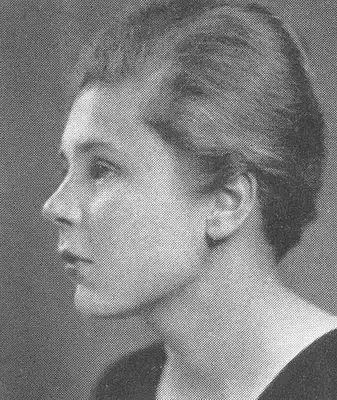
Elizabeth Bishop
The Monument
Now can you see the monument? It is of wood
built somewhat like a box. No. Built
like several boxes in descending sizes
one above the other.
Each is turned half-way round so that
its corners point toward the sides
of the one below and the angles alternate.
Then on the topmost cube is set
a sort of fleur-de-lys of weathered wood,
long petals of board, pierced with odd holes,
four-sided, stiff, ecclesiastical.
From it four thin, warped poles spring out,
(slanted like fishing-poles or flag-poles)
and from them jig-saw work hangs down,
four lines of vaguely whittled ornament
over the edges of the boxes
to the ground.
The monument is one-third set against
a sea; two-thirds against a sky.
The view is geared
(that is, the view's perspective)
so low there is no "far away,"
and we are far away within the view.
A sea of narrow, horizontal boards
lies out behind our lonely monument,
its long grains alternating right and left
like floor-boards--spotted, swarming-still,
and motionless. A sky runs parallel,
and it is palings, coarser than the sea's:
splintery sunlight and long-fibred clouds.
"Why does the strange sea make no sound?
Is it because we're far away?
Where are we? Are we in Asia Minor,
or in Mongolia?"
An ancient promontory,
an ancient principality whose artist-prince
might have wanted to build a monument
to mark a tomb or boundary, or make
a melancholy or romantic scene of it...
"But that queer sea looks made of wood,
half-shining, like a driftwood, sea.
And the sky looks wooden, grained with cloud.
It's like a stage-set; it is all so flat!
Those clouds are full of glistening splinters!
What is that?"
It is the monument.
"It's piled-up boxes,
outlined with shoddy fret-work, half-fallen off,
cracked and unpainted. It looks old."
--The strong sunlight, the wind from the sea,
all the conditions of its existence,
may have flaked off the paint, if ever it was painted,
and made it homelier than it was.
"Why did you bring me here to see it?
A temple of crates in cramped and crated scenery,
what can it prove?
I am tired of breathing this eroded air,
this dryness in which the monument is cracking."
It is an artifact
of wood. Wood holds together better
than sea or cloud or and could by itself,
much better than real sea or sand or cloud.
It chose that way to grow and not to move.
The monument's an object, yet those decorations,
carelessly nailed, looking like nothing at all,
give it away as having life, and wishing;
wanting to be a monument, to cherish something.
The crudest scroll-work says "commemorate,"
while once each day the light goes around it
like a prowling animal,
or the rain falls on it, or the wind blows into it.
It may be solid, may be hollow.
The bones of the artist-prince may be inside
or far away on even drier soil.
But roughly but adequately it can shelter
what is within (which after all
cannot have been intended to be seen).
It is the beginning of a painting,
a piece of sculpture, or poem, or monument,
and all of wood. Watch it closely.
668

Kazi Nazrul Islam
The Bird-Hunter's Song
Who is that who looks askance at me?
Is it a look of fear, diffidence or tenderness?
She smiles at me holding the aerial roots of the banyan,
Or floating her water vessel in the pond.
As she watches me bird-hunting
Her eyes fill with tears like a pair
of mussel-shells brimmed
with water from a kohl-dark lake.
The water lilies tremble in the clasp of her palm.
She knits her brows and chides me --
Is it fear, diffidence or tenderness?
Reclining her relaxed body, she arranges her tress,
Tucks at the waist the end of her dress;
She cracks her fingers and drags her feet,
oh, how she drags her feet!
At times she dives in the water,
at times she swims about,
For dallying at the ghat, she finds all the excuse.
She wants me to believe that
she is waiting for someone else.
Is it in fear, diffidence or tenderness?
[Translated from the Bangla by Farida Majid]
670
William Shakespeare
Sonnet 13: O, that you were your self! But, love, you are
O, that you were your self! But, love, you are
No longer yours than you yourself here live.
Against this coming end you should prepare,
And your sweet semblance to some other give.
So should that beauty which you hold in lease
Find no determination; then you were
Yourself again after yourself's decease,
When your sweet issue your sweet form should bear.
Who lets so fair a house fall to decay,
Which husbandry in honour might uphold
Against the stormy gusts of winter's day
And barren rage of death's eternal cold?
O, none but unthrifts! Dear my love, you know,
You had a father; let your son say so.
656
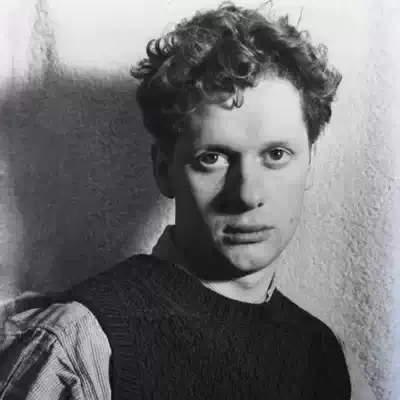
Dylan Thomas
We Lying By Seasand
We lying by seasand, watching yellow
And the grave sea, mock who deride
Who follow the red rivers, hollow
Alcove of words out of cicada shade,
For in this yellow grave of sand and sea
A calling for colour calls with the wind
That's grave and gay as grave and sea
Sleeping on either hand.
The lunar silences, the silent tide
Lapping the still canals, the dry tide-master
Ribbed between desert and water storm,
Should cure our ills of the water
With a one-coloured calm;
The heavenly music over the sand
Sounds with the grains as they hurry
Hiding the golden mountains and mansions
Of the grave, gay, seaside land.
Bound by a sovereign strip, we lie,
Watch yellow, wish for wind to blow away
The strata of the shore and drown red rock;
But wishes breed not, neither
Can we fend off rock arrival,
Lie watching yellow until the golden weather
Breaks, O my heart's blood, like a heart and hill.
655
William Shakespeare
Sonnet 69: Those parts of thee that the world's eye doth view
Those parts of thee that the world's eye doth view
Want nothing that the thought of hearts can mend;
All tongues, the voice of souls, give thee that due,
Utt'ring bare truth, even so as foes commend.
Thy outward thus with outward praise is crowned,
But those same tongues that give thee so thine own
In other accents do this praise confound
By seeing farther than the eye hath shown.
They look into the beauty of thy mind,
And that, in guess, they measure by thy deeds;
Then churls their thoughts, although their eyes were kind,
To thy fair flower add the rank smell of weeds.
But why thy odour matcheth not thy show,
The soil is this, that thou dost common grow.
657