
Beauty

William Shakespeare
Sonnet 14: Not from the stars do I my judgment pluck
Not from the stars do I my judgment pluck,
And yet methinks I have astronomy;
But not to tell of good or evil luck,
Of plagues, of dearths, or seasons' quality;
Nor can I fortune to brief minutes tell,
Pointing to each his thunder, rain, and wind,
Or say with princes if it shall go well
By oft predict that I in heaven find.
But from thine eyes my knowledge I derive,
And, constant stars, in them I read such art
As truth and beauty shall together thrive
If from thyself to store thou wouldst convert:
Or else of thee this I prognosticate,
Thy end is truth's and beauty's doom and date.
668
William Shakespeare
Sonnet 141: In faith, I do not love thee with mine eyes
In faith, I do not love thee with mine eyes,
For they in thee a thousand errors note;
But 'tis my heart that loves what they despise,
Who in despite of view is pleased to dote.
Nor are mine cars with thy tongue's tune delighted,
Nor tender feeling to base touches prone,
Nor taste, nor smell, desire to be invited
To any sensual feast with thee alone;
But my five wits, nor my five senses can
Dissuade one foolish heart from serving thee,
Who leaves unswayed the likeness of a man,
Thy proud heart's slave and vassal wretch to be.
Only my plague thus far I count my gain,
That she that makes me sin awards me pain.
667
William Shakespeare
Sonnet 53: What is your substance, whereof are you made
What is your substance, whereof are you made,
That millions of strange shadows on you tend?
Since everyone hath, every one, one shade,
And you, but one, can every shadow lend.
Describe Adonis, and the counterfeit
Is poorly imitated after you;
On Helen's cheek all art of beauty set,
And you in Grecian tires are painted new.
Speak of the spring, and foison of the year;
The one doth shadow of your beauty show,
The other as your bounty doth appear,
And you in every blessèd shape we know.
In all external grace you have some part,
But you like none, none you, for constant heart.
667
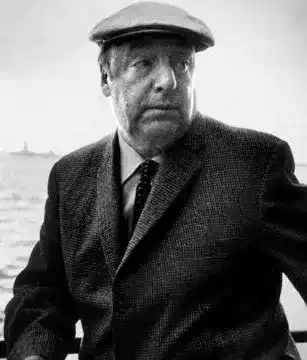
Pablo Neruda
Ode To Bird Watching
Now
Let's look for birds!
The tall iron branches
in the forest,
The dense
fertility on the ground.
The world
is wet.
A dewdrop or raindrop
shines,
a diminutive star
among the leaves.
The morning time
mother earth
is cool.
The air
is like a river
which shakes
the silence.
It smells of rosemary,
of space
and roots.
Overhead,
a crazy song.
It's a bird.
How
out of its throat
smaller than a finger
can there fall the waters
of its song?
Luminous ease!
Invisible
power
torrent
of music
in the leaves.
Sacred conversations!
Clean and fresh washed
is this
day resounding
like a green dulcimer.
I bury
my shoes
in the mud,
jump over rivulets.
A thorn
bites me and a gust
of air like a crystal
wave
splits up inside my chest.
Where
are the birds?
Maybe it was
that
rustling in the foliage
or that fleeting pellet
of brown velvet
or that displaced
perfume? That
leaf that let loose cinnamon smell
-was that a bird? That dust
from an irritated magnolia
or that fruit
which fell with a thump was
that a flight?
Oh, invisible little
critters
birds of the devil
with their ringing
with their useless feathers.
I only want
to caress them,
to see them resplendent.
I don't want
to see under glass
the embalmed lightning.
I want to see them living.
I want to touch their gloves
of real hide,
which they never forget in
the branches
and to converse with
them
sitting on my shoulders
although they may leave
me like certain statues
undeservedly whitewashed.
Impossible.
You can't touch them.
You can hear them
like a heavenly
rustle or movement.
They converse
with precision.
They repeat
their observations.
They brag
of how much they do.
They comment
on everything that exists.
They learn
certain sciences
like hydrography.
and by a sure science
they know
where there are harvests
of grain
661
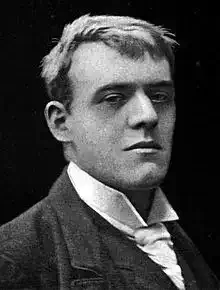
Hilaire Belloc
[Month of] April
The stranger warmth of the young sun obeying,
Look! little beads of green begin to grow,
And hidden flowers have dated their tops to show
Where late such droughty dusts were rudely playing.
It's not the month, but all the world's a-maying!
Come then with me, I'll take you, for I know
Where the first hedgethorns and white windflowers blow:
We two alone,, that goes without the saying.
The month has treacherous clouds and moves in fears.
This April shames the month itself with smiles:
In whose new eyes I know no heaven of tears,
But still serene desire and between whiles,
So great a look that even April's grace
Makes only marvel at her only face.
663
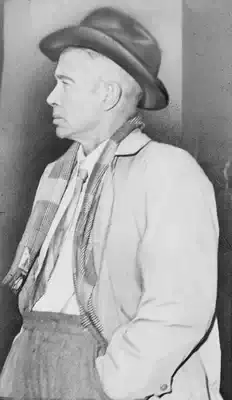
E. E. Cummings
Spring is like a perhaps hand
Spring is like a perhaps hand
(which comes carefully
out of Nowhere)arranging
a window,into which people look(while
people stare
arranging and changing placing
carefully there a strange
thing and a known thing here)and
changing everything carefully
spring is like a perhaps
Hand in a window
(carefully to
and fro moving New and
Old things,while
people stare carefully
moving a perhaps
fraction of flower here placing
an inch of air there)and
without breaking anything.
645
Pablo Neruda
Ode to My Socks
Mara Mori brought me
a pair of socks
which she knitted herself
with her sheepherder's hands,
two socks as soft as rabbits.
I slipped my feet into them
as if they were two cases
knitted with threads of twilight and goatskin,
Violent socks,
my feet were two fish made of wool,
two long sharks
sea blue, shot through
by one golden thread,
two immense blackbirds,
two cannons,
my feet were honored in this way
by these heavenly socks.
They were so handsome for the first time
my feet seemed to me unacceptable
like two decrepit firemen,
firemen unworthy of that woven fire,
of those glowing socks.
Nevertheless, I resisted the sharp temptation
to save them somewhere as schoolboys
keep fireflies,
as learned men collect
sacred texts,
I resisted the mad impulse to put them
in a golden cage and each day give them
birdseed and pieces of pink melon.
Like explorers in the jungle
who hand over the very rare green deer
to the spit and eat it with remorse,
I stretched out my feet and pulled on
the magnificent socks and then my shoes.
The moral of my ode is this:
beauty is twice beauty
and what is good is doubly good
when it is a matter of two socks
made of wool in winter.
649
William Shakespeare
Sonnet 63: Against my love shall be, as I am now
Against my love shall be, as I am now,
With Time's injurious hand crushed and o'erworn;
When hours have drained his blood and filled his brow
With lines and wrinkles; when his youthful morn
Hath travelled on to age's steepy night,
And all those beauties whereof now he's king
Are vanishing, or vanished out of sight,
Stealing away the treasure of his spring;
For such a time do I now fortify
Against confounding age's cruel knife,
That he shall never cut from memory
My sweet love's beauty, though my lover's life.
His beauty shall in these black lines be seen,
And they shall live, and he in them still green.
642
Pablo Neruda
Ode To Wine
Day-colored wine,
night-colored wine,
wine with purple feet
or wine with topaz blood,
wine,
starry child
of earth,
wine, smooth
as a golden sword,
soft
as lascivious velvet,
wine, spiral-seashelled
and full of wonder,
amorous,
marine;
never has one goblet contained you,
one song, one man,
you are choral, gregarious,
at the least, you must be shared.
At times
you feed on mortal
memories;
your wave carries us
from tomb to tomb,
stonecutter of icy sepulchers,
and we weep
transitory tears;
your
glorious
spring dress
is different,
blood rises through the shoots,
wind incites the day,
nothing is left
of your immutable soul.
Wine
stirs the spring, happiness
bursts through the earth like a plant,
walls crumble,
and rocky cliffs,
chasms close,
as song is born.
A jug of wine, and thou beside me
in the wilderness,
sang the ancient poet.
Let the wine pitcher
add to the kiss of love its own.
My darling, suddenly
the line of your hip
becomes the brimming curve
of the wine goblet,
your breast is the grape cluster,
your nipples are the grapes,
the gleam of spirits lights your hair,
and your navel is a chaste seal
stamped on the vessel of your belly,
your love an inexhaustible
cascade of wine,
light that illuminates my senses,
the earthly splendor of life.
But you are more than love,
the fiery kiss,
the heat of fire,
more than the wine of life;
you are
the community of man,
translucency,
chorus of discipline,
abundance of flowers.
I like on the table,
when we're speaking,
the light of a bottle
of intelligent wine.
Drink it,
and remember in every
drop of gold,
in every topaz glass,
in every purple ladle,
that autumn labored
to fill the vessel with wine;
and in the ritual of his office,
let the simple man remember
to think of the soil and of his duty,
to propagate the canticle of the wine.
644
William Shakespeare
Sonnet 16: But wherefore do not you a mightier way
But wherefore do not you a mightier way
Make war upon this bloody tyrant, Time,
And fortify your self in your decay
With means more blessèd than my barren rhyme?
Now stand you on the top of happy hours,
And many maiden gardens yet unset,
With virtuous wish would bear you living flowers,
Much liker than your painted counterfeit:
So should the lines of life that life repair
Which this, Time's pencil, or my pupil pen
Neither in inward worth nor outward fair
Can make you live your self in eyes of men.
To give away your self keeps your self still,
And you must live drawn by your own sweet skill.
632
Pablo Neruda
Tower Of Light
O tower of light, sad beauty
that magnified necklaces and statues in the sea,
calcareous eye, insignia of the vast waters, cry
of the mourning petrel, tooth of the sea, wife
of the Oceanian wind, O separate rose
from the long stem of the trampled bush
that the depths, converted into archipelago,
O natural star, green diadem,
alone in your lonesome dynasty,
still unattainable, elusive, desolate
like one drop, like one grape, like the sea.
632

Paul Laurence Dunbar
Summer in the South
The Oriole sings in the greening grove
As if he were half-way waiting,
The rosebuds peep from their hoods of green,
Timid, and hesitating.
The rain comes down in a torrent sweep
And the nights smell warm and pinety,
The garden thrives, but the tender shoots
Are yellow-green and tiny.
Then a flash of sun on a waiting hill,
Streams laugh that erst were quiet,
The sky smiles down with a dazzling blue
And the woods run mad with riot.
638

John Keats
Endymion: A Poetic Romance (Excerpt)
BOOK I
A thing of beauty is a joy for ever:
Its loveliness increases; it will never
Pass into nothingness; but still will keep
A bower quiet for us, and a sleep
Full of sweet dreams, and health, and quiet breathing.
Therefore, on every morrow, are we wreathing
A flowery band to bind us to the earth,
Spite of despondence, of the inhuman dearth
Of noble natures, of the gloomy days,
Of all the unhealthy and o'er-darkened ways
Made for our searching: yes, in spite of all,
Some shape of beauty moves away the pall
From our dark spirits. Such the sun, the moon,
Trees old and young, sprouting a shady boon
For simple sheep; and such are daffodils
With the green world they live in; and clear rills
That for themselves a cooling covert make
'Gainst the hot season; the mid forest brake,
Rich with a sprinkling of fair musk-rose blooms:
And such too is the grandeur of the dooms
We have imagined for the mighty dead;
All lovely tales that we have heard or read:
An endless fountain of immortal drink,
Pouring unto us from the heaven's brink.
Nor do we merely feel these essences
For one short hour; no, even as the trees
That whisper round a temple become soon
Dear as the temple's self, so does the moon,
The passion poesy, glories infinite,
Haunt us till they become a cheering light
Unto our souls, and bound to us so fast,
That, whether there be shine, or gloom o'ercast;
They always must be with us, or we die.
Therefore, 'tis with full happiness that I
Will trace the story of Endymion.
The very music of the name has gone
Into my being, and each pleasant scene
Is growing fresh before me as the green
Of our own valleys: so I will begin
Now while I cannot hear the city's din;
Now while the early budders are just new,
And run in mazes of the youngest hue
About old forests; while the willow trails
Its delicate amber; and the dairy pails
Bring home increase of milk. And, as the year
Grows lush in juicy stalks, I'll smoothly steer
My little boat, for many quiet hours,
With streams that deepen freshly into bowers.
Many and many a verse I hope to write,
Before the daisies, vermeil rimm'd and white,
Hide in deep herbage; and ere yet the bees
Hum about globes of clover and sweet peas,
I must be near the middle of my story.
O may no wintry season, bare and hoary,
See it half finish'd: but let Autumn bold,
With universal tinge of sober gold,
Be all about me when I make an end.
And now, at once adventuresome, I send
My herald thought into a wilderness:
There let its trumpet blow, and quickly dress
My uncertain path with green, that I may speed
Easily onward, thorough flowers and weed....
627
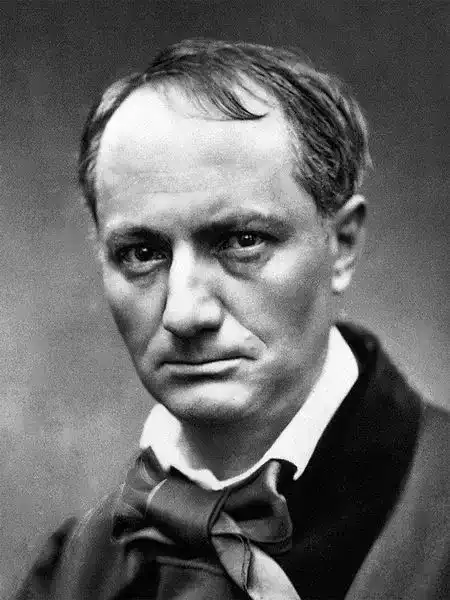
Charles Baudelaire
The Invitation to the Voyage
My sister, my child
imagine, exiled,
The sweetness, of being there, we two!
To live and to sigh,
to love and to die,
In the land that mirrors you!
The misted haze
of its clouded days
Has the same charm to my mind,
as mysterious,
as your traiterous
Eyes, behind glittering blinds.
There everything’s order and beauty,
calm, voluptuousness, and luxury.
The surface gleams
are polished it seems,
Through the years, to grace our room.
The rarest flowers
mix, with fragrant showers,
The vague, amber perfume.
The dark, painted halls,
the deep mirrored walls,
With Eastern splendour hung,
all secretly speak,
To the soul, its discrete,
Sweet, native tongue.
There, everything’s order and beauty,
calm, voluptuousness and luxury.
See, down the canals,
the sleeping vessels,
Those nomads, their white sails furled:
Now, to accomplish
your every wish,
They come from the ends of the world.
- The deep sunsets
surround the west,
The canals, the city, entire,
with blue-violet and gold;
And the Earth grows cold
In an incandescent fire.
There, everything’s order and beauty,
calm, voluptuousness and luxury.
628
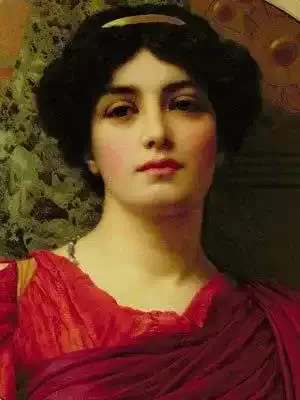
Safo
Song of The Rose
F Zeus chose us a King of the flowers in his mirth,
He would call to the rose, and would royally crown it;
For the rose, ho, the rose! is the grace of the earth,
Is the light of the plants that are growing upon it!
For the rose, ho, the rose! is the eye of the flowers,
Is the blush of the meadows that feel themselves fair,
Is the lightning of beauty that strikes through the bowers
On pale lovers that sit in the glow unaware.
Ho, the rose breathes of love! ho, the rose lifts the cup
To the red lips of Cypris invoked for a guest!
Ho, the rose having curled its sweet leaves for the world
Takes delight in the motion its petals keep up,
As they laugh to the wind as it laughs from the west.
626
Pablo Neruda
Enigma with Flower
Victory. It has come late, I had not learnt
how to arrive, like the lily, at will,
the white figure, that pierces
the motionless eternity of earth,
pushing at clear, faint, form,
till the hour strikes: that clay,
with a white ray, or a spur of milk.
Shedding of clothing, the thick darkness of soil,
on whose cliff the fair flower advances,
till the flag of its whiteness
defeats the contemptible deep of night,
and, from the motion of light,
spills itself in astonished seed.
617
Pablo Neruda
Sonnet VIII
If your eyes were not the color of the moon,
of a day full [here, interrupted by the baby waking -- continued about 26
hours later ]
of a day full of clay, and work, and fire,
if even held-in you did not move in agile grace like the air,
if you were not an amber week,
not the yellow moment
when autumn climbs up through the vines;
if you were not that bread the fragrant moon
kneads, sprinkling its flour across the sky,
oh, my dearest, I could not love you so!
But when I hold you I hold everything that is -sand,
time, the tree of the rain,
everything is alive so that I can be alive:
without moving I can see it all:
in your life I see everything that lives.
617

Rabindranath Tagore
Light
Light, my light, the world-filling light,
the eye-kissing light,
heart-sweetening light!
Ah, the light dances, my darling, at the center of my life;
the light strikes, my darling, the chords of my love;
the sky opens, the wind runs wild, laughter passes over the earth.
The butterflies spread their sails on the sea of light.
Lilies and jasmines surge up on the crest of the waves of light.
The light is shattered into gold on every cloud, my darling,
and it scatters gems in profusion.
Mirth spreads from leaf to leaf, my darling,
and gladness without measure.
The heaven's river has drowned its banks
and the flood of joy is abroad.
619
Pablo Neruda
Sonnet XXV
Before I loved you, love, nothing was my own:
I wavered through the streets, among
Objects:
Nothing mattered or had a name:
The world was made of air, which waited.
I knew rooms full of ashes,
Tunnels where the moon lived,
Rough warehouses that growled 'get lost',
Questions that insisted in the sand.
Everything was empty, dead, mute,
Fallen abandoned, and decayed:
Inconceivably alien, it all
Belonged to someone else - to no one:
Till your beauty and your poverty
Filled the autumn plentiful with gifts.
616
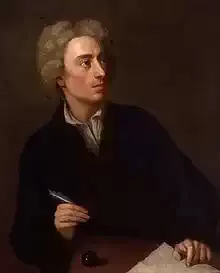
Alexander Pope
Essay on Man
The First Epistle
Awake, my ST. JOHN!(1) leave all meaner things
To low ambition, and the pride of Kings.
Let us (since Life can little more supply
Than just to look about us and to die)
Expatiate(2) free o'er all this scene of Man;
A mighty maze! but not without a plan;
A Wild, where weeds and flow'rs promiscuous shoot,
Or Garden, tempting with forbidden fruit.
Together let us beat this ample field,
Try what the open, what the covert yield;
The latent tracts(3), the giddy heights explore
Of all who blindly creep, or sightless soar;
Eye Nature's walks, shoot Folly as it flies,
And catch the Manners living as they rise;
Laugh where we must, be candid where we can;
But vindicate(4) the ways of God to Man.
1. Say first, of God above, or Man below,
What can we reason, but from what we know?
Of Man what see we, but his station here,
From which to reason, or to which refer?
Thro' worlds unnumber'd tho' the God be known,
'Tis ours to trace him only in our own.
He, who thro' vast immensity can pierce,
See worlds on worlds compose one universe,
Observe how system into system runs,
What other planets circle other suns,
What vary'd being peoples ev'ry star,
May tell why Heav'n has made us as we are.
But of this frame the bearings, and the ties,
The strong connections, nice dependencies,
Gradations just, has thy pervading soul
Look'd thro'? or can a part contain the whole?
Is the great chain, that draws all to agree,
And drawn supports, upheld by God, or thee?
II. Presumptuous Man! the reason wouldst thou find,
Why form'd so weak, so little, and so blind!
First, if thou canst, the harder reason guess,
Why form'd no weaker, blinder, and no less!
Ask of thy mother earth, why oaks are made
Taller or stronger than the weeds they shade?
Or ask of yonder argent fields(5) above,
Why JOVE'S Satellites are less than JOVE?(6)
Of Systems possible, if 'tis confest
That Wisdom infinite must form the best,
Where all must full or not coherent be,
And all that rises, rise in due degree;
Then, in the scale of reas'ning life, 'tis plain
There must be, somewhere, such rank as Man;
And all the question (wrangle e'er so long)
Is only this, if God has plac'd him wrong?
Respecting Man, whatever wrong we call,
Nay, must be right, as relative to all.
In human works, tho' labour'd on with pain,
A thousand movements scarce one purpose gain;
In God's, one single can its end produce;
Yet serves to second too some other use.
So Man, who here seems principal alone,
Perhaps acts second to some sphere unknown,
Touches some wheel, or verges to some goal;
'Tis but a part we see, and not a whole.
When the proud steed shall know why Man restrains
His fiery course, or drives him o'er the plains;
When the dull Ox, why now he breaks the clod,
Is now a victim, and now Egypt's God:(7)
Then shall Man's pride and dullness comprehend
His actions', passions', being's, use and end;
Why doing, suff'ring, check'd, impell'd; and why
This hour a slave, the next a deity.
Then say not Man's imperfect, Heav'n in fault;
Say rather, Man's as perfect as he ought;
His knowledge measur'd to his state and place,
His time a moment, and a point his space.
If to be perfect in a certain sphere,
What matter, soon or late, or here or there?
The blest today is as completely so,
As who began a thousand years ago.
III. Heav'n from all creatures hides the book of Fate,
All but the page prescrib'd, their present state;
From brutes what men, from men what spirits know:
Or who could suffer Being here below?
The lamb thy riot dooms to bleed to-day,
Had he thy Reason, would he skip and play?
Pleas'd to the last, he crops the flow'ry food,
And licks the hand just rais'd to shed his blood.
Oh blindness to the future! kindly giv'n,
That each may fill the circle mark'd by Heav'n;
Who sees with equal eye, as God of all,
A hero perish, or a sparrow fall,
Atoms or systems into ruin hurl'd,
And now a bubble burst, and now a world.
Hope humbly then; with trembling pinions soar;
Wait the great teacher Death, and God adore!
What future bliss, he gives not thee to know,
But gives that Hope to be thy blessing now.
Hope springs eternal in the human breast:
Man never Is, but always To be blest:
The soul, uneasy and confin'd from home,
Rests and expatiates in a life to come.
Lo! the poor Indian, whose untutor'd mind
Sees God in clouds, or hears him in the wind;
His soul proud Science never taught to stray
Far as the solar walk, or milky way;
Yet simple Nature to his hope has giv'n,
Behind the cloud-topt hill, an humbler heav'n;
Some safer world in depth of woods embrac'd,
Some happier island in the watry waste,
Where slaves once more their native land behold,
No fiends torment, no Christians thirst for gold!
To Be, contents his natural desire,
He asks no Angel's wing, no Seraph's(8) fire;
But thinks, admitted to that equal sky,
His faithful dog shall bear him company.
IV. Go, wiser thou! and in thy scale of sense
Weigh thy Opinion against Providence;
Call Imperfection what thou fancy'st such,
Say, here he gives too little, there too much;
Destroy all creatures for thy sport or gust,(9)
Yet cry, If Man's unhappy, God's unjust;
If Man alone ingross not Heav'n's high care,
Alone made perfect here, immortal there:
Snatch from his hand the balance(10) and the rod,
Re-judge his justice, be the GOD of GOD!
In Pride, in reas'ning Pride, our error lies;
All quit their sphere, and rush into the skies.
Pride still is aiming at the blest abodes,
Men would be Angels, Angels would be Gods.
Aspiring to be Gods, if Angels fell,
Aspiring to be Angels, Men rebel;
And who but wishes to invert the laws
Of ORDER, sins against th' Eternal Cause.
V. Ask for what end the heav'nly bodies shine,
Earth for whose use? Pride answers, "Tis for mine:
For me kind Nature wakes her genial pow'r,
Suckles each herb, and spreads out ev'ry flow'r;
Annual for me, the grape, the rose renew
The juice nectareous, and the balmy dew;
For me, the mine a thousand treasures brings;
For me, health gushes from a thousand springs;
Seas roll to waft me, suns to light me rise;
My foot-stool earth, my canopy the skies."
But errs not Nature from this gracious end,
From burning suns when livid deaths descend,
When earthquakes swallow, or when tempests sweep
Towns to one grave, whole nations to the deep?
"No ('tis reply'd) the first Almighty Cause
Acts not by partial, but by gen'ral laws;
Th' exceptions few; some change since all began,
And what created perfect?" -- Why then Man?
If the great end be human Happiness,
Then Nature deviates; and can Man do less?
As much that end a constant course requires
Of show'rs and sun-shine, as of Man's desires;
As much eternal springs and cloudless skies,
As Men for ever temp'rate, calm, and wise.
If plagues or earthquakes break not Heav'n's design,
Why then a Borgia,(11) or a Catiline?(12)
Who knows but he, whose hand the light'ning forms,
Who heaves old Ocean, and who wings the storms,
Pours fierce Ambition in a Caesar's(13) mind,
Or turns young Ammon(14) loose to scourge mankind?
From pride, from pride, our very reas'ning springs;
Account for moral as for nat'ral things:
Why charge we Heav'n in those, in these acquit?
In both, to reason right is to submit.
Better for Us, perhaps, it might appear,
Were there all harmony, all virtue here;
That never air or ocean felt the wind;
That never passion discompos'd the mind:
But ALL subsists by elemental strife;
and Passions are the elements of Life.
The gen'ral ORDER, since the whole began,
Is kept in Nature, and is kept in Man.
VI. What would this Man? Now upward will he soar,
And little less than Angel,(15) would be more;
Now looking downwards, just as griev'd appears
To want the strength of bulls, the fur of bears.
Made for his use all creatures if he call,
Say what their use, had he the pow'rs of all?
Nature to these, without profusion kind,
The proper organs, proper pow'rs assign'd;
Each seeming want compensated of course,
Here with degrees of swiftness, there of force;
All in exact proportion to the state;
Nothing to add, and nothing to abate.
Each beast, each insect, happy in its own;
Is Heav'n unkind to Man, and Man alone?
Shall he alone, whom rational we call,
Be pleas'd with nothing, if not bless'd with all?
The bliss of Man (could Pride that blessing find)
Is not to act or think beyond mankind;
No pow'rs of body or of soul to share,
But what his nature and his state can bear.
Why has not Man a microscopic eye?
For this plain reason, Man is not a Fly.
Say what the use, were finer optics giv'n,
T' inspect a mite,(16) not comprehend the heav'n?
Or touch, if tremblingly alive all o'er,
To smart and agonize at ev'ry pore?
Or quick effluvia(17) darting thro' the brain,
Die of a rose in aromatic pain?
If nature thunder'd in his op'ning ears,
And stunn'd him with the music of the spheres,
How would he wish that Heav'n had left him still
The whisp'ring Zephyr,(18) and the purling rill?(19)
Who finds not Providence all good and wise,
Alike in what it gives, and what denies?
VII. Far as Creation's ample range extends,
The scale of sensual, mental pow'rs ascends:
Mark how it mounts, to Man's imperial race,
From the green myriads in the people grass:
What modes of sight betwixt each wide extreme,
The mole's dim curtain, and the lynx's beam:
Of smell, the headlong lioness between,
And hound sagacious(20) on the tainted(21) green:
Of hearing, from the life that fills the flood,(22)
To that which warbles thro' the vernal(23) wood:
The spider's touch, how exquisitely fine!
Feels at each thread, and lives along the line:
In the nice bee, what sense so subtly true
From pois'nous herbs extracts the healing dew:(24)
How Instinct varies in the grov'ling swine,
Compar'd, half-reas'ning elephant, with thine:
'Twixt that, and Reason, what a nice barrier;
For ever sep'rate, yet for ever near!
Remembrance and Reflection how ally'd;
What thin partitions Sense from Thought divide:
And Middle natures,(25) how they long to join,
Yet never pass th' insuperable line!
Without this just gradation, could they be
Subjected these to those, or all to thee?
The pow'rs of all subdu'd by thee alone,
Is not thy Reason all these pow'rs in one?
VIII. See, thro' this air, this ocean, and this earth,
All matter quick, and bursting into birth.
Above, how high progressive life may go!
Around, how wide! how deep extend below!
Vast chain of being, which from God began,
Natures ethereal,(26) human, angel, man
Beast, bird, fish, insect! what no eye can see,
No glass can reach! from Infinite to thee,
From thee to Nothing! -- On superior pow'rs
Were we to press, inferior might on ours:
Or in the full creation leave a void,
Where, one step broken, the great scale's destoy'd:
From Nature's chain whatever link you strike,
Tenth or ten thousandth, breaks the chain alike.
And if each system in gradation roll,
Alike essential to th' amazing whole;
The least confusion but in one, not all
That system only, but the whole must fall.
Let Earth unbalanc'd from her orbit fly,
Planets and Suns run lawless thro' the sky,
Let ruling Angels from their spheres be hurl'd,
Being on being wreck'd, and world on world,
Heav'n's whole foundations to their centre nod,
And Nature tremble to the throne of God:
All this dread ORDER break -- for whom? for thee?
Vile worm! -- oh, Madness, Pride, Impiety!
IX. What if the foot, ordain'd the dust to tread,
Or hand to toil, aspir'd to be the head?
What if the head, the eye, or ear repin'd(27)
To serve mere engines to the ruling Mind?
Just as absurd, to mourn the tasks or pains
The great directing MIND of ALL ordains.
All are but parts of one stupendous whole,
Whose body, Nature is, and God the soul;
That, chang'd thro' all, and yet in all the same,
Great in the earth, as in th' ethereal frame,
Warms in the sun, refreshes in the breeze,
Glows in the stars, and blossoms in the trees,
Lives thro' all life, extends thro' all extent,
Spreads undivided, operates unspent,
Breathes in our soul, informs our mortal parts,
As full, as perfect, in a hair as heart;
As full, as perfect, in vile Man that mourns,
As the rapt Seraph that adores and burns;
To him no high, no low, no great, no small;
He fills, he bounds, connects, and equals all.
X. Cease then, nor ORDER Imperfection name:
Our proper bliss depends on what we blame.
Know thy own point: This kind, this due degree
Of blindness, weakness, Heav'n bestows on thee.
Submit -- In this, or any other sphere,
Secure to be as blest as thou canst bear:
Safe in the hand of one disposing Pow'r,
Or in the natal, or the mortal hour.
All Nature is but Art, unknown to thee;
All Chance, Direction, which thou canst not see;
All Discord, Harmony, not understood;
All partial Evil, universal Good:
And, spite of Pride, in erring Reason's spite,
One truth is clear, "Whatever IS, is RIGHT."
Argument of the Second Epistle:
Of the Nature and State of Man, with respect to Himself, as an Individual. The business
of Man not to pry into God, but
to study himself.
Know then thyself, presume not God to scan;
The proper study of Mankind is Man.
Plac'd on this isthmus of a middle state,(28)
A being darkly wise, and rudely great:
With too much knowledge for the Sceptic side,
With too much weakness for the Stoic's pride,
He hangs between; in doubt to act, or rest,
In doubt to deem himself a God, or Beast;
In doubt his Mind or Body to prefer,
Born but to die, and reas'ning but to err;
Alike in ignorance, his reason such,
Whether he thinks too little, or too much:
Chaos of Thought and Passion, all confus'd;
Still by himself abus'd, or disabus'd;
Created half to rise, and half to fall;
Great lord of all things, yet a prey to all;
Sole judge of Truth, in endless Error hurl'd:
The glory, jest, and riddle of the world!
ENDNOTES:
1[His friend, Henry St. John, Lord Bolingbroke]
2[to wander]
3[hidden areas]
4[explain or defend]
5[silvery fields, i.e., the heavens]
6[the planet Jupiter]
7[ancient Egyptians sometimes worshipped oxen]
8[the highest level of angels]
9[pleasure]
10[the balance used to weigh justice]
11[Caesar Borgia (1476-1507) who used any cruelty to achieve his ends]
12[Lucious Sergius Catilina (108-62 B.C.) who was a traitor to Rome]
13[Julius Caesar (100-44 B.C.) who was thought to be overly ambitious Roman]
14[Alexander the Great (356-323 B.C.)]
15[Psalm 8:5--"Thou hast made him [man] a little lower than the angels...."]
16[small insect]
17[vapors which were believed to pass odors to the brain]
18[the West Wind]
19[stream]
20[able to pick up a scent]
21[having the odor of an animal]
22[ocean]
23[green]
24[honey was thought to have medicinal properties]
25[Animals slightly below humans on the chain of being]
26[heavenly]
27[complained]
28[i.e., on the chain of being between angels and animals]
617
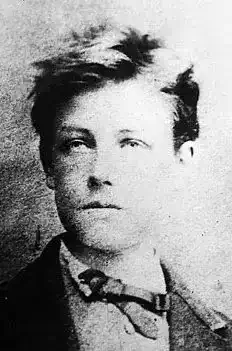
Arthur Rimbaud
Antique
Gracious son of Pan! Around your forehead
crowned with flowerets
and with laurel, restlessly roll
those precious balls, your eyes.
Spotted with brown lees, your cheeks are hollow.
Your fangs gleam. Your breast is like a lyre,
tinklings circulate through your pale arms.
Your heart beats in that belly where sleeps the double sex.
Walk through the night, gently moving that thigh,
that second thigh, and that left leg.
622
John Keats
On the Sea
It keeps eternal whisperings around
Desolate shores, and with its mighty swell
Gluts twice ten thousand Caverns, till the spell
Of Hecate leaves them their old shadowy sound.
Often 'tis in such gentle temper found,
That scarcely will the very smallest shell
Be moved for days from where it sometime fell.
When last the winds of Heaven were unbound.
Oh, ye! who have your eyeballs vexed and tired,
Feast them upon the wideness of the Sea;
Oh ye! whose ears are dinned with uproar rude,
Or fed too much with cloying melody---
Sit ye near some old Cavern's Mouth and brood,
Until ye start, as if the sea nymphs quired!
626
Charles Baudelaire
Beauty
I am as lovely as a dream in stone;
My breast on which each finds his death in turn
Inspires the poet with a love as lone
As everlasting clay, and as taciturn.
Swan-white of heart, as sphinx no mortal knows,
My throne is in the heaven's azure deep;
I hate all movement that disturbs my pose;
I smile not ever, neither do I weep.
Before my monumental attitudes,
Taken from the proudest plastic arts,
My poets pray in austere studious moods,
For I, to fold enchantment round their hearts,
Have pools of light where beauty flames and dies,
The placid mirrors of my luminous eyes.
605

Emily Dickinson
There is another sky
There is another sky,
Ever serene and fair,
And there is another sunshine,
Though it be darkness there;
Never mind faded forests, Austin,
Never mind silent fields-
Here is a little forest,
Whose leaf is ever green;
Here is a brighter garden,
Where not a frost has been;
In its unfading flowers
I hear the bright bee hum:
Prithee, my brother,
Into my garden come!
613