
City and Everyday Life
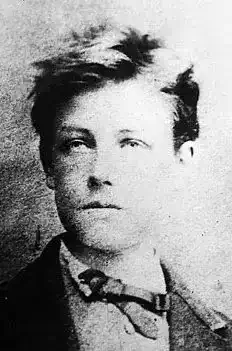
Arthur Rimbaud
Parisian War Song
Spring is evidently here;
for the ascent of Thiers
and Picard from the green Estates lays
its splendours wide open! O May!
What delirious bare bums!
O Sevres Meudon, Bagneux, Asnieres,
listen now to the welcome arrivals
scattering springtime joys!
They have shakos, and sabers, and tom-toms,
and none of the old candleboxes;
and skiffs which have nev… nev..
are cutting the lake of bloodstained waters.
More than ever before, we roister,
as on to our ant-heaps come tumbling the yellow heads,
on these extraordinary dawns:
Theirs and Picards are Cupids;
and beheaders of sunflowers too;
they paint peaceful landscapes
(Corots) with insecticide (paraffin):
look how their tropes de-cockchafer the trees…
'They're familiars of the Great What's-his-name!...' -
And Favre, lying among the irisis,
blinks and weeps crocodile tears,
and sniffs his peppery sniff!
The Big City has hot cobblestones,
in spite of your showers of paraffin;
and decidedly we shall have to liven you up in your parts..
And the Rustics who take their ease in long squattings
will hear boughs breaking among the red rustlings.
665
Arthur Rimbaud
The Parisian Orgy
O cowards! There she is!
Pile out into the stations!
The sun with its fiery lungs blew clear
the boulevards that, one evening,
the Barbarians filled.
Here is the holy City, seated in the West! Come!
We'll stave off the return of the fires;
here are the quays, here are the boulevards,
here are the houses against the pale,
radiant blue-starred, one evening,
by the red flashes of bombs!
Hide the dead places with forests of planks!
Affrighted, the dying daylight freshens your looks.
Look at the red-headed troop of the wrigglers of hips:
be mad, you'll be comical, being haggard!
Pack of bitches on heat, eating poultices:
the cry from the houses of gold calls you!
Plunder! Eat! See the night of joy and deep twitchings
coming down on the street.
O desolate drinkers, Drink! When the light comes,
intense and crazed, to ransack round you the rustling luxuries,
you're not going to dribbe into your glasses
without motion or sound, with your eyes lost in white distances?
Knock it back: to the Queen whose buttocks cascade in folds!
Listen to the working of stupid tearing hiccups!
Listen to them leaping n the fiery night:
the panting idiots, the aged, the nonentities, the lackeys!
O hearts of filth, appalling mouths;
work harder, mouths of foul stenches!
Wine for these ignoble torpors, at these tables…
Your bellies are melting with shame, O Conquerors!
Open your nostrils to these superb nauseas!
Steep the tendons of your necks in strong poisons!
Laying his crossed hands on the napes of your childish necks,
the Poet says to you: 'O cowards! Be mad!
Because you are ransacking the guts of Woman,
you fear another convulsion from her, crying out,
and stifling your infamous perching on her breast with a horrible pressure.
Syphilitics, madmen, kings, puppets, ventriloquists!
What can you matter to Paris the whore?
Your souls or your bodies, your poisons or your rags?
She'll shake you off, you pox-rotten snarlers!
And when you are down, whimpering on your bellies,
your sides wrung, clamouring for your money back, distracted,
the red harlot with her breasts swelling
with battles will clench her hard fists,
far removed from your stupor!'
When your feet, Paris, danced so hard in anger!
When you had so many knife wounds; when you lay helpless,
still retaining in your clear eyes a little of the goodness
of the tawny spring; O city in pain;
O city almost dead, with your face and your two breasts
pointing towards the Future
which opens to your pallor its thousand million gates;
city whom the dark Past could bless:
Body galvanized back to life to suffer tremendous pains,
you are drinking in dreadful life once more!
You feel he ghastly pale worms flooding back in your veins,
the icy fingers prowling on your unclouded love!
And it does you no harm.
The worms, the pale worms, will obstruct your breath of Progress no more
than the Stryx could extinguish the eyes of the Caryatides,
from whose blue sills fell tears of sidereal gold.
Although it is frightful to see you again
covered in this fashion; although no city was ever made
into a more foul-smelling ulcer
on the face of green Nature, the Poet says to you:
'Your beauty is Marvelous!' The tempest sealed you in supreme poetry;
the huge stirring of strength comes to your aid;
your work comes to the boil, death groans, O chosen City!
Hoard in your heart the stridors of the ominous trumpet.
The Poet will take the sobs of the Infamous
the hate of the Galley-slaves, the clamour of the Damned;
and the beams of his love will scourge Womankind.
His verses will leap out: There's for you! There! Villains! -Society,
and everything, is restored: - the orgies are weeping
with dry sobs in the old brothels:
and on the reddened walls the gaslights in frenzy flare
balefully upwards to the wan blue skies!
655

Boris Pasternak
White Night
I keep thinking of times that are long past,
Of a house in the Petersburg Quarter.
You had come from the steppeland Kursk Province,
Of a none-too-rich mother the daughter.
You were nice, you had many admirers.
On that distant white night we were sitting
On your window-sill, looking from high on
On the phantom-like scene of the city.
The street-lamps, like gauze butterflies fluttering,
Had been touched by the chill of the morning.
My soft words, as I opened my heart to you,
Matched the slumbering vistas before us.
We were plighted with timid fidelity
To the very same nebulous mystery
As the cityscape spreading unendingly
Far beyond the Neva, through the distances.
In that far-off impregnable wilderness,
Wrapped in springtime twilight ethereal,
Woodland glades and dense thickets were quivering
With mad nightingales' thunderous paeans.
Crazy resonant warbling ran riot,
And the voice of this plain-looking songster
Sowed derangement, ecstatic delight
In the depth of the mesmerised copsewood.
To those parts Night, a barefoot vagabond,
Stole its way along ditches and fences.
From our window-sill, after it tagging,
Was the trail of our cooed confidences.
To the words of this colloquy echoing
In the orchards beyond the tall palings
Spreading branches of apple and cherry trees
Swathed themselves in their pearly-white raiment.
And the trees, like so many pale phantoms,
Waved their farewell, along the road thronging,
To White Night, that all-seeing enchanter,
Who was now to North Regions withdrawing.
648
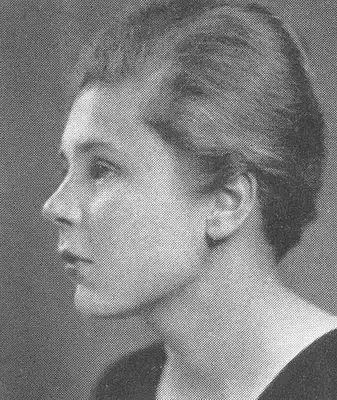
Elizabeth Bishop
Anaphora
Each day with so much ceremony
begins, with birds, with bells,
with whistles from a factory;
such white-gold skies our eyes
first open on, such brilliant walls
that for a moment we wonder
"Where is the music coming from, the energy?
The day was meant for what ineffable creature
we must have missed?" Oh promptly he
appears and takes his earthly nature
instantly, instantly falls
victim of long intrigue,
assuming memory and mortal
mortal fatigue.
More slowly falling into sight
and showering into stippled faces,
darkening, condensing all his light;
in spite of all the dreaming
squandered upon him with that look,
suffers our uses and abuses,
sinks through the drift of bodies,
sinks through the drift of vlasses
to evening to the beggar in the park
who, weary, without lamp or book
prepares stupendous studies:
the fiery event
of every day in endless
endless assent.
633
Elizabeth Bishop
Arrival At Santos
Here is a coast; here is a harbor;
here, after a meager diet of horizon, is some scenery:
impractically shaped and--who knows?--self-pitying mountains,
sad and harsh beneath their frivolous greenery,
with a little church on top of one. And warehouses,
some of them painted a feeble pink, or blue,
and some tall, uncertain palms. Oh, tourist,
is this how this country is going to answer you
and your immodest demands for a different world,
and a better life, and complete comprehension
of both at last, and immediately,
after eighteen days of suspension?
Finish your breakfast. The tender is coming,
a strange and ancient craft, flying a strange and brilliant rag.
So that's the flag. I never saw it before.
I somehow never thought of there being a flag,
but of course there was, all along. And coins, I presume,
and paper money; they remain to be seen.
And gingerly now we climb down the ladder backward,
myself and a fellow passenger named Miss Breen,
descending into the midst of twenty-six freighters
waiting to be loaded with green coffee beaus.
Please, boy, do be more careful with that boat hook!
Watch out! Oh! It has caught Miss Breen's
skirt! There! Miss Breen is about seventy,
a retired police lieutenant, six feet tall,
with beautiful bright blue eyes and a kind expression.
Her home, when she is at home, is in Glens Fall
s, New York. There. We are settled.
The customs officials will speak English, we hope,
and leave us our bourbon and cigarettes.
Ports are necessities, like postage stamps, or soap,
but they seldom seem to care what impression they make,
or, like this, only attempt, since it does not matter,
the unassertive colors of soap, or postage stamps-wasting
away like the former, slipping the way the latter
do when we mail the letters we wrote on the boat,
either because the glue here is very inferior
or because of the heat. We leave Santos at once;
we are driving to the interior.
631

Claude Mckay
When Dawn Comes to the City
The tired cars go grumbling by,
The moaning, groaning cars,
And the old milk carts go rumbling by
Under the same dull stars.
Out of the tenements, cold as stone,
Dark figures start for work;
I watch them sadly shuffle on,
'Tis dawn, dawn in New York.
But I would be on the island of the sea,
In the heart of the island of the sea,
Where the cocks are crowing, crowing, crowing,
And the hens are cackling in the rose-apple tree,
Where the old draft-horse is neighing, neighing, neighing,
Out on the brown dew-silvered lawn,
And the tethered cow is lowing, lowing, lowing,
And dear old Ned is braying, braying, braying,
And the shaggy Nannie goat is calling, calling, calling
From her little trampled corner of the long wide lea
That stretches to the waters of the hill-stream falling
Sheer upon the flat rocks joyously!
There, oh, there! on the island of the sea,
There would I be at dawn.
The tired cars go grumbling by,
The crazy, lazy cars,
And the same milk carts go rumbling by
Under the dying stars.
A lonely newsboy hurries by,
Humming a recent ditty;
Red streaks strike through the gray of the sky,
The dawn comes to the city.
But I would be on the island of the sea,
In the heart of the island of the sea,
Where the cocks are crowing, crowing, crowing,
And the hens are cackling in the rose-apple tree,
Where the old draft-horse is neighing, neighing, neighing
Out on the brown dew-silvered lawn,
And the tethered cow is lowing, lowing, lowing,
And dear old Ned is braying, braying, braying,
And the shaggy Nannie goat is calling, calling, calling,
From her little trampled corner of the long wide lea
That stretches to the waters of the hill-stream falling
Sheer upon the flat rocks joyously!
There, oh, there! on the island of the sea,
There I would be at dawn.
632

Carl Sandburg
Soup
I saw a famous man eating soup.
I say he was lifting a fat broth
Into his mouth with a spoon.
His name was in the newspapers that day
Spelled out in tall black headlines
And thousands of people were talking about him.
When I saw him,
He sat bending his head over a plate
Putting soup in his mouth with a spoon.
I say he was lifting a fat broth
Into his mouth with a spoon.
His name was in the newspapers that day
Spelled out in tall black headlines
And thousands of people were talking about him.
When I saw him,
He sat bending his head over a plate
Putting soup in his mouth with a spoon.
616

Walt Whitman
Crossing Brooklyn Ferry
FLOOD-TIDE below me! I watch you face to face;
Clouds of the west! sun there half an hour high! I see you also face
to face.
Crowds of men and women attired in the usual costumes! how curious
you are to me!
On the ferry-boats, the hundreds and hundreds that cross, returning
home, are more curious to me than you suppose;
And you that shall cross from shore to shore years hence, are more to
me, and more in my meditations, than you might suppose.
The impalpable sustenance of me from all things, at all hours of the
day;
The simple, compact, well-join'd scheme--myself disintegrated, every
one disintegrated, yet part of the scheme:
The similitudes of the past, and those of the future;
The glories strung like beads on my smallest sights and hearings--on
the walk in the street, and the passage over the river;
The current rushing so swiftly, and swimming with me far away;
The others that are to follow me, the ties between me and them;
The certainty of others--the life, love, sight, hearing of others.
Others will enter the gates of the ferry, and cross from shore to
shore;
Others will watch the run of the flood-tide;
Others will see the shipping of Manhattan north and west, and the
heights of Brooklyn to the south and east;
Others will see the islands large and small;
Fifty years hence, others will see them as they cross, the sun half
an hour high;
A hundred years hence, or ever so many hundred years hence, others
will see them,
Will enjoy the sunset, the pouring in of the flood-tide, the falling
back to the sea of the ebb-tide.
It avails not, neither time or place--distance avails not;
I am with you, you men and women of a generation, or ever so many
generations hence;
I project myself--also I return--I am with you, and know how it is.
Just as you feel when you look on the river and sky, so I felt;
Just as any of you is one of a living crowd, I was one of a crowd;
Just as you are refresh'd by the gladness of the river and the bright
flow, I was refresh'd;
Just as you stand and lean on the rail, yet hurry with the swift
current, I stood, yet was hurried;
Just as you look on the numberless masts of ships, and the thickstem'd
pipes of steamboats, I look'd.
I too many and many a time cross'd the river, the sun half an hour
high;
I watched the Twelfth-month sea-gulls--I saw them high in the air,
floating with motionless wings, oscillating their bodies,
I saw how the glistening yellow lit up parts of their bodies, and
left the rest in strong shadow,
I saw the slow-wheeling circles, and the gradual edging toward the
south.
I too saw the reflection of the summer sky in the water,
Had my eyes dazzled by the shimmering track of beams,
Look'd at the fine centrifugal spokes of light around the shape of my
head in the sun-lit water,
Look'd on the haze on the hills southward and southwestward,
Look'd on the vapor as it flew in fleeces tinged with violet,
Look'd toward the lower bay to notice the arriving ships,
Saw their approach, saw aboard those that were near me,
Saw the white sails of schooners and sloops--saw the ships at anchor,
The sailors at work in the rigging, or out astride the spars,
The round masts, the swinging motion of the hulls, the slender
serpentine pennants,
The large and small steamers in motion, the pilots in their pilothouses,
The white wake left by the passage, the quick tremulous whirl of the
wheels,
The flags of all nations, the falling of them at sun-set,
The scallop-edged waves in the twilight, the ladled cups, the
frolicsome crests and glistening,
The stretch afar growing dimmer and dimmer, the gray walls of the
granite store-houses by the docks,
On the river the shadowy group, the big steam-tug closely flank'd on
each side by the barges--the hay-boat, the belated lighter,
On the neighboring shore, the fires from the foundry chimneys burning
high and glaringly into the night,
Casting their flicker of black, contrasted with wild red and yellow
light, over the tops of houses, and down into the clefts of
streets.
These, and all else, were to me the same as they are to you;
I project myself a moment to tell you--also I return.
I loved well those cities;
I loved well the stately and rapid river;
The men and women I saw were all near to me;
Others the same--others who look back on me, because I look'd forward
to them;
(The time will come, though I stop here to-day and to-night.)
What is it, then, between us?
What is the count of the scores or hundreds of years between us?
Whatever it is, it avails not--distance avails not, and place avails
not.
I too lived--Brooklyn, of ample hills, was mine;
I too walk'd the streets of Manhattan Island, and bathed in the
waters around it;
I too felt the curious abrupt questionings stir within me,
In the day, among crowds of people, sometimes they came upon me,
In my walks home late at night, or as I lay in my bed, they came upon
me.
I too had been struck from the float forever held in solution;
I too had receiv'd identity by my Body;
That I was, I knew was of my body--and what I should be, I knew I
should be of my body.
It is not upon you alone the dark patches fall,
The dark threw patches down upon me also;
The best I had done seem'd to me blank and suspicious;
My great thoughts, as I supposed them, were they not in reality
meagre? would not people laugh at me?
It is not you alone who know what it is to be evil;
I am he who knew what it was to be evil;
I too knitted the old knot of contrariety,
Blabb'd, blush'd, resented, lied, stole, grudg'd,
Had guile, anger, lust, hot wishes I dared not speak,
Was wayward, vain, greedy, shallow, sly, cowardly, malignant;
The wolf, the snake, the hog, not wanting in me,
The cheating look, the frivolous word, the adulterous wish, not
wanting,
Refusals, hates, postponements, meanness, laziness, none of these
wanting.
But I was Manhattanese, friendly and proud!
I was call'd by my nighest name by clear loud voices of young men as
they saw me approaching or passing,
Felt their arms on my neck as I stood, or the negligent leaning of
their flesh against me as I sat,
Saw many I loved in the street, or ferry-boat, or public assembly,
yet never told them a word,
Lived the same life with the rest, the same old laughing, gnawing,
sleeping,
Play'd the part that still looks back on the actor or actress,
The same old role, the role that is what we make it, as great as we
like,
Or as small as we like, or both great and small.
Closer yet I approach you;
What thought you have of me, I had as much of you--I laid in my
stores in advance;
I consider'd long and seriously of you before you were born.
Who was to know what should come home to me?
Who knows but I am enjoying this?
Who knows but I am as good as looking at you now, for all you cannot
see me?
It is not you alone, nor I alone;
Not a few races, nor a few generations, nor a few centuries;
It is that each came, or comes, or shall come, from its due emission,
From the general centre of all, and forming a part of all:
Everything indicates--the smallest does, and the largest does;
A necessary film envelopes all, and envelopes the Soul for a proper
time.
Now I am curious what sight can ever be more stately and admirable to
me than my mast-hemm'd Manhattan,
My river and sun-set, and my scallop-edg'd waves of flood-tide,
The sea-gulls oscillating their bodies, the hay-boat in the twilight,
and the belated lighter;
Curious what Gods can exceed these that clasp me by the hand, and
with voices I love call me promptly and loudly by my nighest
name as I approach;
Curious what is more subtle than this which ties me to the woman or
man that looks in my face,
Which fuses me into you now, and pours my meaning into you.
We understand, then, do we not?
What I promis'd without mentioning it, have you not accepted?
What the study could not teach--what the preaching could not
accomplish, is accomplish'd, is it not?
What the push of reading could not start, is started by me
personally, is it not?
Flow on, river! flow with the flood-tide, and ebb with the ebb-tide!
Frolic on, crested and scallop-edg'd waves!
Gorgeous clouds of the sun-set! drench with your splendor me, or the
men and women generations after me;
Cross from shore to shore, countless crowds of passengers!
Stand up, tall masts of Mannahatta!--stand up, beautiful hills of
Brooklyn!
Throb, baffled and curious brain! throw out questions and answers!
Suspend here and everywhere, eternal float of solution!
Gaze, loving and thirsting eyes, in the house, or street, or public
assembly!
Sound out, voices of young men! loudly and musically call me by my
nighest name!
Live, old life! play the part that looks back on the actor or
actress!
Play the old role, the role that is great or small, according as one
makes it!
Consider, you who peruse me, whether I may not in unknown ways be
looking upon you;
Be firm, rail over the river, to support those who lean idly, yet
haste with the hasting current;
Fly on, sea-birds! fly sideways, or wheel in large circles high in
the air;
Receive the summer sky, you water! and faithfully hold it, till all
downcast eyes have time to take it from you;
Diverge, fine spokes of light, from the shape of my head, or any
one's head, in the sun-lit water;
Come on, ships from the lower bay! pass up or down, white-sail'd
schooners, sloops, lighters!
Flaunt away, flags of all nations! be duly lower'd at sunset;
Burn high your fires, foundry chimneys! cast black shadows at
nightfall! cast red and yellow light over the tops of the
houses;
Appearances, now or henceforth, indicate what you are;
You necessary film, continue to envelop the soul;
About my body for me, and your body for you, be hung our divinest
aromas;
Thrive, cities! bring your freight, bring your shows, ample and
sufficient rivers;
Expand, being than which none else is perhaps more spiritual;
Keep your places, objects than which none else is more lasting.
We descend upon you and all things--we arrest you all;
We realize the soul only by you, you faithful solids and fluids;
Through you color, form, location, sublimity, ideality;
Through you every proof, comparison, and all the suggestions and
determinations of ourselves.
You have waited, you always wait, you dumb, beautiful ministers! you
novices!
We receive you with free sense at last, and are insatiate
henceforward;
Not you any more shall be able to foil us, or withhold yourselves
from us;
We use you, and do not cast you aside--we plant you permanently
within us;
We fathom you not--we love you--there is perfection in you also;
You furnish your parts toward eternity;
Great or small, you furnish your parts toward the soul.
620
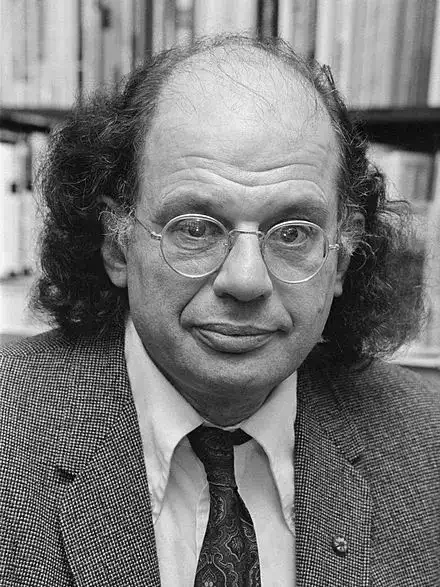
Allen Ginsberg
Mugging (I)
I
Tonite I walked out of my red apartment door on East tenth street’s dusk—
Walked out of my home ten years, walked out in my honking neighborhood
Tonite at seven walked out past garbage cans chained to concrete anchors
Walked under black painted fire escapes, giant castiron plate covering a hole in ground
—Crossed the street, traffic lite red, thirteen bus roaring by liquor store,
past corner pharmacy iron grated, past Coca Cola & Mylai posters fading scraped on
brick
Past Chinese Laundry wood door’d, & broken cement stoop steps For Rent hall painted
green & purple Puerto Rican style
Along E. 10th’s glass splattered pavement, kid blacks & Spanish oiled hair adolescents’
crowded house fronts—
Ah, tonite I walked out on my block NY City under humid summer sky Halloween,
thinking what happened Timothy Leary joining brain police for a season?
thinking what’s all this Weathermen, secrecy & selfrighteousness beyond reason—F.B.I.
plots?
Walked past a taxicab controlling the bottle strewn curb—
past young fellows with their umbrella handles & canes leaning against a ravaged Buick
—and as I looked at the crowd of kids on the stoop—a boy stepped up, put his arm
around my neck
tenderly I thought for a moment, squeezed harder, his umbrella handle against my
skull,
and his friends took my arm, a young brown companion tripped his foot ’gainst my
ankle—
as I went down shouting Om Ah Hūm to gangs of lovers on the stoop watching
slowly appreciating, why this is a raid, these strangers mean strange business
with what—my pockets, bald head, broken-healed-bone leg, my softshoes, my heart—
Have they knives? Om Ah Hūm—Have they sharp metal wood to shove in eye
ear ass? Om Ah Hūm
& slowly reclined on the pavement, struggling to keep my woolen bag of poetry
address calendar & Leary-lawyer notes hung from my shoulder
dragged in my neat orlon shirt over the crossbar of a broken metal door
dragged slowly onto the fire-soiled floor an abandoned store, laundry candy counter
1929—
now a mess of papers & pillows & plastic car seat covers cracked cockroach-corpsed
ground—
my wallet back pocket passed over the iron foot step guard
and fell out, stole by God Muggers’ lost fingers, Strange—
Couldn’t tell—snakeskin wallet actually plastic, 70 dollars my bank money for a week,
old broken wallet—and dreary plastic contents—Amex card & Manf. Hanover Trust
Credit too—business card from Mr. Spears British Home Minister Drug Squad—my draft
card—membership ACLU & Naropa Institute Instructor’s identification
Om Ah Hūm I continued chanting Om Ah Hūm
Putting my palm on the neck of an 18 year old boy fingering my back pocket crying
“Where’s the money”
“Om Ah Hūm there isn’t any”
My card Chief Boo-Hoo Neo American Church New Jersey & Lower East Side
Om Ah Hūm —what not forgotten crowded wallet—Mobil Credit, Shell? old lovers
addresses on cardboard pieces, booksellers calling cards—
—“Shut up or we’ll murder you”—“Om Ah Hūm take it easy”
Lying on the floor shall I shout more loud?—the metal door closed on blackness
one boy felt my broken healed ankle, looking for hundred dollar bills behind my
stocking weren’t even there—a third boy untied my Seiko Hong Kong watch rough from
right wrist leaving a clasp-prick skin tiny bruise
“Shut up and we’ll get out of here”—and so they left,
as I rose from the cardboard mattress thinking Om Ah Hūm didn’t stop em
enough,
the tone of voice too loud—my shoulder bag with 10,000 dollars full of poetry left on
the broken floor—
620

Robert Browning
Up At A Villa--- Down In The City
AS DISTINGUISHED BY AN ITALIAN PERSON OF QUALITY.)
I.
Had I but plenty of money, money enough and to spare,
The house for me, no doubt, were a house in the city-square;
Ah, such a life, such a life, as one leads at the window there!
II.
Something to see, by Bacchus, something to hear, at least!
There, the whole day long, one's life is a perfect feast;
While up at a villa one lives, I maintain it, no more than a beast.
III.
Well now, look at our villa! stuck like the horn of a bull
Just on a mountain-edge as bare as the creature's skull,
Save a mere shag of a bush with hardly a leaf to pull!
---I scratch my own, sometimes, to see if the hair's turned wool.
IV.
But the city, oh the city---the square with the houses! Why?
They are stone-faced, white as a curd, there's something to take the eye!
Houses in four straight lines, not a single front awry;
You watch who crosses and gossips, who saunters, who hurries by;
Green blinds, as a matter of course, to draw when the sun gets high;
And the shops with fanciful signs which are painted properly.
V.
What of a villa? Though winter be over in March by rights,
'Tis May perhaps ere the snow shall have withered well off the heights:
You've the brown ploughed land before, where the oxen steam and wheeze,
And the hills over-smoked behind by the faint grey olive-trees.
VI.
Is it better in May, I ask you? You've summer all at once;
In a day he leaps complete with a few strong April suns.
'Mid the sharp short emerald wheat, scarce risen three fingers well,
The wild tulip, at end of its tube, blows out its great red bell
Like a thin clear bubble of blood, for the children to pick and sell.
VII.
Is it ever hot in the square? There's a fountain to spout and splash!
In the shade it sings and springs; in the shine such foam-bows flash
On the horses with curling fish-tails, that prance and paddle and pash
Round the lady atop in her conch---fifty gazers do not abash,
Though all that she wears is some weeds round her waist in a sort of sash.
VIII.
All the year at the villa, nothing to see though you linger,
Except yon cypress that points like a death's lean lifted forefinger.
Some think fireflies pretty, when they mix i' the corn and mingle,
Or thrid the stinking hemp till the stalks of it seem a-tingle.
Late August or early September, the stunning cicala is shrill,
And the bees keep their tiresome whine round the resinous firs on the hill.
Enough of the seasons,---I spare you the months of the fever and chill.
IX.
Ere you open your eyes in the city, the blessed church-bells begin:
No sooner the bells leave off than the diligence rattles in:
You get the pick of the news, and it costs you never a pin.
By-and-by there's the travelling doctor gives pills, lets blood, draws teeth;
Or the Pulcinello-trumpet breaks up the market beneath.
At the post-office such a scene-picture---the new play, piping hot!
And a notice how, only this morning, three liberal thieves were shot.
Above it, behold the Archbishop's most fatherly of rebukes,
And beneath, with his crown and his lion, some little new law of the Duke's!
Or a sonnet with flowery marge, to the Reverend Don So-and-so
Who is Dante, Boccaccio, Petrarca, Saint Jerome and Cicero,
``And moreover,'' (the sonnet goes rhyming,) ``the skirts of Saint Paul has reached,
``Having preached us those six Lent-lectures more unctuous than ever he preached.''
Noon strikes,---here sweeps the procession! our Lady borne smiling and smart
With a pink gauze gown all spangles, and seven swords stuck in her heart!
_Bang-whang-whang_ goes the drum, _tootle-to-tootle_ the fife;
No keeping one's haunches still: it's the greatest pleasure in life.
X.
But bless you, it's dear---it's dear! fowls, wine, at double the rate.
They have clapped a new tax upon salt, and what oil pays passing the gate
It's a horror to think of. And so, the villa for me, not the city!
Beggars can scarcely be choosers: but still---ah, the pity, the pity!
Look, two and two go the priests, then the monks with cowls and sandals,
And the penitents dressed in white shirts, a-holding the yellow candles;
One' he carries a flag up straight, and another a cross with handles,
And the Duke's guard brings up the rear, for the better prevention of scandals:
_Bang-whang-whang_ goes the drum, _tootle-te-tootle_ the fife.
Oh, a day in the city-square, there is no such pleasure in life!
601
Allen Ginsberg
In Back of the Real
railroad yard in San Jose
I wandered desolate
in front of a tank factory
and sat on a bench
near the switchman's shack.
A flower lay on the hay on
the asphalt highway
--the dread hay flower
I thought--It had a
brittle black stem and
corolla of yellowish dirty
spikes like Jesus' inchlong
crown, and a soiled
dry center cotton tuft
like a used shaving brush
that's been lying under
the garage for a year.
Yellow, yellow flower, and
flower of industry,
tough spiky ugly flower,
flower nonetheless,
with the form of the great yellow
Rose in your brain!
This is the flower of the World.
579

Ezra Pound
Women Before A Shop
The gew-gaws of false amber and false turquoise attract them.
'Like to like nature': these agglutinous yellows!
'Like to like nature': these agglutinous yellows!
587
Arthur Rimbaud
The Bridges
Skies the gray of crystal.
A strange design of bridges,
some straight, some arched,
others descending at oblique angles to the first;
and these figures recurring
in other lighted circuits of the canal,
but all so long and light that the banks,
laden with domes, sink and shrink.
A few of these bridges
are still covered with hovels,
others support polls,
signals, frail parapets.
Minor chords cross
each other and disappear;
ropes rise from the shore.
One can make out a red coat,
possibly other costumes
and musical instruments.
Are these popular tunes,
snatches of seigniorial concerts,
remnants of public hymns?
The water is gray and blue,
wide as an arm of the sea.
A white ray falling from high
in the sky destroys this comedy.
583
Walt Whitman
I Hear America Singing
I Hear America singing, the varied carols I hear;
Those of mechanics--each one singing his, as it should be, blithe and strong;
The carpenter singing his, as he measures his plank or beam,
The mason singing his, as he makes ready for work, or leaves off work;
The boatman singing what belongs to him in his boat--the deckhand singing on the
steamboat deck;
The shoemaker singing as he sits on his bench--the hatter singing as he stands;
The wood-cutter's song--the ploughboy's, on his way in the morning, or at the noon
intermission, or at sundown;
The delicious singing of the mother--or of the young wife at work--or of the girl
sewing or washing--Each singing what belongs to her, and to none else;
The day what belongs to the day--At night, the party of young fellows, robust,
friendly,
Singing, with open mouths, their strong melodious songs.
576

Sara Teasdale
A November Night
There! See the line of lights,
A chain of stars down either side the street --
Why can't you lift the chain and give it to me,
A necklace for my throat? I'd twist it round
And you could play with it. You smile at me
As though I were a little dreamy child
Behind whose eyes the fairies live. . . . And see,
The people on the street look up at us
All envious. We are a king and queen,
Our royal carriage is a motor bus,
We watch our subjects with a haughty joy. . . .
How still you are! Have you been hard at work
And are you tired to-night? It is so long
Since I have seen you -- four whole days, I think.
My heart is crowded full of foolish thoughts
Like early flowers in an April meadow,
And I must give them to you, all of them,
Before they fade. The people I have met,
The play I saw, the trivial, shifting things
That loom too big or shrink too little, shadows
That hurry, gesturing along a wall,
Haunting or gay -- and yet they all grow real
And take their proper size here in my heart
When you have seen them. . . . There's the Plaza now,
A lake of light! To-night it almost seems
That all the lights are gathered in your eyes,
Drawn somehow toward you. See the open park
Lying below us with a million lamps
Scattered in wise disorder like the stars.
We look down on them as God must look down
On constellations floating under Him
Tangled in clouds. . . . Come, then, and let us walk
Since we have reached the park. It is our garden,
All black and blossomless this winter night,
But we bring April with us, you and I;
We set the whole world on the trail of spring.
I think that every path we ever took
Has marked our footprints in mysterious fire,
Delicate gold that only fairies see.
When they wake up at dawn in hollow tree-trunks
And come out on the drowsy park, they look
Along the empty paths and say, "Oh, here
They went, and here, and here, and here! Come, see,
Here is their bench, take hands and let us dance
About it in a windy ring and make
A circle round it only they can cross
When they come back again!" . . . Look at the lake --
Do you remember how we watched the swans
That night in late October while they slept?
Swans must have stately dreams, I think. But now
The lake bears only thin reflected lights
That shake a little. How I long to take
One from the cold black water -- new-made gold
To give you in your hand! And see, and see,
There is a star, deep in the lake, a star!
Oh, dimmer than a pearl -- if you stoop down
Your hand could almost reach it up to me. . . .
There was a new frail yellow moon to-night --
I wish you could have had it for a cup
With stars like dew to fill it to the brim. . . .
How cold it is! Even the lights are cold;
They have put shawls of fog around them, see!
What if the air should grow so dimly white
That we would lose our way along the paths
Made new by walls of moving mist receding
The more we follow. . . . What a silver night!
That was our bench the time you said to me
The long new poem -- but how different now,
How eerie with the curtain of the fog
Making it strange to all the friendly trees!
There is no wind, and yet great curving scrolls
Carve themselves, ever changing, in the mist.
Walk on a little, let me stand here watching
To see you, too, grown strange to me and far. . . .
I used to wonder how the park would be
If one night we could have it all alone --
No lovers with close arm-encircled waists
To whisper and break in upon our dreams.
And now we have it! Every wish comes true!
We are alone now in a fleecy world;
Even the stars have gone. We two alone!
563
Arthur Rimbaud
Cities Vagabonds
These are cities!
And this is the people for whom these
Alleghenys and Lebanons of dream have been raised!
Castles of wood and crystal move on tracks and invisible winches.
Old craters ringed with mammoth statues and
coppery palms roar melodiously in flames.
Festivals of love reverberate
from the canals suspended behind the castles.
Chimes echo through the gorges like a chase.
Corporations of giant singers assemble,
their vestments and oriflames
brilliant as the mountain-peaks.
On platforms in the midst of gulfs,
Rolands brazen their bravuras.
From abysmal catwalks and the rooftops of inns,
a burning sky hoists flags upon the masts.
The collapse of apotheosis
unites the heights to the depths
where seraphic shecentaurs
wind among the avalanches.
Above the plateaus of the highest reaches,
the sea, troubled by the perpetual birth of Venus
and loaded with choral fleets amid
an uproar of pearls and precious conches,
grows dark at times with mortal thunder.
On the slopes,
harvests of flowers
as big as our weapons
and goblets are bellowing.
Processions of Mabs in red-opaline scale the ravines.
On high, their feet in the waterfalls and briars,
stags give suck to Diana.
Bacchantes of the suburbs weep,
and the moon burns and howls.
Venus enters the caves
of the black-smiths and hermits.
Clusters of belfries repeat the ideas of the people.
Issues from castles of bone an unknown music.
In the boroughs legends
are born and enthusiasm germinate.
A paradise of storms collapses.
Savages dance without stopping the festival of night.
And, for one hour, I descended into the swarm
of a boulevard of Baghdad
where groups of peple were singing
the joy of the new work,
circulating under a heavy wind
without being able to escape those fabulous phantoms
of the mountains to which one must return.
What good arms, what wondrous hour
will restore to me that region
whence come my slumbers
and least movements?
565
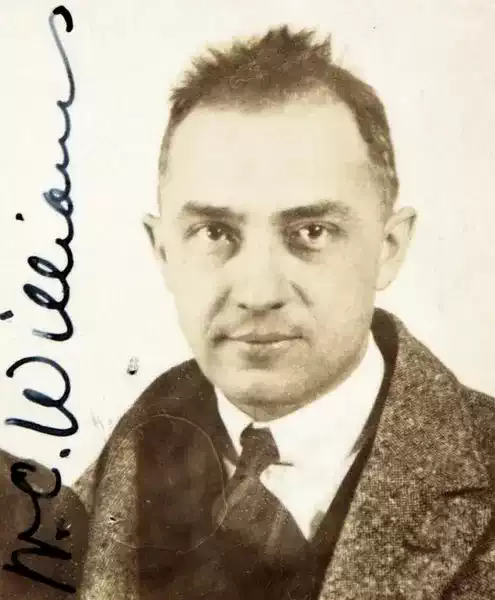
William Carlos Williams
Overture to a Dance of Locomotives
Men with picked voices chant the names
of cities in a huge gallery: promises
that pull through descending stairways
to a deep rumbling.
The rubbing feet
of those coming to be carried quicken a
grey pavement into soft light that rocks
to and fro, under the domed ceiling,
across and across from pale
earthcolored walls of bare limestone.
Covertly the hands of a great clock
go round and round! Were they to
move quickly and at once the whole
secret would be out and the shuffling
of all ants be done forever.
A leaning pyramid of sunlight, narrowing
out at a high window, moves by the clock:
disaccordant hands straining out from
a center: inevitable postures infinitely
repeated--
two--twofour--twoeight!
Porters in red hats run on narrow platforms.
This way ma'am!
--important not to take
the wrong train!
Lights from the concrete
ceiling hang crooked but--
Poised horizontal
on glittering parallels the dingy cylinders
packed with a warm glow--inviting entry--
pull against the hour. But brakes can
hold a fixed posture till--
The whistle!
Not twoeight. Not twofour. Two!
Gliding windows. Colored cooks sweating
in a small kitchen. Taillights--
In time: twofour!
In time: twoeight!
--rivers are tunneled: trestles
cross oozy swampland: wheels repeating
the same gesture remain relatively
stationary: rails forever parallel
return on themselves infinitely.
The dance is sure.
566
Arthur Rimbaud
Historic Evening
On an evening, for example, when the naive tourist has retired
from our economic horrors, a master's hand awakens
the meadow's harpsichord;
they are playing cards at the bottom of the pond,
mirror conjuring up favorites and queens;
there are saints, veils, threads of harmony,
and legendary chromatics in the setting sun.
He shudders as the hunts and hordes go by.
Comedy drips on the grass stages.
And the distress of the poor and of the weak
on those stupid planes! Before his slave's vision,
Germany goes scaffolding toward moons;
Tartar deserts light up; ancient revolts ferment
in the center of the Celestial Empire;
over stairways and armchairs of rock, a little world, wan and flat,
Africa and Occidents, will be erected.
Then a ballet of familiar seas and nights,
worthless chemistry and impossible melodies. The same bourgeois magic
wherever the mail-train sets you down.
Even the most elementary physicist feels that it is no longer possible
to submit to this personal atmosphere, fog of physical remorse,
which to acknowledge is already an affliction. No!
The moment of the seething cauldron, of seas removed,
of subterranean conflagrations, of the planet swept away,
and the consequent exterminations, certitudes indicated
with so little malice by the Bible and by the Norns
and for which serious persons should be on the alert
554

William Wordsworth
Composed Upon Westminster Bridge
September ,
Earth has not anything to show more fair:
Dull would he be of soul who could pass by
A sight so touching in its majesty:
This City now doth like a garment wear
The beauty of the morning: silent, bare,
Ships, towers, domes, theatres, and temples lie
Open unto the fields, and to the sky,-
All bright and glittering in the smokeless air.
Never did sun more beautifully steep
In his first splendour valley, rock or hill;
Ne'er saw I, never felt, a calm so deep!
The river glideth at his own sweet will:
Dear God! the very houses seem asleep;
And all that mighty heart is lying still!
555
Elizabeth Bishop
Trouvée
Oh, why should a hen
have been run over
on West 4th Street
in the middle of summer?
She was a white hen
--red-and-white now, of course.
How did she get there?
Where was she going?
Her wing feathers spread
flat, flat in the tar,
all dirtied, and thin
as tissue paper.
A pigeon, yes,
or an English sparrow,
might meet such a fate,
but not that poor fowl.
Just now I went back
to look again.
I hadn't dreamed it:
there is a hen
turned into a quaint
old country saying
scribbled in chalk
(except for the beak).
556
Elizabeth Bishop
Suicide of a Moderate Dictator
This is a day when truths will out, perhaps;
leak from the dangling telephone earphones
sapping the festooned switchboards' strength;
fall from the windows, blow from off the sills,
—the vague, slight unremarkable contents
of emptying ash-trays; rub off on our fingers
like ink from the un-proof-read newspapers,
crocking the way the unfocused photographs
of crooked faces do that soil our coats,
our tropical-weight coats, like slapped-at moths.
Today's a day when those who work
are idling. Those who played must work
and hurry, too, to get it done,
with little dignity or none.
The newspapers are sold; the kiosk shutters
crash down. But anyway, in the night
the headlines wrote themselves, see, on the streets
and sidewalks everywhere; a sediment's splashed
even to the first floors of apartment houses.
This is a day that's beautiful as well,
and warm and clear. At seven o'clock I saw
the dogs being walked along the famous beach
as usual, in a shiny gray-green dawn,
leaving their paw prints draining in the wet.
The line of breakers was steady and the pinkish,
segmented rainbow steadily hung above it.
At eight two little boys were flying kites.
549
Boris Pasternak
Spring (Fragment 3)
Is it only dirt you notice?
Does the thaw not catch your glance?
As a dapple-grey fine stallion
Does it not through ditches dance?
Is it only birds that chatter
In the blueness of the skies,
Sipping through the straws of sunrays
Lemon liturgies on ice?
Only look, and you will see it:
From the rooftops to the ground
Moscow, all day long, like Kitezh
Lies, in light-blue water drowned.
Why are all the roofs transparent
And the colours crystal-bright?
Bricks like rushes gently swaying,
Mornings rush into the night.
Like a bog the town is swampy
And the scabs of snow are rare.
February, like saturated
Cottonwool in spirits, flares.
This white flame wears out the garrets,
And the air, in the oblique
Interplace of twigs and birds, is
Naked, weightless and unique.
In such days the crowds of people
Knock you down; you are unknown,
Nameless; and your girl is with them,
But you, too, are not alone.
543
Walt Whitman
A Farm-Picture
THROUGH the ample open door of the peaceful country barn,
A sun-lit pasture field, with cattle and horses feeding;
And haze, and vista, and the far horizon, fading away.
A sun-lit pasture field, with cattle and horses feeding;
And haze, and vista, and the far horizon, fading away.
545
Arthur Rimbaud
Ruts
To the right the summer dawn
wakes the leaves and the mists
and the noises in this corner of the park,
and the left-hand banks
hold in their violet shadows
the thousand swift ruts of the wet road.
Wonderland procession! Yes, truly: floats covered
with animals of gilded wood, poles and bright bunting,
to the furious gallop of twenty dappled circus horses,
and children and men on their most fantastic beasts;-twenty
rotund vehicles, decorated with flags
and flowers like the coaches of old or in fairy tales,
full of children all dressed up for a suburban pastoral.
Even coffins under their somber canopies
lifting aloft their jet-black plumes,
bowling along to the trot
of huge mares, blue and black.
532