
City and Everyday Life

Boris Pasternak
Railway Station
My dear railway station, my treasure
Of meetings and partings, my friend
In times of hard trials and pleasure,
Your favours have been without end.
My scarf would wrap up my whole being -
The train would pull up, with deep sighs,
The muzzles of brash harpies, leering,
Would puff wet white steam in our eyes.
I'd sit at your side for a moment -
A hug and a kiss, brief and rough.
Farewell then, my joy and my torment.
I'm going, conductor, I'm off!
And, shunting bad weather and sleepers,
The west would break open-I'd feel
It grab me with snowflakes to keep me
From falling down under the wheels.
A whistle dies down, echoed weakly,
Another flies from distant tracks.
A train comes past bare platforms sweeping -
A blizzard of many hunched backs.
And twilight is rearing to go,
And, lured by the smoke and the steam,
The wind and the field rush and now
I wish I could be one of them!
523
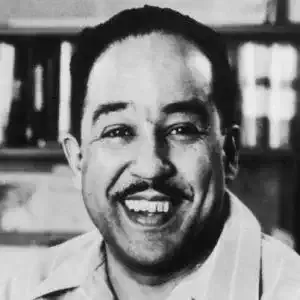
Langston Hughes
Madam and The Rent Man
The rent man knocked.
He said, Howdy-do?
I said, What
Can I do for you?
He said, You know
Your rent is due.
I said, Listen,
Before I'd pay
I'd go to Hades
And rot away!
The sink is broke,
The water don't run,
And you ain't done a thing
You promised to've done.
Back window's cracked,
Kitchen floor squeaks,
There's rats in the cellar,
And the attic leaks.
He said, Madam,
It's not up to me.
I'm just the agent,
Don't you see?
I said, Naturally,
You pass the buck.
If it's money you want
You're out of luck.
He said, Madam,
I ain't pleased!
I said, Neither am I.
So we agrees!
518
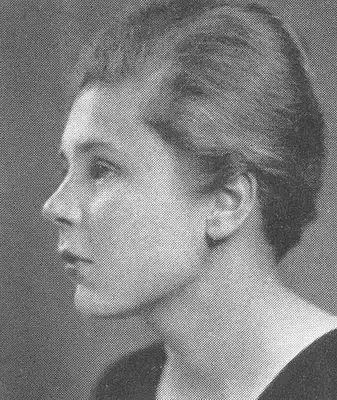
Elizabeth Bishop
Sleeping on the Ceiling
It is so peaceful on the ceiling!
It is the Place de la Concorde.
The little crystal chandelier
is off, the fountain is in the dark.
Not a soul is in the park.
Below, where the wallpaper is peeling,
the Jardin des Plantes has locked its gates.
Those photographs are animals.
The mighty flowers and foliage rustle;
under the leaves the insects tunnel.
We must go under the wallpaper
to meet the insect-gladiator,
to battle with a net and trident,
and leave the fountain and the square
But oh, that we could sleep up there...
513

Walt Whitman
Debris
HE is wisest who has the most caution,
He only wins who goes far enough.
Any thing is as good as established, when that is established that
will produce it and continue it.
He only wins who goes far enough.
Any thing is as good as established, when that is established that
will produce it and continue it.
514

Rudyard Kipling
Philadelphia
If you're off to Philadelphia in the morning,
You mustn't take my stories for a guide.
There's little left, indeed, of the city you will read of,
And all the folk I write about have died.
Now few will understand if you mention Talleyrand,
Or remember what his cunning and his skill did;
And the cabmen at the wharf do not know Count Zinzendorf,
Nor the Church in Philadelphia he builded.
It is gone, gone, gone with lost Atlantis,
(Never say I didn't give you warning).
In Seventeen Ninety-three 'twas there for all to see,
But it's not in Philadelphia this morning.
If you're off to Philadelphia in the morning,
You mustn't go by anything I've said.
Bob Bicknell's Southern Stages have been laid aside for ages,
But the Limited will take you there instead.
Toby Hirte can't be seen at One Hundred and Eighteen
North Second Street--no matter when you call;
And I fear you'll search in vain for the wash-house down the lane
Where Pharaoh played the fiddle at the ball.
It is gone, gone, gone with Thebes the Golden,
(Never say I didn't give you warning).
In Seventeen Ninety-four 'twas a famous dancing floor--
But it's not in Philadelphia this morning.
If you're off to Philadelphia in the morning,
You must telegraph for rooms at some Hotel.
You needn't try your luck at Epply's or "The Buck,"
Though the Father of his Country liked them well.
It is not the slightest use to inquire for Adam Goos,
Or to ask where Pastor Meder has removed--so
You must treat as out of date the story I relate
Of the Church in Philadelphia he loved so.
He is gone, gone, gone with Martin Luther
(Never say I didn't give you warning)
In Seventeen Ninety-five he was, (rest his soul!) alive.
But he's not in Philadelphia this morning.
If you're off to Philadelphia this morning,
And wish to prove the truth of what I say,
I pledge my word you'll find the pleasant land behind
Unaltered since Red Jacket rode that way.
Still the pine-woods scent the noon; still the catbird sings his
tune;
Still autumn sets the maple-forest blazing;
Still the grape-vine through the dusk flings her soul-compelling
musk;
Still the fire-flies in the corn make night amazing!
They are there, there, there with Earth immortal
( Citizens, I give you friendly warning )
The thins that truly last when men and times have passed,
They are all in Pennsylvania this morning!
503
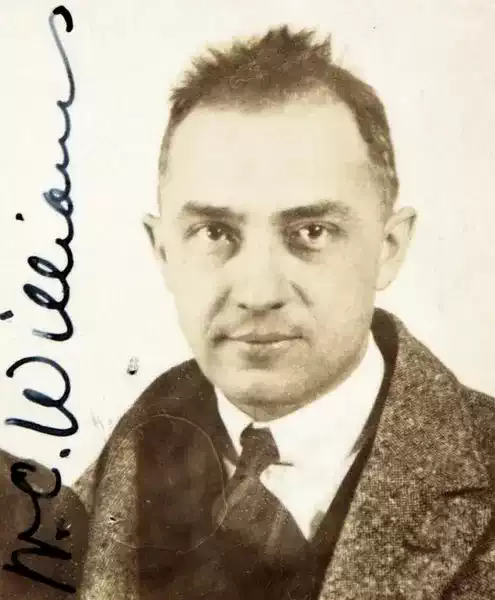
William Carlos Williams
January Morning
I
I have discovered that most of
the beauties of travel are due to
the strange hours we keep to see them:
the domes of the Church of
the Paulist Fathers in Weehawken
against a smoky dawn -- the heart stirred --
are beautiful as Saint Peters
approached after years of anticipation.
II
Though the operation was postponed
I saw the tall probationers
in their tan uniforms
hurrying to breakfast!
III
-- and from basement entries
neatly coiffed, middle aged gentlemen
with orderly moustaches and
well-brushed coats
IV
-- and the sun, dipping into the avenues
streaking the tops of
the irregular red houselets,
and
the gay shadows drooping and drooping.
V
-- and a young horse with a green bed-quilt
on his withers shaking his head:
bared teeth and nozzle high in the air!
VI
--and a semicircle of dirt-colored men
about a fire bursting from an old
ash can,
VII
-- and the worn,
blue car rails (like the sky!)
gleaming among the cobbles!
VIII
-- and the rickety ferry-boat "Arden"!
What an object to be called "Arden"
among the great piers, -- on the
ever new river!
"Put me a Touchstone
at the wheel, white gulls, and we'll
follow the ghost of the Half Moon
to the North West Passage -- and through!
(at Albany!) for all that!"
IX
Exquisite brown waves -- long
circlets of silver moving over you!
enough with crumbling ice crusts among you!
The sky has come down to you,
lighter than tiny bubbles, face to
face with you!
His spirit is
a white gull with delicate pink feet
and a snowy breast for you to
hold to your lips delicately!
X
The young doctor is dancing with happiness
in the sparkling wind, alone
at the prow of the ferry! He notices
the curdy barnacles and broken ice crusts
left at the slip's base by the low tide
and thinks of summer and green
shell-crusted ledges among
the emerald eel-grass!
XI
Who knows the Palisades as I do
knows the river breaks east from them
above the city -- but they continue south
-- under the sky -- to bear a crest of
little peering houses that brighten
with dawn behind the moody
water-loving giants of Manhattan.
XII
Long yellow rushes bending
above the white snow patches;
purple and gold ribbon
of the distant wood:
what an angle
you make with each other as
you lie there in contemplation.
XIII
Work hard all your young days
and they'll find you too, some morning
staring up under
your chiffonier at its warped
bass-wood bottom and your soul --
out!
-- among the little sparrows
behind the shutter.
XIV
-- and the flapping flags are at
half-mast for the dead admiral.
XV
All this --
was for you, old woman.
I wanted to write a poem
that you would understand.
For what good is it to me
if you can't understand it?
But you got to try hard --
But --
Well, you know how
the young girls run giggling
on Park Avenue after dark
when they ought to be home in bed?
Well,
that's the way it is with me somehow.
499
Walt Whitman
Sparkles From The Wheel
WHERE the city's ceaseless crowd moves on, the live-long day,
Withdrawn, I join a group of children watching--I pause aside with
them.
By the curb, toward the edge of the flagging,
A knife-grinder works at his wheel, sharpening a great knife;
Bending over, he carefully holds it to the stone--by foot and knee,
With measur'd tread, he turns rapidly--As he presses with light but
firm hand,
Forth issue, then, in copious golden jets,
Sparkles from the wheel.
The scene, and all its belongings--how they seize and affect me!
The sad, sharp-chinn'd old man, with worn clothes, and broad
shoulder-band of leather;
Myself, effusing and fluid--a phantom curiously floating--now here
absorb'd and arrested;
The group, (an unminded point, set in a vast surrounding;)
The attentive, quiet children--the loud, proud, restive base of the
streets;
The low, hoarse purr of the whirling stone--the light-press'd blade,
Diffusing, dropping, sideways-darting, in tiny showers of gold,
Sparkles from the wheel.
500
Walt Whitman
Cavalry Crossing A Ford
A LINE in long array, where they wind betwixt green islands;
They take a serpentine course--their arms flash in the sun--Hark to
the musical clank;
Behold the silvery river--in it the splashing horses, loitering, stop
to drink;
Behold the brown-faced men--each group, each person, a picture--the
negligent rest on the saddles;
Some emerge on the opposite bank--others are just entering the ford-
while,
Scarlet, and blue, and snowy white,
The guidon flags flutter gaily in the wind.
496

William Butler Yeats
The Statesman's Holiday
I LIVED among great houses,
Riches drove out rank,
Base drove out the better blood,
And mind and body shrank.
No Oscar ruled the table,
But I'd a troop of friends
That knowing better talk had gone
Talked of odds and ends.
Some knew what ailed the world
But never said a thing,
So I have picked a better trade
And night and morning sing:
Tall dames go walking in grass-green Avalon.
Am I a great Lord Chancellor
That slept upon the Sack?
Commanding officer that tore
The khaki from his back?
Or am I de Valera,
Or the King of Greece,
Or the man that made the motors?
Ach, call me what you please!
Here's a Montenegrin lute,
And its old sole string
Makes me sweet music
And I delight to sing:
Tall dames go walking in grass-green Avalon.
With boys and girls about him.
With any sort of clothes,
With a hat out of fashion,
With Old patched shoes,
With a ragged bandit cloak,
With an eye like a hawk,
With a stiff straight back,
With a strutting turkey walk.
With a bag full of pennies,
With a monkey on a chain,
With a great cock's feather,
With an old foul tune.
Tall dames go walking in grass-green Avalon.
494

Ezra Pound
Alf’s Seventh Bit
Did I 'ear it 'arf in a doze:
The Co-ops was a goin' somewhere,
Did I 'ear it while pickin' 'ops;
How they better start takin' care,
That the papers were gettin' together
And the larger stores were likewise
Considering something that would, as you
Might say, be a surprise
To the Co-ops, a echo or somethin'?
They tell me that branded goods
Don't get a discount like Mr. Selfridge
Of 25 per cent, on their ads., and the woods
Is where the Co-ops are goin' to,
And that Oxford Street site
Is not suited to co-operation
A sort of'Arab's dream in the night.
''We have plenty, so let it be.'
The example of these consumers in co-operation
Might cause thought and be therefore
A peril to Selfridge and the nation.
484

John Keats
Lines Rhymed In A Letter From Oxford
I.
The Gothic looks solemn,
The plain Doric column
Supports an old Bishop and Crosier;
The mouldering arch,
Shaded o'er by a larch
Stands next door to Wilson the Hosier.
II.
Vice--that is, by turns,-O'er
pale faces mourns
The black tassell'd trencher and common hat;
The Chantry boy sings,
The Steeple-bell rings,
And as for the Chancellor--dominat.
III.
There are plenty of trees,
And plenty of ease,
And plenty of fat deer for Parsons;
And when it is venison,
Short is the benison,--
Then each on a leg or thigh fastens.
481
Walt Whitman
Drum-Taps
Aroused and angry,
I thought to beat the alarum, and urge relentless war;
But soon my fingers fail'd me, my face droop'd, and I resign'd
myself,
To sit by the wounded and soothe them, or silently watch the dead.
Drum-Taps
FIRST, O songs, for a prelude,
Lightly strike on the stretch'd tympanum, pride and joy in my city,
How she led the rest to arms--how she gave the cue,
How at once with lithe limbs, unwaiting a moment, she sprang;
(O superb! O Manhattan, my own, my peerless!
O strongest you in the hour of danger, in crisis! O truer than
steel!)
How you sprang! how you threw off the costumes of peace with
indifferent hand;
How your soft opera-music changed, and the drum and fife were heard
in their stead;
How you led to the war, (that shall serve for our prelude, songs of
soldiers,)
How Manhattan drum-taps led.
Forty years had I in my city seen soldiers parading;
Forty years as a pageant--till unawares, the Lady of this teeming and
turbulent city,
Sleepless amid her ships, her houses, her incalculable wealth,
With her million children around her--suddenly,
At dead of night, at news from the south,
Incens'd, struck with clench'd hand the pavement.
A shock electric--the night sustain'd it;
Till with ominous hum, our hive at day-break pour'd out its myriads.
From the houses then, and the workshops, and through all the
doorways,
Leapt they tumultuous--and lo! Manhattan arming.
To the drum-taps prompt,
The young men falling in and arming;
The mechanics arming, (the trowel, the jack-plane, the blacksmith's
hammer, tost aside with precipitation;)
The lawyer leaving his office, and arming--the judge leaving the
court;
The driver deserting his wagon in the street, jumping down, throwing
the reins abruptly down on the horses' backs;
The salesman leaving the store--the boss, book-keeper, porter, all
leaving;
Squads gather everywhere by common consent, and arm;
The new recruits, even boys--the old men show them how to wear their
accoutrements--they buckle the straps carefully;
Outdoors arming--indoors arming--the flash of the musket-barrels;
The white tents cluster in camps--the arm'd sentries around--the
sunrise cannon, and again at sunset;
Arm'd regiments arrive every day, pass through the city, and embark
from the wharves;
(How good they look, as they tramp down to the river, sweaty, with
their guns on their shoulders!
How I love them! how I could hug them, with their brown faces, and
their clothes and knapsacks cover'd with dust!)
The blood of the city up--arm'd! arm'd! the cry everywhere;
The flags flung out from the steeples of churches, and from all the
public buildings and stores;
The tearful parting--the mother kisses her son--the son kisses his
mother;
(Loth is the mother to part--yet not a word does she speak to detain
him;)
The tumultuous escort--the ranks of policemen preceding, clearing the
way;
The unpent enthusiasm--the wild cheers of the crowd for their
favorites;
The artillery--the silent cannons, bright as gold, drawn along,
rumble lightly over the stones;
(Silent cannons--soon to cease your silence!
Soon, unlimber'd, to begin the red business;)
All the mutter of preparation--all the determin'd arming;
The hospital service--the lint, bandages, and medicines;
The women volunteering for nurses--the work begun for, in earnest--no
mere parade now;
War! an arm'd race is advancing!--the welcome for battle--no turning
away;
War! be it weeks, months, or years--an arm'd race is advancing to
welcome it.
Mannahatta a-march!--and it's O to sing it well!
It's O for a manly life in the camp!
And the sturdy artillery!
The guns, bright as gold--the work for giants--to serve well the
guns:
Unlimber them! no more, as the past forty years, for salutes for
courtesies merely;
Put in something else now besides powder and wadding.
And you, Lady of Ships! you Mannahatta!
Old matron of this proud, friendly, turbulent city!
Often in peace and wealth you were pensive, or covertly frown'd amid
all your children;
But now you smile with joy, exulting old Mannahatta!
482

Sara Teasdale
Lights
When we come home at night and close the door,
Standing together in the shadowy room,
Safe in our own love and the gentle gloom,
Glad of familiar wall and chair and floor,
Glad to leave far below the clanging city;
Looking far downward to the glaring street
Gaudy with light, yet tired with many feet,
In both of us wells up a wordless pity;
Men have tried hard to put away the dark;
A million lighted windows brilliantly
Inlay with squares of gold the winter night,
But to us standing here there comes the stark
Sense of the lives behind each yellow light,
And not one wholly joyous, proud, or free.
474
Walt Whitman
Rise, O Days
RISE, O days, from your fathomless deeps, till you loftier, fiercer
sweep!
Long for my soul, hungering gymnastic, I devour'd what the earth gave
me;
Long I roam'd the woods of the north--long I watch'd Niagara pouring;
I travel'd the prairies over, and slept on their breast--I cross'd
the Nevadas, I cross'd the plateaus;
I ascended the towering rocks along the Pacific, I sail'd out to sea;
I sail'd through the storm, I was refresh'd by the storm;
I watch'd with joy the threatening maws of the waves;
I mark'd the white combs where they career'd so high, curling over;
I heard the wind piping, I saw the black clouds;
Saw from below what arose and mounted, (O superb! O wild as my heart,
and powerful!)
Heard the continuous thunder, as it bellow'd after the lightning;
Noted the slender and jagged threads of lightning, as sudden and fast
amid the din they chased each other across the sky;
--These, and such as these, I, elate, saw--saw with wonder, yet
pensive and masterful;
All the menacing might of the globe uprisen around me;
Yet there with my soul I fed--I fed content, supercilious.
'Twas well, O soul! 'twas a good preparation you gave me!
Now we advance our latent and ampler hunger to fill;
Now we go forth to receive what the earth and the sea never gave us;
Not through the mighty woods we go, but through the mightier cities;
Something for us is pouring now, more than Niagara pouring;
Torrents of men, (sources and rills of the Northwest, are you indeed
inexhaustible?)
What, to pavements and homesteads here--what were those storms of the
mountains and sea?
What, to passions I witness around me to-day? Was the sea risen?
Was the wind piping the pipe of death under the black clouds?
Lo! from deeps more unfathomable, something more deadly and savage;
Manhattan, rising, advancing with menacing front--Cincinnati,
Chicago, unchain'd;
--What was that swell I saw on the ocean? behold what comes here!
How it climbs with daring feet and hands! how it dashes!
How the true thunder bellows after the lightning! how bright the
flashes of lightning!
How DEMOCRACY, with desperate vengeful port strides on, shown through
the dark by those flashes of lightning!
(Yet a mournful wail and low sob I fancied I heard through the dark,
In a lull of the deafening confusion.)
Thunder on! stride on, Democracy! strike with vengeful stroke!
And do you rise higher than ever yet, O days, O cities!
Crash heavier, heavier yet, O storms! you have done me good;
My soul, prepared in the mountains, absorbs your immortal strong
nutriment;
--Long had I walk'd my cities, my country roads, through farms, only
half-satisfied;
One doubt, nauseous, undulating like a snake, crawl'd on the ground
before me,
Continually preceding my steps, turning upon me oft, ironically
hissing low;
--The cities I loved so well, I abandon'd and left--I sped to the
certainties suitable to me;
Hungering, hungering, hungering, for primal energies, and Nature's
dauntlessness,
I refresh'd myself with it only, I could relish it only;
I waited the bursting forth of the pent fire--on the water and air I
waited long;
--But now I no longer wait--I am fully satisfied--I am glutted;
I have witness'd the true lightning--I have witness'd my cities
electric;
I have lived to behold man burst forth, and warlike America rise;
Hence I will seek no more the food of the northern solitary wilds,
No more on the mountains roam, or sail the stormy sea.
475
John Keats
A Party Of Lovers
Pensive they sit, and roll their languid eyes,
Nibble their toast, and cool their tea with sighs,
Or else forget the purpose of the night,
Forget their tea -- forget their appetite.
See with cross'd arms they sit -- ah! happy crew,
The fire is going out and no one rings
For coals, and therefore no coals Betty brings.
A fly is in the milk-pot -- must he die
By a humane society?
No, no; there Mr. Werter takes his spoon,
Inserts it, dips the handle, and lo! soon
The little straggler, sav'd from perils dark,
Across the teaboard draws a long wet mark.
Arise! take snuffers by the handle,
There's a large cauliflower in each candle.
A winding-sheet, ah me! I must away
To No. 7, just beyond the circus gay.
'Alas, my friend! your coat sits very well;
Where may your tailor live?' 'I may not tell.
O pardon me -- I'm absent now and then.
Where might my tailor live? I say again
I cannot tell, let me no more be teaz'd --
He lives in Wapping, might live where he pleas'd.'
474

Henry Wadsworth Longfellow
The Belfry of Bruges
In the market-place of Bruges stands the belfry old and brown;
Thrice consumed and thrice rebuilded, still it watches o'er the
town.
As the summer morn was breaking, on that lofty tower I stood,
And the world threw off the darkness, like the weeds of
widowhood.
Thick with towns and hamlets studded, and with streams and vapors
gray,
Like a shield embossed with silver, round and vast the landscape
lay.
At my feet the city slumbered. From its chimneys, here and
there,
Wreaths of snow-white smoke, ascending, vanished, ghost-like,
into air.
Not a sound rose from the city at that early morning hour,
But I heard a heart of iron beating in the ancient tower.
From their nests beneath the rafters sang the swallows wild and
high;
And the world, beneath me sleeping, seemed more distant than the
sky.
Then most musical and solemn, bringing back the olden times,
With their strange, unearthly changes rang the melancholy chimes,
Like the psalms from some old cloister, when the nuns sing in the
choir;
And the great bell tolled among them, like the chanting of a
friar.
Visions of the days departed, shadowy phantoms filled my brain;
They who live in history only seemed to walk the earth again;
All the Foresters of Flanders,--mighty Baldwin Bras de Fer,
Lyderick du Bucq and Cressy Philip, Guy de Dampierre.
I beheld the pageants splendid that adorned those days of old;
Stately dames, like queens attended, knights who bore the Fleece
of Gold
Lombard and Venetian merchants with deep-laden argosies;
Ministers from twenty nations; more than royal pomp and ease.
I beheld proud Maximilian, kneeling humbly on the ground;
I beheld the gentle Mary, hunting with her hawk and hound;
And her lighted bridal-chamber, where a duke slept with the
queen,
And the armed guard around them, and the sword unsheathed
between.
I beheld the Flemish weavers, with Namur and Juliers bold,
Marching homeward from the bloody battle of the Spurs of Gold;
Saw the light at Minnewater, saw the White Hoods moving west,
Saw great Artevelde victorious scale the Golden Dragon's nest.
And again the whiskered Spaniard all the land with terror smote;
And again the wild alarum sounded from the tocsin's throat;
Till the bell of Ghent responded o'er lagoon and dike of sand,
"I am Roland! I am Roland! there is victory in the land!"
Then the sound of drums aroused me. The awakened city's roar
Chased the phantoms I had summoned back into their graves once
more.
Hours had passed away like minutes; and, before I was aware,
Lo! the shadow of the belfry crossed the sun-illumined square.
465
Walt Whitman
I Was Looking A Long While
I WAS looking a long while for a clue to the history of the past for
myself, and for these chants--and now I have found it;
It is not in those paged fables in the libraries, (them I neither
accept nor reject;)
It is no more in the legends than in all else;
It is in the present--it is this earth to-day;
It is in Democracy--(the purport and aim of all the past;)
It is the life of one man or one woman to-day--the average man of
to-day;
It is in languages, social customs, literatures, arts;
It is in the broad show of artificial things, ships, machinery,
politics, creeds, modern improvements, and the interchange of
nations,
All for the average man of to-day.
461

Ella Wheeler Wilcox
A Suggestion
As I go and shop, sir!
If a car I stop, sir!
Where you chance to sit,
And you want to read, sir!
Never mind or heed, sir!
I’ll not care a bit.
For it’s now aesthetic
To be quite athletic.
That’s our fad, you know.
I can hold the strap, sir!
And keep off your lap, sir!
As we jolting go.
If you read on blindly,
I shall take it kindly,
All the car’s not mine.
But, if you sit and stare, sir!
At my eyes and hair, sir!
I must draw the line.
If the stare is meant, sir!
For a compliment, sir!
As we jog through town,
Allow me to suggest, sir!
A woman oft looks best, sir!
When she’s sitting down.
460

Paul Celan
Cologne
In Kohln, a town of monks and bones,
And pavements fang'd with murderous stones
And rags, and hags, and hideous wenches;
I counted two and seventy stenches,
All well defined, and several stinks!
Ye Nymphs that reign o'er sewers and sinks,
The river Rhine, it is well known,
Doth wash your city of Cologne;
But tell me, Nymphs, what power divine
Shall henceforth wash the river Rhine?
453
Ezra Pound
Ole Kate
When I was only a youngster,
Sing: toodle doodlede ootl
Ole Kate would git her 'arf a pint
And wouldn't' giv' a damn hoot.
'Them stairs! them stairs, them gordam stairs
Will be the death of me/
I never heerd her say nothin'
About the priv'lege of liberty.
She'd come a sweatin' up with the coals
An a-sloshin' round with 'er mop,
Startin' in about 6 a.m.
And didn't seem never to stop.
She died on the job they tells me,
Fell plump into her pail.
Never got properly tanked as I saw,
And never got took to jail,
Just went on a sloshin'
And totin' up scuttles of coal,
And kissin9 her cat fer diversion,
Cod rest her sloshin’ soul.
‘Gimme a kissy-cuddle'
She'd say to her tibby-cat,
But she never made no mention
Of this here proletariat.
445

Matsuo Bashō
First snow
First snow
falling
on the half-finished bridge.
Translated by Robert Hass
falling
on the half-finished bridge.
Translated by Robert Hass
444
Ezra Pound
The Bellaires
The good Bellaires
Do not understand the conduct of this world's affairs.
In fact they understood them so badly
That they have had to cross the Channel.
Nine lawyers, four counsels, five judges and three
proctors of the King,
Together with the respective wives, husbands, sisters
and heterogeneous connections of the good Bellaires,
Met to discuss their affairs;
But the good Bellaires have so little understood their
affairs
That now there is no one at all
Who can understand any affair of theirs. Yet
Fourteen hunters still eat in the stables of
The good Squire Bellaire;
But these may not suffer attainder,
For they may not belong to the good Squire Bellaire
But to his wife.
On the contrary, if they do not belong to his wife,
He will plead
A 'freedom from attainder'
For twelve horses and also for twelve boarhounds
From Charles the Fourth;
And a further freedom for the remainder
Of horses, from Henry the Fourth.
But the judges,
Being free of mediaeval scholarship,
Will pay no attention to this,
And there will be only the more confusion,
Replevin, estoppel, espavin and what not.
Nine lawyers, four counsels, etc.,
Met to discuss their affairs,
But the sole result was bills
From lawyers to whom no one was indebted,
And even the lawyers
Were uncertain who was supposed to be indebted to
them.
Wherefore the good Squire Bellaire
Resides now at Agde and Biaucaire,
To Carcassonne, Pui, and Alais
He fareth from day to day,
Or takes the sea air
Between Marseilles
And Beziers.
And for all this I have considerable regret,
For the good Bellaires
Are very charming people.
439

Robert Louis Stevenson
De Hortis Julii Martialis
MY Martial owns a garden, famed to please,
Beyond the glades of the Hesperides;
Along Janiculum lies the chosen block
Where the cool grottos trench the hanging rock.
The moderate summit, something plain and bare,
Tastes overhead of a serener air;
And while the clouds besiege the vales below,
Keeps the clear heaven and doth with sunshine glow.
To the June stars that circle in the skies
The dainty roofs of that tall villa rise.
Hence do the seven imperial hills appear;
And you may view the whole of Rome from here;
Beyond, the Alban and the Tuscan hills;
And the cool groves and the cool falling rills,
Rubre Fidenae, and with virgin blood
Anointed once Perenna's orchard wood.
Thence the Flaminian, the Salarian way,
Stretch far broad below the dome of day;
And lo! the traveller toiling towards his home;
And all unheard, the chariot speeds to Rome!
For here no whisper of the wheels; and tho'
The Mulvian Bridge, above the Tiber's flow,
Hangs all in sight, and down the sacred stream
The sliding barges vanish like a dream,
The seaman's shrilling pipe not enters here,
Nor the rude cries of porters on the pier.
And if so rare the house, how rarer far
The welcome and the weal that therein are!
So free the access, the doors so widely thrown,
You half imagine all to be your own.
436

Carl Sandburg
Jungheimer's
In western fields of corn and northern timber lands,
They talk about me, a saloon with a soul,
The soft red lights, the long curving bar,
The leather seats and dim corners,
Tall brass spittoons, a nigger cutting ham,
And the painting of a woman half-dressed thrown reckless across a bed after a night of
booze and riots.
They talk about me, a saloon with a soul,
The soft red lights, the long curving bar,
The leather seats and dim corners,
Tall brass spittoons, a nigger cutting ham,
And the painting of a woman half-dressed thrown reckless across a bed after a night of
booze and riots.
432