
City and Everyday Life

Walt Whitman
Give Me The Splendid, Silent Sun
GIVE me the splendid silent sun, with all his beams full-dazzling;
Give me juicy autumnal fruit, ripe and red from the orchard;
Give me a field where the unmow'd grass grows;
Give me an arbor, give me the trellis'd grape;
Give me fresh corn and wheat--give me serene-moving animals, teaching
content;
Give me nights perfectly quiet, as on high plateaus west of the
Mississippi, and I looking up at the stars;
Give me odorous at sunrise a garden of beautiful flowers, where I can
walk undisturb'd;
Give me for marriage a sweet-breath'd woman, of whom I should never
tire;
Give me a perfect child--give me, away, aside from the noise of the
world, a rural, domestic life;
Give me to warble spontaneous songs, reliev'd, recluse by myself, for
my own ears only;
Give me solitude--give me Nature--give me again, O Nature, your
primal sanities!
--These, demanding to have them, (tired with ceaseless excitement,
and rack'd by the war-strife;)
These to procure, incessantly asking, rising in cries from my heart,
While yet incessantly asking, still I adhere to my city;
Day upon day, and year upon year, O city, walking your streets,
Where you hold me enchain'd a certain time, refusing to give me up;
Yet giving to make me glutted, enrich'd of soul--you give me forever
faces;
(O I see what I sought to escape, confronting, reversing my cries;
I see my own soul trampling down what it ask'd for.)
Keep your splendid, silent sun;
Keep your woods, O Nature, and the quiet places by the woods;
Keep your fields of clover and timothy, and your corn-fields and
orchards;
Keep the blossoming buckwheat fields, where the Ninth-month bees hum;
Give me faces and streets! give me these phantoms incessant and
endless along the trottoirs!
Give me interminable eyes! give me women! give me comrades and lovers
by the thousand!
Let me see new ones every day! let me hold new ones by the hand every
day!
Give me such shows! give me the streets of Manhattan!
Give me Broadway, with the soldiers marching--give me the sound of
the trumpets and drums!
(The soldiers in companies or regiments--some, starting away, flush'd
and reckless;
Some, their time up, returning, with thinn'd ranks--young, yet very
old, worn, marching, noticing nothing;)
--Give me the shores and the wharves heavy-fringed with the black
ships!
O such for me! O an intense life! O full to repletion, and varied!
The life of the theatre, bar-room, huge hotel, for me!
The saloon of the steamer! the crowded excursion for me! the torchlight
procession!
The dense brigade, bound for the war, with high piled military wagons
following;
People, endless, streaming, with strong voices, passions, pageants;
Manhattan streets, with their powerful throbs, with the beating
drums, as now;
The endless and noisy chorus, the rustle and clank of muskets, (even
the sight of the wounded;)
Manhattan crowds, with their turbulent musical chorus--with varied
chorus, and light of the sparkling eyes;
Manhattan faces and eyes forever for me.
434

Johann Wolfgang von Goethe
Roman Elegies I
Tell me you stones, O speak, you towering palaces!
Streets, say a word! Spirit of this place, are you dumb?
All things are alive in your sacred walls
eternal Rome, only for me all’s still.
Who will whisper to me, at what window
will I see the sweet thing who will kindle me, and quicken?
Already I guess the ways, walking to her and from her,
ever and always I’ll go, while sweet time slips by.
I’m gazing at church and palace, ruin and column,
like a serious man making sensible use of a journey,
but soon it will happen, and all will be one vast temple,
Love’s temple, receiving its new initiate.
Though you are a whole world, Rome, still, without Love,
the world’s not the world, Rome cannot be Rome.
431
Walt Whitman
Vicouac On A Mountain Side
I SEE before me now, a traveling army halting;
Below, a fertile valley spread, with barns, and the orchards of
summer;
Behind, the terraced sides of a mountain, abrupt in places, rising
high;
Broken, with rocks, with clinging cedars, with tall shapes, dingily
seen;
The numerous camp-fires scatter'd near and far, some away up on the
mountain;
The shadowy forms of men and horses, looming, large-sized flickering;
And over all, the sky--the sky! far, far out of reach, studded,
breaking out, the eternal stars.
425
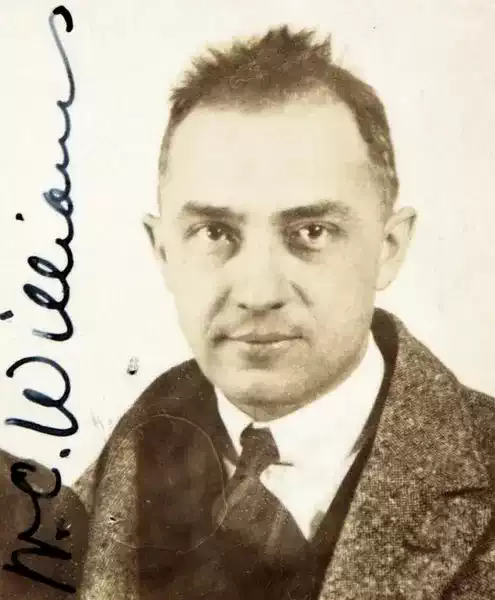
William Carlos Williams
The Lonely Street
School is over. It is too hot
to walk at ease. At ease
in light frocks they walk the streets
to while the time away.
They have grown tall. They hold
pink flames in their right hands.
In white from head to foot,
with sidelong, idle look--
in yellow, floating stuff,
black sash and stockings--
touching their avid mouths
with pink sugar on a stick--
like a carnation each holds in her hand--
they mount the lonely street.
426

John Keats
To one who has been long in city pent
To one who has been long in city pent,
'Tis very sweet to look into the fair
And open face of heaven,--to breathe a prayer
Full in the smile of the blue firmament.
Who is more happy, when, with heart's content,
Fatigued he sinks into some pleasant lair
Of wavy grass, and reads a debonair
And gentle tale of love and languishment?
Returning home at evening, with an ear
Catching the notes of Philomel,--an eye
Watching the sailing cloudlet's bright career,
He mourns that day so soon has glided by:
E'en like the passage of an angel's tear
That falls through the clear ether silently.
424
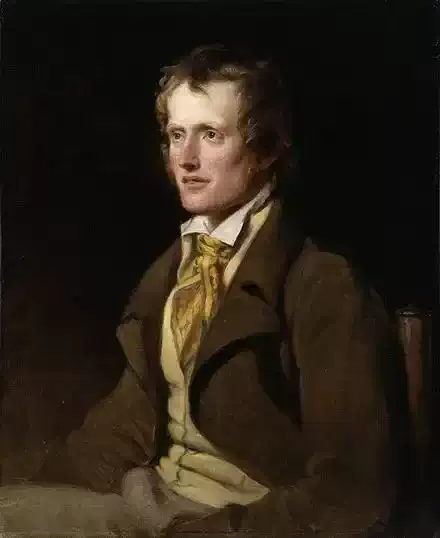
John Clare
Market Day
With arms and legs at work and gentle stroke
That urges switching tail nor mends his pace,
On an old ribbed and weather beaten horse,
The farmer goes jogtrotting to the fair.
Both keep their pace that nothing can provoke
Followed by brindled dog that snuffs the ground
With urging bark and hurries at his heels.
His hat slouched down, and great coat buttoned close
Bellied like hooped keg, and chuffy face
Red as the morning sun, he takes his round
And talks of stock: and when his jobs are done
And Dobbin's hay is eaten from the rack,
He drinks success to corn in language hoarse,
And claps old Dobbin's hide, and potters back.
422

Rudyard Kipling
The Tour
Thirteen as twelve my Murray always took--
He was a publisher. The new Police
Have neater ways of bringing men to book,
So Juan found himself before J.P.'s
Accused of storming through that placed nook
At practically any pace you please.
The Dogberry, and the Waterbury, made
It fifty mile--five pounds. And Juan paid!
He was a publisher. The new Police
Have neater ways of bringing men to book,
So Juan found himself before J.P.'s
Accused of storming through that placed nook
At practically any pace you please.
The Dogberry, and the Waterbury, made
It fifty mile--five pounds. And Juan paid!
422

Ella Wheeler Wilcox
The London 'Bobby'
A Tribute To The Policemen Of Englands Capital
Here in my cosy corner,
Before a blazing log,
I’m thinking of cold London
Wrapped in its killing fog;
And, like a shining beacon
Above the picture grim,
I see the London ‘Bobby, ’
And sing my song for him.
I see his stalwart figure,
I see his kindly face,
I hear his helpful answer
At any hour or place.
For, though you seek some by-way
Long miles from his own beat,
He tells you all about it,
And how to find the street.
He looks like some bold Viking,
This king of earth’s police –
Yet in his voice lies feeling,
And in his eyes lies peace;
He knows and does his duty –
(What higher praise is there?)
And London’s lords and paupers
Alike receive his care.
He has a regal bearing,
Yet one that breathes repose;
It is the look and manner
Of one who thinks and knows.
Oh, men who govern nations,
In old worlds or new,
Turn to the London ‘Bobby’
And learn a thing or two.
419

Carl Sandburg
Interior
In the cool of the night time
The clocks pick off the points
And the mainsprings loosen.
They will need winding.
One of these days
they will need winding.
Rabelais in red boards,
Walt Whitman in green,
Hugo in ten-cent paper covers,
Here they stand on shelves
In the cool of the night time
And there is nothing . . . .
To be said against them . . . .
Or for them . . . .
In the cool of the night time
And the docks.
A man in pigeon-gray pyjamas.
The open window begins at his feet
And goes taller than his head.
Eight feet high is the pattern.
Moon and mist make an oblong layout.
Silver at the man's bare feet.
He swings one foot in a moon silver.
And it costs nothing.
(One more day of bread and work.
One more day . . . .so much rags .
The man barefoot in moon silver
Mutters "You" and "You"
To things hidden
In the cool of the night time,
In Rabelais, Whitman, Hugo,
In an oblong of moon mist.
Out from the window . . . . prairielands.
Moon mist whitens a golf ground.
Whiter yet is a limestone quarry.
The crickets keep on chirring.
Switch engines of the Great Western
Sidetrack box cars, make up trains
For Weehawken, Oskaloosa, Saskatchewan;
The cattle, the coal, the corn, must go
In the night . . . . on the prairielands.
Chuff-chuff go the pulses.
They beat in the cool of the night time.
Chuff-chuff and chuff-chuff . . . .
These heartbeats travel the night a mile
And touch the moon silver at the window
And the hones of the man.
It costs nothing.
Rabelais in red boards,
Whitman in green,
Hugo in ten-cent paper covers,
Here they stand on shelves
In the cool of the night time
And the clocks.
418
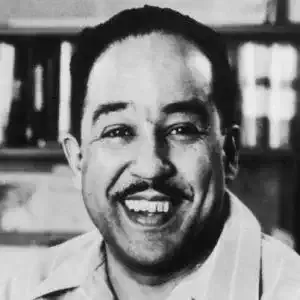
Langston Hughes
Juke Box Love Song
I could take the Harlem night
and wrap around you,
Take the neon lights and make a crown,
Take the Lenox Avenue busses,
Taxis, subways,
And for your love song tone their rumble down.
Take Harlem's heartbeat,
Make a drumbeat,
Put it on a record, let it whirl,
And while we listen to it play,
Dance with you till day--
Dance with you, my sweet brown Harlem girl.
418
Carl Sandburg
Muckers
Twenty men stand watching the muckers.
Stabbing the sides of the ditch
Where clay gleams yellow,
Driving the blades of their shovels
Deeper and deeper for the new gas mains
Wiping sweat off their faces
With red bandanas
The muckers work on .. pausing .. to pull
Their boots out of suckholes where they slosh.
Of the twenty looking on
Ten murmer, “O, its a hell of a job,”
Ten others, “Jesus, I wish I had the job.”
419
Carl Sandburg
The Mayor of Gary
I asked the mayor of Gary about the 12-hour day and the 7-day week.
And the mayor of Gary answered more workmen steal time on the job in Gary than any
other place in the United States.
"Go into the plants and you will see men sitting around doing nothing--machinery does
everything," said the mayor of Gary when I asked him about the 12-hour day and the
7-day week.
And he wore cool cream pants, the Mayor of Gary, and white shoes, and a barber had
fixed him up with a shampoo and a shave and he was east and imperturbable though
the government weather bureau thermometer said 96 and children were soaking their
heads at bubbling fountains on the street corners.
And I said good-bye to the Mayor of Gary and I went out from the city hall and turned
the corner into Broadway.
And I saw workmen wearing leather shoes scruffed with fire and cinders, and pitted
with little holes from running molten steel,
And some had bunches of specialized muscles around their shoulder blades hard as pig
iron, muscles of their forearms were sheet steel and they looked to me like men who
had been somewhere.
415
Walt Whitman
City Of Orgies
CITY of orgies, walks and joys!
City whom that I have lived and sung in your midst will one day make
you illustrious,
Not the pageants of you--not your shifting tableaux, your spectacles,
repay me;
Not the interminable rows of your houses--nor the ships at the
wharves,
Nor the processions in the streets, nor the bright windows, with
goods in them;
Nor to converse with learn'd persons, or bear my share in the soiree
or feast;
Not those--but, as I pass, O Manhattan! your frequent and swift flash
of eyes offering me love,
Offering response to my own--these repay me;
Lovers, continual lovers, only repay me.
417
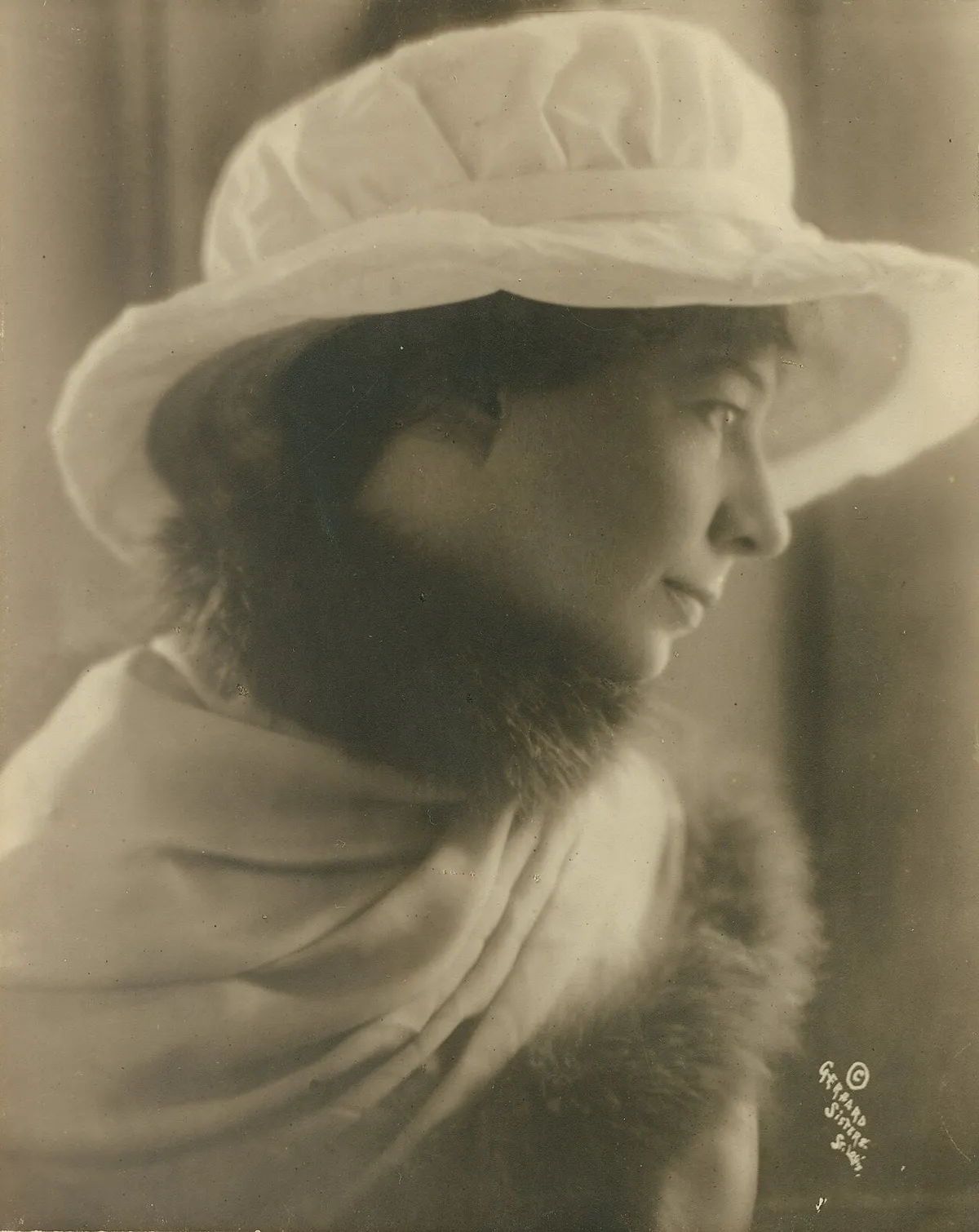
Sara Teasdale
Sunset: St. Louis
Hushed in the smoky haze of summer sunset,
When I came home again from far-off places,
How many times I saw my western city
Dream by her river.
Then for an hour the water wore a mantle
Of tawny gold and mauve and misted turquoise
Under the tall and darkened arches bearing
Gray, high-flung bridges.
Against the sunset, water-towers and steeples
Flickered with fire up the slope to westward,
And old warehouses poured their purple shadows
Across the levee.
High over them the black train swept with thunder,
Cleaving the city, leaving far beneath it
Wharf-boats moored beside the old side-wheelers
Resting in twilight.
414
John Clare
The Lout
For Sunday's play he never makes excuse,
But plays at taw, and buys his Spanish juice.
Hard as his toil, and ever slow to speak,
Yet he gives maidens many a burning cheek;
For none can pass him but his witless grace
Of bawdry brings the blushes in her face.
As vulgar as the dirt he treads upon
He calls his cows or drives his horses on;
He knows the lamest cow and strokes her side
And often tries to mount her back and ride,
And takes her tail at night in idle play,
And makes her drag him homeward all the way.
He knows of nothing but the football match,
And where hens lay, and when the duck will hatch.
411

Alfred Lord Tennyson
Beautiful City
Beautiful city
Beautiful city, the centre and crater of European confusion,
O you with your passionate shriek for the rights of an equal
humanity,
How often your Re-volution has proven but E-volution
Roll’d again back on itself in the tides of a civic insanity!
Beautiful city, the centre and crater of European confusion,
O you with your passionate shriek for the rights of an equal
humanity,
How often your Re-volution has proven but E-volution
Roll’d again back on itself in the tides of a civic insanity!
399

Jack Kerouac
Trees
But a tree has
a long suffering shape
Is
spread in half
by 2 limbed fate
Rises from gray rain
pavements
To traffic in the bleak
brown air
Of cities radar television
nameless dumb &numb mis connicumb
Throwing twigs the
color of ink To white souled
heaven, with
A reality of its own uses
a long suffering shape
Is
spread in half
by 2 limbed fate
Rises from gray rain
pavements
To traffic in the bleak
brown air
Of cities radar television
nameless dumb &numb mis connicumb
Throwing twigs the
color of ink To white souled
heaven, with
A reality of its own uses
396
Rudyard Kipling
The Idiot Boy
Wordsworth
He wandered down the moutain grade
Beyond the speed assigned--
A youth whom Justice often stayed
And generally fined.
He went alone, that none might know
If he could drive or steer.
Now he is in the ditch, and Oh!
The differential gear!
He wandered down the moutain grade
Beyond the speed assigned--
A youth whom Justice often stayed
And generally fined.
He went alone, that none might know
If he could drive or steer.
Now he is in the ditch, and Oh!
The differential gear!
393
Carl Sandburg
Fog
The fog comes
on little cat feet.
It sits looking
over harbor and city
on silent haunches
and then moves on.
on little cat feet.
It sits looking
over harbor and city
on silent haunches
and then moves on.
394
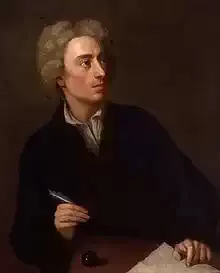
Alexander Pope
The Rape of the Lock: Canto 3
Close by those meads, for ever crown'd with flow'rs,
Where Thames with pride surveys his rising tow'rs,
There stands a structure of majestic frame,
Which from the neighb'ring Hampton takes its name.
Here Britain's statesmen oft the fall foredoom
Of foreign tyrants and of nymphs at home;
Here thou, great Anna! whom three realms obey,
Dost sometimes counsel take--and sometimes tea.
Hither the heroes and the nymphs resort,
To taste awhile the pleasures of a court;
In various talk th' instructive hours they pass'd,
Who gave the ball, or paid the visit last;
One speaks the glory of the British queen,
And one describes a charming Indian screen;
A third interprets motions, looks, and eyes;
At ev'ry word a reputation dies.
Snuff, or the fan, supply each pause of chat,
With singing, laughing, ogling, and all that.
Meanwhile, declining from the noon of day,
The sun obliquely shoots his burning ray;
The hungry judges soon the sentence sign,
And wretches hang that jury-men may dine;
The merchant from th' Exchange returns in peace,
And the long labours of the toilet cease.
Belinda now, whom thirst of fame invites,
Burns to encounter two adventrous knights,
At ombre singly to decide their doom;
And swells her breast with conquests yet to come.
Straight the three bands prepare in arms to join,
Each band the number of the sacred nine.
Soon as she spreads her hand, th' aerial guard
Descend, and sit on each important card:
First Ariel perch'd upon a Matadore,
Then each, according to the rank they bore;
For Sylphs, yet mindful of their ancient race,
Are, as when women, wondrous fond of place.
Behold, four Kings in majesty rever'd,
With hoary whiskers and a forky beard;
And four fair Queens whose hands sustain a flow'r,
Th' expressive emblem of their softer pow'r;
Four Knaves in garbs succinct, a trusty band,
Caps on their heads, and halberds in their hand;
And parti-colour'd troops, a shining train,
Draw forth to combat on the velvet plain.
The skilful nymph reviews her force with care:
"Let Spades be trumps!" she said, and trumps they were.
Now move to war her sable Matadores,
In show like leaders of the swarthy Moors.
Spadillio first, unconquerable lord!
Led off two captive trumps, and swept the board.
As many more Manillio forc'd to yield,
And march'd a victor from the verdant field.
Him Basto follow'd, but his fate more hard
Gain'd but one trump and one plebeian card.
With his broad sabre next, a chief in years,
The hoary Majesty of Spades appears;
Puts forth one manly leg, to sight reveal'd;
The rest, his many-colour'd robe conceal'd.
The rebel Knave, who dares his prince engage,
Proves the just victim of his royal rage.
Ev'n mighty Pam, that kings and queens o'erthrew
And mow'd down armies in the fights of loo,
Sad chance of war! now destitute of aid,
Falls undistinguish'd by the victor Spade!
Thus far both armies to Belinda yield;
Now to the baron fate inclines the field.
His warlike Amazon her host invades,
Th' imperial consort of the crown of Spades.
The Club's black tyrant first her victim died,
Spite of his haughty mien, and barb'rous pride:
What boots the regal circle on his head,
His giant limbs, in state unwieldy spread;
That long behind he trails his pompous robe,
And of all monarchs, only grasps the globe?
The baron now his diamonds pours apace;
Th' embroider'd King who shows but half his face,
And his refulgent Queen, with pow'rs combin'd
Of broken troops an easy conquest find.
Clubs, Diamonds, Hearts, in wild disorder seen,
With throngs promiscuous strow the level green.
Thus when dispers'd a routed army runs,
Of Asia's troops, and Afric's sable sons,
With like confusion diff'rent nations fly,
Of various habit, and of various dye,
The pierc'd battalions disunited fall.
In heaps on heaps; one fate o'erwhelms them all.
The Knave of Diamonds tries his wily arts,
And wins (oh shameful chance!) the Queen of Hearts.
At this, the blood the virgin's cheek forsook,
A livid paleness spreads o'er all her look;
She sees, and trembles at th' approaching ill,
Just in the jaws of ruin, and codille.
And now (as oft in some distemper'd state)
On one nice trick depends the gen'ral fate.
An Ace of Hearts steps forth: The King unseen
Lurk'd in her hand, and mourn'd his captive Queen:
He springs to vengeance with an eager pace,
And falls like thunder on the prostrate Ace.
The nymph exulting fills with shouts the sky;
The walls, the woods, and long canals reply.
Oh thoughtless mortals! ever blind to fate,
Too soon dejected, and too soon elate!
Sudden, these honours shall be snatch'd away,
And curs'd for ever this victorious day.
For lo! the board with cups and spoons is crown'd,
The berries crackle, and the mill turns round.
On shining altars of Japan they raise
The silver lamp; the fiery spirits blaze.
From silver spouts the grateful liquors glide,
While China's earth receives the smoking tide.
At once they gratify their scent and taste,
And frequent cups prolong the rich repast.
Straight hover round the fair her airy band;
Some, as she sipp'd, the fuming liquor fann'd,
Some o'er her lap their careful plumes display'd,
Trembling, and conscious of the rich brocade.
Coffee, (which makes the politician wise,
And see through all things with his half-shut eyes)
Sent up in vapours to the baron's brain
New stratagems, the radiant lock to gain.
Ah cease, rash youth! desist ere 'tis too late,
Fear the just gods, and think of Scylla's fate!
Chang'd to a bird, and sent to flit in air,
She dearly pays for Nisus' injur'd hair!
But when to mischief mortals bend their will,
How soon they find fit instruments of ill!
Just then, Clarissa drew with tempting grace
A two-edg'd weapon from her shining case;
So ladies in romance assist their knight
Present the spear, and arm him for the fight.
He takes the gift with rev'rence, and extends
The little engine on his fingers' ends;
This just behind Belinda's neck he spread,
As o'er the fragrant steams she bends her head.
Swift to the lock a thousand sprites repair,
A thousand wings, by turns, blow back the hair,
And thrice they twitch'd the diamond in her ear,
Thrice she look'd back, and thrice the foe drew near.
Just in that instant, anxious Ariel sought
The close recesses of the virgin's thought;
As on the nosegay in her breast reclin'd,
He watch'd th' ideas rising in her mind,
Sudden he view'd, in spite of all her art,
An earthly lover lurking at her heart.
Amaz'd, confus'd, he found his pow'r expir'd,
Resign'd to fate, and with a sigh retir'd.
The peer now spreads the glitt'ring forfex wide,
T' inclose the lock; now joins it, to divide.
Ev'n then, before the fatal engine clos'd,
A wretched Sylph too fondly interpos'd;
Fate urg'd the shears, and cut the Sylph in twain,
(But airy substance soon unites again).
The meeting points the sacred hair dissever
From the fair head, for ever, and for ever!
Then flash'd the living lightning from her eyes,
And screams of horror rend th' affrighted skies.
Not louder shrieks to pitying Heav'n are cast,
When husbands or when lap-dogs breathe their last,
Or when rich China vessels, fall'n from high,
In glitt'ring dust and painted fragments lie!
"Let wreaths of triumph now my temples twine,"
The victor cried, "the glorious prize is mine!
While fish in streams, or birds delight in air,
Or in a coach and six the British fair,
As long at Atalantis shall be read,
Or the small pillow grace a lady's bed,
While visits shall be paid on solemn days,
When num'rous wax-lights in bright order blaze,
While nymphs take treats, or assignations give,
So long my honour, name, and praise shall live!
What time would spare, from steel receives its date,
And monuments, like men, submit to fate!
Steel could the labour of the gods destroy,
And strike to dust th' imperial tow'rs of Troy;
Steel could the works of mortal pride confound,
And hew triumphal arches to the ground.
What wonder then, fair nymph! thy hairs should feel
The conqu'ring force of unresisted steel?"
394
Sara Teasdale
Faces
People that I meet and pass
In the city's broken roar,
Faces that I lose so soon
And have never found before,
Do you know how much you tell
In the meeting of our eyes,
How ashamed I am, and sad
To have pierced your poor disguise?
Secrets rushing without sound
Crying from your hiding places --
Let me go, I cannot bear
The sorrow of the passing faces.
-- People in the restless street,
Can it be, oh can it be
In the meeting of our eyes
That you know as much of me?
390

Claude Mckay
On Broadway
About me young careless feet
Linger along the garish street;
Above, a hundred shouting signs
Shed down their bright fantastic glow
Upon the merry crowd and lines
Of moving carriages below.
Oh wonderful is Broadway -- only
My heart, my heart is lonely.
Desire naked, linked with Passion,
Goes trutting by in brazen fashion;
From playhouse, cabaret and inn
The rainbow lights of Broadway blaze
All gay without, all glad within;
As in a dream I stand and gaze
At Broadway, shining Broadway -- only
My heart, my heart is lonely.
392

Matsuo Bashō
The squid seller's call
The squid seller's call
mingles with the voice
of the cuckoo.
Translated by Robert Hass
mingles with the voice
of the cuckoo.
Translated by Robert Hass
391

Robert Louis Stevenson
From a Railway Carriage
Faster than fairies, faster than witches,
Bridges and houses, hedges and ditches;
And charging along like troops in a battle
All through the meadows the horses and cattle:
All of the sights of the hill and the plain
Fly as thick as driving rain;
And ever again, in the wink of an eye,
Painted stations whistle by.
Here is a child who clambers and scrambles,
All by himself and gathering brambles;
Here is a tramp who stands and gazes;
And here is the green for stringing the daisies!
Here is a cart runaway in the road
Lumping along with man and load;
And here is a mill, and there is a river:
Each a glimpse and gone forever!
390