
City and Everyday Life
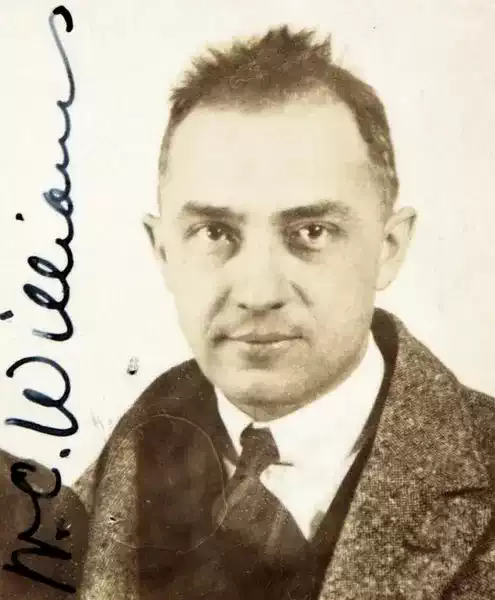
William Carlos Williams
The Disputants
Upon the table in their bowl
in violent disarray
of yellow sprays, green spikes
of leaves, red pointed petals
and curled heads of blue
and white among the litter
of the forks and crumbs and plates
the flowers remain composed.
Coolly their colloquy continues
above the coffee and loud talk
grown frail as vaudeville.
in violent disarray
of yellow sprays, green spikes
of leaves, red pointed petals
and curled heads of blue
and white among the litter
of the forks and crumbs and plates
the flowers remain composed.
Coolly their colloquy continues
above the coffee and loud talk
grown frail as vaudeville.
390

Ezra Pound
The City Of Choan
The phoenix are at play on their terrace.
The phoenix are gone, the river Hows on alone.
Flowers and grass
Cover over the dark path
where lay the dynastic house of the Go.
The bright cloths and bright caps of Shin
Are now the base of old hills.
The Three Mountains fall through the far heaven,
The isle of White Heron
splits the two streams apart.
Now the high clouds cover the sun
And I can not see Choan afar
And I am sad.
387

Carl Sandburg
Bronzes
I
The bronze General Grant riding a bronze horse in Lincoln
Park
Shrivels in the sun by day when the motor cars whirr
by in long processions going somewhere to keep appointment
for dinner and matineés and buying and
selling
Though in the dusk and nightfall when high waves are
piling
On the slabs of the promenade along the lake shore near
by
I have seen the general dare the combers come closer
And make to ride his bronze horse out into the hoofs
and guns of the storm.
II
I cross Lincoln Park on a winter night when the snow
is falling.
Lincoln in bronze stands among the white lines of snow,
his bronze forehead meeting soft echoes of the newsies
crying forty thousand men are dead along the
Yser, his bronze ears listening to the mumbled roar
of the city at his bronze feet.
A lithe Indian on a bronze pony, Shakespeare seated with
long legs in bronze, Garibaldi in a bronze cape, they
hold places in the cold, lonely snow to-night on their
pedestals and so they will hold them past midnight
and into the dawn.
388

Henry Wadsworth Longfellow
Evangeline: Part The First. IV.
PLEASANTLY rose next morn the sun on the village of Grand-Pré.
Pleasantly gleamed in the soft, sweet air the Basin of Minas,
Where the ships, with their wavering shadows, were riding at anchor.
Life had long been astir in the village, and clamorous labor
Knocked with its hundred hands at the golden gates of the morning.
Now from the country around, from the farms and neighboring hamlets,
Came in their holiday dresses the blithe Acadian peasants.
Many a glad good morrow and jocund laugh from the young folk
Made the bright air brighter, as up from the numerous meadows,
Where no path could be seen but the track of wheels in the greensward,
Group after group appeared, and joined, or passed on the highway.
Long ere noon, in the village all sounds of labor were silenced.
Thronged were the streets with people; and noisy groups at the house-doors
Sat in the cheerful sun, and rejoiced and gossiped together,
Every house was an inn, where all were welcomed and feasted;
For with this simple people, who lived like brothers together,
All things were held in common, and what one had was another's.
Yet under Benedict's roof hospitality seemed more abundant:
For Evangeline stood among the guests of her father;
Bright was her face with smiles, and words of welcome and gladness
Fell from her beautiful lips, and blessed the cup as she gave it.
Under the open sky, in the odorous air of the orchard,
Bending with golden fruit, was spread the feast of betrothal.
There in the shade of the porch were the priest and the notary seated;
There good Benedict sat, and sturdy Basil the blacksmith.
Not far withdrawn from these, by the cider-press and the beehives,
Michael the fiddler was placed, with the gayest of hearts and of waistcoats.
Shadow and light from the leaves alternately played on his snow-white
Hair, as it waved in the wind; and the jolly face of the fiddler
Glowed like a living coal when the ashes are blown from the embers.
Gayly the old man sang to the vibrant sound of his fiddle,
Tous les Bourgeois de Chartres, and Le Carillon de Dunkerque,
And anon with his wooden shoes beat time to the music.
Merrily, merrily whirled the wheels of the dizzying dances
Under the orchard-trees and down the path to the meadows;
Old folk and young together, and children mingled among them.
Fairest of all the maids was Evangeline, Benedict's daughter!
Noblest of all the youths was Gabriel, son of the blacksmith!
So passed the morning away. And lo! with a summons sonorous
Sounded the bell from its tower, and over the meadows a drum beat.
Thronged erelong was the church with men. Without, in the churchyard,
Waited the women. They stood by the graves, and hung on the headstones
Garlands of autumn-leaves and evergreens fresh from the forest.
Then came the guard from the ships, and marching proudly among them
Entered the sacred portal. With loud and dissonant clangor
Echoed the sound of their brazen drums from ceiling and casement,-
Echoed a moment only, and slowly the ponderous portal
Closed, and in silence the crowd awaited the will of the soldiers.
Then uprose their commander, and spake from the steps of the altar,
Holding aloft in his hands, with its seals, the royal commission.
'You are convened this day,' he said, 'by his Majesty's orders.
Clement and kind has he been; but how you have answered his kindness,
Let your own hearts reply! To my natural make and my temper
Painful the task is I do, which to you I know must be grievous.
Yet must I bow and obey, and deliver the will of our monarch;
Namely, that all your lands, and dwellings, and cattle of all kinds
Forfeited be to the crown; and that you yourselves from this province
Be transported to other lands. God grant you may dwell there
Ever as faithful subjects, a happy and peaceable people!
Prisoners now I declare you; for such is his Majesty's pleasure!'
As, when the air is serene in the sultry solstice of summer,
Suddenly gathers a storm, and the deadly sling of the hailstones
Beats down the farmer's corn in the field and shatters his windows,
Hiding the sun, and strewing the ground with thatch from the house-roofs,
Bellowing fly the herds, and seek to break their enclosures;
So on the hearts of the people descended the words of the speaker.
Silent a moment they stood in speechless wonder, and then rose
Louder and ever louder a wail of sorrow and anger,
And, by one impulse moved, they madly rushed to the door-way.
Vain was the hope of escape; and cries and fierce imprecations
Rang through the house of prayer; and high o'er the heads of the others
Rose, with his arms uplifted, the figure of Basil the blacksmith,
As, on a stormy sea, a spar is tossed by the billows.
Flushed was his face and distorted with passion; and wildly he shouted,'
Down with the tyrants of England! we never have sworn them allegiance!
Death to these foreign soldiers, who seize on our homes and our harvests!'
More he fain would have said, but the merciless hand of a soldier
Smote him upon the mouth, and dragged him down to the pavement.
In the midst of the strife and tumult of angry contention,
Lo! the door of the chancel opened, and Father Felician
Entered, with serious mien, and ascended the steps of the altar.
Raising his reverend hand, with a gesture he awed into silence
All that clamorous throng; and thus he spake to his people;
Deep were his tones and solemn; in accents measured and mournful
Spake he, as, after the tocsin's alarum, distinctly the clock strikes.
'What is this that ye do, my children? what madness has seized you?
Forty years of my life have I labored among you, and taught you,
Not in word alone, but in deed, to love one another!
Is this the fruit of my toils, of my vigils and prayers and privations?
Have you so soon forgotten all lessons of love and forgiveness?
This is the house of the Prince of Peace, and would you profane it
Thus with violent deeds and hearts overflowing with hatred?
Lo! where the crucified Christ from his cross is gazing upon you!
See! in those sorrowful eyes what meekness and holy compassion!
Hark! how those lips still repeat the prayer, `O Father, forgive them!'
Let us repeat that prayer in the hour when the wicked assail us,
Let us repeat it now, and say, `O Father, forgive them!' '
Few were his words of rebuke, but deep in the hearts of his people
Sank they, and sobs of contrition succeeded the passionate outbreak,
And they repeated his prayer, and said, 'O Father, forgive them!'
Then came the evening service. The tapers gleamed from the altar.
Fervent and deep was the voice of the priest, and the people responded,
Not with their lips alone, but their hearts; and the Ave Maria
Sang they, and fell on their knees, and their souls, with devotion translated,
Rose on the ardor of prayer, like Elijah ascending to heaven.
Meanwhile had spread in the village the tidings of ill, and on all sides
Wandered, wailing, from house to house the women and children.
Long at her father's door Evangeline stood, with her right hand
Shielding her eyes from the level rays of the sun, that, descending,
Lighted the village street with mysterious splendor, and roofed each
Peasant's cottage with golden thatch, and emblazoned its windows.
Long within had been spread the snow-white cloth on the table;
There stood the wheaten loaf, and the honey fragrant with wild-flowers;
There stood the tankard of ale, and the cheese fresh brought from the dairy,
And, at the head of the board, the great arm-chair of the farmer.
Thus did Evangeline wait at her father's door, as the sunset
Threw the long shadows of trees o'er the broad ambrosial meadows.
Ah! on her spirit within a deeper shadow had fallen,
And from the fields of her soul a fragrance celestial ascended,-
Charity, meekness, love, and hope, and forgiveness, and patience!
Then, all-forgetful of self, she wandered into the village,
Cheering with looks and words the disconsolate hearts of the women,
As o'er the darkening fields with lingering steps they departed,
Urged by their household cares, and the weary feet of their children.
Down sank the great red sun, and in golden, glimmering vapors
Veiled the light of his face, like the Prophet descending from Sinai.
Sweetly over the village the bell of the Angelus sounded.
Meanwhile, amid the gloom, by the church Evangeline lingered.
All was silent within; and in vain at the door and the windows
Stood she, and listened and looked, till, overcome by emotion,
'Gabriel!' cried she aloud with tremulous voice; but no answer
Came from the graves of the dead, nor the gloomier grave of the living.
Slowly at length she returned to the tenantless house of her father.
Smouldered the fire on the hearth, on the board stood the supper untasted,
Empty and drear was each room, and haunted with phantoms of terror.
Sadly echoed her step on the stair and the floor of her chamber.
In the dead of the night she heard the whispering rain fall
Loud on the withered leaves of the sycamore-tree by the window.
Keenly the lightning flashed; and the voice of the echoing thunder
Told her that God was in heaven, and governed the world he created!
Then she remembered the tale she had heard of the justice of Heaven;
Soothed was her troubled soul, and she peacefully slumbered till morning.
383
Carl Sandburg
Broadway
I shall never forget you, Broadway
Your golden and calling lights.
I’ll remember you long,
Tall-walled river of rush and play.
Hearts that know you hate you
And lips that have given you laughter
Have gone to their ashes of life and its roses,
Cursing the dreams that were lost
In the dust of your harsh and trampled stones.
Your golden and calling lights.
I’ll remember you long,
Tall-walled river of rush and play.
Hearts that know you hate you
And lips that have given you laughter
Have gone to their ashes of life and its roses,
Cursing the dreams that were lost
In the dust of your harsh and trampled stones.
375

Henry Lawson
Cherry- Tree Inn
The rafters are open to sun, moon, and star,
Thistles and nettles grow high in the bar --
The chimneys are crumbling, the log fires are dead,
And green mosses spring from the hearthstone instead.
The voices are silent, the bustle and din,
For the railroad hath ruined the Cherry-tree Inn.
Save the glimmer of stars, or the moon's pallid streams,
And the sounds of the 'possums that camp on the beams,
The bar-room is dark and the stable is still,
For the coach comes no more over Cherry-tree Hill.
No riders push on through the darkness to win
The rest and the comfort of Cherry-tree Inn.
I drift from my theme, for my memory strays
To the carrying, digging, and bushranging days --
Far back to the seasons that I love the best,
When a stream of wild diggers rushed into the west,
But the `rushes' grew feeble, and sluggish, and thin,
Till scarcely a swagman passed Cherry-tree Inn.
Do you think, my old mate (if it's thinking you be),
Of the days when you tramped to the goldfields with me?
Do you think of the day of our thirty-mile tramp,
When never a fire could we light on the camp,
And, weary and footsore and drenched to the skin,
We tramped through the darkness to Cherry-tree Inn?
Then I had a sweetheart and you had a wife,
And Johnny was more to his mother than life;
But we solemnly swore, ere that evening was done,
That we'd never return till our fortunes were won.
Next morning to harvests of folly and sin
We tramped o'er the ranges from Cherry-tree Inn.
. . . . .
The years have gone over with many a change,
And there comes an old swagman from over the range,
And faint 'neath the weight of his rain-sodden load,
He suddenly thinks of the inn by the road.
He tramps through the darkness the shelter to win,
And reaches the ruins of Cherry-tree Inn.
376
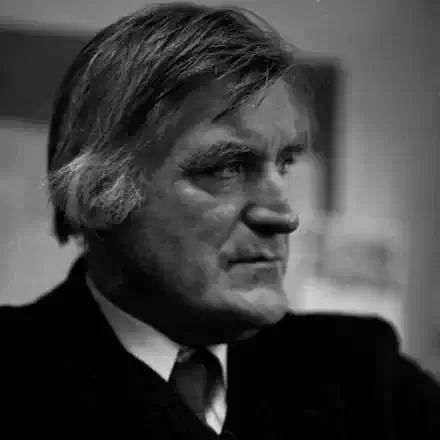
Ted Hughes
Work and Play
The swallow of summer, she toils all the summer,
A blue-dark knot of glittering voltage,
A whiplash swimmer, a fish of the air.
But the serpent of cars that crawls through the dust
In shimmering exhaust
Searching to slake
Its fever in ocean
Will play and be idle or else it will bust.
The swallow of summer, the barbed harpoon,
She flings from the furnace, a rainbow of purples,
Dips her glow in the pond and is perfect.
But the serpent of cars that collapsed on the beach
Disgorges its organs
A scamper of colours
Which roll like tomatoes
Nude as tomatoes
With sand in their creases
To cringe in the sparkle of rollers and screech.
The swallow of summer, the seamstress of summer,
She scissors the blue into shapes and she sews it,
She draws a long thread and she knots it at the corners.
But the holiday people
Are laid out like wounded
Flat as in ovens
Roasting and basting
With faces of torment as space burns them blue
Their heads are transistors
Their teeth grit on sand grains
Their lost kids are squalling
While man-eating flies
Jab electric shock needles but what can they do?
They can climb in their cars with raw bodies, raw faces
And start up the serpent
And headache it homeward
A car full of squabbles
And sobbing and stickiness
With sand in their crannies
Inhaling petroleum
That pours from the foxgloves
While the evening swallow
The swallow of summer, cartwheeling through crimson,
Touches the honey-slow river and turning
Returns to the hand stretched from under the eaves -
A boomerang of rejoicing shadow.
374

Johann Wolfgang von Goethe
Hermann And Dorothea - III. Thalia
THE BURGHERS.
THUS did the prudent son escape from the hot conversation,
But the father continued precisely as he had begun it
What is not in a man can never come out of him, surely!
Never, I fear, shall I see fulfill'd my dearest of wishes,
That my son should be unlike his father, but better.
What would be the fate of a house or a town, if its inmates
Did not all take pride in preserving, renewing, improving,
As we are taught by the age, and by the wisdom of strangers?
Man is not born to spring out of the ground, just like a mere mushroom,
And to rot away soon in the very place that produced him!
Leaving behind him no trace of what he has done in his lifetime.
One can judge by the look of a house of the taste of its master,
As on ent'ring a town, one can judge the authorities' fitness.
For where the towers and walls are falling, where in the ditches
Dirt is collected, and dirt in every street is seen lying,
Where the stones come out of their groove, and are not replaced there,
Where the beams are rotting, and vainly the houses are waiting
New supports; that town is sure to be wretchedly managed.
For where order and cleanliness reign not supreme in high places,
Then to dirt and delay the citizens soon get accustom'd,
Just as the beggar's accustom'd to wear his cloths full of tatters.
Therefore I often have wish'd that Hermann would start on his travels
Ere he's much older, and visit at any rate Strasburg and Frankfort,
And that pleasant town, Mannheim, so evenly built and so cheerful.
He who has seen such large and cleanly cities rests never
Till his own native town, however small, he sees better'd.
Do not all strangers who visit us praise our well-mended gateways,
And the well-whited tower, the church so neatly repair'd too?
Do not all praise our pavements? Our well-arranged cover'd-in conduits,
Always well furnish'd with water, utility blending with safety,
So that a fire, whenever it happens, is straightway extinguish'd,--
Is not this the result of that conflagration so dreadful?
Six times in Council I superintended the town's works, receiving
Hearty thanks and assistance from every well-disposed burgher.
How I design'd, follow'd up, and ensured the completion of measures
Worthy men had projected, and afterwards left all unfinish'd!
Finally, every man in the Council took pleasure in working.
All put forth their exertions, and now they have finally settled
That new highway to make, which will join our town with the main road.
But I am greatly afraid that the young generation won't act thus;
Some on the one hand think only of pleasure and trumpery dresses,
Others wont stir out of doors, and pass all their time by the fireside,
And our Hermann, I fear, will always be one of this last sort.'
Forthwith to him replied the excellent sensible mother
'Father, you're always unjust whenever you speak of your son, and
That is the least likely way to obtain your wishes' fulfillment,
For we cannot fashion our children after our fancy.
We must have them and love them, as God has given them to us,
Bring them up for the best, and let each do as he listeth.
One has one kind of gift, another possesses another,
Each one employs them, and each in turn in his separate fashion
Good and happy becomes. My Hermann shall not be upbraided,
For I know that he well deserves the wealth he'll inherit;
He'll be an excellent landlord, a pattern to burghers and peasants,
And, as I clearly foresee, by no means the last in the Council.
But with your blame and reproaches, you daily dishearten him sadly,
As you have done just now, and make the poor fellow unhappy.'
Then she left the apartment, and after her son hasten'd quickly,
Hoping somewhere to find him, and with her words of affection
Gladden his heart, for he, the excellent son, well deserved it.
Smilingly, when she had closed the door, continued the father
'What a wonderful race of people are women and children.
All of them fain would do whatever pleases their fancy,
And we're only alow'd to praise them and flatter them freely.
Once for all there's truth in the ancient proverb which tells us:
He who moves not forward, goes backward! a capital saying!'
Speaking with much circumspection, the druggist made answer as follows
'What you say, good neighbour, is certainly true, and my plan is
Always to think of improvement, provided tho' new, 'tis not costly.
But what avails it in truth, unless one has plenty of money,
Active and fussy to he, improving both inside and outside?
Sadly confined are the means of a burgher; e'en when he knows it,
Little that's good he is able to do, his purse is too narrow,
And the sum wanted too great; and so he is always prevented.
I have had plenty of schemes! but then I was terribly frighten'd
At the expense, especially during a time of such danger.
Long had my house smiled upon me, decked out in modish exterior,
Long had my windows with large panes of glass resplendently glitterd.
Who can compete with a merchant, however, who, rolling in riches,
Also knows the manner in which what is best can be purchased?
Only look at the house up yonder, the new one: how handsome
Looks the stucco of those white scrolls on the green-colour'd panels!
Large are the plates of the windows--how shining and brilliant the panes are,
Quite eclipsing the rest of the houses that stand in the market!
Yet at the time of the fire, our two were by far the most handsome,
Mine at the sign of the Angel, and yours at the old Golden Lion.
Then my garden was famous throughout the whole country, and strangers
Used to stop as they pass'd and peep through my red-colourd palings
At my beggars of stone, and at my dwarfs, which were painted,
He to whom I gave coffee inside my beautiful grotto,
Which, alas! is now cover'd with dust and tumbling to pieces,
Used to rejoice in the colour'd glimmering light of the mussels,
Ranged in natural order around it, and connoisseurs even
Used with dazzled eyes to gaze at the spars and the coral.
Then, in the drawing-room, people look'd with delight on the painting,
Where the prim ladies and gentlemen walked in the garden demurely,
And with pointed fingers presented the flowers, and held them.
Ah, if only such things were now to be seen! Little care I
Now to go out; for everything needs to be alter'd and tasteful,
As it is call'd; and white are the benches of wood and the palings;
All things are simple and plain; and neither carving not gilding
Now are employ'd, and foreign timber is now all the fashion.
I should be only too pleased to possess some novelty also,
So as to march with the times, and my household furniture alter.
But we all are afraid to make the least alteration,
For who is able to pay the present charges of workmen?
Lately a fancy possess'd me, the angel Michael, whose figure
Hangs up over my shop, to treat to a new coat of gilding,
And the terrible Dragon, who round his feet is entwining;
But I have left him all brown; as he is; for the cost quite alarm'd me.'
370
Carl Sandburg
Manual System
Mary has a thingamajig clamped on her ears
And sits all day taking plugs out and sticking plugs in.
Flashes and flashes--voies and voices
calling for ears to put words in
Faces at the ends of wires asking for other faces
at the ends of other wires:
All day taking plugs out and sticking plugs in,
Mary has a thingamajig clamped on her ears.
And sits all day taking plugs out and sticking plugs in.
Flashes and flashes--voies and voices
calling for ears to put words in
Faces at the ends of wires asking for other faces
at the ends of other wires:
All day taking plugs out and sticking plugs in,
Mary has a thingamajig clamped on her ears.
370

Claude Mckay
Winter in the Country
Sweet life! how lovely to be here
And feel the soft sea-laden breeze
Strike my flushed face, the spruce's fair
Free limbs to see, the lesser trees'
Bare hands to touch, the sparrow's cheep
To heed, and watch his nimble flight
Above the short brown grass asleep.
Love glorious in his friendly might,
Music that every heart could bless,
And thoughts of life serene, divine,
Beyond my power to express,
Crowd round this lifted heart of mine!
But oh! to leave this paradise
For the city's dirty basement room,
Where, beauty hidden from the eyes,
A table, bed, bureau, and broom
In corner set, two crippled chairs
All covered up with dust and grim
With hideousness and scars of years,
And gaslight burning weird and dim,
Will welcome me . . . And yet, and yet
This very wind, the winter birds
The glory of the soft sunset,
Come there to me in words.
365
Carl Sandburg
Honky Tonk in Cleveland, Ohio
It's a jazz affair, drum crashes and coronet razzes.
The trombone pony neighs and the tuba jackass snorts.
The banjo tickles and titters too awful.
The chippies talk about the funnies in the papers.
The cartoonists weep in their beer.
Shop riveters talk with their feet
To the feet of floozies under the tables.
A quartet of white hopes mourn with interspersed snickers:
"I got the blues.
I got the blues.
I got the blues."
And . . . as we said earlier:
The cartoonists weep in their beer.
362
Carl Sandburg
Clark Street Bridge
Dust of the feet
And dust of the wheels,
Wagons and people going,
All day feet and wheels.
Now. . .
. . Only stars and mist
A lonely policeman,
Two cabaret dancers,
Stars and mist again,
No more feet or wheels,
No more dust and wagons.
Voices of dollars
And drops of blood
. . . . .
Voices of broken hearts,
. . Voices singing, singing,
. . Silver voices, singing,
Softer than the stars,
Softer than the mist.
359
Henry Wadsworth Longfellow
To The Driving Cloud
Gloomy and dark art thou, O chief of the mighty Omahas;
Gloomy and dark as the driving cloud, whose name thou hast taken!
Wrapped in thy scarlet blanket, I see thee stalk through the city's
Narrow and populous streets, as once by the margin of rivers
Stalked those birds unknown, that have left us only their
footprints.
What, in a few short years, will remain of thy race but the
footprints?
How canst thou walk these streets, who hast trod the green turf
of the prairies!
How canst thou breathe this air, who hast breathed the sweet air
of the mountains!
Ah! 'tis in vain that with lordly looks of disdain thou dost
challenge
Looks of disdain in return, and question these walls and these
pavements,
Claiming the soil for thy hunting-grounds, while down-trodden
millions
Starve in the garrets of Europe, and cry from its caverns that
they, too,
Have been created heirs of the earth, and claim its division!
Back, then, back to thy woods in the regions west of the Wabash!
There as a monarch thou reignest. In autumn the leaves of the
maple
Pave the floors of thy palace-halls with gold, and in summer
Pine-trees waft through its chambers the odorous breath of their
branches.
There thou art strong and great, a hero, a tamer of horses!
There thou chasest the stately stag on the banks of the Elkhorn,
Or by the roar of the Running-Water, or where the Omaha
Calls thee, and leaps through the wild ravine like a brave of the
Blackfeet!
Hark! what murmurs arise from the heart of those mountainous
deserts?
Is it the cry of the Foxes and Crows, or the mighty Behemoth,
Who, unharmed, on his tusks once caught the bolts of the thunder,
And now lurks in his lair to destroy the race of the red man?
Far more fatal to thee and thy race than the Crows and the Foxes,
Far more fatal to thee and thy race than the tread of Behemoth,
Lo! the big thunder-canoe, that steadily breasts the Missouri's
Merciless current! and yonder, afar on the prairies, the
camp-fires
Gleam through the night; and the cloud of dust in the gray of the
daybreak
Marks not the buffalo's track, nor the Mandan's dexterous
horse-race;
It is a caravan, whitening the desert where dwell the Camanches!
Ha! how the breath of these Saxons and Celts, like the blast of
the east-wind,
Drifts evermore to the west the scanty smokes of thy wigwams!
360
Boris Pasternak
It's spring, I leave a street where poplars...
It's spring, I leave a street where poplars are astonished,
Where distance is alarmed and the house fears it may fall.
Where air is blue just like the linen bundle
A discharged patient takes from hospital,
Where dusk is empty, like a broken tale,
Abandoned by a star, without conclusion,
So that expressionless, unfathomable,
A thousand clamouring eyes are in confusion.
356

Ella Wheeler Wilcox
PH. Best & Co.'s Lager-Beer
In every part of the thrifty town,
Whether my course be up or down,
In lane, and alley, and avenue,
Painted in yellow, and red, and blue,
This side and that, east and west,
Was this flaunting sign-board of 'Ph. Best.'
'Twas hung high up, and swung in the air
With a swaggering, bold-faced, 'devil-may-care
It-
is-none-of-your-business' sort of way;
Or, as if dreading the light o' the day,
It hung low, over a basement-stair,
And seemed ashamed when you saw it there.
Or it shone like a wicked and evil eye
From a 'restaurant' door on passers-by,
And seemed with a twinkling wink to say:
'Are you bound for hell? Then step this way;
This is the ticket-office of sin;
If you think of purchasing, pray, walk in.'
Or it glared from a window where the light
Of the lamps within shone full and bright,
And seemed to be saying, 'Come out of the storm!
Come into my haven snug and warm;
I will give you warmth from the flowing bowl,
And all I ask is your purse and soul.'
But whether on window, door, or stair,
Wherever I went, it was always there;
Painted in yellow, and red, and blue,
It stared from alley and avenue:
It was north, and south, and east, and west,
The lager-beer of this Philip Best.
And who was Philip Best, you ask?
Oh! he was a man, whose noble task
Was the brewing of beer-good beer, first-class-
That should sparkle, and bubble, and boil in the glass:
Should sparkle and flow till drank, and then
Feast like a vampire on brains of men.
Ah! Philip Best, you have passed from view,
But your name and your works live after you.
Come, brothers, raise him a monument,
Inscribed, 'Here lies the man who sent
A million of souls to the depths of hell;
Turned genius and worth to the prison-cell;
Stole bread from the mouth of the hungry child:
Made the father a brute, and the mother wild;
Filled happy homes with dread unrest:
Oh! a very great man was Philip Best.
O Ph. Best! you have passed from view,
But your nameand your deeds live after you.'
356
Carl Sandburg
Neighbors
On Forty-first Street
near Eighth Avenue
a frame house wobbles.
If houses went on crutches
this house would be
one of the cripples.
A sign on the house:
Church of the Living God
And Rescue Home for Orphan Children.
From a Greek coffee house
Across the street
A cabalistic jargon
Jabbers back.
And men at tables
Spill Peloponnesian syllables
And speak of shovels for street work.
And the new embankments of the Erie Railroad
At Painted Post, Horse's Head, Salamanca.
356
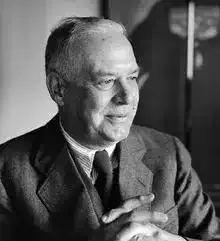
Wallace Stevens
The Man Whose Pharynx Was Bad
The time of year has grown indifferent.
Mildew of summer and the deepening snow
Are both alike in the routine I know:
I am too dumbly in my being pent.
The wind attendant on the solstices
Blows on the shutters of the metropoles,
Stirring no poet in his sleep, and tolls
The grand ideas of the villages.
The malady of the quotidian . . .
Perhaps if summer ever came to rest
And lengthened, deepened, comforted, caressed
Through days like oceans in obsidian
Horizons, full of night's midsummer blaze;
Perhaps, if winter once could penetrate
Through all its purples to the final slate,
Persisting bleakly in an icy haze;
One might in turn become less diffident,
Out of such mildew plucking neater mould
And spouting new orations of the cold.
One might. One might. But time will not relent.
357
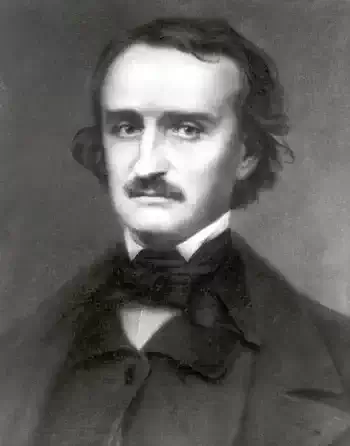
Edgar Allan Poe
The City In The Sea
Lo! Death has reared himself a throne
In a strange city lying alone
Far down within the dim West,
Where the good and the bad and the worst and the best
Have gone to their eternal rest.
There shrines and palaces and towers
(Time-eaten towers that tremble not!)
Resemble nothing that is ours.
Around, by lifting winds forgot,
Resignedly beneath the sky
The melancholy waters he.
No rays from the holy heaven come down
On the long night-time of that town;
But light from out the lurid sea
Streams up the turrets silently
Gleams
up the pinnacles far and free
Up
domes- up spires- up kingly halls
Up
fanes- up Babylon-like walls
Up
shadowy long-forgotten bowers
Of sculptured ivy and stone flowers
Up
many and many a marvellous shrine
Whose wreathed friezes intertwine
The viol, the violet, and the vine.
Resignedly beneath the sky
The melancholy waters lie.
So blend the turrets and shadows there
That all seem pendulous in air,
While from a proud tower in the town
Death looks gigantically down.
There open fanes and gaping graves
Yawn level with the luminous waves;
But not the riches there that lie
In each idol's diamond eye
Not
the gaily-jewelled dead
Tempt the waters from their bed;
For no ripples curl, alas!
Along that wilderness of glass
No
swellings tell that winds may be
Upon some far-off happier sea
No
heavings hint that winds have been
On seas less hideously serene.
But lo, a stir is in the air!
The wave- there is a movement there!
As if the towers had thrust aside,
In slightly sinking, the dull tide
As
if their tops had feebly given
A void within the filmy Heaven.
The waves have now a redder glow
The
hours are breathing faint and low
And when, amid no earthly moans,
Down, down that town shall settle hence,
Hell, rising from a thousand thrones,
Shall do it reverence.
352
Carl Sandburg
Ice Handler
I know an ice handler who wears a flannel shirt with pearl buttons the size of a dollar,
And he lugs a hundred-pound hunk into a saloon ice-box, helps himself to cold ham
and rye bread,
Tells the bartender it’s hotter than yesterday and will be hotter yet to-morrow, by
Jesus,
And is on his way with his head in the air and a hard pair of fists.
He spends a dollar or so every Saturday night on a two hundred pound woman who
washes dishes in the Hotel Morrison.
He remembers when the union was organized he broke the noses of two scabs and
loosened the nuts so the wheels came off six different wagons one morning, and he
came around and watched the ice melt in the street.
All he was sorry for was one of the scabs bit him on the knuckles of the right hand so
they bled when he came around to the saloon to tell the boys about it.
350

Robert Louis Stevenson
Come, Here Is Adieu To The City
COME, here is adieu to the city
And hurrah for the country again.
The broad road lies before me
Watered with last night's rain.
The timbered country woos me
With many a high and bough;
And again in the shining fallows
The ploughman follows the plough.
The whole year's sweat and study,
And the whole year's sowing time,
Comes now to the perfect harvest,
And ripens now into rhyme.
For we that sow in the Autumn,
We reap our grain in the Spring,
And we that go sowing and weeping
Return to reap and sing.
348
Ezra Pound
Black Slippers: Bellotti
At the table beyond us
With her little suede slippers off,
With her white-stocking'd feet
Carefully kept from the floor by a napkin,
She converses:
'Connaissez-vous Ostende?'
The gurgling Italian lady on the other side of the
restaurant
Replies with a certain hauteur,
But I await with patience,
To see how Celestine will re-enter her slippers.
She re-enters them with a groan.
344
Claude Mckay
Dawn in New York
The Dawn! The Dawn! The crimson-tinted, comes
Out of the low still skies, over the hills,
Manhattan's roofs and spires and cheerless domes!
The Dawn! My spirit to its spirit thrills.
Almost the mighty city is asleep,
No pushing crowd, no tramping, tramping feet.
But here and there a few cars groaning creep
Along, above, and underneath the street,
Bearing their strangely-ghostly burdens by,
The women and the men of garish nights,
Their eyes wine-weakened and their clothes awry,
Grotesques beneath the strong electric lights.
The shadows wane. The Dawn comes to New York.
And I go darkly-rebel to my work.
338

James Whitcomb Riley
Lockerbie Street
Such a dear little street it is, nestled away
From the noise of the city and heat of the day,
In cool shady coverts of whispering trees,
With their leaves lifted up to shake hands with the breeze
Which in all its wide wanderings never may meet
With a resting-place fairer than Lockerbie street!
There is such a relief, from the clangor and din
Of the heart of the town, to go loitering in
Through the dim, narrow walks, with the sheltering shade
Of the trees waving over the long promenade,
And littering lightly the ways of our feet
With the gold of the sunshine of Lockerbie street.
And the nights that come down the dark pathways of dusk,
With the stars in their tresses, and odors of musk
In their moon-woven raiments, bespangled with dews,
And looped up with lilies for lovers to use
In the songs that they sing to the tinkle and beat
Of their sweet serenadings through Lockerbie street.
O my Lockerbie street! You are fair to be seen--
Be it noon of the day, or the rare and serene
Afternoon of the night-- you are one to my heart,
And I love you above all the phrases of art,
For no language could frame and no lips could repeat
My rhyme-haunted raptures of Lockerbie street.
338
Carl Sandburg
Localities
Wagon wheel gap is a place I never saw
And Red Horse Gulch and the chutes of Cripple Creek.
Red-shirted miners picking in the sluices,
Gamblers with red neckties in the night streets,
The fly-by-night towns of Bull Frog and Skiddoo,
The night-cool limestone white of Death Valley,
The straight drop of eight hundred feet
From a shelf road in the Hasiampa Valley:
Men and places they are I never saw.
I have seen three White Horse taverns,
One in Illinois, one in Pennsylvania,
One in a timber-hid road of Wisconsin.
I bought cheese and crackers
Between sun showers in a place called White Pigeon
Nestling with a blacksmith shop, a post-office,
And a berry-crate factory, where four roads cross.
On the Pecatonica River near Freeport
I have seen boys run barefoot in the leaves
Throwing clubs at the walnut trees
In the yellow-and-gold of autumn,
And there was a brown mash dry on the inside of their hands.
On the Cedar Fork Creek of Knox County
I know how the fingers of late October
Loosen the hazel nuts.
I know the brown eyes of half-open hulls.
I know boys named Lindquist, Swanson, Hildebrand.
I remember their cries when the nuts were ripe.
And some are in machine shops; some are in the navy;
And some are not on payrolls anywhere.
Their mothers are through waiting for them to come home.
336