
City and Everyday Life

Billy Collins
Man Listening To Disc
This is not bad -ambling
along 44th Street
with Sonny Rollins for company,
his music flowing through the soft calipers
of these earphones,
as if he were right beside me
on this clear day in March,
the pavement sparkling with sunlight,
pigeons fluttering off the curb,
nodding over a profusion of bread crumbs.
In fact, I would say
my delight at being suffused
with phrases from his saxophone -some
like honey, some like vinegar -is
surpassed only by my gratitude
to Tommy Potter for taking the time
to join us on this breezy afternoon
with his most unwieldy bass
and to the esteemed Arthur Taylor
who is somehow managing to navigate
this crowd with his cumbersome drums.
And I bow deeply to Thelonious Monk
for figuring out a way
to motorize -- or whatever -- his huge piano
so he could be with us today.
This music is loud yet so confidential.
I cannot help feeling even more
like the center of the universe
than usual as I walk along to a rapid
little version of "The Way You Look Tonight,"
and all I can say to my fellow pedestrians,
to the woman in the white sweater,
the man in the tan raincoat and the heavy glasses,
who mistake themselves for the center of the universe -all
I can say is watch your step,
because the five of us, instruments and all,
are about to angle over
to the south side of the street
and then, in our own tightly knit way,
turn the corner at Sixth Avenue.
And if any of you are curious
about where this aggregation,
this whole battery-powered crew,
is headed, let us just say
that the real center of the universe,
the only true point of view,
is full of hope that he,
the hub of the cosmos
with his hair blown sideways,
will eventually make it all the way downtown.
335

Ella Wheeler Wilcox
The Tulip Bed At Greeley Square
You know that oasis, fresh and fair
In the city desert, as Greeley square?
That bright triangle of scented bloom
That lies surrounded by grime and gloom?
Right in the breast of the seething town
Like a gleaming gem or a wanton’s gown?
Ah, wonderful things that tulip bed
Unto my listening soul has said.
Over the rattle and roar of the street
I hear a chorus of voices sweet,
Day and night, when I pass that way,
And these are the things the voices say:
“Here, in the heart of the foolish strife,
We live a simple and natural life.
“Here, in the midst of the clash and din,
We know what it is to be calm within.
“Here, environed by sin and shame,
We do what we can with our pure white flame.
“We do what we can with our bloom and grace,
To make the city a fairer place.
“It is well to be good though the world is vile,
And so through the dust and the smoke we smile,
“We are but atoms in chaos tossed,
Yet never a purpose for truth was lost.”
Ah, many a sermon is uttered there
By the bed of blossoms in Greeley square.
And he who listens and hears aright,
Is better equipped for the world’s hard fight.
332

Henry Lawson
Victory
The schools marched in procession in happiness and pride,
The city bands before them, the soldiers marched beside;
Oh, starched white frocks and sashes and suits that high schools wear,
The boy scout and the boy lout and all the rest were there,
And all flags save Australia's flag waved high in sun and air!
The Girls' High School, and Grammar School and colleges of stone
Flew all flags from their walls and towers – all flags except our own!
And down here in the alleys where Premiers never come,
Nor candidate, nor delegate, nor sound of fife and drum,
They packed them on the lorries, seared children of the slum.
Each face seemed soiled and faded, though scrubbed with household soap,
And older than a mother-face, but with less sign of hope:
The knowledge of things evil, of drunken wreck and hag,
Of sordid sounds and voices, the everlasting "nag" –
Oh, men without a battle-song! Oh, men without a flag!
They breed a nation's strength behind each shabby little door,
Where rent-collectors knock for aye, and Christ shall knock no more;
The sounds that hurt the mother's heart affright the children there –
Alarm-clocks on an empty tin, the tin tray on a chair;
For weary folk are hard to wake in hot and heavy air.
They sang in Pride's Procession that Mammon might endure –
Oh, wistful singing faces, the children of the poor!
Oh, hideous fiends of commerce! Oh, ghouls of business strife!
I wait the coming of the things to wake the land to life;
The flag without a cross or bar, the drum without a fife!
331

Henry Wadsworth Longfellow
Boston
St. Botolph's Town! Hither across the plains
And fens of Lincolnshire, in garb austere,
There came a Saxon monk, and founded here
A Priory, pillaged by marauding Danes,
So that thereof no vestige now remains;
Only a name, that, spoken loud and clear,
And echoed in another hemisphere,
Survives the sculptured walls and painted panes.
St. Botolph's Town! Far over leagues of land
And leagues of sea looks forth its noble tower,
And far around the chiming bells are heard;
So may that sacred name forever stand
A landmark, and a symbol of the power,
That lies concentred in a single word.
332

Carl Sandburg
Eleventh Avenue Racket
There is something terrible
about a hurdy-gurdy,
a gipsy man and woman,
and a monkey in red flannel
all stopping in front of a big house
with a sign “For Rent” on the door
and the blinds hanging loose
and nobody home.
I never saw this.
I hope to God I never will.
Whoop-de-doodle-de-doo.
Hoodle-de-harr-de-hum.
Nobody home? Everybody home.
Whoop-de-doodle-de-doo.
Mamie Riley married Jimmy Higgins last night: Eddie Jones died of whooping cough:
George Hacks got a job on the police force: the Rosenheims bought a brass bed: Lena
Hart giggled at a jackie: a pushcart man called tomaytoes, tomaytoes.
Whoop-de-doodle-de-doo.
Hoodle-de-harr-de-hum.
Nobody home? Everybody home.
331
Carl Sandburg
Skyscraper
By day the skyscraper looms in the smoke and sun and
has a soul.
Prairie and valley, streets of the city, pour people into
it and they mingle among its twenty floors and are
poured out again back to the streets, prairies and
valleys.
It is the men and women, boys and girls so poured in and
out all day that give the building a soul of dreams
and thoughts and memories.
(Dumped in the sea or fixed in a desert, who would care
for the building or speak its name or ask a policeman
the way to it?)
Elevators slide on their cables and tubes catch letters and
parcels and iron pipes carry gas and water in and
sewage out.
Wires climb with secrets, carry light and carry words,
and tell terrors and profits and loves--curses of men
grappling plans of business and questions of women
in plots of love.
Hour by hour the caissons reach down to the rock of the
earth and hold the building to a turning planet.
Hour by hour the girders play as ribs and reach out and
hold together the stone walls and floors.
Hour by hour the hand of the mason and the stuff of the
mortar clinch the pieces and parts to the shape an
architect voted.
Hour by hour the sun and the rain, the air and the rust,
and the press of time running into centuries, play
on the building inside and out and use it.
Men who sunk the pilings and mixed the mortar are laid
in graves where the wind whistles a wild song
without words
And so are men who strung the wires and fixed the pipes
and tubes and those who saw it rise floor by floor.
Souls of them all are here, even the hod carrier begging
at back doors hundreds of miles away and the bricklayer
who went to state's prison for shooting another
man while drunk.
(One man fell from a girder and broke his neck at the
end of a straight plunge--he is here--his soul has
gone into the stones of the building.)
On the office doors from tier to tier--hundreds of names
and each name standing for a face written across
with a dead child, a passionate lover, a driving
ambition for a million dollar business or a lobster's
ease of life.
Behind the signs on the doors they work and the walls
tell nothing from room to room.
Ten-dollar-a-week stenographers take letters from
corporation officers, lawyers, efficiency engineers,
and tons of letters go bundled from the building to all
ends of the earth.
Smiles and tears of each office girl go into the soul of
the building just the same as the master-men who
rule the building.
Hands of clocks turn to noon hours and each floor
empties its men and women who go away and eat
and come back to work.
Toward the end of the afternoon all work slackens and
all jobs go slower as the people feel day closing on
them.
One by one the floors are emptied. . . The uniformed
elevator men are gone. Pails clang. . . Scrubbers
work, talking in foreign tongues. Broom and water
and mop clean from the floors human dust and spit,
and machine grime of the day.
Spelled in electric fire on the roof are words telling
miles of houses and people where to buy a thing for
money. The sign speaks till midnight.
Darkness on the hallways. Voices echo. Silence
holds. . . Watchmen walk slow from floor to floor
and try the doors. Revolvers bulge from their hip
pockets. . . Steel safes stand in corners. Money
is stacked in them.
A young watchman leans at a window and sees the lights
of barges butting their way across a harbor, nets of
red and white lanterns in a railroad yard, and a span
of glooms splashed with lines of white and blurs of
crosses and clusters over the sleeping city.
By night the skyscraper looms in the smoke and the stars
and has a soul.
329
Henry Wadsworth Longfellow
Venice
White swan of cities, slumbering in thy nest
So wonderfully built among the reeds
Of the lagoon, that fences thee and feeds,
As sayeth thy old historian and thy guest!
White water-lily, cradled and caressed
By ocean streams, and from the silt and weeds
Lifting thy golden filaments and seeds,
Thy sun-illumined spires, thy crown and crest!
White phantom city, whose untrodden streets
Are rivers, and whose pavements are the shifting
Shadows of palaces and strips of sky;
I wait to see thee vanish like the fleets
Seen in mirage, or towers of cloud uplifting
In air their unsubstantial masonry.
329
Henry Lawson
Next Door
Whenever I’m moving my furniture in
Or shifting my furniture out—
Which is nearly as often and risky as Sin
In these days of shifting about—
There isn’t a stretcher, there isn’t a stick,
Nor a mat that belongs to the floor;
There isn’t a pot (Oh, my heart groweth sick!)
That escapes from the glare of Next Door!
The Basilisk Glare of Next Door.
Be it morn, noon or night—be it early or late;
Be it summer or winter or spring,
I cannot sneak down just to list at the gate
For the song that the bottle-ohs sing;
With some bottles to sell that shall bring me a beer,
And lead up to one or two more;
But I feel in my backbone the serpentine sneer,
And the Basilisk Glare of Next Door.
The political woman Next Door.
I really can’t say, being no one of note,
Why she glares at my odds and my ends,
Excepting, maybe, I’m a frivolous Pote,
With one or two frivolous friends,
Who help me to shift and to warm up the house
For three or four glad hours or more,
In a suburb that hasn’t the soul of a louse;
And they’ve got no respect for Next Door!
They don’t give a damn for Next Door
.
329

Gwendolyn Brooks
The Blackstone Rangers
I
AS SEEN BY DISCIPLINES
There they are.
Thirty at the corner.
Black, raw, ready.
Sores in the city
that do not want to heal.
II
THE LEADERS
Jeff. Gene. Geronimo. And Bop.
They cancel, cure and curry.
Hardly the dupes of the downtown thing
the cold bonbon,
the rhinestone thing. And hardly
in a hurry.
Hardly Belafonte, King,
Black Jesus, Stokely, Malcolm X or Rap.
Bungled trophies.
Their country is a Nation on no map.
Jeff, Gene, Geronimo and Bop
in the passionate noon,
in bewitching night
are the detailed men, the copious men.
They curry, cure,
they cancel, cancelled images whose Concerts
are not divine, vivacious; the different tins
are intense last entries; pagan argument;
translations of the night.
The Blackstone bitter bureaus
(bureaucracy is footloose) edit, fuse
unfashionable damnations and descent;
and exulting, monstrous hand on monstrous hand,
construct, strangely, a monstrous pearl or grace.
III
GANG GIRLS
A Rangerette
Gang Girls are sweet exotics.
Mary Ann
uses the nutrients of her orient,
but sometimes sighs for Cities of blue and jewel
beyond her Ranger rim of Cottage Grove.
(Bowery Boys, Disciples, Whip-Birds will
dissolve no margins, stop no savory sanctities.)
Mary is
a rose in a whiskey glass.
Mary’s
Februaries shudder and are gone. Aprils
fret frankly, lilac hurries on.
Summer is a hard irregular ridge.
October looks away.
And that’s the Year!
Save for her bugle-love.
Save for the bleat of not-obese devotion.
Save for Somebody Terribly Dying, under
the philanthropy of robins. Save for her Ranger
bringing
an amount of rainbow in a string-drawn bag.
“Where did you get the diamond?” Do not ask:
but swallow, straight, the spirals of his flask
and assist him at your zipper; pet his lips
and help him clutch you.
Love’s another departure.
Will there be any arrivals, confirmations?
Will there be gleaning?
Mary, the Shakedancer’s child
from the rooming-flat, pants carefully, peers at
her laboring lover ....
Mary! Mary Ann!
Settle for sandwiches! settle for stocking caps!
for sudden blood, aborted carnival,
the props and niceties of non-loneliness—
the rhymes of Leaning.
323
Carl Sandburg
Omaha
Red barns and red heiffers spot the green
grass circles around Omaha--the farmers
haul tanks of cream and wagon-loads of
cheese.
Shale hogbacks across the river at Council
Bluffs--and shanties hang by an eyelash to
the hill slants back around Omaha.
A span of steel ties up the kin of Iowa and
Nebraska across the yellow, big-hoofed Missouri
River.
Omaha, the roughneck, feeds armies,
Eats and swears from a dirty face.
Omaha works to get the world a breakfast.
317
Henry Lawson
Above Lavender Bay
’Tis glorious morning everywhere
Save where the alleys lie—
I see the fleecy steam jets bid
“Good morning” to the sky.
The gullies of the waratah
Are near, with fall and pool,
And by the shadowed western rocks
The bays are fresh and cool.
To “points” that hint of Italy—
Of Italy and Spain—
I see the busy ferry boats
Come nosing round again.
To the toy station down below
I see the toy trains run—
(I wonder when those ferry boats
Will get their business done?)
Above the Bay called Lavender
This bard is domiciled,
Where up through rich, dark greenery
The red-tiled roofs are piled—
(At least some are—I hope that soon
They all shall be red-tiled)—
A moonlight night in middle-age
That makes one feel a child.
Close over, to the nearer left—
That feels the ocean breeze—
A full moon in a dim blue sky
A church spire and dark trees.
And, further right, the harsher heights
Of Mosman, Double Bay,
And Rose Bay, with their scattered lights,
Have softened with the day.
And fair across to where we know
The shelving sea cliffs are—
The lighthouse, with a still faint glow,
Beneath a twinkling star.
Across the harbour from the right,
And fairly in a line,
The Clock-tower on the City Hall,
A ship-mast and a pine.
The pale and bright, yet dusky blue,
And crossed by fleecy bars,
Flings out the brilliant city lights,
The moonlight and the stars—
And like a transformation scene,
On sheet glass down below,
The fairy-lighted ferry boats
Are gliding to and fro.
318

John Greenleaf Whittier
Pentucket
How sweetly on the wood-girt town
The mellow light of sunset shone!
Each small, bright lake, whose waters still
Mirror the forest and the hill,
Reflected from its waveless breast
The beauty of a cloudless west,
Glorious as if a glimpse were given
Within the western gates of heaven,
Left, by the spirit of the star
Of sunset's holy hour, ajar!
Beside the river's tranquil flood
The dark and low-walled dwellings stood,
Where many a rood of open land
Stretched up and down on either hand,
With corn-leaves waving freshly green
The thick and blackened stumps between.
Behind, unbroken, deep and dread,
The wild, untravelled forest spread,
Back to those mountains, white and cold,
Of which the Indian trapper told,
Upon whose summits never yet
Was mortal foot in safety set.
Quiet and calm without a fear,
Of danger darkly lurking near,
The weary laborer left his plough,
The milkmaid carolled by her cow;
From cottage door and household hearth
Rose songs of praise, or tones of mirth.
At length the murmur died away,
And silence on that village lay.
-So slept Pompeii, tower and hall,
Ere the quick earthquake swallowed all,
Undreaming of the fiery fate
Which made its dwellings desolate.
Hours passed away. By moonlight sped
The Merrimac along his bed.
Bathed in the pallid lustre, stood
Dark cottage-wall and rock and wood,
Silent, beneath that tranquil beam,
As the hushed grouping of a dream.
Yet on the still air crept a sound,
No bark of fox, nor rabbit's bound,
Nor stir of wings, nor waters flowing,
Nor leaves in midnight breezes blowing.
Was that the tread of many feet,
Which downward from the hillside beat?
What forms were those which darkly stood
Just on the margin of the wood?
Charred
tree-stumps in the moonlight dim,
Or paling rude, or leafless limb?
No,-through the trees fierce eyeballs glowed,
Dark human forms in moonshine showed,
Wild from their native wilderness,
With painted limbs and battle-dress.
A yell the dead might wake to hear
Swelled on the night air, far and clear;
Then smote the Indian tomahawk
On crashing door and shattering lock;
Then rang the rifle-shot, and then
The shrill death-scream of stricken men,
Sank
the red axe in woman's brain,
And childhood's cry arose in vain.
Bursting through roof and window came,
Red, fast, and fierce, the kindled flame,
And blended fire and moonlight glared
On still dead men and scalp-knives bared.
The morning sun looked brightly through
The river willows, wet with dew.
No sound of combat filled the air,
No shout was heard, nor gunshot there;
Yet still the thick and sullen smoke
From smouldering ruins slowly broke;
And on the greensward many a stain,
And, here and there, the mangled slain,
Told how that midnight bolt had sped
Pentucket, on thy fated head.
Even now the villager can tell
Where Rolfe beside his hearthstone fell,
Still show the door of wasting oak,
Through which the fatal death-shot broke,
And point the curious stranger where
De Rouville's corse lay grim and bare;
Whose hideous head, in death still feared,
Bore not a trace of hair or beard;
And still, within the churchyard ground,
Heaves darkly up the ancient mound,
Whose grass-grown surface overlies
The victims of that sacrifice.
315
Carl Sandburg
Pennsylvania
I have been in Pennsylvania,
In the Monongahela and Hocking Valleys.
In the blue Susquehanna
On a Saturday morning
I saw a mounted constabulary go by,
I saw boys playing marbles.
Spring and the hills laughed.
And in places
Along the Appalachian chain,
I saw steel arms handling coal and iron,
And I saw the white-cauliflower faces
Of miner's wives waiting for the men to come home from the day's work.
I made color studies in crimson and violet
Over the dust and domes of culm at sunset.
309
Carl Sandburg
Passers-By
Passers-by,
Out of your many faces
Flash memories to me
Now at the day end
Away from the sidewalks
Where your shoe soles traveled
And your voices rose and blent
To form the city's afternoon roar
Hindering an old silence.
Passers-by,
I remember lean ones among you,
Throats in the clutch of a hope,
Lips written over with strivings,
Mouths that kiss only for love.
Records of great wishes slept with,
Held long
And prayed and toiled for. .
Yes,
Written on
Your mouths
And your throats
I read them
When you passed by.
306
Gwendolyn Brooks
Kitchenette Building
We are things of dry hours and the involuntary plan,
Grayed in, and gray. "Dream" mate, a giddy sound, not strong
Like "rent", "feeding a wife", "satisfying a man".
But could a dream sent up through onion fumes
Its white and violet, fight with fried potatoes
And yesterday's garbage ripening in the hall,
Flutter, or sing an aria down these rooms,
Even if we were willing to let it in,
Had time to warm it, keep it very clean,
Anticipate a message, let it begin?
We wonder. But not well! not for a minute!
Since Number Five is out of the bathroom now,
We think of lukewarm water, hope to get in it.
307
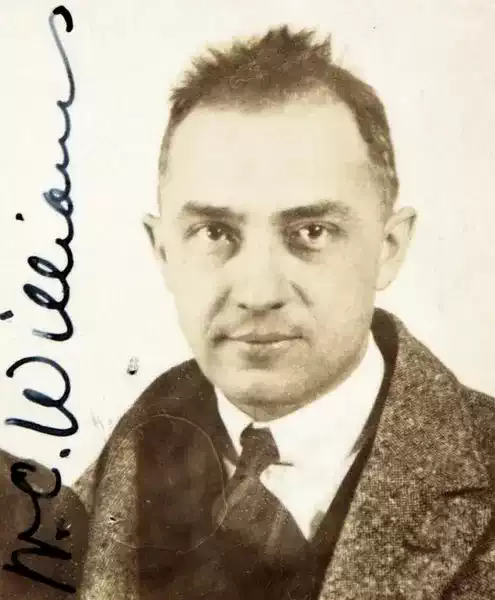
William Carlos Williams
The Great Figure
Among the rain
and lights
I saw the figure
in gold
on a red
firetruck
moving
tense
unheeded
to gong clangs
siren howls
and wheels rumbling
through the dark city.
and lights
I saw the figure
in gold
on a red
firetruck
moving
tense
unheeded
to gong clangs
siren howls
and wheels rumbling
through the dark city.
304

James Whitcomb Riley
The Town Karnteel
The Town Karnteel--! It's who'll reveal
Its praises jushtifiable?
For who can sing av anything
So lovely and reliable?
Whin Summer, Spring, or Winter lies
From Malin's Head to Tipperary,
There's no such town for interprise
Bechuxt Youghal and Londonderry!
There's not its likes in Ireland--
For twic't the week, be gorries!
They're playing jigs upon the band,
And joomping there in sacks-- and-- and--
And racing, wid wheelborries!
Kanteel-- it's there, like any fair,
The purty gurrls is plinty, sure--!
And man-alive! At forty-five
The leg's av me air twinty, sure!
I lave me cares, and hoein' too,
Behint me, as is sinsible,
And it's Karnteel I'm goin' to,
To cilebrate in principle!
For there's the town av all the land!
And twic't the week, be-gorries!
They're playing jigs upon the band,
And joomping there in sacks-- and-- and--
And racing, wid wheelborries!
And whilst I feel for owld Karnteel
That I've no phrases glorious,
It stands above the need av love
That boasts in voice uproarious--!
Lave that for Cork, and Dublin too,
And Armagh and Killarney thin--,
And Karnteel won't be troublin' you
Wid any jilous blarney, thin!
For there's the town av all the land
Where twic't the week, be-gorries!
They're playing jigs upon the band,
And joomping there in sacks-- and-- and--
And racing, wid wheelborries!
299
Henry Lawson
Genoa
A long farewell to Genoa
That rises to the skies,
Where the barren coast of Italy
Like our own coastline lies.
A sad farewell to Genoa,
And long my heart shall grieve,
The only city in the world
That I was loath to leave.
No sign of rush or strife is there,
No war of greed they wage.
The deep cool streets of Genoa
Are rock-like in their age.
No garish signs of commerce there
Are flaunting in the sun.
A rag hung from a balcony
Is by an artist done.
And she was fair in Genoa,
And she was very kind,
Those pale blind-seeming eyes that seem
Most beautifully blind.
Oh they are sad in Genoa,
Those poor soiled singing birds.
I had but three Italian words
And she three English words.
But love is cheap in Genoa,
Aye, love and wine are cheap,
And neither leaves an aching head,
Nor cuts the heart too deep;
Save when the knife goes straight, and then
There’s little time to grieve—
The only city in the world
That I was loath to leave.
I’ve said farewell to tinted days
And glorious starry nights,
I’ve said farewell to Naples with
Her long straight lines of lights;
But it is not for Naples but
For Genoa that I grieve,
The only city in the world
That I was loath to leave.
297

Robert W. Service
The Walkers
(He speaks.)
Walking, walking, oh, the joy of walking!
Swinging down the tawny lanes with head held high;
Striding up the green hills, through the heather stalking,
Swishing through the woodlands where the brown leaves lie;
Marveling at all things -- windmills gaily turning,
Apples for the cider-press, ruby-hued and gold;
Tails of rabbits twinkling, scarlet berries burning,
Wedge of geese high-flying in the sky's clear cold,
Light in little windows, field and furrow darkling;
Home again returning, hungry as a hawk;
Whistling up the garden, ruddy-cheeked and sparkling,
Oh, but I am happy as I walk, walk, walk!
(She speaks.)
Walking, walking, oh, the curse of walking!
Slouching round the grim square, shuffling up the street,
Slinking down the by-way, all my graces hawking,
Offering my body to each man I meet.
Peering in the gin-shop where the lads are drinking,
Trying to look gay-like, crazy with the blues;
Halting in a doorway, shuddering and shrinking
(Oh, my draggled feather and my thin, wet shoes).
Here's a drunken drover: "Hullo, there, old dearie!"
No, he only curses, can't be got to talk. . . .
On and on till daylight, famished, wet and weary,
God in Heaven help me as I walk, walk, walk!
297
Henry Lawson
A Study in the 'Nood'
He was bare—we don’t want to be rude—
(His condition was owing to drink)
They say his condition was nood,
Which amounts to the same thing, we think
(We mean his condition, we think,
’Twas a naked condition, or nood,
Which amounts to the same thing, we think)
Uncovered he lay on the grass
That shrivelled and shrunk; and he stayed
Three hot summer days, while the glass
Was one hundred and ten in the shade.
(We nearly remarked that he laid,
But that was bad grammar we thought—
It does sound bucolic, we think
It smacks of the barnyard—
Of farming—of pullets in short.)
Unheeded he lay on the dirt;
Beside him a part of his dress,
A tattered and threadbare old shirt
Was raised as a flag of distress.
(On a stick, like a flag of distress—
Reversed—we mean that the tail-end was up
half-mast—on a stick—an evident flag of distress.)
Perhaps in his dreams he persood
Bright visions of heav’nly bliss;
And artists who study the nood
Never saw such a study as this.
The ‘luggage’ went by and the guard
Looked out and his eyes fell on Grice—
We fancy he looked at him hard,
We think that he looked at him twice.
They say (if the telegram’s true)
When he woke up he wondered (good Lord!)
‘Why the engine-man didn’t heave to—
‘Why the train didn’t take him aboard.’
And now, by the case of poor Grice,
We think that a daily express
Should travel with sunshades and ice,
And a lookout for flags of distress.
292

Emily Dickinson
I could die—to know
I could die—to know—
'Tis a trifling knowledge—
News-Boys salute the Door—
Carts—joggle by—
Morning's bold face—stares in the window—
Were but mine—the Charter of the least Fly—
Houses hunch the House
With their Brick Shoulders—
Coals—from a Rolling Load—rattle—how—near—
To the very Square—His foot is passing—
Possibly, this moment—
While I—dream—Here—
290
James Whitcomb Riley
The Little Town O' Tailholt
You kin boast about yer cities, and their stiddy growth and size,
And brag about yer County-seats, and business enterprise,
And railroads, and factories, and all sich foolery--
But the little Town o' Tailholt is big enough fer me!
You kin harp about yer churches, with their steeples in the clouds,
And gas about yer graded streets, and blow about yer crowds;
You kin talk about yer 'theaters,' and all you've got to see--
But the little Town o' Tailholt is show enough fer me!
They hain't no style in our town-- hit's little-like and small--
They hain't no 'churches,' nuther--, jes' the meetin' house is all;
They's no sidewalks, to speak of-- but the highway's allus free,
And the little Town o' Tailholt is wide enough fer me!
Some find it discommodin'-like, I'm willin' to admit,
To hev but one post-office, and a womern keepin' hit,
And the drug-store, and shoe-shop, and grocery, all three--
But the little Town o' Tailholt is handy 'nough fer me!
You kin smile and turn yer nose up, and joke and hev yer fun,
And laugh and holler 'Tail-holts is better holts'n none!
Ef the city suits you better w'y, hit's where you'd ort'o be--
But the little Town o' Tailholt's good enough fer me!
286
Henry Lawson
For'ard
It is stuffy in the steerage where the second-classers sleep,
For there's near a hundred for'ard, and they're stowed away like sheep, --
They are trav'lers for the most part in a straight 'n' honest path;
But their linen's rather scanty, an' there isn't any bath --
Stowed away like ewes and wethers that is shore 'n' marked 'n' draft.
But the shearers of the shearers always seem to travel aft;
In the cushioned cabins, aft,
With saloons 'n' smoke-rooms, aft --
There is sheets 'n' best of tucker for the first-salooners, aft.
Our beef is just like scrapin's from the inside of a hide,
And the spuds were pulled too early, for they're mostly green inside;
But from somewhere back amidships there's a smell o' cookin' waft,
An' I'd give my earthly prospects for a real good tuck-out aft -
Ham an' eggs 'n' coffee, aft,
Say, cold fowl for luncheon, aft,
Juicy grills an' toast 'n' cutlets -- tucker a-lor-frongsy, aft.
They feed our women sep'rate, an' they make a blessed fuss,
Just as if they couldn't trust 'em for to eat along with us!
Just because our hands are horny an' our hearts are rough with graft --
But the gentlemen and ladies always DINE together, aft -
With their ferns an' mirrors, aft,
With their flow'rs an' napkins, aft -`
I'll assist you to an orange' -- `Kindly pass the sugar', aft.
We are shabby, rough, 'n' dirty, an' our feelin's out of tune,
An' it's hard on fellers for'ard that was used to go saloon;
There's a broken swell among us -- he is barracked, he is chaffed,
An' I wish at times, poor devil, for his own sake he was aft;
For they'd understand him, aft,
(He will miss the bath-rooms aft),
Spite of all there's no denyin' that there's finer feelin's aft.
Last night we watched the moonlight as it spread across the sea -`
It is hard to make a livin',' said the broken swell to me.
`There is ups an' downs,' I answered, an' a bitter laugh he laughed --
There were brighter days an' better when he always travelled aft -
With his rug an' gladstone, aft,
With his cap an' spyglass, aft --
A careless, rovin', gay young spark as always travelled aft.
There's a notice by the gangway, an' it seems to come amiss,
For it says that second-classers `ain't allowed abaft o' this';
An' there ought to be a notice for the fellows from abaft --
But the smell an' dirt's a warnin' to the first-salooners, aft;
With their tooth and nail-brush, aft,
With their cuffs 'n' collars, aft --
Their cigars an' books an' papers, an' their cap-peaks fore-'n'-aft.
I want to breathe the mornin' breeze that blows against the boat,
For there's a swellin' in my heart -- a tightness in my throat -
We are for'ard when there's trouble! We are for'ard when there's graft!
But the men who never battle always seem to travel aft;
With their dressin'-cases, aft,
With their swell pyjamas, aft --
Yes! the idle and the careless, they have ease an' comfort, aft.
I feel so low an' wretched, as I mooch about the deck,
That I'm ripe for jumpin' over -- an' I wish there was a wreck!
We are driven to New Zealand to be shot out over there --
Scarce a shillin' in our pockets, nor a decent rag to wear,
With the everlastin' worry lest we don't get into graft --
There is little left to land for if you cannot travel aft;
No anxiety abaft,
They have stuff to land with, aft --
Oh, there's little left to land for if you cannot travel aft;
But it's grand at sea this mornin', an' Creation almost speaks,
Sailin' past the Bay of Islands with its pinnacles an' peaks,
With the sunny haze all round us an' the white-caps on the blue,
An' the orphan rocks an' breakers -- Oh, it's glorious sailin' through!
To the south a distant steamer, to the west a coastin' craft,
An' we see the beauty for'ard, better than if we were aft;
Spite of op'ra-glasses, aft;
But, ah well, they're brothers aft --
Nature seems to draw us closer -- bring us nearer fore-'n'-aft.
What's the use of bein' bitter? What's the use of gettin' mad?
What's the use of bein' narrer just because yer luck is bad?
What's the blessed use of frettin' like a child that wants the moon?
There is broken hearts an' trouble in the gilded first saloon!
We are used to bein' shabby -- we have got no overdraft --
We can laugh at troubles for'ard that they couldn't laugh at aft;
Spite o' pride an' tone abaft
(Keepin' up appearance, aft)
There's anxiety an' worry in the breezy cabins aft.
But the curse o' class distinctions from our shoulders shall be hurled,
An' the influence of woman revolutionize the world;
There'll be higher education for the toilin' starvin' clown,
An' the rich an' educated shall be educated down;
An' we all will meet amidships on this stout old earthly craft,
An' there won't be any friction 'twixt the classes fore-'n'-aft.
We'll be brothers, fore-'n'-aft!
Yes, an' sisters, fore-'n'-aft!
When the people work together, and there ain't no fore-'n'-aft.
285
Henry Lawson
The Captain of the Push
As the night was falling slowly down on city, town and bush,
From a slum in Jones's Alley sloped the Captain of the Push;
And he scowled towards the North, and he scowled towards the South,
As he hooked his little finger in the corners of his mouth.
Then his whistle, loud and shrill, woke the echoes of the `Rocks',
And a dozen ghouls came sloping round the corners of the blocks.
There was nought to rouse their anger; yet the oath that each one swore
Seemed less fit for publication than the one that went before.
For they spoke the gutter language with the easy flow that comes
Only to the men whose childhood knew the brothels and the slums.
Then they spat in turns, and halted; and the one that came behind,
Spitting fiercely on the pavement, called on Heaven to strike him blind.
Let us first describe the captain, bottle-shouldered, pale and thin,
For he was the beau-ideal of a Sydney larrikin;
E'en his hat was most suggestive of the city where we live,
With a gallows-tilt that no one, save a larrikin, can give;
And the coat, a little shorter than the writer would desire,
Showed a more or less uncertain portion of his strange attire.
That which tailors know as `trousers' -- known by him as `bloomin' bags' --
Hanging loosely from his person, swept, with tattered ends, the flags;
And he had a pointed sternpost to the boots that peeped below
(Which he laced up from the centre of the nail of his great toe),
And he wore his shirt uncollar'd, and the tie correctly wrong;
But I think his vest was shorter than should be in one so long.
And the captain crooked his finger at a stranger on the kerb,
Whom he qualified politely with an adjective and verb,
And he begged the Gory Bleeders that they wouldn't interrupt
Till he gave an introduction -- it was painfully abrupt -`
Here's the bleedin' push, me covey -- here's a (something) from the bush!
Strike me dead, he wants to join us!' said the captain of the push.
Said the stranger: `I am nothing but a bushy and a dunce;
`But I read about the Bleeders in the WEEKLY GASBAG once;
`Sitting lonely in the humpy when the wind began to "whoosh,"
`How I longed to share the dangers and the pleasures of the push!
`Gosh! I hate the swells and good 'uns -- I could burn 'em in their beds;
`I am with you, if you'll have me, and I'll break their blazing heads.'
`Now, look here,' exclaimed the captain to the stranger from the bush,
`Now, look here -- suppose a feller was to split upon the push,
`Would you lay for him and fetch him, even if the traps were round?
`Would you lay him out and kick him to a jelly on the ground?
`Would you jump upon the nameless -- kill, or cripple him, or both?
`Speak? or else I'll SPEAK!' The stranger answered, `My kerlonial oath!'
`Now, look here,' exclaimed the captain to the stranger from the bush,
`Now, look here -- suppose the Bleeders let you come and join the push,
`Would you smash a bleedin' bobby if you got the blank alone?
`Would you break a swell or Chinkie -- split his garret with a stone?
`Would you have a "moll" to keep yer -- like to swear off work for good?'
`Yes, my oath!' replied the stranger. `My kerlonial oath! I would!'
`Now, look here,' exclaimed the captain to the stranger from the bush,
`Now, look here -- before the Bleeders let yer come and join the push,
`You must prove that you're a blazer -- you must prove that you have grit
`Worthy of a Gory Bleeder -- you must show your form a bit -`
Take a rock and smash that winder!' and the stranger, nothing loth,
Took the rock -- and smash! They only muttered, `My kerlonial oath!'
So they swore him in, and found him sure of aim and light of heel,
And his only fault, if any, lay in his excessive zeal;
He was good at throwing metal, but we chronicle with pain
That he jumped upon a victim, damaging the watch and chain,
Ere the Bleeders had secured them; yet the captain of the push
Swore a dozen oaths in favour of the stranger from the bush.
Late next morn the captain, rising, hoarse and thirsty from his lair,
Called the newly-feather'd Bleeder, but the stranger wasn't there!
Quickly going through the pockets of his `bloomin' bags,' he learned
That the stranger had been through him for the stuff his `moll' had earned;
And the language that he muttered I should scarcely like to tell.
(Stars! and notes of exclamation!! blank and dash will do as well).
In the night the captain's signal woke the echoes of the `Rocks,'
Brought the Gory Bleeders sloping thro' the shadows of the blocks;
And they swore the stranger's action was a blood-escaping shame,
While they waited for the nameless, but the nameless never came.
And the Bleeders soon forgot him; but the captain of the push
Still is `laying' round, in ballast, for the nameless `from the bush.'
283