
Friendship
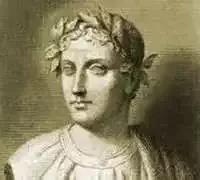
Horácio
BkI:VII Tibur
Let others sing in praise of Rhodes, or Mytilene,
or Ephesus, or Corinth on the Isthmus,
or Thebes that’s known for Bacchus, or Apollo’s isle
of Delphi, or Thessalian Tempe.
There’s some whose only purpose is to celebrate
virgin Athene’s city forever,
and set indiscriminately gathered olive on their heads.
Many a poet in honour of Juno
will speak fittingly of horses, Argos, rich Mycenae.
As for me not even stubborn Sparta
or the fields of lush Larisa are quite as striking,
as Albunea’s echoing cavern,
her headlong Anio, and the groves of Tiburnus,
and Tibur’s orchards, white with flowing streams.
Bright Notus from the south often blows away the clouds
from dark skies, without bringing endless rain,
so Plancus, my friend, remember to end a sad life
and your troubles, wisely, with sweet wine,
whether it’s the camp, and gleaming standards, that hold you
or the deep shadows of your own Tibur.
They say that Teucer, fleeing from Salamis and his
father, still wreathed the garlands, leaves of poplar,
round his forehead, flushed with wine, and in speech to his friends
said these words to them as they sorrowed:
‘Wherever fortune carries us, kinder than my father,
there, O friends and comrades, we’ll adventure!
Never despair, if Teucer leads, of Teucer’s omens!
Unerring Apollo surely promised,
in the uncertain future, a second Salamis
on a fresh soil. O you brave heroes, you
who suffered worse with me often, drown your cares with wine:
tomorrow we’ll sail the wide seas again.’
279

James Whitcomb Riley
Tom Van Arden
Tom Van Arden, my old friend,
Our warm fellowship is one
Far too old to comprehend
Where its bond was first begun:
Mirage-like before my gaze
Gleams a land of other days,
Where two truant boys, astray,
Dream their lazy lives away.
There's a vision, in the guise
Of Midsummer, where the Past
Like a weary beggar lies
In the shadow Time has cast;
And as blends the bloom of trees
With the drowsy hum of bees,
Fragrant thoughts and murmurs blend,
Tom Van Arden, my old friend.
Tom Van Arden, my old friend,
All the pleasures we have known
Thrill me now as I extend
This old hand and grasp your own--
Feeling, in the rude caress,
All affection's tenderness;
Feeling, though the touch be rough,
Our old souls are soft enough.
So we'll make a mellow hour:
Fill your pipe, and taste the wine--
Warp your face, if it be sour,
I can spare a smile from mine;
If it sharpen up your wit,
Let me feel the edge of it--
I have eager ears to lend,
Tom Van Arden, my old friend.
Tom Van Arden, my old friend,
Are we 'lucky dogs,' indeed?
Are we all that we pretend
In the jolly life we lead?--
Bachelors, we must confess,
Boast of 'single blessedness'
To the world, but not alone-Man's
best sorrow is his own!
And the saddest truth is this,--
Life to us has never proved
What we tasted in the kiss
Of the women we have loved:
Vainly we congratulate
Our escape from such a fate
As their lying lips could send,
Tom Van Arden, my old friend!
Tom Van Arden, my old friend,
Hearts, like fruit upon the stem,
Ripen sweetest, I contend,
As the frost falls over them:
Your regard for me to-day
Makes November taste of May,
And through every vein of rhyme
Pours the blood of summer-time.
When our souls are cramped with youth
Happiness seems far away
In the future, while, in truth,
We look back on it to-day
Through our tears, nor dare to boast,-'
Better to have loved and lost!'
Broken hearts are hard to mend,
Tom Van Arden, my old friend.
Tom Van Arden, my old friend,
I grow prosy, and you tire;
Fill the glasses while I bend
To prod up the failing fire. . . .
You are restless:--I presume
There's a dampness in the room.--
Much of warmth our nature begs,
With rheumatics in our legs! . . .
Humph! the legs we used to fling
Limber-jointed in the dance,
When we heard the fiddle ring
Up the curtain of Romance,
And in crowded public halls
Played with hearts like jugglers' balls.--
FEATS OF MOUNTEBANKS, DEPEND!--
Tom Van Arden, my old friend.
Tom Van Arden, my old friend,
Pardon, then, this theme of mine:
While the firelight leaps to lend
Higher color to the wine,--
I propose a health to those
Who have HOMES, and home's repose,
Wife- and child-love without end!
. . . Tom Van Arden, my old friend.
277

Alice Walker
Knowing you might some day come
Knowing you might some day come
and how unprepared I’ve always
been
like Mr. Sloppy
in Charles Dickens’
our Mutual Friend
I made a list:
not meat, vegetables, beer and pudding
but number l, warmth.
number 2, warmth.
number 3, warmth.
number 4, a good snuggler.
number 5, someone who sings
while he/she works.
number 6, a dancer.
number 7, someone who grows & is
intrigued by
the mind. And
by the spirit too.
Number 7, someone who is loved
by animals; and loves
them back without
a thought.
number 8, someone who smells
delicious.
number 9, someone whose anger
lasts no longer than mine.
number 10, someone who
stands beside me. behind me. If necessary
in front of me.
number 11, someone who
is a passable cook.
number 12, Someone who laughs
a lot, thinks I have a fine
sense
of humor
& has friends.
number 13, someone who can be
original in dress:
stylish
warlock –In silver, lapis
& black – to my witch.
277

John Greenleaf Whittier
The Brown Dwarf of Rügen (From Narrative and Legendary Poems )
THE pleasant isle of Rügen looks the Baltic water o'er,
To the silver-sanded beaches of the Pomeranian shore;
And in the town of Rambin a little boy and maid
Plucked the meadow-flowers together and in the sea-surf played.
Alike were they in beauty if not in their degree:
He was the Amptman's first-born, the miller's child was she.
Now of old the isle of Rügen was full of Dwarfs and Trolls,
The brown-faced little Earth-men, the people without souls;
And for every man and woman in Rügen's island found
Walking in air and sunshine, a Troll was underground.
It chanced the little maiden, one morning, strolled away
Among the haunted Nine Hills, where the elves and goblins play.
That day, in barley fields below, the harvesters had known
Of evil voices in the air, and heard the small horns blown.
She came not back; the search for her in field and wood was vain:
They cried her east, they cried her west, but she came not again.
"She's down among the Brown Dwarfs," said the dream-wives wise and old,
And prayers were made, and masses said, and Rambin's church bell tolled.
Five years her father mourned her; and then John Deitrich said:
"I will find my little playmate, be she alive or dead."
He watched among the Nine Hills, he heard the Brown Dwarfs sing,
And saw them dance by moonlight merrily in a ring.
And when their gay-robed leader tossed up his cap of red,
Young Deitrich caught it as it fell, and thrust it on his head.
The Troll came crouching at his feet and wept for lack of it.
"Oh, give me back my magic cap, for your great head unfit!"
"Nay," Deitrich said; "the Dwarf who throws his charmëd cap away,
Must serve its finder at his will, and for his folly pay.
"You stole my pretty Lisbeth, and hid her in the earth;
And you shall ope the door of glass and let me lead her forth."
"She will not come; she's one of us; she's mine!" the Brown Dwarf said;
"The day is set, the cake is baked, to-morrow we shall wed."
"The fell fiend fetch thee!" Deitrich cried, "and keep thy foul tongue still.
Quick! open, to thy evil world, the glass door of the hill!"
The Dwarf obeyed; and youth and Troll down the long stairway passed,
And saw in dim and sunless light a country strange and vast.
Weird, rich, and wonderful, he saw the elfin under-land, -Its
palaces of precious stones, its streets of golden sand.
He came unto a banquet-hall with tables richly spread,
Where a young maiden served to him the red wine and the bread.
How fair she seemed among the Trolls so ugly and so wild!
Yet pale and very sorrowful, like one who never smiled!
Her low, sweet voice, her gold-brown hair, her tender blue eyes seemed
Like something he had seen elsewhere or something he had dreamed.
He looked; he clasped her in his arms; he knew the long-lost one;
"O Lisbeth! See thy playmate -- I am the Amptman's son!"
She leaned her fair head on his breast, and through her sobs she spoke:
"Oh, take me from this evil place, and from the elfin folk!
"And let me tread the grass-green fields and smell the flowers again,
And feel the soft wind on my cheek and hear the dropping rain!
"And oh, to hear the singing bird, the rustling of the tree,
The lowing cows, the bleat of sheep, the voices of the sea;
"And oh, upon my father's knee to set beside the door,
And hear the bell of vespers ring in Rambin church once more!"
He kissed her cheek, he kissed her lips; the Brown Dwarf groaned to see,
And tore his tangled hair and ground his long teeth angrily.
But Deitrich said: "For five long years this tender Christian maid
Has served you in your evil world, and well must she be paid!
"Haste! -- hither bring me precious gems, the richest in your store;
Then when we pass the gate of glass, you'll take your cap once more."
No choice was left the baffled Troll, and, murmuring, he obeyed,
And filled the pockets of the youth and apron of the maid.
They left the dreadful under-land and passed the gate of glass;
They felt the sunshine's warm caress, they trod the soft, green grass.
And when, beneath, they saw the Dwarf stretch up to them his brown
And crooked claw-like fingers, they tossed his red cap down.
Oh, never shone so bright a sun, was never sky so blue,
As hand in hand they homeward walked the pleasant meadows through!
And never sang the birds so sweet in Rambin's woods before,
And never washed the waves so soft along the Baltic shore;
And when beneath his door-yard trees the father met his child,
The bells rung out their merriest peal, the folks with joy ran wild.
And soon from Rambin's holy church the twain came forth as one,
The Amptman kissed a daughter, the miller blest a son.
John Deitrich's fame went far and wide, and nurse and maid crooned o'er
Their cradle song: "Sleep on, sleep well, the Trolls shall come no more!"
for in the haunted Nine Hills he set a cross of stone;
And Elf and Brown Dwarf sought in vain a door where door was none.
The tower he built in Rambin, fair Rügen's pride and boast,
Looked o'er the Baltic water to the Pomeranian coast;
And, for his worth ennobled, and rich beyond compare,
Count Deitrich and his lovely bride dwelt long and happy there.
277

Henry Lawson
The Cross-Roads
Once more I write a line to you,
While darker shadows fall;
Dear friends of mine who have been true,
And steadfast through it all.
If I have written bitter rhymes,
With many lines that halt,
And if I have been false at times
It was not all my fault.
To Heaven’s decree I would not bow,
And I sank very low—
The bitter things are written now,
And we must let them go.
But I feel softened as I write;
The better spirit springs,
And I am very sad to-night
Because of many things.
The friendships that I have abused,
The trust I did betray,
The talents that I have misused,
The gifts I threw away.
The things that did me little good,
And—well my cheeks might burn—
The kindly letters that I should
Have answered by return.
But you might deem them answered now,
And answered from my heart;
And injured friends will understand
’Tis I who feel the smart.
But I have done with barren strife
And dark imaginings,
And in my future work and life
Will seek the better things.
277

Robert W. Service
To Sunnydale
There lies the trail to Sunnydale,
Amid the lure of laughter.
Oh, how can we unhappy be
Beneath its leafy rafter!
Each perfect hour is like a flower,
Each day is like a posy.
How can you say the skies are grey?
You're wrong, my friend, they're rosy.
With right good will let's climb the hill,
And leave behind all sorrow.
Oh, we'll be gay! a bright to-day
Will make a bright to-morrow.
Oh, we'll be strong! the way is long
That never has a turning;
The hill is high, but there's the sky,
And how the West is burning!
And if through chance of circumstance
We have to go bare-foot, sir,
We'll not repine -- a friend of mine
Has got no feet to boot, sir.
This Happiness a habit is,
And Life is what we make it:
See! there's the trail to Sunnydale!
Up, friend! and let us take it.
275
James Whitcomb Riley
Dan Paine
Old friend of mine, whose chiming name
Has been the burthen of a rhyme
Within my heart since first I came
To know thee in thy mellow prime;
With warm emotions in my breast
That can but coldly be expressed,
And hopes and wishes wild and vain,
I reach my hand to thee, Dan Paine.
In fancy, as I sit alone
In gloomy fellowship with care,
I hear again thy cheery tone,
And wheel for thee an easy chair;
And from my hand the pencil falls--
My book upon the carpet sprawls,
As eager soul and heart and brain,
Leap up to welcome thee, Dan Paine.
A something gentle in thy mein,
A something tender in thy voice,
Has made my trouble so serene,
I can but weep, from very choice.
And even then my tears, I guess,
Hold more of sweet than bitterness,
And more of gleaming shine than rain,
Because of thy bright smile, Dan Paine.
The wrinkles that the years have spun
And tangled round thy tawny face,
Are kinked with laughter, every one,
And fashioned in a mirthful grace.
And though the twinkle of thine eyes
Is keen as frost when Summer dies,
It can not long as frost remain
While thy warm soul shines out, Dan Paine.
And so I drain a health to thee;--
May merry Joy and jolly Mirth
Like children clamber on thy knee,
And ride thee round the happy earth!
And when, at last, the hand of Fate
Shall lift the latch of Canaan's gate,
And usher me in thy domain,
Smile on me just as now, Dan Paine.
275
Henry Lawson
With Dickens
In Windsor Terrace, number four,
I’ve taken my abode—
A little crescent from the street,
A bight from City Road;
And, hard up and in exile, I
To many fancies yield;
For it was here Micawber lived
And David Copperfield.
A bed, a table, and a chair,
A bottle and a cup.
The landlord’s waiting even now
For something to turn up.
The landlady is spiritless—
They both seem tired of life;
They cannot fight the battle like
Micawber and his wife.
But in the little open space
That lies back from the street,
The same old ancient, shabby clerk
Is sitting on a seat.
The same sad characters go by,
The ragged children play—
And things have very little changed
Since Dickens passed away.
Some seek religion in their grief,
And some for friendship yearn;
Some fly to liquor for relief,
But I to Dickens turn.
I find him ever fresh and new,
His lesson ever plain;
And every line that Dickens wrote
I’ve read and read again.
The tavern’s just across the ‘wye,’
And frowsy women there
Are gossiping and drinking gin,
And twisting up their hair.
And grubby girls go past at times,
And furtive gentry lurk—
I don’t think anyone has died
Since Dickens did his work.
There’s Jingle, Tigg, and Chevy Slyme,
And Weevle—whom you will;
And hard-up virtue proudly slinks
Into the pawnshop still.
Go east a bit from City Road,
And all the rest are there—
A friendly whistle might produce
A Chicken anywhere.
My favourite author’s heroes I
Should love, but somehow can’t.
I don’t like David Copperfield
As much as David’s Aunt,
And it may be because my mind
Has been in many fogs—
I don’t like Nicholas Nickleby
So well as Newman Noggs.
I don’t like Richard Carstone, Pip,
Or Martin Chuzzlewit,
And for the rich and fatherly
I scarcely care a bit.
The honest, sober clods are bores
Who cannot suffer much,
And with the Esther Summersons
I never was in touch.
The ‘Charleys’ and the haggard wives,
Kind hearts in poverty—
And yes! the Lizzie Hexams, too—
Are very near to me;
But men like Brothers Cheeryble,
And Madeline Bray divine,
And Nell, and Little Dorrit live
In a better world than mine.
The Nicklebys and Copperfields,
They do not stand the test;
And in my heart I don’t believe
That Dickens loved them best.
I can’t admire their ways and talk,
I do not like their looks—
Those selfish, injured sticks that stalk
Through all the Master’s books.
They’re mostly selfish in their love,
And selfish in their hate,
They marry Dora Spenlows, too,
While Agnes Wickfields wait;
And back they come to poor Tom Pinch
When hard-up for a friend;
They come to wrecks like Newman Nogga
To help them in the end.
And—well, maybe I am unjust,
And maybe I forget;
Some of us marry dolls and jilt
Our Agnes Wickfields yet.
We seek our friends when fortune frowns—
It has been ever thus—
And we neglect Joe Gargery
When fortune smiles on us.
They get some rich old grandfather
Or aunt to see them through,
And you can trace self-interest
In nearly all they do.
And scoundrels like Ralph Nickleby,
In spite of all their crimes,
And crawlers like Uriah Heep
Told bitter truths at times.
But—yes, I love the vagabonds
And failures from the ranks,
And hard old files with hidden hearts
Like Wemmick and like Pancks.
And Jaggers had his ‘poor dreams, too,’
And fond hopes like the rest—
But, somehow, somehow, all my life
I’ve loved Dick Swiveller best!
But, let us peep at Snagsby first
As softly he lays down
Beside the bed of dying Joe
Another half-a-crown.
And Nemo’s wretched pauper grave—
But we can let them be,
For Joe has said to Heaven: ‘They
Wos werry good to me.’
And Wemmick with his aged P——
No doubt has his reward;
And Jaggers, hardest nut of all,
Will be judged by the Lord.
And Pancks, the rent-collecting screw,
With laurels on his brow,
Is loved by all the bleeding hearts
In Bleeding Heart Yard now.
Tom Pinch is very happy now,
And Magwitch is at rest,
And Newman Noggs again might hold
His head up with the best;
Micawber, too, when all is said,
Drank bravely Sorrow’s cup—
Micawber worked to right them all,
And something did turn up.
How do ‘John Edward Nandy, Sir!’
And Plornish get along?
Why! if the old man is in voice
We’ll hear him pipe a song.
We’ll have a look at Baptiste, too,
While still the night is young—
With Mrs. Plornish to explain
In the Italian tongue.
Before we go we’ll ask about
Poor young John Chivery:
‘There never was a gentleman
In all his family.’
His hopeless love, his broken heart,
But to his rival true;
He came of Nature’s gentlemen,
But young John never knew.
We’ll pass the little midshipman
With heart that swells and fills,
Where Captain Ed’ard Cuttle waits
For Wal’r and Sol Gills.
Jack Bunsby stands by what he says
(Which isn’t very clear),
And Toots with his own hopeless love—
As true as any here.
And who that read has never felt
The sorrow that it cost
When Captain Cuttle read the news
The ‘Son and Heir’ was lost?
And who that read has not rejoiced
With him and ‘Heart’s Delight,’
And felt as Captain Cuttle felt
When Wal’r came that night?
And yonder, with a broken heart,
That people thought was stone,
Deserted in his ruined home,
Poor Dombey sits alone.
Who has not gulped a something down,
Whose eye has not grown dim
While feeling glad for Dombey’s sake
When Florence came to him?
(A stately house in Lincolnshire—
The scene is bleak and cold—
The footsteps on the terrace sound
To-night at Chesney Wold.
One who loved honour, wife, and truth,
If nothing else besides,
Along the dreary Avenue
Sir Leicester Dedlock rides.)
We’ll go round by Poll Sweedlepipe’s,
The bird and barber shop;
If Sairey Gamp is so dispoged
We’ll send her up a drop.
We’ll cross High Holborn to the Bull,
And, if he cares to come,
By streets that are not closed to him
We’ll see Dick Swiveller home.
He’s looking rather glum to-night,
The why I will not ask—
No matter how we act the goat,
We mostly wear a mask.
Some wear a mask to hide the false
(And some the good and true)—
I wouldn’t be surprised to know
Mark Tapley wore one too.
We wear a mask called cheerfulness
While feeling sad inside;
And men like Dombey, who was shy,
Oft wear a mask called pride.
A front of pure benevolence
The grinding ‘Patriarch’ bore;
And kind men often wear a mask
Like that which Jaggers wore.
But, never mind, Dick Swiveller!
We’ll see it out together
Beneath the wing of friendship, Dick,
That never moults a feather.
We’ll look upon the rosy yet
Full many a night, old friend,
And tread the mazy ere we woo
The balmy in the end.
Our palace walls are rather bare,
The floor is somewhat damp,
But, while there’s liquor, anywhere
Is good enough to camp.
What ho! mine host! bring forth thine ale
And let the board be spread!—
It is the hour when churchyards yawn
And wine goes to the head.
’Twas you who saved poor Kit, old chap,
When he was in a mess—
But, what ho! Varlet! bring us wine!
Here’s to the Marchioness!
‘We’ll make a scholar of her yet,’
She’ll be a lady fair,
‘And she shall go in silk attire
And siller have to spare.’
From sport to sport they hurry her
To banish her regrets,
And when we win a smile from her
We cannot pay our debts!
Left orphans at a tender age,
We’re happiest in the land—
We’re Glorious Apollos, Dick,
And you’re Perpetual Grand!
You’re king of all philosophers,
And let the Godly rust;
Here’s to the obscure citizen
Who sent the beer on trust?
It sure would be a cheerful world
If never man got tight;
You spent your money on your friends,
Dick Swiveller! Good night!
‘A dissolute and careless man—
An idle, drunken path;’
But see where Sidney Carton spills
His last drink on the hearth!
A ruined life! He lived for drink
And but one thing beside—
And Oh! it was a glorious death
That Sidney Carton died.
And ‘Which I meantersay is Pip’—
The voices hurry past—
‘Not to deceive you, sir’—‘Stand by!’
‘Awast, my lass, awast!’
‘Beware of widders, Samivel,’
And shun strong drink, my friend;
And, ‘not to put too fine a point
Upon it,’ I must end.
275
Henry Lawson
The Way of the World
When fairer faces turn from me,
And gayer friends grow cold,
And I have lost through poverty
The friendship bought with gold;
When I have served the selfish turn
Of some all-worldly few,
And Folly’s lamps have ceased to burn,
Then I’ll come back to you.
When my admirers find I’m not
The rising star they thought,
And praise or blame is all forgot
My early promise brought;
When brighter rivals lead a host
Where once I led a few,
And kinder times reward their boast,
Then I’ll come back to you.
You loved me, not for what I had
Or what I might have been,
You saw the good, but not the bad,
Was kind, for that between.
I know that you’ll forgive again—
That you will judge me true;
I’ll be too tired to explain
When I come back to you.
276
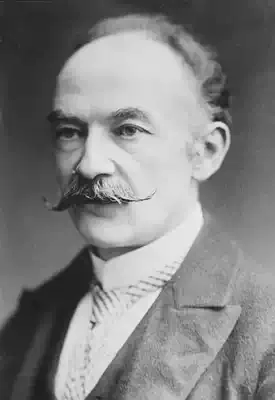
Thomas Hardy
Middle-Age Enthusiasms
To M. H.
WE passed where flag and flower
Signalled a jocund throng;
We said: "Go to, the hour
Is apt!"--and joined the song;
And, kindling, laughed at life and care,
Although we knew no laugh lay there.
We walked where shy birds stood
Watching us, wonder-dumb;
Their friendship met our mood;
We cried: "We'll often come:
We'll come morn, noon, eve, everywhen!"
--We doubted we should come again.
We joyed to see strange sheens
Leap from quaint leaves in shade;
A secret light of greens
They'd for their pleasure made.
We said: "We'll set such sorts as these!"
--We knew with night the wish would cease.
"So sweet the place," we said,
"Its tacit tales so dear,
Our thoughts, when breath has sped,
Will meet and mingle here!"...
"Words!" mused we. "Passed the mortal door,
Our thoughts will reach this nook no more."
275
Henry Lawson
The Scamps
Of home, name and wealth and ambition bereft—
We are children of fortune and luck:
They deny there’s a shred of our characters left,
But they cannot deny us the pluck!
We are vagabond scamps, we are kings over all—
There is little on earth we desire—
We are devils who stand with our backs to the wall,
And who call on the cowards to fire!
There are some of us here who were noble and good,
And who learnt in ingratitude’s schools—
They were born of the selfish and misunderstood,
They were soft, they were ‘smoodgers’ or fools.
With their hands in their pockets to help every friend
In a fix—and they never asked how:
Beware of them you who have money to lend,
For it’s little you’d get from them now.
There are some of us here who were lovers of old—
In the days that were nearer to God;
The girl was more precious than honour or gold,
And they worshipped the ground where she trod;
But she trampled their hearts and they suffered and knew
How the soul of a woman to read—
They will never again to a woman be true;
Let the girls who may meet them take heed!
There are some of us here who were devils from birth,
Who would steal the eye out of a friend—
But we judge not or blame not the worst on the earth,
For it comes to the same in the end.
There are some of us here who were ruined by wrong—
To whom justice and love came too late—
And they threw them aside and go singing a song,
And they know that their mistress is fate.
We were some of us failures at suicide, too—
We are most of us back from the dead—
But we’ve all found the courage to battle it through,
Till the strength of our bodies is sped:
With a flag that is dyed with our hearts’-blood unfurled,
We are marching and marching afar—
We are comrades of all who are fighting the world,
For the world made us all what we are.
274
Henry Lawson
A Mate can do no Wrong
We learnt the creed at Hungerford,
We learnt the creed at Bourke;
We learnt it in the good times
And learnt it out of work.
We learnt it by the harbour-side
And on the billabong:
'No matter what a mate may do,
A mate can do no wrong!'
He’s like a king in this respect
(No matter what they do),
And, king-like, shares in storm and shine
The Throne of Life with you.
We learnt it when we were in gaol
And put it in a song:
' No matter what a mate may do,
A mate can do no wrong!'
They’ll say he said a bitter word
When he’s away or dead.
We’re loyal to his memory,
No matter what he said.
And we should never hesitate,
But strike out good and strong,
And jolt the slanderer on the jaw –
A mate can do no wrong !
271
Robert W. Service
Your Poem
My poem may be yours indeed
In melody and tone,
If in its rhythm you can read
A music of your own;
If in its pale woof you can weave
Your lovelier design,
'Twill make my lyric, I believe,
More yours than mine.
I'm but a prompter at the best;
Crude cues are all I give.
In simple stanzas I suggest
'Tis you who make them live.
My bit of rhyme is but a frame,
And if my lines you quote,
I think, although they bear my name,
'Tis you who wrote.
Yours is the beauty that you see
In any words I sing;
The magic and the melody
'Tis you, dear friend, who bring.
Yea, by the glory and the gleam,
The loveliness that lures
Your thought to starry heights of dream,
The poem's yours.
272
Horácio
BkI:XX To Maecenas
Come and drink with me, rough Sabine in cheap cups,
yet wine that I sealed myself, and laid up
in a Grecian jar, when you dear Maecenas,
flower of knighthood,
received the theatre’s applause, so your native
river-banks, and, also, the Vatican Hill,
together returned that praise again, to you,
in playful echoes.
Then, drink Caecubum, and the juice of the grape
crushed in Campania’s presses, my cups are
unmixed with what grows on Falernian vines,
or Formian hills.
270
Henry Lawson
Outside
I want to be lighting my pipe on deck,
With my baggage safe below—
I want to be free of the crowded quay,
While the steamer’s swinging slow.
I want to be free of treachery,
And of sordid joys and griefs—
To be out of sight of the faces white,
And the waving of handkerchiefs.
I want to be making my ship-board friends,
I want to be free of the past—
I want to be laughing with kindred souls,
While the Heads are opening fast.
I want to be sailing far to-day,
On the tracks where the rovers go,
To feel the heave of the deck, and draw
The breath that the rovers know.
270
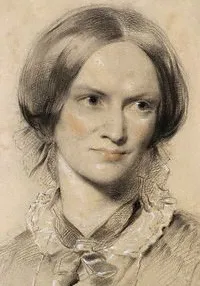
Charlotte Brontë
Preference
NOT in scorn do I reprove thee,
Not in pride thy vows I waive,
But, believe, I could not love thee,
Wert thou prince, and I a slave.
These, then, are thine oaths of passion ?
This, thy tenderness for me ?
Judged, even, by thine own confession,
Thou art steeped in perfidy.
Having vanquished, thou wouldst leave me !
Thus I read thee long ago;
Therefore, dared I not deceive thee,
Even with friendship's gentle show.
Therefore, with impassive coldness
Have I ever met thy gaze;
Though, full oft, with daring boldness,
Thou thine eyes to mine didst raise.
Why that smile ? Thou now art deeming
This my coldness all untrue,
But
a mask of frozen seeming,
Hiding secret fires from view.
Touch my hand, thou selfdeceiver,
Naybe
calm, for I am so:
Does it burn ? Does my lip quiver ?
Has mine eye a troubled glow ?
Canst thou call a moment's colour
To my foreheadto
my cheek ?
Canst thou tinge their tranquil pallor
With one flattering, feverish streak?
Am I marble ? What ! no woman
Could so calm before thee stand ?
Nothing living, sentient, human,
Could so coldly take thy hand ?
Yesa
sister might, a mother:
My goodwill
is sisterly:
Dream not, then, I strive to smother
Fires that inly burn for thee.
Rave not, rage not, wrath is fruitless,
Fury cannot change my mind;
I but deem the feeling rootless
Which so whirls in passion's wind.
Can I love ? Oh, deeplytruly
Warmlyfondlybut
not thee;
And my love is answered duly,
With an equal energy.
Wouldst thou see thy rival ? Hasten,
Draw that curtain soft aside,
Look where yon thick branches chasten
Noon, with shades of eventide.
In that glade, where foliage blending
Forms a green arch overhead,
Sits thy rival thoughtful bending
O'er a stand with papers spread
Motionless, his fingers plying
That untired, unresting pen;
Time and tide unnoticed flying,
There he sitsthe
first of men !
Man of conscienceman
of reason;
Stern, perchance, but ever just;
Foe to falsehood, wrong, and treason,
Honour's shield, and virtue's trust !
Worker, thinker, firm defender
Of Heaven's truthman's
liberty;
Soul of ironproof
to slander,
Rock where founders tyranny.
Fame he seeks notbut
full surely
She will seek him, in his home;
This I know, and wait securely
For the atoning hour to come.
To that man my faith is given,
Therefore, soldier, cease to sue;
While God reigns in earth and heaven,
I to him will still be true !
268
Henry Lawson
Everyone's Friend
“Nobody's enemy save his own”—
(What shall it be in the end?)—
Still by the nick-name he is known—
“Everyone’s Friend.”
“Nobody’s Enemy” stands alone
While he has money to lend,
“Nobody’s Enemy” holds his own,
“Everyone’s Friend”
“Nobody’s Enemy” down and out—
Game to the end—
And he mostly dies with no one about—
“Everyone’s Friend.”
268
Henry Lawson
The Shearers
No church-bell rings them from the Track,
No pulpit lights theirblindness-'
Tis hardship, drought, and homelessness
That teach those Bushmen kindness:
The mateship born, in barren lands,
Of toil and thirst and danger,
The camp-fare for the wanderer set,
The first place to the stranger.
They do the best they can to-day--
Take no thought of the morrow;
Their way is not the old-world way--
They live to lend and borrow.
When shearing's done and cheques gone wrong,
They call it "time to slither"--
They saddle up and say "So-long!"
And ride the Lord knows whither.
And though he may be brown or black,
Or wrong man there, or right man,
The mate that's steadfast to his mates
They call that man a "white man!"
They tramp in mateship side by side--
The Protestant and Roman--
They call no biped lord or sir,
And touch their hat to no man!
They carry in their swags perhaps,
A portrait and a letter--
And, maybe, deep down in their hearts,
The hope of "something better."
Where lonely miles are long to ride,
And long, hot days recurrent,
There's lots of time to think of men
They might have been--but weren't.
They turn their faces to the west
And leave the world behind them
(Their drought-dry graves are seldom set
Where even mates can find them).
They know too little of the world
To rise to wealth or greatness;
But in these lines I gladly pay
My tribute to their greatness.
268
James Whitcomb Riley
The Little Fat Doctor
He seemed so strange to me, every way--
In manner, and form, and size,
From the boy I knew but yesterday,--
I could hardly believe my eyes!
To hear his name called over there,
My memory thrilled with glee
And leaped to picture him young and fair
In youth, as he used to be.
But looking, only as glad eyes can,
For the boy I knew of yore,
I smiled on a portly little man
I had never seen before!--
Grave as a judge in courtliness-Professor-
like and bland--
A little fat doctor and nothing less,
With his hat in his kimboed hand.
But how we talked old times, and 'chaffed'
Each other with 'Minnie' and 'Jim'---
And how the little fat doctor laughed,
And how I laughed with him!
'And it's pleasant,' I thought, 'though I yearn to see
The face of the youth that was,
To know no boy could smile on me
As the little fat doctor does!'
267
John Greenleaf Whittier
Dedication - Songs of Labor
I WOULD the gift I offer here
Might graces from thy favor take,
And, seen through Friendship's atmosphere,
On softened lines and coloring, wear
The unaccustomed light of beauty, for thy sake.
Few leaves of Fancy's spring remain:
But what I have I give to thee,
The o'er-sunned bloom of summer's plain,
And paler flowers, the latter rain
Calls from the westering slope of life's autumnal lea.
Above the fallen groves of green,
Where youth's enchanted forest stood,
Dry root and mossëd trunk between,
A sober after-growth is seen,
As springs the pine where falls the gay-leafed maple wood!
Yet birds will sing, and breezes play
Their leaf-harps in the sombre tree;
And through the bleak and wintry day
It keeps its steady green alway, —
So, even my after-thoughts may have a charm for thee.
Art's perfect forms no moral need,
And beauty is its own excuse;
But for the dull and flowerless weed
Some healing virtue still must plead,
And the rough ore must find its honors in its use.
So haply these, my simple lays
Of homely toil, may serve to show
The orchard bloom and tasselled maize
That skirt and gladden duty's ways,
The unsung beauty hid life's common things below.
Haply from them the toiler, bent
Above his forge or plough, may gain,
A manlier spirit of content,
And feel that life is wisest spent
Where the strong working hand makes strong the working brain.
The doom which to the guilty pair
Without the walls of Eden came,
Transforming sinless ease to care
And rugged toil, no more shall bear
The burden of old crime, or mark of primal shame.
A blessing now, a curse no more;
Since He, whose name we breathe with awe,
The coarse mechanic vesture wore,
A poor man toiling with the poor,
In labor, as in prayer, fulfilling the same law.
266
Henry Lawson
Billy of Queensland
“Queensland,” he heads his letters—that’s all:
The date, and the month, and the year in brief;
He often sends me a cheerful scrawl,
With an undertone of ancient grief.
The first seems familiar, but might have changed,
As often the writing of wanderers will;
He seems all over the world to have ranged,
And he signs himself William, or Billy, or Bill.
He might have been an old mate of mine—
A shearer, or one of the station hands.
(There were some of ’em died, who drop me a line,
Signing other names, and in other hands.
There was one who carried his swag with me
On the western tracks, when the world was young,
And now he is spouting democracy
In another land with another tongue.)
He cheers me up like an old mate, quite,
And swears at times like an old mate, too;
(Perhaps he knows that I never write
Except to say that I’m going to).
He says he is tired of telling lies
For a Blank he knows for a Gory Scamp—
But—I note the tone where the sunset dies
On the Outside Track or the cattle camp.
Who are you, Billy? But never mind—
Come to think of it, I forgot—
There were so many in days behind,
And all so true that it matters not.
It may be out in the Mulga scrub,
In the southern seas, or a London street—
(I hope it’s close to a bar or pub )
But I have a feeling that we shall meet.
265
Henry Lawson
The Bard of Furthest Out
He longed to be a Back-Blocks Bard,
And fame he wished to win—
He wrote at night and studied hard
(He read The Bulletin);
He sent in “stuff” unceasingly,
But couldn’t get it through;
And so, at last, he came to me
To see what I could do.
The poet’s light was in his eye,
He aimed to be a man;
He bought a bluey and a fly,
A brand new billy-can.
I showed him how to roll his swag
And “sling it” with the best;
I gave him my old water-bag,
And pointed to the west.
“Now you can take the train as far
As Blazes if you like—
The wealthy go by motor-car
(Some travellers go by bike);
They race it through without a rest,
And find it very tame—
But if you tramp it to the west
You’ll get there just the same.
“(No matter if the hour is late,
The morning goes Out-Back),
You do not need a dog nor mate,
You’ll find them on the track.
You must avoid such deadly rhymes
As ‘self’ and ‘elf’ and ‘shelf’.
But were it as in other times,
I’d go with you myself.
“Those days are done for me, but ah!
On hills where you shall be,
The wattle and the waratah
Are good to smell and see.
But there’s a scent, my heart believes,
That ‘travellers’ set higher
Than wattle—’tis the dried gum leaves
That light the evening fire.
“The evening fire and morning fire
Are one fire in the Bush.
(You’ll find the points that you require
As towards the west you push.)
And as you pass by ancient ways,
Old camps, and mountain springs,
The spirits of the Roaring Days
Will whisper many things.
“The lonely ridge-and-gully belt—
The spirit of the whole
It must be seen; it must be felt—
Must sink into your soul!
The summer silence-creek-oaks’ sigh—
The windy, rainy “woosh”—
’Tis known to other men, and I—
The Spirit of the Bush!
“So on, and on, through dust and heat,
When past the spurs you be—
And you shall meet whom you shall meet,
And see what you shall see,
You need not claim the stranger’s due,
They yield it everywhere,
And mateship is a thing that you
Must take for granted there.
“And in the land of Lord-knows-where—
Right up and furthest out—
You find a new Australia there
That we know nought about.
Live as they live, fight as they fight,
Succeed as they succeed,
And then come back again and write
For all the world to read.”
I’ve got a note from Hungerford,
’Tis written frank and fair;
The bushman’s grim philosophy—
The bushman’s grin are there.
And tramping on through rain and drought—
Unlooked for and unmissed—
I may have sent to furthest out
The Great Bush Novelist.
265
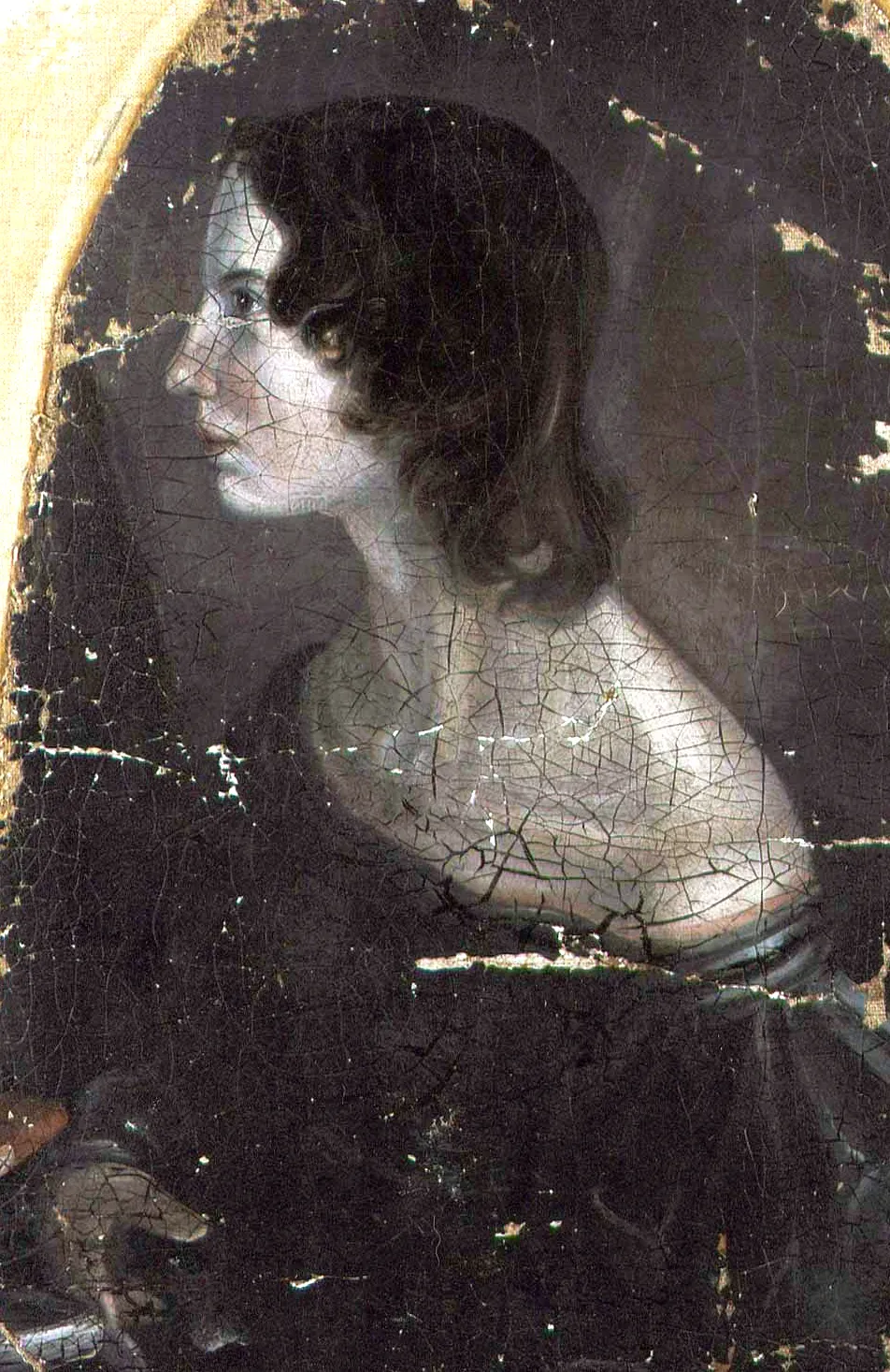
Emily Jane Brontë
To Imagination
When weary with the long day's care,
And earthly change from pain to pain,
And lost and ready to despair,
Thy kind voice calls me back again:
Oh, my true friend! I am not lone,
While thou canst speak with such a tone!
So hopeless is the world without;
The world within I doubly prize;
Thy world, where guile, and hate, and doubt,
And cold suspicion never rise;
Where thou, and I, and Liberty,
Have undisputed sovereignty.
What matters it, that, all around,
Danger, and guilt, and darkness lie,
If but within our bosom's bound
We hold a bright, untroubled sky,
Warm with ten thousand mingled rays
Of suns that know no winter days?
Reason, indeed, may oft complain
For Nature's sad reality,
And tell the suffering heart, how vain
Its cherished dreams must always be;
And Truth may rudely trample down
The flowers of Fancy, newly-blown:
But, thou art ever there, to bring
The hovering vision back, and breathe
New glories o'er the blighted spring,
And call a lovelier Life from Death,
And whisper, with a voice divine,
Of real worlds, as bright as thine.
I trust not to thy phantom bliss,
Yet, still, in evening's quiet hour,
With never-failing thankfulness,
I welcome thee, Benignant Power;
Sure solacer of human cares,
And sweeter hope, when hope despairs!
263
Robert W. Service
The Learner
I've learned--Of all the friends I've won
Dame Nature is the best,
And to her like a child I run
Craving her mother breast
To comfort me in soul distress,
And in green glade to find
Far from the world's unloveliness
Pure peace of mind.
I've learned--the worth of simple ways,
And though I've loved to roam,
I know the glow of hearth ablaze,
The bliss of coming home.
I'd rather wear old clothes than new,
I'd rather walk than drive,
And as my wants are oh so few
I joy to be alive.
I've learned--that happiness is all,
A sweetness of the mind;
And would you purge your heart of gall,-Try
being kind.
Then when some weaker one you aid,
Believe it true
'Tis God Himself will make the grade
Less hard for you.
263