
Friendship
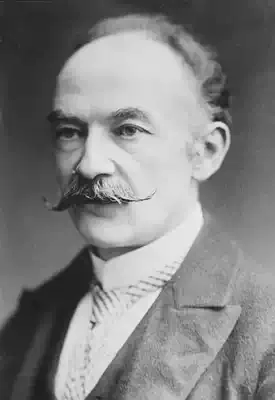
Thomas Hardy
A Confession To A Friend in Trouble
YOUR troubles shrink not, though I feel them less
Here, far away, than when I tarried near;
I even smile old smiles--with listlessness--
Yet smiles they are, not ghastly mockeries mere.
A thought too strange to house within my brain
Haunting its outer precincts I discern:
--That I will not show zeal again to learn
Your griefs, and, sharing them, renew my pain....
It goes, like murky bird or buccaneer
That shapes its lawless figure on the main,
And each new impulse tends to make outflee
The unseemly instinct that had lodgment here;
Yet, comrade old, can bitterer knowledge be
Than that, though banned, such instinct was in me!
261

William Wordsworth
To My Sister
It is the first mild day of March:
Each minute sweeter than before
The redbreast sings from the tall larch
That stands beside our door.
There is a blessing in the air,
Which seems a sense of joy to yield
To the bare trees, and mountains bare,
And grass in the green field.
My sister! ('tis a wish of mine)
Now that our morning meal is done,
Make haste, your morning task resign;
Come forth and feel the sun.
Edward will come with you;--and, pray,
Put on with speed your woodland dress;
And bring no book: for this one day
We'll give to idleness.
No joyless forms shall regulate
Our living calendar:
We from to-day, my Friend, will date
The opening of the year.
Love, now a universal birth,
From heart to heart is stealing,
From earth to man, from man to earth:
--It is the hour of feeling.
One moment now may give us more
Than years of toiling reason:
Our minds shall drink at every pore
The spirit of the season.
Some silent laws our hearts will make,
Which they shall long obey:
We for the year to come may take
Our temper from to-day.
And from the blessed power that rolls
About, below, above,
We'll frame the measure of our souls:
They shall be tuned to love.
Then come, my Sister! come, I pray,
With speed put on your woodland dress;
And bring no book: for this one day
We'll give to idleness.
262

Henry Lawson
The Sleeping Beauty
“Call that a yarn!” said old Tom Pugh,
“What rot! I’ll lay my hat
I’ll sling you a yarn worth more nor two
Such pumped-up yarns as that.”
And thereupon old Tommy “slew”
A yarn of Lambing Flat.
“When Lambing Flat broke out,” he said,
“’Mongst others there I knew
A lanky, orkard, Lunnon-bred
Young chap named Johnny Drew,
And nicknamed for his love of bed,
The ‘Sleeping Beauty’ too.
“He sunk a duffer on the Flat,
In comp’ny with three more,
And makin’ room for this and that
They was a tidy four,
Save when the eldest, Dublin Pat,
Got drunk and raved for gore.
“This Jack at yarnin’ licked a book,
And half the night he’d spout.
But when he once turned in, it took
Old Nick to get him out.
And that is how they came to cook
The joke I tell about.
“A duffer-rush broke out one day,
I quite forget where at
(It doesn’t matter, anyway,
It didn’t feed a cat)—
And Johnnie’s party said they’d say
Good-bye to Lambing Flat.
“Next mom rose Johnnie’s mates to pack
And make an early shunt,
But all they could get out of Jack
Was ‘All right,’ or a grunt,
By pourin’ water down his back
And—when he turned—his front.
“The billy biled, the tea was made,
They sat and ate their fill,
But Jack upon his broad back laid,
Snored like a fog-horn still;
‘We’ll save some tea to scald him,’ said
The peaceful Corney Bill.
“As they their beef and damper ate
And swilled their pints of tea
A bully notion all at wonst
Dawned on that rowdy three.
And Dublin Pat, in frantic mirth,
Said, ‘Now we’ll have a spree!’
“Well, arter that, I’m safe to swear,
The beggars didn’t lag,
But packed their togs with haste and care,
And each one made his swag
With Johnnie’s moleskins, ev’ry pair,
Included in the bag.
“With nimble fingers from the pegs
They soon the strings unbent,
And off its frame as sure as eggs
They drew the blessed tent,
And rolled it up and stretched their legs,
And packed the lot—and went.
“And scarcely p’r’aps a thing to love,
The ‘Beauty’ slumbered sound,
With nought but Heaven’s blue above
And Lambing Flat around,
Until in sight some diggers hove—
Some diggers out’ard bound.
“They sez as twelve o’clock was nigh—
We’ll say for sure elev’n—
When Johnnie ope’d his right-hand eye
And looked straight up to Heav’n:
I reckon he got more surprise
Than struck the fabled Sev’n.
“Clean off his bunk he made a bound,
And when he rubbed his eyes
I’m safe to swear poor Johnnie found
His dander ’gin to rise.
For there were diggers standin’ round—
Their missuses likewise.
“O Lor’! the joke—it wasn’t lost,
Though it did well-nigh tear
The sides of them as came acrost
The flat to hear Jack swear,
They sez as how old Grimshaw tossed
His grey wig in the air.
“Some minutes on the ground Jack lay,
And bore their screamin’ jeers,
And every bloke that passed that way
Contributed his sneers;
Jack cursed aloud, that cursed day
Seemed lengthened into years.
“Then in a fury up he sprung—
A pretty sight, you bet—
And laid about him with his tongue
Advising us ‘to get’,
And praying we might all be hung—
I think I hear him yet.
“Then on a sudden, down he bent,
And grabbed a chunk of rock,
And into Grimshaw’s stomach sent
The fossil, with a shock,
And Grimshaw doubled up and went
To pieces with the knock.
“And in the sun that day Jack stood
Clad only in his shirt,
And fired with stones and bits of wood,
And with his tongue threw dirt;
He fought as long as e’er he could—
But very few were hurt.
“He stooped to tear a lump of schist
Out of the clinging soil,
By thunder, you should hear him jist,
And see the way he’d coil
Upon the ground, and hug his fist,
And scratch and dig and toil!
“’Tis very plain he’d struck it fat,
The dufferin’ Lunnon muff;
The scoff and butt of Lambing Flat,
Who always got it rough,
Could strike his fortune where he sat;
The joker held the stuff.
“Well, that’s the yarn, it ain’t so poor;
Them golden days is o’er,
And Dublin Pat was drowned, and sure
It quenched his thirst for gore;
Old Corney Bill and Dave the Cure
I never heard on more.
“The Sleepin’ Beauty’s wealthy, too,
And wears a shiny hat,
But often comes to old Tom Pugh
To have a quiet chat;
I lent him pants to get him through
His fix on Lambing Flat.”
262
Henry Lawson
Old Tunes
When friends are listening round me, Jack, to hear my dying breath,
And I am lying in a sleep they say will end in death,
Don’t notice what the doctor says—and let the nurse complain——
I’ll tell you how to rouse me if I’ll ever wake again.
Just you bring in your fiddle, Jack, and set your heart in tune,
And strike up “Annie Laurie”, or “The Rising of the Moon”;
And if you see no token of a rising in my throat,
You’ll need to brace your mouth, old man—I’m booked by Charon’s boat.
And if you are not satisfied that I am off the scene,
Strike up “The Marseillaise”, or else “The Wearing of the Green”;
And should my fingers tremble not, then I have crossed the line,
But keep your fingers steady, Jack, and strike up “Auld Lang Syne”.
262

Anonymous
My Friend Judge Not Me
My friend iudge not me,
Thou seest I iudge not thee:
Betwixt the stirrop and the ground,
Mercy I askt, mercy I found.
Thou seest I iudge not thee:
Betwixt the stirrop and the ground,
Mercy I askt, mercy I found.
260
Henry Lawson
After All
The brooding ghosts of Australian night have gone from the bush and town;
My spirit revives in the morning breeze,
though it died when the sun went down;
The river is high and the stream is strong,
and the grass is green and tall,
And I fain would think that this world of ours is a good world after all.
The light of passion in dreamy eyes, and a page of truth well read,
The glorious thrill in a heart grown cold of the spirit I thought was dead,
A song that goes to a comrade's heart, and a tear of pride let fall --
And my soul is strong! and the world to me is a grand world after all!
Let our enemies go by their old dull tracks,
and theirs be the fault or shame
(The man is bitter against the world who has only himself to blame);
Let the darkest side of the past be dark, and only the good recall;
For I must believe that the world, my dear, is a kind world after all.
It well may be that I saw too plain, and it may be I was blind;
But I'll keep my face to the dawning light,
though the devil may stand behind!
Though the devil may stand behind my back, I'll not see his shadow fall,
But read the signs in the morning stars of a good world after all.
Rest, for your eyes are weary, girl -- you have driven the worst away --
The ghost of the man that I might have been is gone from my heart to-day;
We'll live for life and the best it brings till our twilight shadows fall;
My heart grows brave, and the world, my girl, is a good world after all.
260

John Greenleaf Whittier
Kenoza Lake
As Adam did in Paradise,
To-day the primal right we claim
Fair mirror of the woods and skies,
We give to thee a name.
Lake of the pickerel!--let no more
The echoes answer back, 'Great Pond,'
But sweet Kenoza, from thy shore
And watching hills beyond,
Let Indian ghosts, if such there be
Who ply unseen their shadowy lines,
Call back the ancient name to thee,
As with the voice of pines.
The shores we trod as barefoot boys,
The nutted woods we wandered through,
To friendship, love, and social joys
We consecrate anew.
Here shall the tender song be sung,
And memory's dirges soft and low,
And wit shall sparkle on the tongue,
And mirth shall overflow,
Harmless as summer lightning plays
From a low, hidden cloud by night,
A light to set the hills ablaze,
But not a bolt to smite.
In sunny South and prairied West
Are exiled hearts remembering still,
As bees their hive, as birds their nest,
The homes of Haverhill.
They join us in our rites to-day;
And, listening, we may hear, erelong,
From inland lake and ocean bay,
The echoes of our song.
Kenoza! o'er no sweeter lake
Shall morning break or noon-cloud sail,-No
fairer face than thine shall take
The sunset's golden veil.
Long be it ere the tide of trade
Shall break with harsh-resounding din
The quiet of thy banks of shade,
And hills that fold thee in.
Still let thy woodlands hide the hare,
The shy loon sound his trumpet-note,
Wing-weary from his fields of air,
The wild-goose on thee float.
Thy peace rebuke our feverish stir,
Thy beauty our deforming strife;
Thy woods and waters minister
The healing of their life.
And sinless Mirth, from care released,
Behold, unawed, thy mirrored sky,
Smiling as smiled on Cana's feast
The Master's loving eye.
And when the summer day grows dim,
And light mists walk thy mimic sea,
Revive in us the thought of Him
Who walked on Galilee!
260

Robert W. Service
Pooch
Nurse, won't you let him in?
He's barkin' an' scratchen' the door,
Makin' so dreffel a din
I jest can't sleep any more;
Out there in the dark an' the cold,
Hark to him scrape an' whine,
Breakin' his heart o' gold,
Poor little pooch o' mine.
Nurse, I was sat in ma seat
In front o' the barber shop,
When there he was lickin' ma feet
As if he would never stop;
Then all of a sudden I see
That dog-catcher moseyin' by:
"Whose mongrel is that?" says he;
"It's ma pedigree pup," says I.
Nurse, he was starved an' a-stray,
But his eyes was plumbful o' trust.
How could I turn him away?
I throwed him a bit o' a crust,
An' he choked as he gluped it up,
Then down at ma feet he curled:
Poor little pitiful pup!
Hadn't a friend in the world.
Nurse, I was friendless too,
So we was makin' a pair.
I'm black as a cast-off shoe,
But that li'le dog didn't care.
He loved me as much as though
Ma skin was pearly an' white:
Somehow dogs seem to know
When a man's heart's all right.
Nurse, we was thick as thieves;
Nothin' could pry us apart,
An' now to hear how he grieves
Is twistin' a knife in ma heart.
As I worked at ma shoe-shine stand
He'd watch me wi' eyes o' love,
A-wigglin' an' lickin' ma hand
Like I was a god above.
Nurse, I sure had no luck
That night o' the rain an' then fog;
There was that thunderin' truck,
And right in the way - ma dog.
Oh, I was a fool, I fear;
It's harder to think than to feel . . .
I dashed in, flung the pup clear,
But - I went under the wheel. . . .
Nurse, it's a-gittin' dark;
Guess ma time's about up:
Don't seem to hear him bark,
Poor, broken-hearted pup! . . .
Why, here he is, darn his skin!
Lickin' ma face once more:
How did the cuss get in?
Musta' busted the door.
God, I'm an ol' black coon,
But You ain't conscious o' race.
I gotta be goin' soon,
I'll be meetin' You face to face.
I'se been sinful, dice an' hooch,
But Lordy, before I die
I'se a-prayin': "Be good to ma pooch" . . .
That's all - little mutt, good-bye.
259
Henry Lawson
When Your Pants Begin to Go
When you wear a cloudy collar and a shirt that isn't white,
And you cannot sleep for thinking how you'll reach to-morrow night,
You may be a man of sorrows, and on speaking terms with Care,
And as yet be unacquainted with the Demon of Despair;
For I rather think that nothing heaps the trouble on your mind
Like the knowledge that your trousers badly need a patch behind.
I have noticed when misfortune strikes the hero of the play,
That his clothes are worn and tattered in a most unlikely way;
And the gods applaud and cheer him while he whines and loafs around,
And they never seem to notice that his pants are mostly sound;
But, of course, he cannot help it, for our mirth would mock his care,
If the ceiling of his trousers showed the patches of repair.
You are none the less a hero if you elevate your chin
When you feel the pavement wearing through the leather, sock, and skin;
You are rather more heroic than are ordinary folk
If you scorn to fish for pity under cover of a joke;
You will face the doubtful glances of the people that you know;
But -- of course, you're bound to face them when your pants begin to go.
If, when flush, you took your pleasures -- failed to make a god of Pelf,
Some will say that for your troubles you can only thank yourself --
Some will swear you'll die a beggar, but you only laugh at that,
While your garments hand together and you wear a decent hat;
You may laugh at their predictions while your soles are wearing low,
But -- a man's an awful coward when his pants begin to go.
Though the present and the future may be anything but bright,
It is best to tell the fellows that you're getting on all right,
And a man prefers to say it -- 'tis a manly lie to tell,
For the folks may be persuaded that you're doing very well;
But it's hard to be a hero, and it's hard to wear a grin,
When your most important garment is in places very thin.
Get some sympathy and comfort from the chum who knows you best,
That your sorrows won't run over in the presence of the rest;
There's a chum that you can go to when you feel inclined to whine,
He'll declare your coat is tidy, and he'll say: `Just look at mine!'
Though you may be patched all over he will say it doesn't show,
And he'll swear it can't be noticed when your pants begin to go.
Brother mine, and of misfortune! times are hard, but do not fret,
Keep your courage up and struggle, and we'll laugh at these things yet,
Though there is no corn in Egypt, surely Africa has some --
Keep your smile in working order for the better days to come!
We shall often laugh together at the hard times that we know,
And get measured by the tailor when our pants begin to go.
......
Now the lady of refinement, in the lap of comfort rocked,
Chancing on these rugged verses, will pretend that she is shocked.
Leave her to her smelling-bottle; 'tis the wealthy who decide
That the world should hide its patches 'neath the cruel look of pride;
And I think there's something noble, and I swear there's nothing low,
In the pride of Human Nature when its pants begin to go.
257

James Whitcomb Riley
Out Of Nazareth
'He shall sleep unscathed of thieves
Who loves Allah and believes.'
Thus heard one who shared the tent,
In the far-off Orient,
Of the Bedouin ben Ahrzz--
Nobler never loved the stars
Through the palm-leaves nigh the dim
Dawn his courser neighed to him!
He said: 'Let the sands be swarmed
With such thieves as I, and thou
Shalt at morning rise unharmed,
Light as eyelash to the brow
Of thy camel amber-eyed,
Ever munching either side,
Striding still, with nestled knees,
Through the midnight's oases.'
'Who can rob thee an thou hast
More than this that thou hast cast
At my feet-- this dust of gold?
Simply this and that, all told!
Hast thou not a treasure of
Such a thing as men call love?'
'Can the dusky band I lead
Rob thee of thy daily need
Of a whiter soul, or steal
What thy lordly prayers reveal?
Who could be enriched of thee
By such hoard of poverty
As thy niggard hand pretends
To dole me-- thy worst of friends?
Therefore shouldst thou pause to bless
One indeed who blesses thee:
Robbing thee, I dispossess
But myself--. Pray thou for me!'
He shall sleep unscathed of thieves
Who loves Allah and believes.
258

Henry Van Dyke
A Mile With Me
O who will walk a mile with me
Along life's merry way?
A comrade blithe and full of glee,
Who dares to laugh out loud and free,
And let his frolic fancy play,
Like a happy child, through the flowers gay
That fill the field and fringe the way
Where he walks a mile with me.
And who will walk a mile with me
Along life's weary way?
A friend whose heart has eyes to see
The stars shine out o'er the darkening lea,
And the quiet rest at the end o' the day,--
A friend who knows, and dares to say,
The brave, sweet words that cheer the way
Where he walks a mile with me.
With such a comrade, such a friend,
I fain would walk till journeys end,
Through summer sunshine, winter rain,
And then?--Farewell, we shall meet again!
253

Jonathan Swift
Stella’s Birth-Day.1719-20
All travellers at first incline
Where'er they see the fairest sign
And if they find the chambers neat,
And like the liquor and the meat,
Will call again, and recommend
The Angel Inn to every friend.
And though the painting grows decay'd,
The house will never lose its trade:
Nay, though the treach'rous tapster, Thomas,
Hangs a new Angel two doors from us,
As fine as daubers' hands can make it,
In hopes that strangers may mistake it,
We think it both a shame and sin
To quit the true old Angel Inn.
Now this is Stella's case in fact,
An angel's face a little crack'd.
(Could poets or could painters fix
How angels look at thirty-six
This drew us in at first to find
In such a form an angel's mind;
And every virtue now supplies
The fainting rays of Stella's eyes.
See, at her levee crowding swains,
Whom Stella freely entertains
With breeding, humour, wit, and sense,
And puts them to so small expense;
Their minds so plentifully fills,
And makes such reasonable bills,
So little gets for what she gives,
We really wonder how she lives!
And had her stock been less, no doubt
She must have long ago run out.
Then, who can think we'll quit the place,
When Doll hangs out a newer face?
Nail'd to her window full in sight
All Christian people to invite.
Or stop and light at Chloe's head,
With scraps and leavings to be fed?
Then, Chloe, still go on to prate
Of thirty-six and thirty-eight;
Pursue your trade of scandal-picking,
Your hints that Stella is no chicken;
Your innuendoes, when you tell us,
That Stella loves to talk with fellows:
But let me warn you to believe
A truth, for which your soul should grieve;
That should you live to see the day,
When Stella's locks must all be gray,
When age must print a furrow'd trace
On every feature of her face;
Though you, and all your senseless tribe,
Could Art, or Time, or Nature bribe,
To make you look like Beauty's Queen,
And hold for ever at fifteen;
No bloom of youth can ever blind
The cracks and wrinkles of your mind:
All men of sense will pass your door,
And crowd to Stella's at four-score.
254
Robert W. Service
Montreal Maree
You've heard of Belching Billy, likewise known as Windy Bill,
As punk a chunk of Yukon scum as ever robbed a sluice;
A satellite of Soapy Smith, a capper and a shill,
A slimy tribute-taker from the Ladies on the Loose.
But say, you never heard of how he aimed my gore to spill
(That big gorilla gunnin' for a little guy like me,)
A-howlin' like a malamute an' ravin' he would drill
Me full of holes and all because of Montreal Maree.
Now Spike Mahoney's Bar was stiff with roarin' drunks,
And I was driftin' lonesome-like, scarce knowin' what to do,
So come I joined a poker game and dropped a hundred plunks,
And bein' broke I begged of Spike to take my I.O.U.
Says he: "Me lad, I'll help ye out, but let me make this clear:
If you you don't pay by New year's day your wage I'll garnishee."
So I was broodin' when I heard a whisper in my ear:
"What ees zee trouble, leetle boy?" said Montreal Maree.
Now dance-hall gels is good and bad, but most is in between;
Yeh, some is scum and some is dumb, and some is just plumb cold;
But of straight-shootin' Dawson dames Maree was rated queen,
As pretty as a pansy, wi' a heart o' Hunker gold.
And so although I didn't know her more that passin' by,
I told how Spike would seek my Boss, and jobless I would be;
She listened sympathetic like: "Zut! Baby, don't you cry;
I lend to you zee hundred bucks," said Montreal Maree.
Now though I zippered up my mug somehow the story spread
That I was playin' poker and my banker was Maree;
And when it got to Windy Bill, by Golly, he saw red,
And reachin' for his shootin' iron he started after me.
For he was batty for that babe and tried to fence her in.
And if a guy got in his way, say, he was set to kill;
So fortified with barbwire hooch and wickeder than sin;
"I'll plug that piker full of lead," exploded Windy Bill.
That night, a hundred smackers saved, with joy I started out
To seek my scented saviour in her cabin on the hill;
But barely had I paid my debt, when suddenly a shout . . .
I peered from out the window, and behold! 'twas Windy Bill.
He whooped and swooped and raved and waved his gun as he drew near.
Now he was kickin' in the door, no time was there to flee;
No place to hide: my doom was sealed . . . then sotly in my ear:
"Quick! creep beneez my petticoat," said Montreal Maree.
So pale as death I held my breath below that billowed skirt,
And a she sat I wondered at her voice so calm and clear;
Serene and still she spoke to Bill like he was so much dirt:
"Espèce de skunk! You jus' beeeg drunk. You see no man in here."
Then Bill began to cuss and ran wild shootin' down the hiss,
And all was hushed, and how I wished that bliss could ever be,
When up she rose in dainty pose beside the window sill:
"He spill hees gun, run Baby, run," cried Montreal Maree.
I've heard it said that she got wed and made a wonder wife.
I guess she did; that careless kid had mother in her heart.
But anyway I'll always say she saved my blasted life,
For other girls may come and go, and each may play their part:
But if I live a hundred years I'll not forget the thrill,
The rapture of that moment when I kissed a dimpled knee,
And safely mocked the murderous menace of Windy Bill,
Snug hid beneath the petticoat of Montreal Maree.
254

Horácio
BkII:VII A Friend Home From the Wars
O Pompey, often led, with me, by Brutus,
the head of our army, into great danger,
who’s sent you back, as a citizen,
to your country’s gods and Italy’s sky,
Pompey, the very dearest of my comrades,
with whom I’ve often drawn out the lingering
day in wine, my hair wreathed, and glistening
with perfumed balsam, of Syrian nard?
I was there at Philippi, with you, in that
headlong flight, sadly leaving my shield behind,
when shattered Virtue, and what threatened
from an ignoble purpose, fell to earth.
While in my fear Mercury dragged me, swiftly,
through the hostile ranks in a thickening cloud:
the wave was drawing you back to war,
carried once more by the troubled waters.
So grant Jupiter the feast he’s owed, and stretch
your limbs, wearied by long campaigning, under
my laurel boughs, and don’t spare the jars
that were destined to be opened by you.
Fill the smooth cups with Massic oblivion,
pour out the perfume from generous dishes,
Who’ll hurry to weave the wreathes for us
of dew-wet parsley or pliant myrtle?
Who’ll throw high Venus at dice and so become
the master of drink? I’ll rage as insanely
as any Thracian: It’s sweet to me
to revel when a friend is home again.
253
John Greenleaf Whittier
The Relic
TOKEN Of friendship true and tried,
From one whose fiery heart of youth
With mine has beaten, side by side,
For Liberty and Truth;
With honest pride the gift I take,
And prize it for the giver's sake.
But not alone because it tells
Of generous hand and heart sincere;
Around that gift of friendship dwells
A memory doubly dear;
Earth's noblest aim, man's holiest thought,
With that memorial frail inwrought!
Pure thoughts and sweet like flowers unfold,
And precious memories round it cling,
Even as the Prophet's rod of old
In beauty blossoming:
And buds of feeling, pure and good,
Spring from its cold unconscious wood.
Relic of Freedom's shrine! a brand
Plucked from its burning! let it be
Dear as a jewel from the hand
Of a lost friend to me!
Flower of a perished garland left,
Of life and beauty unbereft!
Oh, if the young enthusiast bears,
O'er weary waste and sea, the stone
Which crumbled from the Forum's stairs,
Or round the Parthenon;
Or olive-bough from some wild tree
Hung over old Thermopylæ:
If leaflets from some hero's tomb,
Or moss-wreath torn from ruins hoary;
Or faded flowers whose sisters bloom
On fields renowned in story;
Or fragment from the Alhambra's crest,
Or the gray rock by Druids blessed;
Sad Erin's shamrock greenly growing
Where Freedom led her stalwart kern,
Or Scotia's 'rough bur thistle' blowing
On Bruce's Bannockburn;
Or Runnymede's wild English rose,
Or lichen plucked from Sempach's snows!
If it be true that things like these
To heart and eye bright visions bring,
Shall not far holier memories
To this memorial cling?
Which needs no mellowing mist of time
To hide the crimson stains of crime!
Wreck of a temple, unprofaned;
Of courts where Peace with Freedom trod,
Lifting on high, with hands unstained,
Thanksgiving unto God;
Where Mercy's voice of love was pleading
For human hearts in bondage bleeding!
Where, midst the sound of rushing feet
And curses on the night-air flung,
That pleading voice rose calm and sweet
From woman's earnest tongue;
And Riot turned his scowling glance,
Awed, from her tranquil countenance!
That temple now in ruin lies!
The fire-stain on its shattered wall,
And open to the changing skies
Its black and roofless hall,
It stands before a nation's sight
A gravestone over buried Right!
But from that ruin, as of old,
The fire-scorched stones themselves are crying,
And from their ashes white and cold
Its timbers are replying!
A voice which slavery cannot kill
Speaks from the crumbling arches still!
And even this relic from thy shrine,
O holy Freedom! hath to me
A potent power, a voice and sign
To testify of thee;
And, grasping it, methinks I feel
A deeper faith, a stronger zeal.
And not unlike that mystic rod,
Of old stretched o'er the Egyptian wave,
Which opened, in the strength of God,
A pathway for the slave,
It yet may point the bondman's way,
And turn the spoiler from his prey.
253
Robert W. Service
Growing Old
Somehow the skies don't seem so blue
As they used to be;
Blossoms have a fainter hue,
Grass less green I see.
There's no twinkle in a star,
Dawns don't seem so gold . . .
Yet, of course, I know they are:
Guess I'm growing old.
Somehow sunshine seems less bright,
Birds less gladly sing;
Moons don't thrill me with delight,
There's no kick in Spring.
Hills are steeper now and I'm
Sensitive to cold;
Lines are not so keen to rhyme . . .
Gosh! I'm growing old.
Yet in spite of failing things
I've no cause to grieve;
Age with all its ailing brings
Blessings, I believe:
Kindo' gentles up the mind
As the hope we hold
That with loving we will find
Friendliness in human kind,
Grace in growing old.
249

Mao Tsé-Tung
Reply to Mr. Liu Ya-Tzu
I still remember our drinking tea in Kwangchow
And your asking for verses in Chungking as the leaves yellowed.
Back in the old capital after thirty-one years,
At the season of falling flowers I read your polished lines.
Beware of heartbreak with grievance overfull,
Range far your eye over long vistas.
Do not say the waters of Kunming Lake are too shallow,
For watching fish they are better than Fuchun River.
248
Henry Van Dyke
A Health to Mark Twain
At his Birthday Feast
With memories old and wishes new
We crown our cups again,
And here's to you, and here's to you
With love that ne'er shall wane!
And may you keep, at sixty-seven,
The joy of earth, the hope of heaven,
And fame well-earned, and friendship true,
And peace that comforts every pain,
And faith that fights the battle through,
And all your heart's unbounded wealth,
And all your wit, and all your health,--
Yes, here's a hearty health to you,
And here's to you, and here's to you,
Long life to you, Mark Twain.
248
John Greenleaf Whittier
The Last Eve Of Summer
Summer's last sun nigh unto setting shines
Through yon columnar pines,
And on the deepening shadows of the lawn
Its golden lines are drawn.
Dreaming of long gone summer days like this,
Feeling the wind's soft kiss,
Grateful and glad that failing ear and sight
Have still their old delight,
I sit alone, and watch the warm, sweet day
Lapse tenderly away;
And, wistful, with a feeling of forecast,
I ask, 'Is this the last?
'Will nevermore for me the seasons run
Their round, and will the sun
Of ardent summers yet to come forget
For me to rise and set?'
Thou shouldst be here, or I should be with thee
Wherever thou mayst be,
Lips mute, hands clasped, in silences of speech
Each answering unto each.
For this still hour, this sense of mystery far
Beyond the evening star,
No words outworn suffice on lip or scroll:
The soul would fain with soul
Wait, while these few swift-passing days fulfil
The wise-disposing Will,
And, in the evening as at morning, trust
The All-Merciful and Just.
The solemn joy that soul-communion feels
Immortal life reveals;
And human love, its prophecy and sign,
Interprets love divine.
Come then, in thought, if that alone may be,
O friend! and bring with thee
Thy calm assurance of transcendent Spheres
And the Eternal Years!
245
Henry Lawson
To Jack
SO, I’ve battled it through on my own, Jack,
I have done with all dreaming and doubt.
Though “stoney” to-night and alone, Jack,
I am watching the Old Year out.
I have finished with brooding and fears,
Jack, And the spirit is rising in me,
For the sake of the old New Years, Jack,
And the bright New Years to be.
I have fallen in worldly disgrace, Jack,
And I know very well that you heard;
They have blackened my name in this place, Jack,
And I answered them never a word.
But why should I bluster or grieve,
Jack? So narrow and paltry they be—
I knew you would never believe, Jack,
The lies that were said against me.
That is done which shall never be undone,
And I blame not, I blame not my land,
But I’m hearing the Calling of London,
And I long for the roar of the Strand.
It was always the same with our race,
Jack; You know how a vagabond feels—
We can fight a straight man face to face, Jack.
But we can’t keep the curs from our heels.
You know I loved women and drink, Jack,
And that’s how the trouble began;
But you know that I never would shrink,
Jack, From a deed that was worthy a man!
I never was paltry or mean, Jack.
And cruel I never could be,
I will give you a hand which is clean,
Jack, When we meet again over the sea.
I will bring a few wrinkles of care,
Jack; I have altered a lot, I am told;
The steel-filings show in my hair, Jack;
But my heart is as young as of old.
I have faith still in women, and men, Jack,
Though selfish and blind they may be.
I still have my soul and my pen, Jack,
And my country seems dearer to me.
I will sail when your summer sets in, Jack,
And good-bye to my own native land;
Oh, I long for a glimpse of your grin, Jack,
And I long for the grip of your hand.
We both suffered sorrow and pain, Jack,
And sinned in the days that are done;
But we’ll fight the old battle again, Jack,
Where the battle is worth being won.
246
Henry Lawson
Say Goodbye when your Chum is Married
Now this is a rhyme that might well be carried
Gummed in your hat till the end of things:
Say Good-bye when your chum is married;
Say Good-bye while the church-bell rings;
Say Good-bye—if you ask why must you,
’Tis for the sake of old friendship true,
For as sure as death will his wife distrust you
And lead him on to suspect you, too.
Say Good-bye, though he be a brother,
Seek him not when you’re married, too—
Things that you never would tell each other
The wives will carry as young wives do.
Say Good-bye ere their tongues shall strangle
The friendship pledged ere the lights grew dim,
For, as sure as death, will those young wives wrangle,
And drag you into it, you and him.
247
Henry Lawson
The Loveable Characters
I long for the streets but the Lord knoweth best,
For there I am never a saint;
There are lovable characters out in the West,
With humour heroic and quaint;
And, be it Up Country, or be it Out Back,
When I shall have gone to my Home,
I trust to be buried 'twixt River and Track
Where my lovable characters roam.
There are lovable characters drag through the scrub,
Where the Optimist ever prevails;
There are lovable characters hang round the pub,
There are lovable jokers at sales
Where the auctioneer's one of the lovable wags
(Maybe from his "order" estranged),
And the beer is on tap, and the pigs in the bags
Of the purchasing cockies are changed.
There were lovable characters out in the West,
Of fifty hot summers, or more,
Who could not be proved, when it came to the test,
Too old to be sent to the war;
They were all forty-five and were orphans, they said,
With no one to keep them, or keep;
And mostly in France, with the world's bravest dead,
Those lovable characters sleep.
I long for the streets, but the Lord knoweth best,
For there I am never a saint;
There are lovable characters out in the West,
With humour heroic and quaint;
And, be it Up Country, or be it Out Back,
When I shall have gone to my Home,
I trust to be buried 'twixt River and Track
Where my lovable characters roam.
For there I am never a saint;
There are lovable characters out in the West,
With humour heroic and quaint;
And, be it Up Country, or be it Out Back,
When I shall have gone to my Home,
I trust to be buried 'twixt River and Track
Where my lovable characters roam.
There are lovable characters drag through the scrub,
Where the Optimist ever prevails;
There are lovable characters hang round the pub,
There are lovable jokers at sales
Where the auctioneer's one of the lovable wags
(Maybe from his "order" estranged),
And the beer is on tap, and the pigs in the bags
Of the purchasing cockies are changed.
There were lovable characters out in the West,
Of fifty hot summers, or more,
Who could not be proved, when it came to the test,
Too old to be sent to the war;
They were all forty-five and were orphans, they said,
With no one to keep them, or keep;
And mostly in France, with the world's bravest dead,
Those lovable characters sleep.
I long for the streets, but the Lord knoweth best,
For there I am never a saint;
There are lovable characters out in the West,
With humour heroic and quaint;
And, be it Up Country, or be it Out Back,
When I shall have gone to my Home,
I trust to be buried 'twixt River and Track
Where my lovable characters roam.
245

Emily Dickinson
Elysium is as far as to
Elysium is as far as to
The very nearest Room
If in that Room a Friend await
Felicity or Doom--
What fortitude the Soul contains
That it can so endure
The accent of a coming Foot--
The opening of a Door--
The very nearest Room
If in that Room a Friend await
Felicity or Doom--
What fortitude the Soul contains
That it can so endure
The accent of a coming Foot--
The opening of a Door--
246
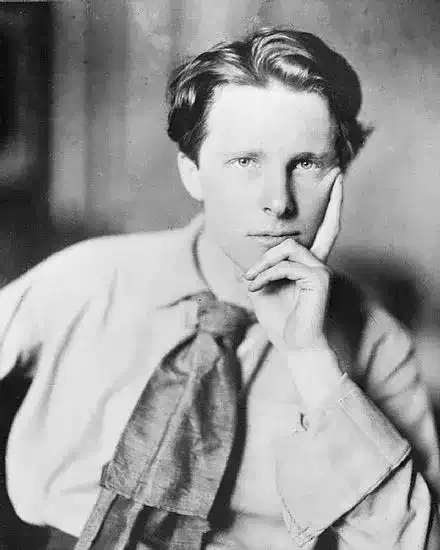
Rupert Brooke
The Jolly Company
The stars, a jolly company,
I envied, straying late and lonely;
And cried upon their revelry:
"O white companionship! You only
In love, in faith unbroken dwell,
Friends radiant and inseparable!"
Light-heart and glad they seemed to me
And merry comrades (EVEN SO
GOD OUT OF HEAVEN MAY LAUGH TO SEE
THE HAPPY CROWDS; AND NEVER KNOW
THAT IN HIS LONE OBSCURE DISTRESS
EACH WALKETH IN A WILDERNESS).
But I, remembering, pitied well
And loved them, who, with lonely light,
In empty infinite spaces dwell,
Disconsolate. For, all the night,
I heard the thin gnat-voices cry,
Star to faint star, across the sky.
246