
Friendship

Henry Lawson
To Jack
SO, I’ve battled it through on my own, Jack,
I have done with all dreaming and doubt.
Though “stoney” to-night and alone, Jack,
I am watching the Old Year out.
I have finished with brooding and fears,
Jack, And the spirit is rising in me,
For the sake of the old New Years, Jack,
And the bright New Years to be.
I have fallen in worldly disgrace, Jack,
And I know very well that you heard;
They have blackened my name in this place, Jack,
And I answered them never a word.
But why should I bluster or grieve,
Jack? So narrow and paltry they be—
I knew you would never believe, Jack,
The lies that were said against me.
That is done which shall never be undone,
And I blame not, I blame not my land,
But I’m hearing the Calling of London,
And I long for the roar of the Strand.
It was always the same with our race,
Jack; You know how a vagabond feels—
We can fight a straight man face to face, Jack.
But we can’t keep the curs from our heels.
You know I loved women and drink, Jack,
And that’s how the trouble began;
But you know that I never would shrink,
Jack, From a deed that was worthy a man!
I never was paltry or mean, Jack.
And cruel I never could be,
I will give you a hand which is clean,
Jack, When we meet again over the sea.
I will bring a few wrinkles of care,
Jack; I have altered a lot, I am told;
The steel-filings show in my hair, Jack;
But my heart is as young as of old.
I have faith still in women, and men, Jack,
Though selfish and blind they may be.
I still have my soul and my pen, Jack,
And my country seems dearer to me.
I will sail when your summer sets in, Jack,
And good-bye to my own native land;
Oh, I long for a glimpse of your grin, Jack,
And I long for the grip of your hand.
We both suffered sorrow and pain, Jack,
And sinned in the days that are done;
But we’ll fight the old battle again, Jack,
Where the battle is worth being won.
246
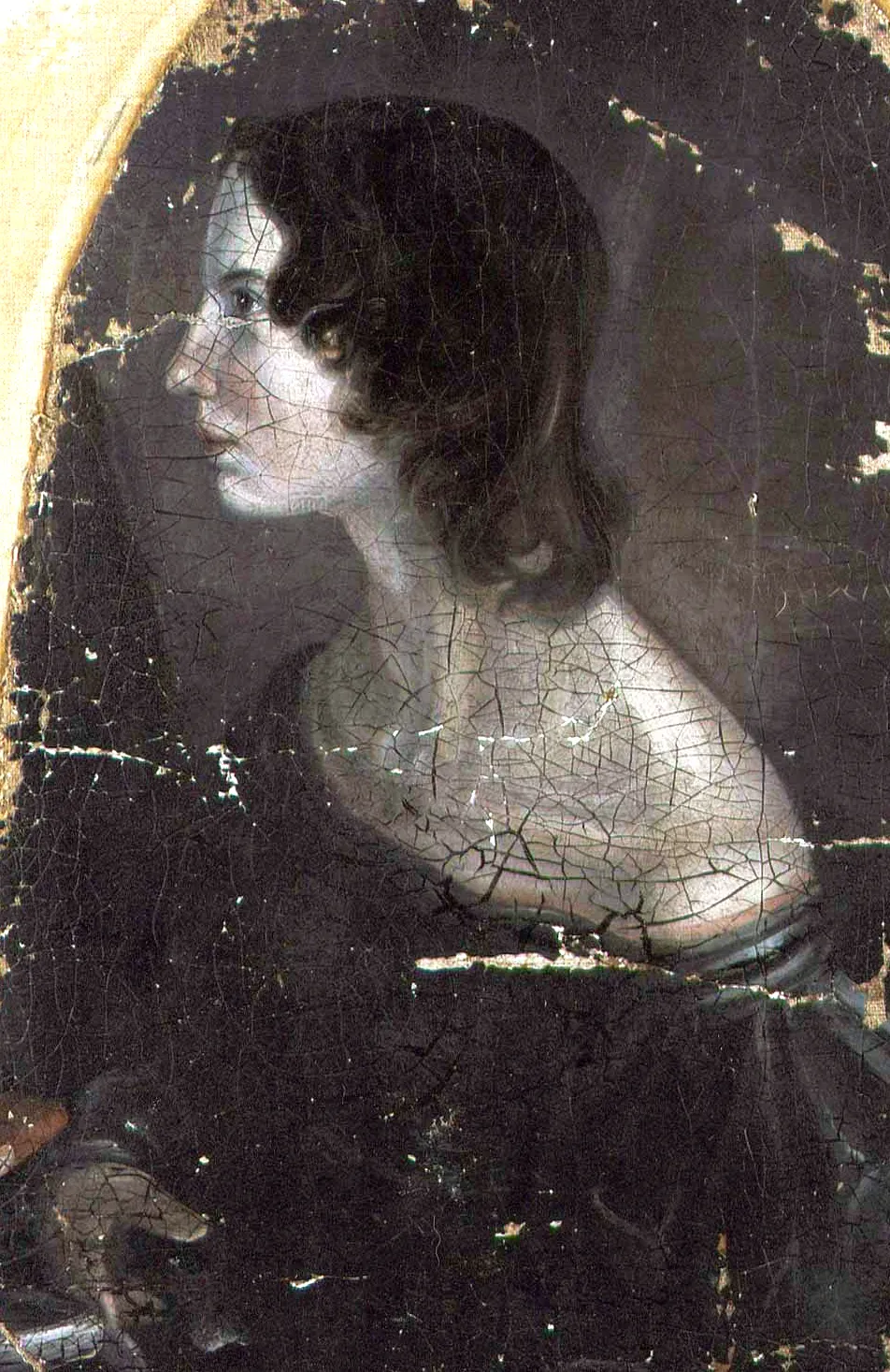
Emily Jane Brontë
Come, Walk With Me
Come, walk with me,
There's only thee
To bless my spirit now -
We used to love on winter nights
To wander through the snow;
Can we not woo back old delights?
The clouds rush dark and wild
They fleck with shade our mountain heights
The same as long ago
And on the horizon rest at last
In looming masses piled;
While moonbeams flash and fly so fast
We scarce can say they smiled -
Come walk with me, come walk with me;
We were not once so few
But Death has stolen our company
As sunshine steals the dew -
He took them one by one and we
Are left the only two;
So closer would my feelings twine
Because they have no stay but thine
'Nay call me not - it may not be
Is human love so true?
Can Friendship's flower droop on for years
And then revive anew?
No, though the soil be wet with tears,
How fair soe'er it grew
The vital sap once perished
Will never flow again
And surer than that dwelling dread,
The narrow dungeon of the dead
Time parts the hearts of men -'
243
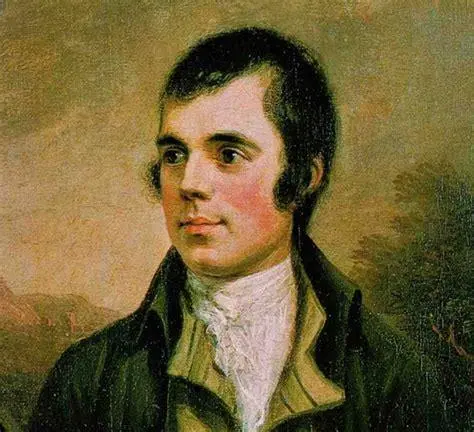
Robert Burns
A Bottle And Friend
There's nane that's blest of human kind,
But the cheerful and the gay, man,
Fal, la, la, &c.
Here's a bottle and an honest friend!
What wad ye wish for mair, man?
Wha kens, before his life may end,
What his share may be o' care, man?
Then catch the moments as they fly,
And use them as ye ought, man:
Believe me, happiness is shy,
And comes not aye when sought, man.
240
Henry Lawson
The Rhyme of the Three Greybeards
He'd been for years in Sydney "a-acting of the goat",
His name was Joseph Swallow, "the Great Australian Pote",
In spite of all the stories and sketches that he wrote.
And so his friends held meetings (Oh, narrow souls were theirs!)
To advertise their little selves and Joseph's own affairs.
They got up a collection for Joseph unawares.
They looked up his connections and rivals by the score –
The wife who had divorced him some twenty years before,
And several politicians he'd made feel very sore.
They sent him down to Coolan, a long train ride from here,
Because of his grey hairs and "pomes" and painted blondes – and beer.
(I mean to say the painted blondes would always give him beer.)
(They loved him for his eyes were dark, and you must not condemn
The love for opposites that mark the everlasting fem.
Besides, he "made up" little bits of poetry for them.)
They sent him "for his own sake", but not for that alone –
A poet's sins are public; his sorrows are his own.
And poets' friends have skins like hides, and mostly hearts of stone.
They said "We'll send some money and you must use your pen.
"So long," they said. "Adoo!" they said. "And don't come back again.
Well, stay at least a twelve-month – we might be dead by then."
Two greybeards down at Coolan – familiar grins they had –
They took delivery of the goods, and also of the bad.
(Some bread and meat had come by train – Joe Swallow was the bad.)
They'd met him shearing west o' Bourke in some forgotten year.
They introduced him to the town and pints of Wagga beer.
(And Wagga pints are very good –- I wish I had some here.)
It was the Busy Bee Hotel where no one worked at all,
Except perhaps to cook the grub and clean the rooms and "hall".
The usual half-wit yardman worked at each one's beck and call.
'Twas "Drink it down!" and "Fillemup!" and "If the pub goes dry,
There's one just two-mile down the road, and more in Gundagai" –
Where married folk by accident get poison in the pie.
The train comes in at eight o'clock – or half-past, I forget,
And when the dinner table at the Busy Bee was set,
Upon the long verandah stool the beards were wagging yet.
They talked of where they hadn't been and what they hadn't won;
They talked of mostly everything that's known beneath the sun.
The things they didn't talk about were big things they had done.
They talked of what they called to mind, and couldn't call to mind;
They talked of men who saw too far and people who were "blind".
Tradition says that Joe's grey beard wagged not so far behind.
They got a horse and sulky and a riding horse as well,
And after three o'clock they left the Busy Bee Hotel –
In case two missuses should send from homes where they did dwell.
No barber bides in Coolan, no baker bakes the bread;
And every local industry, save rabbitin', is dead –
And choppin' wood. The women do all that, be it said.
(I'll add a line and mention that two-up goes ahead.)
The shadows from the sinking sun were long by hill and scrub;
The two-up school had just begun, in spite of beer and grub;
But three greybeards were wagging yet down at the Two-mile pub.
A full, round, placid summer moon was floating in the sky;
They took a demijohn of beer, in case they should go dry;
And three greybeards went wagging down the road to Gundagai.
At Gundagai next morning (which poets call "th' morn")
The greybeards sought a doctor – a friend of the forlorn –
Whose name is as an angel's who sometimes blows a horn.
And Doctor Gabriel fixed 'em up, but 'twas not in the bar.
It wasn't rum or whisky, nor yet was it Three Star.
'Twas mixed up in a chemist's shop, and swifter stuff by far.
They went out to the backyard (to make my meaning plain);
The doctor's stuff wrought mightily, but by no means in vain.
Then they could eat their breakfasts and drink their beer again.
They made a bond between the three, as rock against the wave,
That they'd go to the barber's shop and each have a clean shave,
To show the people how they looked when they were young and brave.
They had the shave and bought three suits (and startling suits in sooth),
And three white shirts and three red ties (to tell the awful truth),
To show the people how they looked in their hilarious youth.
They burnt their old clothes in the yard, and their old hats as well;
The publican kicked up a row because they made a smell.
They put on bran'-new "larstin'-sides" – and, oh, they looked a yell!
Next morning, or the next (or next), from demon-haunted beds,
And very far from feeling like what sporting men call "peds",
The three rode back without their beards, with "boxers" on their heads!
They tried to get Joe lodgings at the Busy Bee in vain;
They did not take him to their homes, they took him to the train;
They sent him back to Sydney till grey beards grew again.
They sent him back to Sydney to keep away a year;
Because of shaven beards and wives they thought him safer here.
And so he cut his friends and stuck to powdered blondes and beer.
Until the finish came at last, as 'twill to any "bloke";
But in Joe's case it chanced to be a paralytic stroke;
The soft heart of a powdered blonde was, as she put it, "broke".
She sought Joe in the hospital and took the choicest food;
She went there very modestly and in a chastened mood,
And timid and respectful-like – because she was no good.
She sat the death-watch out alone on the verandah dim;
And after all was past and gone she dried her eyes abrim,
And sought the head-nurse timidly, and asked "May I see him?"
And then she went back to her bar, where she'd not been for weeks,
To practise there her barmaid's smile and mend and patch the streaks
The only real tears for Joe had left upon her cheeks
239
Henry Lawson
Let’s Be Fools To-Night
We, three men of commerce,
Striving wealth to raise,
See but little promise
In the coming days;
Though our hearts are brittle,
Hardened near to stone,
We can think a little
Of the seasons flown.
Lily days and rose days:
Youthful days so bright;
We were fools in those days,
Let’s be fools to-night.
We, three men of commerce,
Men of business we,
Gave but little promise
Of what we would be
When we wandered urchins—
Foes of law and rule—
Fearing only birchings
And the village school.
Lily days and rose days,
Boyhood’s days so bright;
We were fools in those days,
Let’s be fools to-night.
We, three men of commerce,
Men of business we,
Gave but little promise
Of ability
When we lived in riot;
Never drew the line,
Hating peace and quiet,
Loving maids and wine.
Days when money goes—days
When men’s hearts are right;
We were fools in those days,
Let’s be fools to-night.
We must wear to-morrow
All our worldly marks,
Calm looks for our sorrow,
Stern looks for our clerks,
Who, from trouble shrinking,
Tasting earthly joys,
Hate us, little thinking
Ever we were boys.
Days when kindness flows—days
When men’s hearts are white;
We’ve been wise since those days,
Let’s be fools to-night.
237

Robert W. Service
Pipe Smoker
Because I love the soothing weed
And am of sober type,
I'd choose me for a friend in need
A man who smokes a pipe.
A cove who hasn't much to say,
And spits into the fire,
Puffing like me a pipe of clay,
Corn-cob or briar.
A chap original of thought,
With cheery point of view,
Who has of gumption quite a lot,
And streaks of humour too.
He need not be a whiskered sage,
With wisdom over-ripe:
Just give me in the old of age
A pal who smokes a pipe.
A cigarette may make for wit,
Although I like it not;
A good cigar, I must admit,
Gives dignity to thought.
But as my glass of grog I sip
I never, never gripe
If I have for companionship
A guy who smokes a pipe.
238
Henry Lawson
When Hopes Ran High
When hopes ran high the world was young,
We thought that we would never die,
And glorious were the songs we sung
In those grand days when hopes ran high.
When hopes ran high the world was true
We thought that friends could never lie—
There have been bitter truths for you
And me, since days when hopes ran high.
We thought that we would never die,
And glorious were the songs we sung
In those grand days when hopes ran high.
When hopes ran high the world was true
We thought that friends could never lie—
There have been bitter truths for you
And me, since days when hopes ran high.
236

James Whitcomb Riley
Writin' Back To The Home-Folks
My dear old friends--It jes beats all,
The way you write a letter
So's ever' _last_ line beats the _first_,
And ever' _next_-un's better!-W'y,
ever' fool-thing you putt down
You make so inte_rest_in',
A feller, readin' of 'em all,
Can't tell which is the _best_-un.
It's all so comfortin' and good,
'Pears-like I almost _hear_ ye
And git more sociabler, you know,
And hitch my cheer up near ye
And jes smile on ye like the sun
Acrosst the whole per-rairies
In Aprile when the thaw's begun
And country couples marries.
It's all so good-old-fashioned like
To _talk_ jes like we're _thinkin'_,
Without no hidin' back o' fans
And giggle-un and winkin',
Ner sizin' how each-other's dressed--
Like some is allus doin',-'_
Is_ Marthy Ellen's basque ben _turned_
Er shore-enough a new-un!'--
Er 'ef Steve's city-friend haint jes
'A _lee_tle kindo'-sorto''--
Er 'wears them-air blame eye-glasses
Jes 'cause he hadn't ort to?'
And so straight on, _dad-libitum_,
Tel all of us feels, _some_way,
Jes like our 'comp'ny' wuz the best
When we git up to come 'way!
That's why I like _old_ friends like you,--
Jes 'cause you're so _abidin'_.--
Ef I was built to live '_fer keeps_,'
My principul residin'
Would be amongst the folks 'at kep'
Me allus _thinkin'_ of 'em,
And sorto' eechin' all the time
To tell 'em how I love 'em.--
Sich folks, you know, I jes love so
I wouldn't live without 'em,
Er couldn't even drap asleep
But what I _dreamp'_ about 'em,--
And ef we minded God, I guess
We'd _all_ love one-another
Jes like one fam'bly,--me and Pap
And Madaline and Mother.
236

Christina Rossetti
No, Thank You John
I never said I loved you, John:
Why will you tease me day by day,
And wax a weariness to think upon
With always "do" and "pray"?
You Know I never loved you, John;
No fault of mine made me your toast:
Why will you haunt me with a face as wan
As shows an hour-old ghost?
I dare say Meg or Moll would take
Pity upon you, if you'd ask:
And pray don't remain single for my sake
Who can't perform the task.
I have no heart?-Perhaps I have not;
But then you're mad to take offence
That don't give you what I have not got:
Use your common sense.
Let bygones be bygones:
Don't call me false, who owed not to be true:
I'd rather answer "No" to fifty Johns
Than answer "Yes" to you.
Let's mar our plesant days no more,
Song-birds of passage, days of youth:
Catch at today, forget the days before:
I'll wink at your untruth.
Let us strike hands as hearty friends;
No more, no less; and friendship's good:
Only don't keep in veiw ulterior ends, And points not understood
In open treaty. Rise above
Quibbles and shuffling off and on:
Here's friendship for you if you like; but love,-
No, thank you, John.
235
Christina Rossetti
From Sunset to Star Rise
Go from me, summer friends, and tarry not:
I am no summer friend, but wintry cold,
A silly sheep benighted from the fold,
A sluggard with a thorn-choked garden plot.
Take counsel, sever from my lot your lot,
Dwell in your pleasant places, hoard your gold;
Lest you with me should shiver on the wold,
Athirst and hungering on a barren spot.
For I have hedged me with a thorny hedge,
I live alone, I look to die alone:
Yet sometimes, when a wind sighs through the sedge,
Ghosts of my buried years, and friends come back,
My heart goes sighing after swallows flown
On sometime summer's unreturning track.
232
Henry Lawson
That There Dog O' Mine
Macquarie the shearer had met with an accident. To tell the truth, he had been in a
drunken row at a wayside shanty, from which he had escaped with three fractured ribs,
a cracked head, and various minor abrasions. His dog, Tally, had been a sober but
savage participator in the drunken row, and had escaped with a broken leg.
Macquarie afterwards shouldered his swag and staggered and struggled along the track
ten miles to the Union-Town Hospital. Lord knows how he did it. He didn't exactly know
himself. Tally limped behind all the way on three legs. The doctors examined the man's
injuries and were surprised at his endurance.
Even doctors are surprised sometimes - though they don't always show it. Of course
they would take him in, but they objected to Tally. Dogs were not allowed on the
premises. 'You will have to turn that dog out,' they said to the shearer, as he sat on
the edge of a bed.
Macquarie said nothing. 'We cannot allow dogs about the place, my man,' said the
doctor in a louder tone, thinking the man was deaf. 'Tie him up in the yard then.' 'No.
He must go out. Dogs are not permitted on the grounds.'
Macquarie rose slowly to his feet, shut his agony behind his set teeth painfully
buttoned his shirt over his hairy chest, took up his waistcoat, and staggered to the
comer where the swag lay. 'What are you going to do?' they asked.
'You ain't going to let my dog stop?' 'No. It's against the rules. There are no dogs
allowed on the premises.' He stooped and lifted his swag, but the pain was too great,
and he leaned back against the wall.
'Come, come now! man alive!' exclaimed the doctor, impatiently. 'You must be mad.
You know you are not in a fit state to go out. Let the wardsman help you to undress.'
'No!' said Macquarie. 'No. If you won't take my dog in you don't take me. He's got a
broken leg and wants fixing up just - just as much as - as I do.
If I'm good enough to come in, he's good enough - and - and better.' He paused
awhile, breathing painfully, and then went on. 'That - that there old dog of mine has
follered me faithful and true, these twelve long hard and hungry years. He's about about
the only thing that ever cared whether I lived or fell and rotted on the cursed
track.'
He rested again; then he continued: 'That - that there dog was pupped on the track,'
he said with a sad sort of smile. 'I carried him for months in a billy can and afterwards
on my swag when he was knocked up… And the old slut - his mother - she'd foller
along quite contented - sniff the billy now and again - just to see if he was all right…
She follered me for God knows how many years. She follered me till she was blind and
for a year after. She folleredme till she could crawl along through the dust no
longer, and - and then I killed her, because I couldn't leave her behind alive! '
He rested again. 'And this here old dog,' he continued, touching Tally's upturned nose
with his knotted fingers, 'this here old dog has follered me for - for ten years; through
floods and droughts, through fair times and - and hard - mostly hard; and kept me
from going mad when I had no mate nor money on the lonely track and watched over
me for weeks when I was drunk - drugged and poisoned at the cursed shanties; and
saved my life more'n once, and got kicks and curses very often for thanks; and forgave
me for it all; and - and fought for me.
He was the only living thing that stood up for me against that crawling push of curs
when they set onter me at the shanty back yonder - and he left his mark on some of
'em too; and - and so did I.' He took another spell.
Then he drew in his breath, shut his teeth hard, shouldered his swag, stepped into the
doorway, and faced round again. The dog limped out of the comer and looked up
anxiously. 'That there dog,' said Macquarie to the Hospital staff in general, 'is a better
dog than I'm a man - or you too, it seems - and a better Christian.
He's been a better mate to me than I ever was to any man - or any man to me. He's
watched over me; kep' me from getting robbed many a time; fought for me; saved my
life and took drunken kicks and curses for thanks - and forgave me. He's been a true,
straight, honest, and faithful mate to me - and I ain't going to desert him now. I ain't
going to kick him out in the road with a broken leg. I - Oh, my God! my back!'
He groaned and lurched forward, but they caught him, slipped off the swag, and laid
him on a bed. Half an hour later the shearer was comfortably fixed up. 'Where's my
dog?' he asked, when he came to himself.
'Oh, the dog's all right,' said the nurse, rather impatiently. 'Don't bother. The doctor's
setting his leg out in the yard.'
233

Anonymous
Beowulf (excerpt): Lo, we seafarers say our will
BEOWULF spake, bairn of Ecgtheow: --
"Lo, we seafarers say our will,
far-come men, that we fain would seek
Hygelac now. We here have found
hosts to our heart: thou hast harbored us well.
If ever on earth I am able to win me
more of thy love, O lord of men,
aught anew, than I now have done,
for work of war I am willing still!
If it come to me ever across the seas
that neighbor foemen annoy and fright thee, --
as they that hate thee erewhile have used, --
thousands then of thanes I shall bring,
heroes to help thee. Of Hygelac I know,
ward of his folk, that, though few his years,
the lord of the Geats will give me aid
by word and by work, that well I may serve thee,
wielding the war-wood to win thy triumph
and lending thee might when thou lackest men.
If thy Hrethric should come to court of Geats,
a sovran's son, he will surely there
find his friends. A far-off land
each man should visit who vaunts him brave."
Him then answering, Hrothgar spake: --
"These words of thine the wisest God
sent to thy soul! No sager counsel
from so young in years e'er yet have I heard.
Thou art strong of main and in mind art wary,
art wise in words! I ween indeed
if ever it hap that Hrethel's heir
by spear be seized, by sword-grim battle,
by illness or iron, thine elder and lord,
people's leader, -- and life be thine, --
no seemlier man will the Sea-Geats find
at all to choose for their chief and king,
for hoard-guard of heroes, if hold thou wilt
thy kinsman's kingdom! Thy keen mind pleases me
the longer the better, Beowulf loved!
Thou hast brought it about that both our peoples,
sons of the Geat and Spear-Dane folk,
shall have mutual peace, and from murderous strife,
such as once they waged, from war refrain.
Long as I rule this realm so wide,
let our hoards be common, let heroes with gold
each other greet o'er the gannet's-bath,
and the ringed-prow bear o'er rolling waves
tokens of love. I trow my landfolk
towards friend and foe are firmly joined,
and honor they keep in the olden way."
To him in the hall, then, Healfdene's son
gave treasures twelve, and the trust-of-earls
bade him fare with the gifts to his folk beloved,
hale to his home, and in haste return.
Then kissed the king of kin renowned,
Scyldings' chieftain, that choicest thane,
and fell on his neck. Fast flowed the tears
of the hoary-headed. Heavy with winters,
he had chances twain, but he clung to this, --
that each should look on the other again,
and hear him in hall. Was this hero so dear to him.
his breast's wild billows he banned in vain;
safe in his soul a secret longing,
locked in his mind, for that loved man
burned in his blood. Then Beowulf strode,
glad of his gold-gifts, the grass-plot o'er,
warrior blithe. The wave-roamer bode
riding at anchor, its owner awaiting.
As they hastened onward, Hrothgar's gift
they lauded at length. -- 'Twas a lord unpeered,
every way blameless, till age had broken
-- it spareth no mortal -- his splendid might.
229
Christina Rossetti
At Home
When I was dead, my spirit turned
To seek the much-frequented house:
I passed the door, and saw my friends
Feasting beneath green orange boughs;
From hand to hand they pushed the wine,
They sucked the pulp of plum and peach;
They sang, they jested, and they laughed,
For each was loved of each.
I listened to thier honest chat:
Said one: "To-morrow we shall be
Plod plod along the featureless sands,
And coasting miles and miles of sea."
Said one: "Before the turn of tide
We will achieve the eyrie-seat."
Said one: "To-morrow shall be like
To-day, but much more sweet."
"To-morrow," said they, strong with hope,
And dwelt upon the pleasant way:
"To-morrow," cried they, one and all,
While no one spoke of yesterday.
Their life stood full at blessed noon;
I, only I, had passed away:
"To-morrow and to-day," they cried;
I was of yesterday.
I shivered comfortless, but cast
No chill across the table-cloth;
I, all-forgotten, shivered, sad
To stay, and yet to part how loth:
I passed from the familiar room,
I who from love had passed away,
Like the remembrance of a guest
That tarrieth but a day.
228

William Wordsworth
I Know an Old Man Constrained to Dwell
I know an aged Man constrained to dwell
In a large house of public charity,
Where he abides, as in a Prisoner's cell,
With numbers near, alas! no company.
When he could creep about, at will, though poor
And forced to live on alms, this old Man fed
A Redbreast, one that to his cottage door
Came not, but in a lane partook his bread.
There, at the root of one particular tree,
An easy seat this worn-out Labourer found
While Robin pecked the crumbs upon his knee
Laid one by one, or scattered on the ground.
Dear intercourse was theirs, day after day;
What signs of mutual gladness when they met!
Think of their common peace, their simple play,
The parting moment and its fond regret.
Months passed in love that failed not to fulfil,
In spite of season's change, its own demand,
By fluttering pinions here and busy bill;
There by caresses from a tremulous hand.
Thus in the chosen spot a tie so strong
Was formed between the solitary pair,
That when his fate had housed him 'mid a throng
The Captive shunned all converse proffered there.
Wife, children, kindred, they were dead and gone;
But, if no evil hap his wishes crossed,
One living Stay was left, and on that one
Some recompence for all that he had lost.
Oh that the good old Man had power to prove,
By message sent through air or visible token,
That still he loves the Bird, and still must love;
That friendship lasts though fellowship is broken!
229
Henry Lawson
Lachlan Side
REGION of damper and junk and tea,
Region of pastures wide!
The fairest spots in the world to me
Are out on the Lachlan Side.
CHORUS:
I’m off to the Lachlan Side,
Where the bright lagoons are wide;
I long for river and grass and tree,
And someone dearer than all to me,
Far out on the Lachlan Side.
My heart was hardened against advice
And reason I would not see,
For by the ocean a paradise
The city appeared to me.
CHORUS:
I’m off to the Lachlan Side, etc.
“Not I for a bumpkin’s fate,” I cried,
“I’ll not be a country clown!
A life’s too slow on the Lachlan Side;
I’ll go to the shining town!”
CHORUS:
I’m off to the Lachlan Side, etc.
I’ve lost the battle, I strike the flag,
The town may sink in the tide;
A wiser head and a lighter swag
I take to the Lachlan Side.
CHORUS:
I’m off to the Lachlan Side, etc.
When crops of wool on the plains shall grow,
Shall flourish in drought or rain,
And when the shearers begin to mow
I’ll come to the town again.
CHORUS:
I’m off to the Lachlan Side, etc.
But now I go to a kinder fate,
If her love still conquers pride;
Her heart was true when she sobbed, “I’ll wait
For you on the Lachlan Side.”
CHORUS:
I’m off to the Lachlan Side,
Where the bright lagoons are wide;
I long for river and grass and tree,
And someone dearer than all to me,
Far out on the Lachlan Side.
226
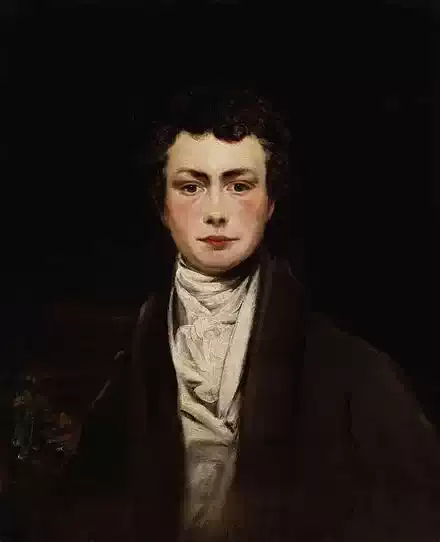
Thomas Moore
Oh, the Shamrock
Through Erin's Isle
To sport awhile
As Love and Valour wander'd,
With Wit, the sprite,
Whose quiver bright
A thousand arrows squander'd;
Where'er they pass,
A triple grass
Shoots up, with dew-drops streaming,
As softly green
As emeralds seen
Through purest crystal gleaming.
Oh the Shamrock, the green, immortal Shamrock!
Chosen leaf
Of Bard and Chief,
Old Erin's native Shamrock!
Says Valour, "See,
They spring for me,
Those leafy gems of morning!" --
Says Love, "No, no,
For me they grow,
My fragrant path adorning."
But Wit perceives
The triple leaves,
And cries, "Oh! do not sever
A type that blends
Three godlike friends,
Love, Valour, Wit, for ever!"
Oh, the Shamrock, the green, immortal Shamrock!
Chosen leaf, etc.
So firmly fond
May last the bond
They wove that morn together,
And ne'er may fall
One drop of gall
On Wit's celestial feather.
May Love, as twine
His flowers divine,
Of thorny falsehood weed 'em:
May Valour ne'er
His standard rear
Against the cause of Freedom!
Oh the Shamrock, the green, immortal Shamrock!
Chosen leaf, etc.
226
Robert W. Service
My Mate
I've been sittin' starin', starin' at 'is muddy pair of boots,
And tryin' to convince meself it's 'im.
(Look out there, lad! That sniper -- 'e's a dysey when 'e shoots;
'E'll be layin' of you out the same as Jim.)
Jim as lies there in the dug-out wiv 'is blanket round 'is 'ead,
To keep 'is brains from mixin' wiv the mud;
And 'is face as white as putty, and 'is overcoat all red,
Like 'e's spilt a bloomin' paint-pot -- but it's blood.
And I'm tryin' to remember of a time we wasn't pals.
'Ow often we've played 'ookey, 'im and me;
And sometimes it was music-'alls, and sometimes it was gals,
And even there we 'ad no disagree.
For when 'e copped Mariar Jones, the one I liked the best,
I shook 'is 'and and loaned 'im 'arf a quid;
I saw 'im through the parson's job, I 'elped 'im make 'is nest,
I even stood god-farther to the kid.
So when the war broke out, sez 'e: "Well, wot abaht it, Joe?"
"Well, wot abaht it, lad?" sez I to 'im.
'Is missis made a awful fuss, but 'e was mad to go,
('E always was 'igh-sperrited was Jim).
Well, none of it's been 'eaven, and the most of it's been 'ell,
But we've shared our baccy, and we've 'alved our bread.
We'd all the luck at Wipers, and we shaved through Noove Chapelle,
And . . . that snipin' barstard gits 'im on the 'ead.
Now wot I wants to know is, why it wasn't me was took?
I've only got meself, 'e stands for three.
I'm plainer than a louse, while 'e was 'andsome as a dook;
'E always WAS a better man than me.
'E was goin' 'ome next Toosday; 'e was 'appy as a lark,
And 'e'd just received a letter from 'is kid;
And 'e struck a match to show me, as we stood there in the dark,
When . . . that bleedin' bullet got 'im on the lid.
'E was killed so awful sudden that 'e 'adn't time to die.
'E sorto jumped, and came down wiv a thud.
Them corpsy-lookin' star-shells kept a-streamin' in the sky,
And there 'e lay like nothin' in the mud.
And there 'e lay so quiet wiv no mansard to 'is 'ead,
And I'm sick, and blamed if I can understand:
The pots of 'alf and 'alf we've 'ad, and ZIP! like that -- 'e's dead,
Wiv the letter of 'is nipper in 'is 'and.
There's some as fights for freedom and there's some as fights for fun,
But me, my lad, I fights for bleedin' 'ate.
You can blame the war and blast it, but I 'opes it won't be done
Till I gets the bloomin' blood-price for me mate.
It'll take a bit o' bayonet to level up for Jim;
Then if I'm spared I think I'll 'ave a bid,
Wiv 'er that was Mariar Jones to take the place of 'im,
To sorter be a farther to 'is kid.
221
Robert W. Service
I Have Some Friends
I have some friends, some worthy friends,
And worthy friends are rare:
These carpet slippers on my feet,
That padded leather chair;
This old and shabby dressing-gown,
So well the worse of wear.
I have some friends, some honest friends,
And honest friends are few;
My pipe of briar, my open fire,
A book that's not too new;
My bed so warm, the nights of storm
I love to listen to.
I have some friends, some good, good friends,
Who faithful are to me:
My wrestling partner when I rise,
The big and burly sea;
My little boat that's riding there
So saucy and so free.
I have some friends, some golden friends,
Whose worth will not decline:
A tawny Irish terrier, a purple shading pine,
A little red-roofed cottage that
So proudly I call mine.
All other friends may come and go,
All other friendships fail;
But these, the friends I've worked to win,
Oh, they will never stale;
And comfort me till Time shall write
The finish to my tale.
221
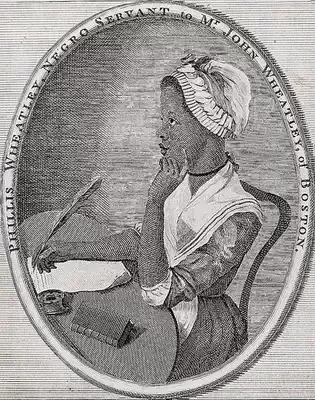
Phillis Wheatley
To A Lady On Her Coming To North-America With Her Son, For The Recovery Of Her Health
INDULGENT muse! my grov'ling mind inspire,
And fill my bosom with celestial fire.
See from Jamaica's fervid shore she moves,
Like the fair mother of the blooming loves,
When from above the Goddess with her hand
Fans the soft breeze, and lights upon the land;
Thus she on Neptune's wat'ry realm reclin'd
Appear'd, and thus invites the ling'ring wind.
"Arise, ye winds, America explore,
"Waft me, ye gales, from this malignant shore;
"The Northern milder climes I long to greet,
"There hope that health will my arrival meet."
Soon as she spoke in my ideal view
The winds assented, and the vessel flew.
Madam, your spouse bereft of wife and son,
In the grove's dark recesses pours his moan;
Each branch, wide-spreading to the ambient sky,
Forgets its verdure, and submits to die.
From thence I turn, and leave the sultry plain,
And swift pursue thy passage o'er the main:
The ship arrives before the fav'ring wind,
And makes the Philadelphian port assign'd,
Thence I attend you to Bostonia's arms,
Where gen'rous friendship ev'ry bosom warms:
Thrice welcome here! may health revive again,
Bloom on thy cheek, and bound in ev'ry vein!
Then back return to gladden ev'ry heart,
And give your spouse his soul's far dearer part,
Receiv'd again with what a sweet surprise,
The tear in transport starting from his eyes!
While his attendant son with blooming grace
Springs to his father's ever dear embrace.
With shouts of joy Jamaica's rocks resound,
With shouts of joy the country rings around.
218
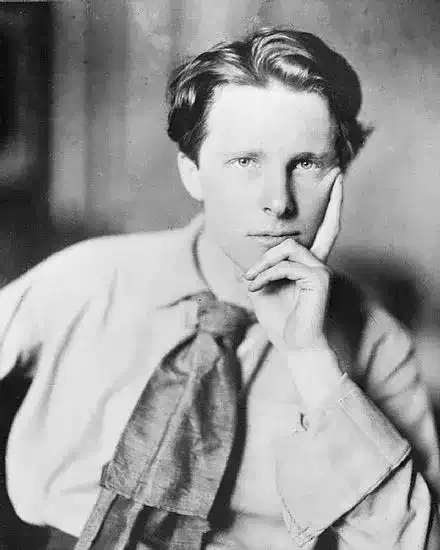
Rupert Brooke
The Chilterns
Your hands, my dear, adorable,
Your lips of tenderness
-- Oh, I've loved you faithfully and well,
Three years, or a bit less.
It wasn't a success.
Thank God, that's done! and I'll take the road,
Quit of my youth and you,
The Roman road to Wendover
By Tring and Lilley Hoo,
As a free man may do.
For youth goes over, the joys that fly,
The tears that follow fast;
And the dirtiest things we do must lie
Forgotten at the last;
Even Love goes past.
What's left behind I shall not find,
The splendour and the pain;
The splash of sun, the shouting wind,
And the brave sting of rain,
I may not meet again.
But the years, that take the best away,
Give something in the end;
And a better friend than love have they,
For none to mar or mend,
That have themselves to friend.
I shall desire and I shall find
The best of my desires;
The autumn road, the mellow wind
That soothes the darkening shires.
And laughter, and inn-fires.
White mist about the black hedgerows,
The slumbering Midland plain,
The silence where the clover grows,
And the dead leaves in the lane,
Certainly, these remain.
And I shall find some girl perhaps,
And a better one than you,
With eyes as wise, but kindlier,
And lips as soft, but true.
And I daresay she will do.
219
Robert W. Service
Death's Way
Old Man Death's a lousy heel who will not play the game:
Let Graveyard yawn and doom down crash, he'll sneer and turn away.
But when the sky with rapture rings and joy is like a flame,
Then Old Man Death grins evilly, and swings around to slay.
Jack Duval was my chosen pal in the ranks of the Reckless Men.
Thick as thieves they used to say, and it may be that we were:
Where the price of life is a naked knife and dammed are nine in ten,
It doesn't do to be curious in the Legion Etrangère.
So when it came to a hidden shame our mugs were zippered tight;
He never asked me what I'd done, and he would never tell;
But though like men we revelled, when it came to bloody fight
I knew that I could bank on him clear to the hubs of hell.
They still tell how we held the Fort back on the blasted bled,
And blazed from out the shambles till the fagged relief arrived.
"The garrison are slaughtered all," the Captain grimly said:
Piped Jack: "Give us a slug of hooch and say that TWO survived."
Then was that time we were lost, canteen and carcase dry,
As on we staggered with the thought: "Here's where our story ends."
Ten desert days delirious, when black against the sky,
We saw a line of camels, and the Arabs were our friends.
And last of all, the lurid night we crashed the gates of hell
And stemmed the Teuton torrent as it roared on every side;
And we were left in blood and mud to rot on the Moselle -
Two lacerated Legionaires, whom all supposed had died.
Three times death thought to take us and three times he stayed his hand;
But when we left the Legion what a happy pair we were,
Then reckless roving up and down the sunny land,
I found Jack eating bouillabaisse back on the Cannebière.
"Next week I wed," he gaily said, "the sweetest girl on earth.
I wonder why did Death pass by just then and turn to gloat?
"Oh I'm so happy! You must come and join us in our mirth."...
Death struck ... Jack gasped and choked and - died:
A fishbone in his throat.
215

Jonathan Swift
Toland’s Invitation To Dismal To Dine With The Calve’s Head Club
If, dearest Dismal, you for once can dine
Upon a single dish, and tavern wine,
Toland to you this invitation sends,
To eat the calfs head with your trusty friends.
Suspend awhile your vain ambitious hopes,
Leave hunting after bribes, forget your tropes.
To-morrow we our mystic feast prepare,
Where thou, our latest proselyte, shall share:
When we, by proper signs and symbols, tell,
How by brave hands the royal traitor fell;
The meat shall represent the tyrant's head,
The wine, his blood our predecessors shed;
Whilst an alluding hymn some artist sings,
We toast, Confusion to the race of kings!
At monarchy we nobly show our spight,
And talk, what fools call treason, all the night.
Who, by disgraces or ill fortune sunk,
Feels not his soul enliven'd when he's drunk?
Wine can clear up Godolphin's cloudy face,
And fill Jack Smith with hopes to keep his place:
By force of wine, ev'n Scarborough is brave,
Hal grows more pert, and Somers not so grave:
Wine can give Portland wit, and Cleaveland sense,
Montague learning, Bolton eloquence:
Cholmondeley, when drunk, can never lose his wand;
And Lincoln then imagines he has land.
My province is, to see that all be right,
Glasses and linen clean, and pewter bright;
From our mysterious club to keep out spies,
And Tories (dress'd like waiters) in disguise.
You shall be coupled as you best approve,
Seated at table next the man you love.
Sunderland, Orford, Boyle, and Richmond's grace
Will come; and Hampden shall have Walpole's place;
Wharton, unless prevented by a whore,
Will hardly fail; and there is room for more;
But I love elbow-room whene'er I drink;
And honest Harry is too apt to stink.
Let no pretence of bus'ness make you stay;
Yet take one word of counsel by the way.
If Guernsey calls, send word you're gone abroad;
He'll teaze you with King Charles, and Bishop Laud,
Or make you fast, and carry you to prayers;
But, if he will break in, and walk up stairs,
Steal by the back-door out, and leave him there;
Then order Squash to call a hackney chair.
216
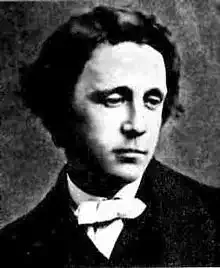
Lewis Carroll
A Valentine
Sent to a friend who had complained that I was glad enough to see
him when he came, but didn't seem to miss him if he stayed away.
And cannot pleasures, while they last,
Be actual unless, when past,
They leave us shuddering and aghast,
With anguish smarting?
And cannot friends be firm and fast,
And yet bear parting?
And must I then, at Friendship's call,
Calmly resign the little all
(Trifling, I grant, it is and small)
I have of gladness,
And lend my being to the thrall
Of gloom and sadness?
And think you that I should be dumb,
And full DOLORUM OMNIUM,
Excepting when YOU choose to come
And share my dinner?
At other times be sour and glum
And daily thinner?
Must he then only live to weep,
Who'd prove his friendship true and deep
By day a lonely shadow creep,
At nighttime
languish,
Oft raising in his broken sleep
The moan of anguish?
The lover, if for certain days
His fair one be denied his gaze,
Sinks not in grief and wild amaze,
But, wiser wooer,
He spends the time in writing lays,
And posts them to her.
And if the verse flow free and fast,
Till even the poet is aghast,
A touching Valentine at last
The post shall carry,
When thirteen days are gone and past
Of February.
Farewell, dear friend, and when we meet,
In desert waste or crowded street,
Perhaps before this week shall fleet,
Perhaps tomorrow.
I trust to find YOUR heart the seat
Of wasting sorrow.
213

John Greenleaf Whittier
To My Friend OnThe Death Of His Sister
Thine is a grief, the depth of which another
May never know;
Yet, o'er the waters, O my stricken brother!
To thee I go.
I lean my heart unto thee, sadly folding
Thy hand in mine;
With even the weakness of my soul upholding
The strength of thine.
I never knew, like thee, the dear departed;
I stood not by
When, in calm trust, the pure and tranquil-hearted
Lay down to die.
And on thy ears my words of weak condoling
Must vainly fall
The funeral bell which in thy heart is tolling,
Sounds over all!
I will not mock thee with the poor world's common
And heartless phrase,
Nor wrong the memory of a sainted woman
With idle praise.
With silence only as their benediction,
God's angels come
Where, in the shadow of a great affliction,
The soul sits dumb!
Yet, would I say what thy own heart approveth
Our Father's will,
Calling to Him the dear one whom He loveth,
Is mercy still.
Not upon thee or thine the solemn angel
Hath evil wrought
Her funeral anthem is a glad evangel,-The
good die not!
God calls our loved ones, but we lose not wholly
What He hath given;
They live on earth, in thought and deed, as truly
As in His heaven.
And she is with thee; in thy path of trial
She walketh yet;
Still with the baptism of thy self-denial
Her locks are wet.
Up, then, my brother! Lo, the fields of harvest
Lie white in view
She lives and loves thee, and the God thou servest
To both is true.
Thrust in thy sickle! England's toilworn peasants
Thy call abide;
And she thou mourn'st, a pure and holy presence,
Shall glean beside!
212