
Friendship

Henry Lawson
Ned’s Delicate Way
Ned knew I was short of tobacco one day,
And that I was too proud to ask for it;
He hated such pride, but his delicate way
Forbade him to take me to task for it.
I loathed to be cadging tobacco from Ned,
But, when I was just on the brink of it;
‘I’ve got a new brand of tobacco”, he said –
“Try a smoke, and let’s know what you think of it.”
209
Henry Lawson
To My Friends
These are songs of the Friends I neglected—
And the Foes, too, in part;
These are songs that were mostly rejected—
And songs from my heart.
Yours truly.
And the Foes, too, in part;
These are songs that were mostly rejected—
And songs from my heart.
Yours truly.
208
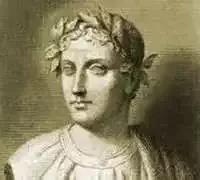
Horácio
BkI:XXXVI Numida’s Back Again
With music, and incense, and blood
of a bullock, delight in placating the gods
that guarded our Numida well,
who’s returned safe and sound, from the farthest West, now,
showering a host of kisses
on every dear friend, but on none of us more than
lovely Lamia, remembering
their boyhood spent under the self-same master,
their togas exchanged together.
Don’t allow this sweet day to lack a white marker,
no end to the wine jars at hand,
no rest for our feet in the Salian fashion,
Don’t let wine-heavy Damalis
conquer our Bassus in downing the Thracian draughts.
Don’t let our feast lack for roses,
or the long-lasting parsley, or the brief lilies:
we’ll all cast our decadent eyes
on Damalis, but Damalis won’t be parted
from that new lover of hers she’s
clasping, more tightly than the wandering ivy.
206

Robert W. Service
Birds Of A Feather
Of bosom friends I've had but seven,
Despite my years are ripe;
I hope they're now enjoying Heaven,
Although they're not the type;
Nor, candidly, no more am I,
Though overdue to die.
For looking back I see that they
Were weak and wasteful men;
They loved a sultry jest alway,
And women now and then.
They smoked and gambled, soused and swore,
--Yet no one was a bore.
'Tis strange I took to lads like these,
On whom the good should frown;
Yet all with poetry would please
To wash his wassail down;
Their temples touched the starry way,
But O what feet of clay!
Well, all are dust, of fame bereft;
They bore a cruel cross,
And I, the canny one, am left,-Yet
as I grieve their loss,
I deem, because they loved me well,
They'll welcome me in Hell.
205
Robert W. Service
My Dog's My Boss
Each day when it's anighing three
Old Dick looks at the clock,
Then proudly brings my stick to me
To mind me of our walk.
And in his doggy rapture he
Does everything but talk.
But since I lack his zip and zest
My old bones often tire;
And so I ventured to suggest
Today we hug the fire.
But with what wailing he expressed
The death of his desire!
He gazed at me with eyes of woe
As if to say: 'Old boy,
You mustn't lose your grip, you know,
Let us with laughing joy,
On heath and hill six miles or so
Our legs and lungs employ.'
And then his bark was stilled to a sigh
He flopped upon the floor;
But such a soft old mug am I
I threw awide the door;
So gaily, though the wind was high
We hiked across the moor.
203
Robert W. Service
My Hero
Of all the boys with whom I fought
In Africa and Sicily,
Bill was the bravest of the lot
In our dare-devil Company.
That lad would rather die than yield;
His gore he glorified to spill,
And so in every battlefield
A hero in my eyes was Bill.
Then when the bloody war was done,
He moseyed back to our home town,
And there, a loving mother's son,
Like other kids he settled down.
His old girl seemed a shade straight-laced,
For when I called my buddy "Bill,"
She looked at me with some distaste,
Suggesting that his name was "Will."
And then he had to get engaged,
And took unto himself a wife;
And so inevitably caged,
He settled down to wedded life.
He introduced me to his Missis,
But oh I thought her rather silly,
For in between their frequent kisses
She called my hard-boiled here: "Willie."
Now he has long forgot the War,
The which he did a lot to win,
And feeling full of ginger for
He's happy Pop of cherubs twin.
Yet with his air: "Don't care a damn,"
On Main Street he's my hero still . . .
As proud he wheels a double pram
What guy has got the guts of Bill!
202
Henry Lawson
He Mourned His Master
INTRODUCTION
The theme is ancient as the hills,
With all their prehistoric glory;
But yet of Corney and his friend,
We’ve often longed to tell the story;
And should we jar the reader’s ear,
Or fail to please his eye observant,
We only trust that he’ll forgive
The bush muse and—your humble servant.
THE STORY
Old Corney built in Deadman’s Gap
A hut, where mountain shades grow denser,
And there he lived for many years,
A timber-getter and a fencer.
And no one knew if he’d a soul
Above long sprees, or split-rail fences,
Unless, indeed, it was his friend,
Who always kept his confidences.
There was a saw-pit in the range;
’Twas owned by three, and they were brothers,
And visitors to Corney’s hut—
’Twas seldom visited by others.
They came because, as they averred,
“Old Corney licked—a gent infernal.”
“His yarns,” if I might trust their word,
“Would made the fortune of a journal.”
In short, the splitter was a “cure”,
Who brightened up their lives’ dull courses;
And so on Sunday afternoons,
At Corney’s hut they’d hang their horses.
They’d have a game of cards and smoke,
And sometimes sing, which was a rum thing—
Unless, in spite of legal folk,
The splitter kept a “drop of something”.
If, as ’twas said, he was “a swell”
Before he sought these sombre ranges,
’Twixt mother’s arms and coffin gear
He must have seen a world of changes.
But from his lips would never fall
A hint of home, or friends, or brothers;
And if he told his tale at all,
He must have told it as another’s.
Though he was good at telling yarns,
At listening he excelled not less so,
And greatly helped the bushman’s tales
With “yes”, “exactly so”, or “jes’ so”.
In short, the hut became a club
Like our Assembly Legislative,
Combining smokeroom, hall, and “pub”,
Political and recreative.
Old Corney lived and Corney died,
As we will, too, on some to-morrow,
But not as Corney died, we hope,
Of heart disease, and rum, and sorrow.
(We hope to lead a married life,
At times the cup of comfort quaffing;
And when we leave this world of strife
We trust that we may die of laughing.)
One New Year’s Eve they found him dead—
For rum had made his life unstable—
They found him stretched upon his bed,
And also found, upon the table,
The coloured portrait of a girl—
Blue eyes of course. The hair was golden,
A faded letter and a curl,
And—well, we said the theme was olden.
The splitter had for days been dead
And cold before the sawyers found him,
And none had witnessed how he died
Except the friend who whimpered round him;
A noble friend, and of a kind
Who stay when other friends forsake us;
And he at last was left behind
To greet the rough bush undertakers.
This was a season when the bush
Was somewhat ruled by time and distance,
And bushmen came and tried the world,
And “gave it best” without assistance.
Then one might die of heart disease,
And still be spared the inquest horrors.
And when the splitter lay at ease,
So, also, did his sins and sorrows.
“Ole Corey’s dead,” the bushmen said;
“He’s gone at last, an’ ne’er a blunder.”
And so they brought a horse and dray,
And tools to “tuck the old cove under.”
The funeral wended through the range,
And slowly round its rugged corners;
The reader will not think it strange
That Corney’s friend was chief of mourners.
He must have thought the bushmen hard,
And of his misery unheeding,
Because they shunned his anxious eyes,
That seemed for explanation pleading.
At intervals his tongue would wipe
The jaws that seemed with anguish quaking;
As some strong hand impatiently
Might chide the tears for prison breaking.
They reached by rugged ways at last,
A desolate bush cemetery,
Where now (our tale is of the past),
A thriving town its dead doth bury.
And where the bones of pioneers
Are found and thrown aside unheeded—
For later sleepers, blessed with tears
Of many friends, the graves are needed.
The funeral reached the bushmen’s graves,
Where these old pioneers were sleeping,
And now while down the granite ridge
The shadow of the peak was creeping,
They dug a grave beneath a gum
And lowered the dead as gently may be
As Corney’s mother long before
Had laid him down to “hush-a-baby”.
A bushman read the words to which
The others reverently listened,
Some bearded lips were seen to twitch,
Some shaded eyes with moisture glistened.
Perhaps this weakness was because
Their work reminded them in sorrow
Of other burials long ago,
When friends “turned in to wait the morrow.”
The boys had brought the splitter’s tools,
And now they split and put together
Four panels such as Corney made,
To stand the stress of western weather.
Perhaps this second weakness rose,
From some good reason undetected;
They may have thought of other graves
Of dearer friends they left neglected.
“Old Corney’s dead, he paid his bills”
(These words upon the tree were graven)
“And oft a swagman down in luck,
At Corey’s mansion found a haven.”
If this an explanation needs,
We greatly fear we can’t afford it;
Unless they thought of other dead,
Whose virtues they had not recorded.
The day had crossed the homeward track,
And as the bushmen turned to tread it,
They thought and spoke of many things,
Remembered now to Corney’s credit;
And strange to say, above their heads
The kookaburra burst with laughter.
(Perhaps he thought of other friends
Whose virtues they remembered—after.)
But now the bushmen hurried on
Lest darkness in the range should find them;
And strange to say they never saw
That Corney’s friend had stayed behind them.
If one had thrown a backward glance
Along the rugged path they wended,
He might have seen a darker form
Upon the damp cold mound extended.
But soon their forms had vanished all,
And night came down the ranges faster,
And no one saw the shadows fall
Upon the dog that mourned his master.
204
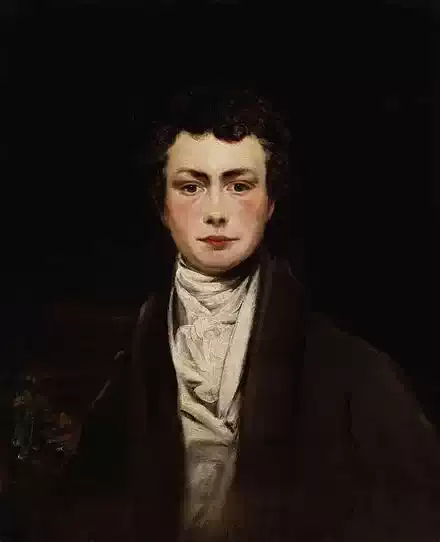
Thomas Moore
On Music
When through life unblest we rove,
Losing all that made life dear,
Should some notes we used to love,
In days of boyhood, meet our ear,
Oh! how welcome breathes the strain!
Wakening thoughts that long have slept,
Kindling former smiles again
In faded eyes that long have wept.
Like the gale, that sighs along
Beds of oriental flowers,
Is the grateful breath of song,
That once was heard in happier hours.
Fill'd with balm the gale sighs on,
Though the flowers have sunk in death;
So, when pleasure's dream is gone,
Its memory lives in Music's breath.
Music, oh, how faint, how weak,
Language fades before thy spell!
Why should Feeling ever speak,
When thou canst breathe her soul so well?
Friendship's balmy words may feign,
Love's are even more false than they;
Oh! 'tis only music's strain
Can sweetly soothe, and not betray.
201
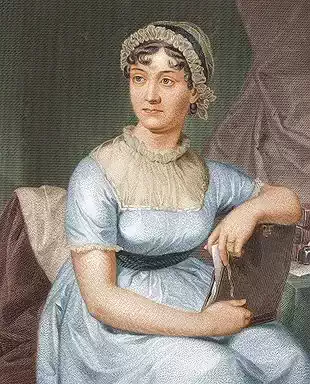
Jane Austen
Mock Panegyric on a Young Friend
In measured verse I'll now rehearse
The charms of lovely Anna:
And, first, her mind is unconfined
Like any vast savannah.
Ontario's lake may fitly speak
Her fancy's ample bound:
Its circuit may, on strict survey
Five hundred miles be found.
Her wit descends on foes and friends
Like famed Niagara's fall;
And travellers gaze in wild amaze,
And listen, one and all.
Her judgment sound, thick, black, profound,
Like transatlantic groves,
Dispenses aid, and friendly shade
To all that in it roves.
If thus her mind to be defined
America exhausts,
And all that's grand in that great land
In similes it costs --
Oh how can I her person try
To image and portray?
How paint the face, the form how trace,
In which those virtues lay?
Another world must be unfurled,
Another language known,
Ere tongue or sound can publish round
Her charms of flesh and bone.
195
Jane Austen
This Little Bag
This little bag I hope will prove
To be not vainly made--
For, if you should a needle want
It will afford you aid.
And as we are about to part
T'will serve another end,
For when you look upon the Bag
You'll recollect your friend
To be not vainly made--
For, if you should a needle want
It will afford you aid.
And as we are about to part
T'will serve another end,
For when you look upon the Bag
You'll recollect your friend
189
Thomas Moore
It Is Not the Tear At This Moment Shed
It is not the tear at this moment shed,
When the cold turf has just been laid o'er him,
That can tell how beloved was the friend that's fled,
Or how deep in our hearts we deplore him.
'Tis the tear, through many a long day wept,
'Tis life's whole path o'ershaded;
'Tis the one remembrance, fondly kept,
When all lighter griefs have faded.
Thus his memory, like some holy light,
Kept alive in our hearts, will improve them,
For worth shall look fairer, and truth more bright,
When we think how he lived but to love them.
And as fresher flowers the sod perfume
Where buried saints are lying,
So our hearts shall borrow a sweetening bloom
From the image he left there in dying!
187
Horácio
BkII:XVII We’ll Go Together
Why do you stifle me with your complaining?
It’s neither the gods’ idea nor mine to die
before you, Maecenas, you’re the great
glory, and pillar of my existence.
Ah, if some premature blow snatches away
half of my spirit, why should the rest remain,
no longer as loved, nor surviving
entire? That day shall lead us to ruin
together. I’m not making some treacherous
promise: whenever you lead the way, let’s go,
let’s go, prepared as friends to set out,
you and I, to try the final journey.
No Chimaera’s fiery breath will ever tear
me from you, or if he should rise against me
hundred handed Gyas: that’s the will
of all-powerful Justice and the Fates.
Whether Libra or fearful Scorpio shone
more powerfully on me at my natal hour,
or Capricorn, which is the ruler
of the waters that flow round Italy,
our stars were mutually aspected in their
marvellous way. Jupiter’s protection shone,
brighter for you than baleful Saturn,
and rescued you, and held back the rapid
wings of Fate, that day when the people crowding
the theatre, three times broke into wild applause:
I’d have received the trunk of a tree
on my head, if Faunus, the guardian
of Mercurial poets, hadn’t warded off
the blow with his hand. So remember to make
due offering: you build a votive shrine:
I’ll come and sacrifice a humble lamb.
186
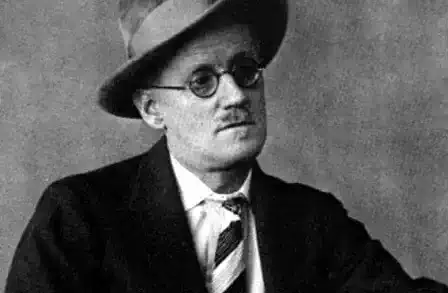
James Joyce
Now, O Now in This Brown Land
Now, O now, in this brown land
Where Love did so sweet music make
We two shall wander, hand in hand,
Forbearing for old friendship' sake,
Nor grieve because our love was gay
Which now is ended in this way.
A rogue in red and yellow dress
Is knocking, knocking at the tree;
And all around our loneliness
The wind is whistling merrily.
The leaves -- - they do not sigh at all
When the year takes them in the fall.
Now, O now, we hear no more
The vilanelle and roundelay!
Yet will we kiss, sweetheart, before
We take sad leave at close of day.
Grieve not, sweetheart, for anything -- -
The year, the year is gathering.
181
Thomas Moore
Come, Send Round the Wine
Come, send round the wine, and leave points of belief
To simpleton sages and reasoning fools;
This moment's a flower too fair and brief
To be wither'd and stain'd by the dust of the schools.
Your glass may be purple, and mine may be blue,
But, while they are fill'd from the same bright bowl,
The fool who would quarrel for difference of hue,
Deserves not the comfort they shed o'er the soul.
Shall I ask the brave soldier, who fights by my side
In the cause of mankind, if our creeds agree?
Shall I give up the friend I have valued and tried,
If he kneel not before the same altar with me?
From the heretic girl of my soul should I fly?
To seek somewhere else a more orthodox kiss?
No, perish the hearts, and the laws that try
Truth, valour, or love, by a standard like this!
185
Thomas Moore
Though the Last Glimpse of Erin With Sorrow I See
Though the last glimpse of Erin with sorrow I see,
Yet wherever thou art shall seem Erin to me;
In exile thy bosom shall still be my home,
And thine eyes make my climate wherever we roam.
To the gloom of some desert or cold rocky shore,
Where the eye of the stranger can haunt us no more,
I will fly with my Coulin, and think the rough wind
Less rude than the foes we leave frowning behind.
And I'll gaze on thy gold hair as graceful it wreathes,
And hang o'er thy soft harp, as wildly it breathes;
Nor dread that the cold-hearted Saxon will tear
One chord from that harp, or one lock from that hair.
173
Robert W. Service
Bill's Grave
I'm gatherin' flowers by the wayside to lay on the grave of Bill;
I've sneaked away from the billet, 'cause Jim wouldn't understand;
'E'd call me a silly fat'ead, and larf till it made 'im ill,
To see me 'ere in the cornfield, wiv a big bookay in me 'and.
For Jim and me we are rough uns, but Bill was one o' the best;
We 'listed and learned together to larf at the wust wot comes;
Then Bill copped a packet proper, and took 'is departure West,
So sudden 'e 'adn't a minit to say good-bye to 'is chums.
And they took me to where 'e was planted, a sort of a measly mound,
And, thinks I, 'ow Bill would be tickled, bein' so soft and queer,
If I gathered a bunch o' them wild-flowers, and sort of arranged them round
Like a kind of a bloody headpiece . . . and that's the reason I'm 'ere.
But not for the love of glory I wouldn't 'ave Jim to know.
'E'd call me a slobberin' Cissy, and larf till 'is sides was sore;
I'd 'ave larfed at meself too, it isn't so long ago;
But some'ow it changes a feller, 'avin' a taste o' war.
It 'elps a man to be 'elpful, to know wot 'is pals is worth
(Them golden poppies is blazin' like lamps some fairy 'as lit);
I'm fond o' them big white dysies. . . . Now Jim's o' the salt o' the earth;
But 'e 'as got a tongue wot's a terror, and 'e ain't sentimental a bit.
I likes them blue chaps wot's 'idin' so shylike among the corn.
Won't Bill be glad! We was allus thicker 'n thieves, us three.
Why! 'Oo's that singin' so 'earty? JIM! And as sure as I'm born
'E's there in the giddy cornfields, a-gatherin' flowers like me.
Quick! Drop me posy be'ind me. I watches 'im for a while,
Then I says: "Wot 'o, there, Chummy! Wot price the little bookay?"
And 'e starts like a bloke wot's guilty, and 'e says with a sheepish smile:
"She's a bit of orl right, the widder wot keeps the estaminay."
So 'e goes away in a 'urry, and I wishes 'im best o' luck,
And I picks up me bunch o' wild-flowers, and the light's gettin' sorto dim,
When I makes me way to the boneyard, and . . . I stares like a man wot's stuck,
For wot do I see? Bill's grave-mound strewn with the flowers of Jim.
Of course I won't never tell 'im, bein' a tactical lad;
And Jim parley-voos to the widder: "Trez beans, lamoor; compree?"
Oh, 'e'd die of shame if 'e knew I knew; but say! won't Bill be glad
When 'e stares through the bleedin' clods and sees the blossoms of Jim and me?
156
James Joyce
O Sweetheart, Hear You
O Sweetheart, hear you
Your lover's tale;
A man shall have sorrow
When friends him fail.
For he shall know then
Friends be untrue
And a little ashes
Their words come to.
But one unto him
Will softly move
And softly woo him
In ways of love.
His hand is under
Her smooth round breast;
So he who has sorrow
Shall have rest.
Your lover's tale;
A man shall have sorrow
When friends him fail.
For he shall know then
Friends be untrue
And a little ashes
Their words come to.
But one unto him
Will softly move
And softly woo him
In ways of love.
His hand is under
Her smooth round breast;
So he who has sorrow
Shall have rest.
162
Jane Austen
Oh! Mr Best You're Very Bad
Oh! Mr. Best, you're very bad
And all the world shall know it;
Your base behaviour shall be sung
By me, a tunefull Poet.--
You used to go to Harrowgate
Each summer as it came,
And why I pray should you refuse
To go this year the same?--
The way's as plain, the road's as smooth,
The Posting not increased;
You're scarcely stouter than you were,
Not younger Sir at least.--
If e'er the waters were of use
Why now their use forego?
You may not live another year,
All's mortal here below.--
It is your duty Mr Best
To give your health repair.
Vain else your Richard's pills will be,
And vain your Consort's care.
But yet a nobler Duty calls
You now towards the North.
Arise ennobled--as Escort
Of Martha Lloyd stand forth.
She wants your aid--she honours you
With a distinguished call.
Stand forth to be the friend of her
Who is the friend of all.--
Take her, and wonder at your luck,
In having such a Trust.
Her converse sensible and sweet
Will banish heat and dust.--
So short she'll make the journey seem
You'll bid the Chaise stand still.
T'will be like driving at full speed
From Newb'ry to Speen hill.--
Convey her safe to Morton's wife
And I'll forget the past,
And write some verses in your praise
As finely and as fast.
But if you still refuse to go
I'll never let your rest,
Buy haunt you with reproachful song
Oh! wicked Mr. Best!--
169

Siegfried Sassoon
The Investiture
GOD with a Roll of Honour in His hand
Sits welcoming the heroes who have died,
While sorrowless angels ranked on either side
Stand easy in Elysium’s meadow-land.
Then you come shyly through the garden gate,
Wearing a blood-soaked bandage on your head;
And God says something kind because you’re dead,
And homesick, discontented with your fate.
If I were there we’d snowball Death with skulls;
Or ride away to hunt in Devil’s Wood
With ghosts of puppies that we walked of old.
But you’re alone; and solitude annuls
Our earthly jokes; and strangely wise and good
You roam forlorn along the streets of gold.
130
Siegfried Sassoon
A Letter Home
(To Robert Graves)
I
Here I'm sitting in the gloom
Of my quiet attic room.
France goes rolling all around,
Fledged with forest May has crowned.
And I puff my pipe, calm-hearted,
Thinking how the fighting started,
Wondering when we'll ever end it,
Back to hell with Kaiser sent it,
Gag the noise, pack up and go,
Clockwork soldiers in a row.
I've got better things to do
Than to waste my time on you.
II
Robert, when I drowse to-night,
Skirting lawns of sleep to chase
Shifting dreams in mazy light,
Somewhere then I'll see your face
Turning back to bid me follow
Where I wag my arms and hollo,
Over hedges hasting after
Crooked smile and baffling laughter,
Running tireless, floating, leaping,
Down your web-hung woods and valleys,
Where the glowworm stars are peeping,
Till I find you, quiet as stone
On a hill-top all alone,
Staring outward, gravely pondering
Jumbled leagues of hillock-wandering.
III
You and I have walked together
In the starving winter weather.
We've been glad because we knew
Time's too short and friends are few.
We've been sad because we missed
One whose yellow head was kissed
By the gods, who thought about him
Till they couldn't do without him.
Now he's here again; I've been
Soldier David dressed in green,
Standing in a wood that swings
To the madrigal he sings.
He's come back, all mirth and glory,
Like the prince in a fairy tory.
Winter called him far away;
Blossoms bring him home with May.
IV
Well, I know you'll swear it's true
That you found him decked in blue
Striding up through morning-land
With a cloud on either hand.
Out in Wales, you'll say, he marches
Arm-in-arm with aoks and larches;
Hides all night in hilly nooks,
Laughs at dawn in tumbling brooks.
Yet, it's certain, here he teaches
Outpost-schemes to groups of beeches.
And I'm sure, as here I stand,
That he shines through every land,
That he sings in every place
Where we're thinking of his face.
V
Robert, there's a war in France;
Everywhere men bang and blunder,
Sweat and swear and worship Chance,
Creep and blink through cannon thunder.
Rifles crack and bullets flick,
Sing and hum like hornet-swarms.
Bones are smashed and buried quick.
Yet, through stunning battle storms,
All the while I watch the spark
Lit to guide me; for I know
Dreams will triumph, though the dark
Scowls above me where I go.
You can hear me; you can mingle
Radiant folly with my jingle.
War's a joke for me and you
While we know such dreams are true!
128
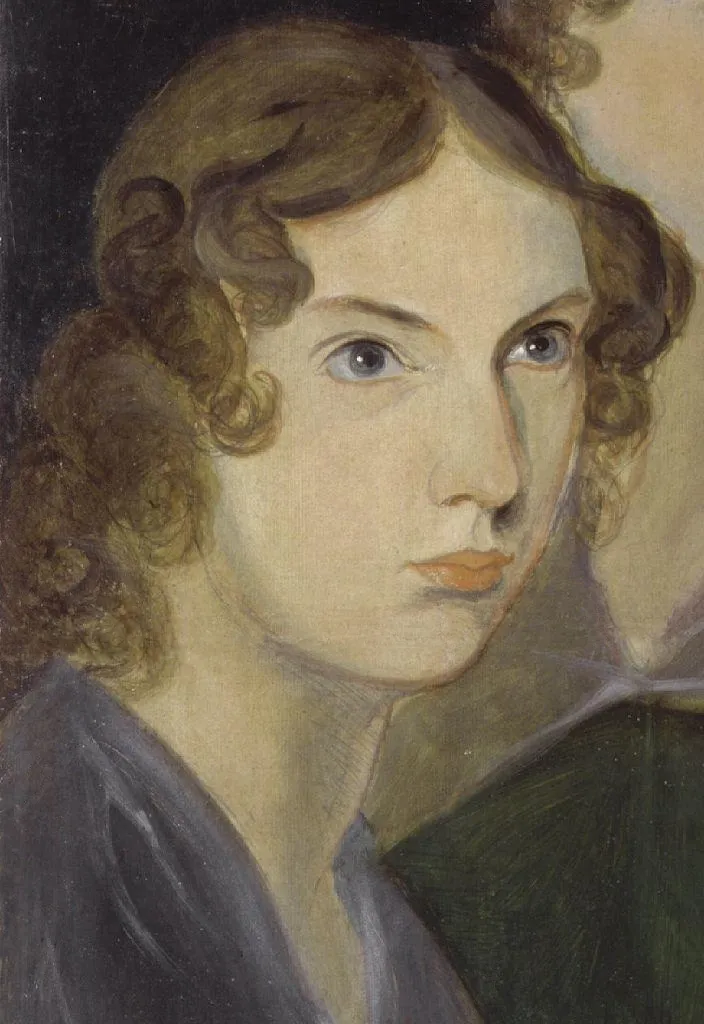
Anne Brontë
The Consolation
Though bleak these woods and damp the ground
With fallen leaves so thickly strewn,
And cold the wind that wanders round
With wild and melancholy moan,
There is a friendly roof I know
Might shield me from the wintry blast;
There is a fire whose ruddy glow
Will cheer me for my wanderings past.
And so, though still where'er I roam
Cold stranger glances meet my eye,
Though when my spirit sinks in woe
Unheeded swells the unbidden sigh,
Though solitude endured too long
Bids youthful joys too soon decay,
Makes mirth a stranger to my tongue
And overclouds my noon of day,
When kindly thoughts that would have way
Flow back discouraged to my breast
I know there is, though far away
A home where heart and soul may rest.
Warm hands are there that clasped in mine
The warmer heart will not belie,
While mirth and truth and friendship shine
In smiling lip and earnest eye.
The ice that gathers round my heart
May there be thawed; and sweetly then
The joys of youth that now depart
Will come to cheer my soul again.
Though far I roam, this thought shall be
My hope, my comfort everywhere;
While such a home remains to me
My heart shall never know despair.
Hespera Caverndel
97
Previous
Page 14