
Consciousness and Self-Knowledge
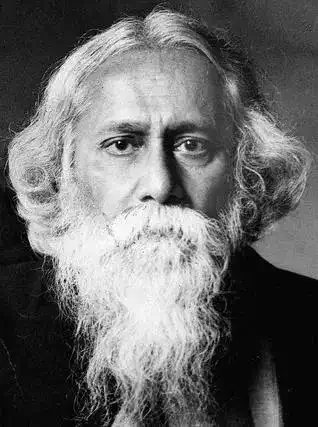
Rabindranath Tagore
Dungeon
He whom I enclose with my name is weeping in this dungeon.
I am ever busy building this wall all around; and as this wall goes up into
the sky day by day I lose sight of my true being in its dark shadow.
I take pride in this great wall, and I plaster it with dust and sand
lest a least hole should be left in this name;
and for all the care I take I lose sight of my true being.
656

William Shakespeare
Sonnet 46: Mine eye and heart are at a mortal war
Mine eye and heart are at a mortal war
How to divide the conquest of thy sight;
Mine eye my heart thy picture's sight would bar,
My heart mine eye the freedom of that right,
My heart doth plead that thou in him dost lie—
A closet never pierced with crystal eyes—
But the defendant doth that plea deny,
And says in him thy fair appearance lies.
To 'cide this title is impanellèd
A quest of thoughts, all tenants to the heart,
And by their verdict is determinèd
The clear eye's moiety, and the dear heart's part.
As thus, mine eye's due is thy outward part,
And my heart's right thy inward love of heart.
662

Carl Sandburg
Chicago Poet
I saluted a nobody.
I saw him in a looking-glass.
He smiled--so did I.
He crumpled the skin on his forehead, frowning--so did I.
Everything I did he did.
I said, "Hello, I know you."
And I was a liar to say so.
Ah, this. looking-glass man!
Liar, fool, dreamer, play-actor,
Soldier, dusty drinker of dust--
Ah! he will go with me
Down the dark stairway
When nobody else is looking,
When everybody else is gone.
He locks his elbow in mine,
I lose all--but not him.
660
William Shakespeare
Sonnet 53: What is your substance, whereof are you made
What is your substance, whereof are you made,
That millions of strange shadows on you tend?
Since everyone hath, every one, one shade,
And you, but one, can every shadow lend.
Describe Adonis, and the counterfeit
Is poorly imitated after you;
On Helen's cheek all art of beauty set,
And you in Grecian tires are painted new.
Speak of the spring, and foison of the year;
The one doth shadow of your beauty show,
The other as your bounty doth appear,
And you in every blessèd shape we know.
In all external grace you have some part,
But you like none, none you, for constant heart.
667
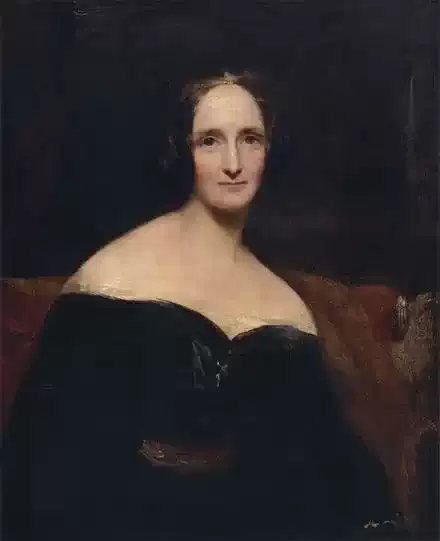
Percy Bysshe Shelley
Mont Blanc
(Lines written in the Vale of Chamouni)
The everlasting universe of things
Flows through the mind, and rolls its rapid waves,
Now dark - now glittering - now reflecting gloom -
Now lending splendor, where from secret springs
The source of human thought its tribute brings
Of waters, - with a sound but half its own,
Such as a feeble brook will oft assume
In the wild woods, amon the mountains lone,
Where waterfalls around it leap for ever,
Where woods and winds contend, and a vast river
Over its rocks ceaselessly bursts and raves.
Thus thou, Ravine of Arve - dark, deep Ravine-
Thou many-colored, many voiced vale,
Over whose pines, and crags, and caverns sail
Fast cloud-shadows and sunbeams: awful scene,
Where Power in likeness of the Arve comes down
From the ice-gulfs that gird his secret throne,
Bursting through these dark mountains like the flame
Of lightning through the tempest; -thou dost lie,
Thy giant brood of pines around thee clinging,
Children of elder time, in whose devotion
The chainless winds still come and ever came
To drink their odors, and their mighty swinging
To hear - an old and solemn harmony;
Thine earthly rainbows stretched across the sweep
Of the ethereal waterfall, whose veil
Robes some unsculptured image; the strange sleep
Which when the voices of the desert fail
Wraps all in its own deep eternity;-
Thy caverns echoing to the Arve's commotion,
A loud, lone sound no other sound can tame;
Thou art pervaded with that ceaseless motion,
Thou art the path of that unresting sound-
Dizzy Ravine! and when I gaze on thee
I seem as in a trance sublime and strange
To muse on my own separate fantasy,
My own, my human mind, which passively
Now renders and receives fast influencings,
Holding an unremitting interchange
With the clear universe of things around;
One legion of wild thoughts, whose wandering wings
Now float above thy darkness, and now rest
Where that or thou art no unbidden guest,
In the still cave of the witch Poesy,
Seeking among the shadows that pass by
Ghosts of all things that are, some shade of thee,
Some phantom, some faint image; till the breast
From which they fled recalls them, thou art there!
Some say that gleams of a remoter world
Visit the soul in sleep,-that death is slumber,
And that its shapes the busy thoughts outnumber
Of those who wake and live. -I look on high;
Has some unknown omnipotence unfurled
The veil of life and death? or do I lie
In dream, and does the mightier world of sleep
Spread far and round and inaccessibly
Its circles? For the very spirit fails,
Driven like a homeless cloud from steep to steep
That vanishes amon the viewless gales!
Far, far above, piercing the infinite sky,
Mont Blanc appears,-still snowy and serene-
Its subject mountains their unearthly forms
Pile around it, ice and rock; broad vales between
Of frozen floods, unfathomable deeps,
Blue as the overhanging heaven, that spread
And wind among the accumulated steeps;
A desert peopled by the storms alone,
Save when the eagle brings some hunter's bone,
And the wolf tracks her there - how hideously
Its shapes are heaped around! rude, bare, and high,
Ghastly, and scarred, and riven. -Is this the scene
Where the old Earthquake-demon taught her young
Ruin? Were these their toys? or did a sea
Of fire envelop once this silent snow?
None can reply - all seems eternal now.
The wilderness has a mysterious tongue
Which teaches awful doubt, or faith so mild,
So solemn, so serene, that man may be,
But for such faith, with nature reconciled;
Thou hast a voice, great Mountain, to repeal
Large codes of fraud and woe; not understood
By all, but which the wise, and great, and good
Interpret, or make felt, or deeply feel.
The fields, the lakes, the forests, and the streams,
Ocean, and all the living things that dwell
Within the daedal earth; lightning, and rain,
Earthquake, and fiery flood, and hurricane,
The torpor of the year when feeble dreams
Visit the hidden buds, or dreamless sleep
Holds every future leaf and flower; -the bound
With which from that detested trance they leap;
The works and ways of man, their death and birth,
And that of him, and all that his may be;
All things that move and breathe with toil and sound
Are born and die; revolve, subside, and swell.
Power dwells apart in its tranquility,
Remote, serene, and inaccessible:
And this, the naked countenance of earth,
On which I gaze, even these primeval mountains
Teach the adverting mind. The glaciers creep
Like snakes that watch their prey, from their far fountains,
Slow rolling on; there, many a precipice,
Frost and the Sun in scorn of mortal power
Have piled: dome, pyramid, and pinnacle,
A city of death, distinct with many a tower
And wall impregnable of beaming ice.
Yet not a city, but a flood of ruin
Is there, that from the boundaries of the sky
Rolls its perpetual stream; vast pines are strewing
Its destined path, or in the mangled soil
Branchless and shattered stand; the rocks, drawn down
From yon remotest waste, have overthrown
The limits of the dead and living world,
Never to be reclaimed. The dwelling-place
Of insects, beasts, and birds, becomes its spoil
Their food and their retreat for ever gone,
So much of life and joy is lost. The race
Of man flies far in dread; his work and dwelling
Vanish, like smoke before the tempest's stream,
And their place is not known. Below, vast caves
Shine in the rushing torrents' restless gleam,
Which from those secret chasms in tumult welling
Meet in the vale, and one majestic River,
The breath and blood of distant lands , for ever
Rolls its loud waters to the ocean-waves,
Breathes its swift vapors to the circling air.
Mont Blanc yet gleams on high:-the power is there,
The still and solemn power of many sights,
And many sounds, and much of life and death.
In the calm darkness of the moonless nights,
In the lone glare of day, the snows descend
Upon that mountain; none beholds them there,
Nor when the flakes burn in the sinking sun,
Or the star-beams dart through them:-Winds contend
Silently there, and heap the snow with breath
Rapid and strong, but silently! Its home
The voiceless lightning in these solitudes
Keeps innocently, and like vapor broods
Over the snow. The secret Strength of things
Which governs thought, and to the infinite dome
Of Heaven is as a law, inhabits thee!
And what were thou, and earth, and stars, and sea,
If to the human mind's imaginings
Silence and solitude were vacancy?
658

Paul Laurence Dunbar
We Wear the Mask
We wear the mask that grins and lies,
It hides our cheeks and shades our eyes,--
This debt we pay to human guile;
With torn and bleeding hearts we smile,
And mouth with myriad subtleties.
Why should the world be overwise,
In counting all our tears and sighs?
Nay, let them only see us, while
We wear the mask.
We smile, but, O great Christ, our cries
To thee from tortured souls arise.
We sing, but oh the clay is vile
Beneath our feet, and long the mile;
But let the world dream otherwise,
We wear the mask!
661
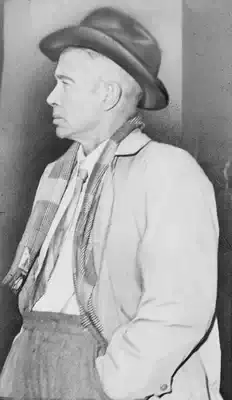
E. E. Cummings
if everything happens that can't be done
if everything happens that can't be done
(and anything's righter
than books
could plan)
the stupidest teacher will almost guess
(with a run
skip
around we go yes)
there's nothing as something as one
one hasn't a why or because or although
(and buds know better
than books
don't grow)
one's anything old being everything new
(with a what
which
around we come who)
one's everyanything so
so world is a leaf so tree is a bough
(and birds sing sweeter
than books
tell how)
so here is away and so your is a my
(with a down
up
around again fly)
forever was never till now
now i love you and you love me
(and books are shutter
than books
can be)
and deep in the high that does nothing but fall
(with a shout
each
around we go all)
there's somebody calling who's we
we're anything brighter than even the sun
(we're everything greater
than books
might mean)
we're everanything more than believe
(with a spin
leap
alive we're alive)
we're wonderful one times one
666

Walt Whitman
Kosmos
WHO includes diversity, and is Nature,
Who is the amplitude of the earth, and the coarseness and sexuality
of the earth, and the great charity of the earth, and the
equilibrium also,
Who has not look'd forth from the windows, the eyes, for nothing, or
whose brain held audience with messengers for nothing;
Who contains believers and disbelievers--Who is the most majestic
lover;
Who holds duly his or her triune proportion of realism, spiritualism,
and of the aesthetic, or intellectual,
Who, having consider'd the Body, finds all its organs and parts good;
Who, out of the theory of the earth, and of his or her body,
understands by subtle analogies all other theories,
The theory of a city, a poem, and of the large politics of These
States;
Who believes not only in our globe, with its sun and moon, but in
other globes, with their suns and moons;
Who, constructing the house of himself or herself, not for a day, but
for all time, sees races, eras, dates, generations,
The past, the future, dwelling there, like space, inseparable
together.
642
William Shakespeare
Sonnet 8: Music to hear, why hear'st thou music sadly?
Music to hear, why hear'st thou music sadly?
Sweets with sweets war not, joy delights in joy.
Why lov'st thou that which thou receiv'st not gladly,
Or else receiv'st with pleasure thine annoy?
If the true concord of well-tunèd sounds,
By unions married, do offend thine ear,
They do but sweetly chide thee, who confounds
In singleness the parts that thou shouldst bear.
Mark how one string, sweet husband to another,
Strikes each in each by mutual ordering,
Resembling sire and child and happy mother,
Who, all in one, one pleasing note do sing;
Whose speechless song being many, seeming one,
Sings this to thee: "Thou single wilt prove none."
646
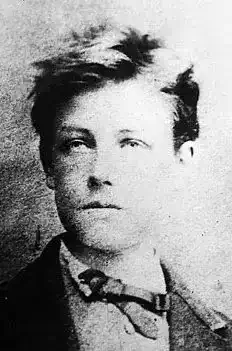
Arthur Rimbaud
Evening Prayer
I spend my life sitting - like an angel
in the hands of a barber - a deeply fluted beer mug
in my fist, belly and neck curved,
a Gambier pipe in my teeth, under the air
swelling with impalpable veils of smoke.
Like the warm excrements in an old dovecote,
a thousand dreams burn softly inside me,
and at times my sad heart is like sap-wood bled
on by the dark yellow gold of its sweats.
Then, when I have carefully swallowed my dreams,
I turn, having drunk thirty or forty tankards,
and gather myself together to relieve bitter need:
As sweetly as the Saviour of Hyssops
and of Cedar I piss towards dark skies,
very high and very far;
and receive the approval of the great heliotropes.
651
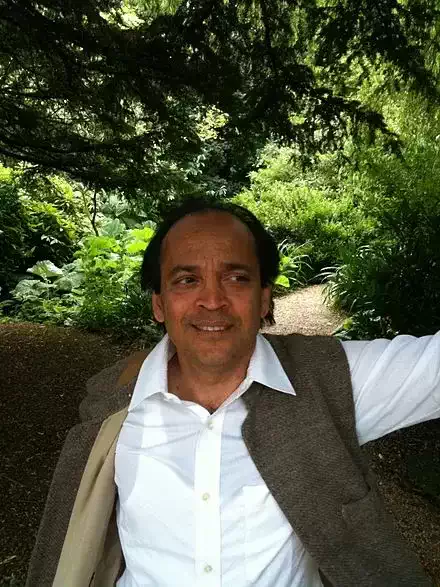
Vikram Seth
Octet
You don't love me at all? O God. O Shit.
You still 'respect me.' Thanks. I value it
About as much as one who's asked to use
A second hat when he's in need of shoes.
Since, I discover, my own self-respect
Is quite enough to keep my spine erect
Why is it true my ample self-affection
Will not suffice to buoy me in rejection?
You still 'respect me.' Thanks. I value it
About as much as one who's asked to use
A second hat when he's in need of shoes.
Since, I discover, my own self-respect
Is quite enough to keep my spine erect
Why is it true my ample self-affection
Will not suffice to buoy me in rejection?
645

Kazi Nazrul Islam
My Explanation
I am a poet of today, not a prophet of a future day,
Poet or worthless, call me whatever, I put up with anything you say.
Some say, to the future you belong,
Your place, as a poet, tomorrow will come along.
How come you lack message enduring like that emanates from Rabi's hand?
I am blamed, but I wont' quit playing rising sun's music band.
My fellow poets are disappointed, they read my works and sigh,
Saying: the good one is becoming no good, as he can't say to politics good-bye.
Does not read a book - finished is this chap!
Some say: His wife has brought, indeed, all this mishap!
Some say: The fat one is spoiled, playing cards - non-stop - in the jail,
Others say: You were better there; toward jail again you should sail!
Mentor says: You're no good, except shaving using a sword!
Every Saturday my lover's letter conveys me, 'Nothing useful in you is stored.'
I say: Honey, shall I reveal the secret?
Letters stop in a hurry; not one more I get.
Sacrificing everything, I got married: Hindus say, 'Get lost'!
Am I Muslim or a heathen? Where is my pigtail or beard, or the hem of loin-cloth?
All the goody-searching priests or Mollahs wave their hands and pronounce:
This one invokes names of deities; this rogue one we must denounce!
Hear the Fatwa: Kafir is this Kazi; nothing else,
Even though he wants martyrdom, or so he tells!
Some scripture we know, and we still earn our livelihood!
Hindus detest my use of Persian words saying: from us, this guy deserves no good!
No one is happy with me; the disciples of non-violence? of course, not!
I am blamed I play the violin of violence; I get the revolutionaries' hot heads even
more hot.
The revolutionaries say: This one is non-violent,
My songs deal with spinning wheels: they resent.
Top Brahmins find me atheist, lesser ones regard me as one of the Confucians;
Independence lovers don't accept me; their opponents prefer me to be with those
Europeans!
Men think I am a feminist; women, however, think otherwise,
I never went to England; I am worthless in my expatriate friends' eyes!
My admirers see me as Rabi of new age,
If not of new age, at least a poet of these trendy days!
I hear all these, bemused; exercise for a stronger heart,
Lie down with eyeglasses on; sleeping through the day is my life's part.
I don't know what I write; Do I even understand anything of my own?
I couldn't raise my hand in protest, so I write with my head down.
Dear friends, I did not find appreciation in you,
but my name shines in government's list in lieu.
Honoring my works as invaluable, without value people take it.
Have you heard anything else? Be careful, may not be far a government spy's pit!
Friends, you have seen me engrossed in my own mind's temple,
I rebuke and admonish my mind, but bringing it under control I wish were so simple!
Every time I chain itself, somehow it escapes free
I beat it, and the same I repeat, to complete my victory,
I wish this mad mind would listen to me, but even to Rabi or Gandhi, it did not listen,
Abruptly it wakes up and then wanders in the jungle's darkness in search of roaring
tigers that glisten.
I say, O this insane one, you are doing so great in the community,
You are already a half-leader; but if you lose this opportunity,
would you ever be a full leader,
and weep with the crowd as a speaker?
Pick up the fish in the net now, O fool, before it slips away, I bet!
Take this break to get your leaky house fixed, otherwise soon you will regret.
Who understands that this minstrel's mind roams around singing and reciting!
This name hardly rings any bell; Days are passed chewing Betel leaves, ah, a taste so
inviting!
May be some day there won't be any more of epidemic of malaria,
Especially, since the autonomy is coming in its full pomp and euphoria.
Yes, we want moon, but those hapless ones cherish a meal, as teardrops of their little
ones dribble,
The agonized mother shouts: Hush, you miserables! See, independence is coming - no
more quibble!
But those hungry kids can't care less about autonomy; their desire: a little salt and
some rice,
Ah! the hour is late; nothing they have nibbled yet; the flame of hunger seeks no
advice.
When I hear that cry, my insane mind charges in a rush,
My intoxication for autonomy seeks shelter merely in my dream's brush!
I say, bemoaning: O God, are you still there? Why are they not, then,
Humiliated or destroyed, those who suck the blood of these children?
We all know, to bring independence, those lofty slogans we have devised,
And, at the same time, how burning hunger of so many million children, we have
compromised!
So much money was raised, but independence still remained a dream,
as the hungry people can't pay enough, they are so weak even to scream!
When a baby is snatched away from the mother's bosom, we plead, O royal tiger,
please eat grass!
The mother keeps begging from door to door, while in her shack hiding the baby's
carcass.
My friends, I can't say any more; my mind feels so much agony and pain,
I have gone mad; now, I utter whatever my mouth throws out in disdain.
My own blood won't make much difference,
With blood-ink I keep writing, hence,
My head can't forbear robust ideas or big thought any more; so agonized is this mortal,
All those who are in peace and happiness, it's your privilege to write epics immortal.
I don't care any more, if I live or don't, when gone is this trendy sensation,
Rabi is shining above our head, and then there are you, the golden generation.
Those who usurp the morsel of three hundred thirty million people: let our prayer keep
brewin',
In my blood-ink writing, may it be engraved and sealed their utter ruin.
[Original: Bengali, Translator: Dr. Mohammad Omar Farooq ]
628
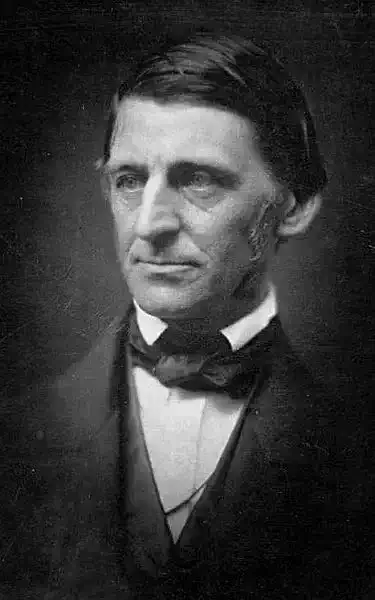
Ralph Waldo Emerson
Uriel.
IT fell in the ancient periods
Which the brooding soul surveys,
Or ever the wild Time coin'd itself
Into calendar months and days.
This was the lapse of Uriel,
Which in Paradise befell.
Once, among the Pleiads walking,
Sayd overheard the young gods talking;
And the treason, too long pent,
To his ears was evident.
The young deities discuss'd
Laws of form, and metre just,
Orb, quintessence, and sunbeams,
What subsisteth, and what seems.
One, with low tones that decide,
And doubt and reverend use defied,
With a look that solved the sphere,
And stirr'd the devils everywhere,
Gave his sentiment divine
Against the being of a line.
'Line in nature is not found;
Unit and universe are round;
In vain produced, all rays return;
Evil will bless, and ice will burn.'
As Uriel spoke with piercing eye,
A shudder ran around the sky;
The stern old war-gods shook their heads;
The seraphs frown'd from myrtle-beds;
Seem'd to the holy festival
The rash word boded ill to all;
The balance-beam of Fate was bent;
The bounds of good and ill were rent;
Strong Hades could not keep his own,
But all slid to confusion.
A sad self-knowledge withering fell
On the beauty of Uriel;
In heaven once eminent, the god
Withdrew that hour into his cloud;
Whether doom'd to long gyration
In the sea of generation,
Or by knowledge grown too bright
To hit the nerve of feebler sight.
Straightway a forgetting wind
Stole over the celestial kind,
And their lips the secret kept,
If in ashes the fire-seed slept.
But, now and then, truth-speaking things
Shamed the angels' veiling wings;
And, shrilling from the solar course,
Or from fruit of chemic force,
Procession of a soul in matter,
Or the speeding change of water,
Or out of the good of evil born,
Came Uriel's voice of cherub scorn,
And a blush tinged the upper sky,
And the gods shook, they knew not why
634
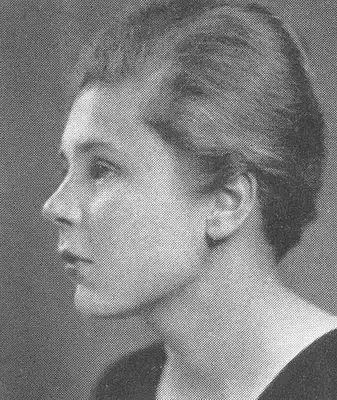
Elizabeth Bishop
The Weed
I dreamed that dead, and meditating,
I lay upon a grave, or bed,
(at least, some cold and close-built bower).
In the cold heart, its final thought
stood frozen, drawn immense and clear,
stiff and idle as I was there;
and we remained unchanged together
for a year, a minute, an hour.
Suddenly there was a motion,
as startling, there, to every sense
as an explosion. Then it dropped
to insistent, cautious creeping
in the region of the heart,
prodding me from desperate sleep.
I raised my head. A slight young weed
had pushed up through the heart and its
green head was nodding on the breast.
(All this was in the dark.)
It grew an inch like a blade of grass;
next, one leaf shot out of its side
a twisting, waving flag, and then
two leaves moved like a semaphore.
The stem grew thick. The nervous roots
reached to each side; the graceful head
changed its position mysteriously,
since there was neither sun nor moon
to catch its young attention.
The rooted heart began to change
(not beat) and then it split apart
and from it broke a flood of water.
Two rivers glanced off from the sides,
one to the right, one to the left,
two rushing, half-clear streams,
(the ribs made of them two cascades)
which assuredly, smooth as glass,
went off through the fine black grains of earth.
The weed was almost swept away;
it struggled with its leaves,
lifting them fringed with heavy drops.
A few drops fell upon my face
and in my eyes, so I could see
(or, in that black place, thought I saw)
that each drop contained a light,
a small, illuminated scene;
the weed-deflected stream was made
itself of racing images.
(As if a river should carry all
the scenes that it had once reflected
shut in its waters, and not floating
on momentary surfaces.)
The weed stood in the severed heart.
"What are you doing there?" I asked.
It lifted its head all dripping wet
(with my own thoughts?)
and answered then: "I grow," it said,
"but to divide your heart again."
620
Walt Whitman
Crossing Brooklyn Ferry
FLOOD-TIDE below me! I watch you face to face;
Clouds of the west! sun there half an hour high! I see you also face
to face.
Crowds of men and women attired in the usual costumes! how curious
you are to me!
On the ferry-boats, the hundreds and hundreds that cross, returning
home, are more curious to me than you suppose;
And you that shall cross from shore to shore years hence, are more to
me, and more in my meditations, than you might suppose.
The impalpable sustenance of me from all things, at all hours of the
day;
The simple, compact, well-join'd scheme--myself disintegrated, every
one disintegrated, yet part of the scheme:
The similitudes of the past, and those of the future;
The glories strung like beads on my smallest sights and hearings--on
the walk in the street, and the passage over the river;
The current rushing so swiftly, and swimming with me far away;
The others that are to follow me, the ties between me and them;
The certainty of others--the life, love, sight, hearing of others.
Others will enter the gates of the ferry, and cross from shore to
shore;
Others will watch the run of the flood-tide;
Others will see the shipping of Manhattan north and west, and the
heights of Brooklyn to the south and east;
Others will see the islands large and small;
Fifty years hence, others will see them as they cross, the sun half
an hour high;
A hundred years hence, or ever so many hundred years hence, others
will see them,
Will enjoy the sunset, the pouring in of the flood-tide, the falling
back to the sea of the ebb-tide.
It avails not, neither time or place--distance avails not;
I am with you, you men and women of a generation, or ever so many
generations hence;
I project myself--also I return--I am with you, and know how it is.
Just as you feel when you look on the river and sky, so I felt;
Just as any of you is one of a living crowd, I was one of a crowd;
Just as you are refresh'd by the gladness of the river and the bright
flow, I was refresh'd;
Just as you stand and lean on the rail, yet hurry with the swift
current, I stood, yet was hurried;
Just as you look on the numberless masts of ships, and the thickstem'd
pipes of steamboats, I look'd.
I too many and many a time cross'd the river, the sun half an hour
high;
I watched the Twelfth-month sea-gulls--I saw them high in the air,
floating with motionless wings, oscillating their bodies,
I saw how the glistening yellow lit up parts of their bodies, and
left the rest in strong shadow,
I saw the slow-wheeling circles, and the gradual edging toward the
south.
I too saw the reflection of the summer sky in the water,
Had my eyes dazzled by the shimmering track of beams,
Look'd at the fine centrifugal spokes of light around the shape of my
head in the sun-lit water,
Look'd on the haze on the hills southward and southwestward,
Look'd on the vapor as it flew in fleeces tinged with violet,
Look'd toward the lower bay to notice the arriving ships,
Saw their approach, saw aboard those that were near me,
Saw the white sails of schooners and sloops--saw the ships at anchor,
The sailors at work in the rigging, or out astride the spars,
The round masts, the swinging motion of the hulls, the slender
serpentine pennants,
The large and small steamers in motion, the pilots in their pilothouses,
The white wake left by the passage, the quick tremulous whirl of the
wheels,
The flags of all nations, the falling of them at sun-set,
The scallop-edged waves in the twilight, the ladled cups, the
frolicsome crests and glistening,
The stretch afar growing dimmer and dimmer, the gray walls of the
granite store-houses by the docks,
On the river the shadowy group, the big steam-tug closely flank'd on
each side by the barges--the hay-boat, the belated lighter,
On the neighboring shore, the fires from the foundry chimneys burning
high and glaringly into the night,
Casting their flicker of black, contrasted with wild red and yellow
light, over the tops of houses, and down into the clefts of
streets.
These, and all else, were to me the same as they are to you;
I project myself a moment to tell you--also I return.
I loved well those cities;
I loved well the stately and rapid river;
The men and women I saw were all near to me;
Others the same--others who look back on me, because I look'd forward
to them;
(The time will come, though I stop here to-day and to-night.)
What is it, then, between us?
What is the count of the scores or hundreds of years between us?
Whatever it is, it avails not--distance avails not, and place avails
not.
I too lived--Brooklyn, of ample hills, was mine;
I too walk'd the streets of Manhattan Island, and bathed in the
waters around it;
I too felt the curious abrupt questionings stir within me,
In the day, among crowds of people, sometimes they came upon me,
In my walks home late at night, or as I lay in my bed, they came upon
me.
I too had been struck from the float forever held in solution;
I too had receiv'd identity by my Body;
That I was, I knew was of my body--and what I should be, I knew I
should be of my body.
It is not upon you alone the dark patches fall,
The dark threw patches down upon me also;
The best I had done seem'd to me blank and suspicious;
My great thoughts, as I supposed them, were they not in reality
meagre? would not people laugh at me?
It is not you alone who know what it is to be evil;
I am he who knew what it was to be evil;
I too knitted the old knot of contrariety,
Blabb'd, blush'd, resented, lied, stole, grudg'd,
Had guile, anger, lust, hot wishes I dared not speak,
Was wayward, vain, greedy, shallow, sly, cowardly, malignant;
The wolf, the snake, the hog, not wanting in me,
The cheating look, the frivolous word, the adulterous wish, not
wanting,
Refusals, hates, postponements, meanness, laziness, none of these
wanting.
But I was Manhattanese, friendly and proud!
I was call'd by my nighest name by clear loud voices of young men as
they saw me approaching or passing,
Felt their arms on my neck as I stood, or the negligent leaning of
their flesh against me as I sat,
Saw many I loved in the street, or ferry-boat, or public assembly,
yet never told them a word,
Lived the same life with the rest, the same old laughing, gnawing,
sleeping,
Play'd the part that still looks back on the actor or actress,
The same old role, the role that is what we make it, as great as we
like,
Or as small as we like, or both great and small.
Closer yet I approach you;
What thought you have of me, I had as much of you--I laid in my
stores in advance;
I consider'd long and seriously of you before you were born.
Who was to know what should come home to me?
Who knows but I am enjoying this?
Who knows but I am as good as looking at you now, for all you cannot
see me?
It is not you alone, nor I alone;
Not a few races, nor a few generations, nor a few centuries;
It is that each came, or comes, or shall come, from its due emission,
From the general centre of all, and forming a part of all:
Everything indicates--the smallest does, and the largest does;
A necessary film envelopes all, and envelopes the Soul for a proper
time.
Now I am curious what sight can ever be more stately and admirable to
me than my mast-hemm'd Manhattan,
My river and sun-set, and my scallop-edg'd waves of flood-tide,
The sea-gulls oscillating their bodies, the hay-boat in the twilight,
and the belated lighter;
Curious what Gods can exceed these that clasp me by the hand, and
with voices I love call me promptly and loudly by my nighest
name as I approach;
Curious what is more subtle than this which ties me to the woman or
man that looks in my face,
Which fuses me into you now, and pours my meaning into you.
We understand, then, do we not?
What I promis'd without mentioning it, have you not accepted?
What the study could not teach--what the preaching could not
accomplish, is accomplish'd, is it not?
What the push of reading could not start, is started by me
personally, is it not?
Flow on, river! flow with the flood-tide, and ebb with the ebb-tide!
Frolic on, crested and scallop-edg'd waves!
Gorgeous clouds of the sun-set! drench with your splendor me, or the
men and women generations after me;
Cross from shore to shore, countless crowds of passengers!
Stand up, tall masts of Mannahatta!--stand up, beautiful hills of
Brooklyn!
Throb, baffled and curious brain! throw out questions and answers!
Suspend here and everywhere, eternal float of solution!
Gaze, loving and thirsting eyes, in the house, or street, or public
assembly!
Sound out, voices of young men! loudly and musically call me by my
nighest name!
Live, old life! play the part that looks back on the actor or
actress!
Play the old role, the role that is great or small, according as one
makes it!
Consider, you who peruse me, whether I may not in unknown ways be
looking upon you;
Be firm, rail over the river, to support those who lean idly, yet
haste with the hasting current;
Fly on, sea-birds! fly sideways, or wheel in large circles high in
the air;
Receive the summer sky, you water! and faithfully hold it, till all
downcast eyes have time to take it from you;
Diverge, fine spokes of light, from the shape of my head, or any
one's head, in the sun-lit water;
Come on, ships from the lower bay! pass up or down, white-sail'd
schooners, sloops, lighters!
Flaunt away, flags of all nations! be duly lower'd at sunset;
Burn high your fires, foundry chimneys! cast black shadows at
nightfall! cast red and yellow light over the tops of the
houses;
Appearances, now or henceforth, indicate what you are;
You necessary film, continue to envelop the soul;
About my body for me, and your body for you, be hung our divinest
aromas;
Thrive, cities! bring your freight, bring your shows, ample and
sufficient rivers;
Expand, being than which none else is perhaps more spiritual;
Keep your places, objects than which none else is more lasting.
We descend upon you and all things--we arrest you all;
We realize the soul only by you, you faithful solids and fluids;
Through you color, form, location, sublimity, ideality;
Through you every proof, comparison, and all the suggestions and
determinations of ourselves.
You have waited, you always wait, you dumb, beautiful ministers! you
novices!
We receive you with free sense at last, and are insatiate
henceforward;
Not you any more shall be able to foil us, or withhold yourselves
from us;
We use you, and do not cast you aside--we plant you permanently
within us;
We fathom you not--we love you--there is perfection in you also;
You furnish your parts toward eternity;
Great or small, you furnish your parts toward the soul.
620
Elizabeth Bishop
The Colder The Air
We must admire her perfect aim,
this huntress of the winter air
whose level weapon needs no sight,
if it were not that everywhere
her game is sure, her shot is right.
The least of us could do the same.
The chalky birds or boats stand still,
reducing her conditions of chance;
air's gallery marks identically
the narrow gallery of her glance.
The target-center in her eye
is equally her aim and will.
Time's in her pocket, ticking loud
on one stalled second. She'll consult
not time nor circumstance. She calls
on atmosphere for her result.
(It is this clock that later falls
in wheels and chimes of leaf and cloud.)
621
Elizabeth Bishop
Giant Snail
The rain has stopped. The waterfall will roar like that all
night. I have come out to take a walk and feed. My body--foot,
that is--is wet and cold and covered with sharp gravel. It is
white, the size of a dinner plate. I have set myself a goal, a
certain rock, but it may well be dawn before I get there.
Although I move ghostlike and my floating edges barely graze
the ground, I am heavy, heavy, heavy. My white muscles are
already tired. I give the impression of mysterious ease, but it is
only with the greatest effort of my will that I can rise above the
smallest stones and sticks. And I must not let myself be distracted
by those rough spears of grass. Don't touch them. Draw
back. Withdrawal is always best.
The rain has stopped. The waterfall makes such a noise! (And
what if I fall over it?) The mountains of black rock give off such
clouds of steam! Shiny streamers are hanging down their sides.
When this occurs, we have a saying that the Snail Gods have
come down in haste. I could never descend such steep escarpments,
much less dream of climbing them.
That toad was too big, too, like me. His eyes beseeched my
love. Our proportions horrify our neighbors.
Rest a minute; relax. Flattened to the ground, my body is like
a pallid, decomposing leaf. What's that tapping on my shell?
Nothing. Let's go on.
My sides move in rhythmic waves, just off the ground, from
front to back, the wake of a ship, wax-white water, or a slowly
melting floe. I am cold, cold, cold as ice. My blind, white bull's
head was a Cretan scare-head; degenerate, my four horns that
can't attack. The sides of my mouth are now my hands. They
press the earth and suck it hard. Ah, but I know my shell is
beautiful, and high, and glazed, and shining. I know it well,
although I have not seen it. Its curled white lip is of the finest
enamel. Inside, it is as smooth as silk, and I, I fill it to perfection.
My wide wake shines, now it is growing dark. I leave a lovely
opalescent ribbon: I know this.
But O! I am too big. I feel it. Pity me.
If and when I reach the rock, I shall go into a certain crack
there for the night. The waterfall below will vibrate through
my shell and body all night long. In that steady pulsing I can
rest. All night I shall be like a sleeping ear.
620
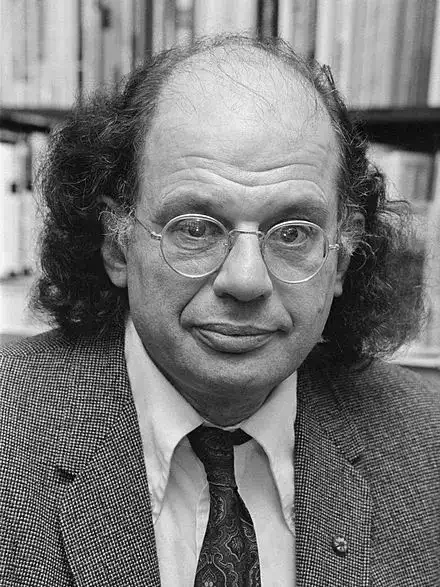
Allen Ginsberg
Mugging (I)
I
Tonite I walked out of my red apartment door on East tenth street’s dusk—
Walked out of my home ten years, walked out in my honking neighborhood
Tonite at seven walked out past garbage cans chained to concrete anchors
Walked under black painted fire escapes, giant castiron plate covering a hole in ground
—Crossed the street, traffic lite red, thirteen bus roaring by liquor store,
past corner pharmacy iron grated, past Coca Cola & Mylai posters fading scraped on
brick
Past Chinese Laundry wood door’d, & broken cement stoop steps For Rent hall painted
green & purple Puerto Rican style
Along E. 10th’s glass splattered pavement, kid blacks & Spanish oiled hair adolescents’
crowded house fronts—
Ah, tonite I walked out on my block NY City under humid summer sky Halloween,
thinking what happened Timothy Leary joining brain police for a season?
thinking what’s all this Weathermen, secrecy & selfrighteousness beyond reason—F.B.I.
plots?
Walked past a taxicab controlling the bottle strewn curb—
past young fellows with their umbrella handles & canes leaning against a ravaged Buick
—and as I looked at the crowd of kids on the stoop—a boy stepped up, put his arm
around my neck
tenderly I thought for a moment, squeezed harder, his umbrella handle against my
skull,
and his friends took my arm, a young brown companion tripped his foot ’gainst my
ankle—
as I went down shouting Om Ah Hūm to gangs of lovers on the stoop watching
slowly appreciating, why this is a raid, these strangers mean strange business
with what—my pockets, bald head, broken-healed-bone leg, my softshoes, my heart—
Have they knives? Om Ah Hūm—Have they sharp metal wood to shove in eye
ear ass? Om Ah Hūm
& slowly reclined on the pavement, struggling to keep my woolen bag of poetry
address calendar & Leary-lawyer notes hung from my shoulder
dragged in my neat orlon shirt over the crossbar of a broken metal door
dragged slowly onto the fire-soiled floor an abandoned store, laundry candy counter
1929—
now a mess of papers & pillows & plastic car seat covers cracked cockroach-corpsed
ground—
my wallet back pocket passed over the iron foot step guard
and fell out, stole by God Muggers’ lost fingers, Strange—
Couldn’t tell—snakeskin wallet actually plastic, 70 dollars my bank money for a week,
old broken wallet—and dreary plastic contents—Amex card & Manf. Hanover Trust
Credit too—business card from Mr. Spears British Home Minister Drug Squad—my draft
card—membership ACLU & Naropa Institute Instructor’s identification
Om Ah Hūm I continued chanting Om Ah Hūm
Putting my palm on the neck of an 18 year old boy fingering my back pocket crying
“Where’s the money”
“Om Ah Hūm there isn’t any”
My card Chief Boo-Hoo Neo American Church New Jersey & Lower East Side
Om Ah Hūm —what not forgotten crowded wallet—Mobil Credit, Shell? old lovers
addresses on cardboard pieces, booksellers calling cards—
—“Shut up or we’ll murder you”—“Om Ah Hūm take it easy”
Lying on the floor shall I shout more loud?—the metal door closed on blackness
one boy felt my broken healed ankle, looking for hundred dollar bills behind my
stocking weren’t even there—a third boy untied my Seiko Hong Kong watch rough from
right wrist leaving a clasp-prick skin tiny bruise
“Shut up and we’ll get out of here”—and so they left,
as I rose from the cardboard mattress thinking Om Ah Hūm didn’t stop em
enough,
the tone of voice too loud—my shoulder bag with 10,000 dollars full of poetry left on
the broken floor—
620
Kazi Nazrul Islam
God
Who are you, my friend,
searching for God in heaven
and the underworld?
Who are you-searching
through the wilderness
and mountain peaks?
It's a pity-O Rishis and Dervishes,
you go on searching for Him
from country to country
while holding the Jewel of the Heart
in your own heart!
The whole creation looks at you
while your own eyes are shut.
You search for the creator
instead of searching for your self.
O self-inflicted Blind-open your eyes,
look at yourself in the mirror.
You'll see-His shadow falls on your body.
Don't shudder, Hero,
don't be intimidated
by the scholars of the scripturesthey're
not God's 'private secretaries'
We all are His manifestation,
He is present in us all.
Seeing myself, I see the unseen Creator..
The merchants at the seaport trade in gems.
But never ask them where the gems are mined.
They are merely traders of gems,
but they think that they know where the mine is too!
They have never taken a dive
into the fathomless depth of the gem-bearing ocean.
Instead of messing with the scriptures,
my friend, dive right into
the ocean of Truth!
[Translation: Sajed Kamal]
626
Allen Ginsberg
Cosmopolitan Greetings
Stand up against governments, against God.
Stay irresponsible.
Say only what we know & imagine.
Absolutes are Coercion.
Change is absolute.
Ordinary mind includes eternal perceptions.
Observe what’s vivid.
Notice what you notice.
Catch yourself thinking.
Vividness is self-selecting.
If we don’t show anyone, we’re free to write anything.
Remember the future.
Freedom costs little in the U.S.
Asvise only myself.
Don’t drink yourself to death.
Two molecules clanking us against each other require an observer to become
scientific data.
The measuring instrument determines the appearance of the phenomenal
world (after Einstein).
The universe is subjective..
Walt Whitman celebrated Person.
We are observer, measuring instrument, eye, subject, Person.
Universe is Person.
Inside skull is vast as outside skull.
What’s in between thoughts?
Mind is outer space.
What do we say to ourselves in bed at night, making no sound?
“First thought, best thought.”
Mind is shapely, Art is shapely.
Maximum information, minimum number of syllables.
Syntax condensed, sound is solid.
Intense fragments of spoken idiom, best.
Move with rhythm, roll with vowels.
Consonants around vowels make sense.
Savour vowels, appreciate consonants.
Subject is known by what she sees.
Others can measure their vision by what we see.
Candour ends paranoia.
605
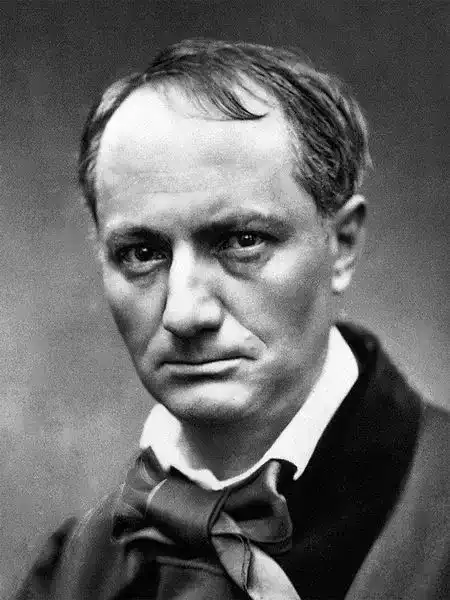
Charles Baudelaire
The Albatross
Often to pass the time on board, the crew
will catch an albatross, one of those big birds
which nonchalently chaperone a ship
across the bitter fathoms of the sea.
Tied to the deck, this sovereign of space,
as if embarrassed by its clumsiness,
pitiably lets its great white wings
drag at its sides like a pair of unshipped oars.
How weak and awkward, even comical
this traveller but lately so adoit -
one deckhand sticks a pipestem in its beak,
another mocks the cripple that once flew!
The Poet is like this monarch of the clouds
riding the storm above the marksman's range;
exiled on the ground, hooted and jeered,
he cannot walk because of his great wings.
601

Lord Byron
Don Juan: Canto the Eleventh
I
When Bishop Berkeley said "there was no matter,"
And proved it'
twas no matter what he sald:
They say his system 'tis in vain to batter,
Too subtle for the airiest human head;
And yet who can believe it! I would shatter
Gladly all matters down to stone or lead,
Or adamant, to find the World a spirit,
And wear my head, denying that I wear it.II
What a sublime discovery 'twas to make the
Universe universal egotism,
That all's idealall
ourselves: I'll stake the
World (be it what you will) that that's no schism.
Oh Doubt!if
thou be'st Doubt, for which some take thee,
But which I doubt extremelythou
sole prism
Of the Truth's rays, spoil not my draught of spirit!
Heaven's brandy, though our brain can hardly bear it.III
For ever and anon comes Indigestion
(Not the most "dainty Ariel") and perplexes
Our soarings with another sort of question:
And that which after all my spirit vexes,
Is, that I find no spot where Man can rest eye on,
Without confusion of the sorts and sexes,
Of beings, stars, and this unriddled wonder,
The World, which at the worst's a glorious blunderIV
If it be chanceor,
if it be according
To the Old Text, still better: lest it should
Turn out so, we'll say nothing 'gainst the wording,
As several people think such hazards rude.
They're right; our days are too brief for affording
Space to dispute what no one ever could
Decide, and everybody one day will
Know very clearlyor
at least lie still.V
And therefore will I leave off metaphysical
Discussion, which is neither here nor there:
If I agree that what is, is; then this I call
Being quite perspicuous and extremely fair.
The truth is, I've grown lately rather phthisical:
I don't know what the reason isthe
air
Perhaps; but as I suffer from the shocks
Of illness, I grow much more orthodox.VI
The first attack at once prov'd the Divinity
(But that I never doubted, nor the Devil);
The next, the Virgin's mystical virginity;
The third, the usual Origin of Evil;
The fourth at once establish'd the whole Trinity
On so uncontrovertible a level,
That I devoutly wish'd the three were four
On purpose to believe so much the more.VII
To our theme.
The
man who has stood on the Acropolis,
And look'd down over Attica; or he
Who has sail'd where picturesque Constantinople is,
Or seen Timbuctoo, or hath taken tea
In smalley'd
China's crockeryware
metropolis,
Or sat amidst the bricks of Nineveh,
May not think much of London's first appearance
But
ask him what he thinks of it a year hence!VIII
Don Juan had got out on Shooter's Hill;
Sunset the time, the place the same declivity
Which looks along that vale of good and ill
Where London streets ferment in full activity,
While everything around was calm and still,
Except the creak of wheels, which on their pivot he
Heard, and that beelike,
bubbling, busy hum
Of cities, that boil over with their scumIX
I say, Don Juan, wrapp'd in contemplation,
Walk'd on behind his carriage, o'er the summit,
And lost in wonder of so great a nation,
Gave way to't, since he could not overcome it.
"And here," he cried, "is Freedom's chosen station;
Here peals the People's voice nor can entomb it
Racks, prisons, inquisitions; resurrection
Awaits it, each new meeting or election.X
"Here are chaste wives, pure lives; her people pay
But what they please; and if that things be dear,
'Tis only that they love to throw away
Their cash, to show how much they have ayear.
Here laws are all inviolate; none lay
Traps for the traveller; every highway's clear;
Here"he
was interrupted by a knife,
With"
Damn your eyes! your money or your life!"XI
These freeborn
sounds proceeded from four pads
In ambush laid, who had perceiv'd him loiter
Behind his carriage; and, like handy lads,
Had seiz'd the lucky hour to reconnoitre,
In which the heedless gentleman who gads
Upon the road, unless he prove a fighter
May find himself within that isle of riches
Expos'd to lose his life as well as breeches.XII
Juan, who did not understand a word
Of English, save their shibboleth, "God damn!"
And even that he had so rarely heard,
He sometimes thought 'twas only their Salam,"
Or "God be with you!"and
'tis not absurd
To think so, for half English as I am
(To my misfortune) never can I say
I heard them wish "God with you," save that wayXIII
Juan yet quickly understood their gesture,
And being somewhat choleric and sudden,
Drew forth a pocket pistol from his vesture,
And fired it into one assailant's pudding,
Who fell, as rolls an ox o'er in his pasture,
And roar'd out, as he writh'd his native mud in,
Unto his nearest follower or henchman,
"Oh Jack! I'm floor'd by that ere bloody Frenchman!"XIV
On which Jack and his train set off at speed,
And Juan's suite, late scatter'd at a distance,
Came up, all marvelling at such a deed,
And offering, as usual, late assistance.
Juan, who saw the moon's late minion bleed
As if his veins would pour out his existence,
Stood calling out for bandages and lint,
And wish'd he had been less hasty with his flint.XV
"Perhaps,"thought he,"it is the country's wont
To welcome foreigners in this way: now
I recollect some innkeepers who don't
Differ, except in robbing with a bow,
In lieu of a bare blade and brazen front.
But what is to be done? I can't allow
The fellow to lie groaning on the road:
So take him up, I'll help you with the load."XVI
But ere they could perform this pious duty,
The dying man cried, "Hold! I've got my gruel!
Oh! for a glass of max ! We've miss'd our booty
Let
me die where I am!" And as the fuel
Of life shrunk in his heart, and thick and sooty
The drops fell from his deathwound,
and he drew ill
His breath, he from his swelling throat untied
A kerchief, crying "Give Sal that!"and
died.XVII
The cravat stain'd with bloody drops fell down
Before Don Juan's feet: he could not tell
Exactly why it was before him thrown,
Nor what the meaning of the man's farewell.
Poor Tom was once a kiddy upon town,
A thorough varmint, and a real swell,
Full flash, all fancy, until fairly diddled,
His pockets first and then his body riddled.XVIII
Don Juan, having done the best he could
In all the circumstances of the case,
As soon as "Crowner's 'quest" allow'd, pursu'd
His travels to the capital apace;
Esteeming it a little hard he should
In twelve hours' time, and very little space,
Have been oblig'd to slay a freeborn
native
In selfdefence:
this made him meditative.XIX
He from the world had cut off a great man,
Who in his time had made heroic bustle.
Who in a row like Tom could lead the van,
Booze in the ken, or at the spellken hustle?
Who queer a flat? Who (spite of Bowstreet's ban)
On the high tobyspice
so flash the muzzle?
Who on a lark, with blackeyed
Sal (his blowing),
So prime, so swell, so nutty, and so knowing?XX
But Tom's no moreand
so no more of Tom.
Heroes must die; and by God's blessing 'tis
Not long before the most of them go home.
Hail! Thamis, hail! Upon thy verge it is
That Juan's chariot, rolling like a drum
In thunder, holds the way it can't well miss,
Through Kennington and all the other "tons,"
Which make us wish ourselves in town at once;XXI
Through Groves, so called as being void of trees,
(Like lucus from no light); through prospects nam'd
Mount Pleasant, as containing nought to please,
Nor much to climb; through little boxes fram'd
Of bricks, to let the dust in at your ease,
With "To be let," upon their doors proclaim'd;
Through "Rows" most modestly call'd "Paradise,"
Which Eve might quit without much sacrifice;XXII
Through coaches, drays, chok'd turnpikes, and a whirl
Of wheels, and roar of voices, and confusion;
Here taverns wooing to a pint of "purl,"
There mails fast flying off like a delusion;
There barbers' blocks with periwigs in curl
In windows; here the lamplighter's infusion
Slowly distill'd into the glimmering glass
(For in those days we had not got to gas);XXIII
Through this, and much, and more, is the approach
Of travellers to mighty Babylon:
Whether they come by horse, or chaise, or coach,
With slight exceptions, all the ways seem one.
I could say more, but do not choose to encroach
Upon the guidebook's
privilege. The sun
Had set some time, and night was on the ridge
Of twilight, as the party cross'd the bridge.XXIV
That's rather fine, the gentle sound of ThamisWho
vindicates a moment, too, his stream
Though
hardly heard through multifarious "damme's":
The lamps of Westminster's more regular gleam,
The breadth of pavement, and yon shrine where Fame is
A spectral residentwhose
pallid beam
In shape of moonshine hovers o'er the pile
Make
this a sacred part of Albion's Isle.XXV
The Druid's groves are goneso
much the better:
Stonehenge is notbut
what the devil is it?
But
Bedlam still exists with its sage fetter,
That madmen may not bite you on a visit;
The Bench too seats or suits full many a debtor;
The Mansion House too (though some people quiz it)
To me appears a stiff yet grand erection;
But then the Abbey's worth the whole collection.XXVI
The line of lights too, up to Charing Cross,
Pall Mall, and so forth, have a coruscation
Like gold as in comparison to dross,
Match'd with the Continent's illumination,
Whose cities Night by no means deigns to gloss.
The French were not yet a lamplighting
nation,
And when they grew soon
their newfound
lantern,
Instead of wicks, they made a wicked man turn.XXVII
A row of Gentlemen along the streets
Suspended may illuminate mankind,
As also bonfires made of country seats;
But the old way is best for the purblind:
The other looks like phosphorus on sheets,
A sort of [lang l]ignis fatuus[lang e] to the mind,
Which, though 'tis certain to perplex and frighten,
Must burn more mildly ere it can enlighten.XXVIII
But London's so well lit, that if Diogenes
Could recommence to hunt his honest man
And found him not amidst the various progenies
Of this enormous city's spreading spawn,
'Twere not for want of lamps to aid his dodging his
Yet undiscover'd treasure. What I can,
I've done to find the same throughout life's journey,
But see the World is only one attorney.XXIX
Over the stones still rattling, up Pall Mall,
Through crowds and carriages, but waxing thinner
As thunder'd knockers broke the long seal'd spell
Of doors 'gainst duns, and to an early dinner
Admitted a small party as night fell,
Don Juan, our young diplomatic sinner,
Pursu'd his path, and drove past some hotels,
St. James's Palace, and St. James's "Hells."XXX
They reach'd the hotel: forth stream'd from the front door
A tide of wellclad
waiters, and around
The mob stood, and as usual several score
Of those pedestrian Paphians who abound
In decent London when the daylight's o'er;
Commodious but immoral, they are found
Useful, like Malthus, in promoting marriage:
But Juan now is stepping from his carriageXXXI
Into one of the sweetest of hotels,
Especially for foreignersand
mostly
For those whom favour or whom fortune swells,
And cannot find a bill's small items costly.
There many an envoy either dwelt or dwells
(The den of many a diplomatic lost lie),
Until to some conspicuous square they pass,
And blazon o'er the door their names in brass.XXXII
Juan, whose was a delicate commission,
Private, though publicly important, bore
No title to point out with due precision
The exact affair on which he was sent o'er.
'Twas merely known, that on a secret mission
A foreigner of rank had grac'd our shore,
Young, handsome and accomplish'd, who was said
(In whispers) to have turn'd his Sovereign's head.XXXIII
Some rumour also of some strange adventures
Had gone before him, and his wars and loves;
And as romantic heads are pretty painters,
And, above all, an Englishwoman's roves
Into the excursive, breaking the indentures
Of sober reason, wheresoe'er it moves,
He found himself extremely in the fashion,
Which serves our thinking people for a passion.XXXIV
I don't mean that they are passionless, but quite
The contrary; but then 'tis in the head;
Yet as the consequences are as bright
As if they acted with the heart instead,
What after all can signify the site
Of ladies' lucubrations? So they lead
In safety to the place for which you start,
What matters if the road be head or heart?XXXV
Juan presented in the proper place,
To proper placement, every Russ credential;
And was receiv'd with all the due grimace
By those who govern in the mood potential,
Who, seeing a handsome stripling with smooth face,
Thought (what in state affairs is most essential)
That they as easily might do the youngster,
As hawks may pounce upon a woodland songster.XXXVI
They err'd, as aged men will do; but by
And by we'll talk of that; and if we don't,
'T will be because our notion is not high
Of politicians and their double front,
Who live by lies, yet dare not boldly lie:
Now, what I love in women is, they won't
Or can't do otherwise than lie, but do it
So well, the very truth seems falsehood to it.XXXVII
And, after all, what is a lie? 'Tis but
The truth in masquerade; and I defy
Historians, heroes, lawyers, priests, to put
A fact without some leaven of a lie.
The very shadow of true Truth would shut
Up annals, revelations, poesy,
And prophecyexcept
it should be dated
Some years before the incidents related.XXXVIII
Prais'd be all liars and all lies! Who now
Can tax my mild Muse with misanthropy?
She rings the World's "Te Deum," and her brow
Blushes for those who will not: but to sigh
Is idle; let us like most others bow,
Kiss hands, feet, any part of Majesty,
After the good example of "Green Erin,"
Whose shamrock now seems rather worse for wearing.XXXIX
Don Juan was presented, and his dress
And mien excited general admiration;
I don't know which was more admir'd or less:
One monstrous diamond drew much observation,
Which Catherine in a moment of "ivresse"
(In love or brandy's fervent fermentation)
Bestow'd upon him, as the public learn'd;
And, to say truth, it had been fairly earn'd.XL
Besides the ministers and underlings,
Who must be courteous to the accredited
Diplomatists of rather wavering kings,
Until their royal riddle's fully read,
The very clerksthose
somewhat dirty springs
Of Office, or the House of Office, fed
By foul corruption into streamseven
they
Were hardly rude enough to earn their pay.XLI
And insolence no doubt is what they are
Employ'd for, since it is their daily labour,
In the dear offices of peace or war;
And should you doubt, pray ask of your next neighbour,
When for a passport, or some other bar
To freedom, he applied (a grief and a bore),
If he found not this spawn of taxborn
riches,
Like lapdogs,
the least civil sons of b{}{
}{
}{
}{
}
s.XLII
But Juan was receiv'd with much "empressement" These
phrases of refinement I must borrow
From our next neighbours' land, where, like a chessman,
There is a move set down for joy or sorrow,
Not only in mere talking, but the press. Man
In islands is, it seems, downright and thorough,
More than on continentsas
if the sea
(See Billingsgate) made even the tongue more free.XLIII
And yet the British "Damme" 's rather Attic,
Your continental oaths are but incontinent,
And turn on things which no aristocratic
Spirit would name, and therefore even I won't anent
This subject quote; as it would be schismatic
In politesse, and have a sound affronting in 't;
But "Damme" 's quite ethereal, though too daring
Platonic
blasphemy, the soul of swearing.XLIV
For downright rudeness, ye may stay at home;
For true or false politeness (and scarce that
Now) you may cross the blue deep and white foam:
The first the emblem (rarely though) of what
You leave behind, the next of much you come
To meet. However, 'tis no time to chat
On general topics: poems must confine
Themselves to Unity, like this of mine.XLV
In the great worldwhich,
being interpreted,
Meaneth the West or worst end of a city,
And about twice two thousand people bred
By no means to be very wise or witty,
But to sit up while others lie in bed,
And look down on the Universe with pity
Juan,
as an inveterate patrician,
Was well receiv'd by persons of condition.XLVI
He was a bachelor, which is a matter
Of import both to virgin and to bride,
The former's hymeneal hopes to flatter;
And (should she not hold fast by love or pride)
'Tis also of some momemt to the latter:
A rib's a thorn in a wed gallant's side,
Requires decorum, and is apt to double
The horrid sinand
what's still worse the trouble.XLVII
But Juan was a bachelorof
arts,
And parts, and hearts: he danc'd and sung, and had
An air as sentimental as Mozart's
Softest of melodies; and could be sad
Or cheerful, without any "flaws or starts,"
Just at the proper time; and though a lad,
Had seen the worldwhich
is a curious sight,
And very much unlike what people write.XLVIII
Fair virgins blush'd upon him; wedded dames
Bloom'd also in less transitory hues;
For both commodities dwell by the Thames
The painting and the painted; Youth, Ceruse,
Against his heart preferr'd their usual claims,
Such as no gentleman can quite refuse;
Daughters admir'd his dress, and pious mothers
Inquir'd his income, and if he had brothers.XLIX
The milliners who furnish "drapery Misses"
Throughout the season, upon speculation
Of payment ere the Honeymoon's last kisses
Have wan'd into a crescent's coruscation,
Thought such an opportunity as this is,
Of a rich foreigner's initiation,
Not to be overlook'dand
gave such credit,
That future bridegrooms swore, and sigh'd, and paid it.L
The Blues, that tender tribe, who sigh o'er sonnets,
And with the pages of the last Review
Line the interior of their heads or bonnets,
Advanc'd in all their azure's highest hue:
They talk'd bad French or Spanish, and upon its
Late authors ask'd him for a hint or two;
And which was softest, Russian or Castilian?
And whether in his travels he saw Ilion?LI
Juan, who was a little superficial,
And not in literature a great Drawcansir,
Examin'd by this learned and especial
Jury of matrons, scarce knew what to answer:
His duties warlike, loving or official,
His steady application as a dancer,
Had kept him from the brink of Hippocrene,
Which now he found was blue instead of green.LII
However, he replied at hazard, with
A modest confidence and calm assurance,
Which lent his learned lucubrations pith,
And pass'd for arguments of good endurance.
That prodigy, Miss Araminta Smith
(Who at sixteen translated "Hercules Furens"
Into as furious English), with her best look,
Set down his sayings in her commonplace
book.LIII
Juan knew several languagesas
well
He mightand
brought them up with skill, in time
To save his fame with each accomplish'd belle,
Who still regretted that he did not rhyme.
There wanted but this requisite to swell
His qualities (with them) into sublime:
Lady FitzFrisky,
and Miss M{ae}via Mannish,
Both long'd extremely to be sung in Spanish.LIV
However, he did pretty well, and was
Admitted as an aspirant to all
The coteries, and, as in Banquo's glass,
At great assemblies or in parties small,
He saw ten thousand living authors pass,
That being about their average numeral;
Also the eighty "greatest living poets,"
As every paltry magazine can show it's .LV
In twice five years the "greatest living poet,"
Like to the champion in the fisty ring,
Is call'd on to support his claim, or show it,
Although 'tis an imaginary thing,
Even Ialbeit
I'm sure I did not know it,
Nor sought of foolscap subjects to be king
Was
reckon'd, a considerable time,
The grand Napoleon of the realms of rhyme.LVI
But Juan was my Moscow, and Faliero
My Leipsic, and my Mont Saint Jean seem Cain:
"La Belle Alliance" of dunces down at zero,
Now that the Lion's fall'n, may rise again,
But I will fall at least as fell my hero;
Nor reign at all, or as a monarch reign;
Or to some lonely isle of jailors go,
With turncoat Southey for my turnkey Lowe.LVII
Sir Walter reign'd before me; Moore and Campbell
Before and after; but now grown more holy,
The Muses upon Sion's hill must ramble
With poets almost clergymen, or wholly;
And Pegasus has a psalmodic amble
Beneath the very Reverend Rowley Powley,
Who shoes the glorious animal with stilts,
A modern Ancient Pistol"
by the hilts!"LVIII
Still he excels that artificial hard
Labourer in the same vineyard, though the vine
Yields him but vinegar for his reward
That
neutralis'd dull Dorus of the Nine;
That swarthy Sporus, neither man nor bard;
That ox of verse, who ploughs for every line:
Cambyses' roaring Romans beat at least
The howling Hebrews of Cybele's priest.LIX
Then there's my gentle Euphues, who, they say,
Sets up for being a sort of moral me ;
He'll find it rather difficult some day
To turn out both, or either, it may be.
Some persons think that Coleridge hath the sway;
And Wordsworth has supporters, two or three;
And that deepmouth'd
Boeotian "Savage Landor"
Has taken for a swan rogue Southey's gander.LX
John Keats, who was kill'd off by one critique,
Just as he really promis'd something great,
If not intelligible, without Greek
Contriv'd to talk about the gods of late,
Much as they might have been suppos'd to speak.
Poor fellow! His was an untoward fate;
'Tis strange the mind, that very fiery particle,
Should let itself be snuff'd out by an article.LXI
The list grows long of live and dead pretenders
To that which none will gainor
none will know
The conqueror at least; who, ere Time renders
His last award, will have the long grass grow
Above his burntout
brain, and sapless cinders.
If I might augur, I should rate but low
Their chances; they're too numerous, like the thirty
Mock tyrants, when Rome's annals wax'd but dirty.LXII
This is the literary lower empire,
Where the pr{ae}torian bands take up the matter;
A "dreadful trade," like his who "gathers samphire,"
The insolent soldiery to soothe and flatter,
With the same feelings as you'd coax a vampire,
Now, were I once at home, and in good satire,
I'd try conclusions with those Janizaries,
And show them what an intellectual war is.LXIII
I think I know a trick or two, would turn
Their flanks; but it is hardly worth my while,
With such small gear to give myself concern:
Indeed I've not the necessary bile;
My natural temper's really aught but stern,
And even my Muse's worst reproof's a smile;
And then she drops a brief and modern curtsy,
And glides away, assur'd she never hurts ye.LXIV
My Juan, whom I left in deadly peril
Amongst live poets and blue ladies, pass'd
With some small profit through that field so sterile,
Being tir'd in time, and, neither least nor last,
Left it before he had been treated very ill;
And henceforth found himself more gaily class'd
Amongst the higher spirits of the day,
The sun's true son, no vapour, but a ray.LXV
His morns he pass'd in businesswhich
dissected,
Was, like all business, a laborious nothing
That leads to lassitude, the most infected
And CentaurNessus
garb of mortal clothing,
And on our sofas makes us lie dejected,
And talk in tender horrors of our loathing
All kinds of toil, save for our country's good
Which
grows no better, though 'tis time it should.LXVI
His afternoons he pass'd in visits, luncheons,
Lounging and boxing; and the twilight hour
In riding round those vegetable puncheons
Call'd "Parks," where there is neither fruit nor flower
Enough to gratify a bee's slight munchings;
But after all it is the only "bower"
(In Moore's phrase) where the fashionable fair
Can form a slight acquaintance with fresh air.LXVII
Then dress, then dinner, then awakes the world!
Then glare the lamps, then whirl the wheels, then roar
Through street and square fast flashing chariots hurl'd
Like harness'd meteors; then along the floor
Chalk mimics painting; then festoons are twirl'd;
Then roll the brazen thunders of the door,
Which opens to the thousand happy few
An earthly Paradise of "Or Molu."LXVIII
There stands the noble hostess, nor shall sink
With the threethousandth
curtsy; there the waltz,
The only dance which teaches girls to think,
Makes one in love even with its very faults.
Saloon, room, hall, o'erflow beyond their brink,
And long the latest of arrivals halts,
'Midst royal dukes and dames condemn'd to climb,
And gain an inch of staircase at a time.LXIX
Thrice happy he who, after a survey
Of the good company, can win a corner,
A door that's in or boudoir out of the way,
Where he may fix himself like small "Jack Horner,"
And let the Babel round run as it may,
And look on as a mourner, or a scorner,
Or an approver, or a mere spectator,
Yawning a little as the night grows later.LXX
But this won't do, save by and by; and he
Who, like Don Juan, takes an active share
Must steer with care through all that glittering sea
Of gems and plumes and pearls and silks, to where
He deems it is his proper place to be;
Dissolving in the waltz to some soft air,
Or proudlier prancing with mercurial skill,
Where Science marshals forth her own quadrille.LXXI
Or, if he dance not, but hath higher views
Upon an heiress or his neighbour's bride,
Let him take care that that which he pursues
Is not at once too palpably descried.
Full many an eager gentleman oft rues
His haste; impatience is a blundering guide
Amongst a people famous for reflection,
Who like to play the fool with circumspection.LXXII
But, if you can contrive, get next at supper;
Or, if forestalled, get opposite and ogle:
Oh, ye ambrosial moments! always upper
In mind, a sort of sentimental bogle,
Which sits for ever upon Memory's crupper,
The ghost of vanish'd pleasures once in vogue! Ill
Can tender souls relate the rise and fall
Of hopes and fears which shake a single ball.LXXIII
But these precautionary hints can touch
Only the common run, who must pursue,
And watch and ward; whose plans a word too much
Or little overturns; and not the few
Or many (for the number's sometimes such)
Whom a good mien, especially if new,
Or fame, or name, for wit, war, sense or nonsense,
Permits whate'er they please, or did not long since.LXXIV
Our hero, as a hero young and handsome,
Noble, rich, celebrated, and a stranger,
Like other slaves of course must pay his ransom
Before he can escape from so much danger
As will environ a conspicuous man. Some
Talk about poetry, and "rack and manger,"
And ugliness, disease, as toil and trouble
I
wish they knew the life of a young noble.LXXV
They are young, but know not youthit
is anticipated;
Handsome but wasted, rich without a sou;
Their vigour in a thousand arms is dissipated;
Their cash comes from , their wealth goes to a Jew;
Both senates see their nightly votes participated
Between the tyrant's and the tribunes' crew;
And having voted, din'd, drunk, gam'd and whor'd,
The family vault receives another lord.LXXVI
"Where is the World," cries Young, "at eighty ? Where
The World in which a man was born?" Alas!
Where is the world of eight years past? 'Twas there I
look for it'
tis gone, a Globe of Glass!
Crack'd, shiver'd, vanish'd, scarcely gaz'd on, ere
A silent change dissolves the glittering mass.
Statesmen, chiefs, orators, queens, patriots, kings,
And dandiesall
are gone on the wind's wings.LXXVII
Where is Napoleon the Grand? God knows:
Where little Castlereagh? The devil can tell:
Where Grattan, Curran, Sheridan, all those
Who bound the Bar or Senate in their spell?
Where is the unhappy Queen, with all her woes?
And where the Daughter, whom the Isles lov'd well?
Where are those martyr'd saints the Five per Cents?
And whereoh,
where the devil are the Rents?LXXVIII
Where's Brummell? Dish'd. Where's Long Pole Wellesley? Diddled.
Where's Whitbread? Romilly? Where's George the Third?
Where is his will? (That's not so soon unriddled.)
And where is "Fum" the Fourth, our "royal bird"?
Gone down, it seems, to Scotland to be fiddled
Unto by Sawney's violin, we have heard:
"Caw me, caw thee"for
six months hath been hatching
This scene of royal itch and loyal scratching.LXXIX
Where is Lord This? And where my Lady That?
The Honourable Mistresses and Misses?
Some laid aside like an old Opera hat,
Married, unmarried, and remarried (this is
An evolution oft perform'd of late).
Where are the Dublin shoutsand
London hisses?
Where are the Grenvilles? Turn'd as usual. Where
My friends the Whigs? Exactly where they were.LXXX
Where are the Lady Carolines and Franceses?
Divorc'd or doing thereanent. Ye annals
So brilliant, where the list of routs and dances is,
Thou Morning Post, sole record of the panels
Broken in carriages, and all the phantasies
Of fashion, say what streams now fill those channels?
Some die, some fly, some languish on the Continent,
Because the times have hardly left them one tenant.LXXXI
Some who once set their caps at cautious dukes,
Have taken up at length with younger brothers:
Some heiresses have bit at sharpers' hooks:
Some maids have been made wives, some merely mothers:
Others have lost their fresh and fairy looks:
In short, the list of alterations bothers.
There's little strange in this, but something strange is
The unusual quickness of these common changes.LXXXII
Talk not of seventy years as age! in seven
I have seen more changes, down from monarchs to
The humblest individuals under heaven,
Than might suffice a moderate century through.
I knew that nought was lasting, but now even
Change grows too changeable, without being new:
Nought's permanent among the human race,
Except the Whigs not getting into place.LXXXIII
I have seen Napoleon, who seem'd quite a Jupiter,
Shrink to a Saturn. I have seen a Duke
(No matter which) turn politician stupider,
If that can well be, than his wooden look.
But it is time that I should hoist my "blue Peter,"
And sail for a new theme: I have seenand
shook
To see itthe
King hiss'd, and then caress'd;
But don't pretend to settle which was best.LXXXIV
I have seen the Landholders without a rap
I
have seen Joanna SouthcoteI
have seen
The House of Commons turn'd to a taxtrap
I
have seen that sad affair of the late QueenI
have seen crowns worn instead of a fool's cap
I have seen a Congress doing all that's mean
I
have seen some nations, like o'erloaded asses,
Kick off their burthensmeaning
the high classes.LXXXV
I have seen small poets, and great prosers, and
Interminablenot
eternal speakers
I
have seen the funds at war with house and land
I
have seen the country gentlemen turn squeakers
I have seen the people ridden o'er like sand
By slaves on horseback
I
have seen malt liquors
Exchang'd for "thin potations" by John BullI
have seen John half detect himself a fool.LXXXVI
But "carpe diem," Juan, "carpe, carpe!"
Tomorrow
sees another race as gay
And transient, and devour'd by the same harpy.
"Life's a poor player"then
"play out the play,
Ye villains!" and above all keep a sharp eye
Much less on what you do than what you say:
Be hypocritical, be cautious, be
Not what you seem , but always what you see .LXXXVII
But how shall I relate in other cantos
Of what befell our hero in the land,
Which 'tis the common cry and lie to vaunt as
A moral country? But I hold my hand
For
I disdain to write an Atalantis;
But 'tis as well at once to understand,
You are not a moral people, and you know it,
Without the aid of too sincere a poet.LXXXVIII
What Juan saw and underwent shall be
My topic, with of course the due restriction
Which is requir'd by proper courtesy;
And recollect the work is only fiction,
And that I sing of neither mine nor me,
Though every scribe, in some slight turn of diction,
Will hint allusions never meant . Ne'er doubt
This when
I speak, I don't hint , but speak out .LXXXIX
Whether he married with the third or fourth
Offspring of some sage husbandhunting
countess,
Or whether with some virgin of more worth
(I mean in Fortune's matrimonial bounties),
He took to regularly peopling Earth,
Of which your lawful, awful wedlock fount is
Or
whether he was taken in for damages,
For being too excursive in his homagesXC
Is yet within the unread events of time.
Thus far, go forth, thou Lay, which I will back
Against the same given quantity of rhyme,
For being as much the subject of attack
As ever yet was any work sublime,
By those who love to say that white is black.
So much the better!
I
may stand alone,
But would not change my free thoughts for a throne.
602
Allen Ginsberg
When the Light Appears
You'll bare your bones you'll grow you'll pray you'll only know
When the light appears, boy, when the light appears
You'll sing & you'll love you'll praise blue heavens above
When the light appears, boy, when the light appears
You'll whimper & you'll cry you'll get yourself sick and sigh
You'll sleep & you'll dream you'll only know what you mean
When the light appears, boy, when the light appears
You'll come & you'll go, you'll wander to and fro
You'll go home in despair you'll wonder why'd you care
You'll stammer & you'll lie you'll ask everybody why
You'll cough and you'll pout you'll kick your toe with gout
You'll jump you'll shout you'll knock you're friends about
You'll bawl and you'll deny & announce your eyes are dry
You'll roll and you'll rock you'll show your big hard cock
You'll love and you'll grieve & one day you'll come believe
As you whistle & you smile the lord made you worthwhile
You'll preach and you'll glide on the pulpit in your pride
Sneak & slide across the stage like a river in high tide
You'll come fast or come on slow just the same you'll never know
When the light appears, boy, when the light appears
When the light appears, boy, when the light appears
You'll sing & you'll love you'll praise blue heavens above
When the light appears, boy, when the light appears
You'll whimper & you'll cry you'll get yourself sick and sigh
You'll sleep & you'll dream you'll only know what you mean
When the light appears, boy, when the light appears
You'll come & you'll go, you'll wander to and fro
You'll go home in despair you'll wonder why'd you care
You'll stammer & you'll lie you'll ask everybody why
You'll cough and you'll pout you'll kick your toe with gout
You'll jump you'll shout you'll knock you're friends about
You'll bawl and you'll deny & announce your eyes are dry
You'll roll and you'll rock you'll show your big hard cock
You'll love and you'll grieve & one day you'll come believe
As you whistle & you smile the lord made you worthwhile
You'll preach and you'll glide on the pulpit in your pride
Sneak & slide across the stage like a river in high tide
You'll come fast or come on slow just the same you'll never know
When the light appears, boy, when the light appears
607
Rabindranath Tagore
Prisoner
`Prisoner, tell me, who was it that bound you?'
`It was my master,' said the prisoner.
`I thought I could outdo everybody in the world in wealth and power,
and I amassed in my own treasure-house the money due to my king.
When sleep overcame me I lay upon the bed that was for my lord,
and on waking up I found I was a prisoner in my own treasure-house.'
`Prisoner, tell me, who was it that wrought this unbreakable chain?'
`It was I,' said the prisoner, `who forged this chain very carefully.
I thought my invincible power would hold the world captive
leaving me in a freedom undisturbed.
Thus night and day I worked at the chain
with huge fires and cruel hard strokes.
When at last the work was done
and the links were complete and unbreakable,
I found that it held me in its grip.'
608