
Culture and Tradition

Rudyard Kipling
Buddha at Kamakura
Oye who treated the Narrow Way
By Tophet-flare to Judgment Day,
Be gentle when "the heathen" pray
To Buddha at Kamakura!
To him the Way, the Law, apart,
Whom Maya held beneath her heart,
Ananda's Lord, the Bodhisat,
The Buddha of Kamakura.
For though he neither burns nor sees,
Nor hears ye thank your Deities,
Ye have not sinned with such as these,
His children at Kamakura,
Yet spare us still the Western joke
When joss-sticks turn to scented smoke
The little sins of little folk
That worship at Kamakura --
The grey-robed, gay-sashed butterflies
That flit beneath the Master's eyes.
He is beyond the Mysteries
But loves them at Kamakura.
And whoso will, from Pride released,
Contemning neither creed nor priest,
May feel the Soul of all the East
About him at Kamakura.
Yea, every tale Ananda heard,
Of birth as fish or beast or bird,
While yet in lives the Master stirred,
The warm wind brings Kamakura.
Till drowsy eyelids seem to see
A-flower 'neath her golden htee
The Shwe-Dagon flare easterly
From Burmah to Kamakura,
And down the loaded air there comes
The thunder of Thibetan drums,
And droned -- "Om mane padme hums" --
A world's-width from Kamakura.
Yet Brahmans rule Benares still,
Buddh-Gaya's ruins pit the hill,
And beef-fed zealots threaten ill
To Buddha and Kamakura.
A tourist-show, a legend told,
A rusting bulk of bronze and gold,
So much, and scarce so much, ye hold
The meaning of Kamakura?
But when the morning prayer is prayed,
Think, ere ye pass to strife and trade,
Is God in human image made
No nearer than Kamakura?
497

Lord Byron
Dear Doctor, I have Read your Play
Dear Doctor, I have read your play,
Which is a good one in its way,
Purges the eyes, and moves the bowels,
And drenches handkerchiefs like towels
With tears that, in a flux of grief,
Afford hysterical relief
To shatter'd nerves and quicken'd pulses,
Which your catastrophe convulses.
I like your moral and machinery;
Your plot, too, has such scope for scenery!
Your dialogue is apt and smart;
The play's concoction full of art;
Your hero raves, your heroine cries,
All stab, and everybody dies;
In short, your tragedy would be
The very thing to hear and see;
And for a piece of publication,
If I decline on this occasion,
It is not that I am not sensible
To merits in themselves ostensible,
Butand
I grieve to speak itplays
Are drugsmere
drugs, Sir, nowadays.
I had a heavy loss by Manuel Too
lucky if it prove not annual
And
Sotheby, with his damn'd Orestes
(Which, by the way, the old bore's best is),
Has lain so very long on hand
That I despair of all demand;
I've advertis'dbut
see my books,
Or only watch my shopman's looks;
Still Ivan , Ina and such lumber
My backshop
glut, my shelves encumber.
There's Byron too, who once did better,
Has sent mefolded
in a letter
A
sort ofit's
no more a drama
Than Darnley , Ivan or Kehama :
So alter'd since last year his pen is,
I think he's lost his wits at Venice,
Or drain'd his brains away as stallion
To some darkeyed
and warm Italian;
In short, Sir, what with one and t'other,
I dare not venture on another.
I write in haste; excuse each blunder;
The coaches through the street so thunder!
My room's so full; we've Gifford here
Reading MSS with Hookham Frere,
Pronouncing on the nouns and particles
Of some of our forthcoming articles,
The Quarterly ah,
Sir, if you
Had but the genius to review!
A smart critique upon St. Helena,
Or if you only would but tell in a
Short compass whatbut,
to resume;
As I was saying, Sir, the room
The
room's so full of wits and bards,
Crabbes, Campbells, Crokers, Freres and Wards,
And others, neither bards nor wits
My
humble tenement admits
All persons in the dress of Gent.,
From Mr. Hammond to Dog Dent.
A party dines with me today,
All clever men who make their way:
Crabbe, Malcolm, Hamilton and Chantrey
Are all partakers of my pantry.
They're at this moment in discussion
On poor De Sta{:e}l's late dissolution.
Her book, they say, was in advance
Pray
Heaven she tell the truth of France!
'Tis said she certainly was married
To Rocca, and had twice miscarried,
Nonot
miscarried, I opine
But
brought to bed at forty nine.
Some say she died a Papist; some
Are of opinion that's a hum;
I don't know thatthe
fellow, Schlegel,
Was very likely to inveigle
A dying person in compunction
To try the extremity of unction.
But peace be with her! for a woman
Her talents surely were uncommon.
Her publisher (and public too)
The hour of her demise may rue,
For never more within his shop he
Praywas
she not interr'd at Coppet?
Thus run our time and tongues away;
But, to return, Sir, to your play;
Sorry, Sir, but I cannot deal,
Unless 'twere acted by O'Neill.
My hands are fullmy
head so busy,
I'm almost deadand
always dizzy;
And so, with endless truth and hurry,
Dear Doctor, I am yours,
JOHN MURRAY
488
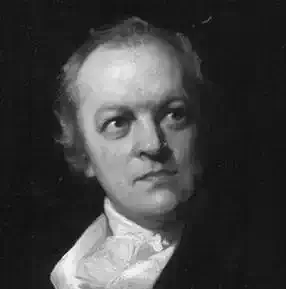
William Blake
An Imitation of Spenser
Golden Apollo, that thro' heaven wide
Scatter'st the rays of light, and truth's beams,
In lucent words my darkling verses dight,
And wash my earthy mind in thy clear streams,
That wisdom may descend in fairy dreams,
All while the jocund hours in thy train
Scatter their fancies at thy poet's feet;
And when thou yields to night thy wide domain,
Let rays of truth enlight his sleeping brain.
For brutish Pan in vain might thee assay
With tinkling sounds to dash thy nervous verse,
Sound without sense; yet in his rude affray,
(For ignorance is Folly's leasing nurse
And love of Folly needs none other's curse)
Midas the praise hath gain'd of lengthen'd ears,
For which himself might deem him ne'er the worse
To sit in council with his modern peers,
And judge of tinkling rimes and elegances terse.
And thou, Mercurius, that with wingèd brow
Dost mount aloft into the yielding sky,
And thro' Heav'n's halls thy airy flight dost throw,
Entering with holy feet to where on high
Jove weighs the counsel of futurity;
Then, laden with eternal fate, dost go
Down, like a falling star, from autumn sky,
And o'er the surface of the silent deep dost fly:
If thou arrivest at the sandy shore
Where nought but envious hissing adders dwell,
Thy golden rod, thrown on t he dusty floor,
Can charm to harmony with potent spell.
Such is sweet Eloquence, that does dispel
Envy and Hate that thirst for human gore;
And cause in sweet society to dwell
Vile savage minds that lurk in lonely cell
O Mercury, assist my lab'ring sense
That round the circle of the world would fly,
As the wing'd eagle scorns the tow'ry fence
Of Alpine hills round his high aëry,
And searches thro' the corners of the sky,
Sports in the clouds to hear the thunder's sound,
And see the wingèd lightnings as they fly;
Then, bosom'd in an amber cloud, around
Plumes his wide wings, and seeks Sol's palace high.
And thou, O warrior maid invincible,
Arm'd with the terrors of Almighty Jove,
Pallas, Minerva, maiden terrible,
Lov'st thou to walk the peaceful solemn grove,
In solemn gloom of branches interwove?
Or bear'st thy AEgis o'er the burning field,
Where, like the sea, the waves of battle move?
Or have thy soft piteous eyes beheld
The weary wanderer thro' the desert rove?
Or does th' afflicted man thy heav'nly bosom move?
490

Ezra Pound
Homage To Quintus Septimus Florentis Christianus
I
(Ex libris Graecæ)
Theodorus will be pleased at my death,
And .someone else will be pleased at the death of Theodoras,
And yet everyone speaks evil of death.
II
This place is the Cyprian's for she has ever the fancy
To be looking out across the bright sea,
Therefore the sailors are cheered, and the waves
Keep small with reverence, beholding her image.
Anyte
III
A sad and great evil is the expectation of death
And there are also the inane expenses of the funeral;
Let us therefore cease from pitying the dead
For after death there comes no other calamity.
Palladas
IV
Troy
Whither, O city, are your profits and your gilded shrines,
And your barbecues of great oxen,
And the tall women walking your streets, in gilt clothes,
With their perfumes in little alabaster boxes?
Where is the work of your home-born sculptors?
Time's tooth is into the lot, and war's and fate's too.
Envy has taken your all,
Save your douth and your story.
Agathas Scholasticus
V
Woman? Oh, woman is a consummate rage,
but dead, or asleep, she pleases.
Take her. She has two excellent seasons.
Palladas
VI
Nicharcus upon Phidon his doctor
Phidon neither purged me, nor touched me,
But I remembered the name of his fever medicine and
died.
488
Ezra Pound
Surgit Fama
There is a truce among the gods,
Kore is seen in the North
Skirting the blue-gray sea
In gilded and russet mantle.
The corn has again it's mother and she, Leuconoe,
That failed never women,
Fails not the earth now.
The tricksome Hermes is here;
He moves behind me
Eager to catch my words,
Eager to spread them with rumour;
To set upon them his change
Crafty and subtle;
To alter them to his purpose;
But do thou speak true, even to the letter:
‘Once more in Delos, once more is the altar a-quiver.
Once more is the chant heard.
Once more are the never abandoned gardens
Full of gossip and old tales.’
486
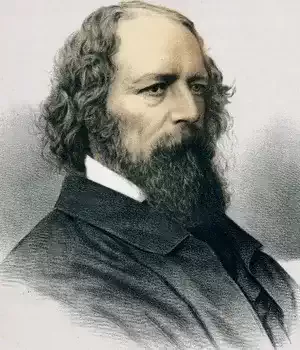
Alfred Lord Tennyson
To Virgil, Written at the Request of the Mantuans for the N
Roman Virgil, thou that singest
Ilion's lofty temples robed in fire,
Ilion falling, Rome arising,
wars, and filial faith, and Dido's pyre;
Landscape-lover, lord of language
more than he that sang the "Works and Days,"
All the chosen coin of fancy
flashing out from many a golden phrase;
Thou that singest wheat and woodland,
tilth and vineyard, hive and horse and herd;
All the charm of all the Muses
often flowering in a lonely word;
Poet of the happy Tityrus
piping underneath his beechen bowers;
Poet of the poet-satyr
whom the laughing shepherd bound with flowers;
Chanter of the Pollio, glorying
in the blissful years again to be,
Summers of the snakeless meadow,
unlaborious earth and oarless sea;
Thou that seëst Universal
Nature moved by Universal Mind;
Thou majestic in thy sadness
at the doubtful doom of human kind;
Light among the vanish'd ages;
star that gildest yet this phantom shore;
Golden branch amid the shadows,
kings and realms that pass to rise no more;
Now thy Forum roars no longer,
fallen every purple Cæsar's dome-Tho'
thine ocean-roll of rhythm
sound forever of Imperial Rome-
Now the Rome of slaves hath perish'd,
and the Rome of freemen holds her place,
I, from out the Northern Island
sunder'd once from all the human race,
I salute thee, Mantovano,
I that loved thee since my day began,
Wielder of the stateliest measure
ever moulded by the lips of man.
483
Ezra Pound
‘Phasellus Ille’
1 his papier-mâché, which you see, my friends,
Saith 'twas the worthiest of editors.
Its mind was made up in 'the seventies',
Nor hath it ever since changed that concoction.
It works to represent that school of thought
Which brought the hair-cloth chair to such perfection,
Nor will the horrid threats of Bernard Shaw
Shake up the stagnant pool of its convictions;
Nay, should the deathless voice of all the world
Speak once again for its sole stimulation,
Twould not move it one jot from left to right.
Come Beauty barefoot from the Cyclades,
She'd find a model for St. Anthony
In this thing's sure decorum and behaviour.
483

Anonymous
Tam Lin
O I forbid you, maidens a',
That wear gowd on your hair,
To come or gae by Carterhaugh,
For young Tam Lin is there.
There's nane that gaes by Carterhaugh
But they leave him a wad,
Either their rings, or green mantles,
Or else their maidenhead.
Janet has kilted her green kirtle
A little aboon her knee,
And she has broded her yellow hair
A little aboon her bree,
And she's awa to Carterhaugh
As fast as she can hie.
When she came to carterhaugh
Tam Lin was at the well,
And there she fand his steed standing,
But away was himsel.
She had na pu'd a double rose,
A rose but only twa,
Till upon then started young Tam Lin,
Says, Lady, thou's pu nae mae.
Why pu's thou the rose, Janet,
And why breaks thou the wand?
Or why comes thou to Carterhaugh
Withoutten my command?
"Carterhaugh, it is my own,
My daddy gave it me,
I'll come and gang by Carterhaugh,
And ask nae leave at thee."
Janet has kilted her green kirtle
A little aboon her knee,
And she has broded her yellow hair
A little aboon her bree,
And she is to her father's ha,
As fast as she can hie.
Four and twenty ladies fair
Were playing at the ba,
And out then came the fair Janet,
The flower among them a'.
Four and twenty ladies fair
Were playing at the chess,
And out then came the fair Janet,
As green as onie glass.
Out then spake an auld grey knight,
Lay oer the castle wa,
And says, Alas, fair Janet, for thee,
But we'll be blamed a'.
"Haud your tongue, ye auld fac'd knight,
Some ill death may ye die!
Father my bairn on whom I will,
I'll father none on thee."
Out then spak her father dear,
And he spak meek and mild,
"And ever alas, sweet Janet," he says,
"I think thou gaest wi child."
"If that I gae wi child, father,
Mysel maun bear the blame,
There's neer a laird about your ha,
Shall get the bairn's name.
"If my love were an earthly knight,
As he's an elfin grey,
I wad na gie my ain true-love
For nae lord that ye hae.
"The steed that my true love rides on
Is lighter than the wind,
Wi siller he is shod before,
Wi burning gowd behind."
Janet has kilted her green kirtle
A little aboon her knee,
And she has broded her yellow hair
A little aboon her bree,
And she's awa to Carterhaugh
As fast as she can hie.
When she came to Carterhaugh,
Tam Lin was at the well,
And there she fand his steed standing,
But away was himsel.
She had na pu'd a double rose,
A rose but only twa,
Till up then started young Tam Lin,
Says, Lady, thou pu's nae mae.
"Why pu's thou the rose, Janet,
Amang the groves sae green,
And a' to kill the bonny babe
That we gat us between?"
"O tell me, tell me, Tam Lin," she says,
"For's sake that died on tree,
If eer ye was in holy chapel,
Or christendom did see?"
"Roxbrugh he was my grandfather,
Took me with him to bide
And ance it fell upon a day
That wae did me betide.
"And ance it fell upon a day
A cauld day and a snell,
When we were frae the hunting come,
That frae my horse I fell,
The Queen o' Fairies she caught me,
In yon green hill do dwell.
"And pleasant is the fairy land,
But, an eerie tale to tell,
Ay at the end of seven years,
We pay a tiend to hell,
I am sae fair and fu o flesh,
I'm feard it be mysel.
"But the night is Halloween, lady,
The morn is Hallowday,
Then win me, win me, an ye will,
For weel I wat ye may.
"Just at the mirk and midnight hour
The fairy folk will ride,
And they that wad their true-love win,
At Miles Cross they maun bide."
"But how shall I thee ken, Tam Lin,
Or how my true-love know,
Amang sa mony unco knights,
The like I never saw?"
"O first let pass the black, lady,
And syne let pass the brown,
But quickly run to the milk-white steed,
Pu ye his rider down.
"For I'll ride on the milk-white steed,
And ay nearest the town,
Because I was an earthly knight
They gie me that renown.
"My right hand will be gloved, lady,
My left hand will be bare,
Cockt up shall my bonnet be,
And kaimed down shall my hair,
And thae's the takens I gie thee,
Nae doubt I will be there.
"They'll turn me in your arms, lady,
Into an esk and adder,
But hold me fast, and fear me not,
I am your bairn's father.
"They'll turn me to a bear sae grim,
And then a lion bold,
But hold me fast, and fear me not,
And ye shall love your child.
"Again they'll turn me in your arms
To a red het gand of airn,
But hold me fast, and fear me not,
I'll do you nae harm.
"And last they'll turn me in your arms
Into the burning gleed,
Then throw me into well water,
O throw me in with speed.
"And then I'll be your ain true-love,
I'll turn a naked knight,
Then cover me wi your green mantle,
And hide me out o sight."
Gloomy, gloomy was the night,
And eerie was the way,
As fair Jenny in her green mantle
To Miles Cross she did gae.
At the mirk and midnight hour
She heard the bridles sing,
She was as glad at that
As any earthly thing.
First she let the black pass by,
And syne she let the brown,
But quickly she ran to the milk-white steed,
And pu'd the rider down.
Sae weel she minded what he did say,
And young Tam Lin did win,
Syne covered him wi her green mantle,
As blythe's a bird in spring
Out then spak the Queen o Fairies,
Out of a bush o broom,
"Them that has gotten young Tam Lin
Has gotten a stately-groom."
Out then spak the Queen o Fairies,
And an angry woman was she,
"Shame betide her ill-far'd face,
And an ill death may she die,
For she's taen awa the bonniest knight
In a' my companie.
"But had I kend, Tam Lin," said she,
"What now this night I see,
I wad hae taen out thy twa grey een,
And put in twa een o tree."
481
Rudyard Kipling
The Threshold
In their deepest caverns of limestone
They pictured the Gods of Food--
The Horse, the Elk, and the Bison
That the hunting might be good;
With the Gods of Death and Terror--
The Mammoth, Tiger, and Bear.
And the pictures moved in the torchlight
To show that the Gods were there!
But that was before Ionia--
(Or the Seven Holy Islands of Ionia)
Any of the Mountains of Ionia,
Had bared their peaks to the air.
The close years packed behind them,
As the glaciers bite and grind,
Filling the new-gouged valleys
With Gods of every kind.
Gods of all-reaching power--
Gods of all-searching eyes--
But each to be wooed by worship
And won by sacrifice.
Till, after many winters, rose Ionia--
(Strange men brooding in Ionia)
Crystal-eyed Sages of Ionia
Who said, "These tales are lies.
"We dream one Breath in all things,
"That blows all things between.
"We dream one Matter in all things--
"Eternal, changeless, unseen.
"'That the heart of the Matter is single
"Till the Breath shall bid it bring forth--
"By choosing or losing its neighbour--
"All things made upon Earth."
But Earth was wiser than Ionia
(Babylon and Egypt than Ionia)
And they overlaid the teaching of Ionia
And the Truth was choked at birth.
It died at the Gate of Knowledge--
The Key to the Gate in its hand--
And the anxious priests and wizards
Re-blinded the wakening land;
For they showed, by answering echoes,
And chasing clouds as they rose,
How shadows should stand for bulwarks
Between mankind and its woes.
It was then that men bethought them of Ionia
(The few that had not allforgot Ionia)
Or the Word that was whispered in Ionia;
And they turned from the shadows and the shows.
They found one Breath in all things,
That moves all things between.
They proved one Matter in all things--
Eternal, changeless, unseen;
That the heart of the Matter was single
Till the Breath should bid it bring forth--
Even as men whispered in Ionia,
(Resolute, unsatisfied Ionia)
Ere the Word was stifled in Ionia--
All things known upon earth!
482

John Keats
The Gadfly
1.
All gentle folks who owe a grudge
To any living thing
Open your ears and stay your t[r]udge
Whilst I in dudgeon sing.
2.
The Gadfly he hath stung me sore--
O may he ne'er sting you!
But we have many a horrid bore
He may sting black and blue.
3.
Has any here an old grey Mare
With three legs all her store,
O put it to her Buttocks bare
And straight she'll run on four.
4.
Has any here a Lawyer suit
Of 1743,
Take Lawyer's nose and put it to't
And you the end will see.
5.
Is there a Man in Parliament
Dum[b-] founder'd in his speech,
O let his neighbour make a rent
And put one in his breech.
6.
O Lowther how much better thou
Hadst figur'd t'other day
When to the folks thou mad'st a bow
And hadst no more to say.
7.
If lucky Gadfly had but ta'en
His seat * * * * * * * * *
And put thee to a little pain
To save thee from a worse.
8.
Better than Southey it had been,
Better than Mr. D-------,
Better than Wordsworth too, I ween,
Better than Mr. V-------.
9.
Forgive me pray good people all
For deviating so --
In spirit sure I had a call -
And now I on will go.
10.
Has any here a daughter fair
Too fond of reading novels,
Too apt to fall in love with care
And charming Mister Lovels,
11.
O put a Gadfly to that thing
She keeps so white and pert --
I mean the finger for the ring,
And it will breed a wort.
12.
Has any here a pious spouse
Who seven times a day
Scolds as King David pray'd, to chouse
And have her holy way -13.
O let a Gadfly's little sting
Persuade her sacred tongue
That noises are a common thing,
But that her bell has rung.
14.
And as this is the summon bo
num of all conquering,
I leave 'withouten wordes mo'
The Gadfly's little sting.
482
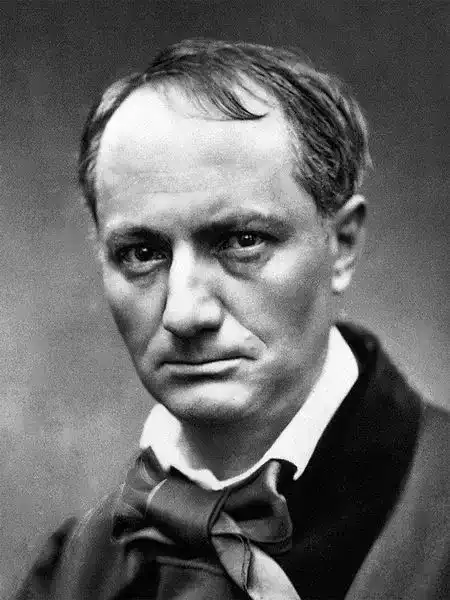
Charles Baudelaire
Travelling Bohemians
The prophetic tribe of the ardent eyes
Yesterday they took the road, holding their babies
On their backs, delivering to fierce appetites
The always ready treasure of pendulous breasts.
The men stick their feet out, waving their guns
Alongside the caravan where they tremble together,
Scanning the sky their eyes are weighted down
In mourning for absent chimeras.
At the bottom of his sandy retreat, a cricket
Watched passing, redoubles his song,
Cybele, who loves, adds more flower,
Makes fountains out of rock and blossoms from desert
Opening up before these travelers in a yawn—
A familiar empire, the inscrutable future.
Translated by William A. Sigler
479

Walt Whitman
With Antecedents
WITH antecedents;
With my fathers and mothers, and the accumulations of past ages;
With all which, had it not been, I would not now be here, as I am:
With Egypt, India, Phenicia, Greece and Rome;
With the Kelt, the Scandinavian, the Alb, and the Saxon;
With antique maritime ventures,--with laws, artizanship, wars and
journeys;
With the poet, the skald, the saga, the myth, and the oracle;
With the sale of slaves--with enthusiasts--with the troubadour, the
crusader, and the monk;
With those old continents whence we have come to this new continent;
With the fading kingdoms and kings over there;
With the fading religions and priests;
With the small shores we look back to from our own large and present
shores;
With countless years drawing themselves onward, and arrived at these
years;
You and Me arrived--America arrived, and making this year;
This year! sending itself ahead countless years to come.
O but it is not the years--it is I--it is You;
We touch all laws, and tally all antecedents;
We are the skald, the oracle, the monk, and the knight--we easily
include them, and more;
We stand amid time, beginningless and endless--we stand amid evil and
good;
All swings around us--there is as much darkness as light;
The very sun swings itself and its system of planets around us;
Its sun, and its again, all swing around us.
As for me, (torn, stormy, even as I, amid these vehement days,)
I have the idea of all, and am all, and believe in all;
I believe materialism is true, and spiritualism is true--I reject no
part.
Have I forgotten any part?
Come to me, whoever and whatever, till I give you recognition.
I respect Assyria, China, Teutonia, and the Hebrews;
I adopt each theory, myth, god, and demi-god;
I see that the old accounts, bibles, genealogies, are true, without
exception;
I assert that all past days were what they should have been;
And that they could no-how have been better than they were,
And that to-day is what it should be--and that America is,
And that to-day and America could no-how be better than they are.
In the name of These States, and in your and my name, the Past,
And in the name of These States, and in your and my name, the Present
time.
I know that the past was great, and the future will be great,
And I know that both curiously conjoint in the present time,
(For the sake of him I typify--for the common average man's sake-
your sake, if you are he;)
And that where I am, or you are, this present day, there is the
centre of all days, all races,
And there is the meaning, to us, of all that has ever come of races
and days, or ever will come.
473

Henry Wadsworth Longfellow
Blessing The Cornfields
Sing, O Song of Hiawatha,
Of the happy days that followed,
In the land of the Ojibways,
In the pleasant land and peaceful!
Sing the mysteries of Mondamin,
Sing the Blessing of the Cornfields!
Buried was the bloody hatchet,
Buried was the dreadful war-club,
Buried were all warlike weapons,
And the war-cry was forgotten.
There was peace among the nations;
Unmolested roved the hunters,
Built the birch canoe for sailing,
Caught the fish in lake and river,
Shot the deer and trapped the beaver;
Unmolested worked the women,
Made their sugar from the maple,
Gathered wild rice in the meadows,
Dressed the skins of deer and beaver.
All around the happy village
Stood the maize-fields, green and shining,
Waved the green plumes of Mondamin,
Waved his soft and sunny tresses,
Filling all the land with plenty.
`T was the women who in Spring-time
Planted the broad fields and fruitful,
Buried in the earth Mondamin;
`T was the women who in Autumn
Stripped the yellow husks of harvest,
Stripped the garments from Mondamin,
Even as Hiawatha taught them.
Once, when all the maize was planted,
Hiawatha, wise and thoughtful,
Spake and said to Minnehaha,
To his wife, the Laughing Water:
"You shall bless to-night the cornfields,
Draw a magic circle round them,
To protect them from destruction,
Blast of mildew, blight of insect,
Wagemin, the thief of cornfields,
Paimosaid, who steals the maize-ear
"In the night, when all Is silence,'
In the night, when all Is darkness,
When the Spirit of Sleep, Nepahwin,
Shuts the doors of all the wigwams,
So that not an ear can hear you,
So that not an eye can see you,
Rise up from your bed in silence,
Lay aside your garments wholly,
Walk around the fields you planted,
Round the borders of the cornfields,
Covered by your tresses only,
Robed with darkness as a garment.
"Thus the fields shall be more fruitful,
And the passing of your footsteps
Draw a magic circle round them,
So that neither blight nor mildew,
Neither burrowing worm nor insect,
Shall pass o'er the magic circle;
Not the dragon-fly, Kwo-ne-she,
Nor the spider, Subbekashe,
Nor the grasshopper, Pah-puk-keena;
Nor the mighty caterpillar,
Way-muk-kwana, with the bear-skin,
King of all the caterpillars!"
On the tree-tops near the cornfields
Sat the hungry crows and ravens,
Kahgahgee, the King of Ravens,
With his band of black marauders.
And they laughed at Hiawatha,
Till the tree-tops shook with laughter,
With their melancholy laughter,
At the words of Hiawatha.
"Hear him!" said they; "hear the Wise Man,
Hear the plots of Hiawatha!"
When the noiseless night descended
Broad and dark o'er field and forest,
When the mournful Wawonaissa
Sorrowing sang among the hemlocks,
And the Spirit of Sleep, Nepahwin,
Shut the doors of all the wigwams,
From her bed rose Laughing Water,
Laid aside her garments wholly,
And with darkness clothed and guarded,
Unashamed and unaffrighted,
Walked securely round the cornfields,
Drew the sacred, magic circle
Of her footprints round the cornfields.
No one but the Midnight only
Saw her beauty in the darkness,
No one but the Wawonaissa
Heard the panting of her bosom
Guskewau, the darkness, wrapped her
Closely in his sacred mantle,
So that none might see her beauty,
So that none might boast, "I saw her!"
On the morrow, as the day dawned,
Kahgahgee, the King of Ravens,
Gathered all his black marauders,
Crows and blackbirds, jays and ravens,
Clamorous on the dusky tree-tops,
And descended, fast and fearless,
On the fields of Hiawatha,
On the grave of the Mondamin.
"We will drag Mondamin," said they,
"From the grave where he is buried,
Spite of all the magic circles
Laughing Water draws around it,
Spite of all the sacred footprints
Minnehaha stamps upon it!"
But the wary Hiawatha,
Ever thoughtful, careful, watchful,
Had o'erheard the scornful laughter
When they mocked him from the tree-tops.
"Kaw!" he said, "my friends the ravens!
Kahgahgee, my King of Ravens!
I will teach you all a lesson
That shall not be soon forgotten!"
He had risen before the daybreak,
He had spread o'er all the cornfields
Snares to catch the black marauders,
And was lying now in ambush
In the neighboring grove of pine-trees,
Waiting for the crows and blackbirds,
Waiting for the jays and ravens.
Soon they came with caw and clamor,
Rush of wings and cry of voices,
To their work of devastation,
Settling down upon the cornfields,
Delving deep with beak and talon,
For the body of Mondamin.
And with all their craft and cunning,
All their skill in wiles of warfare,
They perceived no danger near them,
Till their claws became entangled,
Till they found themselves imprisoned
In the snares of Hiawatha.
From his place of ambush came he,
Striding terrible among them,
And so awful was his aspect
That the bravest quailed with terror.
Without mercy he destroyed them
Right and left, by tens and twenties,
And their wretched, lifeless bodies
Hung aloft on poles for scarecrows
Round the consecrated cornfields,
As a signal of his vengeance,
As a warning to marauders.
Only Kahgahgee, the leader,
Kahgahgee, the King of Ravens,
He alone was spared among them
As a hostage for his people.
With his prisoner-string he bound him,
Led him captive to his wigwam,
Tied him fast with cords of elm-bark
To the ridge-pole of his wigwam.
"Kahgahgee, my raven!" said he,
"You the leader of the robbers,
You the plotter of this mischief,
The contriver of this outrage,
I will keep you, I will hold you,
As a hostage for your people,
As a pledge of good behavior!"
And he left him, grim and sulky,
Sitting in the morning sunshine
On the summit of the wigwam,
Croaking fiercely his displeasure,
Flapping his great sable pinions,
Vainly struggling for his freedom,
Vainly calling on his people!
Summer passed, and Shawondasee
Breathed his sighs o'er all the landscape,
From the South-land sent his ardor,
Wafted kisses warm and tender;
And the maize-field grew and ripened,
Till it stood in all the splendor
Of its garments green and yellow,
Of its tassels and its plumage,
And the maize-ears full and shining
Gleamed from bursting sheaths of verdure.
Then Nokomis, the old woman,
Spake, and said to Minnehaha:
`T is the Moon when, leaves are falling;
All the wild rice has been gathered,
And the maize is ripe and ready;
Let us gather in the harvest,
Let us wrestle with Mondamin,
Strip him of his plumes and tassels,
Of his garments green and yellow!"
And the merry Laughing Water
Went rejoicing from the wigwam,
With Nokomis, old and wrinkled,
And they called the women round them,
Called the young men and the maidens,
To the harvest of the cornfields,
To the husking of the maize-ear.
On the border of the forest,
Underneath the fragrant pine-trees,
Sat the old men and the warriors
Smoking in the pleasant shadow.
In uninterrupted silence
Looked they at the gamesome labor
Of the young men and the women;
Listened to their noisy talking,
To their laughter and their singing,
Heard them chattering like the magpies,
Heard them laughing like the blue-jays,
Heard them singing like the robins.
And whene'er some lucky maiden
Found a red ear in the husking,
Found a maize-ear red as blood is,
"Nushka!" cried they all together,
"Nushka! you shall have a sweetheart,
You shall have a handsome husband!"
"Ugh!" the old men all responded
From their seats beneath the pine-trees.
And whene'er a youth or maiden
Found a crooked ear in husking,
Found a maize-ear in the husking
Blighted, mildewed, or misshapen,
Then they laughed and sang together,
Crept and limped about the cornfields,
Mimicked in their gait and gestures
Some old man, bent almost double,
Singing singly or together:
"Wagemin, the thief of cornfields!
Paimosaid, who steals the maize-ear!"
Till the cornfields rang with laughter,
Till from Hiawatha's wigwam
Kahgahgee, the King of Ravens,
Screamed and quivered in his anger,
And from all the neighboring tree-tops
Cawed and croaked the black marauders.
"Ugh!" the old men all responded,
From their seats beneath the pine-trees!
467

Robert Browning
Holy-Cross Day
ON WHICH THE JEWS WERE FORCED TO
ATTEND AN ANNUAL CHRISTIAN SERMON
IN ROME.
[``Now was come about Holy-Cross Day,
and now must my lord preach his first sermon
to the Jews: as it was of old cared for in tine
merciful bowels of the Church, that, so to
speak, a crumb at least from her conspicuous
table here in Rome should be, though but
once yearly, cast to the famishing dogs, under-trampled
and bespitten-upon beneath the feet
of the guests. And a moving sight in truth,
this, of so many of the besotted blind restif
and ready-to-perish Hebrews! now maternally
brought---nay (for He saith, `Compel them
to come in') haled, as it were, by the head and
hair, and against their obstinate hearts, to partake
of the heavenly grace. What awakening,
what striving with tears, what working of a
yeasty conscience! Nor was my lord wanting
to himself on so apt an occasion; witness
the abundance of conversions which did incontinently
reward him: though not to my
lord be altogether the glory.''---_Diary by the
Bishop's Secretary,_ .]
What the Jews really said, on thus being
driven to church, was rather to this effect:---
I.
Fee, faw, fum! bubble and squeak!
Blessedest Thursday's the fat of the week.
Rumble and tumble, sleek and rough,
Stinking and savoury, simug and gruff,
Take the church-road, for the bell's due chime
Gives us the summons---'tis sermon-time!
II.
Bob, here's Barnabas! Job, that's you?
Up stumps Solomon---bustling too?
Shame, man! greedy beyond your years
To handsel the bishop's shaving-shears?
Fair play's a jewel! Leave friends in the lurch?
Stand on a line ere you start for the church!
III.
Higgledy piggledy, packed we lie,
Rats in a hamper, swine in a stye,
Wasps in a bottle, frogs in a sieve,
Worms in a carcase, fleas in a sleeve.
Hist! square shoulders, settle your thumbs
And buzz for the bishop---here he comes.
IV.
Bow, wow, wow---a bone for the dog!
I liken his Grace to an acorned hog.
What, a boy at his side, with the bloom of a lass,
To help and handle my lord's hour-glass!
Didst ever behold so lithe a chine?
His cheek hath laps like a fresh-singed swine.
V.
Aaron's asleep---shove hip to haunch,
Or somebody deal him a dig in the paunch!
Look at the purse with the tassel and knob,
And the gown with the angel and thingumbob!
What's he at, quotha? reading his text!
Now you've his curtsey---and what comes next?
VI.
See to our converts---you doomed black dozen---
No stealing away---nor cog nor cozen!
You five, that were thieves, deserve it fairly;
You seven, that were beggars, will live less sparely;
You took your turn and dipped in the hat,
Got fortune---and fortune gets you; mind that!
VII.
Give your first groan---compunction's at work;
And soft! from a Jew you mount to a Turk.
Lo, Micah,---the selfsame beard on chin
He was four times already converted in!
Here's a knife, clip quick---it's a sign of grace---
Or he ruins us all with his hanging-face.
VIII.
Whom now is the bishop a-leering at?
I know a point where his text falls pat.
I'll tell him to-morrow, a word just now
Went to my heart and made me vow
I meddle no more with the worst of trades---
Let somebody else pay his serenades.
IX.
Groan all together now, whee-hee-hee!
It's a-work, it's a-work, ah, woe is me!
It began, when a herd of us, picked and placed,
Were spurred through the Corso, stripped to the waist;
Jew brutes, with sweat and blood well spent
To usher in worthily Christian Lent.
X.
It grew, when the hangman entered our bounds,
Yelled, pricked us out to his church like hounds:
It got to a pitch, when the hand indeed
Which gutted my purse would throttle my creed:
And it overflows when, to even the odd,
Men I helped to their sins help me to their God.
XI.
But now, while the scapegoats leave our flock,
And the rest sit silent and count the clock,
Since forced to muse the appointed time
On these precious facts and truths sublime,---
Let us fitly ennploy it, under our breath,
In saying Ben Ezra's Song of Death.
XII.
For Rabbi Ben Ezra, the night he died,
Called sons and sons' sons to his side,
And spoke, ``This world has been harsh and strange;
``Something is wrong: there needeth a change.
``But what, or where? at the last or first?
``In one point only we sinned, at worst.
XIII.
``The Lord will have mercy on Jacob yet,
``And again in his border see Israel set.
``When Judah beholds Jerusalem,
``The stranger-seed shall be joined to them:
``To Jacob's House shall the Gentiles cleave.
``So the Prophet saith and his sons believe.
XIV.
``Ay, the children of the chosen race
``Shall carry and bring them to their place:
``In the land of the Lord shall lead the same,
``Bondsmen and handmaids. Who shall blame,
``When the slaves enslave, the oppressed ones o'er
``The oppressor triumph for evermore?
XV.
``God spoke, and gave us the word to keep,
``Bade never fold the hands nor sleep
``'Mid a faithless world,---at watch and ward,
``Till Christ at the end relieve our guard.
``By His servant Moses the watch was set:
``Though near upon cock-crow, we keep it yet.
XVI.
``Thou! if thou wast He, who at mid-watch came,
``By the starlight, naming a dubious name!
``And if, too heavy with sleep---too rash
``With fear---O Thou, if that martyr-gash
``Fell on Thee coming to take thine own,
``And we gave the Cross, when we owed the Throne---
XVII.
``Thou art the Judge. We are bruised thus.
``But, the Judgment over, join sides with us!
``Thine too is the cause! and not more thine
``Than ours, is the work of these dogs and swine,
``Whose life laughs through and spits at their creed!
``Who maintain Thee in word, and defy Thee in deed!
XVIII.
``We withstood Christ then? Be mindful how
``At least we withstand Barabbas now!
``Was our outrage sore? But the worst we spared,
``To have called these---Christians, had we dared!
``Let defiance to them pay mistrust of Thee,
``And Rome make amends for Calvary!
XIX.
``By the torture, prolonged from age to age,
``By the infamy, Israel's heritage,
``By the Ghetto's plague, by the garb's disgrace,
``By the badge of shame, by the felon's place,
``By the branding-tool, the bloody whip,
``And the summons to Christian fellowship,---
XX.
``We boast our proof that at least the Jew
``Would wrest Christ's name from the Devil's crew.
``Thy face took never so deep a shade
``But we fought them in it, God our aid!
``A trophy to bear, as we marchs, thy band,
``South, East, and on to the Pleasant Land!''
[_Pope Gregory XVI. abolished this bad
business of the Sermon._---R. B.]
467
Walt Whitman
Song Of The Exposition
AFTER all, not to create only, or found only,
But to bring, perhaps from afar, what is already founded,
To give it our own identity, average, limitless, free;
To fill the gross, the torpid bulk with vital religious fire;
Not to repel or destroy, so much as accept, fuse, rehabilitate;
To obey, as well as command--to follow, more than to lead;
These also are the lessons of our New World;
--While how little the New, after all--how much the Old, Old World!
Long, long, long, has the grass been growing,
Long and long has the rain been falling,
Long has the globe been rolling round.
Come, Muse, migrate from Greece and Ionia;
Cross out, please, those immensely overpaid accounts,
That matter of Troy, and Achilles' wrath, and Eneas', Odysseus'
wanderings;
Placard "Removed" and "To Let" on the rocks of your snowy Parnassus;
Repeat at Jerusalem--place the notice high on Jaffa's gate, and on
Mount Moriah;
The same on the walls of your Gothic European Cathedrals, and German,
French and Spanish Castles;
For know a better, fresher, busier sphere--a wide, untried domain
awaits, demands you.
Responsive to our summons,
Or rather to her long-nurs'd inclination,
Join'd with an irresistible, natural gravitation,
She comes! this famous Female--as was indeed to be expected;
(For who, so-ever youthful, 'cute and handsome, would wish to stay in
mansions such as those,
When offer'd quarters with all the modern improvements,
With all the fun that 's going--and all the best society?)
She comes! I hear the rustling of her gown;
I scent the odor of her breath's delicious fragrance;
I mark her step divine--her curious eyes a-turning, rolling,
Upon this very scene.
The Dame of Dames! can I believe, then,
Those ancient temples classic, and castles strong and feudalistic,
could none of them restrain her?
Nor shades of Virgil and Dante--nor myriad memories, poems, old
associations, magnetize and hold on to her?
But that she 's left them all--and here?
Yes, if you will allow me to say so,
I, my friends, if you do not, can plainly see Her,
The same Undying Soul of Earth's, activity's, beauty's, heroism's
Expression,
Out from her evolutions hither come--submerged the strata of her
former themes,
Hidden and cover'd by to-day's--foundation of to-day's;
Ended, deceas'd, through time, her voice by Castaly's fountain;
Silent through time the broken-lipp'd Sphynx in Egypt--silent those
century-baffling tombs;
Closed for aye the epics of Asia's, Europe's helmeted warriors;
Calliope's call for ever closed--Clio, Melpomene, Thalia closed and
dead;
Seal'd the stately rhythmus of Una and Oriana--ended the quest of the
Holy Graal;
Jerusalem a handful of ashes blown by the wind--extinct;
The Crusaders' streams of shadowy, midnight troops, sped with the
sunrise;
Amadis, Tancred, utterly gone--Charlemagne, Roland, Oliver gone,
Palmerin, ogre, departed--vanish'd the turrets that Usk reflected,
Arthur vanish'd with all his knights--Merlin and Lancelot and
Galahad--all gone--dissolv'd utterly, like an exhalation;
Pass'd! pass'd! for us, for ever pass'd! that once so mighty World-now
void, inanimate, phantom World!
Embroider'd, dazzling World! with all its gorgeous legends, myths,
Its kings and barons proud--its priests, and warlike lords, and
courtly dames;
Pass'd to its charnel vault--laid on the shelf--coffin'd, with Crown
and Armor on,
Blazon'd with Shakspeare's purple page,
And dirged by Tennyson's sweet sad rhyme.
I say I see, my friends, if you do not, the Animus of all that World,
Escaped, bequeath'd, vital, fugacious as ever, leaving those dead
remains, and now this spot approaching, filling;
--And I can hear what maybe you do not--a terrible aesthetical
commotion,
With howling, desperate gulp of "flower" and "bower,"
With "Sonnet to Matilda's Eyebrow" quite, quite frantic;
With gushing, sentimental reading circles turn'd to ice or stone;
With many a squeak, (in metre choice,) from Boston, New York,
Philadelphia, London;
As she, the illustrious Emigré, (having, it is true, in her day,
although the same, changed, journey'd considerable,)
Making directly for this rendezvous--vigorously clearing a path for
herself--striding through the confusion,
By thud of machinery and shrill steam-whistle undismay'd,
Bluff'd not a bit by drain-pipe, gasometers, artificial fertilizers,
Smiling and pleased, with palpable intent to stay,
She 's here, install'd amid the kitchen ware!
But hold--don't I forget my manners?
To introduce the Stranger (what else indeed have I come for?) to
thee, Columbia:
In Liberty's name, welcome, Immortal! clasp hands,
And ever henceforth Sisters dear be both.
Fear not, O Muse! truly new ways and days receive, surround you,
(I candidly confess, a queer, queer race, of novel fashion,)
And yet the same old human race--the same within, without,
Faces and hearts the same--feelings the same--yearnings the same,
The same old love--beauty and use the same.
We do not blame thee, Elder World--nor separate ourselves from thee:
(Would the Son separate himself from the Father?)
Looking back on thee--seeing thee to thy duties, grandeurs, through
past ages bending, building,
We build to ours to-day.
Mightier than Egypt's tombs,
Fairer than Grecia's, Roma's temples,
Prouder than Milan's statued, spired Cathedral,
More picturesque than Rhenish castle-keeps,
We plan, even now, to raise, beyond them all,
Thy great Cathedral, sacred Industry--no tomb,
A Keep for life for practical Invention.
As in a waking vision,
E'en while I chant, I see it rise--I scan and prophesy outside and
in,
Its manifold ensemble.
Around a Palace,
Loftier, fairer, ampler than any yet,
Earth's modern Wonder, History's Seven outstripping,
High rising tier on tier, with glass and iron façades.
Gladdening the sun and sky--enhued in cheerfulest hues,
Bronze, lilac, robin's-egg, marine and crimson,
Over whose golden roof shall flaunt, beneath thy banner, Freedom,
The banners of The States, the flags of every land,
A brood of lofty, fair, but lesser Palaces shall cluster.
Somewhere within the walls of all,
Shall all that forwards perfect human life be started,
Tried, taught, advanced, visibly exhibited.
Here shall you trace in flowing operation,
In every state of practical, busy movement,
The rills of Civilization.
Materials here, under your eye, shall change their shape, as if by
magic;
The cotton shall be pick'd almost in the very field,
Shall be dried, clean'd, ginn'd, baled, spun into thread and cloth,
before you:
You shall see hands at work at all the old processes, and all the new
ones;
You shall see the various grains, and how flour is made, and then
bread baked by the bakers;
You shall see the crude ores of California and Nevada passing on and
on till they become bullion;
You shall watch how the printer sets type, and learn what a composing
stick is;
You shall mark, in amazement, the Hoe press whirling its cylinders,
shedding the printed leaves steady and fast:
The photograph, model, watch, pin, nail, shall be created before you.
In large calm halls, a stately Museum shall teach you the infinite,
solemn lessons of Minerals;
In another, woods, plants, Vegetation shall be illustrated--in
another Animals, animal life and development.
One stately house shall be the Music House;
Others for other Arts--Learning, the Sciences, shall all be here;
None shall be slighted--none but shall here be honor'd, help'd,
exampled.
This, this and these, America, shall be your Pyramids and
Obelisks,
Your Alexandrian Pharos, gardens of Babylon,
Your temple at Olympia.
The male and female many laboring not,
Shall ever here confront the laboring many,
With precious benefits to both--glory to all,
To thee, America--and thee, Eternal Muse.
And here shall ye inhabit, Powerful Matrons!
In your vast state, vaster than all the old;
Echoed through long, long centuries to come,
To sound of different, prouder songs, with stronger themes,
Practical, peaceful life--the people's life--the People themselves,
Lifted, illumin'd, bathed in peace--elate, secure in peace.
Away with themes of war! away with War itself!
Hence from my shuddering sight, to never more return, that show of
blacken'd, mutilated corpses!
That hell unpent, and raid of blood--fit for wild tigers, or for lop
tongued wolves--not reasoning men!
And in its stead speed Industry's campaigns!
With thy undaunted armies, Engineering!
Thy pennants, Labor, loosen'd to the breeze!
Thy bugles sounding loud and clear!
Away with old romance!
Away with novels, plots, and plays of foreign courts!
Away with love-verses, sugar'd in rhyme--the intrigues, amours of
idlers,
Fitted for only banquets of the night, where dancers to late music
slide;
The unhealthy pleasures, extravagant dissipations of the few,
With perfumes, heat and wine, beneath the dazzling chandeliers.
To you, ye Reverent, sane Sisters,
To this resplendent day, the present scene,
These eyes and ears that like some broad parterre bloom up around,
before me,
I raise a voice for far superber themes for poets and for Art,
To exalt the present and the real,
To teach the average man the glory of his daily walk and trade,
To sing, in songs, how exercise and chemical life are never to be
baffled;
Boldly to thee, America, to-day! and thee, Immortal Muse!
To practical, manual work, for each and all--to plough, hoe, dig,
To plant and tend the tree, the berry, the vegetables, flowers,
For every man to see to it that he really do something--for every
woman too;
To use the hammer, and the saw, (rip or cross-cut,)
To cultivate a turn for carpentering, plastering, painting,
To work as tailor, tailoress, nurse, hostler, porter,
To invent a little--something ingenious--to aid the washing, cooking,
cleaning,
And hold it no disgrace to take a hand at them themselves.
I say I bring thee, Muse, to-day and here,
All occupations, duties broad and close,
Toil, healthy toil and sweat, endless, without cessation,
The old, old general burdens, interests, joys,
The family, parentage, childhood, husband and wife,
The house-comforts--the house itself, and all its belongings,
Food and its preservations--chemistry applied to it;
Whatever forms the average, strong, complete, sweet-blooded Man or
Woman--the perfect, longeve Personality,
And helps its present life to health and happiness--and shapes its
Soul,
For the eternal Real Life to come.
With latest materials, works,
Steam-power, the great Express lines, gas, petroleum,
These triumphs of our time, the Atlantic's delicate cable,
The Pacific Railroad, the Suez canal, the Mont Cenis tunnel;
Science advanced, in grandeur and reality, analyzing every thing,
This world all spann'd with iron rails--with lines of steamships
threading every sea,
Our own Rondure, the current globe I bring.
And thou, high-towering One--America!
Thy swarm of offspring towering high--yet higher thee, above all
towering,
With Victory on thy left, and at thy right hand Law;
Thou Union, holding all--fusing, absorbing, tolerating all,
Thee, ever thee, I bring.
Thou--also thou, a world!
With all thy wide geographies, manifold, different, distant,
Rounding by thee in One--one common orbic language,
One common indivisible destiny and Union.
And by the spells which ye vouchsafe,
To those, your ministers in earnest,
I here personify and call my themes,
To make them pass before ye.
Behold, America! (And thou, ineffable Guest and Sister!)
For thee come trooping up thy waters and thy lands:
Behold! thy fields and farms, thy far-off woods and mountains,
As in procession coming.
Behold! the sea itself!
And on its limitless, heaving breast, thy ships:
See! where their white sails, bellying in the wind, speckle the green
and blue!
See! thy steamers coming and going, steaming in or out of port!
See! dusky and undulating, their long pennants of smoke!
Behold, in Oregon, far in the north and west,
Or in Maine, far in the north and east, thy cheerful axemen,
Wielding all day their axes!
Behold, on the lakes, thy pilots at their wheels--thy oarsmen!
Behold how the ash writhes under those muscular arms!
There by the furnace, and there by the anvil,
Behold thy sturdy blacksmiths, swinging their sledges;
Overhand so steady--overhand they turn and fall, with joyous clank,
Like a tumult of laughter.
Behold! (for still the procession moves,)
Behold, Mother of All, thy countless sailors, boatmen, coasters!
The myriads of thy young and old mechanics!
Mark--mark the spirit of invention everywhere--thy rapid patents,
Thy continual workshops, foundries, risen or rising;
See, from their chimneys, how the tall flame-fires stream!
Mark, thy interminable farms, North, South,
Thy wealthy Daughter-States, Eastern, and Western,
The varied products of Ohio, Pennsylvania, Missouri, Georgia, Texas,
and the rest;
Thy limitless crops--grass, wheat, sugar, corn, rice, hemp, hops,
Thy barns all fill'd--thy endless freight-trains, and thy bulging
store-houses,
The grapes that ripen on thy vines--the apples in thy orchards,
Thy incalculable lumber, beef, pork, potatoes--thy coal--thy gold and
silver,
The inexhaustible iron in thy mines.
All thine, O sacred Union!
Ship, farm, shop, barns, factories, mines,
City and State--North, South, item and aggregate,
We dedicate, dread Mother, all to thee!
Protectress absolute, thou! Bulwark of all!
For well we know that while thou givest each and all, (generous as
God,)
Without thee, neither all nor each, nor land, home,
Ship, nor mine--nor any here, this day, secure,
Nor aught, nor any day secure.
And thou, thy Emblem, waving over all!
Delicate beauty! a word to thee, (it may be salutary;)
Remember, thou hast not always been, as here to-day, so comfortably
ensovereign'd;
In other scenes than these have I observ'd thee, flag;
Not quite so trim and whole, and freshly blooming, in folds of
stainless silk;
But I have seen thee, bunting, to tatters torn, upon thy splinter'd
staff,
Or clutch'd to some young color-bearer's breast, with desperate
hands,
Savagely struggled for, for life or death--fought over long,
'Mid cannon's thunder-crash, and many a curse, and groan and yell-and
rifle-volleys cracking sharp,
And moving masses, as wild demons surging--and lives as nothing
risk'd,
For thy mere remnant, grimed with dirt and smoke, and sopp'd in
blood;
For sake of that, my beauty--and that thou might'st dally, as now,
secure up there,
Many a good man have I seen go under.
Now here, and these, and hence, in peace all thine, O Flag!
And here, and hence, for thee, O universal Muse! and thou for them!
And here and hence, O Union, all the work and workmen thine!
The poets, women, sailors, soldiers, farmers, miners, students thine!
None separate from Thee--henceforth one only, we and Thou;
(For the blood of the children--what is it only the blood Maternal?
And lives and works--what are they all at last except the roads to
Faith and Death?)
While we rehearse our measureless wealth, it is for thee, dear
Mother!
We own it all and several to-day indissoluble in Thee;
--Think not our chant, our show, merely for products gross, or
lucre--it is for Thee, the Soul, electric, spiritual!
Our farms, inventions, crops, we own in Thee! Cities and States in
Thee!
Our freedom all in Thee! our very lives in Thee!
468
Hilaire Belloc
The Pelagian Drinking Song
Pelagius lived at Kardanoel
And taught a doctrine there
How, whether you went to heaven or to hell
It was your own affair.
It had nothing to do with the Church, my boy,
But was your own affair.
No, he didn't believe
In Adam and Eve
He put no faith therein!
His doubts began
With the Fall of Man
And he laughed at Original Sin.
With my row-ti-tow
Ti-oodly-ow
He laughed at original sin.
Then came the bishop of old Auxerre
Germanus was his name
He tore great handfuls out of his hair
And he called Pelagius shame.
And with his stout Episcopal staff
So thoroughly whacked and banged
The heretics all, both short and tall --
They rather had been hanged.
Oh he whacked them hard, and he banged them long
Upon each and all occasions
Till they bellowed in chorus, loud and strong
Their orthodox persuasions.
With my row-ti-tow
Ti-oodly-ow
Their orthodox persuasions.
Now the faith is old and the Devil bold
Exceedingly bold indeed.
And the masses of doubt that are floating about
Would smother a mortal creed.
But we that sit in a sturdy youth
And still can drink strong ale
Let us put it away to infallible truth
That always shall prevail.
And thank the Lord
For the temporal sword
And howling heretics too.
And all good things
Our Christendom brings
But especially barley brew!
With my row-ti-tow
Ti-oodly-ow
Especially barley brew!
458
Henry Wadsworth Longfellow
Introduction To The Song Of Hiawatha
Should you ask me,
whence these stories?
Whence these legends and traditions,
With the odors of the forest
With the dew and damp of meadows,
With the curling smoke of wigwams,
With the rushing of great rivers,
With their frequent repetitions,
And their wild reverberations
As of thunder in the mountains?
I should answer, I should tell you,
"From the forests and the prairies,
From the great lakes of the Northland,
From the land of the Ojibways,
From the land of the Dacotahs,
From the mountains, moors, and fen-lands
Where the heron, the Shuh-shuh-gah,
Feeds among the reeds and rushes.
I repeat them as I heard them
From the lips of Nawadaha,
The musician, the sweet singer."
Should you ask where Nawadaha
Found these songs so wild and wayward,
Found these legends and traditions,
I should answer, I should tell you,
"In the bird's-nests of the forest,
In the lodges of the beaver,
In the hoofprint of the bison,
In the eyry of the eagle!
"All the wild-fowl sang them to him,
In the moorlands and the fen-lands,
In the melancholy marshes;
Chetowaik, the plover, sang them,
Mahng, the loon, the wild-goose, Wawa,
The blue heron, the Shuh-shuh-gah,
And the grouse, the Mushkodasa!"
If still further you should ask me,
Saying, "Who was Nawadaha?
Tell us of this Nawadaha,"
I should answer your inquiries
Straightway in such words as follow.
"In the vale of Tawasentha,
In the green and silent valley,
By the pleasant water-courses,
Dwelt the singer Nawadaha.
Round about the Indian village
Spread the meadows and the corn-fields,
And beyond them stood the forest,
Stood the groves of singing pine-trees,
Green in Summer, white in Winter,
Ever sighing, ever singing.
"And the pleasant water-courses,
You could trace them through the valley,
By the rushing in the Spring-time,
By the alders in the Summer,
By the white fog in the Autumn,
By the black line in the Winter;
And beside them dwelt the singer,
In the vale of Tawasentha,
In the green and silent valley.
"There he sang of Hiawatha,
Sang the Song of Hiawatha,
Sang his wondrous birth and being,
How he prayed and how be fasted,
How he lived, and toiled, and suffered,
That the tribes of men might prosper,
That he might advance his people!"
Ye who love the haunts of Nature,
Love the sunshine of the meadow,
Love the shadow of the forest,
Love the wind among the branches,
And the rain-shower and the snow-storm,
And the rushing of great rivers
Through their palisades of pine-trees,
And the thunder in the mountains,
Whose innumerable echoes
Flap like eagles in their eyries;-
Listen to these wild traditions,
To this Song of Hiawatha!
Ye who love a nation's legends,
Love the ballads of a people,
That like voices from afar off
Call to us to pause and listen,
Speak in tones so plain and childlike,
Scarcely can the ear distinguish
Whether they are sung or spoken;-
Listen to this Indian Legend,
To this Song of Hiawatha!
Ye whose hearts are fresh and simple,
Who have faith in God and Nature,
Who believe that in all ages
Every human heart is human,
That in even savage bosoms
There are longings, yearnings, strivings
For the good they comprehend not,
That the feeble hands and helpless,
Groping blindly in the darkness,
Touch God's right hand in that darkness
And are lifted up and strengthened;-
Listen to this simple story,
To this Song of Hiawatha!
Ye, who sometimes, in your rambles
Through the green lanes of the country,
Where the tangled barberry-bushes
Hang their tufts of crimson berries
Over stone walls gray with mosses,
Pause by some neglected graveyard,
For a while to muse, and ponder
On a half-effaced inscription,
Written with little skill of song-craft,
Homely phrases, but each letter
Full of hope and yet of heart-break,
Full of all the tender pathos
Of the Here and the Hereafter;
Stay and read this rude inscription,
Read this Song of Hiawatha!
453
Rudyard Kipling
The Puzzler
The Celt in all his variants from Builth to Ballyhoo,
His mental processes are plain--one knows what he will do,
And can logically predicate his finish by his start;
But the English--ah, the English!--they are quite a race apart.
Their psychology is bovine, their outlook crude and raw.
They abandon vital matters to be tickled with a straw;
But the straw that they were tickled with-the chaff that they were fed with--
They convert into a weaver's beam to break their foeman's head with.
For undemocratic reasons and for motives not of State,
They arrive at their conclusions--largely inarticulate.
Being void of self-expression they confide their views to none;
But sometimes in a smoking-room, one learns why things were done.
Yes, sometimes in a smoking-room, through clouds of "Ers" an "Ums,"
Obliquely and by inference, illumination comes,
On some step that they have taken, or some action they approve
Embellished with the argot of the Upper Fourth Remove.
In telegraphic sentences half nodded to their friends,
They hint a matter's inwardness--and there the matter ends.
And while the Celt is talking from Valencia to Kirkwall,
The English--ah, the English!--don't say anything at all.
446

William Butler Yeats
The Ballad Of Father O'Hart
GOOD Father John O'Hart
In penal days rode out
To a Shoneen who had free lands
And his own snipe and trout.
In trust took he John's lands;
Sleiveens were all his race;
And he gave them as dowers to his daughters.
And they married beyond their place.
But Father John went up,
And Father John went down;
And he wore small holes in his Shoes,
And he wore large holes in his gown.
All loved him, only the shoneen,
Whom the devils have by the hair,
From the wives, and the cats, and the children,
To the birds in the white of the air.
The birds, for he opened their cages
As he went up and down;
And he said with a smile, 'Have peace now';
And he went his way with a frown.
But if when anyone died
Came keeners hoarser than rooks,
He bade them give over their keening;
For he was a man of books.
And these were the works of John,
When, weeping score by score,
People came into Colooney;
For he'd died at ninety-four.
There was no human keening;
The birds from Knocknarea
And the world round Knocknashee
Came keening in that day.
The young birds and old birds
Came flying, heavy and sad;
Keening in from Tiraragh,
Keening from Ballinafad;
Keening from Inishmurray.
Nor stayed for bite or sup;
This way were all reproved
Who dig old customs up.
443
William Butler Yeats
Three Songs To The One Burden
THE Roaring Tinker if you like,
But Mannion is my name,
And I beat up the common sort
And think it is no shame.
The common breeds the common,
A lout begets a lout,
So when I take on half a score
I knock their heads about.
From mountain to mountain ride the fierce horsemen.
All Mannions come from Manannan,
Though rich on every shore
He never lay behind four walls
He had such character,
Nor ever made an iron red
Nor soldered pot or pan;
His roaring and his ranting
Best please a wandering man.
From mountain to mountain ride the fierce horsemen.
Could Crazy Jane put off old age
And ranting time renew,
Could that old god rise up again
We'd drink a can or two,
And out and lay our leadership
On country and on town,
Throw likely couples into bed
And knock the others down.
From mountain to mountain ride the fierce horsemen.
II
My name is Henry Middleton,
I have a small demesne,
A small forgotten house that's set
On a storm-bitten green.
I scrub its floors and make my bed,
I cook and change my plate,
The post and garden-boy alone
Have keys to my old gate.
From mountain to mountain ride the fierce horsemen.
Though I have locked my gate on them,
I pity all the young,
I know what devil's trade they learn
From those they live among,
Their drink, their pitch-and-toss by day,
Their robbery by night;
The wisdom of the people's gone,
How can the young go straight?
From mountain to mountain ride the fierce horsemen.
When every Sunday afternoon
On the Green Lands I walk
And wear a coat in fashion.
Memories of the talk
Of henwives and of queer old men
Brace me and make me strong;
There's not a pilot on the perch
Knows I have lived so long.
From mountain to mountain ride the fierce horsemen.
III
Come gather round me, players all:
Come praise Nineteen-Sixteen,
Those from the pit and gallery
Or from the painted scene
That fought in the Post Office
Or round the City Hall,
praise every man that came again,
Praise every man that fell.
From mountain to mountain ride the fierce horsemen.
Who was the first man shot that day?
The player Connolly,
Close to the City Hall he died;
Catriage and voice had he;
He lacked those years that go with skill,
But later might have been
A famous, a brilliant figure
Before the painted scene.
From mountain to mountain ride the fierce horsemen.
Some had no thought of victory
But had gone out to die
That Ireland's mind be greater,
Her heart mount up on high;
And yet who knows what's yet to come?
For patrick pearse had said
That in every generation
Must Ireland's blood be shed.
From mountain to mountain ride the fierce horsemen.
426

Alexander Pope
The Dunciad: Book II.
High on a gorgeous seat, that far out-shone
Henley's gilt tub, or Flecknoe's Irish throne,
Or that where on her Curlls the public pours,
All-bounteous, fragrant grains and golden showers,
Great Cibber sate: the proud Parnassian sneer,
The conscious simper, and the jealous leer,
Mix on his look: all eyes direct their rays
On him, and crowds turn coxcombs as they gaze.
His peers shine round him with reflected grace,
New edge their dulness, and new bronze their face.
So from the sun's broad beam, in shallow urns
Heaven's twinkling sparks draw light, and point their horns.
Not with more glee, by hands Pontific crown'd,
With scarlet hats wide-waving circled round,
Rome in her Capitol saw Querno sit,
Throned on seven hills, the Antichrist of wit.
And now the queen, to glad her sons, proclaims
By herald hawkers, high heroic games.
They summon all her race: an endless band
Pours forth, and leaves unpeopled half the land.
A motley mixture! in long wigs, in bags,
In silks, in crapes, in garters, and in rags,
From drawing-rooms, from colleges, from garrets,
On horse, on foot, in hacks, and gilded chariots:
All who true dunces in her cause appear'd,
And all who knew those dunces to reward.
Amid that area wide they took their stand,
Where the tall maypole once o'er-looked the Strand,
But now (so Anne and piety ordain)
A church collects the saints of Drury Lane.
With authors, stationers obey'd the call,
(The field of glory is a field for all).
Glory and gain the industrious tribe provoke;
And gentle Dulness ever loves a joke.
A poet's form she placed before their eyes,
And bade the nimblest racer seize the prize;
No meagre, muse-rid mope, adust and thin,
In a dun night-gown of his own loose skin;
But such a bulk as no twelve bards could raise,
Twelve starveling bards of these degenerate days.
All as a partridge plump, full-fed, and fair,
She form'd this image of well-bodied air;
With pert flat eyes she window'd well its head;
A brain of feathers, and a heart of lead;
And empty words she gave, and sounding strain,
But senseless, lifeless! idol void and vain!
Never was dash'd out, at one lucky hit,
A fool, so just a copy of a wit;
So like, that critics said, and courtiers swore,
A wit it was, and call'd the phantom More.
All gaze with ardour: some a poet's name,
Others a sword-knot and laced suit inflame.
But lofty Lintot in the circle rose:
'This prize is mine; who tempt it are my foes;
With me began this genius, and shall end.'
He spoke: and who with Lintot shall contend?
Fear held them mute. Alone, untaught to fear,
Stood dauntless Curll: 'Behold that rival here!
The race by vigour, not by vaunts is won;
So take the hindmost Hell.' He said, and run.
Swift as a bard the bailiff leaves behind,
He left huge Lintot, and out-stripp'd the wind.
As when a dab-chick waddles through the copse
On feet and wings, and flies, and wades, and hops:
So labouring on, with shoulders, hands, and head,
Wide as a wind-mill all his figure spread,
With arms expanded Bernard rows his state,
And left-legg'd Jacob seems to emulate.
Full in the middle way there stood a lake,
Which Curll's Corinna chanced that morn to make:
(Such was her wont, at early dawn to drop
Her evening cates before his neighbour's shop,)
Here fortuned Curll to slide; loud shout the band,
And Bernard! Bernard! rings through all the Strand.
Obscene with filth the miscreant lies bewray'd,
Fallen in the plash his wickedness had laid:
Then first (if poets aught of truth declare)
The caitiff vaticide conceived a prayer:
'Hear, Jove! whose name my bards and I adore,
As much at least as any god's, or more;
And him and his if more devotion warms,
Down with the Bible, up with the Pope's arms.'
A place there is, betwixt earth, air, and seas,
Where, from Ambrosia, Jove retires for ease.
There in his seat two spacious vents appear,
On this he sits, to that he leans his ear,
And hears the various vows of fond mankind;
Some beg an eastern, some a western wind:
All vain petitions, mounting to the sky,
With reams abundant this abode supply;
Amused he reads, and then returns the bills
Sign'd with that ichor which from gods distils.
In office here fair Cloacina stands,
And ministers to Jove with purest hands.
Forth from the heap she pick'd her votary's prayer,
And placed it next him, a distinction rare!
Oft had the goddess heard her servant's call,
From her black grottos near the Temple-wall,
Listening delighted to the jest unclean
Of link-boys vile, and watermen obscene;
Where as he fish'd her nether realms for wit,
She oft had favour'd him, and favours yet.
Renew'd by ordure's sympathetic force,
As oil'd with magic juices for the course,
Vigorous he rises; from the effluvia strong
Imbibes new life, and scours and stinks along;
Repasses Lintot, vindicates the race,
Nor heeds the brown dishonours of his face.
And now the victor stretch'd his eager hand
Where the tall Nothing stood, or seem'd to stand;
A shapeless shade, it melted from his sight,
Like forms in clouds, or visions of the night.
To seize his papers, Curll, was next thy care;
His papers light, fly diverse, toss'd in air;
Songs, sonnets, epigrams the winds uplift,
And whisk them back to Evans, Young, and Swift.
The embroider'd suit at least he deem'd his prey,
That suit an unpaid tailor snatch'd away.
No rag, no scrap, of all the beau, or wit,
That once so flutter'd, and that once so writ.
Heaven rings with laughter: of the laughter vain,
Dulness, good queen, repeats the jest again.
Three wicked imps, of her own Grub Street choir,
She deck'd like Congreve, Addison, and Prior;
Mears, Warner, Wilkins run: delusive thought!
Breval, Bond, Bezaleel, the varlets caught.
Curll stretches after Gay, but Gay is gone,
He grasps an empty Joseph for a John:
So Proteus, hunted in a nobler shape,
Became, when seized, a puppy, or an ape.
To him the goddess: 'Son! thy grief lay down,
And turn this whole illusion on the town:
As the sage dame, experienced in her trade,
By names of toasts retails each batter'd jade;
(Whence hapless Monsieur much complains at Paris
Of wrongs from duchesses and Lady Maries
Be thine, my stationer! this magic gift;
Cook shall be Prior, and Concanen, Swift:
So shall each hostile name become our own,
And we too boast our Garth and Addison.'
With that she gave him (piteous of his case,
Yet smiling at his rueful length of face)
A shaggy tapestry, worthy to be spread
On Codrus' old, or Dunton's modern bed;
Instructive work! whose wry-mouth'd portraiture
Display'd the fates her confessors endure.
Earless on high, stood unabash'd Defoe,
And Tutchin flagrant from the scourge below.
There Ridpath, Roper, cudgell'd might ye view,
The very worsted still look'd black and blue.
Himself among the storied chiefs he spies,
As, from the blanket, high in air he flies,
And oh! (he cried) what street, what lane but knows
Our purgings, pumpings, blanketings, and blows?
In every loom our labours shall be seen,
And the fresh vomit run for ever green!
See in the circle next, Eliza placed,
Two babes of love close clinging to her waist;
Fair as before her works she stands confess'd,
In flowers and pearls by bounteous Kirkall dress'd.
The goddess then: 'Who best can send on high
The salient spout, far-streaming to the sky;
His be yon Juno of majestic size,
With cow-like udders, and with ox-like eyes.
This China Jordan let the chief o'ercome
Replenish, not ingloriously, at home.'
Osborne and Curll accept the glorious strife,
(Though this his son dissuades, and that his wife
One on his manly confidence relies,
One on his vigour and superior size.
First Osborne lean'd against his letter'd post;
It rose, and labour'd to a curve at most.
So Jove's bright bow displays its watery round
(Sure sign, that no spectator shall be drown'd),
A second effort brought but new disgrace,
The wild meander wash'd the artist's face:
Thus the small jet, which hasty hands unlock,
Spurts in the gardener's eyes who turns the cock.
Not so from shameless Curll; impetuous spread
The stream, and smoking flourish'd o'er his head.
So (famed like thee for turbulence and horns)
Eridanus his humble fountain scorns;
Through half the heavens he pours the exalted urn;
His rapid waters in their passage burn.
Swift as it mounts, all follow with their eyes:
Still happy impudence obtains the prize.
Thou triumph'st, victor of the high-wrought day,
And the pleased dame, soft-smiling, lead'st away.
Osborne, through perfect modesty o'ercome,
Crown'd with the Jordan, walks contented home.
But now for authors nobler palms remain;
Room for my lord! three jockeys in his train;
Six huntsmen with a shout precede his chair:
He grins, and looks broad nonsense with a stare.
His honour's meaning Dulness thus express'd,
'He wins this patron, who can tickle best.'
He chinks his purse, and takes his seat of state:
With ready quills the dedicators wait;
Now at his head the dext'rous task commence,
And, instant, fancy feels the imputed sense;
Now gentle touches wanton o'er his face,
He struts Adonis, and affects grimace:
Rolli the feather to his ear conveys,
Then his nice taste directs our operas:
Bentley his mouth with classic flattery opes,
And the puff'd orator bursts out in tropes.
But Welsted most the poet's healing balm
Strives to extract from his soft, giving palm;
Unlucky Welsted! thy unfeeling master,
The more thou ticklest, gripes his fist the faster.
While thus each hand promotes the pleasing pain,
And quick sensations skip from vein to vein;
A youth unknown to Phoebus, in despair,
Puts his last refuge all in Heaven and prayer.
What force have pious vows! The Queen of Love
Her sister sends, her votaress, from above.
As taught by Venus, Paris learn'd the art
To touch Achilles' only tender part;
Secure, through her, the noble prize to carry,
He marches off, his Grace's secretary.
'Now turn to different sports (the goddess cries),
And learn, my sons, the wondrous power of noise.
To move, to raise, to ravish every heart,
With Shakspeare's nature, or with Jonson's art,
Let others aim: 'tis yours to shake the soul
With thunder rumbling from the mustard bowl,
With horns and trumpets now to madness swell,
Now sink in sorrows with a tolling bell;
Such happy arts attention can command,
When fancy flags, and sense is at a stand.
Improve we these. Three cat-calls be the bribe
Of him whose chattering shames the monkey tribe:
And his this drum whose hoarse heroic bass
Drowns the loud clarion of the braying ass.'
Now thousand tongues are heard in one loud din:
The monkey-mimics rush discordant in;
'Twas chattering, grinning, mouthing, jabbering all,
And noise and Norton, brangling and Breval,
Dennis and dissonance, and captious art,
And snip-snap short, and interruption smart,
And demonstration thin, and theses thick,
And major, minor, and conclusion quick.
'Hold' (cried the queen) 'a cat-call each shall win;
Equal your merits! equal is your din!
But that this well-disputed game may end,
Sound forth, nay brayers, and the welkin rend.'
As when the long-ear'd milky mothers wait
At some sick miser's triple-bolted gate,
For their defrauded, absent foals they make
A moan so loud, that all the guild awake;
Sore sighs Sir Gilbert, starting at the bray,
From dreams of millions, and three groats to pay.
So swells each windpipe; ass intones to ass,
Harmonic twang! of leather, horn, and brass;
Such as from labouring lungs the enthusiast blows,
High sound, attemper'd to the vocal nose,
Or such as bellow from the deep divine;
There, Webster! peal'd thy voice, and, Whitfield! thine.
But far o'er all, sonorous Blackmore's strain;
Walls, steeples, skies, bray back to him again.
In Tottenham fields, the brethren, with amaze,
Prick all their ears up, and forget to graze;
'Long Chancery Lane retentive rolls the sound,
And courts to courts return it round and round;
Thames wafts it thence to Rufus' roaring hall,
And Hungerford re-echoes bawl for bawl.
All hail him victor in both gifts of song,
Who sings so loudly, and who sings so long.
This labour past, by Bridewell all descend,
(As morning prayer, and flagellation end)
To where Fleet-ditch with disemboguing streams
Rolls the large tribute of dead dogs to Thames,
The king of dikes! than whom no sluice of mud
With deeper sable blots the silver flood.
'Here strip, my children! here at once leap in,
Here prove who best can dash through thick and thin,
And who the most in love of dirt excel,
Or dark dexterity of groping well.
Who flings most filth, and wide pollutes around
The stream, be his the weekly journals bound;
A pig of lead to him who dives the best;
A peck of coals a-piece shall glad the rest.'
In naked majesty Oldmixon stands,
And, Milo-like, surveys his arms and hands;
Then sighing, thus, 'And am I now threescore?
Ah why, ye gods! should two and two make four?'
He said, and climb'd a stranded lighter's height,
Shot to the black abyss, and plunged downright.
The senior's judgment all the crowd admire,
Who but to sink the deeper, rose the higher.
Next Smedley dived; slow circles dimpled o'er
The quaking mud, that closed, and oped no more.
All look, all sigh, and call on Smedley lost;
'Smedley!' in vain, resounds through all the coast.
Then Hill essay'd; scarce vanish'd out of sight,
He buoys up instant, and returns to light:
He bears no token of the sable streams,
And mounts far off among the swans of Thames.
True to the bottom, see Concanen creep,
A cold, long-winded, native of the deep:
If perseverance gain the diver's prize,
Not everlasting Blackmore this denies:
No noise, no stir, no motion can'st thou make,
The unconscious stream sleeps o'er thee like a lake.
Next plunged a feeble, but a desperate pack,
With each a sickly brother at his back:
Sons of a day! just buoyant on the flood,
Then number'd with the puppies in the mud.
Ask ye their names? I could as soon disclose
The names of these blind puppies as of those.
Fast by, like Niobe (her children gone)
Sits Mother Osborne, stupified to stone!
And monumental brass this record bears,
'These are,-ah no! these were, the gazetteers!'
Not so bold Arnall; with a weight of skull,
Furious he dives, precipitately dull.
Whirlpools and storms his circling arm invest,
With all the might of gravitation bless'd.
No crab more active in the dirty dance,
Downward to climb, and backward to advance.
He brings up half the bottom on his head,
And loudly claims the journals and the lead.
The plunging Prelate, and his ponderous Grace,
With holy envy gave one layman place.
When, lo! a burst of thunder shook the flood,
Slow rose a form, in majesty of mud:
Shaking the horrors of his sable brows,
And each ferocious feature grim with ooze.
Greater he looks, and more than mortal stares:
Then thus the wonders of the deep declares.
First he relates, how sinking to the chin,
Smit with his mien, the mud-nymphs suck'd him in:
How young Lutetia, softer than the down,
Nigrina black, and Merdamante brown,
Vied for his love in jetty bowers below,
As Hylas fair was ravish'd long ago.
Then sung, how, shown him by the nut-brown maids;
A branch of Styx here rises from the shades,
That, tinctured as it runs with Lethe's streams,
And wafting vapours from the land of dreams,
(As under seas Alpheus' secret sluice
Bears Pisa's offerings to his Arethuse,)
Pours into Thames: and hence the mingled wave
Intoxicates the pert, and lulls the grave:
Here brisker vapours o'er the Temple creep,
There, all from Paul's to Aldgate drink and sleep.
Thence to the banks where reverend bards repose,
They led him soft; each reverend bard arose;
And Milbourn chief, deputed by the rest,
Gave him the cassock, surcingle, and vest.
'Receive (he said) these robes which once were mine,
Dulness is sacred in a sound divine.'
He ceased, and spread the robe; the crowd confess
The reverend Flamen in his lengthen'd dress.
Around him wide a sable army stand,
A low-born, cell-bred, selfish, servile band,
Prompt or to guard or stab, to saint or damn,
Heaven's Swiss, who fight for any god, or man.
Through Lud's famed gates, along the well-known Fleet
Rolls the black troop, and overshades the street,
Till showers of sermons, characters, essays,
In circling fleeces whiten all the ways:
So clouds replenish'd from some bog below,
Mount in dark volumes, and descend in snow.
Here stopp'd the goddess; and in pomp proclaims
A gentler exercise to close the games.
'Ye critics! in whose heads, as equal scales,
I weigh what author's heaviness prevails,
Which most conduce to soothe the soul in slumbers,
My Henley's periods, or my Blackmore's numbers,
Attend the trial we propose to make:
If there be man, who o'er such works can wake,
Sleep's all-subduing charms who dares defy,
And boasts Ulysses' ear with Argus' eye;
To him we grant our amplest powers to sit
Judge of all present, past, and future wit;
To cavil, censure, dictate, right or wrong,
Full and eternal privilege of tongue.'
Three college Sophs, and three pert Templars came,
The same their talents, and their tastes the same;
Each prompt to query, answer, and debate,
And smit with love of poesy and prate.
The ponderous books two gentle readers bring;
The heroes sit, the vulgar form a ring.
The clamorous crowd is hush'd with mugs of mum,
Till all, tuned equal, send a general hum.
Then mount the clerks, and in one lazy tone
Through the long, heavy, painful page drawl on;
Soft creeping, words on words, the sense compose,
At every line they stretch, they yawn, they doze.
As to soft gales top-heavy pines bow low
Their heads, and lift them as they cease to blow,
Thus oft they rear, and oft the head decline,
As breathe, or pause, by fits, the airs divine;
And now to this side, now to that they nod,
As verse or prose infuse the drowsy god.
Thrice Budgell aim'd to speak, but thrice suppress'd
By potent Arthur, knock'd his chin and breast.
Toland and Tindal, prompt at priests to jeer,
Yet silent bow'd to Christ's no kingdom here.
Who sate the nearest, by the words o'ercome,
Slept first; the distant nodded to the hum.
Then down are roll'd the books; stretch'd o'er 'em lies
Each gentle clerk, and, muttering, seals his eyes,
As what a Dutchman plumps into the lakes,
One circle first, and then a second makes;
What Dulness dropp'd among her sons impress'd
Like motion from one circle to the rest;
So from the midmost the nutation spreads
Round and more round, o'er all the sea of heads.
At last Centlivre felt her voice to fail,
Motteux himself unfinished left his tale,
Boyer the state, and Law the stage gave o'er,
Morgan and Mandeville could prate no more;
Norton, from Daniel and Ostroea sprung,
Bless'd with his father's front and mother's tongue,
Hung silent down his never-blushing head;
And all was hush'd, as Polly's self lay dead.
Thus the soft gifts of sleep conclude the day,
And stretch'd on bulks, as usual, poets lay.
Why should I sing what bards the nightly Muse
Did slumbering visit, and convey to stews;
Who prouder march'd, with magistrates in state,
To some famed round-house, ever open gate!
How Henley lay inspired beside a sink,
And to mere mortals seem'd a priest in drink;
While others, timely, to the neighbouring Fleet
(Haunt of the Muses!) made their safe retreat?
425
Elizabeth Barrett Browning
The Poet And The Bird
Said a people to a poet---' Go out from among us straightway!
While we are thinking earthly things, thou singest of divine.
There's a little fair brown nightingale, who, sitting in the gateways
Makes fitter music to our ears than any song of thine!'
The poet went out weeping---the nightingale ceased chanting;
'Now, wherefore, O thou nightingale, is all thy sweetness done?'
I cannot sing my earthly things, the heavenly poet wanting,
Whose highest harmony includes the lowest under sun.'
The poet went out weeping,---and died abroad, bereft there--The
bird flew to his grave and died, amid a thousand wails:---
And, when I last came by the place, I swear the music left there
Was only of the poet's song, and not the nightingale's.
422
William Butler Yeats
The Dedication To A Book Of Stories
SELECTED FROM THE IRISH NOVELISTS
THERE was a green branch hung with many a bell
When her own people ruled this tragic Eire;
And from its murmuring greenness, calm of Faery,
A Druid kindness, on all hearers fell.
It charmed away the merchant from his guile,
And turned the farmer's memory from his cattle,
And hushed in sleep the roaring ranks of battle:
And all grew friendly for a little while.
Ah, Exiles wandering over lands and seas,
And planning, plotting always that some morrow
May set a stone upon ancestral Sorrow!
I also bear a bell-branch full of ease.
I tore it from green boughs winds tore and tossed
Until the sap of summer had grown weary!
I tore it from the barren boughs of Eire,
That country where a man can be so crossed;
Can be so battered, badgered and destroyed
That he's a loveless man: gay bells bring laughter
That shakes a mouldering cobweb from the rafter;
And yet the saddest chimes are best enjoyed.
Gay bells or sad, they bring you memories
Of half-forgotten innocent old places:
We and our bitterness have left no traces
On Munster grass and Connemara skies.
407

Johann Wolfgang von Goethe
The Fox And The Crane
ONCE two persons uninvited
Came to join my dinner table;
For the nonce they lived united,
Fox and crane yclept in fable.
Civil greetings pass'd between us
Then I pluck'd some pigeons tender
For the fox of jackal-genius,
Adding grapes in full-grown splendour.
Long-neck'd flasks I put as dishes
For the crane, without delaying,
Fill'd with gold and silver fishes,
In the limpid water playing.
Had ye witness'd Reynard planted
At his flat plate, all demurely,
Ye with envy must have granted:
"Ne'er was such a gourmand, surely!"
While the bird with circumspection
On one foot, as usual, cradled,
From the flasks his fish-refection
With his bill and long neck ladled.
One the pigeons praised,--the other,
As they went, extoll'd the fishes,
Each one scoffing at his brother
For preferring vulgar dishes.
*
If thou wouldst preserve thy credit,
When thou askest folks to guzzle
At thy hoard, take care to spread it
Suited both for bill and muzzle.
403