
Culture and Tradition

William Butler Yeats
To A Wealthy Man Who Promised A Second Subscription To The Dublin
You gave, but will not give again
Until enough of paudeen's pence
By Biddy's halfpennies have lain
To be 'some sort of evidence',
Before you'll put your guineas down,
That things it were a pride to give
Are what the blind and ignorant town
Imagines best to make it thrive.
What cared Duke Ercole, that bid
His mummers to the market-place,
What th' onion-sellers thought or did
So that his plautus set the pace
For the Italian comedies?
And Guidobaldo, when he made
That grammar school of courtesies
Where wit and beauty learned their trade
Upon Urbino's windy hill,
Had sent no runners to and fro
That he might learn the shepherds' will
And when they drove out Cosimo,
Indifferent how the rancour ran,
He gave the hours they had set free
To Michelozzo's latest plan
For the San Marco Library,
Whence turbulent Italy should draw
Delight in Art who
Se end is peace,
In logic and in natural law
By sucking at the dugs of Greece.
Your open hand but shows our loss,
For he knew better how to live.
Let paudeens play at pitch and toss,
Look up in the sun's eye and give
What the exultant heart calls good
That some new day may breed the best
Because you gave, not what they would,
But the right twigs for an eagle's nest!
399
William Butler Yeats
I Am Of Ireland
'I am of Ireland,
And the Holy Land of Ireland,
And time runs on,' cried she.
'Come out of charity,
Come dance with me in Ireland.'
One man, one man alone
In that outlandish gear,
One solitary man
Of all that rambled there
Had turned his stately head.
That is a long way off,
And time runs on,' he said,
'And the night grows rough.'
'I am of Ireland,
And the Holy Land of Ireland,
And time runs on,' cried she.
'Come out of charity
And dance with me in Ireland.'
'The fiddlers are all thumbs,
Or the fiddle-string accursed,
The drums and the kettledrums
And the trumpets all are burst,
And the trombone,' cried he,
'The trumpet and trombone,'
And cocked a malicious eye,
'But time runs on, runs on.'
I am of Ireland,
And the Holy Land of Ireland,
And time runs on,' cried she.
"Come out of charity
And dance with me in Ireland.'
And the Holy Land of Ireland,
And time runs on,' cried she.
'Come out of charity,
Come dance with me in Ireland.'
One man, one man alone
In that outlandish gear,
One solitary man
Of all that rambled there
Had turned his stately head.
That is a long way off,
And time runs on,' he said,
'And the night grows rough.'
'I am of Ireland,
And the Holy Land of Ireland,
And time runs on,' cried she.
'Come out of charity
And dance with me in Ireland.'
'The fiddlers are all thumbs,
Or the fiddle-string accursed,
The drums and the kettledrums
And the trumpets all are burst,
And the trombone,' cried he,
'The trumpet and trombone,'
And cocked a malicious eye,
'But time runs on, runs on.'
I am of Ireland,
And the Holy Land of Ireland,
And time runs on,' cried she.
"Come out of charity
And dance with me in Ireland.'
399

Johann Wolfgang von Goethe
Celebrity
ON bridges small and bridges great
Stands Nepomucks in ev'ry state,
Of bronze, wood, painted, or of stone,
Some small as dolls, some giants grown;
Each passer must worship before Nepomuck,
Who to die on a bridge chanced to have the ill luck,
When once a man with head and ears
A saint in people's eyes appears,
Or has been sentenced piteously
Beneath the hangman's hand to die,
He's as a noted person prized,
In portrait is immortalized.
Engravings, woodcuts, are supplied,
And through the world spread far and wide.
Upon them all is seen his name,
And ev'ry one admits his claim;
Even the image of the Lord
Is not with greater zeal ador'd.
Strange fancy of the human race!
Half sinner frail, half child of grace
We see HERR WERTHER of the story
In all the pomp of woodcut glory.
His worth is first made duly known,
By having his sad features shown
At ev'ry fair the country round;
In ev'ry alehouse too they're found.
His stick is pointed by each dunce
"The ball would reach his brain at once!"
And each says, o'er his beer and bread:
"Thank Heav'n that 'tis not we are dead!"
398
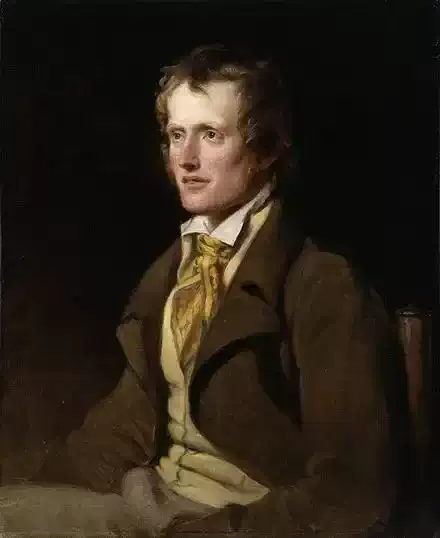
John Clare
Christmass
Christmass is come and every hearth
Makes room to give him welcome now
Een want will dry its tears in mirth
And crown him wi a holly bough
Tho tramping neath a winters sky
Oer snow track paths and ryhmey stiles
The huswife sets her spining bye
And bids him welcome wi her smiles
Each house is swept the day before
And windows stuck wi evergreens
The snow is beesomd from the door
And comfort crowns the cottage scenes
Gilt holly wi its thorny pricks
And yew and box wi berrys small
These deck the unusd candlesticks
And pictures hanging by the wall
Neighbours resume their anual cheer
Wishing wi smiles and spirits high
Clad christmass and a happy year
To every morning passer bye
Milk maids their christmass journeys go
Accompanyd wi favourd swain
And childern pace the crumping snow
To taste their grannys cake again
Hung wi the ivys veining bough
The ash trees round the cottage farm
Are often stript of branches now
The cotters christmass hearth to warm
He swings and twists his hazel band
And lops them off wi sharpend hook
And oft brings ivy in his hand
To decorate the chimney nook
Old winter whipes his ides bye
And warms his fingers till he smiles
Where cottage hearths are blazing high
And labour resteth from his toils
Wi merry mirth beguiling care
Old customs keeping wi the day
Friends meet their christmass cheer to share
And pass it in a harmless way
Old customs O I love the sound
However simple they may be
What ere wi time has sanction found
Is welcome and is dear to me
Pride grows above simplicity
And spurns it from her haughty mind
And soon the poets song will be
The only refuge they can find
The shepherd now no more afraid
Since custom doth the chance bestow
Starts up to kiss the giggling maid
Beneath the branch of mizzletoe
That neath each cottage beam is seen
Wi pearl-like-berrys shining gay
The shadow still of what hath been
Which fashion yearly fades away
And singers too a merry throng
At early morn wi simple skill
Yet imitate the angels song
And chant their christmass ditty still
And mid the storm that dies and swells
By fits-in humings softly steals
The music of the village bells
Ringing round their merry peals
And when its past a merry crew
Bedeckt in masks and ribbons gay
The 'Morrice danse' their sports renew
And act their winter evening play
The clown-turnd-kings for penny praise
Storm wi the actors strut and swell
And harlequin a laugh to raise
Wears his hump back and tinkling bell
And oft for pence and spicy ale
Wi winter nosgays pind before
The wassail singer tells her tale
And drawls her christmass carrols oer
The prentice boy wi ruddy face
And ryhme bepowderd dancing locks
From door to door wi happy pace
Runs round to claim his 'christmass box'
The block behind the fire is put
To sanction customs old desires
And many a faggots bands are cut
For the old farmers christmass fires
Where loud tongd gladness joins the throng
And winter meets the warmth of may
Feeling by times the heat too strong
And rubs his shins and draws away
While snows the window panes bedim
The fire curls up a sunny charm
Where creaming oer the pitchers rim
The flowering ale is set to warm
Mirth full of joy as summer bees
Sits there its pleasures to impart
While childern tween their parents knees
Sing scraps of carrols oer by heart
And some to view the winter weathers
Climb up the window seat wi glee
Likening the snow to falling feathers
In fancys infant extacy
Laughing wi superstitious love
Oer visions wild that youth supplyes
Of people pulling geese above
And keeping christmass in the skyes
As tho the homstead trees were drest
In lieu of snow wi dancing leaves
As. tho the sundryd martins nest
Instead of ides hung the eaves
The childern hail the happy day
As if the snow was april grass
And pleasd as neath the warmth of may
Sport oer the water froze to glass
Thou day of happy sound and mirth
That long wi childish memory stays
How blest around the cottage hearth
I met thee in my boyish days
Harping wi raptures dreaming joys
On presents that thy coming found
The welcome sight of little toys
The christmass gifts of comers round
'The wooden horse wi arching head
Drawn upon wheels around the room
The gilded coach of ginger bread
And many colord sugar plumb
Gilt coverd books for pictures sought
Or storys childhood loves to tell
Wi many a urgent promise bought
To get tomorrows lesson well
And many a thing a minutes sport
Left broken on the sanded floor
When we woud leave our play and court
Our parents promises for more
Tho manhood bids such raptures dye
And throws such toys away as vain
Yet memory loves to turn her eye
And talk such pleasures oer again
Around the glowing hearth at night
The harmless laugh and winter tale
Goes round-while parting friends delight
To toast each other oer their ale
The cotter oft wi quiet zeal
Will musing oer his bible lean
While in the dark the lovers steal
To kiss and toy behind the screen
The yule cake dotted thick wi plumbs
Is on each supper table found
And cats look up for falling crumbs
Which greedy childern litter round
And huswifes sage stuffd seasond chine
Long hung in chimney nook to drye
And boiling eldern berry wine
To drink the christmass eves 'good bye'
392

Jonathan Swift
A Maypole
Deprived of root, and branch and rind,
Yet flowers I bear of every kind:
And such is my prolific power,
They bloom in less than half an hour;
Yet standers-by may plainly see
They get no nourishment from me.
My head with giddiness goes round,
And yet I firmly stand my ground:
All over naked I am seen,
And painted like an Indian queen.
No couple-beggar in the land
E'er joined such numbers hand in hand.
I joined them fairly with a ring;
Nor can our parson blame the thing.
And though no marriage words are spoke,
They part not till the ring is broke;
Yet hypocrite fanatics cry,
I'm but an idol raised on high;
And once a weaver in our town,
A damned Cromwellian, knocked me down.
I lay a prisoner twenty years,
And then the jovial cavaliers
To their old post restored all three -
I mean the church, the king, and me.
386

Henry Wadsworth Longfellow
The Song Of Hiawatha I: The Peace-Pipe
On the Mountains of the Prairie,
On the great Red Pipe-stone Quarry,
Gitche Manito, the mighty,
He the Master of Life, descending,
On the red crags of the quarry
Stood erect, and called the nations,
Called the tribes of men together.
From his footprints flowed a river,
Leaped into the light of morning,
O'er the precipice plunging downward
Gleamed like Ishkoodah, the comet.
And the Spirit, stooping earthward,
With his finger on the meadow
Traced a winding pathway for it,
Saying to it, 'Run in this way!'
From the red stone of the quarry
With his hand he broke a fragment,
Moulded it into a pipe-head,
Shaped and fashioned it with figures;
From the margin of the river
Took a long reed for a pipe-stem,
With its dark green leaves upon it;
Filled the pipe with bark of willow,
With the bark of the red willow;
Breathed upon the neighboring forest,
Made its great boughs chafe together,
Till in flame they burst and kindled;
And erect upon the mountains,
Gitche Manito, the mighty,
Smoked the calumet, the Peace-Pipe,
As a signal to the nations.
And the smoke rose slowly, slowly,
Through the tranquil air of morning,
First a single line of darkness,
Then a denser, bluer vapor,
Then a snow-white cloud unfolding,
Like the tree-tops of the forest,
Ever rising, rising, rising,
Till it touched the top of heaven,
Till it broke against the heaven,
And rolled outward all around it.
From the Vale of Tawasentha,
From the Valley of Wyoming,
From the groves of Tuscaloosa,
From the far-off Rocky Mountains,
From the Northern lakes and rivers
All the tribes beheld the signal,
Saw the distant smoke ascending,
The Pukwana of the Peace-Pipe.
And the Prophets of the nations
Said: 'Behold it, the Pukwana!
By the signal of the Peace-Pipe,
Bending like a wand of willow,
Waving like a hand that beckons,
Gitche Manito, the mighty,
Calls the tribes of men together,
Calls the warriors to his council!'
Down the rivers, o'er the prairies,
Came the warriors of the nations,
Came the Delawares and Mohawks,
Came the Choctaws and Camanches,
Came the Shoshonies and Blackfeet,
Came the Pawnees and Omahas,
Came the Mandans and Dacotahs,
Came the Hurons and Ojibways,
All the warriors drawn together
By the signal of the Peace-Pipe,
To the Mountains of the Prairie,
To the great Red Pipe-stone Quarry,
And they stood there on the meadow,
With their weapons and their war-gear,
Painted like the leaves of Autumn,
Painted like the sky of morning,
Wildly glaring at each other;
In their faces stem defiance,
In their hearts the feuds of ages,
The hereditary hatred,
The ancestral thirst of vengeance.
Gitche Manito, the mighty,
The creator of the nations,
Looked upon them with compassion,
With paternal love and pity;
Looked upon their wrath and wrangling
But as quarrels among children,
But as feuds and fights of children!
Over them he stretched his right hand,
To subdue their stubborn natures,
To allay their thirst and fever,
By the shadow of his right hand;
Spake to them with voice majestic
As the sound of far-off waters,
Falling into deep abysses,
Warning, chiding, spake in this wise :
'O my children! my poor children!
Listen to the words of wisdom,
Listen to the words of warning,
From the lips of the Great Spirit,
From the Master of Life, who made you!
'I have given you lands to hunt in,
I have given you streams to fish in,
I have given you bear and bison,
I have given you roe and reindeer,
I have given you brant and beaver,
Filled the marshes full of wild-fowl,
Filled the rivers full of fishes:
Why then are you not contented?
Why then will you hunt each other?
'I am weary of your quarrels,
Weary of your wars and bloodshed,
Weary of your prayers for vengeance,
Of your wranglings and dissensions;
All your strength is in your union,
All your danger is in discord;
Therefore be at peace henceforward,
And as brothers live together.
'I will send a Prophet to you,
A Deliverer of the nations,
Who shall guide you and shall teach you,
Who shall toil and suffer with you.
If you listen to his counsels,
You will multiply and prosper;
If his warnings pass unheeded,
You will fade away and perish!
'Bathe now in the stream before you,
Wash the war-paint from your faces,
Wash the blood-stains from your fingers,
Bury your war-clubs and your weapons,
Break the red stone from this quarry,
Mould and make it into Peace-Pipes,
Take the reeds that grow beside you,
Deck them with your brightest feathers,
Smoke the calumet together,
And as brothers live henceforward!'
Then upon the ground the warriors
Threw their cloaks and shirts of deer-skin,
Threw their weapons and their war-gear,
Leaped into the rushing river,
Washed the war-paint from their faces.
Clear above them flowed the water,
Clear and limpid from the footprints
Of the Master of Life descending;
Dark below them flowed the water,
Soiled and stained with streaks of crimson,
As if blood were mingled with it!
From the river came the warriors,
Clean and washed from all their war-paint;
On the banks their clubs they buried,
Buried all their warlike weapons.
Gitche Manito, the mighty,
The Great Spirit, the creator,
Smiled upon his helpless children!
And in silence all the warriors
Broke the red stone of the quarry,
Smoothed and formed it into Peace-Pipes,
Broke the long reeds by the river,
Decked them with their brightest feathers,
And departed each one homeward,
While the Master of Life, ascending,
Through the opening of cloud-curtains,
Through the doorways of the heaven,
Vanished from before their faces,
In the smoke that rolled around him,
The Pukwana of the Peace-Pipe!
383
Henry Wadsworth Longfellow
Evangeline: Part The First. IV.
PLEASANTLY rose next morn the sun on the village of Grand-Pré.
Pleasantly gleamed in the soft, sweet air the Basin of Minas,
Where the ships, with their wavering shadows, were riding at anchor.
Life had long been astir in the village, and clamorous labor
Knocked with its hundred hands at the golden gates of the morning.
Now from the country around, from the farms and neighboring hamlets,
Came in their holiday dresses the blithe Acadian peasants.
Many a glad good morrow and jocund laugh from the young folk
Made the bright air brighter, as up from the numerous meadows,
Where no path could be seen but the track of wheels in the greensward,
Group after group appeared, and joined, or passed on the highway.
Long ere noon, in the village all sounds of labor were silenced.
Thronged were the streets with people; and noisy groups at the house-doors
Sat in the cheerful sun, and rejoiced and gossiped together,
Every house was an inn, where all were welcomed and feasted;
For with this simple people, who lived like brothers together,
All things were held in common, and what one had was another's.
Yet under Benedict's roof hospitality seemed more abundant:
For Evangeline stood among the guests of her father;
Bright was her face with smiles, and words of welcome and gladness
Fell from her beautiful lips, and blessed the cup as she gave it.
Under the open sky, in the odorous air of the orchard,
Bending with golden fruit, was spread the feast of betrothal.
There in the shade of the porch were the priest and the notary seated;
There good Benedict sat, and sturdy Basil the blacksmith.
Not far withdrawn from these, by the cider-press and the beehives,
Michael the fiddler was placed, with the gayest of hearts and of waistcoats.
Shadow and light from the leaves alternately played on his snow-white
Hair, as it waved in the wind; and the jolly face of the fiddler
Glowed like a living coal when the ashes are blown from the embers.
Gayly the old man sang to the vibrant sound of his fiddle,
Tous les Bourgeois de Chartres, and Le Carillon de Dunkerque,
And anon with his wooden shoes beat time to the music.
Merrily, merrily whirled the wheels of the dizzying dances
Under the orchard-trees and down the path to the meadows;
Old folk and young together, and children mingled among them.
Fairest of all the maids was Evangeline, Benedict's daughter!
Noblest of all the youths was Gabriel, son of the blacksmith!
So passed the morning away. And lo! with a summons sonorous
Sounded the bell from its tower, and over the meadows a drum beat.
Thronged erelong was the church with men. Without, in the churchyard,
Waited the women. They stood by the graves, and hung on the headstones
Garlands of autumn-leaves and evergreens fresh from the forest.
Then came the guard from the ships, and marching proudly among them
Entered the sacred portal. With loud and dissonant clangor
Echoed the sound of their brazen drums from ceiling and casement,-
Echoed a moment only, and slowly the ponderous portal
Closed, and in silence the crowd awaited the will of the soldiers.
Then uprose their commander, and spake from the steps of the altar,
Holding aloft in his hands, with its seals, the royal commission.
'You are convened this day,' he said, 'by his Majesty's orders.
Clement and kind has he been; but how you have answered his kindness,
Let your own hearts reply! To my natural make and my temper
Painful the task is I do, which to you I know must be grievous.
Yet must I bow and obey, and deliver the will of our monarch;
Namely, that all your lands, and dwellings, and cattle of all kinds
Forfeited be to the crown; and that you yourselves from this province
Be transported to other lands. God grant you may dwell there
Ever as faithful subjects, a happy and peaceable people!
Prisoners now I declare you; for such is his Majesty's pleasure!'
As, when the air is serene in the sultry solstice of summer,
Suddenly gathers a storm, and the deadly sling of the hailstones
Beats down the farmer's corn in the field and shatters his windows,
Hiding the sun, and strewing the ground with thatch from the house-roofs,
Bellowing fly the herds, and seek to break their enclosures;
So on the hearts of the people descended the words of the speaker.
Silent a moment they stood in speechless wonder, and then rose
Louder and ever louder a wail of sorrow and anger,
And, by one impulse moved, they madly rushed to the door-way.
Vain was the hope of escape; and cries and fierce imprecations
Rang through the house of prayer; and high o'er the heads of the others
Rose, with his arms uplifted, the figure of Basil the blacksmith,
As, on a stormy sea, a spar is tossed by the billows.
Flushed was his face and distorted with passion; and wildly he shouted,'
Down with the tyrants of England! we never have sworn them allegiance!
Death to these foreign soldiers, who seize on our homes and our harvests!'
More he fain would have said, but the merciless hand of a soldier
Smote him upon the mouth, and dragged him down to the pavement.
In the midst of the strife and tumult of angry contention,
Lo! the door of the chancel opened, and Father Felician
Entered, with serious mien, and ascended the steps of the altar.
Raising his reverend hand, with a gesture he awed into silence
All that clamorous throng; and thus he spake to his people;
Deep were his tones and solemn; in accents measured and mournful
Spake he, as, after the tocsin's alarum, distinctly the clock strikes.
'What is this that ye do, my children? what madness has seized you?
Forty years of my life have I labored among you, and taught you,
Not in word alone, but in deed, to love one another!
Is this the fruit of my toils, of my vigils and prayers and privations?
Have you so soon forgotten all lessons of love and forgiveness?
This is the house of the Prince of Peace, and would you profane it
Thus with violent deeds and hearts overflowing with hatred?
Lo! where the crucified Christ from his cross is gazing upon you!
See! in those sorrowful eyes what meekness and holy compassion!
Hark! how those lips still repeat the prayer, `O Father, forgive them!'
Let us repeat that prayer in the hour when the wicked assail us,
Let us repeat it now, and say, `O Father, forgive them!' '
Few were his words of rebuke, but deep in the hearts of his people
Sank they, and sobs of contrition succeeded the passionate outbreak,
And they repeated his prayer, and said, 'O Father, forgive them!'
Then came the evening service. The tapers gleamed from the altar.
Fervent and deep was the voice of the priest, and the people responded,
Not with their lips alone, but their hearts; and the Ave Maria
Sang they, and fell on their knees, and their souls, with devotion translated,
Rose on the ardor of prayer, like Elijah ascending to heaven.
Meanwhile had spread in the village the tidings of ill, and on all sides
Wandered, wailing, from house to house the women and children.
Long at her father's door Evangeline stood, with her right hand
Shielding her eyes from the level rays of the sun, that, descending,
Lighted the village street with mysterious splendor, and roofed each
Peasant's cottage with golden thatch, and emblazoned its windows.
Long within had been spread the snow-white cloth on the table;
There stood the wheaten loaf, and the honey fragrant with wild-flowers;
There stood the tankard of ale, and the cheese fresh brought from the dairy,
And, at the head of the board, the great arm-chair of the farmer.
Thus did Evangeline wait at her father's door, as the sunset
Threw the long shadows of trees o'er the broad ambrosial meadows.
Ah! on her spirit within a deeper shadow had fallen,
And from the fields of her soul a fragrance celestial ascended,-
Charity, meekness, love, and hope, and forgiveness, and patience!
Then, all-forgetful of self, she wandered into the village,
Cheering with looks and words the disconsolate hearts of the women,
As o'er the darkening fields with lingering steps they departed,
Urged by their household cares, and the weary feet of their children.
Down sank the great red sun, and in golden, glimmering vapors
Veiled the light of his face, like the Prophet descending from Sinai.
Sweetly over the village the bell of the Angelus sounded.
Meanwhile, amid the gloom, by the church Evangeline lingered.
All was silent within; and in vain at the door and the windows
Stood she, and listened and looked, till, overcome by emotion,
'Gabriel!' cried she aloud with tremulous voice; but no answer
Came from the graves of the dead, nor the gloomier grave of the living.
Slowly at length she returned to the tenantless house of her father.
Smouldered the fire on the hearth, on the board stood the supper untasted,
Empty and drear was each room, and haunted with phantoms of terror.
Sadly echoed her step on the stair and the floor of her chamber.
In the dead of the night she heard the whispering rain fall
Loud on the withered leaves of the sycamore-tree by the window.
Keenly the lightning flashed; and the voice of the echoing thunder
Told her that God was in heaven, and governed the world he created!
Then she remembered the tale she had heard of the justice of Heaven;
Soothed was her troubled soul, and she peacefully slumbered till morning.
383
Henry Wadsworth Longfellow
The Luck of Edenhall. From The German Of Uhland
Of Edenhall, the youthful Lord
Bids sound the festal trumpet's call.
He rises at the banquet board,
And cries, 'mid the drunken revellers all,
'Now bring me the Luck of Edenhall!'
The butler hears the words with pain,
The house's oldest seneschal,
Takes slow from its silken cloth again
The drinking glass of crystal tall;
They call it The Luck of Edenhall.
Then said the Lord, 'This glass to praise,
Fill with red wine from Portugal!'
The graybeard with trembling hand obeys;
A purple light shines over all,
It beams from the Luck of Edenhall.
Then speaks the Lord, and waves it light:
'This glass of flashing crystal tall
Gave to my sires the Fountain-Sprite;
She wrote in it,
If this glass doth fall,
Farewell then, O Luck of Edenhall!
''Twas right a goblet the Fate should be
Of the joyous race of Edenhall!
Deep draughts drink we right willingly:
And willingly ring, with merry call,
Kling! klang! to the Luck of Edenhall!'
First rings it deep, and full, and mild,
Like to the song of a nightingale
Then like the roar of a torrent wild;
Then mutters at last like the thunder's fall,
The glorious Luck of Edenhall.
'For its keeper takes a race of might,
The fragile goblet of crystal tall;
It has lasted longer than is right;
King! klang!--with a harder blow than all
Will I try the Luck of Edenhall!'
As the goblet ringing flies apart,
Suddenly cracks the vaulted hall;
And through the rift, the wild flames start;
The guests in dust are scattered all,
With the breaking Luck of Edenhall!
In storms the foe, with fire and sword;
He in the night had scaled the wall,
Slain by the sword lies the youthful Lord,
But holds in his hand the crystal tall,
The shattered Luck of Edenhall.
On the morrow the butler gropes alone,
The graybeard in the desert hall,
He seeks his Lord's burnt skeleton,
He seeks in the dismal ruin's fall
The shards of the Luck of Edenhall.
'The stone wall,' saith he, 'doth fall aside,
Down must the stately columns fall;
Glass is this earth's Luck and Pride;
In atoms shall fall this earthly ball
One day like the Luck of Edenhall!'
380

Robert Louis Stevenson
Tales Of Arabia
YES, friend, I own these tales of Arabia
Smile not, as smiled their flawless originals,
Age-old but yet untamed, for ages
Pass and the magic is undiminished.
Thus, friend, the tales of the old Camaralzaman,
Ayoub, the Slave of Love, or the Calendars,
Blind-eyed and ill-starred royal scions,
Charm us in age as they charmed in childhood.
Fair ones, beyond all numerability,
Beam from the palace, beam on humanity,
Bright-eyed, in truth, yet soul-less houris
Offering pleasure and only pleasure.
Thus they, the venal Muses Arabian,
Unlike, indeed, the nobler divinities,
Greek Gods or old time-honoured muses,
Easily proffer unloved caresses.
Lost, lost, the man who mindeth the minstrelsy;
Since still, in sandy, glittering pleasances,
Cold, stony fruits, gem-like but quite in-
Edible, flatter and wholly starve him.
381

Ella Wheeler Wilcox
In England
In England, there are wrongs no doubt,
Which should be righted; so men say,
Who seek to weed earth's garden out,
And give the roses right of way;
Yes, right of way, to fruit and rose,
Where now but poison ivy grows.
In England, there is wide unrest,
They tell me who should know; and yet
I saw but hedges, gayly dressed,
And eyes where love and kindness met;
Yes, love and kindness, met and made
Soft sunshine even in the shade.
In England, there are haunting things
Which follow one to other lands;
Like some pervading scent that clings
To laces touched by vanished hands;
Yes, touched by vanished hands, which made
A fragrance that defies the grave.
In England, centuries of art
Give common things a mellow tone;
And wake old memories in the heart
Of other lives the soul has known;
Yes, other lives in some past age
Start forth from canvas, and from page.
In England, there are simple joys,
The modern world has left all sweet;
In London's heart, are nooks where noise
Has entered but with slippered feet;
Yes, entered softly. Friend, believe,
To part from England is to grieve.
377
Henry Wadsworth Longfellow
Hiawatha's Wedding-Feast
You shall hear how Pau-Puk-Keewis,
How the handsome Yenadizze
Danced at Hiawatha's wedding;
How the gentle Chibiabos,
He the sweetest of musicians,
Sang his songs of love and longing;
How Iagoo, the great boaster,
He the marvellous story-teller,
Told his tales of strange adventure,
That the feast might be more joyous,
That the time might pass more gayly,
And the guests be more contented.
Sumptuous was the feast Nokomis
Made at Hiawatha's wedding;
All the bowls were made of bass-wood,
White and polished very smoothly,
All the spoons of horn of bison,
Black and polished very smoothly.
She had sent through all the village
Messengers with wands of willow,
As a sign of invitation,
As a token of the feasting;
And the wedding guests assembled,
Clad in all their richest raiment,
Robes of fur and belts of wampum,
Splendid with their paint and plumage,
Beautiful with beads and tassels.
First they ate the sturgeon, Nahma,
And the pike, the Maskenozha,
Caught and cooked by old Nokomis;
Then on pemican they feasted,
Pemican and buffalo marrow,
Haunch of deer and hump of bison,
Yellow cakes of the Mondamin,
And the wild rice of the river.
But the gracious Hiawatha,
And the lovely Laughing Water,
And the careful old Nokomis,
Tasted not the food before them,
Only waited on the others
Only served their guests in silence.
And when all the guests had finished,
Old Nokomis, brisk and busy,
From an ample pouch of otter,
Filled the red-stone pipes for smoking
With tobacco from the South-land,
Mixed with bark of the red willow,
And with herbs and leaves of fragrance.
Then she said, "O Pau-Puk-Keewis,
Dance for us your merry dances,
Dance the Beggar's Dance to please us,
That the feast may be more joyous,
That the time may pass more gayly,
And our guests be more contented!"
Then the handsome Pau-Puk-Keewis,
He the idle Yenadizze,
He the merry mischief-maker,
Whom the people called the Storm-Fool,
Rose among the guests assembled.
Skilled was he in sports and pastimes,
In the merry dance of snow-shoes,
In the play of quoits and ball-play;
Skilled was he in games of hazard,
In all games of skill and hazard,
Pugasaing, the Bowl and Counters,
Kuntassoo, the Game of Plum-stones.
Though the warriors called him Faint-Heart,
Called him coward, Shaugodaya,
Idler, gambler, Yenadizze,
Little heeded he their jesting,
Little cared he for their insults,
For the women and the maidens
Loved the handsome Pau-Puk-Keewis.
He was dressed in shirt of doeskin,
White and soft, and fringed with ermine,
All inwrought with beads of wampum;
He was dressed in deer-skin leggings,
Fringed with hedgehog quills and ermine,
And in moccasins of buck-skin,
Thick with quills and beads embroidered.
On his head were plumes of swan's down,
On his heels were tails of foxes,
In one hand a fan of feathers,
And a pipe was in the other.
Barred with streaks of red and yellow,
Streaks of blue and bright vermilion,
Shone the face of Pau-Puk-Keewis.
From his forehead fell his tresses,
Smooth, and parted like a woman's,
Shining bright with oil, and plaited,
Hung with braids of scented grasses,
As among the guests assembled,
To the sound of flutes and singing,
To the sound of drums and voices,
Rose the handsome Pau-Puk-Keewis,
And began his mystic dances.
First he danced a solemn measure,
Very slow in step and gesture,
In and out among the pine-trees,
Through the shadows and the sunshine,
Treading softly like a panther.
Then more swiftly and still swifter,
Whirling, spinning round in circles,
Leaping o'er the guests assembled,
Eddying round and round the wigwam,
Till the leaves went whirling with him,
Till the dust and wind together
Swept in eddies round about him.
Then along the sandy margin
Of the lake, the Big-Sea-Water,
On he sped with frenzied gestures,
Stamped upon the sand, and tossed it
Wildly in the air around him;
Till the wind became a whirlwind,
Till the sand was blown and sifted
Like great snowdrifts o'er the landscape,
Heaping all the shores with Sand Dunes,
Sand Hills of the Nagow Wudjoo!
Thus the merry Pau-Puk-Keewis
Danced his Beggar's Dance to please them,
And, returning, sat down laughing
There among the guests assembled,
Sat and fanned himself serenely
With his fan of turkey-feathers.
Then they said to Chibiabos,
To the friend of Hiawatha,
To the sweetest of all singers,
To the best of all musicians,
"Sing to us, O Chibiabos!
Songs of love and songs of longing,
That the feast may be more joyous,
That the time may pass more gayly,
And our guests be more contented!"
And the gentle Chibiabos
Sang in accents sweet and tender,
Sang in tones of deep emotion,
Songs of love and songs of longing;
Looking still at Hiawatha,
Looking at fair Laughing Water,
Sang he softly, sang in this wise:
"Onaway! Awake, beloved!
Thou the wild-flower of the forest!
Thou the wild-bird of the prairie!
Thou with eyes so soft and fawn-like!
"If thou only lookest at me,
I am happy, I am happy,
As the lilies of the prairie,
When they feel the dew upon them!
"Sweet thy breath is as the fragrance
Of the wild-flowers in the morning,
As their fragrance is at evening,
In the Moon when leaves are falling.
"Does not all the blood within me
Leap to meet thee, leap to meet thee,
As the springs to meet the sunshine,
In the Moon when nights are brightest?
"Onaway! my heart sings to thee,
Sings with joy when thou art near me,
As the sighing, singing branches
In the pleasant Moon of Strawberries!
"When thou art not pleased, beloved,
Then my heart is sad and darkened,
As the shining river darkens
When the clouds drop shadows on it!
"When thou smilest, my beloved,
Then my troubled heart is brightened,
As in sunshine gleam the ripples
That the cold wind makes in rivers.
"Smiles the earth, and smile the waters,
Smile the cloudless skies above us,
But I lose the way of smiling
When thou art no longer near me!
"I myself, myself! behold me!
Blood of my beating heart, behold me!
Oh awake, awake, beloved!
Onaway! awake, beloved!"
Thus the gentle Chibiabos
Sang his song of love and longing;
And Iagoo, the great boaster,
He the marvellous story-teller,
He the friend of old Nokomis,
Jealous of the sweet musician,
Jealous of the applause they gave him,
Saw in all the eyes around him,
Saw in all their looks and gestures,
That the wedding guests assembled
Longed to hear his pleasant stories,
His immeasurable falsehoods.
Very boastful was Iagoo;
Never heard he an adventure
But himself had met a greater;
Never any deed of daring
But himself had done a bolder;
Never any marvellous story
But himself could tell a stranger.
Would you listen to his boasting,
Would you only give him credence,
No one ever shot an arrow
Half so far and high as he had;
Ever caught so many fishes,
Ever killed so many reindeer,
Ever trapped so many beaver!
None could run so fast as he could,
None could dive so deep as he could,
None could swim so far as he could;
None had made so many journeys,
None had seen so many wonders,
As this wonderful Iagoo,
As this marvellous story-teller!
Thus his name became a by-word
And a jest among the people;
And whene'er a boastful hunter
Praised his own address too highly,
Or a warrior, home returning,
Talked too much of his achievements,
All his hearers cried, "Iagoo!
Here's Iagoo come among us!"
He it was who carved the cradle
Of the little Hiawatha,
Carved its framework out of linden,
Bound it strong with reindeer sinews;
He it was who taught him later
How to make his bows and arrows,
How to make the bows of ash-tree,
And the arrows of the oak-tree.
So among the guests assembled
At my Hiawatha's wedding
Sat Iagoo, old and ugly,
Sat the marvellous story-teller.
And they said, "O good Iagoo,
Tell us now a tale of wonder,
Tell us of some strange adventure,
That the feast may be more joyous,
That the time may pass more gayly,
And our guests be more contented!"
And Iagoo answered straightway,
"You shall hear a tale of wonder,
You shall hear the strange adventures
Of Osseo, the Magician,
From the Evening Star descending."
372
John Clare
The Cross Roads; Or, The Haymaker's Story
Stopt by the storm, that long in sullen black
From the south-west stained its encroaching track,
Haymakers, hustling from the rain to hide,
Sought the grey willows by the pasture-side;
And there, while big drops bow the grassy stems,
And bleb the withering hay with pearly gems,
Dimple the brook, and patter in the leaves,
The song or tale an hour's restraint relieves.
And while the old dames gossip at their ease,
And pinch the snuff-box empty by degrees,
The young ones join in love's delightful themes,
Truths told by gipsies, and expounded dreams;
And mutter things kept secrets from the rest,
As sweethearts' names, and whom they love the best;
And dazzling ribbons they delight to show,
And last new favours of some veigling beau,
Who with such treachery tries their hearts to move,
And, like the highest, bribes the maidens' love.
The old dames, jealous of their whispered praise,
Throw in their hints of man's deluding ways;
And one, to give her counsels more effect,
And by example illustrate the fact
Of innocence oercome by flattering man,
Thrice tapped her box, and pinched, and thus began.
'Now wenches listen, and let lovers lie,
Ye'll hear a story ye may profit by;
I'm your age treble, with some oddments to't,
And right from wrong can tell, if ye'll but do't:
Ye need not giggle underneath your hat,
Mine's no joke-matter, let me tell you that;
So keep ye quiet till my story's told,
And don't despise your betters cause they're old.
'That grave ye've heard of, where the four roads meet,
Where walks the spirit in a winding-sheet,
Oft seen at night, by strangers passing late,
And tarrying neighbours that at market wait,
Stalking along as white as driven snow,
And long as one's shadow when the sun is low;
The girl that's buried there I knew her well,
And her whole history, if ye'll hark, can tell.
Her name was Jane, and neighbour's children we,
And old companions once, as ye may be;
And like to you, on Sundays often strolled
To gipsies' camps to have our fortunes told;
And oft, God rest her, in the fortune-book
Which we at hay-time in our pockets took,
Our pins at blindfold on the wheel we stuck,
When hers would always prick the worst of luck;
For try, poor thing, as often as she might,
Her point would always on the blank alight;
Which plainly shows the fortune one's to have,
As such like go unwedded to the grave,--
And so it proved.--The next succeeding May,
We both to service went from sports and play,
Though in the village still; as friends and kin
Thought neighbour's service better to begin.
So out we went:--Jane's place was reckoned good,
Though she bout life but little understood,
And had a master wild as wild can be,
And far unfit for such a child as she;
And soon the whisper went about the town,
That Jane's good looks procured her many a gown
From him, whose promise was to every one,
But whose intention was to wive with none.
Twas nought to wonder, though begun by guess;
For Jane was lovely in her Sunday dress,
And all expected such a rosy face
Would be her ruin--as was just the case.
The while the change was easily perceived,
Some months went by, ere I the tales believed;
For there are people nowadays, Lord knows,
Will sooner hatch up lies than mend their clothes;
And when with such-like tattle they begin,
Don't mind whose character they spoil a pin:
But passing neighbours often marked them smile,
And watched him take her milkpail oer a stile;
And many a time, as wandering closer by,
From Jenny's bosom met a heavy sigh;
And often marked her, as discoursing deep,
When doubts might rise to give just cause to weep,
Smothering their notice, by a wished disguise
To slive her apron corner to her eyes.
Such signs were mournful and alarming things,
And far more weighty than conjecture brings;
Though foes made double what they heard of all,
Swore lies as proofs, and prophesied her fall.
Poor thoughtless wench! it seems but Sunday past
Since we went out together for the last,
And plain enough indeed it was to find
She'd something more than common on her mind;
For she was always fond and full of chat,
In passing harmless jokes bout beaus and that,
But nothing then was scarcely talked about,
And what there was, I even forced it out.
A gloomy wanness spoiled her rosy cheek,
And doubts hung there it was not mine to seek;
She neer so much as mentioned things to come,
But sighed oer pleasures ere she left her home;
And now and then a mournful smile would raise
At freaks repeated of our younger days,
Which I brought up, while passing spots of ground
Where we, when children, 'hurly-burlied' round,
Or 'blindman-buffed' some morts of hours away--
Two games, poor thing, Jane dearly loved to play.
She smiled at these, but shook her head and sighed
When eer she thought my look was turned aside;
Nor turned she round, as was her former way,
To praise the thorn, white over then with May;
Nor stooped once, though thousands round her grew,
To pull a cowslip as she used to do:
For Jane in flowers delighted from a child--
I like the garden, but she loved the wild--
And oft on Sundays young men's gifts declined,
Posies from gardens of the sweetest kind,
And eager scrambled the dog-rose to get,
And woodbine-flowers at every bush she met.
The cowslip blossom, with its ruddy streak,
Would tempt her furlongs from the path to seek;
And gay long purple, with its tufty spike,
She'd wade oer shoes to reach it in the dyke;
And oft, while scratching through the briary woods
For tempting cuckoo-flowers and violet buds,
Poor Jane, I've known her crying sneak to town,
Fearing her mother, when she'd torn her gown.
Ah, these were days her conscience viewed with pain,
Which all are loth to lose, as well as Jane.
And, what I took more odd than all the rest,
Was, that same night she neer a wish exprest
To see the gipsies, so beloved before,
That lay a stone's throw from us on the moor:
I hinted it; she just replied again--
She once believed them, but had doubts since then.
And when we sought our cows, I called, 'Come mull!'
But she stood silent, for her heart was full.
She loved dumb things: and ere she had begun
To milk, caressed them more than eer she'd done;
But though her tears stood watering in her eye,
I little took it as her last good-bye;
For she was tender, and I've often known
Her mourn when beetles have been trampled on:
So I neer dreamed from this, what soon befell,
Till the next morning rang her passing-bell.
My story's long, but time's in plenty yet,
Since the black clouds betoken nought but wet;
And I'll een snatch a minute's breath or two,
And take another pinch, to help me through.
'So, as I said, next morn I heard the bell,
And passing neighbours crossed the street, to tell
That my poor partner Jenny had been found
In the old flag-pool, on the pasture, drowned.
God knows my heart! I twittered like a leaf,
And found too late the cause of Sunday's grief;
For every tongue was loosed to gabble oer
The slanderous things that secret passed before:
With truth or lies they need not then be strict,
The one they railed at could not contradict.
Twas now no secret of her being beguiled,
For every mouth knew Jenny died with child;
And though more cautious with a living name,
Each more than guessed her master bore the blame.
That very morning, it affects me still,
Ye know the foot-path sidles down the hill,
Ignorant as babe unborn I passed the pond
To milk as usual in our close beyond,
And cows were drinking at the water's edge,
And horses browsed among the flags and sedge,
And gnats and midges danced the water oer,
Just as I've marked them scores of times before,
And birds sat singing, as in mornings gone,--
While I as unconcerned went soodling on,
But little dreaming, as the wakening wind
Flapped the broad ash-leaves oer the pond reclin'd,
And oer the water crinked the curdled wave,
That Jane was sleeping in her watery grave.
The neatherd boy that used to tend the cows,
While getting whip-sticks from the dangling boughs
Of osiers drooping by the water-side,
Her bonnet floating on the top espied;
He knew it well, and hastened fearful down
To take the terror of his fears to town,--
A melancholy story, far too true;
And soon the village to the pasture flew,
Where, from the deepest hole the pond about,
They dragged poor Jenny's lifeless body out,
And took her home, where scarce an hour gone by
She had been living like to you and I.
I went with more, and kissed her for the last,
And thought with tears on pleasures that were past;
And, the last kindness left me then to do,
I went, at milking, where the blossoms grew,
And handfuls got of rose and lambtoe sweet,
And put them with her in her winding-sheet.
A wilful murder, jury made the crime;
Nor parson 'lowed to pray, nor bell to chime;
On the cross roads, far from her friends and kin,
The usual law for their ungodly sin
Who violent hands upon themselves have laid,
Poor Jane's last bed unchristian-like was made;
And there, like all whose last thoughts turn to heaven,
She sleeps, and doubtless hoped to be forgiven.
But, though I say't, for maids thus veigled in
I think the wicked men deserve the sin;
And sure enough we all at last shall see
The treachery punished as it ought to be.
For ere his wickedness pretended love,
Jane, I'll be bound, was spotless as the dove,
And's good a servant, still old folks allow,
As ever scoured a pail or milked a cow;
And ere he led her into ruin's way,
As gay and buxom as a summer's day:
The birds that ranted in the hedge-row boughs,
As night and morning we have sought our cows,
With yokes and buckets as she bounced along,
Were often deafed to silence with her song.
But now she's gone:--girls, shun deceitful men,
The worst of stumbles ye can fall agen;
Be deaf to them, and then, as twere, ye'll see
Your pleasures safe as under lock and key.
Throw not my words away, as many do;
They're gold in value, though they're cheap to you.
And husseys hearken, and be warned from this,
If ye love mothers, never do amiss:
Jane might love hers, but she forsook the plan
To make her happy, when she thought of man.
Poor tottering dame, it was too plainly known,
Her daughter's dying hastened on her own,
For from the day the tidings reached her door
She took to bed and looked up no more,
And, ere again another year came round,
She, well as Jane, was laid within the ground;
And all were grieved poor Goody's end to see:
No better neighbour entered house than she,
A harmless soul, with no abusive tongue,
Trig as new pins, and tight's the day was long;
And go the week about, nine times in ten
Ye'd find her house as cleanly as her sen.
But, Lord protect us! time such change does bring,
We cannot dream what oer our heads may hing;
The very house she lived in, stick and stone,
Since Goody died, has tumbled down and gone:
And where the marjoram once, and sage, and rue,
And balm, and mint, with curled-leaf parsley grew,
And double marygolds, and silver thyme,
And pumpkins neath the window used to climb;
And where I often when a child for hours
Tried through the pales to get the tempting flowers,
As lady's laces, everlasting peas,
True-love-lies-bleeding, with the hearts-at-ease,
And golden rods, and tansy running high
That oer the pale-tops smiled on passers-by,
Flowers in my time that every one would praise,
Though thrown like weeds from gardens nowadays;
Where these all grew, now henbane stinks and spreads,
And docks and thistles shake their seedy heads,
And yearly keep with nettles smothering oer;-
The house, the dame, the garden known no more:
While, neighbouring nigh, one lonely elder-tree
Is all that's left of what had used to be,
Marking the place, and bringing up with tears
The recollections of one's younger years.
And now I've done, ye're each at once as free
To take your trundle as ye used to be;
To take right ways, as Jenny should have ta'en,
Or headlong run, and be a second Jane;
For by one thoughtless girl that's acted ill
A thousand may be guided if they will:
As oft mong folks to labour bustling on,
We mark the foremost kick against a stone,
Or stumble oer a stile he meant to climb,
While hind ones see and shun the fall in time.
But ye, I will be bound, like far the best
Love's tickling nick-nacks and the laughing jest,
And ten times sooner than be warned by me,
Would each be sitting on some fellow's knee,
Sooner believe the lies wild chaps will tell
Than old dames' cautions, who would wish ye well:
So have your wills.'--She pinched her box again,
And ceased her tale, and listened to the rain,
Which still as usual pattered fast around,
And bowed the bent-head loaded to the ground;
While larks, their naked nest by force forsook,
Pruned their wet wings in bushes by the brook.
The maids, impatient now old Goody ceased,
As restless children from the school released,
Right gladly proving, what she'd just foretold,
That young ones' stories were preferred to old,
Turn to the whisperings of their former joy,
That oft deceive, but very rarely cloy.
368
Henry Wadsworth Longfellow
To The Driving Cloud
Gloomy and dark art thou, O chief of the mighty Omahas;
Gloomy and dark as the driving cloud, whose name thou hast taken!
Wrapped in thy scarlet blanket, I see thee stalk through the city's
Narrow and populous streets, as once by the margin of rivers
Stalked those birds unknown, that have left us only their
footprints.
What, in a few short years, will remain of thy race but the
footprints?
How canst thou walk these streets, who hast trod the green turf
of the prairies!
How canst thou breathe this air, who hast breathed the sweet air
of the mountains!
Ah! 'tis in vain that with lordly looks of disdain thou dost
challenge
Looks of disdain in return, and question these walls and these
pavements,
Claiming the soil for thy hunting-grounds, while down-trodden
millions
Starve in the garrets of Europe, and cry from its caverns that
they, too,
Have been created heirs of the earth, and claim its division!
Back, then, back to thy woods in the regions west of the Wabash!
There as a monarch thou reignest. In autumn the leaves of the
maple
Pave the floors of thy palace-halls with gold, and in summer
Pine-trees waft through its chambers the odorous breath of their
branches.
There thou art strong and great, a hero, a tamer of horses!
There thou chasest the stately stag on the banks of the Elkhorn,
Or by the roar of the Running-Water, or where the Omaha
Calls thee, and leaps through the wild ravine like a brave of the
Blackfeet!
Hark! what murmurs arise from the heart of those mountainous
deserts?
Is it the cry of the Foxes and Crows, or the mighty Behemoth,
Who, unharmed, on his tusks once caught the bolts of the thunder,
And now lurks in his lair to destroy the race of the red man?
Far more fatal to thee and thy race than the Crows and the Foxes,
Far more fatal to thee and thy race than the tread of Behemoth,
Lo! the big thunder-canoe, that steadily breasts the Missouri's
Merciless current! and yonder, afar on the prairies, the
camp-fires
Gleam through the night; and the cloud of dust in the gray of the
daybreak
Marks not the buffalo's track, nor the Mandan's dexterous
horse-race;
It is a caravan, whitening the desert where dwell the Camanches!
Ha! how the breath of these Saxons and Celts, like the blast of
the east-wind,
Drifts evermore to the west the scanty smokes of thy wigwams!
360

John Greenleaf Whittier
The Shoemakers
Ho! workers of the old time styled
The Gentle Craft of Leather!
Young brothers of the ancient guild,
Stand forth once more together!
Call out again your long array,
In the olden merry manner!
Once more, on gay St. Crispin's day,
Fling out your blazoned banner!
Rap, rap! upon the well-worn stone
How falls the polished hammer!
Rap, rap! the measured sound has grown
A quick and merry clamor.
Now shape the sole! now deftly curl
The glossy vamp around it,
And bless the while the bright-eyed girl
Whose gentle fingers bound it!
For you, along the Spanish main
A hundred keels are ploughing;
For you, the Indian on the plain
His lasso-coil is throwing;
For you, deep glens with hemlock dark
The woodman's fire is lighting;
For you, upon the oak's gray bark,
The woodman's axe is smiting.
For you, from Carolina's pine
The rosin-gum is stealing;
For you, the dark-eyed Florentine
Her silken skein is reeling;
For you, the dizzy goatherd roams
His rugged Alpine ledges;
For you, round all her shepherd homes,
Bloom England's thorny hedges.
The foremost still, by day or night,
On moated mound or heather,
Whete'er the need of trampled right
Brought toiling men together;
Where the free burghers from the wall
Defied the mail-clad master,
Than yours, at Freedom's trumpet-call,
No craftsmen rallied faster.
Let foplings sneer, let fools deride,
Ye heed no idle scorner;
Free hands and hearts are still your pride,
And duty done, your honor.
Ye dare to trust, for honest fame,
The jury Time empanels,
And leave to truth each noble name
Which glorifies your annals.
Thy songs, Han Sachs, are living yet,
In strong and hearty German;
And Bloomfield's lay, and Gifford's wit,
And patriot fame of Sherman;
Still from his book, a mystic seer,
The soul of Behmen teaches,
And England's priestcraft shakes to hear
Of Fox's leathern breeches.
The foot is yours; where'er it falls,
It treads your well-wrought leather,
On earthen floor, in marble halls,
On carpet, or on heather.
Still there the sweetest charm is found
Of matron grace or vestal's,
As Hebe's foot bore nectar round
Among the old celestials!
Rap, rap! — your stout and bluff brogan,
With footsteps slow and weary,
May wander where the sky's blue span
Shuts down upon the prairie.
On Beauty's foot your slippers glance,
By Saratoga's fountains,
Or twinkle down the summer dance
Beneath the Crystal Mountains!
The red brick to the mason's hand,
The brown earth to the tiller's,
The shoe in yours shall wealth command,
Like fairy Cinderella's!
As they who shunned the household maid
Beheld the crown upon her,
So all shall see your toil repaid
With hearth and home and honor.
Then let the toast be freely quaffed,
In water cool and brimming,
'All honor to the good old Craft,
Its merry men and women!'
Call out again your long array,
In the old time's pleasant manner:
Once more, on gay St. Crispin's day,
Fling out his blazoned banner!
358
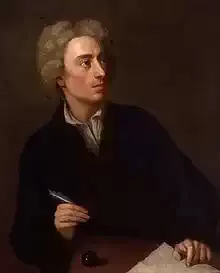
Alexander Pope
The Challenge: A Court Ballad
I.
To one fair lady out of Court,
And two fair ladies in,
Who think the Turk and Pope a sport,
And wit and love no sin!
Come, these soft lines, with nothing stiff in,
To Bellenden, Lepell, and Griffin.
With a fa, la, la.
II.
What passes in the dark third row,
And what behind the scene,
Couches and crippled chairs I know,
And garrets hung with green;
I know the swing of sinful hack,
Where many damsels cry alack.
With a fa, la, la.
III.
Then why to Courts should I repair,
Where's such ado with Townsend?
To hear each mortal stamp and swear,
And every speech with 'Zounds' end;
To hear them rail at honest Sunderland,
And rashly blame the realm of Blunderland.
With a fa, la, la.
IV.
Alas! like Schutz I cannot pun,
Like Grafton court the Germans;
Tell Pickenbourg how slim she's grown,
Like Meadows run to sermons;
To court ambitious men may roam,
But I and Marlbro' stay at home.
With a fa, la, la.
V.
In truth, by what I can discern,
Of courtiers, 'twixt you three,
Some wit you have, and more may learn
From Court, than Gay or Me:
Perhaps, in time, you'll leave high diet,
To sup with us on milk and quiet.
With a fa, la, la.
VI.
At Leicester Fields, a house full nigh,
With door all painted green,
(A Milliner, I mean);
There may you meet us three to three,
For Gay can well make two of Me.
With a fa, la, la.
VII.
But should you catch the prudish itch,
And each become a coward,
Bring sometimes with you lady Rich,
And sometimes mistress Howard;
For virgins, to keep chaste, must go
Abroad with such as are not so.
With a fa, la, la.
VIII.
And thus, fair maids, my ballad ends;
God send the king safe landing;
And make all honest ladies friends
To armies that are standing;
Preserve the limits of those nations,
And take off ladies' limitations.
With a fa, la, la.
351

Carl Sandburg
Threes
I was a boy when I heard three red words
a thousand Frenchmen died in the streets
for: Liberty, Equality, Fraternity--I asked
why men die for words.
I was older; men with mustaches, sideburns,
lilacs, told me the high golden words are:
Mother, Home, and Heaven--other older men with
face decorations said: God, Duty, Immortality
--they sang these threes slow from deep lungs.
Years ticked off their say-so on the great clocks
of doom and damnation, soup, and nuts: meteors flashed
their say-so: and out of great Russia came three
dusky syllables workmen took guns and went out to die
for: Bread, Peace, Land.
And I met a marine of the U.S.A., a leatherneck with a girl on his knee
for a memory in ports circling the earth and he said: Tell me how to say
three things and I always get by--gimme a plate of ham and eggs--how
much--and--do you love me, kid?
350
William Butler Yeats
The Three Monuments
THEY hold their public meetings where
Our most renowned patriots stand,
One among the birds of the air,
A stumpier on either hand;
And all the popular statesmen say
That purity built up the State
And after kept it from decay;
And let all base ambition be,
For intellect would make us proud
And pride bring in impurity:
The three old rascals laugh aloud.
342
Henry Wadsworth Longfellow
To an Old Danish Song-Book
Welcome, my old friend,
Welcome to a foreign fireside,
While the sullen gales of autumn
Shake the windows.
The ungrateful world
Has, it seems, dealt harshly with thee,
Since, beneath the skies of Denmark,
First I met thee.
There are marks of age,
There are thumb-marks on thy margin,
Made by hands that clasped thee rudely,
At the alehouse.
Soiled and dull thou art;
Yellow are thy time-worn pages,
As the russet, rain-molested
Leaves of autumn.
Thou art stained with wine
Scattered from hilarious goblets,
As the leaves with the libations
Of Olympus.
Yet dost thou recall
Days departed, half-forgotten,
When in dreamy youth I wandered
By the Baltic,--
When I paused to hear
The old ballad of King Christian
Shouted from suburban taverns
In the twilight.
Thou recallest bards,
Who in solitary chambers,
And with hearts by passion wasted,
Wrote thy pages.
Thou recallest homes
Where thy songs of love and friendship
Made the gloomy Northern winter
Bright as summer.
Once some ancient Scald,
In his bleak, ancestral Iceland,
Chanted staves of these old ballads
To the Vikings.
Once in Elsinore,
At the court of old King Hamlet
Yorick and his boon companions
Sang these ditties.
Once Prince Frederick's Guard
Sang them in their smoky barracks;--
Suddenly the English cannon
Joined the chorus!
Peasants in the field,
Sailors on the roaring ocean,
Students, tradesmen, pale mechanics,
All have sung them.
Thou hast been their friend;
They, alas! have left thee friendless!
Yet at least by one warm fireside
Art thou welcome.
And, as swallows build
In these wide, old-fashioned chimneys,
So thy twittering songs shall nestle
In my bosom,--
Quiet, close, and warm,
Sheltered from all molestation,
And recalling by their voices
Youth and travel.
333
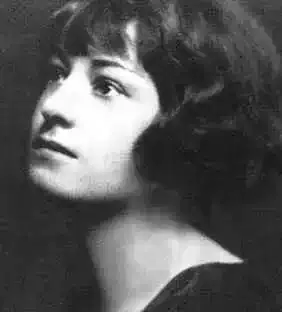
Dorothy Parker
George Sand
What time the gifted lady took
Away from paper, pen, and book,
She spent in amorous dalliance
(They do those things so well in France).
Away from paper, pen, and book,
She spent in amorous dalliance
(They do those things so well in France).
332
Henry Wadsworth Longfellow
Boston
St. Botolph's Town! Hither across the plains
And fens of Lincolnshire, in garb austere,
There came a Saxon monk, and founded here
A Priory, pillaged by marauding Danes,
So that thereof no vestige now remains;
Only a name, that, spoken loud and clear,
And echoed in another hemisphere,
Survives the sculptured walls and painted panes.
St. Botolph's Town! Far over leagues of land
And leagues of sea looks forth its noble tower,
And far around the chiming bells are heard;
So may that sacred name forever stand
A landmark, and a symbol of the power,
That lies concentred in a single word.
332

Emily Dickinson
Civilization-spurns-the Leopard!
Civilization-spurns-the Leopard!
Was the Leopard-bold?
Deserts-never rebuked her SatinEthiop-
her GoldTawny-
her Customs-
She was ConsciousSpotted-
her Dun Gown-
This was the Leopard's nature-SignorNeed-
a keeper-frown?
Pity-the Pard-that left her AsiaMemories-
of Palm-
Cannot be stifled-with Narcotic-
Nor suppressed-with Balm-
Was the Leopard-bold?
Deserts-never rebuked her SatinEthiop-
her GoldTawny-
her Customs-
She was ConsciousSpotted-
her Dun Gown-
This was the Leopard's nature-SignorNeed-
a keeper-frown?
Pity-the Pard-that left her AsiaMemories-
of Palm-
Cannot be stifled-with Narcotic-
Nor suppressed-with Balm-
331
Johann Wolfgang von Goethe
Minstrel's Book - The Four Favours
THAT Arabs through the realms of space
May wander on, light-hearted,
Great Allah hath, to all their race,
Four favours meet imparted.
The turban first--that ornament
All regal crowns excelling;
A light and ever-shifting tent,
Wherein to make our dwelling;
A sword, which, more than rocks and walls
Doth shield us, brightly glistening;
A song that profits and enthrall,
For which the maids are list'ning!
327

Gwendolyn Brooks
The Blackstone Rangers
I
AS SEEN BY DISCIPLINES
There they are.
Thirty at the corner.
Black, raw, ready.
Sores in the city
that do not want to heal.
II
THE LEADERS
Jeff. Gene. Geronimo. And Bop.
They cancel, cure and curry.
Hardly the dupes of the downtown thing
the cold bonbon,
the rhinestone thing. And hardly
in a hurry.
Hardly Belafonte, King,
Black Jesus, Stokely, Malcolm X or Rap.
Bungled trophies.
Their country is a Nation on no map.
Jeff, Gene, Geronimo and Bop
in the passionate noon,
in bewitching night
are the detailed men, the copious men.
They curry, cure,
they cancel, cancelled images whose Concerts
are not divine, vivacious; the different tins
are intense last entries; pagan argument;
translations of the night.
The Blackstone bitter bureaus
(bureaucracy is footloose) edit, fuse
unfashionable damnations and descent;
and exulting, monstrous hand on monstrous hand,
construct, strangely, a monstrous pearl or grace.
III
GANG GIRLS
A Rangerette
Gang Girls are sweet exotics.
Mary Ann
uses the nutrients of her orient,
but sometimes sighs for Cities of blue and jewel
beyond her Ranger rim of Cottage Grove.
(Bowery Boys, Disciples, Whip-Birds will
dissolve no margins, stop no savory sanctities.)
Mary is
a rose in a whiskey glass.
Mary’s
Februaries shudder and are gone. Aprils
fret frankly, lilac hurries on.
Summer is a hard irregular ridge.
October looks away.
And that’s the Year!
Save for her bugle-love.
Save for the bleat of not-obese devotion.
Save for Somebody Terribly Dying, under
the philanthropy of robins. Save for her Ranger
bringing
an amount of rainbow in a string-drawn bag.
“Where did you get the diamond?” Do not ask:
but swallow, straight, the spirals of his flask
and assist him at your zipper; pet his lips
and help him clutch you.
Love’s another departure.
Will there be any arrivals, confirmations?
Will there be gleaning?
Mary, the Shakedancer’s child
from the rooming-flat, pants carefully, peers at
her laboring lover ....
Mary! Mary Ann!
Settle for sandwiches! settle for stocking caps!
for sudden blood, aborted carnival,
the props and niceties of non-loneliness—
the rhymes of Leaning.
323
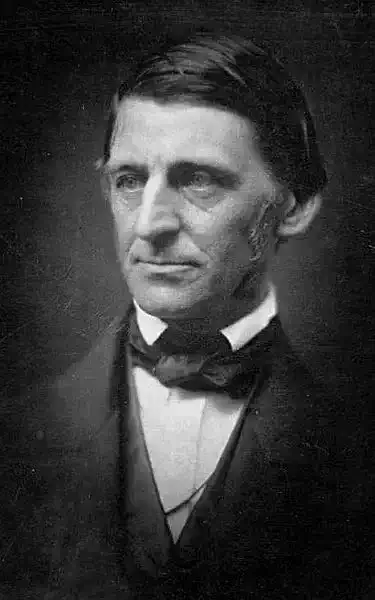
Ralph Waldo Emerson
The Romany Girl
The sun goes down, and with him takes
The coarseness of my por attire;
The fair moon mounts, and aye the flame
Of Gypsy beauty blazes higher.
Pale Northern girls! you scorn our race;
You captives of your air-tight halls,
Wear out in-doors your sickly days,
But leave us the horizon walls.
And if I take you, dames, to task,
And say it frankly without guile,
Then you are Gypsies in a mask,
And I the lady all the while.
If, on the heath, below the moon,
I court and play with paler blood,
Me false to mine dare whisper none,--
One sallow horseman knows me good.
Go, keep your cheek's rose from the rain,
For teeth and hair with shopmen deal;
My swarthy tint is in the grain,
The rocks and forest knoww it real.
The wild air bloweth in out lungs,
The keen stars twinkle in our eyes,
The birds gave us our wily tongues,
The panther in our dances flies.
You doubt we read the stars on high,
Nathless we read your fortunes true;
The stars may hide in the upper sky,
But without glass we fathom you.
324