
Culture and Tradition
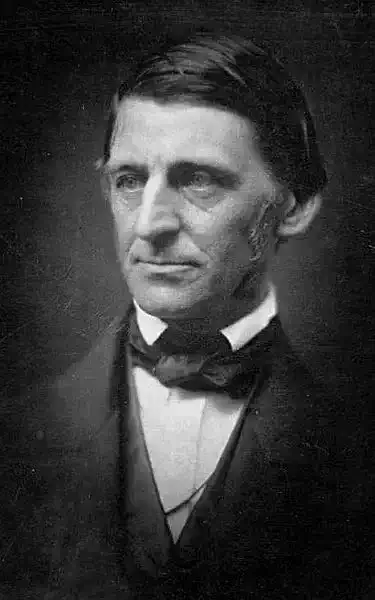
Ralph Waldo Emerson
The Romany Girl
The sun goes down, and with him takes
The coarseness of my por attire;
The fair moon mounts, and aye the flame
Of Gypsy beauty blazes higher.
Pale Northern girls! you scorn our race;
You captives of your air-tight halls,
Wear out in-doors your sickly days,
But leave us the horizon walls.
And if I take you, dames, to task,
And say it frankly without guile,
Then you are Gypsies in a mask,
And I the lady all the while.
If, on the heath, below the moon,
I court and play with paler blood,
Me false to mine dare whisper none,--
One sallow horseman knows me good.
Go, keep your cheek's rose from the rain,
For teeth and hair with shopmen deal;
My swarthy tint is in the grain,
The rocks and forest knoww it real.
The wild air bloweth in out lungs,
The keen stars twinkle in our eyes,
The birds gave us our wily tongues,
The panther in our dances flies.
You doubt we read the stars on high,
Nathless we read your fortunes true;
The stars may hide in the upper sky,
But without glass we fathom you.
324

Henry Wadsworth Longfellow
Vox Populi. (Birds Of Passage. Flight The Third)
When Mazarvan the Magician
Journeyed westward through Cathay,
Nothing heard he but the praises
Of Badoura on his way.
But the lessening rumor ended
When he came to Khaledan,
There the folk were talking only
Of Prince Camaralzaman,
So it happens with the poets:
Every province hath its own;
Camaralzaman is famous
Where Badoura is unknown.
322
Henry Wadsworth Longfellow
Elliot's Oak
Thou ancient oak! whose myriad leaves are loud
With sounds of unintelligible speech,
Sounds as of surges on a shingly beach,
Or multitudinous murmurs of a crowd;
With some mysterious gift of tongues endowed,
Thou speakest a different dialect to each;
To me a language that no man can teach,
Of a lost race, long vanished like a cloud.
For underneath thy shade, in days remote,
Seated like Abraham at eventide
Beneath the oaks of Mamre, the unknown
Apostle of the Indians, Eliot, wrote
His Bible in a language that hath died
And is forgotten, save by thee alone.
321

James Whitcomb Riley
Little Orphant Annie
To all the little children: -- The happy ones; and sad ones;
The sober and the silent ones; the boisterous and glad ones;
The good ones -- Yes, the good ones, too; and all the lovely bad ones.
Little Orphant Annie's come to our house to stay,
An' wash the cups an' saucers up, an' brush the crumbs away,
An' shoo the chickens off the porch, an' dust the hearth, an' sweep,
An' make the fire, an' bake the bread, an' earn her board-an'-keep;
An' all us other childern, when the supper-things is done,
We set around the kitchen fire an' has the mostest fun
A-list'nin' to the witch-tales 'at Annie tells about,
An' the Gobble-uns 'at gits you
Ef you
Don't
Watch
Out!
Wunst they wuz a little boy wouldn't say his prayers,--
An' when he went to bed at night, away up-stairs,
His Mammy heerd him holler, an' his Daddy heerd him bawl,
An' when they turn't the kivvers down, he wuzn't there at all!
An' they seeked him in the rafter-room, an' cubby-hole, an' press,
An' seeked him up the chimbly-flue, an' ever'-wheres, I guess;
But all they ever found wuz thist his pants an' roundabout:--
An' the Gobble-uns 'll git you
Ef you
Don't
Watch
Out!
An' one time a little girl 'ud allus laugh an' grin,
An' make fun of ever' one, an' all her blood-an'-kin;
An' wunst, when they was 'company,' an' ole folks wuz there,
She mocked 'em an' shocked 'em, an' said she didn't care!
An' thist as she kicked her heels, an' turn't to run an' hide,
They wuz two great big Black Things a-standin' by her side,
An' they snatched her through the ceilin' 'fore she knowed what she's about!
An' the Gobble-uns 'll git you
Ef you
Don't
Watch
Out!
An' little Orphant Annie says, when the blaze is blue,
An' the lamp-wick sputters, an' the wind goes woo-oo!
An' you hear the crickets quit, an' the moon is gray,
An' the lightnin'-bugs in dew is all squenched away,--
You better mind yer parunts, an' yer teachurs fond an' dear,
An' churish them 'at loves you, an' dry the orphant's tear,
An' he'p the pore an' needy ones 'at clusters all about,
Er the Gobble-uns 'll git you
Ef you
Don't
Watch
Out!
319
Henry Wadsworth Longfellow
Tales Of A Wayside Inn : Part 1. The Theologian's Tale; Torquemada
In the heroic days when Ferdinand
And Isabella ruled the Spanish land,
And Torquemada, with his subtle brain,
Ruled them, as Grand Inquisitor of Spain,
In a great castle near Valladolid,
Moated and high and by fair woodlands hid,
There dwelt, as from the chronicles we learn,
An old Hidalgo proud and taciturn,
Whose name has perished, with his towers of stone,
And all his actions save this one alone;
This one, so terrible, perhaps 't were best
If it, too, were forgotten with the rest;
Unless, perchance, our eyes can see therein
The martyrdom triumphant o'er the sin;
A double picture, with its gloom and glow,
The splendor overhead, the death below.
This sombre man counted each day as lost
On which his feet no sacred threshold crossed;
And when he chanced the passing Host to meet,
He knelt and prayed devoutly in the street;
Oft he confessed; and with each mutinous thought,
As with wild beasts at Ephesus, he fought.
In deep contrition scourged himself in Lent,
Walked in processions, with his head down bent,
At plays of Corpus Christi oft was seen,
And on Palm Sunday bore his bough of green.
His sole diversion was to hunt the boar
Through tangled thickets of the forest hoar,
Or with his jingling mules to hurry down
To some grand bull-fight in the neighboring town,
Or in the crowd with lighted taper stand,
When Jews were burned, or banished from the land.
Then stirred within him a tumultuous joy;
The demon whose delight is to destroy
Shook him, and shouted with a trumpet tone,
Kill! kill! and let the Lord find out his own!'
And now, in that old castle in the wood,
His daughters, in the dawn of womanhood,
Returning from their convent school, had made
Resplendent with their bloom the forest shade,
Reminding him of their dead mother's face,
When first she came into that gloomy place,--
A memory in his heart as dim and sweet
As moonlight in a solitary street,
Where the same rays, that lift the sea, are thrown
Lovely but powerless upon walls of stone.
These two fair daughters of a mother dead
Were all the dream had left him as it fled.
A joy at first, and then a growing care,
As if a voice within him cried, 'Beware!?
A vague presentiment of impending doom,
Like ghostly footsteps in a vacant room,
Haunted him day and night; a formless fear
That death to some one of his house was near,
With dark surmises of a hidden crime,
Made life itself a death before its time.
Jealous, suspicious, with no sense of shame,
A spy upon his daughters he became;
With velvet slippers, noiseless on the floors,
He glided softly through half-open doors;
Now in the room, and now upon the stair,
He stood beside them ere they were aware;
He listened in the passage when they talked,
He watched them from the casement when they walked,
He saw the gypsy haunt the river's side,
He saw the monk among the cork-trees glide;
And, tortured by the mystery and the doubt
Of some dark secret, past his finding out,
Baffled he paused; then reassured again
Pursued the flying phantom of his brain.
He watched them even when they knelt in church;
And then, descending lower in his search,
Questioned the servants, and with eager eyes
Listened incredulous to their replies;
The gypsy? none had seen her in the wood!
The monk? a mendicant in search of food!
At length the awful revelation came,
Crushing at once his pride of birth and name;
The hopes his yearning bosom forward cast,
And the ancestral glories of the past,
All fell together, crumbling in disgrace,
A turret rent from battlement to base.
His daughters talking in the dead of night
In their own chamber, and without a light,
Listening, as he was wont, he overheard,
And learned the dreadful secret, word by word;
And hurrying from his castle, with a cry
He raised his hands to the unpitying sky,
Repeating one dread word, till bush and tree
Caught it, and shuddering answered, 'Heresy!'
Wrapped in his cloak, his hat drawn o'er his face,
Now hurrying forward, now with lingering pace,
He walked all night the alleys of his park,
With one unseen companion in the dark,
The demon who within him lay in wait,
And by his presence turned his love to hate,
Forever muttering in an undertone,
'Kill! kill! and let the Lord find out his own!'
Upon the morrow, after early Mass,
While yet the dew was glistening on the grass,
And all the woods were musical with birds,
The old Hidalgo, uttering fearful words,
Walked homeward with the Priest, and in his room
Summoned his trembling daughters to their doom.
When questioned, with brief answers they replied,
Nor when accused evaded or denied;
Expostulations, passionate appeals,
All that the human heart most fears or feels,
In vain the Priest with earnest voice essayed;
In vain the father threatened, wept, and prayed;
Until at last he said, with haughty mien,
'The Holy Office, then, must intervene!'
And now the Grand Inquisitor of Spain,
With all the fifty horsemen of his train,
His awful name resounding, like the blast
Of funeral trumpets, as he onward passed,
Came to Valladolid, and there began
To harry the rich Jews with fire and ban.
To him the Hidalgo went, and at the gate
Demanded audience on affairs of state,
And in a secret chamber stood before
A venerable graybeard of fourscore,
Dressed in the hood and habit of a friar;
Out of his eyes flashed a consuming fire,
And in his hand the mystic horn he held,
Which poison and all noxious charms dispelled.
He heard in silence the Hidalgo's tale,
Then answered in a voice that made him quail:
'Son of the Church! when Abraham of old
To sacrifice his only son was told,
He did not pause to parley nor protest,
But hastened to obey the Lord's behest.
In him it was accounted righteousness;
The Holy Church expects of thee no less!'
A sacred frenzy seized the father's brain,
And Mercy from that hour implored in vain.
Ah! who will e'er believe the words I say?
His daughters he accused, and the same day
They both were cast into the dungeon's gloom,
That dismal antechamber of the tomb,
Arraigned, condemned, and sentenced to the flame,
The secret torture and the public shame.
Then to the Grand Inquisitor once more
The Hidalgo went, more eager than before,
And said: 'When Abraham offered up his son,
He clave the wood wherewith it might be done.
By his example taught, let me too bring
Wood from the forest for my offering!'
And the deep voice, without a pause, replied:
'Son of the Church! by faith now justified,
Complete thy sacrifice, even as thou wilt;
The Church absolves thy conscience from all guilt!'
Then this most wretched father went his way
Into the woods, that round his castle lay,
Where once his daughters in their childhood played
With their young mother in the sun and shade.
Now all the leaves had fallen; the branches bare
Made a perpetual moaning in the air,
And screaming from their eyries overhead
The ravens sailed athwart the sky of lead.
With his own hands he lopped the boughs and bound
Fagots, that crackled with foreboding sound,
And on his mules, caparisoned and gay
With bells and tassels, sent them on their way.
Then with his mind on one dark purpose bent,
Again to the Inquisitor he went,
And said: 'Behold, the fagots I have brought,
And now, lest my atonement be as naught,
Grant me one more request, one last desire,--
With my own hand to light the funeral fire!'
And Torquemada answered from his seat,
'Son of the Church! Thine offering is complete;
Her servants through all ages shall not cease
To magnify thy deed. Depart in peace!'
Upon the market-place, builded of stone
The scaffold rose, whereon Death claimed his own.
At the four corners, in stern attitude,
Four statues of the Hebrew Prophets stood,
Gazing with calm indifference in their eyes
Upon this place of human sacrifice,
Round which was gathering fast the eager crowd,
With clamor of voices dissonant and loud,
And every roof and window was alive
With restless gazers, swarming like a hive.
The church-bells tolled, the chant of monks drew near,
Loud trumpets stammered forth their notes of fear,
A line of torches smoked along the street,
There was a stir, a rush, a tramp of feet,
And, with its banners floating in the air,
Slowly the long procession crossed the square,
And, to the statues of the Prophets bound,
The victims stood, with fagots piled around.
Then all the air a blast of trumpets shook,
And louder sang the monks with bell and book,
And the Hidalgo, lofty, stern, and proud,
Lifted his torch, and, bursting through the crowd,
Lighted in haste the fagots, and then fled,
Lest those imploring eyes should strike him dead!
O pitiless skies! why did your clouds retain
For peasants' fields their floods of hoarded rain?
O pitiless earth! why open no abyss
To bury in its chasm a crime like this?
That night a mingled column of fire and smoke
From the dark thickets of the forest broke,
And, glaring o'er the landscape leagues away,
Made all the fields and hamlets bright as day.
Wrapped in a sheet of flame the castle blazed,
And as the villagers in terror gazed,
They saw the figure of that cruel knight
Lean from a window in the turret's height,
His ghastly face illumined with the glare,
His hands upraised above his head in prayer,
Till the floor sank beneath him, and he fell
Down the black hollow of that burning well.
Three centuries and more above his bones
Have piled the oblivious years like funeral stones;
His name has perished with him, and no trace
Remains on earth of his afflicted race;
But Torquemada's name, with clouds o'ercast,
Looms in the distant landscape of the Past,
Like a burnt tower upon a blackened heath,
Lit by the fires of burning woods beneath!
313
James Whitcomb Riley
A Tale Of The Airly Days
Oh! tell me a tale of the airly days--
Of the times as they ust to be;
'Piller of Fi-er' and 'Shakespeare's Plays'
Is a' most too deep fer me!
I want plane facts, and I want plane words,
Of the good old-fashioned ways,
When speech run free as the songs of birds
'Way back in the airly days.
Tell me a tale of the timber-lands--
Of the old-time pioneers;
Somepin' a pore man understands
With his feelins's well as ears.
Tell of the old log house,--about
The loft, and the puncheon flore--
The old fi-er-place, with the crane swung out,
And the latch-string thrugh the door.
Tell of the things jest as they was--
They don't need no excuse!-Don't
tech 'em up like the poets does,
Tel theyr all too fine fer use!--
Say they was 'leven in the fambily--
Two beds, and the chist, below,
And the trundle-beds that each helt three,
And the clock and the old bureau.
Then blow the horn at the old back-door
Tel the echoes all halloo,
And the childern gethers home onc't more,
Jest as they ust to do:
Blow fer Pap tel he hears and comes,
With Tomps and Elias, too,
A-marchin' home, with the fife and drums
And the old Red White and Blue!
Blow and blow tel the sound draps low
As the moan of the whipperwill,
And wake up Mother, and Ruth and Jo,
All sleepin' at Bethel Hill:
Blow and call tel the faces all
Shine out in the back-log's blaze,
And the shadders dance on the old hewed wall
As they did in the airly days.
308

John Greenleaf Whittier
The Pennsylvania Pilgrim
Prelude
I sing the Pilgrim of a softer clime
And milder speech than those brave men's who brought
To the ice and iron of our winter time
A will as firm, a creed as stern, and wrought
With one mailed hand, and with the other fought.
Simply, as fits my theme, in homely rhyme
I sing the blue-eyed German Spener taught,
Through whose veiled, mystic faith the Inward Light,
Steady and still, an easy brightness, shone,
Transfiguring all things in its radiance white.
The garland which his meekness never sought
I bring him; over fields of harvest sown
With seeds of blessing, now to ripeness grown,
I bid the sower pass before the reapers' sight.
The Pennsylvania Pilgrim
Never in tenderer quiet lapsed the day
From Pennsylvania's vales of spring away,
Where, forest-walled, the scattered hamlets lay
Along the wedded rivers. One long bar
Of purple cloud, on which the evening star
Shone like a jewel on a scimitar,
Held the sky's golden gateway. Through the deep
Hush of the woods a murmur seemed to creep,
The Schuylkill whispering in a voice of sleep.
All else was still. The oxen from their ploughs
Rested at last, and from their long day's browse
Came the dun files of Krisheim's home-bound cows.
And the young city, round whose virgin zone
The rivers like two mighty arms were thrown,
Marked by the smoke of evening fires alone,
Lay in the distance, lovely even then
With its fair women and its stately men
Gracing the forest court of William Penn,
Urban yet sylvan; in its rough-hewn frames
Of oak and pine the dryads held their claims,
And lent its streets their pleasant woodland names.
Anna Pastorius down the leafy lane
Looked city-ward, then stooped to prune again
Her vines and simples, with a sigh of pain.
For fast the streaks of ruddy sunset paled
In the oak clearing, and, as daylight failed,
Slow, overhead, the dusky night-birds sailed.
Again she looked: between green walls of shade,
With low-bent head as if with sorrow weighed,
Daniel Pastorius slowly came and said,
'God's peace be with thee, Anna!' Then he stood
Silent before her, wrestling with the mood
Of one who sees the evil and not good.
'What is it, my Pastorius?' As she spoke,
A slow, faint smile across his features broke,
Sadder than tears. 'Dear heart,' he said, 'our folk
'Are even as others. Yea, our goodliest Friends
Are frail; our elders have their selfish ends,
And few dare trust the Lord to make amends
'For duty's loss. So even our feeble word
For the dumb slaves the startled meeting heard
As if a stone its quiet waters stirred;
'And, as the clerk ceased reading, there began
A ripple of dissent which downward ran
In widening circles, as from man to man.
'Somewhat was said of running before sent,
Of tender fear that some their guide outwent,
Troublers of Israel. I was scarce intent
'On hearing, for behind the reverend row
Of gallery Friends, in dumb and piteous show,
I saw, methought, dark faces full of woe.
'And, in the spirit, I was taken where
They toiled and suffered; I was made aware
Of shame and wrath and anguish and despair!
'And while the meeting smothered our poor plea
With cautious phrase, a Voice there seemed to be,
As ye have done to these ye do to me!'
'So it all passed; and the old tithe went on
Of anise, mint, and cumin, till the sun
Set, leaving still the weightier work undone.
'Help, for the good man faileth! Who is strong,
If these be weak? Who shall rebuke the wrong,
If these consent? How long, O Lord! how long!'
He ceased; and, bound in spirit with the bound,
With folded arms, and eyes that sought the ground,
Walked musingly his little garden round.
About him, beaded with the falling dew,
Rare plants of power and herbs of healing grew,
Such as Van Helmont and Agrippa knew.
For, by the lore of Gorlitz' gentle sage,
With the mild mystics of his dreamy age
He read the herbal signs of nature's page,
As once he heard in sweet Von Merlau's' bowers
Fair as herself, in boyhood's happy hours,
The pious Spener read his creed in flowers.
'The dear Lord give us patience!' said his wife,
Touching with finger-tip an aloe, rife
With leaves sharp-pointed like an Aztec knife
Or Carib spear, a gift to William Penn
From the rare gardens of John Evelyn,
Brought from the Spanish Main by merchantmen.
'See this strange plant its steady purpose hold,
And, year by year, its patient leaves unfold,
Till the young eyes that watched it first are old.
'But some time, thou hast told me, there shall come
A sudden beauty, brightness, and perfume,
The century-moulded bud shall burst in bloom.
'So may the seed which hath been sown to-day
Grow with the years, and, after long delay,
Break into bloom, and God's eternal Yea!
'Answer at last the patient prayers of them
Who now, by faith alone, behold its stem
Crowned with the flowers of Freedom's diadem.
'Meanwhile, to feel and suffer, work and wait,
Remains for us. The wrong indeed is great,
But love and patience conquer soon or late.'
'Well hast thou said, my Anna!' Tenderer
Than youth's caress upon the head of her
Pastorius laid his hand. 'Shall we demur
'Because the vision tarrieth? In an hour
We dream not of, the slow-grown bud may flower,
And what was sown in weakness rise in power!'
Then through the vine-draped door whose legend read,
'Procul este profani!' Anna led
To where their child upon his little bed
Looked up and smiled. 'Dear heart,' she said, 'if we
Must bearers of a heavy burden be,
Our boy, God willing, yet the day shall see
'When from the gallery to the farthest seat,
Slave and slave-owner shall no longer meet,
But all sit equal at the Master's feet.'
On the stone hearth the blazing walnut block
Set the low walls a-glimmer, showed the cock
Rebuking Peter on the Van Wyck clock,
Shone on old tomes of law and physic, side
By side with Fox and Belimen, played at hide
And seek with Anna, midst her household pride
Of flaxen webs, and on the table, bare
Of costly cloth or silver cup, but where,
Tasting the fat shads of the Delaware,
The courtly Penn had praised the goodwife's cheer,
And quoted Horace o'er her home brewed beer,
Till even grave Pastorius smiled to hear.
In such a home, beside the Schuylkill's wave,
He dwelt in peace with God and man, and gave
Food to the poor and shelter to the slave.
For all too soon the New World's scandal shamed
The righteous code by Penn and Sidney framed,
And men withheld the human rights they claimed.
And slowly wealth and station sanction lent,
And hardened avarice, on its gains intent,
Stifled the inward whisper of dissent.
Yet all the while the burden rested sore
On tender hearts. At last Pastorius bore
Their warning message to the Church's door
In God's name; and the leaven of the word
Wrought ever after in the souls who heard,
And a dead conscience in its grave-clothes stirred
To troubled life, and urged the vain excuse
Of Hebrew custom, patriarchal use,
Good in itself if evil in abuse.
Gravely Pastorius listened, not the less
Discerning through the decent fig-leaf dress
Of the poor plea its shame of selfishness.
One Scripture rule, at least, was unforgot;
He hid the outcast, and betrayed him not;
And, when his prey the human hunter sought,
He scrupled not, while Anna's wise delay
And proffered cheer prolonged the master's stay,
To speed the black guest safely on his way.
Yet, who shall guess his bitter grief who lends
His life to some great cause, and finds his friends
Shame or betray it for their private ends?
How felt the Master when his chosen strove
In childish folly for their seats above;
And that fond mother, blinded by her love,
Besought him that her sons, beside his throne,
Might sit on either hand? Amidst his own
A stranger oft, companionless and lone,
God's priest and prophet stands. The martyr's pain
Is not alone from scourge and cell and chain;
Sharper the pang when, shouting in his train,
His weak disciples by their lives deny
The loud hosannas of their daily cry,
And make their echo of his truth a lie.
His forest home no hermit's cell he found,
Guests, motley-minded, drew his hearth around,
And held armed truce upon its neutral ground.
There Indian chiefs with battle-bows unstrung,
Strong, hero-limbed, like those whom Homer sung,
Pastorius fancied, when the world was young,
Came with their tawny women, lithe and tall,
Like bronzes in his friend Von Rodeck's hall,
Comely, if black, and not unpleasing all.
There hungry folk in homespun drab and gray
Drew round his board on Monthly Meeting day,
Genial, half merry in their friendly way.
Or, haply, pilgrims from the Fatherland,
Weak, timid, homesick, slow to understand
The New World's promise, sought his helping hand.
Or painful Kelpius from his hermit den
By Wissahickon, maddest of good men,
Dreamed o'er the Chiliast dreams of Petersen.
Deep in the woods, where the small river slid
Snake-like in shade, the Helmstadt Mystic hid,
Weird as a wizard, over arts forbid,
Reading the books of Daniel and of John,
And Behmen's Morning-Redness, through the Stone
Of Wisdom, vouchsafed to his eyes alone,
Whereby he read what man ne'er read before,
And saw the visions man shall see no more,
Till the great angel, striding sea and shore,
Shall bid all flesh await, on land or ships,
The warning trump of the Apocalypse,
Shattering the heavens before the dread eclipse.
Or meek-eyed Mennonist his bearded chin
Leaned o'er the gate; or Ranter, pure within,
Aired his perfection in a world of sin.
Or, talking of old home scenes, Op der Graaf
Teased the low back-log with his shodden staff,
Till the red embers broke into a laugh
And dance of flame, as if they fain would cheer
The rugged face, half tender, half austere,
Touched with the pathos of a homesick tear!
Or Sluyter, saintly familist, whose word
As law the Brethren of the Manor heard,
Announced the speedy terrors of the Lord,
And turned, like Lot at Sodom, from his race,
Above a wrecked world with complacent face
Riding secure upon his plank of grace!
Haply, from Finland's birchen groves exiled,
Manly in thought, in simple ways a child,
His white hair floating round his visage mild,
The Swedish pastor sought the Quaker's door,
Pleased from his neighbor's lips to hear once more
His long-disused and half-forgotten lore.
For both could baffle Babel's lingual curse,
And speak in Bion's Doric, and rehearse
Cleanthes' hymn or Virgil's sounding verse.
And oft Pastorius and the meek old man
Argued as Quaker and as Lutheran,
Ending in Christian love, as they began.
With lettered Lloyd on pleasant morns he strayed
Where Sommerhausen over vales of shade
Looked miles away, by every flower delayed,
Or song of bird, happy and free with one
Who loved, like him, to let his memory run
Over old fields of learning, and to sun
Himself in Plato's wise philosophies,
And dream with Philo over mysteries
Whereof the dreamer never finds the keys;
To touch all themes of thought, nor weakly stop
For doubt of truth, but let the buckets drop
Deep down and bring the hidden waters up
For there was freedom in that wakening time
Of tender souls; to differ was not crime;
The varying bells made up the perfect chime.
On lips unlike was laid the altar's coal,
The white, clear light, tradition-colored, stole
Through the stained oriel of each human soul.
Gathered from many sects, the Quaker brought
His old beliefs, adjusting to the thought
That moved his soul the creed his fathers taught.
One faith alone, so broad that all mankind
Within themselves its secret witness find,
The soul's communion with the Eternal Mind,
The Spirit's law, the Inward Rule and Guide,
Scholar and peasant, lord and serf, allied,
The polished Penn and Cromwell's Ironside.
As still in Hemskerck's Quaker Meeting, face
By face in Flemish detail, we may trace
How loose-mouthed boor and fine ancestral grace
Sat in close contrast,-the clipt-headed churl,
Broad market-dame, and simple serving-girl
By skirt of silk and periwig in curl
For soul touched soul; the spiritual treasure-trove
Made all men equal, none could rise above
Nor sink below that level of God's love.
So, with his rustic neighbors sitting down,
The homespun frock beside the scholar's gown,
Pastorius to the manners of the town
Added the freedom of the woods, and sought
The bookless wisdom by experience taught,
And learned to love his new-found home, while not
Forgetful of the old; the seasons went
Their rounds, and somewhat to his spirit lent
Of their own calm and measureless content.
Glad even to tears, he heard the robin sing
His song of welcome to the Western spring,
And bluebird borrowing from the sky his wing.
And when the miracle of autumn came,
And all the woods with many-colored flame
Of splendor, making summer's greenness tame,
Burned, unconsumed, a voice without a sound
Spake to him from each kindled bush around,
And made the strange, new landscape holy ground
And when the bitter north-wind, keen and swift,
Swept the white street and piled the dooryard drift,
He exercised, as Friends might say, his gift
Of verse, Dutch, English, Latin, like the hash
Of corn and beans in Indian succotash;
Dull, doubtless, but with here and there a flash
Of wit and fine conceit,-the good man's play
Of quiet fancies, meet to while away
The slow hours measuring off an idle day.
At evening, while his wife put on her look
Of love's endurance, from its niche he took
The written pages of his ponderous book.
And read, in half the languages of man,
His 'Rusca Apium,' which with bees began,
And through the gamut of creation ran.
Or, now and then, the missive of some friend
In gray Altorf or storied Nurnberg penned
Dropped in upon him like a guest to spend
The night beneath his roof-tree. Mystical
The fair Von Merlau spake as waters fall
And voices sound in dreams, and yet withal
Human and sweet, as if each far, low tone,
Over the roses of her gardens blown
Brought the warm sense of beauty all her own.
Wise Spener questioned what his friend could trace
Of spiritual influx or of saving grace
In the wild natures of the Indian race.
And learned Schurmberg, fain, at times, to look
From Talmud, Koran, Veds, and Pentateuch,
Sought out his pupil in his far-off nook,
To query with him of climatic change,
Of bird, beast, reptile, in his forest range,
Of flowers and fruits and simples new and strange.
And thus the Old and New World reached their hands
Across the water, and the friendly lands
Talked with each other from their severed strands.
Pastorius answered all: while seed and root
Sent from his new home grew to flower and fruit
Along the Rhine and at the Spessart's foot;
And, in return, the flowers his boyhood knew
Smiled at his door, the same in form and hue,
And on his vines the Rhenish clusters grew.
No idler he; whoever else might shirk,
He set his hand to every honest work,
Farmer
and teacher, court and meeting clerk.
Still on the town seal his device is found,
Grapes, flax, and thread-spool on a trefoil ground,
With 'Vinum, Linum et Textrinum' wound.
One house sufficed for gospel and for law,
Where Paul and Grotius, Scripture text and saw,
Assured the good, and held the rest in awe.
Whatever legal maze he wandered through,
He kept the Sermon on the Mount in view,
And justice always into mercy grew.
No whipping-post he needed, stocks, nor jail,
Nor ducking-stool; the orchard-thief grew pale
At his rebuke, the vixen ceased to rail,
The usurer's grasp released the forfeit land;
The slanderer faltered at the witness-stand,
And all men took his counsel for command.
Was it caressing air, the brooding love
Of tenderer skies than German land knew of,
Green calm below, blue quietness above,
Still flow of water, deep repose of wood
That, with a sense of loving Fatherhood
And childlike trust in the Eternal Good,
Softened all hearts, and dulled the edge of hate,
Hushed strife, and taught impatient zeal to wait
The slow assurance of the better state?
Who knows what goadings in their sterner way
O'er jagged ice, relieved by granite gray,
Blew round the men of Massachusetts Bay?
What hate of heresy the east-wind woke?
What hints of pitiless power and terror spoke
In waves that on their iron coast-line broke?
Be it as it may: within the Land of Penn
The sectary yielded to the citizen,
And peaceful dwelt the many-creeded men.
Peace brooded over all. No trumpet stung
The air to madness, and no steeple flung
Alarums down from bells at midnight rung.
The land slept well. The Indian from his face
Washed all his war-paint off, and in the place
Of battle-marches sped the peaceful chase,
Or wrought for wages at the white man's side,
Giving
to kindness what his native pride
And lazy freedom to all else denied.
And well the curious scholar loved the old
Traditions that his swarthy neighbors told
By wigwam-fires when nights were growing cold,
Discerned the fact round which their fancy drew
Its dreams, and held their childish faith more true
To God and man than half the creeds he knew.
The desert blossomed round him; wheat-fields rolled
Beneath the warm wind waves of green and gold;
The planted ear returned its hundred-fold.
Great clusters ripened in a warmer sun
Than that which by the Rhine stream shines upon
The purpling hillsides with low vines o'errun.
About each rustic porch the humming-bird
Tried with light bill, that scarce a petal stirred,
The Old World flowers to virgin soil transferred;
And the first-fruits of pear and apple, bending
The young boughs down, their gold and russet blending,
Made glad his heart, familiar odors lending
To the fresh fragrance of the birch and pine,
Life-everlasting, bay, and eglantine,
And all the subtle scents the woods combine.
Fair First-Day mornings, steeped in summer calm,
Warm, tender, restful, sweet with woodland balm,
Came to him, like some mother-hallowed psalm
To the tired grinder at the noisy wheel
Of labor, winding off from memory's reel
A golden thread of music. With no peal
Of bells to call them to the house of praise,
The scattered settlers through green forest-ways
Walked meeting-ward. In reverent amaze
The Indian trapper saw them, from the dim
Shade of the alders on the rivulet's rim,
Seek the Great Spirit's house to talk with Him.
There, through the gathered stillness multiplied
And made intense by sympathy, outside
The sparrows sang, and the gold-robin cried,
A-swing upon his elm. A faint perfume
Breathed through the open windows of the room
From locust-trees, heavy with clustered bloom.
Thither, perchance, sore-tried confessors came,
Whose fervor jail nor pillory could tame,
Proud of the cropped ears meant to be their shame,
Men who had eaten slavery's bitter bread
In Indian isles; pale women who had bled
Under the hangman's lash, and bravely said
God's message through their prison's iron bars;
And gray old soldier-converts, seamed with scars
From every stricken field of England's wars.
Lowly before the Unseen Presence knelt
Each waiting heart, till haply some one felt
On his moved lips the seal of silence melt.
Or, without spoken words, low breathings stole
Of a diviner life from soul to soul,
Baptizing in one tender thought the whole.
When shaken hands announced the meeting o'er,
The friendly group still lingered at the door,
Greeting, inquiring, sharing all the store
Of weekly tidings. Meanwhile youth and maid
Down the green vistas of the woodland strayed,
Whispered and smiled and oft their feet delayed.
Did the boy's whistle answer back the thrushes?
Did light girl laughter ripple through the bushes,
As brooks make merry over roots and rushes?
Unvexed the sweet air seemed. Without a wound
The ear of silence heard, and every sound
Its place in nature's fine accordance found.
And solemn meeting, summer sky and wood,
Old kindly faces, youth and maidenhood
Seemed, like God's new creation, very good!
And, greeting all with quiet smile and word,
Pastorius went his way. The unscared bird
Sang at his side; scarcely the squirrel stirred
At his hushed footstep on the mossy sod;
And, wheresoe'er the good man looked or trod,
He felt the peace of nature and of God.
His social life wore no ascetic form,
He loved all beauty, without fear of harm,
And in his veins his Teuton blood ran warm.
Strict to himself, of other men no spy,
He made his own no circuit-judge to try
The freer conscience of his neighbors by.
With love rebuking, by his life alone,
Gracious and sweet, the better way was shown,
The joy of one, who, seeking not his own,
And faithful to all scruples, finds at last
The thorns and shards of duty overpast,
And daily life, beyond his hope's forecast,
Pleasant and beautiful with sight and sound,
And flowers upspringing in its narrow round,
And all his days with quiet gladness crowned.
He sang not; but, if sometimes tempted strong,
He hummed what seemed like Altorf's Burschen-song;
His good wife smiled, and did not count it wrong.
For well he loved his boyhood's brother band;
His Memory, while he trod the New World's strand,
A double-ganger walked the Fatherland
If, when on frosty Christmas eves the light
Shone on his quiet hearth, he missed the sight
Of Yule-log, Tree, and Christ-child all in white;
And closed his eyes, and listened to the sweet
Old wait-songs sounding down his native street,
And watched again the dancers' mingling feet;
Yet not the less, when once the vision passed,
He held the plain and sober maxims fast
Of the dear Friends with whom his lot was cast.
Still all attuned to nature's melodies,
He loved the bird's song in his dooryard trees,
And the low hum of home-returning bees;
The blossomed flax, the tulip-trees in bloom
Down the long street, the beauty and perfume
Of apple-boughs, the mingling light and gloom
Of Sommerhausen's woodlands, woven through
With sun-threads; and the music the wind drew,
Mournful and sweet, from leaves it overblew.
And evermore, beneath this outward sense,
And through the common sequence of events,
He felt the guiding hand of Providence
Reach out of space. A Voice spake in his ear,
And to all other voices far and near
Died at that whisper, full of meanings clear.
The Light of Life shone round him; one by one
The wandering lights, that all-misleading run,
Went out like candles paling in the sun.
That Light he followed, step by step, where'er
It led, as in the vision of the seer
The wheels moved as the spirit in the clear
And terrible crystal moved, with all their eyes
Watching the living splendor sink or rise,
Its will their will, knowing no otherwise.
Within himself he found the law of right,
He walked by faith and not the letter's sight,
And read his Bible by the Inward Light.
And if sometimes the slaves of form and rule,
Frozen in their creeds like fish in winter's pool,
Tried the large tolerance of his liberal school,
His door was free to men of every name,
He welcomed all the seeking souls who came,
And no man's faith he made a cause of blame.
But best he loved in leisure hours to see
His own dear Friends sit by him knee to knee,
In social converse, genial, frank, and free.
There sometimes silence (it were hard to tell
Who owned it first) upon the circle fell,
Hushed Anna's busy wheel, and laid its spell
On the black boy who grimaced by the hearth,
To solemnize his shining face of mirth;
Only the old clock ticked amidst the dearth
Of sound; nor eye was raised nor hand was stirred
In that soul-sabbath, till at last some word
Of tender counsel or low prayer was heard.
Then guests, who lingered but farewell to say
And take love's message, went their homeward way;
So passed in peace the guileless Quaker's day.
His was the Christian's unsung Age of Gold,
A truer idyl than the bards have told
Of Arno's banks or Arcady of old.
Where still the Friends their place of burial keep,
And century-rooted mosses o'er it creep,
The Nurnberg scholar and his helpmeet sleep.
And Anna's aloe? If it flowered at last
In Bartram's garden, did John Woolman cast
A glance upon it as he meekly passed?
And did a secret sympathy possess
That tender soul, and for the slave's redress
Lend hope, strength, patience? It were vain to guess.
Nay, were the plant itself but mythical,
Set in the fresco of tradition's wall
Like Jotham's bramble, mattereth not at all.
Enough to know that, through the winter's frost
And summer's heat, no seed of truth is lost,
And every duty pays at last its cost.
For, ere Pastorius left the sun and air,
God sent the answer to his life-long prayer;
The child was born beside the Delaware,
Who, in the power a holy purpose lends,
Guided his people unto nobler ends,
And left them worthier of the name of Friends.
And to! the fulness of the time has come,
And over all the exile's Western home,
From sea to sea the flowers of freedom bloom!
And joy-bells ring, and silver trumpets blow;
But not for thee, Pastorius! Even so
The world forgets, but the wise angels know.
309
Henry Wadsworth Longfellow
The Song Of Hiawatha XII: The Son Of The Evening Star
Can it be the sun descending
O'er the level plain of water?
Or the Red Swan floating, flying,
Wounded by the magic arrow,
Staining all the waves with crimson,
With the crimson of its life-blood,
Filling all the air with splendor,
With the splendor of its plumage?
Yes; it is the sun descending,
Sinking down into the water;
All the sky is stained with purple,
All the water flushed with crimson!
No; it is the Red Swan floating,
Diving down beneath the water;
To the sky its wings are lifted,
With its blood the waves are reddened!
Over it the Star of Evening
Melts and trembles through the purple,
Hangs suspended in the twilight.
No; it is a bead of wampum
On the robes of the Great Spirit
As he passes through the twilight,
Walks in silence through the heavens.
This with joy beheld Iagoo
And he said in haste: 'Behold it!
See the sacred Star of Evening!
You shall hear a tale of wonder,
Hear the story of Osseo,
Son of the Evening Star, Osseo!
'Once, in days no more remembered,
Ages nearer the beginning,
When the heavens were closer to us,
And the Gods were more familiar,
In the North-land lived a hunter,
With ten young and comely daughters,
Tall and lithe as wands of willow;
Only Oweenee, the youngest,
She the wilful and the wayward,
She the silent, dreamy maiden,
Was the fairest of the sisters.
'All these women married warriors,
Married brave and haughty husbands;
Only Oweenee, the youngest,
Laughed and flouted all her lovers,
All her young and handsome suitors,
And then married old Osseo,
Old Osseo, poor and ugly,
Broken with age and weak with coughing,
Always coughing like a squirrel.
'Ah, but beautiful within him
Was the spirit of Osseo,
From the Evening Star descended,
Star of Evening, Star of Woman,
Star of tenderness and passion!
All its fire was in his bosom,
All its beauty in his spirit,
All its mystery in his being,
All its splendor in his language!
'And her lovers, the rejected,
Handsome men with belts of wampum,
Handsome men with paint and feathers.
Pointed at her in derision,
Followed her with jest and laughter.
But she said: 'I care not for you,
Care not for your belts of wampum,
Care not for your paint and feathers,
Care not for your jests and laughter;
I am happy with Osseo!'
'Once to some great feast invited,
Through the damp and dusk of evening,
Walked together the ten sisters,
Walked together with their husbands;
Slowly followed old Osseo,
With fair Oweenee beside him;
All the others chatted gayly,
These two only walked in silence.
'At the western sky Osseo
Gazed intent, as if imploring,
Often stopped and gazed imploring
At the trembling Star of Evening,
At the tender Star of Woman;
And they heard him murmur softly,
'Ah, showain nemeshin, Nosa!
Pity, pity me, my father!'
'Listen!' said the eldest sister,
'He is praying to his father!
What a pity that the old man
Does not stumble in the pathway,
Does not break his neck by falling!'
And they laughed till all the forest
Rang with their unseemly laughter.
'On their pathway through the woodlands
Lay an oak, by storms uprooted,
Lay the great trunk of an oak-tree,
Buried half in leaves and mosses,
Mouldering, crumbling, huge and hollow.
And Osseo, when he saw it,
Gave a shout, a cry of anguish,
Leaped into its yawning cavern,
At one end went in an old man,
Wasted, wrinkled, old, and ugly;
From the other came a young man,
Tall and straight and strong and handsome.
'Thus Osseo was transfigured,
Thus restored to youth and beauty;
But, alas for good Osseo,
And for Oweenee, the faithful!
Strangely, too, was she transfigured.
Changed into a weak old woman,
With a staff she tottered onward,
Wasted, wrinkled, old, and ugly!
And the sisters and their husbands
Laughed until the echoing forest
Rang with their unseemly laughter.
'But Osseo turned not from her,
Walked with slower step beside her,
Took her hand, as brown and withered
As an oak-leaf is in Winter,
Called her sweetheart, Nenemoosha,
Soothed her with soft words of kindness,
Till they reached the lodge of feasting,
Till they sat down in the wigwam,
Sacred to the Star of Evening,
To the tender Star of Woman.
'Wrapt in visions, lost in dreaming,
At the banquet sat Osseo;
All were merry, all were happy,
All were joyous but Osseo.
Neither food nor drink he tasted,
Neither did he speak nor listen;
But as one bewildered sat he,
Looking dreamily and sadly,
First at Oweenee, then upward
At the gleaming sky above them.
'Then a voice was heard, a whisper,
Coming from the starry distance,
Coming from the empty vastness,
Low, and musical, and tender;
And the voice said: 'O Osseo!
O my son, my best beloved!
Broken are the spells that bound you,
All the charms of the magicians,
All the magic powers of evil;
Come to me; ascend, Osseo!
''Taste the food that stands before you:
It is blessed and enchanted,
It has magic virtues in it,
It will change you to a spirit.
All your bowls and all your kettles
Shall be wood and clay no longer;
But the bowls be changed to wampum,
And the kettles shall be silver;
They shall shine like shells of scarlet,
Like the fire shall gleam and glimmer.
''And the women shall no longer
Bear the dreary doom of labor,
But be changed to birds, and glisten
With the beauty of the starlight,
Painted with the dusky splendors
Of the skies and clouds of evening!'
'What Osseo heard as whispers,
What as words he comprehended,
Was but music to the others,
Music as of birds afar off,
Of the whippoorwill afar off,
Of the lonely Wawonaissa
Singing in the darksome forest.
'Then the lodge began to tremble,
Straight began to shake and tremble,
And they felt it rising, rising,
Slowly through the air ascending,
From the darkness of the tree-tops
Forth into the dewy starlight,
Till it passed the topmost branches;
And behold! the wooden dishes
All were changed to shells of scarlet!
And behold! the earthen kettles
All were changed to bowls of silver!
And the roof-poles of the wigwam
Were as glittering rods of silver,
And the roof of bark upon them
As the shining shards of beetles.
'Then Osseo gazed around him,
And he saw the nine fair sisters,
All the sisters and their husbands,
Changed to birds of various plumage.
Some were jays and some were magpies,
Others thrushes, others blackbirds;
And they hopped, and sang, and twittered,
Perked and fluttered all their feathers,
Strutted in their shining plumage,
And their tails like fans unfolded.
'Only Oweenee, the youngest,
Was not changed, but sat in silence,
Wasted, wrinkled, old, and ugly,
Looking sadly at the others;
Till Osseo, gazing upward,
Gave another cry of anguish,
Such a cry as he had uttered
By the oak-tree in the forest.
'Then returned her youth and beauty,
And her soiled and tattered garments
Were transformed to robes of ermine,
And her staff became a feather,
Yes, a shining silver feather!
'And again the wigwam trembled,
Swayed and rushed through airy currents,
Through transparent cloud and vapor,
And amid celestial splendors
On the Evening Star alighted,
As a snow-flake falls on snow-flake,
As a leaf drops on a river,
As the thistledown on water.
'Forth with cheerful words of welcome
Came the father of Osseo,
He with radiant locks of silver,
He with eyes serene and tender.
And he said: `My son, Osseo,
Hang the cage of birds you bring there,
Hang the cage with rods of silver,
And the birds with glistening feathers,
At the doorway of my wigwam.'
'At the door he hung the bird-cage,
And they entered in and gladly
Listened to Osseo's father,
Ruler of the Star of Evening,
As he said: `O my Osseo!
I have had compassion on you,
Given you back your youth and beauty,
Into birds of various plumage
Changed your sisters and their husbands;
Changed them thus because they mocked you
In the figure of the old man,
In that aspect sad and wrinkled,
Could not see your heart of passion,
Could not see your youth immortal;
Only Oweenee, the faithful,
Saw your naked heart and loved you.
'`In the lodge that glimmers yonder,
In the little star that twinkles
Through the vapors, on the left hand,
Lives the envious Evil Spirit,
The Wabeno, the magician,
Who transformed you to an old man.
Take heed lest his beams fall on you,
For the rays he darts around him
Are the power of his enchantment,
Are the arrows that he uses.'
'Many years, in peace and quiet,
On the peaceful Star of Evening
Dwelt Osseo with his father;
Many years, in song and flutter,
At the doorway of the wigwam,
Hung the cage with rods of silver,
And fair Oweenee, the faithful,
Bore a son unto Osseo,
With the beauty of his mother,
With the courage of his father.
'And the boy grew up and prospered,
And Osseo, to delight him,
Made him little bows and arrows,
Opened the great cage of silver,
And let loose his aunts and uncles,
All those birds with glossy feathers,
For his little son to shoot at.
'Round and round they wheeled and darted,
Filled the Evening Star with music,
With their songs of joy and freedom
Filled the Evening Star with splendor,
With the fluttering of their plumage;
Till the boy, the little hunter,
Bent his bow and shot an arrow,
Shot a swift and fatal arrow,
And a bird, with shining feathers,
At his feet fell wounded sorely.
'But, O wondrous transformation!
`T was no bird he saw before him,
`T was a beautiful young woman,
With the arrow in her bosom!
'When her blood fell on the planet,
On the sacred Star of Evening,
Broken was the spell of magic,
Powerless was the strange enchantment,
And the youth, the fearless bowman,
Suddenly felt himself descending,
Held by unseen hands, but sinking
Downward through the empty spaces,
Downward through the clouds and vapors,
Till he rested on an island,
On an island, green and grassy,
Yonder in the Big-Sea-Water.
'After him he saw descending
All the birds with shining feathers,
Fluttering, falling, wafted downward,
Like the painted leaves of Autumn;
And the lodge with poles of silver,
With its roof like wings of beetles,
Like the shining shards of beetles,
By the winds of heaven uplifted,
Slowly sank upon the island,
Bringing back the good Osseo,
Bringing Oweenee, the faithful.
'Then the birds, again transfigured,
Reassumed the shape of mortals,
Took their shape, but not their stature;
They remained as Little People,
Like the pygmies, the Puk-Wudjies,
And on pleasant nights of Summer,
When the Evening Star was shining,
Hand in hand they danced together
On the island's craggy headlands,
On the sand-beach low and level.
'Still their glittering lodge is seen there,
On the tranquil Summer evenings,
And upon the shore the fisher
Sometimes hears their happy voices,
Sees them dancing in the starlight !'
When the story was completed,
When the wondrous tale was ended,
Looking round upon his listeners,
Solemnly Iagoo added:
'There are great men, I have known such,
Whom their people understand not,
Whom they even make a jest of,
Scoff and jeer at in derision.
From the story of Osseo
Let us learn the fate of jesters!'
All the wedding guests delighted
Listened to the marvellous story,
Listened laughing and applauding,
And they whispered to each other:
'Does he mean himself, I wonder?
And are we the aunts and uncles?'
Then again sang Chibiabos,
Sang a song of love and longing,
In those accents sweet and tender,
In those tones of pensive sadness,
Sang a maiden's lamentation
For her lover, her Algonquin.
'When I think of my beloved,
Ah me! think of my beloved,
When my heart is thinking of him,
O my sweetheart, my Algonquin!
'Ah me! when I parted from him,
Round my neck he hung the wampum,
As a pledge, the snow-white wampum,
O my sweetheart, my Algonquin!
'`I will go with you, he whispered,
Ah me! to your native country;
Let me go with you, he whispered,
O my sweetheart, my Algonquin!
'Far away, away, I answered,
Very far away, I answered,
Ah me! is my native country,
O my sweetheart, my Algonquin!
'When I looked back to behold him,
Where we parted, to behold him,
After me he still was gazing,
O my sweetheart, my Algonquin!
'By the tree he still was standing,
By the fallen tree was standing,
That had dropped into the water,
O my sweetheart, my Algonquin!
'When I think of my beloved,
Ah me! think of my beloved,
When my heart is thinking of him,
O my sweetheart, my Algonquin!'
Such was Hiawatha's Wedding,
Such the dance of Pau-Puk-Keewis,
Such the story of Iagoo,
Such the songs of Chibiabos;
Thus the wedding banquet ended,
And the wedding guests departed,
Leaving Hiawatha happy
With the night and Minnehaha.
309

Carl Sandburg
Flanders
Flanders, the name of a place, a country of people,
Spells itself with letters, is written in books.
"Where is Flanders?" was asked one time,
Flanders known only to those who lived there
And milked cows and made cheese and spoke the home language.
"Where is Flanders?" was asked.
And the slang adepts shot the reply: Search me.
A few thousand people milking cows, raising radishes,
On a land of salt grass and dunes, sand-swept with a sea-breath on it:
This was Flanders, the unknown, the quiet,
The place where cows hunted lush cuds of green on lowlands,
And the raw-boned plowmen took horses with long shanks
Out in the dawn to the sea-breath.
Flanders sat slow-spoken amid slow-swung windmills,
Slow-circling windmill arms turning north or west,
Turning to talk to the swaggering winds, the childish winds,
So Flanders sat with the heart of a kitchen girl
Washing wooden bowls in the winter sun by a window.
307
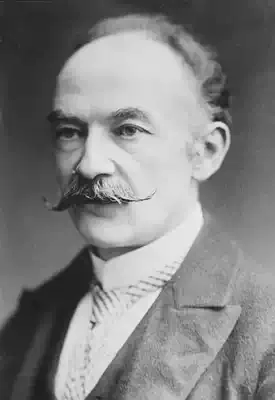
Thomas Hardy
The Bullfinches
Bother Bulleys, let us sing
From the dawn till evening! -
For we know not that we go not
When the day's pale pinions fold
Unto those who sang of old.
When I flew to Blackmoor Vale,
Whence the green-gowned faeries hail,
Roosting near them I could hear them
Speak of queenly Nature's ways,
Means, and moods,--well known to fays.
All we creatures, nigh and far
(Said they there), the Mother's are:
Yet she never shows endeavour
To protect from warrings wild
Bird or beast she calls her child.
Busy in her handsome house
Known as Space, she falls a-drowse;
Yet, in seeming, works on dreaming,
While beneath her groping hands
Fiends make havoc in her bands.
How her hussif'ry succeeds
She unknows or she unheeds,
All things making for Death's taking!
--So the green-gowned faeries say
Living over Blackmoor way.
Come then, brethren, let us sing,
From the dawn till evening! -
For we know not that we go not
When the day's pale pinions fold
Unto those who sang of old.
From the dawn till evening! -
For we know not that we go not
When the day's pale pinions fold
Unto those who sang of old.
When I flew to Blackmoor Vale,
Whence the green-gowned faeries hail,
Roosting near them I could hear them
Speak of queenly Nature's ways,
Means, and moods,--well known to fays.
All we creatures, nigh and far
(Said they there), the Mother's are:
Yet she never shows endeavour
To protect from warrings wild
Bird or beast she calls her child.
Busy in her handsome house
Known as Space, she falls a-drowse;
Yet, in seeming, works on dreaming,
While beneath her groping hands
Fiends make havoc in her bands.
How her hussif'ry succeeds
She unknows or she unheeds,
All things making for Death's taking!
--So the green-gowned faeries say
Living over Blackmoor way.
Come then, brethren, let us sing,
From the dawn till evening! -
For we know not that we go not
When the day's pale pinions fold
Unto those who sang of old.
307

Robert W. Service
The Bulls
Six bulls I saw as black as jet,
With crimsoned horns and amber eyes
That chewed their cud without a fret,
And swished to brush away the flies,
Unwitting their soon sacrifice.
It is the Corpus Christi fête;
Processions crowd the bannered ways;
Before the alters women wait,
While men unite in hymns of praise,
And children look with angel gaze.
The bulls know naught of holiness,
To pious pomp their eyes are blind;
Their brutish brains will never guess
The sordid passions of mankind:
Poor innocents, they wait resigned.
Till in a black room each is penned,
While from above with cruel aim
Two torturers with lances bend
To goad their fieriness to flame,
To devil them to play the game.
The red with rage and mad with fear
They charge into the roaring ring;
Against the mockery most near
Of human might their hate they fling,
In futile, blind blood-boltering.
And so the day of unction ends;
Six bulls are dragged across the sand.
Ferocity and worship blends,
Religion and red thirst hold hands . . .
Dear Christ! 'Tis hard to understand!
304
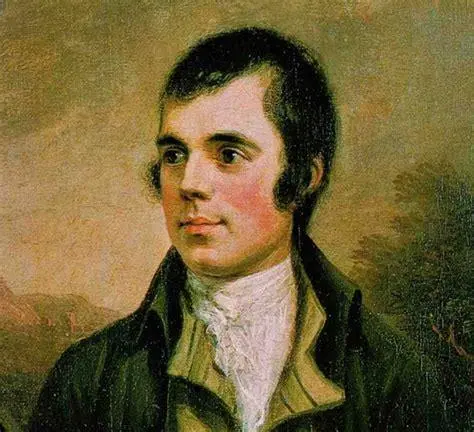
Robert Burns
Address To A Haggis
Fair fa' your honest, sonsie face,
Great chieftain o' the puddin-race!
Aboon them a' ye tak your place,
Painch, tripe, or thairm:
Weel are ye wordy of a grace
As lang's my arm.
The groaning trencher there ye fill,
Your hurdies like a distant hill,
Your pin wad help to mend a mill
In time o' need,
While thro' your pores the dews distil
Like amber bead.
His knife see rustic Labour dight,
An' cut ye up wi' ready slight,
Trenching your gushing entrails bright
Like onie ditch;
And then, O what a glorious sight,
Warm-reekin, rich!
Then, horn for horn, they strech an' strive:
Deil tak the hindmost! on they drive,
Till a' their weel-swall'd kytes belyve,
Are bent like drums;
Then auld Guidman, maist like to rive,
'Bethankit!' hums.
Is there that owre his French ragout
Or olio that wad staw a sow,
Or fricassee wad mak her spew
Wi' perfect sconner,
Looks down wi' sneering, scornfu' view
On sic a dinner?
Poor devil! see him owre his trash,
As feckless as a wither'd rash,
His spindle shank, a guid whip-lash,
His nieve a nit;
Thro' bluidy flood or field to dash,
O how unfit!
But mark the Rustic, haggis-fed,
The trembling earth resounds his tread.
Clap in his walie nieve a blade,
He'll make it whissle;
An' legs, an' arms, an' heads will sned,
Like taps o' thrissle.
Ye Pow'rs wha mak mankind your care,
And dish them out their bill o 'fare,
Auld Scotland wants nae skinking ware
That jaups in luggies;
But, if ye wish her gratefu' prayer,
Gie her a Haggis!
302

Henry Lawson
The Gathering of the Brown-Eyed
The brown eyes came from Asia, where all mystery is true,
Ere the masters of Soul Secrets dreamed of hazel, grey, and blue;
And the Brown Eyes came to Egypt, which is called the gypsies’ home,
And the Brown Eyes went from Egypt and Jerusalem to Rome.
There was strife amongst the Brown Eyes for the false things and the true;
There was war amongst the Brown Eyes for the old gods and the new;
But the old gods live for ever, and their goddesses are bright
In the temples of Old Passions with the Brown Eyes of the White.
The Brown Eyes east, by Africa, they saw and conquered Spain,
And the Brown Eyes marched as Christians till a Brown Eye met a Dane,
The Dane had Brown-Eyed children who in blue eyes took delight—
And a son of blue-eyed sailors, brown-eyed, reads the stars to-night.
Oh, Knowledge from Old Deserts, where the great stars rocked the world!
Oh, courage from grim seaboards, where the Viking ships were hurled!
The clear skin of the Norseman, and the desert strength and sight,
The power to fathom mankind, and the glorious gift to write!
We can look in souls of women, aye! and let them know we do;
We can fix the false eyes earthward; we can meet and match the true;
We can startle Voice from Silence, and from Darkness flash the Light—
And the eyes to fathom Asia are the Brown Eyes of the White.
There’s a legend in the nations that all Brown Eyes once were true,
But were taught in love and warfare by the sinful shades of blue;
There’s a story amongst sinners that all Brown Eyes once were kind,
Till the Steel-Blue struck the Red-Fire in a hatred that was blind.
But the Brown Eyes are the saddest at the death of Love and Truth.
And the Brown Eyes are the grandest and the dreamiest of Youth.
They have risen in rebellion unto leadership sublime—
And the grey-eyed queens of women loved, and love them for all time!
Brown Eyes never married Brown Eyes but unhappiness held sway,
For the real mates of the Brown Eyes have for ever been the grey.
But though Brown Eyes quarrel hotly, though their very souls be wrenched,
Never Blue-Eye wronged a Brown-Eye but the Brown-Eye was avenged!
Through the breadth of wide Australia, waiting desert-like and vast,
We have sent our Brown-Eyed children, who are multiplying fast.
Patriots, picture-writers, sages, fill the Brown-Eyed rolls to-night—
’Tis the gathering from all ages of the Brown-Eyed of the White.
301
Robert Burns
John Barleycorn
There were three kings into the east,
Three kings both great and high,
An' they hae sworn a solemn oath
John Barleycorn should die.
They took a plough and ploughed him down,
Put clods upon his head;
An' they hae sworn a solemn oath
John Barleycorn was dead.
But the cheerfu' spring came kindly on,
And show'rs began to fall;
John Barleycorn got up again,
And sore surprised them all.
The sultry suns of summer came,
And he grew thick and strong;
His head weel armed wi' pointed spears,
That no one should him wrong.
The sober autumn entered mild,
When he grew wan and pale;
His bending joints and drooping head
Showed he began to fail.
His colour sickened more and more,
He faded into age;
And then his enemies began
To show their deadly rage.
They've ta'en a weapon long and sharp,
And cut him by the knee;
Then tied him fast upon a cart,
Like a rogue for forgerie.
They laid him down upon his back,
And cudgelled him full sore;
They hung him up before the storm,
And turned him o'er and o'er.
They filled up a darksome pit
With water to the brim;
They heaved in John Barleycorn,
There let him sink or swim.
They laid him out upon the floor,
To work him farther woe,
And still, as signs of life appeared,
They tossed him to and fro.
They wasted, o'er a scorching flame,
The marrow of his bones;
But a miller used him worst of all,
For he crushed him 'tween two stones.
And they hae ta'en his very heart's blood,
And drank it round and round;
And still the more and more they drank,
Their joy did more abound.
John Barleycorn was a hero bold,
Of noble enterprise;
For if you do but taste his blood,
'Twill make your courage rise;
'Twill make a man forget his woe;
'Twill heighten all his joy:
'Twill make the widow's heart to sing,
Tho' the tear were in her eye.
Then let us toast John Barleycorn,
Each man a glass in hand;
And may his great posterity
Ne'er fail in old Scotland!
300
James Whitcomb Riley
The Town Karnteel
The Town Karnteel--! It's who'll reveal
Its praises jushtifiable?
For who can sing av anything
So lovely and reliable?
Whin Summer, Spring, or Winter lies
From Malin's Head to Tipperary,
There's no such town for interprise
Bechuxt Youghal and Londonderry!
There's not its likes in Ireland--
For twic't the week, be gorries!
They're playing jigs upon the band,
And joomping there in sacks-- and-- and--
And racing, wid wheelborries!
Kanteel-- it's there, like any fair,
The purty gurrls is plinty, sure--!
And man-alive! At forty-five
The leg's av me air twinty, sure!
I lave me cares, and hoein' too,
Behint me, as is sinsible,
And it's Karnteel I'm goin' to,
To cilebrate in principle!
For there's the town av all the land!
And twic't the week, be-gorries!
They're playing jigs upon the band,
And joomping there in sacks-- and-- and--
And racing, wid wheelborries!
And whilst I feel for owld Karnteel
That I've no phrases glorious,
It stands above the need av love
That boasts in voice uproarious--!
Lave that for Cork, and Dublin too,
And Armagh and Killarney thin--,
And Karnteel won't be troublin' you
Wid any jilous blarney, thin!
For there's the town av all the land
Where twic't the week, be-gorries!
They're playing jigs upon the band,
And joomping there in sacks-- and-- and--
And racing, wid wheelborries!
299
James Whitcomb Riley
A Cup Of Tea
I have sipped, with drooping lashes,
Dreamy draughts of Verzenay;
I have flourished brandy-smashes
In the wildest sort of way;
I have joked with 'Tom and Jerry'
Till wee hours ayont the twal'--
But I've found my tea the very
Safest tipple of them all!
'Tis a mystical potation
That exceeds in warmth of glow
And divine exhilaration
All the drugs of long ago--
All of old magicians' potions--
Of Medea's filtered spells--
Or of fabled isles and oceans
Where the Lotos-eater dwells!
Though I've reveled o'er late lunches
With _blase_ dramatic stars,
And absorbed their wit and punches
And the fumes of their cigars--
Drank in the latest story,
With a cock-tail either end,--
I have drained a deeper glory
In a cup of tea, my friend.
Green, Black, Moyune, Formosa,
Congou, Amboy, Pingsuey--
No odds the name it knows--ah!
Fill a cup of it for me!
And, as I clink my china
Against your goblet's brim,
My tea in steam shall twine a
Fragrant laurel round its rim.
296
Henry Wadsworth Longfellow
The Jewish Cemetery at Newport
How strange it seems! These Hebrews in their graves,
Close by the street of this fair seaport town,
Silent beside the never-silent waves,
At rest in all this moving up and down!
The trees are white with dust, that o'er their sleep
Wave their broad curtains in the southwind's breath,
While underneath these leafy tents they keep
The long, mysterious Exodus of Death.
And these sepulchral stones, so old and brown,
That pave with level flags their burial-place,
Seem like the tablets of the Law, thrown down
And broken by Moses at the mountain's base.
The very names recorded here are strange,
Of foreign accent, and of different climes;
Alvares and Rivera interchange
With Abraham and Jacob of old times.
"Blessed be God! for he created Death!"
The mourner said, "and Death is rest and peace!"
Then added, in the certainty of faith,
"And giveth Life that nevermore shall cease."
Closed are the portals of their Synagogue,
No Psalms of David now the silence break,
No Rabbi reads the ancient Decalogue
In the grand dialect the Prophets spake.
Gone are the living, but the dead remain,
And not neglected; for a hand unseen,
Scattering its bounty, like a summer rain,
Still keeps their graves and their remembrance green.
How came they here? What burst of Christian hate,
What persecution, merciless and blind,
Drove o'er the sea -that desert desolate -
These Ishmaels and Hagars of mankind?
They lived in narrow streets and lanes obscure,
Ghetto and Judenstrass, in mirk and mire;
Taught in the school of patience to endure
The life of anguish and the death of fire.
All their lives long, with the unleavened bread
And bitter herbs of exile and its fears,
The wasting famine of the heart they fed,
And slaked its thirst with marah of their tears.
Anathema maranatha! was the cry
That rang from town to town, from street to street:
At every gate the accursed Mordecai
Was mocked and jeered, and spurned by Christian feet.
Pride and humiliation hand in hand
Walked with them through the world where'er they went;
Trampled and beaten were they as the sand,
And yet unshaken as the continent.
For in the background figures vague and vast
Of patriarchs and of prophets rose sublime,
And all the great traditions of the Past
They saw reflected in the coming time.
And thus forever with reverted look
The mystic volume of the world they read,
Spelling it backward, like a Hebrew book,
Till life became a Legend of the Dead.
But ah! what once has been shall be no more!
The groaning earth in travail and in pain
Brings forth its races, but does not restore,
And the dead nations never rise again.
293
Henry Wadsworth Longfellow
Tales Of A Wayside Inn : Part 3. Interlude II.
Well pleased all listened to the tale,
That drew, the Student said, its pith
And marrow from the ancient myth
Of some one with an iron flail;
Or that portentous Man of Brass
Hephaestus made in days of yore,
Who stalked about the Cretan shore,
And saw the ships appear and pass,
And threw stones at the Argonauts,
Being filled with indiscriminate ire
That tangled and perplexed his thoughts;
But, like a hospitable host,
When strangers landed on the coast,
Heated himself red-hot with fire,
And hugged them in his arms, and pressed
Their bodies to his burning breast.
The Poet answered: 'No, not thus
The legend rose; it sprang at first
Out of the hunger and the thirst
In all men for the marvellous.
And thus it filled and satisfied
The imagination of mankind,
And this ideal to the mind
Was truer than historic fact.
Fancy enlarged and multiplied
The tenors of the awful name
Of Charlemagne, till he became
Armipotent in every act,
And, clothed in mystery, appeared
Not what men saw, but what they feared.
Besides, unless my memory fail,
Your some one with an iron flail
Is not an ancient myth at all,
But comes much later on the scene
As Talus in the Faerie Queene,
The iron groom of Artegall,
Who threshed out falsehood and deceit,
And truth upheld, and righted wrong,
As was, as is the swallow, fleet,
And as the lion is, was strong.'
The Theologian said: 'Perchance
Your chronicler in writing this
Had in his mind the Anabasis,
Where Xenophon describes the advance
Of Artaxerxes to the fight;
At first the low gray cloud of dust,
And then a blackness o'er the fields
As of a passing thunder-gust,
Then flash of brazen armor bright,
And ranks of men, and spears up-thrust,
Bowmen and troops with wicker shields,
And cavalry equipped in white,
And chariots ranged in front of these
With scythes upon their axle-trees.'
To this the Student answered: 'Well,
I also have a tale to tell
Of Charlemagne; a tale that throws
A softer light, more tinged with rose,
Than your grim apparition cast
Upon the darkness of the past.
Listen, and hear in English rhyme
What the good Monk of Lauresheim
Gives as the gossip of his time,
In mediaeval Latin prose.'
290
Robert Burns
Scotch Drink
Let other poets raise a fracas
Bout vines, and wines, an drucken Bacchus,
An crabbit names an stories wrack us,
An grate our lug:
I sing the juice Scotch bear can mak us,
In glass or Jug.
O thou, my Muse! guid auld Scotch drink!
Whether thro' wimplin worms thou jink,
Or, richly brown, ream owre the brink,
In glorious faem
Inspire me, till I lisp an wink,
To sing thy name!
Let husky wheat the haughs adorn,
An aits set up their awnie horn,
An Pease and beans, at e'en or morn,
Perfume the plain:
Leeze me on thee, John Barleycorn,
Thou king o' grain!
On thee aft Scotland chows her cood,
In souple scones, the wale o' food!
Or tumbling in the boiling flood
Wi' kail an beef;
But when thou pours thy strong heart's blood
There thou shines chief.
Food fills the wame, an keeps us livin;
Tho life's a gift no worth receivin
When heavy-dragg'd wi pine an grievin;
But oil'd by thee
The wheels o' life gae down-hill, scrievin,
Wi' rattlin glee.
Thou clears the head o' doited Lear,
Thou cheers the heart o' drooping Care;
Thou strings the nerves o' Labour sair,
At 's weary toil;
Thou ev'n brightens dark Despair
Wi' gloomy smile.
Aft, clad in massy siller weed,
Wi gentles thou erscts thy head;
Yet humbly kind in time o' need,
The poor man's wine:
His wee drap parritch, or his bread,
Thou kitchens fine.
Thou art the life o' public haunts;
But thee, what were our fairs and rants?
Ev'n godly meetings o' the saunts,
By thee inspir'd,
When, gaping, they besiege the tents,
Are doubly fir'd.
That merry night we get the corn in,
O sweetly, then, thou reams the horn
Or reekin on a New-Year mornin
In cog or bicker,
An just a wee drap sp'ritual burn in,
An gusty sucker!
When Vulcan gies his bellows breath,
An ploughmen gather wi their graith,
O rare! to see thee fizz an freath
I' th' lugget caup!
Then Burnewin comes on like death
At every chaup.
Nae mercy, then, for airn or steel:
The brawnie, bainie, ploughman chiel,
Brings hard owrehip, wi sturdy wheel,
The strong forehammer,
Till block an studdie ring an reel,
Wi dinsome clamour.
When skirlin' weanies see the light,
Thou maks the gossips clatter bright,
How fumblin coofs their dearies slight;
Wae worth the name!
Nae howdie gets a social night,
Or plack frae them.
When neebors anger at a plea,
An just as wud as wud can be,
How easy can the barley-brie
Cement the quarrel!
It's aye the cheapest lawyer's fee,
To taste the barrel.
Alake! that e'er my Muse has reason,
To wyte her countrymen wi' treason!
But monie daily weet their weason
Wi' liquors nice,
An hardly, in a winter season,
E'er spier her price.
Wae worth that brandy, burnin trash!
Fell source o' monie a pain an brash!
Twins monie a poor, doylt, drucken hash
O' half his days;
An sends, beside, auld Scotland's cash
To her warst faes.
Ye Scots, wha wish auld Scotland well!
Ye chief, to you my tale I tell,
Poor, plackless devils like mysel!
It sets you ill
Wi' bitter, dearthfu' wines to mell,
Or foreign gill.
May gravels round his blather wrench,
An gouts torment him, inch by inch,
Wha twists his gruntle wi' a glunch
O' sour disdain
Out owre a glass o' whisky-punch
Wi honest men!
O Whisky! soul o' plays an pranks!
Accept a Bardie's gratefu thanks!
When wanting thee, what tuneless cranks
Are my poor verses!
Thou comes---they rattle i' their ranks,
At ither's arses!
Thee, Ferintosh! O sadly lost!
Scotland lament frae coast to coast!
Now colic grips, an barkin hoast
May kill us a';
For loyal Eorbes' charter'd boast
Is taen awa!
They curst horse-leeches o' th' Excise,
Wha mak the whisky stells their prize!
Haud up thy han', Deil! ance, twice, thrice!
There, seize the blinkers!
An bake them up in brunstane pies
For poor damn'd drinkers.
Fortune! if thou'll but gie me still
Hale breeks, a scone, an whisky gill,
An rowth o' rhyme to rave at will,
Tak a' the rest,
An deal't about as thy blind skill
Directs thee best.
292
Henry Wadsworth Longfellow
The Children Of The Lord's Supper. (From The Swedish Of Bishop Tegner)
Pentecost, day of rejoicing, had come. The church of the village
Gleaming stood in the morning's sheen. On the spire of the bell
Decked with a brazen cock, the friendly flames of the Spring-sun
Glanced like the tongues of fire, beheld by Apostles aforetime.
Clear was the heaven and blue, and May, with her cap crowned with roses,
Stood in her holiday dress in the fields, and the wind and the brooklet
Murmured gladness and peace, God's-peace! with lips rosy-tinted
Whispered the race of the flowers, and merry on balancing branches
Birds were singing their carol, a jubilant hymn to the Highest.
Swept and clean was the churchyard. Adorned like a leaf-woven arbor
Stood its old-fashioned gate; and within upon each cross of iron
Hung was a fragrant garland, new twined by the hands of
affection.
Even the dial, that stood on a mound among the departed,
(There full a hundred years had it stood,) was embellished with blossoms
Like to the patriarch hoary, the sage of his kith and the hamlet,
Who on his birthday is crowned by children and children's children,
So stood the ancient prophet, and mute with his pencil of iron
Marked on the tablet of stone, and measured the time and its changes,
While all around at his feet, an eternity slumbered in quiet.
Also the church within was adorned, for this was the season
When the young, their parents' hope, and the loved-ones of heaven,
Should at the foot of the altar renew the vows of their
baptism.
Therefore each nook and corner was swept and cleaned, and the dust was
Blown from the walls and ceiling, and from the oil-painted benches.
There stood the church like a garden; the Feast of the Leafy Pavilions
Saw we in living presentment. From noble arms on the church wall
Grew forth a cluster of leaves, and the preacher's pulpit of oak-wood
Budded once more anew, as aforetime the rod before Aaron.
Wreathed thereon was the Bible with leaves, and the dove, washed with silver
Under its canopy fastened, had on it a necklace of wind-flowers.
But in front of the choir, round the altar-piece painted by
Horberg,
Crept a garland gigantic; and bright-curling tresses of
angels
Peeped, like the sun from a cloud, from out of the shadowy leaf-work.
Likewise the lustre of brass, new-polished, blinked from the ceiling,
And for lights there were lilies of Pentecost set in the sockets.
Loud rang the bells already; the thronging crowd was
assembled
Far from valleys and hills, to list to the holy preaching.
Hark! then roll forth at once the mighty tones of the organ,
Hover like voices from God, aloft like invisible spirits.
Like as Elias in heaven, when he cast from off him his
mantle,
So cast off the soul its garments of earth; and with one voice
Chimed in the congregation, and sang an anthem immortal
Of the sublime Wallin, of David's harp in the North-land
Tuned to the choral of Luther; the song on its mighty pinions
Took every living soul, and lifted it gently to heaven,
And each face did shine like the Holy One's face upon Tabor.
Lo! there entered then into the church the Reverend Teacher.
Father he hight and he was in the parish; a Christianly
plainness
Clothed from his head to his feet the old man of seventy winters.
Friendly was he to behold, and glad as the heralding angel
Walked he among the crowds, but still a contemplative
grandeur
Lay on his forehead as clear as on moss-covered gravestone a sunbeam.
As in his inspiration (an evening twilight that faintly
Gleams in the human soul, even now, from the day of creation)
Th' Artist, the friend of heaven, imagines Saint John when in Patmos,
Gray, with his eyes uplifted to heaven, so seemed then the old man:
Such was the glance of his eye, and such were his tresses of silver.
All the congregation arose in the pews that were numbered.
But with a cordial look, to the right and the left hand, the old man
Nodding all hail and peace, disappeared in the innermost chancel.
Simply and solemnly now proceeded the Christian service,
Singing and prayer, and at last an ardent discourse from the old man.
Many a moving word and warning, that out of the heart came,
Fell like the dew of the morning, like manna on those in the desert.
Then, when all was finished, the Teacher re-entered the
chancel
Followed therein by the young. The boys on the right had their places,
Delicate figures, with close-curling hair and cheeks rosy-blooming.
But on the left of these there stood the tremulous lilies,
Tinged with the blushing light of the dawn, the diffident maidens,--
Folding their hands in prayer, and their eyes cast down on the pavement
Now came, with question and answer, the catechism. In the beginning
Answered the children with troubled and faltering voice, but the old man's
Glances of kindness encouraged them soon, and the doctrines eternal
Flowed, like the waters of fountains, so clear from lips unpolluted.
Each time the answer was closed, and as oft as they named the Redeemer,
Lowly louted the boys, and lowly the maidens all courtesied.
Friendly the Teacher stood, like an angel of light there among them.
And to the children explained the holy, the highest, in few words,
Thorough, yet simple and clear, for sublimity always is simple,
Both in sermon and song, a child can seize on its meaning.
E'en as the green-growing bud unfolds when Springtide
approaches.
Leaf by leaf puts forth, and wanued, by the radiant sunshine,
Blushes with purple and gold, till at last the perfected blossom
Opens its odorous chalice, and rocks with its crown in the breezes,
So was unfolded here the Christian lore of salvation,
Line by line from the soul of childhood. The fathers and mothers
Stood behind them in tears, and were glad at the well-worded answer.
Now went the old man up to the altar;--and straightway transfigured
(So did it seem unto me) was then the affectionate Teacher.
Like the Lord's Prophet sublime, and awful as Death and as Judgment
Stood he, the God-commissioned, the soul-searcher, earthward descending
Glances, sharp as a sword, into hearts that to him were
transparent
Shot he; his voice was deep, was low like the thunder afar off.
So on a sudden transfigured he stood there, lie spake and he questioned.
'This is the faith of the Fathers, the faith the Apostles delivered,
This is moreover the faith whereunto I baptized you, while still ye
Lay on your mothers' breasts, and nearer the portals of heaven,
Slumbering received you then the Holy Church in its bosom;
Wakened from sleep are ye now, and the light in its radiant splendor
Downward rains from the heaven;--to-day on the threshold of childhood
Kindly she frees you again, to examine and make your election,
For she knows naught of compulsion, and only conviction
desireth.
This is the hour of your trial, the turning-point of existence,
Seed for the coming days; without revocation departeth
Now from your lips the confession; Bethink ye, before ye make answer!
Think not, O think not with guile to deceive the questioning Teacher.
Sharp is his eye to-day, and a curse ever rests upon falsehood.
Enter not with a lie on Life's journey; the multitude hears you,
Brothers and sisters and parents, what dear upon earth is and holy
Standeth before your sight as a witness; the Judge everlasting
Looks from the sun down upon you, and angels in waiting beside him
Grave your confession in letters of fire upon tablets eternal.
Thus, then,--believe ye in God, in the Father who this world created?
Him who redeemed it, the Son, and the Spirit where both are united?
Will ye promise me here, (a holy promise!) to cherish
God more than all things earthly, and every man as a brother?
Will ye promise me here, to confirm your faith by your living,
Th' heavenly faith of affection! to hope, to forgive, and to suffer,
Be what it may your condition, and walk before God in
uprightness?
Will ye promise me this before God and man?'--With a clear voice
Answered the young men Yes! and Yes! with lips softly-breathing
Answered the maidens eke. Then dissolved from the brow of the Teacher
Clouds with the lightnings therein, and lie spake in accents more gentle,
Soft as the evening's breath, as harps by Babylon's rivers.
'Hail, then, hail to you all! To the heirdom of heaven be ye welcome!
Children no more from this day, but by covenant brothers and sisters!
Yet,--for what reason not children? Of such is the kingdom of heaven.
Here upon earth an assemblage of children, in heaven one Father,
Ruling them all as his household,--forgiving in turn and chastising,
That is of human life a picture, as Scripture has taught us.
Blest are the pure before God! Upon purity and upon virtue
Resteth the Christian Faith: she herself from on high is descended.
Strong as a man and pure as a child, is the sum of the doctrine,
Which the Divine One taught, and suffered and died on the cross for
Oh, as ye wander this day from childhood's sacred asylum
Downward and ever downward, and deeper in Age's chill valley,
Oh, how soon will ye come,--too soon!--and long to turn
backward
Up to its hill-tops again, to the sun-illumined, where Judgment
Stood like a father before you, and Pardon, clad like a mother,
Gave you her hand to kiss, and the loving heart was for given
Life was a play and your hands grasped after the roses of heaven!
Seventy years have I lived already; the Father eternal
Gave rue gladness and care; but the loveliest hours of
existence,
When I have steadfastly gazed in their eyes, I have instantly known them,
Known them all again;-- the were my childhood's acquaintance.
Therefore take from henceforth, as guides in the paths of existence,
Prayer, with her eyes raised to heaven, and. Innocence, bride of man's childhood
Innocence, child beloved, is a guest from the world of the blessed,
Beautiful, and in her hand a lily; on life's roaring billows
Swings she in safety, she heedeth them not in the ship she is sleeping.
Calmly she gazes around in the turmoil of men; in the desert
Angels descend and minister unto her; she herself knoweth
Naught of her glorious attendance; but follows faithful and humble,
Follows so long as she may her friend; oh do not reject her,
For she cometh from God and she holdeth the keys of the heavens.
Prayer is Innocence' friend; and willingly flieth incessant
'Twixt rhe earth and the sky, the carrier-pigeon of heaven,
Son of Eternity, fettered in Time, and an exile, the Spirit
Tugs at his chains evermore, and struggles like flame ever upward.
Still he recalls with emotion his Father's manifold mansions,
Thinks of the land of his fathers, where blossomed more freshly the flowerets,
Shone a more beautiful sun, and he played with the winged angels.
Then grows the earth too narrow, too close; and homesick for heaven
Longs the wanderer again; and the Spirit's longings are worship;
Worship is called his most beautiful hour, and its tongue is entreaty.
Aid when the infinite burden of life descendeth upon us,
Crushes to earth our hope, and, under the earth, in the
graveyard,
Then it is good to pray unto God; for his sorrowiug children
Turns he ne'er from his door, but he heals and helps and consoles them,
Yet is it better to pray when all things are prosperous with us,
Pray in fortunate days, for life's most beautiful Fortune
Kneels before the Eternal's throne; and with hands interfolded,
Praises thankful and moved the only giver of blessings.
Or do ye know, ye children, one blessing that comes not from Heaven?
What has mankind forsooth, the poor! that it has not received?
Therefore, fall in the dust and pray! The seraphs adoring
Cover with pinions six their face in the glory of him who
Hung his masonry pendent on naught, when the world be created.
Earth declareth his might, and the firmament utters his glory.
Races blossom and die, and stars fall downward from heaven,
Downward like withered leaves; at the last stroke of midnight, millenniums
Lay themselves down at his feet, and he sees them, but counts them as nothing
Who shall stand in his presence? The wrath of the judge is terrific,
Casting the insolent down at a glance. When he speaks in his anger
Hillocks skip like the kid, and mountains leap like the roebuck.
Yet,--why are ye afraid, ye children? This awful avenger,
Ah! is a merciful God! God's voice was not in the earthquake,
Not in the fire, nor the storm, but it was in the whispering breezes.
Love is the root of creation; God's essence; worlds without number
Lie in his bosom like children; he made them for this purpose only.
Only to love and to be loved again, he breathed forth his spirit
Into the slumbering dust, and upright standing, it laid its
Hand on its heart, and felt it was warm with a flame out of heaven.
Quench, oh quench not that flame! It is the breath of your being.
Love is life, but hatred is death. Not father, nor mother
Loved you, as God has loved you; for 't was that you may be happy
Gave he his only Son. When he bowed down his head in the death-hour
Solemnized Love its triumph; the sacrifice then was completed.
Lo! then was rent on a sudden the veil of the temple, dividing
Earth and heaven apart, and the dead from their sepulchres rising
Whispered with pallid lips and low in the ears of each other
Th' answer, but dreamed of before, to creation's enigma,-- Atonement!
Depths of Love are Atonement's depths, for Love is Atonement.
Therefore, child of mortality, love thou the merciful Father;
Wish what the Holy One wishes, and not from fear, but affection
Fear is the virtue of slaves ; but the heart that loveth is willing
Perfect was before God, and perfect is Love, and Love only.
Lovest thou God as thou oughtest, then lovest thou likewise thy brethren:
One is the sun in heaven, and one, only one, is Love also.
Bears not each human figure the godlike stamp on his forehead
Readest thou not in his face thou origin? Is he not sailing
Lost like thyself on an ocean unknown, and is he not guided
By the same stars that guide thee? Why shouldst thou hate then thy brother?
Hateth he thee, forgive! For 't is sweet to stammer one letter
Of the Eternal's language;--on earth it is called Forgiveness!
Knowest thou Him, who forgave, with the crown of thorns on his temples?
Earnestly prayed for his foes, for his murderers? Say, dost thou know him?
Ah! thou confessest his name, so follow likewise his example,
Think of thy brother no ill, but throw a veil over his failings,
Guide the erring aright; for the good, the heavenly shepherd
Took the lost lamb in his arms, and bore it back to its mother.
This is the fruit of Love, and it is by its fruits that we know it.
Love is the creature's welfare, with God; but Love among mortals
Is but an endless sigh! He longs, and endures, and stands waiting,
Suffers and yet rejoices, and smiles with tears on his eyelids.
Hope,--so is called upon earth, his recompense, Hope, the befriending,
Does what she can, for she points evermore up to heaven, and faithful
Plunges her anchor's peak in the depths of the grave, and beneath it
Paints a more beautiful world, a dim, but a sweet play of shadows!
Races, better than we, have leaned on her wavering promise,
Having naught else but Hope. Then praise we our Father in heaven,
Him, who has given us more; for to us has Hope been
transfigured,
Groping no longer in night; she is Faith, she is living
assurance.
Faith is enlightened Hope; she is light, is the eye of
affection,
Dreams of the longing interprets, and carves their visions in marble.
Faith is the sun of life ; and her countenance shines like the Hebrew's,
For she has looked upon God; the heaven on its stable foundation
Draws she with chains down to earth, and the New Jerusalem sinketh
Splendid with portals twelve in golden vapors descending.
There enraptured she wanders. and looks at the figures majestic,
Fears not the winged crowd, in the midst of them all is her homestead.
Therefore love and believe; for works will follow spontaneous
Even as day does the sun; the Right from the Good is an
offspring,
Love in a bodily shape; and Christian works are no more than
Animate Love and faith, as flowers are the animate Springtide.
Works do follow us all unto God; there stand and bear witness
Not what they seemed,--but what they were only. Blessed is he who
Hears their confession secure; they are mute upon earth until death's hand
Opens the mouth of the silent. Ye children, does Death e'er alarm you?
Death is the brother of Love, twin-brother is he, and is only
More austere to behold. With a kiss upon lips that are fading
Takes he the soul and departs, and, rocked in the arms of affection,
Places the ransomed child, new born, 'fore the face of its father.
Sounds of his coming already I hear,--see dimly his pinions,
Swart as the night, but with stars strewn upon them! I fear not before him.
Death is only release, and in mercy is mute. On his bosom
Freer breathes, in its coolness, my breast; and face to face standing
Look I on God as he is, a sun unpolluted by vapors;
Look on the light of the ages I loved, the spirits majestic,
Nobler, better than I; they stand by the throne all
transfigured,
Vested in white, and with harps of gold, and are singing an anthem,
Writ in the climate of heaven, in the language spoken by angels.
You, in like manner, ye children beloved, he one day shall gather,
Never forgets he the weary;--then welcome, ye loved ones, hereafter!
Meanwhile forget not the keeping of vows, forget not the promise,
Wander from holiness onward to holiness; earth shall ye heed not
Earth is but dust and heaven is light; I have pledged you to heaven.
God of the universe, hear me! thou fountain of Love
everlasting,
Hark to the voice of thy servant! I send up my prayer to thy heaven!
Let me hereafter not miss at thy throne one spirit of all these,
Whom thou hast given me here! I have loved them all like a father.
May they bear witness for me, that I taught them the way of salvation,
Faithful, so far as I knew, of thy word; again may they know me,
Fall on their Teacher's breast, and before thy face may I place them,
Pure as they now are, but only more tried, and exclaiming with gladness,
Father, lo! I am here, and the children, whom thou hast given me!'
Weeping he spake in these words; and now at the beck of the old man
Knee against knee they knitted a wreath round the altar's enclosure.
Kneeling he read then the prayers of the consecration, and softly
With him the children read; at the close, with tremulous accents,
Asked he the peace of Heaven, a benediction upon them.
Now should have ended his task for the day; the following Sunday
Was for the young appointed to eat of the Lord's holy Supper.
Sudden, as struck from the clouds, stood the Teacher silent and laid his
Hand on his forehead, and cast his looks upward; while thoughts high and holy,
Flew through the midst of his soul, and his eyes glanced with wonderful brightness.
'On the next Sunday, who knows! perhaps I shall rest in the graveyard!
Some one perhaps of yourselves, a lily broken untimely,
Bow down his head to the earth; why delay I? the hour is accomplished,
Warm is the heart;--I will! for to-day grows the harvest of heaven.
What I began accomplish I now; what failing therein is
I, the old man, will answer to God and the reverend father.
Say to me only, ye children, ye denizens new-come in heaven,
Are ye ready this day to eat of the bread of Atonement?
What it denoteth, that know ye full well, I have told it you often.
Of the new covenant symbol it is, of Atonement a token,
Stablished between earth and heaven. Man by his sins and transgressions
Far has wandered from God, from his essence. 'T was in the beginning
Fast by the Tree of Knowledge he fell, and it hangs its crown o'er the
Fall to this day; in the Thought is the Fall; in the Heart the Atonement.
Infinite is the fall,--the Atonement infinite likewise.
See! behind me, as far as the old man remembers, and forward,
Far as Hope in her flight can reach with her wearied pinions,
Sin and Atonement incessant go through the lifetime of mortals.
Sin is brought forth full-grown; but Atonement sleeps in our bosoms
Still as the cradled babe; and dreams of heaven and of angels,
Cannot awake to sensation; is like the tones in the harp's strings,
Spirits imprisoned, that wait evermore the deliverer's finger.
Therefore, ye children beloved, descended the Prince of
Atonement,
Woke the slumberer from sleep, and she stands now with eyes all resplendent.
Bright as the vault of the sky, and battles with Sin and o'ercomes her.
Downward to earth he came and, transfigured, thence reascended,
Not from the heart in like wise, for there he still lives in the Spirit,
Loves and atones evermore. So long as Time is, is Atonement.
Therefore with reverence take this day her visible token.
Tokens are dead if the things live not. The light everlasting
Unto the blind is not, but is born of the eye that has vision.
Neither in bread nor in wine, but in the heart that is hallowed
Lieth forgiveness enshrined; the intention alone of amendment
Fruits of the earth ennobles to heavenly things, and removes all
Sin and the guerdon of sin. Only Love with his arms wide extended,
Penitence wee ping and praying; the Will that is tried, and whose gold flows
Purified forth from the flames; in a word, mankind by Atonement
Breaketh Atonement's bread, and drinketh Atonement's wine-cup.
But he who cometh up hither, unworthy, with hate in his bosom,
Scoffing at men and at God, is guilty of Christ's blessed body,
And the Redeemer's blood! To himself he eateth and drinketh
Death and doom ! And from this, preserve us, thou heavenly Father!
Are ye ready, ye children, to eat of the bread of Atonement?
Thus with emotion he asked, and together answered the children,
'Yes!' with deep sobs interrupted. Then read he the due
supplications,
Read the Form of Communion, and in chimed the organ and anthem:
'O Holy Lamb of God, who takest away our transgressions,
Hear us! give us thy peace! have mercy, have mercy upon us!'
Th' old man, with trembling hand, and heavenly pearls on his eyelids,
Filled now the chalice and paten, and dealt round the mystical symbols.
Oh, then seemed it to me as if God, with the broad eye of midday,
Clearer looked in at the windows, and all the trees in the church yard
Bowed down their summits of green, and the grass on the graves 'gan to shiver
But in the children (I noted it well ; I knew it) there ran a
Tremor of holy rapture along through their ice-cold members.
Decked like an altar before them, there stood the green earth, and above it
Heaven opened itself, as of old before Stephen; they saw there
Radiant in glory the Father, and on his right hand the
Redeemer.
Under them hear they the clang of harpstrings, and angels from gold clouds
Beckon to them like brothers, and fan with their pinions of purple.
Closed was the Teacher's task, and with heaven in their hearts and their faces,
Up rose the children all, and each bowed him, weeping full sorely,
Downward to kiss that reverend hand, but all of them pressed he
Moved to his bosom, and laid, with a prayer, his hands full of blessings,
Now on the holy breast, and now on the innocent tresses.
291

Gwendolyn Brooks
Primer For Blacks
Blackness
is a title,
is a preoccupation,
is a commitment Blacks
are to comprehend—
and in which you are
to perceive your Glory.
The conscious shout
of all that is white is
“It’s Great to be white.”
The conscious shout
of the slack in Black is
'It's Great to be white.'
Thus all that is white
has white strength and yours.
The word Black
has geographic power,
pulls everybody in:
Blacks here—
Blacks there—
Blacks wherever they may be.
And remember, you Blacks, what they told you—
remember your Education:
“one Drop—one Drop
maketh a brand new Black.”
Oh mighty Drop.
______And because they have given us kindly
so many more of our people
Blackness
stretches over the land.
Blackness—
the Black of it,
the rust-red of it,
the milk and cream of it,
the tan and yellow-tan of it,
the deep-brown middle-brown high-brown of it,
the “olive” and ochre of it—
Blackness
marches on.
The huge, the pungent object of our prime out-ride
is to Comprehend,
to salute and to Love the fact that we are Black,
which is our “ultimate Reality,”
which is the lone ground
from which our meaningful metamorphosis,
from which our prosperous staccato,
group or individual, can rise.
Self-shriveled Blacks.
Begin with gaunt and marvelous concession:
YOU are our costume and our fundamental bone.
All of you—
you COLORED ones,
you NEGRO ones,
those of you who proudly cry
“I’m half INDian”—
those of you who proudly screech
“I’VE got the blood of George WASHington in MY veins”
ALL of you—
you proper Blacks,
you half-Blacks,
you wish-I-weren’t Blacks,
Niggeroes and Niggerenes.
You.
285
James Whitcomb Riley
The Good, Old-Fashioned People
When we hear Uncle Sidney tell
About the long-ago
An' old, old friends he loved so well
When _he_ was young--My-oh!--
Us childern all wish _we'd 'a'_ bin
A-livin' then with Uncle,--so
We could a-kindo' happened in
On them old friends he used to know!--
The good, old-fashioned people--
The hale, hard-working people--
The kindly country people
'At Uncle used to know!
They was God's people, Uncle says,
An' gloried in His name,
An' worked, without no selfishness,
An' loved their neighbers same
As they was kin: An' when they biled
Their tree-molasses, in the Spring,
Er butchered in the Fall, they smiled
An' sheered with all jist ever'thing!--
The good, old-fashioned people--
The hale, hard-working people--
The kindly country people
'At Uncle used to know!
He tells about 'em, lots o' times,
Till we'd all ruther hear
About 'em than the Nurs'ry Rhymes
Er Fairies--mighty near!--
Only sometimes he stops so long
An' then talks on so low an' slow,
It's purt'-nigh sad as any song
To listen to him talkin' so
Of the good, old-fashioned people--
The hale, hard-working people--
The kindly country people
'At Uncle used to know!
285
Henry Wadsworth Longfellow
Tales Of A Wayside Inn : Part 1. Interlude I.
The Landlord ended thus his tale,
Then rising took down from its nail
The sword that hung there, dim with dust
And cleaving to its sheath with rust,
And said, 'This sword was in the fight.'
The Poet seized it, and exclaimed,
'It is the sword of a good knight,
Though homespun was his coat-of-mail;
What matter if it be not named
Joyeuse, Colada, Durindale,
Excalibar, or Aroundight,
Or other name the books record?
Your ancestor, who bore this sword
As Colonel of the Volunteers,
Mounted upon his old gray mare,
Seen here and there and everywhere,
To me a grander shape appears
Than old Sir William, or what not,
Clinking about in foreign lands
With iron gauntlets on his hands,
And on his head an iron pot!'
All laughed; the Landlord's face grew red
As his escutcheon on the wall;
He could not comprehend at all
The drift of what the Poet said;
For those who had been longest dead
Were always greatest in his eyes;
And be was speechless with surprise
To see Sir William's pluméd head
Brought to a level with the rest,
And made the subject of a jest.
And this perceiving, to appease
The Landlord's wrath, the others' fears,
The Student said, with careless ease,
'The ladies and the cavaliers,
The arms, the loves, the courtesies,
The deeds of high emprise, I sing!
Thus Ariosto says, in words
That have the stately stride and ring
Of arméd knights and clashing swords.
Now listen to the tale I bring;
Listen! though not to me belong
The flowing draperies of his song,
The words that rouse, the voice that charms.
The Landlord's tale was one of arms,
Only a tale of love is mine,
Blending the human and divine,
A tale of the Decameron, told
In Palmieri's garden old,
By Fiametta, laurel-crowned,
While her companions lay around,
And heard the intermingled sound
Of airs that on their errands sped,
And wild birds gossiping overhead,
And lisp of leaves, and fountain's fall,
And her own voice more sweet than all,
Telling the tale, which, wanting these,
Perchance may lose its power to please.'
283
Henry Wadsworth Longfellow
Oliver Basselin. (Birds Of Passage. Flight The First)
In the Valley of the Vire
Still is seen an ancient mill,
With its gables quaint and queer,
And beneath the window-sill,
On the stone,
These words alone:
'Oliver Basselin lived here.'
Far above it, on the steep,
Ruined stands the old Chateau;
Nothing but the donjon-keep
Left for shelter or for show.
Its vacant eyes
Stare at the skies,
Stare at the valley green and deep.
Once a convent, old and brown,
Looked, but ah! it looks no more,
From the neighboring hillside down
On the rushing and the roar
Of the stream
Whose sunny gleam
Cheers the little Norman town.
In that darksome mill of stone,
To the water's dash and din,
Careless, humble, and unknown,
Sang the poet Basselin
Songs that fill
That ancient mill
With a splendor of its own.
Never feeling of unrest
Broke the pleasant dream he dreamed;
Only made to be his nest,
All the lovely valley seemed;
No desire
Of soaring higher
Stirred or fluttered in his breast.
True, his songs were not divine;
Were not songs of that high art,
Which, as winds do in the pine,
Find an answer in each heart;
But the mirth
Of this green earth
Laughed and revelled in his line.
From the alehouse and the inn,
Opening on the narrow street,
Came the loud, convivial din,
Singing and applause of feet,
The laughing lays
That in those days
Sang the poet Basselin.
In the castle, cased in steel,
Knights, who fought at Agincourt,
Watched and waited, spur on heel;
But the poet sang for sport
Songs that rang
Another clang,
Songs that lowlier hearts could feel.
In the convent, clad in gray,
Sat the monks in lonely cells,
Paced the cloisters, knelt to pray,
And the poet heard their bells;
But his rhymes
Found other chimes,
Nearer to the earth than they.
Gone are all the barons bold,
Gone are all the knights and squires,
Gone the abbot stern and cold,
And the brotherhood of friars;
Not a name
Remains to fame,
From those mouldering days of old!
But the poet's memory here
Of the landscape makes a part;
Like the river, swift and clear,
Flows his song through many a heart;
Haunting still
That ancient mill,
In the Valley of the Vire.
283