
Desire

John Keats
Lines
UNFELT unheard, unseen,
I've left my little queen,
Her languid arms in silver slumber lying:
Ah! through their nestling touch,
Who---who could tell how much
There is for madness---cruel, or complying?
Those faery lids how sleek!
Those lips how moist!---they speak,
In ripest quiet, shadows of sweet sounds:
Into my fancy's ear
Melting a burden dear,
How "Love doth know no fulness, nor no bounds."
True!---tender monitors!
I bend unto your laws:
This sweetest day for dalliance was born!
So, without more ado,
I'll feel my heaven anew,
For all the blushing of the hasty morn.
.
446
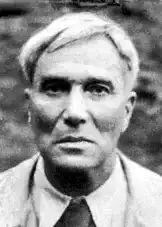
Boris Pasternak
Hops
Beneath the willow wound round with ivy
we take cover from the worst
of the storm, with a greatcoat round
our shoulders and my hands around your waist.
I've got it wrong. That isn't ivy
entwined in the bushes round
the wood, but hops. You intoxicate me!
Let's spread the greatcoat on the ground.
we take cover from the worst
of the storm, with a greatcoat round
our shoulders and my hands around your waist.
I've got it wrong. That isn't ivy
entwined in the bushes round
the wood, but hops. You intoxicate me!
Let's spread the greatcoat on the ground.
445

Lord Byron
Lines Addressed To A Young Lady
Doubtless, sweet girl! the hissing lead,
Wafting destruction o'er thy charms,
And hurtling o'er thy lovely head,
Has fill'd that breast with fond alarms.
Surely some envious demon's force,
Vex'd to behold such beauty here,
Impell'd the bullet's viewless course,
Diverted from its first career.
Yes! in that nearly fatal hour
The ball obey'd some hellborn
guide;
But Heaven, with interposing power,
In pity turn'd the death aside.
Yet, as perchance one trembling tear
Upon that thrilling bosom fell;
Which I, th' unconscious cause of fear,
Extracted fromn its glistening cell:
Say, what dire penance can atone
For such an outrage done to thee?
Arraign'd before thy beauty's throne,
What punishment wilt thou decree?
Might I perform the judge's part,
The sentence I should scarce deplore;
It only would restore a heart
Which but belong'd to thee before.
The least atonement I can make
Is to become no longer free;
Henceforth I breathe but for thy sake,
Thou shalt be all in all to me.
But thou, perhaps, may'st now reject
Such expiation of my guilt;
Come then, some other mode elect;
Let it be death, or what thou wilt.
Choose then, relentless! and I swear
Nought shall thy dread decree prevent;
Yet holdone
little word forbear!
Let it be aught but banishment.
445

Mirza Ghalib
A Thousand Desires
Thousands of desires, each worth dying for...
Many of them I have realized...yet I yearn for more...
Why should my killer (lover) be afraid? No one will hold her responsible
For the blood which will continuously flow through my eyes all my life
We have heard about the dismissal of Adam from Heaven,
With a more humiliation, I am leaving the street on which you live...
Oh tyrant, your true personality will be known to all
If the curls of my hair slip through my turban!
But if someone wants to write her a letter, they can ask me,
Every morning I leave my house with my pen on my ear.
In that age, I turned to drinking (alcohol)
And then the time came when my entire world was occupied by alcohol
From whom I expected justice/praise for my weakness
Turned out to be more injured with the same cruel sword
When in love, there is little difference between life and death
We live by looking at the infidel who we are willing to die for
Put some pressure on your heart to remove that cruel arrow,
For if the arrow comes out, so will your heart...and your life.
For god's sake, don't lift the cover off any secrets you tyrant
The infidel might turn out to be my lover!
The preacher and the bar's entrance are way apart
Yet I saw him entering the bar as I was leaving!
Thousands of desires, each worth dying for...
>Many of them I have realized...yet I yearn for more
441

Ezra Pound
Come To My Cantilations
Come my cantilations,
Let us dump our hatreds into one bunch and be done with them,
Hot sun, clear water, fresh wind,
Let me be free of pavements,
Let me be free of the printers.
Let come beautiful people
Wearing raw silk of good colour,
Let come the graceful speakers,
Let come the ready of wit,
Let come the gay of manner, the insolent and the exulting.
We speak of burnished lakes,
Of dry air, as clear as metal.
442

William Shakespeare
Love
TELL me where is Fancy bred,
Or in the heart or in the head?
How begot, how nourished?
Reply, reply.
It is engender'd in the eyes,
With gazing fed; and Fancy dies
In the cradle where it lies.
Let us all ring Fancy's knell:
I'll begin it,--Ding, dong, bell.
All. Ding, dong, bell.
Or in the heart or in the head?
How begot, how nourished?
Reply, reply.
It is engender'd in the eyes,
With gazing fed; and Fancy dies
In the cradle where it lies.
Let us all ring Fancy's knell:
I'll begin it,--Ding, dong, bell.
All. Ding, dong, bell.
442
John Keats
Where Be Ye Going, You Devon Maid?
WHERE be ye going, you Devon maid?
And what have ye there i' the basket?
Ye tight little fairy, just fresh from the dairy,
Will ye give me some cream if I ask it?
I love your meads, and I love your flowers,
And I love your junkets mainly,
But 'hind the door, I love kissing more,
O look not so disdainly!
I love your hills, and I love your dales,
And I love your flocks a-bleating;
But O, on the heather to lie together,
With both our hearts a-beating!
I'll put your basket all safe in a nook,
Your shawl I'll hang up on this willow,
And we will sigh in the daisy's eye,
And kiss on a grass-green pillow.
442

Johann Wolfgang von Goethe
With A Painted Ribbon
LITTLE leaves and flow'rets too,
Scatter we with gentle hand,
Kind young spring-gods to the view,
Sporting on an airy band.
Zephyr, bear it on the wing,
Twine it round my loved one's dress;
To her glass then let her spring,
Full of eager joyousness.
Roses round her let her see,
She herself a youthful rose.
Grant, dear life, one look to me!
'Twill repay me all my woes,
What this bosom feels, feel thou.
Freely offer me thy hand;
Let the band that joins us now
Be no fragile rosy band!
442
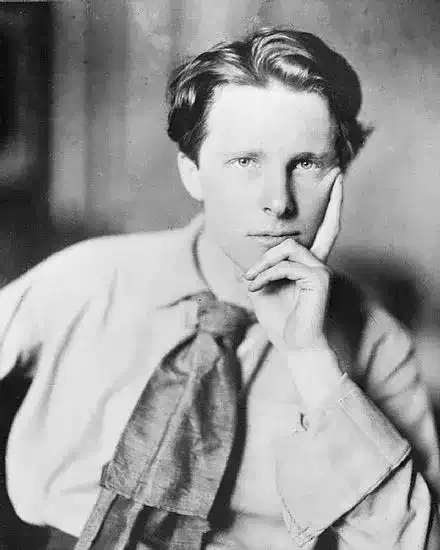
Rupert Brooke
The Song of the Pilgrims
(Halted around the fire by night, after moon-set, they sing this beneath the
trees.)
What light of unremembered skies
Hast thou relumed within our eyes,
Thou whom we seek, whom we shall find?…
A certain odour on the wind,
Thy hidden face beyond the west,
These things have called us; on a quest
Older than any road we trod,
More endless than desire.…
Far God,
Sigh with thy cruel voice, that fills
The soul with longing for dim hills
And faint horizons! For there come
Grey moments of the antient dumb
Sickness of travel, when no song
Can cheer us; but the way seems long;
And one remembers.…
Ah! the beat
Of weary unreturning feet,
And songs of pilgrims unreturning!…
The fires we left are always burning
On the old shrines of home. Our kin
Have built them temples, and therein
Pray to the Gods we know; and dwell
In little houses lovable,
Being happy (we remember how!)
And peaceful even to death...
O Thou,
God of all long desirous roaming,
Our hearts are sick of fruitless homing,
And crying after lost desire.
Hearten us onward! as with fire
Consuming dreams of other bliss.
The best Thou givest, giving this
Sufficient thing—to travel still
Over the plain, beyond the hill,
Unhesitating through the shade,
Amid the silence unafraid,
Till, at some sudden turn, one sees
Against the black and muttering trees
Thine altar, wonderfully white,
Among the Forests of the Night.
441
Ezra Pound
La Regina Avrillouse
Lady of rich allure,
Queen of the spring's embrace,
Your arms are long like boughs of ash,
Mid laugh-broken streams, spirit of rain unsure,
Breath of the poppy flower,
All the wood thy bower
And the hills thy dwelling-place.
This will I no more dream;
Warm is thy arm's allure,
Warm is the gust of breath
That ere thy lips meet mine
Kisseth my cheek and saith:
"This is the joy of earth,
Here is the wine of mirth
Drain ye one goblet sure,
Take ye the honey cup
The honied song raise up,
Drink of the spring's allure,
April and dew and rain;
Brown of the earth sing sure,
Cheeks and lips and hair
And soft breath that kisseth where
Thy lips have come not yet to drink."
Moss and the mold of earth,
These be thy couch of mirth,
Long arms thy boughs of shade
April-alluring, as the blade
Of grass doth catch the dew
And make it crown to hold the sun.
Banner be you
Above my head,
Glory to all wold display'd,
April-alluring, glory-bold.
440
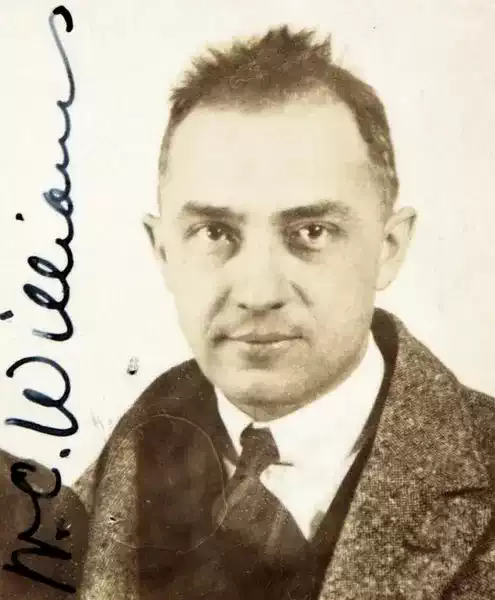
William Carlos Williams
To a Friend Concerning Several Ladies
You know there is not much
that I desire, a few chrysanthemums
half lying on the grass, yellow
and brown and white, the
talk of a few people, the trees,
an expanse of dried leaves perhaps
with ditches among them.
But there comes
between me and these things
a letter
or even a look--well placed,
you understand,
so that I am confused, twisted
four ways and--left flat,
unable to lift the food to
my own mouth:
Here is what they say: Come!
and come! and come! And if
I do not go I remain stale to
myself and if I go--
I have watched
the city from a distance at night
and wondered why I wrote no poem.
Come! yes,
the city is ablaze for you
and you stand and look at it.
And they are right. There is
no good in the world except out of
a woman and certain women alone
for certain. But what if
I arrive like a turtle,
with my house on my back or
a fish ogling from under water?
It will not do. I must be
steaming with love, colored
like a flamingo. For what?
To have legs and a silly head
and to smell, pah! like a flamingo
that soils its own feathers behind.
Must I go home filled
with a bad poem?
And they say:
Who can answer these things
till he has tried? Your eyes
are half closed, you are a child,
oh, a sweet one, ready to play
but I will make a man of you and
with love on his shoulder--!
And in the marshes
the crickets run
on the sunny dike's top and
make burrows there, the water
reflects the reeds and the reeds
move on their stalks and rattle drily.
439

Kabir
My body is flooded
My body is flooded
With the flame of Love.
My soul lives in
A furnace of bliss.
Love's fragrance
Fills my mouth,
And fans through all things
With each outbreath.
With the flame of Love.
My soul lives in
A furnace of bliss.
Love's fragrance
Fills my mouth,
And fans through all things
With each outbreath.
440
Johann Wolfgang von Goethe
Finnish Song
IF the loved one, the well-known one,
Should return as he departed,
On his lips would ring my kisses,
Though the wolf's blood might have dyed them;
And a hearty grasp I'd give him,
Though his finger-ends were serpents.
Wind! Oh, if thou hadst but reason,
Word for word in turns thou'dst carry,
E'en though some perchance might perish
'Tween two lovers so far distant.
All choice morsels I'd dispense with,
Table-flesh of priests neglect too,
Sooner than renounce my lover,
Whom, in Summer having vanquish'd,
I in Winter tamed still longer.
440
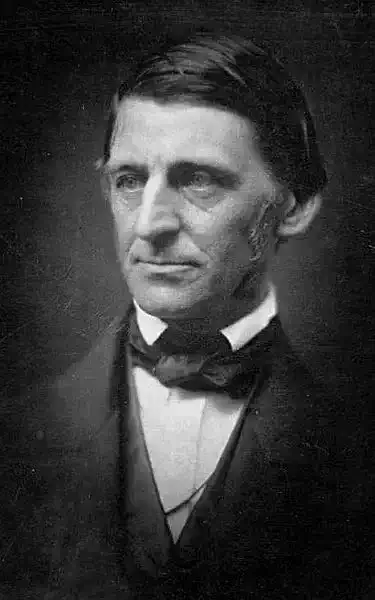
Ralph Waldo Emerson
Initial Love
Venus, when her son was lost,
Cried him up and down the coast,
In hamlets, palaces, and parks,
And told the truant by his marks,
Golden curls, and quiver, and bow;—
This befell long ago.
Time and tide are strangely changed,
Men and manners much deranged;
None will now find Cupid latent
By this foolish antique patent.
He came late along the waste,
Shod like a traveller for haste,
With malice dared me to proclaim him,
That the maids and boys might name him.
Boy no more, he wears all coats,
Frocks, and blouses, capes, capôtes,
He bears no bow, or quiver, or wand,
Nor chaplet on his head or hand:
Leave his weeds and heed his eyes,
All the rest he can disguise.
In the pit of his eyes a spark
Would bring back day if it were dark,
And,—if I tell you all my thought,
Though I comprehend it not,—
In those unfathomable orbs
Every function he absorbs;
He doth eat, and drink, and fish, and shoot,
And write, and reason, and compute,
And ride, and run, and have, and hold,
And whine, and flatter, and regret,
And kiss, and couple, and beget,
By those roving eye-balls bold;
Undaunted are their courages,
Right Cossacks in their forages;
Fleeter they than any creature,
They are his steeds and not his feature,
Inquisitive, and fierce, and fasting,
Restless, predatory, hasting,—
And they pounce on other eyes,
As lions on their prey;
And round their circles is writ,
Plainer than the day,
Underneath, within, above,
Love, love, love, love.
He lives in his eyes,
There doth digest, and work, and spin,
And buy, and sell, and lose, and win;
He rolls them with delighted motion,
Joy-tides swell their mimic ocean.
Yet holds he them with tortest rein,
That they may seize and entertain
The glance that to their glance opposes,
Like fiery honey sucked from roses.
He palmistry can understand,
Imbibing virtue by his hand
As if it were a living root;
The pulse of hands will make him mute;
With all his force he gathers balms
Into those wise thrilling palms.
Cupid is a casuist,
A mystic, and a cabalist,
Can your lurking Thought surprise,
And interpret your device;
Mainly versed in occult science,
In magic, and in clairvoyance.
Oft he keeps his fine ear strained,
And reason on her tiptoe pained,
For aery intelligence,
And for strange coincidence.
But it touches his quick heart
When Fate by omens takes his part,
And chance-dropt hints from Nature's sphere
Deeply soothe his anxious ear.
Heralds high before him run,
He has ushers many a one,
Spreads his welcome where he goes,
And touches all things with his rose.
All things wait for and divine him,—
How shall I dare to malign him,
Or accuse the god of sport?—
I must end my true report,
Painting him from head to foot,
In as far as I took note,
Trusting well the matchless power
Of this young-eyed emperor
Will clear his fame from every cloud,
With the bards, and with the crowd.
He is wilful, mutable,
Shy, untamed, inscrutable,
Swifter-fashioned than the fairies,
Substance mixed of pure contraries,
His vice some elder virtue's token,
And his good is evil spoken.
Failing sometimes of his own,
He is headstrong and alone;
He affects the wood and wild,
Like a flower-hunting child,
Buries himself in summer waves,
In trees, with beasts, in mines, and caves,
Loves nature like a horned cow,
Bird, or deer, or cariboo.
Shun him, nymphs, on the fleet horses!
He has a total world of wit,
O how wise are his discourses!
But he is the arch-hypocrite,
And through all science and all art,
Seeks alone his counterpart.
He is a Pundit of the east,
He is an augur and a priest,
And his soul will melt in prayer,
But word and wisdom are a snare;
Corrupted by the present toy,
He follows joy, and only joy.
There is no mask but he will wear,
He invented oaths to swear,
He paints, he carves, he chants, he prays,
And holds all stars in his embrace,
Godlike, —but 'tis for his fine pelf,
The social quintessence of self.
Well, said I, he is hypocrite,
And folly the end of his subtle wit,
He takes a sovran privilege
Not allowed to any liege,
For he does go behind all law,
And right into himself does draw,
For he is sovranly allied.
Heaven's oldest blood flows in his side,
And interchangeably at one
With every king on every throne,
That no God dare say him nay,
Or see the fault, or seen betray;
He has the Muses by the heart,
And the Parcæ all are of his part.
His many signs cannot be told,
He has not one mode, but manifold,
Many fashions and addresses,
Piques, reproaches, hurts, caresses,
Action, service, badinage,
He will preach like a friar,
And jump like Harlequin,
He will read like a crier,
And fight like a Paladin.
Boundless is his memory,
Plans immense his term prolong,
He is not of counted age,
Meaning always to be young.
And his wish is intimacy,
Intimater intimacy,
And a stricter privacy,
The impossible shall yet be done,
And being two shall still be one.
As the wave breaks to foam on shelves,
Then runs into a wave again,
So lovers melt their sundered selves,
Yet melted would be twain.
440
William Carlos Williams
Love Song
I lie here thinking of you:---
the stain of love
is upon the world!
Yellow, yellow, yellow
it eats into the leaves,
smears with saffron
the horned branched the lean
heavily
against a smooth purple sky!
There is no light
only a honey-thick stain
that drips from leaf to leaf
and limb to limb
spoiling the colors
of the whole worldyou
far off there under
the wine-red selvage of the west!
439
William Carlos Williams
Great Mullen
One leaves his leaves at home
beomg a mullen and sends up a lighthouse
to peer from: I will have my way,
yellow--A mast with a lantern, ten
fifty, a hundred, smaller and smaller
as they grow more--Liar, liar, liar!
You come from her! I can smell djer-kiss
on your clothes. Ha! you come to me,
you, I am a point of dew on a grass-stem.
Why are you sending heat down on me
from your lantern?--You are cowdung, a
dead stick with the bark off. She is
squirting on us both. She has has her
hand on you!--well?--She has defiled
ME.--Your leaves are dull, thick
and hairy.--Every hair on my body will
hold you off from me. You are a
dungcake, birdlime on a fencerail.--
I love you, straight, yellow
finger of God pointing to--her!
Liar, broken weed, dungcake, you have--
I am a cricket waving his antennae
and you are high, grey and straight. Ha!
436
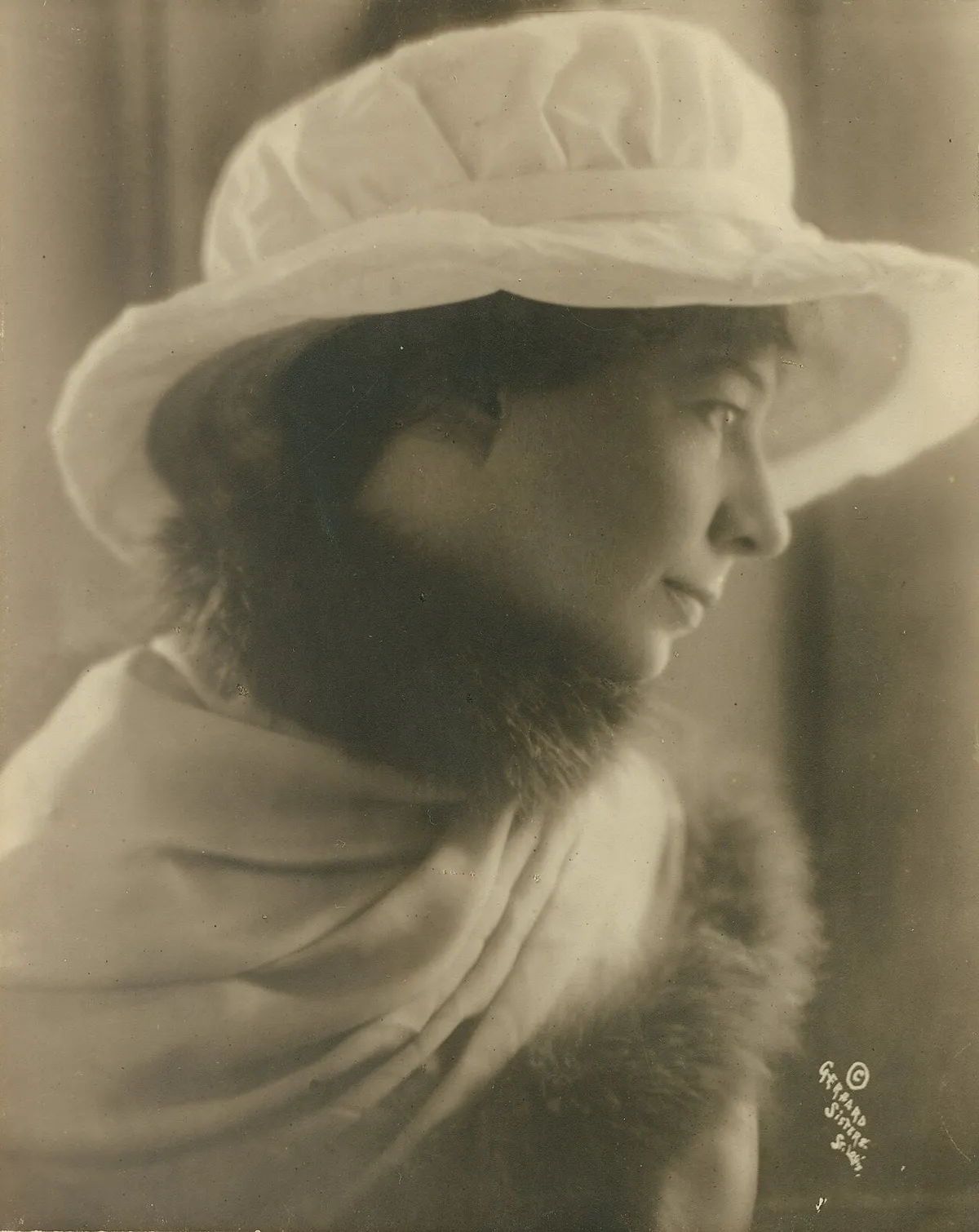
Sara Teasdale
The Tree of Song
I sang my songs for the rest,
For you I am still;
The tree of my song is bare
On its shining hill.
For you came like a lordly wind,
And the leaves were whirled
Far as forgotten things
Past the rim of the world.
The tree of my song stands bare
Against the blue --
I gave my songs to the rest,
Myself to you.
For you I am still;
The tree of my song is bare
On its shining hill.
For you came like a lordly wind,
And the leaves were whirled
Far as forgotten things
Past the rim of the world.
The tree of my song stands bare
Against the blue --
I gave my songs to the rest,
Myself to you.
435
Johann Wolfgang von Goethe
Joy And Sorrow
As a fisher-boy I fared
To the black rock in the sea,
And, while false gifts I prepared.
Listen'd and sang merrily,
Down descended the decoy,
Soon a fish attack'd the bait;
One exultant shout of joy,-
And the fish was captured straight.
Ah! on shore, and to the wood
Past the cliffs, o'er stock and stone,
One foot's traces I pursued,
And the maiden was alone.
Lips were silent, eyes downcast
As a clasp-knife snaps the bait,
With her snare she seized me fast,
And the boy was captured straight.
Heav'n knows who's the happy swain
That she rambles with anew!
I must dare the sea again,
Spite of wind and weather too.
When the great and little fish
Wail and flounder in my net,
Straight returns my eager wish
In her arms to revel yet!
437
William Carlos Williams
Smell
Oh strong-ridged and deeply hollowed
nose of mine! what will you not be smelling?
What tactless asses we are, you and I, boney nose,
always indiscriminate, always unashamed,
and now it is the souring flowers of the bedreggled
poplars: a festering pulp on the wet earth
beneath them. With what deep thirst
we quicken our desires
to that rank odor of a passing springtime!
Can you not be decent? Can you not reserve your ardors
for something less unlovely? What girl will care
for us, do you think, if we continue in these ways?
Must you taste everything? Must you know everything?
Must you have a part in everything?
434

Emily Dickinson
I envy Seas, whereon He rides
I envy Seas, whereon He rides-
I envy Spokes of Wheels
Of Chariots, that Him convey-
I envy Crooked Hills
That gaze upon His journey-
How easy All can see
What is forbidden utterly
As Heaven-unto me!
I envy Nests of Sparrows-
That dot His distant Eaves-
The wealthy Fly, upon His Pane-
The happy-happy Leaves-
That just abroad His Window
Have Summer's leave to play-
The Ear Rings of Pizarro
Could not obtain for me-
I envy Light-that wakes Him-
And Bells-that boldly ring
To tell Him it is Noon, abroad
Myself-
be Noon to Him-
Yet interdict-my Blossom-
And abrogate-my Bee-
Lest Noon in Everlasting Night-
Drop Gabriel-and Me-
432

Rudyard Kipling
The City of Sleep
Over the edge of the purple down,
Where the single lamplight gleams,
Know ye the road to the Merciful Town
That is hard by the Sea of Dreams--
Where the poor may lay their wrongs away,
And the sick may forget to weep?
But we--pity us! Oh, pity us!
We wakeful; ah, pity us! --
We must go back with Policeman Day--
Back from the City of Sleep!
Weary they turn from the scroll and crown,
Fetter and prayer and plough--
They that go up to the Merciful Town,
For her gates are closing now.
It is their right in the Baths of Night
Body and soul to steep,
But we--pity us! ah, pity us!
We wakeful; oh, pity us!--
We must go back with Policeman Day--
Back from the City of Sleep!
Over the edge of the purple down,
Ere the tender dreams begin,
Look--we may look--at the Merciful Town,
But we may not enter in!
Outcasts all, from her guarded wall
Back to our watch we creep:
We--pity us! ah, pity us!
We wakeful; oh, pity us!--
We that go back with Policeman Day--
Back from the City of Sleep!
433

Ella Wheeler Wilcox
How does Love speak?
In the faint flush upon the tell-tale cheek,
And in the pallor that succeeds it; by
The quivering lid of an averted eye -
The smile that proves the parent of a sigh:
Thus doth Love speak.
How does Love speak?
By the uneven heart-throbs, and the freak
Of bounding pulses that stand still and ache
While new emotions, like strange barges, make
Along vein-channels their disturbing course,
Still as the dawn, and with the dawn's swift force:
Thus doth Love speak.
How does Love speak?
In the avoidance of that which we seek
The sudden silence and reserve when near;
The eye that glistens with an unshed tear;
The joy that seems the counterpart of fear,
As the alarmed heart leads in the breast,
And knows, and names, and greets its godlike guest:
Thus doth Love speak.
How does Love speak?
In the proud spirit suddenly grown meek,
The haughty heart grown humble; in the tender
And unnamed light that floods the world with splendour;
In the resemblance which the fond eyes trace
In all fair things to one beloved face;
In the shy touch of hands that thrill and tremble;
In looks and lips that can no more dissemble:
Thus doth Love speak.
How does Love speak?
In wild words that uttered seem so weak
They shrink ashamed to silence; in the fire
Glance strikes with glance, swift flashing high and higher,
Like lightnings that precede the mighty storm
In the deep, soulful stillness; in the warm,
Impassioned tide that sweeps thro' throbbing veins,
Between the shores of keen delights and pains;
In the embrace where madness melts in bliss,
And in the convulsive rapture of a kiss:
Thus doth Love speak.
431
Johann Wolfgang von Goethe
Book Of Suleika - Hatem 03
HOLD me, locks, securely caught
In the circle of her face!
Dear brown serpents, I have nought
To repay this act of grace,
Save a heart whose love ne'er dies,
Throbbing with aye-youthful glow;
For a raging ETA lies
'Neath its veil of mist and snow.
Yonder mountain's stately brow
Thou, like morning beams, dost shame;
Once again feels Hatem now
Spring's soft breath and summer's flame.
One more bumper! Fill the glass;
This last cup I pledge to thee!--
By mine ashes if she pass,
"He consumed," she'll say, "for me."
431

Walt Whitman
Give Me The Splendid, Silent Sun
GIVE me the splendid silent sun, with all his beams full-dazzling;
Give me juicy autumnal fruit, ripe and red from the orchard;
Give me a field where the unmow'd grass grows;
Give me an arbor, give me the trellis'd grape;
Give me fresh corn and wheat--give me serene-moving animals, teaching
content;
Give me nights perfectly quiet, as on high plateaus west of the
Mississippi, and I looking up at the stars;
Give me odorous at sunrise a garden of beautiful flowers, where I can
walk undisturb'd;
Give me for marriage a sweet-breath'd woman, of whom I should never
tire;
Give me a perfect child--give me, away, aside from the noise of the
world, a rural, domestic life;
Give me to warble spontaneous songs, reliev'd, recluse by myself, for
my own ears only;
Give me solitude--give me Nature--give me again, O Nature, your
primal sanities!
--These, demanding to have them, (tired with ceaseless excitement,
and rack'd by the war-strife;)
These to procure, incessantly asking, rising in cries from my heart,
While yet incessantly asking, still I adhere to my city;
Day upon day, and year upon year, O city, walking your streets,
Where you hold me enchain'd a certain time, refusing to give me up;
Yet giving to make me glutted, enrich'd of soul--you give me forever
faces;
(O I see what I sought to escape, confronting, reversing my cries;
I see my own soul trampling down what it ask'd for.)
Keep your splendid, silent sun;
Keep your woods, O Nature, and the quiet places by the woods;
Keep your fields of clover and timothy, and your corn-fields and
orchards;
Keep the blossoming buckwheat fields, where the Ninth-month bees hum;
Give me faces and streets! give me these phantoms incessant and
endless along the trottoirs!
Give me interminable eyes! give me women! give me comrades and lovers
by the thousand!
Let me see new ones every day! let me hold new ones by the hand every
day!
Give me such shows! give me the streets of Manhattan!
Give me Broadway, with the soldiers marching--give me the sound of
the trumpets and drums!
(The soldiers in companies or regiments--some, starting away, flush'd
and reckless;
Some, their time up, returning, with thinn'd ranks--young, yet very
old, worn, marching, noticing nothing;)
--Give me the shores and the wharves heavy-fringed with the black
ships!
O such for me! O an intense life! O full to repletion, and varied!
The life of the theatre, bar-room, huge hotel, for me!
The saloon of the steamer! the crowded excursion for me! the torchlight
procession!
The dense brigade, bound for the war, with high piled military wagons
following;
People, endless, streaming, with strong voices, passions, pageants;
Manhattan streets, with their powerful throbs, with the beating
drums, as now;
The endless and noisy chorus, the rustle and clank of muskets, (even
the sight of the wounded;)
Manhattan crowds, with their turbulent musical chorus--with varied
chorus, and light of the sparkling eyes;
Manhattan faces and eyes forever for me.
434