
Desire

Johann Wolfgang von Goethe
Roman Elegies I
Tell me you stones, O speak, you towering palaces!
Streets, say a word! Spirit of this place, are you dumb?
All things are alive in your sacred walls
eternal Rome, only for me all’s still.
Who will whisper to me, at what window
will I see the sweet thing who will kindle me, and quicken?
Already I guess the ways, walking to her and from her,
ever and always I’ll go, while sweet time slips by.
I’m gazing at church and palace, ruin and column,
like a serious man making sensible use of a journey,
but soon it will happen, and all will be one vast temple,
Love’s temple, receiving its new initiate.
Though you are a whole world, Rome, still, without Love,
the world’s not the world, Rome cannot be Rome.
431

Emily Dickinson
A Charm invests a face
A Charm invests a face
Imperfectly beheld-
The Lady date not lift her Veil
For fear it be dispelled-
But peers beyond her mesh-
And wishes-and denies-
Lest Interview-annul a want
That Image-satisfies-
Imperfectly beheld-
The Lady date not lift her Veil
For fear it be dispelled-
But peers beyond her mesh-
And wishes-and denies-
Lest Interview-annul a want
That Image-satisfies-
431

Ezra Pound
The Picture
The eyes of this dead lady speak to me,
For here was love, was not to be drowned out.
And here desire, not to be kissed away.
The eyes of this dead lady speak to me.
For here was love, was not to be drowned out.
And here desire, not to be kissed away.
The eyes of this dead lady speak to me.
431

Lord Byron
Answer To Some Elegant Verses Sent By A Friend To The Author, Complaining
That One Of His Descriptions Was Rather Too Warmly Drawn
'But if any old lady, knight, priest or physician
Should condemn me for printing a second edition;
If good Madam Squintum my work should abuse,
May I venture to give her a smack of my muse?' — New Bath Guide.
CANDOUR compels me, BECHER! to commend
The verse which blends the censor with the friend.
Your strong yet just reproof extorts applause
From me, the heedless and imprudent cause.
For this wild error which pervades my strain,
I sue for pardon, — must I sue In vain?
The wise sometlrnes ftom Wisdom's ways depart:
Can youth then hush the dlctates of the heart?
Precepts of prudence curb, but can't control
The fierce emotions of the flowing soul.
When Love's delirium haunts the glowing mind
Limping Decorum lingers far behind:
Vainly the dotard mends her prudish pace,
Outstript and vanquish'd In the mental chase.
The young, the old, have worn the chains of love;
Let those they ne'er confined my lay reprove:
Let those whose souls Conternn the pleasing power
Their censures on the hapless victim shower.
Oh! how I hate the nerveless, frigid song,
The ceaseless echo of the rhyming throng,
Whose labour'd lines In chilling numbers flow,
To paint a pang the author ne'er can know!
The artless Helicon I boast is youth;—
My lyre, the heart; my muse, the simple truth.
Far be 't from me the 'vlrgin's stand' to 'taint':
Seduction's dread is here no slight restraint.
The maid whose virgin breast is void of guile,
Whose wishes dimple in a modest smile,
Whose downcast eye disdains the wanton leer,
Firzn in her virtue's strength, yet not severe
She whom a conscious grace shall thus refine
Will ne'er be 'tainted' by a strain of mine.
But for the nymph whose premature desires
Torment her bosom with unholy fires,
No net to snare her willing heart is spread
Sho would have fallen, though she ne'er had read.
For me, I fain would please the chosen few,
Whose souls, to feeling and to nature true,
Will spare the childish verse, and not destroy
The light effusions of a heedless boy.
I seek not glory from the senseless crowd;
Of fancied laurels I shall ne'er he proud;
Their warrnest plaudits I would scarcely prize,
Their sneers or censures I alike despise.
432
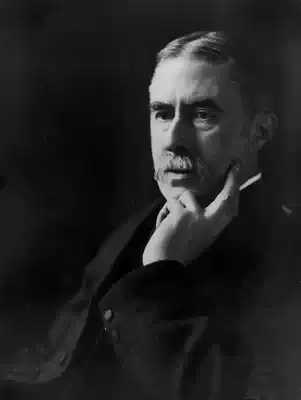
Alfred Edward Housman
Ho, everyone that thirsteth
Ho, everyone that thirsteth
And hath the price to give,
Come to the stolen waters,
Drink and your soul shall live.
Come to the stolen waters,
And leap the guarded pale,
And pull the flower in season
Before desire shall fail.
It shall not last for ever,
No more than earth and skies;
But he that drinks in season
Shall live before he dies.
June suns, you cannot store them
To warm the winter's cold,
The lad that hopes for heaven
Shall fill his mouth with mold.
430
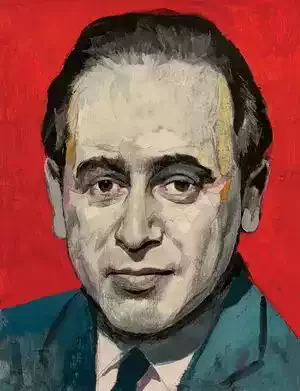
Paul Celan
Your Hand
Your hand full of hours, you came to me – and I said:
‘Your hair is not brown.’
You lifted it, lightly,
on to the balance of grief,
it was heavier than I.
They come to you on their ships, and make it their load,
then put it on sale in the markets of lust.
You smile at me from the deep.
I weep at you from the scale that’s still light.
I weep: Your hair is not brown.
They offer salt-waves of the sea,
and you give them spume.
You whisper: ‘They’re filling the world with me now,
and for you I’m still a hollow way in the heart!
You say: ‘Lay the leaf-work of years by you, it’s time,
that you came here and kissed me.
The leaf-work of years is brown, your hair is not brown.
428

Ella Wheeler Wilcox
A Glass Of Wine
'What's in a glass of wine?'
There, set the glass where I can look within.
Now listen to me, friend, while I begin
And tell you what I see-
What I behold with my far-reaching eyes,
And what I know to be
Below the laughing bubbles that arise
Within this glass of wine.
There is a little spirit, night and day,
That cries one word, for ever and alway:
That single word is 'More!'
And whoso drinks a glass of wine, drinks him:
You fill the goblet full unto the brim,
And strive to silence him.
Glass after glass you drain to quench his thirst,
Each glass contains a spirit like the first;
And all their voices cry
Until they shriek and clamor, howl and rave,
And shout 'More!' noisily,
Till welcome death prepares the drunkard's grave,
And stills the imps that rave.
That see I in the wine:
And tears so many that I cannot guess;
And all these drops are labelled with 'Distress.'
I know you cannot see.
And at the bottom are the dregs of shame:
Oh! it is plain to me.
And there are woes too terrible to name:
Now drink your glass of wine.
428

Henry Wadsworth Longfellow
Youth And Age. (Sonnet III.)
Oh give me back the days when loose and free
To my blind passion were the curb and rein,
Oh give me back the angelic face again,
With which all virtue buried seems to be!
Oh give my panting footsteps back to me,
That are in age so slow and fraught with pain,
And fire and moisture in the heart and brain,
If thou wouldst have me burn and weep for thee!
If it be true thou livest alone, Amor,
On the sweet-bitter tears of human hearts,
In an old man thou canst not wake desire;
Souls that have almost reached the other shore
Of a diviner love should feel the darts,
And be as tinder to a holier fire.
428

Robert Browning
In A Gondola
He sings_.
I send my heart up to thee, all my heart
In this my singing.
For the stars help me, and the sea bears part;
The very night is clinging
Closer to Venice' streets to leave one space
Above me, whence thy face
May light my joyous heart to thee its dwelling-place.
_She speaks_.
Say after me, and try to say
My very words, as if each word
Came from you of your own accord,
In your own voice, in your own way:
``This woman's heart and soul and brain
``Are mine as much as this gold chain
``She bids me wear; which'' (say again)
``I choose to make by cherishing
``A precious thing, or choose to fling
``Over the boat-side, ring by ring.''
And yet once more say ... no word more!
Since words are only words. Give o'er!
Unless you call me, all the same,
Familiarly by my pet name,
Which if the Three should hear you call,
And me reply to, would proclaim
At once our secret to them all.
Ask of me, too, command me, blame---
Do, break down the partition-wall
'Twixt us, the daylight world beholds
Curtained in dusk and splendid folds!
What's left but---all of me to take?
I am the Three's: prevent them, slake
Your thirst! 'Tis said, the Arab sage,
In practising with gems, can loose
Their subtle spirit in his cruce
And leave but ashes: so, sweet mage,
Leave them my ashes when thy use
Sucks out my soul, thy heritage!
_He sings_.
I.
Past we glide, and past, and past!
What's that poor Agnese doing
Where they make the shutters fast?
Grey Zanobi's just a-wooing
To his couch the purchased bride:
Past we glide!
II.
Past we glide, and past, and past!
Why's the Pucci Palace flaring
Like a beacon to the blast?
Guests by hundreds, not one caring
If the dear host's neck were wried:
Past we glide!
_She sings_.
I.
The moth's kiss, first!
Kiss me as if you made believe
You were not sure, this eve,
How my face, your flower, had pursed
Its petals up; so, here and there
You brush it, till I grow aware
Who wants me, and wide ope I burst.
II.
The bee's kiss, now!
Kiss me as if you entered gay
My heart at some noonday,
A bud that dares not disallow
The claim, so all is rendered up,
And passively its shattered cup
Over your head to sleep I bow.
_He sings_.
I.
What are we two?
I am a Jew,
And carry thee, farther than friends can pursue,
To a feast of our tribe;
Where they need thee to bribe
The devil that blasts them unless he imbibe
Thy ... Scatter the vision for ever! And now,
As of old, I am I, thou art thou!
II.
Say again, what we are?
The sprite of a star,
I lure thee above where the destinies bar
My plumes their full play
Till a ruddier ray
Than my pale one announce there is withering away
Some ... Scatter the vision for ever! And now,
As of old, I am I, thou art thou!
_He muses_.
Oh, which were best, to roam or rest?
The land's lap or the water's breast?
To sleep on yellow millet-sheaves,
Or swim in lucid shallows just
Eluding water-lily leaves,
An inch from Death's black fingers, thrust
To lock you, whom release he must;
Which life were best on Summer eves?
_He speaks, musing_.
Lie back; could thought of mine improve you?
From this shoulder let there spring
A wing; from this, another wing;
Wings, not legs and feet, shall move you!
Snow-white must they spring, to blend
With your flesh, but I intend
They shall deepen to the end,
Broader, into burning gold,
Till both wings crescent-wise enfold
Your perfect self, from 'neath your feet
To o'er your head, where, lo, they meet
As if a million sword-blades hurled
Defiance from you to the world!
Rescue me thou, the only real!
And scare away this mad ideal
That came, nor motions to depart!
Thanks! Now, stay ever as thou art!
_Still he muses_.
I.
What if the Three should catch at last
Thy serenader? While there's cast
Paul's cloak about my head, and fast
Gian pinions me, himself has past
His stylet thro' my back; I reel;
And ... is it thou I feel?
II.
They trail me, these three godless knaves,
Past every church that saints and saves,
Nor stop till, where the cold sea raves
By Lido's wet accursed graves,
They scoop mine, roll me to its brink,
And ... on thy breast I sink
_She replies, musing_.
Dip your arm o'er the boat-side, elbow-deep,
As I do: thus: were death so unlike sleep,
Caught this way? Death's to fear from flame or steel,
Or poison doubtless; but from water---feel!
Go find the bottom! Would you stay me? There!
Now pluck a great blade of that ribbon-grass
To plait in where the foolish jewel was,
I flung away: since you have praised my hair,
'Tis proper to be choice in what I wear.
_He speaks_.
Row home? must we row home? Too surely
Know I where its front's demurely
Over the Giudecca piled;
Window just with window mating,
Door on door exactly waiting,
All's the set face of a child:
But behind it, where's a trace
Of the staidness and reserve,
And formal lines without a curve,
In the same child's playing-face?
No two windows look one way
O'er the small sea-water thread
Below them. Ah, the autumn day
I, passing, saw you overhead!
First, out a cloud of curtain blew,
Then a sweet cry, and last came you---
To catch your lory that must needs
Escape just then, of all times then,
To peck a tall plant's fleecy seeds,
And make me happiest of men.
I scarce could breathe to see you reach
So far back o'er the balcony
To catch him ere he climbed too high
Above you in the Smyrna peach
That quick the round smooth cord of gold,
This coiled hair on your head, unrolled,
Fell down you like a gorgeous snake
The Roman girls were wont, of old,
When Rome there was, for coolness' sake
To let lie curling o'er their bosoms.
Dear lory,* may his beak retain
Ever its delicate rose stain
As if the wounded lotus-blossoms
Had marked their thief to know again!
Stay longer yet, for others' sake
Than mine! What should your chamber do?
---With all its rarities that ache
In silence while day lasts, but wake
At night-time and their life renew,
Suspended just to pleasure you
Who brought against their will together
These objects, and, while day lasts, weave
Around them such a magic tether
That dumb they look: your harp, believe,
With all the sensitive tight strings
Which dare not speak, now to itself
Breathes slumberously, as if some elf
Went in and out the chords, his wings
Make murmur wheresoe'er they graze,
As an angel may, between the maze
Of midnight palace-pillars, on
And on, to sow God's plagues, have gone
Through guilty glorious Babylon.
And while such murmurs flow, the nymph
Bends o'er the harp-top from her shell
As the dry limpet for the lymph
Come with a tune be knows so well.
And how your statues' hearts must swell!
And how your pictures must descend
To see each other, friend with friend!
Oh, could you take them by surprise,
You'd find Schidone's eager Duke
Doing the quaintest courtesies
To that prim saint by Haste-thee-Luke!
And, deeper into her rock den,
Bold Castelfranco's Magdalen
You'd find retreated from the ken
Of that robed counsel-keeping Ser---
As if the Tizian thinks of her,
And is not, rather, gravely bent
On seeing for himself what toys
Are these, his progeny invent,
What litter now the board employs
Whereon he signed a document
That got him murdered! Each enjoys
Its night so well, you cannot break
The sport up, so, indeed must make
More stay with me, for others' sake.
_She speaks_.
I.
To-morrow, if a harp-string, say,
Is used to tie the jasmine back
That overfloods my room with sweets,
Contrive your Zorzi somehow meets
My Zanze! If the ribbon's black,
The Three are watching: keep away!
II.
Your gondola---let Zorzi wreathe
A mesh of water-weeds about
its prow, as if he unaware
Had struck some quay or bridge-foot stair!
That I may throw a paper out
As you and he go underneath.
There's Zanze's vigilant taper; safe are we.
Only one minute more to-night with me?
Resume your past self of a month ago!
Be you the bashful gallant, I will be
The lady with the colder breast than snow.
Now bow you, as becomes, nor touch my hand
More than I touch yours when I step to land,
And say, ``All thanks, Siora!''---
Heart to heart
And lips to lips! Yet once more, ere we part,
Clasp me and make me thine, as mine thou art!
[_He is surprised, and stabbed_.
It was ordained to be so, sweet!---and best
Comes now, beneath thine eyes, upon thy breast.
Still kiss me! Care not for the cowards! Care
Only to put aside thy beauteous hair
My blood will hurt! The Three, I do not scorn
To death, because they never lived: but I
Have lived indeed, and so---(yet one more kiss)---can die!
425
Lord Byron
Damætas
In law an infant, and in years a boy,
In mind a slave to every vicious joy;
From every sense of shame and virtue wean'd;
In lies an adept, in deceit a fiend;
Versed in hypocrisy, while yet a child;
Fickle as wind, of inclinations wild;
Women his dupe, his heedless friend a tool;
Old in the world, though scarcely broke from school;
Damætas ran through all the maze of sin,
And found the goal when others just begin:
Even still conflicting passions shake his soul,
And bid him drain the dregs of pleasure's bowl;
But, pall'd with vice, he breaks his former chain,
And what was once his bliss appears his bane.
426

Kabir
I Played day and night
I played day and night with my comrades,
and now I am greatly afraid.
So high is my Lord's palace,
my heart trembles to mount its stairs:
yet I must not be shy, if I would enjoy His love.
My heart must cleave to my Lover;
I must withdraw my veil,
and meet Him with all my body:
Mine eyes must perform the ceremony of the lamps of love.
Kabîr says: 'Listen to me, friend:
he understands who loves.
If you feel not love's longing for your Beloved One,
it is vain to adorn your body,
vain to put unguent on your eyelids.'
426

William Blake
Ah! Sunflower
Ah Sunflower, weary of time,
Who countest the steps of the sun;
Seeking after that sweet golden clime
Where the traveller's journey is done;
Where the Youth pined away with desire,
And the pale virgin shrouded in snow,
Arise from their graves, and aspire
Where my Sunflower wishes to go!
Who countest the steps of the sun;
Seeking after that sweet golden clime
Where the traveller's journey is done;
Where the Youth pined away with desire,
And the pale virgin shrouded in snow,
Arise from their graves, and aspire
Where my Sunflower wishes to go!
426
Johann Wolfgang von Goethe
The Wedding Night
WITHIN the chamber, far away
From the glad feast, sits Love in dread
Lest guests disturb, in wanton play,
The silence of the bridal bed.
His torch's pale flame serves to gild
The scene with mystic sacred glow;
The room with incense-clouds is fil'd,
That ye may perfect rapture know.
How beats thy heart, when thou dost hear
The chime that warns thy guests to fly!
How glow'st thou for those lips so dear,
That soon are mute, and nought deny!
With her into the holy place
Thou hast'nest then, to perfect all;
The fire the warder's hands embrace,
Grows, like a night-light, dim and small.
How heaves her bosom, and how burns
Her face at every fervent kiss!
Her coldness now to trembling turns,
Thy daring now a duty is.
Love helps thee to undress her fast,
But thou art twice as fast as he;
And then he shuts both eye at last,
With sly and roguish modesty.
426
Ella Wheeler Wilcox
What Is Flirtation?
What is flirtation? Really,
How can I tell you that?
But when she smiles I see its wiles,
And when he lifts his hat.
'Tis walking in the moonlight,
'Tis buttoning on a glove,
'Tis lips that speak of plays next week,
While eyes are talking love.
Tis meeting in the ball-room,
'Tis whirling in the dance;
'Tis something hid beneath the lid,
More than a simple glance.
'Tis lingering in the hallway,
'Tis sitting on the stair,
'Tis bearded lips on finger-tips,
If mamma isn't there.
'Tis tucking in the carriage,
'Tis asking for a call;
'Tis long good-nights in tender lights,
And that is-no, not all!
'Tis parting when it's over,
And one goes home to sleep;
Best joys must end, tra la, my friend,
But one goes home to weep!
425
Ella Wheeler Wilcox
The Jealous Gods
Oh life is wonderful,' she said,
'And all my world is bright;
Can Paradise show fairer skies,
Or more effulgent light?'
(Speak lower, lower, mortal heart,
The jealous gods may hear.)
She turned for answer; but his gaze
Cut past her like a lance,
And shone like flame on one who came
With radiant glance for glance.
(You spoke too loud, O mortal heart,
The jealous gods were near.)
They walked through green and sunlit ways;
And yet the earth seemed black,
For there were three, where two should be;
So runs the world, alack.
(The listening gods, the jealous gods,
They want no Edens here.)
423
Ella Wheeler Wilcox
Sestina
I wandered o'er the vast green plains of youth,
And searched for Pleasure. On a distant height
Fame's silhouette stood sharp against the skies.
Beyond vast crowds that thronged a broad highway
I caught the glimmer of a golden goal,
While from a blooming bower smiled siren Love.
Straight gazing in her eyes, I laughed at Love,
With all the haughty insolence of youth,
As past her bower I strode to seek my goal.
'Now will I climb to glory's dizzy height, '
I said, ' for there above the common way
Doth pleasure dwell companioned by the skies.'
But when I reached that summit near the skies,
So far from man I seemed, so far from Love'
Not here, ' I cried, 'doth Pleasure find her way, '
Seen from the distant borderland of youth.
Fame smiles upon us from her sun-kissed height,
But frowns in shadows when we reach the goal.
Then were mine eyes fixed on that glittering goal,
Dear to all sense-sunk souls beneath the skies.
Gold tempts the artist from the lofty height,
Gold lures the maiden from the arms of Love,
Gold buys the fresh ingenuous heart of youth,
'And gold, ' I said, 'will show me Pleasure's way.'
But ah! the soil and discord of that way,
Where savage hordes rushed headlong to the goal,
Dead to the best impulses of their youth,
Blind to the azure beauty of the skies;
Dulled to the voice of conscience and of love,
They wandered far from Truth's eternal height.
Then Truth spoke to me from that noble height,
Saying: 'Thou didst pass Pleasure on the way,
She with the yearning eyes so full of Love,
Whom thou disdained to seek for glory's goal.'
Two blending paths beneath God's arching skies
Lead straight to Pleasure. Ah, blind heart of youth,
Not up fame's height, not toward the base god's goal,
Doth Pleasure make her way, but 'neath calm skies
Where Duty walks with Love in endless youth.
423
Robert Browning
A Pretty Woman
I.
That fawn-skin-dappled hair of hers,
And the blue eye
Dear and dewy,
And that infantine fresh air of hers!
II.
To think men cannot take you, Sweet,
And enfold you,
Ay, and hold you,
And so keep you what they make you, Sweet!
III
You like us for a glance, you know---
For a word's sake
Or a sword's sake,
All's the same, whate'er the chance, you know.
IV.
And in turn we make you ours, we say---
You and youth too,
Eyes and mouth too,
All the face composed of flowers, we say.
V.
All's our own, to make the most of, Sweet---
Sing and say for,
Watch and pray for,
Keep a secret or go boast of, Sweet!
VI.
But for loving, why, you would not, Sweet,
Though we prayed you,
Paid you, brayed you
in a mortar---for you could not, Sweet!
VII.
So, we leave the sweet face fondly there:
Be its beauty
Its sole duty!
Let all hope of grace beyond, lie there!
VIII.
And while the face lies quiet there,
Who shall wonder
That I ponder
A conclusion? I will try it there.
IX.
As,---why must one, for the love foregone,
Scout mere liking?
Thunder-striking
Earth,---the heaven, we looked above for, gone!
X.
Why, with beauty, needs there money be,
Love with liking?
Crush the fly-king
In his gauze, because no honey-bee?
XI.
May not liking be so simple-sweet,
If love grew there
'Twould undo there
All that breaks the cheek to dimples sweet?
XII.
Is the creature too imperfect,
Would you mend it
And so end it?
Since not all addition perfects aye!
XIII.
Or is it of its kind, perhaps,
Just perfection---
Whence, rejection
Of a grace not to its mind, perhaps?
XIV.
Shall we burn up, tread that face at once
Into tinder,
And so hinder
Sparks from kindling all the place at once?
XV.
Or else kiss away one's soul on her?
Your love-fancies!
---A sick man sees
Truer, when his hot eyes roll on her!
XVI.
Thus the craftsman thinks to grace the rose,---
Plucks a mould-flower
For his gold flower,
Uses fine things that efface the rose:
XVII.
Rosy rubies make its cup more rose,
Precious metals
Ape the petals,---
Last, some old king locks it up, morose!
XVIII.
Then how grace a rose? I know a way!
Leave it, rather.
Must you gather?
Smell, kiss, wear it---at last, throw away!
423
Ezra Pound
Homage To Sextus Propertius - X
.Light, light of my eyes, at an exceeding late hour I was wandering,
And intoxicated,
and no servant was leading me,
And a minute crowd of small boys came from opposite,
I do not know what boys,
And I am afraid of numerical estimate,
And some of them shook little torches,
and others held onto arrows,
And the rest laid their chains upon me,
and they were naked, the lot of them,
And one of the lot was given to lust.
'That incensed female has consigned him to our pleasure.'
So spoke. And the noose was over my neck.
And another said 'Get him plumb in the middle!
'Shove along there, shove along!'
And another broke in upon this:
'He thinks that we are not gods,'
'And she has been waiting for the scoundrel,
and in a new Sidonian night cap,
And with more than Arabian odours,
God knows where he has been.
She could scarcely keep her eyes open
enter that much for his bail.
Get along now!'
We were coming near to the house,
and they gave another yank to my cloak,
And it was morning, and I wanted to see if she was alone and resting,
And Cynthia was alone in her bed.
I was stupefied.
I had never seen her looking so beautiful,
No, not when she was tunick'd in purple.
Such aspect was presented to me, me recently emerged from my visions,
You will observe that pure form has its value.
‘You are a very early inspector of mistresses.
‘Do you think I have adopted your habits?'
There were upon the bed no signs of a voluptuous encounter,
No signs of a second incumbent.
She continued:
'No incubus has crushed his body against me,
‘Though spirits are celebrated for adultery.
‘And I am going to the temple of Vesta . . .'
and so on.
Since that day I have had no pleasant nights.
421

Carl Sandburg
Joy
Let a joy keep you.
Reach out your hands
And take it when it runs by,
As the Apache dancer
Clutches his woman.
I have seen them
Live long and laugh loud,
Sent on singing, singing,
Smashed to the heart
Under the ribs
With a terrible love.
Joy always,
Joy everywhere--
Let joy kill you!
Keep away from the little deaths.
Reach out your hands
And take it when it runs by,
As the Apache dancer
Clutches his woman.
I have seen them
Live long and laugh loud,
Sent on singing, singing,
Smashed to the heart
Under the ribs
With a terrible love.
Joy always,
Joy everywhere--
Let joy kill you!
Keep away from the little deaths.
423
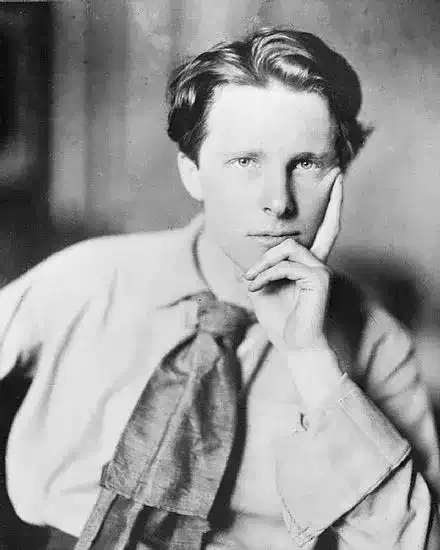
Rupert Brooke
The Way That Lovers Use
The Way that lovers use is this;
They bow, catch hands, with never a word,
And their lips meet, and they do kiss,
—So I have heard.
They queerly find some healing so,
And strange attainment in the touch;
There is a secret lovers know,
—I have read as much.
And theirs no longer joy nor smart,
Changing or ending, night or day;
But mouth to mouth, and heart on heart,
—So lovers say.
421
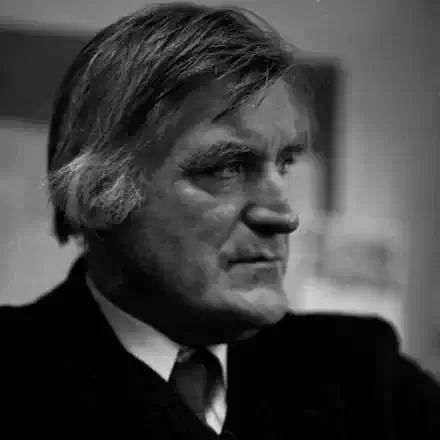
Ted Hughes
Macaw and Little Miss
In a cage of wire-ribs
The size of a man's head, the macaw bristles in a staring
Combustion, suffers the stoking devils of his eyes.
In the old lady's parlour, where an aspidistra succumbs
To the musk of faded velvet, he hangs in clear flames,
Like a torturer's iron instrument preparing
With dense slow shudderings of greens, yellows, blues,
Crimsoning into the barbs:
Or like the smouldering head that hung
In Killdevil's brass kitchen, in irons, who had been
Volcano swearing to vomit the world away in black ash,
And would, one day; or a fugitive aristocrat
From some thunderous mythological hierarchy, caught
By a little boy with a crust and a bent pin,
Or snare of horsehair set for a song-thrush,
And put in a cage to sing.
The old lady who feeds him seeds
Has a grand-daughter. The girl calls him 'Poor Polly', pokes fun.
'Jolly Mop.' But lies under every full moon,
The spun glass of her body bared and so gleam-still
Her brimming eyes do not tremble or spill
The dream where the warrior comes, lightning and iron,
Smashing and burning and rending towards her loin:
Deep into her pillow her silence pleads.
All day he stares at his furnace
With eyes red-raw, but when she comes they close.
'Polly. Pretty Poll', she cajoles, and rocks him gently.
She caresses, whispers kisses. The blue lids stay shut.
She strikes the cage in a tantrum and swirls out:
Instantly beak, wings, talons crash
The bars in conflagration and frenzy,
And his shriek shakes the house.
419
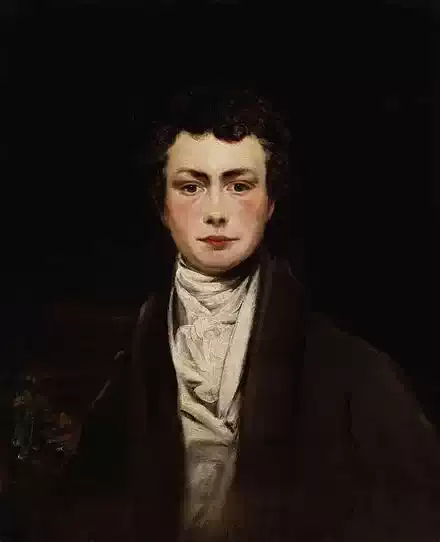
Thomas Moore
Did Not
'Twas a new feeling - something more
Than we had dared to own before,
Which then we hid not;
We saw it in each other's eye,
And wished, in every half-breathed sigh,
To speak, but did not.
She felt my lips' impassioned touch -
'Twas the first time I dared so much,
And yet she chid not;
But whispered o'er my burning brow,
'Oh, do you doubt I love you now?'
Sweet soul! I did not.
Warmly I felt her bosom thrill,
I pressed it closer, closer still,
Though gently bid not;
Till - oh! the world hath seldom heard
Of lovers, who so nearly erred,
And yet, who did not.
421
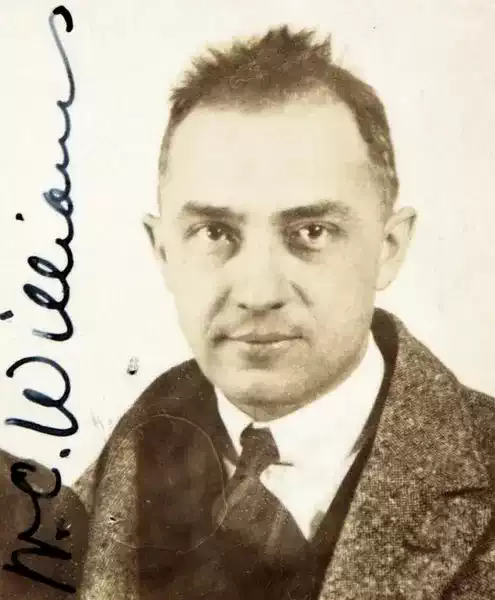
William Carlos Williams
Après le Bain
I gotta
buy me a new
girdle.
(I'll buy
you one) O.K.
(I wish
you'd wiggle
that way
for me,
I'd be
a happy man)
I GOTTA
wiggle
for this.
(You pig)
buy me a new
girdle.
(I'll buy
you one) O.K.
(I wish
you'd wiggle
that way
for me,
I'd be
a happy man)
I GOTTA
wiggle
for this.
(You pig)
419

Elizabeth Barrett Browning
Sonnet XXVIII: My Letters
My letters-- all dead paper, mute and white!
And yet they seem alive and quivering
Against my tremulous hands which loose the string
And let them drop down on my knee to-night,
This said,--he wished to have me in his sight
Once, as a friend: this fixed a day in spring
To come and touch my hand...a simple thing,
Yet I wept for it!--this...the paper's light...
Said, Dear, I love thee; and I sank and quailed
As if God's future thundered on my past.
This said, I am thine--and so its ink has paled
With lying at my heart that beat too fast.
And this...O Love, thy words have ill availed
If, what this said, I dared repeat at last!
419