
Destiny and Overcoming

Carl Sandburg
The Answer
You have spoken the answer.
A child searches far sometimes
Into the red dust
On a dark rose leaf
And so you have gone far
For the answer is:
Silence.
In the republic
Of the winking stars
and spent cataclysms
Sure we are it is off there the answer
is hidden and folded over,
Sleeping in the sun, careless whether
it is Sunday or any other day of
the week,
Knowing silence will bring all one way or another.
Have we not seen
Purple of the pansy
out of the mulch
and mold
crawl
into a dusk
of velvet?
blur of yellow?
Almost we thought from nowhere but it was the silence,
the future,
working.
361

Ella Wheeler Wilcox
The Winds of Fate
One ship drives east and another drives west
With the selfsame winds that blow.
Tis the set of the sails
And not the gales
Which tells us the way to go.
Like the winds of the seas are the ways of fate,
As we voyage along through the life:
Tis the set of a soul
That decides its goal,
And not the calm or the strife.
With the selfsame winds that blow.
Tis the set of the sails
And not the gales
Which tells us the way to go.
Like the winds of the seas are the ways of fate,
As we voyage along through the life:
Tis the set of a soul
That decides its goal,
And not the calm or the strife.
356

Walter de la Mare
The Song of Finis
At the edge of All the Ages
A Knight sate on his steed,
His armor red and thin with rust
His soul from sorrow freed;
And he lifted up his visor
From a face of skin and bone,
And his horse turned head and whinnied
As the twain stood there alone.
No bird above that steep of time
Sang of a livelong quest;
No wind breathed,
Rest:
"Lone for an end!" cried Knight to steed,
Loosed an eager rein--
Charged with his challenge into space:
And quiet did quiet remain.
357

Robert Browning
The Wanderers
OVER the sea our galleys went,
With cleaving prows in order brave
To a speeding wind and a bounding wave--
A gallant armament:
Each bark built out of a forest-tree
Left leafy and rough as first it grew,
And nail'd all over the gaping sides,
Within and without, with black bull-hides,
Seethed in fat and suppled in flame,
To bear the playful billows' game;
So, each good ship was rude to see,
Rude and bare to the outward view.
But each upbore a stately tent
Where cedar pales in scented row
Kept out the flakes of the dancing brine,
And an awning droop'd the mast below,
In fold on fold of the purple fine,
That neither noontide nor star-shine
Nor moonlight cold which maketh mad,
Might pierce the regal tenement.
When the sun dawn'd, O, gay and glad
We set the sail and plied the oar;
But when the night-wind blew like breath,
For joy of one day's voyage more,
We sang together on the wide sea,
Like men at peace on a peaceful shore;
Each sail was loosed to the wind so free,
Each helm made sure by the twilight star,
And in a sleep as calm as death,
We, the voyagers from afar,
Lay stretch'd along, each weary crew
In a circle round its wondrous tent
Whence gleam'd soft light and curl'd rich scent,
And with light and perfume, music too:
So the stars wheel'd round, and the darkness past,
And at morn we started beside the mast,
And still each ship was sailing fast!
Now, one morn, land appear'd--a speck
Dim trembling betwixt sea and sky--
'Avoid it,' cried our pilot, 'check
The shout, restrain the eager eye!'
But the heaving sea was black behind
For many a night and many a day,
And land, though but a rock, drew nigh;
So we broke the cedar pales away,
Let the purple awning flap in the wind,
And a statue bright was on every deck!
We shouted, every man of us,
And steer'd right into the harbour thus,
With pomp and paean glorious.
A hundred shapes of lucid stone!
All day we built its shrine for each,
A shrine of rock for ever one,
Nor paused till in the westering sun
We sat together on the beach
To sing because our task was done;
When lo! what shouts and merry songs!
What laughter all the distance stirs!
A loaded raft with happy throngs
Of gentle islanders!
'Our isles are just at hand,' they cried,
'Like cloudlets faint in even sleeping;
Our temple-gates are open'd wide,
Our olive-groves thick shade are keeping
For these majestic forms'--they cried.
O, then we awoke with sudden start
From our deep dream, and knew, too late,
How bare the rock, how desolate,
Which had received our precious freight:
Yet we call'd out--'Depart!
Our gifts, once given, must here abide:
Our work is done; we have no heart
To mar our work,'--we cried.
359
Robert Browning
The Italian In England
That second time they hunted me
From hill to plain, from shore to sea,
And Austria, hounding far and wide
Her blood-hounds thro' the country-side,
Breathed hot and instant on my trace,---
I made six days a hiding-place
Of that dry green old aqueduct
Where I and Charles, when boys, have plucked
The fire-flies from the roof above,
Bright creeping thro' the moss they love:
---How long it seems since Charles was lost!
Six days the soldiers crossed and crossed
The country in my very sight;
And when that peril ceased at night,
The sky broke out in red dismay
With signal fires; well, there I lay
Close covered o'er in my recess,
Up to the neck in ferns and cress,
Thinking on Metternich our friend,
And Charles's miserable end,
And much beside, two days; the third,
Hunger o'ercame me when I heard
The peasants from the village go
To work among the maize; you know,
With us in Lombardy, they bring
Provisions packed on mules, a string
With little bells that cheer their task,
And casks, and boughs on every cask
To keep the sun's heat from the wine;
These I let pass in jingling line,
And, close on them, dear noisy crew,
The peasants from the village, too;
For at the very rear would troop
Their wives and sisters in a group
To help, I knew. When these had passed,
I threw my glove to strike the last,
Taking the chance: she did not start,
Much less cry out, but stooped apart,
One instant rapidly glanced round,
And saw me beckon from the ground.
A wild bush grows and hides my crypt;
She picked my glove up while she stripped
A branch off, then rejoined the rest
With that; my glove lay in her breast.
Then I drew breath; they disappeared:
It was for Italy I feared.
An hour, and she returned alone
Exactly where my glove was thrown.
Meanwhile came many thoughts: on me
Rested the hopes of Italy.
I had devised a certain tale
Which, when 'twas told her, could not fail
Persuade a peasant of its truth;
I meant to call a freak of youth
This hiding, and give hopes of pay,
And no temptation to betray.
But when I saw that woman's face,
Its calm simplicity of grace,
Our Italy's own attitude
In which she walked thus far, and stood,
Planting each naked foot so firm,
To crush the snake and spare the worm---
At first sight of her eyes, I said,
``I am that man upon whose head
``They fix the price, because I hate
``The Austrians over us: the State
``Will give you gold---oh, gold so much!---
``If you betray me to their clutch,
``And be your death, for aught I know,
``If once they find you saved their foe.
``Now, you must bring me food and drink,
``And also paper, pen and ink,
``And carry safe what I shall write
``To Padua, which you'll reach at night
``Before the duomo shuts; go in,
``And wait till Tenebr begin;
``Walk to the third confessional,
``Between the pillar and the wall,
``And kneeling whisper, _Whence comes peace?_
``Say it a second time, then cease;
``And if the voice inside returns,
``_From Christ and Freedom; what concerns
``The cause of Peace?_---for answer, slip
``My letter where you placed your lip;
``Then come back happy we have done
``Our mother service---I, the son,
``As you the daughter of our land!''
Three mornings more, she took her stand
In the same place, with the same eyes:
I was no surer of sun-rise
That of her coming. We conferred
Of her own prospects, and I heard
She had a lover---stout and tall,
She said---then let her eyelids fall,
``He could do much''---as if some doubt
Entered her heart,---then, passing out,
``She could not speak for others, who
``Had other thoughts; herself she knew:''
And so she brought me drink and food.
After four days, the scouts pursued
Another path; at last arrived
The help my Paduan friends contrived
To furnish me: she brought the news.
For the first time I could not choose
But kiss her hand, and lay my own
Upon her head---``This faith was shown
``To Italy, our mother; she
``Uses my hand and blesses thee.''
She followed down to the sea-shore;
I left and never saw her more.
How very long since I have thought
Concerning---much less wished for---aught
Beside the good of Italy,
For which I live and mean to die!
I never was in love; and since
Charles proved false, what shall now convince.
My inmost heart I have a friend?
However, if I pleased to spend
Real wishes on myself---say, three---
I know at least what one should be.
I would grasp Metternich until
I felt his red wet throat distil
In blood thro' these two hands. And next,
---Nor much for that am I perplexed---
Charles, perjured traitor, for his part,
Should die slow of a broken heart
Under his new employer. Last
---Ah, there, what should I wish? For fast
Do I grow old and out of strength.
If I resolved to seek at length
My father's house again, how scared
They all would look, and unprepared!
My brothers live in Austria's pay
---Disowned me long ago, men say;
And all my early mates who used
To praise me so---perhaps induced
More than one early step of mine---
Are turning wise: while some opine
``Freedom grows license,'' some suspect
``Haste breeds delay,'' and recollect
They always said, such premature
Beginnings never could endure!
So, with a sullen ``All's for best,''
The land seems settling to its rest.
I think then, I should wish to stand
This evening in that dear, lost land,
Over the sea the thousand miles,
And know if yet that woman smiles
With the calm smile; some little farm
She lives in there, no doubt: what harm
If I sat on the door-side bench,
And, while her spindle made a trench
Fantastically in the dust,
Inquired of all her fortunes---just
Her children's ages and their names,
And what may be the husband's aims
For each of them. I'd talk this out,
And sit there, for an hour about,
Then kiss her hand once more, and lay
Mine on her head, and go my way.
So much for idle wishing---how
It steals the time! To business now.
356

Henry Wadsworth Longfellow
Flower-De-Luce: To-Morrow
'Tis late at night, and in the realm of sleep
My little lambs are folded like the flocks;
From room to room I hear the wakeful clocks
Challenge the passing hour, like guards that keep
Their solitary watch on tower and steep;
Far off I hear the crowing of the cocks,
And through the opening door that time unlocks
Feel the fresh breathing of To-morrow creep.
To-morrow! the mysterious, unknown guest,
Who cries to me: 'Remember Barmecide,
And tremble to be happy with the rest.'
And I make answer: 'I am satisfied;
I dare not ask; I know not what is best;
God hath already said what shall betide.'
351

John Greenleaf Whittier
Thy Will Be Done
WE see not, know not; all our way
Is night, — with Thee alone is day:
From out the torrent's troubled drift,
Above the storm our prayers we lift,
Thy will be done!
The flesh may fail, the heart may faint,
But who are we to make complaint,
Or dare to plead, in times like these,
The weakness of our love of ease?
Thy will be done!
We take with solemn thankfulness
Our burden up, nor ask it less,
And count it joy that even we
May suffer, serve, or wait for Thee,
Whose will be done!
Though dim as yet in tint and line,
We trace Thy picture's wise design,
And thank Thee that our age supplies
Its dark relief of sacrifice.
Thy will be done!
And if, in our unworthiness,
Thy sacrificial wine we press;
If from Thy ordeal's heated bars
Our feet are seamed with crimson scars,
Thy will be done!
If, for the age to come, this hour
Of trial hath vicarious power,
And, blest by Thee, our present pain,
Be Liberty's eternal gain,
Thy will be done!
Strike, Thou the Master, we Thy keys,
The anthem of the destinies!
The minor of Thy loftier strain,
Our hearts shall breathe the old refrain,
Thy will be done!
345

Ogden Nash
A Caution To Everybody
Consider the auk;
Becoming extinct because he forgot how to fly, and could only walk.
Consider man, who may well become extinct
Because he forgot how to walk and learned how to fly before he thinked.
Becoming extinct because he forgot how to fly, and could only walk.
Consider man, who may well become extinct
Because he forgot how to walk and learned how to fly before he thinked.
343
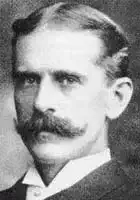
Henry Van Dyke
The Proud Lady
When Stiivoren town was in its prime
And queened the Zuyder Zee,
Its ships went out to every clime
With costly merchantry.
A lady dwelt in that rich town,
The fairest in all the land;
She walked abroad in a velvet gown,
With many rings on her hand.
Her hair was bright as the beaten gold,
Her lips as coral red,
Her roving eyes were blue and bold,
And her heart with pride was fed.
For she was proud of her father's ships,
As she watched them gayly pass;
And pride looked out of her eyes and lips
When she saw herself in the glass.
"Now come," she said to the captains ten,
Who were ready to put to sea,
"Ye are all my men and my father's men,
And what will ye do for me?"
"Go north and south, go east and west,
And get me gifts," she said.
"And he who bringeth me home the best,
With that man will I wed."
So they all fared forth, and sought with care
In many a famous mart,
For satins and silks and jewels rare,
To win that lady's heart.
She looked at them all with never a thought,
And careless put them by;
"I am not fain of the things ye brought,
Enough of these have I."
The last that came was the head of the fleet,
His name was Jan Borel;
He bent his knee at the lady's feet,--
In truth he loved her well.
"I've brought thee home the best i' the world,
A shipful of Danzig corn!"
She stared at him long; her red lips curled,
Her blue eyes filled with scorn.
"Now out on thee, thou feckless kerl,
A loon thou art," she said.
"Am I a starving beggar girl?
Shall I ever lack for bread?"
"Go empty all thy sacks of grain
Into the nearest sea,
And never show thy face again
To make a mock of me."
Then Jan Borel, he hoisted sail,
And out to sea he bore;
He passed the Helder in a gale
And came again no more.
But the grains of corn went drifting down
Like devil-scattered seed,
To sow the harbor of the town
With a wicked growth of weed.
The roots were thick and the silt and sand
Were gathered day by day,
Till not a furlong out from land
A shoal had barred the way.
Then Stavoren town saw evil years,
No ships could out or in,
The boats lay rotting at the piers,
And the mouldy grain in the bin.
The grass-grown streets were all forlorn,
The town in ruin stood,
The lady's velvet gown was torn,
Her rings were sold for food.
Her father had perished long ago,
But the lady held her pride,
She walked with a scornful step and slow,
Till at last in her rags she died.
Yet still on the crumbling piers of the town,
When the midnight moon shines free,
woman walks in a velvet gown
And scatters corn in the sea.
340
Henry Van Dyke
Hudson's Last Voyage
June 22, 1611
THE SHALLOP ON HUDSON BAY
One sail in sight upon the lonely sea
And only one, God knows! For never ship
But mine broke through the icy gates that guard
These waters, greater grown than any since
We left the shores of England. We were first,
My men, to battle in between the bergs
And floes to these wide waves. This gulf is mine;
I name it! and that flying sail is mine!
And there, hull-down below that flying sail,
The ship that staggers home is mine, mine, mine!
My ship Discoverie!
The sullen dogs
Of mutineers, the bitches' whelps that snatched
Their food and bit the hand that nourished them,
Have stolen her. You ingrate Henry Greene,
I picked you from the gutter of Houndsditch,
And paid your debts, and kept you in my house,
And brought you here to make a man of you!
You Robert Juet, ancient, crafty man,
Toothless and tremulous, how many times
Have I employed you as a master's mate
To give you bread? And you Abacuck Prickett,
You sailor-clerk, you salted puritan,
You knew the plot and silently agreed,
Salving your conscience with a pious lie!
Yes, all of you -- hounds, rebels, thieves! Bring back
My ship!
Too late, -- I rave, -- they cannot hear
My voice: and if they heard, a drunken laugh
Would be their answer; for their minds have caught
The fatal firmness of the fool's resolve,
That looks like courage but is only fear.
They'll blunder on, and lose my ship, and drown, --
Or blunder home to England and be hanged.
Their skeletons will rattle in the chains
Of some tall gibbet on the Channel cliffs,
While passing mariners look up and say:
"Those are the rotten bones of Hudson's men
"Who left their captain in the frozen North!"
O God of justice, why hast Thou ordained
Plans of the wise and actions of the brave
Dependent on the aid of fools and cowards?
Look, -- there she goes, -- her topsails in the sun
Gleam from the ragged ocean edge, and drop
Clean out of sight! So let the traitors go
Clean out of mind! We'll think of braver things!
Come closer in the boat, my friends. John King,
You take the tiller, keep her head nor'west.
You Philip Staffe, the only one who chose
Freely to share our little shallop's fate,
Rather than travel in the hell-bound ship, --
Too good an English seaman to desert
These crippled comrades, -- try to make them rest
More easy on the thwarts. And John, my son,
My little shipmate, come and lean your head
Against your father's knee. Do you recall
That April morn in Ethelburga's church,
Five years ago, when side by side we kneeled
To take the sacrament with all our men,
Before the Hopewell left St. Catherine's docks
On our first voyage? It was then I vowed
My sailor-soul and years to search the sea
Until we found the water-path that leads
From Europe into Asia.
I believe
That God has poured the ocean round His world,
Not to divide, but to unite the lands.
And all the English captains that have dared
In little ships to plough uncharted waves, --
Davis and Drake, Hawkins and Frobisher,
Raleigh and Gilbert, -- all the other names, --
Are written in the chivalry of God
As men who served His purpose. I would claim
A place among that knighthood of the sea;
And I have earned it, though my quest should fail!
For, mark me well, the honour of our life
Derives from this: to have a certain aim
Before us always, which our will must seek
Amid the peril of uncertain ways.
Then, though we miss the goal, our search is crowned
With courage, and we find along our path
A rich reward of unexpected things.
Press towards the aim: take fortune as it fares!
I know not why, but something in my heart
Has always whispered, "Westward seek your goal!"
Three times they sent me east, but still I turned
The bowsprit west, and felt among the floes
Of ruttling ice along the Gröneland coast,
And down the rugged shore of Newfoundland,
And past the rocky capes and wooded bays
Where Gosnold sailed, -- like one who feels his way
With outstretched hand across a darkened room, --
I groped among the inlets and the isles,
To find the passage to the Land of Spice.
I have not found it yet, -- but I have found
Things worth the finding!
Son, have you forgot
Those mellow autumn days, two years ago,
When first we sent our little ship Half-Moon, --
The flag of Holland floating at her peak, --
Across a sandy bar, and sounded in
Among the channels, to a goodly bay
Where all the navies of the world could ride?
A fertile island that the redmen called
Manhattan, lay above the bay: the land
Around was bountiful and friendly fair.
But never land was fair enough to hold
The seaman from the calling of the sea.
And so we bore to westward of the isle,
Along a mighty inlet, where the tide
Was troubled by a downward-flowing flood
That seemed to come from far away, -- perhaps
From some mysterious gulf of Tartary?
Inland we held our course; by palisades
Of naked rock where giants might have built
Their fortress; and by rolling hills adorned
With forests rich in timber for great ships;
Through narrows where the mountains shut us in
With frowning cliffs that seemed to bar the stream;
And then through open reaches where the banks
Sloped to the water gently, with their fields
Of corn and lentils smiling in the sun.
Ten days we voyaged through that placid land,
Until we came to shoals, and sent a boat
Upstream to find, -- what I already knew, --
We travelled on a river, not a strait.
But what a river! God has never poured
A stream more royal through a land more rich.
Even now I see it flowing in my dream,
While coming ages people it with men
Of manhood equal to the river's pride.
I see the wigwams of the redmen changed
To ample houses, and the tiny plots
Of maize and green tobacco broadened out
To prosperous farms, that spread o'er hill and dale
The many-coloured mantle of their crops;
I see the terraced vineyard on the slope
Where now the fox-grape loops its tangled vine;
And cattle feeding where the red deer roam;
And wild-bees gathered into busy hives,
To store the silver comb with golden sweet;
And all the promised land begins to flow
With milk and honey. Stately manors rise
Along the banks, and castles top the hills,
And little villages grow populous with trade,
Until the river runs as proudly as the Rhine, --
The thread that links a hundred towns and towers!
And looking deeper in my dream, I see
A mighty city covering the isle
They call Manhattan, equal in her state
To all the older capitals of earth, --
The gateway city of a golden world, --
A city girt with masts, and crowned with spires,
And swarming with a host of busy men,
While to her open door across the bay
The ships of all the nations flock like doves.
My name will be remembered there, for men
Will say, "This river and this isle were found
By Henry Hudson, on his way to seek
The Northwest Passage into Farthest Inde."
Yes! yes! I sought it then, I seek it still, --
My great adventure and my guiding star!
For look ye, friends, our voyage is not done;
We hold by hope as long as life endures!
Somewhere among these floating fields of ice,
Somewhere along this westward widening bay,
Somewhere beneath this luminous northern night,
The channel opens to the Orient, --
I know it, -- and some day a little ship
Will push her bowsprit in, and battle through!
And why not ours, -- to-morrow, -- who can tell?
The lucky chance awaits the fearless heart!
These are the longest days of all the year;
The world is round and God is everywhere,
And while our shallop floats we still can steer.
So point her up, John King, nor'west by north.
We 'l1 keep the honour of a certain aim
Amid the peril of uncertain ways,
And sail ahead, and leave the rest to God.
333

Johann Wolfgang von Goethe
The Book Of Paradise - The Seven Sleepers
Six among the courtiers favour'd
Fly before the Caesar's fury,
Who would as a god be worshipp'd,
Though in truth no god appearing,
For a fly prevents him ever
From enjoying food at table.
Though with fans his servants scare it,
They the fly can never banish.
It torments him, stings, and troubles,
And the festal board perplexes,
Then returning like the herald
Of the olden crafty Fly-God.
'What!'--the striplings say together-'
Shall a fly a god embarrass?
Shall a god drink, eat at table,
Like us mortals? No, the Only,
Who the sun and moon created,
And the glowing stars arch'd o'er us,
He is God,--we'll fly!'--The gentle,
Lightly shod, and dainty striplings
Did a shepherd meet, and hide them,
With himself, within a cavern.
And the sheep-dog will not leave them,--
Scared away, his foot all-mangled,
To his master still he presses,
And he joins the hidden party,
Joins the favorites of slumber.
And the prince, whom they had fled from,
Fondly-furious, thinks of vengeance,
And, discarding sword and fire,
Has them walled-up in the cavern,
Walled-up fast with bricks and mortar.
But the others slumber ever,
And the Angel, their protector,
Gives before God's throne this notice
'To the right and left alternate
Have I ever cared to turn them,
That their fair and youthful members
Be not by the mould-damp injured;
Clefts within the rocks I open'd,
That the sun may, rising, setting,
Keep their cheeks in youthful freshness.'
So they lie there, bless'd by Heaven.
And, with forepaws sound and scatheless,
Sleeps the dog in gentle slumber.
Years come round, and years fly onward,
And the youths at length awaken,
And the wall, which now had moldered,
From its very age has fallen.
And Jamblika says,--whose beauty
Far exceedeth all the others,--
When the fearful shepherd lingers:-'
I will run, and food procure you,
Life and piece of gold I'll wager!'--
Ephebus had many a year now
Own'd the teaching of the Prophet
Jesus (Peace be with the Good One!)
And he ran, and at the gateway
Were the warders and the others.
Yet he to the nearest baker's,
Seeking bread, went swiftly onwards.-'
Rogue!' thus cried the baker--'hast thou,
Youth, a treasure, then, discover'd?
Give me,--for the gold betrays thee,--
Give me half, to keep thy secret!'--
And they quarrel.--To the monarch
Comes the matter; and the monarch
Fain would halve it, like the baker.
Now the miracle is proven
Slowly by a hundred tokens.
He can e'en his right establish
To the palace he erected,
For a pillar, when pierced open.
Leads to wealth he said 'twould lead to.
Soon are gather'd there whole races,
Their relationship to show him.
And as great-grandfather, nobly
Stands Jamblika's youthful figure.
As of ancestors, he hears them,
Speaking of his son and grandsons.
His great-grandsons stand around him,
Like a race of valiant mortals,
Him to honour,--him, the youngest.
And one token on another
Rises up, the proof completing;
The identity is proven
Of himself, and of his comrades.
Now returns he to the cavern,
With him go both king and people.--
Neither to the king nor people
E'er returns that chosen mortal;
For the Seven, who for ages--
Eight was, with the dog, their number-
Had from all the world been sunder'd,
Gabriel's mysterious power,
To the will of God obedient,
Hath to Paradise conducted,--
And the cave was closed for ever.
335
Robert Browning
Through The Metidja To Abd-El-Kadr
Abd-el-Kadr was an Arab Chief of Algiers who resisted the French in .]
I.
As I ride, as I ride,
With a full heart for my guide,
So its tide rocks my side,
As I ride, as I ride,
That, as I were double-eyed,
He, in whom our Tribes confide,
Is descried, ways untried
As I ride, as I ride.
II.
As I ride, as I ride
To our Chief and his Allied,
Who dares chide my heart's pride
As I ride, as I ride?
Or are witnesses denied---
Through the desert waste and wide
Do I glide unespied
As I ride, as I ride?
III.
As I ride, as I ride,
When an inner voice has cried,
The sands slide, nor abide
(As I ride, as I ride)
O'er each visioned homicide
That came vaunting (has he lied?)
To reside---where he died,
As I ride, as I ride.
IV.
As I ride, as I ride,
Ne'er has spur my swift horse plied,
Yet his hide, streaked and pied,
As I ride, as I ride,
Shows where sweat has sprung and dried,
---Zebra-footed, ostrich-thighed---
How has vied stride with stride
As I ride, as I ride!
V.
As I ride, as I ride,
Could I loose what Fate has tied,
Ere I pried, she should hide
(As I ride, as I ride)
All that's meant me---satisfied
When the Prophet and the Bride
Stop veins I'd have subside
As I ride, as I ride!
332

Emily Dickinson
Her Sweet turn to leave the Homestead
Her Sweet turn to leave the Homestead
Came the Darker WayCarriages-
Be Sure-and Guests-too-
But for Holiday
'Tis more pitiful Endeavor
Than did Loaded Sea
O'er the Curls attempt to caper
It had cast away-
Never Bride had such Assembling-
Never kinsmen kneeled
To salute so fair a Forehead-
Garland be indeed-
Fitter Feet-of Her before us-
Than whatever Brow
Art of Snow-or Trick of Lily
Possibly bestow
Of Her Father-Whoso ask Her-
He shall seek as high
As the Palm-that serve the Desert-
To obtain the Sky
Distance-be Her only Motion-
If 'tis Nay-or YesAcquiescence-
or Demurral-
Whosoever guess
He-must pass the Crystal Angle
That obscure Her face
He-
must have achieved in person
Equal Paradise-
327
John Greenleaf Whittier
The Seeking Of The Waterfall
They left their home of summer ease
Beneath the lowland's sheltering trees,
To seek, by ways unknown to all,
The promise of the waterfall.
Some vague, faint rumor to the vale
Had crept--perchance a hunter's tale-Of
its wild mirth of waters lost
On the dark woods through which it tossed.
Somewhere it laughed and sang; somewhere
Whirled in mad dance its misty hair;
But who had raised its veil, or seen
The rainbow skirts of that Undine?
They sought it where the mountain brook
Its swift way to the valley took;
Along the rugged slope they clomb,
Their guide a thread of sound and foam.
Height after height they slowly won;
The fiery javelins of the sun
Smote the bare ledge; the tangled shade
With rock and vine their steps delayed.
But, through leaf-openings, now and then
They saw the cheerful homes of men,
And the great mountains with their wall
Of misty purple girdling all.
The leaves through which the glad winds blew
Shared. the wild dance the waters knew;
And where the shadows deepest fell
The wood-thrush rang his silver bell.
Fringing the stream, at every turn
Swung low the waving fronds of fern;
From stony cleft and mossy sod
Pale asters sprang, and golden-rod.
And still the water sang the sweet,
Glad song that stirred its gliding feet,
And found in rock and root the keys
Of its beguiling melodies.
Beyond, above, its signals flew
Of tossing foam the birch-trees through;
Now seen, now lost, but baffling still
The weary seekers' slackening will.
Each called to each: 'Lo here! Lo there!
Its white scarf flutters in the air!'
They climbed anew; the vision fled,
To beckon higher overhead.
So toiled they up the mountain-slope
With faint and ever fainter hope;
With faint and fainter voice the brook
Still bade them listen, pause, and look.
Meanwhile below the day was done;
Above the tall peaks saw the sun
Sink, beam-shorn, to its misty set
Behind the hills of violet.
'Here ends our quest!' the seekers cried,
'The brook and rumor both have lied!
The phantom of a waterfall
Has led us at its beck and call.'
But one, with years grown wiser, said
'So, always baffled, not misled,
We follow where before us runs
The vision of the shining ones.
'Not where they seem their signals fly,
Their voices while we listen die;
We cannot keep, however fleet,
The quick time of their winged feet.
'From youth to age unresting stray
These kindly mockers in our way;
Yet lead they not, the baffling elves,
To something better than themselves?
'Here, though unreached the goal we sought,
Its own reward our toil has brought:
The winding water's sounding rush,
The long note of the hermit thrush,
'The turquoise lakes, the glimpse of pond
And river track, and, vast, beyond
Broad meadows belted round with pines,
The grand uplift of mountain lines!
'What matter though we seek with pain
The garden of the gods in vain,
If lured thereby we climb to greet
Some wayside blossom Eden-sweet?
'To seek is better than to gain,
The fond hope dies as we attain;
Life's fairest things are those which seem,
The best is that of which we dream.
'Then let us trust our waterfall
Still flashes down its rocky wall,
With rainbow crescent curved across
Its sunlit spray from moss to moss.
'And we, forgetful of our pain,
In thought shall seek it oft again;
Shall see this aster-blossomed sod,
This sunshine of the golden-rod,
'And haply gain, through parting boughs,
Grand glimpses of great mountain brows
Cloud-turbaned, and the sharp steel sheen
Of lakes deep set in valleys green.
'So failure wins; the consequence
Of loss becomes its recompense;
And evermore the end shall tell
The unreached ideal guided well.
'Our sweet illusions only die
Fulfilling love's sure prophecy;
And every wish for better things
An undreamed beauty nearer brings.
'For fate is servitor of love;
Desire and hope and longing prove
The secret of immortal youth,
And Nature cheats us into truth.
'O kind allurers, wisely sent,
Beguiling with benign intent,
Still move us, through divine unrest,
To seek the loveliest and the best!
'Go with us when our souls go free,
And, in the clear, white light to be,
Add unto Heaven's beatitude
The old delight of seeking good!'
325
John Greenleaf Whittier
Overruled
The threads our hands in blindness spin
No self-determined plan weaves in;
The shuttle of the unseen powers
Works out a pattern not as ours.
Ah! small the choice of him who sings
What sound shall leave the smitten strings;
Fate holds and guides the hand of art;
The singer's is the servant's part.
The wind-harp chooses not the tone
That through its trembling threads is blown;
The patient organ cannot guess
What hand its passive keys shall press.
Through wish, resolve, and act, our will
Is moved by undreamed forces still;
And no man measures in advance
His strength with untried circumstance.
As streams take hue from shade and sun,
As runs the life the song must run;
But, glad or sad, to His good end
God grant the varying notes may tend!
327

Robert Louis Stevenson
Strange Are The Ways Of Men
STRANGE are the ways of men,
And strange the ways of God!
We tread the mazy paths
That all our fathers trod.
We tread them undismayed,
And undismayed behold
The portents of the sky,
The things that were of old.
The fiery stars pursue
Their course in heav'n on high;
And round the 'leaguered town,
Crest-tossing heroes cry.
Crest-tossing heroes cry;
And martial fifes declare
How small, to mortal minds,
Is merely mortal care.
And to the clang of steel
And cry of piercing flute
Upon the azure peaks
A God shall plant his foot:
A God in arms shall stand,
And seeing wide and far
The green and golden earth,
The killing tide of war,
He, with uplifted arm,
Shall to the skies proclaim
The gleeful fate of man,
The noble road to fame!
322

Walt Whitman
Now Finale To The Shore
NOW finale to the shore!
Now, land and life, finale, and farewell!
Now Voyager depart! (much, much for thee is yet in store;)
Often enough hast thou adventur'd o'er the seas,
Cautiously cruising, studying the charts,
Duly again to port, and hawser's tie, returning:
--But now obey, thy cherish'd, secret wish,
Embrace thy friends--leave all in order;
To port, and hawser's tie, no more returning,
Depart upon thy endless cruise, old Sailor!
319
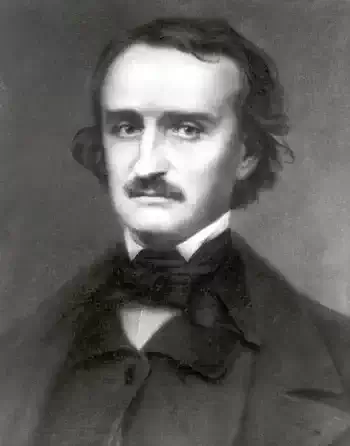
Edgar Allan Poe
To M--
O! I care not that my earthly lot
Hath little of Earth in it,
That years of love have been forgot
In the fever of a minute:
I heed not that the desolate
Are happier, sweet, than I,
But that you meddle with my fate
Who am a passer by.
It is not that my founts of bliss
Are gushing- strange! with tears
Or
that the thrill of a single kiss
Hath palsied many years
'Tis not that the flowers of twenty springs
Which have wither'd as they rose
Lie dead on my heart-strings
With the weight of an age of snows.
Not that the grass- O! may it thrive!
On my grave is growing or grown
But
that, while I am dead yet alive
I cannot be, lady, alone.
317
Henry Wadsworth Longfellow
The Fugitive. (Tartar Song, From The Prose Version Of Chodzko)
I.
'He is gone to the desert land
I can see the shining mane
Of his horse on the distant plain,
As he rides with his Kossak band!
'Come back, rebellious one!
Let thy proud heart relent;
Come back to my tall, white tent,
Come back, my only son!
'Thy hand in freedom shall
Cast thy hawks, when morning breaks,
On the swans of the Seven Lakes,
On the lakes of Karajal.
'I will give thee leave to stray
And pasture thy hunting steeds
In the long grass and the reeds
Of the meadows of Karaday.
'I will give thee my coat of mail,
Of softest leather made,
With choicest steel inlaid;
Will not all this prevail?'
II.
'This hand no longer shall
Cast my hawks, when morning breaks,
On the swans of the Seven Lakes,
On the lakes of Karajal.
'I will no longer stray
And pasture my hunting steeds
In the long grass and the reeds
Of the meadows of Karaday.
'Though thou give me thy coat of mall,
Of softest leather made,
With choicest steel inlaid,
All this cannot prevail.
'What right hast thou, O Khan,
To me, who am mine own,
Who am slave to God alone,
And not to any man?
'God will appoint the day
When I again shall be
By the blue, shallow sea,
Where the steel-bright sturgeons play.
'God, who doth care for me,
In the barren wilderness,
On unknown hills, no less
Will my companion be.
'When I wander lonely and lost
In the wind; when I watch at night
Like a hungry wolf, and am white
And covered with hoar-frost;
'Yea, wheresoever I be,
In the yellow desert sands,
In mountains or unknown lands,
Allah will care for me!'
III.
Then Sobra, the old, old man,--
Three hundred and sixty years
Had he lived in this land of tears,
Bowed down and said, 'O Khan!
'If you bid me, I will speak.
There's no sap in dry grass,
No marrow in dry bones! Alas,
The mind of old men is weak!
'I am old, I am very old:
I have seen the primeval man,
I have seen the great Gengis Khan,
Arrayed in his robes of gold.
'What I say to you is the truth;
And I say to you, O Khan,
Pursue not the star-white man,
Pursue not the beautiful youth.
'Him the Almighty made,
And brought him forth of the light,
At the verge and end of the night,
When men on the mountain prayed.
'He was born at the break of day,
When abroad the angels walk;
He hath listened to their talk,
And he knoweth what they say.
'Gifted with Allah's grace,
Like the moon of Ramazan
When it shines in the skies, O Khan,
Is the light of his beautiful face.
'When first on earth he trod,
The first words that he said
Were these, as he stood and prayed,
There is no God but God!
'And he shall be king of men,
For Allah hath heard his prayer,
And the Archangel in the air,
Gabriel, hath said, Amen!'
315
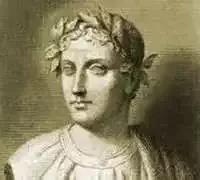
Horácio
BkIII:V No Surrender
We believe thunderous Jupiter rules the sky:
Augustus is considered a god on earth,
for adding the Britons, and likewise
the weight of the Persians to our empire.
Didn’t Crassus’ soldiers live in vile marriage
with barbarian wives, and (because of our
Senate and its perverse ways!) grow old,
in the service of their hostile fathers.
Marsians, Apulians ruled by a Mede,
forgetting their shields, Roman names, and togas,
and eternal Vesta, though Jove’s shrines
and the city of Rome remained unharmed?
Regulus’s far-seeing mind warned of this,
when he objected to shameful surrender,
and considered from its example
harm would come to the following age,
unless captured men were killed without pity.
‘I’ve seen standards and weapons,’ he said,
‘taken bloodlessly from our soldiers,
hung there in the Carthaginian shrines,
I’ve seen the arms of our freemen twisted
behind their backs, enemy gates wide open,
and the fields that our warfare ravaged
being freely cultivated again.
Do you think that our soldiers ransomed for gold,
will fight more fiercely next time! You’ll add
harm to shame: the wool that’s dyed purple
never regains the colour that vanished,
and true courage, when once departed, never
cares to return to an inferior heart.
When a doe that’s set free, from the thick
hunting nets, turns to fight, then he’ll be brave
who trusts himself to treacherous enemies
and he’ll crush Carthage, in a second battle,
who’s felt the chains on his fettered wrists,
without a struggle, afraid of dying.
He’s one who, not knowing how life should be lived,
confuses war with peace. O, shame! O mighty
Carthage, made mightier now because
of Italy’s disgraceful decadence.’
It’s said he set aside his wife’s chaste kisses,
and his little ones, as of less importance,
and, grimly, he set his manly face
to the soil, until he might be able
to strengthen the Senate’s wavering purpose,
by making of himself an example no
other man had made, and hurrying,
among grieving friends, to noble exile.
Yet he knew what the barbarous torturer
was preparing for him. Still he pushed aside
the kinsmen who were blocking his way,
and the people who delayed his going,
as if, with some case decided, and leaving
all that tedious business of his clients,
he headed for Venafrum’s meadows,
or Lacedaemonian Tarentum.
313
Henry Wadsworth Longfellow
Tales Of A Wayside Inn : Part 3. The Spanish Jew's Tale; Azrael
King Solomon, before his palace gate
At evening, on the pavement tessellate
Was walking with a stranger from the East,
Arrayed in rich attire as for a feast,
The mighty Runjeet-Sing, a learned man,
And Rajah of the realms of Hindostan.
And as they walked the guest became aware
Of a white figure in the twilight air,
Gazing intent, as one who with surprise
His form and features seemed to recognize;
And in a whisper to the king he said:
'What is yon shape, that, pallid as the dead,
Is watching me, as if he sought to trace_
In the dim light the features of my face?'
The king looked, and replied: 'I know him well;
It is the Angel men call Azrael,
'T is the Death Angel; what hast thou to fear?'
And the guest answered: 'Lest he should come near,
And speak to me, and take away my breath!
Save me from Azrael, save me from death!
O king, that hast dominion o'er the wind,
Bid it arise and bear me hence to Ind.'
The king gazed upward at the cloudless sky,
Whispered a word, and raised his hand on high,
And lo! the signet-ring of chrysoprase
On his uplifted finger seemed to blaze
With hidden fire, and rushing from the west
There came a mighty wind, and seized the guest
And lifted him from earth, and on they passed,
His shining garments streaming in the blast,
A silken banner o'er the walls upreared,
A purple cloud, that gleamed and disappeared.
Then said the Angel, smiling: 'If this man
Be Rajah Runjeet-Sing of Hindostan,
Thou hast done well in listening to his prayer;
I was upon my way to seek him there.'
310
Henry Wadsworth Longfellow
Evangeline: Part The Second. I.
MANY a weary year had passed since the burning of Grand-Pré,
When on the falling tide the freighted vessels departed,
Bearing a nation, with all its household gods, into exile,
Exile without an end, and without an example in story.
Far asunder, on separate coasts, the Acadians landed;
Scattered were they, like flakes of snow, when the wind from the northeast
Strikes aslant through the fogs that darken the Banks of Newfoundland.
Friendless, homeless, hopeless, they wandered from city to city,
From the cold lakes of the North to sultry Southern savannas,-
From the bleak shores of the sea to the lands where the Father of Waters
Seizes the hills in his hands, and drags them down to the ocean,
Deep in their sands to bury the scattered bones of the mammoth.
Friends they sought and homes; and many, despairing, heart-broken,
Asked of the earth but a grave, and no longer a friend nor a fireside.
Written their history stands on tablets of stone in the churchyards.
Long among them was seen a maiden who waited and wandered,
Lowly and meek in spirit, and patiently suffering all things.
Fair was she and young; but, alas! before her extended,
Dreary and vast and silent, the desert of life, with its pathway
Marked by the graves of those who had sorrowed and suffered before her,
Passions long extinguished, and hopes long dead and abandoned,
As the emigrant's way o'er the Western desert is marked by
Camp-fires long consumed, and bones that bleach in the sunshine.
Something there was in her life incomplete, imperfect, unfinished;
As if a morning of June, with all its music and sunshine,
Suddenly paused in the sky, and, fading, slowly descended
Into the east again, from whence it late had arisen.
Sometimes she lingered in towns, till, urged by the fever within her,
Urged by a restless longing, the hunger and thirst of the spirit,
She would commence again her endless search and endeavor;
Sometimes in churchyards strayed, and gazed on the crosses and tombstones,
Sat by some nameless grave, and thought that perhaps in its bosom
He was already at rest, and she longed to slumber beside him.
Sometimes a rumor, a hearsay, an inarticulate whisper,
Came with its airy hand to point and beckon her forward.
Sometimes she spake with those who had seen her beloved and known him,
But it was long ago, in some far-off place or forgotten.
'Gabriel Lajeunesse!' they said; 'O yes! we have seen him.
He was with Basil the blacksmith, and both have gone to the prairies;
Coureurs-des-Bois are they, and famous hunters and trappers,'
'Gabriel Lajeunesse!' said others; 'O yes! we have seen him.
He is a Voyageur in the lowlands of Louisiana.'
Then would they say: 'Dear child! why dream and wait for him longer?
Are there not other youths as fair as Gabriel? others
Who have hearts as tender and true, and spirits as loyal?
Here is Baptiste Leblanc, the notary's son, who has loved thee
Many a tedious year; come, give him thy hand and be happy!
Thou art too fair to be left to braid St. Catherine's tresses.'
Then would Evangeline answer, serenely but sadly, 'I cannot!
Whither my heart has gone, there follows my hand, and not elsewhere.
For when the heart goes before, like a lamp, and illumines the pathway,
Many things are made clear, that else lie hidden in darkness.'
Thereupon the priest, her friend and father-confessor,
Said, with a smile, 'O daughter! thy God thus speaketh within thee!
Talk not of wasted affection, affection never was wasted;
If it enrich not the heart of another, its waters, returning
Back to their springs, like the rain, shall fill them full of refreshment;
That which the fountain sends forth returns again to the fountain.
Patience; accomplish thy labor; accomplish thy work of affection!
Sorrow and silence are strong, and patient endurance is godlike.
Therefore accomplish thy labor of love, till the heart is made godlike,
Purified, strengthened, perfected, and rendered more worthy of heaven!'
Cheered by the good man's words, Evangeline labored and waited.
Still in her heart she heard the funeral dirge of the ocean,
But with its sound there was mingled a voice that whispered, 'Despair not!'
Thus did that poor soul wander in want and cheerless discomfort,
Bleeding, barefooted, over the shards and thorns of existence.
Let me essay, O Muse! to follow the wanderer's footsteps;-
Not through each devious path, each changeful year of existence;
But as a traveller follows a streamlet's course through the valley:
Far from its margin at times, and seeing the gleam of its water
Here and there, in some open space, and at intervals only;
Then drawing nearer its banks, through sylvan glooms that conceal it,
Though he behold it not, he can hear its continuous murmur;
Happy, at length, if he find the spot where it reaches an outlet.
312
Henry Wadsworth Longfellow
Something Left Undone
Labor with what zeal we will,
Something still remains undone,
Something uncompleted still
Waits the rising of the sun.
By the bedside, on the stair,
At the threshhold, near the gates,
With its menace or its prayer,
Like a medicant it waits;
Waits, and will not go away;
Waits, and will not be gainsaid;
By the cares of yesterday
Each to-day is heavier made;
Till at length the burden seems
Greater than our strength can bear,
Heavy as the weight of dreams
Pressing on us everywhere.
And we stand from day to day,
Like the dwarfs of times gone by,
Who, as Northern legends say,
On their shoulders held the sky.
308
Horácio
BkI:XIV The Ship of State
O ship the fresh tide carries back to sea again.
Where are you going! Quickly, run for harbour.
Can’t you see how your sides
have been stripped bare of oars,
how your shattered masts and yards are groaning loudly
in the swift south-westerly, and bare of rigging,
your hull can scarce tolerate
the overpowering waters?
You haven’t a single sail that’s still intact now,
no gods, that people call to when they’re in trouble.
Though you’re built of Pontic pine,
a child of those famous forests,
though you can boast of your race, and an idle name:
the fearful sailor puts no faith in gaudy keels.
You must beware of being
merely a plaything of the winds.
You, who not long ago were troubling weariness
to me, and now are my passion and anxious care,
avoid the glistening seas
between the shining Cyclades.
308