
Destiny and Overcoming

John Greenleaf Whittier
Seed-Time And Harvest
As o'er his furrowed fields which lie
Beneath a coldly dropping sky,
Yet chill with winter's melted snow,
The husbandman goes forth to sow,
Thus, Freedom, on the bitter blast
The ventures of thy seed we cast,
And trust to warmer sun and rain
To swell the germs and fill the grain.
Who calls thy glorious service hard?
Who deems it not its own reward?
Who, for its trials, counts it less
A cause of praise and thankfulness?
It may not be our lot to wield
The sickle in the ripened field;
Nor ours to hear, on summer eves,
The reaper's song among the sheaves.
Yet where our duty's task is wrought
In unison with God's great thought,
The near and future blend in one,
And whatsoe'er is willed, is done!
And ours the grateful service whence
Comes day by day the recompense;
The hope, the trust, the purpose stayed,
The fountain and the noonday shade.
And were this life the utmost span,
The only end and aim of man,
Better the toil of fields like these
Than waking dream and slothful ease.
But life, though falling like our grain,
Like that revives and springs again;
And, early called, how blest are they
Who wait in heaven their harvest-day!
309

Henry Lawson
Beaten Back
BEATEN back in sad dejection,
After years of weary toil
On that burning hot selection
Where the drought has gorged his spoil.
All in vain ’gainst him, the vulture,
I have battled without rest—
In the van of agriculture,
Marching out into the West.
Now the eagle-hawks are feeding
On my perished stock that reek
Where the water-holes receding
Long had left the burning creek.
I must labour without pity—
I the pick and spade must wield
In the streetways of the city
Or upon another’s field!
Can it be my reason’s rocking,
For I feel a burning hate
For the God who, only mocking,
Sent the prayed-for rain too late?
Pour, ye mocking rains, and rattle
On the bare, brown, grassless plain,
On the shrivelled hides of cattle
That shall ne’er want grass again!
Rush, ye yellow floods, to Murray,
Over thirsty creek-banks foam;
And o’er all, ye black clouds, hurry;
Ye can bring not back my home!
305

Anonymous
Edward, Edward
'WHY does your brand sae drop wi' blude,
Edward, Edward?
Why does your brand sae drop wi' blude,
And why sae sad gang ye, O?'
'O I hae kill'd my hawk sae gude,
Mither, mither;
O I hae kill'd my hawk sae gude,
And I had nae mair but he, O.'
'Your hawk's blude was never sae red,
Edward, Edward;
Your hawk's blude was never sae red,
My dear son, I tell thee, O.'
'O I hae kill'd my red-roan steed,
Mither, mither;
O I hae kill'd my red-roan steed,
That erst was sae fair and free, O.'
'Your steed was auld, and ye hae got mair,
Edward, Edward;
Your steed was auld, and ye hae got mair;
Some other dule ye dree, O.'
'O I hae kill'd my father dear,
Mither, mither;
O I hae kill'd my father dear,
Alas, and wae is me, O!'
'And whatten penance will ye dree for that,
Edward, Edward?
Whatten penance will ye dree for that?
My dear son, now tell me, O.'
'I'll set my feet in yonder boat,
Mither, mither;
I'll set my feet in yonder boat,
And I'll fare over the sea, O.'
'And what will ye do wi' your tow'rs and your ha',
Edward, Edward?
And what will ye do wi' your tow'rs and your ha',
That were sae fair to see, O?'
'I'll let them stand till they doun fa',
Mither, mither;
I'll let them stand till they doun fa',
For here never mair maun I be, O.'
'And what will ye leave to your bairns and your wife,
Edward, Edward?
And what will ye leave to your bairns and your wife,
When ye gang owre the sea, O?'
'The warld's room: let them beg through life,
Mither, mither;
The warld's room: let them beg through life;
For them never mair will I see, O.'
'And what will ye leave to your ain mither dear,
Edward, Edward?
And what will ye leave to your ain mither dear,
My dear son, now tell me, O?'
'The curse of hell frae me sall ye bear,
Mither, mither;
The curse of hell frae me sall ye bear:
Sic counsels ye gave to me, O!'
Edward, Edward?
Why does your brand sae drop wi' blude,
And why sae sad gang ye, O?'
'O I hae kill'd my hawk sae gude,
Mither, mither;
O I hae kill'd my hawk sae gude,
And I had nae mair but he, O.'
'Your hawk's blude was never sae red,
Edward, Edward;
Your hawk's blude was never sae red,
My dear son, I tell thee, O.'
'O I hae kill'd my red-roan steed,
Mither, mither;
O I hae kill'd my red-roan steed,
That erst was sae fair and free, O.'
'Your steed was auld, and ye hae got mair,
Edward, Edward;
Your steed was auld, and ye hae got mair;
Some other dule ye dree, O.'
'O I hae kill'd my father dear,
Mither, mither;
O I hae kill'd my father dear,
Alas, and wae is me, O!'
'And whatten penance will ye dree for that,
Edward, Edward?
Whatten penance will ye dree for that?
My dear son, now tell me, O.'
'I'll set my feet in yonder boat,
Mither, mither;
I'll set my feet in yonder boat,
And I'll fare over the sea, O.'
'And what will ye do wi' your tow'rs and your ha',
Edward, Edward?
And what will ye do wi' your tow'rs and your ha',
That were sae fair to see, O?'
'I'll let them stand till they doun fa',
Mither, mither;
I'll let them stand till they doun fa',
For here never mair maun I be, O.'
'And what will ye leave to your bairns and your wife,
Edward, Edward?
And what will ye leave to your bairns and your wife,
When ye gang owre the sea, O?'
'The warld's room: let them beg through life,
Mither, mither;
The warld's room: let them beg through life;
For them never mair will I see, O.'
'And what will ye leave to your ain mither dear,
Edward, Edward?
And what will ye leave to your ain mither dear,
My dear son, now tell me, O?'
'The curse of hell frae me sall ye bear,
Mither, mither;
The curse of hell frae me sall ye bear:
Sic counsels ye gave to me, O!'
307
John Greenleaf Whittier
The Cross
'The cross, if rightly borne, shall be
No burden, but support to thee;'
So, moved of old time for our sake,
The holy monk of Kempen spake.
Thou brave and true one! upon whom
Was laid the cross of martyrdom,
How didst thou, in thy generous youth,
Bear witness to this blessed truth!
Thy cross of suffering and of shame
A staff within thy hands became,
In paths where faith alone could see
The Master's steps supporting thee.
Thine was the seed-time; God alone
Beholds the end of what is sown;
Beyond our vision, weak and dim,
The harvest-time is hid with Him.
Yet, unforgotten where it lies,
That seed of generous sacrifice,
Though seeming on the desert cast,
Shall rise with bloom and fruit at last.
304

Emily Dickinson
This Merit hath the worst
This Merit hath the worst-
It cannot be again-
When Fate hath taunted last
And thrown Her furthest Stone-
The Maimed may pause, and breathe,
And glance securely round-
The Deer attracts no further
Than it resists-the Hound-
It cannot be again-
When Fate hath taunted last
And thrown Her furthest Stone-
The Maimed may pause, and breathe,
And glance securely round-
The Deer attracts no further
Than it resists-the Hound-
302

William Butler Yeats
From The 'Antigone'
Overcome -- O bitter sweetness,
Inhabitant of the soft cheek of a girl --
The rich man and his affairs,
The fat flocks and the fields' fatness,
Mariners, rough harvesters;
Overcome Gods upon Parnassus;
Overcome the Empyrean; hurl
Heaven and Earth out of their places,
That in the Same calamity
Brother and brother, friend and friend,
Family and family,
City and city may contend,
By that great glory driven wild.
Pray I will and sing I must,
And yet I weep -- Oedipus' child
Descends into the loveless dust.
295

Henry Wadsworth Longfellow
Frithiof's Temptation. (From The Swedish)
Spring is coming, birds are twittering, forests leaf, and smiles the sun,
And the loosened torrents downward, singing, to the ocean run;
Glowing like the cheek of Freya, peeping rosebuds 'gin to ope,
And in human hearts awaken love of life, and joy, and hope.
Now will hunt the ancient monarch, and the queen shall join the sport:
Swarming in its gorgeous splendor, is assembled all the Court;
Bows ring loud, and quivers rattle, stallions paw the ground alway,
And, with hoods upon their eyelids, scream the falcons for their prey.
See, the Queen of the Chase advances! Frithiof, gaze not at the sight!
Like a star upon a spring-cloud sits she on her palfrey white.
Half of Freya, half of Rota, yet more beauteous than these two,
And from her light hat of purple wave aloft the feathers blue.
Gaze not at her eyes' blue heaven, gaze not at her golden hair!
Oh beware! her waist is slender, full her bosom is, beware!
Look not at the rose and lily on her cheek that shifting play,
List not to the voice beloved, whispering like the wind of May.
Now the huntsman's band is ready. Hurrah! over hill and dale!
Horns ring, and the hawks right upward to the hall of Odin sail.
All the dwellers in the forest seek in fear their cavern homes,
But, with spear outstretched before her, after them the Valkyr comes.
. . . . . . . . . .
Then threw Frithiof down his mantle, and upon the greensward spread,
And the ancient king so trustful laid on Frithiof's knee his head,
Slept as calmly as the hero sleepeth, after war's alarm,
On his shield, or as an infant sleeps upon its mother's arm.
As he slumbers, hark! there sings a coal-black bird upon the bough;
'Hasten, Frithiof, slay the old man, end your quarrel at a blow:
Take his queen, for she is thine, and once the bridal kiss she gave,
Now no human eye beholds thee, deep and silent is the grave,'
Frithiof listens; hark! there sings a snow-white bird upon the bough:
'Though no human eye beholds thee, Odin's eye beholds thee now.
Coward! wilt thou murder sleep, and a defenceless old man slay!
Whatsoe'er thou winn'st, thou canst not win a hero's fame this way.'
Thus the two wood-birds did warble: Frithiof took his war-sword good,
With a shudder hurled it from him, far into the gloomy wood.
Coal-black bird flies down to Nastrand, but on light, unfolded wings,
Like the tone of harps, the other, sounding towards the sun, upsprings.
Straight the ancient king awakens. 'Sweet has been my sleep,' he said;
'Pleasantly sleeps one in the shadow, guarded by a brave man's blade.
But where is thy sword, O stranger? Lightning's brother, where is he?
Who thus parts you, who should never from each other parted be?'
'It avails not,' Frithiof answered; 'in the North are other swords:
Sharp, O monarch! is the sword's tongue, and it speaks not peaceful words;
Murky spirits dwell in steel blades, spirits from the Niffelhem;
Slumber is not safe before them, silver locks but anger them.'
294
Henry Lawson
The Three Kings [1]
The East is dead and the West is done, and again our course lies thus
South-east by Fate and the Rising Sun where the Three Kings wait for us.
When our hearts are young and the world is wide, and the heights seem grand to
climb—
We are off and away to the Sydney-side; but the Three Kings bide their time.
‘I’ve been to the West,’ the digger said: he was bearded, bronzed and old;
Ah, the smothering curse of the East is wool, and the curse of the West is gold.
I went to the West in the golden boom, with Hope and a life-long mate,
‘They sleep in the sand by the Boulder Soak, and long may the Three Kings wait.’
‘I’ve had my fling on the Sydney-side,’ said a blacksheep to the sea,
Let the young fool learn when he can’t be taught: I’ve learnt what’s good for me.’
And he gazed ahead on the sea-line dim—grown dim in his softened eyes—
With a pain in his heart that was good for him—as he saw the Three Kings rise.
A pale girl sits on the foc’sle head—she is back, Three Kings! so soon;
But it seems to her like a life-time dead since she fled with him ‘saloon.’
There is refuge still in the old folks’ arms for the child that loved too well;
They will hide her shame on the Southern farm—and the Three Kings will not tell.
’Twas a restless heart on the tide of life, and a false star in the skies
That led me on to the deadly strife where the Southern London lies;
But I dream in peace of a home for me, by a glorious southern sound,
As the sunset fades from a moonlit sea, and the Three Kings show us round.
Our hearts are young and the old hearts old, and life, on the farms is slow,
And away in the world there is fame and gold—and the Three Kings watch us go.
Our heads seem wise and the world seems wide, and its heights are ours to climb,
So it’s off and away in our youthful pride—but the Three Kings bide our time.
295
John Greenleaf Whittier
Garibaldi
In trance and dream of old, God's prophet saw
The casting down of thrones. Thou, watching lone
The hot Sardinian coast-line, hazy-hilled,
Where, fringing round Caprera's rocky zone
With foam, the slow waves gather and withdraw,
Behold'st the vision of the seer fulfilled,
And hear'st the sea-winds burdened with a sound
Of falling chains, as, one by one, unbound,
The nations lift their right hands up and swear
Their oath of freedom. From the chalk-white wall
Of England, from the black Carpathian range,
Along the Danube and the Theiss, through all
The passes of the Spanish Pyrenees,
And from the Seine's thronged banks, a murmur strange
And glad floats to thee o'er thy summer seas
On the salt wind that stirs thy whitening hair,--
The song of freedom's bloodless victories!
Rejoice, O Garibaldi! Though thy sword
Failed at Rome's gates, and blood seemed vainly poured
Where, in Christ's name, the crowned infidel
Of France wrought murder with the arms of hell
On that sad mountain slope whose ghostly dead,
Unmindful of the gray exorcist's ban,
Walk, unappeased, the chambered Vatican,
And draw the curtains of Napoleon's bed!
God's providence is not blind, but, full of eyes,
It searches all the refuges of lies;
And in His time and way, the accursed things
Before whose evil feet thy battle-gage
Has clashed defiance from hot youth to age
Shall perish. All men shall be priests and kings,
One royal brotherhood, one church made free
By love, which is the law of liberty
295
Henry Lawson
The Wander-Light
And they heard the tent-poles clatter,
And the fly in twain was torn –
'Tis the soiled rag of a tatter
Of the tent where I was born.
And what matters it, I wonder?
Brick or stone or calico? –
Or a bush you were born under,
When it happened long ago?
And my beds were camp beds and tramp beds and damp beds,
And my beds were dry beds on drought-stricken ground,
Hard beds and soft beds, and wide beds and narrow –
For my beds were strange beds the wide world round.
And the old hag seemed to ponder
('Twas my mother told me so),
And she said that I would wander
Where but few would think to go.
"He will fly the haunts of tailors,
He will cross the ocean wide,
For his fathers, they were sailors
All on his good father's side."
Behind me, before me, Oh! my roads are stormy
The thunder of skies and the sea's sullen sound,
The coaster or liner, the English or foreign,
The state-room or steerage the wide world round.
And the old hag she seemed troubled
As she bent above the bed,
"He will dream things and he'll see things
To come true when he is dead.
He will see things all too plainly,
And his fellows will deride,
For his mothers they were gipsies
All on his good mother's side."
And my dreams are strange dreams, are day dreams, are grey dreams,
And my dreams are wild dreams, and old dreams and new;
They haunt me and daunt me with fears of the morrow –
My brothers they doubt me – but my dreams come true.
And so I was born of fathers
From where ice-bound harbours are
Men whose strong limbs never rested
And whose blue eyes saw afar.
Till, for gold, one left the ocean,
Seeking over plain and hill;
And so I was born of mothers
Whose deep minds were never still.
I rest not, 'tis best not, the world is a wide one
And, caged for an hour, I pace to and fro;
I see things and dree things and plan while I'm sleeping,
I wander for ever and dream as I go.
I have stood by Table Mountain
On the Lion at Capetown,
And I watched the sunset fading
From the roads that I marked down,
And I looked out with my brothers
From the heights behind Bombay,
Gazing north and west and eastward,
Over roads I'll tread some day.
For my ways are strange ways and new ways and old ways,
And deep ways and steep ways and high ways and low;
I'm at home and at ease on a track that I know not,
And restless and lost on a road that I know.
292
John Greenleaf Whittier
To Pennsylvania
O STATE prayer-founded! never hung
Such choice upon a people's tongue,
Such power to bless or ban,
As that which makes thy whisper Fate,
For which on thee the centuries wait,
And destinies of man!
Across thy Alleghanian chain,
With groanings from a land in pain,
The west-wind finds its way:
Wild-wailing from Missouri's flood
The crying of thy children's blood
Is in thy ears to-day!
And unto thee in Freedom's hour
Of sorest need God gives the power
To ruin or to save;
To wound or heal, to blight or bless
With fertile field or wilderness,
A free home or a grave!
Then let thy virtue match the crime,
Rise to a level with the time;
And, if a son of thine
Betray or tempt thee, Brutus-like
For Fatherland and Freedom strike
As Justice gives the sign.
Wake, sleeper, from thy dream of ease,
The great occasion's forelock seize;
And let the north-wind strong,
And golden leaves of autumn, be
Thy coronal of Victory
And thy triumphal song.
292

Thomas Hardy
Ditty
(E. L. G.)
BENEATH a knap where flown
Nestlings play,
Within walls of weathered stone,
Far away
From the files of formal houses,
By the bough the firstling browses,
Lives a Sweet: no merchants meet,
No man barters, no man sells
Where she dwells.
Upon that fabric fair
"Here is she!"
Seems written everywhere
Unto me.
But to friends and nodding neighbors,
Fellow wights in lot and labors,
Who descry the times as I,
No such lucid legend tells
Where she dwells.
Should I lapse to what I was
In days by--
(Such cannot be, but because
Some loves die
Let me feign it)--none would notice
That where she I know by rote is
Spread a strange and withering change,
Like a drying of the wells
Where she dwells.
To feel I might have kissed--
Loved as true--
Otherwhere, nor Mine have missed
My life through,
Had I never wandered near her,
Is a smart severe--severer
In the thought that she is nought,
Even as I, beyond the dells
Where she dwells.
And Devotion droops her glance
To recall
What bond-servants of Chance
We are all.
I but found her in that, going
On my errant path unknowing,
I did not out-skirt the spot
That no spot on earth excels--
Where she dwells!
292

Robert W. Service
The Womb
Up from the evil day
Of wattle and of woad,
Along man's weary way
Dark Pain has been the goad.
Back from the age of stone,
Within his brutish brain,
What pleasure he has known
Is ease from Pain.
Behold in Pain the force
That haled Man from the Pit,
And set him such a course
No mind can measure it.
To angel from the ape
No human pang was vain
In that divine escape
To joy through Pain.
See Pain with stoic eyes
And patient fortitude,
A blessing in disguise,
An instrument of good.
Aye, though with hearts forlorn
We to despair be fain,
Believe that Joy is born
From Womb of Pain.
291
Emily Dickinson
He was weak, and I was strong—then
He was weak, and I was strong—then—
So He let me lead him in—
I was weak, and He was strong then—
So I let him lead me—Home.
'Twasn't far—the door was near—
'Twasn't dark—for He went—too—
'Twasn't loud, for He said nought—
That was all I cared to know.
Day knocked—and we must part—
Neither—was strongest—now—
He strove—and I strove—too—
We didn't do it—tho'!
286
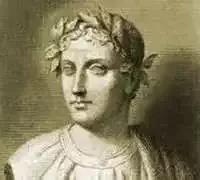
Horácio
BkIII:XXVII Europa
Let the wicked be led by omens of screeching
from owls, by pregnant dogs, or a grey-she wolf,
hurrying down from Lanuvian meadows,
or a fox with young:
May a snake disturb the journey they’ve started,
terrifying the ponies like an arrow
flashing across the road: but I far-seeing
augur, with prayer
for him whom I’m fearful for, out of the east
I’ll call up the ominous raven, before
the bird that divines the imminent showers
seeks standing water.
Galatea, wherever you choose to live
may you be happy, and live in thought of me:
no woodpecker on your left, or errant crow
to bar your going.
But see, with what storms flickering Orion
is setting. I know how the Adriatic’s
black gulf can be, and how the bright westerly
wind commits its sins.
Let the wives and children of our enemy
feel the blind force of the rising southerly,
and the thunder of the dark waters, the shores
trembling at the blow.
So, Europa entrusted her snow-white form
to the bull’s deceit, and the brave girl grew pale,
at the sea alive with monsters, the dangers
of the deep ocean.
Leaving the meadow, where, lost among flowers,
she was weaving a garland owed to the Nymphs,
now, in the luminous night, she saw nothing
but water and stars.
As soon as she reached the shores of Crete, mighty
with its hundred cities, she cried: ‘O father,
I’ve lost the name of daughter, my piety
conquered by fury.
Where have I come from, where am I going? One
death is too few for a virgin’s sin. Am I
awake, weeping a vile act, or free from guilt,
mocked by a phantom,
that fleeing, false, from the ivory gate brings
only a dream? Is it not better to pick
fresh flowers than to go travelling over
the breadths of the sea?
If anyone now could deliver that foul
beast to my anger, I’d attempt to wound it
with steel, and shatter the horns of that monster,
the one I once loved.
I’m shameless, I’ve abandoned my country’s gods,
I’m shameless, I keep Orcus waiting. O if
one of the gods can hear, I wish I might walk
naked with lions!
Before vile leanness hollows my lovely cheeks,
and the juices ebb in this tender victim,
while I am still beautiful, I’ll seek to be
food for the tigers.
My absent father urges me on: ‘Why wait
to die, worthless Europa? Happily you
can hang by the neck from this ash-tree: use
the sash that’s with you.
Or if cliffs and the sharpened rocks attract you,
as a means of death, put your trust in the speed
of the wind, unless you’d rather be carding
some mistress’s wool,
you, of royal blood, be handed over, as
concubine to a barbarous queen.’ She moaned:
Venus was laughing, treacherously, with her
son, his bow unstrung.
When she’d toyed enough with her, she said: ‘Refrain
from anger and burning passion, when the bull,
you hate, yields you his horns again, so that you
can start to wound them.
Don’t you know you’re invincible Jupiter’s
wife. Stop your sobbing, and learn to carry your
good fortune well: a continent of the Earth
will be named for you.
283
Robert W. Service
Roulette
I'll wait until my money's gone
Before I take the sleeping pills;
Then when they find me in the dawn,
Remote from earthly ails and ills
They'll say: "She's broke, the foreign bitch!"
And dump me in the common ditch.
So thought I, of all hope bereft,
And by my evil fate obsessed;
A thousand franks was all I'd left
Of that fair fortune I possessed.
...I throw it on the table there,
And wait, with on my lips a prayer.
I fear my very life's at stake;
My note is lying on the Red . . .
I know I'll lose it, then I'll take
My pills and sleep until I'm dead . . .
Oh God of mercy, understand!
In pity guide the croupier's hand.
My heart beats hard, my lips are dry;
I feel I cannot bear to look.
I dread to hear the croupier's cry,
I'll sit down in this quiet nook.
The lights go dim, my senses reel . . .
See! Jesus Christ is at the wheel.
* * * * * * *
Kind folks arouse me from my trance.
"The Red has come ten times," they say.
"Oh do not risk another chance;
Please, Lady, take your gains away,
And to the Lord of Luck give thanks You've
won nigh half a million franks."
Aye, call me just a daft old dame;
I knit and sew to make my bread,
And nevermore I'll play that game,
For I've a glory in my head. . . .
Ah well I know, to stay my fall,
'Twas our dear Lord who spun the ball.
280

James Whitcomb Riley
The Curse Of The Wandering Foot
All hope of rest withdrawn me?--
What dread command hath put
This awful curse upon me--
The curse of the wandering foot!
Forward and backward and thither,
And hither and yon again--
Wandering ever! And whither?
Answer them, God! Amen.
The blue skies are far o'er me---
The bleak fields near below:
Where the mother that bore me?--
Where her grave in the snow?--
Glad in her trough of a coffin--
The sad eyes frozen shut
That wept so often, often,
The curse of the wandering foot!
Here in your marts I care not
Whatsoever ye think.
Good folk many who dare not
Give me to eat and drink:
Give me to sup of your pity--
Feast me on prayers!--O ye,
Met I your Christ in the city
He would fare forth with me--
Forward and onward and thither,
And hither again and yon,
With milk for our drink together
And honey to feed upon--
Nor hope of rest withdrawn us,
Since the one Father put
The blessed curse upon us--
The curse of the wandering foot.
280
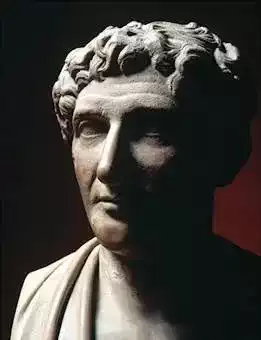
Ovídio
Metamorphoses: Book The Third
WHEN now Agenor had his daughter lost,
He sent his son to search on ev'ry coast;
And sternly bid him to his arms restore
The darling maid, or see his face no more,
But live an exile in a foreign clime;
Thus was the father pious to a crime.
The Story of The restless youth search'd all the world around;
of Cadmus But how can Jove in his amours be found?
When, tir'd at length with unsuccessful toil,
To shun his angry sire and native soil,
He goes a suppliant to the Delphick dome;
There asks the God what new appointed home
Should end his wand'rings, and his toils relieve.
The Delphick oracles this answer give.
"Behold among the fields a lonely cow,
Unworn with yokes, unbroken to the plow;
Mark well the place where first she lays her down,
There measure out thy walls, and build thy town,
And from thy guide Boeotia call the land,
In which the destin'd walls and town shall stand."
No sooner had he left the dark abode,
Big with the promise of the Delphick God,
When in the fields the fatal cow he view'd,
Nor gall'd with yokes, nor worn with servitude:
Her gently at a distance he pursu'd;
And as he walk'd aloof, in silence pray'd
To the great Pow'r whose counsels he obey'd.
Her way thro' flow'ry Panope she took,
And now, Cephisus, cross'd thy silver brook;
When to the Heav'ns her spacious front she rais'd,
And bellow'd thrice, then backward turning gaz'd
On those behind, 'till on the destin'd place
She stoop'd, and couch'd amid the rising grass.
Cadmus salutes the soil, and gladly hails
The new-found mountains, and the nameless vales,
And thanks the Gods, and turns about his eye
To see his new dominions round him lye;
Then sends his servants to a neighb'ring grove
For living streams, a sacrifice to Jove.
O'er the wide plain there rose a shady wood
Of aged trees; in its dark bosom stood
A bushy thicket, pathless and unworn,
O'er-run with brambles, and perplex'd with thorn:
Amidst the brake a hollow den was found,
With rocks and shelving arches vaulted round.
Deep in the dreary den, conceal'd from day,
Sacred to Mars, a mighty dragon lay,
Bloated with poison to a monstrous size;
Fire broke in flashes when he glanc'd his eyes:
His tow'ring crest was glorious to behold,
His shoulders and his sides were scal'd with gold;
Three tongues he brandish'd when he charg'd his
foes;
His teeth stood jaggy in three dreadful rowes.
The Tyrians in the den for water sought,
And with their urns explor'd the hollow vault:
From side to side their empty urns rebound,
And rowse the sleeping serpent with the sound.
Strait he bestirs him, and is seen to rise;
And now with dreadful hissings fills the skies,
And darts his forky tongues, and rowles his glaring
eyes.
The Tyrians drop their vessels in the fright,
All pale and trembling at the hideous sight.
Spire above spire uprear'd in air he stood,
And gazing round him over-look'd the wood:
Then floating on the ground in circles rowl'd;
Then leap'd upon them in a mighty fold.
Of such a bulk, and such a monstrous size
The serpent in the polar circle lyes,
That stretches over half the northern skies.
In vain the Tyrians on their arms rely,
In vain attempt to fight, in vain to fly:
All their endeavours and their hopes are vain;
Some die entangled in the winding train;
Some are devour'd, or feel a loathsom death,
Swoln up with blasts of pestilential breath.
And now the scorching sun was mounted high,
In all its lustre, to the noon-day sky;
When, anxious for his friends, and fill'd with
cares,
To search the woods th' impatient chief prepares.
A lion's hide around his loins he wore,
The well poiz'd javelin to the field he bore,
Inur'd to blood; the far-destroying dart;
And, the best weapon, an undaunted heart.
Soon as the youth approach'd the fatal place,
He saw his servants breathless on the grass;
The scaly foe amid their corps he view'd,
Basking at ease, and feasting in their blood.
"Such friends," he cries, "deserv'd a longer date;
But Cadmus will revenge or share their fate."
Then heav'd a stone, and rising to the throw,
He sent it in a whirlwind at the foe:
A tow'r, assaulted by so rude a stroke,
With all its lofty battlements had shook;
But nothing here th' unwieldy rock avails,
Rebounding harmless from the plaited scales,
That, firmly join'd, preserv'd him from a wound,
With native armour crusted all around.
With more success, the dart unerring flew,
Which at his back the raging warriour threw;
Amid the plaited scales it took its course,
And in the spinal marrow spent its force.
The monster hiss'd aloud, and rag'd in vain,
And writh'd his body to and fro with pain;
He bit the dart, and wrench'd the wood away;
The point still buried in the marrow lay.
And now his rage, increasing with his pain,
Reddens his eyes, and beats in ev'ry vein;
Churn'd in his teeth the foamy venom rose,
Whilst from his mouth a blast of vapours flows,
Such as th' infernal Stygian waters cast.
The plants around him wither in the blast.
Now in a maze of rings he lies enrowl'd,
Now all unravel'd, and without a fold;
Now, like a torrent, with a mighty force
Bears down the forest in his boist'rous course.
Cadmus gave back, and on the lion's spoil
Sustain'd the shock, then forc'd him to recoil;
The pointed jav'lin warded off his rage:
Mad with his pains, and furious to engage,
The serpent champs the steel, and bites the spear,
'Till blood and venom all the point besmear.
But still the hurt he yet receiv'd was slight;
For, whilst the champion with redoubled might
Strikes home the jav'lin, his retiring foe
Shrinks from the wound, and disappoints the blow.
The dauntless heroe still pursues his stroke,
And presses forward, 'till a knotty oak
Retards his foe, and stops him in the rear;
Full in his throat he plung'd the fatal spear,
That in th' extended neck a passage found,
And pierc'd the solid timber through the wound.
Fix'd to the reeling trunk, with many a stroke
Of his huge tail he lash'd the sturdy oak;
'Till spent with toil, and lab'ring hard for
breath,
He now lay twisting in the pangs of death.
Cadmus beheld him wallow in a flood
Of swimming poison, intermix'd with blood;
When suddenly a speech was heard from high
(The speech was heard, nor was the speaker nigh),
"Why dost thou thus with secret pleasure see,
Insulting man! what thou thy self shalt be?"
Astonish'd at the voice, he stood amaz'd,
And all around with inward horror gaz'd:
When Pallas swift descending from the skies,
Pallas, the guardian of the bold and wise,
Bids him plow up the field, and scatter round
The dragon's teeth o'er all the furrow'd ground;
Then tells the youth how to his wond'ring eyes
Embattled armies from the field should rise.
He sows the teeth at Pallas's command,
And flings the future people from his hand.
The clods grow warm, and crumble where he sows;
And now the pointed spears advance in rows;
Now nodding plumes appear, and shining crests,
Now the broad shoulders and the rising breasts;
O'er all the field the breathing harvest swarms,
A growing host, a crop of men and arms.
So through the parting stage a figure rears
Its body up, and limb by limb appears
By just degrees; 'till all the man arise,
And in his full proportion strikes the eyes.
Cadmus surpriz'd, and startled at the sight
Of his new foes, prepar'd himself for fight:
When one cry'd out, "Forbear, fond man, forbear
To mingle in a blind promiscuous war."
This said, he struck his brother to the ground,
Himself expiring by another's wound;
Nor did the third his conquest long survive,
Dying ere scarce he had begun to live.
The dire example ran through all the field,
'Till heaps of brothers were by brothers kill'd;
The furrows swam in blood: and only five
Of all the vast increase were left alive.
Echion one, at Pallas's command,
Let fall the guiltless weapon from his hand,
And with the rest a peaceful treaty makes,
Whom Cadmus as his friends and partners takes;
So founds a city on the promis'd earth,
And gives his new Boeotian empire birth.
Here Cadmus reign'd; and now one would have
guess'd
The royal founder in his exile blest:
Long did he live within his new abodes,
Ally'd by marriage to the deathless Gods;
And, in a fruitful wife's embraces old,
A long increase of children's children told:
But no frail man, however great or high,
Can be concluded blest before he die.
Actaeon was the first of all his race,
Who griev'd his grandsire in his borrow'd face;
Condemn'd by stern Diana to bemoan
The branching horns, and visage not his own;
To shun his once lov'd dogs, to bound away,
And from their huntsman to become their prey,
And yet consider why the change was wrought,
You'll find it his misfortune, not his fault;
Or, if a fault, it was the fault of chance:
For how can guilt proceed from ignorance?
The In a fair chace a shady mountain stood,
Transformation Well stor'd with game, and mark'd with trails of
of Actaeon blood;
into a Stag Here did the huntsmen, 'till the heat of day,
Pursue the stag, and load themselves with rey:
When thus Actaeon calling to the rest:
"My friends," said he, "our sport is at the best,
The sun is high advanc'd, and downward sheds
His burning beams directly on our heads;
Then by consent abstain from further spoils,
Call off the dogs, and gather up the toils,
And ere to-morrow's sun begins his race,
Take the cool morning to renew the chace."
They all consent, and in a chearful train
The jolly huntsmen, loaden with the slain,
Return in triumph from the sultry plain.
Down in a vale with pine and cypress clad,
Refresh'd with gentle winds, and brown with shade,
The chaste Diana's private haunt, there stood
Full in the centre of the darksome wood
A spacious grotto, all around o'er-grown
With hoary moss, and arch'd with pumice-stone.
From out its rocky clefts the waters flow,
And trickling swell into a lake below.
Nature had ev'ry where so plaid her part,
That ev'ry where she seem'd to vie with art.
Here the bright Goddess, toil'd and chaf'd with
heat,
Was wont to bathe her in the cool retreat.
Here did she now with all her train resort,
Panting with heat, and breathless from the sport;
Her armour-bearer laid her bow aside,
Some loos'd her sandals, some her veil unty'd;
Each busy nymph her proper part undrest;
While Crocale, more handy than the rest,
Gather'd her flowing hair, and in a noose
Bound it together, whilst her own hung loose.
Five of the more ignoble sort by turns
Fetch up the water, and unlade the urns.
Now all undrest the shining Goddess stood,
When young Actaeon, wilder'd in the wood,
To the cool grott by his hard fate betray'd,
The fountains fill'd with naked nymphs survey'd.
The frighted virgins shriek'd at the surprize
(The forest echo'd with their piercing cries).
Then in a huddle round their Goddess prest:
She, proudly eminent above the rest,
With blushes glow'd; such blushes as adorn
The ruddy welkin, or the purple morn;
And tho' the crowding nymphs her body hide,
Half backward shrunk, and view'd him from a side.
Surpriz'd, at first she would have snatch'd her
bow,
But sees the circling waters round her flow;
These in the hollow of her hand she took,
And dash'd 'em in his face, while thus she spoke:
"Tell, if thou can'st, the wond'rous sight
disclos'd,
A Goddess naked to thy view expos'd."
This said, the man begun to disappear
By slow degrees, and ended in a deer.
A rising horn on either brow he wears,
And stretches out his neck, and pricks his ears;
Rough is his skin, with sudden hairs o'er-grown,
His bosom pants with fears before unknown:
Transform'd at length, he flies away in haste,
And wonders why he flies away so fast.
But as by chance, within a neighb'ring brook,
He saw his branching horns and alter'd look.
Wretched Actaeon! in a doleful tone
He try'd to speak, but only gave a groan;
And as he wept, within the watry glass
He saw the big round drops, with silent pace,
Run trickling down a savage hairy face.
What should he do? Or seek his old abodes,
Or herd among the deer, and sculk in woods!
Here shame dissuades him, there his fear prevails,
And each by turns his aking heart assails.
As he thus ponders, he behind him spies
His op'ning hounds, and now he hears their cries:
A gen'rous pack, or to maintain the chace,
Or snuff the vapour from the scented grass.
He bounded off with fear, and swiftly ran
O'er craggy mountains, and the flow'ry plain;
Through brakes and thickets forc'd his way, and
flew
Through many a ring, where once he did pursue.
In vain he oft endeavour'd to proclaim
His new misfortune, and to tell his name;
Nor voice nor words the brutal tongue supplies;
From shouting men, and horns, and dogs he flies,
Deafen'd and stunn'd with their promiscuous cries.
When now the fleetest of the pack, that prest
Close at his heels, and sprung before the rest,
Had fasten'd on him, straight another pair,
Hung on his wounded haunch, and held him there,
'Till all the pack came up, and ev'ry hound
Tore the sad huntsman grov'ling on the ground,
Who now appear'd but one continu'd wound.
With dropping tears his bitter fate he moans,
And fills the mountain with his dying groans.
His servants with a piteous look he spies,
And turns about his supplicating eyes.
His servants, ignorant of what had chanc'd,
With eager haste and joyful shouts advanc'd,
And call'd their lord Actaeon to the game.
He shook his head in answer to the name;
He heard, but wish'd he had indeed been gone,
Or only to have stood a looker-on.
But to his grief he finds himself too near,
And feels his rav'nous dogs with fury tear
Their wretched master panting in a deer.
The Birth of Actaeon's suff'rings, and Diana's rage,
Bacchus Did all the thoughts of men and Gods engage;
Some call'd the evils which Diana wrought,
Too great, and disproportion'd to the fault:
Others again, esteem'd Actaeon's woes
Fit for a virgin Goddess to impose.
The hearers into diff'rent parts divide,
And reasons are produc'd on either side.
Juno alone, of all that heard the news,
Nor would condemn the Goddess, nor excuse:
She heeded not the justice of the deed,
But joy'd to see the race of Cadmus bleed;
For still she kept Europa in her mind,
And, for her sake, detested all her kind.
Besides, to aggravate her hate, she heard
How Semele, to Jove's embrace preferr'd,
Was now grown big with an immortal load,
And carry'd in her womb a future God.
Thus terribly incens'd, the Goddess broke
To sudden fury, and abruptly spoke.
"Are my reproaches of so small a force?
'Tis time I then pursue another course:
It is decreed the guilty wretch shall die,
If I'm indeed the mistress of the sky,
If rightly styl'd among the Pow'rs above
The wife and sister of the thund'ring Jove
(And none can sure a sister's right deny);
It is decreed the guilty wretch shall die.
She boasts an honour I can hardly claim,
Pregnant she rises to a mother's name;
While proud and vain she triumphs in her Jove,
And shows the glorious tokens of his love:
But if I'm still the mistress of the skies,
By her own lover the fond beauty dies."
This said, descending in a yellow cloud,
Before the gates of Semele she stood.
Old Beroe's decrepit shape she wears,
Her wrinkled visage, and her hoary hairs;
Whilst in her trembling gait she totters on,
And learns to tattle in the nurse's tone.
The Goddess, thus disguis'd in age, beguil'd
With pleasing stories her false foster-child.
Much did she talk of love, and when she came
To mention to the nymph her lover's name,
Fetching a sigh, and holding down her head,
"'Tis well," says she, "if all be true that's said.
But trust me, child, I'm much inclin'd to fear
Some counterfeit in this your Jupiter:
Many an honest well-designing maid
Has been by these pretended Gods betray'd,
But if he be indeed the thund'ring Jove,
Bid him, when next he courts the rites of love,
Descend triumphant from th' etherial sky,
In all the pomp of his divinity,
Encompass'd round by those celestial charms,
With which he fills th' immortal Juno's arms."
Th' unwary nymph, ensnar'd with what she said,
Desir'd of Jove, when next he sought her bed,
To grant a certain gift which she would chuse;
"Fear not," reply'd the God, "that I'll refuse
Whate'er you ask: may Styx confirm my voice,
Chuse what you will, and you shall have your
choice."
"Then," says the nymph, "when next you seek my
arms,
May you descend in those celestial charms,
With which your Juno's bosom you enflame,
And fill with transport Heav'n's immortal dame."
The God surpriz'd would fain have stopp'd her
voice,
But he had sworn, and she had made her choice.
To keep his promise he ascends, and shrowds
His awful brow in whirl-winds and in clouds;
Whilst all around, in terrible array,
His thunders rattle, and his light'nings play.
And yet, the dazling lustre to abate,
He set not out in all his pomp and state,
Clad in the mildest light'ning of the skies,
And arm'd with thunder of the smallest size:
Not those huge bolts, by which the giants slain
Lay overthrown on the Phlegrean plain.
'Twas of a lesser mould, and lighter weight;
They call it thunder of a second-rate,
For the rough Cyclops, who by Jove's command
Temper'd the bolt, and turn'd it to his hand,
Work'd up less flame and fury in its make,
And quench'd it sooner in the standing lake.
Thus dreadfully adorn'd, with horror bright,
Th' illustrious God, descending from his height,
Came rushing on her in a storm of light.
The mortal dame, too feeble to engage
The lightning's flashes, and the thunder's rage,
Consum'd amidst the glories she desir'd,
And in the terrible embrace expir'd.
But, to preserve his offspring from the tomb,
Jove took him smoaking from the blasted womb:
And, if on ancient tales we may rely,
Inclos'd th' abortive infant in his thigh.
Here when the babe had all his time fulfill'd,
Ino first took him for her foster-child;
Then the Niseans, in their dark abode,
Nurs'd secretly with milk the thriving God.
The 'Twas now, while these transactions past on
Transformation Earth,
of Tiresias And Bacchus thus procur'd a second birth,
When Jove, dispos'd to lay aside the weight
Of publick empire and the cares of state,
As to his queen in nectar bowls he quaff'd,
"In troth," says he, and as he spoke he laugh'd,
"The sense of pleasure in the male is far
More dull and dead, than what you females share."
Juno the truth of what was said deny'd;
Tiresias therefore must the cause decide,
For he the pleasure of each sex had try'd.
It happen'd once, within a shady wood,
Two twisted snakes he in conjunction view'd,
When with his staff their slimy folds he broke,
And lost his manhood at the fatal stroke.
But, after seven revolving years, he view'd
The self-same serpents in the self-same wood:
"And if," says he, "such virtue in you lye,
That he who dares your slimy folds untie
Must change his kind, a second stroke I'll try."
Again he struck the snakes, and stood again
New-sex'd, and strait recover'd into man.
Him therefore both the deities create
The sov'raign umpire, in their grand debate;
And he declar'd for Jove: when Juno fir'd,
More than so trivial an affair requir'd,
Depriv'd him, in her fury, of his sight,
And left him groping round in sudden night.
But Jove (for so it is in Heav'n decreed,
That no one God repeal another's deed)
Irradiates all his soul with inward light,
And with the prophet's art relieves the want of
sight.
The Fam'd far and near for knowing things to come,
Transformation From him th' enquiring nations sought their doom;
of Echo The fair Liriope his answers try'd,
And first th' unerring prophet justify'd.
This nymph the God Cephisus had abus'd,
With all his winding waters circumfus'd,
And on the Nereid got a lovely boy,
Whom the soft maids ev'n then beheld with joy.
The tender dame, sollicitous to know
Whether her child should reach old age or no,
Consults the sage Tiresias, who replies,
"If e'er he knows himself he surely dies."
Long liv'd the dubious mother in suspence,
'Till time unriddled all the prophet's sense.
Narcissus now his sixteenth year began,
Just turn'd of boy, and on the verge of man;
Many a friend the blooming youth caress'd,
Many a love-sick maid her flame confess'd:
Such was his pride, in vain the friend caress'd,
The love-sick maid in vain her flame confess'd.
Once, in the woods, as he pursu'd the chace,
The babbling Echo had descry'd his face;
She, who in others' words her silence breaks,
Nor speaks her self but when another speaks.
Echo was then a maid, of speech bereft,
Of wonted speech; for tho' her voice was left,
Juno a curse did on her tongue impose,
To sport with ev'ry sentence in the close.
Full often when the Goddess might have caught
Jove and her rivals in the very fault,
This nymph with subtle stories would delay
Her coming, 'till the lovers slip'd away.
The Goddess found out the deceit in time,
And then she cry'd, "That tongue, for this thy
crime,
Which could so many subtle tales produce,
Shall be hereafter but of little use."
Hence 'tis she prattles in a fainter tone,
With mimick sounds, and accents not her own.
This love-sick virgin, over-joy'd to find
The boy alone, still follow'd him behind:
When glowing warmly at her near approach,
As sulphur blazes at the taper's touch,
She long'd her hidden passion to reveal,
And tell her pains, but had not words to tell:
She can't begin, but waits for the rebound,
To catch his voice, and to return the sound.
The nymph, when nothing could Narcissus move,
Still dash'd with blushes for her slighted love,
Liv'd in the shady covert of the woods,
In solitary caves and dark abodes;
Where pining wander'd the rejected fair,
'Till harrass'd out, and worn away with care,
The sounding skeleton, of blood bereft,
Besides her bones and voice had nothing left.
Her bones are petrify'd, her voice is found
In vaults, where still it doubles ev'ry sound.
The Story of Thus did the nymphs in vain caress the boy,
Narcissus He still was lovely, but he still was coy;
When one fair virgin of the slighted train
Thus pray'd the Gods, provok'd by his disdain,
"Oh may he love like me, and love like me in vain!"
Rhamnusia pity'd the neglected fair,
And with just vengeance answer'd to her pray'r.
There stands a fountain in a darksom wood,
Nor stain'd with falling leaves nor rising mud;
Untroubled by the breath of winds it rests,
Unsully'd by the touch of men or beasts;
High bow'rs of shady trees above it grow,
And rising grass and chearful greens below.
Pleas'd with the form and coolness of the place,
And over-heated by the morning chace,
Narcissus on the grassie verdure lyes:
But whilst within the chrystal fount he tries
To quench his heat, he feels new heats arise.
For as his own bright image he survey'd,
He fell in love with the fantastick shade;
And o'er the fair resemblance hung unmov'd,
Nor knew, fond youth! it was himself he lov'd.
The well-turn'd neck and shoulders he descries,
The spacious forehead, and the sparkling eyes;
The hands that Bacchus might not scorn to show,
And hair that round Apollo's head might flow;
With all the purple youthfulness of face,
That gently blushes in the wat'ry glass.
By his own flames consum'd the lover lyes,
And gives himself the wound by which he dies.
To the cold water oft he joins his lips,
Oft catching at the beauteous shade he dips
His arms, as often from himself he slips.
Nor knows he who it is his arms pursue
With eager clasps, but loves he knows not who.
What could, fond youth, this helpless passion
move?
What kindled in thee this unpity'd love?
Thy own warm blush within the water glows,
With thee the colour'd shadow comes and goes,
Its empty being on thy self relies;
Step thou aside, and the frail charmer dies.
Still o'er the fountain's wat'ry gleam he stood,
Mindless of sleep, and negligent of food;
Still view'd his face, and languish'd as he view'd.
At length he rais'd his head, and thus began
To vent his griefs, and tell the woods his pain.
"You trees," says he, "and thou surrounding grove,
Who oft have been the kindly scenes of love,
Tell me, if e'er within your shades did lye
A youth so tortur'd, so perplex'd as I?
I, who before me see the charming fair,
Whilst there he stands, and yet he stands not
there:
In such a maze of love my thoughts are lost:
And yet no bulwark'd town, nor distant coast,
Preserves the beauteous youth from being seen,
No mountains rise, nor oceans flow between.
A shallow water hinders my embrace;
And yet the lovely mimick wears a face
That kindly smiles, and when I bend to join
My lips to his, he fondly bends to mine.
Hear, gentle youth, and pity my complaint,
Come from thy well, thou fair inhabitant.
My charms an easy conquest have obtain'd
O'er other hearts, by thee alone disdain'd.
But why should I despair? I'm sure he burns
With equal flames, and languishes by turns.
When-e'er I stoop, he offers at a kiss,
And when my arms I stretch, he stretches his.
His eye with pleasure on my face he keeps,
He smiles my smiles, and when I weep he weeps.
When e'er I speak, his moving lips appear
To utter something, which I cannot hear.
"Ah wretched me! I now begin too late
To find out all the long-perplex'd deceit;
It is my self I love, my self I see;
The gay delusion is a part of me.
I kindle up the fires by which I burn,
And my own beauties from the well return.
Whom should I court? how utter my complaint?
Enjoyment but produces my restraint,
And too much plenty makes me die for want.
How gladly would I from my self remove!
And at a distance set the thing I love.
My breast is warm'd with such unusual fire,
I wish him absent whom I most desire.
And now I faint with grief; my fate draws nigh;
In all the pride of blooming youth I die.
Death will the sorrows of my heart relieve.
Oh might the visionary youth survive,
I should with joy my latest breath resign!
But oh! I see his fate involv'd in mine."
This said, the weeping youth again return'd
To the clear fountain, where again he burn'd;
His tears defac'd the surface of the well,
With circle after circle, as they fell:
And now the lovely face but half appears,
O'er-run with wrinkles, and deform'd with tears.
"Ah whither," cries Narcissus, "dost thou fly?
Let me still feed the flame by which I die;
Let me still see, tho' I'm no further blest."
Then rends his garment off, and beats his breast:
His naked bosom redden'd with the blow,
In such a blush as purple clusters show,
Ere yet the sun's autumnal heats refine
Their sprightly juice, and mellow it to wine.
The glowing beauties of his breast he spies,
And with a new redoubled passion dies.
As wax dissolves, as ice begins to run,
And trickle into drops before the sun;
So melts the youth, and languishes away,
His beauty withers, and his limbs decay;
And none of those attractive charms remain,
To which the slighted Echo su'd in vain.
She saw him in his present misery,
Whom, spight of all her wrongs, she griev'd to see.
She answer'd sadly to the lover's moan,
Sigh'd back his sighs, and groan'd to ev'ry groan:
"Ah youth! belov'd in vain," Narcissus cries;
"Ah youth! belov'd in vain," the nymph replies.
"Farewel," says he; the parting sound scarce fell
From his faint lips, but she reply'd, "farewel."
Then on th' wholsome earth he gasping lyes,
'Till death shuts up those self-admiring eyes.
To the cold shades his flitting ghost retires,
And in the Stygian waves it self admires.
For him the Naiads and the Dryads mourn,
Whom the sad Echo answers in her turn;
And now the sister-nymphs prepare his urn:
When, looking for his corps, they only found
A rising stalk, with yellow blossoms crown'd.
The Story of This sad event gave blind Tiresias fame,
Pentheus Through Greece establish'd in a prophet's name.
Th' unhallow'd Pentheus only durst deride
The cheated people, and their eyeless guide.
To whom the prophet in his fury said,
Shaking the hoary honours of his head:
"'Twere well, presumptuous man, 'twere well for
thee
If thou wert eyeless too, and blind, like me:
For the time comes, nay, 'tis already here,
When the young God's solemnities appear:
Which, if thou dost not with just rites adorn,
Thy impious carcass, into pieces torn,
Shall strew the woods, and hang on ev'ry thorn.
Then, then, remember what I now foretel,
And own the blind Tiresias saw too well."
Still Pentheus scorns him, and derides his skill;
But time did all the prophet's threats fulfil.
For now through prostrate Greece young Bacchus
rode,
Whilst howling matrons celebrate the God:
All ranks and sexes to his Orgies ran,
To mingle in the pomps, and fill the train.
When Pentheus thus his wicked rage express'd:
"What madness, Thebans, has your souls possess'd?
Can hollow timbrels, can a drunken shout,
And the lewd clamours of a beastly rout,
Thus quell your courage; can the weak alarm
Of women's yells those stubborn souls disarm,
Whom nor the sword nor trumpet e'er could fright,
Nor the loud din and horror of a fight?
And you, our sires, who left your old abodes,
And fix'd in foreign earth your country Gods;
Will you without a stroak your city yield,
And poorly quit an undisputed field?
But you, whose youth and vigour should inspire
Heroick warmth, and kindle martial fire,
Whom burnish'd arms and crested helmets grace,
Not flow'ry garlands and a painted face;
Remember him to whom you stand ally'd:
The serpent for his well of waters dy'd.
He fought the strong; do you his courage show,
And gain a conquest o'er a feeble foe.
If Thebes must fall, oh might the fates afford
A nobler doom from famine, fire, or sword.
Then might the Thebans perish with renown:
But now a beardless victor sacks the town;
Whom nor the prancing steed, nor pond'rous shield,
Nor the hack'd helmet, nor the dusty field,
But the soft joys of luxury and ease,
The purple vests, and flow'ry garlands please.
Stand then aside, I'll make the counterfeit
Renounce his god-head, and confess the cheat.
Acrisius from the Grecian walls repell'd
This boasted pow'r; why then should Pentheus yield?
Go quickly drag th' impostor boy to me;
I'll try the force of his divinity."
Thus did th' audacious wretch those rites profane;
His friends dissuade th' audacious wretch in vain:
In vain his grandsire urg'd him to give o'er
His impious threats; the wretch but raves the more.
So have I seen a river gently glide,
In a smooth course, and inoffensive tide;
But if with dams its current we restrain,
It bears down all, and foams along the plain.
But now his servants came besmear'd with blood,
Sent by their haughty prince to seize the God;
The God they found not in the frantick throng,
But dragg'd a zealous votary along.
The Mariners Him Pentheus view'd with fury in his look,
transform'd to And scarce with-held his hands, whilst thus he
Dolphins spoke:
"Vile slave! whom speedy vengeance shall pursue,
And terrify thy base seditious crew:
Thy country and thy parentage reveal,
And, why thou joinest in these mad Orgies, tell."
The captive views him with undaunted eyes,
And, arm'd with inward innocence, replies,
"From high Meonia's rocky shores I came,
Of poor descent, Acoetes is my name:
My sire was meanly born; no oxen plow'd
His fruitful fields, nor in his pastures low'd.
His whole estate within the waters lay;
With lines and hooks he caught the finny prey,
His art was all his livelyhood; which he
Thus with his dying lips bequeath'd to me:
In streams, my boy, and rivers take thy chance;
There swims, said he, thy whole inheritance.
Long did I live on this poor legacy;
'Till tir'd with rocks, and my old native sky,
To arts of navigation I inclin'd;
Observ'd the turns and changes of the wind,
Learn'd the fit havens, and began to note
The stormy Hyades, the rainy Goat,
The bright Taygete, and the shining Bears,
With all the sailor's catalogue of stars.
"Once, as by chance for Delos I design'd,
My vessel, driv'n by a strong gust of wind,
Moor'd in a Chian Creek; a-shore I went,
And all the following night in Chios spent.
When morning rose, I sent my mates to bring
Supplies of water from a neighb'ring spring,
Whilst I the motion of the winds explor'd;
Then summon'd in my crew, and went aboard.
Opheltes heard my summons, and with joy
Brought to the shore a soft and lovely boy,
With more than female sweetness in his look,
Whom straggling in the neighb'ring fields he took.
With fumes of wine the little captive glows,
And nods with sleep, and staggers as he goes.
"I view'd him nicely, and began to trace
Each heav'nly feature, each immortal grace,
And saw divinity in all his face,
I know not who, said I, this God should be;
But that he is a God I plainly see:
And thou, who-e'er thou art, excuse the force
These men have us'd; and oh befriend our course!
Pray not for us, the nimble Dictys cry'd,
Dictys, that could the main-top mast bestride,
And down the ropes with active vigour slide.
To the same purpose old Epopeus spoke,
Who over-look'd the oars, and tim'd the stroke;
The same the pilot, and the same the rest;
Such impious avarice their souls possest.
Nay, Heav'n forbid that I should bear away
Within my vessel so divine a prey,
Said I; and stood to hinder their intent:
When Lycabas, a wretch for murder sent
From Tuscany, to suffer banishment,
With his clench'd fist had struck me over-board,
Had not my hands in falling grasp'd a cord.
"His base confederates the fact approve;
When Bacchus (for 'twas he) begun to move,
Wak'd by the noise and clamours which they rais'd;
And shook his drowsie limbs, and round him gaz'd:
What means this noise? he cries; am I betray'd?
Ah, whither, whither must I be convey'd?
Fear not, said Proreus, child, but tell us where
You wish to land, and trust our friendly care.
To Naxos then direct your course, said he;
Naxos a hospitable port shall be
To each of you, a joyful home to me.
By ev'ry God, that rules the sea or sky,
The perjur'd villains promise to comply,
And bid me hasten to unmoor the ship.
With eager joy I launch into the deep;
And, heedless of the fraud, for Naxos stand.
They whisper oft, and beckon with the hand,
And give me signs, all anxious for their prey,
To tack about, and steer another way.
Then let some other to my post succeed,
Said I, I'm guiltless of so foul a deed.
What, says Ethalion, must the ship's whole crew
Follow your humour, and depend on you?
And strait himself he seated at the prore,
And tack'd about, and sought another shore.
"The beauteous youth now found himself betray'd,
And from the deck the rising waves survey'd,
And seem'd to weep, and as he wept he said:
And do you thus my easy faith beguile?
Thus do you bear me to my native isle?
Will such a multitude of men employ
Their strength against a weak defenceless boy?
"In vain did I the God-like youth deplore,
The more I begg'd, they thwarted me the more.
And now by all the Gods in Heav'n that hear
This solemn oath, by Bacchus' self, I swear,
The mighty miracle that did ensue,
Although it seems beyond belief, is true.
The vessel, fix'd and rooted in the flood,
Unmov'd by all the beating billows stood.
In vain the mariners would plow the main
With sails unfurl'd, and strike their oars in vain;
Around their oars a twining ivy cleaves,
And climbs the mast, and hides the cords in leaves:
The sails are cover'd with a chearful green,
And berries in the fruitful canvass seen.
Amidst the waves a sudden forest rears
Its verdant head, and a new Spring appears.
"The God we now behold with open'd eyes;
A herd of spotted panthers round him lyes
In glaring forms; the grapy clusters spread
On his fair brows, and dangle on his head.
And whilst he frowns, and brandishes his spear,
My mates surpriz'd with madness or with fear,
Leap'd over board; first perjur'd Madon found
Rough scales and fins his stiff'ning sides
surround;
Ah what, cries one, has thus transform'd thy look?
Strait his own mouth grew wider as he spoke;
And now himself he views with like surprize.
Still at his oar th' industrious Libys plies;
But, as he plies, each busy arm shrinks in,
And by degrees is fashion'd to a fin.
Another, as he catches at a cord,
Misses his arms, and, tumbling over-board,
With his broad fins and forky tail he laves
The rising surge, and flounces in the waves.
Thus all my crew transform'd around the ship,
Or dive below, or on the surface leap,
And spout the waves, and wanton in the deep.
Full nineteen sailors did the ship convey,
A shole of nineteen dolphins round her play.
I only in my proper shape appear,
Speechless with wonder, and half dead with fear,
'Till Bacchus kindly bid me fear no more.
With him I landed on the Chian shore,
And him shall ever gratefully adore."
"This forging slave," says Pentheus, "would
prevail
O'er our just fury by a far-fetch'd tale:
Go, let him feel the whips, the swords, the fire,
And in the tortures of the rack expire."
Th' officious servants hurry him away,
And the poor captive in a dungeon lay.
But, whilst the whips and tortures are prepar'd,
The gates fly open, of themselves unbarr'd;
At liberty th' unfetter'd captive stands,
And flings the loosen'd shackles from his hands.
The Death of But Pentheus, grown more furious than before,
Pentheus Resolv'd to send his messengers no more,
But went himself to the distracted throng,
Where high Cithaeron echo'd with their song.
And as the fiery war-horse paws the ground,
And snorts and trembles at the trumpet's sound;
Transported thus he heard the frantick rout,
And rav'd and madden'd at the distant shout.
A spacious circuit on the hill there stood.
Level and wide, and skirted round with wood;
Here the rash Pentheus, with unhallow'd eyes,
The howling dames and mystick Orgies spies.
His mother sternly view'd him where he stood,
And kindled into madness as she view'd:
Her leafy jav'lin at her son she cast,
And cries, "The boar that lays our country waste!
The boar, my sisters! Aim the fatal dart,
And strike the brindled monster to the heart."
Pentheus astonish'd heard the dismal sound,
And sees the yelling matrons gath'ring round;
He sees, and weeps at his approaching fate,
And begs for mercy, and repents too late.
"Help, help! my aunt Autonoe," he cry'd;
"Remember, how your own Actaeon dy'd."
Deaf to his cries, the frantick matron crops
One stretch'd-out arm, the other Ino lops.
In vain does Pentheus to his mother sue,
And the raw bleeding stumps presents to view:
His mother howl'd; and, heedless of his pray'r,
Her trembling hand she twisted in his hair,
"And this," she cry'd, "shall be Agave's share,"
When from the neck his struggling head she tore,
And in her hands the ghastly visage bore.
With pleasure all the hideous trunk survey;
Then pull'd and tore the mangled limbs away,
As starting in the pangs of death it lay,
Soon as the wood its leafy honours casts,
Blown off and scatter'd by autumnal blasts,
With such a sudden death lay Pentheus slain,
And in a thousand pieces strow'd the plain.
By so distinguishing a judgment aw'd,
The Thebans tremble, and confess the God.
The End of the Third Book.
Translated into English verse under the direction of
Sir Samuel Garth by John Dryden, Alexander Pope, Joseph Addison,
William Congreve and other eminent hands
277

William Shakespeare
Sonnet 126: O thou, my lovely boy, who in thy power
O thou, my lovely boy, who in thy power
Dost hold Time's fickle glass, his sickle, hour;
Who hast by waning grown, and therein show'st
Thy lovers withering as thy sweet self grow'st;
If Nature, sovereign mistress over wrack,
As thou goest onwards, still will pluck thee back,
She keeps thee to this purpose, that her skill
May time disgrace and wretched minutes kill.
Yet fear her, O thou minion of her pleasure!
She may detain, but not still keep, her treasure:
Her audit, though delay'd, answer'd must be,
And her quietus is to render thee.
277
Emily Dickinson
A still—Volcano—Life
A still—Volcano—Life—
That flickered in the night—
When it was dark enough to do
Without erasing sight—
A quiet—Earthquake Style—
Too subtle to suspect
By natures this side Naples—
The North cannot detect
The Solemn—Torrid—Symbol—
The lips that never lie—
Whose hissing Corals part—and shut—
And Cities—ooze away—
That flickered in the night—
When it was dark enough to do
Without erasing sight—
A quiet—Earthquake Style—
Too subtle to suspect
By natures this side Naples—
The North cannot detect
The Solemn—Torrid—Symbol—
The lips that never lie—
Whose hissing Corals part—and shut—
And Cities—ooze away—
275
Emily Dickinson
Who never lost, are unprepared
Who never lost, are unprepared
A Coronet to find!
Who never thirsted
Flagons, and Cooling Tamarind!
Who never climbed the weary league-
Can such a foot explore
The purple territories
On Pizarro's shore?
How many Legions overcome-
The Emperor will say?
How many Colors taken
On Revolution Day?
How many Bullets bearest?
Hast Thou the Royal scar?
Angels! Write "Promoted"
On this Soldier's brow!
276
Henry Lawson
The Scamps
Of home, name and wealth and ambition bereft—
We are children of fortune and luck:
They deny there’s a shred of our characters left,
But they cannot deny us the pluck!
We are vagabond scamps, we are kings over all—
There is little on earth we desire—
We are devils who stand with our backs to the wall,
And who call on the cowards to fire!
There are some of us here who were noble and good,
And who learnt in ingratitude’s schools—
They were born of the selfish and misunderstood,
They were soft, they were ‘smoodgers’ or fools.
With their hands in their pockets to help every friend
In a fix—and they never asked how:
Beware of them you who have money to lend,
For it’s little you’d get from them now.
There are some of us here who were lovers of old—
In the days that were nearer to God;
The girl was more precious than honour or gold,
And they worshipped the ground where she trod;
But she trampled their hearts and they suffered and knew
How the soul of a woman to read—
They will never again to a woman be true;
Let the girls who may meet them take heed!
There are some of us here who were devils from birth,
Who would steal the eye out of a friend—
But we judge not or blame not the worst on the earth,
For it comes to the same in the end.
There are some of us here who were ruined by wrong—
To whom justice and love came too late—
And they threw them aside and go singing a song,
And they know that their mistress is fate.
We were some of us failures at suicide, too—
We are most of us back from the dead—
But we’ve all found the courage to battle it through,
Till the strength of our bodies is sped:
With a flag that is dyed with our hearts’-blood unfurled,
We are marching and marching afar—
We are comrades of all who are fighting the world,
For the world made us all what we are.
274
Henry Lawson
Broken Axletree
On the Track of Grand Endeavour, on the long track out to Bourke,
Past the Turn-Back, and past Howlong, and the pub at Sudden Jerk,
Past old Bullock-Yoke and Bog Flat, and the “Pinch” at Stick-to-me,
Lies the camp that we have christened—christened “Broken Axletree.”
We were young and strong and fearless, we had not seen Mount Despair,
And the West was to be conquered, and we meant to do our share;
We were far away from cities, and were fairly off the spree
When we camped at Cart Wheel River with a broken axletree.
Oh, the pub at Devil’s Crossing! and the woman that he sent!
And the hell for which we bartered horse and trap and “traps” and tent!
And the black “Since Then”—the chances that we never more may see—
Ah! the two lives that were ruined for a broken axletree!
“Fate” is but a Cart Wheel River, placed to test us by the Lord,
And the Star of Live Forever shines beyond At Blacksmith’s Ford!
Shun all fatalists and “isms”—heed no talk of “destiny”!
Ride a race for life to Blacksmith’s with your broken axletree.
272
Horácio
BkIV:II Augustus’s Return
Iulus, whoever tries to rival Pindar,
flies on waxen wings, with Daedalean art,
and is doomed, like Icarus, to give a name
to glassy waters.
Like a river, rushing down from the mountains,
that the rain has filled above its usual banks,
so Pindar’s deep voice seethes, immeasurably,
and goes on flowing,
Pindar, deserving Apollo’s laurel crown,
whether he coins new phrases in audacious
dithyrambs, and is carried along in verse
that’s free of rules,
or whether he sings gods, and kings, the children
of gods, at whose hands the Centaurs, rightly, died,
and by whom the fearful Chimaera’s fires
were all extinguished,
or speaks of those godlike ones an Elean
palm, for boxing or riding, leads home again,
granting a tribute much more powerful than
a hundred statues,
or weeps for the young man snatched from his tearful
bride, praises his powers, to the stars, his spirit,
his golden virtue, begrudging all of them
to gloomy Orcus.
Son of Antony, a powerful breeze raises
the Dircean swan, whenever it’s carried
to cloudy heights. While I create my verses,
in the manner
of a humble Matinian bee, that goes
gathering pollen from all the pleasant thyme,
and labours among the many groves, on the banks
of flowing Tiber.
You, a poet of much greater power, will sing
Caesar, honoured with well-earned wreaths, as he climbs
the sacred slopes, drawing along in his wake
the savage Germans:
he, whom no greater and no better ruler
has Fate, and the true gods, given to the world,
nor ever will, though the centuries roll back
to that first age of gold.
You’ll sing of those happy days, and the City’s
public games, when our brave Augustus returns,
in answer to our prayers: you’ll sing the Forum
free of all quarrels.
Then, if what I utter’s worth hearing, the best
strains of my voice, thrilled by Caesar’s return,
will rise, and I will sing: ‘O lovely sun, O
worthy to be praised!’
While you lead us along: ‘Hail, God of Triumph!’
not once but many times: ‘Hail, God of Triumph!’
all the city will shout, and offer incense
to the kindly gods.
Ten bulls will acquit you, and as many cows:
me, a tender calf that has left its mother,
one that’s been fattened on wide pastures, one that
can fulfil my vow,
echoing, with its brow, those returning fires
of the crescent moon, at the third night’s rising,
appearing snow-white where it carries a mark,
and the rest tawny.
272